Archive for November 25, 2019

After Iran quashes riots, top general threatens to destroy Israel and US

November 25, 2019

Source: After Iran quashes riots, top general threatens to destroy Israel and US | The Times of Israel

Revolutionary Guards head Hossein Salami accuses West of stoking protests sparked by a hike in fuel prices in which over 100 said killed, says Tehran has been patient until now

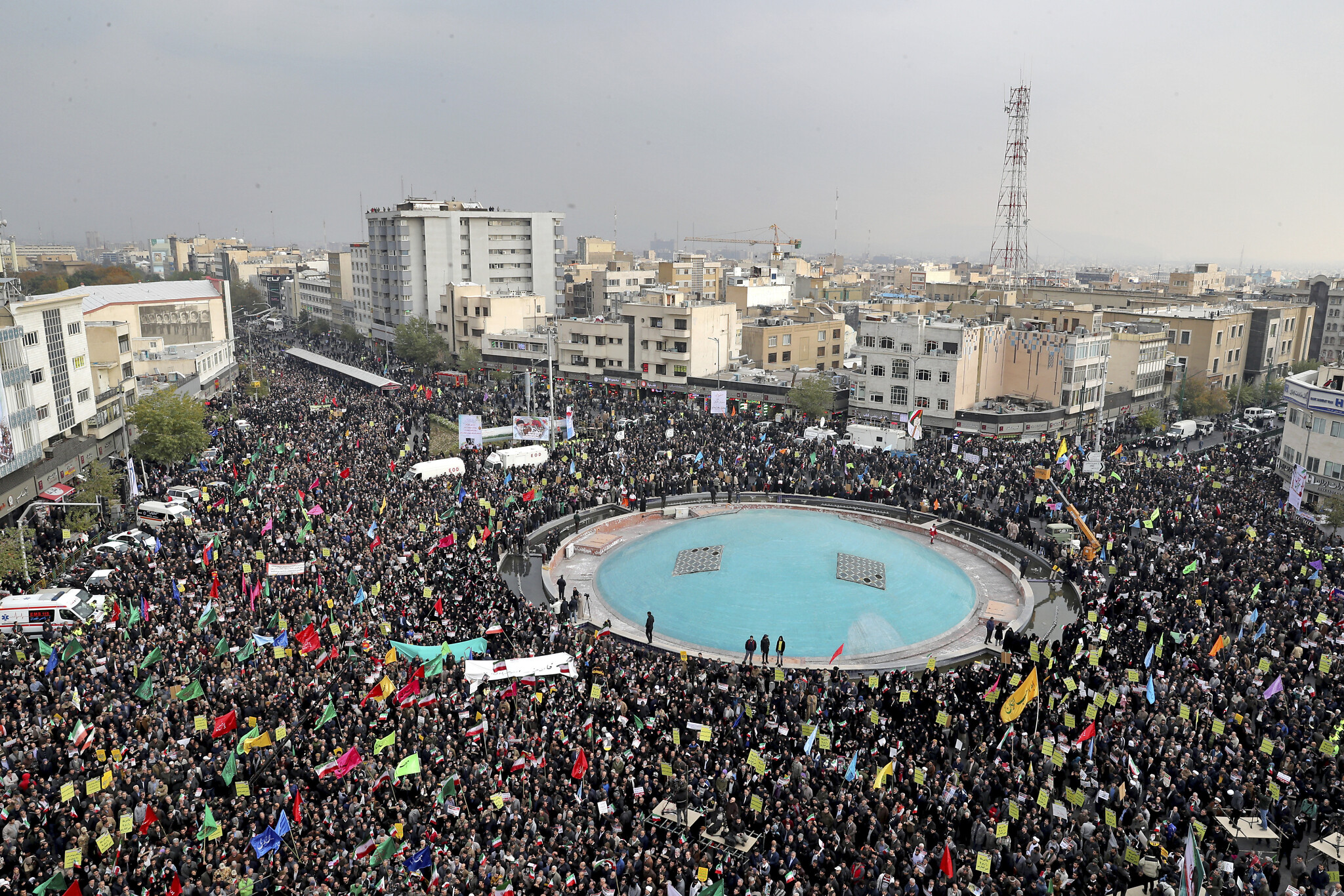
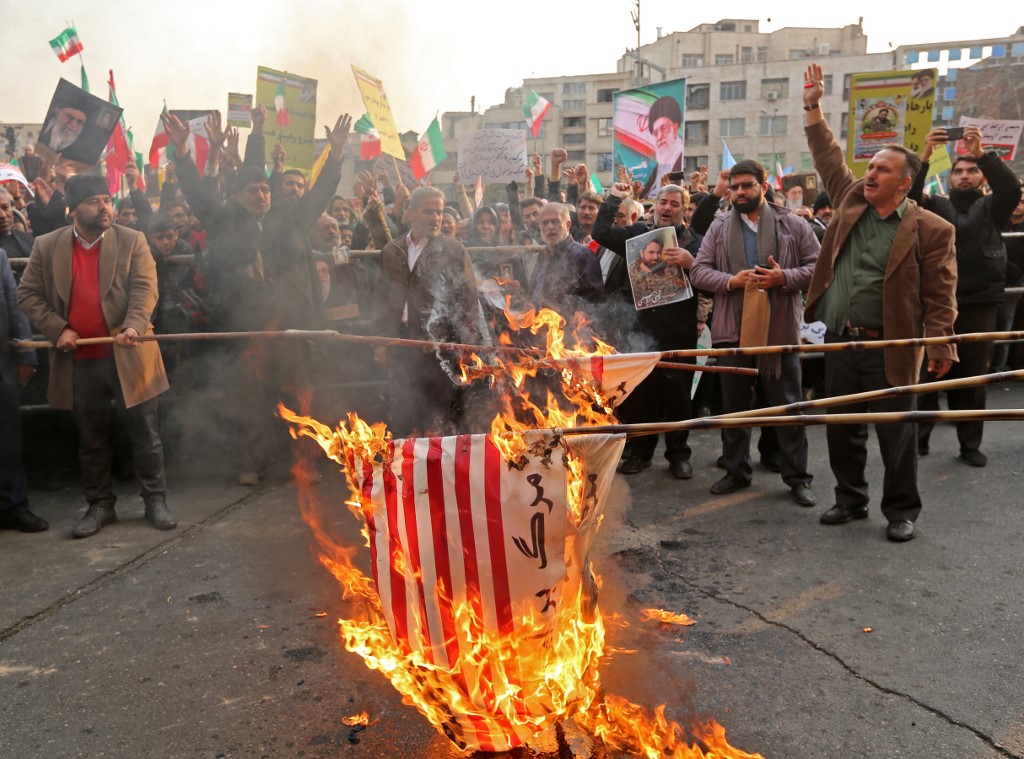
Iranian pro-government demonstrators burn makeshift US flags as they gather in the capital Tehran's central Enghelab Square on November 25, 2019, to condemn days of "rioting" that Iran blames on its foreign foes. (ATTA KENARE / AFP)

Iranian pro-government demonstrators burn makeshift US flags as they gather in the capital Tehran’s central Enghelab Square on November 25, 2019, to condemn days of “rioting” that Iran blames on its foreign foes. (ATTA KENARE / AFP)

The head of Iran’s Islamic Revolutionary Guard Force threatened to destroy Israel, the US and other countries as he addressed a pro-government demonstration denouncing last week’s violent protests over a fuel price hike.

Gen. Hossein Salami, echoing other Iranian officials, accused the US, Britain, Israel and Saudi Arabia of stoking the unrest.

“If you cross our red line, we will destroy you,” he said. “We will not leave any move unanswered.”

“We have shown restraint … we have shown patience towards the hostile moves of America, the Zionist regime (Israel) and Saudi Arabia against the Islamic Republic of Iran,” Salami added, according to Reuters.

He said if Iran decides to respond, “the enemy will not have security anywhere,” adding that “our patience has a limit.”

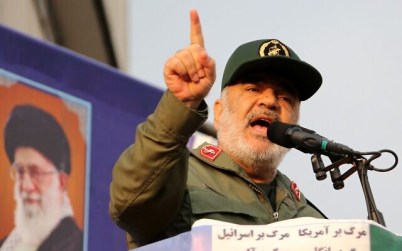
Iranian Revolutionary Guards commander Major General Hossein Salami speaks during a pro-government rally in the capital Tehran’s central Enghelab Square on November 25, 2019. (ATTA KENARE / AFP)

Iran has accused the US, Israel and Saudi Arabia of engineering large protests sparked by a 200 percent jump in the price of gasoline.

Officials said the demonstrations turned violent because of the intervention of “thugs” backed by royalists and Iran’s arch-enemies.

At the pro-government rally, which state TV referred to as the “Rise of the people of Tehran against riots,” protesters carried signs bearing traditional anti-US slogans.

But speakers also criticized President Hassan Rouhani’s administration for the way the fuel price hike was implemented, even as they called for capital punishment for rioters and further restrictions on social media platforms.

Demonstrators attend a pro-government rally organized by authorities in Iran denouncing violent protests over a fuel price hike, in Tehran, Iran, November 25, 2019. (Ebrahim Noroozi/AP)

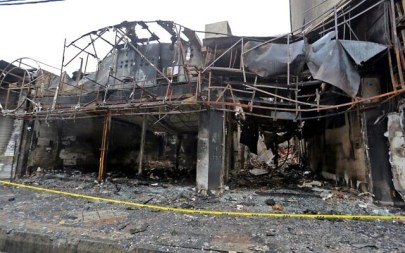
During the violence, dozens of banks, gas pumps and police stations were torched across the Islamic republic.

Iran has been gripped by an economic crisis since the US restored painful sanctions after withdrawing from the 2015 nuclear deal.

Officials have confirmed five people were killed, but the death toll is thought to be much higher.

The United Nations said it feared that dozens died, while Amnesty International said more than 100 were believed to have been killed.

At a meeting Monday with family members of a security officer who was killed in the violence, Salami vowed that Iran will “take revenge for the security defenders on the US, the UK, Israel and their mercenaries inside Iran,” the official IRNA news agency reported.


Israel Air Force 1967- 1990 History and Equipment

November 25, 2019

https://www.youtube.com/watch?v=LkYjMiZy_No

This documentary has the best actual war footage I’ve seen both in B/W and color.

Off Topic:  The reign of the prosecution

November 25, 2019

Source: The reign of the prosecution – www.israelhayom.com

Ever since Mandelblit gave his “recommendations,” he and his comrades have been the only political actors with any power to speak of.

In Israel Thursday morning, the politicians were the big story. Israel Beitenu chairman Avigdor Lieberman was the villain who had held the country hostage for nearly a year as he fed his narcissistic personality disorder.

The left’s latest flagship, the Blue and White party is all the once vibrant political camp can put together now that it has lost its ideology. With its God of peace killed by suicide bombers and missiles, and its socialism statues crushed under the weight of bankrupt government companies, all the left has left is Blue and White. The party stands on two planks – destroying Prime Minister Benjamin Netanyahu and eternalizing the regime of Israel’s unelected bureaucrats..

The party’s figurehead – Benny Gantz – was tempted to join a unity government with Netanyahu that would guarantee he would serve as prime minister in a rotation agreement. But his comrades wouldn’t let him. Joining a government with Netanyahu would be a betrayal of their very reason for existing. So, unhappily, he walked away.

And then there was Netanyahu himself. Thursday morning, his supporters shook their heads in frustration and his enemies clapped their hands in glee at the sight of Israel’s greatest statesman, the leader the public wants to keep in office, unable to form a government,

The conversation about Israel’s politicians lasted less than 24 hours.

At four in the afternoon, Attorney General Avichai Mandelblit’s office announced that at 7:30 in the evening he would announce his decision to indict Netanyahu. The underlying message was crystal clear: The day after Gantz returned his mandate to form a government to President Reuven Rivlin after he failed to get a sufficient number of coalition partners to build a government, Mandelblit said that there’s no point in talking about whether or not Israel is going to new elections in March.

Voters don’t decide anything. The lawyers do. Politicians are irrelevant. The only people who count in Israel today are the unelected attorneys who run the country.

But then we already knew that. And the fact that – as expected – Mandelblit announced sternly that he is indicting Netanyahu on three charges of breach of trust and one charge of bribery was at best anticlimactic. The game was up – if it was ever in play – in February.

Last February, at the height of the first election campaign of the year, when Netanyahu and his right wing coalition partners were leading in all polls by a wide margin, Mandelblit took the unprecedented – and legally dubious – step of announcing his intention to indict Netanyahu of those charges – pending a pre-indictment hearing. The moment he made his announcement, the right began to slide in the polls. The Leader had spoken. And we had no right to question him. Blue and White’s scattershot campaign converged around Mandelblit’s “recommendation.” The left had a rallying cry and a reason to vote. Netanyahu’s neck was on the chopping block.

Ever since Mandelblit gave his “recommendations,” he and his comrades have been the only political actors with any power to speak of. Our actual elected leaders were rendered bit players in the lawyers’ regime. Mandelblit’s announcement Thursday just made it official.

To the cheers of Israel’s corrupt media, for the past three years our legal overlords have gnawed away at all aspects of political power in Israel, and in the process – not that they cared – they corrupted Israel’s legal system from top to bottom. From beginning to end, their criminal persecution of Netanyahu has been a travesty of every norm in democratic societies governed by the rule of law. Carefully edited and wholly distorted recordings and transcripts of police interrogations of Netanyahu, his wife, son, and advisors were systematically leaked to the media. The fact that every such leak was a felony offense was of no matter. Netanyahu’s attorneys submitted request after request for Mandelblit to order an investigation of the criminal leaks. All were summarily and scornfully rejected.

As the probes escalated, overseen by State Prosecutor Shai Nitzan, police investigators extorted Netanyahu’s closest advisors to coerce them into becoming state witnesses against the most successful and admired prime minister Israel has ever had. Investigators threatened Netanyahu’s former spokesman Nir Hefetz that they would destroy his family and bankrupt him if he didn’t turn on Netanyahu. They finally succeeded in breaking him after incarcerating him in a flea-infested jail cell for 15 nights, denying him sleep and medical treatment and bringing a young woman he knew into an interrogation room next to him and then threatening to destroy his family.

In the earlier stages of the probes, then police inspector general Roni Elshech spun wild, unsubstantiated and frankly insane conspiracy theories about Netanyahu, including the claim that he hired private investigators to tail police investigators. Elshech then went out of his way to prevent the government from appointing a successor for him as he approached the end of his term of service. Still today, more than a year later, Israel has no police inspector general.

Then, of course, there is Mandelblit himself. Mandelblit who claims not to have known about the abuse of witnesses – but then refused to investigate the allegations. And Mandelblit who promised – after publishing his “recommendations” for indictment at the height of the election campaign – that he would approach Netanyahu’s pre-trial hearing with an open mind. That promise was exposed as a lie when the chief prosecutor Liat Ben Ari left the hearing two days early to take her family on a safari in South Africa. Wouldn’t want a little thing like the Prime Minister’s legal fate to ruin her chance to see the elephants.

The same Mandelblit refused to investigate Ben Ari when recordings emerged last month showing that she submitted a false deposition to a court in relation to a lawsuit submitted against her by a former subordinate attorney.

Then, of course, there is the substance of the charges themselves. The charge that Netanyahu accepted a bribe is based on an invented notion that positive media coverage of a politician is bribery. The notion that press coverage can be considered bribery exists nowhere in the democratic world. No prosecutor in the world has ever indicted – or investigated – a politician or media organization of having committed bribery involving the provision of positive coverage. Senior American jurists appeared before Mandelblit in Netanyahu’s (self-evidently unserious) pre-indictment hearing to warn him that pursuing bribery charges against politicians for receiving positive coverage is a recipe for destroying freedom of the press and democracy itself.

But then, that is the entire point of going after Netanyahu with invented crimes. Now that Netanyahu has been charged for bribery – and incidentally, he never even received positive coverage from the media organ accused of providing it – every politician that gets on the lawyers’ bad side will be sweating bricks any time a reporter writes something nice about him.

After Mandelblit made his primetime announcement, Netanyahu pledged to fight for his freedom and for the restoration of Israeli democracy and the rule of law. In his speech Thursday night, he made an impassioned appeal to his “decent” political rivals to join him in this fight.

If any politicians doubt that Netanyahu’s struggle is their struggle, they should look no further than the prosecution’s announcement last week that it was opening a review, ahead of a criminal probe – of Gantz’s role in the so-called “Fifth Dimension Affair.” The Fifth Dimension was a start-up Gantz headed. Its sale for $14 million allegedly violated standard procedures.

Maybe Gantz did nothing wrong. But then, Netanyahu is being indicted for crimes that don’t actually exist. So it doesn’t matter. The message is clear. Every politician is at the mercy of the prosecutors. Fall out of line, and you will become a criminal suspect before you can say, “prosecutorial abuse.”

It’s certainly true that the left shares the prosecutors’ hatred of Netanyahu. Blue and White exists to destroy him. But all the leftist politicians – and Liberman – who are celebrating today need to understand that the Netanyahu they love to hate is their best friend and defender today. If Netanyahu is found guilty of crimes that were invented for the purpose of destroying him, then their goose will be cooked along with his.

Politicians may make us happy or sad, frustrated or infuriated. But today, in post-democratic Israel it hardly matters. Netanyahu called last night for an “investigation of the investigators.” Unless our elected officials join forces to heed his call, they – and the voters who elected them — will never be relevant again.
 

Syria strikes are Israel’s way of sending Iran a very clear message

November 25, 2019

Source: Syria strikes are Israel’s way of sending Iran a very clear message – www.israelhayom.com

The IDF has been pursuing an active campaign of removing threats as it detects them, relying on intelligence and precision firepower to deal with ongoing Iranian challenges from Syria. The goal? To nip hazards in the bud.

Most of the Iranian military targets that were hit were situated within Syrian military bases, underlying the Iranian tactic of embedding and disguising its threatening presence within the Syrian Arab Army.

According to international media reports, 23 people, including 16 “foreigners” – an apparent reference to Iranian operatives – were killed in the strikes.

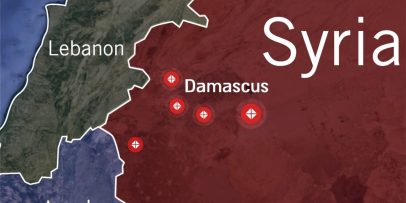
The Israeli action came in response to an Iranian-directed rocket attack on Tuesday morning, in which projectiles were launched from the Damascus area in the direction of Israel. An Israeli Iron Dome battery intercepted the four rockets, which set off warning sirens in northern Israeli communities.

That rocket attack could be linked to a reported Israeli strike on a key Iranian military installation in the Damascus area this week, though Israel has not commented on such reports.

Iran is continuing its efforts to build a war machine in Syria and entrench itself militarily by moving weapons, military forces, militias and building missile bases on the territory controlled by the Bashar Assad regime. The goal of Iran is to build a second Hezbollah in Syria and to move its own military capabilities into the area so that it can threaten Israel from multiple fronts.

Israel has been pursuing an active campaign of removing these threats as it detects them, taking the initiative, and relying on high-quality intelligence and precision firepower to deal with the ongoing Iranian challenge from Syria. The goal is to nip the threat in the bud and not wait until it takes on monstrous proportions, as Hezbollah’s rocket and missile arsenal has become in Lebanon.

The Quds Force, Iran’s overseas special operations unit, is in charge of the Iranian expansion program in Syria. Its commander, Gen. Qassem Soleimani, has attempted to enforce new rules on Israel, according to which any Israeli preemptive strike will result in Iranian retaliation.

This Iranian equation is essentially designed to deter Israel from taking the initiative and removing threats to its security preemptively. Iran wants to impose a “price tag” on Jerusalem for the active defense campaign that Israel has been pursuing with much success. Hundreds of Israeli airstrikes in recent years have prevented the Iranians from achieving most of their goals in Syria, leading to frustration in Tehran, though its confidence has been rising recently.

The successful Iranian cruise missile and drone attack on Saudi state-oiled oil fields on Sept. 14 were a display of highly advanced, long-range firepower. The Iranian attack was a threat directed at Israel as much as it was to Iran’s other regional arch-foe: Saudi Arabia. Israel heard the message and sent one of its own on Tuesday, rejecting Iran’s attempt to deter it from taking action in the region to defend itself.

It appears as if the Iranians absorbed a painful blow in Syria, just as they did in May 2018 during “Operation House of Cards,” when Israel struck a series of Iranian targets in response to an Iranian truck-mounted rocket attack.

Iran now has three options going forward: It can choose not to respond, launch a minor response or order a more significant response.

The fact that the regime is under pressure at home due to domestic unrest, that its economy is bleeding due to biting American sanctions, and that it is facing unrest in other zones of influence – like Lebanon and Iraq – means that Iranian decision-making may become more unpredictable going forward.

‘We are prepared for any scenario’

Speaking to reporters on Wednesday after the strike, Israel Defense Forces’ spokesman Brig. Gen. Hadi Zilberman stressed that the IDF still has the initiative. “We will not allow Iran to entrench itself in Syria,” he said.

“We prepared a battle procedure that included the deployment of air defense and attack preparations. The wave of strikes was broad in its targets.”

According to an IDF statement, dozens of targets were struck in the Damascus area, south and west of Syria’s capital, and on the Syrian Golan Heights near the Israeli border.

In addition, the Israeli Air Force destroyed Syrian surface-to-air missile batteries that are considered advanced after they fired at Israeli aircraft. Syrian weapons storage facilities, military headquarters, and observation posts were all destroyed by Israeli aircraft.

When it came to the Iranian assets, the IAF demolished Iranian military buildings, a headquarters situated in Damascus International Airport and an observation post on the Golan Heights.

“We acted against the Syrian host and the Iranian guest,” said Zilberman.

Outlining Israel’s posture, he assured that “we are prepared for defense and offense, and we will act with severity against any attempt to respond. We are prepared for any scenario. We will not accept Iranian entrenchment. This is a red line.”

It also appears as if the Assad regime keeps failing to heed Israel’s warnings to refrain from joining the Iranian-Israeli showdown, and Syria’s decision to fire surface-to-air missiles resulted in a loss of a number of its air-defense batteries.

Referring to Tuesday’s rocket attack on the Israeli Golan, the IDF stated, “Yesterday’s Iranian attack towards Israel is further clear proof of the purpose of the Iranian entrenchment in Syria, which threatens Israeli security, regional stability and the Syrian regime. Furthermore, the IDF holds the Syrian regime responsible for actions taken in its territory and warns it from operating or allowing hostilities against Israel. Such actions will be followed by a severe response. The IDF will continue operating firmly and resolutely against the Iranian entrenchment in Syria.”

Israel has heard Iran’s message and sent its reply. The ball now returns to Iran’s court.

Reprinted with permission from JNS.org


Forcing the dilemma into Iran’s court

November 25, 2019

Source: Forcing the dilemma into Iran’s court – www.israelhayom.com

The missiles that were fired at Mount Hermon on the Golan Heights early Tuesday morning didn’t catch the defense establishment off guard. They were expected, as part of Iran’s new policy of responding to any attacks on its assets.

This new Iranian policy has preoccupied the defense establishment for the past two months. It began percolating following a series of incidents – chief among them the cruise missile and drone strike on Saudi oil fields, to which there was no response – which greatly increased Iran’s appetite and willingness to push the envelope further than ever before.

If, in the past, Iran mostly showed restraint when it was hit (and it has been hit hundreds of times in recent years), its new policy stipulates an eye for an eye. For any attack on its assets, it will respond. Sometime the response will be immediate, other times delayed. This is exactly why Iran’s Quds Force is deploying a broad arsenal which it can activate from several locations – mainly in Syria but also in Iraq and if the need arises (albeit less likely) from Lebanon or Iran itself.

As a result, Israel has altered its policy accordingly. The so-called “war between wars,” the brunt of the defense establishment’s activities in recent years, was limited to imperative operations only, meant to thwart clear and present dangers. We can assume the missile attack on Tuesday was Iran’s retaliation for some sort of Israeli activity in this vein, which both sides are aware of yet neither has openly acknowledged.

This was the fifth time in the past two years that Iran has openly attacked Israel. Prior assessments led the IDF to place Iron Dome batteries in the sector in advance, which intercepted the four Iranian missiles fired early Tuesday. As before, it seems the Iranian response was more like firing from the hip with forces and weapons that happened to be available, from the area around Damascus – in the heart of the territory that Russia had previously promised Israel that it would prevent Iranian activity.

In prior instances, Israel made sure to retaliate accordingly. For every hit it sustained, it struck back. In several cases, Israel exploited Iranian attacks to then carry out large-scale strikes against military infrastructure and weapons systems, while also hitting Syrian batteries providing cover for Iran and its proxies.

Now the Israeli dilemma is more complicated, and it fluctuates between the need to act to maintain deterrence and the desire to avoid a clash that could escalate into all-out war. Between these two considerations, and despite the tangible risks involved, Israel must insist on offense and deterrence, even at the cost of attempts to harm Israel, such as Tuesday’s missile attack, and perhaps attacks that are even more severe.

This is the only way Israel can send the dilemma back to Tehran’s court.

Qassem Soleimani, the commander of Iran’s Quds Force, has been extremely troubled in recent weeks by the demonstrations in Lebanon and Iraq (and now in Iran, too), and likely doesn’t want to open another front. As it is, he’s almost certainly asking himself what happened to the convoy of advanced weapons, which according to Arab media reports was completely obliterated early last week near Tadmor, in Syria, and what will happen with the base his people have tried building on the Syria-Iraq border – which according to a Fox News report Monday, is now under construction again after it was attacked twice in recent months.

Soleimani is a serious adversary, determined and clever. But he is not suicidal. He won’t jeopardize his project and he certainly won’t put his country at risk. If he understands that Israel is willing to go all the way, perhaps he will change his strategy. Israel needs to present him with this dilemma, before facing it first.


As internet restored, online Iran protest videos show chaos 

November 25, 2019

Source: As internet restored, online Iran protest videos show chaos | The Times of Israel

Weeklong government-imposed shutdown, lifted over the weekend, left the world guessing at the true extent of the regime’s deadly crackdown against protesters

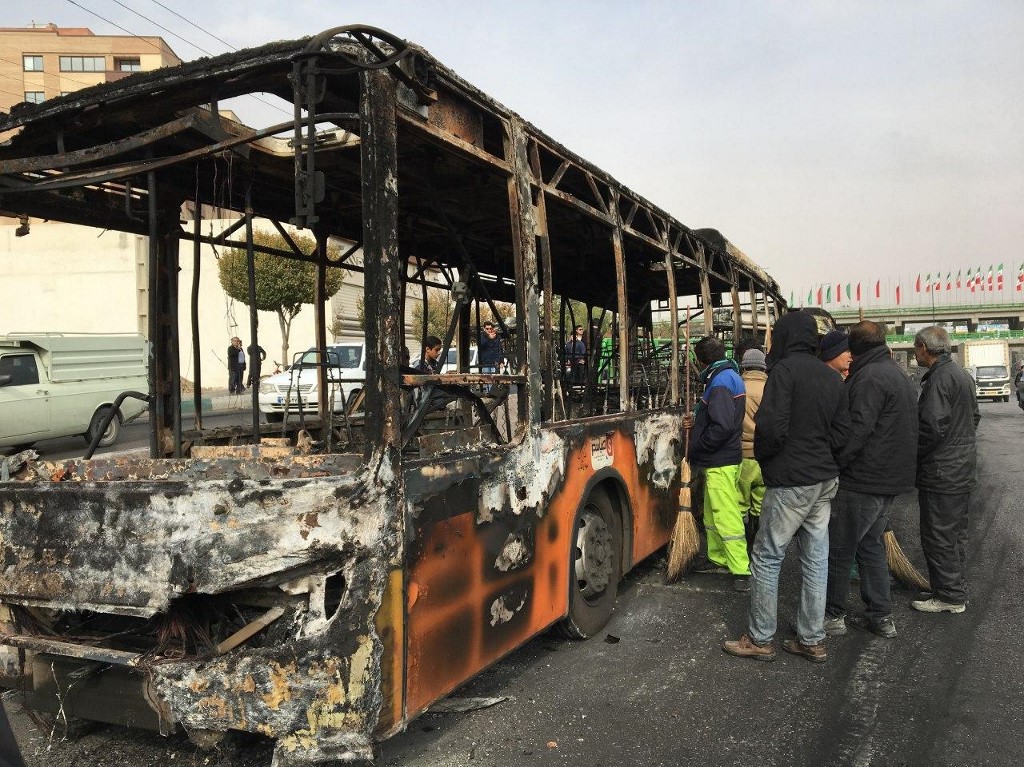
Iranians inspect the wreckage of a bus that was set ablaze by protesters during a demonstration against a rise in gasoline prices in the central city of Isfahan on November 17, 2019. (AFP)

Iranians inspect the wreckage of a bus that was set ablaze by protesters during a demonstration against a rise in gasoline prices in the central city of Isfahan on November 17, 2019. (AFP)

DUBAI, United Arab Emirates (AP) — Machine gun fire answers rock-throwing protesters. Motorcycle-riding Revolutionary Guard volunteers chase after demonstrators. Plainclothes security forces grab, beat and drag a man off the street to an uncertain fate.

As Iran restores the internet after a weeklong government-imposed shutdown, new videos purport to show the demonstrations over gasoline prices rising and the security-force crackdown that followed.

The videos offer only fragments of encounters, but to some extent they fill in the larger void left by Iran’s state-controlled television and radio channels. On their airwaves, hard-line officials allege that foreign conspiracies and exile groups instigated the unrest. In print, newspapers offered mostly PR for the government, the moderate daily Hamshahri said, in an analysis on Sunday.

They do not acknowledge that the gasoline price hike on November 15, supported by Iran’s civilian government, came as the country’s 80 million people have already seen their savings dwindle and jobs scarce under crushing US sanctions. US President Donald Trump imposed them in the aftermath of unilaterally withdrawing America from Tehran’s nuclear deal with world powers, over Iran’s ballistic missile program and interventions in conflicts throughout the region.

A man uses a smartphone, while speaking with another riding a motorcycle in a street, in the Iranian capital Tehran on November 23, 2019. (Atta Kenare/AFP)

Authorities also have yet to give any overall figures for how many people were injured, arrested or killed during the several days of protests that swept across some 100 cities and towns.

Amnesty International said it believes the unrest and the crackdown killed at least 106 people. Iran disputes that figure without offering its own. A UN office earlier said it feared the unrest may have killed “a significant number of people.”

سرتیز@sartiz3

تیراندازی بسوی مردم معترض از فاصله نزدیک توسط توله سگ های و بسیجی ها و پاسدارهای https://twitter.com/FarhadiIvar/status/1198693534402039814 

Ivar Farhadi@FarhadiIvar

🔴هشدار
حاوی صحنه‌های دلخراش
گرگان

۲۵ آبان ۹۸

تیراندازی از فاصله نزدیک به یک جوان معترض و ضرب و شتم دسته جمعی او توسط اشرار لباس شخصی و نیروی انتظامی

نه می‌بخشیم و نه فراموش می‌کنیم#Iranprotests

Embedded video

Starting November 16, Iran shut down the internet across the country, limiting communications with the outside world. That made determining the scale and longevity of the protests incredibly difficult. Some recycled days-old videos and photographs as new, making it even more difficult.

Since Saturday, internet connectivity spiked in the country, allowing people to access foreign websites for the first time. On Sunday, connectivity stood nearly at 100% for landline services, while mobile phone internet service remained scarce, the advocacy group NetBlocks said.

Iranians walk past the branch of a local bank that was damaged during demonstrations against gasoline price hikes, on November 20, 2019, in Shahriar, west of Tehran. (Atta Kenare/AFP)

The restoration brought messaging apps back to life for Iranians cut off from loved ones abroad. It also meant that videos were again being shared widely.

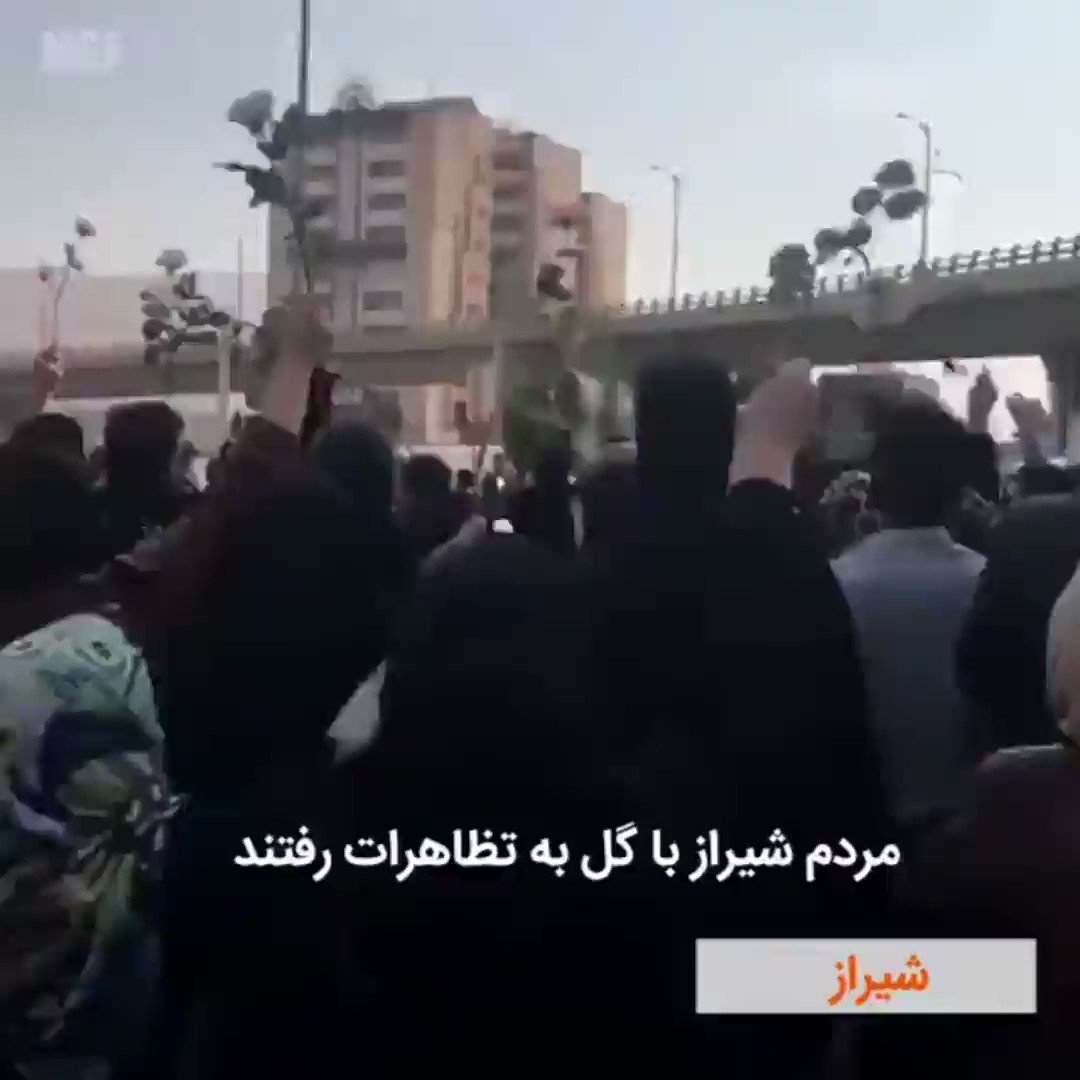
Recently released videos span the country. One video from Shiraz, some 680 kilometers (420 miles) south of Tehran, purports to show a crowd of over 100 people scatter, as gunfire erupts from a police station in the city. One man bends down to pick up debris as a person off-camera describes demonstrators throwing stones. Another gunshot rings out, followed by a burst of machine gun fire.

🌷💥 بهارآزادی ایران@baharazadyiran

🔴《اگر باگُل به مبارزه باجمهوری اسلامی که فاشیسم مذهبی است،برویم او با اسلحه اش ما راخواهد کُشت》
روز اول اعتراضات، مردم شیراز باگُل و مسالمت آمیز به خیابانها آمدندونیروهای سرکوبگر جمهوری اسلامی بااسلحه و گلوله پاسخ آنها را دادند.😲بعدخشم شیرازیها را هم دیدیم🙏✌️

Embedded video

In Kerman, some 800 kilometers (500 miles) southeast of Tehran, the sound of breaking glass echoes over a street where debris burns. Motorcycle-riding members of the Basij, the all-volunteer force of Iran’s paramilitary Guard, then chase the protesters away.

Another video in Kermanshah, some 420 kilometers (260 miles) southwest of Tehran, purports to show the dangers that lurked on the streets of Iran in recent days. Plainclothes security forces, some wielding nightsticks, drag one man off by the hair of his head. The detained man falls at one point.

Shops that were destroyed during demonstrations against gasoline price hikes are pictured in Shahriar, west of Tehran, on November 20, 2019. (Atta Kenare/AFP)

“Look, (the agents) wear styles like the youth,” one man off-camera says, swearing at them.

On Sunday, it remained unclear how widespread any remaining demonstrations were. The acting commander of the Revolutionary Guard, Gen. Ali Fadavi, repeated the allegation that America was behind the protests, without offering any evidence to support his claim.

“Why did (the Americans) get angry after we cut off the internet? Because the internet is the channel through which Americans wanted to perform their evil and vicious acts,” Fadavi said. “We will deal with this, Islamic Republic supporters, and our proud men and women will sign up to make a domestic system similar to the internet with operating systems that (the Americans) can’t (control) even if they want.”

Siavash Hesami☭@Siavash_Hesami

اعتراض دانشجویان دانشگاه تهران
۲۷ آبان‌
مرگ بر استبداد فقر و فساد و بیداد
مرگ بر نظام ضد کارگر
الان چه وقت خوابه, وقت وقت انقلابه

Embedded video

That likely refers to what has been known as the “halal net,” Iran’s own locally controlled version of the internet aimed at restricting what the public can see. The system known as the National Information Network has some 500 government-approved national websites that stream content far faster than those based abroad, which are intentionally slowed, activists say. Iranian officials say it allows the Islamic Republic to be independent if the world cuts it off instead.

Ali Fadavi, Deputy Chief of the Islamic Revolution Guards Corps (IRGC), delivers a speech during Basij Week in the Iranian capital Tehran on November 24, 2019. (Atta Kenare/AFP)

But while Fadavi earlier said the protests were put down in 48 hours, he also acknowledged the scope of the unrest by comparing it to Operation Karbala-4, one of the worst military disasters suffered by Iran during its bloody 1980s war with Iraq.

BBC NEWS فارسی

@bbcpersian

این ویدیو که مربوط به تهران خیابان ستارخان است امروز به دست بی‌بی‌سی فارسی رسیده. زمان این ویدیو برای بی‌بی‌سی فارسی مشخص نیست اما مربوط به اعتراضات اخیر در پی گران شدن است.

Embedded video


In north, Netanyahu says Tehran planning more attacks

November 25, 2019

Source: In north, Netanyahu says Tehran planning more attacks | The Times of Israel

PM says Israel ‘taking all the necessary steps to prevent Iran from establishing itself in the area’

Prime Minister Benjamin Netanyahu tours the northern border on November 24, 2019. (YouTube screen capture)

On a visit to the northern border on Sunday, Prime Minister Benjamin Netanyahu said Iran was planning new attacks in the region, but insisted Israel was working to disrupt them.

Netanyahu cited US Central Command chief Gen. Kenneth F. McKenzie, who told the New York Times earlier this week that Iran was unlikely to have been deterred by increased US troop deployments in the Middle East, and remained on track to carry out a large-scale attack in the region.

“My judgment is that it is very possible they will attack again,” McKenzie told the newspaper.

“Pay attention to what Gen. McKenzie said,” Netanyahu said Sunday. “Iran is planning additional attacks. I can confirm that, and I can confirm to you that we are continuing with our plans to disrupt that aggression by various means.”

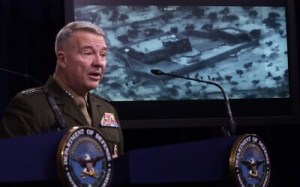
Gen. Kenneth “Frank” McKenzie, commander of US Central Command, speaks next to a picture of the operation targeting Abu Bakr al-Baghdadi during a press briefing October 30, 2019, at the Pentagon in Arlington, Virginia. (Alex Wong/Getty Images/AFP)

Netanyahu spoke during a visit to the northern border, where he was briefed by top IDF commanders.

He said Israel would continue to counter Iranian efforts to entrench militarily in Syria.

“Iran’s belligerence in the region — including against us — continues,” he said. “We are taking all the necessary steps to prevent Iran from establishing itself here in the area.

“That includes the necessary activity to prevent the delivery of lethal weapons from Iran to Syria, whether by air or over land.”

The prime minister added that Israel would counter reported Iranian efforts to turn Yemen and Iraq into bases for launching rockets and missiles into Israel.

Prime Minister Benjamin Netanyahu (left) and Defense Minister Naftali Bennett tour the northern border on November 24, 2019. (Haim Tzach/GPO)

“Our commitment to fight Iran’s aggression is absolute,” he said.

Netanyahu’s premiership is in crisis after he failed to form a government in the wake of an election in April and another one in September. And his future appeared to be in real peril after the attorney general on Thursday announced plans to indict him on corruption charges.

But the prime minister insisted during his northern tour that he was “doing everything necessary to continue the work of the government and the Security Cabinet… by all necessary means, to preserve the security of the citizens of Israel and the things that are essential for the State of Israel.

“Whoever knows me knows that I am doing this,” he said. “I am doing this in the best way possible out of a supreme commitment to the security of Israel. The considerations are completely substantive.”

Defense Minister Naftali Bennett joined Netanyahu on the visit, and issued a similar warning to Iran.

“Our message to Iran’s terrorist forces in Syria: You have no business here, you have no reason to entrench yourselves. Anything you try to accomplish here will meet with a strong and determined IDF that will hurt you.”

Bennett added: “To Iran’s leaders we say: Focus on your citizens, on improving the lives of Iran’s citizens, and not on these unsuccessful efforts to hurt Israel’s citizens.”

The two were briefed by Deputy Chief of Staff Maj. Gen. Eyal Zamir and Northern Command chief Maj. Gen. Amir Baram.


Top US general meets Israeli brass amid Iran tensions 

November 25, 2019

Source: Top US general meets Israeli brass amid Iran tensions | The Times of Israel

Joint Chiefs Chairman Mark Milley talks ‘operational topics and regional developments’ with IDF chief Aviv Kohavi after recent visits by America’s air force and CENTCOM chiefs

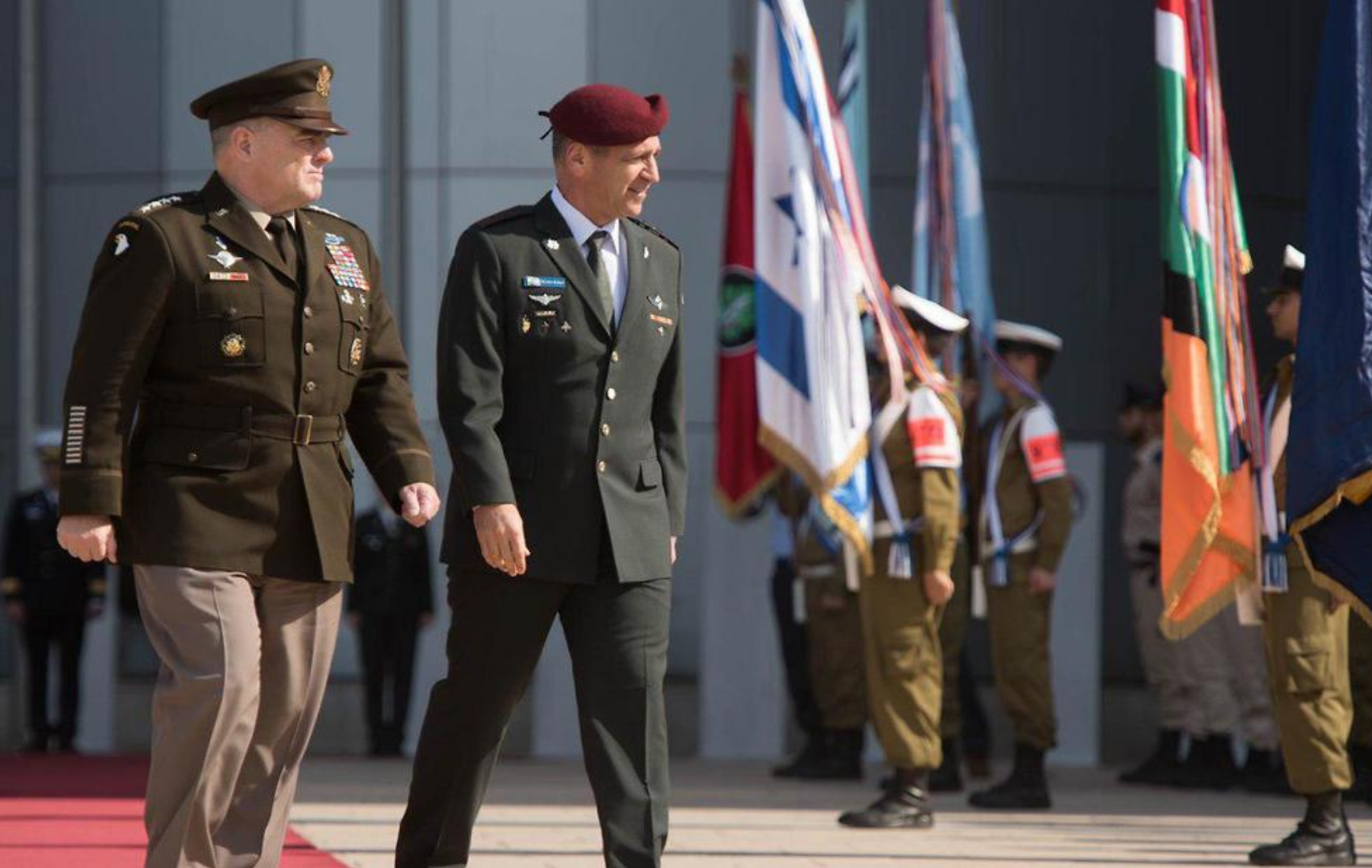
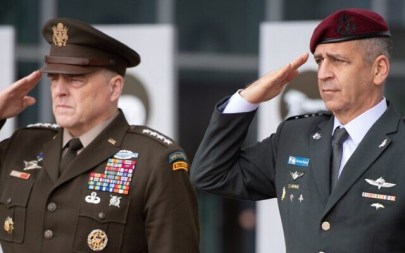
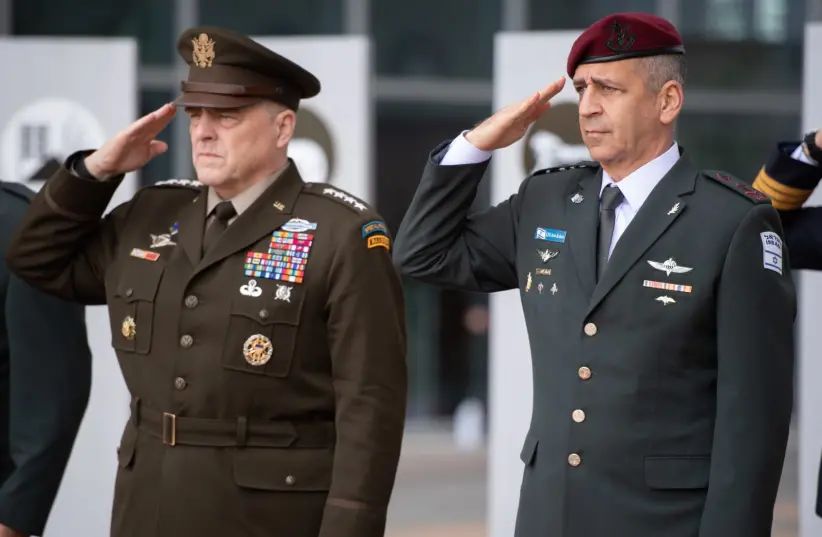
US Chairman of the Joint Chiefs of Staff Gen. Mark Milley, left, and Israel Defense Forces Chief of Staff Lt. Gen. Aviv Kohavi, right, at a ceremony at IDF headquarters in Tel Aviv, November 24, 2019. (IDF)

US Chairman of the Joint Chiefs of Staff Gen. Mark Milley, left, and Israel Defense Forces Chief of Staff Lt. Gen. Aviv Kohavi, right, at a ceremony at IDF headquarters in Tel Aviv, November 24, 2019. (IDF)

The top US general is visiting Israel for meetings with top military leaders, the latest in a series of high-level military meetings amid heightened tensions with Iran.

Chairman of the Joint Chiefs of Staff Gen. Mark Milley met Sunday with his Israeli counterpart Lt. Gen. Aviv Kohavi.

Israel’s military said in a statement that Milley’s visit was a sign of “the depth of the partnership between the forces and its importance in promoting regional stability.” The two discussed “a series of operational topics and regional developments,” the army said.

A readout from Milley’s office said “Gen. Milley reaffirmed the US commitment to its relationship with Israel.”

US Chairman of the Joint Chiefs of Staff Gen. Mark Milley, left, and Israel Defense Forces Chief of Staff Lt. Gen. Aviv Kohavi, right, at a ceremony at IDF headquarters in Tel Aviv, November 24, 2019. (IDF)

Milley’s visit is the latest in a series of top US military visits to the Jewish state in recent weeks.

Last week, US Air Force Chief of Staff David L. Goldfein visited Israel to participate in the Blue Flag joint military exercise, which pitted 70 combat planes from five air forces against each other in 19 sorties across six locations around the country. For two participating militaries, Israel and Italy, it marked the first-ever use of the new stealth F-35 in an international exercise, making it “the most advanced international exercise ever held in Israel,” according to the IDF.

On November 10, the commander of American military forces in the Middle East arrived in Israel for meetings with the IDF’s top brass.

It was Gen. Kenneth F. McKenzie, Jr.’s first visit in Israel since becoming head of the US military’s Central Command, or CENTCOM, in March. McKenzie’s trip was the second-ever visit by a CENTCOM commander to the Jewish state.

US Air Force chief David Goldfein (L) and President Reuven Rivlin at the President’s Residence in Jerusalem on November 14, 2019. (Haim Zach/GPO)

McKenzie’s predecessor, Gen. Joseph Votel, was the first US CENTCOM commander to travel to Israel, visiting last April with little fanfare.

The string of high-level visits come amid rising tensions between Israel and Iran. Last week, after Iranian forces fired rockets at the Israeli side of the Golan Heights, the Israeli Air Force struck dozens of Iranian military targets in neighboring Syria.

The strikes were the latest Israeli attack against Iran-linked targets in Syria in recent years. Israel has warned against a permanent Iranian presence near the frontier.

Military ties between the US and Israel have been somewhat strained in recent months, as the US has begun withdrawing from the region, leaving Israel alone to confront an increasingly aggressive and emboldened Iran.

Though Israeli officials have refrained from specifically criticizing US President Donald Trump for the withdrawal, they have more obliquely expressed concerns about the trend.

In this April1 14, 2018, file photo, then-Marine Lt. Gen. Kenneth “Frank” McKenzie speaks during a media availability at the Pentagon in Washington. (AP/Alex Brandon, File)

On a visit to the northern border on Sunday, Prime Minister Benjamin Netanyahu said Iran was planning new attacks in the region, but insisted Israel was working to disrupt them.

In his comments Netanyahu cited McKenzie, who told The New York Times earlier this week that Iran was unlikely to have been deterred by increased US troop deployments in the Middle East, and remained on track to carry out a large-scale attack in the region.

“My judgment is that it is very possible they will attack again,” McKenzie told the newspaper.

“Pay attention to what Gen. McKenzie said,” Netanyahu said Sunday. “Iran is planning additional attacks. I can confirm that, and I can confirm to you that we are continuing with our plans to disrupt that aggression by various means.”

In this photo released by the Syrian official news agency SANA, a damaged building targeted by Israeli missile strikes is seen in Qudsaya suburb in the capital Damascus, Syria, November 20, 2019. (SANA via AP)

In June, Trump called off a retaliatory strike after Iran downed an American drone that Tehran said entered its airspace. The US, which denied the drone entered Iranian skies, was later reported to have launched a limited cyberattack on Iran.

Last month, around half of Saudi Arabia’s oil production capacity was knocked offline due to an attack claimed by the Iranian-backed Houthi rebels in Yemen. There was no response to that attack, which the US, Israel and others also blamed on Iran.

The White House’s decision last month to pull troops out of northern Syria and abandon Kurdish allies there has also been seen as a sign of Trump’s general lack of willingness to engage militarily in the region.


A US-Iran military front is fast shaping up on the Syrian-Iraqi border – with a role for the IDF – DEBKAfile

November 25, 2019

Source: A US-Iran military front is fast shaping up on the Syrian-Iraqi border – with a role for the IDF – DEBKAfile

As the US military takes up new positions against Iran on the Syria-Iraq border, a major Mid East event seems to be brewing, with a key role for Israel.

This is strongly indicated by the comings and goings of top US officials this weekend. Gen. Mark Milley, Chairman of the US Chiefs of Staff, is in Israel as the guest of Israel’s chief of staff Lt. Gen. Aviv Kochavi. On Saturday, Nov. 213, the commander of US CENTCOM, Gen. Kenneth McKenzie predicted that Iran will probably launch another attack in the Middle East.  At a regional conference in Manama, Bahrain, McKenzie said that although 14,000 additional US soldiers were deployed in the Persian Gulf since the spring, they did not deter Iran from attacking a Saudi oil field.

On Saturday too, Vice President Mike Pence paid an unannounced trip to Iraq for a special briefing on the situation on the Syrian-Iraqi border at the US Al-Asad Air Base. These movements came after the top-secret Israeli air strike last Tuesday, Nov. 19, on a mysterious Iranian target near the Syrian town of Abu Kamal close to the Iraqi border. Neither Israel nor Iran revealed what that was about except to admit that it occurred.

Most significantly, Pence chose to arrive in Iraq at Irbil, capital of the semiautonomous Kurdish Republic (KRG), rather than Baghdad and the first person he met was the KRG’s president Nachirvan Barzani. He only put in a brief phone call to Iraqi Prime Miniser Adel Abdul-Mahdi.

The vice president’s actions signified the revival of the US-Kurdish alliance – not just with the Syrian branch but also with their Iraqi brethren. Indeed, the outcry over the Trump administration’s desertion of the Syrian Kurds in the wake of the Turkish invasion earlier this month neatly camouflaged the substantial influx of US troops arriving in the Kurdish regions of eastern Syria this month. American encampments there, far from being evacuated, have been substantially augmented by new military facilities, two of them air bases.

DEBKAfile’s military sources have learned that US engineering units are erecting one new base near Al Sur in the Deir Ez-Zour region and another near the town of Amuda. Those bases are partly designed to counter the Russian air force’s establishment of a military air base in the Kurdish town of Qamishli, so that the US does not lose control of northeastern Syria near the Iraqi border to Moscow. However, the newly boosted US deployment in that corner of Syria has a more pressing mission. As Tehran tightens its grip on Baghdad and its Revolutionary Guards elite Al Qods Brigades take over command of the Iraqi Shiite militias stationed on the Iraqi-Syrian border, this part of Syria gains in strategic importance. The topped-up US military presence is becoming the only real obstruction for preventing Iran creating a direct bridge between its forces in Iraq, Syria and Hizballah in Lebanon.

On this point, American and Israel’s strategic interests converge, especially when both anticipate hostilities exploding in this part of the Syria-Iraq border in the near future, and the importance of this region growing in the coming weeks and months. The talks the top US soldier, Gen. Milley conducted in Israel no doubt focused on the Israel Defense Forces’ role in these events.