At Orthodox Jewish event, president boasts of ‘98%’ approval rating in Israel, quips he could move there and soon become PM: ‘They keep having elections and nobody is elected’

US President Donald Trump on Tuesday said he was watching missiles fly into Israel with concern, and also joked at Israel’s political system. Speaking at a Jewish event, he quipped that if impeached he could move to Israel and quickly become prime minister.
“What kind of a system is it over there, right, with Bibi and…? They are all fighting and fighting,” Trump said, addressing an event hosted by the Orthodox organization America First in New York City.
“We have different kinds of fights. At least we know who the boss is. They keep having elections and nobody is elected,” he quipped, eliciting laughter.
Israel is currently in a political deadlock after an unprecedented second election within a few months, with neither Prime Minister Benjamin Netanyahu nor his rival Benny Gantz having a clear path to a governing coalition. There is a looming possibility of the country going to the polls soon for the third time in a year.
The crowd welcomed Trump like a king — literally. In presenting Trump, the host, Rabbi Yosef Yitzchak Jacobson, recited a traditional blessing said when meeting a king or a state leader.
 Yashar Ali
✔@yashar
A source texted me this video of POTUS remarks (partial) at the America First Orthodox Jewish event today in NYCI’m not sure if he’s mentioned making calls to other leaders in the Middle East after changing the location of the US Embassy to Jerusalem. WH reporters would know.
“If anything happens here” — a likely reference to efforts in the US Congress to impeach him — “I’m making a trip over to Israel and I’d be prime minister there very soon,” he continued, receiving more applause.
Trump also addressed the escalation of hostilities between Israel and terror groups in the Gaza Strip, which saw hundreds of rockets launched at Israeli cities on Tuesday.
“We’re all watching very closely… a lot of missiles going in and going out,” he said. “It’s a very bad day. And it’s very scary. We’re watching it very closely.” He said he woke up to see TV footage of the missiles flying. “We have to take care of Israel,” he said.
Trump also spent several minutes talking about his decision to move the US embassy from Tel Aviv to Jerusalem.
“I gave you, in Jerusalem, the embassy. That was a big deal,” Trump said, before describing how he ignored numerous calls by officials and world leaders not to take that step.
Trump’s vice president, Mike Pence, posted a tweet Tuesday supporting Israel in light of the Gaza fighting.
“The United States condemns the barrage of rockets on Israeli civilians,” he wrote. “It’s clear Hamas & Palestinian Islamic Jihad put violence ahead of bettering the lives of the people of Gaza. America strongly affirms Israel’s right to defend itself.”
While terror group’s spokesman asserts it is working alongside Islamic Jihad and others, it’s widely reported that Gaza ruling organization has avoided firing at Israel
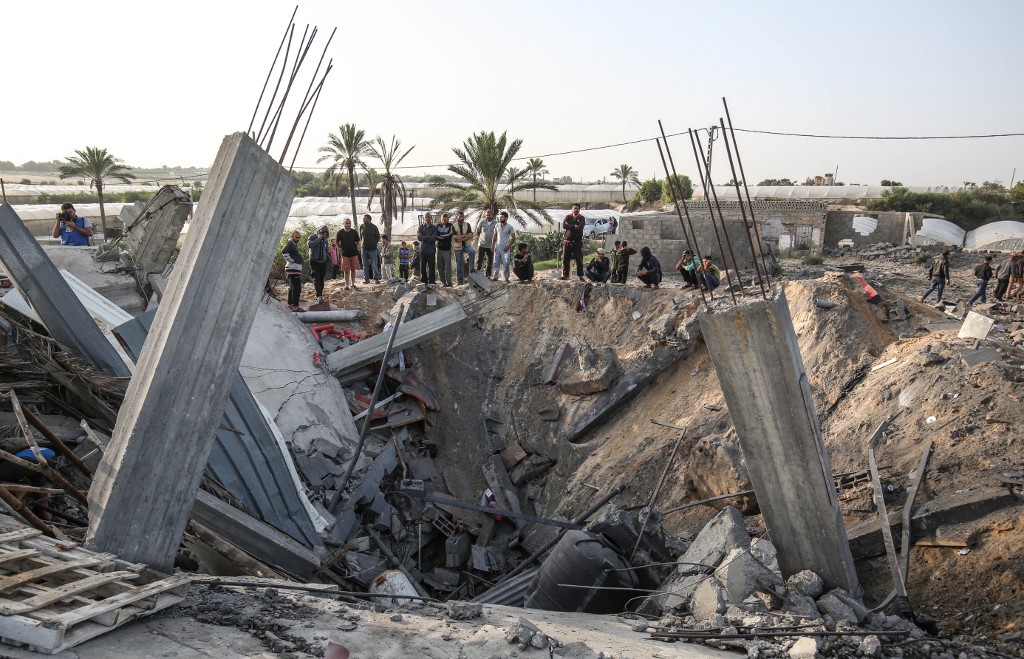
The Times of Israel is liveblogging the events of Wednesday, November 13, a day after Israel was hit by 200 rockets following the killing of Islamic Jihad terror chief Baha Abu al-Ata in Gaza.
Rocket sirens sound in the Israeli community of Sa’ad, east of the Gaza Strip.
There are no immediate reports of injuries or damage.
Fox News quotes a Hamas official who says, “If [Israeli] airstrikes and aggression continue, Hamas and the resistance groups will have to morally respond to and protect the Palestinian people.”
The comments contradict the remarks by the terror group’s spokesman who said Hamas is already involved in the fighting.
It has been widely reported that Hamas has not been directly involved in firing rockets at Israel during the latest round of violence.
A mortar shell fired from the Gaza Strip strikes an empty greenhouse in the Eshkol region of southern Israel, causing damage but no injuries, an Eshkol spokesperson says.
— Judah Ari Gross
The bodies of two Palestinians killed by Israeli fire in the southern Gaza Strip arrived at a hospital in Khan Younis, the Hamas-run Health Ministry says.
A total of 23 Palestinians in the Gaza Strip have been killed since early Tuesday morning, according to the ministry.
At least 12 of the 23 killed were members of terror groups.
The IDF earlier said it had taken out two Islamic Jihad members who were preparing to fire rockets at Israel.
— Adam Rasgon
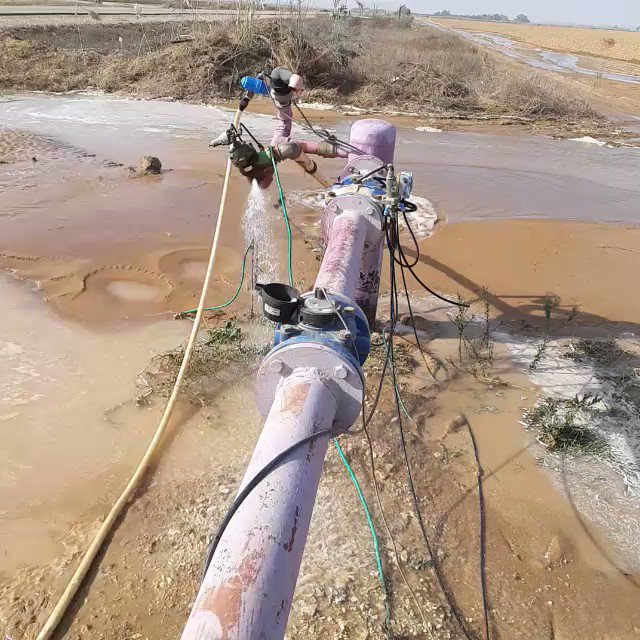
A rocket fired from the Gaza Strip strikes a water pipe in the Eshkol region of southern Israel, causing a large leak.
“It is being handled by [the national water company] Mekorot,” an Eshkol regional spokesperson says.
 Judah Ari Gross
✔@JudahAriGross
A rocket from Gaza struck a water pipe in the Eshkol region of southern Israel, causing a large leak.
“It is being handled by [the national water company] Mekorot,” an Eshkol regional spokesperson says.
: Gadash Halutz/Eshkol
— Judah Ari Gross
An IDF aircraft bombs a group of Palestinian Islamic Jihad operatives as they were preparing to fire rockets at Israel from the southern Gaza Strip, the military says.
“A hit was confirmed,” the IDF says.
— Judah Ari Gross
Hamas spokesman Fawzi Barhoum says that the Izz ad-Din al-Qassam Brigades, Hamas’s military wing, is fighting alongside the Al-Quds Brigades, Palestinian Islamic Jihad’s armed wing.
“We say to the occupation: You cannot single out Islamic Jihad, and the Qassam Brigades and the Al-Quds Brigades are [standing] side by side in the fighting,” Barhoum tells the Hamas-linked Shehab.
Both Hebrew and Arabic media have widely reported that Hamas has not joined the fighting against Israel.
— with Adam Rasgon
The pro-Hezbollah Al-Mayadeen TV station says it will air an interview with Islamic Jihad Secretary-General Ziad al-Nakhala at 10 p.m.
“We will not tolerate attacks on our citizens,” Netanyahu said. “In the last year, we accumulated a mass of these attacks.”
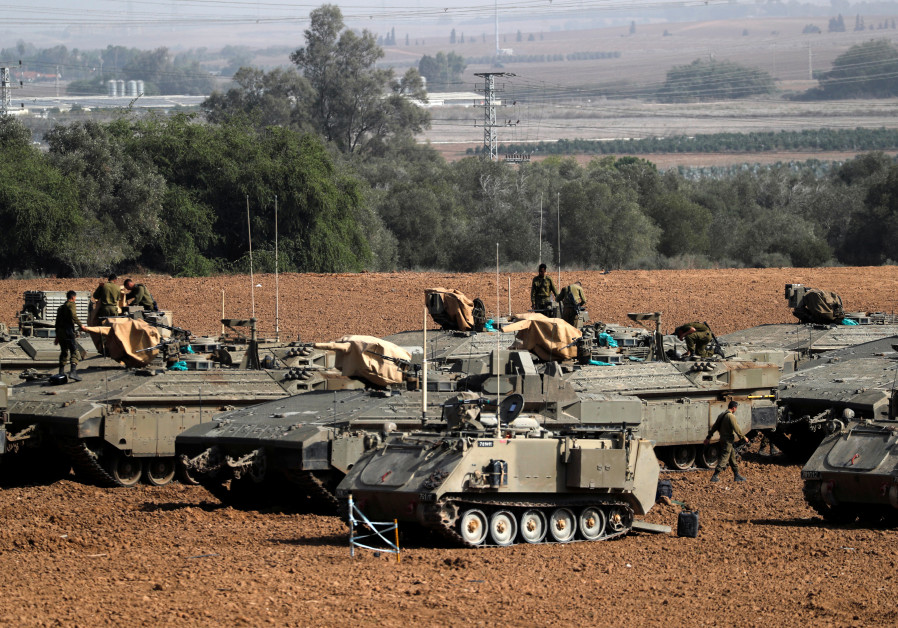
Defense Minister Naftali Bennett on Wednesday said that any terrorist who plans to attack Israel during the day will not survive the night.
Source: Jihad rocket fire moves east to Ramle, Modiin districts after 7-hour pause – DEBKAfile

After a 7-hour overnight pause, the Islamic Jihad resumed its rocket attacks early Wednesday, Nov. 12, swinging around from its usual boundaries to target the Shefela regions of eastern Israel.
The first rockets were aimed at locations close to the Gaza Strip and Ashkelon, but after 8 a.m.broadened out to Beit Shemesh in the Jerusalem Hills, the Mat Yehuda Council, Kibbutz Hulda near the old highway to Jerusalem, and locations east of the town of Ramle: Mishmar David, Mishmar Ayalon, Kfar Bin-Nun and Karmei Yosef. Alert sirens were also heard in the Mate Binyamin Council northeast of the town of Modiin. No casualties were reported.
On Tuesday, Tel Aviv and parts of central Israel, which took rocket fire, were placed on an emergency footing by extending the order to close schools and places of work from the 40km radius covering locations adjoining the Gaza Strip to 80km. This extension was lifted overnight.
On Wednesday morning, the Israel Air Force kept up its steady assaults on Jihad positions and rocket stores, with the focus on picking off rocket launch teams. The IDF is not going over the top so as not to rouse Hamas out of its current posture of non-intervention coupled with non-restraint for Jihad’s rocket fire.
Of all the armed proxies run by the Al Qods Brigades of Iran’s Revolutionary Guards, the Palestinian Islamic Jihad is the midget – no more than 7,000 to 10,000 men under arms and only about 5,000 combatants for a potential war against Israel. For comparison, the leading pro-Iranian Iraqi Shiite militias can muster an estimated 30,000 to 50,000 each. Hamas too has built a paramilitary force of 25,000 trained fighters.
Jihad commands an arsenal of around 10,000 rockets, around one-tenth of that amassed by Hamas, but still enough to immobilize large areas of Israel for days on end, especially as proved on Tuesday, when accompanied by constant threats of more punishment to come. This feat alone afforded a small Palestinian terrorist group a kind of success.
The IDF in its first briefing early Wednesday estimated that the Islamic Jihad has not done with reprisals for the death of a senior commander Baha Abu Al-Atta by Israeli forces 24 hours earlier. The emergency therefore remains in place, although the closures initially ordered by the IDF Home Command on schools, places of work and services in central Israel – which holds 40pc of the population – were lifted. They appeared at the time to be disproportionate after only two rockets of the 250 fired that day were aimed – and intercepted – at Tel Aviv and smacked rather of a full war emergency.
However, only 12 hours earlier, two Jihad commanders run by the Iranian Al Qods Brigades were targeted, one in Gaza and the other in Damascus. Israel appeared to be getting set for a possible decision by Tehran to widen the scenario of retaliation from Gaza to several more fronts. This potential danger has not been dismissed.
Source: IDF strikes Islamic Jihad targets as rocket count climbs to 250 | The Times of Israel
Palestinian health ministry updates death toll from Israeli retaliatory attacks to 16, with most of them being terror group’s members
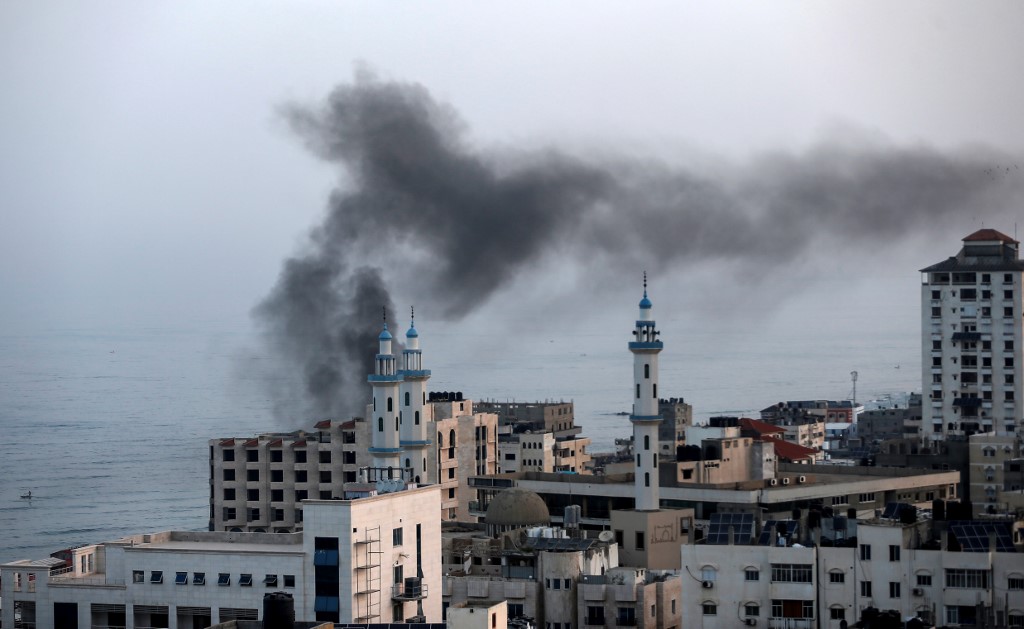
Source: Massive early morning rocket fire from Gaza shatters brief overnight calm | The Times of Israel
Attacks resume after six hours of quiet, schools in south closed; cabinet to meet to reassess situation after 200 rockets fired into Israel
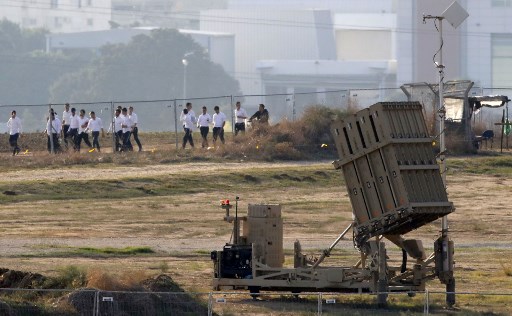
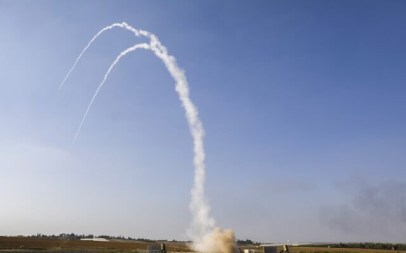
Palestinian terror groups resumed firing rockets into southern and central Israel after dawn Wednesday after a brief respite in the violence. The Iron Dome system intercepted several of the missiles and there were no immediate reports of injuries or damage.
Sirens sounded in southern Israel and then later in central Israel near Latrun. Residents reported loud explosions, apparently the Iron Dome interceptors taking down the rockets.
Another salvo was fired toward the city of Netivot.
There were no immediate reports of casualties or damage.
The rocket fire came after a brief six hour respite in the violence overnight where no rockets were fired.There were also no reports of IDF airstrikes in that period.
Israel’s targeted killing before dawn Tuesday of Palestinian Islamic Jihad (PIJ) terror chief Baha Abu al-Ata was met by over 200 rockets launched during the day by terror groups in Gaza. The Israel Defense Forces launched a campaign of retaliatory airstrikes following approximately six hours of unanswered rocket attacks on central and southern Israel from the enclave.
The renewed violence came following a promise from Palestinian Islamic Jihad to avenge the killing Abu al-Ata. Senior Islamic Jihad officials said the “real response” to Abu al-Ata’s elimination has yet to come, Channel 12 reported on Tuesday.
“The coming hours will speak for themselves,” Islamic Jihad spokesman Musab al-Breim told the Islamic Jihad-linked Palestine Today news site.
There was no statement from either side on a ceasefire. Egyptian and UN officials on Tuesday night said were pushing for a truce between Israel and Gaza terrorist groups.
Egyptian officials, who spoke on condition of anonymity, said Cairo was attempting to de-escalate tensions between Israel and the terror groups. The officials added the Egyptian General Intelligence Service stepped up communications and “opened channels” with the US and the European Union.

In the past year, both the Egyptian General Intelligence Services and UN Special Coordinator to the Middle East Peace Process Nickolay Mladenov have been involved in brokering unofficial ceasefires between Israel and the terror groups.
Despite the quiet night, schools in southern Israel will remain closed Wednesday.
In light of the security situation, the municipality of the Gaza-adjacent city of Sderot, one of the most frequent targets of the terror groups, said educational institutions would not operate Wednesday for the second consecutive day.
It was joined by similar announcements by the municipalities of the larger southern cities of Ashkelon, Ashdod, Beersheba and Yavne, as well as the central cities Bnei Brak, Ramat Gan, Rishon Lezion, Rehovot, Givatayim and Modiin.
But the Home Front Command said late Tuesday night there were no security restrictions preventing schools and businesses in the Tel Aviv metropolitan area and Shfela region from operating normally.
In accordance with Home Front Command orders, gatherings of more than 100 people will only be allowed in closed locations in areas close to Gaza, including the Gaza envelope region and the Lachish, Western Negev, Central Negev and Shfela regions. In the Tel Aviv metropolis, that order will be relevant to gatherings of more than 300 people.
Studies in Gaza will also not be held.
Ziyad al-Thabet, deputy minister of the Hamas-run education ministry, told the Hamas-linked al-Rai news site that it was decided that educational institutions in the Palestinian enclave would be closed Wednesday.
The high-level security cabinet convened Tuesday evening to discuss the situation and Israel’s further actions. They were to meet again Wednesday morning.
On Tuesday morning, the IDF Home Front Command ordered all schools and non-essential businesses closed in the following areas: the Gaza periphery; the Lachish region; the western Negev; the central Negev; and the Shfela region.
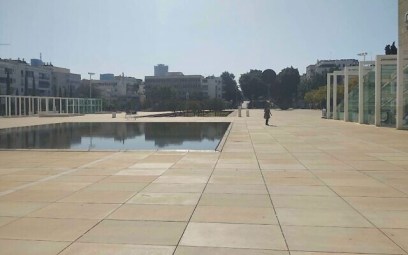
Schools were also closed in the Dan region, including Tel Aviv, and in the Yarkon region. Businesses were temporarily ordered shut there as well, but were allowed to reopen on Tuesday morning, providing there was a bomb shelter nearby, the military said.
It was the first time that the IDF ordered a closure of both schools and businesses in the Tel Aviv metropolitan area since 1990 in the First Gulf War. Over a million Israeli students did not attend classes.
Ben Gurion Airport operated as usual.
In the predawn hours of Tuesday morning, Israeli Air Force jets fired precision ammunition at a building in the Shejaiya area of Gaza City where Abu al-Ata was located, killing him and his wife, in a joint operation by the IDF and Shin Bet security service.
According to the IDF, Abu al-Ata was the true “senior commander” of the Islamic Jihad in the Gaza Strip, having ordered the group to carry out most of the significant rocket and border attacks from the Palestinian enclave in recent months and planning to carry out more.
Shortly after Abu al-Ata’s assassination, the PIJ began launching dozens of short- and long-range rockets, firing the majority of them at the Israeli communities around Gaza and a smaller number at major cities in central Israel throughout the morning.
Dozens of the incoming projectiles were shot down by soldiers operating the Iron Dome missile defense system, representing a 90% interception rate for rockets heading toward populated areas, the army said.
The remaining 10% of projectiles struck homes, businesses and roadways, causing significant damage, but relatively few injuries.
One man was lightly injured by a rocket attack that struck a highway near the town of Gan Yavne, and an eight-year-old girl was in serious condition after she collapsed suddenly while hiding in a bomb shelter during a rocket attack on the city of Holon. It was not immediately clear if her injury was caused by the rocket attack. In addition, several people were hospitalized with light injuries that occurred as they ran to bomb shelters.
In response, the military said its fighter jets, helicopters and other aircraft targeted Palestinian Islamic Jihad “training compounds, including one used by PIJ’s naval commando unit, the shaft of an offensive terror tunnel in the northern Gaza Strip and a tunnel digging site in the central Gaza Strip,” as well as several underground facilities used to manufacture and store weapons, observation posts and training camps in three rounds of airstrikes.
These sites — specifically the underground ones — are seen as critical facilities for PIJ, which the terror group has invested large sums of money to construct.

In total, 10 Palestinians were killed in Israeli strikes on Tuesday, including Abu al-Ata and his wife, and 45 others were injured, according to the Hamas-run Gaza health ministry. PIJ said five of the dead were its members.
In Israel, a rocket struck a factory in the town of Sderot, northeast of Gaza, causing a large fire that threatened to collapse the building, the local fire department said.
Another rocket hit a home in the southern town of Netivot, causing a large amount of damage, police said. One also hit the roof of a home in the Eshkol region of southern Israel while the family was taking cover in the bomb shelter. There were no injuries.
A rocket struck the Route 4 highway near the Gan Yavne Junction, lightly injuring a man and causing significant damage to the road and several cars. Police sappers were called to the scene to remove the projectile.
Several rockets also struck elsewhere in the town of Sderot, northeast of the Gaza Strip, causing light property damage; one hit the city of Ashdod, damaging a car; and one struck a street in Rishon Lezion.
Hospitals and other emergency services were put on high alert in light of the ongoing rocket attacks.
Israel and Gaza have engaged in several sporadic rounds of violence over the last two years as the sides attempted to reach a long-term ceasefire.




 anneinpt
 artaxes
 danmillerinpanama
 davidking1530
 Peter Hofman
 Joseph Wouk
 Peter
Peter Louisiana Steve
 WarSclerotic
Recent Comments