Archive for October 2019

As US pulls out of Syria, Netanyahu insists Israel can defend itself on its own 

October 10, 2019

Source: As US pulls out of Syria, Netanyahu insists Israel can defend itself on its own | The Times of Israel

PM avoids commenting directly on Trump decision, criticized by senior right-wing MKs as an abandonment of the Kurds, but says Jerusalem appreciates Washington’s assistance

Prime Minister Benjamin Netanyahu speaks at a memorial ceremony at Jerusalem's Mount Herzl for those killed in the Yom Kippur War, on October 10, 2019. (Screen capture/Youtube)

Prime Minister Benjamin Netanyahu speaks at a memorial ceremony at Jerusalem’s Mount Herzl for those killed in the Yom Kippur War, on October 10, 2019. (Screen capture/Youtube)

Against the backdrop of the US military’s withdrawal from Syria, criticized by some analysts who warn it will create a vacuum to be filled by powers that don’t share Israel’s interests, Prime Minister Benjamin Netanyahu asserted on Thursday that Israel will defend itself on its own against regional threats.

“As in 1973, today we also greatly appreciate the important support of the US… At the same time, we always remember and implement the basic rule that guides us: Israel will protect itself, on its own, against any threat,” said Netanyahu during a memorial ceremony at Jerusalem’s Mount Herzl national cemetery for those killed in the Yom Kippur War.

The prime minister avoided directly mentioning the US decision to pull out from Syria, instead focusing on the “current source of aggression in the Middle East: the Iranian regime in Tehran.”

Netanyahu accused the Islamic Republic of “striving to tighten its grip” on countries throughout the region, referencing the downing of a US drone and the targeting of Saudi Arabian oil refineries.

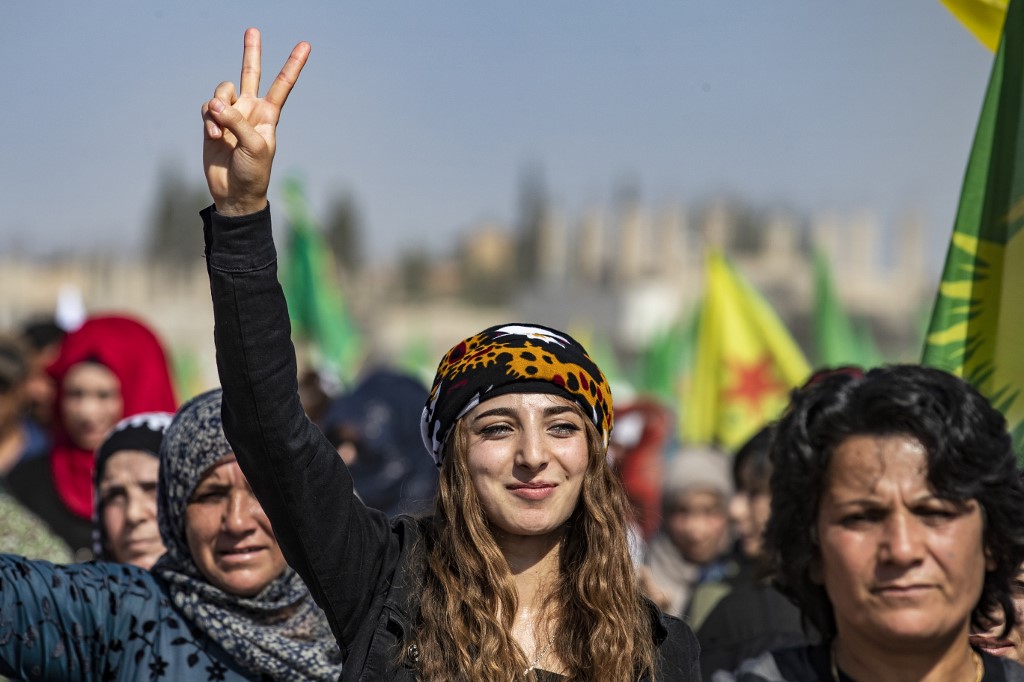
A Syrian Kurdish woman flashes the v-sign during a demonstration against Turkish threats in Ras al-Ain town in Syria’s Hasakeh province near the Turkish border on October 9, 2019. Turkish warplanes were reported to be attacking the town hours later. (Photo by Delil SOULEIMAN / AFP)

“Iran threatens to wipe us off the map… Time and again, [the regime] tries to attack us, so we must stand ready to protect ourselves from the danger,” the premier added.

While they also refrained from specifically mentioning the US president, several prominent right-wing lawmakers spoke out against the Trump-ordered withdrawal for its “abandonment” of the Kurdish civilians and military forces in northern Syria.

On Wednesday evening, New Right MK Ayelet Shaked reissued a call for Kurdish statehood, urging the West to support the Kurds as Turkey launched a military campaign in northern Syria.

“Our national memory requires us to revolt against violence directed against another nation. Such is the Turkish violence directed against the Kurdish people in northern Syria,” the former justice minister wrote on Facebook.

“I have said this in the past: It is in the interest of both Israel and the United States, for the security and stability of the region, that a Kurdish state be established,” she wrote.

“The Kurds are the world’s largest nation without a country, with a population of about 35 million people. They are an ancient people that share a special historical connection to the Jewish people,” she went on.

In 2016, Shaked, then justice minister, openly endorsed the idea of an independent Kurdistan.

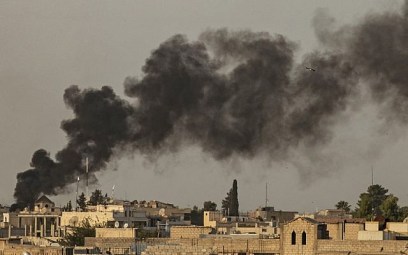
Smoke billows following Turkish bombardment on Syria’s northeastern town of Ras al-Ain in the Hasakeh province along the Turkish border on October 9, 2019 (Delil SOULEIMAN / AFP)

She was joined by other lawmakers, including New Right chairman Naftali Bennett, Netanyahu’s Likud rival Gideon Sa’ar and Blue and White MK Zvi Hauser.

On Wednesday, Turkey launched a broad assault on Kurdish-controlled areas in northeastern Syria, with intensive bombardment paving the way for a ground offensive made possible by the withdrawal of US troops.

Turkish President Recep Tayyip Erdogan announced the start of the attack on Twitter and soon after jets and artillery targeted Kurdish positions along the full width of the border, sending thousands of civilians fleeing their homes.

In 2014, Netanyahu expressed support for an independent Kurdistan. He praised the Kurds’ “political commitment and political moderation,” and said they were “worthy of their own political independence.”

Yair Netanyahu, the prime minister’s son, positioned himself as a supporter of Kurdish independence on Wednesday, tweeting a Kurdish flag together with the hashtag #freekurdistan.


Rely on no one

October 10, 2019

Source: Rely on no one – Opinion – Jerusalem Post

Great and unmatched wisdom?

BY JPOST EDITORIAL
 OCTOBER 10, 2019 02:47
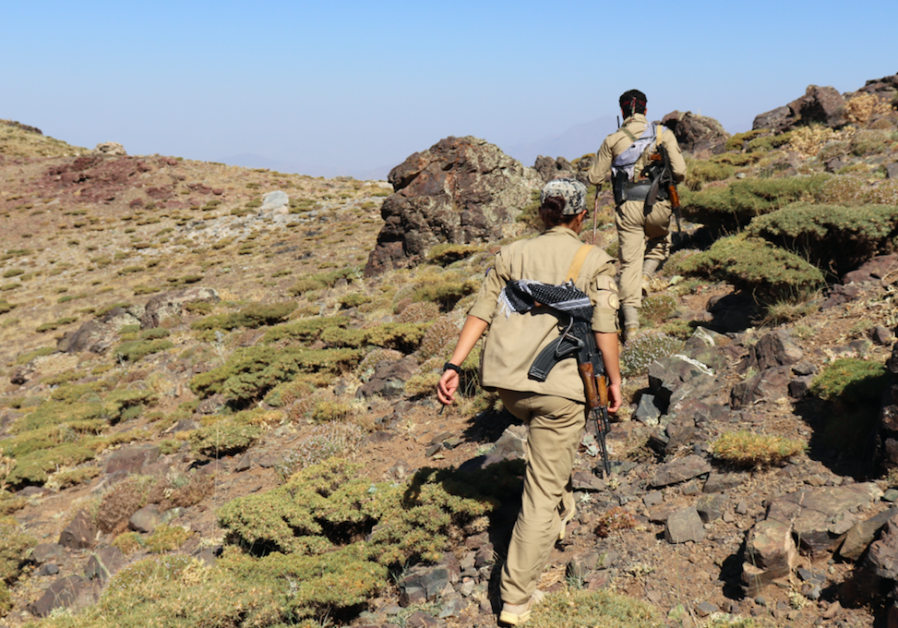
KURDISH MEMBERS of Democratic Party of Iranian Kurdistan hike through mountains from Iraq to Iran.

“We must always have the backs of our allies, if we expect them to have our back. The Kurds were instrumental in our successful fight against ISIS in Syria. Leaving them to die is a big mistake,” adding: #TurkeyIsNotOurFriend.

Haley was not alone. South Carolina Senator Lindsey Graham, considered one of Trump’s most loyal supporters in the Senate, called it “a disaster in the making.”

Graham was among a number of senior Republicans who came out strongly against Trump’s sudden decision to abandon America’s Kurdish ally. Senate Majority Leader Mitch McConnell urged Trump to reverse the decision, saying “a precipitous withdrawal of US forces from Syria would only benefit Russia, Iran and the Assad regime.”

Another Republican ally of Trump, Rep. Liz Cheney, the No. 3 House Republican, also voiced objection to Trump’s decision, and of course so did all the Democrats. But that so many stalwart Republican defenders of this controversial president so vociferously objected to his sudden change of policy, is a clear indication that this decision might be a major strategic mistake.

The decision was not just a remarkable shift and horrible reversal of US policy, but also a clear and present danger to the region both now and for years to come. Moreover, throwing the Kurds under the bus sends a disturbing message to the US’s other friends in the region – and that includes Israel – who now all have to ask themselves if they can truly rely on America with Trump at the helm.

Trump tweeted that it was “time for us to get out of these ridiculous Endless Wars, many of them tribal, and bring our soldiers home.”
But because the blowback was so severe, he followed up the next day: “As I have stated strongly before, and just to reiterate, if Turkey does anything that I, in my great and unmatched wisdom, consider to be off limits, I will totally destroy and obliterate the Economy of Turkey (I’ve done before!).”

Great and unmatched wisdom?

That hardly seems to be the case in this decision as well as others that he has made in Syria and the Persian Gulf and have given Iran a feeling that it can do what it wants without paying a price.

“I don’t believe it is a good idea to outsource the fight against ISIS to Russia, Iran, and Turkey,” Graham tweeted. “They don’t have America’s best interests at heart. The most probable outcome of this impulsive decision is to ensure Iran’s domination of Syria. The US now has no leverage and Syria will eventually become a nightmare for Israel.”

Indeed.

Thankfully, Graham will not sit idly by and allow a genocide to unfold. He announced that he and Democratic Senator Chris Van Hollen will introduce legislation calling for sanctions against Ankara if Turkey invades Syria, and “will call for their suspension from NATO if they attack Kurdish forces who assisted the US in the destruction of the ISIS Caliphate.”

The ostensible reason for the US leaving Syria is to allow Turkey a free hand in fighting ISIS, but that’s not realistic. Turkey does not have the capability to shut down ISIS. Its real target is the Kurds, and it is no doubt preparing to unleash a massive attack.

Israel needs to draw the necessary lesson that the Jewish state’s founding fathers understood after the Holocaust just as it was taught by Hillel and quoted in Ethics of the Fathers: “If I am not for myself, who will be for me?”

Every day, the State of Israel weighs the movements of its surrounding enemies bent on destroying the country. Surveying the landscape and weighing the options of how to react, Israel knows its decisions must be based on one underlying principle: it can never rely on others, even those whom it thinks are its best friends.

With his decision to abandon the Kurds, Trump proved once again that Hillel was right. Israel can only rely on itself.


Trump’s new actions, inactions on Kurds, Syria, Iran have Israel deeply worried 

October 10, 2019

Source: Trump’s new actions, inactions on Kurds, Syria, Iran have Israel deeply worried | The Times of Israel

Former Israeli ambassador to the US says he no longer thinks Israel can ‘bank on’ the US intervening if a serious war broke out

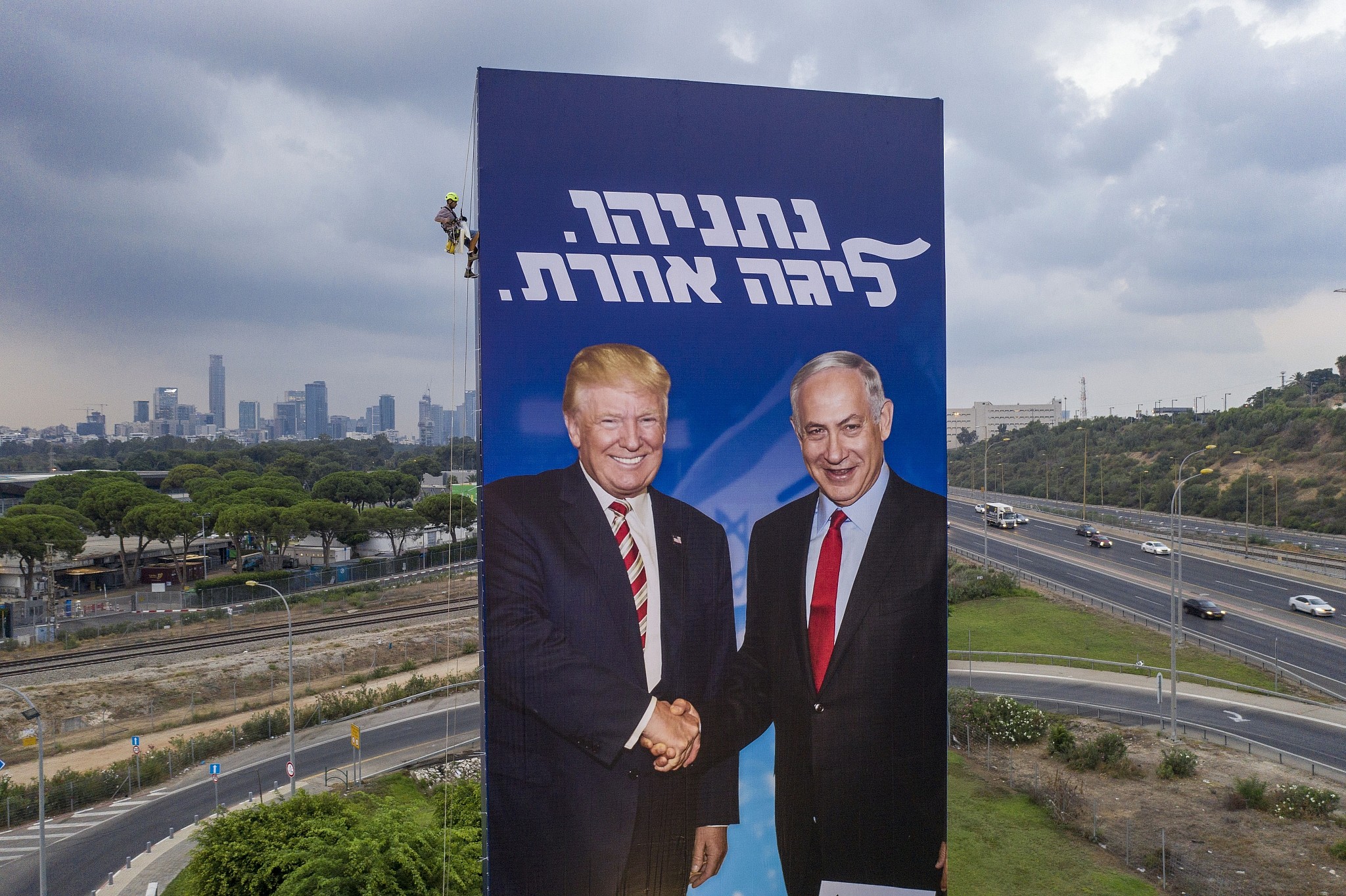
A worker hangs an election campaign billboard of the Likud party shows Prime Minister Benjamin Netanyahu, right, and US President Donald Trump in Tel Aviv, Israel  on September 8, 2019. Hebrew on billboard reads 'Netanyahu, in another league.' (AP/Oded Balilty)

A worker hangs an election campaign billboard of the Likud party shows Prime Minister Benjamin Netanyahu, right, and US President Donald Trump in Tel Aviv, Israel on September 8, 2019. Hebrew on billboard reads ‘Netanyahu, in another league.’ (AP/Oded Balilty)

President Donald Trump’s withdrawal of US troops from a crucial area of the Turkey-Syria border, widely seen as an abandonment of America’s Kurdish allies there, has reinforced the resonance of a series of “emergency” warnings issued by Israeli leaders in the days leading up to Wednesday’s solemn Yom Kippur.

Israel’s concern, as Channel 13’s military analyst Or Heller put it on Wednesday night, is that “Trump’s isolationism” will encourage Iran to do what it did to Saudi Arabia’s oil facilities last month: attack.

When the new Knesset was sworn in last Thursday, Prime Minister Benjamin Netanyahu warned that Israel was facing a dire challenge from an increasingly emboldened Iran. “This isn’t spin, it’s not a whim, this is not ‘Netanyahu trying to scare us,’” he insisted. “Anyone who knows the situation knows that Iran is getting stronger and is attacking around the world, saying clearly, ‘Israel will disappear.’ They believe it, they are working toward it, we need to take them seriously. That reality obligates us to act. Remember my words and heed them.”

More understatedly but along the same lines, President Reuven Rivlin warned that same day that Israel currently had security needs “the likes of which we have not known for many years.”

And Netanyahu’s former defense minister, now rival, Avigdor Liberman, on Saturday cited a “national emergency,” in today’s Israel, including “security threats from south, north and further away.”

Despite the prime minister’s insistence that “this isn’t spin,” the political leaders’ warnings were widely seen at first as part of the jockeying over Israel’s next government: Netanyahu has been unable to muster a majority; Liberman is urging a coalition compromising his own Yisrael Beytenu, Netanyahu’s Likud, and rival Benny Gantz’s Blue and White party; and Rivlin has been seeking to broker some form of power-sharing arrangement.

Even when Netanyahu convened Israel’s key decision-making security cabinet for the first time in two months on Sunday, with Iran at the top of the agenda, many opposition politicians and analysts still largely attributed the gathering to political motivations.

But then, later that day, Trump announced his planned troop withdrawal. By Wednesday, Turkish forces were targeting Kurdish fighters in northeastern Syria, forces that had long been allied with the US in the battle against Islamic State.

Coming in the wake of the US president’s decision not to carry out or organize any kind of response to the major drone and cruise missile strike September 14 on Saudi Arabia’s Abqaiq oil processing plant, widely attributed to Iran, and other Iranian attacks on oil tankers and Saudi targets, Trump’s latest policies are increasingly being seen in Israel as boosting Iran and undermining US allies.

In terms of the practical consequence of Trump’s withdrawal, a US troop departure eases Iran’s path to growing control in Syria, and helps facilitate its relentless effort to establish a corridor of military control from Tehran to Beirut.

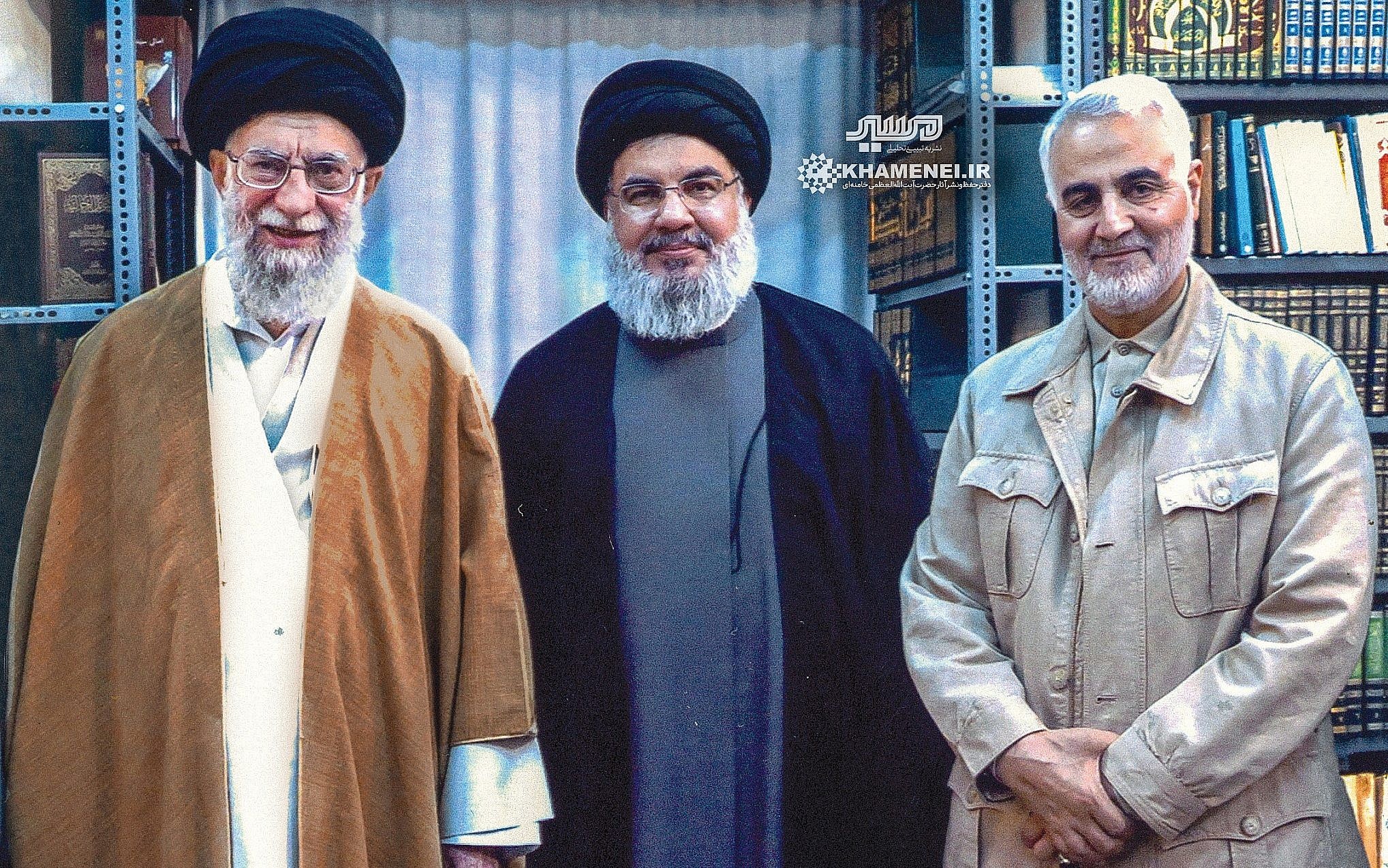
An image published on Ali Khamenei’s official website on September 25 showing Khamenei, the Iranian supreme leader, left, alongside Hezbollah chief Hassan Nasrallah, center, and Islamic Revolutionary Guards Corps Quds Force commander Qassem Soleimani. (Khamenei.ir)

In a speech aired on Iranian television on Monday, Qassem Soleimani, commander of the Quds Force of Iran’s Islamic Revolutionary Guard Corps, the man responsible for the regime’s expansionist military activities overseas boasted that Iran has now created “territorial continuity” by connecting Iran, Iraq, Syria, and Lebanon. Despite efforts by “the Zionist regime” and the US to stop it, he said, Iran “has expanded the resistance from a geographical territory of 2,000 square kilometers in southern Lebanon to a territory of half a million square kilometers.”

In terms of the heightened military threat exposed by Iran’s drone and cruise missile strike at the Saudi Abqaiq facility, Israeli army chiefs have acknowledged that Iran’s evident success in penetrating Saudi defenses, which include the Patriot air defense system that Israel also uses, has prompted a fresh analysis of Iran’s capabilities to ensure that Israel is not vulnerable.

Defense officials have reportedly gone so far as to conclude that a similar assault by Iran on Israel, if it came, would likely be launched from western Iraq, where there is a strong presence of Iran-backed militias.

The concern in Israel, TV analyst Heller said Wednesday, is that the US president’s hands-off approach in the wake of the Abqaiq attack “will encourage the Iranians to act against Israel” in the same way, “with cruise missiles and drones.” Soleimani’s al-Quds force has “an account to settle with Israel,” because of Israeli strikes at Iranian targets in Syria and Lebanon, he noted.

Uzi Even, one of the founders of Israel’s Dimona nuclear facility, wrote in Haaretz on Sunday that work at Dimona should be halted in the light of Iran’s demonstrable capabilities. “The Iranians, or their proxies, showed that they can hit specific targets with great precision and from a distance of hundreds of kilometers. We have to accept the fact that we are now vulnerable to such a strike.”

Israel has missile defense systems and other capabilities that the Saudis do not, and the Israeli defense establishment is far less bleak than Even. A senior officer in the IDF’s Military Intelligence unit told Channel 13 TV on Monday that the Iranians “get a high mark, too high,” for the Abqaiq attack, but stressed that Tehran would “absolutely” not succeed if it attempted to launch a similar assault on Israel.

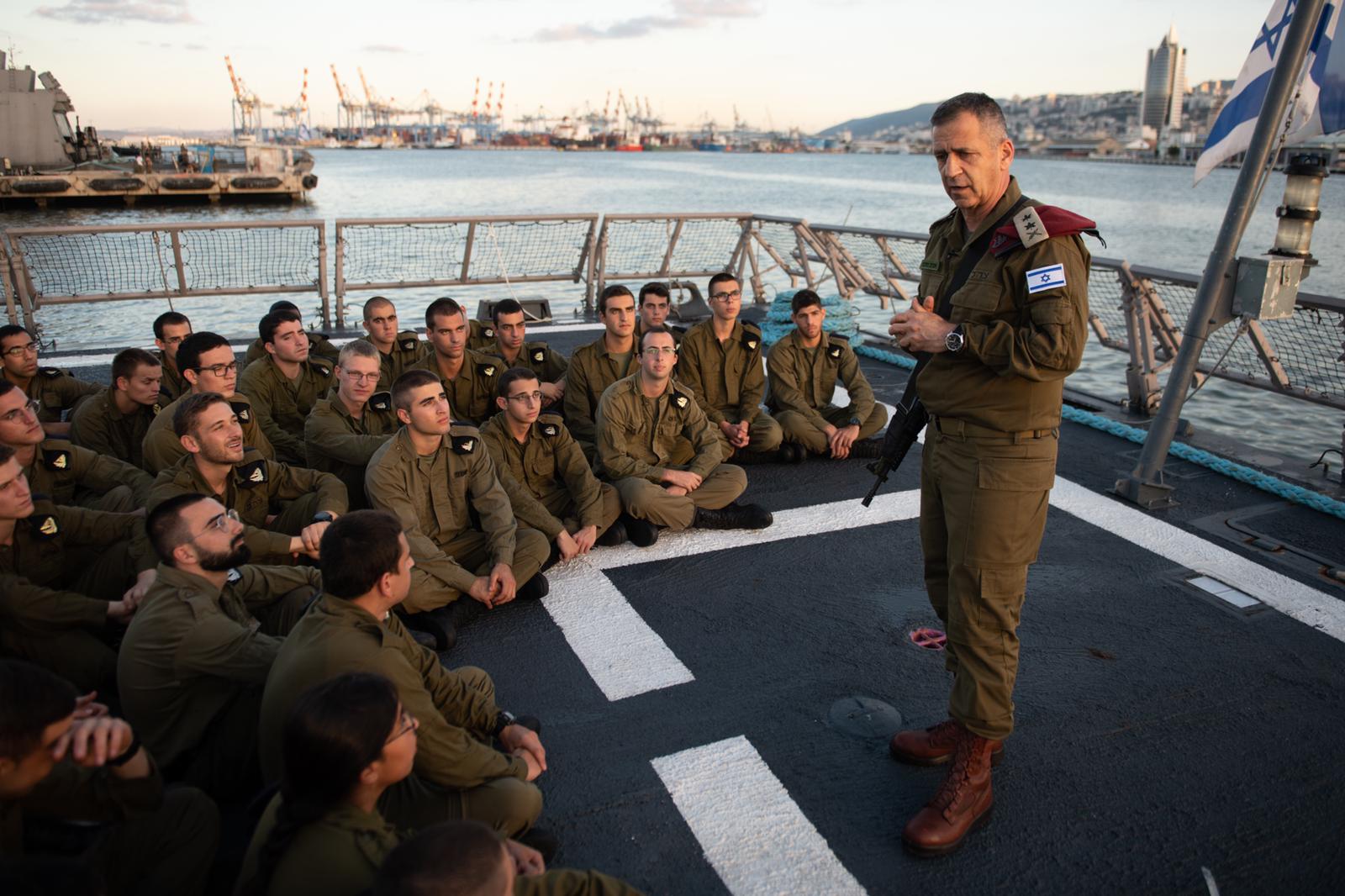
IDF Chief of Staff Aviv Kohavi speaks to Israeli Navy soldiers on the stern of a ship in the Haifa Port during a surprise exercise on September 25, 2019. (Israel Defense Forces)

Still, the IDF’s chief of staff, Aviv Kohavi, felt moved to issue a warning Monday that any attack on Israel would be met with a “forceful” response. “We are keeping our eyes open, having daily situation assessments, and taking professional decisions that lead to attacks and the thwarting of threats.”

Finally, however, in terms of the dependability, or otherwise, of the Trump administration in an Israeli hour of need, the president’s latest policies — notably regarding what had been the US alliance with the Kurds — are causing overt dismay in some Israeli circles. Netanyahu has closely allied himself with Trump, hailing their friendship at the risk of alienating the president’s Democratic opponents, and being rewarded with presidential recognition of Jerusalem as Israel’s capital in 2017, and of the Golan Heights as sovereign Israeli territory this past March.

Writing in Israel’s biggest-selling Hebrew daily Yedioth Ahronoth on the eve of Yom Kippur, veteran diplomatic correspondent Shimon Shiffer warned that Trump’s decision on the Syrian withdrawal, and his “abandoning of the Kurdish allies, who believed that the US would stand with them… must set all our red lights flashing.” And the conclusion for Israel, Shiffer charged, “needs to be unequivocal: Trump has become unreliable for Israel. He can no longer be trusted.”

Shiffer, whose column was headlined “A knife in our backs,” noted that the president didn’t even tell Israel in advance of his Syrian withdrawal plans. He also noted pointedly, given the timing of his column, that the US strategic airlift of weapons and supplies during the 1973 Yom Kippur War, when Israel was facing defeat, was nothing short of decisive.

In less charged but no less significant terms, the former Israeli ambassador to the US, Michael Oren, until recently a deputy minister in Netanyahu’s government, told the New York Times on Tuesday he was no longer sure Israel could rely on the US, under Trump, to come to Israel’s aid at a time of serious war. Oren, who served in DC from 2009-2013, recalled that at Barack Obama’s last meeting with Netanyahu — who had a friction-filled relationship, especially over the 2015 Iran nuclear deal — the president assured the prime minister that “if Israel ever got into a serious war, of course the US would intervene, because that’s what the American people expect.” Said Oren: “I don’t think Israel can bank on that today… I don’t know now.”

For now, Channel 13’s Heller stressed, Israeli-American military coordination is unchanged. In the coming days, indeed, the Israeli Air Force will be hosting a joint Blue Flag drill with the US Air Force in the south of Israel.

On Tuesday, shortly before the start of Yom Kippur, Trump issued a presidential message to the Jewish people, saying that “Melania and I pray that He may seal you in the Book of Life for the coming year.”

The president’s words will have been warmly received in the Jewish state. He had very nice things to say about the Kurds, too, that same day: “In no way have we abandoned the Kurds, who are special people and wonderful fighters,” he tweeted.

But concern is mounting about the president’s deeds.


EU demands Turkey halt Syria operation as NATO chief urges ‘restraint’ 

October 10, 2019

Source: EU demands Turkey halt Syria operation as NATO chief urges ‘restraint’ | The Times of Israel

EU chief says political solution is only way to end the Syrian conflict; NATO calls for Turkey to avoid actions that may further destabilize the region

Smoke billows following Turkish bombardment on Syria's northeastern town of Ras al-Ain in the Hasakeh province along the Turkish border on October 9, 2019 (Delil SOULEIMAN / AFP)

Smoke billows following Turkish bombardment on Syria’s northeastern town of Ras al-Ain in the Hasakeh province along the Turkish border on October 9, 2019 (Delil SOULEIMAN / AFP)

EU chief Jean-Claude Juncker on Wednesday demanded Turkey halt its military operation against Kurdish fighters in northern Syria, telling Ankara a political solution was the only way to end the Syrian conflict.

He spoke as Turkish forces launched an assault on Kurdish positions, with air strikes and explosions reported near the border.

Turkish President Recep Tayyip Erdogan announced the start of the attack, which is aimed at curbing the Kurdish-led Syrian Democratic Forces (SDF).

The SDF was previously allied to the US, which used it to crush the Islamic State group.

European Commission President Jean-Claude Juncker delivers his State of the Union speech at the European Parliament on September 12, 2018, in Strasbourg, eastern France. (AFP PHOTO / FREDERICK FLORIN)

Juncker told the European Parliament he recognized Turkey had “security concerns” along the border, but he warned the military action would not lead to a “good result.”

“I call on Turkey as well as the other actors to act with restraint and to stop operations already, as we are speaking, under way,” Juncker said.

“I have to say if the Turkish plan involves the creation of a so-called safe zone, don’t expect the European Union to pay for any of it.”

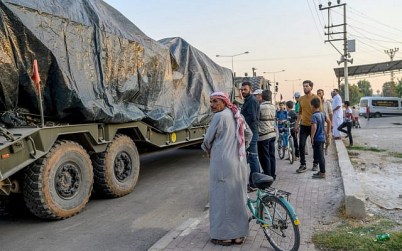
Turkish civilians look at a Turkish army’s convoy driving towards the Syrian border near Akcakale in Sanliurfa province on October 9, 2019 (BULENT KILIC / AFP)

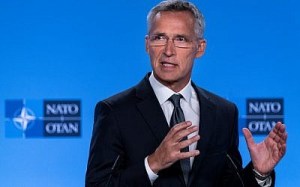
NATO chief Jens Stoltenberg on Wednesday urged Turkey to show “restraint” in its operation against Kurdish forces in Syria, warning that the fight against the Islamic State group should not be put at risk.

After NATO member Turkey launched an assault aimed at curbing the SDF, Stoltenberg acknowledged that Ankara had “legitimate security concerns” but called for a measured response.

“NATO has been informed by Turkish authorities about the ongoing operations in Northern Syria. It’s important to avoid actions that may further destabilize the region, escalate tensions, and cause more human suffering,” Stoltenberg said at a news conference in Rome with Italian Prime Minister Giuseppe Conte, in remarks released by his office.

“I count on Turkey to act with restraint and to ensure that any action it may take in northern Syria is proportionate and measured.”

NATO Secretary General Jens Stoltenberg gestures as he delivers a speech during a press conference about the end of the Intermediate-Range Nuclear Forces (INF) treaty at the North Atlantic Treaty Organization (NATO) headquarters, in Brussels, on August 2, 2019 (Kenzo TRIBOUILLARD / AFP)

Erdogan announced the start of “Operation Peace Spring,” saying it aimed to stop a “terror corridor” emerging along Turkey’s southern frontier.

The SDF was previously allied to the US, which used it to crush the Islamic State group. But Turkey says it is linked to Kurdish insurgents inside its own territory.

The assault has been strongly criticized by France and Germany, which warned it risked an IS resurgence, and Stoltenberg said the fight against the Islamists must not be endangered.

“We must not jeopardize the gains we have made together against our common enemy, ISIS,” Stoltenberg said, using another acronym for the jihadist group.

“ISIS continues to pose a grave threat to the Middle East and North Africa, and to all our nations,” he said.

Stoltenberg will visit Istanbul on Friday and he said he would raise the issue with Erdogan.

France said Wednesday it “strongly condemns” Turkey’s offensive in northeast Syria.

European Affairs minister Amelie de Montchalin said France, Germany and Britain were working on a joint declaration “which will be extremely clear on the fact that we very strongly condemn” the Turkish campaign against Kurdish forces in northeast Syria.

The minister also told parliament’s foreign affairs commission that France would bring up the matter at the United Nations Security Council.

Times of Israel staff contributed to this report.


Turkey launches troop offensive in northeastern Syria – DEBKAfile

October 10, 2019

Source: Turkey launches troop offensive in northeastern Syria – DEBKAfile

As President Recep Erdogan announced the start of a Turkish operation in northeastern Syria on Wednesday, Oct. 9, the Kurdish-led SDF reported that Turkish warplanes were striking civilian areas. Erdogan stated that he wants to create “a safe haven cleared of Kurdish militias to house a million Syrian refugees.”

DEBKAfile’s military sources report that the Turkish army’s short-term goal is to establish a 100km long security belt, 30km deep, along the Syrian-Turkish border. (See attached map.) At the moment, Turkish air strikes are directed against Kurdish YPG militia’s bases and ammunition stores, while shelling them from across the border. The Turkish air force is also bombing Ras al-Ayn in the Hasakeh region east of the River Euphrates. Turkish ground forces and tanks crossed into Syria Wednesday night.

Kurdish reports of Turkish aerial bombardment appeared to be inflated in the hope of bringing the Americans to their aid before the Turkish army crossed over. In the initial stage of the offensive, our military sources don’t expect Erdogan to overshoot the limits of the security zone, on whose creation he and President Donald Trump agreed in their phone call on Saturday, Oct. 7. It was after that call, that Trump announced the withdrawal of around 100 US troops from two observation posts in northeast Syria out of the way of the Turkish plan. This decision was sharply and widely criticized. He also warned Erdogan that he would “obliterate” the Turkish economic if the Kurds were attacked.

There were a number of military movements related to Syria in the course of Yom Kippur:

  • Iran has embarked on an unannounced large-scale military exercise on its border with Turkey, with the participation of special forces, Iranian chief of staff Maj. Gen. Abdolrahim Mousavi announced.
  • A small US force made its way to the north Syrian town of Kobani near Aleppo to head off a possible Turkish attack. The force consists of six US armored vehicles.
  • Pro-Turkish Turkmani militias have massed near the Syrian-Turkish border to support the forthcoming Turkish assault on Tal Abyad.


Iran could attack Israel, just as it did the Saudi oil fields: Galant 

October 8, 2019

Source: Iran could attack Israel, just as it did the Saudi oil fields: Galant – Middle East – Jerusalem Post

“Iran is not a theoretical enemy.”

BY TOVAH LAZAROFF
 OCTOBER 8, 2019 10:36
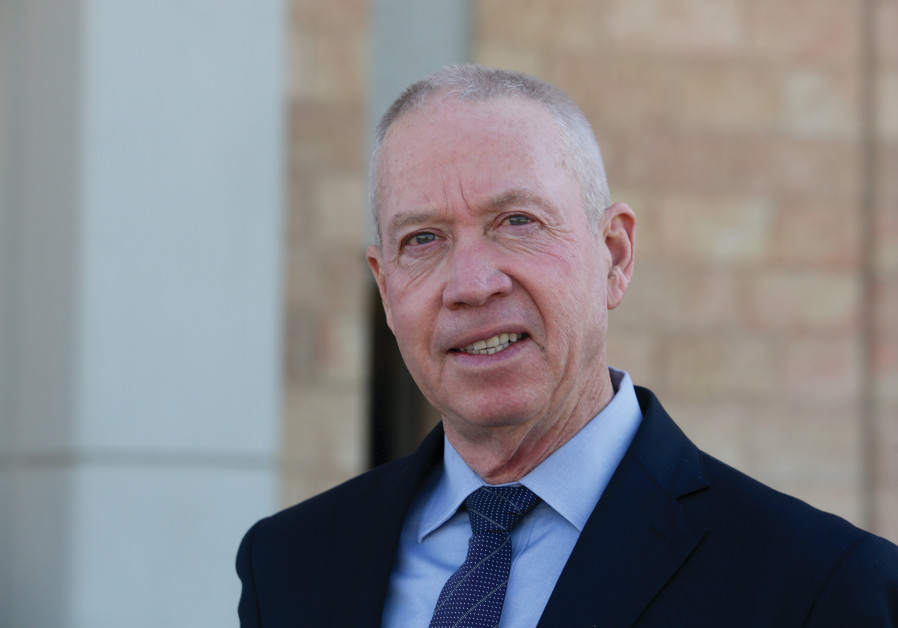
Yoav Galant

Iran could use a combination of cruise missiles and advanced drones to attack Israel, in a manner similar to the way it attacked the Saudi oil fields last month, Absorption Minister Yoav Galant told Army Radio.
A Major-General (Res.), Galant was one of a number of Israel’s security cabinet members who took to the airwaves this week  to discuss the threat from Iran, in the aftermath of Sunday’s security cabinet meeting that dealt with upgrading Israel’s aerial defense system so that it could better combat such an attack.
Galant said he would not speculate on the likelihood of such an attack, but he noted that if Iran could “shoot in one direction [at Saudi Arabia] from hundreds of kilometers away” it could also “shoot in another direction [at Israel] from hundreds of kilometers away.
“We are looking at what is happening around us,” he continued.

Since May Iran has been increasing its hostile activity in the region, including an unprecedented attack on September 14 on the Saudi oil fields that involved the coordination of dozens of projectiles, missiles and drones, Galant explained.

Iran is not a theoretical enemy,” Galant said, explaining that its regime has repeatedly threatened to destroy Israel.

Iran has denied attacking Saudi Arabia. But Israel, the United States, Saudi Arabia, France and Germany hold that Iran was behind the attack. This past summer, Israel said it thwarted a potential Iranian drone attack against the Golan Heights.

Iranian threats against Israel should be taken very seriously, said Galant, who explained that the attack on Saudi Arabia relied on low flying projectiles that went undetected and represented a new phase of warfare in the region.
Israel is not Saudi Arabia and its military is capable of handling such an attack, but it is important to be alert and prepared, he said.
Former Defense Minister Moshe Ya’alon, who is a senior member of the Blue and White party, told Army Radio the attack on the Saudi oil fields was unusual, but did not reveal anything new about Iran’s military capabilities.
“I am well acquainted with the Iranian threat, there has been nothing surprising,” Ya’alon said. “It is true that there is an increase in Iranian activity against the US and the Saudis, either directly or through proxies.”

Ya’alon is not a member of the security council.

Israel is not facing a new situation with Iran, Ya’alon said, speculating that the cabinet meeting was unnecessary and therefore more political in nature, given that it came as Prime Minister Benjamin Netanyahu was in the middle of attempting to form a ruling coalition.
Minister for Regional Cooperation Tzahi HaNegbi told KAN Radio he hoped that no one believed that the Israeli’s top military leaders who took part in the meeting were simply peons in some larger political game.
Israel is capable of defending itself, but Iran appears willing to increasingly take military risks, HaNegbi said. It points the possibility that Iran is losing control or at least its sense of caution. The Saudi attack is particularly relevant to Israel because of Iran’s previous attempt to use drones against Israel, he added.

Foreign Minister Yisrael Katz told Kan Radio the Iranian attack on the Saudi oil field crossed a line.

“’We are the only ones acting against Iran to protect ourselves,” he said. “When we cross the door of the cabinet meeting, we leave the politics outside.”


Trump ally: US pullout from Syria will put Israel at risk

October 8, 2019

Source: Trump ally: US pullout from Syria will put Israel at risk | The Times of Israel

Republican Senator Lindsey Graham says decision would allow Iran to get a greater foothold in region and become ‘a nightmare’ for the Jewish state

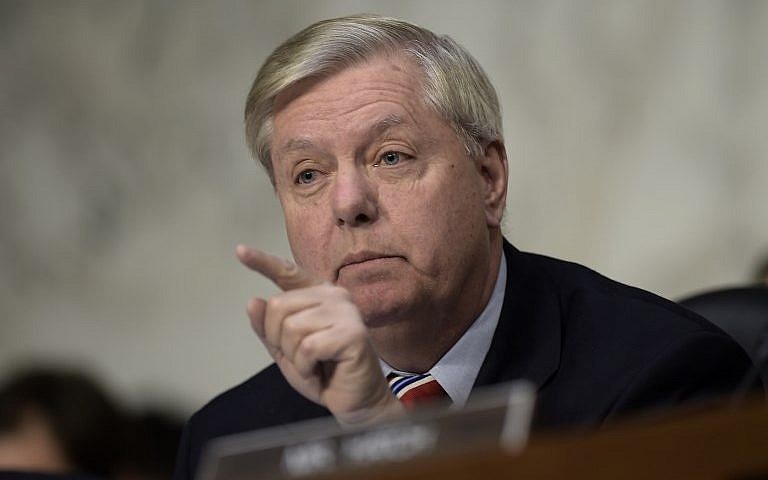
US Senator Lindsey Graham during a Senate Judiciary Committee confirmation hearing on Capitol Hill, on March 20, 2017. (AFP Photo/Brendan Smialowski)

US Senator Lindsey Graham during a Senate Judiciary Committee confirmation hearing on Capitol Hill, on March 20, 2017. (AFP Photo/Brendan Smialowski)

WASHINGTON — Top allies of Donald Trump castigated the US president Monday, after his surprise announcement that US forces would withdraw from Syria and allow a Turkish offensive against US-allied Kurds in the country, saying the move would enable Iran to gain a greater foothold in Syria and render Israel militarily vulnerable.

“The most probable outcome of this impulsive decision is to ensure Iran’s domination of Syria,” tweeted South Carolina Senator Lindsey Graham, a Republican. “The U.S. now has no leverage and Syria will eventually become a nightmare for Israel.”

Former US envoy to the United Nations Nikki Haley said Trump, her old boss, was abandoning a vital American ally.

“We must always have the backs of our allies, if we expect them to have our back,” she tweeted. “The Kurds were instrumental in our successful fight against ISIS in Syria. Leaving them to die is a big mistake.”

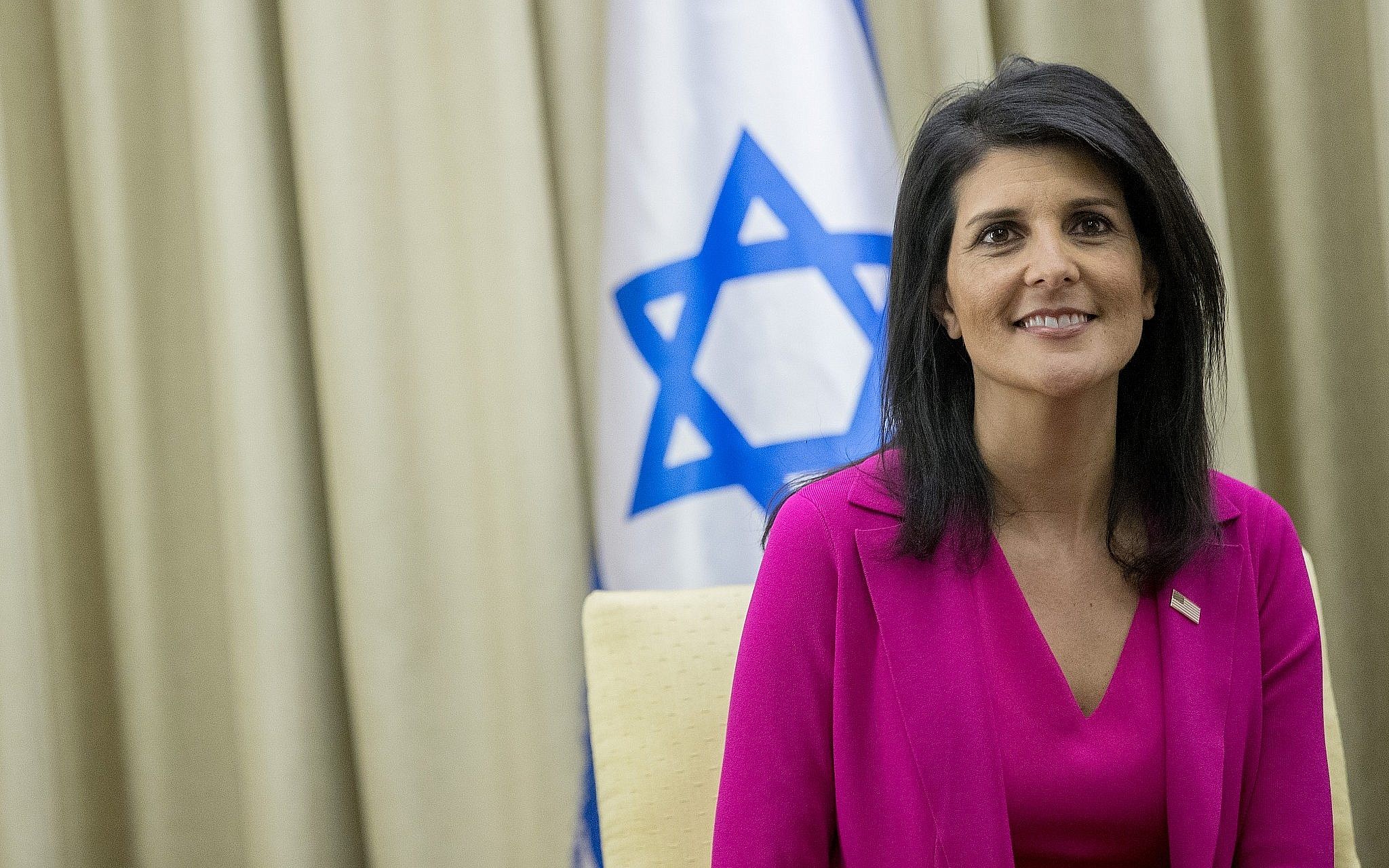
Then-US Ambassador to the United Nations Nikki Haley meets with President Reuven Rivlin, not seen, at his official residence in Jerusalem on June 7, 2017. (Yonatan Sindel/Flash90)

On Sunday night, the White House said US forces in northeastern Syria will step aside and clear the way for an expected Turkish assault — essentially abandoning Kurdish fighters who fought alongside American forces in the years-long battle to defeat the Islamic State group.

Turkish President Recep Tayyip Erdogan has threatened for months to launch a military operation across the border. He views the Syria Kurdish forces as a threat to his country as Ankara has struggled with a Kurdish insurgency within Turkey.

Republicans and Democrats have long warned that allowing a Turkish attack could lead to a massacre of the Kurds and send a troubling message to American allies across the globe.

Several of Trump’s closest allies on Capitol Hill voiced similar concerns Monday.

“If reports about US retreat in #Syria are accurate, the Trump administration has made a grave mistake that will have implications far beyond Syria,” tweeted Florida Senator Marco Rubio, a Republican. “It would confirm #Iran’s view of this administration & embolden then to escalate hostile attacks which in turn could trigger much broader & more dangerous regional war.”

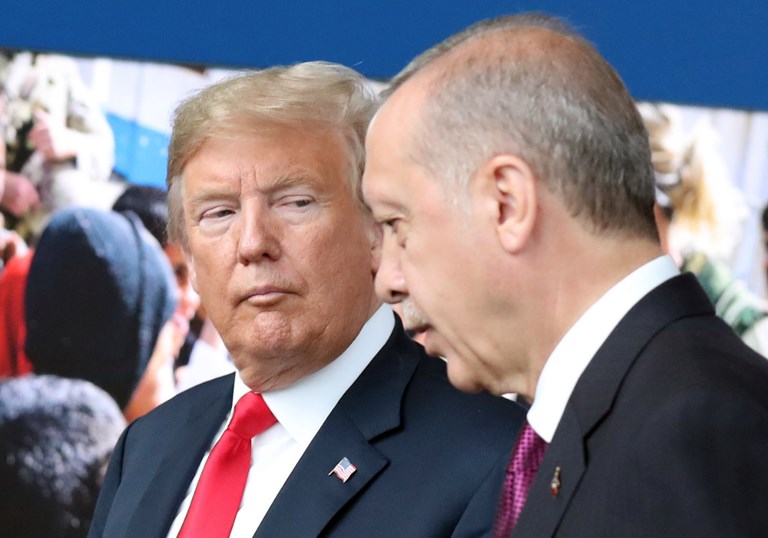
US President Donald Trump (L) talks to Turkey’s President Recep Tayyip Erdogan (R) as they arrive for the NATO summit, at the NATO headquarters in Brussels, July 11, 2018. (Tatyana ZENKOVICH/AFP)

Graham said that he consulted with Senator Chris Van Hollen, a Democrat from Maryland, and would introduce bipartisan legislation to sanction Turkey if it attacks Syria — and call for Ankara’s suspension from the North Atlantic Treaty Organization.

“We will introduce bipartisan sanctions against Turkey if they invade Syria and will call for their suspension from NATO if they attack Kurdish forces who assisted the U.S. in the destruction of the ISIS Caliphate,” Graham tweeted.

Trump defended his decision, saying that he “was elected on getting out of these ridiculous endless wars.” If Turkey were to do anything “off limits,” he said, he would consequence the country harshly.

“As I have stated strongly before, and just to reiterate, if Turkey does anything that I, in my great and unmatched wisdom, consider to be off limits, I will totally destroy and obliterate the Economy of Turkey (I’ve done before!),” he tweeted. “They must, with Europe and others, watch over the captured ISIS fighters and families.”

“It is time now for others in the region, some of great wealth, to protect their own territory,” he added. “THE USA IS GREAT!”

The Associated Press contributed to this report.


Israel, bracing for Iranian assault, studies recent attack on Saudi oil facility 

October 8, 2019

Source: Israel, bracing for Iranian assault, studies recent attack on Saudi oil facility | The Times of Israel

Defense officials assess that a similar cruise missile strike could be launched from Iraqi territory; IDF chief warns of forceful response

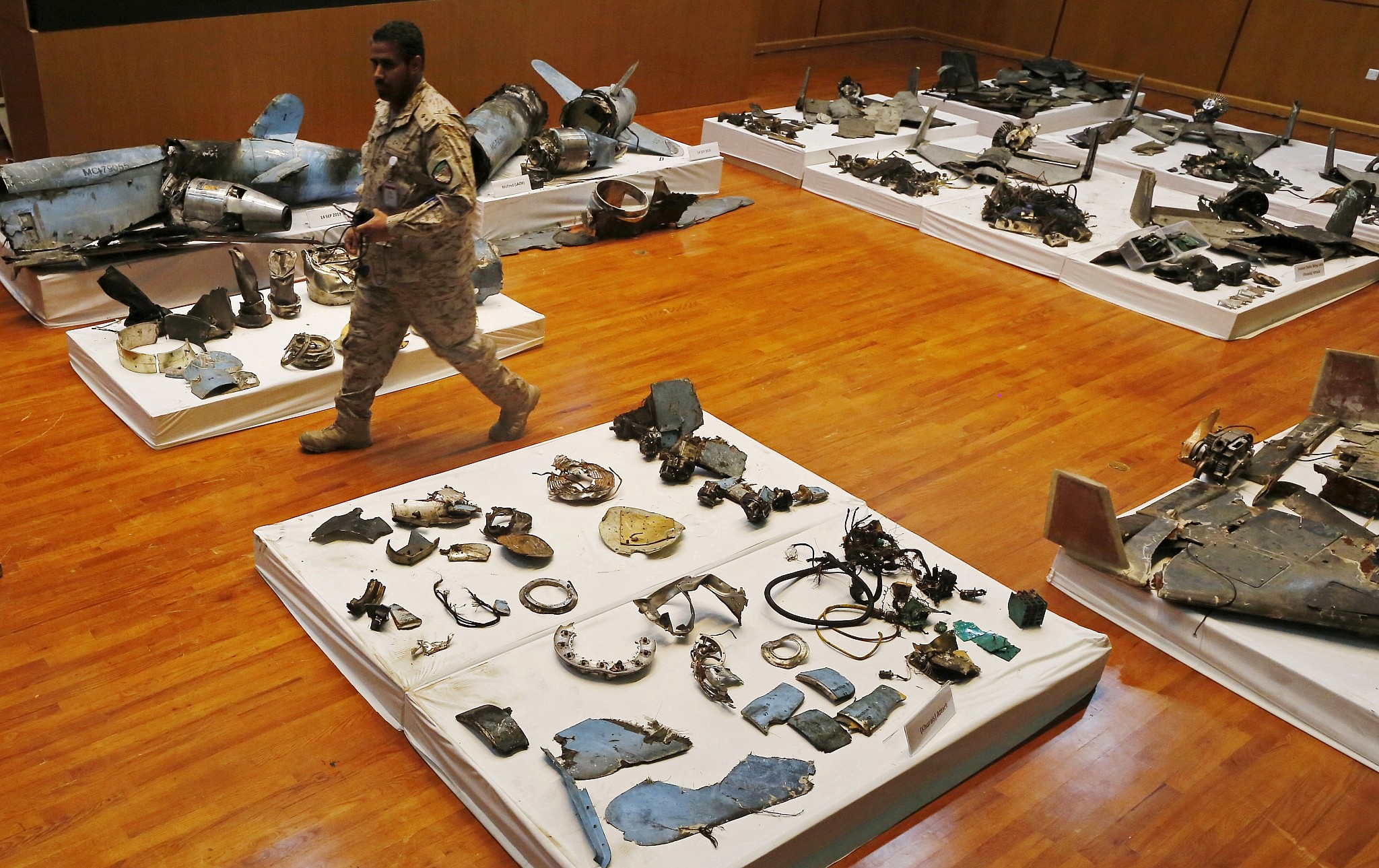
A Saudi military officer walks by what was described as the remains of Iranian cruise missiles and drones used in an attack that targeted the heart of Saudi Arabia's oil industry, in Riyadh, Saudi Arabia, September 18, 2019. (Amr Nabil/AP)

A Saudi military officer walks by what was described as the remains of Iranian cruise missiles and drones used in an attack that targeted the heart of Saudi Arabia’s oil industry, in Riyadh, Saudi Arabia, September 18, 2019. (Amr Nabil/AP)

Israel’s defense establishment is analyzing last month’s strike on Saudi Arabian oil facilities, which is being blamed on Iran, to learn how to protect the country from a possible similar assault, Hebrew media reported Monday.

The September 14 combined drone and cruise missile barrage on two facilities knocked out half of the kingdom’s oil production, and impressed Israeli analysts in that it succeeded in penetrating Saudi defenses, which include the Patriot air defense system that Israel also uses, Channel 13 news reported.

Although Yemen’s Iranian-backed Houthi rebels claimed responsibility, the US, Britain, France, Germany, and Saudi Arabia have accused Iran of being behind the attack. Tehran denies the allegation.

A senior officer in the IDF’s Military Intelligence unit, who could only be identified by the first letter of his Hebrew name, ‘Yud,’ told Channel 13 that the Iranians showed an impressive ability in hitting Saudi Arabia.

“They get a high mark, too high,” Yud said of the Iranian attack, but stressed that Tehran would “absolutely” not succeed if it attempted to launch a similar assault on Israel.

Israel, he said, is assessing the threat in “a very informed and very balanced way.”

“The army is prepared for any developing scenarios in the northern arena,” Yud continued, and noted that this included countering a possible barrage of cruise missiles and drones.

IDF Chief of Staff Aviv Kohavi attends a ceremony in Glilot military base, near Tel Aviv, May 26, 2019. (Flash90)

Also Monday, IDF chief Aviv Kohavi warned that any attack on the country would be met with an aggressive response.

“We will not allow an attack on Israel and if it happens we will respond forcefully,” Kohavi said at a memorial service for fallen paratroopers. “We are keeping our eyes open, having daily situation assessments, and taking professional decisions that lead to attacks and the thwarting of threats.”

Channel 12 news reported that defense officials who have studied the weapons used in the attack on the Saudi facilities concluded that a similar assault by Iran on Israel, if it came, would likely be launched from western Iraq, where there is a strong presence of Iran-backed militias.

Unlike ballistic missiles, which usually fly through a high arc on the way to the target, cruise missiles and drones fly at low altitude, making them harder to detect.

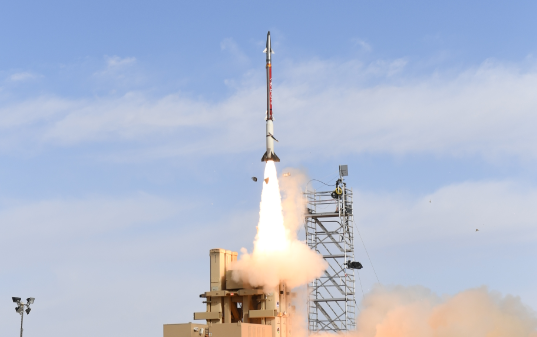
Israel’s defenses against a missile attack, and in particular a cruise missile attack, begin with a network of radar systems around the country to detect an incoming threat. In addition, Israel has begun deploying the David’s Sling system, which is designed to intercept ballistic and cruise missiles at ranges of 40 to 300 kilometers.

Several David Sling batteries are already deployed by the air force. Another system, Barak 8, provides maritime protection for Israel’s natural gas rigs in the Mediterranean Sea.

Interception tests of the David’s Sling Aerial Defense System on March 19, 2019. (Defense Ministry)

On Sunday, the high-level security cabinet convened for the first time in two months, amid cryptic warnings by Israeli leaders in recent days of a growing security threat from Iran.

The discussions were based on concerns that Tehran, emboldened by a recent string of attacks in the Gulf region that drew no military response from the West or its Middle Eastern allies, could set its sights on attacking Israel, Channel 12 reported.

During the meeting, ministers discussed a proposal, being pushed by Prime Minister Benjamin Netanyahu, for a NIS 1 billion ($290 million) project to boost Israel’s air defenses that would place particular focus on defending the country against cruise missile attacks.

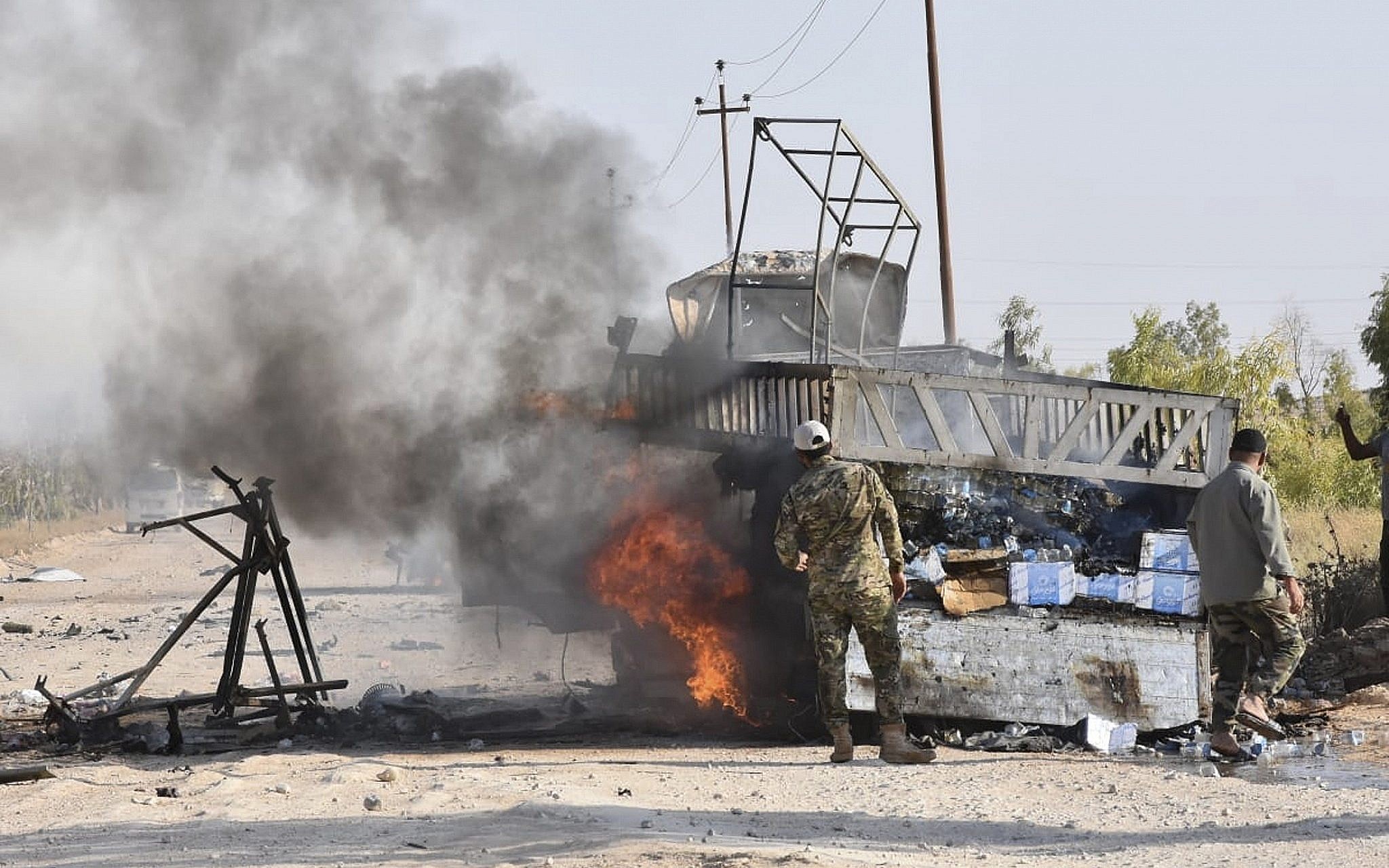
Illustrative: Popular Mobilization Forces members stand by a burning truck after a drone attack blamed on Israel near Qaim border crossing, in Anbar province, Iraq, August 25, 2019. (AP Photo)

Iran regularly threatens Israel, viewing the country as a powerful enemy allied with the United States and Sunni nations in the region against Tehran and its nuclear ambitions.

Israel has also thwarted operations in neighboring Syria where Iranian fighters and those of its proxy Hezbollah have been fighting alongside forces loyal to President Bashar Assad since 2011.

Israel has vowed to prevent Iran’s regional proxy militias from obtaining advanced weapons to use against the Jewish state and has carried out hundreds of airstrikes in Syria whose goal it says is to prevent the delivery of weapons and to stop Iranian military entrenchment in that country.

In addition, recent months have seen several airstrikes against Iran-backed militias in western Iraq, some of which have been attributed to Israel.

Agencies contributed to this report.


Iran plans to start using more advanced centrifuges in coming weeks

October 8, 2019

Source: Iran plans to start using more advanced centrifuges in coming weeks | The Times of Israel

Under terms of 2015 nuclear deal, Tehran had committed to not using this array until late 2023; enrichment now at pre-deal daily capacity, country’s nuclear chief says

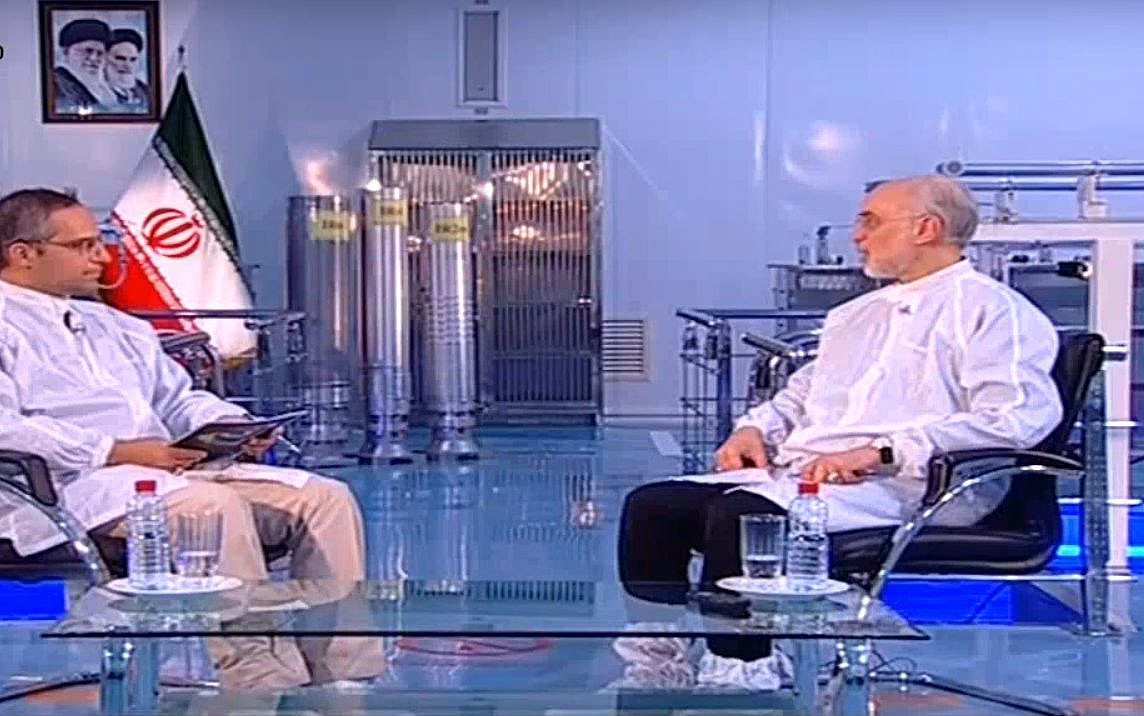
Screen capture from video showing Ali Akbar Salehi, the head of Iran's nuclear agency, right, and three Iranian-produced uranium enrichment centrifuges in the background. (YouTube)

Screen capture from video showing Ali Akbar Salehi, the head of Iran’s nuclear agency, right, and three Iranian-produced uranium enrichment centrifuges in the background. (YouTube)

TEHRAN, Iran — Iran plans to start using a new array of advanced centrifuges for enriching uranium, the country’s nuclear chief said Monday according to state television, in a move likely to intensify pressure on Europe to save Tehran’s collapsing nuclear deal with world powers.

Ali Akbar Salehi told Iranian state TV that an array of 30 IR-6 centrifuges will be inaugurated in the coming weeks.

Under the terms of its 2015 deal — which the US unilaterally withdrew from over a year ago — Iran had committed to not using the array until late 2023.

Iran has steadily increased its breaches of the nuclear accord as it pushes its European partners to find a way around US sanctions that have kept it from selling oil abroad and crippled the Iranian economy.

Salehi also said Iran is now producing up to six kilograms of enriched uranium daily.

“It means we have restored pre-deal” capacity, he said.

In September, Iran inaugurated an array of 20 IR-6 centrifuges that can produce enriched uranium 10 times as fast as the IR-1 that Iran was already using.

Iran is currently enriching uranium to about 4.5%. Prior to the nuclear deal, it only reached up to 20%, which is a short technical step away from the weapons-grade levels of 90%.

Regional tensions spiked last month after a drone and missile attack on Saudi Arabia’s largest oil facility that shook global energy markets. The US said Iran was behind the attack. Tehran denied the charge and said any retaliatory strikes by the US or Saudi Arabia could lead to “all-out war.”


Off Topic:  Turkey says won’t bow to Trump threat on Syria plan, army ready to assault Kurds

October 8, 2019

Source: Turkey says won’t bow to Trump threat on Syria plan, army ready to assault Kurds | The Times of Israel

Suffering backlash from GOP after enabling attack on US allies, president has warned he’ll destroy Ankara’s economy if it goes too far

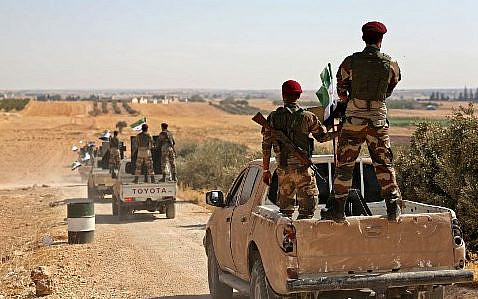
Turkish-backed Syrian rebel fighters head to an area near the Syrian-Turkish border north of Aleppo on October 8, 2019 (Nazeer Al-khatib / AFP)

Turkish-backed Syrian rebel fighters head to an area near the Syrian-Turkish border north of Aleppo on October 8, 2019 (Nazeer Al-khatib / AFP)

Turkey will not bow to threats over its Syria plans, the Turkish vice president said Tuesday in an apparent response to President Donald Trump’s warning to Ankara the previous day about the scope of its planned military incursion into northeastern Syria.

In Ankara, Turkish Vice President Fuat Oktay said Turkey was intent on combating Syrian Kurdish fighters across its border in Syria and on creating a zone that would allow Turkey to resettle Syrian refugees there.

“Where Turkey’s security is concerned, we determine our own path but we set our own limits,” Oktay said.

Meanwhile Turkey’s defense ministry announced that preparations for the offensive have been “completed.”

Trump said earlier this week following a phone call with Turkish President Recep Tayyip Erdogan that the United States would step aside for an expected Turkish attack on Syrian Kurdish fighters, who have fought alongside Americans for years. But he then threatened to destroy the Turks’ economy if they went too far.

The US president later cast his decision to abandon the Kurdish fighters in Syria as fulfilling a campaign promise to withdraw from “endless war” in the Middle East, even as Republican critics and others said he was sacrificing a US ally and undermining American credibility.

Even Trump’s staunchest Republican congressional allies expressed outrage at the prospect of abandoning Syrian Kurds who had fought the Islamic State group with American arms and advice. It was the latest example of Trump’s approach to foreign policy that critics condemn as impulsive, that he sometimes reverses and that frequently is untethered to the advice of his national security aides.
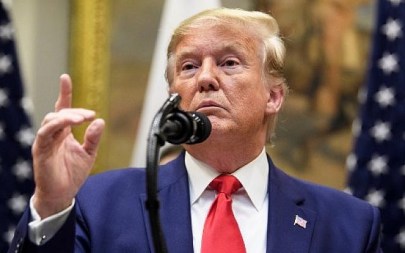
US President Donald Trump speaks in the Roosevelt Room of the White House October 7, 2019, in Washington, DC. (Brendan Smialowski / AFP)

“A catastrophic mistake,” said Rep. Liz Cheney of Wyoming, the No. 3 House Republican leader.

“Shot in the arm to the bad guys,” said Sen. Lindsey Graham of South Carolina.

Trump said Monday he understood criticism from fellow GOP leaders but disagreed. He said he could also name supporters, but he didn’t.

Trump appeared largely unconcerned at the prospect of Turkish forces attacking the Kurds, who include a faction he described as “natural enemies” of the Turks.

“But I have told Turkey that if they do anything outside of what we would think is humane … they could suffer the wrath of an extremely decimated economy,” Trump said.

This all comes at a pivotal moment of Trump’s presidency. House Democrats are marching forward with their impeachment inquiry into whether he compromised national security or abused his office by seeking negative information on former Vice President Joe Biden, a political rival, from Ukraine and other foreign countries.

As he faces the impeachment inquiry, Trump has appeared more focused on making good on his political pledges, even at the risk of sending a troubling signal to American allies abroad.

“I campaigned on the fact that I was going to bring our soldiers home and bring them home as rapidly as possible,” he said.

The strong pushback on Capitol Hill prompted Trump to recast as well as restate his decision, but with renewed bombast and self-flattery.
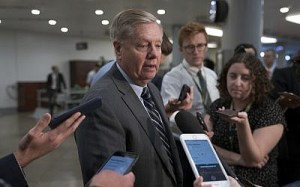
Senate Judiciary Committee Chairman Lindsey Graham, Republican-South Carolina, takes questions from reporters following a closed-door briefing on Iran, at the Capitol in Washington, September 25, 2019. (J. Scott Applewhite/AP)

He promised to destroy the Turkish economy “if Turkey does anything that I, in my great and unmatched wisdom, consider to be off limits.”

Donald J. Trump

@realDonaldTrump

One official described that White House announcement the US would get its troops out of the way of the Turkish forces as a botched effort appeared aimed at making Trump look bold for ending a war. The official said attempts by the Pentagon and State Department to make the statement stronger in its opposition to Turkey’s military action were unsuccessful.

An official familiar with the Erdogan call said the Turkish president was “ranting” at Trump, saying the safe zone was not working and that Turkey couldn’t trust the US military to do what was needed. And in reaction, Trump said the US wanted no part of an invasion and would withdraw troops.

Trump’s statements have reverberated on all sides of the divide in Syria and the Mideast.

In the Syrian capital of Damascus, Deputy Foreign Minister Faisal Mekdad called on the country’s Kurds to rejoin the government side after apparently being abandoned by their US allies.

Mekdad’s comments were the first Syrian reaction since Trump’s announcement on Sunday and as northeastern Syria braces for an imminent Turkish attack on Syrian Kurdish militias. Trump’s statement has infuriated the Kurds, who stand to lose the autonomy they gained from Damascus during Syria’s civil war, now in its ninth year.

“The homeland welcomes all its sons and Damascus will solve all Syrian problems in a positive way, away from violence,” Mekdad said in an interview with the pro-government daily Al-Watan.

As for the expected Turkish incursion, he added that the Syrian government “will defend all Syrian territory and will not accept any occupation of any land or iota of the Syrian soil.”
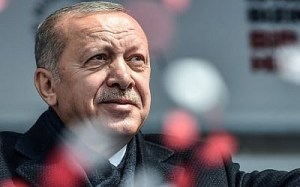
Turkish President Recep Tayyip Erdogan greets his supporters after his speech during a pre-election rally at Bayrampasa district in Istanbul, on March 30, 2019. (Ozan Kose/AFP)

The Syrian Kurdish force has pledged to fight back, raising the potential for an eruption of new warfare in Syria.

“We will not hesitate for a moment in defending our people” against Turkish troops, the Kurdish-led Syrian Democratic Forces said in a statement, adding that it has lost 11,000 fighters in the war against the Islamic State group in Syria.

Turkey, which considers Kurdish fighters in Syria terrorists and links them to a decades-old insurgency in Turkey, has already launched two major incursions into northern Syria over the past years. The first was in 2016, when Turkey and Syrian opposition fighters it backs attacked areas held by the Islamic State group west of the Euphrates River. Last year Turkey launched an attack on the Syrian Kurdish enclave of Afrin, leading to the displacement of some 300,000 people.

“We tell them that they have lost everything and must not lose themselves,” Mekdad added.

Also Tuesday, Iran urged Turkey not to go ahead with its planned an attack on Syrian Kurds, the Iranian state TV reported. Foreign Minister Mohammad Javad Zarif called his Turkish counterpart, Mevlut Cavusoglu, to express Tehran’s opposition to the anticipated Turkish operation.

Zarif urged Turkey to respect Syria’s integrity and sovereignty, the report said.

Iran, Turkey and Russia have been working together as part of the so-called Astana group on the Syrian civil war, talks that have run parallel to UN efforts to find a solution to the conflict.

Trump’s announcement threw the military situation in Syria into fresh chaos and injected deeper uncertainty into the region.

A handout picture released by Turkey’s military shows Turkish soldiers accompanied by armored vehicles patrolling between the city of Manbij in northern Syria and an area it controls after a 2016-2017 military incursion on June 18, 2018. (Turkish Armed Forces/AFP)

US involvement in Syria has been fraught with peril since it started in 2014 with the insertion of small numbers of special operations forces to recruit, train, arm and advise local fighters to combat the Islamic State. Trump entered the White House in 2017 intent on getting out of Syria, and even before the counter-IS military campaign reclaimed the last militant strongholds early this year, he declared victory and said troops would leave.

In recent weeks, the US and Turkey had reached an apparent accommodation of Turkish concerns about the presence of Kurdish fighters, seen in Turkey as a threat. American and Turkish soldiers had been conducting joint patrols in a zone along the border. As part of that work, barriers designed to protect the Syrian Kurds were dismantled amid assurances that Turkey would not invade.

Bulent Aliriza, director of the Turkey Project at the Center for Strategic and International Studies, said that a US withdrawal from Syria would be a major boost to Russia’s position there.
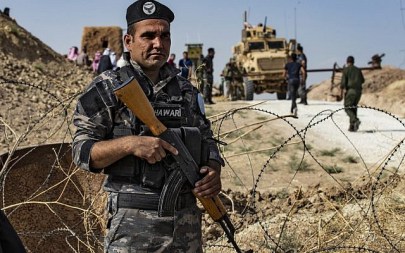
A member of Kurdish security forces stands guard during a demonstration by Syrian Kurds against Turkish threats next to a base for the US-led international coalition on the outskirts of Ras al-Ain town in Syria’s Hasakeh province near the Turkish border on October 6, 2019. (Delil SOULEIMAN/AFP)

He added that other allies in the region, including the Kurds, will “look at this withdrawal as US unwillingness to stand up for its rights and maintain its alliances in the region.”

House Minority Leader Kevin McCarthy, R-Calif., another strong Trump supporter, said in an appearance on “Fox & Friends” that he had concerns.

“I want to make sure we keep our word for those who fight with us and help us,” he said, adding that, “If you make a commitment and somebody is fighting with you, America should keep their word.”

Former Trump administration officials also expressed concern.

Nikki Haley, who served as US ambassador to the United Nations, said the US “must always have the backs of our allies, if we expect them to have our back… Leaving them to die is a big mistake.”

Turkey considers the People’s Protection Units, or YPG, an extension of the Kurdistan Workers’ Party, or PKK, which has waged an insurgency against Turkey for 35 years.