Archive for October 2019

As Iran grows more audacious, Israel must confront new security reality

October 27, 2019

Source: As Iran grows more audacious, Israel must confront new security reality – www.israelhayom.com

As a consequence of recent American policy, Iran has upped its ante across the region. To prepare for a more brazen Islamic republic, Israel must consolidate a coalition as soon as possible, and mainly rally international legitimacy, to allow it to “go crazy” if need be, even on Iranian soil.

For those lacking a full grasp of the intelligence-operational situation, this could sound familiar: The political-defense echelon is speaking in one voice about the threat posed to Israel by Iran.

The level of alarm varies according to the person speaking, but the underlying message is the same. It doesn’t matter if it’s Prime Minister Benjamin Netanyahu, IDF Chief of Staff Lt. Gen. Aviv Kochavi, or Mossad chief Yossi Cohen (who recently used an event for retired Mossad officials to sound the alarm over the Iranian threat) – all are warning of the looming danger rising against us from the northeast.

This is certainly a strategic development, following several positive years for Israel. The nuclear deal allowed the defense establishment to divert energy and resources to other sectors, mainly toward the endless activity otherwise known as the “campaign between the wars,” whereby Israel has tirelessly sought – overtly and covertly – to tackle two main objectives: preventing the transfer of advanced weapons to Hezbollah, and preventing Iran and its Shiite militia proxies from establishing a foothold in Syria.

This activity, which has produced impressive results, handicapped Iran significantly but didn’t temper its ambitions. Despite the multiple blows to its interests, the commander of the Quds Force of the Islamic Revolutionary Guard Corps, Qassem Soleimani, continued to pursue his interests along the crescent stretching from Yemen to Lebanon, and Gaza.

The hopes that the US withdrawal from the nuclear deal and the sanctions it has imposed on Iran would trigger its economic collapse or at least spur it to abandon its ambitions – have been shattered almost entirely.

In fact, Iran has become even bolder under this pressure. The downing of the American drone and the attacks on Saudi oil fields (along with its slow yet persistent progress on the nuclear track) have not only shown that Tehran isn’t blinking, it is actually upping its ante without hesitation.

Tehran understands: Belligerence pays

This Iranian daring (some would call it brazenness) was strongly bolstered by American policy. The decision not to respond to Iran’s aggression in the Persian Gulf, and the recent troop withdrawal from northern Syria –essentially abandoning their Kurdish ally – demonstrated to Iran that not only does its belligerence come without a price, but also pays.

And this is precisely the reason for the concern in Israel. If in the past there was some sense that the radical axis was weakening, today it’s clear that at this juncture, at least, it is growing stronger. Iran is increasingly audacious in the Gulf, and we can only assume it will act the same against Israel.

If to this point Tehran has refrained from retaliating against Israel’s activities against it, offering only measured responses: Over the past two years Iran attempted to attack Israel four times, compared to a far larger number of Israeli strikes against its assets in Syria – former IDF Chief Gadi Eizenkot noted over 1,000 such strikes between 2017-2018 alone. The current assessment is that moving forward, Iran will retaliate to everything.

The Iranian retaliation could be direct or, more likely, circuitous. From Syria or from Iraq; via terrorist attack, missile fire or drone strike, similar to the one in Saudi Arabia. It appears Israel has good intelligence about Iran’s plans, but it isn’t perfect; Israel’s physical defenses against these potential threats are also solid, but not hermetic.

The operational challenge posed by Iran is significant and requires special preparations in the immediate term. It also means Israel must prepare for the consequences: If it sustains a serious blow, Israel could respond on Iranian soil, and the ensuing skirmish could boil over into a multi-front campaign against Hezbollah, and perhaps elements in Syria and Gaza as well.

We mustn’t view all this as an indication of impending war. Israel can do quite a lot to prevent it: from intelligence-diplomatic efforts; to major preventative action to disrupt Iran’s machinations and exact a steep price; to making Tehran understand that Israel is prepared to go all the way, so that the ayatollah regime knows it will pay dearly if Israel is harmed.

To this end, Israel must consolidate a coalition as soon as possible, and mainly international legitimacy, to allow it to “go crazy” if need be; and it must also raise awareness among the Israeli public that after years of real quiet, the country could be on the precipice of a new security reality.

 

Kurdish commander: ‘Historic’ Baghdadi op was result of joint intel work with US

October 27, 2019

Source: Kurdish commander: ‘Historic’ Baghdadi op was result of joint intel work with US | The Times of Israel

Turkey also says it coordinated with American military ahead of Syria operation, which is said to have killed leader of Islamic State terror group

A picture taken on October 27, 2019 shows a burnt vehicle near the site where helicopter gunfire reportedly killed nine people near the northwestern Syrian village of Barisha in the province of Idlib near the border with Turkey, where 'groups linked to the Islamic State group' were present, according to a Britain-based war monitor with sources inside Syria (Omar HAJ KADOUR / AFP)

A picture taken on October 27, 2019 shows a burnt vehicle near the site where helicopter gunfire reportedly killed nine people near the northwestern Syrian village of Barisha in the province of Idlib near the border with Turkey, where ‘groups linked to the Islamic State group’ were present, according to a Britain-based war monitor with sources inside Syria (Omar HAJ KADOUR / AFP)

Syria’s top Kurdish commander on Sunday hailed a “historic operation” and joint intelligence work following US media reports that Islamic State chief Abu Bakr al-Baghdadi had been killed during an American raid.

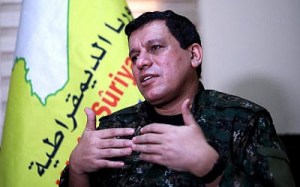
Mazloum Abdi, head of the Kurdish-led Syrian Democratic Forces that was the US’s main local ally in years of battles against the Islamic State group in Syria, said the operation was the result of “joint intelligence work.”

Turkey’s Defense Ministry told the Reuters news agency that Turkish and American military authorities exchanged and coordinated information ahead of the US strike thought to have killed the elusive chief of the Islamic State terror group in the Idlib region of Syria.

Iraqi state television on Sunday broadcast footage of what it said was the site of the raid, with a crater and blood-stained clothing on the ground, Reuters reported. The broadcaster also quoted an terror expert who said Iraqi intelligence agencies had also helped to locate Baghdadi.

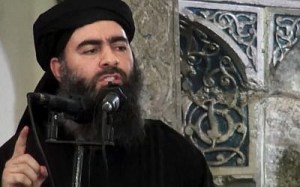
This image made from video posted on a militant website July 5, 2014, shows the leader of the Islamic State group, Abu Bakr al-Baghdadi, delivering a sermon at a mosque in Iraq. (AP/Militant video, File)

The White House announced US President Donald Trump would make a “major statement” Sunday at 9:00 a.m. (1300 GMT), without providing details.

A war monitor said US helicopters dropped forces in an area of Idlib where “groups linked to the Islamic State group” were present.

The helicopters targeted a home and a car outside the village of Barisha in an operation that killed nine people including an IS senior leader called Abu Yamaan as well as a child and two women, the Britain-based Syrian Observatory for Human Rights said.

It was not immediately clear if Baghdadi had been in the area, Observatory chief Rami Abdel Rahman said.

An AFP correspondent outside the village of Barisha in Idlib province saw what appeared to have been a minibus scorched to cinders by the side of the road.

A resident in the area who gave his name as Abdel Hameed said he rushed to the place of the attack after he heard helicopters, gunfire and strikes in the night.

“The home had collapsed and next to it there was a destroyed tent and vehicle. There were two people killed inside,” he told AFP.

‘Historic op’

US media cited multiple government sources as saying Baghdadi may have killed himself with a suicide vest as US special operations forces descended.

He was the target of the secretly planned operation that was approved by Trump, officials said according to US media.

The commander-in-chief of the US-backed Syrian Democratic Forces who have been fighting IS in Syria said the operation came after “joint intelligence work” with American forces.

In this photo from January 24, 2019, Mazloum Abdi (Kobani), commander-in-chief of the Syrian Democratic Forces (SDF), speaks with AFP during an interview in the countryside outside the city of Hasakah in northeastern Syria. (Delil Souleiman/AFP)

“A historic operation is successful as a consequence of joint intelligence work with the United States of America,” Mazloum Abdi said on Twitter shortly after the news broke.

From the outskirts of Barisha, an inhabitant of a camp for the displaced also heard helicopters followed by what he described as coalition airstrikes.

They “were flying very low, causing great panic among the people,” Ahmed Hassawi told AFP by phone.

The AFP correspondent said the area of the nighttime strikes had been cordoned off by Hayat Tahrir al-Sham, Syria’s former Al-Qaeda affiliate controlling Idlib.

Long pursued by the US-led coalition against IS, Baghdadi has been erroneously reported dead several times in recent years. In 2017, Russian officials said there was a “high probability” he had been killed in a Russian airstrike on the outskirts of Raqqa, but US officials later said they believed he was still alive.

US officials told ABC News that biometric work was under way to firm up the identification of those killed in the raid.

Two Iranian officials told the Reuters news agency that Tehran was informed by Syrian sources that Baghdadi had been killed.

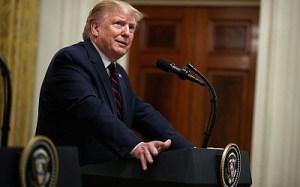
US President Donald Trump speaks during a news conference with Italian President Sergio Mattarella in the East Room of the White House, Wednesday, Oct. 16, 2019, in Washington. (AP Photo/Evan Vucci)

Trump earlier tweeted, without explaining, “Something very big has just happened!”

Baghdadi’s fighters captured a contiguous stretch of territory across Iraq and Syria, including key cities, and in June 2014, it announced its own state — or caliphate.

Baghdadi became the declared caliph of the newly renamed Islamic State group. Under his leadership, the group became known for macabre massacres and beheadings — often posted online on militant websites — and a strict adherence to an extreme interpretation of Islamic law.

But several offensives in both countries whittled down that territory, and in March the US-backed SDF ousted the extremist group from its last patch of territory in eastern Syria.

$25 million reward

Baghdadi — an Iraqi native believed to be around 48 years old — was rarely seen.

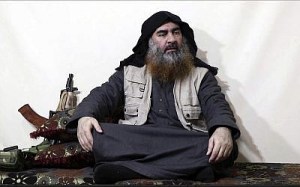
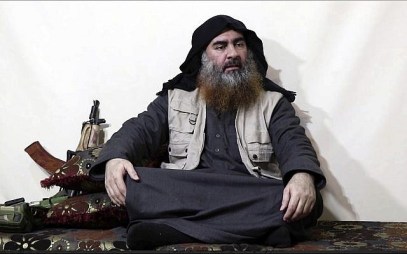
After 2014 he disappeared from sight, only surfacing in a video in April this year with a wiry gray and red beard and an assault rifle at his side, as he encouraged followers to “take revenge” for IS members who had been killed.

This image made from video posted on a militant website on April 29, 2019, purports to show the leader of the Islamic State group, Abu Bakr al-Baghdadi, being interviewed by his group’s Al-Furqan media outlet. (Al-Furqan media via AP)

His reappearance was seen as a reassertion of his leadership of a group that, while it had lost its physical territory, had spread from the Middle East to Asia and Africa and claimed several deadly attacks in Europe.

But Baghdadi remained on the run. The US State Department posted a $25 million reward for information on his whereabouts.

Under Baghdadi, the State Department said, IS “has been responsible for the deaths of thousands of civilians in the Middle East, including the brutal murder of numerous civilian hostages from Japan, the United Kingdom, and the United States.”

In September, the group released an audio message said to be from Baghdadi praising the operations of IS affiliates in other regions.

It also called on scattered IS fighters to regroup and try to free thousands of their comrades held in jails and camps by the SDF in northeastern Syria.

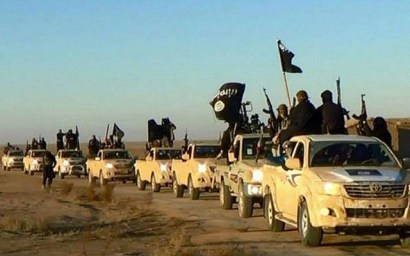
Undated file photo of Islamic State fighters holding up their weapons and waving flags in their convey of vehicles on a road leading to Iraq from Raqqa, Syria. (Jihadist website via AP)

Idlib is controlled by former Al-Qaeda affiliate HTS, and includes the presence of Al-Qaeda-linked fighters from the Hurras al-Deen group as well as IS cells, according to the Observatory.

Baghdadi was born Ibrahim Awwad Ibrahim Ali al-Badri al-Samarrai in 1971 in Samarra, Iraq, and adopted his nom de guerre early on. Because of anti-US militant activity, he was detained by US forces in Iraq and sent to Bucca prison in February 2004, according to IS-affiliated websites.

He was released 10 months later, after which he joined the al-Qaeda branch in Iraq of Abu Musab al-Zarqawi. He later assumed control of the group, known at the time as the Islamic State of Iraq.

After Syria’s civil war erupted in 2011, Baghdadi set about pursuing a plan for a medieval-style Islamic State, or caliphate. He merged a group known as the Nusra Front, which initially welcomed moderate Sunni rebels who were part of the uprising against Syrian President Bashar Assad, with a new one known as the Islamic State of Iraq and the Levant. Al-Qaeda’s central leadership refused to accept the takeover and broke with Baghdadi.


Trump says Islamic State chief ‘died like a dog’ 

October 27, 2019

Source: Trump says Islamic State chief ‘died like a dog’ | The Times of Israel

US president confirms Abu Bakr al-Bahgdadi detonated suicide vest during raid, killing himself and three of his children

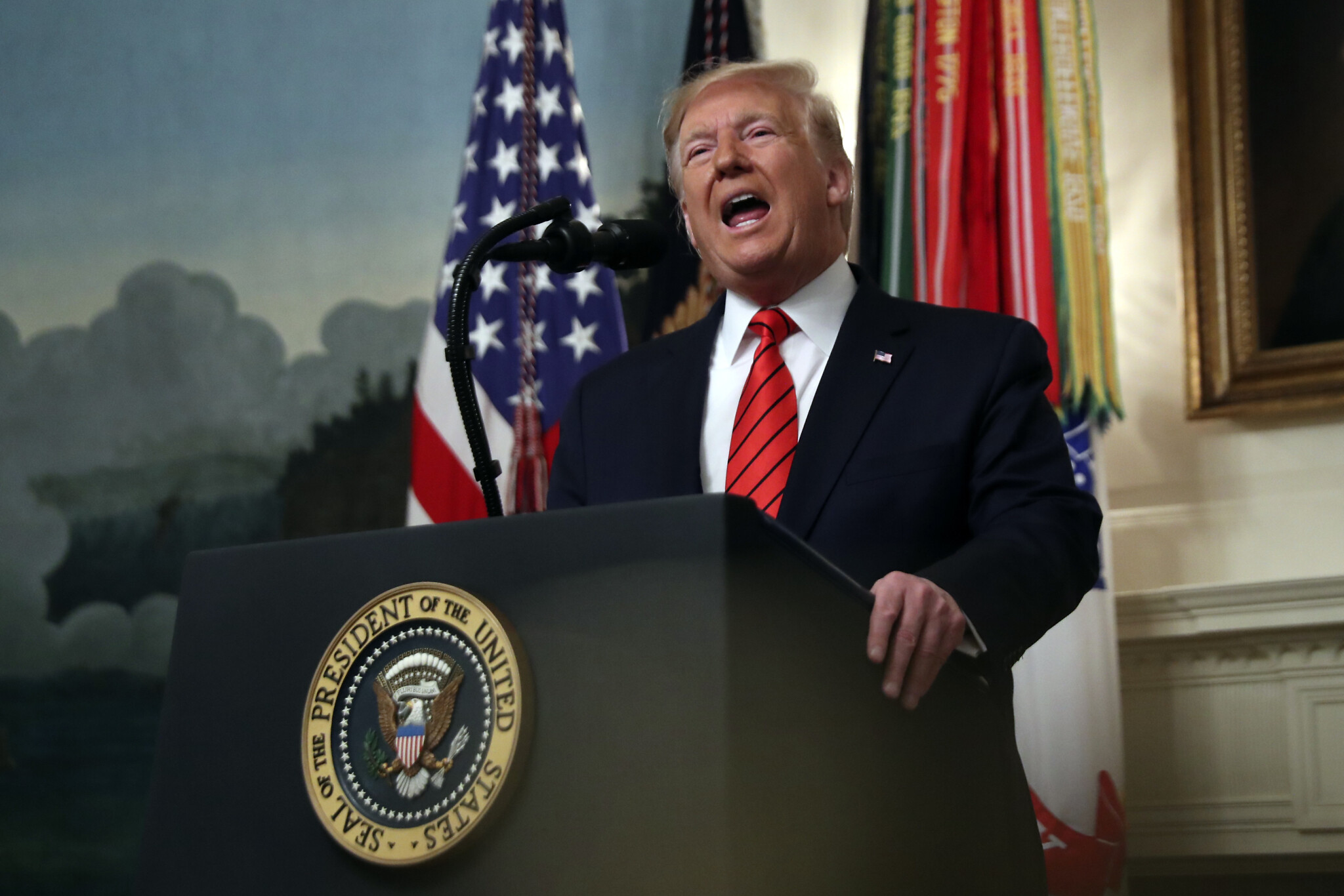
US President Donald Trump speaks in the Diplomatic Room of the White House in Washington, October 27, 2019. (AP Photo/Andrew Harnik)

US President Donald Trump speaks in the Diplomatic Room of the White House in Washington, October 27, 2019. (AP Photo/Andrew Harnik)

WASHINGTON (AFP) — US President Donald Trump on Sunday said that elusive Islamic State leader Abu Bakr al-Baghdadi was killed, dying “like a dog,” in a daring, nighttime raid by US special forces deep in northwest Syria.

Trump told the nation in a televised address from the White House that US forces killed a “large number” of Islamic State fighters during the raid which culminated in cornering Baghdadi in a tunnel, where he set off a suicide vest.

“He ignited his vest, killing himself,” Trump said.

“He died after running into a dead end tunnel, whimpering and crying and screaming all the way,” Trump said, adding that three of Baghdadi’s children also died in the blast.

Trump said that the raid — which required flying more than an hour by helicopter each way from an undisclosed base — had been accomplished with help from Russia, Syria, Turkey and Iraq.

Special forces “executed a dangerous and daring nighttime raid in northwestern Syria and accomplished their mission in grand style.”

At its height, Islamic State controlled swaths of Iraq and Syria in a self-declared state known as a caliphate, characterized by the brutal imposition of a puritanical version of Islam.

In addition to oppressing the people it governed, Islamic State planned or inspired terrorism attacks across Europe, while using expertise in social media to lure large numbers of foreign volunteers.

It took years of war, in which Islamic State became notorious for mass executions and sickening hostage murders, before the group’s final slice of territory in Syria was seized this March.

The death of Baghdadi comes as a big boost for Trump, whose abrupt decision to withdraw a small but effective deployment of US forces from Syria caused fears that it would give Islamic State remnants and sleeper cells a chance to regroup.

Trump took a storm of criticism, including from his own usually loyal Republican Party.

This image made from video posted on a militant website on April 29, 2019, purports to show the leader of the Islamic State group, Abu Bakr al-Baghdadi, being interviewed by his group’s Al-Furqan media outlet. (Al-Furqan media via AP)

In keeping with his liking for showmanship, Trump had teased the news late Saturday with an enigmatic tweet saying merely that “Something very big has just happened!”

Scorched vehicle

A war monitor said US helicopters dropped forces in an area of Syria’s Idlib province where “groups linked to the Islamic State group” were present.

The helicopters targeted a home and a car outside the village of Barisha in Idlib province, said the Syrian Observatory for Human Rights, which is based in Britain but relies on a network of sources inside Syria for its information.

The operation killed nine people including an IS senior leader called Abu Yamaan as well as a child and two women, it said.

An AFP correspondent outside Barisha saw a minibus scorched to cinders by the side of the road, and windows shattered in a neighbor’s house surrounded by red agricultural land dotted with olive trees.

A resident in the area who gave his name as Abdel Hameed said he rushed to the place of the attack after he heard helicopters, gunfire and strikes in the night.

“The home had collapsed and next to it there was a destroyed tent and vehicle. There were two people killed inside” the car, he said.

From the outskirts of Barisha, an inhabitant of a camp for the displaced also heard helicopters followed by what he described as US-led coalition airstrikes.

They “were flying very low, causing great panic among the people,” Ahmed Hassawi told AFP by phone.

Another resident, who gave his name as Abu Ahmad and lives less than 100 meters away from the site of the destroyed house, said he heard voices “speaking a foreign language” during the raid.

The AFP correspondent said the area of the nighttime operation had been cordoned off by Hayat Tahrir al-Sham, a group dominated by members of Syria’s former al-Qaeda affiliate controlling Idlib.

Between the trees, bulldozers could be seen at the site, clearing out the rubble.

‘Joint intelligence’

Turkey, which has been waging an offensive against the US-backed Syrian Democratic Forces (SDF) in northeast Syria in recent weeks, had “advance knowledge” about the raid, a senior Turkish official said.

“To the best of my knowledge, Abu Bakr al-Baghdadi arrived at this location 48 hours prior to the raid,” the official told AFP.

The commander-in-chief of the SDF, which has been fighting IS in Syria, said the operation came after “joint intelligence work” with American forces.

Trump also said that Iraq had been “very good” over the raid.

He said no US soldiers were wounded, despite “doing a lot of shooting” and “a lot of blasting.” The only US casualty was an injured military dog in the tunnel with the trapped Islamic State leader.

Long pursued by the US-led coalition against IS, Baghdadi has been erroneously reported dead several times in recent years.

$25 million reward

Baghdadi — an Iraqi native believed to be around 48 years old — was rarely seen.

After 2014 he disappeared from sight, only surfacing in a video in April with a wiry gray and red beard and an assault rifle at his side, as he encouraged followers to “take revenge” after the group’s territorial defeat.

His reappearance was seen as a reassertion of his leadership of a group that — despite its March defeat — has spread from the Middle East to Asia and Africa and claimed several deadly attacks in Europe.

The US State Department had posted a $25 million reward for information on his whereabouts.

In September, the group released an audio message said to be from Baghdadi praising the operations of IS affiliates in other regions.

It also called on scattered IS fighters to regroup and try to free thousands of their comrades held in jails and camps by the SDF in northeastern Syria.

LIVE: President Trump Makes Announcement from the White House 

October 27, 2019

ISIS LEADER KILLED,’CRYING, WHIMPERING, SCREAMING’


LIVE: President Trump Makes Announcement from the White House 

October 27, 2019


Netanyahu Remarks on Death of Abu Bakr Al Baghdadi

October 27, 2019


Ahead of Gantz meeting, PM urges broad unity government for sake of security

October 27, 2019

Source: Ahead of Gantz meeting, PM urges broad unity government for sake of security | The Times of Israel

Netanyahu says coalition must be swiftly formed to make ‘tough decisions’ on military matters

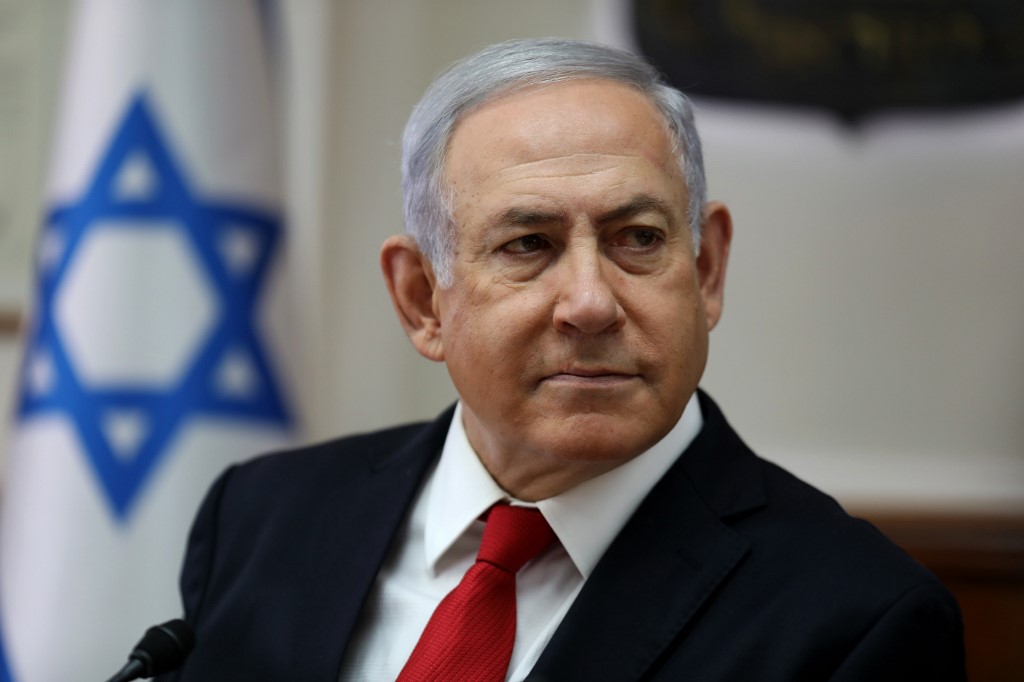
Israeli Prime Minister Benjamin Netanyahu chairs the weekly cabinet meeting at his office in Jerusalem on October 27, 2019. (GALI TIBBON / AFP)

Citing recent warnings by IDF Chief of Staff Aviv Kohavi, Prime Minister Benjamin Netanyahu on Sunday said the possibility of conflict necessitated the swift formation of a broad unity government to respond to security threats.

“The Middle East is again in turmoil,” Netanyahu said during a weekly cabinet meeting in Jerusalem. “Lebanon, Iraq, and Syria are in turmoil, and Iran controls all these areas. We need to make tough decisions that require a broad-shouldered government.”

“Iran’s actions in the Middle East require very difficult decisions. What is said by the chief of staff is not spin — it is a reflection of the situation — so establishing a broad government is a top security issue.”

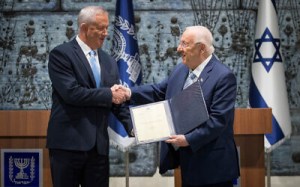
Netanyahu failed to negotiate a coalition following last month’s Knesset election, prompting him to declare that he was unable to form a government and causing President Reuven Rivlin to tap his primary rival Benny Gantz, a former IDF chief of staff who heads the centrist Blue and White Party, to try his hand at bringing together Israel’s disparate political factions.

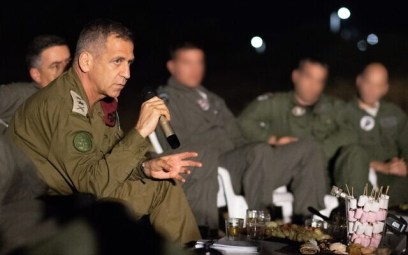
IDF chief of staff Aviv Kohavi holds a meeting around a campfire with senior Air Force officers on October 23, 2019. (Israel Defense Forces)

The prime minister is set to meet with Gantz in Tel Aviv on Sunday, the Likud and Blue and White parties said in a joint statement on Saturday. The meeting will take place Sunday afternoon at the Israel Defense Forces headquarters in Tel Aviv following an invitation by Gantz.

Gantz received the mandate to form a government from Rivlin on Wednesday evening and has already begun speaking with party leaders and sending out invitations to meet to negotiate their potential entry into the Blue and White-led coalition he hopes to establish.

According to reports in the Hebrew media, Gantz could offer Netanyahu a “compromise deal” that would force him to choose between including his religious allies in the coalition and being prime minister first in any premiership rotation deal.

Likud has stressed that Netanyahu is negotiating on behalf of the 55-member bloc of right-wing and religious parties loyal to him, without whom he will not enter a coalition. Blue and White has previously rejected this negotiation position outright.

Netanyahu’s remarks at Sunday’s cabinet meeting came on the heels of Kohavi’s warning last Thursday that Israel is facing a threat of conflict in both the north and the south, forcing the military to rapidly prepare for war.

“In the northern and southern arenas the situation is tense and precarious and poised to deteriorate into a conflict despite the fact that our enemies are not interested in war. In light of this, the IDF has been in an accelerated process of preparation,” Kohavi said.

President Reuven Rivlin presents Blue and White party leader Benny Gantz with the mandate to form a new Israeli government, after Benjamin Netanyahu’s failure to form one, at the President’s Residence in Jerusalem on October 23, 2019. (Yonatan Sindel/Flash90)

In a briefing to reporters, the IDF chief said the primary threat facing Israel comes from Iran and its proxies in Lebanon, Syria and Iraq.

“The main strategic threat to the State of Israel lies in the northern arena: with the entrenchment of Iranian and other forces in Syria, and with [the Hezbollah terror group’s] precision missile project,” Kohavi said, referring to an effort by the Iran-backed Lebanese militia to develop highly accurate long-range projectiles.

Israel sees precision-guided missiles as a far greater threat than that posed by Hezbollah’s existing arsenal of more than 100,000 rockets and missiles as the improved projectiles could easily overpower the IDF’s air defense systems and destroy the country’s critical infrastructure, something the terror group would struggle to do with its current arsenal.


Mass protests imperil Iran, Hizballah bastions in Lebanon and Iraq. Hizballah deploys special anti-demo squad 

October 27, 2019

Source: Mass protests imperil Iran, Hizballah bastions in Lebanon and Iraq. Hizballah deploys special anti-demo squad – DEBKAfile

The mass anti-government protests engulfing Lebanon and Iraq are strongly infused with resentment of Iran’s influence and Hizballah dominance. Yet both held back on bloody crackdowns.

On Friday, Oct. 25, the ninth day of popular protests in Lebanon, Hizballah leader Hassan Nasrallah warned in a televised speech that they were putting the country at risk of “chaos, economic collapse and civil war.” This was an attempt post factum to justify his first furtive steps to confront the protesters with force. A special new squad of Hizballah officers and fighters, clad in civvies and armed with clubs, were already scuffling with demonstrators on Beirut’s central Riad al-Solh Square that night. Those heavies may be expected to turn up in the thick of rallies in other parts of Lebanon. To motivate his followers, Nasrallah went on to charge that foreign embassies in Beirut had hijacked the protest movement and the CIA was involved.
The protesters were not impressed: “The government must resign, and everything will be OK. All of them means all of them,” they insisted. They were telling Iran’s foremost proxy, Hizballah, as a powerful political player in Lebanon with a cabinet majority, that its head was also on the block.

DEBKAfile’s sources note that the road from clubs to live ammunition is short. Nasrallah is only waiting for the first shot to be fired by a demonstrator before letting his followers loose with live shots for dispersing the demonstrations.

He is following a preset plan of action which has three points:

  1. A first attempt will be made to break up the demonstrations by club-wielding thugs.
  2. Hizballah’s special forces are using mobile units to unblock the roads, fast highways and traffic intersections jammed by the protesters.
  3. Those forces are also positioned at Shiite-populated town neighborhoods and villages to prevent the anti-regime protest from spilling over into those communities as they have in Iraq.

The resurgence of demonstrations in Iraq on Friday plunged into greater violence that they did in Lebanon, although both are increasingly endangering the main bastions of influence Tehran and its agents have created in Middle East. Those key political and military power centers are shaking and threatening to crumble. This is partly due to the tardy awareness of Tehran and Nasrallah to the force of the street protests sweeping through Beirut and Baghdad. They only woke up when they had spun out of control.

On that same Friday, they were confronted by Iraq’s top religious authority, Grand Ayatollah Ali Al-Sistani, aiming an ultimatum to Baghdad to enact economic reforms and start rooting out corruption, in obedience to the protesters demands. He spoke to the accompaniment of a fresh outbreak of exceptionally violent popular protests in Baghdad and the Shiite towns of the south.

In Baghdad, Basra and Nasiriya and other Shiite towns, hundreds of thousands of marching protesters shouted anti-Iran slogans and burned effigies of Iran’s supreme leader Ayatollah Ali Khamenei. As well as attacking government institutions, for the first time the crowds torched the headquarters of pro-Iranian Iraqi factions and militias. In some places, those militias opened fire on the crowds. Iraq’s Bloody Friday ended with more than 40 dead and some 2,300 injured – and no end in sight.


Hezbollah chief warns of civil war, says Israel exploiting Lebanon protests 

October 26, 2019

Source: Hezbollah chief warns of civil war, says Israel exploiting Lebanon protests | The Times of Israel

Terror chief says though the demonstrations began spontaneously they are now being manipulated by domestic and regional rivals; Hezbollah supporters clash with demonstrators

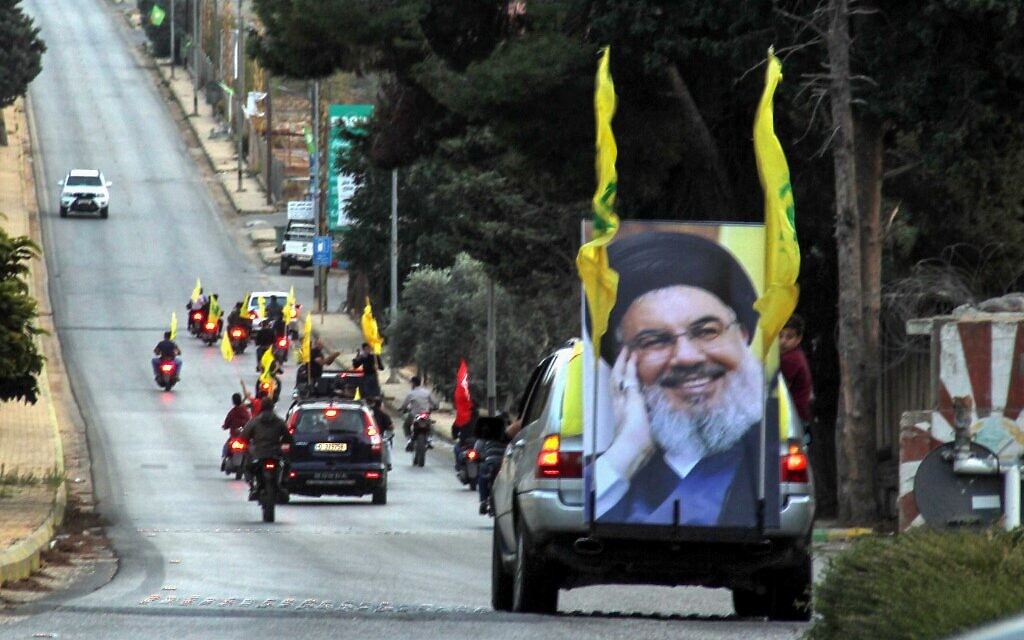
Supporters of the Hezbollah terror group drive in a convoy in support of its leader Hassan Nasrallah's speech, in the area of Fatima's Gate in Kfar Kila on the Lebanese border with Israel, October 25, 2019. (Ali Dia/AFP)

Supporters of the Hezbollah terror group drive in a convoy in support of its leader Hassan Nasrallah’s speech, in the area of Fatima’s Gate in Kfar Kila on the Lebanese border with Israel, October 25, 2019. (Ali Dia/AFP)

Hezbollah leader Hassan Nasrallah on Friday warned that ongoing massive anti-government protests in Lebanon could plunge the country into civil war, and accused Israel and other countries of working to take advantage of the demonstrations to fuel unrest.

The head of the Iran-backed terror organization spoke as the protests, which initially were triggered by new proposed taxes that followed public spending cuts, dragged on into a ninth day.

Nasrallah said though the protests began as a popular expression of anger against corruption and deepening economic crisis, they were now being exploited by political rivals and international and regional powers who oppose Hezbollah.

“What does it mean that the Israelis get Lebanese among those who are in the Zionist entity to the border to show solidarity with the protests,” he was quoted saying by Hezbollah’s Al-Manar television network. It was not immediately clear what he was referring to. An Iranian-armed proxy, Hezbollah seeks to destroy Israel.

In an unusual move, Nasrallah spoke with a Lebanese flag behind him instead of the Hezbollah banner.

Nasrallah warned Lebanon could descend into civil war, conjuring fear of the country’s war that lasted 15 years and ended in 1990.

“I’m not threatening anyone, I’m describing the situation,” he said. “We are not afraid for the resistance [Hezbollah], we are afraid for the country.”

Almanarnews English@AlmanarEnglish

SG Sayyed Hasan threatens those behind schemes to exploit ‘s protests:
Resistance is the most powerful party in the country.
It’s not a problem if you get scared

Embedded video

He did, however, praise the protesters for pressuring the government to back away from tax hikes, but reiterated his opposition to the resignation of the cabinet.

“In view of the difficult financial, economic and living situation in the country, in view of security and political tensions that are prevailing in the region … a vacuum will lead to chaos, to collapse,” he said, according to the Reuters news agency.

Hezbollah is a major political player in Lebanon and with its allies holds the majority in the cabinet. It is the only movement not to have disarmed after Lebanon’s 15-year civil war.

Nasrallah also called on his supporters to leave the streets after clashes broke out in Beirut between them and anti-graft protesters.

Unprecedented protests have erupted in some Hezbollah strongholds, but some of its supporters have also taken offense to slogans against their leader.

In the capital’s main square, protesters fell silent to listen to Nasrallah’s speech broadcast on loudspeakers.

As it neared its end, the police moved in to separate Hezbollah supporters from the rest of the demonstrators, an AFP correspondent said.

Lebanese security forces stand between Hezbollah (foreground) and anti-government protesters (background) at Riad al-Solh square in the capital Beirut on October 25, 2019. (AFP)

Before they retreated, Hezbollah backers threw rocks, plastics bottles and branches at the other demonstrators, who responded in kind chanting “Revolution.”

Scuffles also broke out in central Beirut before the speech, when Hezbollah supporters entered the area to reject chants against Nasrallah, who was named by the protest movement as one among the political elite who must leave.

“Nasrallah is more honorable than all of them,” the pro-Hezbollah protesters chanted. They clashed with the protesters who were previously in the square until riot police tried to break up the fight. The incidents came shortly before Nasrallah was due to speak.

Anger has been building among Hezbollah supporters because the protesters named him, along with other corrupt politicians. At least two protesters were injured. The riot police encircled the pro-Hezbollah protesters, who carried batons, separating them from the other protesters.

But tension returned when the protesters moved down the main road, lobbing stones and at one point attacking a TV crew from a station aligned with a Hezbollah rival. Some protesters chanted for calm.

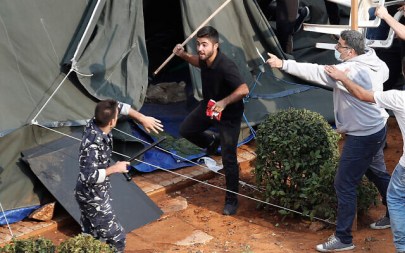
A Hezbollah supporter, right, fights with a Lebanese riot policeman, left, after a clashes erupted between Hezbollah and anti-government protesters near the government palace, in downtown Beirut, Lebanon, October 25, 2019. (AP Photo/Hussein Malla)

Banks, universities and schools remained closed Friday, the ninth day of nationwide protests, which initially were triggered by new proposed taxes that followed public spending cuts.

The demonstrators — who have thronged towns and cities across Lebanon — have been demanding the removal of the entire political class, accusing many across different parties of systematic corruption.

Numbers have declined since Sunday, when hundreds of thousands took over Beirut and other cities in the largest demonstrations in years, but could grow again over the weekend.

Lebanon’s largely sectarian political parties have been wrong-footed by the cross-communal nature of the protests.

Drawing in Christians and Muslims, Shiite, Sunni and Druze, the street movement has largely been peaceful — evolving into celebrations after nightfall.

Waving Lebanese national flags rather than the partisan colors normally paraded at demonstrations, protesters have been demanding the resignation of all of Lebanon’s political leaders.

“All of them means all,” has been a popular slogan.

Hezbollah supporters stand in front of Lebanese riot policemen, as they shout slogans praising the terror groups leader Hassan Nassrallah, during a protest near the government palace, in downtown Beirut, Lebanon, October 25, 2019. (AP Photo/Hussein Malla)

In attempts to calm the anger, Prime Minister Saad Hariri has pushed through a package of economic reforms, while President Michel Aoun offered Thursday to meet with representatives of the demonstrators to discuss their demands.

But those measures have been given short shrift by demonstrators, many of whom want the government to resign to pave the way for new elections.

The unprecedented mass protests come amid a deepening economic crisis in Lebanon. The country is one of the world’s most indebted nations, with public debt over 150 percent of the gross domestic product. The protesters accuse the politicians of amassing wealth even as the country gets poorer.


A strike on Israel by an emboldened Iran looms, but may not be imminent 

October 25, 2019

Source: A strike on Israel by an emboldened Iran looms, but may not be imminent | The Times of Israel

IDF seems to have scaled back its operations against Tehran in Syria and Iraq during the Jewish High Holidays, but with their end, the threat of Iranian retaliation returns

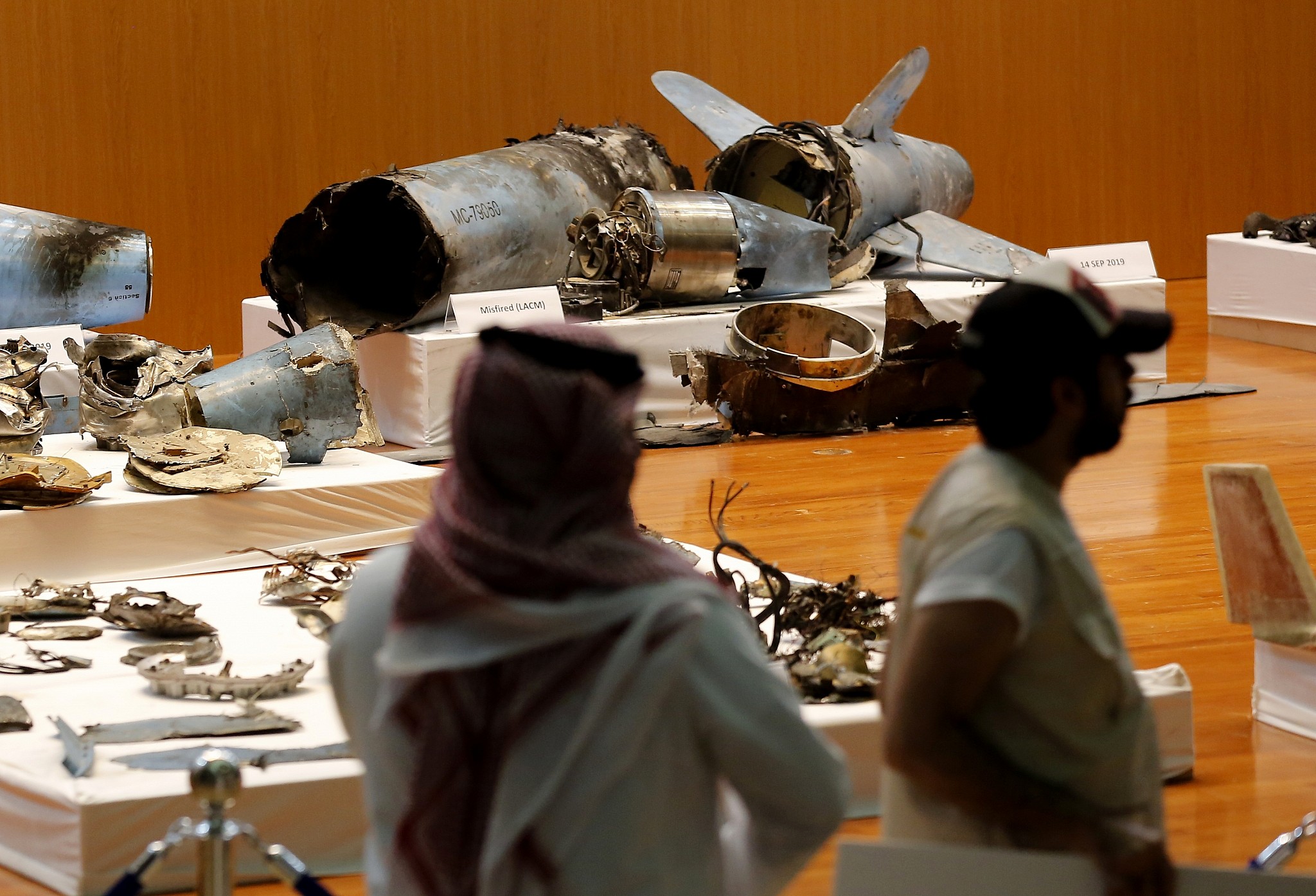
The Saudi military displays what they say are an Iranian cruise missile and drones used in recent attack on its oil industry at Saudi Aramco's facilities in Abqaiq and Khurais, during a press conference in Riyadh, Saudi Arabia, September 18, 2019. (Amr Nabil/AP)

The Saudi military displays what they say are an Iranian cruise missile and drones used in recent attack on its oil industry at Saudi Aramco’s facilities in Abqaiq and Khurais, during a press conference in Riyadh, Saudi Arabia, September 18, 2019. (Amr Nabil/AP)

Iran is feeling emboldened, and this has the Israeli military, which regularly bombs Iranian assets in the region, concerned that Tehran will one day respond to these strikes with a cruise missile or drone attack.

In light of these concerns, the Israel Defense Forces appears to have scaled down its operations against Iranian and Iranian-allied forces in the region in recent weeks. (Israel acknowledges conducting strikes against Iranian targets in the region in general, but as a rule does not take responsibility for specific attacks.)

This hiatus appears to have been a bid to cool tensions following a one-day battle between Israel and the Iran-backed Hezbollah terror group on September 1 and an effort by the IDF to ensure that the sensitive period of the Jewish High Holidays — from September 30 to October 21 — passed without conflict.

Indeed there have been no reported airstrikes against pro-Iranian militias in Syria or Iraq since September 28.

The situation is tense and precarious and poised to deteriorate into a conflict

With the end of the Jewish festivals, the military may soon return to its campaign against Iranian entrenchment in the Middle East and with it the threat of Iranian attack.

Such a retaliatory strike by Iran does not appear to be imminent, but does appear to be firmly on the horizon, according to an Israeli Military Intelligence assessment, based on the ongoing operations of Iranian forces and Iranian proxies in Syria and elsewhere in the region, and a general understanding of the modus operandi of Iran and its powerful Quds Force, the branch of the Islamic Revolutionary Guard Corps led by Qassem Soleimani that operates abroad.

An Iran with self-esteem

Since this summer, Iran has successfully attacked an American drone, international oil tankers and a major Saudi petroleum facility — and faced no serious consequences for these actions.

In addition, the United States has begun actively withdrawing from Syria — both in terms of troops and interest — and from the Middle East in general, a move that would also bolster Iran’s belief that it can act with impunity in the region as its primary enemy is effectively abandoning the main arena of the fight.

This heightened Iranian self-esteem and the threat that it poses to the Jewish state does not bode well for the Israel Defense Forces, which routinely carries out airstrikes against Iranian and Iranian-allied forces throughout the Levant.

IDF chief of staff Aviv Kohavi holds a meeting around a camp fire with senior Air Force officers on October 23, 2019. (Israel Defense Forces)

These concerns prompted an unusual warning from IDF Chief of Staff Aviv Kohavi on Thursday that war may be in the offing, as well as a security cabinet meeting suddenly scheduled for next week.

“In the northern and southern arenas the situation is tense and precarious and poised to deteriorate into a conflict despite the fact that our enemies are not interested in war. In light of this, the IDF has been in an accelerated process of preparation,” Kohavi told reporters in a briefing.

The military does not believe that Iran or one of the proxies under the control of Quds Force commander Soleimani will necessarily retaliate to any and every Israeli airstrike, but will likely respond to them eventually as its tolerance for sustaining losses of men and munitions runs out.

A map provided by the IDF showing the approximate locations of a Hezbollah cell’s activities along the Syrian border with Israel, released on March 13, 2019. (Israel Defense Forces)

This is forcing the IDF to weigh even more seriously the potential cost of an airstrike against an Iranian target compared to the benefit to Israeli national security gained from destroying it.

In the beginning of last year, Israel also faced an emboldened and enraged Iran in Syria. In February 2018, the Islamic Republic launched an armed drone toward northern Israel, which an Israeli Air Force helicopter shot down. In response, the IDF struck dozens of Iranian targets in Syria, including the control center from which the drone was piloted.

In the months that followed, the Iranian regime vowed revenge, and the IDF launched a campaign known as Operation Chess to counter the Islamic Republic’s efforts to retaliate with preemptive airstrikes against Iranian assets in Syria.

This culminated on May 10, 2018, when Iran came through on its threats with a rocket attack against Israeli military posts along the Golan Heights. The rockets failed to hit their targets, according to the IDF. The military retaliated with another round of extensive airstrikes against Iranian targets in Syria.

The IDF believes that its campaign of strikes on Iranian targets in Syria foiled the Islamic Republic’s plans to establish a major base of operations in the country, but nevertheless left Tehran determined to use Syria as part of its war against Israel.