Archive for September 2019

IAEA confirms Iran moving toward advanced uranium enrichment

September 9, 2019

Source: IAEA confirms Iran moving toward advaed uranium enrichment – www.israelhayom.com

Nuclear watchdog says Iran has taken concrete steps to bolster its nuclear program, in violation of 2015 nuclear deal. Move comes days after Iran said it was lifting limits on research and development.

Iran has begun installing more advanced centrifuges and is moving towards enriching uranium with them even though that is forbidden under its nuclear deal with major powers, the International Atomic Energy Agency said on Monday.

The 2015 deal only lets Iran produce enriched uranium with just over 5,000 of its first-generation IR-1 centrifuge machines. It can use far fewer advanced centrifuges for research but without accumulating enriched uranium.

But in response to US sanctions imposed since Washington withdrew from the deal in May last year, Iran has been breaching the limits it imposed on its atomic activities step by step.

Last week the Islamic republic said it would breach the deal’s limits on research and development, the term applied to Iran’s use of advanced centrifuges.

An IAEA spokesman said Iran had informed it that it was making modifications to accommodate cascades – or interconnected clusters – of 164 of the IR-2m and IR-4 centrifuges. Cascades of the same size and type were scrapped under the deal.

Inspectors from the nuclear watchdog have verified that smaller numbers of various advanced centrifuges had been or were being installed, the spokesman added.

“All of the installed centrifuges had been prepared for testing with UF6,” though none of them were being tested with UF6 on Sept. 7 and 8, he said, referring to the uranium hexafluoride feedstock for centrifuges.

He added that Iran had told the agency it would modify lines of research centrifuges so that enriched uranium was produced, which is not allowed under the deal.

In a confidential report to member states, the IAEA also said that Iran had made those modifications on some lines.


EXCLUSIVE: Images on Iran’s Efforts to Cover Nuclear Facility 

September 9, 2019


France condemns Iran for nuclear steps but says dialogue channels ‘still open’

September 9, 2019

Source: France condemns Iran for nuclear steps but says dialogue channels ‘still open’ | The Times of Israel

Paris criticizes Tehran for announcing new enrichment enhancement, saying it ‘must give up’ such actions to save nuclear deal

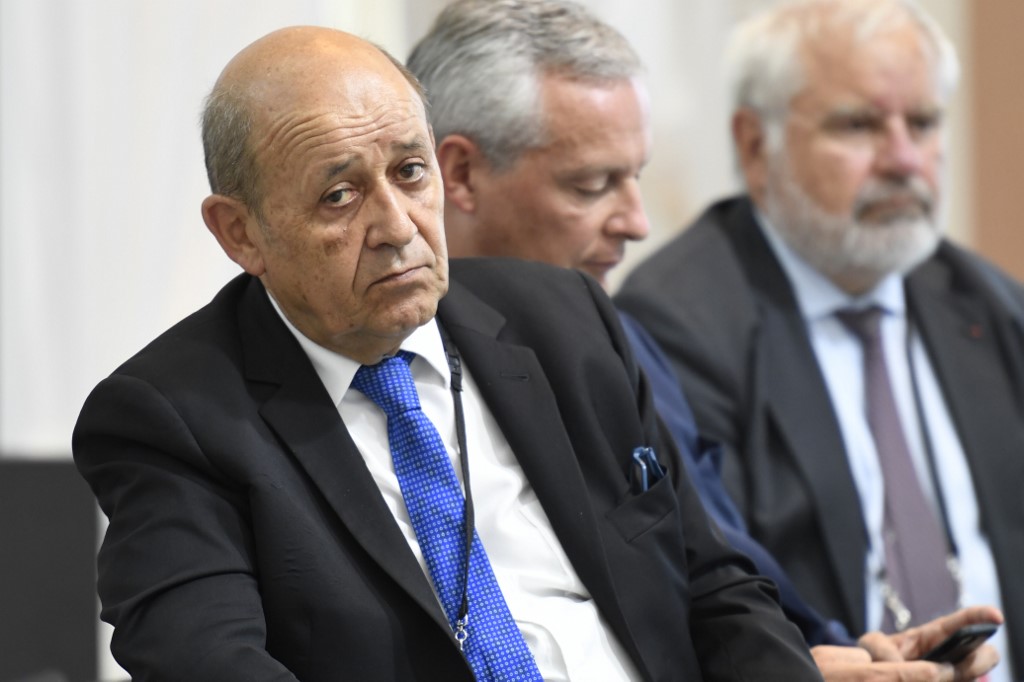
French Foreign Affairs Minister Jean-Yves Le Drian attends a French president's press conference in Biarritz, southwest France on August 26, 2019, on the third day of the annual G7 Summit attended by the leaders of the world's seven richest democracies, Britain, Canada, France, Germany, Italy, Japan and the United States. (Photo by Bertrand GUAY / AFP)

French Foreign Affairs Minister Jean-Yves Le Drian attends a French president’s press conference in Biarritz, southwest France on August 26, 2019, on the third day of the annual G7 Summit attended by the leaders of the world’s seven richest democracies, Britain, Canada, France, Germany, Italy, Japan and the United States. (Photo by Bertrand GUAY / AFP)

PARIS, France — France on Sunday urged Iran to halt its moves to downgrade a landmark nuclear pact, saying channels for dialogue were still open.

“The channels for dialogue are still open, including today… (but) Iran must give up such actions,” French Foreign Minister Jean-Yves Le Drian said a day after Tehran announced it had started new centrifuges which would allow it to enrich uranium to higher levels.

That decision, plus two earlier moves to step back from commitments set in the 2015 nuclear accord, comes despite European efforts spearheaded by Paris to get Tehran to continue to respect the pact which US President Donald Trump withdrew from last year.

Le Drian, speaking on the Le Grand Rendez-vous Europe1/CNEWS/Les Echos program, noted that it was the United States that had first undermined the agreement.

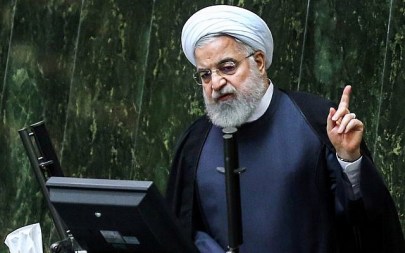
Iran’s President Hassan Rouhani speaks at parliament in the capital Tehran on September 3, 2019. (ATTA KENARE / AFP)

“The accords… were signed by a certain number of countries, among them the United States, which has said it is no longer bound by the provisions,” he said.

Washington had then imposed more tough sanctions on Iran, to the point that Tehran was seeing no gain in sticking to the agreement, he said.

The outcome was no good for anyone, however, with Iran “making a bad response to a bad decision by the Americans,” he said, adding that this led only to escalation.


Uranium traces found in Iran warehouse flagged by Netanyahu 

September 9, 2019

Source: Uranium traces found in Iran warehouse flagged by Netanyahu | The Times of Israel

Report says Tehran has stonewalled UN atomic agency amid repeated requests to explain the origin of the material, which was not sufficiently enriched to be used in a nuclear bomb

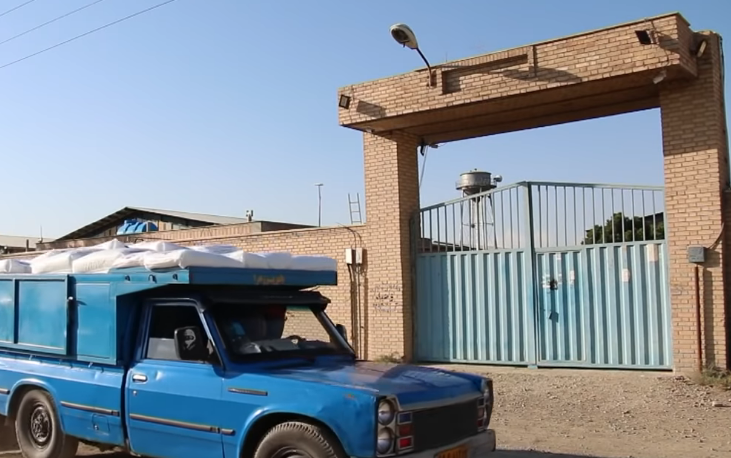
Iran's alleged 'atomic warehouse' in Turquzabad, Tehran. (YouTube screenshot)

Iran’s alleged ‘atomic warehouse’ in Turquzabad, Tehran. (YouTube screenshot)

Traces of uranium were found in samples taken by United Nations nuclear inspectors from a Tehran facility alleged by Prime Minister Benjamin Netanyahu to be a “secret atomic warehouse,” according to a report Sunday.

Iran has not provided an explanation for why uranium was found at the site to the UN’s International Atomic Energy Agency, which is investigating the facility in the Iranian capital, Reuters reported.

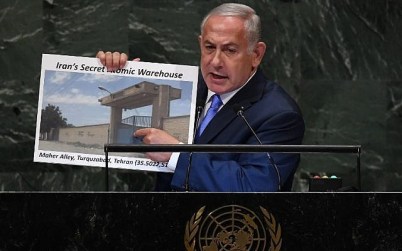
In a speech last year at the UN General Assembly, Netanyahu revealed the existence of the warehouse in Tehran, which he said held “massive amounts” of equipment and material that were part of a secret Iranian nuclear program.

Netanyahu called for the IAEA to inspect the facility and, in July, Israeli television reported that soil samples from the warehouse turned up “traces of radioactive material,” without specifying the type.

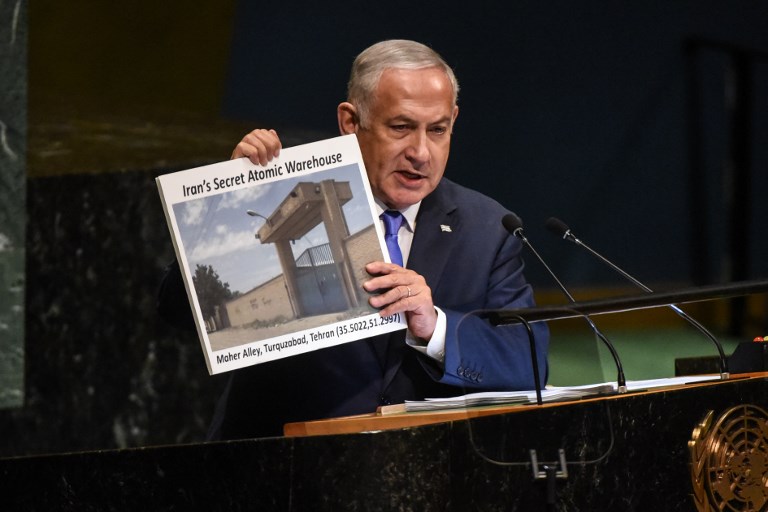
Prime Minister Benjamin Netanyahu addresses the General Assembly at the United Nations in New York on September 27, 2018, holding up a picture of an alleged Iranian “secret atomic warehouse.” (Timothy A. Clary/AFP)

Citing two unnamed diplomats, Reuters reported that the material found at the site was determined to be uranium. One of the diplomats, however, said the uranium was not enriched enough to be used for a nuclear bomb.

“There are lots of possible explanations” for why uranium traces were found there, the diplomat said.

The IAEA has been seeking answers from Tehran for two months, a senior diplomat said, with no success.

“It is not something that is… unique to Iran. The agency has these cases in many other situations,” the diplomat was quoted as saying. “Depending on the engagement it can take two months, six months.”

The report said it was difficult to determine the origin of the uranium since Iran has not provided answers. It noted it was unclear whether the traces came from material at the site before or after the 2015 international deal was signed to limit Tehran’s nuclear program.

Iran’s failure to explain why uranium was found at the warehouse has fueled tensions with the United States, according to Reuters.

US President Donald Trump pulled out of the nuclear accord last year and reimposed stringent sanctions on Iran. Tehran has subsequently taken a number of steps to roll back its commitment to the accord over what it says is a failure by the deal’s remaining signatories to provide economic relief from the sanctions. Over the weekend, Iran said it would activate advanced centrifuges that enrich uranium at a faster rate.

Despite the latest move, the UN agency said Iran would allow the IAEA to continue monitoring its nuclear facilities in accordance with the 2015 agreement.

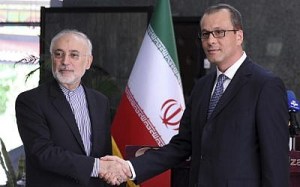
In this photo released by the Atomic Energy Organization of Iran, the head of the organization Ali Akbar Salehi, left, shakes hands with Acting Director General of the International Atomic Energy Agency, IAEA, Cornel Feruta during their meeting in Tehran, Iran, September 8, 2019. (Atomic Energy Organization of Iran via AP)

The Reuters report came as Cornel Feruta, the acting head of the IAEA, was in Tehran for talks with Iranian officials.

His visit to Tehran comes a day before the IAEA board of governors convenes for a quarterly meeting in Vienna, at which its verification and monitoring mission in Iran will be discussed.

Quoting unnamed Israeli sources, Channel 13 reported Sunday that a report set to be presented at the meeting is highly critical of Iran. The network said the United States and Israel are pushing for the public release of the report, but this is opposed by unspecified countries.

Last week, the Wall Street Journal reported that Iran was obstructing the investigation into the Tehran site identified by Netanyahu. Unidentified diplomats told the newspaper Iran was refusing to provide answers to questions posed by the IAEA, in what was apparently the first instance of Tehran failing to cooperate with inspectors.

The diplomats said there were internal disagreements in the IAEA on how severely Iran should be censured over the issue. A recent IAEA report on Iran’s growing breach of the 2015 nuclear deal reportedly made only vague reference to Tehran’s lack of cooperation with inspectors, saying “Ongoing interactions between the Agency and Iran relating to Iran’s implementation of its Safeguards Agreement and Additional Protocol require full and timely cooperation by Iran.”

The diplomats told the WSJ that the traces were likely remains from Iran’s past experimentation in nuclear weapons development. Iran has denied ever seeking nuclear weapons, though Israeli and Western intelligence strongly dispute those assertions. The diplomats said the material’s existence at the site was unlikely to indicate new work on weapons development, but would be a breach of Iran’s commitment to non-proliferation.

Iran has denied that the site was a nuclear facility or served any secretive purpose. In an initial response to Netanyahu’s UN speech, Iranian state media claimed the warehouse was actually a recycling facility for scrap metal.

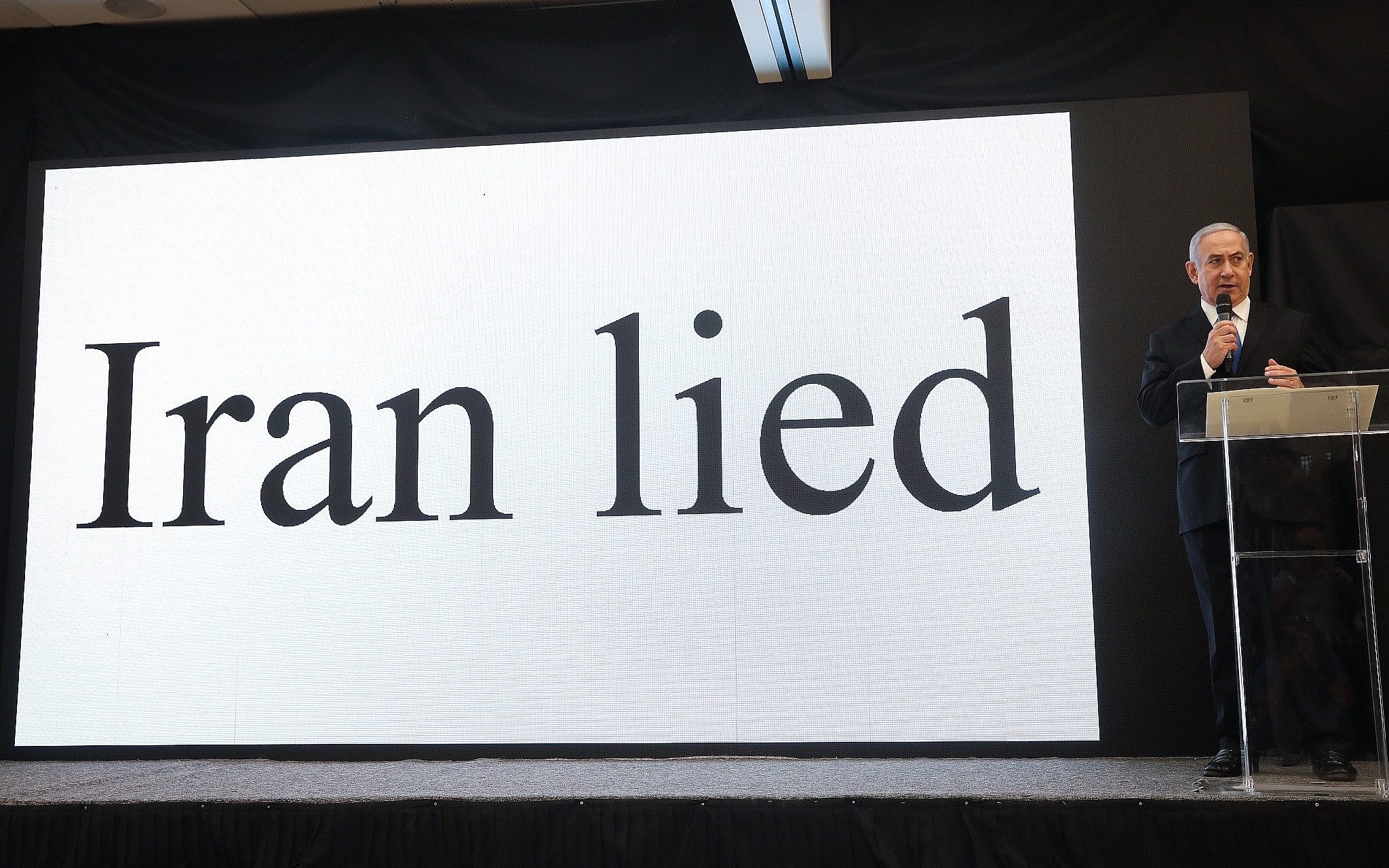
Prime Minister Benjamin Netanyahu gives a speech on files obtained by Israel he says prove Iran lied about its nuclear program, at the Defense Ministry in Tel Aviv, on April 30, 2018. (Miriam Alster/Flash90)

In that speech, Netanyahu claimed some 15 kilograms (33 pounds) of radioactive material had been recently removed from the atomic warehouse and squirreled away around Tehran, endangering the capital’s residents. The site may have contained as much as 300 tons of nuclear-related equipment and material in 15 shipping containers, Netanyahu added. He did not specify what nuclear material was contained at the site.

That speech came months after Israel’s disclosure that it had spirited away what it said was a “half-ton” of Iranian nuclear documents from Tehran, with Netanyahu saying both the archive and the warehouse were proof that Iran continues to seek atomic weapons despite the 2015 nuclear deal. “Iran has not abandoned its goal to develop nuclear weapons…. Rest assured that will not happen. What Iran hides, Israel will find,” Netanyahu told the UN.

Agencies contributed to this report.


IDF says pro-Iran militia fired rockets at Israel, amid reports of Syria strike 

September 9, 2019

Source: IDF says pro-Iran militia fired rockets at Israel, amid reports of Syria strike | The Times of Israel

Army says projectiles fell short of the border; incident comes around the time of an attack on a Shiite militia near the Iraqi border in which 18 were reportedly killed

Illustrative. Soldiers from the Syrian army fire a rocket at Islamic State group positions in the province of Raqqa, Syria, on February 17, 2016. (Alexander Kots/Komsomolskaya Pravda via AP, File)

An Iran-backed militia in Syria fired several rockets toward northern Israel in the predawn hours of Monday morning, but they fell short of the border, the army said.

According to the Israel Defense Forces, the attack was carried out by operatives of a Shiite militia operating under the command of Iran’s Islamic Revolutionary Guard Corps’ Quds Force.

The IDF said the rockets were fired from the suburbs outside Damascus.

The alleged attack came amid reports of a series of airstrikes against a pro-Iranian militia in eastern Syria, which killed 18 fighters, according to a Britain-based war monitor.

In a statement, the IDF said it “holds the Syrian regime responsible for every action that takes place in Syria.”

In a tweet, the Israeli army’s Arabic-language spokesperson warned Syria’s Assad regime that it would “pay the price” for allowing Iran and its proxies to use Syria as a base of operations against the Jewish state, either by turning a blind eye to their actions or by actively cooperating with them.

“This is not hidden from us,” the spokesman wrote.

According to the Syrian Observatory for Human Rights, the airstrikes on pro-Iranian militias took place in the Albu Kamal region near the border with Iraq.

There have been no official claims as to who was behind the attack.

“Warplanes whose identity is not known so far targeted vehicles and positions of the Iranian forces and militias loyal to them,” the Observatory said. “Eighteen fighters were killed, but their nationalities have not yet been determined.”

The blasts targeted a base belonging to the Popular Mobilization Force, according to the Saudi-owned Al Arabiya network, citing sources in the area.

Al Arabiya said the base, in the al-Boukamal area, also housed forces from the Lebanese Hezbollah terror group.

Since mid-July, five arms depots and training camps belonging to the Popular Mobilization Forces have been targeted in apparent attacks.

The PMF has blamed both Israel and the US for a recent string of blasts and drone sightings at its bases. There was no immediate comment from Israel.

Sunday night’s blasts occurred on the Syrian side of the border in the same regions where Fox News reported last week Iran was constructing a new military facility that can house thousands of soldiers and storage facilities for advanced weapons.

It was not immediately clear if this was the same base.

Quoting Western intelligence sources, the US cable network said the base is located near the Syria-Iraq border, and its construction is being overseen by the Quds Force, the overseas branch of Iran’s elite Islamic Revolutionary Guard Corps.

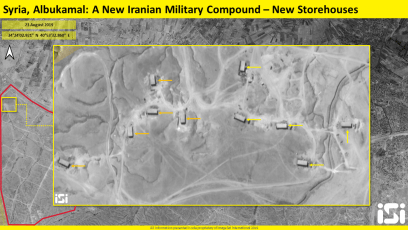
Satellite photos of the base, known as the Imam Ali compound, showed what appeared to be five recently constructed buildings that can store precision-guided missiles, according to ImageSat International.

ImageSat, an Israeli satellite imagery analysis firm, said the photos also show other structures at the facility that could be used for storing missiles.

Satellite image showing the construction of a new Iranian military base in Iraq’s Albukamal Al-Qaim region, near the Syrian border (ImageSat International via Fox News)

The images also show what appears to be Iranian construction on a new border crossing that near the existing al-Qaim border crossing with Iraq.

Israel views Iran as its greatest threat, and has acknowledged carrying out scores of airstrikes in Syria in recent years aimed primarily at preventing the transfers of sophisticated weapons, including guided missiles, to the Iran-backed Hezbollah.

This quiet war has reportedly expanded to Iraq in recent weeks, with US officials saying the Israel Defense Forces was behind at least some strikes on Iran-linked sites outside of Baghdad.

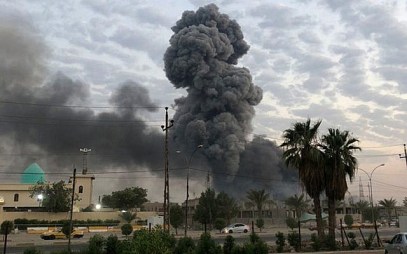
In this photo from August 12, 2019, plumes of smoke rise after an explosion at a military base southwest of Baghdad, Iraq. (AP Photo/Loay Hameed)
The Pentagon, which is mindful of not alienating Iraq’s leadership and jeopardizing its military presence in the country, has pointedly distanced itself from the mysterious explosions.

The PMF was established in 2014 from mostly Shiite paramilitary groups and volunteers to fight the Islamic State jihadist organization and is now formally part of Iraq’s armed forces.

But the US and Israel fear some units are an extension of Iran and have been equipped with precision-guided missiles that could reach Israel.

Last month, an Israeli airstrike in Syria thwarted what Israel said was a plot by Iran to launch a series of explosives-laden attack drones meant to crash into Israeli targets. Iran denied the claims.

Hours later, Israel allegedly struck Iran-linked targets as far away as Iraq and crash-landed two drones in Hezbollah-dominated southern Beirut.

Iran, its allied militias and Russia have backed Syrian President Bashar Assad in the country’s devastating eight-year civil war.

The Syrian conflict, which broke out in 2011 with the bloody repression of anti-regime demonstrations, has become a complex war, dragging in regional and international powers and leaving more than 370,000 people dead.

AFP contributed to this report.


Israeli preparedness amid heightened tensions – Jerusalem Studio 446 

September 9, 2019


“A War with Hezbollah is Only a Question of Time” 

September 8, 2019


IDF strikes Gaza terror squad after drone drops IED on troops

September 7, 2019

Source: IDF strikes Gaza terror squad after drone drops IE

IDF attacked 5 Hamas posts after rocket fire on Friday; 2 Palestinian teens killed in border protests

BY ANNA AHRONHEIM
 SEPTEMBER 7, 2019 14:52
IDF strikes Gaza terror squad after drone drops IED on troops

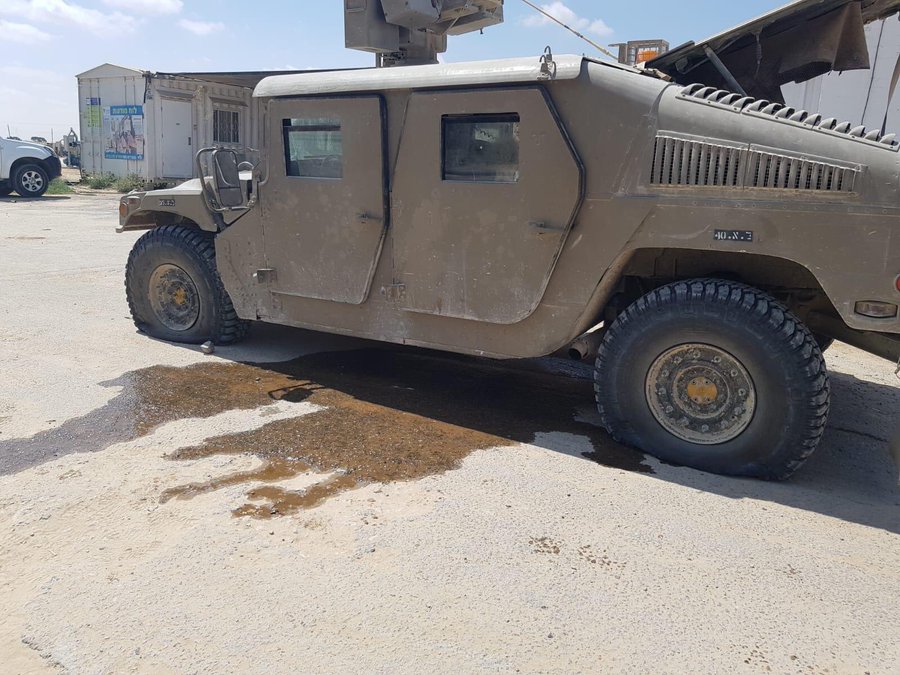
The IDF struck a terror cell in the southern Gaza Strip after a drone dropped an IED on a military position along the border fence, the Israeli military said in a statement.

While no IDF troops were injured, there was slight damage to military vehicles by the drone attack.

According to Palestinian reports the cell was hit near Rafiah in the southern Strip.

Anna Ahronheim

@AAhronheim

Picture of the vehicle which was targeted by a drone which dropped an IED on it. The drone infiltrated into southern from near the southern city of Rafiah

View image on Twitter

Anna Ahronheim

@AAhronheim

Video from the scene of the damaged vehicle

Embedded video

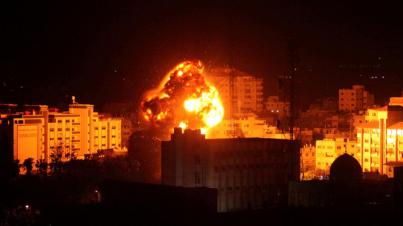
The incident came hours after the IDF struck several Hamas posts in the northern Gaza Stripon Friday night in retaliation for five rockets which were fired towards southern Israel communities bordering the Hamas-run enclave.

The military said that an IDF tank shelled a Hamas outpost north of Beit Hanoun and an IAF drone stuck a Hamas observation point near Beit Lahia.

The strikes came shortly after incoming rocket sirens were activated in the college-town of Sderot and the communities of Ibim and Kibbutz Or Haner. While there were no injuries two women were treated for shock.

A small fire also broke out after at least one rocket hit an open area outside Sderot.

The exchange of fire came hours after two Palestinian teenagers were killed by IDF fire during the weekly Great Return March protests along the Gaza border fence which saw some 6,200 Palestinians riot along the fence, throwing explosive devices at troops.

“The demonstrations were of an especially violent nature, which included a large amount of IEDs, grenades and Molotov cocktails being thrown towards IDF forces along the fence,” read a statement provided by the IDF Spokesperson’s Unit. “There is noticeable damage to the border fence in several locations, and there has been a rising number of attempts to approach the border fence.”

The Hamas-run health ministry identified one of those killed as 17-year-old Ali al-Ashqar who was shot in the neck in northern Gaza Strip. A second teenager, 14 year-old Khaled al-Raba’i was shot in the stomach east of Gaza City.

Another 48 protesters were injured by live bullets and 33 others by rubber-coated rounds, including two medics and a photojournalist.

Hamas spokesperson Hazem Qassem tweeted in response to the deaths that “violating the blood of peaceful demonstrators in the marches of return and deliberately targeting them is a crime that the occupation bears all its repercussions.”

D on troops – Arab-Israeli Conflict – Jerusalem Post

IDF strikes Gaza terror squad after drone drops IED on troops 

September 7, 2019

Source: IDF strikes Gaza terror squad after drone drops IED on troops – Arab-Israeli Conflict – Jerusalem Post

IDF attacked 5 Hamas posts after rocket fire on Friday; 2 Palestinian teens killed in border protests

BY ANNA AHRONHEIM
 SEPTEMBER 7, 2019 14:52
IDF strikes Gaza terror squad after drone drops IED on troops

The IDF struck a terror cell in the southern Gaza Strip after a drone dropped an IED on a military position along the border fence, the Israeli military said in a statement.

While no IDF troops were injured, there was slight damage to military vehicles by the drone attack.

According to Palestinian reports the cell was hit near Rafiah in the southern Strip.

Anna Ahronheim

@AAhronheim

Picture of the vehicle which was targeted by a drone which dropped an IED on it. The drone infiltrated into southern from near the southern city of Rafiah

View image on Twitter

Anna Ahronheim

@AAhronheim

Video from the scene of the damaged vehicle

Embedded video

The incident came hours after the IDF struck several Hamas posts in the northern Gaza Stripon Friday night in retaliation for five rockets which were fired towards southern Israel communities bordering the Hamas-run enclave.

The military said that an IDF tank shelled a Hamas outpost north of Beit Hanoun and an IAF drone stuck a Hamas observation point near Beit Lahia.

The strikes came shortly after incoming rocket sirens were activated in the college-town of Sderot and the communities of Ibim and Kibbutz Or Haner. While there were no injuries two women were treated for shock.

A small fire also broke out after at least one rocket hit an open area outside Sderot.

The exchange of fire came hours after two Palestinian teenagers were killed by IDF fire during the weekly Great Return March protests along the Gaza border fence which saw some 6,200 Palestinians riot along the fence, throwing explosive devices at troops.

“The demonstrations were of an especially violent nature, which included a large amount of IEDs, grenades and Molotov cocktails being thrown towards IDF forces along the fence,” read a statement provided by the IDF Spokesperson’s Unit. “There is noticeable damage to the border fence in several locations, and there has been a rising number of attempts to approach the border fence.”

The Hamas-run health ministry identified one of those killed as 17-year-old Ali al-Ashqar who was shot in the neck in northern Gaza Strip. A second teenager, 14 year-old Khaled al-Raba’i was shot in the stomach east of Gaza City.

Another 48 protesters were injured by live bullets and 33 others by rubber-coated rounds, including two medics and a photojournalist.

Hamas spokesperson Hazem Qassem tweeted in response to the deaths that “violating the blood of peaceful demonstrators in the marches of return and deliberately targeting them is a crime that the occupation bears all its repercussions.”


Iran injects uranium gas into advanced centrifuges, violating nuclear deal

September 7, 2019

Source: Iran injects uranium gas into advanced centrifuges, violating nuclear deal | The Times of Israel

Spokesman says Tehran has ability to go beyond 20% enrichment of uranium, which analysts say is short technical step away from weapons-grade; UN inspectors to monitor program

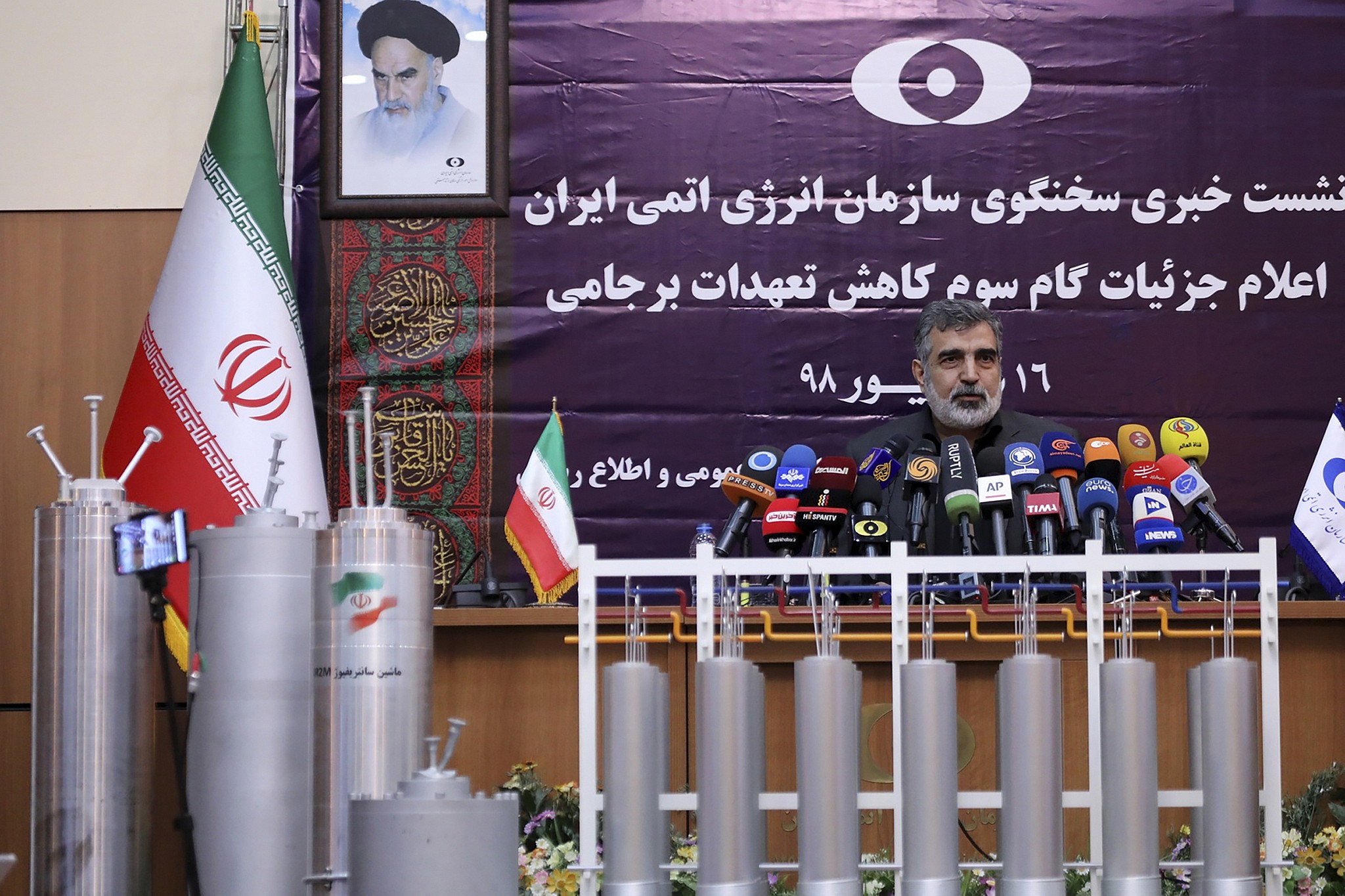
In this photo released by the Atomic Energy Organization of Iran, spokesman of the organization Behrouz Kamalvandi speaks in a news briefing as advanced centrifuges are displayed in front of him, in Tehran, Iran, Sept. 7, 2019 (Atomic Energy Organization of Iran via AP)

In this photo released by the Atomic Energy Organization of Iran, spokesman of the organization Behrouz Kamalvandi speaks in a news briefing as advanced centrifuges are displayed in front of him, in Tehran, Iran, Sept. 7, 2019 (Atomic Energy Organization of Iran via AP)

TEHRAN (AP) — Iran has begun injecting uranium gas into advanced centrifuges in violation of its 2015 nuclear deal with world powers, a spokesman said Saturday.

Behrouz Kamalvandi of the Atomic Energy Organization of Iran made the remarks in a news conference carried on live television. He spoke from a podium with advanced centrifuges standing next to him.

Iran already has breached the stockpile and enrichment level limits set by the deal, while stressing it could quickly revert back to the terms of the accord, if Europe delivers the sanctions relief promised in return for curbing Tehran’s nuclear program.

Kamalvandi warned that Europe had little time left to save the deal. US President Donald Trump withdrew America from the accord over a year ago before imposing crippling trade sanctions on Iran.
Spokesman of the Atomic Energy Organization of Iran (AEOI), Behrouz Kamalvandi answers the press in the capital Tehran on July 17, 2018. (AFP PHOTO / ATTA KENARE)

“As far as the other side does not implement their commitments, they should not expect Iran to fulfill its commitments,” Kamalvandi said.

Kamalvandi said Iran had the ability to go beyond 20 percent enrichment of uranium. Analysts say 20% is just a short technical step away from 90% enrichment, which is weapons-grade level.

Kamalvandi warned several times in his comments that Iran was rapidly approaching a point that would mean a full withdrawal from the deal.

“Our stockpile is quickly increasing; we hope they will come to their senses,” he said.
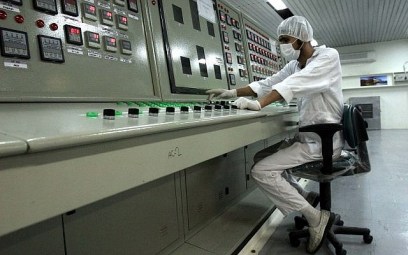
A technician at the Uranium Conversion Facility just outside the city of Isfahan, Iran, 255 miles (410 kilometers) south of the capital Tehran, February 3, 2007. (AP/Vahid Salemi/File)

However, he stressed that Iran would allow UN inspectors to continue to monitor sites in the country. A top official from the UN’s International Atomic Energy Agency was expected to meet with Iranian officials in Tehran on Sunday.

Prime Minister Benjamin Netanyahu holds up a placard showing a suspected Iranian atomic site while delivering a speech at the United Nations during the United Nations General Assembly on September 27, 2018 in New York City. (Stephanie Keith/Getty Images/AFP)

Iran denies that it seeks nuclear weapons. Israel’s Prime Minister Benjamin Netanyahu, who opposed the 2015 deal, insists that Tehran is seeking a nuclear arsenal, and is hiding parts of its program. A New York Times report this week quoted Netanyahu saying he came very close to striking Iran in 2012 to try to halt its rogue nuclear program. The same report said Israel was now again considering a strike on Iran.

Tensions between Iran and the US have risen in recent months that have seen mysterious attacks on oil tankers near the Strait of Hormuz, Iran shooting down a US military surveillance drone and other incidents across the wider Middle East.

Also on Saturday, satellite images showed that a once-detained Iranian oil tanker pursued by the US appears to be off the coast of Syria, where Tehran reportedly promised the vessel would not go when authorities in Gibraltar agreed to release it several weeks ago.
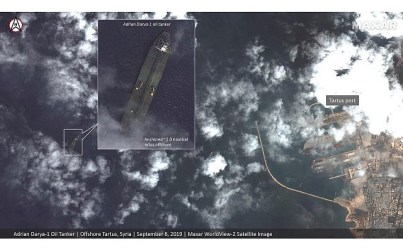
This Friday, September 6, 2019 satellite image provided by Maxar Technologies appears to show the Iranian oil tanker Adrian Darya-1 off the coast of Tartus, Syria. (Satellite image ©2019 Maxar Technologies via AP)

The tanker Adrian Darya-1, formerly known as the Grace-1, turned off its Automatic Identification System late Monday, leading to speculation it would be heading to Syria. Other Iranian oil tankers have similarly turned off their tracking beacons in the area, with analysts saying they believe crude oil ends up in Syria in support of embattled President Bashar Assad’s government.

Images obtained by The Associated Press early Saturday from Maxar Technologies appeared to show the vessel off Syria’s coast, some 2 nautical miles (3.7 kilometers) off shore under intermittent cloud cover.

Iranian and Syrian officials have not acknowledged the vessel’s presence there. There was no immediate report in Iranian state media about the ship, though authorities earlier said the 2.1 million barrels of crude oil onboard had been sold to an unnamed buyer.

The oil on board would be worth about $130 million on the global market, but it remains unclear who would buy the oil as they’d face the threat of US sanctions.

The new images matched a black-and-white image earlier tweeted by John Bolton, the US national security adviser.
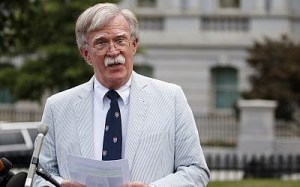
US National Security Adviser John Bolton speaks to media at the White House in Washington, July 31, 2019. (AP Photo/Carolyn Kaster)

“Anyone who said the Adrian Darya-1 wasn’t headed to #Syria is in denial,” Bolton tweeted. “We can talk, but #Iran’s not getting any sanctions relief until it stops lying and spreading terror!”

US prosecutors in federal court allege the Adrian Darya’s owner is Iran’s Revolutionary Guard, which answers only to Supreme Leader Ayatollah Ali Khamenei. On Wednesday, the US imposed new sanctions on an oil shipping network it alleged had ties to the Guard and offered up to $15 million for anyone with information that disrupts its paramilitary operations.

Brian Hook, the US special envoy for Iran, also has reportedly emailed or texted captains of Iranian oil tankers, trying to scare them into not delivering their cargo.

Meanwhile, the US Transportation Department’s Maritime Administration issued on Saturday a new warning to shippers about a potential threat off the coast of Yemen in the southern Red Sea.

“A maritime threat has been reported in the Red Sea in the vicinity of Yemen,” the warning read. “The nature of the event is potential increased hostilities that threaten maritime security.”

Large areas of war-torn Yemen are held by the country’s Houthi rebels, which are allied to Iran. Shipping in the Red Sea has been targeted previously by rebel attacks. On Wednesday, a warning went out after two small boats followed one ship in the region, but there’s been no other information about a new threat there.

Cmdr. Joshua Frey, a spokesman for the US Navy’s Bahrain-based 5th Fleet, said the Navy remained ready to maintain the safety of shippers in the region. He declined to specifically discuss the warning. The US military’s Central Command did not respond to a request for comment.

Times of Israel staff contributed to this report.