Archive for September 2019

Iran’s FM: Israel is hitting Iraq’s ‘official military’ in strikes

September 24, 2019

Source: Iran’s FM: Israel is hitting Iraq’s ‘official military’ in strikes | The Times of Israel

Zarif blames Jerusalem for series of attacks on Iranian-backed targets that Israel has not officially commented on
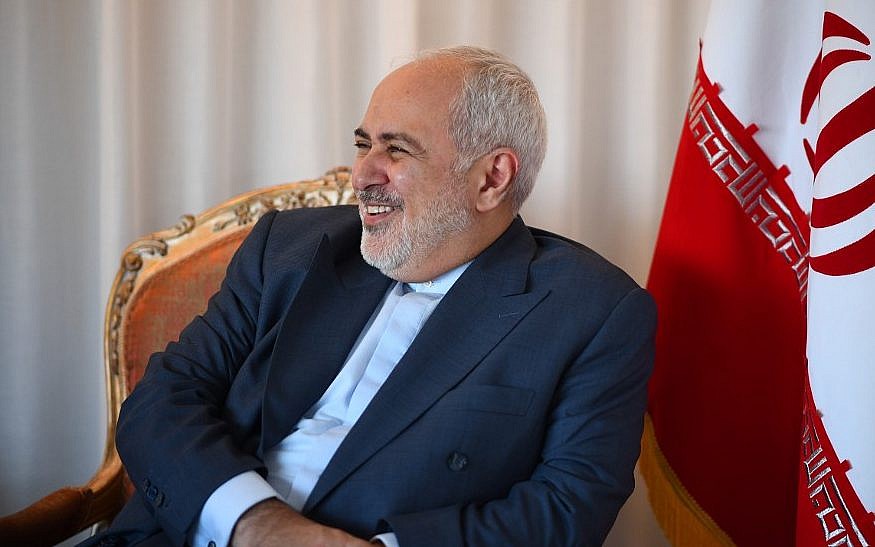
Iranian Foreign Minister Mohammad Zarif smiles as he meets French Minister of Foreign Affairs Jean-Yves Le Drian (not seen) on September 22, 2019 in New York City. (Johannes EISELE / AFP)

Iran’s Foreign Minister Mohammad Javad Zarif has explicitly blamed Israel for a series of airstrikes in Iraq, insisting that the targets were part of the official Iraqi military.

Since mid-July, eight arms depots and training camps belonging to the Iran-backed Popular Mobilization Forces (PMF) have been targeted in Syria and Iraq. The PMF, an umbrella group of largely Iran-backed militias, has blamed both Israel and the US for the string of blasts and drone sightings at its bases.

Israeli officials have not publicly commented on the allegations, though Prime Minister Benjamin Netanyahu has hinted at the possibility that Israel has struck in Iraq.

As part of a discussion on an attack on Saudi oil facilities on September 14, which has been blamed on Iran and a Tehran-backed militia, Zarif said that militias in Iraq are part of the national army.

“These militias that you talk about are part of the Iraqi government. The Israelis are attacking parts of Iraqi military, official military,” Zarif said in a CBS interview broadcast Sunday.
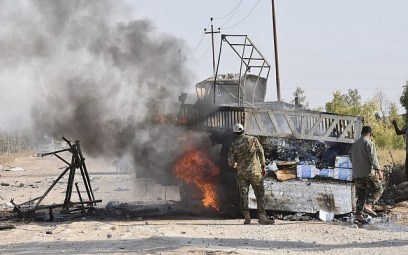
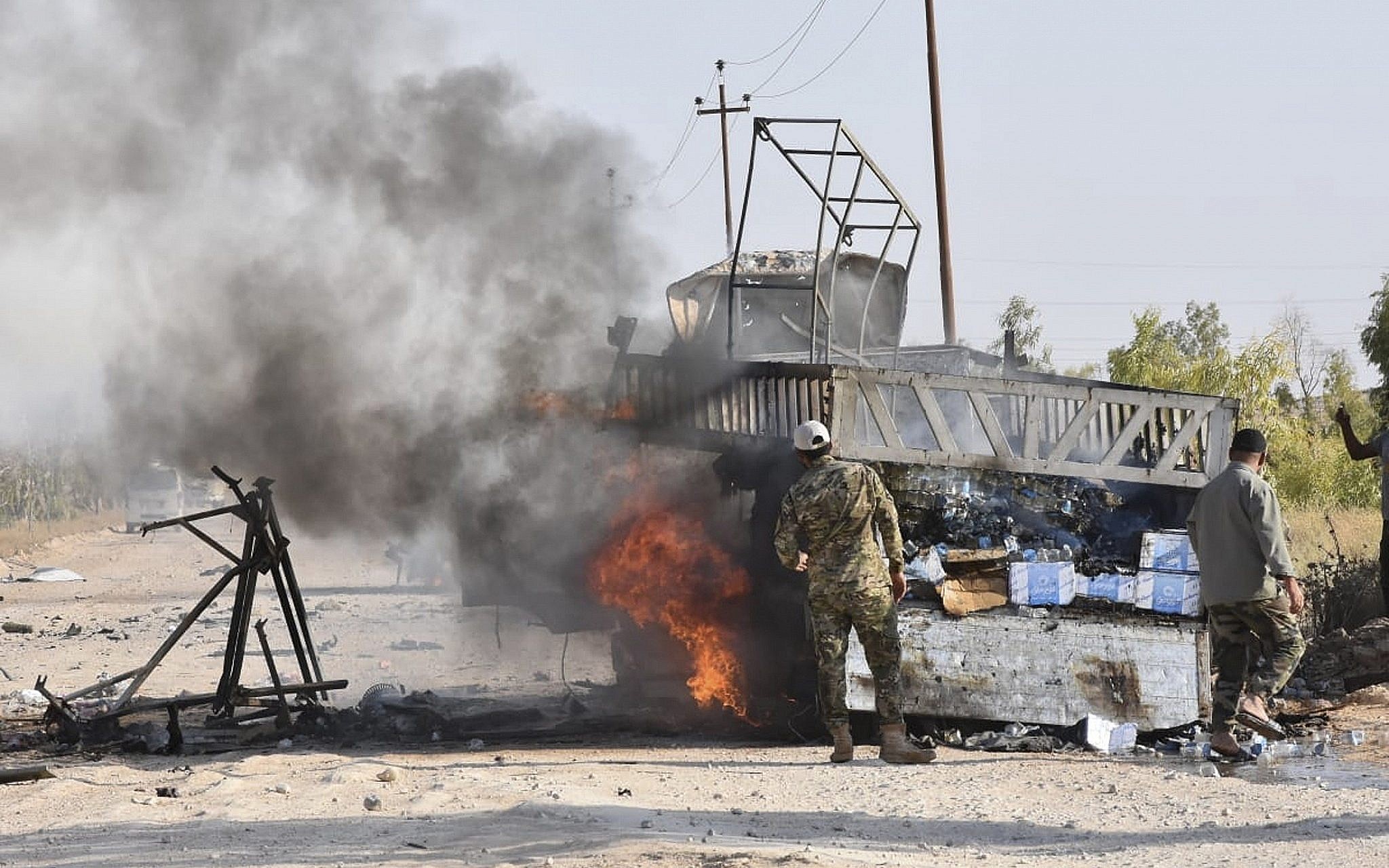
Illustrative: Popular Mobilization Forces members stand by a burning truck after a drone attack blamed on Israel near Qaim border crossing, in Anbar province, Iraq, August 25, 2019. (AP Photo)

An airstrike was reported Sunday afternoon in western Iraq, targeting a military base belonging to the PMF — the third such attack on the militia in a week and the fourth in a month.

“An unidentified aircraft targeted the area surrounding a military base next to the al-Murssinat [military] airport in the western part of the al-Anbar province,” Lebanese television station al-Mayadeen quoted sources as saying.

There were no casualties in the attack, the report said.

On Thursday, Arabic-language media reported that unknown aircraft attacked PMF posts in the Boukamal region of eastern Syria, near the Iraqi border, killing at least five people and wounding nine, after an earlier similar strike two days earlier.

Some Syrian and Iraqi outlets have said Israel was suspected of being behind the strikes. There were no such public allegations by Syrian or Iraqi officials.

On September 9, aircraft targeted an arms depot and posts of Iranian-backed militias in the Boukamal region, killing at least 18 fighters and destroying at least eight storehouses. A Syrian security official said at the time that Israeli jets were behind the attack but denied there were casualties.

The Saudi-owned Al Arabiya network has reported that the Lebanese Hezbollah terror group also maintains a presence in the Boukamal region.

Israel views Iran as its greatest threat, and has acknowledged carrying out scores of airstrikes in Syria in recent years aimed primarily at preventing the transfers of sophisticated weapons, including guided missiles, to the Iran-backed Hezbollah.

This quiet war has reportedly expanded to Iraq in recent weeks, with unnamed US officials saying the Israel Defense Forces was behind at least some strikes on Iran-linked sites in Iraq.

 

Iran sets up Islamic Jihad cells in Judea and Samaria for rocket attacks on Israel – DEBKAfile

September 24, 2019

Source: Iran sets up Islamic Jihad cells in Judea and Samaria for rocket attacks on Israel – DEBKAfile

Palestinian Authority intelligence authorities have uncovered an Iranian attempt to plant rocket-armed Islamic Jihad cells on the West Bank for attacking Israel’s population centers.

Three arrests in the Ramallah district ordered by Gen. Majid Frej, head of the PA’s General Intelligence, thwarted a project for constructing home-made rockets. Its findings were passed to Israel’s Shin Bet security service.

DEBKAfile’s military and intelligence sources report that the three detentions are the tip of the iceberg of Iran’s effort to replicate in Judea and Samaria the sporadic rocket fire offensive from the Gaza Strip against Israeli population centers. The three detainees were discovered receiving instructions from Iran by internet on how to build the rockets and arm them for attack.

So far, the PA authorities have bust one cell, impounded its construction machinery for the rockets and collected six unfinished samples. The Palestinian and Israeli security authorities agree that Iran has only just begun its project for building an offensive rocket infrastructure on the West Bank for attacking Israel’s most densely populated region.

In Gaza, Tehran’s Palestinian proxy, Islamic Jihad, has built a virtually autonomous network which in recent weeks has launched rocket volleys against southern Israel whenever some sort of truce with Hamas was within reach. This campaign is commanded by Baha Abu Ata, head of the Islamic Jihad’s northern wing. He does not take his orders from the movement’s headquarters in Damascus or defer to the Gaza branch, and is not afraid to defy Hamas’ dreaded security services. Abu Ata has several hundred rockets at his disposal and fires them when he receives instructions through an independent communications line directly from the IRGC Al Qods’ headquarters in the Syrian town of Abu Kamal near the Iraqi border.

Palestinian and Israeli security authorities are estimated to have uncovered 90 percent of the pro-Iranian cells planted on the West Bank, but the remaining ten percent may be enough to embark on a rocket campaign against Israel from Judea and Samaria.


After US sends troops to Mideast, Rouhani warns foreign forces to ‘stay away’

September 22, 2019

Source: After US sends troops to Mideast, Rouhani warns foreign forces to ‘stay away’ | The Times of Israel

Iranian president also says country will present peace plan at UN, while extending ‘hand of friendship and brotherhood’ to its neighbors

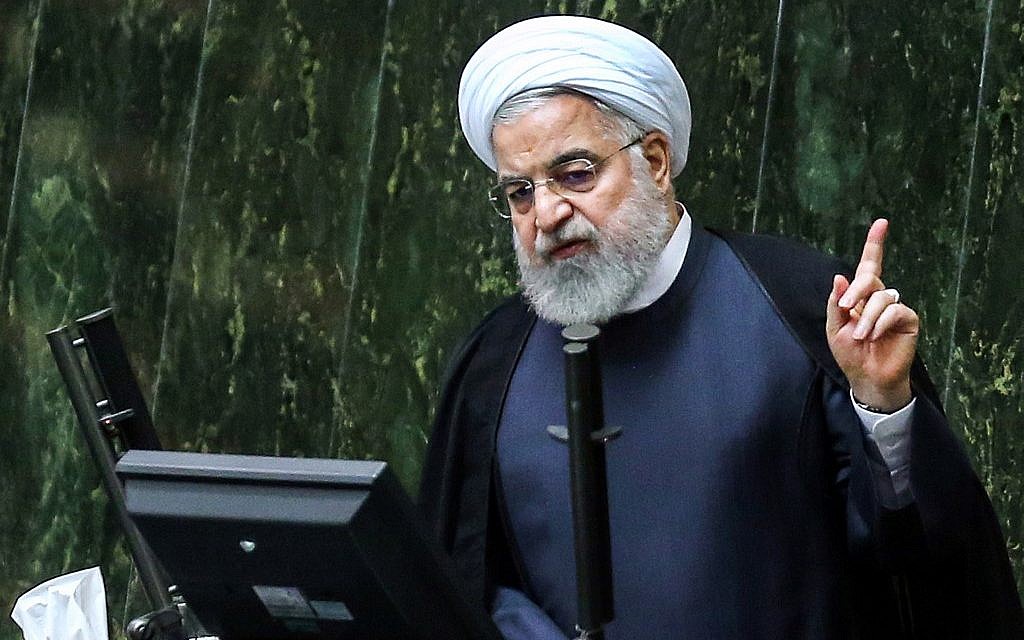
Iran’s President Hassan Rouhani speaks at parliament in the capital Tehran on September 3, 2019. (Atta Kenare/AFP)

TEHRAN, Iran — Iran’s President Hassan Rouhani said on Sunday that the presence of foreign forces creates “insecurity” in the Gulf, after the US ordered the deployment of more troops to the region.

“Foreign forces can cause problems and insecurity for our people and for our region,” Rouhani said in a televised speech at an annual military parade, adding that Iran would present to the UN a regional cooperation plan for peace.

Tensions escalated between Iran and the United States after devastating September 14 attacks on Saudi oil installations that Washington and Riyadh have blamed on Tehran.

Following the attacks, the United States announced on Friday that it was sending reinforcements to Saudi Arabia at “the kingdom’s request.”

An Iranian army member looks at a missile in an exhibition in which the Revolutionary Guard also displays pieces of the American drone Global Hawk shot down by the Guard in the Strait of Hormuz in June 2019, in Tehran, Iran, Sept. 21, 2019 (AP Photo/Vahid Salemi)

In his speech on Sunday, Rouhani called on the foreign powers in the Gulf region to “stay away.”

“If they’re sincere, then they should not make our region the site of an arms race,” he said.

“Your presence has always brought pain and misery for the region. The farther you keep yourselves from our region and our nations, the more security there will be for our region.”

Rouhani said Iran would present a plan for peace to the United Nations in the coming days.

“In this sensitive and important historical moment, we announce to our neighbors, that we extend the hand of friendship and brotherhood to them,” he said.

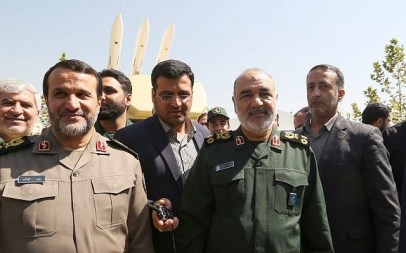
Islamic Revolutionary Guard Corps commander Major General Hossein Salami warned Saturday that any country that attacks Iran would become the “main battlefield” and added the the Islamic Republic was “ready for any type of scenario.”

“Whoever wants their land to become the main battlefield, go ahead,” he told a news conference in Tehran. “We will never allow any war to encroach upon Iran’s territory.

“We hope that they don’t make a strategic mistake,” he said, listing past US military “adventures” against Iran.

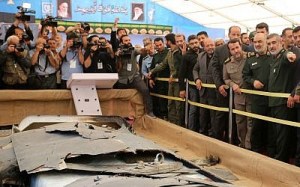
Iranian Revolutionary Guards commander Maj. Gen. Hossein Salami (2nd-R) and Gen. Amir Ali Hajizadeh (R), head of Iran’s Revolutionary Guards aerospace division, looks at debris from what Iran presented as a downed US drone reportedly recovered within Iran’s territorial waters, at Tehran’s Islamic Revolution and Holy Defense museum, during the unveiling of an exhibition of what Iran says are US and other drones captured in its territory, on September 21, 2019. (Atta Kenare/AFP)

Yemen’s Houthi rebels have claimed responsibility for the strikes on Saudi Arabia but the US says it has concluded the attacks involved cruise missiles from Iran and amounted to “an act of war.”

Saudi Arabia, which has been bogged down in a five-year war across its southern border in Yemen, has said Iran “unquestionably sponsored” the attacks.

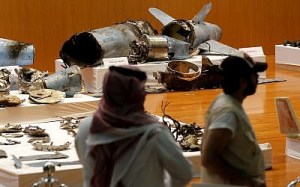
The Saudi military displays what they say are an Iranian cruise missile and drones used in recent attack on its oil industry at Saudi Aramco’s facilities in Abqaiq and Khurais, during a press conference in Riyadh, Saudi Arabia, September 18, 2019. (Amr Nabil/AP)

The kingdom says the weapons used in the attacks were Iranian-made, but it stopped short of directly blaming its regional rival.

“Sometimes they talk of military options,” Salami said, apparently referring to the Americans.

Yet he warned that “a limited aggression will not remain limited” as Iran was determined to respond and would “not rest until the aggressor’s collapse.”

The United States upped the ante on Friday by announcing new sanctions against Iran’s central bank, with US President Donald Trump calling the measures the toughest America has ever imposed on another country.

Washington has imposed a series of sanctions against Tehran since unilaterally pulling out of a landmark 2015 nuclear deal in May last year.

It already maintains sweeping sanctions on Iran’s central bank, but the US Treasury said Friday’s designation was over the regulator’s work in funding terrorism.


IDF says armed drone captured by Syria near Golan was Iranian, not Israeli 

September 22, 2019

Source: IDF says armed drone captured by Syria near Golan was Iranian, not Israeli | The Times of Israel

A military spokesman blames IRGC General Soleimani and notes incident occurred in same area where Israel foiled Iranian drone attack last month

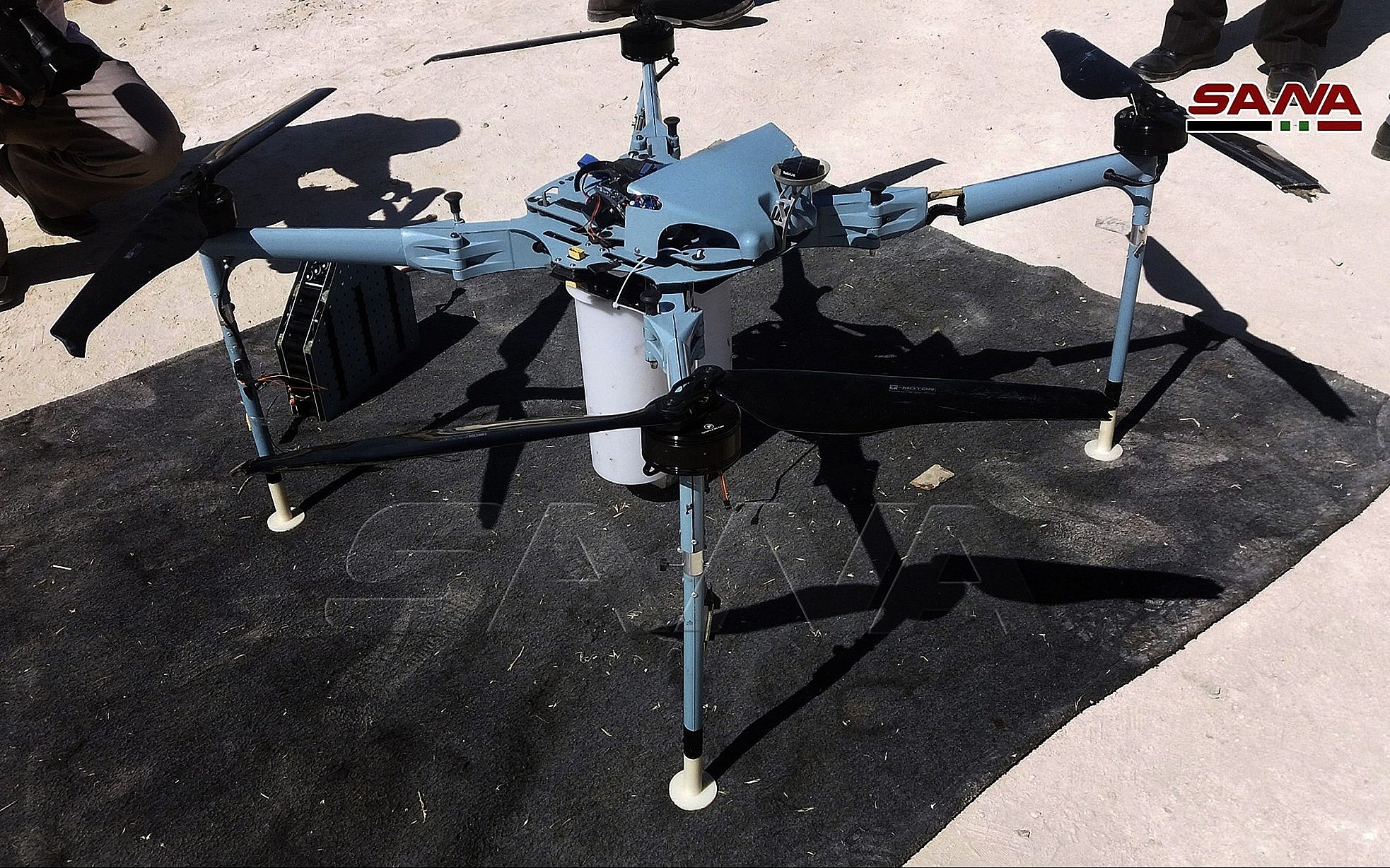
This photo released by the Syrian official news agency SANA shows a drone which the Syrian state news agency says authorities have controlled and dismantled and was rigged with cluster bombs on the edge of the Israeli Golan Heights, southern Syria, September 21, 2019. (SANA via AP)

This photo released by the Syrian official news agency SANA shows a drone which the Syrian state news agency says authorities have controlled and dismantled and was rigged with cluster bombs on the edge of the Israeli Golan Heights, southern Syria, September 21, 2019. (SANA via AP)

The Israel Defense Forces on Saturday denied any connection to a drone captured by Syria near the Israeli Golan Heights, saying it was an Iranian aircraft.

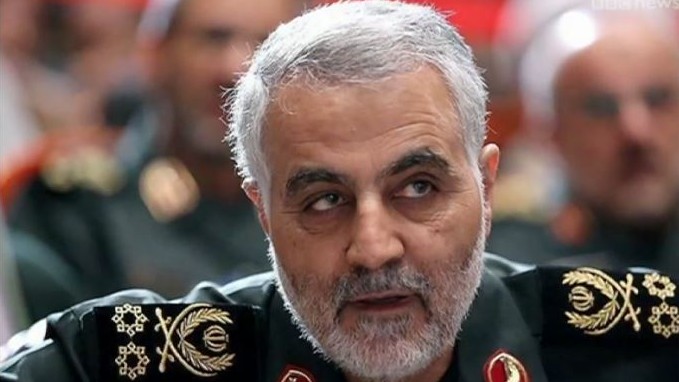
“Today we saw the Syrians prove that [Iranian Revolutionary Guard Corps’ Quds Force commander Gen. Qassem] Soleimani does what he wants in Syria and definitely doesn’t tell the Assad regime what he is up to,” wrote the IDF’s Arabic spokesman Avichai Adraee.

Earlier Saturday, Syria’s state news agency SANA said authorities have captured and dismantled a drone rigged with cluster bombs near the border with the Israeli Golan Heights.

SANA gave no further details about the drone but posted several photos.

The news agency also reported that Syrian forces found Israeli-made vehicles and material in Bariqa, a village near the deserted border city of Quneitra.

Iranian Revolutionary Guards al-Quds Force commander Maj. Gen. Qassem Soleimani.(YouTube screenshot)

Israel frequently conducts airstrikes and missile attacks inside war-torn Syria but rarely confirms them. Israel says it targets mostly bases of Iranian forces and the Lebanese terror group Hezbollah in Syria.

But Adraee said it was definitely “not an IDF drone,” noting that it was found in the same area where the IDF attacked last month to foil an Iranian drone attack on Israel.

A still from a video purporting to show an Israeli strike on Iran-backed forces in Syria on August 24, 2019. (screen capture: Twitter)

In that case the Israeli military said its strike targeted operatives from the Quds Force as well as Shiite militias who had been planning on sending “kamikaze” attack drones into Israel armed with explosives.

The Britain-based Syrian Observatory for Human Rights, an opposition war monitor, said it was not clear if Syrian troops or members of Hezbollah downed the drone Saturday. Hezbollah has fighters in different parts of Syria where they are fighting on the side of Syrian President Bashar Assad’s forces.

The incident came two days after another drone was destroyed over the Damascus suburb of Aqraba. That’s the same suburb where an Israeli airstrike killed two Hezbollah operatives last month.

No one claimed responsibility for the drones.

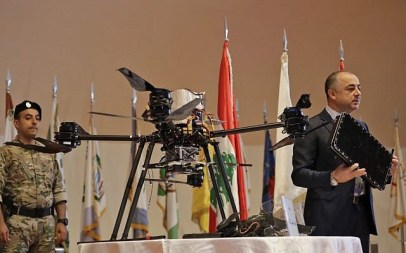
In neighboring Lebanon, a government investigation concluded Thursday that two alleged Israeli drones were on an attack mission when they crashed in the capital in August, one of them armed with 4.5 kilograms (10 pounds) of explosives.

The type of UAV used in the Beirut attack has raised considerable questions about the drones’ provenance, with analysts suggesting they could be Iranian.

Lebanese Minister of Defense Elias Bou Saab shows the box that he alleged carried explosives in a captured drone that fell over a southern Beirut suburb as he speaks during a press conference in the Ministry of Defense in Yarze, on September 19, 2019. (JOSEPH EID / AFP)

Israeli media have reported that the drones in Beirut targeted an office housing a “planetary mixer,” a large industrial machine that is critical to making precision-guided missiles. Hezbollah denies it produces such weapons in Lebanon.

Israel has said it would not allow the group to have precision-guided missiles, as that would be a game-changing technology.

Israel considers Iran to be its greatest enemy, and the Iran-backed Lebanese terror group Hezbollah to be its most immediate military threat. Hezbollah has a battle-tested army that has been fighting alongside Assad’s forces in Syria’s civil war.

Israel has acknowledged carrying out scores of airstrikes in Syria aimed at preventing alleged Iranian arms transfers to Hezbollah. But in August, Israel was believed to have widened its campaign and struck Iranian or Hezbollah targets in Iraq and Lebanon as well.


Airstrikes said to target Iran-backed militia base in Iraq 

September 22, 2019

Source: Airstrikes said to target Iran-backed militia base in Iraq | The Times of Israel

Popular Mobilization Force targets attacked for third time in a week; some have blamed Israel for strikes

Illustrative: Popular Mobilization Forces members stand by a burning truck after a drone attack blamed on Israel near Qaim border crossing, in Anbar province, Iraq, August 25, 2019. (AP Photo)

Illustrative: Popular Mobilization Forces members stand by a burning truck after a drone attack blamed on Israel near Qaim border crossing, in Anbar province, Iraq, August 25, 2019. (AP Photo)

An airstrike was reported Sunday afternoon in western Iraq, targeting a military base belonging to an Iran-backed force — the third such attack on the militia in a week and the fourth in a month.

“An unidentified aircraft targeted the area surrounding a military base next to the al-Murssinat [military] airport in the western part of the al-Anbar province,” Lebanese television station al-Mayadeen quoted sources as saying.

There were no casualties in the attack, the report said.

It added that the targeted military base belongs to the Popular Mobilization Forces (PMF), an umbrella group of largely Iran-backed militias.

On Thursday, Arabic-language media reported that unknown aircraft attacked PMF posts in the Boukamal region of eastern Syria, near the Iraqi border, killing at least five people and wounding nine, after an earlier similar strike two days earlier.

Some Syrian and Iraqi outlets have said Israel was suspected of being behind the strikes. There were no such public allegations by Syrian or Iraqi officials.

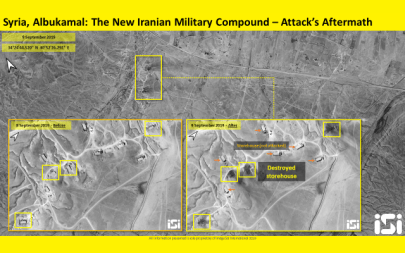
On September 9, aircraft targeted an arms depot and posts of Iranian-backed militias in the Boukamal region, killing at least 18 fighters and destroying at least eight storehouses. A Syrian security official said at the time that Israeli jets were behind the attack but denied there were casualties.

Satellite image showing the aftermath of an overnight airstrike on an alleged Iranian military base in Syria’s Boukamal region, near the Iraqi border, on September 9, 2019. (ImageSat International)

Since mid-July, eight arms depots and training camps belonging to the Popular Mobilization Forces have been targeted in apparent attacks.

The Saudi-owned Al Arabiya network has reported that the Lebanese Hezbollah terror group also maintains a presence in the Boukamal region.

The PMF has blamed both Israel and the US for the string of blasts and drone sightings at its bases. Israeli officials have not publicly commented on these allegations, though Netanyahu has hinted at the possibility.


Pro-Iran PMU forces take over Iraq’s Saudi, Jordanian borders, threaten Israel from the east – DEBKAfile

September 22, 2019

Source: Pro-Iran PMU forces take over Iraq’s Saudi, Jordanian borders, threaten Israel from the east – DEBKAfile

Iran was on its next move by the time the US announced on Sept. 21 the deployment of more troops and enhanced air and missile defense systems for Saudi Arabia and the UAE in response to the attack on Saudi oil facilities.

As the USS Nitze destroyer deployed to the northern Red Sea opposite the Saudi coast, armed with Aegis combat systems for tracking and intercepting cruise missiles, Iraqi Shiite Population Mobilization Forces (PMU) swarmed up to Iraq’s borders with Saudi Arabia and Jordan, DEBKAfile’s exclusive military and intelligence sources reveal.

Washington’s cautious response to the attack on Saudi Arabia and US sanctions were met by Iranian aggression in full momentum and its heightened threat to Saudi Arabia and US allies. By posting its Iraqi proxy PMU forces on the two border regions, Tehran directly threatens the Saudi capital Riyadh from the north and Israel from the east.

The Iraqi militia far outstrips Iraq’s national army in scale and armament, possessing new tanks, ground-to-ground missiles and an array of explosive UAVs.

This is also Tehran’s countermove for the Saudi-Israeli air strikes on the IRGC Al Qods-PMU military compounds at Abu Kamal in eastern Syria and Al Qaim on the Iraqi side of the border. (See the previous DEBKA report).

According to our sources, the PMU’s double border takeover began on Sept 18 and was in place by Saturday. Sept. 21. The operation was set up by the Al Qods chief, Iran’s Middle East commander Gen. Qassem Soleimani, who spent part of last week in Baghdad in conference with PMU leaders. An officer called Col. Qassem Masliyah was appointed to lead Iran’s seizures of the two key borders. The operation was codenamed “The Will of Victory.”

The Iraqi militia used the Iraqi national army’s operations against ISIS remnants in western Iraq to camouflage its movements, at times even exploiting the Iraqi air force for its secret purpose. However, by Sunday, Sept. 22, The Will of Victory cat was out of the bag. Iraqi prime minister Adel Abdul-Mahdi ordered the army to recover the border regions from the PMU. This was largely an empty step, since the Iraqi army is no match for the powerful pro-Iranian militia and its commanders are unlikely to take on the challenge.


Islam’s Shi’ite-Sunni Mideast Rivalries- Jerusalem Studio 450 

September 21, 2019


US to send troops to Saudi Arabia, hold off on striking Iran 

September 21, 2019

Source: US to send troops to Saudi Arabia, hold off on striking Iran | The Times of Israel

Officials say Washington likely to send hundreds of personnel, defensive equipment; Trump: restraint ‘shows far more strength’ than launching strikes

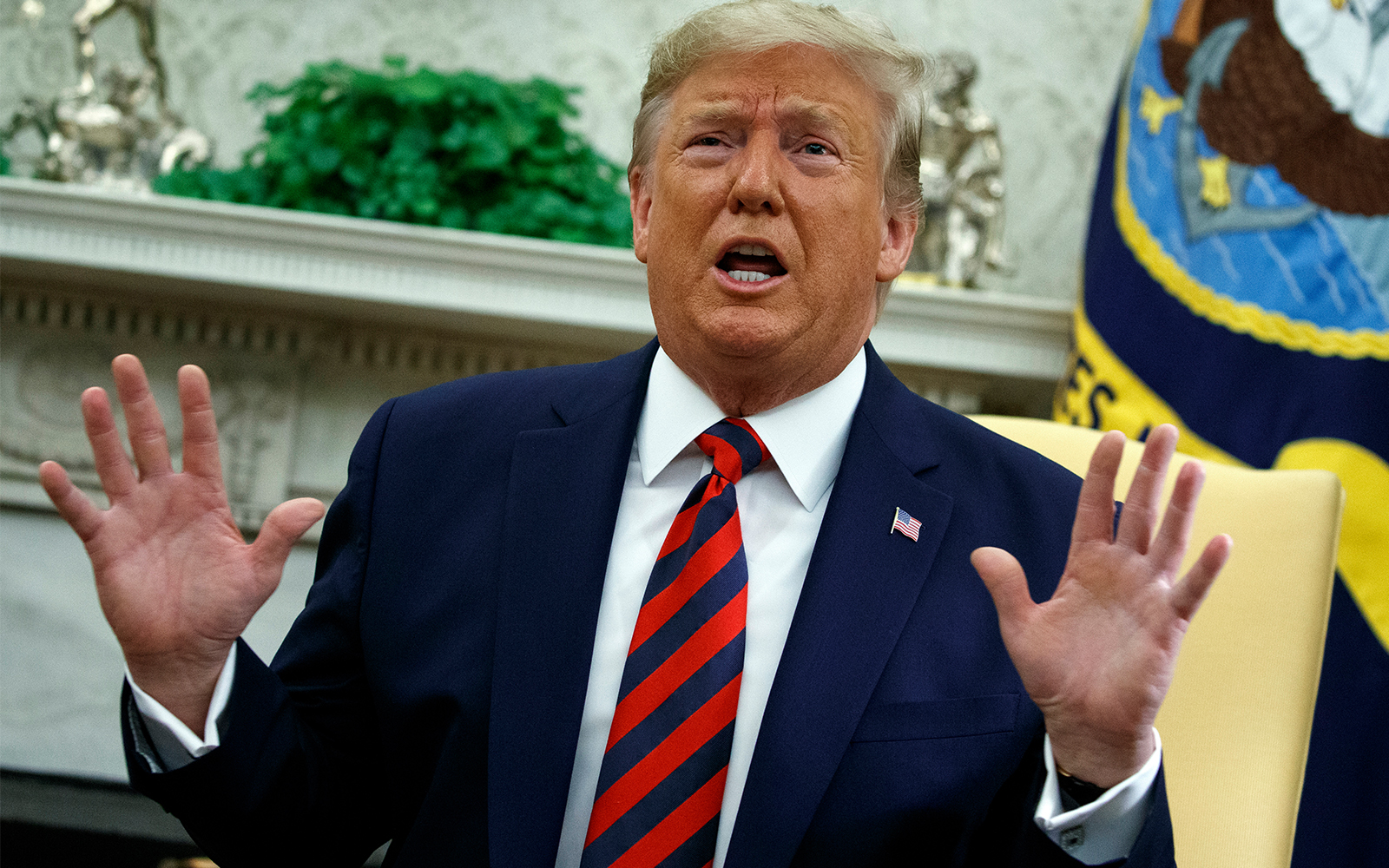
US President Donald Trump speaks during a meeting with Australian Prime Minister Scott Morrison in the Oval Office of the White House, September 20, 2019, Washington. (AP Photo/Evan Vucci)

US President Donald Trump speaks during a meeting with Australian Prime Minister Scott Morrison in the Oval Office of the White House, September 20, 2019, Washington. (AP Photo/Evan Vucci)

AP — The Pentagon on Friday announced it will deploy additional US troops and missile defense equipment to Saudi Arabia and the United Arab Emirates, as US President Donald Trump has at least for now put off any immediate military strike on Iran in response to the attack on the Saudi oil industry.

US Defense Secretary Mark Esper told Pentagon reporters this is a first step to beef up security and he would not rule out additional moves down the road. General Joseph Dunford, chairman of the Joint Chiefs of Staff, said more details about the deployment will be determined in the coming days, but it would not involve thousands of US troops.

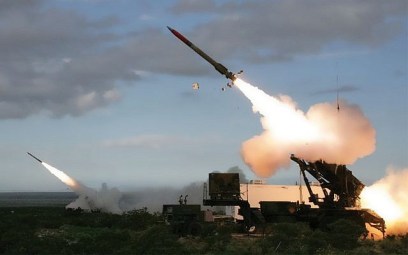
Other officials said the US deployment would likely be in the hundreds and the defensive equipment heading to the Middle East would probably include Patriot missile batteries and possibly enhanced radars.

The announcement reflected Trump’s comments earlier in the day when he told reporters that showing restraint “shows far more strength” than launching military strikes and he wanted to avoid an all-out war with Iran.

The US Army test fires a Patriot missile, March 27, 2019. (US Army/Jason Cutshaw)

Instead, he laid out new sanctions on the Iranian central bank and said the easiest thing to do would be to launch military strikes.

“I think the strong person’s approach and the thing that does show strength would be showing a little bit of restraint,” Trump told reporters during a meeting with Australian Prime Minister Scott Morrison. “Much easier to do it the other way, and Iran knows that if they misbehave, they are on borrowed time.”

Dunford told reporters the extra equipment and troops would give the Saudis a better chance of defending against unconventional aerial attacks.

“No single system is going to be able to defend against a threat like that,” he said, “but a layered system of defensive capabilities would mitigate the risk of swarms of drones or other attacks that may come from Iran.”

The US has not provided any hard evidence that Iran was responsible for the attacks, while insisting the investigation continues, but Esper on Friday said the drones and cruise missiles used in the attack were produced by Iran.

“The attack on September 14 against Saudi Arabian oil facilities represents a dramatic escalation of Iranian aggression,” Esper said, adding that the US has thus far shown “great restraint.”

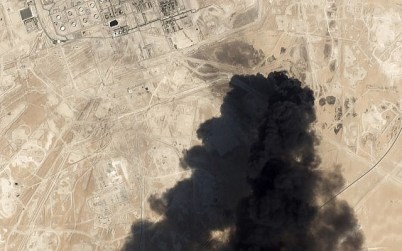
Satellite image from Planet Labs Inc. shows thick black smoke rising from Saudi Aramco’s Abqaiq oil processing facility in Buqyaq, Saudi Arabia, September 14, 2019. (Planet Labs Inc via AP)

In deciding against an immediate US strike, Trump for the second time in recent months pulled back from a major military action against Iran that many Pentagon and other advisers fear could trigger a new Middle East war. In June, after Iran shot down an American surveillance drone, Trump initially endorsed a retaliatory military strike then abruptly called it off because he said it would have killed dozens of Iranians.

On Friday, he left the door open a bit for a later military response, saying people thought he’d attack Iran “within two seconds,” but he has “plenty of time.”

Trump spoke just before he gathered his national security team at the White House to consider a broad range of military, economic and diplomatic options in response to what administration officials say was an unprecedented Iranian attack on Saudi oil facilities.

Iran has denied involvement and warned the US that any attack will spark an “all-out war” with immediate retaliation from Tehran.

US Secretary of State Mike Pompeo and Vice President Mike Pence have condemned the attack on Saudi oil facilities as “an act of war.”

Esper and Dunford declined to discuss any potential ship movements to the region, although a number of US Navy vessels are nearby.

The additional air and missile defense equipment for Saudi Arabia would be designed to bolster its defenses in the north, since most of its defenses have focused on threats from Houthis in Yemen to the south.

A forensic team from US Central Command is poring over evidence from cruise missile and drone debris, but the Pentagon said the assessment is not finished. Officials are trying to determine if they can get navigational information from the debris that could provide hard evidence that the strikes came from Iran.


Iran warns any country that attacks it will become the ‘main battlefield’ 

September 21, 2019

Source: Iran warns any country that attacks it will become the ‘main battlefield’ | The Times of Israel

As US blames Tehran for attack on Saudi oil facilities, Revolutionary Guards commander says his forces are ready for ‘any type of scenario’

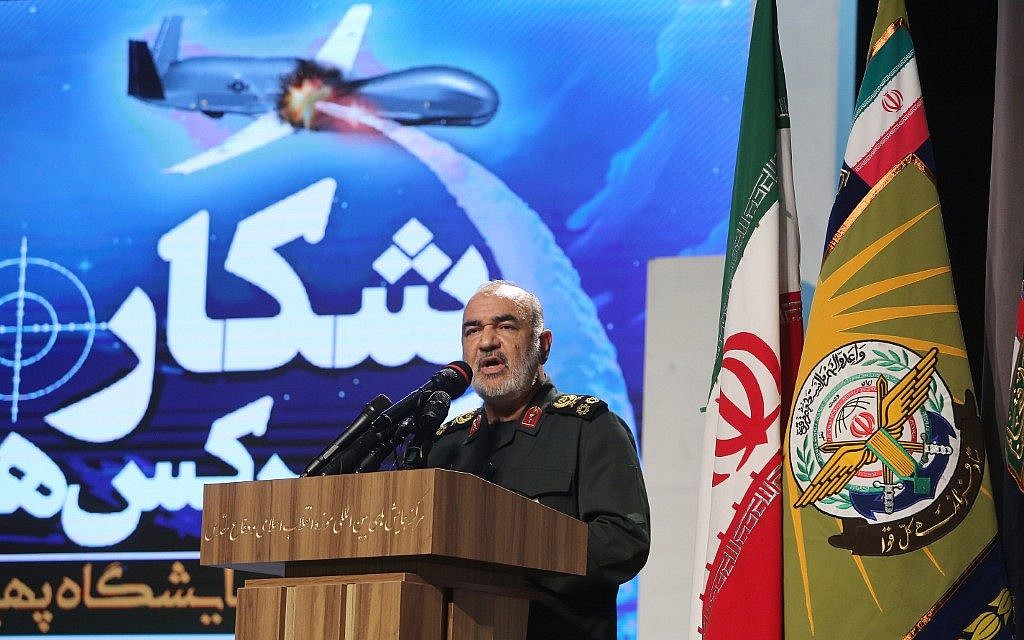
Islamic Revolutionary Guard Corps commander Maj. Gen. Hossein Salami at Tehran’s Islamic Revolution and Holy Defense museum during the unveiling of an exhibition of what Iran says are US and other drones captured in its territory, in the capital Tehran on September 21, 2019. (Atta Kenare/AFP)

TEHRAN, Iran — Any country that attacks Iran will become the “main battlefield,” the Islamic Revolutionary Guard Crops warned Saturday after Washington ordered reinforcements to the Gulf following attacks on Saudi oil installations it blames on Tehran.

Tensions escalated between arch-foes Iran and the United States after last weekend’s attacks on Saudi energy giant Aramco’s Abqaiq processing plant and Khurais oilfield halved the kingdom’s oil output.

Yemen’s Houthi rebels have claimed responsibility for the strikes but the US says it has concluded the attacks involved cruise missiles from Iran and amounted to “an act of war.”

Washington approved the deployment of troops to Saudi Arabia at “the kingdom’s request,” US Defense Secretary Mark Esper said, noting the forces would be “defensive in nature” and focused on air and missile defense.

But IRGC commander Major General Hossein Salami said Iran was “ready for any type of scenario.”

Iranian Revolutionary Guards commander Maj. Gen. Hossein Salami (2nd-R) and Gen. Amir Ali Hajizadeh (R), head of Iran’s Revolutionary Guards aerospace division, looks at debris from what Iran presented as a downed US drone reportedly recovered within Iran’s territorial waters, at Tehran’s Islamic Revolution and Holy Defense museum, during the unveiling of an exhibition of what Iran says are US and other drones captured in its territory, on September 21, 2019. (Atta Kenare/AFP)

“Whoever wants their land to become the main battlefield, go ahead,” he told a news conference in Tehran.

“We will never allow any war to encroach upon Iran’s territory.

“We hope that they don’t make a strategic mistake,” he said, listing past US military “adventures” against Iran.

Salami was speaking at Tehran’s Islamic Revolution and Holy Defense museum during the unveiling of an exhibition of what Iran says are US and other drones captured in its territory.

It featured a badly damaged drone with US military markings said to be an RQ-4 Global Hawk that Iran downed in June, as well as an RQ-170 Sentinel captured in 2011 and still intact.

‘Act of war’

The Guards also displayed the domestically manufactured Khordad 3 air defense battery they say was used to shoot down the Global Hawk.

“What are your drones doing in our airspace? We will shoot them down, shoot anything that encroaches on our airspace,” said Salami, noting Iran had defeated “America’s technological dominance” in air defense and drone manufacture.

Iranian Revolutionary Guards commander Maj. Gen. Hossein Salami (2nd-R) walks past a Khordad-3 air defense system during a visit to see an exhibition at the Islamic Revolution and Holy Defense museum in the capital Tehran on September 21, 2019. (Atta Kenare/AFP)

His remarks came only days after strikes on Saudi oil facilities claimed by Yemen’s Houthis, but the US says it has concluded the attack involved cruise missiles from Iran and amounted to “an act of war.”

Saudi Arabia, which has been bogged down in a five-year war across its southern border in Yemen, has said Iran “unquestionably sponsored” the attacks.

The Saudi military displays what they say are an Iranian cruise missile and drones used in recent attack on its oil industry at Saudi Aramco’s facilities in Abqaiq and Khurais, during a press conference in Riyadh, Saudi Arabia, September 18, 2019. (Amr Nabil/AP)

The kingdom says the weapons used in the attacks were Iranian-made, but it stopped short of directly blaming its regional rival.

“Sometimes they talk of military options,” Salami said, apparently referring to the Americans.

Yet he warned that “a limited aggression will not remain limited” as Iran was determined to respond and would “not rest until the aggressor’s collapse.”

‘Crushing response’

The IRGC aerospace commander said the US ought to learn from its past failures and abandon its hostile rhetoric.

“We’ve stood tall for the past 40 years and if the enemy makes a mistake, it will certainly receive a crushing response,” Brigadier General Amirali Hajizadeh said.

The United States upped the ante on Friday by announcing new sanctions against Iran’s central bank, with US President Donald Trump calling the measures the toughest America has ever imposed on another country.

Washington has imposed a series of sanctions against Tehran since unilaterally pulling out of a landmark 2015 nuclear deal in May last year.

It already maintains sweeping sanctions on Iran’s central bank, but the US Treasury said Friday’s designation was over the regulator’s work in funding terrorism.

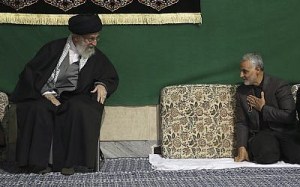
Commander of Iran’s Quds Force, Qassem Soleimani, right, greets Supreme Leader Ayatollah Ali Khamenei while attending a religious ceremony in a mosque at his residence in Tehran, Iran, March 27, 2015. (Office of the Iranian Supreme Leader via AP)

The “action targets a crucial funding mechanism that the Iranian regime uses to support its terrorist network, including the Quds Force, Hezbollah and other militants that spread terror and destabilize the region,” said US Treasury Secretary Steven Mnuchin.

The Quds Force is the IRGC’s foreign operations arm, while Hezbollah is a Lebanese terror group closely allied with Iran.

Iran’s Foreign Minister Mohammad Javad Zarif said the new sanctions meant the United States was “trying to block the Iranian people’s access to food and medicine.”

It showed the US was in “despair” and that “the maximum pressure policy has reached its end,” semi-official news agency ISNA quoted him as saying from New York.


First Israeli-Saudi air force collaboration for demolishing Iran’s Abu Kamal complex – DEBKAfile

September 20, 2019

Source: First Israeli-Saudi air force collaboration for demolishing Iran’s Abu Kamal complex – DEBKAfile

The latest round of attacks on Iran’s military complex in Syria’s Abu Kamal region are a joint operation by the Israeli and Saudi air forces, DEBKAfile and Gulf military sources reported on Friday, Sept. 20.

Their targets are the al Qods Brigades bases, command centers, missile and ammo stores which Iran has set up close to the Syrian-Iraqi border, as well as Iraqi Shiite militia and Lebanese Hizballah forces. An estimated 100 Iranian and militia combatants were reported killed in the joint operation and several hundred injured.

Western military sources report that the “unidentified” UAVs sighted lately flying over Iranian concentrations in Syria belong to Saudi Arabia.  One was shot down on Thursday. Those sources add that the US is providing air cover, as well as running intelligence, but not otherwise intervening in the first Saudi-Israel military collaboration ever to be revealed.

It was part of President Donald Trump’s rationale when he decided to hold off from direct US military action in retaliation for Iran’s crippling missile-cum-drone assault on the Saudi oil procession plant at Abqaiq and the Kurais oilfield last Saturday. Trump appears to be waiting to see how the still ongoing Israeli-Saudi offensive against Iran turns out.