Source: US to send troops to Saudi Arabia, hold off on striking Iran | The Times of Israel
Officials say Washington likely to send hundreds of personnel, defensive equipment; Trump: restraint ‘shows far more strength’ than launching strikes
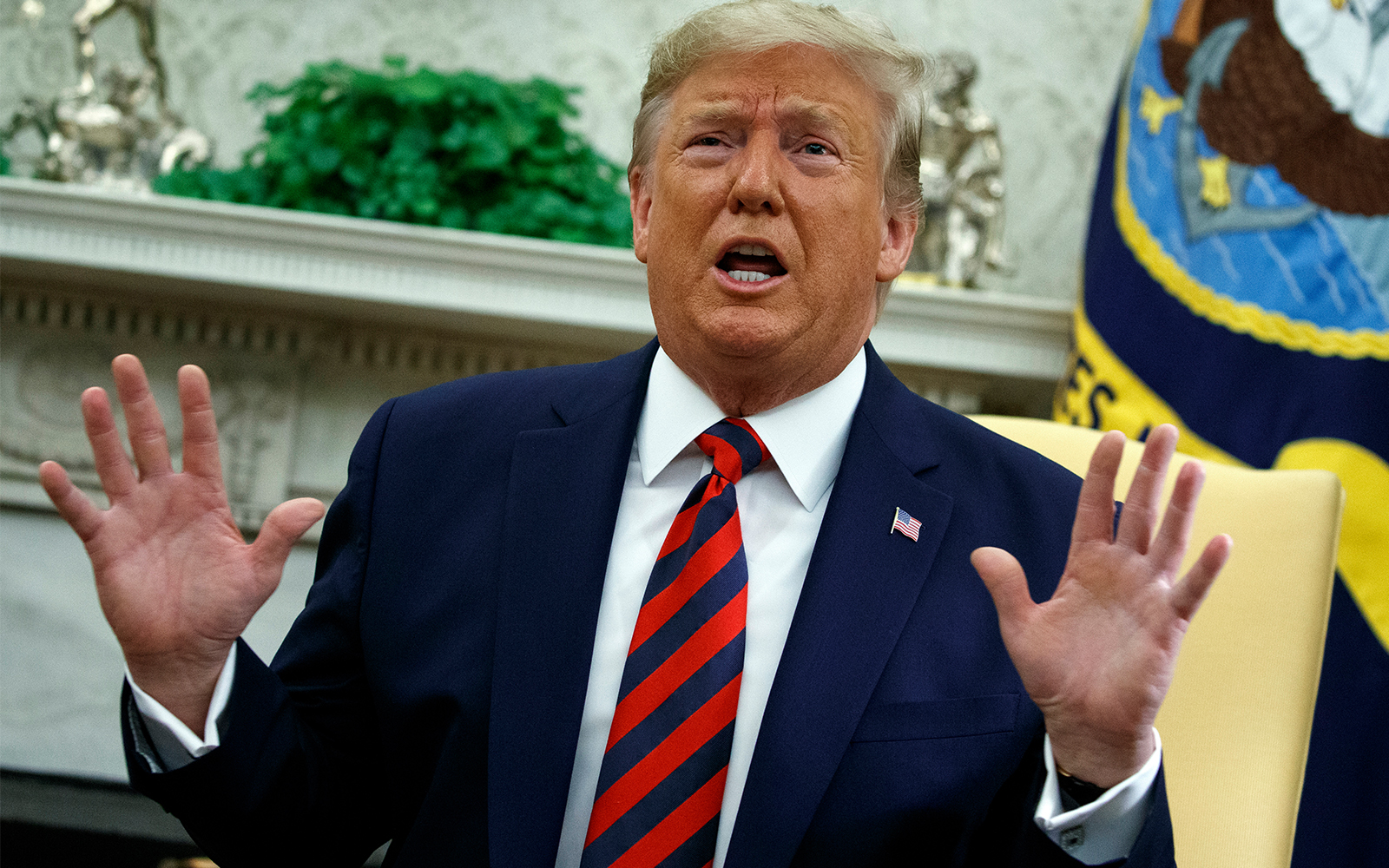
AP — The Pentagon on Friday announced it will deploy additional US troops and missile defense equipment to Saudi Arabia and the United Arab Emirates, as US President Donald Trump has at least for now put off any immediate military strike on Iran in response to the attack on the Saudi oil industry.
US Defense Secretary Mark Esper told Pentagon reporters this is a first step to beef up security and he would not rule out additional moves down the road. General Joseph Dunford, chairman of the Joint Chiefs of Staff, said more details about the deployment will be determined in the coming days, but it would not involve thousands of US troops.
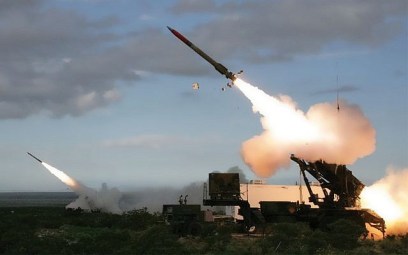
Other officials said the US deployment would likely be in the hundreds and the defensive equipment heading to the Middle East would probably include Patriot missile batteries and possibly enhanced radars.
The announcement reflected Trump’s comments earlier in the day when he told reporters that showing restraint “shows far more strength” than launching military strikes and he wanted to avoid an all-out war with Iran.
Instead, he laid out new sanctions on the Iranian central bank and said the easiest thing to do would be to launch military strikes.
“I think the strong person’s approach and the thing that does show strength would be showing a little bit of restraint,” Trump told reporters during a meeting with Australian Prime Minister Scott Morrison. “Much easier to do it the other way, and Iran knows that if they misbehave, they are on borrowed time.”
Dunford told reporters the extra equipment and troops would give the Saudis a better chance of defending against unconventional aerial attacks.
“No single system is going to be able to defend against a threat like that,” he said, “but a layered system of defensive capabilities would mitigate the risk of swarms of drones or other attacks that may come from Iran.”
The US has not provided any hard evidence that Iran was responsible for the attacks, while insisting the investigation continues, but Esper on Friday said the drones and cruise missiles used in the attack were produced by Iran.
“The attack on September 14 against Saudi Arabian oil facilities represents a dramatic escalation of Iranian aggression,” Esper said, adding that the US has thus far shown “great restraint.”
In deciding against an immediate US strike, Trump for the second time in recent months pulled back from a major military action against Iran that many Pentagon and other advisers fear could trigger a new Middle East war. In June, after Iran shot down an American surveillance drone, Trump initially endorsed a retaliatory military strike then abruptly called it off because he said it would have killed dozens of Iranians.
On Friday, he left the door open a bit for a later military response, saying people thought he’d attack Iran “within two seconds,” but he has “plenty of time.”
Trump spoke just before he gathered his national security team at the White House to consider a broad range of military, economic and diplomatic options in response to what administration officials say was an unprecedented Iranian attack on Saudi oil facilities.
Iran has denied involvement and warned the US that any attack will spark an “all-out war” with immediate retaliation from Tehran.
US Secretary of State Mike Pompeo and Vice President Mike Pence have condemned the attack on Saudi oil facilities as “an act of war.”
Esper and Dunford declined to discuss any potential ship movements to the region, although a number of US Navy vessels are nearby.
The additional air and missile defense equipment for Saudi Arabia would be designed to bolster its defenses in the north, since most of its defenses have focused on threats from Houthis in Yemen to the south.
A forensic team from US Central Command is poring over evidence from cruise missile and drone debris, but the Pentagon said the assessment is not finished. Officials are trying to determine if they can get navigational information from the debris that could provide hard evidence that the strikes came from Iran.
Source: Iran warns any country that attacks it will become the ‘main battlefield’ | The Times of Israel
As US blames Tehran for attack on Saudi oil facilities, Revolutionary Guards commander says his forces are ready for ‘any type of scenario’
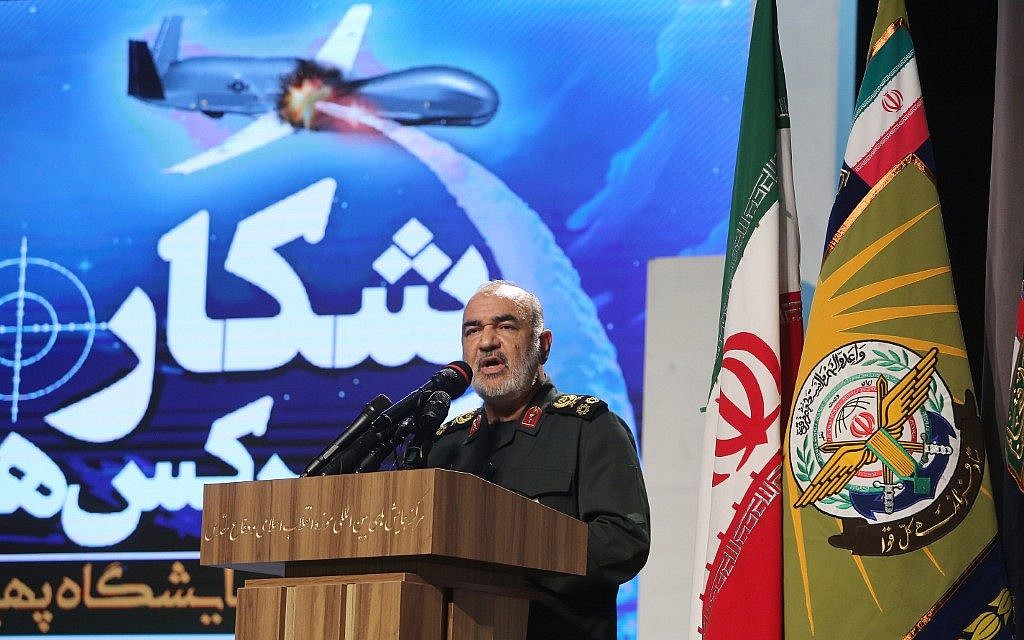
TEHRAN, Iran — Any country that attacks Iran will become the “main battlefield,” the Islamic Revolutionary Guard Crops warned Saturday after Washington ordered reinforcements to the Gulf following attacks on Saudi oil installations it blames on Tehran.
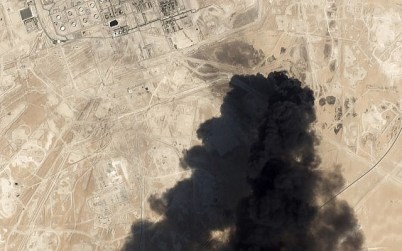
Tensions escalated between arch-foes Iran and the United States after last weekend’s attacks on Saudi energy giant Aramco’s Abqaiq processing plant and Khurais oilfield halved the kingdom’s oil output.
Yemen’s Houthi rebels have claimed responsibility for the strikes but the US says it has concluded the attacks involved cruise missiles from Iran and amounted to “an act of war.”
Washington approved the deployment of troops to Saudi Arabia at “the kingdom’s request,” US Defense Secretary Mark Esper said, noting the forces would be “defensive in nature” and focused on air and missile defense.
But IRGC commander Major General Hossein Salami said Iran was “ready for any type of scenario.”
“Whoever wants their land to become the main battlefield, go ahead,” he told a news conference in Tehran.
“We will never allow any war to encroach upon Iran’s territory.
“We hope that they don’t make a strategic mistake,” he said, listing past US military “adventures” against Iran.
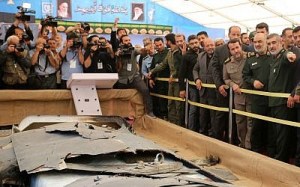
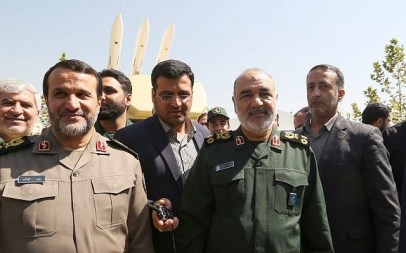
Salami was speaking at Tehran’s Islamic Revolution and Holy Defense museum during the unveiling of an exhibition of what Iran says are US and other drones captured in its territory.
It featured a badly damaged drone with US military markings said to be an RQ-4 Global Hawk that Iran downed in June, as well as an RQ-170 Sentinel captured in 2011 and still intact.
The Guards also displayed the domestically manufactured Khordad 3 air defense battery they say was used to shoot down the Global Hawk.
“What are your drones doing in our airspace? We will shoot them down, shoot anything that encroaches on our airspace,” said Salami, noting Iran had defeated “America’s technological dominance” in air defense and drone manufacture.
His remarks came only days after strikes on Saudi oil facilities claimed by Yemen’s Houthis, but the US says it has concluded the attack involved cruise missiles from Iran and amounted to “an act of war.”
Saudi Arabia, which has been bogged down in a five-year war across its southern border in Yemen, has said Iran “unquestionably sponsored” the attacks.

The kingdom says the weapons used in the attacks were Iranian-made, but it stopped short of directly blaming its regional rival.
“Sometimes they talk of military options,” Salami said, apparently referring to the Americans.
Yet he warned that “a limited aggression will not remain limited” as Iran was determined to respond and would “not rest until the aggressor’s collapse.”
The IRGC aerospace commander said the US ought to learn from its past failures and abandon its hostile rhetoric.
“We’ve stood tall for the past 40 years and if the enemy makes a mistake, it will certainly receive a crushing response,” Brigadier General Amirali Hajizadeh said.
The United States upped the ante on Friday by announcing new sanctions against Iran’s central bank, with US President Donald Trump calling the measures the toughest America has ever imposed on another country.
Washington has imposed a series of sanctions against Tehran since unilaterally pulling out of a landmark 2015 nuclear deal in May last year.
It already maintains sweeping sanctions on Iran’s central bank, but the US Treasury said Friday’s designation was over the regulator’s work in funding terrorism.
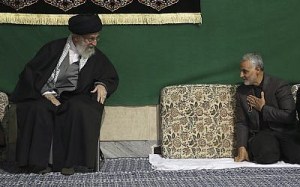
The “action targets a crucial funding mechanism that the Iranian regime uses to support its terrorist network, including the Quds Force, Hezbollah and other militants that spread terror and destabilize the region,” said US Treasury Secretary Steven Mnuchin.
The Quds Force is the IRGC’s foreign operations arm, while Hezbollah is a Lebanese terror group closely allied with Iran.
Iran’s Foreign Minister Mohammad Javad Zarif said the new sanctions meant the United States was “trying to block the Iranian people’s access to food and medicine.”
It showed the US was in “despair” and that “the maximum pressure policy has reached its end,” semi-official news agency ISNA quoted him as saying from New York.




 WarSclerotic
Recent Comments