Archive for August 2019

US move halts release of Iranian tanker held in Gibraltar 

August 15, 2019

Source: US move halts release of Iranian tanker held in Gibraltar | The Times of Israel

Department of Justice petitions country’s supreme court to seize Grace 1

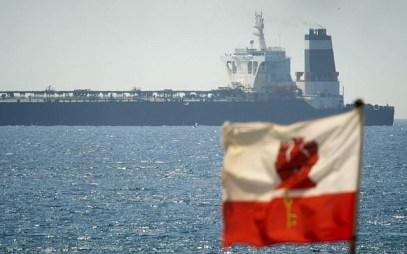
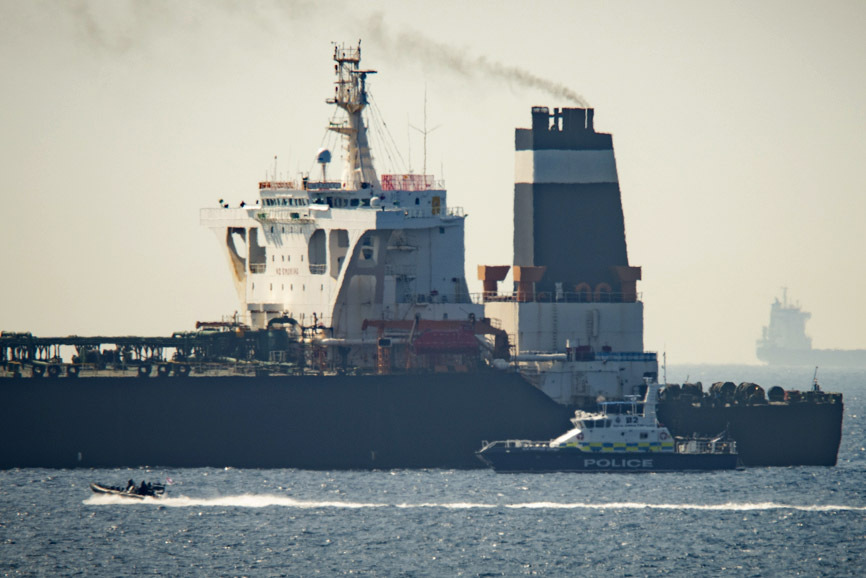
The Grace 1 supertanker in the British territory of Gibraltar, July 4, 2019. (AP Photo/Marcos Moreno)

The Grace 1 supertanker in the British territory of Gibraltar, July 4, 2019. (AP Photo/Marcos Moreno)

MADRID (AP) — The United States moved on Thursday to halt the release of an Iranian supertanker detained in Gibraltar for breaching international sanctions on oil shipments, thwarting efforts by authorities in London and the British overseas territory to defuse tensions with Tehran.

The Gibraltar government confirmed earlier media reports that the US Justice Department seeks to extend the detention of the oil tanker Grace 1, prompting the Supreme Court in the territory to adjourn a scheduled decision on whether to release the ship until later in the day.

“The US Department of Justice has applied to seize the Grace 1 on a number of allegations, which are now being considered,” the Gibraltar government said in a statement, adding the matter would be reviewed by the court at 4 p.m.

The Justice Department did not immediately respond to a request for comment.

Britain’s Foreign Office said in a statement that the “investigations conducted around the Grace 1 are a matter for the government of Gibraltar” and that it couldn’t comment further.

Prime Minister Boris Johnson’s Downing Street office said Iran was discussed during the UK leader’s meeting with President Donald Trump’s national security adviser John Bolton earlier in the week, though no details were released on the talks.

While there was no immediate reaction from Tehran, the US move likely will further stir tensions in the Persian Gulf.

The Grace 1, carrying 2.1 million barrels of Iranian crude oil, was seized last month in a British Royal Navy operation off Gibraltar. The vessel was suspected of violating European Union sanctions on oil shipments to Syria, and its seizure deepened international tensions in the Persian Gulf. Iran called the seizure by Gibraltar an “act of piracy.”

Shortly after the detention of the Grace 1, Iran seized the British-flagged oil tanker Stena Impero, which remains held by the Islamic Republic. Analysts had hoped the release of the Grace 1 by Gibraltar would see the Stena Impero similarly released.

In past weeks, the Persian Gulf region has seen six attacks on oil tankers that the U.S. has blamed on Iran and the downing of a US surveillance drone by Iranian forces. Iran has denied being behind the tanker attacks. Iran also has seized other oil tankers.

The Gibraltar government had said it was seeking to “de-escalate” the situation over the Grace 1.

Signaling preparations for the expected release of the ship, the captain, an Indian national, and three officers of the Grace 1 were released from detention Thursday, the government said.

The whereabouts of the released crew, none of whom are Iranian, were not immediately known. The crew of the Grace 1 includes sailors from India, Pakistan and Ukraine, according to Iranian state television.

The Grace 1 super tanker, suspected of carrying Iranian crude oil to Syria in violation of EU sanctions, in the British territory of Gibraltar after it was detained, July 4, 2019. (AP Photo/Marcos Moreno)

As speculation mounted over the Grace 1’s release, a lawyer representing the territory’s General Attorney Michael Llamas announced during a Thursday morning hearing at the Gibraltar Supreme Court that the US had moved at the eleventh hour.

Speaking in court, Chief Justice Anthony Dudley said that were it not for the US move, “the ship would have sailed,” the Gibraltar Chronicle reported.

This is the second time the Trump administration has moved to seize a ship in recent months. In May, the Justice Department announced that it had seized a North Korean cargo ship used to supply coal to the isolated nation in violation of international sanctions.

Tensions have escalated in the Persian Gulf region since Trump over a year ago unilaterally withdrew the U.S. from Iran’s 2015 nuclear deal with world powers. The decision stopped billions of dollars’ worth of business deals, largely halted the sale of Iran’s crude oil internationally and sharply depreciated Iran’s currency, the rial.

In recent weeks, Iran has begun to step away from the nuclear deal by increasing its production and enrichment of uranium. It has threatened to take further steps in early September if Europe can’t help it sell its oil abroad.

Lina Khatib, head of the Middle East and North Africa program at Chatham House, said the US request on the Grace 1 was based on its own imposed sanctions on Iran.

“Although the US expects its European allies to abide by these sanctions, it is up to the Gibraltar authorities to assess the allegations presented by the US,” Khatib said. “The Gibraltar court could decide to hand over custody of the ship to the US, which would give the UK a much needed get-out clause from the tension caused by the ship’s seizure.”

Resolving the tanker dispute would help Prime Minister Johnson focus on domestic issues as he works to complete Britain’s exit from the European Union and prepare for anticipated national elections over the next few months.

Dryad Global, a UK-based maritime security consultant, earlier this week suggested the Grace 1 would soon be released, citing Britain’s domestic politics. But while a resolution to the tanker dispute could ease the situation at home, it may increase tensions with the US, Britain’s most important international ally.

The US has been asking its allies to take part in a naval mission to protect shipping in the strategic Strait of Hormuz, at the Mouth of the Persian Gulf, though European nations have been reluctant.

Britain has so far been the only one to express willingness to join a maritime security mission. It has also been giving UK-flagged vessels a naval escort since the Iranian Revolutionary Guard’s seizure of the Stena Impero in the Gulf.


Russia lets Iranian-Hizballah forces redeploy opposite Syrian-Israel border – DEBKAfile

August 15, 2019

Source: Russia lets Iranian-Hizballah forces redeploy opposite Syrian-Israel border – DEBKAfile

Exclusive: Deep apprehension in Israel over a Russian U-turn, which is letting small Iranian Al Qods and Hizballah units regain former positions 10-15km from the Israeli and Jordanian borders.

They are coming back after Russian forces drove them out last year and established a safe zone at those border districts in their stead.
Reporting this turn of events, DEBKAfile’s military and intelligence sources add that the Russian forces, not content with allowing this Iranian-Hizballah comeback, have also evacuated their own positions, leaving the local population under the control of the Al Qods and Hizballah invaders. These actions violate Russian President Vladimir Putin’s commitment last year to US President Donald Trump and Prime Minister Binyamin Netanyahu to purge S. Syrian borders of the hostile elements ruled from Tehran and provide monitors for a safe zone.

Washington and Jerusalem have interceded strongly with Moscow against this breach while trying to establish whether they were ordered from Putin’s office in the Kremlin or the local command on a directive from the Russian defense ministry. For now, neither the US nor Israel has decided how to respond to the new pro-Iranian buildup at Israel’s back door. They are also trying to find out if the Russian step is Moscow’s response to the US-Turkish safe zone initiative for northeastern Syria. T

his week, a large American unit landed in southern Turkey to start activating the joint US-Turkish safe zone, which aims to separate the Turkish army from the pro-US SDF militia which is dominated by Syrian Kurds. Moscow may have opened the door to Iran in southern Syria to counter expanding US involvement in the north.

Israel showed first resistance to the new hostile presence at its border on July 24 by firing surface missiles at the intelligence stations Iran was setting up on the Tal Al-Harara hilltop opposite the Golan border. But the Russian move continued notwithstanding.


Russian Nuclear Accident Highlights New Cruise Missile

August 14, 2019

Moscow silent on radiation spike in northern Europe

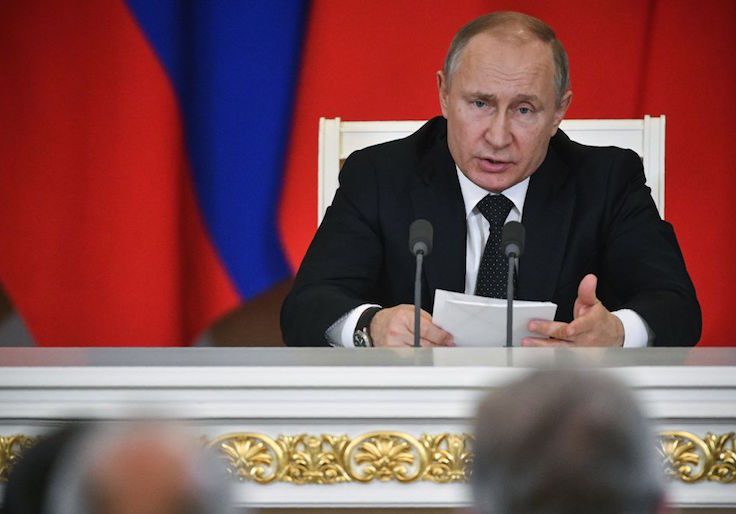
Russian President Vladimir Putin /
Russian President Vladimir Putin / Getty Images

Bill Gertz – AUGUST 14, 2019 5:00 AM

An explosion in northern Russia last week highlights Moscow’s continued work on a new strategic cruise missile powered by a nuclear reactor.

The blast took place off the coast of Nenoksa, a naval missile test site, on Aug. 8 and killed five people while briefly spreading radiation in the region.

The site of the accident is near the port of Severodvinsk where Russian nuclear submarines are serviced.

President Trump said Monday the United States is “learning much from the failed missile explosion in Russia.”

“We have similar, though more advanced, technology,” he tweeted. “The Russian ‘Skyfall’ explosion has people worried about the air around the facility, and far beyond. Not good!”

The nuclear-powered cruise missile has been designated the SCC-X-9 Skyfall.

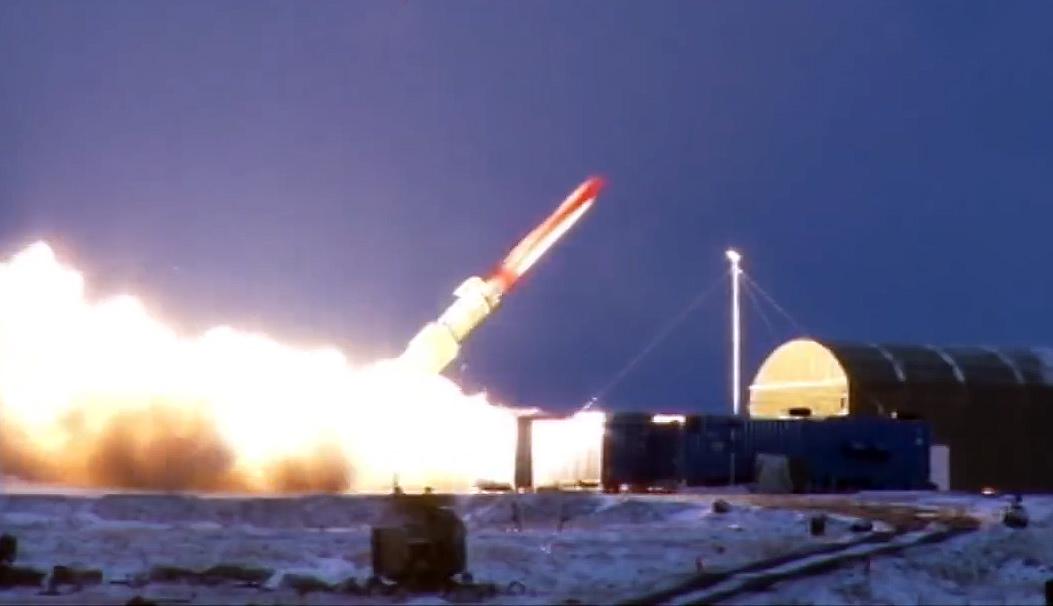
Nuclear-powered cruise missile

Nuclear-powered cruise missile

The Pentagon has not said anything publicly about the incident. The Defense Intelligence Agency declined to comment.

A defense official said civilian experts who follow Russian military developments offered useful insights into the incident.

“Those insights, along with delayed and contradictory official statements by Russian officials and concerns expressed by citizens in social media there, appear to tell us something significant occurred,” the official said.

The Russian government initially lied about the incident, saying no radiation was released from the blast.

After increased radiation levels were detected outside Russia, Moscow changed its story and admitted that the explosion was caused by a failed test of the new nuclear-powered missile.

News reports also stated that emergency workers treating people injured from the blast were wearing radiation protective suits.

The secrecy in handling the event echoed the initial reaction to the nuclear explosion at Chernobyl in 1987 that was dramatized in a recent HBO series.

Authorities in the city of Severodvinsk, located near the test site, initially reported radiation levels had increased by between 16 times and 20 times normal levels on the day of the explosion.

The explosion included the ignition of liquid rocket fuel on the launch platform in Dvinsky Bay, a waterway that leads to the White Sea.

Mark Schneider, a former Pentagon nuclear weapons policymaker, said the admission that the blast involved a nuclear-powered engine means the likely candidate for such a weapon is the Russian Burevestnik, or Storm Petrel cruise missile.

The SCC-X-9 was first unveiled in a speech by Russian president Vladimir Putin in March 2018. Russian reports identify the missile as 9M730.

The weapon is one of two new “super weapons” capable of delivering nuclear strikes. The second is an underwater drone submarine code-named Kanyon by the Pentagon that will carry a megaton-class warhead.

Putin said the new missile will have unlimited range because of its nuclear-fueled engine.

“A low-flying, difficult-to-spot cruise missile with a nuclear payload with a practically unlimited range and an unpredictable flight path which can bypass lines of interception is invincible in the face of all existing and future systems of both missile defense and air defense,” Putin said.

He noted that the cruise missile is powered by a “compact, highly powerful nuclear-powered missile engine.”

“The missile launch and a complex of tests on the ground make it possible to transition to a completely new type of weapon: a strategic nuclear armaments complex with a missile powered by a nuclear plant,” Putin said to applause.

Russian press reports have suggested the missile is powered by compact heaters linked to onboard reactor. Air entering the engine is heated to several thousand degrees and converted to propellant that is discharged, producing thrust.

The missile has been tested several times since 2017.

The Washington Free Beacon reported in April 2018 that the new missile was tested twice and that both tests were failures.

The newsletter “The Diplomat” reported in February that the Skyfall was tested Jan. 29 with partial success and was the 13th test of the weapon.

Mark Schneider, a former Pentagon nuclear weapons official, said the Russian admission of a failed nuclear-powered missile test indicates it was probably the Skyfall.

“Of all Putin’s nuclear superweapons, this is the craziest one,” Schneider said. “Even a successful launch of this missile results in nuclear reactor destruction and radiation release.”

Schneider said the test firing of Skyfall from a sea-based platform may have been an attempt by Russian weapons testers to reduce radiation damage from failed tests.

“What scares me most about this missile is not the threat it poses to us but the mentality behind it,” Schneider said. “It is dangerous and its threat is made much worse by anti-nuclear deterrence views of inside the beltway Washington establishment.”

Russia boasted on Tuesday of winning a new strategic arms race to build new nuclear arms despite the explosion last week.

Rosatom, the state nuclear agency of Russia announced the blast took place on a sea platform in the White Sea.

The agency said arms development would continue despite the deaths and injuries caused by the failed test.

Asked about Trump’s comments, Kremlin spokesman Dmitry Peskov said: “Our president has repeatedly said that Russian engineering in this sector significantly outstrips the level that other countries have managed to reach for the moment, and it is fairly unique.”

The new Russian strategic weapons, as well as other new strategic systems, have prompted the Trump administration to say it is unlikely to negotiate an extension of the 2010 New START arms treaty because Moscow has refused to include the new arms in a revised treaty.

Russian news agencies reported that residents of Nenoksa were advised by authorities to leave the area during clean-up work, Reuters reported from Moscow.

The evacuation order was later rescinded.

U.S. intelligence officials who have studied the new missile say it is powered by some type of high temperature thruster powered by a small nuclear reactor.

The United States in the late 1950s worked on a nuclear reactor-powered scramjet engine for missiles but abandoned the project in the 1960s.

Experts who have analyzed the new missile have questioned whether it will be capable of penetrating advanced missile defenses.

Also, the heat generated by the missile’s reactor would render the weapon vulnerable to countermeasures.

The Russian missile is said to be under development by the Russia’s OKB Novator that builds long-range cruise missiles.

The company is building a missile designated 9M730 that is believed to be the Skyfall.

The Washington Post reported Tuesday that the new missile is being developed by the Russian Federal Nuclear Center, according to the center’s director, Vyacheslav Soloviev.

“We’re analyzing the whole chain of events to assess both the scale of the accident and to understand its causes,” Soloviev said.

Carmel: Israel unveils new stealth street-fighting tank

August 14, 2019

Wow, what an awesome vehicle.

Times of Israel also covers this, watch the first video in the article (article not copied into this post but worth a read), and look for the pull-out dividing screens at around the 2min20sec mark. Wow.

Defense Ministry unveils 3 prototypes for Israel’s tanks of the future

https://www.timesofisrael.com/defense-ministry-unveils-3-prototypes-for-israels-tanks-of-the-future/

Carmel: Israel unveils new stealth street-fighting tank

https://nationalinterest.org/blog/buzz/carmel-israel-unveils-new-stealth-street-fighting-tank-72491

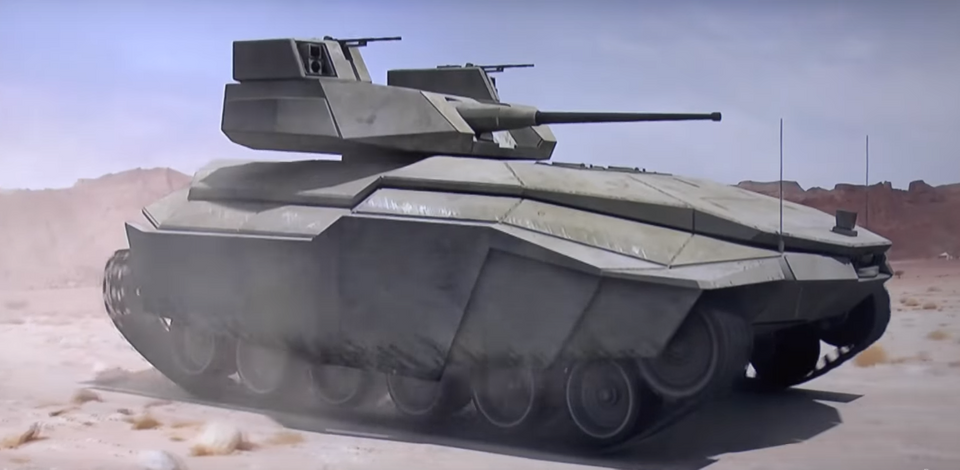
Israel has unveiled a new street-fighting tank designed for urban warfare.

The Carmel is a manned but mostly automated vehicle, with Artificial Intelligence controlling many of the tank’s functions. It is the Israel Defense Forces’s response to the lessons of the 2014 Gaza War, where heavy Israeli armored vehicles had difficulty traversing narrow city streets.

The Carmel is a thirty-five ton tracked vehicle with a crew of two. Photos in Israeli media suggest a vehicle that is narrower than a tank, but with a tank-like weapons turret.

“It is almost completely autonomous and highly invisible to enemy radar,” according to the Jerusalem Post. “The platform has breakthrough technologies, including modular transparent armor, next-generation cooperative active protection, an IED alert and neutralization system and a hybrid engine. It is also fitted with tactical drones which can help with surveillance and reconnaissance as well as attack capabilities. The Carmel will also include an entirely new generation of active protection and will allow the two-man crew to operate in closed hatches while still seeing the entire battlefield.

The IDF recently displayed three prototypes during a demonstration in Israel. The Elbit Systems version equips the crew with the IronVision helmet-mounted display, based on helmets developed for F-35 pilots. Rafael’s design features a panoramic console display for 360-degree situational awareness. The Israel Aerospace Industries vehicle uses an Xbox-like joystick.

The IDF emphasized that the Carmel is not a tank. “It’s something totally different than a tank,” said Brigadier General Guy Hasson, chief of the Israeli Armored Corps. “It’s a platform that is totally new.”

What’s interesting is how the Carmel uses—and doesn’t use—AI. Meir Shabtai, an Israel Aerospace Industries robotics manager, told the Post that the Carmel is the “the next generation of combat vehicles” that can autonomously maneuver as well as detect and engage targets at long range.

“The amount of information that a human can understand is limited, so the platform provides the operator only what he needs,” Shabtai said. The vehicle can take the decision to fire at targets and “allow the operator to deal with what he needs to focus on.”

But as Israel’s Ynet News pointed out, the IDF is not choosing to develop a fully robotic tank. “Israel’s plans for its semi-automated armored vehicles shows it intends to keep soldiers at the controls, albeit entirely insulated from the outside thanks to artificial intelligence and smart screens fed by external cameras and sensors,” Ynet noted. IDF officials say that it may be thity years before Israel can deploy a fleet of fully robotic armored vehicles.

But AI or not, the Carmel illustrates the future of armored vehicles. Growing urban sprawl and the rise of “megacities” are making urban combat the norm in warfare. Big, heavy tanks like the M-1 Abrams and T-72 are awkward platforms moving through narrow streets.

The trend is toward developing smaller vehicles armed not with a single big cannon designed to take out tanks, but lighter-caliber weapons. Russia’s Terminator 2 is a T-72 armed with 30-millimeter cannon, grenade launchers and anti-tank missiles. It’s meant to be a combat support tank that assists infantry and regular tanks with firepower, especially in urban areas.


The Iran crisis amidst global rivalries – Jerusalem Studio 439 

August 14, 2019


Israel’s participation in Gulf security force opens its 5th front against Iran – DEBKAfile

August 13, 2019

Source: Israel’s participation in Gulf security force opens its 5th front against Iran – DEBKAfile

Tehran is treating the planned Israeli role in the US-led Gulf defense force much as Israel would react to the sudden arrival in Beirut of an Iranian submarine fleet or the transfer of an Al-Qods brigade to Bint Jbeil in S. Lebanon – casus belli. 

Since seizing power 40 years ago, the Islamic Republic of Iran has strived with all its might to distance the Americans and their allies from its land and maritime borders. However, US forces are not just staying in Syria, Iraq and  the Arabian Gulf emirates, but have redeployed at Saudi bases and are preparing to co-opt Israel to the naval, aerial and intelligence force Washington is setting up to safeguard Gulf shipping.

Tehran therefore sees its most alarming foes rallying at its front and back doors and its most cherished defense strategy blowing away. This has spurred Iranian officials to issue almost daily warnings. Their message: “The illegitimate presence by the Zionists in the waters of the Persian Gulf could spark a war.” This no longer empty rhetoric; Iran may be expected to add Israeli vessels to its potential US, British, Saudi and UAE targets.

Iran’s claim to be the legitimate guardian of Gulf shipping including the Strait of Hormuz has always been the rationale of its national defense posture. Still, for years, Tehran took no notice of Western claims that Israel’s nuclear-armed Dolphin submarines had established a permanent presence in Gulf waters opposite Iran’s shores as a “second-strike” resource in case of an Iranian attack on the Jewish state. No such submarines were ever sighted; nor was their presence ever proven, which made it easy for the Iranians to turn a blind eye.

No longer is this possible since the US announced Israel’s participation in the Gulf defense force. The rules have changed. This change had its onset in Israel’s first attack in Iraq in the second half of July on an Iranian missile stock and command center. Tehran sees Israel’s Gulf role as the next step in the new game: the opening of a fifth front against Iran after Syria, Iraq, Lebanon and the Gaza Strip.


At the southern tip of the Red Sea, Iran poses a direct threat to Israel 

August 13, 2019

Source: At the southern tip of the Red Sea, Iran poses a direct threat to Israel | The Times of Israel

Shaul Chorev, an ex-rear admiral who led Israel’s Atomic Energy Commission, says the nuclear deal was ‘reasonable,’ doubts Trump will get a better one, and sounds a maritime alert

As Iran seeks to intimidate its way out of US-led economic sanctions, including by seizing tankers in the Strait of Hormuz, a top Israeli expert has warned that Israel would be immensely vulnerable if Tehran extends this tactic to a second strategic waterway.

Prof. Shaul Chorev, a rear admiral (ret.) who heads the Maritime Policy & Strategic Research Center at the University of Haifa, noted that last August, Yemen’s Iran-aligned Houthi rebels attacked two Saudi oil tankers in the Bab al-Mandab strait at the southern entrance to the Red Sea. That incident prompted Prime Minister Benjamin Netanyahu to directly warn Iran against seeking to block the strait, and promise that Israel and a “determined international coalition” would prevent this.

A full third of Israel’s global trade is with the Far East, Chorev noted, billions of dollars’ worth of Israeli imports and exports pass through Bab al-Mandab, and Israel thus “needs to worry” about what plays out there. In a recent strategic overview produced by his maritime research center, he urged that Israel formulate an overall strategy to face up to the threat “via a naval coalition with Western forces that operate in the area, or independently.”

Israel doesn’t sail to the Strait of Hormuz, Chorev, a former navy commander of submarines and missile boats, noted in our interview (although Foreign Minister Israel Katz reportedly said Tuesday that Israel is involved in a US-led naval mission to provide maritime security there, drawing a stream of Iranian threats). It does, however, sail through Bab al-Mandab, noted Chorev, “and we are vulnerable there.” Iran “can directly target us.”

Chorev, 72, who from 2007 until 2015 served as the director-general of the Israel Atomic Energy Commission, also warned in a candid and wide-ranging interview that the UN’s nuclear watchdog, the International Atomic Energy Agency, is not capable of thwarting any country’s covert nuclear weapons program, that a nation determined to achieve nuclear weapons will get there, and that there can be no certainty that Iran does not already have the bomb.

‘The fact is that four of the five NPT breaches are from this region — Iran, Iraq, Libya and Syria, the fifth being North Korea. The NPT apparently doesn’t work in this region’

The following is an edited transcript of the interview, conducted in Hebrew in Tel Aviv last week, which ranged across issues of nuclear safety, nuclear proliferation, the role of the IAEA, and the threats posed by Iran.

The Times of Israel: Let’s start with the matter of nuclear safety. Is Israel’s nuclear program safe from the kinds of disasters that played out at Chernobyl in 1986 and Fukushima in 2011?

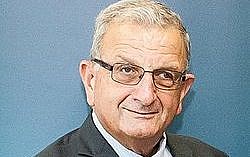
Prof. Shaul Chorev, head of the Maritime Policy & Strategy Research Center at the University of Haifa (Courtesy)

Prof. Shaul Chorev: One should never say it can’t happen to me. After Fukushima [in March 2011, the worst nuclear disaster since Chernobyl, caused by a tsunami that followed an earthquake], people asked, How could this happen in Japan? They are so careful. That just shows you…

After Fukushima, the IAEA wanted to come here and check that we were okay. The standards and regulations today are not the same as they were 20-30 years ago. The problem is not only safety. Since 9/11, one also has to guard against scenarios such as what if a plane is crashed into a reactor. So it’s security, too. At Karlsruhe [a nuclear reprocessing plant in Germany] in 2001, a worker stole plutonium and tried to poison his ex-wife.

Israel is not a signatory to the nuclear Non-Proliferation Treaty. So we won’t let the IAEA into Dimona [known officially as the Shimon Peres Negev Nuclear Research Center]. But the Nahal Soreq research reactor was given to us by the United States, by president Eisenhower, under the Atoms for Peace program. When the IAEA was established, at around the same time, the US said let them into Nahal Soreq. The decision was taken, yes, to let them come. [The Soreq reactor indeed operates under IAEA safeguards.]
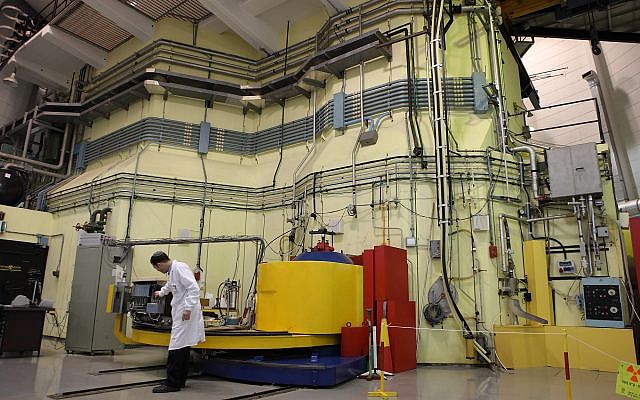
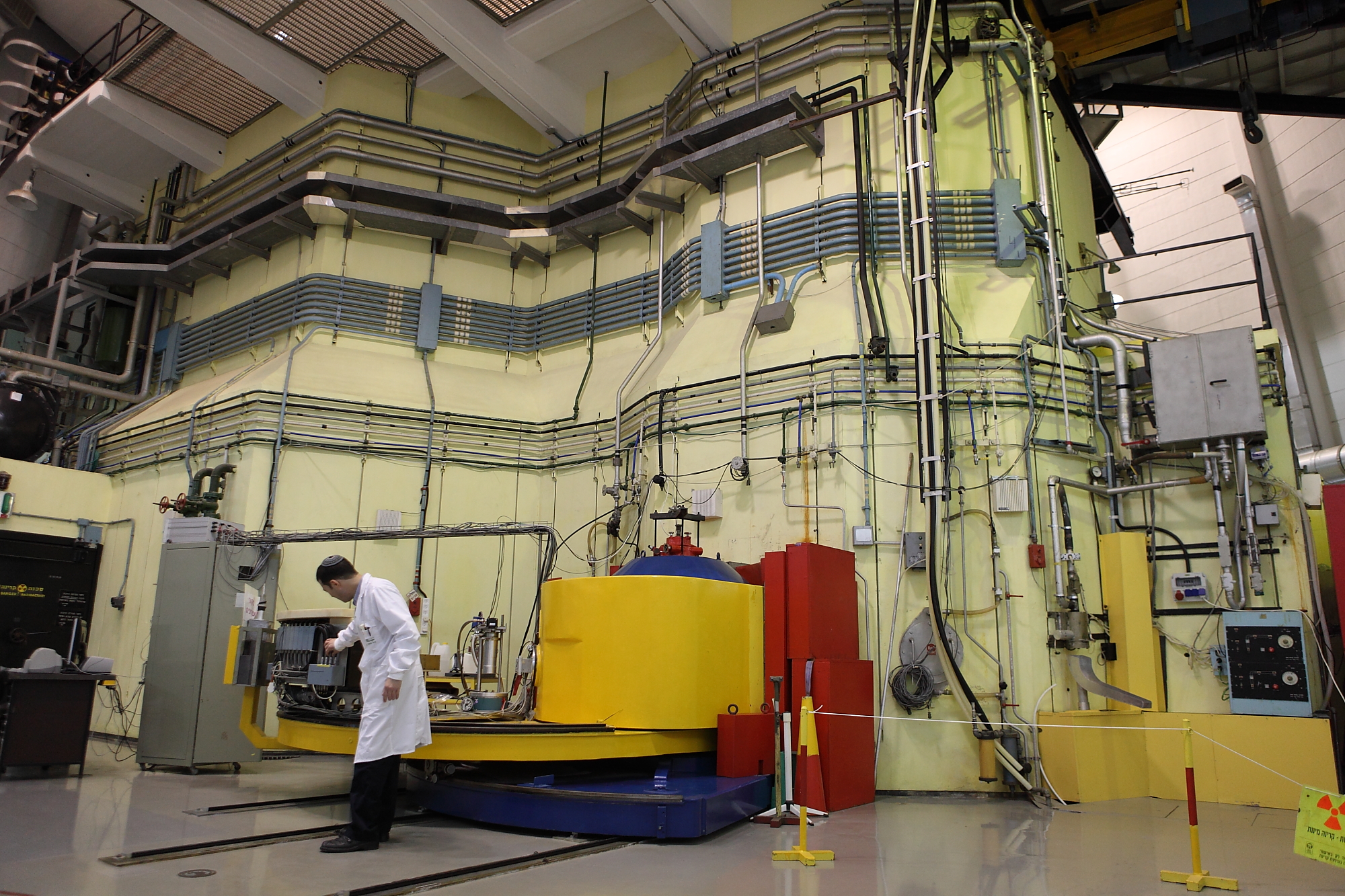
Inside view of Israel’s Soreq nuclear reactor (Yaakov Naumi/Flash90)

In July 2013, in the wake of Fukushima, the IAEA came, as part of what’s known as an INSARR mission (Integrated Nuclear Safety Assessment of Research Reactors). Preparing for the visit was a very big deal. They came, they checked, and we passed with flying colors. And we then set the same [safety and security] standards for Dimona. So the public can know that we’re good.

Israelis have nothing to worry about?

With us, the worst-case scenario is less bad; the area that would be affected is relatively limited. When Ariel Sharon was prime minister, the dangers were reassessed; worst-case scenarios were examined. Local council heads were involved. Some of them toured Dimona. Some of them actually didn’t want to know; they wanted to be kept out of the loop.

The likelihood of any of these worst-case scenarios coming about is almost zero. But of course, you need an integrated plan, with the local authorities, with the emergency services. You need instructions for the public. Evacuation plans if necessary. The State of Israel bought supplies of Lugol’s pills for use in a radiation exposure emergency — enough for all potentially affected people in a worst-case scenario.

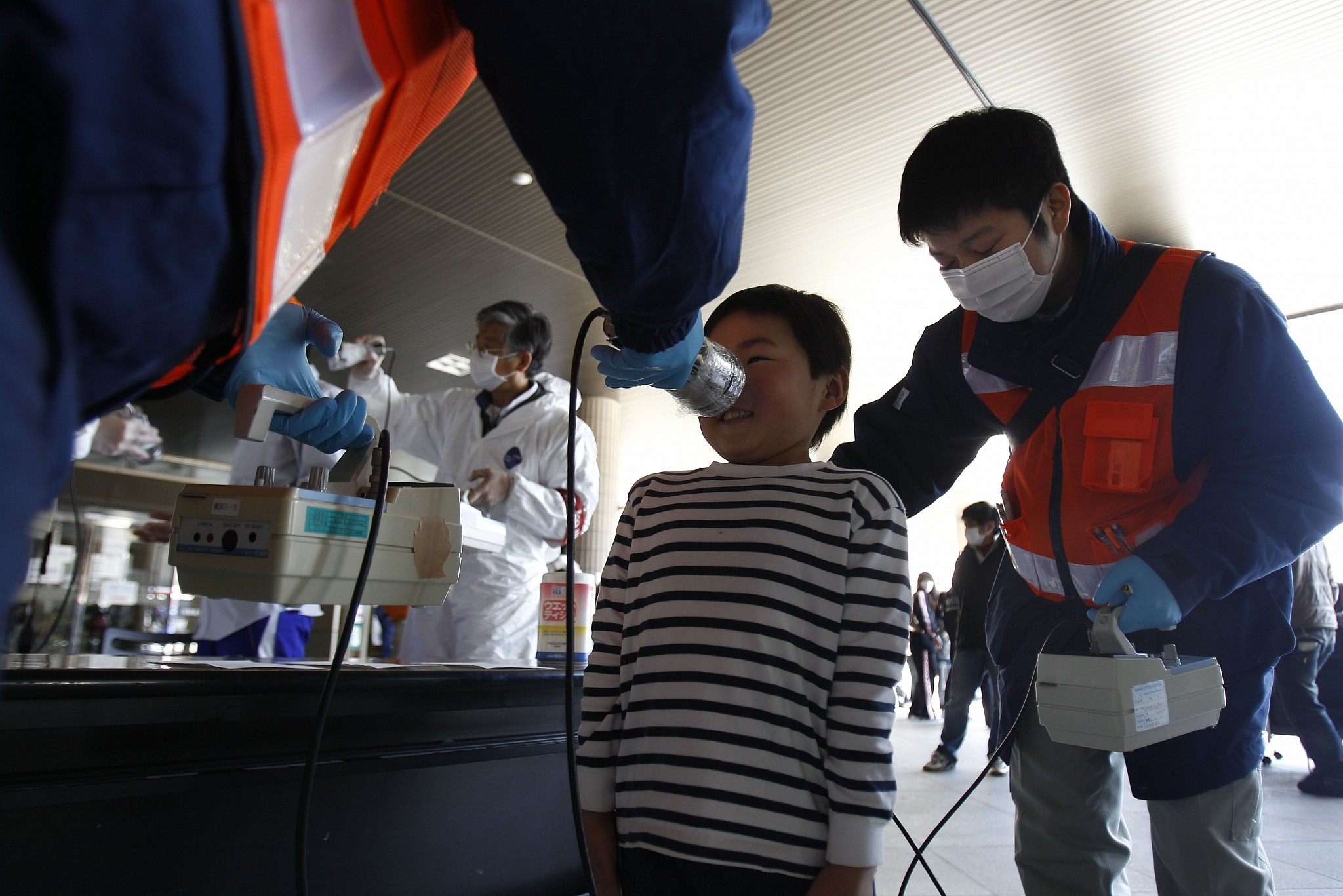
A young boy is screened for radiation contamination before entering an evacuation center in Fukushima, Japan, Friday, April 1, 2011. Radiation exceeding government safety limits has seeped into groundwater under a tsunami-crippled Fukushima Dai-ichi nuclear plant, according to the operator, but has not affected drinking supplies. (AP Photo/Wally Santana)

The bottom line: You can’t have full transparency with Dimona, but you can create the proper plan for dealing with all potential scenarios. And that has been done. We want the core to be productive; but safety above all.

Nobody is going to give us a new core

There’s a nuclear safety authority within the Israel Atomic Energy Commission, but it reports directly to the prime minister. A security demand issued by the safety authority cannot be blocked by the IAEC. That’s good, but I think it’s time for a reform, whereby the nuclear safety authority is fully independent of the IAEC. That’s the way it works in France, for instance.

Is the age of the core at Dimona, coming up on some 60 years, not a cause for concern?

It means more checks and procedures — like an old car as opposed to a new car. That’s not ideal, but nobody is going to give us a new core. Again, we’re not an NPT signatory.

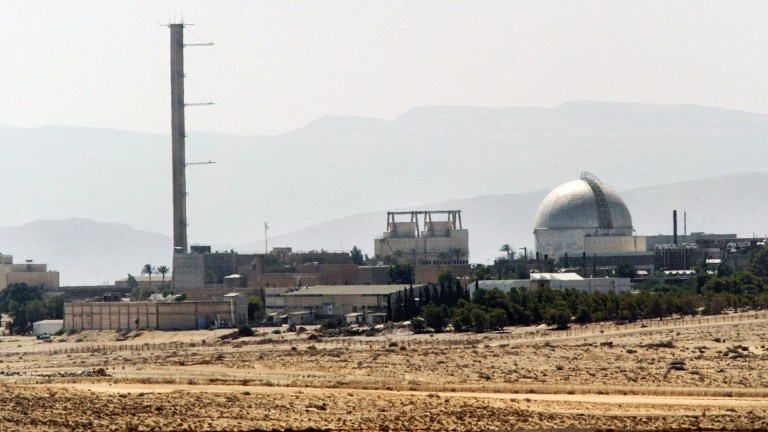
September 8, 2002 photo showing a partial view of the Dimona nuclear power plant in the southern Israeli Negev desert. (AFP/Thomas Coex)

And we can’t build our own?

We need to keep a low profile. Iran [which has ratified the NPT] says, Why doesn’t Israel sign. Of course, the fact is that four of the five NPT breaches are from this region — Iran, Iraq, Libya and Syria, the fifth being North Korea. The NPT apparently doesn’t work in this region.

Do you think Russia has fully learned the lessons of Chernobyl? It is still using 10 of the very same kind of reactor that blew up, albeit with safety upgrades.

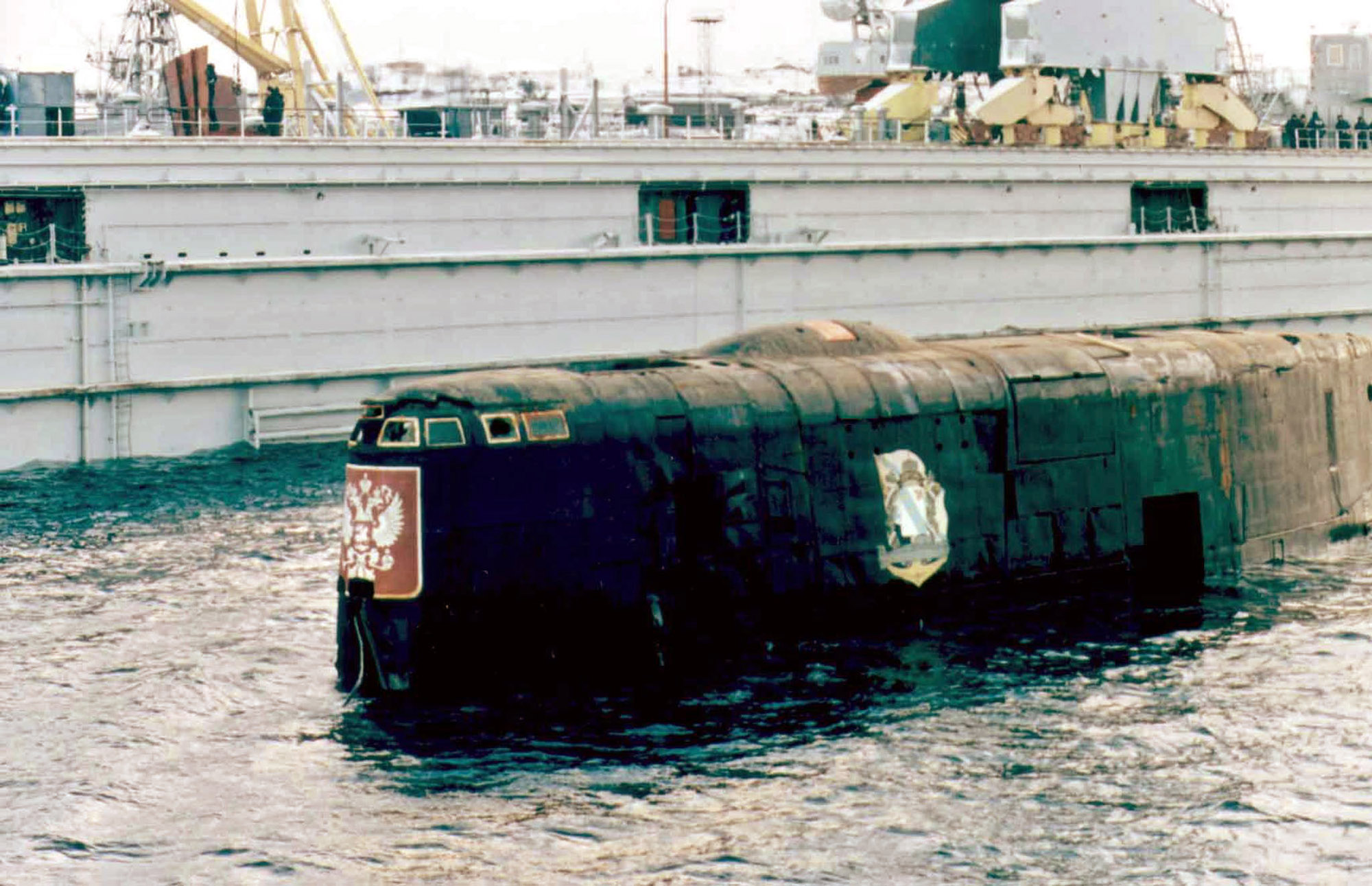
The Russians apparently have operational issues that are a problem. The [nuclear-powered] Kursk submarine [lost at sea in 2000, with the deaths of all 118 crew]. The submarine fire [on the nuclear-powered Lusharik last month, with 14 deaths]. Chernobyl. Maybe their planning philosophy is problematic.
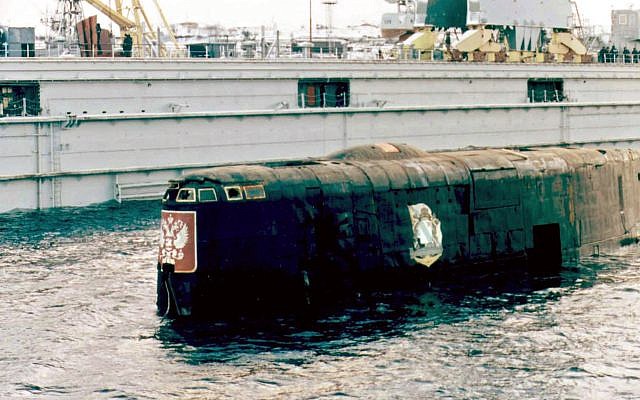
This Tuesday, Oct. 23, 2001 photo shows the conning tower of the Kursk nuclear submarine appearing on the surface in a dock at the port of Roslyakovo, near Murmansk, Russia. On Aug. 12, 2000, the Kursk was rocked by explosions and sank to the bottom of the Barents Sea, killing all 118 seamen aboard. In an unprecedented effort that cost the Russian government about $65 million, the salvagers cut away the sub’s bow, which was wrecked by the explosions, before lifting the 9,000-ton wreck to a transportation platform. It was then shipped to a dry dock at Roslyakavo. (AP Photo/Pool, File)

What’s your take on the P5+1’s 2015 nuclear deal with Iran [the US president Obama-championed, Prime Minister Netanyahu-opposed Joint Comprehensive Plan of Action, from which US President Trump withdrew in May 2018]?

It is reasonable. There are some holes. I understand the prime minister not wanting to be part of the process. He didn’t want to give it legitimacy. It doesn’t address the delivery system [of a potential nuclear warhead] — the ballistic missiles. It doesn’t address terrorism. But that’s not what it was aimed to do.

A state that has a covert program is not going to be thwarted by the IAEA, but rather by the intelligence agencies of countries such as Israel and the US. Then the IAEA goes and checks out the allegations. In 6-12 months, we’ll see if Trump has achieved an improved deal or an improved reality. But the deal certainly isn’t terrible

Some of the clauses start to lapse in another 10 years or so, but even after such clauses lapse, there is a continuing inspections agreement with the IAEA, an additional protocol, which is even more rigorous.

If Trump can get something better, okay. But it’s not easy to get the P5+1 to reach a deal. He’s not making progress with Iran, or with Korea. But the sanctions are biting. Maybe he’ll get what he wants.

You’re setting out a position quite dramatically at odds with that of Netanyahu.

A state that wants the bomb will get it anyway. A state that has a covert program is not going to be thwarted by the IAEA, but rather by the intelligence agencies of countries such as Israel and the US. Then the IAEA goes and checks out the allegations.

In 6-12 months, we’ll see if Trump has achieved an improved deal or an improved reality. But the deal certainly isn’t terrible.

But Netanyahu asserts that Iran is still lying about its nuclear program, and seems to believe that the IAEA is not sufficiently serious about investigating, or not equipped under the deal with all that it needs to inspect effectively.

In 2003, US invaded Iraq. Saddam was defeated. Iran thought it would be next [to be targeted]. So they stopped their covert nuclear weapons program. They stopped, but they didn’t admit to anything.

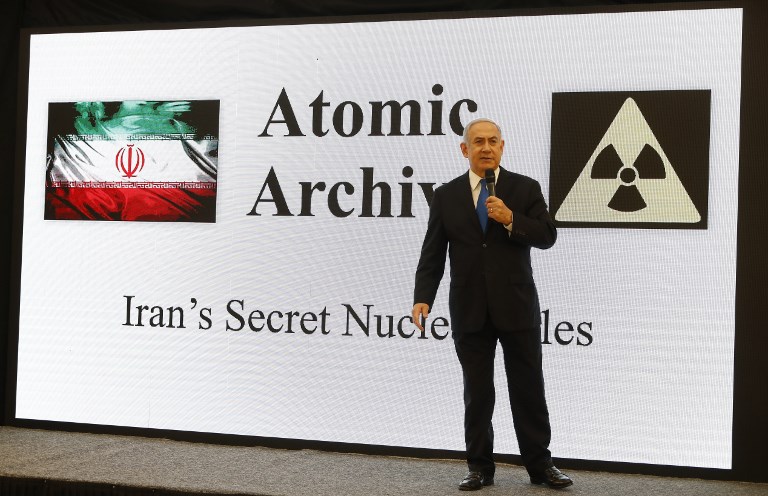
Prime Minister Benjamin Netanyahu delivers a speech on an archive brought out of Iran by the Mossad that documents Iran’s nuclear program, at the Defense Ministry in Tel Aviv on April 30, 2018. (AFP/Jack Guez)

The prime minister says that we’ve exposed that they were developing nuclear weapons. All the evidence is here. They lied. And that if they lied in the past, they’ll lie in the future.

My belief is that if they want to develop nuclear weapons, they will. Unless they decide that it’s not in their interests to do so, as Libya did.

So you need the intelligence arms of Israel and the US [to watch them closely]. We haven’t found an ongoing breach. And the IAEA says they’ve been observing the deal [although last month Iran declared it breached the deal’s limits on stockpiles of low-enriched uranium, and announced that it was enriching uranium to above the 3.67 limit set by the deal].

Iran now says it is raising its uranium enrichment levels because Trump has withdrawn from the deal. I think it’s a case of tit for tat. They’re not breaking out [to the bomb]. And he’s not attacking them.

Do you consider the IAEA’s inspection rights until the deal to be adequate?

The IAEA can inspect declared sites, and if it gets information [regarding suspicious activity], it can demand to see other sites. In 2009, when [the enrichment facility that Iran had secretly built into a mountainside near] Qom was revealed, we gave the IAEA the information, and the IAEA went in.
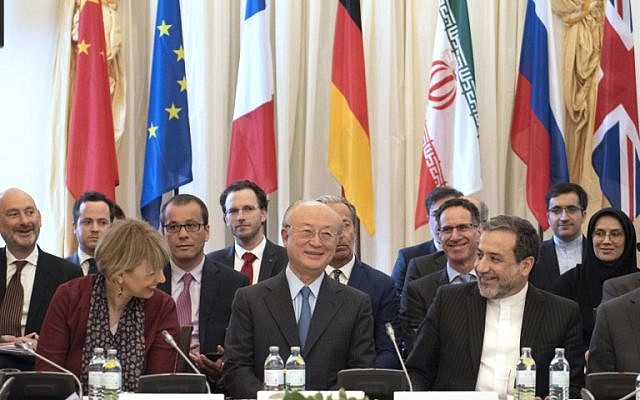
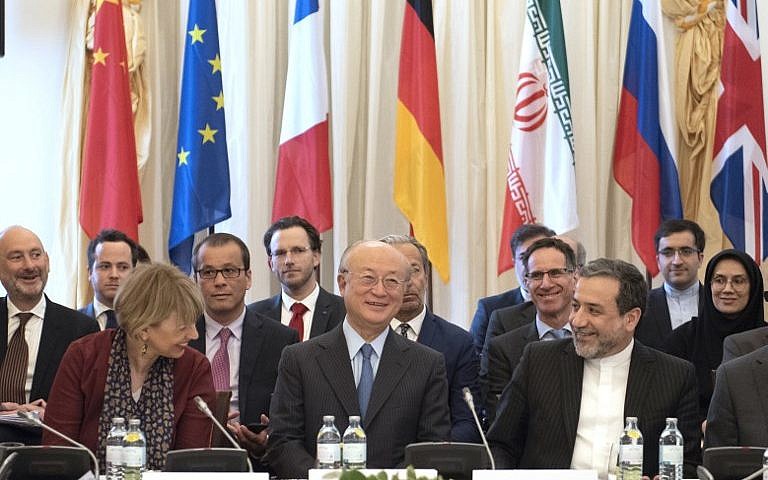
From left to right: Secretary General of the European Union External Action Service (EEAS) Helga Schmid, Director General of the International Atomic Energy Agency IAEA Yukiya Amano and political deputy at the Ministry of Foreign Affairs of Iran Abbas Araghchi attend a special meeting of the Joint Commission of parties to the JCPOA (Joint Comprehensive Plan of Action) on Iran’s nuclear deal at Coburg palace in Vienna, Austria, on May 25, 2018. (AFP Photo/Joe Klamar)

I should stress. It’s been four years that I’m not in the job [as Israel’s atomic energy commission head]. But when I would go to [the recently deceased IAEA head Yukiya] Amano, he would say, If you have proof [of covert Iranian nuclear activity], give it to us. Preferably [if there was more than one country that had information], all of you together please. Then I can send my inspectors.

In Syria, where our intelligence apparatus thinks it knows what is going on, they were building a nuclear weapons program under our noses

I do think that the IAEA should not have been part of the JCPOA. It should be a supervisory, inspecting organization. That was what Israel rightly wanted. The IAEA was obviously encouraged by Obama to be a party.

The prime minister is also right that letting Iran off the hook about its previous covert nuclear efforts was a mistake. Iran should have been required to explain its past behavior. When South Africa stopped, it let everything out. There’s an important symbolic, ceremonial aspect to this — declaring past behavior. They were maybe eight matters that they needed to explain to the IAEA. At Parchin, for example, they carried out a major clear-up to cover their traces. The IAEA saw this. This was never clarified. That was a mistake.

Does Iran already have a bomb, courtesy of Korea?

I don’t know. In Syria, where our intelligence apparatus thinks it knows what is going on, they were building a nuclear weapons program under our noses. [Israel last year confirmed destroying President Assad’s North Korea-built reactor in a 2007 raid.] We need to check all the time.
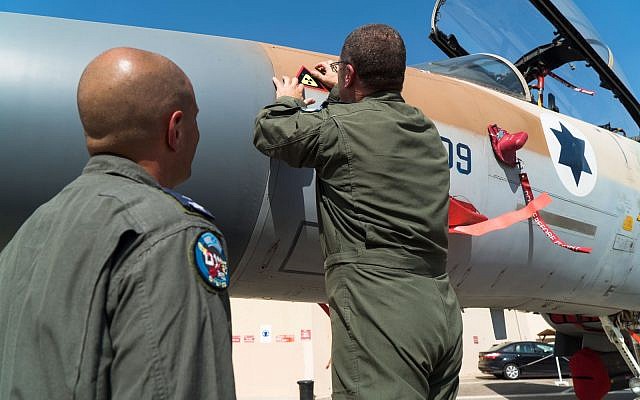
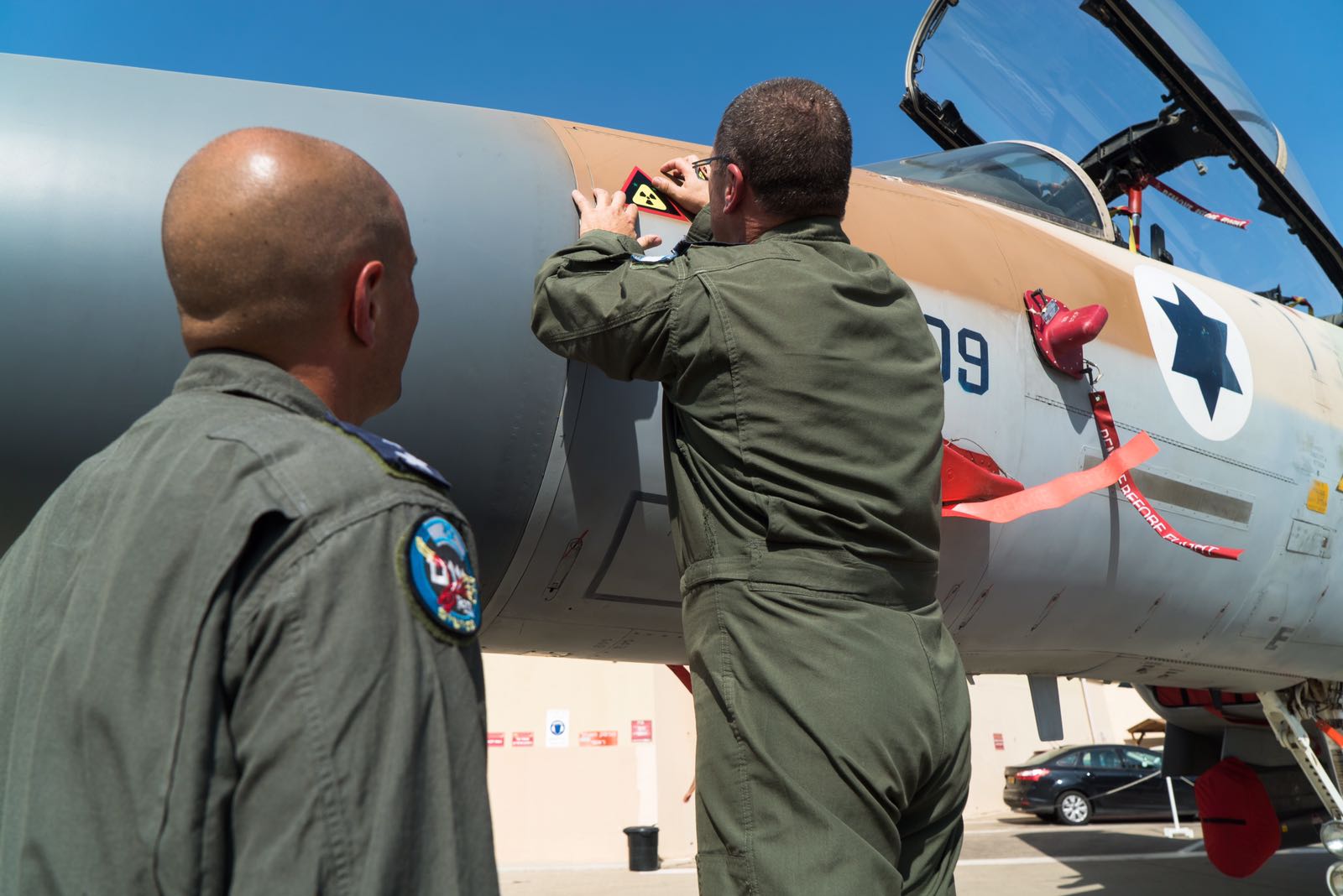
Pilots and crews who took part in the 2007 bombing of the Syrian nuclear reactor in Deir a-Zour take part in a ceremony marking the planes that participated in the operation, on September 6, 2018 at the Hatzerim Air Force Base in southern Israel. (IDF Spokesperson’s Unit)

How worried should we be about other potential nuclear programs in the region?

Iran says, Saudi Arabia is my enemy. Iraq was my enemy. I have Russia to the north. I am a regional power. I can’t afford not to be a nuclear power.

So Saudi Arabia and Egypt say, If we see Iran go nuclear, we will too.

The minute there’s a [peaceful] nuclear program in the region, we need to be wary of it

We have to ask, how stable is the Saudi regime, how transparent, how reliable? We should note that the Saudis say they have a deal with China for long-range ballistic missiles. There have been rumors of a deal with Pakistan to give them the bomb. Rumors.

The minute there’s a [peaceful] nuclear program in the region, we need to be wary of it. Pakistan and India both developed their bombs from the Atoms for Peace program [Pakistan, courtesy of the US; India, courtesy of Canada], despite promises to the contrary.

They’ll start with a civilian program, but Egypt, Saudi are not the most stable states. Anything can happen.

Russia is pressing Jordan to let it build them a peace nuclear power program. [Iran’s] Bushehr reactor, begun by Germany, was completed by Russia.

Let’s come back to Iran, where things are headed right now, and what Israel needs to be wary of.

They’ve not carried out a gross breach of the deal. They could say that Trump has [by withdrawing]. The deal limited enrichment to 3.67% [which they’ve now declared they breached], but an NPT signatory can enrich up to 20%. Both sides are plainly engaged in brinkmanship — pushing and probing all the time.

Which bring us to the maritime concerns that are your focus now.

What’s happening in the Strait of Hormuz, [with the intimidation and now the seizure of oil tankers by Iran,] all relates to the nuclear deal. The sanctions are biting. Iran is saying, If we are being sanctioned and can’t sell oil, we’ll make sure nobody else can either. Iran is saying, If you attack, we’ll close the strait. Well, 20% of the world’s oil goes through the Strait of Hormuz.
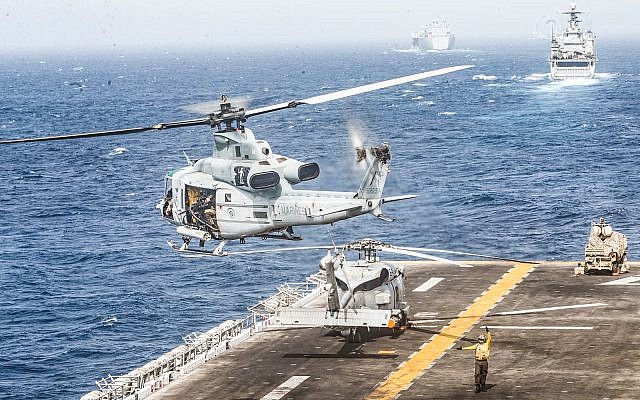
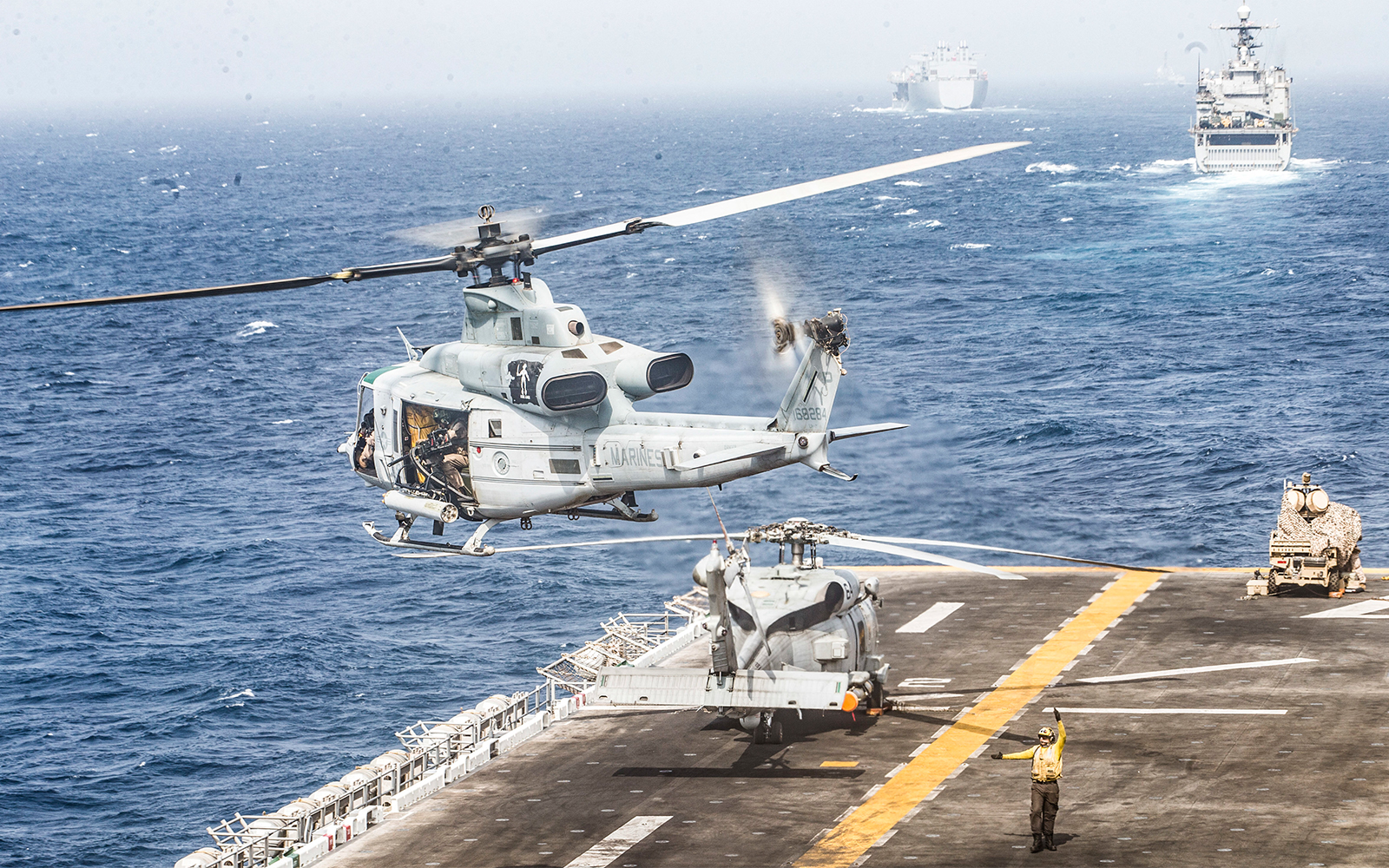
Illustrative: A UH-1Y Venom helicopter takes off from the flight deck of the amphibious assault ship USS Boxer in the Strait of Hormuz, July 18, 2019. (US Marine Corps photo by Lance Cpl. Dalton Swanbeck/Released)

They’re calibrating. Seizing tankers to show they have strategic tools too.

And where is Israel amid this escalating tension?

We haven’t purchased oil from Iran since the days of the shah. We don’t sail to Hormuz. But last August’s attack on Saudi tankers by Iran’s Houthi proxies at Bab al-Mandab [the narrow strait at the south of the Red Sea facing Yemen, Djibouti and Eritrea] underlined that Israel needs to worry. A third of our trade is with the Far East.

And there we do sail.

Yes, and we are vulnerable there. They can directly target us. When a minister says, We are the only country killing Iranians…

… That’s not helpful. Finally, is your view of the 2015 nuclear deal, to the effect that it is “reasonable,” the consensus view among Israeli experts?

Maybe I’m wrong. Trump may get a better deal. But I doubt it.
 

Iraq rejects Israeli participation in US-led naval mission in Gulf 

August 13, 2019

Source: Iraq rejects Israeli participation in US-led naval mission in Gulf | The Times of Israel

Mohammed al-Hakim says Arab states don’t need foreign assistance to secure strait amid Iranian ship seizures

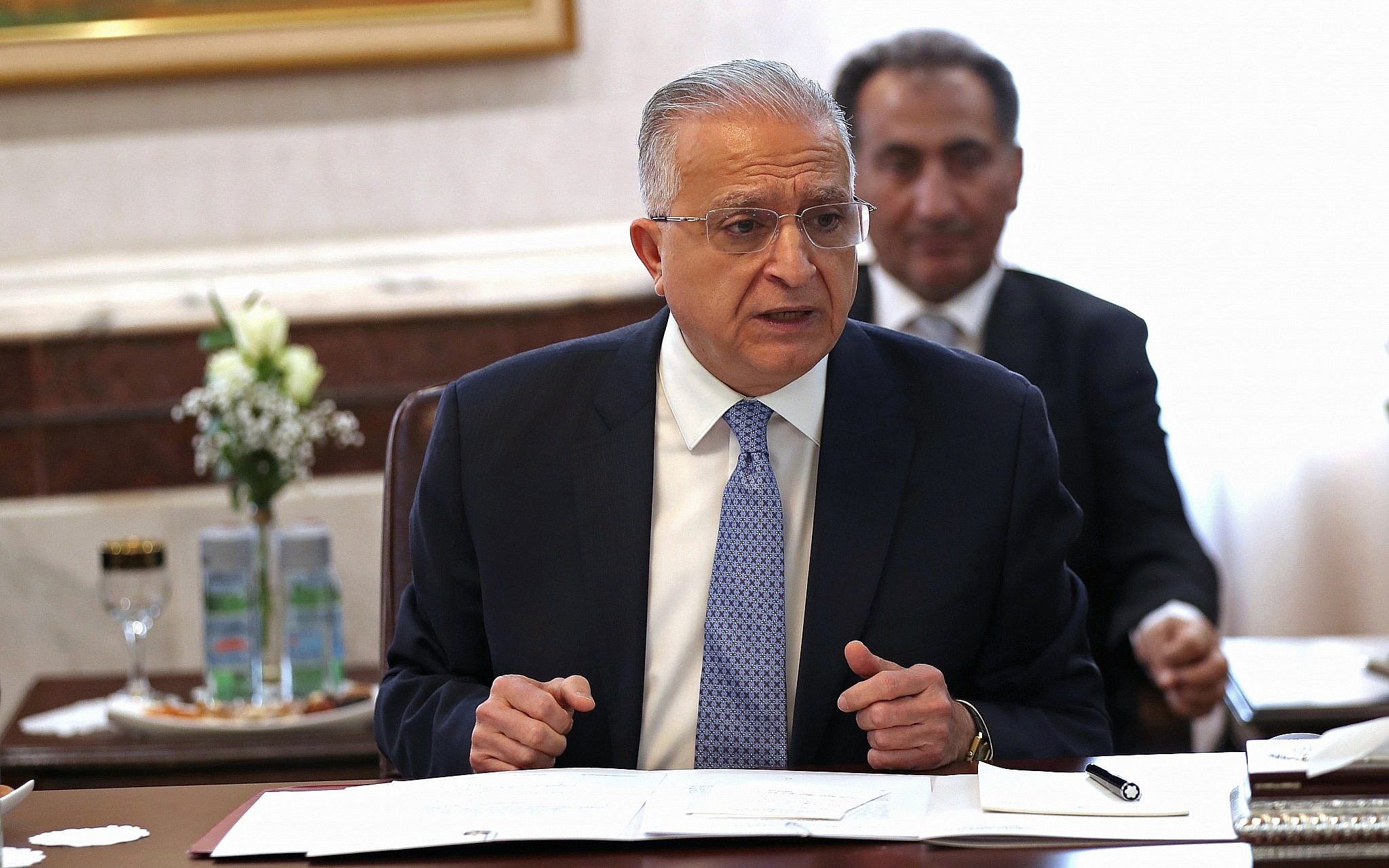
Iraqi Foreign Minister Mohamed Alhakim attends a meeting with his Egyptian and Jordanian counterparts at the Ministry of Foreign Affairs in Baghdad, Iraq, August 4, 2019. (AP Photo/Hadi Mizban)

Iraqi Foreign Minister Mohamed Alhakim attends a meeting with his Egyptian and Jordanian counterparts at the Ministry of Foreign Affairs in Baghdad, Iraq, August 4, 2019. (AP Photo/Hadi Mizban)

Iraq’s foreign minister on Monday rejected international assistance — particularly from Israel — in securing the Persian Gulf, saying Arab states were capable of ensuring the safe passage of vessels without foreign help.

The comment came after Foreign Minister Israel Katz reportedly said Israel was assisting US-led efforts to boost security around the strategic Strait of Hormuz.

Mohammed al-Hakim tweeted Monday that regional states were capable of securing the strategic waterway themselves and stressed that Israel’s participation in such a mission was unacceptable.

“Iraq rejects the participation of the Zionist entity’s forces in any military force to ensure the secure passage of ships in the Arab Gulf. All of the Arab Gulf states are able to ensure the safe passage of ships in the Gulf,” al-Hakim said.

“Iraq seeks to decrease tensions in our region through quiet negotiations. The existence of Western forces in the region will raise tensions,” he added.

Al-Hakim’s tweet came in response to efforts by the Trump administration to set up a US-led naval security mission in the Strait of Hormuz, where Iran’s recent seizures of vessels has raised tensions with the West.

The US wants an international coalition to monitor and potentially escort commercial ships there. Britain said last week it would join the mission; no other US allies have committed themselves so far.

It’s not clear if Israel has been asked to participate.

Israel Katz attends the weekly cabinet meeting at the Prime Minister’s Office in Jerusalem on February 17, 2019. (Sebastian Scheiner/Pool/AFP)

Last week, the Ynet news site reported Katz had told a closed session of the Knesset Foreign Affairs and Defense Committee that Israel was involved in the US-led efforts.

Katz said Israel was assisting the mission to secure the crucial waterway with intelligence and in other unspecified fields. He stressed the mission was in Israel’s strategic interest of countering Iran and boosting ties with Gulf countries.

On Sunday, the commander of the Iranian Revolutionary Guard’s navy, which since last month has three tankers in the Gulf, warned that “any illegitimate presence by the Zionists in the waters of the Persian Gulf could spark a war.”

In an interview with the Hezbollah-affiliated Al-Mayadeen television station in Lebanon, Alireza Tangsiri warned that “whenever our commanders wish so, they are able to detain any ship, even if it is accompanied by American and British forces.”

His comments came after Iran’s defense minister said last week that the formation of a US-led flotilla would “increase insecurity” and any Israeli involvement would have “disastrous consequences” for the region.

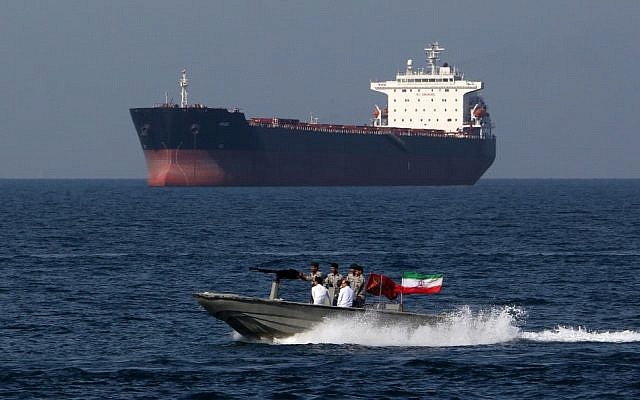
In this file photo taken on April 30, 2019, Iranian soldiers take part in the ‘National Persian Gulf Day’ in the Strait of Hormuz. (Atta Kenare/AFP)

Tehran and Washington have been locked in a battle of nerves since US President Donald Trump withdrew from a landmark 2015 nuclear deal with Iran last year and reimposed sanctions.

Tensions have soared in the region, with drones downed and tankers mysteriously attacked in Gulf waters.

The US and its Gulf allies have accused the Islamic Republic of the tanker attacks — allegation that Tehran denies. In response, the US has been seeking to form a coalition whose mission — dubbed Operation Sentinel — it says is to guarantee freedom of navigation in the Gulf.

Besides Britain, which already has warships on protection duty in the Gulf after a UK-flagged tanker was seized by Iran’s Revolutionary Guard Corps, other European countries have refrained from joining the planned operation for fear it might harm their efforts to reach a negotiated settlement with Iran.

The ship seizures came after British Royal Marines helped to impound a tanker carrying Iranian oil off the British overseas territory of Gibraltar on July 4, alleging it was destined for EU-sanctioned Syria, an accusation Iran denies.


Blast at pro-Iranian militia base weapons depot rocks Baghdad

August 13, 2019

Source: Blast at pro-Iranian militia base weapons depot rocks Baghdad | The Times of Israel

Explosion apparently sets off munitions in the storehouse, sending projectiles into surrounding neighborhoods

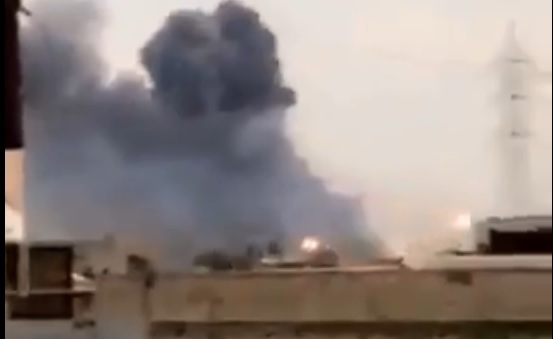
Explosions seen at a base south of Baghdad on August 12, 2019. (screen capture: Twitter)

Explosions seen at a base south of Baghdad on August 12, 2019. (screen capture: Twitter)

A massive explosion in a weapons depot on a pro-Iranian militia base rocked Baghdad on Monday evening, local media reported.

The blast appeared to have triggered some of the munitions stored on the base, sending projectiles into surrounding neighborhoods.

Sky News Arabia reported that incoming mortar shells set off sirens in the area around the US embassy in Baghdad, known as the Green Zone.

Local media reported that the weapons storehouse was controlled by the Sayyid of Martyrs Battalions, an Iraqi Shiite militia supported by Israel’s nemesis Iran.

Steven nabil

@thestevennabil

: Huge explosion at a weapons depot near Dora , Baghdad moments ago

Embedded video

“An explosion occurred because of the piling up of munitions inside the Saqr military base in southern Baghdad,” Iraq’s joint military-police Baghdad Operations Command wrote on its Facebook page.

The blast came amid reports that Israel has been increasingly carrying out airstrikes against Iran-backed militias in Iraq.

Last month, Asharq Al-Awsat, an Arabic-language newspaper published in London, cited Western diplomatic sources as saying an Israeli F-35 plane was behind a July 19 strike on a rocket depot in a Shiite militia base north of Baghdad.

The Saudi-based al-Arabiya network reported at the time that members of Iran’s Revolutionary Guards Corps and Hezbollah had been killed in the strike. It said the base had shortly before the strike received Iranian ballistic missiles, which were hidden inside trucks.

Iraq’s military said at the time that one fighter was killed and two Iranians wounded, saying the strike was carried out by an unmanned drone. The United States denied involvement.

Asharq Al-Awsat also said that Israel was behind another strike in Iraq carried out Sunday at Camp Ashraf, the former headquarters of the exiled People’s Mujahedin of Iran, located 40 kilometers northeast of Baghdad and 80 kilometers from the Iranian border.

That strike targeted Iranian advisers and a ballistic missile shipment, the newspaper cited sources as saying.

The Israel Defense Forces has not commented on the reports.

Israel does not usually comment on specific reports of strikes, but does insist it has the right to defend itself by targeting positions held by Iran and Hezbollah.

Regional Cooperation Minister Tzachi Hanegbi boasted last month that Israel is the only country in the world that has been “killing Iranians.”

In a speech to the UN General Assembly last September, Prime Minister Benjamin Netanyahu warned that “Israel will do whatever it must do to defend itself against Iran’s aggression. We will continue to act against you in Syria. We will act against you in Lebanon. We will act against you in Iraq. We will act against you whenever and wherever we must act to defend our state and defend our people.” An excerpt from that speech was utilized in a recent Likud election campaign clip.

Times of Israel staff and agencies contributed to this report.


Pompeo warns international arms embargo on Iran soon to expire

August 13, 2019

Source: Pompeo warns international arms embargo on Iran soon to expire | The Times of Israel

Top US diplomat urges countries to act, saying Revolutionary Guard chief Soleimani will soon be allowed to travel; Tehran could purchase advanced Chinese, Russian arms

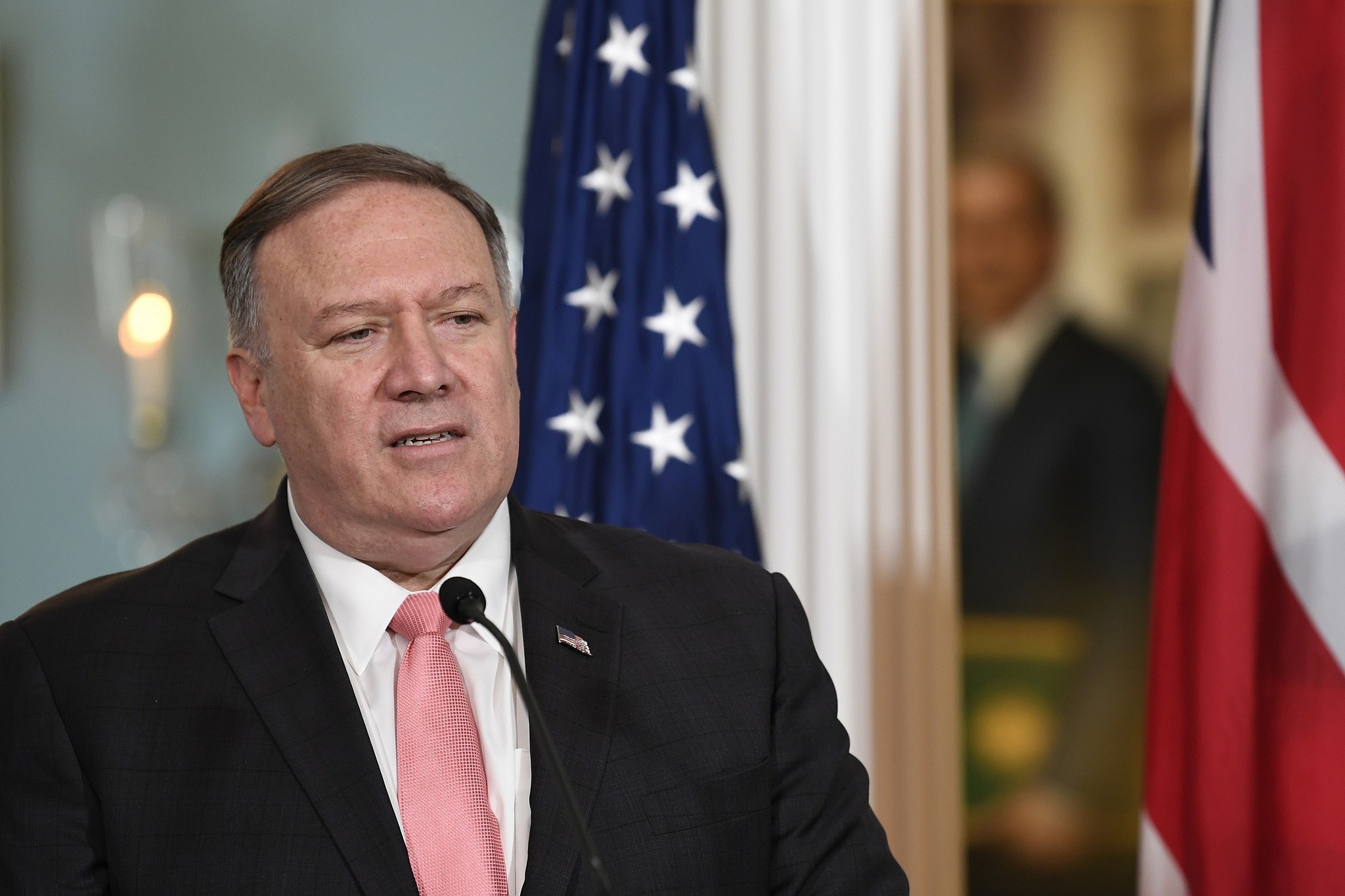
Secretary of State Mike Pompeo speaks during a press availability with Britain's Foreign Secretary Dominic Raab at the State Department in Washington, Wednesday, Aug. 7, 2019. (AP Photo/Susan Walsh)

Secretary of State Mike Pompeo speaks during a press availability with Britain’s Foreign Secretary Dominic Raab at the State Department in Washington, Wednesday, Aug. 7, 2019. (AP Photo/Susan Walsh)

US Secretary of State Mike Pompeo on Monday urged to international community to step up pressure on Iran, warning that time was running out before a UN arms embargo on Tehran expires.

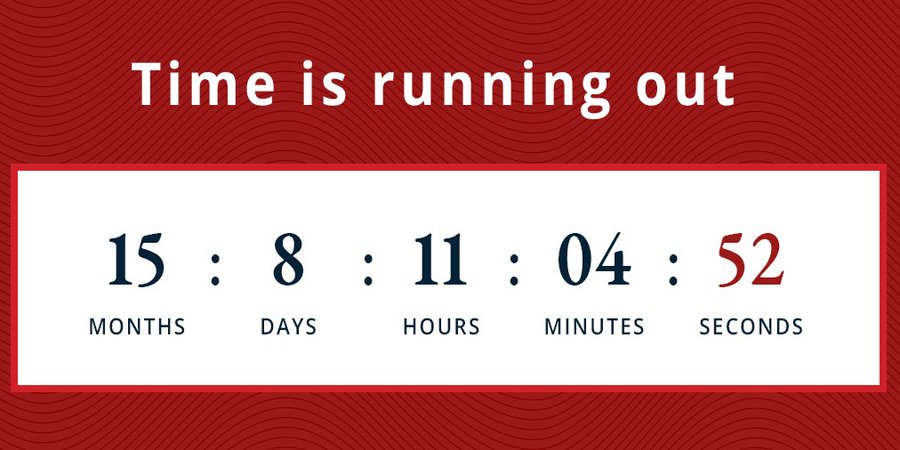
“We urge our allies and partners to increase the pressure on the Iranian regime until it stops its destabilizing behavior,” Pompeo wrote in a Twitter post featuring a clock counting down to zero.

His tweet linked a State Department memo listing international sanctions that would expire in coming months.

” For example, the head of the brutal Islamic Revolutionary Guard Corps, Qasem Soleimani, will be allowed to travel on October 18, 2020. Soon after, the Iranian regime will also be free to sell weapons to anyone, including terrorist proxies, and countries like Russia and China will be able to sell the Iranian regime tanks, missiles, and air defense equipment,” the memo said.

Secretary Pompeo

@SecPompeo

The clock is ticking. Time remaining before the UN arms embargo on Iran expires and Qasem Soleimani’s travel ban ends. We urge our allies and partners to increase the pressure on the Iranian regime until it stops its destabilizing behavior. https://go.usa.gov/xVcch 

Embedded video

“This could start a new arms race in the Middle East and further destabilize the region and the world,” it warned. “The international community must stand together against the Iranian regime’s support for terror. Time is ticking.”

Last week Iran’s president reiterated that if Washington wants to open negotiations with Tehran, it must lift all sanctions against his country “before everything else.”

Iranian state TV said President Hassan Rouhani made the comments during a meeting with Foreign Minister Mohammad Javad Zarif.

Rouhani also reiterated that America’s sanctions on his country are an act of “economic terrorism,” the report said.

Tensions have escalated since President Donald Trump last year withdrew the U.S. from the 2015 nuclear deal between Iran and world powers and imposed new and harsher sanctions on Iran’s oil and banking sectors.

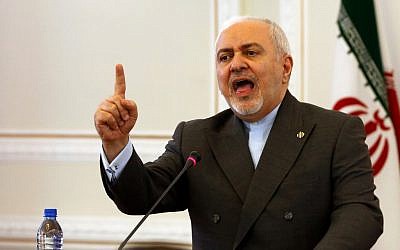
Iran’s Foreign Minister Mohammad Javad Zarif speaks during a press conference in the Iranian capital Tehran on August 5, 2019. (AFP)

The US administration recently also announced financial sanctions on Zarif, after Trump last month imposed similar measures on Iran’s supreme leader, Ayatollah Khamenei. The sanctions are seen as part of a US pressure campaign on Iran.

Iran’s UN ambassador, Majid Takht Ravanchi, sent a letter to UN Secretary-General Antonio Guterres protesting what he called the “illegal” sanctions on Zarif. Ravanchi said they are part of US policy “waging economic terrorism against the Iranian people and bringing pressure to bear on their representatives.”

Iran considers the sanctions “a flagrant infringement of the fundamental principles of diplomatic law” that contravene the privileges and immunities of UN diplomats and the Vienna Convention on Diplomatic Relations, he said.

The ambassador said the sanctions signify “the US regime despises diplomacy, which is one of the greatest achievements of humanity to preserve and uphold peace and security among nations” He said the US action “threatens multilateralism as the foundation of international relations and sets a dangerous precedent, paving the way for those who aspire to rather divide, not unite nations.”

“It is imperative for the international community to condemn the United States’ unlawful behavior in the interest of promoting multilateralism … (and) stand firm in defending the established principles of international law,” Ravanchi said.