Archive for July 2019

Nuclear watchdog confirms Iran breached uranium enrichment cap 

July 8, 2019

Source: Nuclear watchdog confirms Iran breached uranium enrichment cap | The Times of Israel

Netanyahu says Tehran seeking to signal it could move towards a bomb, adding that it would take several years and Israel will ‘make sure it doesn’t happen’

Illustrative. International Atomic Energy Agency inspectors (2nd and 3rd left) and Iranian technicians at Natanz nuclear power plant, south of Tehran, on January 20, 2014. (Kazem Ghane/IRNA/AFP/File)

Illustrative. International Atomic Energy Agency inspectors (2nd and 3rd left) and Iranian technicians at Natanz nuclear power plant, south of Tehran, on January 20, 2014. (Kazem Ghane/IRNA/AFP/File)

The United Nation’s nuclear watchdog confirmed Monday that Iran has enriched uranium at a level higher than the limit set in a 2015 international pact.

Inspectors of the International Atomic Energy Agency, on July 8, “verified that Iran is enriching uranium above 3.67 percent U-235,” the IAEA said in a statement, hours after Tehran said it had exceeded the agreed cap and reached 4.5% enrichment in response to the United States withdrawing from the deal.

The Iranian violations of the 2015 agreement are to be the subject of an extraordinary meeting of the governors of the IAEA at the agency’s headquarters in Vienna on Wednesday.

Iran also said it would consider going to 20% or higher, rapidly bringing its program closer to weapons-grade levels.

Iranian nuclear agency spokesman Behrouz Kamalvandi confirmed in a state television interview that Iran had surpassed the 3.67% enrichment cap set by the faltering deal.
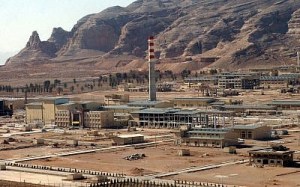
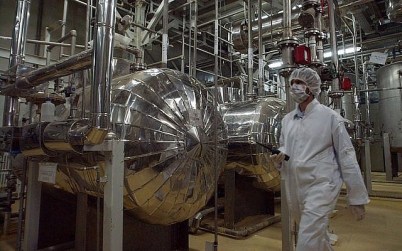
Iran’s uranium conversion facility near Isfahan, which reprocesses uranium ore concentrate into uranium hexafluoride gas, which is then taken to Natanz and fed into the centrifuges for enrichment, March 30, 2005. (AP/ Vahid Salemi)

“This morning Iran passed the 4.5% level in uranium enrichment,” Kamalvandi said, according to the semi-official ISNA News Agency. “This level of purity completely satisfies the power plant fuel requirements of the country.”

He said the next and third stage in abandoning the agreement could be increasing uranium enrichment to 20% or more. That would worry nuclear nonproliferation experts, as 20% is a short technical step away from reaching weapons-grade levels of 90%.

Behrouz also suggested Iran could use new or more centrifuges, which are also limited by the deal.

He said Iran surpassed the 3.67% cap on Sunday, after waiting a year for the other parties in the agreement to honor their commitments in the wake of the American pullout from the deal.

Israeli Prime Minister Benjamin Netanyahu said Monday that Iran “was trying right now to cross the line… They are trying to signal through small steps that they will move towards a bomb… It will take them a few years if they want that, and we’ll make sure it doesn’t happen.”
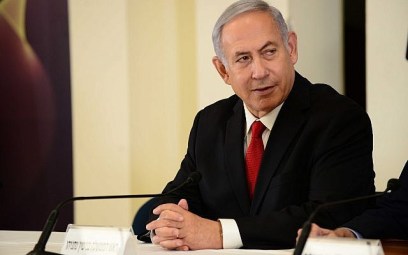
Prime Minister Benjamin Netanyahu at a press conference at the Ministry of Defense in Tel Aviv. June 27, 2018. (Tomer Neuberg/FLASH90)

Speaking during a live Q&A session on Facebook, the prime minister said “The big question is not what our policy is, because nothing has changed there,” and called on European leaders to enact sanctions on Tehran.

He also asserted that it was thanks to his actions on the world stage that Iran did not have “100 nuclear bombs by now.”

Later Monday, he called for the international community to ratchet up pressure on Iran.

“They attack tankers, they down American drones, they’re firing missiles at their neighbors. It’s important to respond to these actions not by reducing the pressure, but by increasing the pressure,” he told Pastor John Hagee by video link at the Christians United For Israel Conference.

The future of the pact has been in doubt since US President Donald Trump unilaterally exited a year ago, and reimposed the harsh sanctions that the deal had lifted.

While Iran’s recent measures to increase enrichment and break its low-enriched uranium stockpile limit could be easily reversed, Europe has struggled to respond, even after getting a 60-day warning that the increase was coming.

Under the nuclear deal, the cap for enrichment was set at 3.67%, a percentage closely monitored by inspectors from the International Atomic Energy Agency, the UN’s nuclear watchdog. The IAEA said it was waiting for a report from its inspectors before commenting on Iran’s move.

The decision to ramp up uranium enrichment purity came less than a week after Iran acknowledged breaking the deal’s 300-kilogram (661-pound) limit on its low-enriched uranium stockpile. Experts warn higher enrichment and a growing stockpile could begin to narrow the one-year window Iran would need to have enough material for an atomic bomb, something Iran denies it wants but the deal prevented.

On Monday, Iran’s Foreign Ministry spokesman said his country remained open to diplomacy to save the agreement, though it had “no hope” that the international community could salvage the deal.

 

VP Pence: ‘No More Pallets of Cash for Iran’s Mullahs’

July 8, 2019


Iran’s nuclear enrichment game – Analysis 

July 8, 2019

Source: Iran’s nuclear enrichment game – Analysis – Middle East – Jerusalem Post

Nuclear issue appears more like a means to an end, not the end

BY SETH J. FRANTZMAN


 JULY 8, 2019 17:59
M302 rockets found aboard the Klos C ship are displayed at an Israeli navy base in the Red Sea resor

In those business sections of bookstores where there are often books on “how to negotiate,” there should be a new book added that examines Iran’s negotiating strategy regarding its nuclear program.

Since Tehran successfully negotiated the 2015 Joint Comprehensive Plan of Action, it has also successfully put the Western powers on the defensive regarding its ambitions. This is not just about Iran getting a nuclear bomb, but really about Iran getting everything else it wants, including financial incentives and foreign policy incentives not to build a bomb.

This strategy was on display this week when Iran said that European countries had not met its demands, and that a 60-day ultimatum that the Islamic republic put out in May had not been met. What Tehran did in essence was give the Europeans a year to come up with a way to help it avoid a reimposition of US sanctions, which increased after America left the Iran deal in May 2018.

When May 2019 came around and the European countries had still not created a financial mechanism to help Iran avoid the biting US sanctions, Iran decided to move forward with its “good cop, bad cop” strategy.

Let’s recall that the Iran deal was entered into by the US, UK, Russia, France, China, Germany and the European Union. For Iran, the issue is not Russia, China or the US – it already has amicable relations with China and Russia, made clear by meetings last month in Central Asia, and the US and Iran are at odds under the Trump administration. For Tehran then the issues with Washington are sunk costs; it isn’t yet willing to re-negotiate the deal. The US has said that “maximum pressure” in terms of sanctions will result until Iran comes begging.

So Iran, which won’t beg or bend, eyes the European countries as the weakest link in the Iran deal framework. The UK is in the middle of Brexit chaos, so France and Germany are thus the addresses to whom Iran is writing.

Tehran first said this week that it would begin enriching uranium to 4.5%, surpassing a 3.67% limit. Now, unsurprisingly, it has said via its Press TV that it could reach 20% uranium enrichment if the Europeans don’t get on board. “Twenty percent is not needed now,” said the Iranian Atomic Energy Organization’s Behrouz Kamalvandi. “But if we want, we will produce it.”

LET’S STEP back a moment and try to understand what’s going on in Iran’s mindset. Usually the Iran deal is seen solely through a Western lens. For instance, the widespread narrative in the US in 2015 was that if there was no deal there would be war. That was largely a talking point advanced by Tehran’s supporters, who provided the Western public with this stark choice: a deal or war. Since Western countries obviously don’t want war, they will choose a deal.

This is part of the Iranian “good cop, bad cop” strategy of always claiming that if the US or Western countries don’t do what Iran wants, then “hard-liners” will come to power. However, when Iran speaks to China or Russia, it doesn’t mention any hard-liners – and reports in Russia don’t seem to indicate that if Iran doesn’t get what it wants then such hard-liners will take over.

The reason that Iran, usually through surrogates, emphasizes the existence of “hard liners” is to play into a Western mindset that views the world as revolving around what Western countries do. The reality in Tehran is that the system which appears to be in place – of its Foreign Ministry feigning being a “moderate” institution while the Islamic Revolutionary Guard Corps or the Supreme Leader are “hard-liners” – is just a front for the fact that they are all just aspects of the same government working in concert.

Iran’s second negotiating tactic is to use the nuclear threat as a bargaining chip. This is interesting because Iran’s official position is that it wants only peaceful nuclear energy, and that it has even passed a religious edict against developing nuclear weapons. So if there is a religious edict and the enrichment is just for energy, then why use it as a cudgel to threaten others? If, as Iran says, the 20% is not “needed now,” then it is clear that the enrichment is just a path to get other things Iran wants. According to ABC News, the higher levels of enrichment and stockpiles of enriched uranium could “narrow the one-year window Iran would need to have enough material for an atomic bomb.”

THIS PRESENTS a situation where Iran’s bogeyman atomic bomb is always hanging over the countries that negotiated the deal. From Tehran’s perspective, this is an excellent place to be – because anytime it wants something, it can just threaten to narrow the relatively short window it needs to get to a bomb.

But what if the reality is more complex. Iran’s real goal is to continue expanding its conventional military arsenal, such as drones and ballistic missiles, and it wants to dominate its “near abroad” – a series of countries that make up an arc of Iranian influence from Lebanon to Syria, Iraq and Yemen. The nuclear issue appears more like a means to an end, not the end. Iran doesn’t view the bomb as the end, but merely the way to get what and where it wants, with or without the bomb. It appears that Tehran has been largely successful without needing to make a nuclear weapon, which anyway is a complex task. Even if Iran made a bomb, it would need to test it.

Iran’s goal now is to use the enrichment level as a way to slowly ratchet up its carrot-and-stick approach. It has targeted several countries with this threat, particularly France and Germany. Tehran knows that none of these countries wants conflict, and will do whatever is necessary to try to talk down the US from such a conflict. The Iranian’s goal is to get these countries to go to bat for them. Tehran seeks to present Washington as isolated and irrational, while presenting itself as a more logical power.

But Iran’s current attempts at enrichment will cause its supporters some concern, because eventually it will lead to questions about what Iran’s real goal is with such enrichment. If it is just enriching for enrichment’s sake, while its real goal is to get around sanctions, then it will be seen as needlessly threatening others using a complex charade.

And someone may also ask why Iran would have a religious edict against a weapon, while also threatening to enrich toward the objective of building a bomb that Iran doesn’t even want.


Iran’s nuclear enrichment game – Analysis

July 8, 2019

Source: Iran’snuclear enrichment game – Analysis – Middle East – Jerusalem Post

Nuclear issue appears more like a means to an end, not the end

BY SETH J. FRANTZMAN


 JULY 8, 2019 17:59
M302 rockets found aboard the Klos C ship are displayed at an Israeli navy base in the Red Sea resor

In those business sections of bookstores where there are often books on “how to negotiate,” there should be a new book added that examines Iran’s negotiating strategy regarding its nuclear program.

Since Tehran successfully negotiated the 2015 Joint Comprehensive Plan of Action, it has also successfully put the Western powers on the defensive regarding its ambitions. This is not just about Iran getting a nuclear bomb, but really about Iran getting everything else it wants, including financial incentives and foreign policy incentives not to build a bomb.

This strategy was on display this week when Iran said that European countries had not met its demands, and that a 60-day ultimatum that the Islamic republic put out in May had not been met. What Tehran did in essence was give the Europeans a year to come up with a way to help it avoid a reimposition of US sanctions, which increased after America left the Iran deal in May 2018.

When May 2019 came around and the European countries had still not created a financial mechanism to help Iran avoid the biting US sanctions, Iran decided to move forward with its “good cop, bad cop” strategy.

Let’s recall that the Iran deal was entered into by the US, UK, Russia, France, China, Germany and the European Union. For Iran, the issue is not Russia, China or the US – it already has amicable relations with China and Russia, made clear by meetings last month in Central Asia, and the US and Iran are at odds under the Trump administration. For Tehran then the issues with Washington are sunk costs; it isn’t yet willing to re-negotiate the deal. The US has said that “maximum pressure” in terms of sanctions will result until Iran comes begging.

So Iran, which won’t beg or bend, eyes the European countries as the weakest link in the Iran deal framework. The UK is in the middle of Brexit chaos, so France and Germany are thus the addresses to whom Iran is writing.

Tehran first said this week that it would begin enriching uranium to 4.5%, surpassing a 3.67% limit. Now, unsurprisingly, it has said via its Press TV that it could reach 20% uranium enrichment if the Europeans don’t get on board. “Twenty percent is not needed now,” said the Iranian Atomic Energy Organization’s Behrouz Kamalvandi. “But if we want, we will produce it.”

LET’S STEP back a moment and try to understand what’s going on in Iran’s mindset. Usually the Iran deal is seen solely through a Western lens. For instance, the widespread narrative in the US in 2015 was that if there was no deal there would be war. That was largely a talking point advanced by Tehran’s supporters, who provided the Western public with this stark choice: a deal or war. Since Western countries obviously don’t want war, they will choose a deal.

This is part of the Iranian “good cop, bad cop” strategy of always claiming that if the US or Western countries don’t do what Iran wants, then “hard-liners” will come to power. However, when Iran speaks to China or Russia, it doesn’t mention any hard-liners – and reports in Russia don’t seem to indicate that if Iran doesn’t get what it wants then such hard-liners will take over.

The reason that Iran, usually through surrogates, emphasizes the existence of “hard liners” is to play into a Western mindset that views the world as revolving around what Western countries do. The reality in Tehran is that the system which appears to be in place – of its Foreign Ministry feigning being a “moderate” institution while the Islamic Revolutionary Guard Corps or the Supreme Leader are “hard-liners” – is just a front for the fact that they are all just aspects of the same government working in concert.

Iran’s second negotiating tactic is to use the nuclear threat as a bargaining chip. This is interesting because Iran’s official position is that it wants only peaceful nuclear energy, and that it has even passed a religious edict against developing nuclear weapons. So if there is a religious edict and the enrichment is just for energy, then why use it as a cudgel to threaten others? If, as Iran says, the 20% is not “needed now,” then it is clear that the enrichment is just a path to get other things Iran wants. According to ABC News, the higher levels of enrichment and stockpiles of enriched uranium could “narrow the one-year window Iran would need to have enough material for an atomic bomb.”

THIS PRESENTS a situation where Iran’s bogeyman atomic bomb is always hanging over the countries that negotiated the deal. From Tehran’s perspective, this is an excellent place to be – because anytime it wants something, it can just threaten to narrow the relatively short window it needs to get to a bomb.

But what if the reality is more complex. Iran’s real goal is to continue expanding its conventional military arsenal, such as drones and ballistic missiles, and it wants to dominate its “near abroad” – a series of countries that make up an arc of Iranian influence from Lebanon to Syria, Iraq and Yemen. The nuclear issue appears more like a means to an end, not the end. Iran doesn’t view the bomb as the end, but merely the way to get what and where it wants, with or without the bomb. It appears that Tehran has been largely successful without needing to make a nuclear weapon, which anyway is a complex task. Even if Iran made a bomb, it would need to test it.

Iran’s goal now is to use the enrichment level as a way to slowly ratchet up its carrot-and-stick approach. It has targeted several countries with this threat, particularly France and Germany. Tehran knows that none of these countries wants conflict, and will do whatever is necessary to try to talk down the US from such a conflict. The Iranian’s goal is to get these countries to go to bat for them. Tehran seeks to present Washington as isolated and irrational, while presenting itself as a more logical power.

But Iran’s current attempts at enrichment will cause its supporters some concern, because eventually it will lead to questions about what Iran’s real goal is with such enrichment. If it is just enriching for enrichment’s sake, while its real goal is to get around sanctions, then it will be seen as needlessly threatening others using a complex charade.

And someone may also ask why Iran would have a religious edict against a weapon, while also threatening to enrich toward the objective of building a bomb that Iran doesn’t even want.


Netanyahu and Putin discuss ‘further coordination’ on Iran, Syria

July 8, 2019

Source: Netanyahu and Putin discuss ‘further coordination’ on Iran, Syria | The Times of Israel

Russian leader invites PM to visit Moscow next year to mark 75th anniversary of the end of World War II

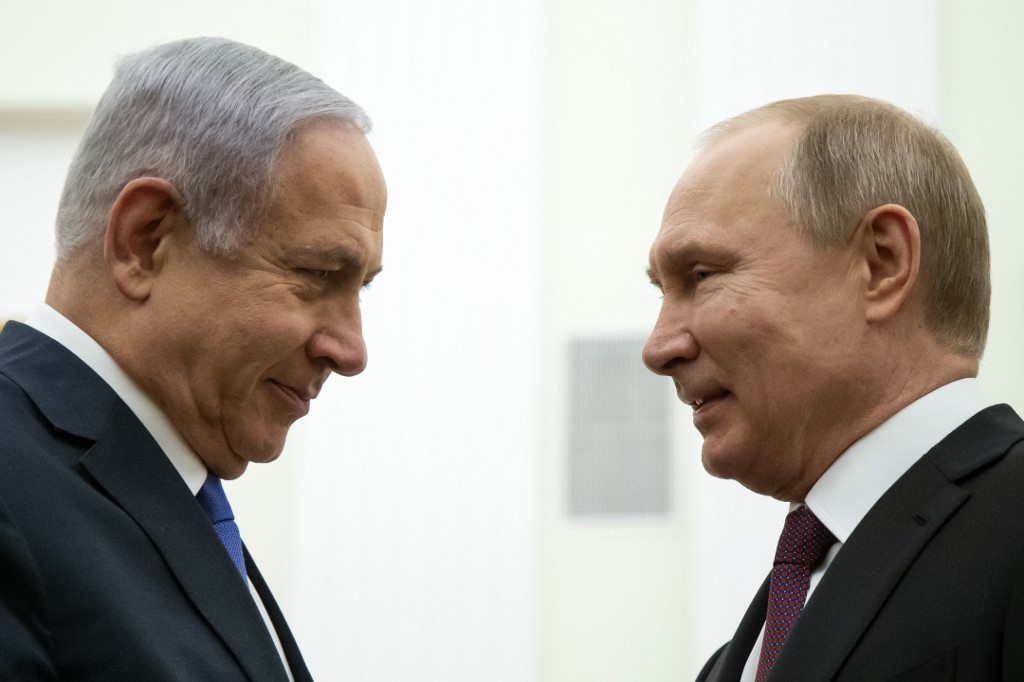
Russian President Vladimir Putin (R) speaks with Prime Minister Benjamin Netanyahu, during their meeting at the Kremlin in Moscow on April 4, 2019. (Alexander Zemlianichenko / POOL / AFP)

Russian President Vladimir Putin (R) speaks with Prime Minister Benjamin Netanyahu, during their meeting at the Kremlin in Moscow on April 4, 2019. (Alexander Zemlianichenko / POOL / AFP)

Prime Minister Benjamin Netanyahu called Russian President Vladimir Putin on Monday to discuss Syria, Iran and other issues, according to statements from the two leaders’ offices.

The Russian statement said Putin invited Netanyahu to Moscow to participate in “celebrations to mark the 75th anniversary of the Victory in the Great Patriotic War,” or World War II. The day will be marked in Russia on May 9, 2020.

The call was initiated by Netanyahu, who took the opportunity to express condolences for the deaths of 14 Russian sailors, seven of them senior officers, in a submarine fire in the Barents Sea on July 1.

The Russian statement said the two discussed “Russian-Israeli cooperation on the Syria issue” following up on the trilateral meeting of national security advisers from Russia, Israel and the United States on June 25 — “in particular, the importance of further coordination between militaries.”

A short statement from the Prime Minister’s Office in Jerusalem stated that the two men discussed “Iran, Syria, and relations between the countries.”

The phone call came as Iran announced that it would consider going to 20 percent or higher uranium enrichment as its next step in rolling back the commitments it made under the 2015 nuclear deal with world powers, rapidly bringing its program closer to weapons-grade levels.

Nuclear agency spokesman Behrouz Kamalvandi confirmed in a state television interview Monday that Iran had surpassed the 3.67% enrichment cap set by the faltering deal. That development came a day after Iran announced that it would soon push past the 3.67% limit and possibly enrich uranium to any purity it desired.

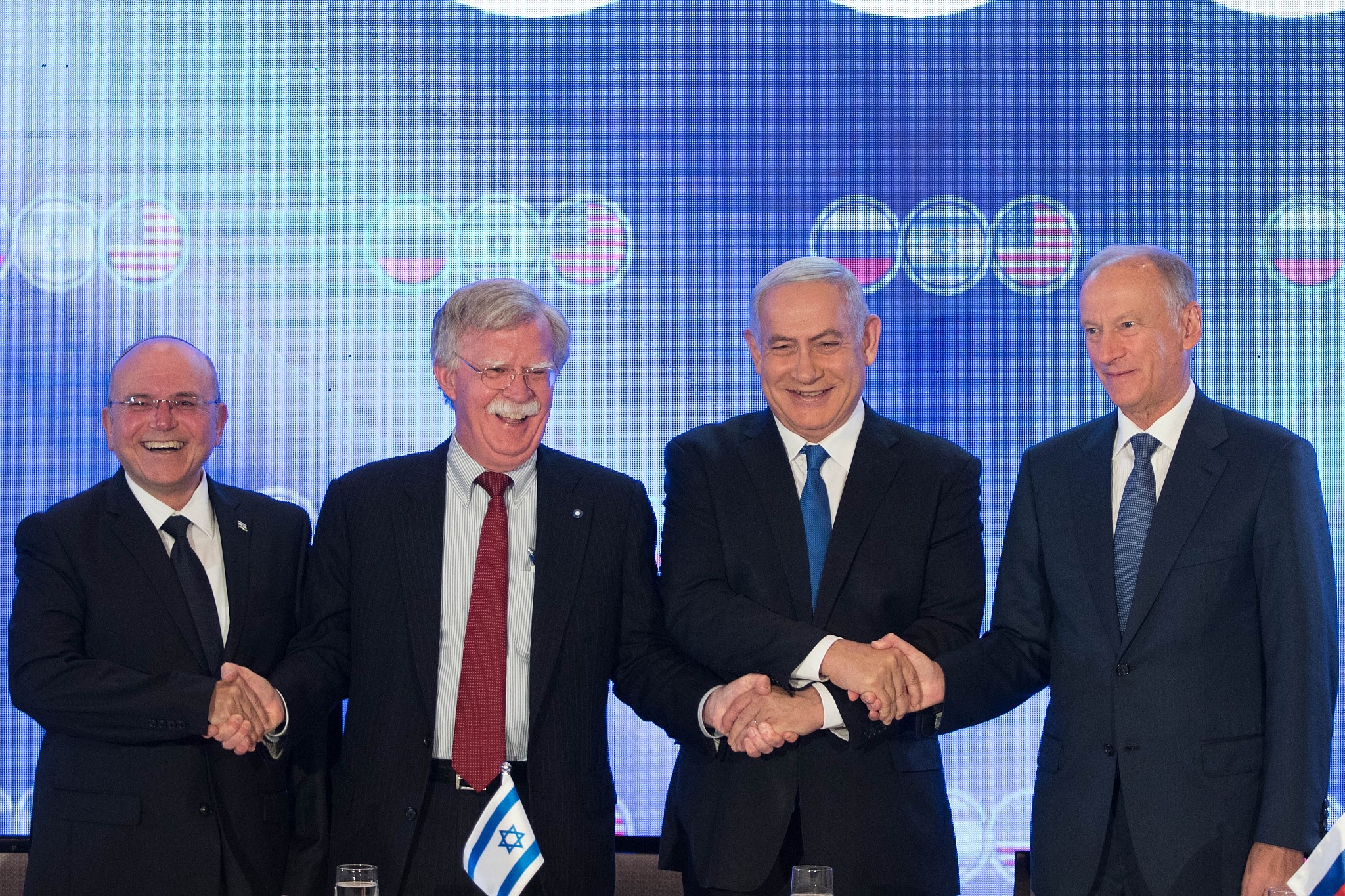
Prime Minister Benjamin Netanyahu, US national security adviser John Bolton (second left), Nikolai Patrushev, secretary of the Russian Security Council (right) and Israeli national security adviser Meir Ben-Shabbat (left) pose for a picture at a trilateral meeting at the Orient Hotel in Jerusalem on June 25, 2019. (Noam Revkin Fenton\Flash90)

The June 25 trilateral conference of Israeli, Russian, and US national security advisers was the first event of its kind to be held in Jerusalem and, according to Israel, was aimed specifically at countering Iran, including both its nuclear aspirations and its influence throughout the Middle East.

At the meeting, Russia’s national security adviser, Nikolai Patrushev, spoke out on behalf of Iran, backing Tehran’s claims against the United States and supporting the Islamic Republic’s ongoing military presence in Syria, which Israel sees as a threat to its security.

Netanyahu told Patrushev ahead of the meeting that “Israel won’t allow an Iran that calls for our annihilation to entrench itself on our border, and we will do anything it takes to prevent it from obtaining nuclear weapons.”

Israel has long sought Russian backing for its demand that Iranian forces leave Syria upon the conclusion of the country’s civil war. Iran and its military proxies are helping the Syrian regime end the civil war but Israel is concerned that Tehran is using the opportunity to establish forward bases in Syria from which to attack the Jewish state.

Israel has vowed to prevent the entrenchment and has carried out numerous airstrikes in Syria against alleged Iran-linked military targets.

Russia, which maintains close ties to both Israel and Iran, is seen as a potential interlocutor between the West and Tehran.


Iran breaks deal’s 3.67% enrichment cap, warns it could go to 20% or higher

July 8, 2019

Source: Iran breaks deal’s 3.67% enrichment cap, warns it could go to 20% or higher | The Times of Israel

Tehran confirms surpassing limit set by nuclear agreement as foreign ministry gives Europe 60 days to salvage 2015 pact

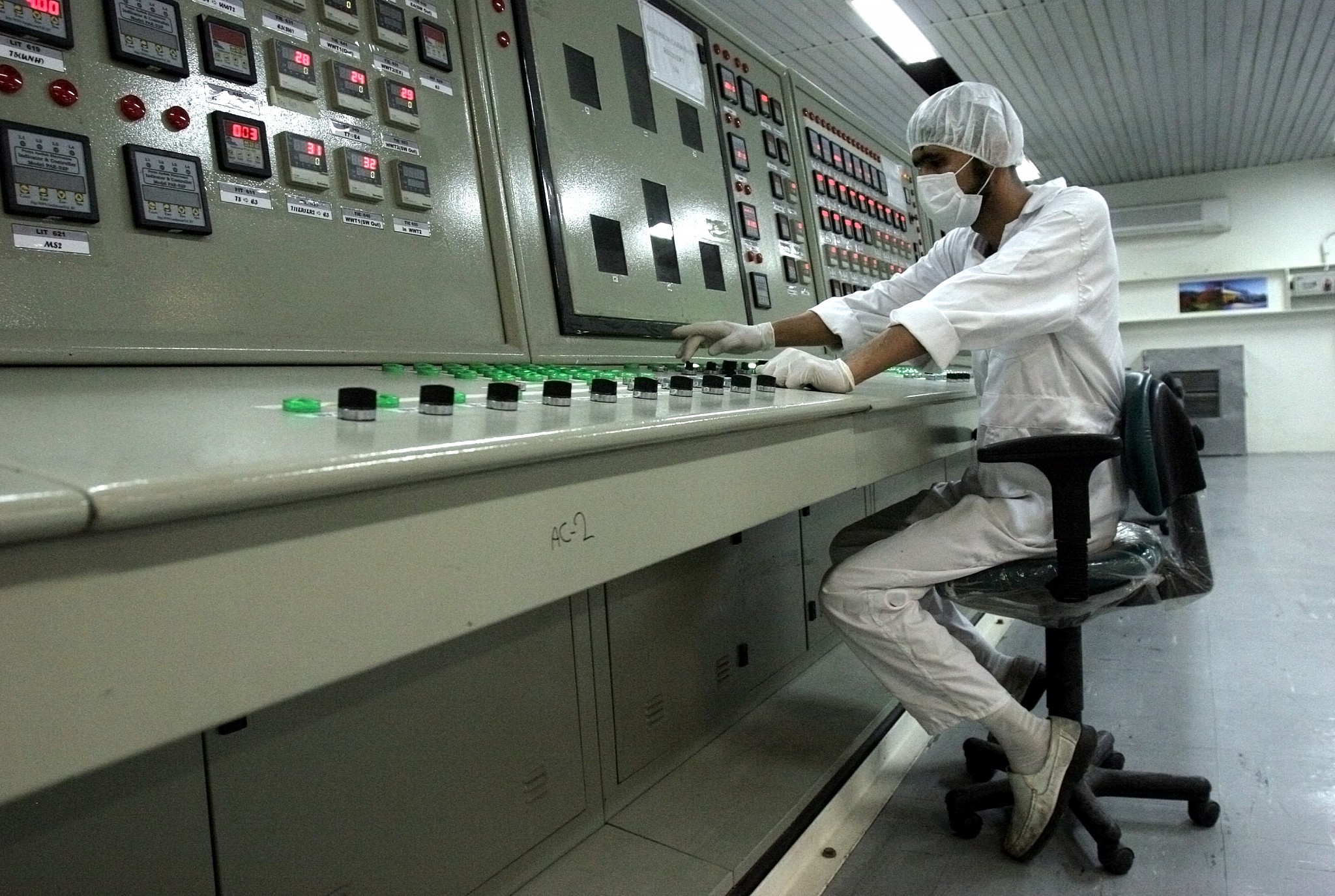
In this February 3, 2007, file photo, an Iranian technician works at the Uranium Conversion Facility just outside the city of Isfahan 255 miles (410 kilometers) south of the capital Tehran, Iran. (AP Photo/Vahid Salemi, File)

Iran on Monday said it would consider going to 20 percent or higher uranium enrichment as its next step in rolling back the commitments it made under the 2015 nuclear deal with world powers, rapidly bringing its program closer to weapons-grade levels.

Nuclear agency spokesman Behrouz Kamalvandi confirmed in a state television interview that Iran had surpassed the 3.67% enrichment cap set by the faltering deal.

“This morning Iran passed the 4.5% level in uranium enrichment,” Kamalvandi said, according to the semi-official ISNA News Agency. “This level of purity completely satisfies the power plant fuel requirements of the country.”

He said the next and third stage in abandoning the agreement could be increasing uranium enrichment to 20% or more. That would worry nuclear nonproliferation experts, as 20% is a short technical step away from reaching weapons-grade levels of 90%.

Behrouz also suggested Iran could use new or more centrifuges, which are also limited by the deal.

He said Iran surpassed the 3.67% cap on Sunday after waiting a year for the other parties in the agreement to honor their commitments in the wake of the American pullout from the deal.

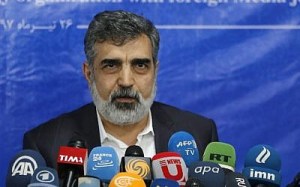
Spokesman of the Atomic Energy Organization of Iran (AEOI), Behrouz Kamalvandi answers the press in the capital Tehran on July 17, 2018. (AFP PHOTO / ATTA KENARE)

The future of the pact has been in doubt since US President Donald Trump unilaterally exited a year ago and reimposed the harsh sanctions the deal had lifted.

While Iran’s recent measures to increase enrichment and break its low-enriched uranium stockpile limit could be easily reversed, Europe has struggled to respond, even after getting a 60-day warning that the increase was coming.

Under the nuclear deal, the cap for enrichment was set at 3.67%, a percentage closely monitored by inspectors from the International Atomic Energy Agency, the UN’s nuclear watchdog. The IAEA said it was waiting for a report from its inspectors before commenting on Iran’s move.

The decision to ramp up uranium enrichment purity came less than a week after Iran acknowledged breaking the deal’s 300-kilogram (661-pound) limit on its low-enriched uranium stockpile. Experts warn higher enrichment and a growing stockpile could begin to narrow the one-year window Iran would need to have enough material for an atomic bomb, something Iran denies it wants but the deal prevented.

File: An Iranian worker at the Uranium Conversion Facility at Isfahan, 410 kilometers south of Tehran, January 2014. (AP /Vahid Salemi)

On Monday, Iran’s Foreign Ministry spokesman said his country remained open to diplomacy to save the agreement, though it had “no hope” that the international community could salvage the deal.
Abbas Mousavi said Iran appreciated the efforts of some nations to save the deal, but offered a jaded tone on whether Tehran trusted anyone in the negotiations.

“We have no hope nor trust in anyone nor any country but the door of diplomacy is open,” Mousavi said.

He also gave a sharp, yet unelaborated warning to Europe about another 60-day deadline Iran set Sunday. That deadline will come September 5.

“If the remaining countries in the deal, especially the Europeans, do not fulfill their commitments seriously, and not do anything more than talk, Iran’s third step will be harder, more steadfast and somehow stunning,” he said.


Vladimir Putin interview on liberalism.

July 8, 2019

vladtepesblog

More than you time worth , a must !
https://d.tube/#!/v/vladtepesblog/QmUufDE15ZUegQ5dqFdr1c2Sqkf9BV6iqSwGAn9wftcSzX

Be patient , the video need a couple of seconds to load , but it is your time worth

Iran general: After drone downed, US warned us of ‘limited’ retaliation

July 7, 2019

Source: Iran general: After drone downed, US warned us of ‘limited’ retaliation | The Times of Israel

Head of Civil Defense Organization says Tehran informed Washington through intermediaries that ‘we regard every operation as the beginning of the war’; Trump later scrapped raid

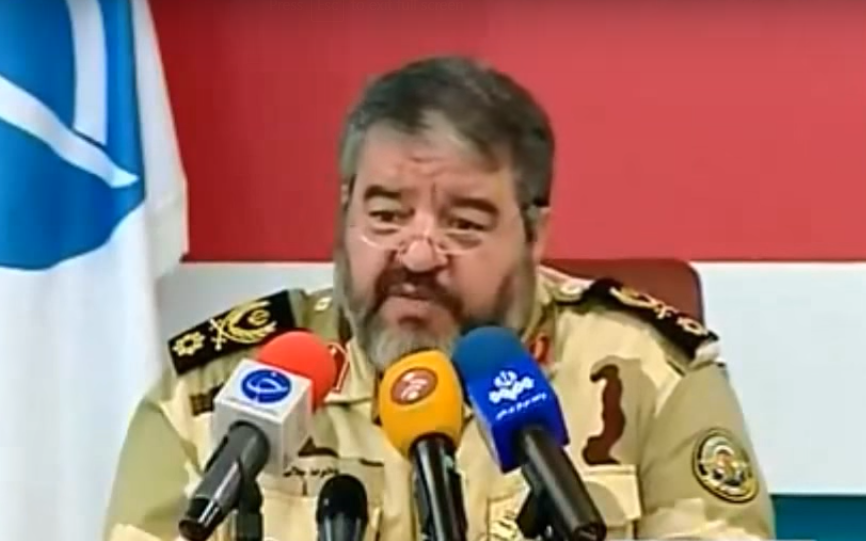
Brigadier General Gholam Reza Jalali of Iran’s Civil Defense Organization (Screen capture: YouTube)

A top Iranian general said on Sunday that the United States conveyed to the Islamic Republic through an unnamed third party last month that it would carry out limited strikes to retaliate for the downing of its drone.

“After the downing of its intruding drone, the United States told us through diplomatic intermediaries that it wanted to carry out a limited operation,” said Brigadier General Gholamreza Jalali, head of Iran’s Civil Defense Organization and senior commander of Iran’s Revolutionary Guards.

“But Iran’s response was that we regard every operation as the beginning of the war,” he said, according to the semi-official Fars News Agency.

Last month, Trump declared that “Iran made a very big mistake” by shooting down the US drone over the Strait of Hormuz. But he also suggested that shooting down the drone was a foolish error rather than an intentional escalation of the tensions.

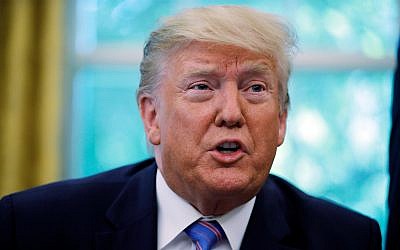
US President Donald Trump speaks during a signing ceremony in the Oval Office of the White House in Washington, July 1, 2019. (AP Photo/Carolyn Kaster)

The US military made preparations on June 21 for limited strikes on Iran in retaliation for the downing of a US surveillance drone — which Washington insists was over international waters but Tehran says was within its airspace — but approval was abruptly withdrawn before the attacks were launched.

Trump later said the US was “cocked and loaded” to retaliate against Iran, but canceled the strikes 10 minutes before they were to be carried out after being told some 150 people could die.

“I didn’t think it was proportionate,” he said in an interview with NBC News’ Meet the Press.

Reuters reported at the time that Trump had urged Iran to come to the table to hold talks in a message conveyed through Oman, and warned that a US strike against the Islamic Republic in response to the drone incident could be imminent.

The aborted attack was the closest the US has come to a direct military strike on Iran in the year since the administration pulled out of the 2015 international agreement intended to curb the Iranian nuclear program and launched a campaign of increasing economic pressure against the Islamic Republic.

A year after Trump pulled the US from the deal, Iran already has broken through the limit the deal put on its stockpile of low-enriched uranium. On Sunday, officials announced they would enrich beyond its 3.67 percent limit “in a few hours.”

All this comes as America has rushed thousands of troops, an aircraft carrier, nuclear-capable B-52 bombers and advanced fighter jets to the Mideast. Mysterious oil tanker attacks near the Strait of Hormuz that the US and Israel blamed on Iran, attacks by Iranian-backed rebels in Yemen on Saudi Arabia and Iran shooting down a US military drone have raised fears of a wider conflict engulfing the region.


Netanyahu: Iran’s breach of enrichment cap a ‘dangerous step’

July 7, 2019

Source: Netanyahu: Iran’s breach of enrichment cap a ‘dangerous step’ | The Times of Israel

PM compares Tehran’s violation of 2015 deal to Nazis’ 1936 occupation of Rhineland, urges European countries to intervene and impose sanctions

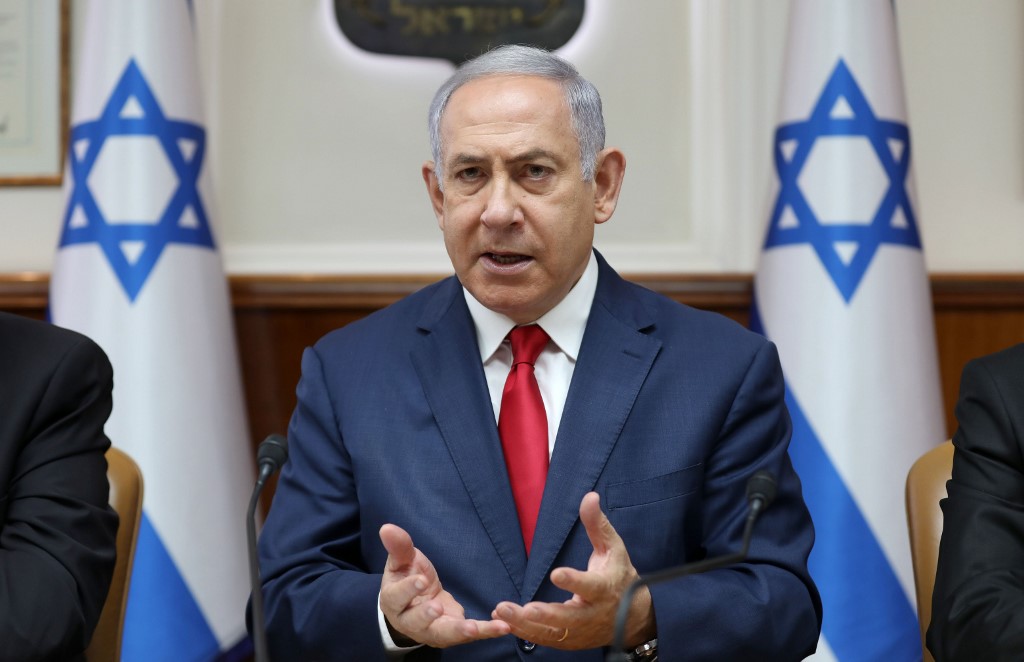
Prime Minister Benjamin Netanyahu chairs the weekly cabinet meeting at his office in Jerusalem on July 7, 2019. (ABIR SULTAN / POOL / AFP)

Prime Minister Benjamin Netanyahu on Sunday likened Iran’s “dangerous” flouting of the nuclear deal to the Nazis occupation of the Rhineland in 1936, in a call for European countries to sanction the Islamic Republic over its ramped-up uranium enrichment.

Iran said Sunday it was set to breach the uranium enrichment cap set by the 2015 nuclear accord within hours as it seeks to press signatories into keeping their side of the bargain. The Islamic Republic also threatened to abandon more commitments unless a solution is found with parties to the agreement.

The move to start enriching uranium above the agreed maximum purification level of 3.67 percent comes despite opposition from the European Union and the United States, which has quit the deal.

“This is a very dangerous step and I am urging my friends, the leaders of France, Britain, Germany: You signed this deal, and you said the moment this step would be taken, there would be harsh sanctions… Where are you?” said Netanyahu at the start of the weekly cabinet meeting.

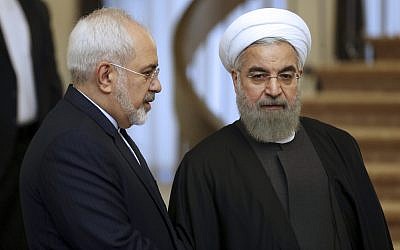
Iranian President Hassan Rouhani, right, listens to his Foreign Minister Mohammad Javad Zarif prior to a meeting in Tehran, Iran, November 24, 2015. (Vahid Salemi/AP)

Accusing Iran of seeking to build nuclear weapons, the prime minister compared the stepped-up enrichment to the Nazis’ first act of military aggression.

“I discussed this morning…  how World War II began in Europe. It began when Nazi Germany took one small step, reentering the Rhineland. It was a small step, no one said anything and no one did anything. The next step was the Anschluss… and the step after that was the entry into Sudetenland in Czechoslovakia. The rest is known,” Netanyahu said.

Turning to Europe, he appealed to his allies to respond with economic penalties.

“I’m asking you — not to provoke, but out of joint knowledge of history and what happens when aggressive totalitarian regimes can cross the threshold toward things that are very dangerous to us all — take the steps that you promised. Enact the sanctions.

“We’re doing our part. We are always fighting Iranian aggression, we aren’t allowing it to entrench [militarily] in Syria. We are acting, trying to nip it in the bud,” added Netanyahu, urging EU countries to do their part.

Netanyahu’s comments came as French President Emmanuel Macron’s office said Paris would not seek to trigger the nuclear deal’s so-called dispute resolution mechanism, which sets off a series of negotiations that could end with reimposed UN sanctions on Iran within 65 days.

“It’s not an option at this moment,” a source in Macron’s office told Reuters.

Macron said Saturday he is trying to find a way by July 15 to resume dialogue between Iran and Western partners. Macron’s office said in a statement that the French leader spoke for more than an hour Saturday with Iranian President Hassan Rouhani amid a standoff between Tehran and the US.

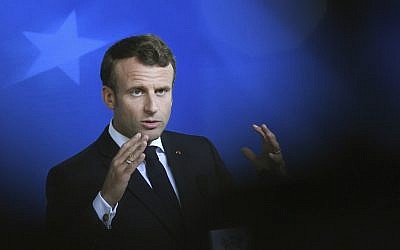
French President Emmanuel Macron during a media conference at the end of an EU summit in Brussels on June 21, 2019. (AP/Riccardo Pareggiani)

Macron expressed “strong concern about new weakening” of the 2015 accord aimed at curbing Iran’s nuclear ambitions. He said they would “explore between now and July 15 conditions for resumed dialogue among all parties.” The statement didn’t elaborate.

The 2015 deal was reached between Iran and six world powers — Britain, China, France, Germany, the United States and Russia — and saw Tehran agree to drastically scale down its nuclear program in exchange for sanctions relief.

Washington began reimposing sanctions in August 2018 and has targeted crucial sectors including oil exports and the banking system, fueling a deep recession.

It is not yet clear how far the Islamic Republic will boost enrichment.

But a top adviser to Iran’s Supreme Leader Ayatollah Ali Khamenei hinted on Friday it could reach five percent.

Spokesperson Behrooz Kamalvandi said Sunday that Iran’s Atomic Energy Organization was fully ready to enrich uranium “at any amount and at any level” if ordered to do so.

The 3.67 percent enrichment limit set in the agreement is sufficient for power generation but far below the more than 90 percent level required for a nuclear warhead.


High alert in US, British Navies after UK marines seize Iranian oil tanker – DEBKAfile

July 6, 2019

Source: High alert in US, British Navies after UK marines seize Iranian oil tanker – DEBKAfile

The high alert was declared even before Mohsen Rezai’s threat on Friday, July 5, to seize a British vessel unless the Iranian oil tanker impounded by UK Marines on its way to Syria was released at once.

The Panama-flagged Grace 1 was carrying Iranian crude oil for the Banyas refinery in Syria on Thursday, when troops of the Royal Marines boarded and impounded the vessel in keeping with European Union sanctions in force against Syria since 2011. The vessel was towed to port in Gibraltar. The island’s British and Spanish authorities admitted they had acted on US intelligence and meeting a special request from Washington.

Some of the British marines were dropped onto the ship’s deck by rope from a helicopter; a second group clambered aboard from speedboatsAn Iranian foreign ministry spokesman called the action a “form of piracy.” The British ambassador was summoned to the office in protest.
Iranian and European diplomats had just spent a week on tough talks on compensation for US sanctions, especially on its oil exports. They ended in impasse. French President Emmanuel Macron had offered to travel to Tehran, provided the Iranians backtracked on their decision to exceed the 2015 nuclear limits on uranium enrichment as of Sunday, July 7. After that letdown, the seizure of the oil tanker was a major blow for Iran and set back the deterrent advantage gained by a string of Revolutionary Guards sabotage attacks on Gulf oil targets and the US in Iraq since May 12. Tehran will not allow this extreme affront to go unanswered.

DEBKAfile’s military sources note that the capture of the tanker at Gibraltar blocked the Mediterranean route for dodging US sanctions on Iranian oil exports. US intelligence tracked the Grace 1 from its port of origin in Iran in mid-June and watched the vessel circumnavigating Africa instead of sailing through the Red Sea, the Suez Canal and Mediterranean up to its Syrian destination. Now that the Gibraltar gate to the Mediterranean is slammed shut, Iran can only fall back on the Chinese outlet. For now, the Trump administration is turning a blind eye to the oil tankers moving Iranian oil freights to terminals in China.

Mohsen Rezai, a former IRGC commander, is described by our sources as enjoying the rare advantage of high prestige in regime circles and wide popularity on the Iranian street. His voice is relatively moderate and measured compared with his hardline colleagues. The threat to seize a British oil tanker or other vessel coming from him should be taken seriously.