Archive for July 2019

Netanyahu: Iran’s breach of uranium cap marks ‘significant step’ toward nuke 

July 2, 2019

Source: Netanyahu: Iran’s breach of uranium cap marks ‘significant step’ toward nuke | The Times of Israel

PM says he’ll soon reveal further proof Tehran has lied about its nuclear program ‘the entire time’; UK ‘deeply worried’ by Iranian announcement, Russia blames US
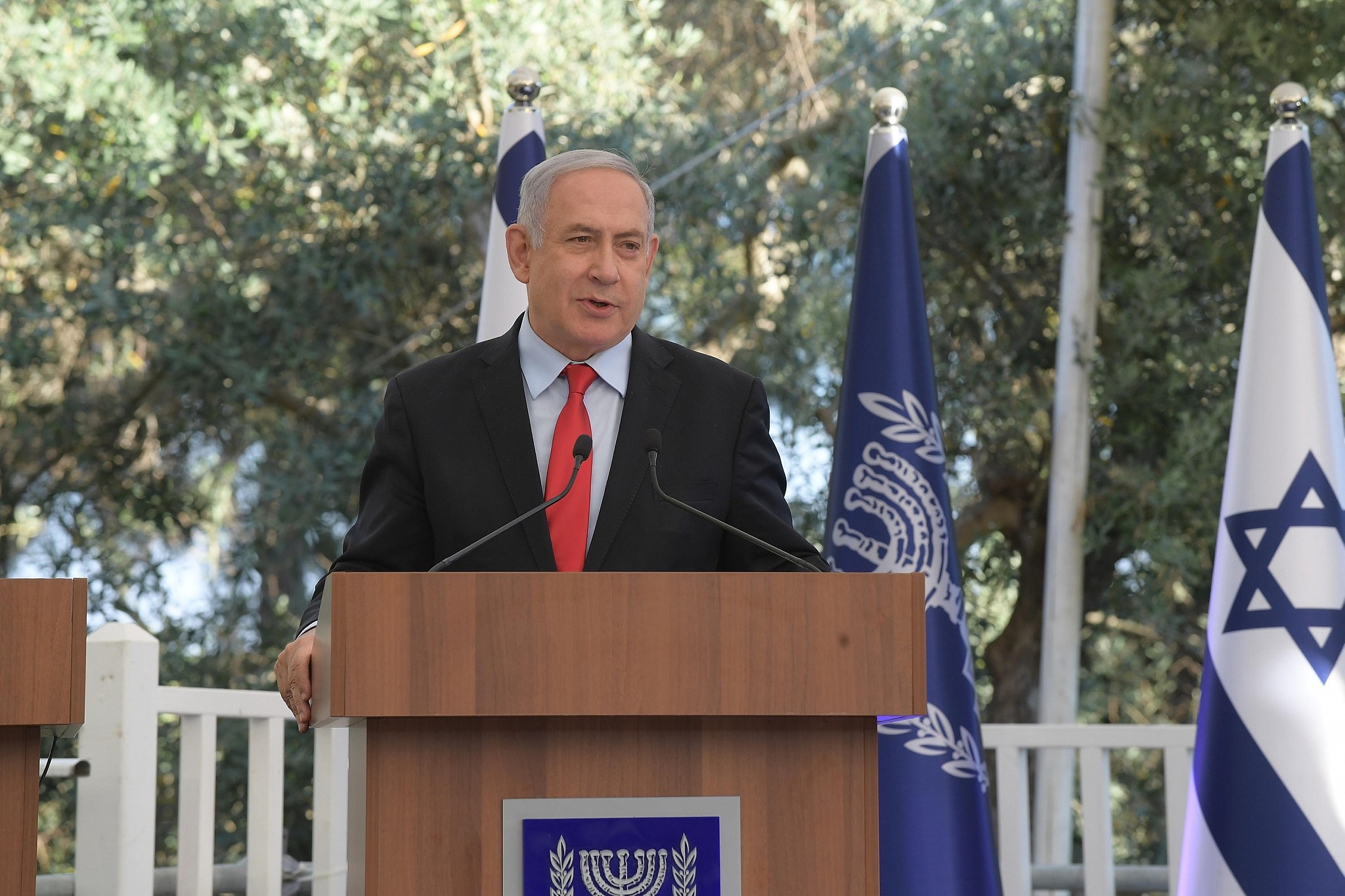
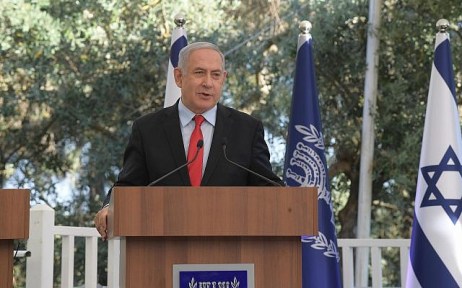
Prime Minister Benjamin Netanyahu speaks at a ceremony to honor outstanding IDF Reserve Units, July 1, 2019 (Amos Ben-Gershom / GPO)

Prime Minister Benjamin Netanyahu speaks at a ceremony to honor outstanding IDF Reserve Units, July 1, 2019 (Amos Ben-Gershom / GPO)

Prime Minister Benjamin Netanyahu accused Iran of taking a “significant step” toward producing a nuclear weapon Monday, after Iran said it had exceeded the amount of enriched uranium it is allowed under the 2015 nuclear deal.

Netanyahu said Iran’s announcement that it now holds over 300 kilograms of low-enriched uranium was proof that Iranian leaders have lied over their nuclear intentions, and, called on European countries to sanction Tehran.

“When we exposed the secret Iranian nuclear archive [in April 2018], we proved that any nuclear agreement with Iran is built on one big lie. Now even Iran acknowledges this,” Netanyahu said at an event honoring Israeli reservists. “Soon will be revealed additional proofs that Iran has been lying this whole time.”

Iran’s acknowledgment Monday that it had broken the limit on its stockpile of low-enriched uranium set by the 2015 nuclear deal marked its first major departure from the unraveling agreement a year after the US unilaterally withdrew from the accord.

Iran had been expected for days to acknowledge that it broke the limit after earlier warning that it would do so. It held off on publicly making an announcement, as European leaders met Friday in Vienna to discuss ways to save the accord.

Iran has threatened to increase its enrichment of uranium closer to weapons-grade levels by July 7.

Netanyahu repeated his vow not to allow Iran to develop a nuclear weapon and called on the European signatories to the nuclear pact to hold Tehran accountable.

“They [the Europeans] promised to act the moment Iran violates the nuclear deal. They promised they would automatically enact sanctions that were imposed by the [UN] Security Council,” the prime minister said.

In a direct appeal to the Europeans, Netanyahu said in English: “Do it, Just do it.”

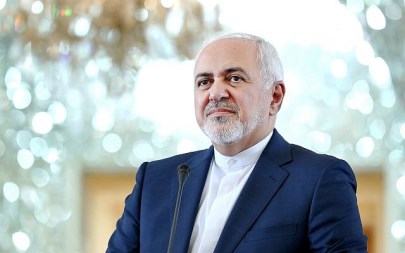
At the same time, Iranian Foreign Minister Mohammed Javad Zarif said Iran could reverse its moves if Europe offers it a new nuclear deal and bypasses US sanctions.

The “actions of the Europeans have not been enough so the Islamic Republic will move ahead with its plans as it has previously announced,” Zarif said. “We are in the process of doing our first phase of actions both on increasing our stockpile of enriched uranium as well as our heavy water reserves.”
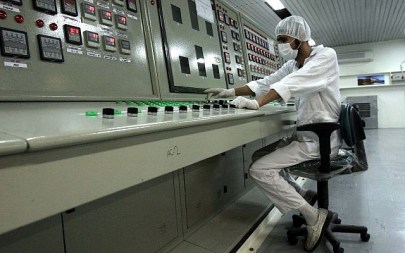
A technician at the Uranium Conversion Facility just outside the city of Isfahan, Iran, 255 miles (410 kilometers) south of the capital Tehran, February 3, 2007. (AP/Vahid Salemi/File)

British Foreign Minister Jeremy Hunt said Monday that London was “deeply worried” by Iran’s announcement.

“Deeply worried by Iran’s announcement that it has broken existing nuclear deal obligations,” Hunt, a candidate to become Britain’s next prime minister, said on Twitter.

“UK remains committed to making deal work (and) using all diplomatic tools to deescalate regional tensions. I urge Iran to avoid any further steps away from JCPOA (nuclear deal and) come back into compliance,” he added.

The UN nuclear watchdog, the International Atomic Energy Agency, said Monday its director general had informed officials that it verified Monday that Iran had broken through the limit.

UN Secretary General Antonio Guterres urged Iran to stick to its commitments under the nuclear deal and address differences through a dispute mechanism, his spokesman said.

“It is essential that this issue, like other issues related to the implementation of the plan, be addressed through the mechanisms established in the JCPOA,” UN spokesman Stephane Dujarric said.

Guterres encourages Iran “to continue implementing all its nuclear-related commitments under the JCPOA,” Dujarric said.

Under terms of the nuclear deal, Iran agreed to have less than 300 kilograms (661 pounds) of uranium enriched to a maximum of 3.67 percent. Previously, Iran enriched as high as 20%, which is a short technical step away from reaching weapons-grade levels. It also held up to 10,000 kilograms (22,046 pounds) of the higher-enriched uranium.

Neither Zarif nor the UN agency said how much uranium Iran now had on hand. Last week, an Iranian official in Vienna said that Tehran was 2.8 kilograms away from the limit. Iran previously announced it had quadrupled its production of low-enriched uranium, which, at under 3.67%, is enough to power a nuclear reactor to create electricity, but is far below weapons-grade levels.

However, Iran could have chosen to mix the low-enriched uranium with raw uranium, diluting it and bringing it down under the cap. Pushing past the limit served as a notice to Europe, Zarif said.
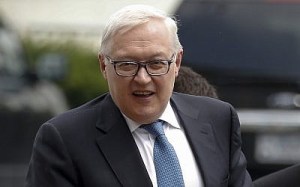
Russian Deputy Foreign Minister Sergei Ryabkov at the State Department in Washington, July 17, 2017. (AP Photo/Carolyn Kaster)

Russia, like Britain a signatory to the nuclear deal, said Iran’s announcement was a cause for “regret,” but added this was a consequence of US actions.

“(This) of course is a cause for regret but one mustn’t dramatize the situation,” Russian deputy foreign minister Sergei Ryabkov said in comments reported by news agencies.

“It should be understood as the natural consequence of the events which have gone before,” he said.

Ryabkov denounced “unprecedented pressure” from the United States, but called on Tehran to behave “responsibly.”

Moscow is a close ally of Tehran and has previously called on European signatories of the nuclear agreement to respect the deal despite the US pullout.

The other signatories — China, France and Germany — did not immediately react to Iran’s announcement.
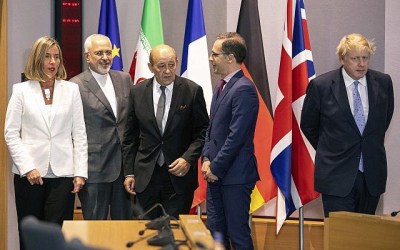
From left, European Union foreign policy chief Federica Mogherini, Iranian Foreign Minister Javad Zarif, French Foreign Minister Jean-Yves Le Drian, German Foreign Minister Heiko Maas and then British Foreign Secretary Boris Johnson, during a meeting of the foreign ministers at the Europa building in Brussels, on May 15, 2018. (AP Photo/Olivier Matthys, Pool)

The United States withdrew from the nuclear deal last year and reimposed biting sanctions on Iran’s crucial oil exports and financial transactions as well as other sectors.

Tehran, which has sought to pressure the remaining parties to save the deal, on May 8 announced it would no longer respect the limit set on its enriched uranium and heavy water stockpiles.

It also threatened to go further and abandon more nuclear commitments unless the remaining partners helped it to circumvent sanctions, especially to sell its oil.

At the time of the 2015 deal, which was agreed to by Iran, the United States, China, Russia, Germany, France and Britain, experts believed that Iran needed anywhere from several weeks to three months to have enough material for a bomb.
 

Iran threatens to up enrichment level as IAEA confirms uranium limit breached 

July 2, 2019

Source: Iran threatens to up enrichment level as IAEA confirms uranium limit breached | The Times of Israel

Foreign minister says move can be reversed if Europe salvages nuclear deal, but warns if not, Tehran may move beyond only low enrichment

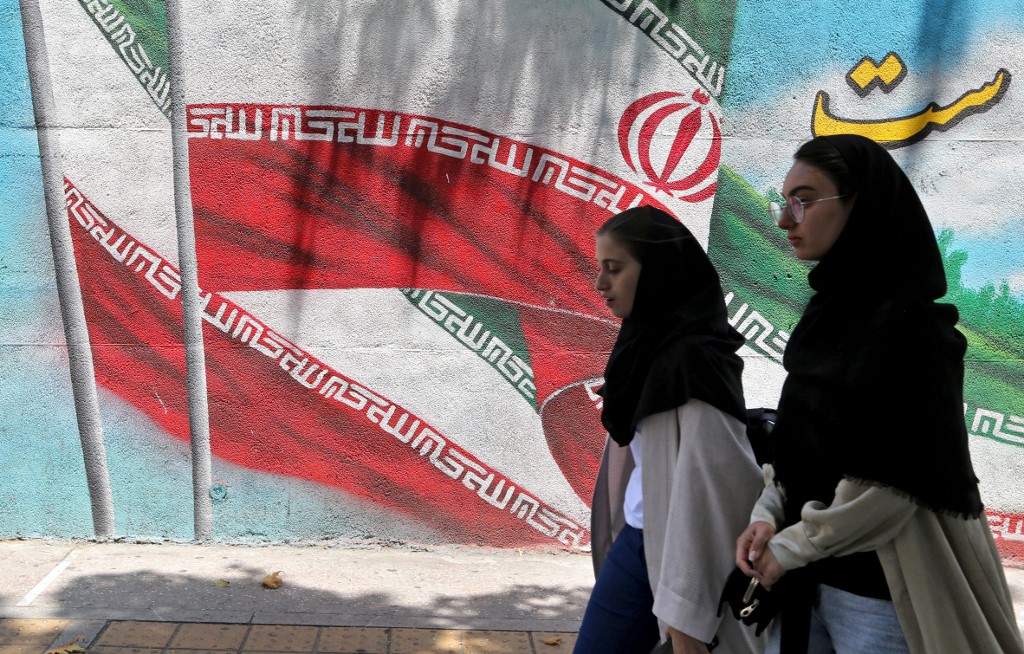
Iranian women walk past a mural painted with the Iranian flag in Tehran on June 25, 2019. (ATTA KENARE / AFP)

Iranian women walk past a mural painted with the Iranian flag in Tehran on June 25, 2019. (ATTA KENARE / AFP)

The United Nations’ atomic watchdog agency confirmed Monday Iran has surpassed the stockpile of low-enriched uranium allowed under the 2015 nuclear deal with world powers, as Tehran’s top diplomat threatened to enrich the element to higher levels.

The International Atomic Energy Agency said its director general, Yukiya Amano, has informed its board of governors that the organization had verified Iran’s stockpile of uranium enriched up to 3.67% had exceeded the 300 kilograms allowed.

Iran earlier in the day had announced that it had exceeded the limit, as it threatened it would.

“Iran has crossed the 300-kilogram limit based on its plan” announced in May, Iranian Foreign Minister Mohammad Javad Zarif told semi-official news agency ISNA.

Zarif said Iran could also begin enriching the uranium to higher levels.

“The next step is about the 3.67% limitation, which we will implement too,” he warned.

Previously, Iran enriched as high as 20%, which is a short technical step away from reaching weapons-grade levels. It also held up to 10,000 kilograms (22,046 pounds) of the higher-enriched uranium.

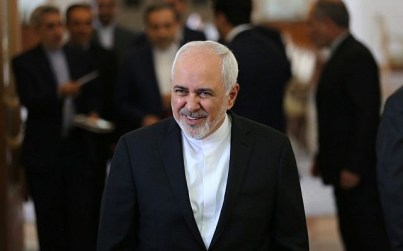
Iranian Foreign Minister Mohammad Javad Zarif arrives to meet his Japanese counterpart in Tehran on June 12, 2019. (Atta Kenare/AFP)

The United States withdrew from the nuclear deal last year and reimposed biting sanctions on Iran’s crucial oil exports and financial transactions as well as other sectors.

Tehran on May 8 announced it would no longer respect the limit set on its enriched uranium and heavy water stockpiles.

It also threatened to go further and abandon more nuclear commitments unless the remaining partners — Britain, China, France, Germany and Russia — helped it to circumvent sanctions, especially to sell its oil.

In his comments published Monday, Zarif said Iran had set out its intentions “very clearly” in May.

The EU said Friday after a crisis meeting aimed at salvaging the deal that a special payment mechanism set up to help Iran skirt the sanctions, known as INSTEX, was finally “operational” and that the first transactions were being processed.

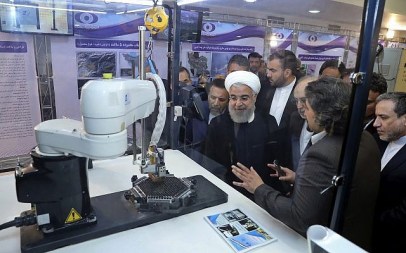
In this April 9, 2018 file photo, released by an official website of the office of the Iranian Presidency, President Hassan Rouhani listens to explanations on new nuclear achievements at a ceremony to mark “National Nuclear Day,” in Tehran, Iran. (Iranian Presidency Office via AP, File)

But “the Europeans’ efforts were not enough, therefore Iran will go ahead with its announced measures,” Zarif said.

INSTEX, which “is just the beginning” of their commitments, has not yet been fully implemented, he added.

“If Europeans do what they have to do, our measures are reversible,” Zarif said, according to Iranian news site IRNA.

Zarif did not say how much low-enriched uranium had on hand, IRNA said.

The 2015 deal saw Iran commit never to acquire an atomic bomb, to accept limits on its nuclear program and submit to IAEA inspections in exchange for a partial lifting of crippling international sanctions. Israel strongly opposed the accord, arguing that it merely delayed, but didn’t prevent, Iran from obtaining nuclear weapons.

US President Donald Trump’s unilateral withdrawal from the deal on May 8, 2018 — and subsequent sanctions — have deprived Iran of the economic benefits it expected and plunged it into recession.

Exactly a year after the US withdrew, President Hassan Rouhani said that Iran would temporarily cease to limit its stocks of heavy water and low-enriched uranium to 130 tonnes and 300 kilograms (660 pounds) respectively.

Iran has also threatened to start enriching uranium above the agreed maximum purification level of 3.67 percent from July 7. That remains far short of the 90 percent purity required to build a weapon.

The latest tensions coincide with a buildup of US forces in the Gulf and a series of incidents including Iran’s shooting down of a US drone it claimed had entered its airspace.

Times of Israel contributed to this report.


Trump says Iran ‘playing with fire’ after nuclear deal limit breached 

July 2, 2019

Source: Trump says Iran ‘playing with fire’ after nuclear deal limit breached | The Times of Israel

Israel urges European states to sanction Tehran; Russia says move cause for ‘regret,’ but blames US pressure; UN says Iran must stick to its accord commitments

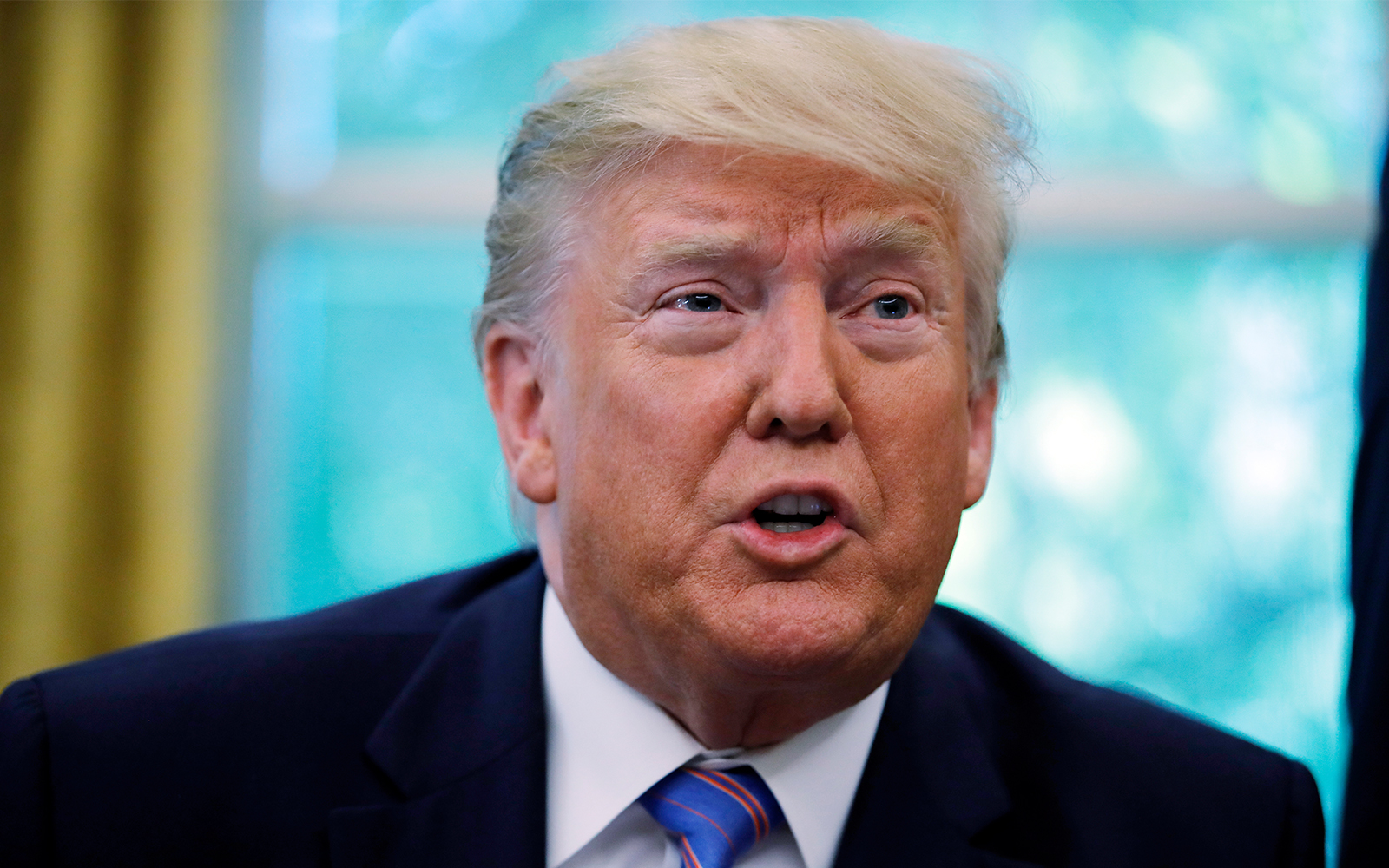
US President Donald Trump speaks during a signing ceremony in the Oval Office of the White House in Washington, July 1, 2019. (AP Photo/Carolyn Kaster)

US President Donald Trump speaks during a signing ceremony in the Oval Office of the White House in Washington, July 1, 2019. (AP Photo/Carolyn Kaster)

WASHINGTON (AFP) — US President Donald Trump warned Monday that Iran was “playing with fire” after Tehran said it exceeded a limit on enriched uranium reserves under a 2015 nuclear deal abandoned by Washington.

Israel urged European states to sanction Iran, while Russia voiced regret but said the move was a consequence of US pressure, which has pushed the deal towards collapse.

Britain called on Tehran “to avoid any further steps away” from the landmark deal, and the UN said Iran must stick to its commitments under the accord.

“Iran has crossed the 300-kilogram limit based on its plan” announced in May, Iranian Foreign Minister Mohammad Javad Zarif told the semi-official news agency ISNA.

But he also said the move could be reversed.

“They know what they’re doing. They know what they’re playing with and I think they’re playing with fire,” Trump told reporters at the White House when asked about Iran.

The United States withdrew from the nuclear deal last year and hit Iran’s crucial oil exports and financial transactions as well as other sectors with biting sanctions.

Tehran, which has sought to pressure the remaining parties to save the deal, announced on May 8 it would no longer respect the limit set on its enriched uranium and heavy water stockpiles.

It threatened to abandon further nuclear commitments unless the remaining partners — Britain, China, France, Germany and Russia — helped it circumvent sanctions, especially to sell its oil.

The White House had earlier said that “the United States and its allies will never allow Iran to develop nuclear weapons,” vowing to continue exerting “maximum pressure” on the regime.

“It was a mistake under the Iran nuclear deal to allow Iran to enrich uranium at any level,” spokeswoman Stephanie Grisham said in a statement.

Zarif insisted Iran had done nothing wrong. “We have NOT violated the #JCPOA,” he tweeted, referring to the deal.

In this April 9, 2018 file photo, released by an official website of the office of the Iranian Presidency, President Hassan Rouhani listens to explanations on new nuclear achievements at a ceremony to mark “National Nuclear Day,” in Tehran, Iran. (Iranian Presidency Office via AP, File)

He said Iran would “reverse” its decision “as soon as E3 abide by their obligations,” referring to the European parties to the deal: Britain, France and Germany.

Zarif’s American counterpart Mike Pompeo accused Iran of using its nuclear program “to extort the international community and threaten regional security.”

The International Atomic Energy Agency confirmed Iran had exceeded the limit that the deal imposed on its stockpile of low-enriched uranium (LEU).

A diplomat in Vienna, where the UN’s nuclear watchdog is based, told AFP that Iran had exceeded the 300 kilogram (661 pound) limit by two kilograms.

Russia’s deputy foreign minister, Sergei Ryabkov, said Iran’s move was a cause for “regret” but also “a natural consequence of recent events” and a result of the “unprecedented pressure” from the US.

“One mustn’t dramatize the situation,” Ryabkov, whose country is a close ally of Tehran, said in comments reported by Russian news agencies.

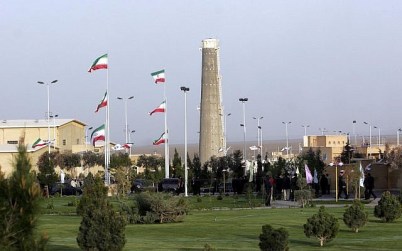
Iran’s nuclear enrichment facility in Natanz, 300 kilometers (186 miles) south of capital Tehran, Iran, April, 9, 2007. (Hasan Sarbakhshian/ AP/File)

Britain’s Foreign Minister Jeremy Hunt said on Twitter that London was “deeply worried” and urged Iran to “come back to compliance” with the nuclear deal.

UN chief Antonio Guterres said it was “essential” that Iran stick to the deal.

Prime Minister Benjamin Netanyahu urged European countries to impose sanctions on his country’s arch-foe.

“They [the Europeans] promised to act the moment Iran violates the nuclear deal. They promised they would automatically enact sanctions that were imposed by the [UN] Security Council,” the prime minister said.

In a direct appeal to the Europeans, Netanyahu said in English: “Do it, Just do it.”

The premier said Iran’s announcement that it now holds over 300 kilograms of low-enriched uranium was proof that Iranian leaders have lied over their nuclear intentions.

Prime Minister Benjamin Netanyahu speaks at a ceremony to honor outstanding IDF Reserve Units, July 1, 2019 (Amos Ben-Gershom / GPO)

Trump spoke with French President Emmanuel Macron on Monday about Iran’s breach of the nuclear deal limit, the White House said.

The US president expressed hope in an interview broadcast Monday — which was taped prior to Iran’s announcement on the uranium limit — that Tehran will come to the negotiating table.

“Hopefully, at some point, they’ll come back and they’ll say, ‘We’re going to make a deal.’ Let’s see what happens,” Trump told Fox News Channel’s “Tucker Carlson Tonight.”

The European Union said Friday after a crisis meeting aimed at salvaging the deal that a special payment mechanism set up to help Iran skirt the sanctions, known as INSTEX, was finally “operational” and that the first transactions were being processed.

But “the Europeans’ efforts were not enough, therefore Iran will go ahead with its announced measures,” Zarif said.

Iranian Foreign Minister Mohammad Javad Zarif speaks during a press conference in Tehran, Iran, June 10, 2019 (AP Photo/Ebrahim Noroozi)

INSTEX, which “is just the beginning” of their commitments, has not yet been fully implemented, he added.

The 2015 deal saw Iran accept drastic limits on its nuclear program and submit to IAEA inspections in exchange for a partial lifting of crippling international sanctions.

Iran has also threatened to start enriching uranium above the agreed maximum purification level of 3.67 percent from July 7. That remains far short of the 90 percent purity required to build a weapon.

The latest tensions coincide with a buildup of US forces in the Gulf and a series of incidents including Iran’s shooting down of a US drone it claimed had entered its airspace.

Times of Israel staff contributed to this report.


Bernie Sanders Joins IfNotNow Young Jews in Unforgettable Anti-Zionist Outing

July 1, 2019

By David Israel – 28 Sivan 5779 – July 1, 2019


Ema Glazer with Bernie Sanders in New Hampshire. Photo Credit: From Ema Glazer’s email to me

Ema Glazer with Bernie Sanders in New Hampshire.

IfNotNow New Hampshire Fellow Ema Glazer sent me an excitable email Sunday night, reminiscent of the reflections of many a young, self-searching, Jewish scholar in early 1800s Poland, except it had nothing Jewish in it and it mainly celebrated the noble struggle to make the Jewish State go away.

“I have to show you this photo from yesterday,” Ema wrote (see image above, she’s to Bernie’s right with only a guy with a huge beard between them).

“It’s from a Pride event in Massachusetts, where a group of IfNotNow members asked Bernie Sanders to take a picture with us and our sign that read ‘Anti-Occupation Jews.’ My heart was racing. And then, Bernie said ‘yes’! You can see the huge smile on my face as we rushed into the picture.”

Bernie said Yes! It’s definitely a moment Ema will some day describe to her grandchildren, Chris, Mohammed and Shaqila. What a summer this is shaping up to be. Too bad Philip Roth is no longer a living legend, because this has the makings of a new “Goodbye, Columbus.”

“Growing up in rural Vermont, I often felt isolated as one of the only Jewish people in town,” the Arizona born Ema Glazer shared with me in her email. “That all changed when I found IfNotNow and felt for the first time surrounded by a community dedicated to building a movement for freedom and dignity.”

That beacon of Jewish light, IfNotNow, dedicated to preaching to unsuspecting Birthright youths why the settlers are the same as Nazis, but less organized.

“This summer, I am living with five other young American Jews in New Hampshire, spending the coming months publicly confronting presidential candidates, asking them to take a stand against the Occupation and tell us what they are going to do to put an end to it,” the irrepressible Ema Glazer wrote me. “It just so happened that we started with my home state’s senator, Bernie.”

It was like meeting with the holy Sfas Emes, but around a tish full of shrimps.

“Yesterday, I learned that Bernie and I aren’t just two Jewish Vermonters, we are two Jewish Vermonters against the Occupation. When he took that photo with us, only one word could describe my feelings — kvelling.”

Our Ema has kept the Jewish flame, the pintele Yid – she knows from kvelling.

“This is why IfNotNow was started four years ago: so American Jews could come together and proudly stand up for our Jewish values by opposing the immorality of the Israeli Occupation,” Ema stressed. These are their Jewish values: get together somewhere in a rainy New England park to attack half a million Jews who live six thousand miles away. They will teach those settlers a Jewish lesson they’ll never forget: don’t expect American Jews to be on your side. They’re with Bernie.

“We want to show our politicians that young Jews across America reject the Trump-Bibi alliance,” she wrote, because a friendship between two democratically-elected leaders is garbage compared with a repressive Palestinian tyranny that last received the voters’ support in January 2005.

“And we want to push Democratic primary candidates to break from the AIPAC-created stalemate in Washington and do what’s necessary to ensure freedom and dignity for Israelis and Palestinians,” wrote my email buddy Ema, who knows what Israelis and Palestinians want.

“This is no small task, but I have immense hope in my generation of American Jews,” Ema Glazer concluded. Then she asked me for money, anything, really, even five dollars is good.

I kvelled.

Apparent Syrian air-defense missile crashes in northern Cyprus

July 1, 2019

Source: Apparent Syrian air-defense missile crashes in northern Cyprus | The Times of Israel

Blast comes during reported Israeli strikes on Syria, leading to speculation it was a stray Syrian anti-aircraft projectile

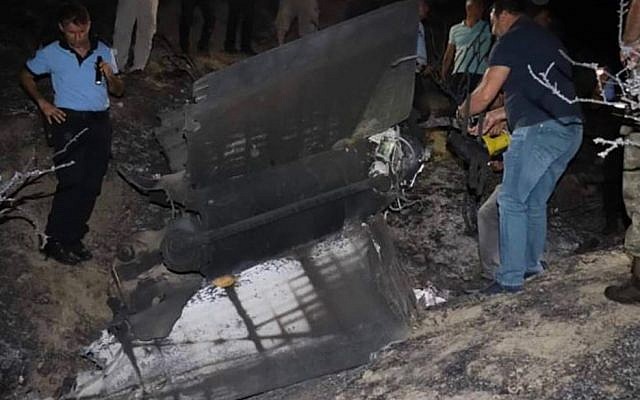
Authorities in northern Cyprus examine the wreckage of a mystery object that crashed causing a large explosion on July 1 2019 (Screencapture/Twitter)

Authorities in northern Cyprus examine the wreckage of a mystery object that crashed causing a large explosion on July 1 2019 (Screencapture/Twitter)

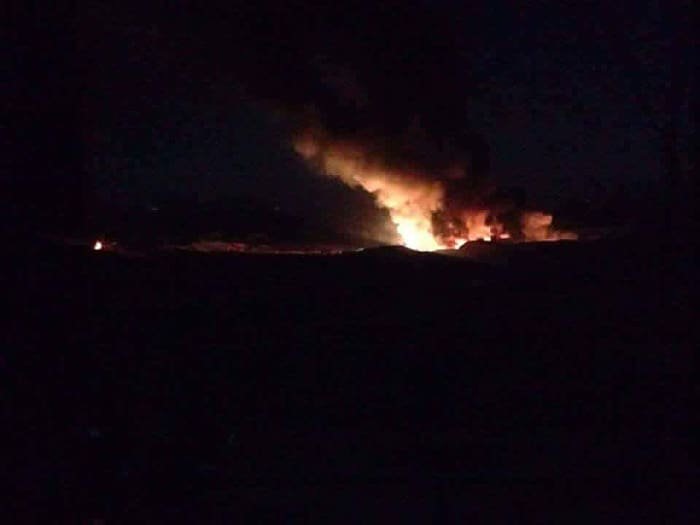
Officials in Turkish-controlled northern Cyprus were investigating a mysterious explosion that rocked the Mediterranean island and caused a large fire early Monday, apparently caused by a Syrian surface-to-air missile.

A Turkish Cypriot official said that a Syrian anti-aircraft missile that missed its target may have been the cause of the explosion outside a village. No injuries were reported.

Photographs from the scene appeared to show the tail fins of a missile.

The explosion came amid a reported wave of Israeli strikes on targets in nearby Syria, during which the Syrian military fired large numbers of anti-aircraft missiles toward attacking Israeli fighter jets, the country’s official SANA news outlet reported. Israel had no comment on the reported strike.

Kudret Ozersay, the north’s foreign minister, posted on his personal Facebook account that an initial assessment of the predawn blast indicated that a Russian-made missile that was part of an anti-aircraft battery had missed its target during the overnight airstrikes.

greeen@greeenorg

S-200 missile? Downed jet? Drone? UFO crashes in N. Cyprus amid ‘Israeli raid’ on Syria (PHOTOS) – https://www.greeen.info/?p=1162871 

Ozersay said the missile likely blew up in flight because there was no impact crater and pieces of the object were found several kilometers from the main debris field outside the village of Tashkent, or Vouno, as it’s known by its Greek name.

He said the writing on debris matches that found on pieces of a Russian-made S-200 missile that crashed in Gaziantep, Turkey, in July 2018.

According to Turkish Cypriot broadcaster BRT, Prime Minister Ersin Tatar said no one was hurt in the explosion and that firefighting crews had contained a blaze that the burning debris had ignited.

It would not be the first time Syrian air defenses have gone off target.

In September, Syrian air defenses shot down a Russian military aircraft during Israeli strikes on Iranian targets in the country, killing all 15 servicemen aboard.

Russia, which is allied with Damascus, blamed the Israeli military for the incident — a charge rejected by Jerusalem — and later transferred advanced S-300 air-defense systems to Syria.

On Sunday, an Israeli satellite imagery analysis company said Syria’s entire S-300 air defense system appeared to be operational, indicating a greater threat to Israel’s ability to conduct airstrikes against Iranian and pro-Iranian forces in the country.

Turkey invaded Cyprus in July 1974 following a coup on the island that it opposed. About 150,000 Greek Cypriots were expelled from the areas captured by the Turkish army. In 1983 the Turkish Republic of Northern Cyprus declared its independence, although it is not recognized by the international community or the United Nations, which see the area as occupied.

The Associated Press contributed to this report.


Hezbollah’s secret, grandiose plan to invade Israel in the post-tunnel era

July 1, 2019

Source: Hezbollah’s secret, grandiose plan to invade Israel in the post-tunnel era | The Times of Israel

The group is threatening to conquer the Galilee even after its greatest asset was destroyed, and likely still has a plan to take border towns, army posts

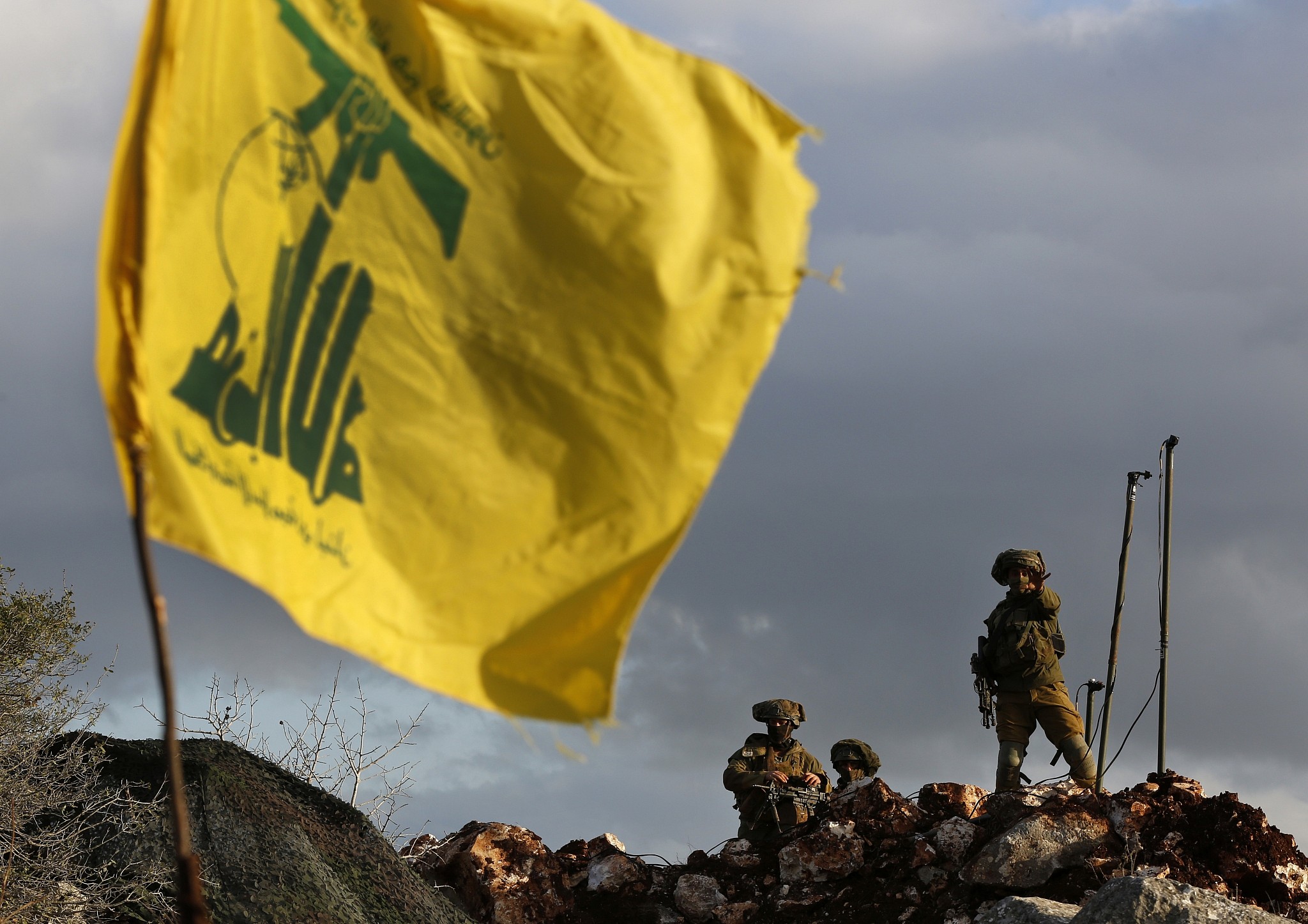
In this photo from December 13, 2018, Israeli soldiers stand guard next to cameras at their new position in front of a Hezbollah flag, near the Lebanese southern border village of Mays al-Jabal, Lebanon. (AP Photo/Hussein Malla)

In this photo from December 13, 2018, Israeli soldiers stand guard next to cameras at their new position in front of a Hezbollah flag, near the Lebanese southern border village of Mays al-Jabal, Lebanon. (AP Photo/Hussein Malla)

In his latest speech, Hezbollah leader Hassan Nasrallah again boasted that his terror group can easily penetrate into Israeli territory from Lebanon.

Hezbollah’s cross-border tunnel network may have been destroyed, but even in its absence Nasrallah insists that his commandos will try to storm Israel in secret and raid communities and army bases in the north. While Hezbollah knows it would pay a heavy price for such a step, the propaganda achievement would be crucial.

Like a broken record, in every speech Nasrallah delivers he threatens a military operation in Israeli territory if a war breaks out. Sometimes he calls it “conquering the Galilee,” sometimes just “penetrating.” Last month that ritual repeated itself when Nasrallah told his supporters that Hezbollah has the ability to “easily penetrate the Galilee.”

The question now is how, now that the Israeli military has revealed and destroyed Hezbollah’s secret strategic weapon — the cross-border tunnels — the Lebanese organization plans to operate inside Israeli territory and take control of a town or a piece of land.

Perhaps Hezbollah doesn’t have another strategic weapon like the tunnels, but it can be assumed it still has an extremely ambitious and detailed plan to occupy communities and military posts on Israel’s northern border.

The tunnel project was meant to shock Israel, funneling hundreds of members of the terror group’s Radwan commando unit into the country to carry out various attacks.

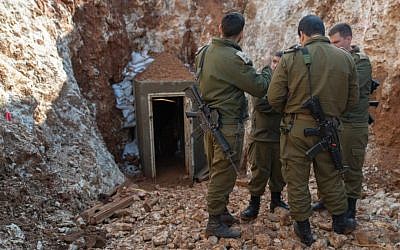
IDF reveals what it says is the longest cross-border attack tunnel dug by Hezbollah from Lebanon into Israel, May 29, 2019. (Israel Defense Forces)

“Radwan” was the alias of Imad Mughniya, Hezbollah’s military chief who was assassinated by Israel in 2008. Members of that unit are given high priority in almost everything: budget, equipment, resources and logistics. Sometimes their activities resemble those of elite IDF units, such as combat soldiers trained to use ATVs or navy commando fighters supposed to sneak into Israel in small underwater vessels.

In the absence of the tunnels, the mission of Radwan members will likely be to covertly get thousands of fighters into Israel at once through several points on the border while bombarding the border region, hoping that will overwhelm the IDF and allow some of the fighters to reach an Israeli border community or army post.

Hezbollah’s hope at the moment is that a heavy artillery bombardment of the entire border area, plus the use of high-caliber rockets that can destroy targets such as military posts, will do the trick.

The group today possesses significant firepower that could theoretically wipe out the entire Israeli frontline upon command — every post, every antenna.

Illustrative: A Hezbollah fighter is seen standing at attention in an orange field near the town of Naqura on the Lebanese-Israeli border on April 20, 2017. (AFP PHOTO / JOSEPH EID)

Apart from the artillery meant to serve as cover for thousands of troops invading Israel, Hezbollah’s attack plan will likely involve a logistic and intelligence apparatus, including drones that would transmit real-time intelligence and could carry out “kamikaze” bombings of Israeli targets.

It also has a designated command center meant to direct a wide-ranging operation along the border.

A land barrier built by Israel in recent years will make it difficult for such an operation to be carried out, but Hezbollah decision-makers nevertheless think that at least some of the attackers will manage to penetrate into Israeli territory.

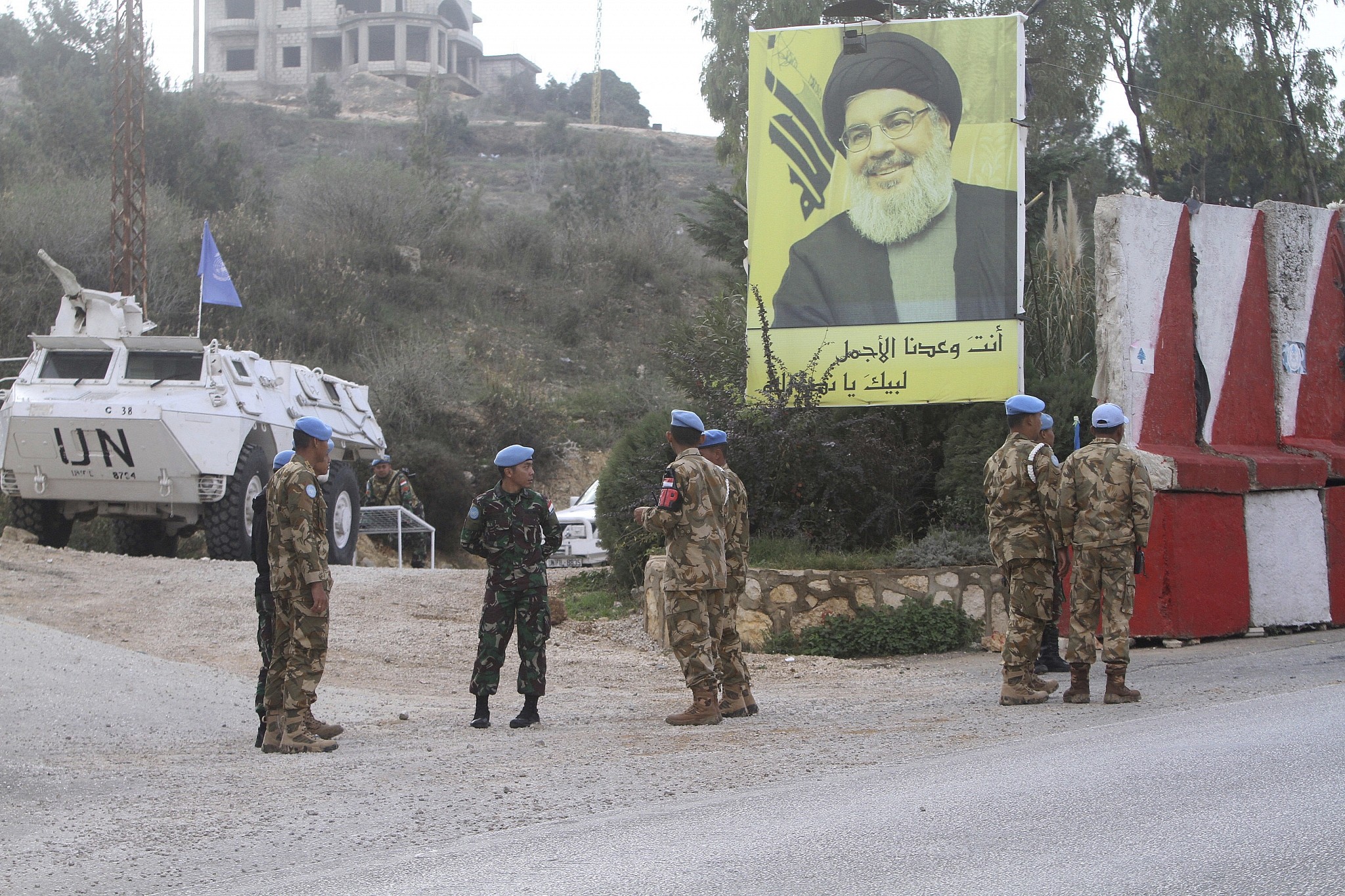
Indonesian UN peacekeepers stand in front a poster of Hezbollah leader Sheikh Hassan Nasrallah, as they patrol the Lebanese side of the Lebanese-Israeli border in the southern village of Kfar Kila, Lebanon, Tuesday, December 4, 2018. (AP/Mohammed Zaatari)

It is clear to the leaders of Hezbollah’s military wing that such an operation would have harsh consequences for its personnel, but they consider the ensuing psychological effect in Israel as critical. The operation is supposed to force the IDF to invest in defense, shock Israeli public opinion and create pressure to quickly end the fighting. One can only guess the sort of effect images of Hezbollah fighters in the northern Israeli town of Metulla could have.

But Hezbollah’s highly ambitious war plan is exceptionally risky for the organization itself, and its leaders are aware of that. Sending or trying to send thousands of its best warriors across the border might ultimately prove too dangerous a gamble. It would, after all, present an excellent opportunity for the IDF to eliminate the elite fighting force of Hezbollah in a matter of hours. That, in turn, would expose Hezballah‘s home front to counterattacks and ease the IDF’s path to a clear victory in a future war.


15 said killed, 9 of them foreigners, as Israel strikes Iranian sites in Syria 

July 1, 2019

Source: 15 said killed, 9 of them foreigners, as Israel strikes Iranian sites in Syria | The Times of Israel

Several civilians among the dead, though Syrian Observatory of Human Rights says it’s not clear if they were hit by Israeli missile or shrapnel from Syrian anti-aircraft attack

A screengrab circulating on social media purporting to show an alleged Israeli airstrike targeting Iranian assets in the Syrian city of Masyaf on April 13, 2019. (Screengrab/Twitter)

Illustrative. A screengrab circulating on social media purporting to show an alleged Israeli airstrike targeting Iranian assets in the Syrian city of Masyaf on April 13, 2019. (Screengrab/Twitter)

At least 15 people were killed, including six civilians, during strikes on Iranian targets in Syria in the predawn hours of Monday morning, according to a Syrian war monitor.

The Syrian Observatory for Human Rights, a Britain-based group, said it was not immediately clear if the six civilians, among them an infant, were killed by the attacks themselves, which were attributed to Israel, by Syria’s anti-aircraft fire, or by some other secondary explosion.

The other nine people killed were said to have been members of pro-Iranian militias, some of them foreign nationals.

The Observatory said Israel launched strikes both from the air and sea, targeting Iranian-linked bases near Homs and at least 10 targets near Damascus, including a base where Iran’s Islamic Revolutionary Guard Corps forces are headquartered and a weapons research center.

Israel did not comment on the attack — one of the most extensive series of strikes in several months, coming less than a week after a trilateral summit with Russia and the United States concerning Tehran’s activities and military presence in the region.

Syria’s official mouthpiece said that four civilians, among them a month-old baby, were killed and 21 people injured in explosions in Sahnaya, a neighborhood of Damascus. It blamed the deaths on “Zionist aggression.”

Other news sites in the country reported at least 50 people injured in the strikes.

While hundreds of casualties have been linked to Israeli strikes in Syria — mostly Syrian soldiers, Iranian troops and other foreign nationals connected to pro-Iranian militias — it is exceedingly rare for civilians to be said injured in these attacks.

State news agency SANA said that Syrian air defense had intercepted several of the incoming missiles that were fired from Lebanese airspace.

A projectile, later identified as a Syrian surface-to-air missile, crashed into a forest in northern Cyprus during the predawn exchange, sparking a large fire.

SANA gave no further details on the sites targeted.

However, the Observatory for Human Rights said the strikes targeted a research center and a military airport west of the city of Homs, where the Shiite Hezbollah terror group and Iranian forces are deployed.

Rami Abdel Rahman, the observatory chief, said the strikes injured some of those pro-Iranian troops.

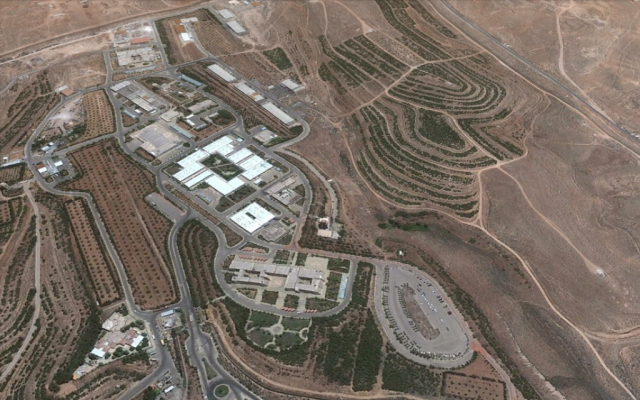
In the Damascus area, the monitor said strikes targeted the 91st Brigade base where the IRGC were headquartered and a research facility in Jamraya. Jamraya, which lies just over 10 kilometers (seven miles) northwest of Damascus, is home to several military positions and a branch of the Syrian Scientific Studies and Research Center (SSRC).

A Google Earth view of a Syrian scientific facility in Jamraya, near Damascus, before it was allegedly struck by Israeli warplanes in late January. (photo credit: image capture from Google Earth)

A Google Earth view of a Syrian scientific facility in Jamraya, near Damascus, before it was allegedly struck by Israeli warplanes in late January 2013. (photo credit: image capture from Google Earth)

The US has repeatedly imposed sanctions on the SSRC for its alleged role in chemical weapons production. France has also imposed sanctions on the agency.

Israeli airstrikes reportedly hit the facility in May 2013 and again in February 2018.

The monitor said that at some sites large blasts were caused by exploding ammunition depots and noted lots of ambulances had headed to the sites.

There was no response from the Israel Defense Forces, which rarely comments on reported strikes.

The Israeli military has acknowledged carrying out hundreds of airstrikes in Syria in recent years on targets linked to Iran, which is backing President Bashar Assad’s regime in the Syrian civil war.

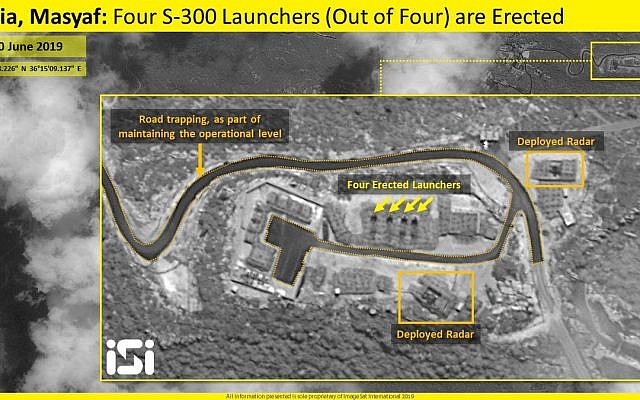
The reported strikes came just hours after an Israeli satellite imagery analysis company said Syria’s entire S-300 air defense system appeared to be operational, indicating a greater threat to Israel’s ability to conduct airstrikes against Iranian and pro-Iranian forces in the country.

Satellite photos released by ImageSat International appear to show all four missile launchers of the S-300 air defense system in the raised position in the northwestern Syrian city of Masyaf on June 30, 2019. (ImageSat International)

Until now, only three of the country’s four surface-to-air missile launchers had been seen fully set up at the Masyaf base in northwestern Syria.

Israel has threatened to destroy the S-300 system if it is used against its fighter jets, regardless of the potential blowback from Russia.

Times of Israel staff and AFP contributed to this report.


Damascus: Israeli air/naval forces hit 10 Syrian, Iranian, Hizballah targets – DEBKAfile

July 1, 2019

Source: Damascus: Israeli air/naval forces hit 10 Syrian, Iranian, Hizballah targets – DEBKAfile

One of Israel’s largest attacks is reported by Syrian sources to have swept across 10 targets across the country early Monday, July 1. They included Damascus Mezza military airport; Iranian and Hizballah military facilities at Al Kiswa south of Damascus; the base of the Syrian 1st Division; the Syrian military “research” institute at Jumriyah; military facilities at Siniya; and a chain of Hizballah bases in the Qalamoun Mts straddling the Syrian -Lebanese frontier, as well as bases in the Homs district.

The attacks were said to have been conducted by Israeli jets from Lebanese air space and naval vessels. Syrian sources reported that four people were killed in the attack and its air defense systems intercepted some of the incoming Israeli missiles. They described powerful explosions and huge fires at Iranian Revolutionary Guards and Hizballah bases in the Qalamoun Mts and ambulances streaming to the scene.

DEBKAfile’s military sources add that Israel delayed this latest round of attacks on Iranian and Hizballah positions in Syria to give US and Russian diplomacy a chance to reach understandings on the Syria situation. When their effort ran into the ground last week, the Israeli military was ordered to go forward. A large-scale operation became urgent when Iran and Hizballah were discovered to be preparing to embark on an operation against Israel, as part of Tehran’s campaign against US Middle East allies in retaliation for the Trump administration’s sanctions. Israel’s wide-ranging strikes on the 1st of July aimed at preempting that Iranian-Hizballah operation before it got off the ground.


And this is just the beginning: 

July 1, 2019


And this is just the beginning: 

July 1, 2019