Archive for July 2019

Russia urges Iran to show ‘restraint’ after breach of nuclear deal

July 3, 2019

Source: Russia urges Iran to show ‘restraint’ after breach of nuclear deal – www.israelhayom.com

Russian Foreign Minister Sergey Lavrov says US sanctions have effectively prevented Iran from selling the excess uranium it produces, contributing to its stockpiling.

Russia’s top diplomat has urged Iran to fulfill its obligations under its nuclear deal with world powers while calling on Europe to offer relief from US sanctions.

Russian Foreign Minister Sergey Lavrov said Tuesday that US sanctions have effectively prevented Iran from selling the excess uranium it produces, contributing to its stockpiling.

He called on Tehran to “show restraint, not yield to emotions” and observe provisions of the deal.

Iran acknowledged Monday it had exceeded the limit set on its low-enriched uranium stockpiles by the 2015 nuclear deal, its first major breach of the agreement a year after the US’s unilateral withdrawal.

Lavrov also urged the European Union to make good on its pledge and finally implement a working system protecting its trade with Iran from American sanctions.

China has expressed regret over Iran’s move to break limits on its stockpile of low-enriched uranium, but said Washington’s pressure campaign is the root cause of tensions.

Foreign ministry spokesman Geng Shuang told reporters Tuesday that Beijing remains committed to the 2015 agreement, known as the Joint Comprehensive Plan of Action. He said all parties should exercise restraint and safeguard the agreement to “avoid escalating tensions.”


Rouhani: Starting Sunday, Iran will enrich uranium to ‘any amount we want’

July 3, 2019

Source: Rouhani: Starting Sunday, Iran will enrich uranium to ‘any amount we want’ | The Times of Israel

As accord teeters, Iranian president says Tehran will move to refine radioactive element beyond 2015 deal’s 3.67% cap

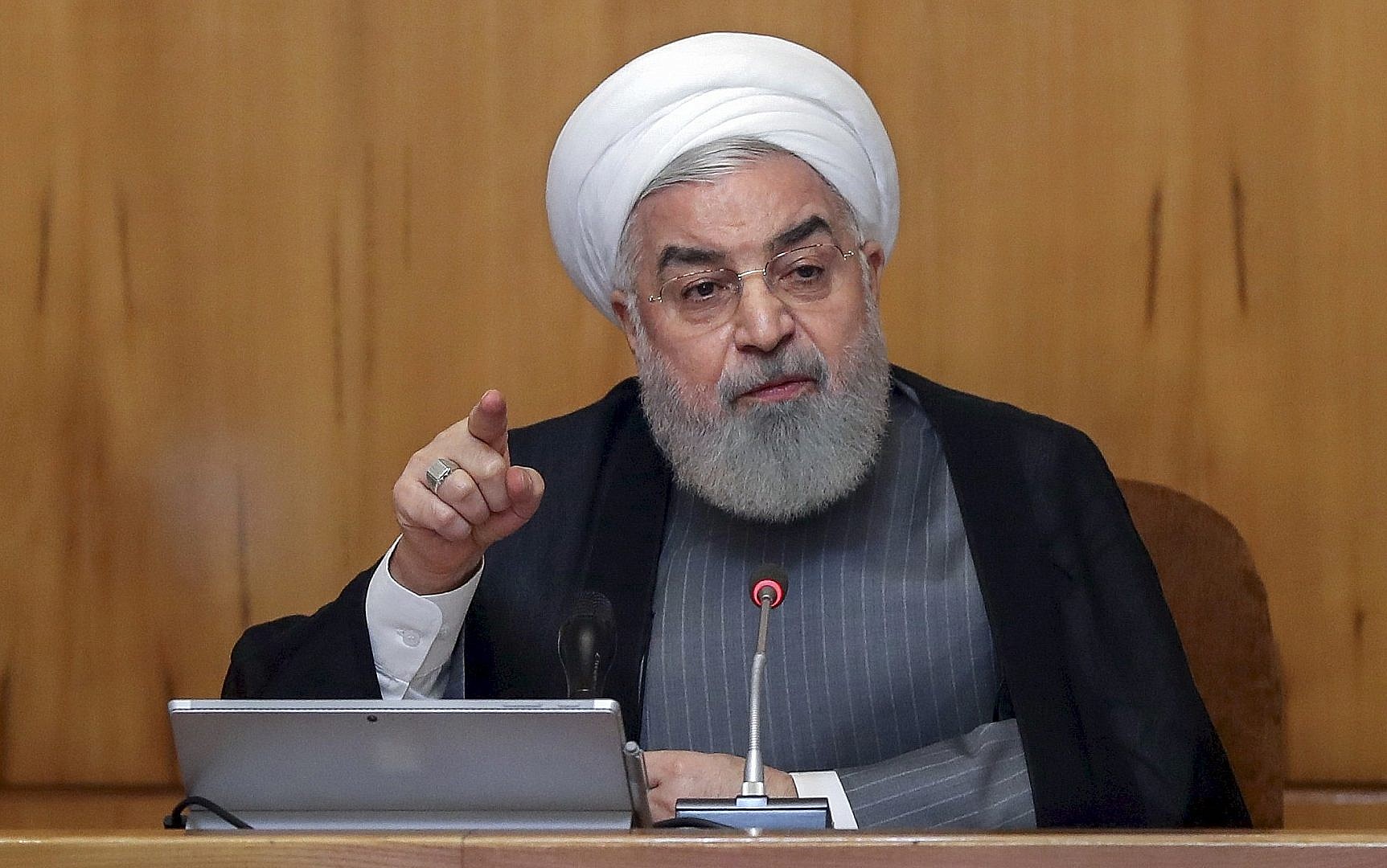
President Hassan Rouhani speaks in a cabinet meeting in Tehran, Iran, July 3, 2019 (Iranian Presidency Office via AP)

President Hassan Rouhani speaks in a cabinet meeting in Tehran, Iran, July 3, 2019 (Iranian Presidency Office via AP)

Iran’s president warned Europe Wednesday that his country would “take the next step” in increasing its uranium enrichment this coming Sunday, and enrich to “any amount that we want.”

The comments by President Hassan Rouhani at a cabinet meeting in Tehran further increase pressure on European partners to salvage the unraveling 2015 nuclear deal following the US withdrawal from it last year.

If signatories of the nuclear accord do not fulfill their commitments, Rouhani said, levels of enrichment will go beyond the 3.67 percent limit agreed under the deal.

“In any amount that we want, any amount that is required, we will take over 3.67,” he said.

“Our advice to Europe and the United States is to go back to logic and to the negotiating table,” Rouhani added. “Go back to understanding, to respecting the law and resolutions of the UN Security Council. Under those conditions, all of us can abide by the nuclear deal.”

To reach weapons-grade levels, uranium must be enriched to over 90%. But due to the nature of the enrichment process, once Iran reaches 20% purity it is a relatively short jump to reach the 90% enrichment needed for fissile material used in nuclear bombs.

US President Donald Trump pulled America from the nuclear deal last year and restored crippling economic sanctions. Iran this week breached a low-enriched uranium stockpile limitation set by the deal and said by Sunday it would increase its enrichment of uranium closer to weapons-grade levels if Europe does not offer it a new deal.

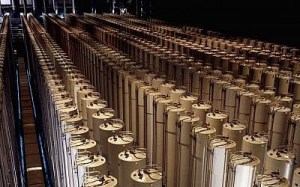
Centrifuges enriching uranium (Photo credit: US Department of Energy/ Wikimedia Commons)

Illustrative. Centrifuges enriching uranium. (Public Domain/US Department of Energy/Wikimedia Commons)

Iran, which has sought to pressure the remaining parties to save the deal, had announced on May 8 that it would no longer respect the limit set on its enriched uranium and heavy water stockpiles.

The diplomatic chiefs of the EU, France, Germany and Britain said Tuesday they were “extremely concerned” and called on Iran to change course.

“We urge Iran to reverse this step and to refrain from further measures that undermine the nuclear deal,” said the joint statement signed by EU diplomatic chief Federica Mogherini and the three countries’ foreign ministers — France’s Jean-Yves Le Drian, Germany’s Heiko Maas and Britain’s Jeremy Hunt.

“We have been consistent and clear that our commitment to the nuclear deal depends on full compliance by Iran,” they said. “We regret this decision by Iran, which calls into question an essential instrument of nuclear nonproliferation.”

They added that the group was “urgently considering next steps under the terms” of the deal, which saw Iran commit to never acquiring an atomic bomb, accept drastic limits on its nuclear program and submit to inspections by the International Atomic Energy Agency in exchange for a partial lifting of international sanctions.

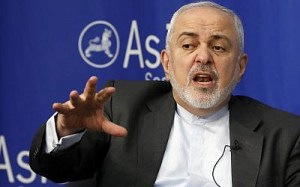
Iran’s Foreign Minister Mohammad Javad Zarif speaks at the Asia Society in New York, Wednesday, April 24, 2019. (AP Photo/Richard Drew)

The European Union had said Friday after a crisis meeting aimed at salvaging the deal that a special payment mechanism set up to help Iran skirt the renewed US sanctions, known as INSTEX, was finally “operational” and that the first transactions were being processed.

But Iranian Foreign Minister Mohammad Javad Zarif said Tuesday that “the Europeans’ efforts were not enough, therefore Iran will go ahead with its announced measures.” INSTEX, which “is just the beginning” of their commitments, has not yet been fully implemented, he said.

On Monday US National Security Adviser John Bolton declared the only reason Iran has for increasing its production of enriched uranium is to position itself for a quick jump to producing nuclear weapons.

Bolton was in Israel last week to attend a tripartite meeting of the national security advisers of the US, Israel and Russia, during which Iran’s impact on the region was a key topic of discussion.

At the meeting, Bolton slammed Iran as the “source of belligerence and aggression” in the Middle East but said there is an “open door” for negotiations with the US.


Its back against the wall, Iran has yet to bat an eye 

July 2, 2019

Source: Its back against the wall, Iran has yet to bat an eye – www.israelhayom.com

Iran’s announcement that it was intentionally violating the 2015 nuclear deal has made it clear that in many ways, we are seeing a return to the overt and covert race that was waged between Jerusalem and Tehran earlier this decade.

Anyone wondering what the news channels would be focusing on this summer got a clear answer to their question on Monday: Iran.

Iran’s announcement it had crossed the 300-kilogram (660 pound) threshold of (low-level) uranium enrichment, intentionally violating the 2015 nuclear deal, made it clear that in many ways, we are seeing a return to the overt and covert race that was waged between Jerusalem and Tehran earlier on this decade.

As was then the case, Israel has once again made it clear that Iran is the source of all evil in the region and the greatest threat to it. Prime Minister Benjamin Netanyahu has declared additional proof that Iran has been lying about its nuclear program all along – saying it was soon to come. It is unclear what proof he is referring to: Will the evidence once again pertain to old material the likes of which was acquired from the archives in Tehran thanks to an operation that has won the Mossad the Israel Defense Prize? If this is the case, it is doubtful this material will have any impact on the world’s approach to Iran. But should the material be up-to-date and testify to Iran having violated the 2015 nuclear deal, then that would serve to jolt the international system and allow Israel to demand Britain, France, Germany, Russia and China join the US in withdrawing from the accord.

Netanyahu has also repeated his declaration that Israel would not allow Iran to develop a nuclear weapon. While this is ostensibly a familiar assertion, with Iran now violating the agreement and deeply involved in terrorist acts in the Persian Gulf and the Middle East, the timing could mean that, beyond an attempt to deter the Iranians, his remark was likely aimed primarily at Western ears: As was the case several years ago, Netanyahu again seeks to make it clear that those who want to avoid an Israeli attack, which could develop into a regional war, would be wise to act immediately to stop Iran.

Netanyahu’s remarks cannot be seen in isolation from those of Mossad chief Yossi Cohen, who in a rare public appearance at the Herzliya Conference on Monday, said Tehran was the source of all evil everywhere. Paradoxically, the global threat Cohen described has had one clear positive outcome: Faced with this common enemy, Israel and Sunni Arab states share common interests, which he said could lead them to reach a regional understanding and even a comprehensive peace.

Yet it is unlikely we should all be rushing to have our suits tailor-made for the event. The relations Cohen touched upon do indeed exist, Foreign Minister Yisrael Katz was, after all, in Abu Dhabi on Monday. But without a solution to the Palestinian issue in sight, these ties will likely remain “half-baked” for the foreseeable future. Israel can, however, take advantage of them for a variety of matters – from quiet alliances and understandings to the sale of technology, and mainly in order to enlist the Sunni world to more effectively pressure the West on the Iranian issue.

In the meantime, although its back is up against the wall, Iran has yet to bat an eye. Its behavior is defiant, and its statements continue to be hawkish in nature. On Monday, another member of Tehran’s parliament warned the country would destroy Israel in 30 minutes if Iran were to come under US attack. While this is absolute rubbish in practical terms, it is a testament to the combative spirit prevalent in Tehran, which has also found expression in the recent statements made by Hezbollah leader Hassan Nasrallah.

It is highly unlikely that Lebanon or Iran for that matter are truly interested in war. It is more likely that they, like Israel, are looking to deter, though in the meantime they have done so without success.

According to reports in Syrian media outlets, the Israeli Air Force again struck a series of targets on Syrian soil on Sunday. Israel may not have admitted responsibility for the attacks, but the relatively large-scale attack appears to have been directed against Iran’s ability to store and transfer the weapons it supplies to Hezbollah. And the more than 10 targets were situated in several Syrian military bases and installations under whose auspices Iran and Hezbollah operate.

On the surface, there is no connection between this attack, which has been attributed to Israel, and the broader Iranian issue. Strikes on targets are part of the multi-year campaign being systematically waged against Iranian entrenchment in Syria and the transfer of weapons to Hezbollah, in the meanwhile, with impressive success, is sending a constant signal to Tehran to cool its plans to expand its campaign to additional territories.


Kaspersky: Iranian hackers targeted Israeli phones in massive regional attack 

July 2, 2019

Source: Kaspersky: Iranian hackers targeted Israeli phones in massive regional attack – www.israelhayom.com

Security group says attack involved malicious links being sent in instant messages on Whatsapp and Telegram. Once the Israelis clicked on links, this created a so-called back door that would let the hackers take over the phone and seize the data. 

Iranian hackers have targeted Israelis by compromising their phones through malicious links on WhatsApp and Telegram, Kaspersky Lab said on Tuesday.
The internet security company, known primarily for its anti-virus software, said the attack’s had two stages. The first consisted of the users receiving messages that included a malicious link.
Once the Israelis clicked on that link, this created a so-called back door that would let the hackers take over the phone and seize the data.
The attack was apparently not limited to Israel but also spread across the Middle East.


Israel’s foreign minister warns Iran veering toward war after uranium ramp-up

July 2, 2019

Source: Israel’s foreign minister warns Iran veering toward war after uranium ramp-up | The Times of Israel

Israel Katz says Tehran will suffer heavy blows in a conflict, Israel could act alone against nukes if needed

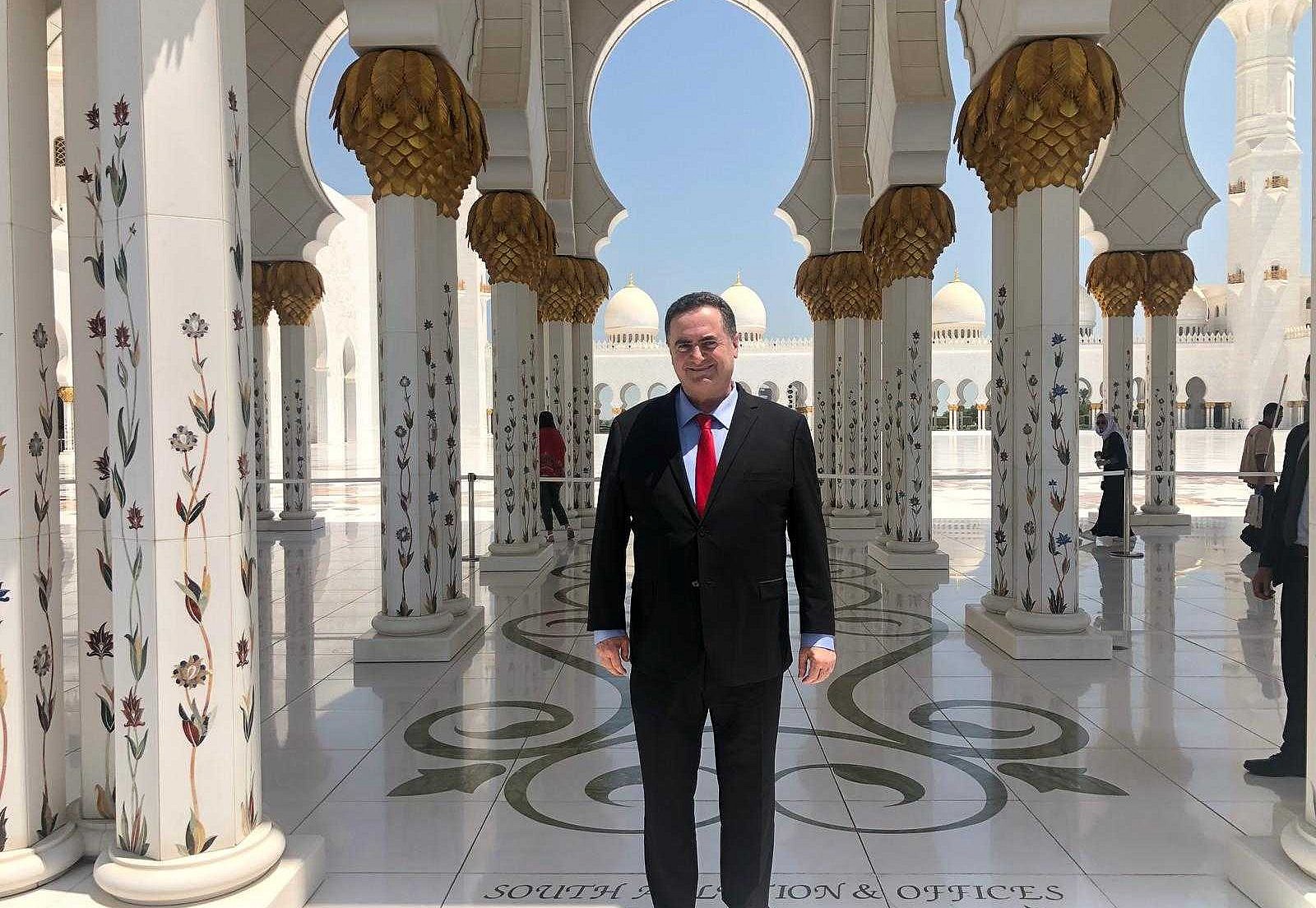
Foreign Minister Israel Katz at the Sheikh Zayed Grand Mosque in Abu Dhabi, the capital of the United Arab Emirates, during a UN climate conference in the city, in late June, 2019. (Courtesy Katz's office)

Foreign Minister Israel Katz at the Sheikh Zayed Grand Mosque in Abu Dhabi, the capital of the United Arab Emirates, during a UN climate conference in the city, in late June, 2019. (Courtesy Katz’s office)

Israel’s foreign minister said Tuesday that Iran was sliding toward a war in which it would suffer heavy losses, and threatened that Israel could take unilateral action against the Islamic Republic if needed to keep it from getting nuclear weapons.

The comments by Israel Katz came a day after Iran said it had breached an agreed-upon limit on its stocks of low-enriched uranium, which Prime Minister Benjamin Netanyahu described as a “significant step” toward building a nuclear weapon.

“Israel will not allow Iran to obtain nuclear weapons, even if it has to act alone on that,” Katz told Army Radio.

Iran’s “mistakes in the gray area will lead it to the red zone — a war in which it will be hit hard,” he added.

On Monday, Iran acknowledged that the country had exceeded a 300 kilogram stockpile limit for enriched uranium laid out in the 2015 Joint Comprehensive Plan of Action, the nuclear deal that saw sanctions lifted from Iran in exchange for it dismantling the weapons-capable aspects of its nuclear program. The US pulled out of the deal last year.

Tehran has also threatened to start enriching uranium above the agreed maximum purification level of 3.67 percent starting July 7.

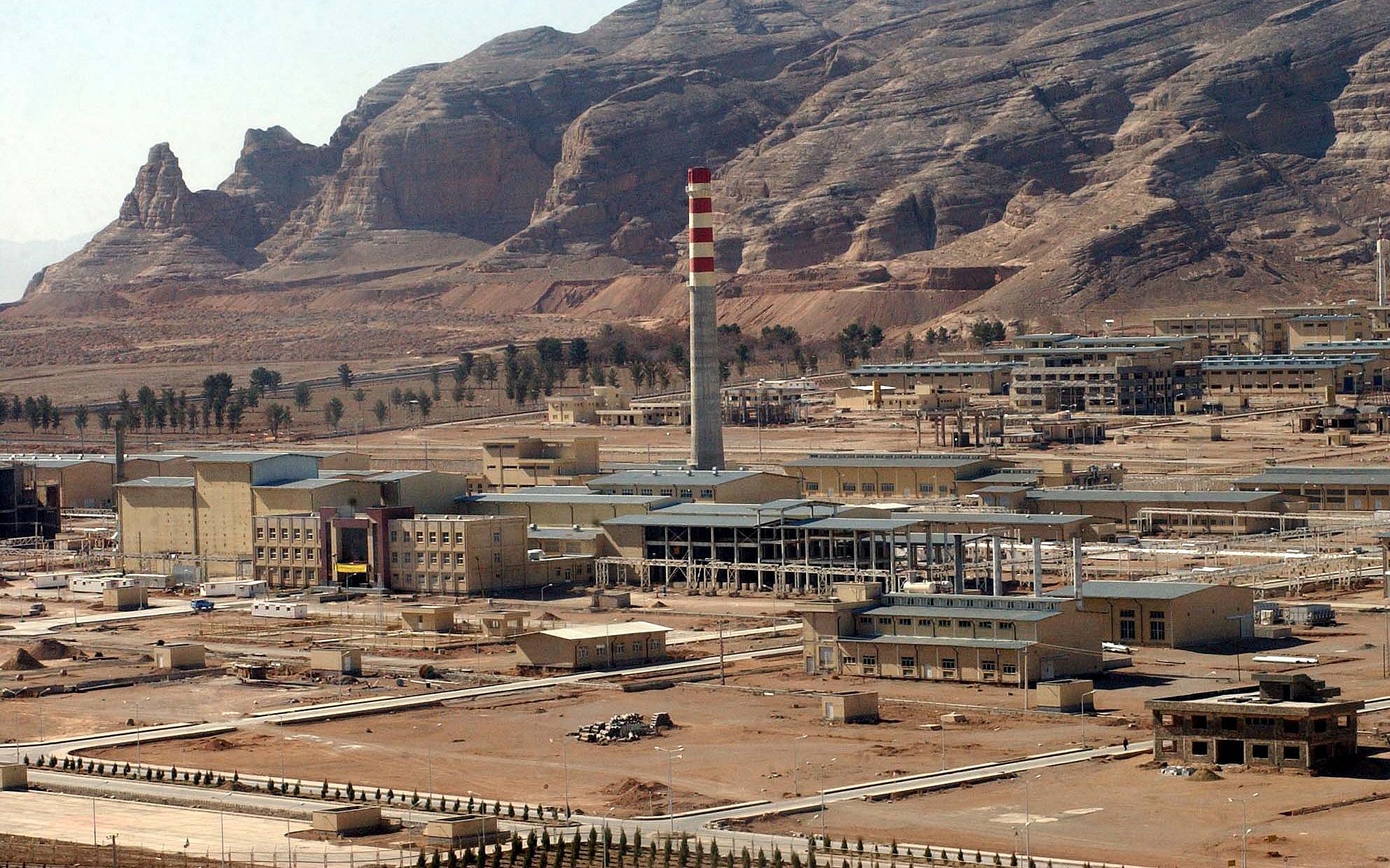
Iran’s uranium conversion facility near Isfahan, which reprocesses uranium ore concentrate into uranium hexafluoride gas, which is then taken to Natanz and fed into the centrifuges for enrichment, March 30, 2005. (AP/Vahid Salemi)

Breaking the stockpile limit by itself doesn’t radically change the one year that experts say Iran would need to have enough material for an atomic bomb, if it chooses to pursue one. But by coupling an increasing stockpile with higher enrichment, it begins to close that one-year window and hamper any diplomatic efforts at saving the accord.

Under terms of the nuclear deal, Iran agreed to have less than 300 kilograms (661 pounds) of uranium enriched to a maximum of 3.67%. Previously, Iran had enriched as high as 20%, which is a short technical step away from reaching weapons-grade levels. It also held up to 10,000 kilograms (22,046 pounds) of the higher-enriched uranium.

While Iran has insisted it can reverse course and the deal’s remaining signatories called on it to stick to the deal Monday, Netanyahu urged Europe to scrap the deal and reimpose punishing sanctions on Iran.

Katz echoed that sentiment, calling the Iranian move a “wake-up call” to Europe.

“Feeding the Iranian tiger will not help; only an aggressive policy and sanctions and support for the US policy will quickly show that it is a paper tiger,” Katz said.

Katz made the comments a day after returning from a visit to the Gulf city of Abu Dhabi, where his office said he held consultations on Iran with a United Arab Emirates official.

Katz, who was in the UAE for a UN climate conference, said he also spoke to UN Secretary General Antonio Guterres while there about efforts to return Israeli captives and the remains of two IDF soldiers held in the Gaza Strip since 2014.

Israel and several Gulf countries have stepped up open contacts in recent years against the background of shared consternation over Iran’s nuclear program and other malign activities.

Iran’s uranium enrichment announcement Monday came as tensions remain high between Iran and the US. In recent weeks, the wider Persian Gulf has seen Iran shoot down a US military surveillance drone, mysterious attacks on oil tankers and Iranian-backed rebels in Yemen launching bomb-laden drones into Saudi Arabia.

At the White House Monday, Trump told reporters Iran was “playing with fire,” and US Secretary of State Mike Pompeo called on the international community to require Iran to suspend all enrichment, even at levels allowed under the nuclear deal.

“The Iranian regime, armed with nuclear weapons, would pose an even greater danger to the region and to the world,” Pompeo said in a statement.

US National Security Adviser John Bolton tweeted, “There is no reason for Iran to increase its enrichment unless it’s part of an effort to reduce the breakout time to produce nuclear weapons.”


Will Israel expand strikes on Iranian targets from Syria to Iraq? – DEBKAfile

July 2, 2019

Source: Will Israel expand strikes on Iranian targets from Syria to Iraq? – DEBKAfile

Reports that Iran’s armed drones which attacked Saudi oil targets on May 14 came from Iraq – not Saudi Arabia – may shift the IDF’s anti-Iran targeting map in a new direction.

Iran’s Revolutionary Guards Corps (IRGC) seem to have added Iraq to Syria and Yemen as their new war front. Israel may find itself having to expand its area of operations accordingly. DEBKAfile asks: Is anyone in the region acting to put a spoke in Tehran’s expansionist wheel?

Prime Minister Binyamin Netanyahu said on Monday, July 2 “We will soon reveal evidence that Iran was lying throughout about its nuclear program,” and added: “Israel will not let Iran get away with developing a nuclear weapon.”

DEBKAfile’s second question is this: Is anyone impeding Iran’s lies or its nuclear plans?

These questions impelled Netanyahu to assign the Mossad Director Yossie Cohen with making some telling comments at a lecture in Tel Aviv: “A string of attacks on fuel installations and tankers took place in recent weeks. Finding the culprit is an essential topic of discussion, but I can say with certainty that Iran was behind these attacks. They were approved by the Iranian regime and executed by the Revolutionary Guards.”

Cohen put in plain and unequivocal language what President Donald Trump and the Saudi and UAE crown princes have declined to spell out: that Iran and the IRGC were the cause of these upsets. Israel backed these words up with action. Early Monday morning, July 1, the Israeli Air Force and Navy unleashed missiles that wiped out IRGC missile stores in Syria. They blew a large hole in the Iranian-Hizballah missile stockpile for attacking Israel, but stopped there. Did this operation have any impact on Israel’s prime goal of preventing a nuclear-armed Iran? The answer is no.

Tehran may be expected to hit back. Against whom and when? According to DEBKAfile’s military sources, it would not suit Tehran’s other plans at this time to single Israel out and make the Jewish state a key regional player, while the IRGC is expanding its frontline area into Iraq.

The fact that neither the US nor Saudi Arabia responded to the Iranian drone attack by striking IRGC bases in Iraq from which the drone was launched, or even addressing the intelligence data confirming this, has left the initiative with Israel to try and fill the void – or not. For now, Israel can count only on strong verbal backing and sanctions-wielding from Washington and tacit support from friendly Gulf nations, but nothing more is on substantial is available for helping Israel to take on Iran in earnest.


With uranium violation, the ‘who attacks Iran first’ talk gets louder 

July 2, 2019

Source: With uranium violation, the ‘who attacks Iran first’ talk gets louder – Israel News – Jerusalem Post

One camp is not only committed to diplomacy, but has always believed that attacking Iran’s nuclear facilities is a massive risk that could lead to regional war.

BY YONAH JEREMY BOB
 JULY 1, 2019 16:22

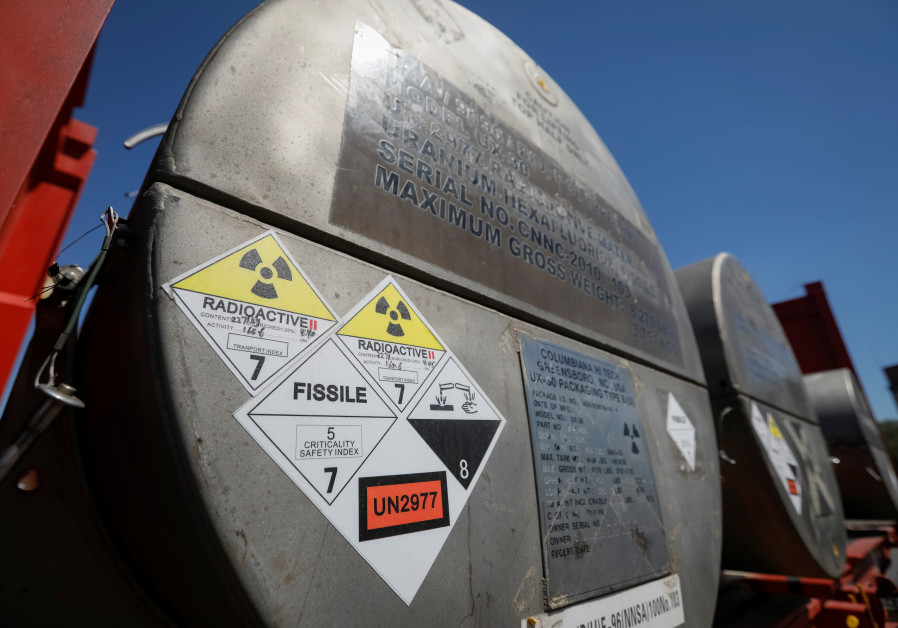
A view shows railway packages for containers with uranium hexafluoride salt, raw material for nuclea

It was no surprise that Iran passed 300-kilogram enriched uranium threshold limit on Monday.

If anything, it was a surprise that Tehran did not pass that limit last week when it had said earlier in June that it would violate the limit by June 27.

And although violating the 300-kilogram limit, part of the 2015 Joint Comprehensive Plan of Action (JCPOA), does not actually bring the Islamic republic all that much closer to a nuclear bomb, it is already changing the conversation in the Israeli defense establishment.

There is still a preference in most circles for a negotiated outcome, but now calls for discussion of a pre-emptive strike on Iran’s nuclear facilities by Israel will get louder.

The Jerusalem Post
 has followed differing points of view within the Israeli defense establishment, and on this issue, there are fundamentally two major camps.

One camp is not only committed to diplomacy, but has always believed that attacking Iran’s nuclear facilities is a massive risk that could lead to regional war, including tens of thousands of Hezbollah rockets raining down on Israel’s home front.

Those in this camp, still sign off on Israel carrying out a pre-emptive strike on Tehran’s nuclear facilities if it has already enriched enough uranium for a bomb and is close to being able to deploy one, but broadly speaking, they oppose an attack before that final point.

They also oppose too much public discussion of an Israeli attack before that final point, as they believe too much sword waving harms chances at diplomacy and makes the Trump administration feel it does not have an obligation to carry out the attack.

This second camp prefers that the Trump administration carry out a pre-emptive strike if it becomes necessary, and cringes at the idea of Israel going at it alone unless there is really no other choice.

The other camp is more triumphalist.

They take the threat from Hezbollah and regional war with Iran seriously, but overall, they believe Israel’s military and deterrence are so strong that Jerusalem could order a surgical strike on the Islamic republic’s nuclear facilities and likely avoid a major conflict from Tehran’s proxies.

In this narrative, the proxies know that they would pay too massive a price and will avoid getting involved, especially if it is clear that Israel attacked surgically and is not threatening Supreme leader Ayatollah Ali Khamenei’s regime’s survival.

This camp believes that Jerusalem should talk loudly and repeatedly about its readiness to carry out a pre-emptive strike going solo and without global support.

In their telling, making the threat clearer will make diplomacy more likely to work as Iran will not view the threat of force as a bluff.

Further, this camp believes that the Trump administration has lost respect in the eyes of the Iranians and that, therefore, only a clear threat from Israel might pressure Khamenei to be ready to compromise in the nuclear standoff.

Finally, this camp appears ready to order a pre-emptive strike earlier, possibly before Iran has enough enriched uranium for a bomb, even if it cannot yet deliver the explosive material.

All of this is likely jumping the gun, as it comes in the context in which there have been more than a dozen significant developments in the US-Iran nuclear standoff in recent weeks, but with none of them having moved either party closer to a deal or to a nuclear breakout.

Part of the reason is that the 300-kilogram limit is more symbolic than meaningful.

In contrast, Khamenei could have announced that he was ordering the enrichment of uranium to the 20% level, which would have shortened its breakout time to a nuclear bomb.

Iran could have reduced IAEA access to its nuclear facilities or the Islamic republic could have exited the 2015 deal or the Nuclear Non-proliferation Treaty.

By sufficing with the 300-kilogram symbolic violation of the deal, Iran is still signalling it does not want an escalation into a military conflict.

The next Iran deadline is July 7.

It is unclear what new escalated violation Iran will commit on July 7, but the latest reports from Tehran are that it will enrich uranium to 3.7% up from the nuclear deal’s 3.67% or start violating the 300-kilogram limit much more substantially.

These likely would still be merely symbolic violations.

Without jumping to at least the 20% enrichment level as Khamenei ordered before the 2015 deal, the breakout time to a nuclear bomb will only get reduced on a very incremental basis.

So, in all likelihood, Monday’s “big” news will probably not change the ongoing game of chicken radically.

However, it will likely change the tone and focus of the conversation in Israel, and those calling for putting the Israeli pre-emptive strike option front and center probably have gained at least a temporary upper hand.
 

White House demands zero enrichment for Iran after cap broken 

July 2, 2019

Source: White House demands zero enrichment for Iran after cap broken | The Times of Israel

Washington says ‘even before the deal’s existence, Iran was violating its terms,’ as Tehran breaches 2015 accord’s limits on uranium enrichment

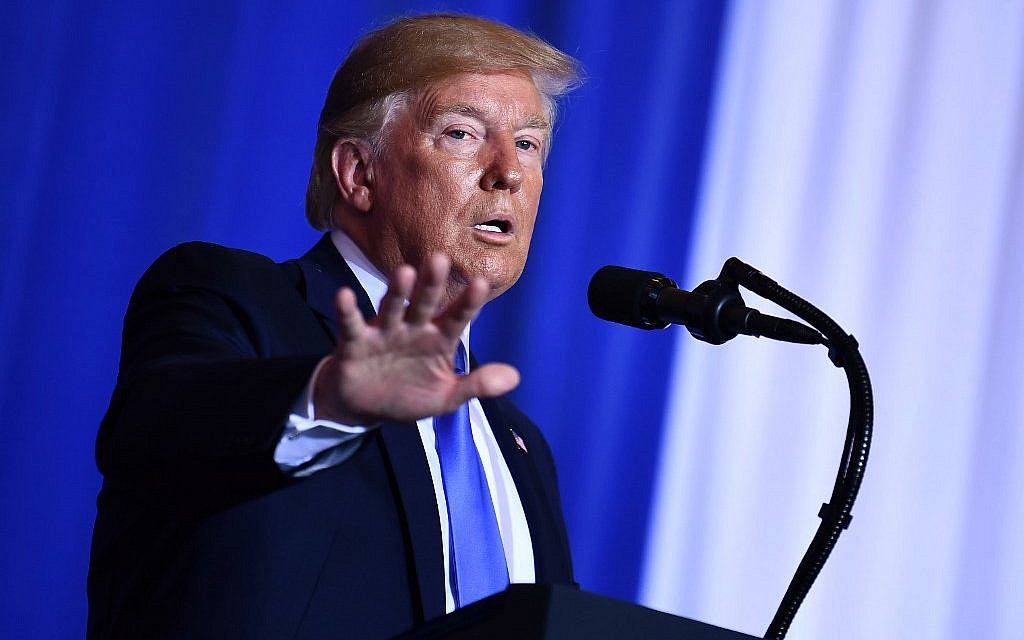
US President Donald Trump gestures, during a press conference on the sidelines of the G20 Summit in Osaka, Japan, on June 29, 2019. (Brendan Smialowski/AFP)

WASHINGTON — The United States will “never allow” Iran to develop nuclear weapons, the White House warned Monday, after Tehran said it had exceeded a limit on enriched uranium reserves set under a 2015 nuclear deal.

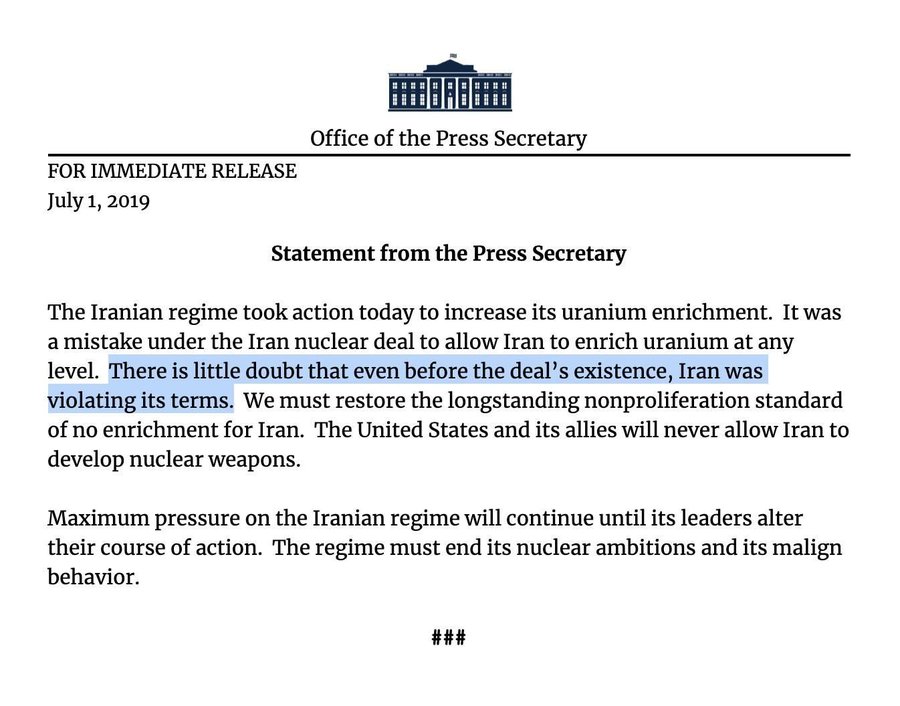
“Maximum pressure on the Iranian regime will continue until its leaders alter their course of action,” said a statement from White House Press Secretary Stephanie Grisham. “The regime must end its nuclear ambitions and its malign behavior.”

“The United States and its allies will never allow Iran to develop nuclear weapons,” it said, calling it “a mistake under the Iran nuclear deal to allow Iran to enrich uranium at any level.”

“There is little doubt that even before the deal’s existence, Iran was violating its terms,” it added.

Iran’s Foreign Minister Mohammad Javad Zarif responded to the statement by highlighting the claim that Tehran violated the deal before it existed and sardonically tweeting the word “Seriously?”

Javad Zarif

@JZarif

Seriously?

Iran said Monday that it has surpassed a cap on its enriched uranium reserves under the nuclear deal that has edged towards collapse under Washington’s “maximum pressure” campaign.

The State Department also vowed to step up economic and diplomatic pressure on Iran until its leaders return to the negotiating table to hammer out a new nuclear deal.

“The United States is committed to negotiating a new and comprehensive deal with the Iranian regime to resolve its threats to international peace and security. As long as Iran continues to reject diplomacy and expand its nuclear program, the economic pressure and diplomatic isolation will intensify,” it said.

Criticizing the 2015 accord for permitting some uranium enrichment, the State Department said “the right standard” would ban Iran from any enrichment.

It also accused the regime of using the accord to blackmail the international community. “The world’s leading state sponsor of terrorism continues to use its nuclear program to extort the international community and threaten regional security,” it said.

Israel earlier urged European states to sanction Iran, while Russia voiced regret, but said the move was a consequence of US pressure.

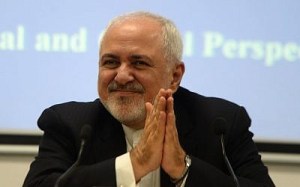
Iranian Foreign Minister Javad Zarif attends the geopolitical discussion event ‘Iran Regional and Global Prespective for 2019,’ in New Delhi on January 8, 2019. (Sajjad HUSSAIN / AFP)

Britain called on Tehran “to avoid any further steps away” from the landmark deal, and the UN said Iran must stick to its commitments under the accord.

“Iran has crossed the 300-kilogram limit based on its plan” announced in May, Zarif told semi-official news agency ISNA.

But he also said the move could be reversed.

Zarif also insisted Iran had done nothing wrong. “We have NOT violated the #JCPOA,” he tweeted using an acronym for the nuclear deal.

He referred to a paragraph in the pact outlining mechanisms to resolve disputes if one side believes the other is not meeting its obligations.

“We triggered & exhausted para 36 after US withdrawal,” tweeted Zarif.

He said Iran would “reverse” its decision “as soon as E3 abide by their obligations” — referring to the European partners of the deal Britain, France and Germany.

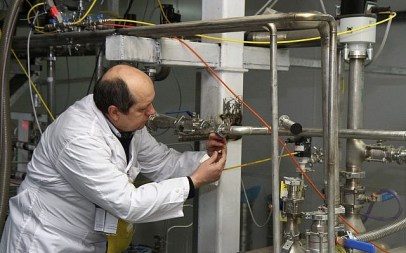
Illustrative: An unidentified International Atomic Energy Agency inspector cuts the connections between the twin cascades for 20 percent uranium enrichment at the Natanz facility, some 200 miles (322 kilometers) south of the capital Tehran, Iran, Monday, January 20, 2014. (AP/IRNA, Kazem Ghane)

The International Atomic Energy Agency confirmed Iran had exceeded the limit that the deal had imposed on its stockpile of low-enriched uranium (LEU).

The United States withdrew from the nuclear deal last year and reimposed biting sanctions on Iran’s crucial oil exports and financial transactions as well as other sectors.

Iran has also threatened to start enriching uranium above the agreed maximum purification level of 3.67 percent from July 7. That remains far short of the 90% purity required to build a weapon.

The latest tensions coincide with a buildup of US forces in the Gulf and a series of incidents including Iran’s shooting down of a US drone it claimed had entered its airspace.


Iran official: If US attacks, Israel will be destroyed in half an hour 

July 2, 2019

Source: Iran official: If US attacks, Israel will be destroyed in half an hour | The Times of Israel

As Tehran breaks the limit set on its stockpile of low-enriched uranium under nuclear deal, top parliamentarian threatens to annihilate Jewish state

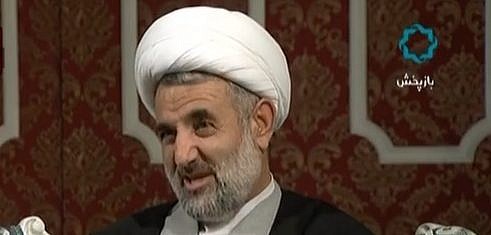
Mojtaba Zolnour, chairman of Iranian Parliament’s National Security and Foreign Policy Commission (YouTube screenshot)

A senior Iranian lawmaker on Monday threatened that Israel would be destroyed in “half an hour” if the United States attacks the Islamic Republic.

“If the US attacks us, only half an hour will remain of Israel’s lifespan,” said Mojtaba Zolnour, chairman of Iranian Parliament’s National Security and Foreign Policy Commission, in comments carried by the Mehr news agency.

Iran acknowledged Monday it had broken the limit set on its stockpile of low-enriched uranium by the 2015 nuclear deal, marking its first major departure from the unraveling agreement a year after the US unilaterally withdrew from the accord.

The announcement came as tensions remain high between Iran and the US. In recent weeks, the wider Persian Gulf has seen Iran shoot down a US military surveillance drone, mysterious attacks on oil tankers and Iranian-backed rebels in Yemen launching bomb-laden drones into Saudi Arabia.

The state-run IRNA news agency quoted Foreign Minister Mohammad Javad Zarif as making the uranium announcement. IRNA reported that Zarif, answering a reporter’s question whether Iran had broken the limit, said: “Yes.”

“If Europeans do what they have to do, our measures are reversible,” Zarif said, according to IRNA.

Zarif did not say how much low-enriched uranium Iran had on hand, IRNA said.

Also Monday, the head of Israel’s Mossad intelligence agency said Iran was behind a string of recent attacks on targets across the Persian Gulf.

Speaking at an annual security conference in Israel on Monday, Yossi Cohen said, “I can tell you, with certainty, from the best sources of Israeli and Western intelligence, that Iran is behind the attacks.”

Mossad head Yossi Cohen at a cyber conference at Tel Aviv University, June 24, 2019. (Flash90)

Cohen mentioned recent attacks on oil tankers in the Gulf, oil fields in Saudi Arabia and in Baghdad. He said the attacks “were approved by the Iranian leadership, and were carried out, at least mostly, by the Revolutionary Guard and their surrogates.”

Israel has long seen Iran as its greatest threat. Iranian officials regularly threaten to destroy the Jewish state.


Alleged Israeli strike in Syria likely targeted advanced arms — intel firm 

July 2, 2019

Source: Alleged Israeli strike in Syria likely targeted advanced arms — intel firm | The Times of Israel

ImageSat International releases photograph of hangar possibly used as armory destroyed in overnight attack on Iran-linked site outside Damascus

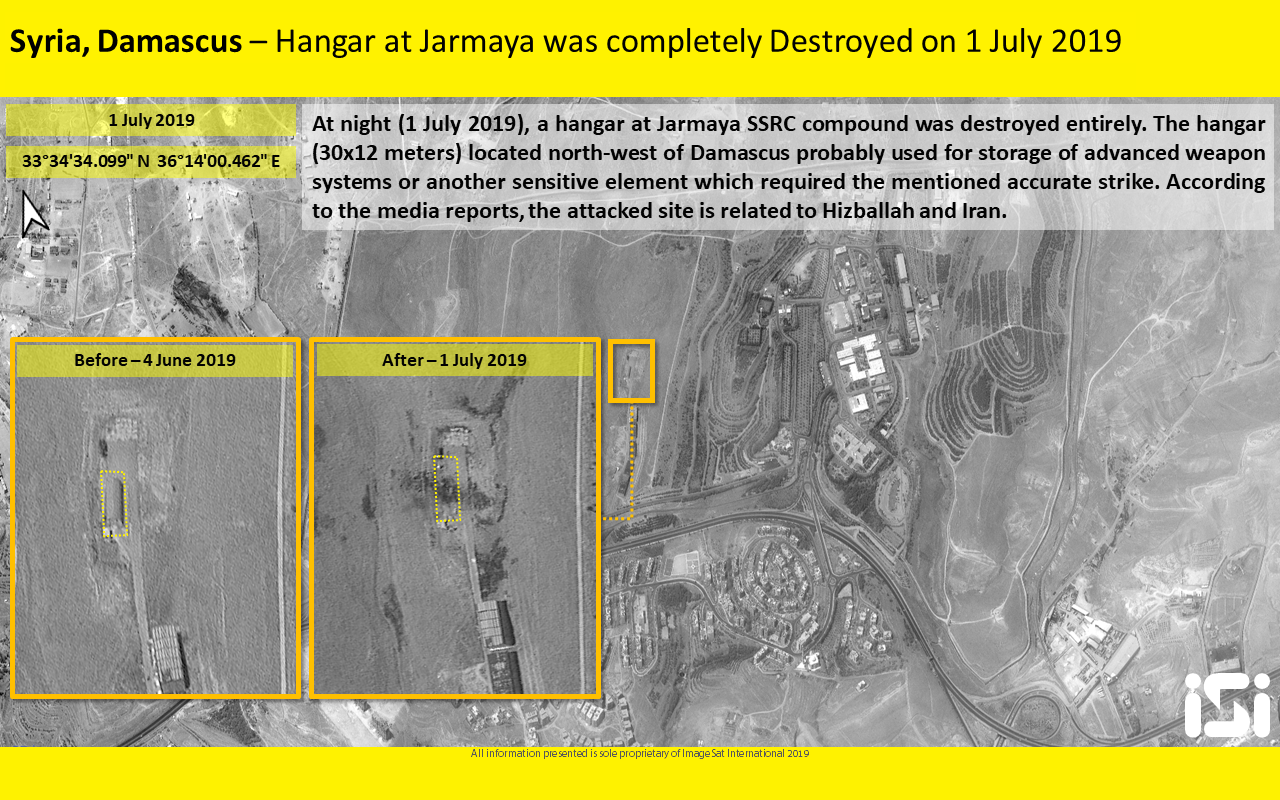
Satellite photo of one of the sites hit in an alleged Israeli airstrike on Iranian sites in Syria on July 1, 2019. (ImageSat International)

Satellite photo of one of the sites hit in an alleged Israeli airstrike on Iranian sites in Syria on July 1, 2019. (ImageSat International)

A private Israeli intelligence firm on Monday identified one of the sites in Syria targeted in an alleged Israeli airstrike earlier in the day as a hangar likely storing advanced weaponry or other military equipment.

In the predawn hours of Monday morning, Syria accused Israel of conducting a series of air- and sea-based attacks on military facilities throughout the country. According to the Syrian Observatory for Human Rights, a Britain-based group, at least 15 people were killed during the strike, including six civilians under unclear circumstances.

The Observatory said at least a dozen Iranian-linked targets were hit in the strikes, two near Homs and 10 of them near Damascus, including a base where Iran’s Islamic Revolutionary Guard Corps forces are headquartered and a weapons research center.

Israel did not comment on the attack — one of the most extensive series of strikes in several months, coming less than a week after a trilateral summit with Russia and the United States concerning Tehran’s activities and military presence in the region.

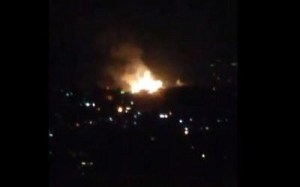
Explosions seen near Damascus on July 1 2019. Syria says Israeli jets hit targets in Damascus and Homs (Screencapture/Twitter)

ImageSat International, a satellite imagery analysis firm, released a photograph of one of the targets: a hangar located at the Syrian Scientific Studies and Research Center (SSRC) in Jamraya, outside Damascus.

A photograph of the same site from June 4 showed a 12-meter (39-foot) by 30-meter (98-foot) hangar in Jamraya, which lies approximately 10 kilometers (seven miles) northwest of Damascus. The image from Monday showed the structure completely destroyed.

According to ImageSat, the building was “probably used for storage of advanced weapon systems or another sensitive element.”

The Hezbollah terror group and Iran’s Islamic Revolutionary Guard Corp have been said to maintain a presence at the Jamraya facility.

The US has repeatedly imposed sanctions on the SSRC for its alleged role in chemical weapons production. France has also imposed sanctions on the agency.

Israeli airstrikes reportedly hit the facility in May 2013 and again in February 2018.

The monitor said that at some sites, large blasts were caused by exploding ammunition depots and noted many ambulances had headed to the sites.

There was no response from the Israel Defense Forces, which rarely comments on reported strikes.

The Israeli military has acknowledged carrying out hundreds of airstrikes in Syria in recent years, on targets linked to Iran, which is backing President Bashar Assad’s regime in the Syrian civil war.

Yossi Cohen, the head of the Mossad intelligence service, said Monday that Israel “can’t agree to Syria becoming a staging ground for Iranian forces or forces operated by it against us. We can’t agree to Syria becoming a logistics base for transferring weapons to Hezbollah and Lebanon.”

Cohen did not refer specifically to the Monday strikes, but acknowledged that Israel conducted military activities in Syria.

“Israel has taken action in the past four years, overtly and covertly, about which only a small amount has been published, in order to block the entrenchment and the production lines of precision-guided munitions,” he said.

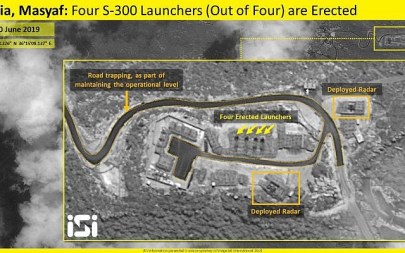
The reported strikes came just hours after an Israeli satellite imagery analysis company said Syria’s entire S-300 air defense system appeared to be operational, indicating a greater threat to Israel’s ability to conduct airstrikes against Iranian and pro-Iranian forces in the country.

Satellite photos released by ImageSat International appear to show all four missile launchers of the S-300 air defense system in the raised position in the northwestern Syrian city of Masyaf on June 30, 2019. (ImageSat International)

Until now, only three of the country’s four surface-to-air missile launchers had been seen fully set up at the Masyaf base in northwestern Syria.

Israel has threatened to destroy the S-300 system if it is used against its fighter jets, regardless of the potential blowback from Russia.

Times of Israel staff and AFP contributed to this report.