Archive for July 29, 2019

In the dangerous game Iran is playing in the Gulf, the next move is the West’s

July 29, 2019

Source: In the dangerous game Iran is playing in the Gulf, the next move is the West’s – www.israelhayom.com

Emily Landau, a senior research fellow at the Institute for National Security Studies, warns that America must stand firm and “not relent,” saying the Trump administration needs to understand how the regime can “twist things, making it seem there are concessions when there are absolutely no concessions at all.”
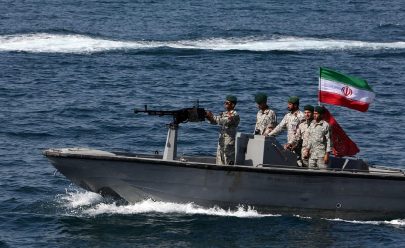
Tensions in the Persian Gulf with Iran have not shown any signs of abating with the United States and now the United Kingdom, which saw a new leader, Boris Johnson of the Conservative Party, take over this week, both bracing themselves and issuing new measures to combat the aggression. Still, questions remain over whether or not US allies in Europe will stand up to an increasingly provocative Tehran.

The most recent provocations began late last week, when Iran announced that it had seized a British tanker. Following the seizure, Iranian President Hassan Rouhani offered a deal to swap the British tanker for its own tanker being held in Gibraltar, which was seized by the United Kingdom on suspicion that it was delivering oil to Syria in violation of current sanctions.

In response to Iran’s continued threat in the Gulf, both American and Britain announced potentially significant moves to counter the threat.

US Secretary of State Mike Pompeo called on other nations to join a maritime force to guard oil tankers sailing through the Strait of Hormuz.

“I am confident that we will all form a collective defense,” he told conservative radio host Ben Shapiro. “The United States is calling it our maritime security initiative, and we have asked countries from all across the world to participate in that to assist in the defense of the waterways through the Gulf and through the Straits of Hormuz.”

The Strait of Hormuz lies between the Persian Gulf and the Gulf of Oman.

At the same time, the UK Royal Navy announced that it will now accompany British oil tankers in the region. Newly appointed US Defense Secretary Mark Esper has already said that the United States will escort American-flagged ships.

Efraim Inbar, president of the Jerusalem Institute for Strategy and Security, told JNS that Iran’s strategy here is “practicing brinkmanship, threatening to stop the energy flow from the Gulf.”

Adding to this, Iran also recently breached the 2015 nuclear deal (officially Joint Comprehensive Plan of Action, or JCPOA) a second time and brought its low-enriched uranium limit over the agreed thresholdת from 3.7% to about 4.5%.

Iran is trying to “free itself from the limits imposed by the JCPOA,” said Inbar, adding that the Europeans “are unlikely to say or do something. It is Trump who must react.”

He warned that if Trump focuses only on the economic arena, the world “will end up with an Iran very close to the bomb.”

And if it reaches that dangerous point, Inbar said it is then that Israel “will have to decide what to do.”

‘A Message to the Europeans’

Emily Landau, a senior research fellow at the Institute for National Security Studies, told JNS that she views Iran’s provocations in the Gulf in past several months and its violations of the nuclear deal “as a message to the Europeans.”

She said that while Iran’s steps so far have been “measured,” it’s a message meant to jolt the Europeans, as well as an effort to get sanctions off Iran’s back. “This is Iran’s main goal,” she said.

“The European response is very important here, and unfortunately, what we’ve heard so far from the Europeans—despite the fact there was initially harsher rhetoric regarding the consequences if Iran breached the JCPOA—once Iran actually did breach it, the reaction was not significant,” explained Landau.

In political terms, Iran’s moves are indeed significant, as are Europe’s reactions.

Landau agreed with Inbar that the Europeans “mainly want to play this down and not make a big deal about it.”

Nevertheless, Tehran sees its strategy is working, and as such, will most likely take it another step further. Europe needs to stand together with the Americans with the understanding that Iran is not going to negotiate a better deal unless it is pressured into doing so.

Landau pointed out that that the Obama administration was under the illusion that after the JCPOA was achieved, talk could move to other issues, such as ballistic missiles.

“This was nonsense,” she said. “There was no basis for thinking Iran would ever do that if there was no longer any pressure.”

She insisted that “Iran cannot get the message that these [provocative] steps are acceptable.”

Pointing to the subterfuge and deceitful games Iran is playing, Landau warned that America must stand firm and “not relent.” She said the Trump administration needs to understand “how the Iranians play this game, how they twist things, making it seem there are concessions when there are absolutely no concessions at all.”

Landau warned that “this is the kind of bargaining stance that the US cannot accept; it cannot fall for the kinds of games that the Iranians are playing,” and it must think of strategies to effectively counter them.

“Overall”, Landau said, “things are moving in a non-linear, messy way to the negotiations, but it is going to be a really tough bargain, and I hope the Americans are up to it.”

Reprinted with permission from JNS.org.


Barreling Towards a Nuclear and Ballistic Missile Arms Race in the Middle East

July 29, 2019

and

Source: Barreling Towards a Nuclear and Ballistic Missile Arms Race in the Middle East | Jewish & Israel News Algemeiner.com

by James M. Dorsey

OPINION

An Iranian nuclear facility in Natanz. Photo: Wikimedia Commons.

US policy is not the only factor feeding the burgeoning nuclear and ballistic missile arms race in the Middle East. It is also being enabled by the inability or unwillingness of the other major powers — Europe, Russia, and China — to counter crippling US sanctions against Iran in ways that would ensure that Tehran maintains an interest in adhering to the 2015 international agreement that curbed its nuclear program, despite last year’s US withdrawal from the deal.

With the Middle East teetering on the brink of a military confrontation, Iran has vowed to start breaching the agreement next month if the international community, and particularly Europe, fails to shield it from US sanctions.

Former International Atomic Energy Agency (IAEA) deputy director general Olli Heinonen, a hardliner when it comes to Iran, asserted recently during a visit to Israel that Iran would need six to eight months to enrich uranium in the quantity and quality required to produce a nuclear bomb. US and Chinese willingness to lower safeguards in their nuclear dealings with Saudi Arabia further fuels Iranian doubts about the value of the nuclear agreement, and potentially opens the door to a nuclear arms race.

US Secretary of State Mike Pompeo recently visited Saudi Arabia and the UAE before joining President Trump for visits to India and South Korea, and talks with world leaders at a G-20 summit in Japan.

The Israelites were almost within sight of the Promised Land. They had successfully waged their first battles. They had just…

“We’ll be talking with them about how to make sure that we are all strategically aligned, and how we can build out a global coalition, a coalition not only throughout the Gulf states, but in Asia and in Europe … to push back against the world’s largest state sponsor of terror,” Pompeo said as he departed Washington.

Trump detailed the prism through which he approaches the Middle East in a wide-ranging interview with NBC News. He deflected calls for an FBI investigation into last October’s murder by Saudi government agents of journalist Jamal Khashoggi in the kingdom’s consulate in Istanbul.

“Iran’s killed many, many people a day. Other countries in the Middle East — this is a hostile place. This is a vicious, hostile place. If you’re going to look at Saudi Arabia, look at Iran, look at other countries,” Trump said, suggesting that crimes by one country provide license to others.

Asked whether Saudi arms purchases were a reason to let Saudi Arabia off the hook, Trump responded: “No, no. But I’m not like a fool that says, ‘We don’t want to do business with them.’ And by the way, if they don’t do business with us, you know what they do? They’ll do business with the Russians or with the Chinese.”

Trump and other senior US officials reiterated in recent days that they would not allow Iran to acquire a nuclear weapon.

Europe has so far unsuccessfully sought to put in place an effective mechanismthat would allow European and potentially non-European companies that do business with Iran to circumvent US sanctions unscathed.

As the US prepared to announce new sanctions, Russia said it would help Iran with oil exports and its banking sector if the European mechanism fails to get off the ground. (It offered no details.)

While countering the sanctions is Iran’s immediate priority, Saudi moves to put in place the building blocks for a nuclear industry that could develop a military component and a ballistic missiles capability — moves that are occurring with the help of the Trump administration as well as China — are likely to increase Iranian skepticism about the nuclear accord’s value.

Trump’s argument that Russia and China would fill America’s shoes if the US refused to sell arms and technology to Saudi Arabia is not without merit, even if it fails to justify a lack of safeguards in the provision of nuclear technology to the kingdom.

In 2017, with the US refusing to share its most advanced drone technology, China opened its first overseas defense production facility in Saudi Arabia. State-owned China Aerospace Science and Technology Corporation (CASC) is manufacturing its CH-4 Caihong, or Rainbow drone, as well as associated equipment in Saudi Arabia. The CH-4 is comparable to the US armed MQ-9 Reaper drone.

Satellite images released by the Middlebury Institute of International Studies and confirmed by US intelligence show that Saudi Arabia has significantly escalated its ballistic missile program with the help of China.

The missile program runs counter to US policy, which sought for decades to ensure that Saudi Arabia had air supremacy in the region so it wouldn’t seek to bypass the US to upgrade its missile capabilities.

The program, which started in the late 1980s with Saudi Arabia’s first clandestine missile purchases from China, suggests that the kingdom, uncertain about the reliability of the US, is hedging its bets.

Saudi development of a ballistic missile capability significantly dims any prospect of Iran’s agreeing to limit its missile program — a key demand put forward by the Trump administration.

In 2017, Saudi Arabia signed a nuclear energy cooperation agreement with China that included a feasibility study for the construction of high-temperature gas-cooled (HTGR) nuclear power plants in the kingdom, as well as cooperation in intellectual property and the development of a domestic industrial supply chain for HTGRs built in Saudi Arabia.

The HTGR agreement built on an accord signed in 2012 that involved maintenance and development of nuclear power plants and research reactors, as well as the provision of Chinese nuclear fuel.

The Washington-based Institute for Science and International Security (ISIS) warned at the time that the 2015 Iran nuclear agreement had “not eliminated the kingdom’s desire for nuclear weapons capabilities and even nuclear weapons.”

The Trump administration, eager to corner a deal for the acquisition of designs for nuclear power plants — a contract valued at up to $80 billion depending on how many Saudi Arabia ultimately decides to build — has approved several nuclear technology transfers to the kingdom.

It has also approved licenses for six US firms to sell atomic power technology to Saudi Arabia.

Saudi Arabia is nearing completion of its first atomic reactor in the King Abdulaziz City for Science and Technology near Riyadh. A signatory of the nuclear Non-Proliferation Treaty (NPT), Saudi Arabia has ignored calls by the IAEA to implement proportionate safeguards and an inspection regime that would ensure that it does not move toward development of a nuclear military capability.

“Saudi Arabia is currently subject to less intrusive monitoring by international inspectors because Riyadh concluded what is known as a small quantities protocol with the agency. The small quantities protocol was designed to simplify safeguards for states with minimal or no nuclear material, but it is no longer adequate for Saudi Arabia’s expanding nuclear program,” Kelsey Davenport, director of Non-proliferation Policy at the Arms Control Association, told Middle East Eye.

Ms. Davenport warned that “given these factors, there are legitimate reasons to be concerned that Saudi Arabia is seeking to develop the technical capabilities that would allow Riyadh to quickly pursue nuclear weapons if the political decision were made to do so.”

Dr. James M. Dorsey, a non-resident Senior Associate at the BESA Center, is a senior fellow at the S. Rajaratnam School of International Studies at Singapore’s Nanyang Technological University and co-director of the University of Würzburg’s Institute for Fan Culture.

A version of this article was originally published by The BESA Center.


Senior Iranian commander: Iran able to detect stealth aircraft 

July 29, 2019

Source: Senior Iranian commander: Iran able to detect stealth aircraft – Israel News – Jerusalem Post

With tensions high between Tehran and Washington, the head of Iran’s Army Air Defense Force says detecting modern American aircraft “just part of our capabilities”

BY ANNA AHRONHEIM
 JULY 29, 2019 17:43
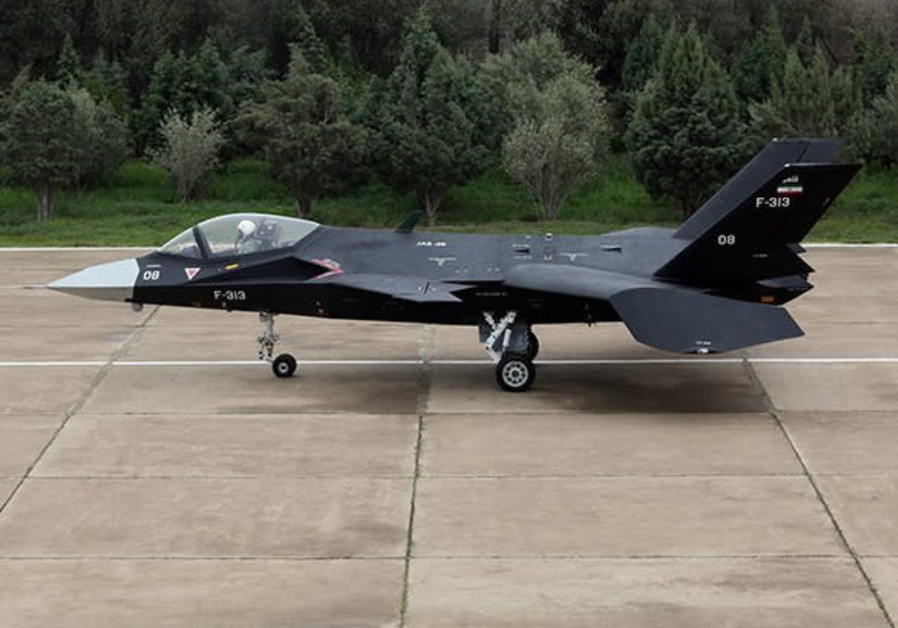
Iran Qaher-313 jet prototype

Iran is capable of detecting American stealth aircraft, the Commander of the Iranian Army’s Air Defense Force Alireza Sabahi Fard claimed on Monday.
“Today, Iran is able to detect various types of stealth aircraft and this is just a part of our capabilities,” Fard was quoted by Iran’s Mehr News Agency as saying. “Today we are self-sufficient in developing radar systems and are able to detect different modern American aircraft.”
“Our defense power has made enemies aware that if they engage in a conflict with us, they will suffer severe damages,” he added.
Fard, who previously served as commander of the Iranian Army’s Khatam ol-Anbiya Air Defense Base, replaced Brig.-Gen Farzad Ismaili after, according to a report in the Kuwaiti paper Al-Jarida, was he removed from his position after Israeli F-35i Adir jets penetrated into Iranian airspace in March 2018 and flew over sensitive bases across the country undetected.
The Israeli Air Force currently has 16 F-35i Adir aircraft and is expected to receive a total of 50 planes to make two full squadrons by 2024.
The Israeli F-35i Adirs have taken part in several operations in the region over the past two years, making the Jewish State the first country to use the stealth fighter in a combat role in the region.
In late April the IAF opened a second squadron of F-35i stealth fighter jets called “Defenders of the Negev” with the first planes expected to arrive at the beginning of next year.
The stealth jets have an extremely low radar signature allowing the jet to operate undetected deep inside enemy territory as well as evade advanced missile defense systems like the S-300 and S-400 missile defense systems which have been deployed in countries such as Syria and Iran.
With close air-support capabilities and a massive array of sensors, pilots of the stealth jet have unparalleled access to information while in the air.
In early July Prime Minister Benjamin Netanyahu warned that Tehran should remember that Israel’s air force can strike anywhere in the Middle East with the stealth fighters.
“Iran has threatened recently to destroy Israel,” Netanyahu said in a video clip he posted, standing in front of an Israeli  F-35i “Adir” stealth fighter jet. “It is worthwhile for them to remember that these plans can reach everywhere in the Middle East, including Iran and Syria.”
Iran and Israel’s comments come against the backdrop of increased tension between Iran and the US, and as the Islamic Republic is openly declaring that it is violating the 2015 nuclear agreement.
Netanyahu has repeatedly vowed that he will never allow Iran to develop the capability to make a nuclear bomb and that Israel will not allow Iran to entrench itself in Syria which would allow it to attack the Jewish State.
Hundreds of airstrikes on IRGC and Hezbollah targets in war-torn Syria have been blamed on Israel.


Iran vows to restart activities at Arak heavy water facility

July 29, 2019

Source: Iran vows to restart activities at Arak heavy water facility | The Times of Israel

Tehran’s atomic agency chief briefs lawmakers on unraveling nuclear deal, as remaining signatories after US pullout set to meet in Vienna

An view of the heavy-water production plant in the central Iranian town of Arak, August 26, 2006. (AP/ ISNA, Arash Khamoushi)

An view of the heavy-water production plant in the central Iranian town of Arak, August 26, 2006. (AP/ ISNA, Arash Khamoushi)

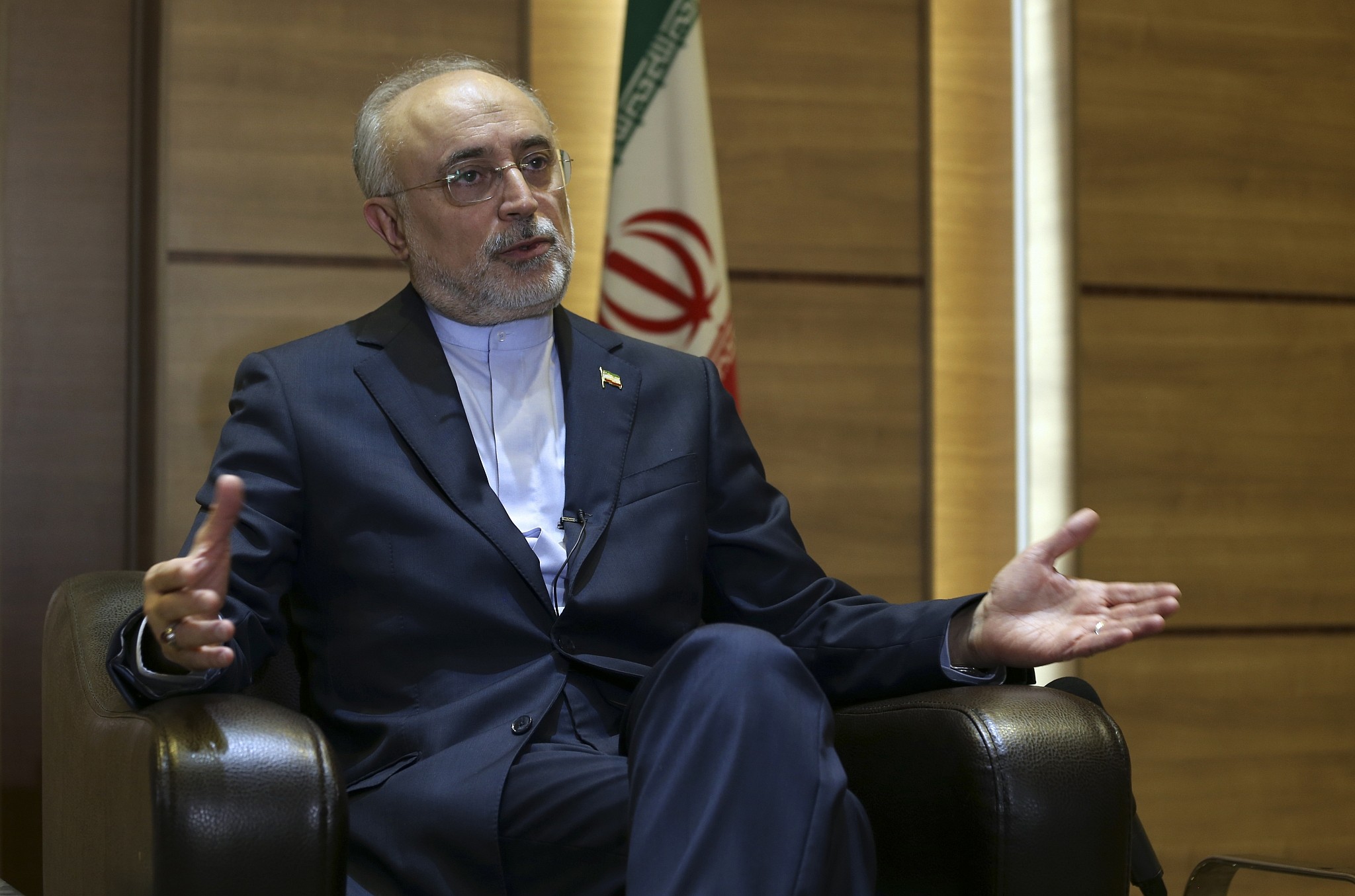
The head of Iran’s Atomic Energy Organization on Sunday told Iranian lawmakers that the country will restart activities at the Arak heavy water facility, the semi-official ISNA news agency reported, citing a lawmaker who was at the meeting.

Ali Akbar Salehi attended a parliamentary session to discuss recent developments in the 2015 nuclear deal, which the US pulled out of last year before reapplying harsh sanctions on Iran, prompting it to gradually reduce its own commitments to the pact.

The industrial complex at Arak in western Iran was a key topic in negotiations due to its nuclear reactor and heavy-water production facility, which were still under construction at the time.

Iranian President Hassan Rouhani in July warned European countries that if they are not able to provide enough economic incentives despite the US sanctions then Iran will restart construction of the Arak facility and bring it to the condition that “according to you, is dangerous and can produce plutonium.”

Heavy water is used as a coolant in nuclear reactors that produce plutonium, which when enriched can be used for nuclear weapons.

Iran’s nuclear chief Ali Akbar Salehi speaks in an interview with The Associated Press at the headquarters of Iran’s atomic energy agency, in Tehran, Iran, Tuesday, Sept. 11, 2018. (AP Photo/Vahid Salemi)

Under the terms of the so-called Joint Comprehensive Plan of Action, Iran agreed to scale back its nuclear program in return for sanctions relief.

In January Salehi told Iranian television that during the JCPOA negotiations Iran quietly purchased replacement parts for the Arak reactorbecause it knew that under the terms of the deal it would be required to destroy the original components. They kept that fact hidden during the JCPOA negotiations, he made clear, and also hid it from other Iranian officials.

Tensions between Tehran and Washington have escalated since last year when US President Donald Trump pulled out of the accord and imposed the punishing sanctions. Washington says the JCPOA does not go far enough in preventing Iran from producing nuclear weapons and also does not address Iran’s missile development program.

In retaliation, Iran said in May it would disregard certain curbs the deal set on its nuclear program and threatened to take further measures if remaining parties to the pact, especially European nations, did not help it circumvent the US sanctions.

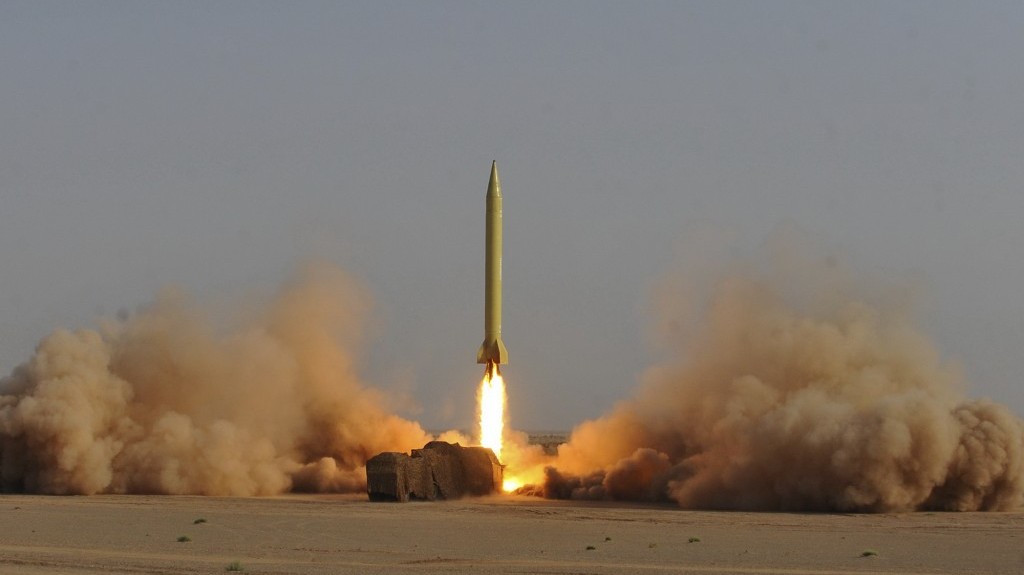
In this photo released by the semi-official Iranian Students News Agency (ISNA), an Iranian Shahab-3 missile is launched during military maneuvers outside the city of Qom, Iran, Tuesday, June 28, 2011 (photo credit: AP/ISNA, Ruhollah Vahdati)

An Iranian Shahab-3 missile launched during military exercises outside the city of Qom, Iran, in June 2011. (AP/ISNA/Ruhollah Vahdati)

Iran last week conducted a medium-range ballistic missile test in violation of Security Council resolutions, The New York Times reported, citing an unnamed US military official.

Nuclear experts are concerned that the recent measures taken by Iran, breaking an enriched uranium stockpile limit and enriching uranium beyond an agreed purity, will shorten the current year-long window the country would need to produce enough nuclear of the material needed for a weapon.

The remaining signatories to the Iran nuclear deal were to meet in Vienna on Sunday to try again to find a way of saving the accord amid mounting tensions between Tehran and Washington.

Envoys from Britain, France, Germany, China, Russia and Iran will take part in the meeting, which comes a month after a similar gathering failed to achieve a breakthrough.

Efforts by European powers, notably France’s President Emmanuel Macron, to salvage the nuclear deal have so far come to nothing.


Iran forces warned off UK warship during tanker seizure – audio

July 29, 2019

Source: Iran forces warned off UK warship during tanker seizure – audio | The Times of Israel

Newly released radio communications show Revolutionary Guards warning British sailors on HMS Montrose not to put their ‘life in danger’ by interfering in capture of Stena Impero

In this Sunday, July 21, 2019 photo, two armed members of Iran's Revolutionary Guard inspect the British-flagged oil tanker Stena Impero, which was seized in the Strait of Hormuz on Friday by the Guard, in the Iranian port of Bandar Abbas (Morteza Akhoondi/Mehr News Agency via AP)

In this Sunday, July 21, 2019 photo, two armed members of Iran’s Revolutionary Guard inspect the British-flagged oil tanker Stena Impero, which was seized in the Strait of Hormuz on Friday by the Guard, in the Iranian port of Bandar Abbas (Morteza Akhoondi/Mehr News Agency via AP)

Iranian forces warned a British warship’s crew against putting their “life in danger” during the seizure of a tanker this month, in a new recording of the incident released Monday.

The audio message was accompanied by aerial video footage of a warship thought to be the HMS Montrose, which the UK defense ministry says has now been joined in Gulf waters by another warship, the HMS Duncan.

Iran’s Islamic Revolutionary Guard Corps seized the British-flagged tanker Stena Impero on July 19.

“British warship Foxtrot 236, this is Sepah navy patrol boat: you are required not to interfere in this issue,” an Iranian naval officer can be heard saying in the recording aired on state TV.

An officer on board the warship responds: “This is British warship Foxtrot 236: I am in vicinity of an internationally recognized strait with a merchant vessel in my vicinity conducting transit passage.”

The Iranian officer replies: “British warship Foxtrot 236, this is Sepah navy patrol boat: don’t put your life in danger.”

Iranian state television also released recordings of another incident on July 10.

“This is British warship Foxtrot 236, go ahead,” a British naval officer can be heard saying.

His Iranian counterpart responds by saying: “British warship Foxtrot 236, this is Sepah navy warship… your tanker British Heritage under my control. You are ordered do not to interference in my operation.”

Britain said on July 11 that three Iranian vessels attempted to “impede the passage” of the British Heritage commercial oil tanker in the Strait of Hormuz.

A picture taken on July 21, 2019, shows an Islamic Revolutionary Guard Corp ship patrolling around the British-flagged tanker Stena Impero as it’s anchored off the Iranian port city of Bandar Abbas. (Hasan Shirvani/Mizan News Agency/AFP)

Tensions have been escalating in the region for weeks, with US President Donald Trump last month calling off at the last minute an airstrike on Iran over its downing of a US spy drone.

Tehran has suggested the July 19 seizure of the Stena Impero was in retaliation for UK Royal Marines helping Gibraltar authorities detain an Iranian tanker in the Mediterranean Sea two weeks earlier.


Second Israeli attack on Iranian targets in E. Iraq reported by Iraqi sources – DEBKAfile

July 29, 2019

Source: Second Israeli attack on Iranian targets in E. Iraq reported by Iraqi sources – DEBKAfile

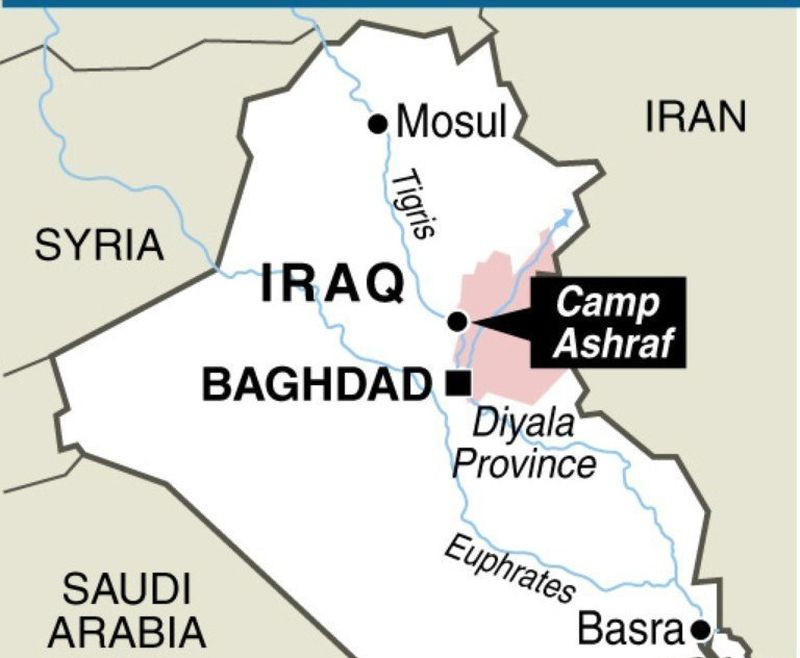
A second Israeli attack in 10 days on Iranian Guards’ and Iraqi militia forces in eastern Iraq was claimed on Sunday, July 28 by Iraqi military sources.

They described one or more Israeli Air Force jets striking Camp Ashraf in Diyala Governorate, some 80km from the Iranian border and 40km north of Baghdad. The Iraqi sources reported that the Israeli aircraft struck a consignment of ballistic missile launchers transferred a short time ago from Iran to Iraq. as well as the missiles themselves and the living quarters of Guards officers and personnel of the pro-Iranian Iraqi Badr Brigades militia. Some sources reported up to 40 dead in the attack.

Camp Ashraf is described by DEBKAfile’s military sources as one of the largest military compounds in eastern Iraq, with room to house more than 4,000 troops and their weapons systems. It also holds a big complex of subterranean facilities storing missiles, tanks and heavy artillery. Camp Ashraf is the address of the main base and command headquarters of the Badr Brigades, the largest pro-Iranian militia in Iraq, This militia has become heavily engaged in Tehran’s new drive to transform Iraq into a frontline base of operations.

Israel’s first purported target in Iraq on July 19 was another Badr Brigades facility in eastern Iraq, outside the town of Amerli in the province of Salahudin. That one housed the 52nd Brigade of the Hash Shaab militia.

On July 24, Israel was reported by the Syrian military to have conducted a surface missile attack – this one to demolish an intelligence station just constructed by the Iranians at Tal al-Harara in southern Syria for a broad overview of northern Israel and parts of the eastern Mediterranean.

If all three Israel attacks are confirmed, it would indicate a radical escalation of its operations against Iran’s new, ongoing initiatives to set up a new front-line military presence in Iraq and southern Syria.

Prime Minister Binyamin Netanyahu responded to the successful Arrow 3 tests in Alaska against exo-atmosphere ballistic targets at the Sunday cabinet meeting by saying: “They were successful beyond imagination, Each a perfect hit. This means that Israel could send ballistic missiles into Iran.”

Netanyahu, who also serves as defense minister, did not elaborate on this comment, but it evidently carried a message, that while Israel has the capacity to intercept and destroy the ballistic missiles that Tehran has begun transferring to Iraq and Syria, it has no defense against Israel’s long arm and its ballistic missiles.