Source: Pro-Israel voices pan Sanders for calling Netanyahu government racist | The Times of Israel
AIPAC does not mention Democratic front-runner by name, but says name-calling unproductive; Minister Tzachi Hengbi condemns ‘strange’ remarks
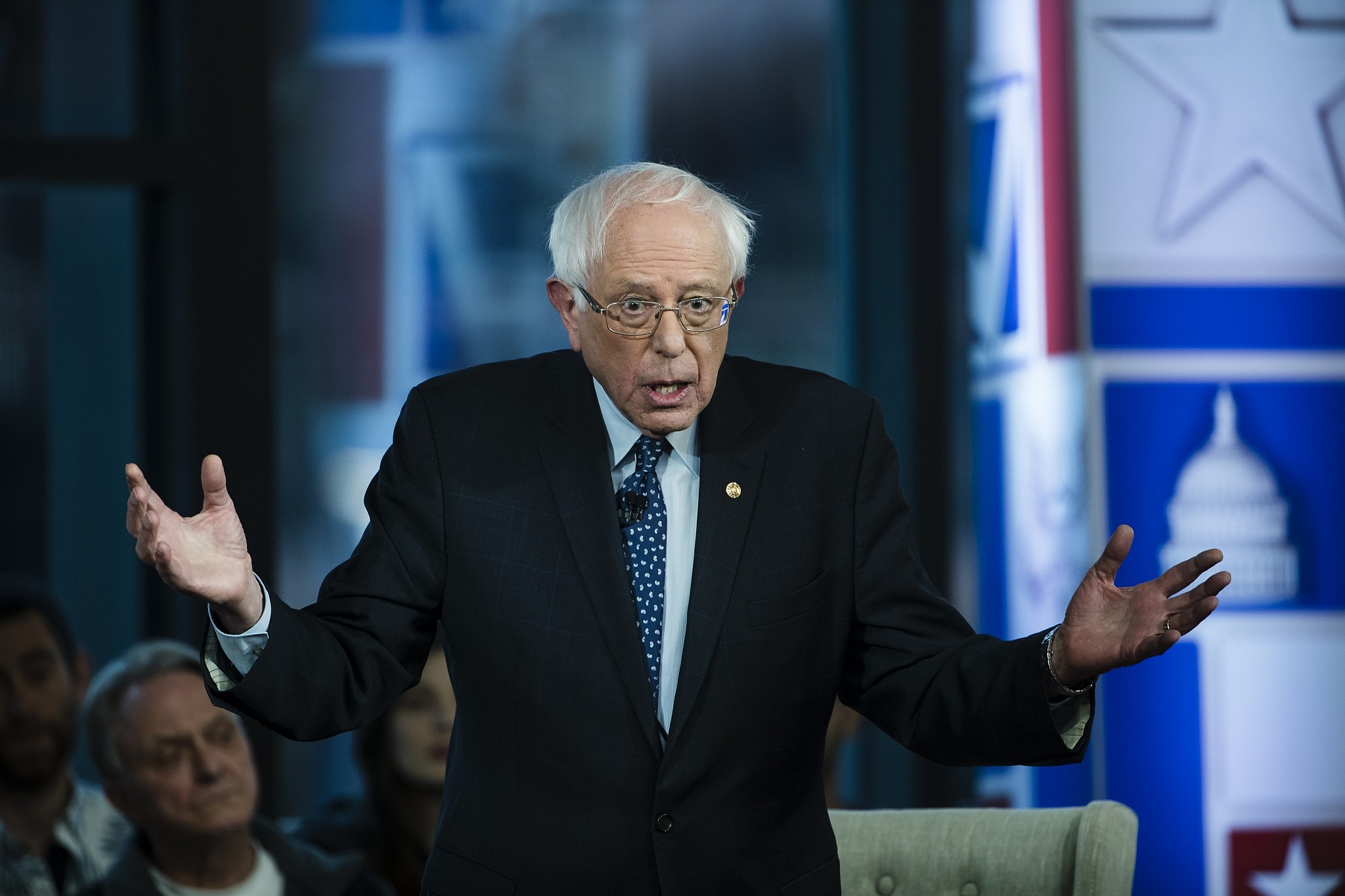
WASHINGTON — The American Israel Public Affairs Committee and an Israeli minister pushed back Tuesday against Sen. Bernie Sanders for calling Benjamin Netanyahu’s government “racist.”
The pro-Israel lobby, in a tweet that did not mention the Democratic presidential hopeful by name, said it was counterproductive when American leaders used “name-calling” against their Israeli counterparts.
“The US-Israel alliance serves America’s interests,” AIPAC said Tuesday on Twitter.
“We benefit from the close bonds between the governments and peoples. Name-calling by political leaders against the democratically elected government of Israel is counterproductive to maintaining close ties and advancing peace.”
 AIPAC
AIPAC✔@AIPAC
The U.S.-Israel alliance serves America’s interests. We benefit from the close bonds between the governments and peoples. Name-calling by political leaders against the democratically elected government of Israel is counterproductive to maintaining close ties and advancing peace.
An AIPAC official confirmed that the tweet was aimed at Sanders, I-Vt., currently the front-runner in the race for the Democratic presidential nomination.
Sanders defended his outspoken criticism of Israel in a CNN town hall on Monday broadcast from Manchester, New Hampshire, the first primary state.
“The goal must be to try to bring people together and not just support one country, which is now run by a right-wing — dare I say — racist government,” he said to applause.
Tzachi Hanegbi, a cabinet member and key Netanyahu ally, told Israel’s Channel 13 news that he condemned Sanders’ remarks, calling them “strange.”
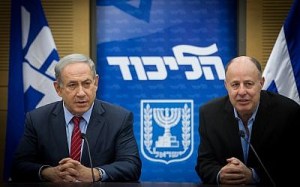
“The remarks deserve every condemnation. They don’t represent the general feeling of the Democratic Party even among the moderate liberal wing,” said Hanegbi, the minister for regional cooperation.
“Israel’s government is not a racist government. There isn’t a single racist minister. Sander’s should hold back on what he’s saying,” he added. “Being right wing is not forbidden. It’s strange that the Democratic party would allow one of its members to not respect the democratic choices of Israel.”
He said Jerusalem was making efforts to make sure it continued to enjoy bipartisan support in Washington, amid worries that ties between Israel’s government and Democrats were becoming increasingly strained.
Republican Jewish Coalition Executive Director Matt Brooks called Sanders’s comments “absurd and offensive.”
“We won’t let Israel become a punching bag for Democrats to score points with their radical base.”
Netanyahu, who earlier this month won re-election as prime minister, is in the midst of forming a new right-wing government expected to include the United Right-Wing Parties, which includes far-right and Kahanist politicians.
A number of Democratic candidates before the election blasted Netanyahu for brokering the URWP merger with Otzma Yehudit, a party whose extremist views were inspired by a rabbi, the late Meir Kahane, who was expelled from Israel’s parliament for “racist incitement.”
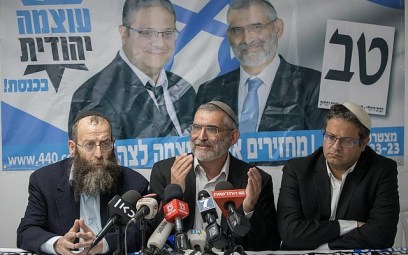
AIPAC at the time of the vote-sharing deal also blasted Otzma as “racist,” although it did not explicitly fault Netanyahu for making the deal.
“AIPAC has a longstanding policy not to meet with members of this racist and reprehensible party,” it said in a February tweet, referring to the far-right party.
Sanders at the town hall also called himself “100 percent pro-Israel.”
“Israel has every right in the world to exist, and to exist in peace and security and not be subjected to terrorist attacks,” he said. “But the United States needs to deal not just with Israel, but with the Palestinian people as well.”
Source: Sri Lanka death toll jumps to 359 as police round up more bomb suspects | The Times of Israel
At least 58 people detained as Colombo attempts to recover from series of devastating blasts; officials fume over intelligence failures
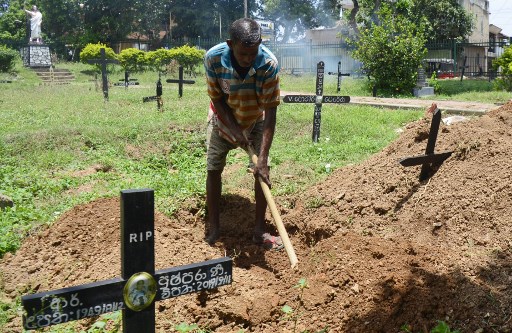
COLOMBO, Sri Lanka — The death toll from the Easter suicide bombings in Sri Lanka rose to 359 and more suspects have been arrested, police said Wednesday.
The Islamic State group has claimed responsibility and released images that purported to show the seven bombers who blew themselves up at three churches and three hotels Sunday in the worst violence this South Asian island nation has seen since its civil war ended a decade ago.
The government has said the attacks were carried out by Islamic fundamentalists in apparent retaliation for the New Zealand mosque massacre last month but has said the seven bombers were all Sri Lankan.
Prime Minister Ranil Wickremesinghe said investigators were still working to determine the extent of the bombers’ foreign links.

Police spokesman Ruwan Gunasekara said Wednesday morning that 18 suspects were arrested overnight, raising the total detained to 58. The prime minister had warned on Tuesday that several suspects armed with explosives were still at large.
The Islamic State group has lost all the territory it once held in Iraq and Syria and has made a series of unsupported claims of responsibility around the world.
Sri Lankan authorities have blamed a local extremist group, National Towheed Jamaar, whose leader, alternately known as Mohammed Zahran or Zahran Hashmi, became known to Muslim leaders three years ago for his incendiary speeches online.
The IS group’s Aamaq news agency released an image purported to show the leader of the attackers, standing amid seven others whose faces are covered. The group did not provide any other evidence for its claim, and the identities of those depicted in the image were not independently verified.

Meanwhile, in an address to Parliament, Ruwan Wijewardene, the state minister of defense, said “weakness” within Sri Lanka’s security apparatus led to the failure to prevent the nine bombings.
“By now it has been established that the intelligence units were aware of this attack and a group of responsible people were informed about the impending attack,” Wijewardene said. “However, this information has been circulated among only a few officials.”
In a live address to the nation late Tuesday, Sri Lanka President Maithripala Sirisena said he also was kept in the dark on the intelligence about the planned attacks and vowed to “take stern action” against the officials who failed to share the information. He also pledged “a complete restructuring” of the security forces.
Wijewardene said the government had evidence that the bombings were carried out “by an Islamic fundamentalist group” in retaliation for the March 15 mosque shootings in Christchurch, New Zealand, that killed 50 people, although he did not disclose what the evidence was.

The office of New Zealand Prime Minister Jacinda Ardern issued a statement responding to the Christchurch claim that described Sri Lanka’s investigation as “in its early stages.”
“New Zealand has not yet seen any intelligence upon which such an assessment might be based,” it said. An Australian white supremacist, Brenton Harrison Tarrant, was arrested in the Christchurch shootings.
Word from international intelligence agencies that National Towheed Jamaar was planning attacks apparently didn’t reach the prime minister’s office until after the massacre, exposing continuing turmoil in Sri Lanka’s government.
A block on most social media since the attacks has left a vacuum of information, fueling confusion and giving little reassurance the danger had passed.
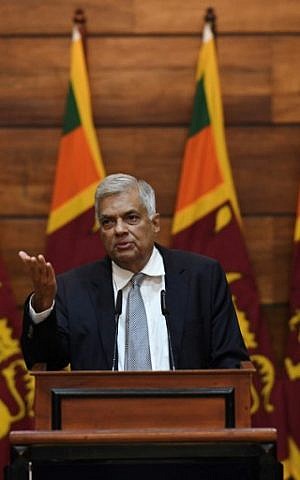
Wickremesinghe said he feared the massacre could unleash instability and he vowed to “vest all necessary powers with the defense forces” to act against those responsible.
The history of Buddhist-majority Sri Lanka, a country of 21 million including large Hindu, Muslim and Christian minorities, is rife with ethnic and sectarian conflict.
In the nation’s 26-year civil war, the Tamil Tigers, a powerful rebel army known for using suicide bombers, had little history of targeting Christians and was crushed by the government in 2009. Anti-Muslim bigotry fed by Buddhist nationalists has swept the country recently.
In March 2018, Buddhist mobs ransacked businesses and set houses on fire in Muslim neighborhoods around Kandy, a city in central Sri Lanka that is popular with tourists.
After the mob attacks, Sri Lanka’s government also blocked some social media sites, hoping to slow the spread of false information or threats that could incite more violence.
Sri Lanka has no history of Islamic militancy. Its small Christian community has seen only scattered incidents of harassment.
Source: US deploys two carrier strike groups in Mediterranean – first time since 2016 – DEBKAfile

The John C. Stennis and Abraham Lincoln carrier strike groups have joined the US Mediterranean 6thFleet for the first time in more than two years.
This was announced on Monday, April 22, by the 6th Fleet commander, Vice Adm Lisa Franchetti. DEBKAfile’s military sources add that this unusual concentration of US naval and air might in the region is intended to convey a warning to Iran against striking back at the US or its allies in the region in retribution for tightened Trump administration sanctions on its oil experts. This level of concentrated strength is capable of countering any Iranian attempt to interfere with the oil tanker shipping plying routes to market from the Gulf through the Strait of Hormuz, the Gulf of Aden or the Red Sea. See DEBKAfile’s earlier special report.
Vice Admiral Franchetti commented that it was a rare opportunity for two strike groups to work together alongside key allies and partners in the region. Our sources say she was referring to British, French and Israeli naval forces. The vice admiral, who has served as 6th Fleet commander since early 2018, added: “The dual carrier operations in the Mediterranean showcase the flexibility and scalability maritime forces provide to the joint force, while demonstrating our ironclad commitment to the stability and security of the region.”
Source: Islamic State claims responsibility for Sri Lanka terror attack | The Times of Israel
( The “religion of peace” strikes again… – JW )
United Nations says at least 45 children killed in Easter Sunday bombings

COLOMBO, Sri Lanka (AFP) — The Islamic State group on Tuesday said it was behind a devastating string of suicide attacks against churches and hotels in Sri Lanka that killed at least 321 people on Easter Sunday.
The claim emerged more than 48 hours after the near-simultaneous blasts tore through three high-end hotels popular with foreigners and three churches packed with Christians marking Easter.
It came after Sri Lanka’s government said initial investigations suggested the attack had been carried out as “retaliation” for shootings at two mosques in New Zealand last month that killed 50 people.
The Sri Lankan government had already pointed the figure at a little-known local Islamic extremist group called National Thowheeth Jama’ath (NTJ), but said it was investigating whether they had international support.

“Those that carried out the attack that targeted members of the US-led coalition and Christians in Sri Lanka the day before yesterday are Islamic State group fighters,” a statement released by the group’s propaganda agency Amaq said.
It presented no immediate evidence for the claim, or further details on the attackers.
But police sources in Sri Lanka told AFP that the attackers who targeted two of the hotels hit Sunday were Muslim brothers, sons of a wealthy Colombo spice trader.
Their names were not immediately revealed, but they were said to be in their twenties.
Guests were queuing for breakfast at the Shangri-La and Cinnamon Spice hotels when the two men detonated their bombs.

A fourth attack against a hotel on Sunday failed, sources also told AFP, though it was not immediately clear if the bomber’s explosives had failed or he had chosen not to detonate them.
He later blew himself up when police tracked him to a lodging in the capital.
Police have detained at least 40 people as they investigate the worst act of violence in Sri Lanka since a civil war ended a decade ago.
On Tuesday, grieving Sri Lankans began to bury their dead and the country observed a day of national mourning.
Three minutes of silence were marked nationwide from 8:30 a.m. (0300 GMT), the time the first suicide bomber struck on Sunday, unleashing carnage.
Flags were lowered to half mast on government buildings, and liquor shops were ordered closed for the day.
Hours earlier, the government imposed a state of emergency giving police and the military special powers including the ability to arrest suspects without a court order.

More than a thousand people gathered Tuesday at St Sebastian’s Church in Negombo, north of the capital, which was among those devastated in the blasts, to pay tribute to the dead.
An elderly man wept uncontrollably by the coffin bearing the body of his wife, while relatives of other victims stood aghast and silent.
Coffins were carried into the church grounds one by one for services, and then to a newly established cemetery on church land.
“It’s beyond words,” said Father Suranga Warnakulasuriya, who had come from another parish to help conduct funerals. “It’s very hard to bear. For me it is very difficult, so imagine how hard it is for the loved ones.”
The attacks were the worst ever against the country’s small Christian minority, who make up just seven percent of the 21 million population.
Officials are investigating why more precautions were not taken after an April 11 warning from Sri Lanka’s police that a “foreign intelligence agency” had reported the NTJ planned suicide attacks on churches.
Government spokesman Rajitha Senaratne said the warning was not passed on to Prime Minister Ranil Wickremesinghe or other top ministers.
More details have begun to emerge about some of the foreigners killed in the blasts.

The United States reported at least four Americans killed — including a child — and the Netherlands raised their toll to three.
A Danish billionaire lost three of his children in the attacks, a spokesman for his company said.
Eight Britons, ten Indians and nationals from Turkey, Australia, France, Japan and Portugal, were also killed, according to Sri Lankan officials and foreign governments.
The United Nations said at least 45 children, Sri Lankans and foreigners, were among those killed.
The suicide bombers hit three Colombo luxury hotels popular with foreign tourists — the Cinnamon Grand, the Shangri-La and the Kingsbury — and three churches: two in the Colombo region and one in the eastern city of Batticaloa.
Two additional blasts were triggered as security forces carried out raids searching for suspects.
Interpol said it was deploying investigators and specialists to Sri Lanka, and the US State Department warned of possible further attacks in a travel advisory.
Ethnic and religious violence has plagued Sri Lanka for decades, with a 37-year conflict with Tamil rebels followed by an upswing in recent years of clashes between the Buddhist majority and Muslims.
The attacks have sparked local and international outrage, and have been condemned by Sri Lankan Muslim groups.
The countries who will no longer benefit from the waivers are China, India, Japan, Taiwan, South Korea, Italy, Greece and Turkey. They collectively imported a million barrels a day of Iranian oil. Prior to sanctions, Iran was exporting 2.1 million barrels per day. That figure had already dropped to 700,000 barrels. Since oil is Iran’s single export commodity, its cutoff to zero is a virtual death blow to its economy.
Before the latest tightening of US sanctions, the first round had been devastatingly effective. The official inflation rate had soared past 50 pc to stand at an annual rate of 30.6pc. Basic foods, water and tobacco were priced 85.3p higher than the corresponding period the year before. Whereas in 2018, the US dollar went for 40,000 rial, today the rate has sunk further to 140,000 rial. Therefore, the zero-oil sales level projected by the US is tantamount to zero revenue for the Iranian revolutionary treasury.
“The goal remains simple,” as defined by Pompeo: “To deprive the outlaw regime of the funds it has used to destabilize the Middle East for four decades and incentivize Iran to behave like a normal country.” He calculated that the sanctions will divert “well north of $10 billion” away from the Iranian regime.
This monumental and unprecedented US pressure on Tehran is compounded by the cruel effects on the population of the most severe weather disasters the Islamic republic has known for many years. Weeks of incessant rainfall have caused widespread flooding in 25 of the country’s 31 provinces, forcing more than 2 million people to flee their homes. More than 150 homes were destroyed, crops amounting to 14pc of Iran’s annual national product were destroyed, roads, bridges, and installations worth $2.5m for drinking and irrigation water were washed away.
The Trump administration is also turning the screw on Tehran’s allies in the violent propagation of its influence, including Syria and proxies such as the Lebanese Hizballah and Iraqi Shiite militias. Hizballah, whose fund-raising methods have long been targeted by Western law enforcement, was this week treated by Washington in the style of a wanted miscreant with the offer of a $10bn reward for information leading to the disruption of its finances. The State Department said the money would be paid to anyone who provides intelligence in such areas as Hizballah’s donors, financial institutions that assist its transactions and businesses controlled by the movement. Hizballah is already feeling the pinch from the slowdown of its regular subsidy from sanctions-bound Iran and is appealing for donors.
US financial pressure on Iran is so deep that even if China, Russia, Turkey, Indonesia, Malaysia and some West European countries try to bypass or defy the Trump administration by buying Iranian oil, regardless of sanctions, the quantities will be too negligible to affect the overall calamity.
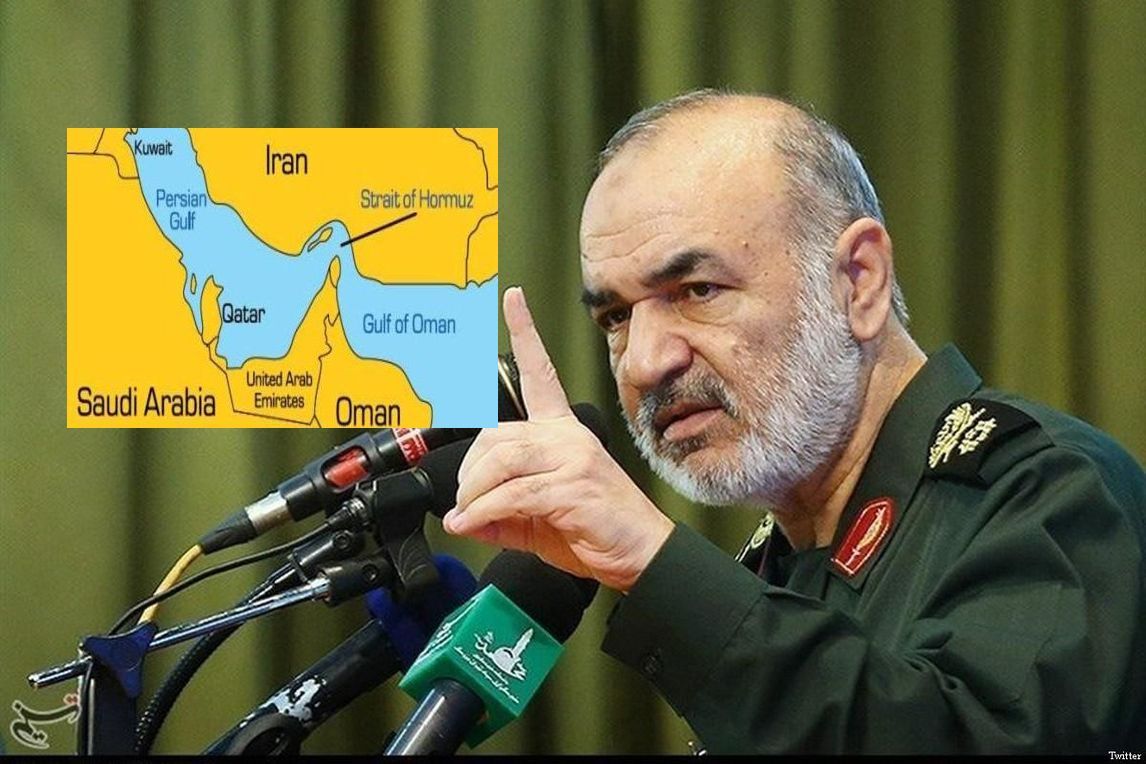
It has placed the Islamic Republic of Iran face to face with two options: to knuckle under to US demands, or resort to military measures to force Washington to ease the grip on its windpipe. Tehran has often warned that if its oil exports are choked off, the Arab oil nations of the Gulf will be equally prevented from sending their product to market, either by a partial or total blockage of the Strait of Hormuz, through which one-fifth of the world’s daily consumption of fuel passes, or disruption of the oil tanker routes through the Red Sea.
DEBKAfile’s military sources report that Iran lacks sufficient military strength to totally blockade Hormuz or the Red Sea oil routes. However, a single attack on tanker traffic would send oil prices shooting skyward past $100 the barrel, creating market pressure on Washington. Other offensive options for Tehran would be attacks on US military bases in the Middle East, including Syria and Iraq, the Gulf and the Red Sea. Local Shiite militias or Revolutionary Guards Corps (IRGC) special units would be activated to strike targets belonging to US allies, including Israel, Saudi Arabia and the United Arab Emirates.
With his mind focused on belligerency, Supreme leader Ayatollah Ali Khamenei on Sunday, April 21, replaced the veteran IRGC chief, Gen. Ali Jafari, with a younger, more radical and dynamic figure, deputy Guards chief Brig. Gen, Hossein Salami. According to our sources, Salami, who stands out even among the radical IRGC officers as a hawk, was selected by the supreme leader to prepare a military campaign against the United States and its allies in the region for the purpose of breaking the back of American sanctions. He is being closely watched not just in Washington, but also in Riyadh and Jerusalem.
Source: Iranian parliament labels entire US military a terrorist force – www.israelhayom.com
Legislation also demands Iranian government take unspecified action against other governments that formally back U.S. designation of Revolutionary Guards as foreign terrorist group.
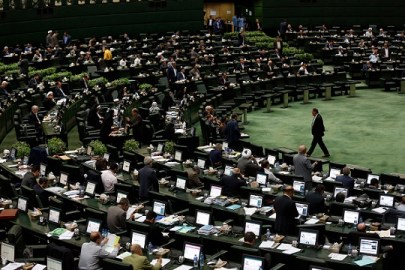
Iranian lawmakers take part in a parliament session in Tehran on April 16 | Photo: EPA
The legislation comes after lawmakers in Tehran last week approved a bill labeling U.S. troops in the Middle East as terrorist, a day after the U.S. terrorism designation for Iran’s Revolutionary Guard went into effect.
The report by the semi-official ISNA news agency says 173 out of 215 lawmakers at the session voted for the bill on Tuesday.
The bill also demands the Iranian government take unspecified action against other governments that formally back the U.S. designation. Saudi Arabia, Bahrain and Israel have all supported the Trump administration’s designation.
The U.S. on Monday said it will no longer exempt any countries from U.S. sanctions if they continue to buy Iranian oil.
Source: Iranian parliament labels entire US military a terrorist force – www.israelhayom.com
Legislation also demands Iranian government take unspecified action against other governments that formally back U.S. designation of Revolutionary Guards as foreign terrorist group.

Iranian lawmakers take part in a parliament session in Tehran on April 16 | Photo: EPA
The legislation comes after lawmakers in Tehran last week approved a bill labeling U.S. troops in the Middle East as terrorist, a day after the U.S. terrorism designation for Iran’s Revolutionary Guard went into effect.
The report by the semi-official ISNA news agency says 173 out of 215 lawmakers at the session voted for the bill on Tuesday.
The bill also demands the Iranian government take unspecified action against other governments that formally back the U.S. designation. Saudi Arabia, Bahrain and Israel have all supported the Trump administration’s designation.
The U.S. on Monday said it will no longer exempt any countries from U.S. sanctions if they continue to buy Iranian oil.
Source: Trump is using the weapon he knows best: Economic sanctions – www.israelhayom.comT
he U.S. president is a busessman who views the world through an economic prism. Preferring to avoid the military option, he is instead using economic sanctions to bludgeon countries and regimes that pose a threat to American interests.
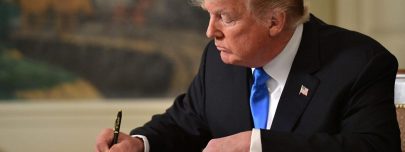
U.S. President Donald Trump | Photo: AFP
Trump’s path to making America great again doesn’t just pass through amending these trade deals, which have hurt American industries, but also through using his country’s considerable economic might against its adversaries. Trump doesn’t plan on launching wars. He is wielding a different type of weapon to bludgeon countries and regimes that pose a threat to American interests: Economic sanctions.
Trump is applying this weapon to varying degrees against Russia, China and the European Union; and with particular fervor against the regimes in North Korea and Venezuela. Against Iran, he is going all out. Trump’s goal isn’t necessarily to topple these regimes. If they do fall, all the better. Officially, however, he wants to create economic pressure levers to force these nearly-bankrupt regimes to recalibrate their course and start cooperating with Washington to dismantle the threats that Washington wishes to eradicate.
In the case of Iran, first and foremost, this means forcing Tehran back to the negotiating table to rehash the terrible nuclear deal, which the international community co-signed some five years ago; to cease developing ballistic missiles; stop its subversive activities across the Middle East; or risk civil revolt amid the country’s deteriorating economic situation.
U.S. Secretary of State Mike Pompeo recently told Iranian-American leaders that from the administration’s perspective, “There are no moderates anywhere in the Iranian regime.” Asked if he can guarantee that economic sanctions against Tehran won’t hurt the Iranian people, he replied: “There is no such guarantee.” Indeed, without harming the Iranian people, the internal pressure can’t be created to foster the desired changes in Tehran.
In two weeks, the American administration will intensify its economic stranglehold on Iran by canceling exemptions for the five main importers of Iranian oil. In Tehran, officials threatened to close the Strait of Hormuz to Gulf State oil tankers. Even if the U.S. doesn’t want to instigate a military confrontation with Iran, in Tehran officials know Washington will respond to any action against its allies. It’s possible the Iranian regime will have no choice but to escalate matters militarily. But even the ayatollahs know that playing with fire in such a manner, with festering civil unrest at home, could end in losing their grip on power.
Source: US presidential candidate Sanders calls Israel’s government ‘racist’
The senator from Vermont says he is “not anti-Israel” – nor does he oppose sending military aid to the Jewish State – but feels Netanyahu’s policies don’t help to advance peace.

“As a young man I spent a number of months in Israel, worked on a Kibbutz for while, I have family in Israel, I am not anti-Israel but the fact of the matter is that Netanyahu is a right-wing politician who I think is treating the Palestinian people extremely unfairly,” Sanders said as the audience erupted in applause and cheers.
Sanders then added that he is “100% pro-Israel” and that the country has “every right in the world to exist and to exist in peace and security and not be subjected to terrorists’ attacks.”




 anneinpt
 artaxes
 danmillerinpanama
 davidking1530
 Peter Hofman
 Joseph Wouk
 Peter
Peter Louisiana Steve
 WarSclerotic
Recent Comments