Archive for April 2019

Russia hands over to Israel the body of missing soldier Zachary Baumel – an action with strategic import – DEBKAfile

April 4, 2019

Source: Russia hands over to Israel the body of missing soldier Zachary Baumel – an action with strategic import – DEBKAfile

( He was killed in the first war I fought in. – JW )

The remains of Sgt. Maj. Zachary Baumel, who was killed in the battle of Sultan Yaaqub in Lebanon 37 years ago, has been returned to Israel. The IDF spokesman announced the missing soldier’s recovery a day before Prime Minister/ Defense Minister Binyamin flies to Moscow to meet Russian President Vladimir Putin, and six days before Israel’s general election. DEBKAfile reports that it was handed over to Israel by Russian officials.

Baumel was one of six soldiers missing from the Sultan Yaqoub battle in the Lebanese Beqaa Valley that took place on June 11, 1982, during the First Lebanon War against a large Syrian force r. Twenty Israeli soldiers were killed in the battle. Two, Zvi Feldman and Yehuda Katz, are still missing. Baumel’s body was brought to Israel by an El Al flight. He has been positively identified. Zachary and his family migrated to Israel from the United States. His mother and two siblings were informed of the event. His father died some years ago. A military funeral with full honors is being arranged.

DEBKAfile reports that the handover of the missing soldier represents an exceptional gesture of goodwill by President Vladimir Putin towards Israel and its prime minister, and accentuates his intention to give Israel a role in determining Syria’s future. It follows on his decision during a former meeting on Feb. 17, which lasted three hours, to establish a joint committee for dealing with the withdrawal of all foreign troops from Syria. This brought Israel for the first time into the decision-making process regarding an Arab nation. That accord appears to have opened the door for President Donald Trump to recognize Israeli sovereignty in the Golan.

Our sources also reveal that, since 2016, Russian intelligence and special forces officers have been working diligently to uncover the whereabouts of the Israeli soldiers missing from the Battle of Sultan Yaaqub and restore their remains to Israel.

On Sept. 17, 2018, Russian Defense Minister Sergei Shoigu incidentally spoke of Russian soldiers who were injured while searching for Israel MIA’s in Palmyra. He made this reference during a bitter diatribe against Israel whom he accused of responsibility for the downing of the Russian IL-20 spy plane opposite Latakia.

The battle of Sultan Yaaqub in the Lebanese Beqaa Valley was the Israeli army’s only encounter with a Syrian force during the 1982 Lebanon war. The IDF unit was vastly outnumbered in troops and tanks. Baumel, Zvi Feldman and Yehuda Katz, were in the Israeli tank that was hit. On May 29, 2016, Moscow handed the tank to Israel. It is on exhibit at the IDF museum. Syrian’s motive in letting the Russians have the tank was for its engineers to discover the armor and electronic systems developed by Israel.


Report: Hamas, Islamic Jihad order end to Gaza border attacks

April 3, 2019

Source: Report: Hamas, Islamic Jihad order end to Gaza border attacks

Haniyeh says ‘no reason’ why Hamas cannot discuss prisoner swap, likely involving fallen IDF soldiers, captive civilians; Hamas boss hints that Egypt-mediated talks with Israel progressing well
Militant groups in the Gaza Strip, which are dominated by Hamas and Islamic Jihad,  have ordered their members to stop all launches of firebombs towards Israeli communities on the opposite side of the border, Palestinian newspaper al-Quds reported Wednesday.

All Hamas and Islamic Jihad men were also ordered to end their nightly disturbances along the Gaza border fence, the report said, as well as the use of explosives during riots along the border. The new directives are in line with the understandings being reached with Israel under Egyptian mediation.

Hamas leaders Yahya Sinwar and Ismail Haniyeh attend last weekend's March of Return protests on the Gaza border

Hamas leaders Yahya Sinwar and Ismail Haniyeh attend last weekend’s March of Return protests on the Gaza border
Also Wednesday, Hamas leader Ismail Haniyeh said that efforts to reach an arrangement with Israel, following last week’s flare-up in the Gaza border region, are progressing well, and that a prisoner swap is not out of the question.“Understandings regarding the ceasefire and the removal of the blockade on the Strip are progressing,” Haniyeh said in an interview with Palestinian newspaper al Istiqlal. “Yesterday we got the schedule for the implementation of many issues that are part of the arrangement.”

Hamas is currently holding the remains of two Israeli soldiers who fell in the 2014 Gaza war, Hadar Goldin and Oron Shaul, as well as two Israeli civilians who entered the Strip of their own accord, Avera Mengistu and Hisham al-Sayed. The families of the four have urged the government to take steps to secure their return.

Haniyeh said that Qatar, Egypt and the United Nations are supporting the negotiation process. Egypt is mediating the negotiations, as there are no direct ties between Israel and Hamas.

“There is no reason why we can’t discuss a prisoner swap through outside mediators,” Haniyeh said, but added that the current understandings do not include such a deal.

An airborne firebomb launched at the Israeli border during Saturday's March of Return protests on the Gaza border (Photo: AFP) (Photo: AFP)

An airborne firebomb launched at the Israeli border during Saturday’s March of Return protests on the Gaza border (Photo: AFP)

On Tuesday, Haniyeh said that his organization has given Israel a series of demands regarding its security prisoners, jailed in Israel, who are set to begin a hunger strike next week.

The demands were passed to Israel by the Egyptian delegation, and included the removing the cell phone jamming device for prisoners, lifting recent sanctions on the prisoners, restoring visits and improving prison conditions.

Illustrative: Prison Service guards searching cells of Hamas prisoners (Photo: IPS) (Photo: Israel Prison Service)

Illustrative: Prison Service guards searching cells of Hamas prisoners (Photo: IPS)

According to Hamas, some of the understandings with Israel regarding the Gaza Strip will be implemented before the elections on April 9, and some afterwards.

The understandings that will be implemented before the elections are the simpler ones, such as expanding the fishing area off the Gaza coast (already done); easing restrictions on exported goods from Gaza; improving the electricity supply by operating the turbines at the power plant; and beginning projects that will provide temporary employment.

The understandings that will be implemented after the elections include the construction of another power line from Israel to Gaza within six months and the construction of a gas pipeline to the Gaza power plant within a year. In addition, the Palestinians are demanding the establishment of infrastructure and alternative energy projects.

The timetables will be presented to representatives of the Palestinian factions in Gaza, who will announce whether they accept or reject them.


With Turkish loss of the F-35, Israel keeps its aerial superiority

April 3, 2019

Source: With Turkish loss of the F-35, Israel keeps its aerial superiority – Arab-Israeli Conflict – Jerusalem Post

Washington halts F-35 equipment over Turkey’s instance to buy the Russian S-400 missile defense system.

BY ANNA AHRONHEIM
 APRIL 3, 2019 17:15
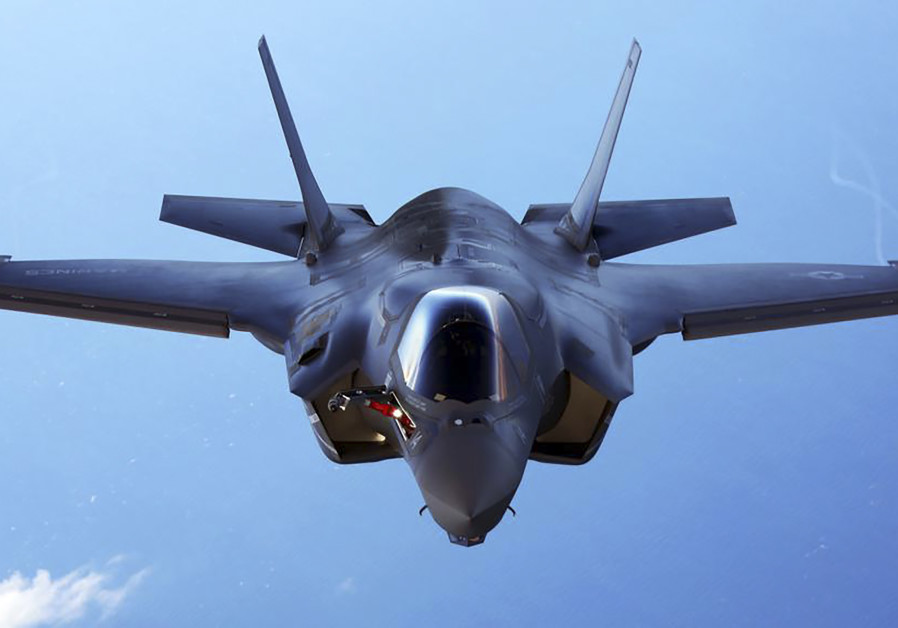
A U.S.Marine Corps F-35B joint strike fighter jet conducts aerial maneuvers

The Pentagon’s decision to stop the delivery of equipment related to the F-35 stealth fighter jet to Turkey due to Ankara’s decision to purchase the Russian-made S-400 air defense system will allow Israel to keep it’s aerial superiority in the Middle East.

Washington’s move follows repeated warnings both from the United States and NATO allies to Ankara that buying the Russian system alongside the Lockheed Martin-produced jets would threaten the security of the F-35s by learning how to spot and track it.

Israel, which also has fragile relations with Turkey, currently has 14 F-35 Adir jets and is expected to receive a total of 50 planes to make two full squadrons by 2024.

According to foreign reports, Israel has already quietly tested ways to defeat the advanced Russian air defense system, participating in several joint drills with the Greek Air Force over the island of Crete where one system is stationed. The drills have reportedly allowed Israeli warplanes to gather data on how the advanced system may be blinded or fooled.

But there are fears that the radar on the S-400 systems bought by Turkey, which has entered into a sort of alliance with Russia and has been in close cooperation with Iran, could learn the weak spots in the jet and make it less able to evade Russian weapons in the future.

The top uniformed officer in NATO and the head of American forces in Europe, General Curtis Scaparrotti warned in March during testimony to the Senate Armed Services Committee that Ankara’s purchase of the S-400 presents a problem for not only the F-35 but to all American aircraft.

“My best military advice would be that we don’t then follow through with the F-35: flying it or working with an ally that is working with Russian systems, particularly air defense systems, with one of our most advanced technological capabilities,” Scaparrotti was quoted by Defense News as saying.

Built by Lockheed Martin, the jets have an extremely low radar signature allowing them to operate undetected deep inside enemy territory as well as to evade advanced missile defense systems like the S-300 and S-400.

The already fragile relations between Israel and Turkey have been increasingly strained in recent months as Turkish President Tayyip Erdogan, a vocal critic of Israel’s policy toward the Palestinians, has intensified his rhetoric.

Israeli officials have voiced concern over Turkey’s purchasing of the jets, with one senior defense official quoted by Haaretz in August as saying that Israel would like to be the only country in the Middle East with the F-35 in order to keep its qualitative military edge and out of fears that the jet’s capabilities would be leaked to enemy countries.

Ceng Sagnic from the Moshe Dayan Center in Tel Aviv told The Jerusalem Post that while Moscow might be “hesitant” to share the knowledge of the jet which might be gained by its S-400, it couldn’t be ruled out.

“Moscow would definitely be hesitant to share the military “secrets” it has obtained with a third party. But in the event of a major dispute in the region or a potentially expanded Moscow-Tehran alliance, transfer of knowledge on US weapon systems to Tehran can well be a topic of discussion,” he said.

According to Sagnic, it is impossible to estimate the extent of Ankara’s “cloudy relations” with Moscow.

“The presence of both F-35s and S-400s can also come with a similar outcome itself. If Turkey had purchased F-35s from the US and S-400s from Russia, the situation would partially resemble Greece – where the coincidental presence of S-300 systems allowed, according to foreign reports, NATO and Israel to carefully study these weapons,” he said, adding that “in the case of Turkey, although it would stay a member of NATO, the future extent of its relations with Russia cannot be estimated and Ankara could well remain pressured by Moscow to allow such studies. Given that Turkey is and will be a country of crises – and therefore is mostly prone to Russian pressure – the possibility increases even further.”

Israel became the first air force outside the United States to declare Initial Operational Capability (IOC) of the jet in 2017. Last year, IAF chief Maj.-Gen. Amikam Norkin announced that Israel has struck targets in the Middle East with the F-35 Adir jet twice, making the Jewish state the first country to use the stealth fighter in a combat role in the region.

According to Sagnic, “Turkey must be seriously thinking that Israel may be behind the cancellation of the F-35 deal in order to preserve its air superiority. However, for the domestic politics, Ankara needs a “usual suspect” to blame, as blaming the US cannot be enough to explain the disruption in one the biggest weapons agreement Turkey has signed.”

As a Level-3 partner in the multinational F-35 program, Turkey invested over $1 billion on the jet, with several local companies producing components for the aircraft including fuselages and cockpit screens such as Alp Aviation, AYESAS, Kale Aviation, Kale Pratt & Whitney and Turkish Aerospace Industries.

Turkish defense companies also produce high-end SOM-J missiles for the Joint Strike Fighter (JSF) program and Turkey is Europe’s maintenance and repair center for F-35 fighter aircraft manufactured under the JSF plan.

Ankara took delivery of its first F-35 in June at a ceremony in Texas and the country plans to purchase 100 stealth jets in the coming years. Turkish pilots have already been learning to fly the jet training alongside U.S. pilots at Luke Air Force Base, Arizona. Ankara is holding onto hope that the two more jets expected to be handed over this month will actually be delivered.


The Yom Kippur War Documentary 

April 3, 2019


From the TV series “Modern Warfare.”


US envoy: Three waiver countries cut Iran oil imports to zero

April 3, 2019

Source: US envoy: Three waiver countries cut Iran oil imports to zero

Official says Trump administration not issuing any more exceptions to initial eight nations who could buy Iranian oil, but current ones could be extended
WASHINGTON – Three of eight countries granted waivers by Washington to import oil from Iran have now cut the imports to zero, a US official said Tuesday, adding that improved global oil market conditions would help reduce Iranian crude exports further.
The United States reimposed sanctions on Iran after US President Donald Trump last May withdrew the country from a 2015 nuclear deal between Iran and several world powers, accusing it of supporting terrorism and conflicts in Syria and Yemen.

US President Donald Trump and his Iranian counterpart Hassan Rouhani

US President Donald Trump and his Iranian counterpart Hassan Rouhani

While the United States has set a goal of completely halting Iran’s oil exports, it granted temporary import waivers to China, India, Greece, Italy, Taiwan, Japan, Turkey and South Korea to ensure low oil prices and no disruption to the global oil market.

The Trump administration is currently in consultations with the countries ahead of a May 2 deadline when the waivers expire.

“In November, we granted eight oil waivers to avoid a spike in the price of oil. I can confirm today three of those importers are now at zero,” Brian Hook, the special US envoy for Iran, told reporters.

Hook did not identify the three countries.

“There are better market conditions for us to accelerate our path to zero,” Hook said. “We are not looking to grant any waivers or exceptions to our sanctions regime.”

Hook said US oil sanctions against Iran removed about 1.5 million barrels of Iranian oil exports off the market since May 2018.

EU Foreign Policy Chief Federica Mogherini and Iranian FM Javad Zarif (Photo: AFP)

EU Foreign Policy Chief Federica Mogherini and Iranian FM Javad Zarif (Photo: AFP)

“This has denied the regime access to well over $10 billion in (oil) revenue – a loss of at least $30 million a day,” he said.

Oil prices on Tuesday hit their highest level so far in 2019, with Brent crude approaching $70 a barrel on the prospect that more sanctions against Iran and Venezuelan disruptions could deepen an OPEC-led supply cut.

Analysts believe the administration is likely to extend the waivers to the remaining five countries to placate top buyers China and India and to decrease the chance of higher oil prices.

China, India, Japan, South Korea and Turkey are likely to be given waivers that could cap Iran’s crude oil exports at about 1.1 million barrels per day, US-based analysts at Eurasia Group said in January. That would remove Italy, Greece and Taiwan from the waivers list.

Hook said a decision on whether to extend the waivers would be made “in due course.” A total of 23 countries that once imported Iran oil had cut imports to zero, he added.

“With oil prices actually lower than they were when we announced our sanctions and global production stable, we are on the fast track to zeroing out all purchases of Iranian crude,” Hook said.

A senior Trump administration official told reporters on Monday that the US government was considering additional sanctions against Iran that would target areas of its economy that have not been hit before.

Hook said more than 26 rounds of US sanctions against Iran had restricted the country’s cash flow and constrained its ability to operate in the region.

Earlier on Tuesday, US Secretary of State Mike Pompeo blamed Iran’s government of mismanagement that has led to devastating flooding across the country. At least 47 people have been killed in the past two weeks from flash floods.

Israeli officials: Growing Iranian efforts to destabilize Gaza – TV7 Israel News 2.04.19 

April 3, 2019


Hamas gives Israel demands for security prisoners on eve of hunger strike

April 2, 2019
Terms passed via Egypt include restoring visits, ending policy of jamming cell phones, improving conditions in prisons; conditions presented as part of agreement to restore calm in Gaza after tensions spiked
https://www.ynetnews.com/articles/0,7340,L-5488430,00.html

Hamas leader Ismail Haniyeh said Tuesday that his organization has given Israel a series of demands regarding its security prisoners who are set to begin a hunger strike next week.

The demands were passed to Israel by the Egyptian delegation currently trying to mediate an end to Gaza hostilities between the two sides.

Israeli prison guards (Photo: Israel Prison Service)


Hamas’ demands for Israel:

1. Removing the cell phone jamming device

2. Lifting recent sanctions on the prisoners

3. Restoring visits for prisoners

4. Improving prison conditions


According to Hamas, some of the understandings with Israel will be implemented before the elections on April 9, and some afterwards.

The understandings that will be implemented before the elections are the simpler ones, such as expanding the fishing area off the Gaza coast (already done); easing restrictions on exported goods from Gaza; improving the electricity supply by operating the turbines at the power plant; and beginning projects that will provide temporary employment.

Guards search the cells of Hamas prisoners at Ketziot Prison (Photo: IPS)

Guards search the cells of Hamas prisoners at Ketziot Prison (Photo: IPS)

The understandings that will be implemented after the elections include the construction of another power line from Israel to Gaza within six months and the construction of a gas pipeline to the Gaza power plant within a year. In addition, the Palestinians are demanding the establishment of infrastructure and alternative energy projects.

The timetables will be presented to representatives of the Palestinian factions in Gaza, who will announce whether they accept or reject them.

Last week, the Israel Prison Service announced that it would charge the Hamas prisoners in Ramon Prison NIS 250,000 ($70,000) after they set fire to the mattresses in their cells last week.

The arson took place in the wing where mobile phones are being jammed by the IPS, which expressed concern that such a move would lead to attacks on prison guards, damage to prison property and riots.

A few days earlier, a prison guard at Ketziot Prison was stabbed in the neck by two security prisoners in the neck during a search of the site.


Russia in the Middle East – Jerusalem Studio 410

April 2, 2019


Led by Saudis, Arab leaders unite against Trump’s recognition of Golan Heights 

April 2, 2019

Source: Led by Saudis, Arab leaders unite against Trump’s recognition of Golan Heights | The Times of Israel

22-member league — minus Syria — condemns US president’s policies favoring Israel, but is not expected to take further action

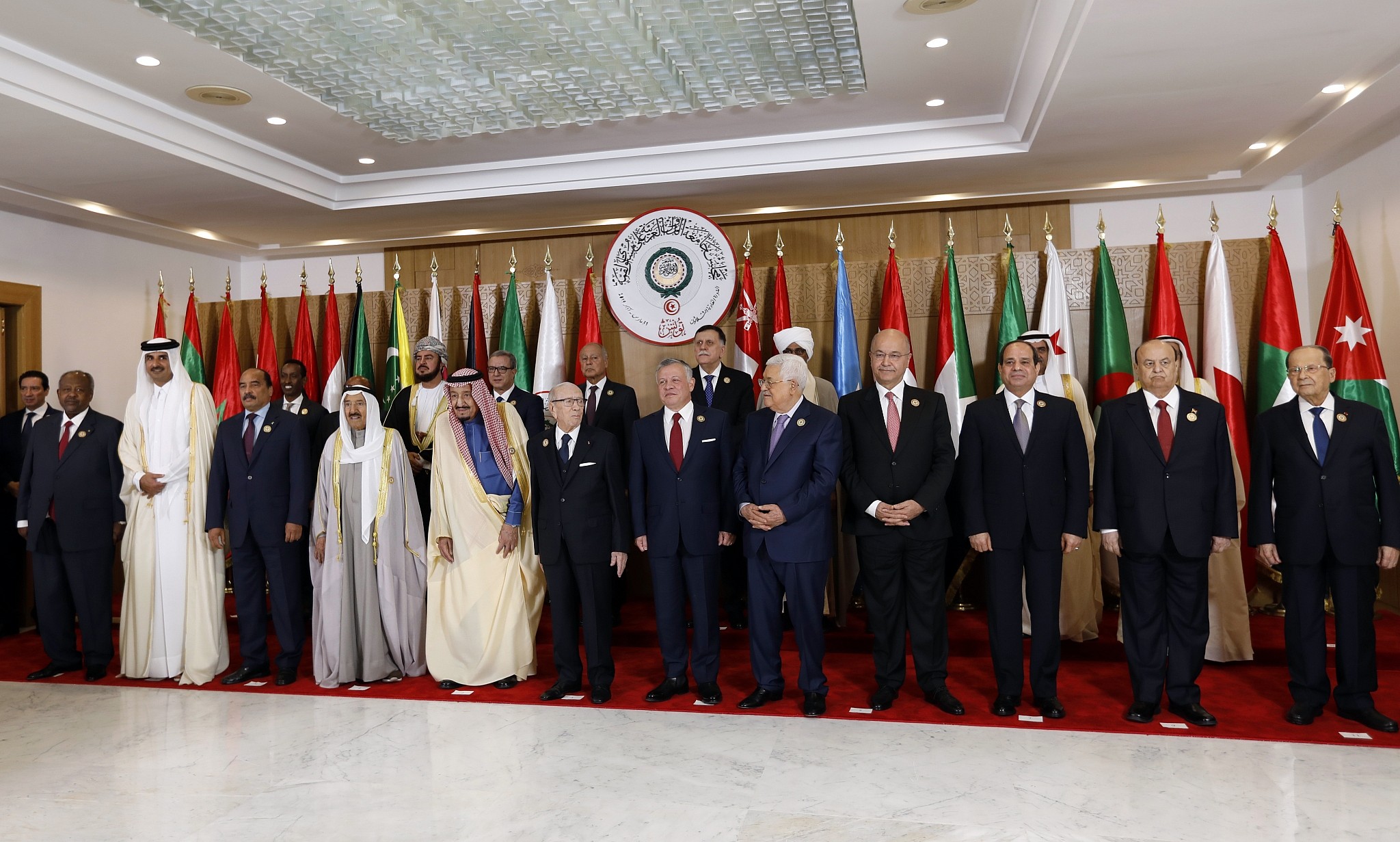
Arab leaders pose for the camera, ahead of the 30th Arab Summit in Tunis, Tunisia, March 31, 2019. (Zoubeir Souissi, Pool photo via AP)

Arab leaders pose for the camera, ahead of the 30th Arab Summit in Tunis, Tunisia, March 31, 2019. (Zoubeir Souissi, Pool photo via AP)

TUNIS, Tunisia — Leaders meeting in Tunisia for the annual Arab League summit on Sunday were united in their condemnation of Trump administration policies seen as unfairly biased toward Israel but divided on a host of other issues, including whether to readmit founding member Syria.

Representatives from the 22-member league — minus Syria — aim to jointly condemn US President Donald Trump’s recognition of Israeli control over the Golan Heights, which Israel captured from Syria in the 1967 war, and Trump’s decision last year to recognize Jerusalem as Israel’s capital.

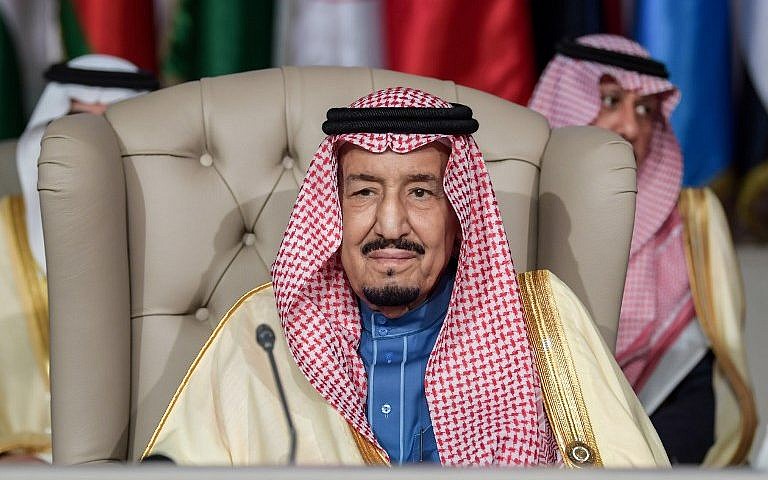
At the opening of the summit, King Salman said Saudi Arabia “absolutely rejects any measures undermining Syria’s sovereignty over the Golan Heights” and supports the creation of a Palestinian state in the West Bank and the Gaza Strip, with East Jerusalem as its capital.

He added that Iran’s meddling was to blame for instability in the region.

Saudi Arabia’s King Salman bin Abdulaziz attends the opening session of the 30th Arab League summit in the Tunisian capital Tunis on March 31, 2019. (Fethi Belaid/Pool/AFP)

One of the few things that have united the Arab League over the last 50 years is the rejection of Israel’s control of the Golan Heights as well as East Jerusalem and the West Bank, which Israel also gained control of in the 1967 war and which the Palestinians want for a future state.

The international community, including the United States, largely shared that position until Trump upended decades of US policy by moving the American Embassy to Jerusalem last year and recognizing Israel’s 1981 extension of Israeli law to the strategic Golan plateau earlier this month.

The Arab leaders meeting in Tunisia are expected to issue a statement condemning those moves but are unlikely to take any further action.

That’s in part because regional powerhouses Saudi Arabia and the United Arab Emirates have cultivated close ties with the Trump administration, viewing it as a key ally against their main rival, Iran. Both face Western pressure over their devastating three-year war with Yemen’s Houthi rebels, and Riyadh is still grappling with the fallout from the killing of Washington Post columnist Jamal Khashoggi by Saudi agents last year.

Lebanon’s Foreign Minister Gebran Bassil said Saturday that Arab ministers had voiced support in a preparatory meeting for a declaration that Trump’s Golan move violates the UN Charter, which prohibits acquiring territories by force.

In Syria, small protests against Trump’s Golan move were held in different parts of the country and state media criticized the Arab summit. “The Golan is not awaiting support from the Arabs, and not a statement to condemn what Trump has done,” the Thawra newspaper said in an editorial that accused Arab leaders of taking their orders from the US and Israel.

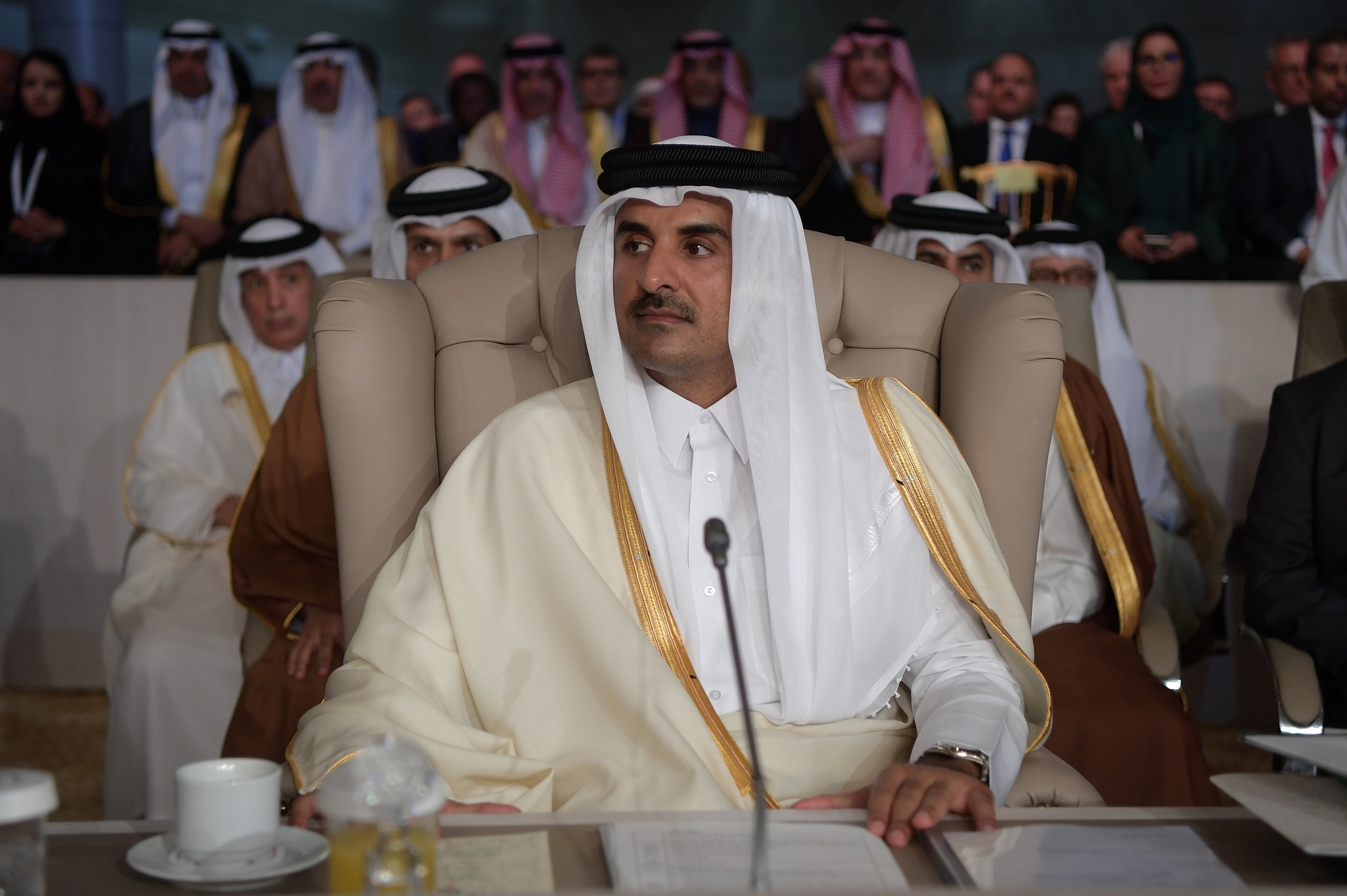
Qatar’s Emir Sheikh Tamim bin Hamad Al Thani attends the opening of the 30th Arab Summit in Tunis, Tunisia, March 31, 2019. (Fethi Belaid/ Pool photo via AP)

This year’s summit comes against a backdrop of ongoing wars in Syria and Yemen, rival authorities in Libya and a lingering boycott of Qatar by four fellow League members. Algeria’s President Abdelaziz Bouteflika and Sudan’s President Omar al-Bashir skipped the meeting as they contend with mass protests against their long reigns.

The Arab League is expected to consider readmitting Syria, a founding member that was expelled in the early days of the 2011 uprising against President Bashar Assad. But officials speaking ahead of the meeting said it was unlikely Syria would be welcomed back anytime soon.

The United Arab Emirates reopened its embassy in Damascus last year, and other Arab states have expressed support for restoring relations. But Saudi Arabia and Qatar have actively supported the rebels trying to overthrow Assad, and many other states view his government as an Iranian proxy that should continue to be shunned.

In a rare sign of easing tensions across another regional rift, King Salman and Qatar’s Emir Sheikh Tamim bin Hamad Al Thani sat at the same sprawling table when the heads of delegations met Sunday. It was the first time the two leaders have appeared in the same room since Saudi Arabia led the boycott of Qatar nearly two years ago over Doha’s ties to Iran and its support for regional Islamist groups.


Netanyahu to meet Putin in Moscow five days before elections

April 2, 2019

Source: Netanyahu to meet Putin in Moscow five days before elections | The Times of Israel

Iran’s efforts to entrench itself in Syria, US Golan declaration likely to dominate ‘brief’ discussion between PM and Russian leader, their second in five weeks

Russian President Vladimir Putin (R) shakes hands with Prime Minister Benjamin Netanyahu during a meeting at the Kremlin in Moscow on February 27, 2019. (MAXIM SHEMETOV / POOL / AFP)

Russian President Vladimir Putin (R) shakes hands with Prime Minister Benjamin Netanyahu during a meeting at the Kremlin in Moscow on February 27, 2019. (MAXIM SHEMETOV / POOL / AFP)

Prime Minister Benjamin Netanyahu will travel to Moscow for a meeting with Russian President Vladimir Putin later this week, his office announced on Tuesday.

The Prime Minister’s Office did not provide further details about the meeting, which is set to take place Thursday in the Kremlin — five days before Israel’s Knesset elections.

Russia confirmed the meeting.

“An agreement has been reached that on April 4 Israeli Prime Minister Netanyahu will fly to Moscow for a brief working visit. On April 4 such brief working talks will be held and the sides will synchronize their watches,” according to Kremlin spokesperson Dmitry Peskov.

Putin and Netanyahu spoke on the phone on Monday and discussed “regional issues,” the PMO said that day, without elaborating.

Netanyahu has boasted of his close personal ties to world leaders, including Putin, during the current election campaign, arguing that his diplomatic skills are unrivaled.

The last meeting of the two leaders took place in late February in the Russian capital, and marked the first significant encounter between the two since a major spat developed over a downed Russian spy plane in September. Even though the plane was shot down by Syrian air defense while aiming at an Israeli jet that was targeting an alleged Iranian installation, Moscow blamed Israel, saying the IAF used the Russian aircraft as cover and did not give the Russians proper warning of its planned strike in Syria.

Israel denies both charges.

At the time, Netanyahu stressed Israel’s absolute commitment to continue to act to thwart Iran’s efforts to military entrench itself in Syria. Tehran and Damascus are close allies of Moscow.

“The greatest threat to stability and security in the region comes from Iran and its proxies,” Netanyahu told Putin in February 27. “We are determined to continue our aggressive activity against Iran, which calls for our destruction, and against its attempts to establish itself militarily in Syria.”

Syria is likely to dominate Thursday’s talks as well, including the matter of the US administration’s recognition last week of Israeli sovereignty over the Golan Heights. Moscow condemned the decision, reiterating that it considers the territory part of Syria.

Netanyahu had credited his close ties with Putin for the success of a system allowing Israel to carry out strikes in Syria without becoming entangled with Russia, which is allied with Syria’s President Bashar Assad, but those ties reportedly took a hit in the wake of the spy plane incident.

After the February meeting, a minor disagreement over Moscow’s offer to host Israeli-Palestinian peace talks ensued. The Russian embassy in Tel Aviv said that the issue had been raised during the trip, but an Israeli official later denied this.

Quoting Russian Foreign Minister Sergey Lavrov, the embassy’s statement said that “during Prime Minister Netanyahu’s visit to Moscow, the situation in the Israeli-Palestinian settlement was discussed. We reaffirmed our position on Russia’s interest in overcoming the deadlock in this matter as soon as possible.

“Our proposal to host leaders of Israel and Palestine remains relevant. We believe that it would be at least a very important step in restoring confidence. Without this, it is impossible to count on further progress in the Israeli-Palestinian settlement,” it  said.

Russia🇷🇺 in Israel

@israel_mid_ru

During PM ‘s visit to (27/02) the situation in the Israeli-Palestinian settlement was discussed. We reaffirmed our position on ‘s interest in overcoming the deadlock in this matter as soon as possible, said. https://bit.ly/2tXs1hj  -1/3-

But in response, a senior Israeli diplomatic official told Hebrew media that “the issue was never discussed.”

During the public part of the February meeting, Putin welcomed his Israeli guest, but did not specifically mention Iran or Syria in his remarks. “It is very important that we continue to cooperate. Russia was a supporter of the establishment of Israel. We are happy to talk about the situation in the region and the security issue,” he said.

Times of Israel staff and agencies contributed to this report.