Archive for April 2019

US Must Acknowledge Lebanon, Turkey No Longer True Allies

April 4, 2019

Source: US Must Acknowledge Lebanon, Turkey No Longer True Allies | Newsmax.com

US Must Acknowledge Lebanon, Turkey No Longer True Allies
(John Grummitt/Dreamstime.com)

By Adam Turner
Wednesday, 03 April 2019 04:20 PM

Recently, the Trump administration made news by breaking with fifty years of U.S. policy and recognizing Israeli sovereignty over the Golan Heights.

The Golan Heights, of course, is mountainous territory that Israel conquered in a defensive war from Syria back in 1967. Israel extended Israeli law to the area in 1980, thereby annexing it.

Periodically, those in the peace process camp would propose that Israel trade the Golan for peace with the Assad regime. Luckily, Israel never did so; otherwise, today the Islamic Republic of Iran would be stationing its men and missiles on the Heights, and threatening not just Israel, but Jordan as well. But even though the U.S. had a national interest in keeping the Israelis in the Golan, it took President Trump, with his willingness to go against the conventional wisdom, to recognize the reality of the situation, and stop being afraid of the (supposedly) explosive “Arab Street.”

Recognizing reality is a good thing. And we need a whole lot more of it, when it comes to the Middle East. All too often, foreign policy makers in the U.S. get stuck in the past, and refuse to reevaluate policies that have long since become moot or counterproductive.

Here is one example: in 2005, after the (likely) Hezbollah orchestrated assassination of Lebanese politician Rafik Hariri, the people of that nation — including most religious groups in Lebanon, with the possible exception of the Shia community — went to the streets to protest the continuing occupation of Lebanon by Syria, and to demand more democracy. As a result, Syrian troops were pulled out, and eventually, Saad Hariri, Rafik’s son, became Prime Minister. Hezbollah, the terrorist militia that Iran had established in Lebanon, which was aligned with the Syrians, was weakened considerably.

In 2006, to build on these positive developments, the U.S. began supplying military aid to the Lebanese Armed Forces (LAF).

U.S. policy makers hoped that this aid, which over the years has included Hellfire missiles, A 29 Super Tocano aircraft, and M2A2 Bradley Fighting Vehicles, would help to make the LAF a powerful counterbalance to Hezbollah. This should not be surprising, as Hezbollah is a bitter enemy of the U.S., having more American blood on its hands than any other terror group excepting al-Qaeda.

In the end, however, the LAF proved to be no match for Hezbollah.

Today, Hezbollah basically controls the Lebanese nation, and the LAF has essentially become an “auxiliary” of the terror militia. The cooperation between Hezbollah and the LAF has become so close that the two sometimes patrol the same villages togethershare uniformsand equipment, and conduct joint military operations.

But the U.S. continues to provide military aid to the LAF, a total of $1.7 billion so far.

If Hezbollah goes to war against Israel, as Hezbollah often threatens to do, it is likely that U.S. military equipment will be used by that terror organization against our strongest democratic ally in the Middle East. Needless to say, this is not in line with the United States’ national interest.

Here is another example; prior to the 2000’s, Turkey was a strong NATO partner of the U.S. But beginning in 2003, when (now) President Recep Erdogan first gained power, that nation slowly began to turn against the U.S., and against the West and democracy itself.

In 2003, Turkey refused to allow the U.S. to use the Incirlik military in the invasion of Iraq.

Since then, Turkey has violated international oil sanctions on Iran, allowed men and supplies to flow through Turkey to reinforce the Islamic State, and now threatens to buy the S-400 missile system from Russia. Plus, Turkey continues to attack U.S. allies in Syria, the Syrian Democratic Forces, because the SDF started as a Kurdish militia, and Erdogan hates and fears the Kurds. Turkey also routinely threatens other U.S. allies, like Greece and Israel. Turkey has even grabbed American hostages.

Yet many in the U.S. government continue to pretend Turkey is still a trusted ally of the U.S. Both President Trump, and former President Obama, have relied on President Erdogan’s advice when formulating U.S. foreign policy. Reportedly, Erdogan was able to persuade President Trump to call for the removal of all the U.S. troops from Syria, which would have given Turkey the opportunity to invade and crush the SDF. Fortunately, President Trump reconsidered his decision.

Had this troop removal taken place, it would have been a huge mistake by the U.S. The U.S. had gone to great trouble to persuade the SDF to be the ground forces against the Islamic State in Raqqa and elsewhere in Syria. If, after the completion of that war against the physical caliphate (but with ISIS still a threat), the U.S. then abandoned the SDF to the Turks, the word would have gone out that the U.S. was not a loyal ally. Further, unlike in Afghanistan or Iraq, there was little pressure on the administration to remove these troops, as there have been few casualties since they were sent to Syria in 2014. Finally, by keeping the U.S. troops there, other enemy nations like Iran, Russia, and the Assad forces are blocked from expanding their areas of control in Syria.

The U.S. needs to recognize the reality of Lebanon and Turkey. At this time, both nations are led by enemies of the United States. President Trump needs to act accordingly.

Adam Turner is the General Counsel and Legislative Affairs Director for the Endowment for Middle East Truth (EMET). 


US Must Acknowledge Lebanon, Turkey No Longer True Allies

April 4, 2019

Source: US Must Acknowledge Lebanon, Turkey No Longer True Allies | Newsmax.com

US Must Acknowledge Lebanon, Turkey No Longer True Allies
(John Grummitt/Dreamstime.com)

BAdam Turner
Wednesday, 03 April 2019 04:20 PM

Recently, the Trump administration made news by breaking with fifty years of U.S. policy and recognizing Israeli sovereignty over the Golan Heights.

The Golan Heights, of course, is mountainous territory that Israel conquered in a defensive war from Syria back in 1967. Israel extended Israeli law to the area in 1980, thereby annexing it.

Periodically, those in the peace process camp would propose that Israel trade the Golan for peace with the Assad regime. Luckily, Israel never did so; otherwise, today the Islamic Republic of Iran would be stationing its men and missiles on the Heights, and threatening not just Israel, but Jordan as well. But even though the U.S. had a national interest in keeping the Israelis in the Golan, it took President Trump, with his willingness to go against the conventional wisdom, to recognize the reality of the situation, and stop being afraid of the (supposedly) explosive “Arab Street.”

Recognizing reality is a good thing. And we need a whole lot more of it, when it comes to the Middle East. All too often, foreign policy makers in the U.S. get stuck in the past, and refuse to reevaluate policies that have long since become moot or counterproductive.

Here is one example: in 2005, after the (likely) Hezbollah orchestrated assassination of Lebanese politician Rafik Hariri, the people of that nation — including most religious groups in Lebanon, with the possible exception of the Shia community — went to the streets to protest the continuing occupation of Lebanon by Syria, and to demand more democracy. As a result, Syrian troops were pulled out, and eventually, Saad Hariri, Rafik’s son, became Prime Minister. Hezbollah, the terrorist militia that Iran had established in Lebanon, which was aligned with the Syrians, was weakened considerably.

In 2006, to build on these positive developments, the U.S. began supplying military aid to the Lebanese Armed Forces (LAF).

U.S. policy makers hoped that this aid, which over the years has included Hellfire missiles, A 29 Super Tocano aircraft, and M2A2 Bradley Fighting Vehicles, would help to make the LAF a powerful counterbalance to Hezbollah. This should not be surprising, as Hezbollah is a bitter enemy of the U.S., having more American blood on its hands than any other terror group excepting al-Qaeda.

In the end, however, the LAF proved to be no match for Hezbollah.

Today, Hezbollah basically controls the Lebanese nation, and the LAF has essentially become an “auxiliary” of the terror militia. The cooperation between Hezbollah and the LAF has become so close that the two sometimes patrol the same villages togethershare uniformsand equipment, and conduct joint military operations.

But the U.S. continues to provide military aid to the LAF, a total of $1.7 billion so far.

If Hezbollah goes to war against Israel, as Hezbollah often threatens to do, it is likely that U.S. military equipment will be used by that terror organization against our strongest democratic ally in the Middle East. Needless to say, this is not in line with the United States’ national interest.

Here is another example; prior to the 2000’s, Turkey was a strong NATO partner of the U.S. But beginning in 2003, when (now) President Recep Erdogan first gained power, that nation slowly began to turn against the U.S., and against the West and democracy itself.

In 2003, Turkey refused to allow the U.S. to use the Incirlik military in the invasion of Iraq.

Since then, Turkey has violated international oil sanctions on Iran, allowed men and supplies to flow through Turkey to reinforce the Islamic State, and now threatens to buy the S-400 missile system from Russia. Plus, Turkey continues to attack U.S. allies in Syria, the Syrian Democratic Forces, because the SDF started as a Kurdish militia, and Erdogan hates and fears the Kurds. Turkey also routinely threatens other U.S. allies, like Greece and Israel. Turkey has even grabbed American hostages.

Yet many in the U.S. government continue to pretend Turkey is still a trusted ally of the U.S. Both President Trump, and former President Obama, have relied on President Erdogan’s advice when formulating U.S. foreign policy. Reportedly, Erdogan was able to persuade President Trump to call for the removal of all the U.S. troops from Syria, which would have given Turkey the opportunity to invade and crush the SDF. Fortunately, President Trump reconsidered his decision.

Had this troop removal taken place, it would have been a huge mistake by the U.S. The U.S. had gone to great trouble to persuade the SDF to be the ground forces against the Islamic State in Raqqa and elsewhere in Syria. If, after the completion of that war against the physical caliphate (but with ISIS still a threat), the U.S. then abandoned the SDF to the Turks, the word would have gone out that the U.S. was not a loyal ally. Further, unlike in Afghanistan or Iraq, there was little pressure on the administration to remove these troops, as there have been few casualties since they were sent to Syria in 2014. Finally, by keeping the U.S. troops there, other enemy nations like Iran, Russia, and the Assad forces are blocked from expanding their areas of control in Syria.

The U.S. needs to recognize the reality of Lebanon and Turkey. At this time, both nations are led by enemies of the United States. President Trump needs to act accordingly.

Adam Turner is the General Counsel and Legislative Affairs Director for the Endowment for Middle East Truth (EMET).
Israel: Southern Discomfort

April 4, 2019

Source: Israel: Southern Discomfort

April 4, 2019: In Gaza Hamas continues to negotiate with Egypt for ceasefire deals that rarely last more than a few hours or days. Because of this these deals are signed by Israel and Hamas with full knowledge of what happens next. Invariably one of the smaller Islamic terror groups in Gaza (which Hamas insists it can control but cannot) fires rockets or mortar shells into Israel and Israel retaliates.

Among themselves Hamas leaders know this works because every time a Palestinian gets killed at the border fence or Israel fires on a target in Gaza, it is easier for Hamas fundraisers worldwide to get more contributions. Getting that cash into Gaza or the goods the money can buy, is another matter and increasingly difficult. Hamas does not mind because they believe they will again restore free access to Gaza and all those contributions will be available. There is a problem with this plan; Israel and Egypt know about it and are intent on preventing it. Meanwhile Hamas continues staging the violent demonstrations at the border fence and spending what money they have to finance the demonstrations and the pay victims or their families for deaths and injuries.

The latest ceasefire offer includes the smaller Islamic terrorist factions in Gaza insisting they are willing to halt the smaller but noisier night time fence demonstrations and balloon attacks in return for some economic relief (reopening of the Israeli and Egyptian crossings). The smaller factions, especially Iran backed Islamic Jihad, are very unreliable when it comes to these deals. The smaller factions contain a lot for former Hamas members who grew disillusioned with Hamas for not being radical enough. These more radical Palestinians then join ISIL (and tend to get killed in Egypt) or more radical factions in Gaza and insist that nothing less than the destruction of Israel will do. That leads to “victory or death” attitude where the chance of victory over Israel is extremely low but since these Islamic fanatics are on a mission from God anything is possible.

Israel realizes that most Gazans see “victory or death” strategies being pursued at the expense of the average Gaza resident. This creates growing popular resistance within Gaza. The Islamic terrorists cannot ignore that because that anger makes it easier for Israel to recruit paid informants who supply targeting information for Israeli airstrikes. Gazans also know that Israel will go to great lengths to avoid civilian casualties. That includes calling civilians on their cell phones and warning of an imminent airstrike nearby. Hamas tries to discourage civilians from responding to those phone calls but everyone knows that Hamas prefers civilian casualties because these “involuntary martyrs”, especially women and children, make for great propaganda. For that reason the Israeli government resists calls from Israelis living near the Gaza border that Israel invade and occupy all or some of Gaza. That will get Gaza civilians killed and that is seen as a plus by Hamas because it will force Arab oil states to resume, for a while, their financial support. Hamas and other Islamic terror groups keep trying to come up with some action that will results in an Israeli invasion but so far that is not working. Egypt doesn’t trust Hamas and the other Islamic terror groups in Gaza either so Hamas is stuck and is running out of time and options.

Meanwhile In The North

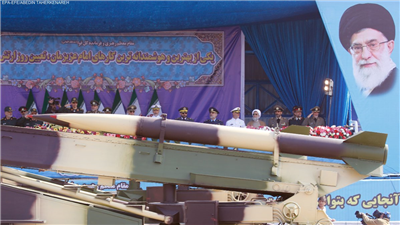
Israel wants Iran out of Syria and would prefer that the Kurds got their autonomy. Israel is willing to make a peace deal with Syria and Turkey. Israel has successfully attacked Iranian efforts to build a military infrastructure (bases, arms factories, forces on the Israeli border) in Syria and this has made the Iranian leadership angrier and very frustrated. Iran is seen as even more unstable and unpredictable than Turkey. While Iran has backed off from the Israeli border and spent more time and effort concealing its operations and personnel in Syria, there are still plans to “destroy Israel.” These apparently revolve around upgrading over 10,000 of the longer (50 kilometers or more) range rockets Iran has provided Hezbollah. The upgrade is mainly about adding GPS guidance systems that will allow for precision attacks on Israeli targets (especially populated areas). A mass use of these rockets could overwhelm Israeli anti-missile defenses.

Russia has taken the lead in brokering agreements or “understandings” deal with disagreements with Turkey or Iran over who will get what in Syria. So far Russia has had limited success with Iran and Turkey. Israel has been willing to work with Russia and that has proved useful for both countries. Israel and Russia have been cooperating in Syria for years but Turkey and Iran are determined to have their way despite the opposition they are encountering.

Iran

Iran has been spending a lot less on Syrian operations because Iran has less cash to operate with. The IRGC (Iranian Revolutionary Guard Corps) budget for foreign operations (especially Syria and Lebanon) have been cut, apparently in a big way. The Iranian mercenary force in Syria is undergoing a reorganization and downsizing. The IRGC explains this away by describing it as a “redeployment for the attack on Israel.” The reality is that there is a lot less cash to pursue that goal and the IRGC is actually trying to avoid more airstrikes by Israel which continues to win this war with Iran. In Lebanon the well-established (since the 1980s when founded by the IRGC) Hezbollah has done the unthinkable and is asking the public for donations because Iranian subsidies have been cut, apparently drastically. The Iran government is spending more money to relieve the economic problems most Iranian face.

Meanwhile there are a number of complications in Syria that have led to a military stalemate. Many of these revolve around what to do with the Syrian Kurds. Iran has problems with Israel in Syria, as well as its own allies. The Iranians want the Syrian government (controlled by the Assad clan) to accept Iranian domination (as Hezbollah does in Lebanon) and agrees with Turkey the Syrian Kurds should not get autonomy and should accept rule by the Iran backed Syrian government as well as Turkish control of border areas. Iran has a major problem in that no one wants them in Syria much less acting as an occupying military force dedicated to starting a war with Israel.

The Russians would prefer that the Turks and Iranians got out of Syria and that the Assads and Kurds worked out a compromise (which the two seem willing to do). The Americans, Israelis and most other Middle Eastern nations agree with this approach.

In Gaza Iranian agents are trying to convince the Islamic terror groups there to unite and cooperate to make a ceasefire with Israel work. That would enable Iran to pay for a military buildup similar to Hezbollah, which has Iran financed since the 1980s. There are several factors that cripple the “southern Hezbollah” effort. First Iran and Hezbollah are Shia and the Gulf Arab states are largely Sunni and basically at war with Shia Iran because of that. This is crucial because Iran is currently broke (because of low oil prices, revived American economic sanctions and decades of corrupt rule by a religious dictatorship) and unable to finance two Hezbollahs. Actually, payments to Hezbollah have been cut recently and Hezbollah is openly seeking new sources of income. Hamas has always received the bulk of its foreign aid from Gulf Arab oil states and the United States. Both of these sources have largely dried up because Hamas refuses to make peace and allow the formation of a united Palestinian government.

April 3, 2019: In the south Israeli troops found and destroyed several bombs demonstrators had thrown over the border fence during a recent demonstration. Elsewhere on the Gaza border Israeli soldiers caught three Gazans coming through the security fence and arrested them. The three were carrying knives. The security fence is part of a security zone that contains numerous sensors, vidcams and, in some cases, remotely controlled machine-gun towers. Thus determined Gazans can get through the fence but few, if any, get far from the border without being captured or killed.

Egypt is brokering yet another ceasefire with Hamas and other Islamic terror groups in Gaza.

In the West Bank a Palestinian armed with a knife attempted to attack two Israeli civilians but was shot dead by one of the civilians.

April 2, 2019: In the south (off the Gaza coast) an Egyptian patrol boat seized a Palestinian fishing boat near the maritime border between Gaza and Egypt. Five fishermen were arrested and their boat towed back to an Egyptian port. One of the fishermen was wounded by gunfire. Israel had recently allowed Gaza fishing boats to resume operations offshore.

March 31, 2019: In the south (Gaza) several rockets were fired into Israel but caused no damage or casualties. Within hours Israeli tanks fired shells at Hamas positions close to the border fence. This led to the closing of the two Israeli crossing into Gaza, which had been reopened earlier in the day.

March 30, 2019: In the south (Gaza ) Hamas mobilized over 20,000 Palestinians to stage another violent demonstration at the border fence. The Hamas leader spoke and said he hoped Hamas would soon be able to bomb Tel Aviv. Then the demonstration turned violent. Three Palestinians were killed and over a hundred wounded as Hamas operatives led the crowd in efforts to get through the fence. Hamas had assured Israel that this demonstration would be kept away from the fence but that was not the case.

March 29, 2019: Egypt is still pressing Israel and Hamas to sign a ceasefire deal that had been negotiated a month ago. This one has Israel repairing the electrical transmission line between Gaza and Israel, expanding the fishing zone for Palestinian fishermen and allowing some foreign aid projects to resume. Qatar would be allowed to move cash into Gaza for infrastructure and economic projects. The Israeli and Egyptian border crossings would be gradually reopened to full and regular traffic flow. No one believes this deal will actually work but Egypt is determined to keep at it until one does.

March 27, 2019: In Syria Israel launched another airstrike on Iranian facilities, this time outside Aleppo. Seven people were killed and at least one warehouse full of weapons and explosives blew up. Israel apparently coordinated this attack with Russia, which is according to an understanding Russia has with Israel. Russian media later revealed that the Israeli warplanes had flown over Jordan and western Iraq to enter Syria. This avoided any interaction with Russian S-400 air defense systems in western Syria or the Syrian S-300 batteries covering the rest of the country.

March 26, 2019: Today is the 40th anniversary of the Egypt-Israel peace treaty. After a decade both nations were confident that neither was a military threat to the other. But Egypt continued to back anti-Semitic and anti-Israel propaganda in the mass media and the educational system. The U.S. was now supplying both nations with military aid and Egypt obtained American M1 tanks and F-16 jet fighters plus lots of other American gear. The Egyptian military still had, and still has, lots of Russian equipment but the Western stuff is preferred.

March 25, 2019: In the south (Gaza) a long range rocket fired into Israel exploded in a village outside Tel Aviv, wounding seven Israelis. The rocket was not intercepted by Iron Dome because there was no Iron Dome stationed that far from Gaza. At first Hamas insisted the rocket attack was an accident. Then they said it was carried out by Iranians without permission from Hamas leaders. Finally Hamas leaders admitted that they ordered the attack. It is unclear why efforts were made to deny responsibility. In the end Egypt was able to confirm that Hamas had ordered the attack and some Hamas officials confirmed that.

In retaliation for his attack Israel carried out dozens of air and artillery strikes against Hamas facilities in Gaza. This included bombing the new Hamas headquarters and intelligence service buildings. Hamas believed Israel did not know the location of these buildings but the Israelis did and demolished the two multistory buildings in a residential neighborhood. Egypt quickly arranged a ceasefire in Gaza but that did not last because rockets were again fired into Israel and these attacks and Israeli retaliation attacks continued for two more days.

March 24, 2019: The leaders of Iraq, Jordan and Egypt met in Egypt to discuss military, diplomatic and economic cooperation. The military cooperation was mainly about the continuing battle against ISIL.

March 21, 2019: The United States officially backed the Israeli annexation of the Golan Heights, which Syria still considers as Syrian. Israel has occupied the Golan Heights since 1967 when they took the area after Syrian used these heights to attack Israeli territory to the south that was on lower ground. In 1981 Israel annexed the area. The UN opposed this but that had no impact on the situation. Israel points out that Syria has never made a serious efforts to retake the Golan Heights since 1973. In that respect Israel considers the Golan Heights abandoned property and has absorbed it.

March 18, 2019: Egyptian negotiators have told their Hamas counterparts that if Hamas makes a major rocket attack on Israel and the Israelis respond with an invasion Egypt will not provide any support for Hamas. Egypt does not care if Israel destroys Hamas and takes back control of Gaza (which it voluntarily gave up in 2005). This was another indication that Hamas was losing support in the Arab world.

March 17, 2019: Egypt has ordered 24 (or more) Russian Su-35 fighter-bombers for about $2 billion. Arab Gulf oil states will probably pay for this and the U.S. will probably ignore the violation of existing sanctions on Russia.

March 16, 2019: India insists its Israeli SPICE 2000 smart bombs hit their intended targets at the Balakot Islamic terrorist training base in Pakistan during a February airstrike. But as high-resolution satellite photos became available (from commercial sources) it became clear that three smart bombs all missed their targets by the same distance and that was apparently to the GPS data being entered into the SPICE 2000 bombs incorrectly. India does not have a lot of experience using smart bombs and that would explain the error.

March 15, 2019: Russia apparently supplied Iran with the “zero click” cell phone hacking tech which Iranians recently used to hack the phone of an Israeli politician. It’s unclear if this was an authorized transfer of technology to Iran or an illegal one. Both methods are used for Iran to get needed items from Russia.

March 14, 2019: Off the southwest coast of Iran dozens of Iranian UAVs were seen in the air near the Strait of Hormuz. Iran described it as practice for a mass UAV attack on Israel, using about ten stealthy (based on a captured American RQ-170s) UAVs and many more conventional designs. Iran regularly tests Israeli detection and defenses against their UAVs by having Hezbollah fly one into Israel from Lebanon or Syria. Iran believes it has detected an Israeli vulnerability although those test flights also provided Israel with a list of improvements they can make in their ability to deal with these UAVs. Israel is bombing Iranian weapons construction and storage facilities in Syria and Lebanon to prevent such a UAV attack from being launched from those two countries, which would be more difficult to deal with than one launched from Iran (which would have to be one way.)

March 13, 2019: Israeli intelligence released aerial photos showing construction of what Israel describes as an Iranian weapons factory in western Syria (outside the port of Latakia). Israel also released aerial photos of a similar missile plant in Iran.


ANALYSIS: Israel and US Working Against Growing Iranian Missile Threat 

April 4, 2019

Israel and the US determined to block completion of Iranian land corridor from Tehran to the Golan Heights

Thursday, April 04, 2019 |  Yochanan Visser

While the international community continues issuing condemnations about the American recognition of Israeli sovereignty over the Golan Heights it becomes increasingly clear that the measure is related to Iran’s activities in Syria.

Earlier this week, US officials told Investigative reporter Adam Kredo of the Washington Free Beacon that “the Trump administration’s recent recognition of Israeli sovereignty over the contested Golan Heights territory is part of a larger effort by the White House to open new fronts in efforts to combat Iranian militants and terror proxies in the region.”

While EU commissioner for foreign affairs Frederica Mogherini claimed that the American recognition of Israel’s sovereignty over the Golan Heights did not constitute a “solution” for the conflict over the ownership of the mountainous plateau, the Trump Administration begs to differ.

“This decision is of critical strategic and security importance to the State of Israel and the stability of the Middle East,” an unnamed White House official told Kredo.

“To allow the Golan Heights to be controlled by the likes of the Syrian and Iranian regimes would turn a blind eye to the threats emanating from a Syrian regime that engages in atrocities and from Iran and terrorist actors, including Hezbollah, seeking to use the Golan Heights as a launching ground for attacks on Israel,” the official added.

“This administration, unlike previous administrations, is willing to acknowledge the reality that there can be no comprehensive peace agreement that does not satisfactorily address Israel’s security needs in the Golan Heights,” another White House official said.

Highlighting the radically changed situation on Israel’s north-eastern border where Iran has been staging cross-border missile attacks over the past year the official said “the president’s statement on the Golan reflects a recognition of the unique circumstances that make it appropriate to recognize Israeli sovereignty at this time.”

These “unique circumstances” include Iran’s belligerent activities in Lebanon, Iraq and Gaza where the Islamic Republic is constantly trying to keep the war of attrition against Israel going.

At the same time, Iran’s missile threat against Israel is growing by the day as we will see.

Let’s first take a look at the situation in Gaza where Egyptian mediators are still trying to establish a long-term truce between Israel and the ruling terrorist organization Hamas.

Hamas claims that the parties are close to signing such a truce, something that has been denied by Israel.

The Quds Force of the Iranian Revolutionary Guards Corps (IRGC), however, through its proxy IslamicJihad in Gaza is doing everything it can to prevent the implementation of a truce between the sides.

Islamic Jihad was responsible for the missile barrage that hit southern Israel after the Israeli army retaliated to the missile attack that destroyed a house in Moshav Mishmeret  north of Tel Aviv with a long-range rocket almost two weeks ago.

The same happened when two missiles ‘accidently’ were lobbed at Tel Aviv two weeks before the attack on Mishmeret.

Islamic Jihad (IJ) immediately issued a statement declaring its readiness for war with Israel while Hamas tried to avoid an escalation by condemning the IJ provocation and by publicly stating that the rocket attacks were an attempt to drag the sides into war and had to be stopped.

Islamic Jihad’s increasing influence in Gaza is the work of its new  commander Ziad Nakhallah who is very close to Quds Force commander Qassem Soleimani.

Nakhallah has sped up the transformation of IJ into a Hezbollah-styled fighting force and is stirring up violence in Gaza all the time.

The terror organization has no financial problems since it is wholly funded by Iran and is trying to take over Gaza in order to escalate the war against Israel.

When Hamas was trying to de-escalate the situation along the Israeli border last week Islamic Jihad issued a statement threatening Israel with war if it would kill Palestinian Arabs participating in the so-called Land Day protests along the Gaza Israel border last Saturday.

As for Lebanon, Israel again revealed that Iran, together with Hezbollah has completed the construction of an underground production facility for precision missiles.

The existence of the new missile facility in Lebanon was reportedly one of the issues discussedduring last week’s meeting between Israeli Prime Minister Benyamin Netanyahu and US Secretary of State Mike Pompeo.

Pompeo reportedly warned  Lebanese Prime Minister Saad Hariri that Iran’s activities could lead to a new disaster for Lebanon because Israel would not sit on its hands and could take military action to eliminate the growing threat from Iran in Lebanon.

Then there is the increasing long-distance missile threat to Israel from Iranian soil.

Over the past few months Iran has conducted several tests with intercontinental ballistic missiles (IBM’s) which are capable of carrying nuclear warheads. All attempts to launch these missiles failed, however.

Iran apparently doesn’t adhere to UN Security Council resolution 2231 which calls on the Islamic Republic “not to undertake any activity related to ballistic missiles designed to be capable of delivering nuclear weapons, including launches.”

However, the tests with the IBM’s and several new revelations about Iran’s ballistic missile program indicate the Islamic Republic is feverishly working to make “strategic leap” in its missile program, as deputy commander Hossein Salami called it.

Indeed, on February 2, 2019, it revealed the Hoveizeh cruise missile, a variant of the existing Soumar missile (itself a copy of Russia’s Kh-55 nuclear cruise missile), according to the Washington Institute for Near East Policy.

The Hoveizeh has a range of 1350 kilometer according to the IRGC almost double the reach of the Soumar missile and is capable of carrying a much larger warhead.

Since the Hoveizeh is a cruise missile it can be stationed on Iran’s fleet of submarines and threaten Israel from the Mediterranean Sea.

A successful test which was conducted in the Persian Gulf showed the missile struck its targets 1200 kilometers away with extreme accuracy according to Amir Khatami Iran’s Defense Minister.

Also at the beginning of February, Iran unveiled the second generation of the Khoramsharh ballistic missile.

The KhoramSharh-2 missile reportedly has a manoeuvrable warhead which makes it a precision missile. The missile has a range of 2000 km which allows it to hit targets in all of Israel while it is capable of carrying several three-ton warheads.

Then there was the sudden revelation of a new Iranian underground missile factory in February.

The production line of the IRGC facility assembles the Delzal ballistic precision missile with a range of 1,000 kilometers and could reach northern Israel. If deployed in northern Iraq or Syria the Delzal could hit any target in Israel.

As for the Iranian missile threat from Iraq, the fact that the Iranian proxy Hash al Shaabi, an umbrella organisation of Iranian-founded Shiite militias, is currently taking control over northern Iraq and is in the possession of ballistic missiles is a source of concern for Israel as well.

The missiles have already been used against the Kurds in Syria and against the Islamic State jihadist terror group and could be used against Israel in a future missile war.

To prevent Iran from carrying out transports of troops and missiles from the border with Iraq all the way to the Golan Heights the US has now decided to keep more troops in Syria than originally had been planned.

The US military is currently reinforcing its bases in Iraq and Syria with more troops arriving in Kirkuk in northern Iraq and at the at-Tanf base in eastern Syria on the border of Iraq.

Both Israel and the United States are determined to prevent the completion of the Iranian land corridor from Tehran to the Israeli border on the Golan Heights.

Netanyahu: the option of reoccupying Gaza is still on the table 

April 4, 2019

Source: Netanyahu: the option of reoccupying Gaza is still on the table – Arab-Israeli Conflict – Jerusalem Post

“But that is the last option and not the first,” he said.

BY TOVAH LAZAROFF
 APRIL 4, 2019 10:59
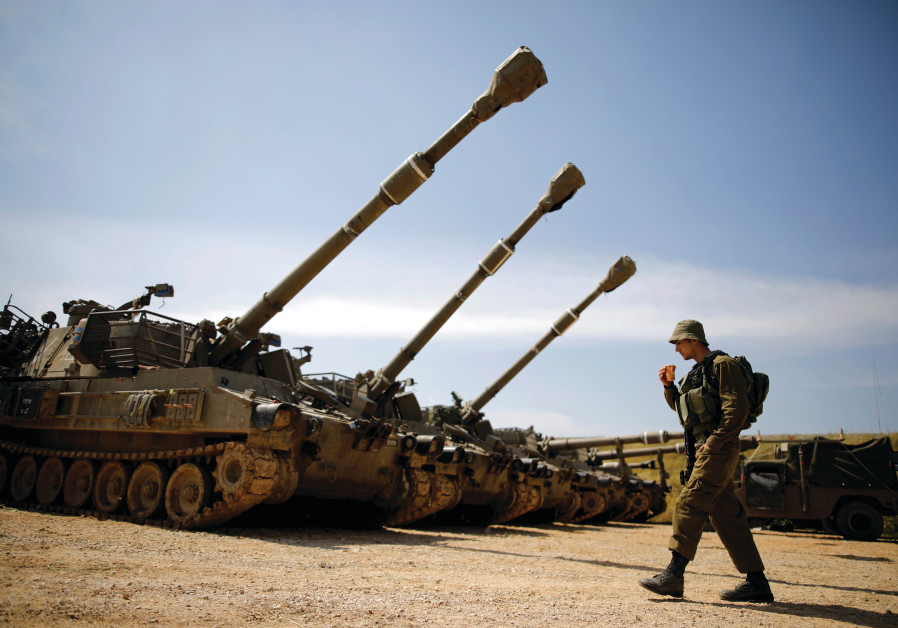
A soldier stands near a battery of cannons near the Gaza border, March 28th, 2019

Israel has not ruled out the option of reoccupying Gaza, Prime Minister Benjamin Netanyahu said on Thursday morning in an interview with KAN news.

“All the options are still on the table, including entering Gaza and occupying it, out of consideration of what is best for Israel,” he said.

“But that is the last option and not the first,” he said.

Netanyahu spoke about his policy with regard to the Hamas ruled enclave of 2 million Palestinians just before he left for Moscow on Thursday.

Israel withdrew from Gaza in 2005 and Hamas kicked the Palestinian Authority’s ruling Fatah party out of Gaza in 2007 in a bloody coup.

Netanyahu explained to KAN news the complex balancing act Israel tries to uphold with regard to Gaza, where it has the firepower to militarily crush Hamas, but has concluded it would be a mistake to do except as an option of last resort.

Israel hasn’t recaptured Gaza, because once it does, it would have to continue to hold onto that territory and Israel doesn’t want to rule the 2 million Palestinians there, Netanyahu said.

The other option would be to hand the Gaza Strip to another country so it could take charge of that territory  and no one else has volunteered, he added.

When he first entered office, Netanyahu said, he had hoped that another power would want to take charge of Gaza.

“I had hoped that we would find someone who would take it,” Netanyahu said.

“I have spoken with many Arab leaders about this possibility that we would do this” and “no one wanted to do this,” he said.

Over the last decade, he said, his policy therefore has been to try and contain the situation. No Israeli civilian has been killed from Gaza violence in southern Israel since the 2014 Gaza war, he said.

In the last year, he said, Israel has killed over 300 Palestinian terrorists at its border with Gaza. “They are trying to kidnap and kill our soldiers and we are preventing this,” Netanyahu said.

Israel, he said, has encircled Gaza with a concentrated military power, he said.

Ending the violence through diplomacy has been difficult, he said, because “You can’t enter into a diplomatic agreement with someone who wants to kill you.”

Looking toward the future, he said, he doesn’t even know if it would be possible to come to a long term ceasefire understanding.

“But one thing I do know. I am not engaging in needless wars. I want to use the force that is necessary and I am willing to pay the price, but only when it is necessary,” Netanyahu said.

He added that he was also willing to pay the political price for not going to war.

“I want every mother and father to know that I am sending their children to war without exhausting all other options. “It could be that we will be forced to embark on an extended [military] campaign in Gaza. The [IDF] forces are in place, but it’s not the first option,” he said.


Satellite images show site in Aleppo allegedly struck by Israel

April 4, 2019

Source: Satellite images show site in Aleppo allegedly struck by Israel – Middle East – Jerusalem Post

The blasts also caused an electrical blackout in Aleppo, the country’s second-largest city.

BY ANNA AHRONHEIM
 APRIL 4, 2019 13:02
Satellite images show destruction of site in Syria's Aleppo allegedly struck by Syria

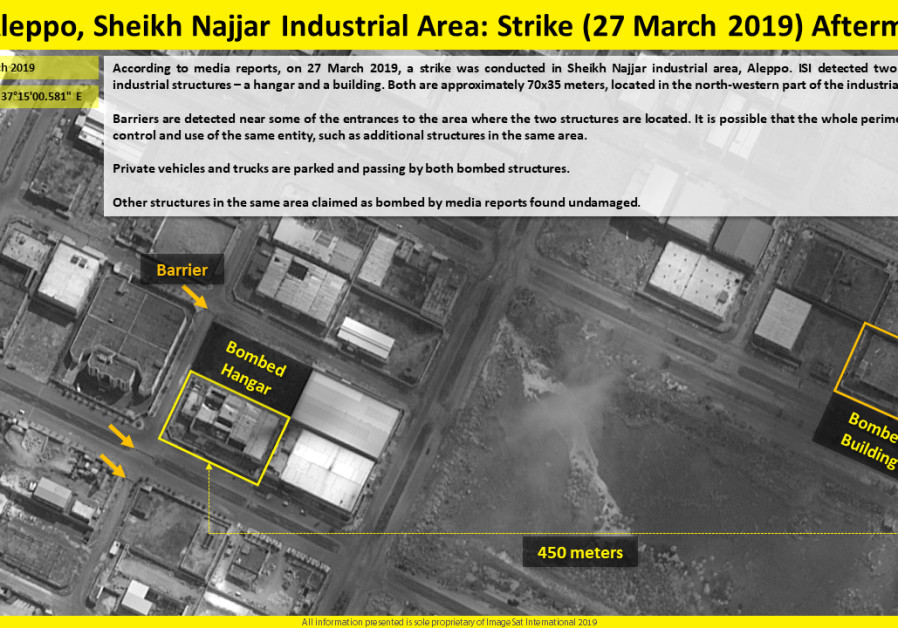
Satellite images released by Israeli intelligence firm ImageSat Intl. (ISI) on Thursday show the destruction of an industrial zone in Syria’s Aleppo allegedly struck by Israel in late March.

The images show destruction to two structures, a hanger and a building, in the north-western part of the Sheikh Najjar Industrial area, both approximately 70×35 meters and some 450 meters apart.

“While there aren’t significant signs of massive explosions, it seems that the bombs hit several spots of the hanger and caused a partial roof collapse,” ISI said in their report.

The blasts also caused an electrical blackout in Aleppo, the country’s second-largest city.

“Barriers are detected near some of the entrances to the area where the two structures are located. It is possible that the whole perimeter is under the control and use of the same entity,” ISI said in their report, adding that private vehicles and trucks are seen in the images, both parked and passing by both bombed structures.

According to local reports, the attack on March 28th also targeted Iranian ammunitions stores and the Nairab military airport used by Tehran on the outskirts of the city, the second such strike on the installation in less than a year.

But according to ISI “other structures in the same area claimed as bombed by media reports were found undamaged.”

While the Syrian military said that the strike caused only material damage, the Syrian Observatory for Human Rights (SOHR) reported that at least seven Iranian-linked militia fighters were reported to have been killed in the alleged Israeli strike.

While the Israeli military has not commented on the strikes, Israel’s Acting Foreign Minister Yisrael Katz was quoted as saying by Haaretz on Thursday morning that “as far as Iran knows, it’s Israel” who carried out the strikes.

Israeli officials have repeatedly voiced concerns over Iran’s entrenchment in Syria and the smuggling of sophisticated weaponry to Hezbollah from Tehran to Lebanon via Syria, stressing that both are red-lines for the Jewish State.

In January Prime Minister Benjamin Netanyahu said that Israel has a set policy of preventing Iran’s entrenchment in Syria, and that it would be enforced whether he is in Israel or abroad.

“We have a permanent policy to harm Iran’s establishment in Syria and to harm anyone who tries to harm us…This policy is permanent.”


A bittersweet operation: How ISIS and Russia played a role in returning a fallen soldier to Israel

April 4, 2019

Source: A bittersweet operation: How ISIS and Russia played a role in returning a fallen soldier to Israel

20 sets of remains arrive in Israel after two years of work; Moscow facilitated operation initiated in Israel by Lieberman; only match so far is Baumel
The remains of Zachary Baumel, repatriated Wednesday 37 years he went missing during the First Lebanon War, were just one of 20 sets of remains that arrived in Israel as part of Operation Bittersweet Song.Despite hopes that some of the remains belong to Zvi Feldman and Yehuda Katz, two other soldiers who went missing during the June 1982 Battle of Sultan Yacoub, the forensic institute in Abu Kabir was only able to identify Baumel’s remains so far. One of the 20 sets of remains does not appear to belong to any of the Israeli MIAs.

Zachary Baumel

Zachary Baumel

The operation was made possible by Israel’s close cooperation with Russia, a close ally of Damascus, and took two years to complete.

Former defense minister Avigdor Lieberman, who enjoys close ties with Moscow, was the one who pushed for the operation, a major intelligence – operated feat, to take place.The operation came to a halt in mid September, when Israel’s relationship with Russia went sour over the accidental downing of a Russian military aircraft in Syria, that Moscow attributed to Israel and Israel, attributed to Syrian forces. It recuperated when the two countries’ relationship slowly went back to its track.

After the diplomatic ordeal, Russia’s defense ministry spokesman said in a press conference that Israel has asked for his county’s help in an operation to seek the remains of missing soldiers. Israel declined to address the remarks.

According to reports in Lebanon’s Al Mayadeen news channel, Baumel’s remains were identified in the Yarmuq refugee camp near Damascus, following the withdrawal of Islamist terror group ISIS from the area.

The Battle of Sultan Yacoub took place on the sixth day of the First Lebanon War, known in Israel is Operation Peace for Galilee. Israel suffered 20 confirmed losses in the battle, as well as dozens of wounded. Six soldiers were unaccounted for, including Feldman, Baumel, and Katz.

The fates of the other three soldiers were later discovered: One was killed in the battle and buried in Syria, with his body being returned to Israel after the war; another was captured by the Syrians and freed two years later; and the third was captured by a terrorist organization and freed via a prisoner exchange deal that took place three years later.


Putin: Syria helped Russian army find remains of IDF soldier missing since 1982

April 4, 2019

Source: Putin: Syria helped Russian army find remains of IDF soldier missing since 1982 | The Times of Israel

Netanyahu thanks Moscow for its assistance in search for Israeli serviceman Zachary Baumel, who went missing in Battle of Sultan Yacoub

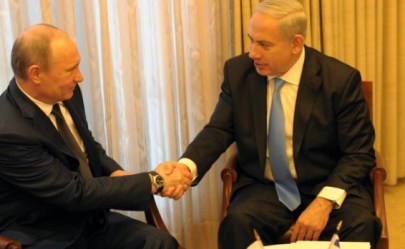
Russian President Vladimir Putin (R) shakes hands with Prime Minister Benjamin Netanyahu during a meeting at the Kremlin in Moscow on February 27, 2019. (MAXIM SHEMETOV / POOL / AFP)

Russian President Vladimir Putin (R) shakes hands with Prime Minister Benjamin Netanyahu during a meeting at the Kremlin in Moscow on February 27, 2019. (MAXIM SHEMETOV / POOL / AFP)

Russian President Vladimir Putin on Thursday said his country’s military, with Syrian assistance, retrieved the remains of Israeli tank commander Zachary Baumel, allowing them to be returned to the Jewish state nearly 37 years after he went missing in the First Lebanon War’s Battle of Sultan Yacoub in 1982.

“Russian Army soldiers found the body in coordination with the Syrian military,” Putin said, during a joint press conference with Prime Minister Benjamin Netanyahu.

The Russian defense ministry presented Israel with Sgt. First-Class Baumel’s jumpsuit and military boots in an Israeli flag-covered coffin in a ceremony later in the day.

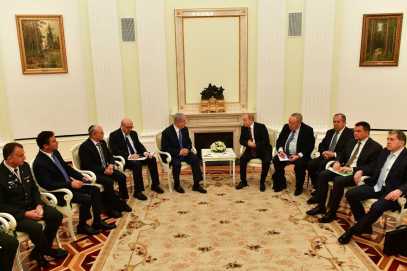
Netanyahu flew to Moscow early Thursday to meet the Russian leader for discussions on Syria and Iran.

Prime Minister Benjamin Netanyahu, accompanied by senior defense officials, meets with Russian President Vladimir Putin and his advisers in Moscow on April 4, 2019. (Koby Gideon/GPO)

During the press conference, Netanyahu thanked Putin, saying Russian soldiers had “risked their lives” in order to bring back the remains, confirming the key role Moscow played in the search effort for the remains not only of Baumel but also of two other IDF soldiers missing since the same battle. Until then, Israeli officials were only permitted to say that a “third country” had assisted in the effort, without specifying which.

“Two years ago, I asked you to help us find the bodies of missing Israeli soldiers, and you responded in the affirmative. I want to thank you, my friend, for what you have done,” Netanyahu told Putin.

Prime Minister Benjamin Netanyahu meets with Shimon Baumel, the brother of the slain Sgt. First Class Zachary Baumel, in Jerusalem on April 3, 2019 (Haim Zach/GPO)

The prime minister added that Baumel’s family, whom he met with Wednesday night before departing for Moscow, had asked him to pass along their appreciation for the contribution of the Russian military as well.

“When I told them about your decision and the fact that Russian soldiers performed the activities, sometimes while putting themselves at risk, their jaws dropped, and they asked me to express their deep gratitude, which is gratitude from all citizens of Israel,” Netanyahu said.

The Russian president confirmed that the effort to find the remains “was difficult for the special forces.”

In September, the Russian defense ministry said one of its soldiers had been injured in the operation.

“Terrorists suddenly attacked the Russian servicemen involved in the operation. One Russian officer was wounded. Despite that, Russia was willing to carry on with the operation,” Russian defense ministry spokesman Maj. Gen. Igor Konashenkov said.

After a complex and secret operation, dubbed “Bittersweet Song,” Baumel’s remains were returned to Israel on an El Al plane via an unnamed third country earlier this week, a military spokesman said Wednesday.

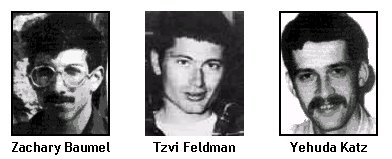
Missing in Action Israel Defense Forces soldiers Zachary Baumel, Zvi Feldman and Yehuda Katz. (The International Coalition for Missing Israeli Soldiers)

Baumel’s funeral was scheduled for 7 p.m. Thursday at Jerusalem’s Mount Herzl military cemetery, according to the Israel Defense Forces.

The announcement brought to a close a decades-long mission by Baumel’s Jerusalem-based, American-born parents to find their son, which included international pressure campaigns and faint hopes that he may have been captured alive during the brutal Sultan Yacoub tank battle.

Yona Baumel, Zachary’s father, died 10 years ago; his mother Miriam is 90 years old.

Netanyahu told a press conference on Wednesday that Baumel’s remains were recovered along with his tzitzit ritual fringes, and tank jumpsuit.

“This is a repayment of a moral debt to the fallen soldiers of the IDF, a repayment of a moral debt to their families,” said Netanyahu, calling it “one of the most moving moments in all my years as prime minister.”

In 2016, an Israeli tank lost in the battle was also returned to Israel by Russia.

Miriam and Yoni Baumel in 2003 holding a picture of their son Zachary, who has been missing in action since 1982. (photo credit: Flash90)

Miriam and Yoni Baumel in 2003 holding a picture of their son Zachary, who had been missing in action since 1982. (Flash90)

Tank commander Baumel, a Brooklyn-born immigrant, was one of three Israeli soldiers whose bodies were never recovered following the battle of Sultan Yacoub, a skirmish between the Israel Defense Forces and Syrian army in Lebanon’s Bekaa Valley, in which 21 Israeli servicemen were killed and more than 30 were injured.

Though Baumel and the other two soldiers — Zvi Feldman and Yehuda Katz — were generally believed to have been killed in the battle, there was also speculation and reports that they were captured by the Syrian military in Sultan Yacoub and brought to Damascus.

The remains of Feldman and Katz were not recovered in Operation Bittersweet Song, though Israeli officials initially thought Feldman’s body might have been among the other remains recovered in the operation, according to the Haaretz newspaper.

The announcement regarding Baumel was delayed until officials could rule out that possibility, Haaretz said.

According to a Channel 13 news report Wednesday, Baumel’s body was returned together with the remains of at least 10 other people.

A commander of a Palestinian terrorist group in Syria said WednesdayBaumel’s remains were uncovered by armed factions at a Palestinian refugee camp outside Damascus.

Prime Minister Benjamin Netanyahu meets with Osna Haberman, sister of the slain Sgt. First Class Zachary Baumel, in Jerusalem on April 3, 2019 (Haim Zach/GPO)

Medical examiners at the Abu Kabir Forensic Institute have reportedly examined most of the other bodies brought back, and have concluded that none of them were Feldman or Katz. The Channel 13 report said one body had yet to be ruled out as either of the two Israeli soldiers.

Katz’s sister told Israeli television on Wednesday the family was holding out hope that he is alive.


No stone left unturned

April 4, 2019

Source: No stone left unturned – www.israelhayom.com

There are very few countries in the world, if any, who after 37 years would continue searching for their missing soldiers, let alone jeopardize intelligence assets in the process.

In the world of intelligence, the saying goes, reality often exceeds the imagination, and yet – the operation to return Zachary Baumel’s remains to Israel, in a mission that spanned the globe, can easily be considered one of the most impressive in the country’s history.

Israeli officials have long known where Baumel was buried. The matter of our missing soldiers was also raised on many occasions with foreign governments, primarily in the midst of peace talks with Syria and the Palestinians. After the Oslo Accords were signed, Yasser Arafat even transferred one of Baumel’s dog tags to Israel, but nothing more ever materialized. Syria has always said it would agree to resolve the mystery, but only parallel to receiving the Golan Heights in return, as part of a peace agreement between the countries.

A little over a year ago, the issue was again raised by then-Defense Minister Avigdor Lieberman. If the reports are true that Russia was involved in the operation, we can assume that Lieberman spoke with his counterpart in the Russian defense ministry, Sergei Shoigu. It appears that this time the response was different, and the Russians agreed to lend a hand. Either way, Israeli officials began working vigorously. In a series of intelligence operations, the Military Intelligence Directorate (Aman) and Mossad pinpointed Baumel’s exact resting place. All the information was gathered into a classified file under the codename “Bittersweet Song.”

According to the reports, we can assume Israel and Russia exploited the fact that Syria was mired in a civil war. Syrian President Bashar Assad, focused almost entirely on his own survival in recent years, couldn’t have prevented Russia from doing as it pleased on Syrian soil – even if he had wanted to – because Moscow had rescued his regime. We can also assume that an operation of this sort is managed at the highest levels on both sides, spearheaded by the respective army chiefs of staff (first Gadi Eizenkot and then Aviv Kochavi in Israel and Valery Gerasimov in Russia). Assuming this was the case, the operation also survived the diplomatic crisis between Israel and Russia following the downing of a Russian military plane last September – for which Russia explicitly blamed Israel.

The Russian defense ministry spokesman confirmed that Russian solider worked on the matter for months. In retrospect it sounds simple, but Russia did something that many countries likely wouldn’t have: put its own people in harm’s way for another country’s humanitarian cause. If this is what happened, it means Russian soldiers were the ones to carry out, over a significant period of time, the physical search for Baumel’s remains. Once the green light was given, the body was flown to a third country and from there – after an IDF team conducted DNA tests – it was flown to Israel aboard an El Al plane.

In Israel on Wednesday, officials stressed that nothing was given in exchange for Baumel’s return. It’s safe to assume that Prime Minister Benjamin Netanyahu, during his short visit to Moscow on Thursday, will heap praise on his Russian hosts, although it would be nice if he brought along Lieberman and Eizenkot – the two people who laid the foundations for the momentous operation. Netanyahu should also make further use of the mechanism that has been established – alongside crucial regional issues – to locate the remains of the other soldiers that went missing during the Sultan Yacoub battle, Yehuda Katz and Tzvi Feldman, and IAF navigator Ron Arad, whose remains are believed to still be in Lebanon.

Beyond the enormous operational drama and personal story that has now been closed with Baumel’s return home, this chapter also provides a unique lesson about Israel: There are very few countries in the world, if any, who after 37 years would continue searching for their missing soldiers, let alone jeopardize intelligence assets in the process. Israel proves time and again that it is extraordinary, and doesn’t spare any effort to solve even the most daunting mysteries. This won’t bring the dead back to life, but it will give their families a burial place over which to mourn, and the soldiers currently serving the knowledge that if heaven forbid something were to happen, the country would turn over every stone for them.


PM thanks Putin for finding remains of missing IDF soldier

April 4, 2019

Source: PM thanks Putin for finding remains of missing IDF soldier – www.israelhayom.com

The long search for the body of Staff Sgt. Zachary (Zechariah) Baumel was successful because Russian troops “risked their lives,” Israeli leader says, a day after announcing dramatic recovery.

A day after the Israel Defense Forces announced it had recovered remains of Zachary (Zechariah) Baumel, who went missing in a 1982 battle in Lebanon, Prime Minister Benjamin Netanyahu thanked Russian President Vladimir Putin for making it possible.

Speaking at the Kremlin alongside Putin, Netanyahu said Israel “thanks you for taking care of this matter by finding the remains, what you did will not be forgotten by our people.”

Netanyahu said that Baumel’s family members were overwhelmed with emotion after they were informed his remains were found.

“I told them that Russian troops risked their lives to search for his remains and they were left speechless,” Netanyahu said.

Putin responded that “this was not easy for our soldiers.”

Baumel, who immigrated to Israel with his parents from New York in 1970, was 21 when he fought in Israel’s Operation Peace for the Galilee in Lebanon and was declared missing in action (MIA) along with two other soldiers in the Battle of Sultan Yaaqub, in which Israel suffered heavy casualties.

Baumel’s remains were flown to Israel by El Al Israel Airlines several days ago.

The Israel Defense Forces declined to say how or where the body of Baumel, a tank crewman and sergeant, was recovered in what was described as an intelligence operation.