Archive for April 2019

Off Topic:  Roger Waters calls on Madonna not to perform at Eurovision in Tel Aviv

April 17, 2019

Source: Roger Waters calls on Madonna not to perform at Eurovision in Tel Aviv | The Times of Israel

( One day this evil, vile swine will drop dead.  I pray I live long enough to witness it. – JW )

Former Pink Floyd musician denies he is anti-Semitic in open letter asking Queen of Pop to cancel unconfirmed gig at the song contest

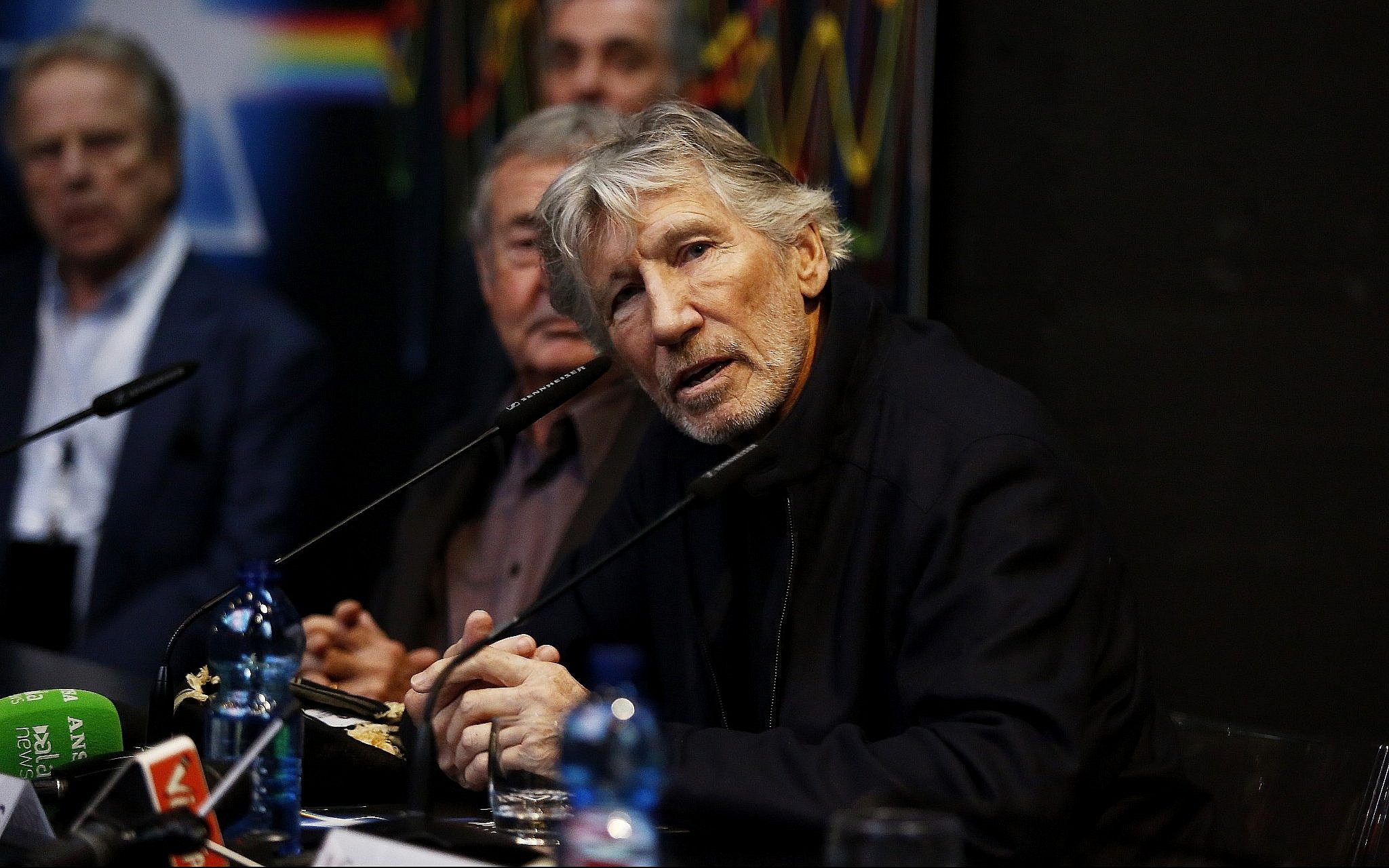
Roger Waters at a press conference for 'The Pink Floyd Exhibition: Their Mortal Remains' in Rome, Italy, January 16, 2018. He is a leading celebrity in the Boycott, Divestment and Sanctions movement against Israel. (Ernesto S. Ruscio/Getty Images)

Roger Waters at a press conference for ‘The Pink Floyd Exhibition: Their Mortal Remains’ in Rome, Italy, January 16, 2018. He is a leading celebrity in the Boycott, Divestment and Sanctions movement against Israel. (Ernesto S. Ruscio/Getty Images)

Roger Waters on Wednesday called on Madonna to cancel her rumored performance at the Eurovision Song Contest finals in Tel Aviv on May 18, claiming that it “normalizes the occupation, the apartheid, the ethnic cleansing, the incarceration of children, the slaughter of unarmed protesters.”

Madonna has been booked to perform at the finals of the competition next month, but her participation has not yet been officially announced by the event organizers.

“I am routinely accused of being anti-Semitic,” Waters wrote in an open letter published by The Guardian. “That accusation can be used as a smokescreen to divert attention and discredit those who shine a light on Israel’s crimes against humanity.

“I should point out that I support the fight for human rights for all oppressed peoples everywhere. The religion of the oppressor is neither here nor there,” he said.

Waters, best known as a former member of Pink Floyd who conceived the rock opera “The Wall,” has long been a passionate supporter of the Palestinian cause and has angered Israelis by leading calls for a cultural boycott of the Jewish state.

Madonna poses for photographers upon arrival at the world premiere of the film ‘The Beatles, Eight Days a Week,’ in London, September 15, 2016. (AP Photo/Kirsty Wigglesworth)

He is also is known for publicly harassing artists scheduled to visit Israel or perform there as part of a campaign by the BDS — Boycott, Divestment and Sanctions — movement, which calls on musicians to shun Israel as a way to press the Jewish state to change its treatment of the Palestinians.

In September, some 140 artists, including Waters, called for a boycott of the song contest.

Having previously defended Waters from accusations of anti-Semitism, the Anti-Defamation League in 2013 said “anti-Semitic conspiracy theories” have “seeped into the totality” of the former Pink Floyd frontman’s views.

Nearly every large act to book a show in Israel has come under pressure from pro-Palestinian activists as part of the BDS campaign. While some, like Lorde, Elvis Costello and Cat Power, have canceled gigs, most have resisted the boycott effort.

Israel’s defenders have denounced the boycott campaign as hypocritical, saying the democratic country has been singled out when some prominent musicians are willing to play in dictatorships.


New Palestinian Authority PM declares Trump peace plan ‘born dead’

April 17, 2019

Source: New Palestinian Authority PM declares Trump peace plan ‘born dead’ | The Times of Israel

Mohammad Shtayyeh sa

( Brilliant !  Proof positive that their rejection of  a negotiated settlement was predetermined. – JW )

Mohammad Shtaeh says US waging ‘financial war’ on Palestinians in bid to force their surrender without independent state; insists: ‘There are no partners in Palestine for Trump’

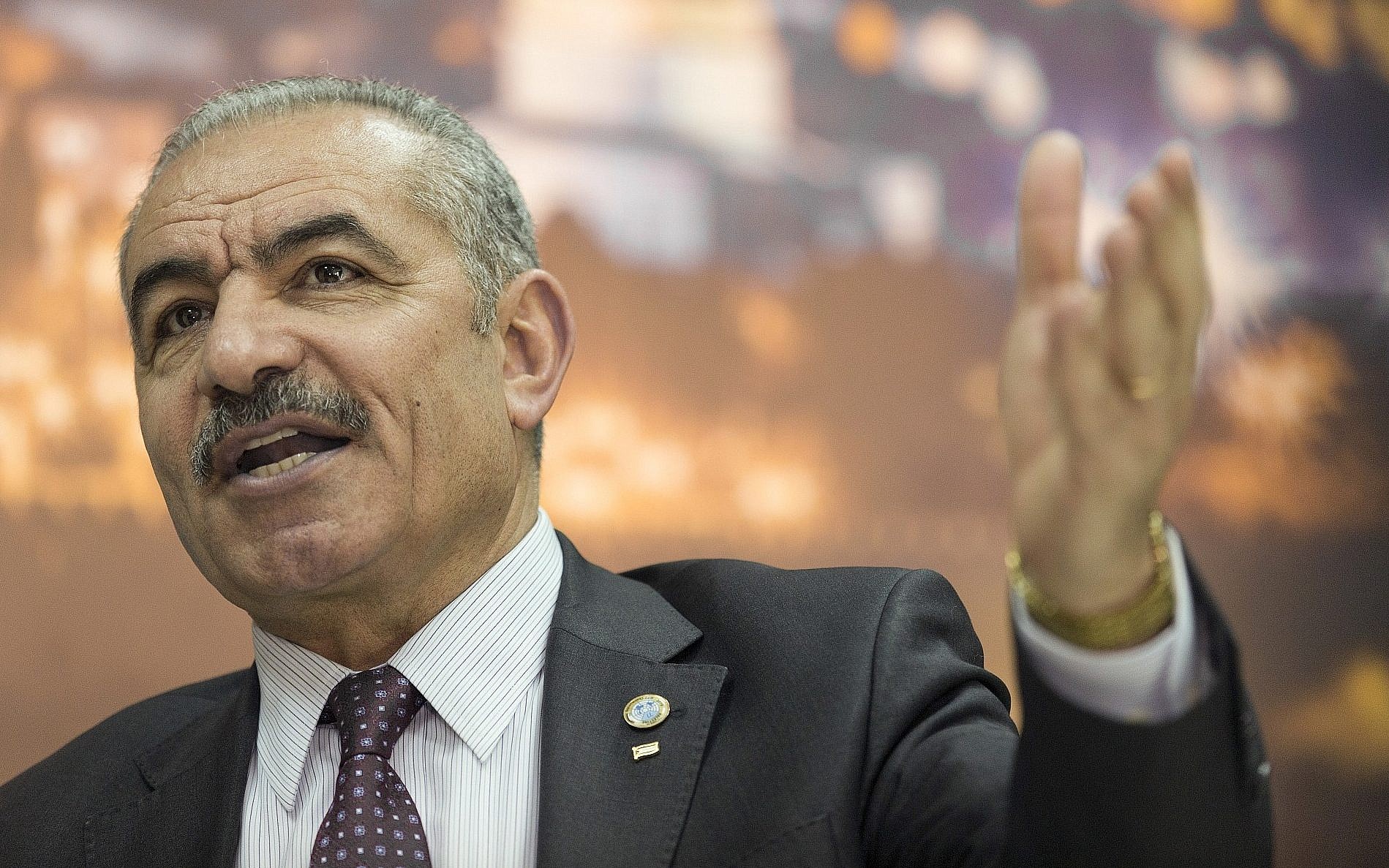
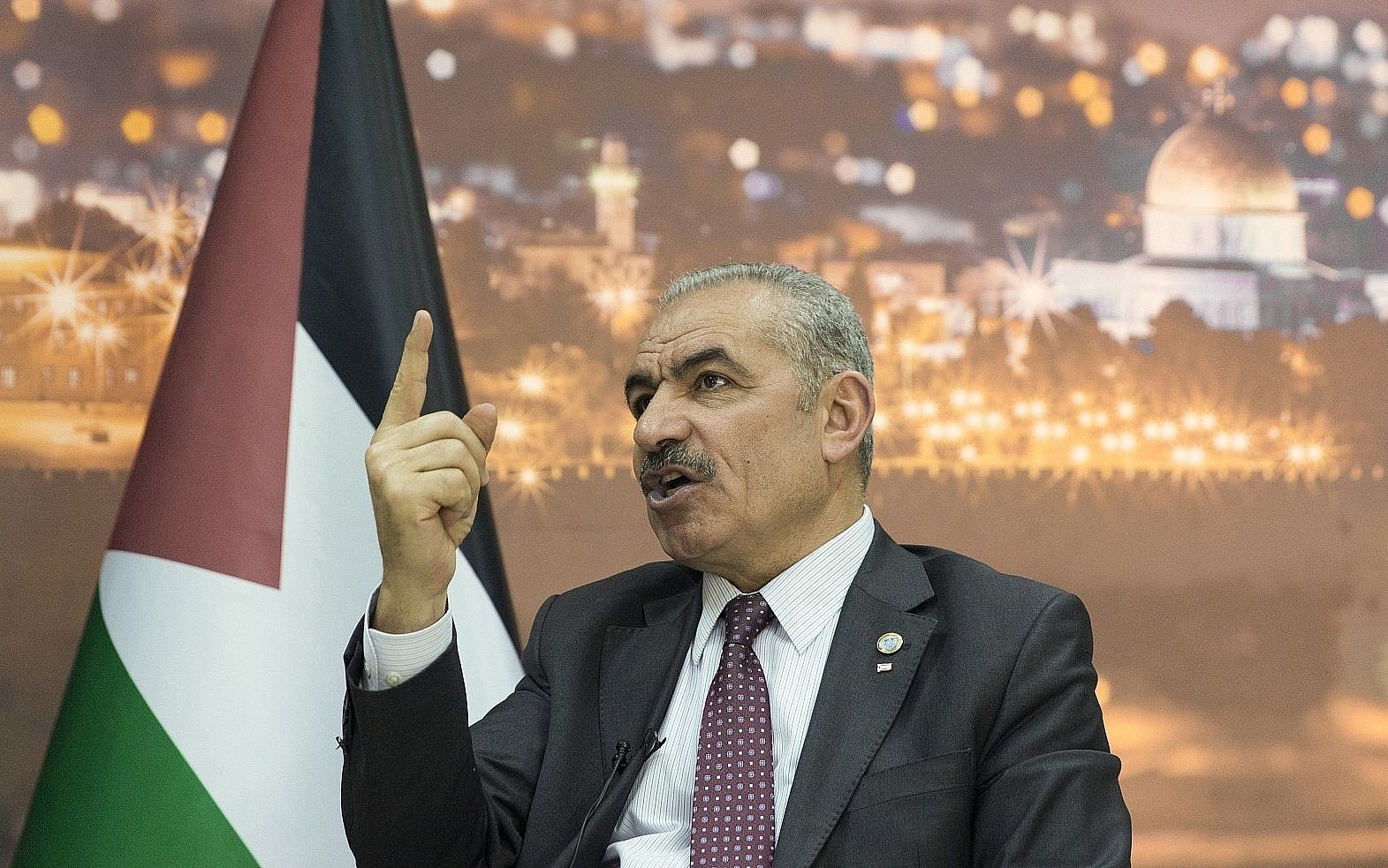
Palestinian Authority Prime Minister Mohammad Shtayyeh talks during an interview with The Associated Press, at his office in the West Bank city of Ramallah, Tuesday, April 16, 2019. (AP Photo/Nasser Nasser)

The new Palestinian Authority prime minister on Tuesday accused the United States of declaring “financial war” on his people and said an American peace plan purported to be in the works will be “born dead.”

In his first interview with the international media since taking office over the weekend, Mohammad Shtayyeh laid out plans to get through the financial crisis he has inherited and predicted that the international community, including US allies in the Arab world, would join the Palestinians in rejecting President Donald Trump’s expected peace plan.

“There are no partners in Palestine for Trump. There are no Arab partners for Trump and there are no European partners for Trump,” Shtayyeh said during a wide-ranging hour-long interview.

Shtayyeh, a British-educated economist, takes office at a difficult time for the Palestinians, with his government, the Palestinian Authority, mired in a dire financial crisis. The PA administers autonomous zones in the West Bank.

The Trump administration has slashed hundreds of millions of dollars of aid, including all of its support for the UN agency for Palestinian refugees.

Israel has also withheld tens of millions of dollars of tax transfers to punish the Palestinians for their “martyrs’ fund,” a program that provides stipends to the families of Palestinians imprisoned or killed as a result of fighting with Israel, including many who have carried out terror attacks.

The Israelis say the fund rewards and encourages violence, while the Palestinians say the payments are a national duty to families affected by decades of violence. Furious about the withholding, the Palestinians have in turn refused to accept partial tax transfers from Israel.
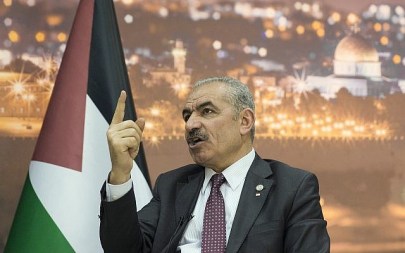
Palestinian Authority Prime Minister Mohammad Shtayyeh talks during an interview with The Associated Press, at his office in the West Bank city of Ramallah, Tuesday, April 16, 2019. (AP Photo/Nasser Nasser)

Without its key sources of revenue, the Palestinian Authority has begun paying only half salaries to tens of thousands of civil servants, reduced services and increased borrowing. In a new report being released Wednesday, the World Bank said the Palestinian deficit will grow from $400 million last year to over $1 billion this year.

“Israel is part of the financial war that has been declared upon us by the United States. The whole system is to try to push us to surrender” and agree to an unacceptable peace proposal, Shtayyeh said. “This a financial blackmail, which we reject.”

Shtayyeh laid out a number of proposals for weathering the storm. He said he has imposed spending cuts by reducing perks for his cabinet ministers.
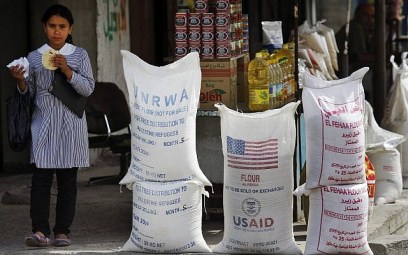
A Palestinian pupil walks past United Nations Relief and Works Agency, (UNRWA), and USAID, humanitarian aid on June 6, 2010 in the Shatie refugee camp, in Gaza City. (AP Photo/Lefteris Pitarakis, File)

He said he would seek to develop the Palestinian agricultural, economic and education sectors and seek ways to reduce the Palestinian economy’s dependence on Israel. For example, he proposed importing fuel from neighboring Jordan, instead of from Israel, and even floating a Palestinian currency. He also said the Palestinians would seek financial backing from Arab and European donors.

Despite the tensions with Israel and the US, Shtayyeh said the Palestinians remain committed to the establishment of an independent Palestinian state on areas captured by Israel in the 1967 war. That includes establishing a capital in East Jerusalem, which Israel has annexed and claims as part of its eternal capital.

The two-state solution has enjoyed overwhelming international support for the past two decades. But Prime Minister Benjamin Netanyahu and his hard-line political allies reject Palestinian independence.

Netanyahu secured another term in office in elections last week and is expected to form a new coalition with religious and nationalist parties that oppose the two-state solution. On the campaign trail, Netanyahu even raised the possibility of annexing Israeli settlements in the West Bank, a step that could extinguish any remaining hopes for an independent Palestine.

Netanyahu has received a boost from Trump, who has given Netanyahu a number of diplomatic gifts since taking office. Trump has recognized Jerusalem as Israel’s capital and moved the US Embassy to the holy city, slashed aid to the Palestinians and shuttered the Palestinian diplomatic office in Washington.
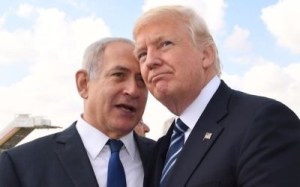
Prime Minister Benjamin Netanyahu (L) and US President Donald Trump speak at Ben Gurion International Airport prior to the latter’s departure from Israel on May 23, 2017. (Koby Gideon/GPO)

In a departure from Republican and Democratic predecessors, Trump also has notably refused to endorse the two-state solution. His peace team, led by son-in-law Jared Kushner, has repeatedly pushed back the release of a peace plan it says it is preparing, and it remains unclear if or when it will be released.

Kushner’s team has said little about their proposal. But their limited public statements have indicated it will call for large amounts of economic investment in the Palestinians, but given no sign that it will include their demand for independence.

Shtayyeh said that after all of the US moves in favor of Israel, particularly the recognition of Jerusalem, there is nothing left to negotiate.

He said any proposal that ignores key Palestinian demands will be rejected by the international community. The European Union this week reiterated its call for peace talks aimed at establishing a Palestinian state.

“Where are we going to have the Palestinian state?” he asked. “We are not looking for an entity. We are looking for a sovereign state.”

“Palestinians are not interested in economic peace. We are interested in ending occupation,” he said. “Life cannot be enjoyed under occupation.”

PA foreign minister: Abbas ready to meet Netanyahu if Russia plays host 

April 16, 2019

Source: PA foreign minister: Abbas ready to meet Netanyahu if Russia plays host | The Times of Israel

Riyad al-Malki tells Russian news outlet Palestinians will reject any peace proposal that ‘does not acknowledge the State of Palestine’s independence’

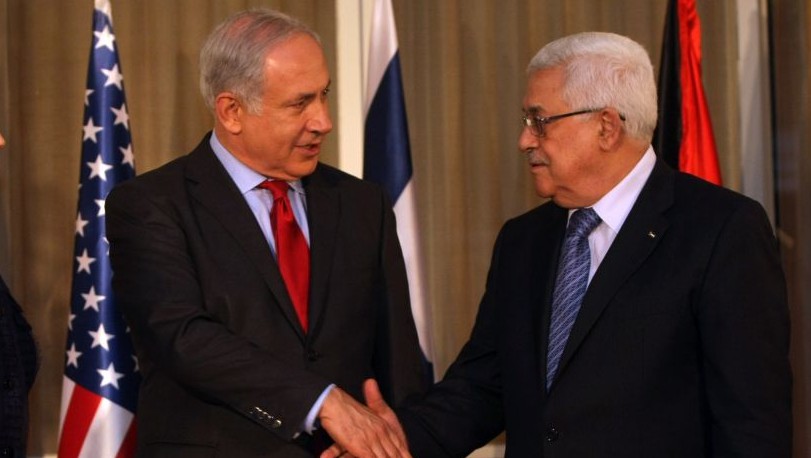
Prime Minister Benjamin Netanyahu (left) with Palestinian Authority President Mahmoud Abbas in Jerusalem, September 15, 2010. (Kobi Gideon/Flash90)

Prime Minister Benjamin Netanyahu (left) with Palestinian Authority President Mahmoud Abbas in Jerusalem, September 15, 2010. (Kobi Gideon/Flash90)

Palestinian Authority President Mahmoud Abbas is prepared to meet Prime Minister Benjamin Netanyahu if Russia hosts the gathering, PA Foreign Minister Riyad al-Malki told Sputnik, a Russian state-run news site.

Palestinian officials have said that Abbas agreed to accept a Russian suggestion to meet Netanyahu in Moscow last year, but the prime minister turned it down.

The last known encounter between Abbas and Netanyahu was at the funeral of former prime minister Shimon Peres in September 2016, where the two briefly exchanged pleasantries.

The last known time Abbas and Netanyahu met formally for negotiations was in September 2010 in Jerusalem.

“Abbas is ready to meet Netanyahu without preconditions, if Moscow hosts this meeting,” PA Foreign Minister Riyad al-Malki said in an interview with Sputnik published on Tuesday.

Malki met Russian Foreign Minister Sergey Lavrov in Moscow on Monday.

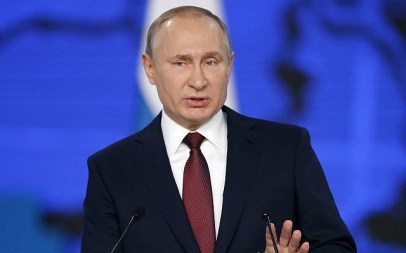
Russian President Vladimir Putin delivers a state-of-the-nation address in Moscow, Russia, February 20, 2019. (Photo/Alexander Zemlianichenko/AP)

Abbas has previously demanded that Israel freeze settlement construction as a precondition to the resumption of negotiations between the Jewish state and the Palestinians.

Asked whether Netanyahu would be willing to meet Abbas in Moscow, a spokesman for the Prime Minister’s Office did not immediately respond.

Malki added that the Palestinians will reject any proposal to resolve the conflict “that does not acknowledge the State of Palestine’s independence.”

US President Donald Trump’s administration has said it intends to release a plan to resolve the conflict, but has not publicized the date it plans to do so.

While Trump has said he thinks the two-state solution, including the creation of a Palestinian state, “works best,” he has not committed to it.

The Washington Post reported on Monday that while the US administration’s apparently forthcoming plan “promises practical improvements in the lives of Palestinians,” it “is likely to stop short of ensuring a separate, fully sovereign Palestinians state,” citing people knowledgeable of its “main elements.”

The PA foreign minister also said that Abbas may visit Moscow in the next two to three months.

Abbas last visited Moscow in July 2018, when he met Russian President Vladimir Putin and attended the World Cup.


PA foreign minister: Abbas ready to meet Netanyahu if Russia plays host 

April 16, 2019

Source: PA foreign minister: Abbas ready to meet Netanyahu if Russia plays host | The Times of Israel

Riyad al-Malki tells Russian news outlet Palestinians will reject any peace proposal that ‘does not acknowledge the State of Palestine’s independence’

Prime Minister Benjamin Netanyahu (left) with Palestinian Authority President Mahmoud Abbas in Jerusalem, September 15, 2010. (Kobi Gideon/Flash90)

Prime Minister Benjamin Netanyahu (left) with Palestinian Authority President Mahmoud Abbas in Jerusalem, September 15, 2010. (Kobi Gideon/Flash90)

Palestinian Authority President Mahmoud Abbas is prepared to meet Prime Minister Benjamin Netanyahu if Russia hosts the gathering, PA Foreign Minister Riyad al-Malki told Sputnik, a Russian state-run news site.

Palestinian officials have said that Abbas agreed to accept a Russian suggestion to meet Netanyahu in Moscow last year, but the prime minister turned it down.

The last known encounter between Abbas and Netanyahu was at the funeral of former prime minister Shimon Peres in September 2016, where the two briefly exchanged pleasantries.

The last known time Abbas and Netanyahu met formally for negotiations was in September 2010 in Jerusalem.

“Abbas is ready to meet Netanyahu without preconditions, if Moscow hosts this meeting,” PA Foreign Minister Riyad al-Malki said in an interview with Sputnik published on Tuesday.

Malki met Russian Foreign Minister Sergey Lavrov in Moscow on Monday.

Russian President Vladimir Putin delivers a state-of-the-nation address in Moscow, Russia, February 20, 2019. (Photo/Alexander Zemlianichenko/AP)

Abbas has previously demanded that Israel freeze settlement construction as a precondition to the resumption of negotiations between the Jewish state and the Palestinians.

Asked whether Netanyahu would be willing to meet Abbas in Moscow, a spokesman for the Prime Minister’s Office did not immediately respond.

Malki added that the Palestinians will reject any proposal to resolve the conflict “that does not acknowledge the State of Palestine’s independence.”

US President Donald Trump’s administration has said it intends to release a plan to resolve the conflict, but has not publicized the date it plans to do so.

While Trump has said he thinks the two-state solution, including the creation of a Palestinian state, “works best,” he has not committed to it.

The Washington Post reported on Monday that while the US administration’s apparently forthcoming plan “promises practical improvements in the lives of Palestinians,” it “is likely to stop short of ensuring a separate, fully sovereign Palestinians state,” citing people knowledgeable of its “main elements.”

The PA foreign minister also said that Abbas may visit Moscow in the next two to three months.

Abbas last visited Moscow in July 2018, when he met Russian President Vladimir Putin and attended the World Cup.


Trump wishes a happy Passover 2019 

April 16, 2019


Trump wishes a happy Passover 2019

Trump defends and protects Israel from International Criminal Court

April 16, 2019

Source: Trump defends and protects Israel from International Criminal Court – www.israelhayom.com

U.S. administration includes the Jewish state in its efforts to block the International Criminal Court at The Hague from investigating war-crimes allegations. White House: “Any attempt to target American, Israeli or allied personnel for prosecution will be met with a swift and vigorous response.”

In what can be seen as an incredible show of support for Israel, the U.S. administration has included the Jewish state in its efforts to block the International Criminal Court at The Hague from investigating war-crimes allegations.

In a statement attributed to Trump, the White House said: “Since the creation of the ICC, the United States has consistently declined to join the court because of its broad, unaccountable prosecutorial powers; the threat it poses to American national sovereignty; and other deficiencies that render it illegitimate. Any attempt to target American, Israeli or allied personnel for prosecution will be met with a swift and vigorous response.”

While some have decried the administration’s response to be an expression of what they perceive as American exceptionalism, U.S. President Donald Trump views it as the opposite – unfair, exceptional focus on democracies. And so does Israel, which is consistently singled out and unfairly held to a higher standard in the international arena.

In response to the ICC investigation into alleged war crimes by U.S. forces and allies in Afghanistan, last week the United States revoked ICC Prosecutor Fatou Bensouda’s entry visa. National Security Advisor John Bolton has now threatened ICC judges with sanctions if they charge any American who served in Afghanistan with war crimes. The United States under Trump has made it clear that no international court, especially those led by human-rights violators, would threaten it or its military personnel. And, thanks to Trump, the United States has also made clear that Israel sits safely under American protection.

Professor Eugene Kontorovich, director of International Law at the Jerusalem-based Kohelet Policy Forum, testified on the ICC in Congress, and advised senior American and Israeli officials on the court and its jurisdiction.

“President Trump has taken an extraordinary step in defense of Israel, promising to impose sanctions such as travel bans on ICC officials if they pursue their biased investigation of Israel,” Kontorovich said.

He added that when the ICC “threw out its long-pending investigation into crimes committed by U.S. and other forces in Afghanistan, the Trump administration’s hardball approach to fighting prosecutions of U.S. soldiers by the Hague-based ICC was totally vindicated.”

“Now,” Kontorovich said, “the U.S. is promising to also impose sanctions on the court if it proceeds with an investigation into Israel about settlements in the West Bank. Israel, like the U.S., did not join the court’s treaty. This is an extraordinary show of support from America and may help deter a biased and unjust investigation.”

During the weekly government cabinet meeting on Sunday, Prime Minister Benjamin Netanyahu thanked Trump. He said, “They’re picking on the United States and Israel – two democracies which, by the way, are not members of the international court, but there’s no doubt that we have the best judicial systems in the world.”

“To come and make the soldiers of America stand trial, or the soldiers of Israel, or the State of Israel or the United States is absurd. It’s a reversal of the whole original point of the ICC,” Netanyahu added.

“Therefore, what we have here is a correction of injustice, and it is an act that has far-reaching influence with regard to the conduct of the international system in relation to the State of Israel,” he continued. “I congratulate the United States, President Trump and the Trump administration for their steadfast position on the side of the citizens of Israel and the soldiers of the IDF. As in previous times, it is proven that Israel has no better friend than the United States, and we very much appreciate this support in other areas as well.”

An effective response to the abuses of international law

Eytan Gilboa, professor of international relations and international communication, and a senior research associate at BESA Center for Strategic Studies at Bar-Ilan University in Ramat Gan, said the decision is “compatible with Trump’s strategy to attack and undermine the activities of international organizations which are abusing their mission, and are targeting democratic countries such as the U.S. and Israel.”

He added that the American position is that “democratic countries are capable of dealing with war crimes or any other crimes.”

Gilboa also said that “it is very important that Trump said any attempt by that court to investigate Israel would trigger a similar response since it undermines the Palestinian strategy of attacking Israel in international organizations, where they have almost automatic support.”

In recent years, Israel has been working to prevent the entry of people who represent hostile organizations.

Referring to Trump’s threats against the ICC, Gilboa said: “This is a legitimate measure that Israel can take against those who are undermining it.”

Gilboa concluded by saying that “this is a very important step toward an effective response to the abuses of international law and international organizations that the Palestinians, the Arabs and the enemies of the people of Israel have been pursuing in the last decade.”

Konotorovich was reassuring as well, saying that “now Israel has been pulled into America’s protective umbrella.”

This article is reprinted with permission from JNS.org.


Satellite images show possible Iranian missile factory in Syria destroyed 

April 15, 2019

Source: Satellite images show possible Iranian missile factory in Syria destroyed – Israel News – Jerusalem Post

“The main industrial structures were completely destroyed, including the main hangar and the adjacent three production hangers and buildings.”

BY ANNA AHRONHEIM
 APRIL 15, 2019 04:32
Satellite images show possible Iranian missile factory in Syria destroyed

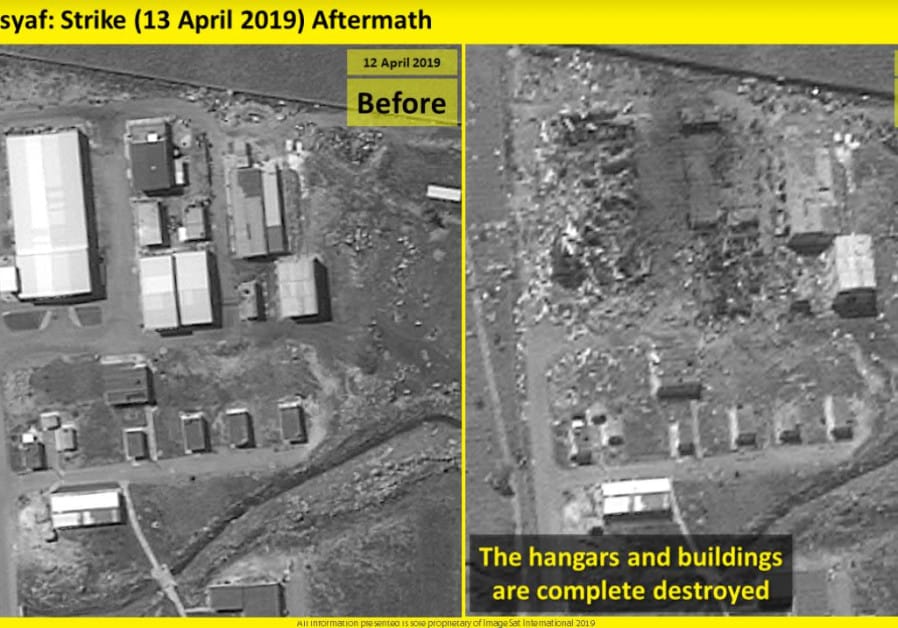
Satellite images released by the Israeli intelligence firm ImageSat International (ISI) on Sunday showed the complete destruction of a possible Iranian surface-to-surface missile factory in Syria’s Masyaf District, allegedly struck by Israel on Saturday.

“The main industrial structures were completely destroyed, including the main hangar and the adjacent three production hangers and buildings. The rest of the structures were affected and damaged by the blast,” ISI said, adding that they “assess that all the elements and/or equip-ment which were inside are completely destroyed as well.”

According to ISI, “if the bombed site was indeed a missile factory, it could allow for the produc-tion and assembly of different SSM [surface-to-surface missile] elements or for improving the accuracy of missiles.”

The factory, ISI said, is located in the vicinity of other facilities likely linked to Iran’s SSM project in Syria, which have previously been struck in alleged Israeli strikes carried out over the past two years.

The factory was built in the western compound of the base between 2014 and 2016, and was surrounded by a wall to separate it from the rest of the military base. The entrance to the fac-tory passes through the base.

“It is possible that the location of the factory inside what looks like a regular military base was chosen in order to camouflage its real purpose,” ISI said.

While ISI wrote, “It is unclear which entity controls and owns the base” – the Syrian army, Iran or militias – if the factory allegedly attacked by Israel was “indeed controlled by Iran, it is prob-able that the eastern part of the base is controlled by them.”

The possible SSM missile factory included a main hangar measuring 60 meters by 25 meters, and several big industrial hangars and buildings which probably served for production and as-sembly of missiles.

“However, there is probably no manufacture or assembly of missile engines and warheads in this factory, since protected structures weren’t detected. Also, no missiles or launchers were identified within the compound,” ISI said.

Israeli officials have repeatedly voiced concerns over Iran’s entrenchment in Syria and the smuggling of sophisticated weaponry to Hezbollah from Tehran to Lebanon via Syria, stressing that both are redlines for the Jewish state.

Prime Minister Benjamin Netanyahu warned on Sunday that anyone who puts Israeli citizens at risk “is in a much greater danger.”

“When Israel’s security is at stake, we are operating at full force, and whoever puts us at risk is in a much greater danger. We will continue to act on all fronts, including on the northern front, because we are not prepared to allow someone to establish power and endanger the State of Israel,” he said.

“Power is the guarantee of our existence, and it is the essential and fundamental condition for achieving peace with our neighbors.”

On Saturday, Syria’s SANA news agency reported that Israel had carried out air strikes against military positions near the city of Masyaf in Hama Province. The agency quoted a military source as stating that IDF jets carried out the strike from Lebanese airspace at around 2:30 a.m. and that Syrian air defenses “immediately intercepted the hostile missiles and downed some of them before reaching their targets.”

While SANA said the interception of the Israeli missiles resulted in the destruction of several buildings and the wounding of three “fighters,” according to a report by the London-based Syr-ian Observatory for Human Rights (SOHR), Iranian “elements” and pro-Iranian terrorists were killed and another 17 were injured.

According to SOHR, the strike targeted a Syrian military college in the town and two buildings used by Iranian forces in nearby villages – a development center for medium-range missiles in Zawi and a training camp in Sheikh Ghadban.

In January, Russia deployed its S-300 air defense system to Masyaf. Russia delivered the launcher, radar and command and control vehicle of the advanced air-to-surface missile sys-tem to the regime of Syrian President Bashar Assad in early October as a response to the downing of a Russian reconnaissance plane by Syrian air defenses during an Israeli air strike on Iranian targets the previous month.

The S-300 was not used during this alleged Israeli strike.


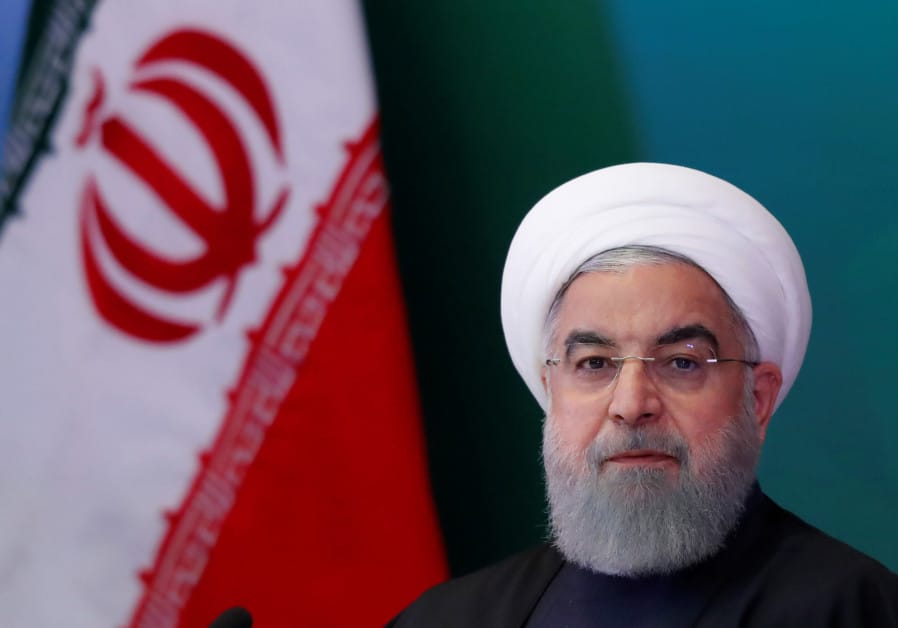
After U.S. sanctions, Iran’s petrochemical exports decline 

April 15, 2019

Source: After U.S. sanctions, Iran’s petrochemical exports decline – Middle East – Jerusalem Post

The United States have started to enforce sanctions in the second half of 2018 after withdrawing from the 2015 nuclear deal.

BY ROSSELLA TERCATIN
 APRIL 15, 2019 06:39
After U.S. sanctions, Iran’s petrochemical exports decline

Iran’s total exports of petrochemical products during the last fiscal year stood at 20 million tons, compared to the 22.4 million that the country exported during the previous year, according to a report by Radio Farda.

Iran’s fiscal year ended on March 20, 2019. The official statistics released by the National Iranian Petrochemical Company show a decrease of over 2 million tons compared to the previous year (March 21, 2017-March 20, 2018). The revenues went down from $12 billion to $10.645 billion.

The head of the state-owned Nouri Petrochemical Company Taghi Sanei did not point to a direct correlation between the decrease in exports and the US sanctions. However the figures show that the country’s petrochemical exports declined by 13% in value and 10.7% in volume since the sanctions have been imposed again.

The United States have started enforcing sanctions over the second half of 2018, after withdrawing from the 2015 nuclear deal.

Among other measures, the US has banned the use of the US dollar for any trade with Iran, forcing the Islamic Republic to use other ways to receive payments for its exports.

The sanctions are also affecting some of the country’s allies. According to Bloomberg, drivers in Damascus are suffering from a shortage of gasoline, after Iranian oil shipments ended last October.


Off Topic:  Significant natural gas discovery made off Israel’s shore 

April 15, 2019

Source: Significant natural gas discovery made off Israel’s shore – Israel News – Jerusalem Post

The newly-found gas will be added to the previously discovered gas fields increasing Israel’s energy independence.

BY EYTAN HALON
 APRIL 15, 2019 15:43
gas field

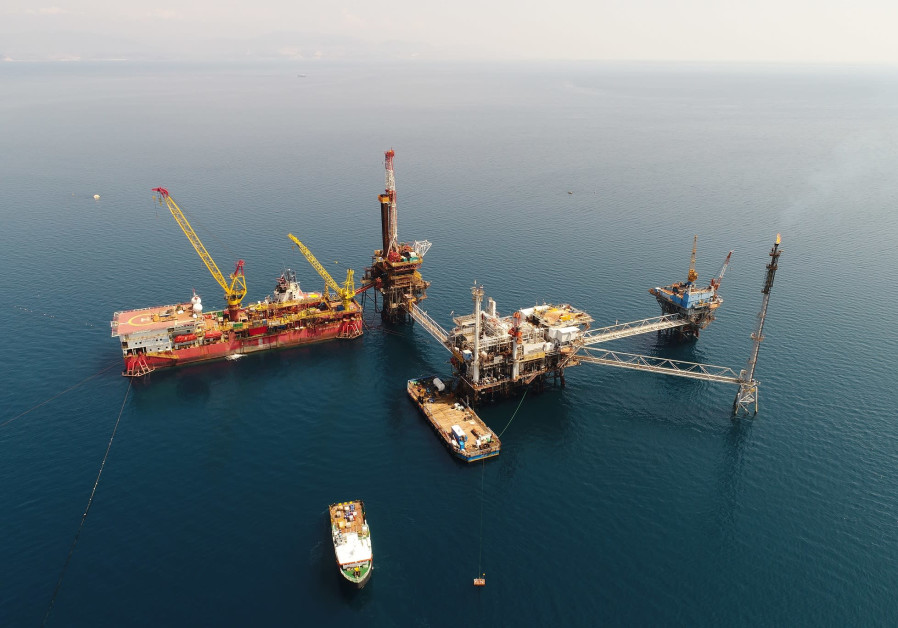
According to preliminary estimates, the latest discovery in the Karish North exploration field contains between 28 to 42 billion cubic meters (Bcm) of natural gas.

Publicly-listed Energean will now conduct further evaluations to further analyze resource potential and determine the liquids content of the discovery.
The newly-found gas will be added to the 45 Bcm already discovered at Karish, and an additional 22 Bcm identified at the Tanin gas field, also managed by Energean.
“We are delighted to be announcing this significant new gas discovery at Karish North, which further demonstrates the attractiveness of our acreage offshore Israel,” said Energean CEO Mathios Rigas.
“We have already signed a contingent contract to sell 5.5 Bcm of this new resource, and our strategy is now to secure the offtake for remaining volumes. We continue to see strong demand for our gas, which we believe will be
supported by today’s announcement.”
Drilling of the initial phase of the Karish North field is now complete, the company said. Energean will now deepen the well to identify additional energy sources. Once completed, Energean will return to drilling the three development wells at the Karish Main natural gas field.
In December 2018, Energean signed a contract with the IPM Beer Tuvia power plant, 60 kilometers from Jerusalem, to supply an estimated 5.5 Bcm of gas. Future agreements are likely to focus on both local and major export markets.
The contingent contract, dependent on the results of Energean’s 2019 drilling program, is significantly more likely to be converted into a firm contract following Monday’s announcement, the company said.
“Following years of standstill, natural gas exploration resumed in Israel’s economic waters a month ago – and the company is already reporting an additional discovery,” said Energy Minister Yuval Steinitz.
“I congratulate Energean on the large amount of natural gas that has appeared in Karish North. This is a prelude, which I am sure will herald further discoveries in the future. If you will it, it is no dream, and Israel will become a regional energy power.”
Until large discoveries of natural gas were made off Israel’s coastline in recent years, few perceived the historically natural resource-poor Israel to be a significant source of energy.
This perception started to change with the discovery of the Noa gas field off the shores of Ashkelon in 1999.
The discovery of more major natural gas fields in Israel since 2009, including Tamar and Leviathan, has transformed the Jewish state from an energy-dependent country into an energy supplier, both domestically and abroad.
Israel is now planning to supply former adversaries Jordan and Egypt with natural gas valued at $26 billion and plans to construct a 2,000-kilometer pipeline to supply Eastern Mediterranean gas to Europe.
In January, seven countries hoping to benefit from the region’s newly discovered resources, including Israel, established the Cairo-based Eastern Mediterranean Gas Forum.
Several major energy firms, including American oil and gas giant ExxonMobil, are reportedly considering competing for a new round of offshore exploration rights, the second auction of its kind in Israel, with bids due to be submitted by June 17.


IAI redefines the future battlefield with OPAL 

April 15, 2019

Source: IAI redefines the future battlefield with OPAL – Israel News – Jerusalem Post

Solution connects all platforms in the area to give a optimal utilization of all resources.

BY ANNA AHRONHEIM
 APRIL 15, 2019 15:42
Israel Aerospace Industries (IAI) announces the launch of OPAL on April 15th, 2019

Israel Aerospace Industries (IAI) has announced the launch of OPAL, an innovative solution that will redefine the battlefield by connecting all platforms in the battle arena, manned and unmanned alike.
“The OPAL solution provides an unprecedented range of proven capabilities and operational flexibility, which allows for optimal utilization of the available resources to maximize effectiveness for a wide range of missions. OPAL is installed in a variety of advanced fighters, attack helicopters, refueling aircrafts, UAVs, ships, Command and Control centers, as well as mobile and fixed-base stations,” IAI said.
OPAL is based on forming a decentralized communication cloud for all members to allow real time information sharing, the company said, explaining that the system “allows all members to exchange relevant information in order to achieve a comprehensive operational picture of the battlefield.”
The system – which is compatible with any platform including fighter jets, tanks, ships or ground troops – relies on a secure and proven communication network that connects different networks and platforms without fixed-base stations.
It provides users with optimized effectiveness in accomplishing their mission goals by generating and sharing a Common Operating Picture in real time – providing interoperability of fifth-generation fighter aircraft with legacy platforms, maximized utilization of resources and the ability to execute multiple missions within a given time frame.
By sharing threat data, ground forces can improve their survivability in danger zones; pilots will have enhanced flight safety with collision avoidance warning indicators, which provide visual avoidance maneuvers.
OPAL also “significantly reduces the time to introduce new capabilities on the platforms from years to months” by enabling users to develop new operational capabilities and rapidly deploy them without having to change any hardware or aircraft avionic software blocks.
“OPAL is a unique and advanced IAI development that has been operational for many years and is a major factor in operational successes. OPAL provides comprehensive interoperability of communications and operational capabilities between air and ground forces, and serves as a force multiplier,” said Yossi Melamed, executive vice president and general manager of Aviation Group. “I believe it will be a major asset for air, sea and ground users, and enhance their performance in the future battlefield.”
The IDF has recently begun practicing on a new four-dimensional combined battle strategy called the “Gideon Battlegroup” in preparation for a possible war on its northern front with Hezbollah.
Gideon, which was drilled on during the recent large-scale divisional exercise with the 36th Armored Division, will include an invisible battlefield network having 24 intelligence planes that can detect anything that emits a signal.
Once that signal is detected and decoded, it’s exact location is found and turned into a target in a matter of seconds by the “smart trigger” system.