Archive for April 18, 2019

Italy: Terrorist presence on migrants boats from Libya now a certainty 

April 18, 2019

Source: Italy: Terrorist presence on migrants boats from Libya now a certainty – www.israelhayom.com

Reiterating that “no docking will be allowed on Italian shores,” Italian Interior Minister Matteo Salvini says, “Islamic terrorist infiltration is no longer a risk, it has become a certainty.”

“Islamic terrorist infiltration is no longer a risk, it has become a certainty: it is therefore my duty to reiterate that no docking will be allowed on Italian shores,” he said in a radio interview on Wednesday.

Salvini, leader of the anti-immigrant Northern League party, refused to say if Italy’s stance could change in case of a full-fledged war in Libya after the flare-up in the cycle of anarchy gripping the country since dictator Moammar Gadhafi was toppled in 2011.


Sources: US officials dispute administration’s Iran arms control report 

April 18, 2019

Source: Sources: US officials dispute administration’s Iran arms control report – www.israelhayom.com

Officials wonder if report, was published on State Department website, removed, then republished politicizes and slants assessments about Iran • Document makes no mention of U.S. reports about Iranian compliance with international agencies.

A new Trump administration report on international compliance with arms control accords provoked a dispute with U.S. intelligence agencies and some State Department officials concerned that the document politicizes and slants assessments about Iran, five sources with knowledge of the matter said.

U.S. President Donald Trump is intensifying a drive to contain Iran’s power in the Middle East, which has raised fears that his administration wants to topple the Tehran government or lay the groundwork to justify military action.

The administration says it is trying to halt Iranian “malign behavior” in its support for Islamist militants in the region and denies seeking the overthrow of the Islamic republic’s government.

The clash among U.S. officials emerged on Tuesday when the State Department posted on its website, and then removed, an unclassified version of an annual report to Congress assessing compliance with arms control agreements that the sources saw as skewed Iran.

The report’s publication follows the administration’s formal designation on Monday of the Islamic Revolutionary Guards Corps, Iran’s elite paramilitary and foreign espionage unit, as a foreign terrorist organization.

Washington also has piled on tough economic sanctions following Trump’s withdrawal from the 2015 nuclear deal between Iran and world powers. The administration also is waging a propaganda campaign, including over social media, aimed at fueling popular anger against Iran’s government.

Several sources said the report, which reappeared without explanation on Wednesday, made them wonder if the administration was painting Iran in the darkest light possible, much as the George W. Bush administration used bogus and exaggerated intelligence to justify its 2003 invasion of Iraq.

A State Department spokeswoman defended the judgment on Iran, saying in an email that it was “informed by careful assessment of all relevant information.”

The report was published to meet a mandatory April 15 deadline by which it had to go to Congress, the department said. A more comprehensive unclassified version will be provided after the completion of a review of what information in the classified report can be made public, the spokeswoman said.

The department did not address the internal dispute over the report or concerns of politicization.

The unclassified “Adherence to and compliance with arms control, nonproliferation and disarmament agreements and commitments” report omitted assessments of Russian compliance with landmark accords such as the Intermediate-range Nuclear Forces (INF) Treaty and the New START arms control treaty.

The State Department spokeswoman said that the U.S. position that Russia is in violation of the INF Treaty “is clear.”

The report also failed to include detailed assessments published in previous years of whether Iran, Myanmar, North Korea, Syria and other nations complied with the Nuclear Non-Proliferation Treaty (NPT). Instead, the report replaced those assessments with a five-paragraph section entitled “country concerns.”

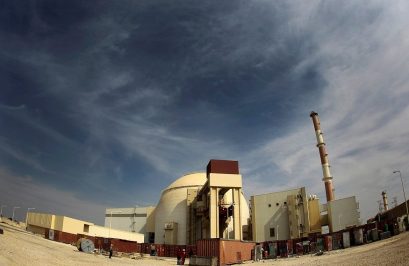
The section made no mention of judgments by U.S. intelligence agencies and the International Atomic Energy Agency that Iran ended a nuclear weapons program in 2003 and has complied with the 2015 deal that imposed restrictions on its civilian nuclear program.

Instead, it said Iran’s retention of a nuclear archive disclosed last year by Israel raised questions about whether Tehran might have plans to resume a nuclear weapons program.

It added that any such effort would violate the NPT, as would any Iranian retention of undeclared nuclear material, though it offered no evidence that Iran had done either.

“It’s piling inference upon inference here to try to create a scary picture,” said a congressional aide, who requested anonymity to discuss the issue, as did the other sources. The aide added that by stripping out much of the report’s normal content, the documents largely had become about Iran.

“There is significant concern that the entire sort of purpose … was to help build a case for military intervention in Iran in a way that seems very familiar,” the source said, referring to the Bush administration’s use of erroneous intelligence before the invasion of Iraq 16 years ago that ousted President Saddam Hussein.

The 12-page report, down from last year’s 45-page document, reflected a disagreement between Assistant Secretary of State Yleem Poblete, whose office is charged with its drafting, and her boss, Undersecretary of State Andrea Thompson, three of the sources said.

Two sources said Poblete had sought to include information such as news stories and opinion pieces in the report, which traditionally is based on legal analyses of U.S. intelligence reports.

The State Department did not comment on Poblete’s role.

“And it had other obvious errors,” said a former U.S. official familiar with the matter. A draft of the unclassified version had included classified information, the official said. “It’s been described to me as just a big food fight within the department over an initially inadequate draft.”

A second former U.S. official said he believed that the report was being used to advance the Trump administration’s views on Iran rather than to reflect information gathered by intelligence agencies and assessments of that information by State Department experts.

“This ‘trends’ section is adding a political tinge or politicizing the report,” said the fourth source on condition of anonymity, saying the administration seemed to be using a once objective report “to back up subjective assertions.”

While saying they did not know why the report had been so abbreviated, removed and then restored from the website, analysts asked if there was an effort underway to demonize Iran.

“The worst case, of course, would be that we are observing signs of a politicization of intelligence for the purpose of serving what the top of the administration would like to accomplish,” said nuclear expert Hans Kristensen of the Federation of American Scientists in Washington.

“We have seen … that in the past with the (Iraq) war,” he said. “This is a potential warning sign about that.”

 

Off Topic:  Failing at the ballot box, Jewish Left lashes out

April 18, 2019

Source: Failing at the ballot box, Jewish Left lashes out – www.israelhayom.com

Election day in Israel has become a day of mourning for some critics of Israel.

In the space of 48 hours last week, four Jewish Democrats in Congress denounced Israel’s prime minister, two more Democrats wrote an op-ed in The Washington Post denouncing Israel’s prime minister, and 10 Jewish liberal groups issued a statement denouncing Israel’s prime minister. What a remarkable coincidence!

The allegedly spontaneous three-pronged media assault began with Representatives Chris Van Hollen (D-Md.) and Gerald E. Connolly (D-Va.), on the op-ed page of The Washington Post on April 10, absurdly accusing Israeli Prime Minister Netanyahu of “sanctioning violence against Palestinians in the occupied territories.” The phrase “sanctioning violence” linked to an article in The New York Times that presumably proved that charge.

One little problem: The Times’ article didn’t contain a single word about Netanyahu sanctioning violence against Palestinians. Whoever provided Van Hollen and Connolly with the “facts” for their article profoundly misled them and sullied their names in the process. Too bad the congressmen didn’t check the facts before signing their names to such an outrageous allegation.

The next day, four other Democrats in Congress – Eliot Engel, Nita Lowey, Ted Deutch and Brad Schneider – issued a statement warning Netanyahu not to take any “unilateral steps” that might interfere with creating a Palestinian state. Which means, of course, a Palestinian state along the 1967 armistice lines – reducing Israel to just nine miles wide.

To sugar-coat their bitter statement just a bit, the four acknowledged that, as they put it: “To paraphrase Abba Eban, the Palestinians never miss an opportunity to miss an opportunity.” Nevertheless, the Congress members demanded that Israel search high and low for an opportunity to create “Palestine” in Judea and Samaria.

It takes a certain chutzpah to urge a return to the pre-1967 borders and, in the very same paragraph, throw in a line from Abba Eban. It was Eban, after all, who said to Der Spiegel on Nov. 5, 1969: “We have openly said that the map will never again by the same as on June 4, 1967. For us, this is a matter of security and of principles. The June map is for us equivalent to insecurity and danger. I do not exaggerate when I say that it was for us something of a memory of Auschwitz. We shudder when we think of what would have awaited us in the circumstances of June 1967, if we had been defeated; with Syrians on the mountain and we in the valley, with the Jordanian army in sight of the sea, with the Egyptians who hold our throat in their hands in Gaza. This is a situation which will never be repeated in history.”

After the Gang of Four had their say, the Gang of 10 weighed in. The day after the four congress members issued their statement, 10 liberal Jewish organizations wrote a letter demanding the same thing.

Their declaration took the form of a letter to U.S. President Donald Trump, urging him to oppose “annexation by Israel of any territory in the West Bank.” They were referring to Netanyahu’s recent remark that he might propose extending Israeli law to Jewish communities in Judea and Samaria.

Note, by the way, that way back in 1995, the Palestinian Authority extended its laws to the cities in which 98 percent of the Palestinian Arabs live. So why the double standard? Why can’t Israeli law be implemented in the Jewish towns? Why do the Jews still have to be governed by the arbitrary and cumbersome system of the old Israeli military administration, while the Palestinian Arabs get to live under their own laws?

But let’s not confuse things by mentioning uncomfortable facts. Forget about laws and double standards. The purpose of the three warning shots that were fired at Israel last week was to intimidate Israel’s leaders and undermine support in America for Israel’s democratically elected leaders.

And here we get to the heart of the matter. Election day in Israel has become a day of mourning for J Street and other Jewish critics of Israel. Every four years, they delude themselves into thinking that the Israeli Left will finally triumph, and every four years they watch in horror as the Israeli Left goes down in defeat. It’s like Charlie Brown thinking that this time, Lucy won’t pull the football away.

This year’s election outcome was the worst yet. The Israeli Left – Labor and Meretz – won a grand total of 10 seats between them. That’s 10 out of 120. That’s who J Street and Americans for Peace Now are aligned with – 8 percent of the Israeli public.

The only thing remaining for the Jewish Left is to mobilize the dwindling faithful – some liberal Jewish organizations, a few Democrats in Congress – and try to create some noise and pressure with a flurry of op-eds and press releases.

I’m not a believer in conspiracy theories. I don’t know if one particular person or one specific group coordinated last week’s three verbal assaults on Israel’s leaders. Maybe it was the work of several like-minded groups, acting independently as they all reached into their usual bag of PR gimmicks at the same time. But one thing is certain: It’s not a coincidence that they all lashed out, within hours of each other, making nearly identical arguments. That’s what they’re doing because, having yet again failed in the voting booths, it’s all they have Left.

This article is reprinted with permission from JNS.org.


Lebanon vs. Israel on land and by sea 

April 18, 2019

Source: Lebanon vs. Israel on land and by sea – www.israelhayom.com

Israel is keeping mum on a recent interesting U.S. proposal to solve the disputes over land and maritime borders between it and Lebanon. Meanwhile, the proposal has sparked conflict within Lebanon.

Crises with Lebanon are starting to appear on the horizon. For Lebanon, there are two major ones that need to be solved by Israel – disputes over the land border and the maritime border.

After the U.N. laid down the border between Israel and Lebanon in 2000 after the IDF withdrew from the security buffer zone, Lebanon rushed to protest the decision, claiming that 13 places along the border – from Rosh Hanikra to Mount Hermon – had remained on the Israeli even though they belonged to Lebanon, and must be returned. Israel did not agree and began building a border fence along the line the U.N. had determined, thereby creating the crisis on land.

The maritime problem has to do with the 860 square kilometers (330 square miles) of open water off Israel and Lebanon’s shared coastline. It happens to be the source of major natural gas deposits. Lebanon is claiming full ownership and Israel disputes that claim. Both sides have sought U.S. help in solving both matters. Thus far, four U.S. envoys have been dispatched to Beirut with proposed solutions, all of which Lebanon rejected. In his last visit to Lebanon, U.S. Secretary of State Mike Pompeo offered a creative solution that immediately sparked disputes within Lebanon.

Israel is refusing to report details about the Pompeo talks. But the secretary of state’s idea was to treat the two disputes separately, which would make them easier to solve. He suggested, first of all, focusing on the matter of the land border to find an answer that would satisfy Lebanon, whereas the maritime border would be handled separately by agreed-upon mediators. Until the mediation is completed, international companies would be responsible for extracting gas, and the profits would be split between Israel and Lebanon. After the mediation process, both nations would abide by the decision of the mediator.

But the American proposal caused tension between Lebanese Prime Minister Said Hariri, who supports the two issues being handled separately, and Parliament Speaker Nabih Berri, who is backed by Hezbollah. Hariri argues that the Lebanese economy is in crisis and the revenue from natural gas could help things.

Berri and Hezbollah, on the other hand, claim that if Israel agreed to Lebanon’s demands regarding the land border, it would scupper Hezbollah’s claims that Israel is “occupying” Lebanese territory and the organization would no longer have any use for its large stockpile of weapons. Moreover, the opponents of the U.S. proposal say, a move like that would spark a debate within Lebanon about the need to demilitarize Hezbollah.

The U.S. wants to separate the two matters, because doing so would allow it to move Qatari gas to Europe via Israel and Cyprus, without it being exposed to the military threat Hezbollah poses. That would allow the U.S. to strike a blow against Russia, Europe’s largest gas supplier. Israel is keeping mum, but we can assume that these issues were raised in the recent talks with Pompeo, and that the continued production of natural gas in accordance with the U.S. proposal is seen as more important than minuscule adjustments to the border line.


Netanyahu’s brilliant victory and the challenges ahead 

April 18, 2019

Source: Netanyahu’s brilliant victory and the challenges ahead – www.israelhayom.com

The main reason for Netanyahu’s triumph is that Israeli voters instinctively feel his expertise and experience remain critical. All signs point to the formation of a right-wing government, but if his satellite parties make extreme demands or try to block a reasonable American peace plan, he can still form a unity government, which most Israelis would applaud.

Israeli voters have chosen Prime Minister Benjamin Netanyahu in what was essentially a referendum over whether he should be re-elected to a fifth term of office. This was the result, despite a hostile media, three pending corruption charges and 13 years in office. In three months, he will surpass David Ben-Gurion as Israel’s longest-serving leader.

Netanyahu employed his electoral skills, ruthlessly dumping his allies at the very end of the campaign to increase his vote – a maneuver that led to his success.

His campaign was unprecedentedly boosted by foreign leaders including U.S. President Donald Trump, Russian President Vladimir Putin and Brazilian President Jair Bolsonaro, all of whom effectively endorsed him the week prior to the election.

But the main reason for Netanyahu’s triumph was that Israeli voters, despite recoiling at his hedonism, instinctively felt that his expertise and experience were critical today and that none of his opponents could even remotely display similar levels of strategy and leadership.

Naftali Bennett and Ayelet Shaked’s New Right party failed to qualify for inclusion to the Knesset by a hair. Had it qualified, Netanyahu would have the support of 69 Knesset members instead of 65.

This was a product of Bennett’s hubris. He persuaded Shaked – one of the most talented MKs – to join him in political oblivion. There is a likelihood that despite Netanyahu’s intense dislike of her, Likud will bring her into their ranks. As of now, Likud is also negotiating with Moshe Kahlon’s Kulanu party to merge with Likud, which would raise its numbers to 39.

Aside from the nightmare of satisfying conflicting ministerial demands, the prime minister faces enormous external challenges.

The Trump peace plan is soon likely to be unfolded. Even in the absence of a two-state policy, Israel will be asked to make territorial concessions that do not compromise security. Most Israelis may accept the proposals but Netanyahu is dependent on the Union of Right-Wing Parties, which has threatened to bolt any government that accepts territorial compromise.

The bulk of non-Orthodox American Jews have essentially abandoned Israel yet feel entitled to influence our security policies even against the will of the Israeli people and its democratically elected government. They are also incentivizing the Democrats, including hitherto supporters of Israel, to exert pressure on the Israeli government.

Is it unreasonable for Netanyahu to apply Israeli sovereignty to the major settlement blocs? We have waited decades ––to no avail – to negotiate with the Palestinians on the future of the territories. Clearly, the settlement blocs should no longer be subject to negotiation. Now is a propitious time – unless the Palestinians miraculously reverse themselves and become flexible when the Trump peace plan is released – to finally formalize the status of over 500,000 settlers by applying Israeli sovereignty to them. Most Israelis would support this move, which would not reduce the Palestinians’ quality of life by an iota.

Such a step, even restricted to the major settlement blocs, would create an upheaval and the bulk of the world would condemn us. But if the U.S. stands by, we should not miss such an opportunity to stabilize the area, laying the ground for a future settlement.

Should we fail to do so, in the absence of a supportive U.S. government we will find ourselves continually negotiating over our rights in the major settlement blocs.

While Netanyahu has a powerful case regarding the major blocs, the U.S. is unlikely to allow annexation of the isolated settlements and he would not necessarily have the support of most Israelis for such a move, either.

All this will require sensitive negotiations within his coalition.  Avigdor Lieberman’s Yisrael Beytenu party has already threatened to oppose the government if the haredi bloc prevent the passage of the draft conscription bill. If this happens, Netanyahu will lose his majority and we could face new elections.

The haredim polled exceedingly well and have proved to be masters of extortion in the past. Aside from additional diversion of funds toward their yeshivot and the aggrandizement of the chief rabbinate, we can expect efforts to impose even greater stringencies regarding conscription, conversion, marriage, gender separation and kashrut. This will widen Israel-Diaspora rifts.

Netanyahu may brazen out the confrontations and reach an accommodation. That would be his first choice – leading a right-wing government and satisfying haredi demands.

But given the external as well as internal pressures, despite his spectacular victory, he may be obliged to consider alternatives. Despite confrontationist approaches by both the incoming Likud government and Blue and White-led opposition, the dominant policies in the two parties are almost indistinguishable.

For now, it looks like a right-wing government will prevail. But if Netanyahu finds that the demands from his satellite parties are too extreme or they block what he considers a reasonable American peace plan, he may well reach an accommodation with Blue and White leader Benny Gantz over his legal problems and form a unity government in the months ahead – which would be applauded by the vast majority of Israelis.


Female Muslim IDF soldier braves threats to serve in infantry battalion 

April 18, 2019

Source: Female Muslim IDF soldier braves threats to serve in infantry battalion – www.israelhayom.com

Cpl. N. prays five times a day and wears a hijab when she is on leave from the Lions of the Jordan Valley infantry battalion • She has been threatened by villagers and by Arab soldiers, but she still dreams of a military career and stronger for Arabs and Jews in Israel.

When Cpl. N., who serves in the mixed-gender IDF infantry battalion Lions of the Jordan Valley, heads out on arrest operations in nearby Palestinian villages, she usually talks to the locals in Arabic.

N. is a 19-year-old pepper pot. She’s opinionated and knows what she wants to achieve. She is an observant Muslim who prays five times a day and during the Ramadan fast mostly takes night shifts. She is a combat infantry soldier in the Lions of the Jordan Valley Battalion, which executes operations in Judea and Samaria and nearly every day clashes with the Palestinians in the area.

“I don’t stop to think that these people are Arabs like me,” she says in fluent Hebrew.

“I always tell myself that they brought this situation – in which they are facing Israeli soldiers – on themselves, and I perform my mission as I need to. It doesn’t matter when I come from and who I pray to every day, or what I wear when I go home on leave. When I’m on a mission, I need to fulfill it in order to protect my friends, my country. That’s why I enlisted,” she says.

Before she heads out on leave to the hostile Muslim village in northern Israel she calls home, she takes off her uniform, puts on civilian clothes, and affixes her hijab – the traditional headscarf that covers her hair and neck. She cannot return home for the weekend in uniform or carrying her military-issue weapon.

“There are some people in the village who realized that I’m in the army and started to threaten my family with violence,” N. says sadly.

“They tried to physically attack my family, and that’s scary. Even though my parents support me, every time someone threatens them they take a step back. I was raised to love people, no matter what their religion or beliefs.

“In our home, they always said that Arabs and Jews here are living on the same land. But when there were terrorist attacks, and Jews were being killed, the neighbors said they deserved to die and I didn’t understand how they could say such things. I saw how difficult the situation in the country was and I decided I wanted to change it,” she says.

Not everyone is pleased at the idea of a devout Muslim woman serving in an infantry unit. She says that the debate about haredi conscription pales in comparison to what she has experienced.

N. has already served under one commander who accidentally separated her from her comrades during a training course because she was wearing her hijab. That same commander apologized after the incident, but N. says even the apology did not make up for the offense.

N. says she has also been threatened by male Arab soldiers, who said they would harm her if she didn’t leave the army. They were removed from her unit. But she says she has also received much support from her unit comrades, as well as from battalion commander Capt. Roni Avital and from company commander Lt. Gal Yosef.

The infantry corporal has plenty to say about people who look at her askance.

“If I listened to everyone who wasn’t supportive, I wouldn’t have made it this far. I wouldn’t be dreaming of a career in the military. I think that Arabs need to think not only about what the country can do for them, but also about what they can do for the country.

“We need to take a look at ourselves, because we live here, and if we want our rights, we need to do something, and one thing to do is go all the way and contribute to the army. If we don’t fight together, Arabs and Jews, we won’t have a country,” she says.


Iranian leader: We are not a regional threat 

April 18, 2019

Source: Iranian leader: We are not a regional threat – www.israelhayom.com

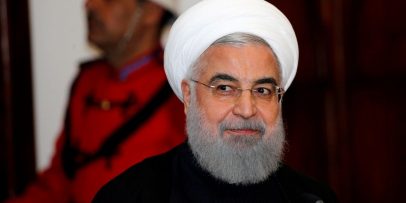
Speaking at a military ceremony in Tehran, President Hassan Rouhani says Islamic republic’s armed forces “stand against invaders … the roots of our problems are the Zionist regime and American imperialism.”

Iranian President Hassan Rouhani said on Thursday that Iranian armed forces were not a threat against any regional country, as Tehran held an Army Day military parade to unveil its latest military equipment amid rising tensions with the United States.

In a ceremony in Tehran, broadcast live on state television, marching soldiers passed a podium where Rouhani and top military commanders were standing, and locally designed and produced fighter jets took part for the first time in an air display.

Iran also unveiled missiles, submarines, armored vehicles, radars and electronic warfare systems. It also showed off its Russian S-300 missile defense system.

“I want to tell the regional countries that the armed forces of the Islamic Republic of Iran are not against you and your national interests. They stand against invaders… The roots of our problems are the Zionist regime and American imperialism,” Rouhani said.

Iranian armed forces were more powerful than ever, said Rouhani. “We seek regional security and stability, countries’ sovereignty and end of terrorism and their activities in this region,” he said.

Iran has two armies, a regular one which operates as a national defensive force, and the Islamic Revolutionary Guard Corps that was created after the 1979 revolution to protect the Islamic republic against both internal and external adversaries.

The United States officially designated the Revolutionary Guards as a foreign terrorist organization on Monday, an unprecedented move which was condemned by Iran and created concerns about reprisal attacks on U.S. forces.

Rouhani called the U.S. move against the Guards “abhorrent” and said, “Insulting the Revolutionary Guards is an insult to all [Iranian] armed forces and an insult to Iranian great nation.”

Iran’s army has the biggest ground force in Iran and Revolutionary Guards is in control of a growing arsenal of ballistic missiles.

The parade was canceled in a few provinces where the armed forces were deployed to help flood-affected people. The flooding, which began on March 19, has killed 76 people, forced more than 220,000 people into emergency shelters, and left aid agencies struggling to cope.

Rouhani said: “I doubt we can find this level of unity between people and armed forces in any other country.”

Separately, Iran and Oman held a joint naval exercise and performed maritime rescue operations in the Gulf, Fars news agency reported on Thursday.


Hamas & Hizballah set up new March of Return militia on Lebanese-Israeli border – DEBKAfile

April 18, 2019

Source: Hamas & Hizballah set up new March of Return militia on Lebanese-Israeli border – DEBKAfile

The relative calm prevailing on Israel’s border with Hamas-ruled Gaza is deceptive. Hamas has not changed its terrorist spots, only switched fronts, DEBKAfile’s exclusive counter-terrorism sources report.

Hamas’s military wing, Ezz e-Din al-Qassam, was not persuaded by the excessive concessions that Israel and Egypt granted the Gaza Strip to give up the mob violence of firebombs and grenades against Israeli troops guarding the Gaza border in the past year, or to withhold the explosive balloons and rocket volleys aimed into Israel.  Relative calm for the time being was not bought by the monthly river of Qatari dollars or the cash released by a UN fund which had collected $300 m from donor governments. While pretending to Israel and Egypt to be ready for a long-term truce, Hamas leaders have by no means given up on their terror campaign against Israel. Far from it. They have simply decided that the Gaza confrontation has done its work and yielded lucrative returns and were persuaded to switch fronts and move north into Lebanon.

This was not Hamas’ brainchild. It came from Iran’s Middle East commander, Al Qods chief Gen. Qassem Soleimani. He directed the Hizballah secretary Hassan Nasrallah to sell it to two Hamas leaders, Saleh al-Arouri, head of the organization’s terror networks, who was spending time in Beirut, and Osama Hamdan, head of Hamas’ Lebanese office.

The Soleimani plan hinges on Hizballah raising a new Palestinian force of 3,000 recruits from the Palestinian refugee camps in Lebanon under the label of “The Hamas Return,” the sequel to the “March of Return” applied to the violence emanating from Gaza in the past year. These recruits would undergo a special three-month training course, at the end of which they would be given arms, including heavy artillery and short-range surface rockets, and posted in South Lebanon opposite the Israeli border. But before then, the first Palestinian recruits were to be placed in position in time for Israel’s Independence Day on May 9.

Additional features of Soleimani’s project:

  1. Hamas’ new northern front would be activated in coordination with the Gaza violence, creating a seesaw of terror against Israel.
  2. Israel’s military reprisals are expected to focus on the new Hamas Lebanese force rather than jeopardizing the huge investment made in Gaza by Israel, Egypt, Qatar and the UN.
  3. The Lebanese-based “Hamas Return” militia will be backed by Hizballah, with which Israel has avoided clashes in recent years.
  4. Enhanced Hamas influence in the Palestinian camps of Lebanon will further undermine the Palestinian Authority’s chairman Mahmoud Abbas.
  5. Some of the Lebanese contingent’s officers will be assigned to the Gaza Strip as coordinators between the two forces.

DEBKAfile’s counter-terrorism sources disclose that some 2,500 young Palestinians men have already enlisted to the new Hamas force and are undergoing training at Hizballah facilities in central Lebanon and the Beqaa Valley. Most have come from the refugee camps outside Sidon and Tyre, and in Beirut and Baalbek. Hamas has made its senior representative in Lebanon, Osama Hamdan, responsible for the new militia.

This week, Lebanese intelligence chiefs warned Hamdan and Arouri that Israeli intelligence and its special forces are preparing to attack the leaders of the “Hamas Return” militia and the Hizballah facilities where they are training, in order to nip the entire project in the bud before it is ready for action.


U.S.-Iran tensions rise over IRGC terror listing – TV7 Israel News 17.04.19 

April 18, 2019