Archive for March 2019

The deal of the last century

March 4, 2019

Source: The deal of the last century – Israel Hayom

Prof. Eyal Zisser

Last week, a Nobel Peace Prize seemed within reach; the only thing missing was a small step by the North Korean dictator, Kim Jong-un, after which U.S. President Donald Trump could have ended the 60-year conflict on the Korean Peninsula.

At the moment of truth, however, North Korea’s young leader refused to repeat the mistake made by former Libyan tyrant Muammar Gaddafi, who under Western pressure gave up his nuclear program in exchange for Western promises that proved useless the moment the revolution in Libya erupted.

The failure on the Korean Peninsula is insufficient to infer about the Middle East, where things are more complex and murky. And yet, even in our neighborhood, anticipation is building as the Trump administration prepares to unveil its “Deal of the Century,” as if the American peace proposal can resolve a conflict that is over a century old.

History teaches us that compromise proposals, presented by foreign mediators, have not enjoyed success in the Israeli-Palestinian arena. Efforts by the international community to force an agreement have also failed – starting with the United Nation’s partition plan in 1947, which was nothing but a futile attempt to force a solution on the sides. On the other hand, diplomatic breakthroughs and even peace have only been achieved when the warring sides themselves have come together to hash out a deal. Such was the case with the Israeli-Egyptian peace treaty and the peace accord between Israel and Jordan.

The basic assumption at the heart of the American proposal is that it’s possible to force upon the Palestinians a peace deal that doesn’t come close to meeting their expectations and demands. It is a faulty assumption that won’t pass the reality test. Indeed, Arab countries will do all in their power to support a deal between Israel and the Palestinians, because they view such a deal as a vital interest. Arab rulers will put heavy pressure on the Palestinians, but won’t dare make concessions on their behalf or in their name, because they don’t want these concessions attributed to them in the annals of history.

Hence the Palestinians will always have the last word, and they are either incapable or unwilling to make the historical decision to end the conflict. First, Palestinian leaders have always assumed that time is on their side, and that by delaying the Trump proposal a better deal will be offered – whether by Trump’s successor or the international community, Russia or the European Union, which have openly told the Palestinians to shun Trump’s offer.

Second, the sense of despair on the Palestinian street is insufficient to prod the leadership toward a deal. The Americans, similar to the Arab rulers, don’t have the bargaining chips to pressure Palestinian Authority President Mahmoud Abbas and his cohort, who prefer a sputtering, teetering PA in Ramallah over a quasi-state that far from meets their minimum demands. It’s interesting to note, incidentally, that the notion of a quasi-Palestinian state doesn’t thrill younger Palestinians in the least, and many of them see the single-state solution – that is to say receiving Israeli citizenship – as the only solution capable of meeting their needs and advancing the Palestinian interest, certainly in the long term.

Finally, the Palestinian leadership’s weakness and the splits within its ranks certainly aren’t conducive to any courageous decisions, let alone concessions.

The American deal of the century, therefore, will most likely join the long list of peace plans to end in a thud. With that, when the dust settles, Israel must not be perceived as the side that scuttled Trump’s efforts, and it must seek to exploit the momentum the American plan could provide to bolster its relations with the Arab world. Either way, long-awaited peace isn’t around the corner.

Eyal Zisser is a lecturer in the Middle East History Department at Tel Aviv University.
Making news – ignoring real problems 

March 4, 2019

Source: Making news – ignoring real problems – Israel Hayom

Fiamma Nirenstein

Israel is shaken and wounded. On Thursday, the country’s top prosecutor, Attorney General Avichai Mendelblit, with 57 pages of allegations, announced his intention to indict Prime Minister Benjamin Netanyahu with bribery, fraud and breach of trust, thereby not only undermining a great leader – a key political figure both at home and abroad – but also clearly trying to heavily influence the outcome of the upcoming general election to be held on April 9.

Now that the judicial machine has been launched, it is quite realistic to think that Likud’s predominance will be put at risk in the coming days. According to the polls, it is already expected to lose four Knesset seats, thereby leading to a standoff with the opposing force, the Blue and White party, which was formed between Benny Gantz’s Israel Resilience Party and Yair Lapid’s Yesh Atid. It’s not surprising that the timing of Mendelblit’s decision has people talking about a political putsch.

The chill of the situation – the embarrassment of a country – is also accompanied by overt expressions of satisfaction, even of crazy joy by a broad array of detractors, particularly the world’s media, almost all hostile towards Netanyahu. For years now, they have made Bibi their designated target, and on Thursday, the TV screens were home to scandalous parties of collective satisfaction. In the hours following Mendelblit’s announcement, the delight in which the media networks took in covering has certainly been an event in itself.

Netanyahu faced the harsh reality upon returning from a meeting with Russian President Vladimir Putin, where he obtained a silent assent vis-à-vis Israel’s absolute determination to fight Iran’s presence in Syria. It’s one more achievement in the frame of a glorious foreign policy that has brought the Jewish state to make friends with so much of the world, as well as to overcome the freeze with the United States and have its capital, Jerusalem, become home to the U.S. embassy, and obtain the cancellation of the 2015 nuclear deal with Iran.

Netanyahu had tried to petition Israel’s High Court of Justice in order to postpone the announcement of the attorney general’s decision until after the election. But he wasn’t successful.

So now, the accusations concern three cases: Case 1,000, in which Netanyahu is accused of having received numerous gifts of champagne and cigars – up to tens of thousands of dollars in gifts – and of having perhaps in exchange undertook actions that favored the donor. Yet apart from a phone call to facilitate the granting of an American visa, it doesn’t seem that any political benefits were given. Case 2,000 delves into an apparent quid pro quo deal between the premier and Israel’s Yedioth Ahronoth newspaper. In Case 4,000, he is accused of orchestrating a deal that favored the telecommunications company Bezeq while pushing for more favorable coverage from its website Walla.

But there has been neither favorable coverage nor funding, and it’s difficult to see him attempting such a crime. Moreover, name a politician who doesn’t try to obtain favorable coverage from the press; it’s something that happens every day, even part of the politician’s job. Here, even if now the accusations are now very detailed as to episodes, events, meetings, receipts – a real chat for the town – there is no evidence, it seems, of any actual case of corruption. Therefore, the judicial move can only be seen as a political maneuver with intent to back Netanyahu into a corner.

It should take months before Mendelblit’s request is granted, yet it comes just 40 days before the elections. Meanwhile, Israel has a new, even if recurrent, problem. The U.N. Human Rights Council, which the United States left due to its anti-Israel animus (in the past 12 years, among 311 specific resolutions, 76 have been taken against Israel, while only 27 have been posed against Syria!) announced the results of a so-called inquiry – a commission composed of well-known anti-Israeli officials investigating whether Israel has committed war crimes in Gaza.

This after thousands of missiles and hundreds of thousands of demonstrators largely armed or used as human shields by Hamas and Hamas-allied organizers stormed the Israeli border. Last year, 189 Palestinians – many of who were often armed – were killed during the “March of Return” weekly assaults organized by Hamas along the Gaza-Israel border on Fridays since March 30, 2018. Now, we have again a repetition of the Goldstone Report, which Mendelblit himself picked apart back in 2011, admitting, as is also true today, that the so-called Gazan “civilians” are Hamas terrorists used in the asymmetric war while dressed in civilian clothing.

It’s one of the problems – one of the real ones – that Israel has to manage while dealing with the attempt to destroy the career of the best Israeli prime minister since the days of founding father David Ben-Gurion.

This article is reprinted with permission from JNS.org.

Translation by Amy Rosenthal.

Fiamma Nirenstein was a member of the Italian Parliament (2008-2013), where she served as vice president of the Committee on Foreign Affairs in the Chamber of Deputies, served in the Council of Europe in Strasbourg and established and chaired the Committee for the Inquiry Into Anti-Semitism. A founding member of the international Friends of Israel Initiative, she has written 13 books, including “Israel Is Us” (2009). Currently she is a fellow at the Jerusalem Center for Public Affairs.

Israel ranks as 8th most powerful country – U.S. News report –

March 4, 2019

Source: Israel ranks as 8th most powerful country – U.S. News report – Israel News – Jerusalem Post

Other powerfully ranked countries included Russia, China, Germany, United Kingdom, France, Japan and Saudi Arabia.

BY YVETTE J. DEANE
 MARCH 4, 2019 13:13
IDF soldiers storm a target during the ground incursion into Gaza

Israel was ranked the eighth most powerful country in the world, according to the US News and World Report‘s power ranking in 2019.

The power ranking was based on leader, economic influence, political influence, international alliance and a strong military. This ranking was part of a subcategory ranking for the US News‘s annual Best Country ranking. Israel received a high ranking because of its strong military, along with its strong political influence and international alliances.

The top nine most powerful countries, according to the report, have not changed since 2018. The United States of America snagged the No. 1 spot because it has the largest economy and biggest military budget in the world, spending more than $610 billion on military hardware and personnel in 2017, according to the report. In 2017, the US also spent slightly more than $35 billion in economic aid and nearly $15 billion in military aid.

Other powerfully ranked countries included Russia, China, Germany, the United Kingdom, France, Japan and Saudi Arabia.

Israel was also rated No. 13 in the “Mover” category. These are countries that the World Bank predicts will have the fastest growing economies over the next couple of years. Mostly Middle Eastern and Asian countries dominate this ranking, with the United Arab Emirates in first place, with Singapore following behind in the No. 2 spot.

The country which was ranked best country in the world according to the report was Switzerland, which has held its title since 2017. The ranking was based on the categories of adventure, citizenship, cultural influence, entrepreneurship, heritage, movers, open for business, power and quality of life. 

Some 80 countries were ranked in total, while there are 193 United Nations member states.


Two soldiers wounded in West Bank car-ramming; 2 attackers killed

March 4, 2019

Source: Two soldiers wounded in West Bank car-ramming; 2 attackers killed | The Times of Israel

IDF officer seriously injured, border guard lightly hurt; third assailant in the vehicle lightly injured, army says

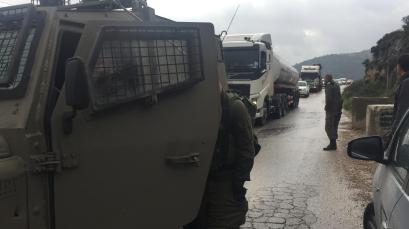
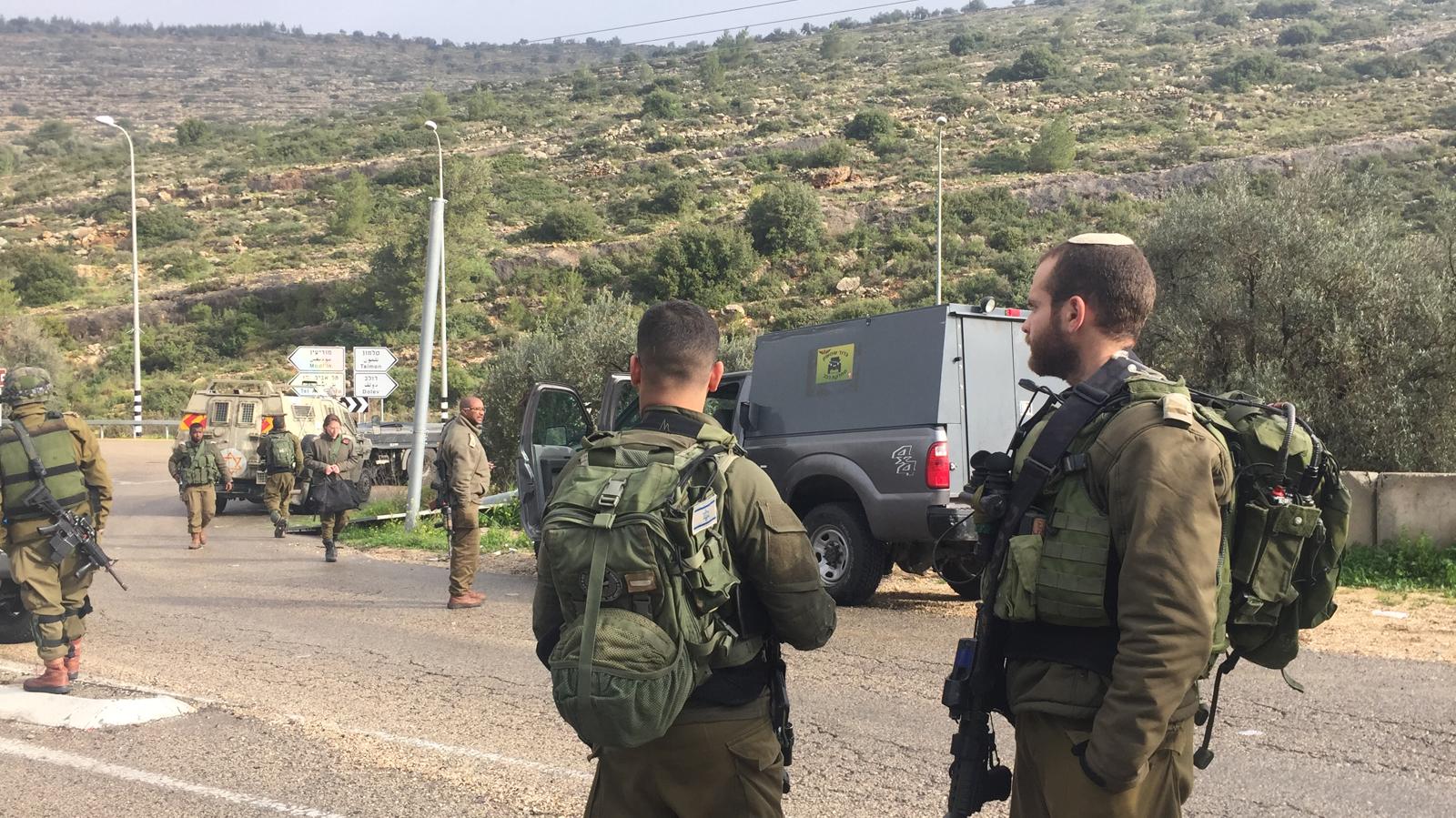
Israeli troops arrive at the scene after a car-ramming attack in which two Israeli servicemen were injured in the central West Bank on March 4, 2019. (Israel Defense Forces)

Israeli troops arrive at the scene after a car-ramming attack in which two Israeli servicemen were injured in the central West Bank on March 4, 2019. (Israel Defense Forces)

Two Israeli soldiers were wounded in a predawn car-ramming attack in the northern West Bank on Monday, one of them seriously, the army said. The force opened fire on the three occupants of the vehicle, killing two and wounding the third.

The ramming occurred at approximately 3:30 a.m. near the village of N’ima, northwest of Ramallah. The army said that “from an initial investigation it appears to have been an attack.”

“Terrorists rammed their vehicle into a number of soldiers who had stopped by the side of the road at the entrance to the village,” the Israel Defense Forces said.

The soldiers had earlier conducted arrest raids in Nima. Their vehicle broke down as they exited the village. The ramming occurred as the soldiers were standing outside the truck.

An IDF officer was seriously injured and a border guard was lightly wounded in the attack, the military said.

Palestinian residents of the village denied it was a deliberate attack and said it was an accident, noting the lack of streetlights, narrowness of the road and the thoroughfare’s nickname: “Death Street.”

Israeli troops arrive at the scene after a car-ramming attack in which two Israeli servicemen were injured and two of the assailants were killed in the central West Bank on March 4, 2019. (Israel Defense Forces)

“The troops opened fire on the terrorists. Two of them were neutralized and the third terrorist was lightly injured,” the IDF said, adding that reinforcements were sent to the area.

The Palestinian Authority health ministry identified the two slain assailants as Amir Daraj, 20, from the village of Kharbatha al-Misbah and
Yousef Inqawi, 20, from Beit Sira. The name of the third, injured assailant was not immediately released.

The Israeli military said the three young Palestinian men had earlier thrown firebombs at a nearby highway.

“In the car in which the terrorists carried out the attack, additional Molotov cocktails were found,” the army said.

Protests and low-level rioting broke out in the area following the car-ramming.

A helicopter and ambulances were sent to the scene to evacuate the soldiers who were hurt.

The two injured servicemen, both approximately 20 years old, were taken to Tel Hashomer Hospital in Ramat Gan, outside Tel Aviv, for treatment.

The seriously wounded officer sustained injuries throughout his body, medics said.

The lightly hurt border guard was released from the hospital later in the morning after being examined by doctors, medical officials said.

IDF crackdown on Hamas

The Hamas terror group praised the attack, saying it showed “that the Palestinian nation will continue in its fight against the occupier until it earns its rights and frees its land.”

“The message of the young rebels in the West Bank is that they will not rest until the occupation is expelled and their holy places are liberated, and that the plans to Judaize Jerusalem will not stand,” Hamas said in a statement.

Also in the central West Bank on Monday morning, Israeli troops arrested 16 Palestinian people in predawn raids, 11 of them suspected of being Hamas members.

“Tonight IDF troops conducted an operation in the Binyamin Regional Brigade as part of the campaign against the Hamas terror group. As part of the operation, IDF and Border Police troops arrested 11 Hamas members,” the army said.

Israeli defense officials have warned that the coming months may see an escalation in violence in the already restive West Bank and Gaza Strip, in light of added pressure from the upcoming Israeli elections, US President Donald Trump’s plans to announce his proposal for an Israeli-Palestinian peace agreement, and ongoing struggles between the Palestinian Authority and Hamas.


Multi-Dimensional Warfare for the US and Israel

March 3, 2019

Thanks to “Smarter Every Day,:”

How modern warfare requires coordination between Army,, Navy,, Air Force,, Space, and Cyber forces.

The documentary is about the US military, but completely applies to the IDF..


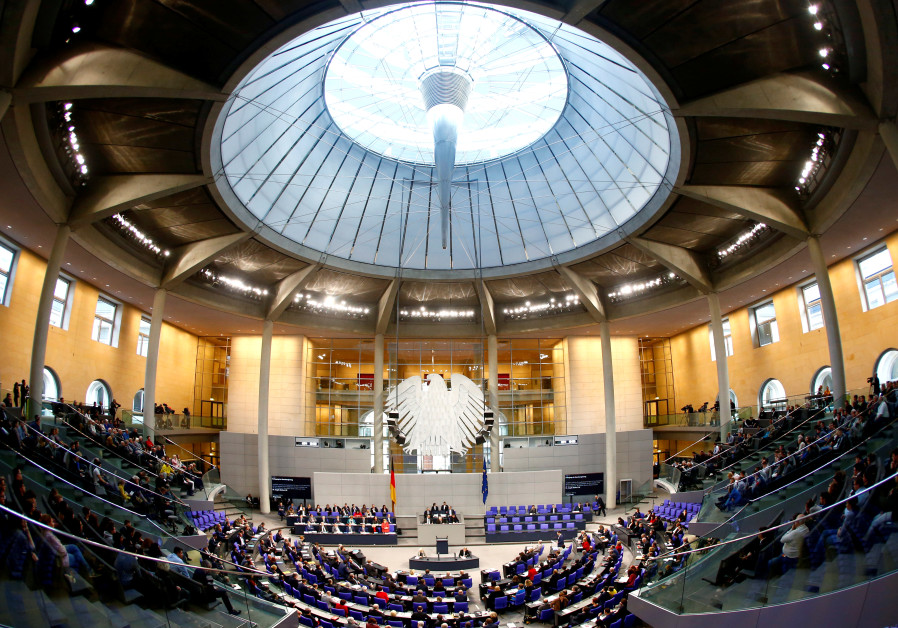
German government refuses to ban Hezbollah, rebuffs Israel and U.S. 

March 3, 2019

Source: German government refuses to ban Hezbollah, rebuffs Israel and U.S. – International news – Jerusalem Post

The Merkel administration has also banned the website of the extremist left-wing group Indymedia and right-wing extremists entities over the years.

BY BENJAMIN WEINTHAL
 MARCH 2, 2019 20:22
German government refuses to ban Hezbollah, rebuffs Israel and U.S.

After the United Kingdom outlawed all of the terrorist entity Hezbollah last week, Germany’s government refused to ban the political wing of the Lebanese Shi’ite organization.

A spokesman for Germany’s interior ministry (BMI) wrote The Jerusalem Post: “The BMI does not comment on concrete prohibition considerations in general; this applies regardless of whether there is reason to do so in individual cases.”

The BMI has provided the same answer to Post queries since 2008 about whether German Chancellor Angela Merkel’s administration plans to outlaw all of Hezbollah, while the EU has banned its military arm since 2013.

According to 2018 German intelligence reports analyzed by the Post, there are 950 Hezbollah operatives in the federal republic who raise funds, recruit new members and spread Hezbollah’s lethal antisemitic ideology.

“According to the case law of the Federal Administrative Court the entire Hezbollah is against the idea of international understanding in the sense of the Basic Law, because it fights the right of existence of the State of Israel with terrorist means,” the BMI’s spokesman said. “Such an objective is antisemitic in nature.”

The UK government announced on Friday: “An order laid in Parliament on Monday (February 25) to proscribe the terrorist organizations Hezbollah, Ansaroul Islam and Jama’at Nusrat al-Islam Wal-Muslimin (JNIM) has now come into effect, following debates in the Houses of Parliament.”

“Under the Terrorism Act 2000, being a member – or inviting support for – these groups will be a criminal offense, carrying a sentence of up to 10 years’ imprisonment,” the statement continued. “All three groups have been assessed as being concerned in terrorism.”

Germany, like the UK, is within its rights to unilaterally outlaw Hezbollah’s political wing. It is merely a matter of political will from Germany’s interior minister Horst Seehofer, from the Christian Social Union Party, and Merkel, who has described Israel’s security as “non-negotiable” for her government.

The German government has banned radical Islamic associations over the years without waiting for a consensus among the EU member states. Take the example of the The True Religion (Die Wahre Religion), which was banned in 2016. Germany also banned the radical group Tauhid Germany in 2015.

The Merkel administration has also banned the website of the extremist left-wing group Indymedia and right-wing extremists entities over the years.

A US State Department representative told the Post last year when asked about Germany’s refusal to ban all of Hezbollah, “They should designate Hezbollah – in its entirety – as a terrorist organization.”

According to US sources familiar with Germany’s position toward Iran and Hezbollah, Germany rejected the US demand to outlaw all of Hezbollah, because the Lebanese militia “is linked to Israel-Palestinian peace talks.” The sources also told the Post last year that Germany considers the Trump administration as too pro-Israel.

Germany has long been a hot-bed of Hezbollah activity. The Al-Mustafa Community Center, in the northern German city-state of Bremen, is a major hub for raising funds for Hezbollah in Lebanon, according to a German intelligence report reviewed by the Post in 2018.

The Bremen intelligence agency’s report from last June stated, “The Al-Mustafa-Community Center supports Hezbollah in Lebanon, especially by collecting donations.” Berlin’s mayor, Michael Müller, permits the Hezbollah and Iranian-regime sponsored al-Quds Day rally to take place each year in the heart of Berlin’s shopping district. Al-Quds Day calls for the destruction of the Jewish state. Iranian regime institutions in Germany send Hezbollah members to the anti-Israel event.

Public Security Minister Gilad Erdan wrote on Twitter: “All who truly wish to combat terror must reject the fake distinction between ‘military’ & ‘political’ wings. Now is the time for the EU to follow suit!”

The EU merely banned Hezbollah’s so-called military wing in 2013 after Hezbollah blew up an Israeli tour bus in 2012 in Bulgaria. The terrorist attack murdered five Israelis, their Bulgarian Muslim bus driver, and injured 32 Israelis.

The Netherlands prescribed the entire Hezbollah a terrorist organization in 2004. The United States, Canada, the Arab League and Israel all classify Hezbollah’s entire organization a terrorist entity.

Israel’s Ambassador to the United Nations, Danny Danon, praised the Conservative government’s move to sanction all of Hezbollah because, “the separation between the political and armed wings is a false and artificial separation, because both are controlled and supported by Iran and enable the organization to continue to raise funds on European soil.”

“We will continue to lead the struggle for the Security Council to recognize Hezbollah as a terrorist organization, and mobilize the international community against it, as it serves as an arm of Iran to spread Tehran’s aggression,” Danon said.


US-backed fighters advance against Islamic State in its last Syrian territory

March 3, 2019

Source: US-backed fighters advance against Islamic State in its last Syrian territory | The Times of Israel

Syrian Democratic Forces report heavy clashes in area of Baghouz, on the east bank of the Euphrates River; aid group says over 10,000 civilians evacuated since February 20

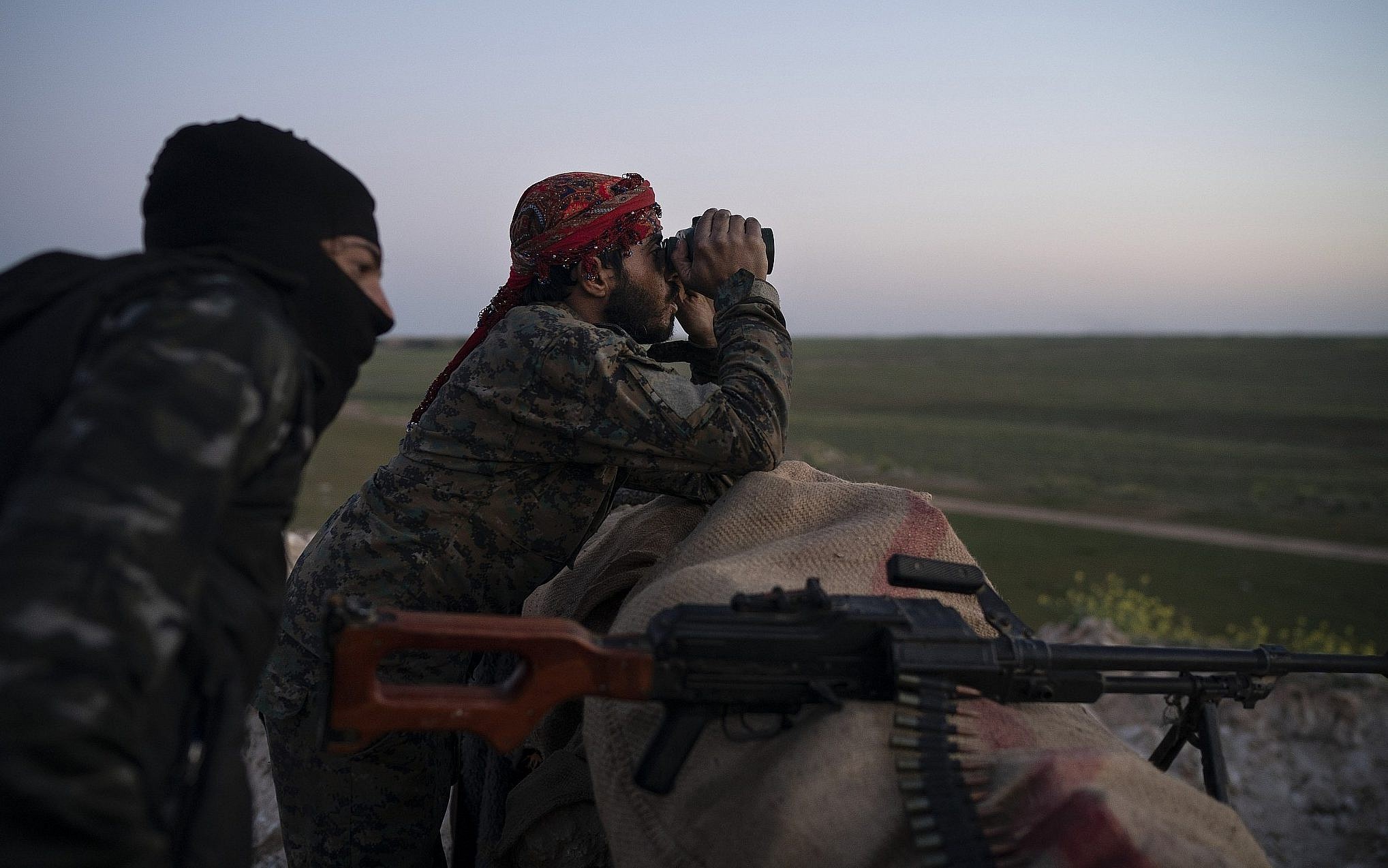
In this Tuesday, Feb. 19, 2019 file photo, US-backed Syrian Democratic Forces fighters watch as an airstrike hits territory still held by Islamic State in the desert outside Baghouz, Syria (AP Photo/Felipe Dana, File)

In this Tuesday, Feb. 19, 2019 file photo, US-backed Syrian Democratic Forces fighters watch as an airstrike hits territory still held by Islamic State in the desert outside Baghouz, Syria (AP Photo/Felipe Dana, File)

AL-OMAR OIL FIELD BASE, Syria — A spokesman for the US-backed force fighting the Islamic State group in eastern Syria says fighters are waging intense battles with the group, advancing on two fronts in the last area they control.

Mustafa Bali of the Kurdish-led Syrian Democratic Forces tweeted Saturday that “heavy clashes” are taking place in the area on the east bank of the Euphrates River.

Bali said three SDF fighters were wounded.

The SDF on Friday evening resumed military operations to liberate the last piece of territory held by IS in the province of Deir el-Zour after evacuating thousands of civilians and hostages who had been besieged inside.

Zana Amedi, an SDF commander, told The Associated Press that “an active ground force” is advancing into IS-held territories as the jihadists resort to sniper fire and booby-traps.

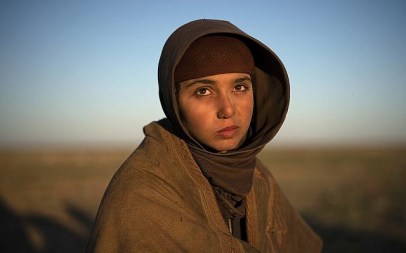
A girl waits to be screened by US-backed Syrian Democratic Forces (SDF) after being evacuated out of the last territory held by Islamic State militants, in the desert outside Baghouz, Syria, Friday, March 1, 2019. (AP Photo/Felipe Dana)

“Those left inside are fighters who do not wish to surrender,” Bali told The Associated Press.

The military campaign to uproot the militants from the eastern banks of the Euphrates River began in September, pushing them down toward this last corner in the village of Baghouz, near the Iraqi border. The military operation was halted on February 12 as the SDF said a large group of civilians and hostages were holed up in the territory, which sits atop caves and tunnels where they had been hiding.

The remaining speck of IS-controlled land in Baghouz village is also along the Euphrates from one side and the desert near the Iraqi border from the other. Thousands of civilians were living in a tent encampment and houses along the riverside.

Over the last two weeks, thousands of civilians have been evacuated, many of them women and children in desperate conditions. The only aid group at the evacuation site, the Free Burma Rangers, estimated that at least 10,000 civilians have left the IS pocket since February 20, in trips organized by the SDF.

The evacuees, who included IS family members, said food was running low and clean water and medicine were scarce. Despite its demise, many defended what remained of the group’s territorial hold, which once spanned a third of Iraq and Syria.

As they trickled out, SDF and coalition officials screened them. Women and children were transferred to camps miles away. Men suspected of links to the militant group were taken into custody at other facilities.

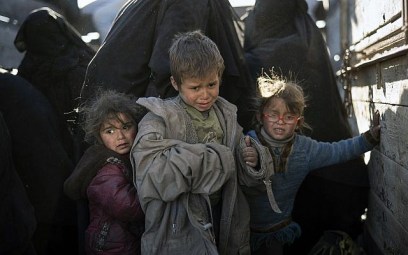
Women and children exit the back of a truck as they arrive at a US-backed Syrian Democratic Forces (SDF) screening area after being evacuated out of the last territory held by Islamic State, in the desert outside Baghouz, Syria, Friday, March 1, 2019. (AP Photo/Felipe Dana)

US President Donald Trump said Thursday that IS has lost “100 percent” of the territory it once controlled in Syria, but officials estimate there are hundreds of militants left in the small patch of territory in Baghouz, and that they will likely fight till the end.

Bali would not speculate on how long the military operation might take but said he expects a “fierce battle.”

He said the battles are expected to take place in a very small area that includes a complex network of tunnels, as well as suicide bombers and land mines.

“The battle to finish off what is left of Daesh has started,” said SDF commander Adnan Afrin, using the Arabic acronym for IS.

Afrin said he expects “resistance” from the remaining fighters who are likely to deploy all their weapons, including suicide bombers.

He said most of the remaining fighters are Europeans, Asians, Iraqis and Arabs from the area.

On Friday, the smallest batch of evacuees, just over 200, came out of the pocket in around six trucks used to transport sheep. About 10 trucks sent to the perimeter of the IS pocket came back empty, and drivers said no more evacuees came out after hours of waiting.

The evacuees Friday included wounded men but were mostly women and children. There were Russians, Indonesians, Bosnians, Dagestani, Kazaks, Egyptians, Syrians and Iraqis. They dragged along few belongings, distraught children and broken spirits.

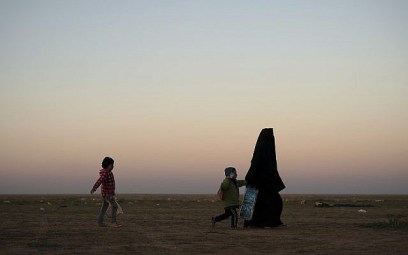
A woman walks with her children at a US-backed Syrian Democratic Forces (SDF) screening area after being evacuated out of the last territory held by Islamic State, in the desert outside Baghouz, Syria, Friday, March 1, 2019. (AP Photo/Felipe Dana)

Umm Mohammed — or mother of Mohammed — a 38-year-old Syrian, left Baghouz with her three children Friday but her husband stayed behind in support of IS. “There are many fighters and families inside,” she said. “The Islamic State is weak only in Baghouz but elsewhere it is expanding and growing.”

The capture of the last pocket still held by IS fighters in Baghouz would mark the end of a devastating four-year global campaign to end the group’s hold on territory in Syria and Iraq — their so-called “caliphate” that at the height of the group’s power in 2014 controlled nearly a third of both Iraq and Syria.

It would allow Trump to begin withdrawing the estimated 2,000 US troops from Syria, a decision he accounced in December — though last week he partially reversed course and agreed to keep a residual force of perhaps a few hundred troops as part of an international effort to stabilize northeastern Syria.

The resumption of military operations against IS breaks a dayslong standoff while the civilians were being evacuated. In the last week alone, 13,000 people, most of them women and children, arrived at the al-Hol camp in Hassakeh province which now houses approximately 45,000 people, according to the United Nations.

In a statement Friday, the UN cited reports that more than 84 people, two thirds of them young children under five years of age, have died since December on their way to al-Hol camp after fleeing the group in Syria’s Deir el-Zour province.

“Many of the arrivals are exhausted, hungry and sick,” according to Jens Laerke, spokesman of the UN Office for the Coordination of Humanitarian Affairs, at a news briefing in Geneva.


US to merge Jerusalem consulate with embassy on Monday in blow to Palestinians 

March 3, 2019

Source: US to merge Jerusalem consulate with embassy on Monday in blow to Palestinians | The Times of Israel

Ramallah sees move as further strain on relationship with Washington; Palestinian affairs unit will be established within the new compound

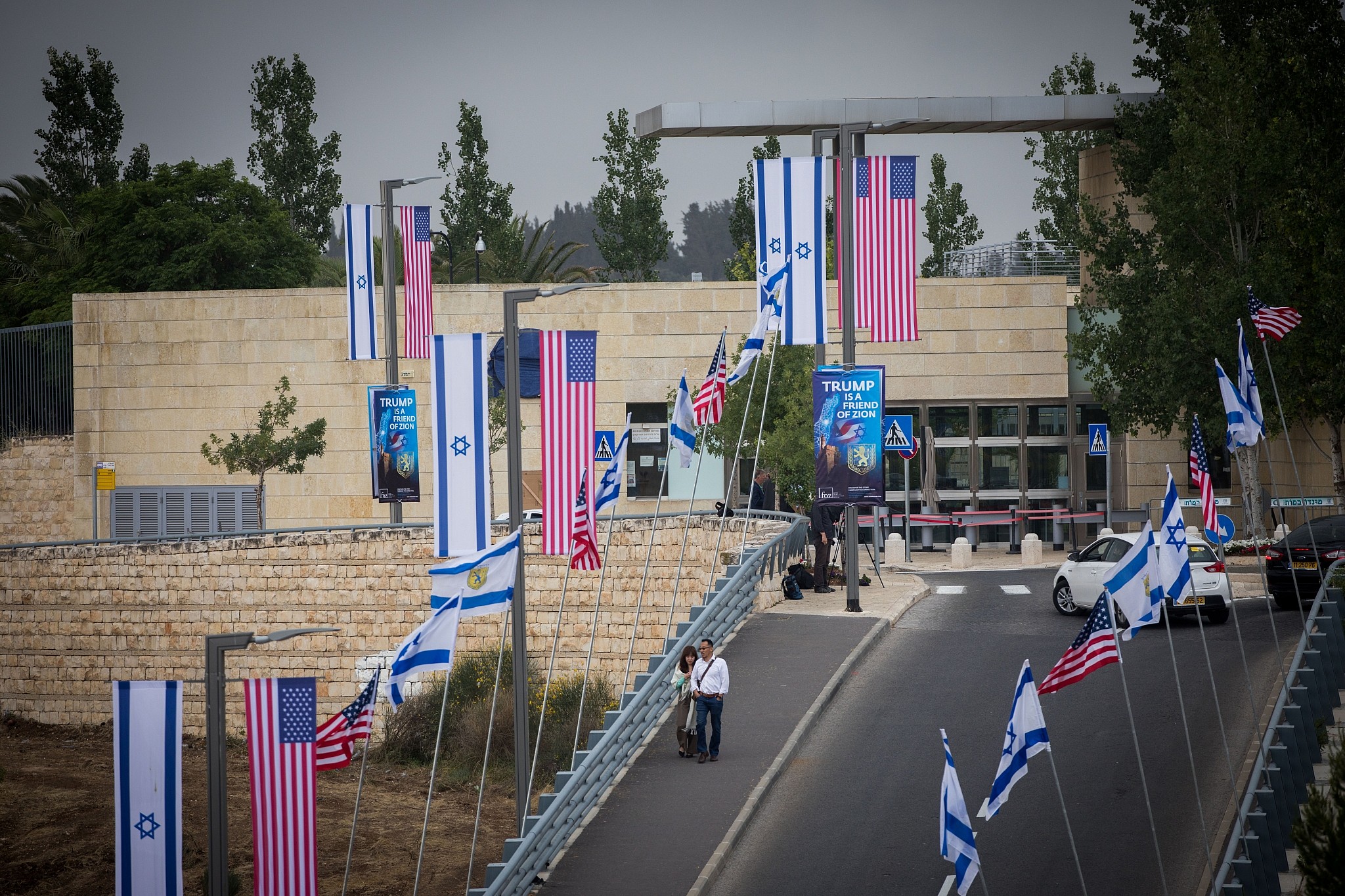
View of the US embassy in Jerusalem's Arnona neighborhood, May 13, 2018. (Yonatan Sindel/Flash90)

View of the US embassy in Jerusalem’s Arnona neighborhood, May 13, 2018. (Yonatan Sindel/Flash90)

The United States is expected to move ahead with the downgrade of its mission to the Palestinians on Monday by merging its Jerusalem consulate with the embassy in Israel, a US official said Saturday.

US Secretary of State Mike Pompeo said when announcing the merger in October that it was intended to improve “efficiency and effectiveness” and did not constitute a change in policy.

But Palestinian leaders have seen the decision as another move against them by the Trump administration, which they froze contact with after US President Donald Trump recognized Jerusalem as Israel’s capital in 2017.

A date for the merger of the consulate into the embassy had not been announced, but a State Department official told AFP on condition of anonymity that it “is expected to take place on March 4.”

The Jerusalem consulate general, which has acted independently as a de facto embassy to the Palestinians since the Oslo Accords of the 1990s, will be replaced by a new Palestinian affairs unit within the embassy.

The closure of the consulate general means that Palestinian affairs will come under the direction of US ambassador to Israel David Friedman, who has been a supporter of Israeli settlement building in the West Bank. Some Palestinians view Friedman as biased in favor of Israel.

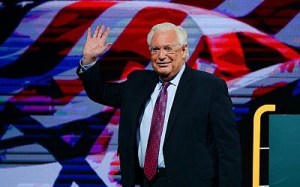
US ambassador to Israel David Friedman speaks at the Jewish federation’s annual General Assembly in Tel Aviv, on October 24, 2018. (Tomer Neuberg/Flash90)

The State Department official could not confirm reports that the consul general’s residence in Jerusalem would eventually become the home for the US ambassador as part of the embassy’s move to the city, which began last May.

Located near Jerusalem’s Old City, it has been the home of the consul general since 1912, while the US permanent diplomatic presence in the city was established in 1844.

Trump, who is expected to release his long-awaited peace plan in the coming months, has also cut more than $500 million in Palestinian aid in what the Palestinians have said is a bid to pressure them to negotiate.


Donald Trump and Benjamin Netanyahu can’t get enough of each other. Here’s why 

March 3, 2019

Source: Donald Trump and Benjamin Netanyahu can’t get enough of each other. Here’s why | The Times of Israel

A week of charges and accusations on either side of the ocean has been less than flattering for both leaders — but the two are hardly running away from each other

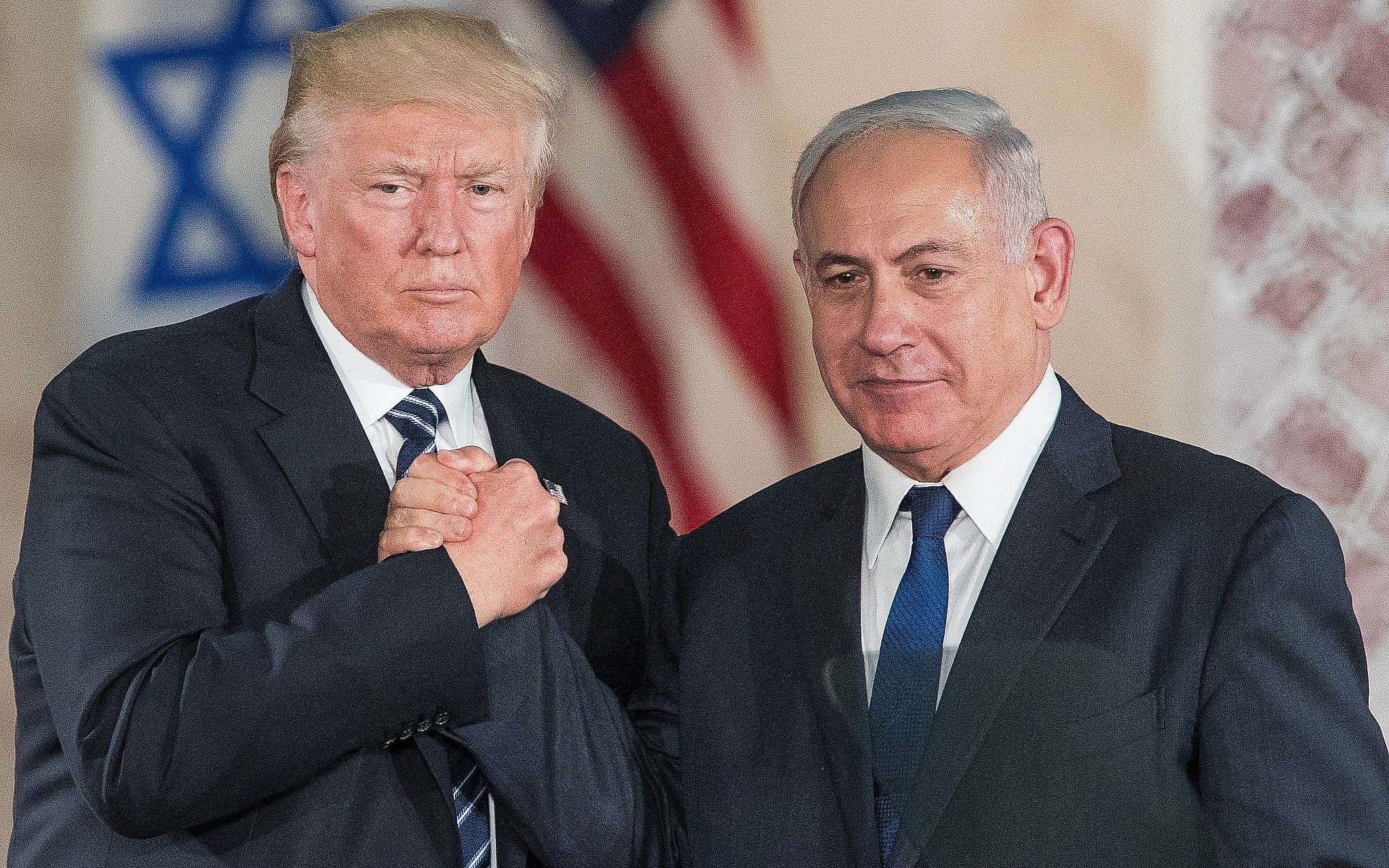
US President Donald Trump, left, and Prime Minister Benjamin Netanyahu shake hands at the Israel Museum in Jerusalem on May 23, 2017. (Yonatan Sindel/Flash90)

US President Donald Trump, left, and Prime Minister Benjamin Netanyahu shake hands at the Israel Museum in Jerusalem on May 23, 2017. (Yonatan Sindel/Flash90)

JTA — The Trump-Netanyahu alliance that both want you to see can be found in campaign posters in Israel: They feature the president of the United States and the prime minister of Israel in a warm handshake. The slogan reads, “Netanyahu, in a different league.”

But the two are courting comparisons that flatter neither: In the same week that Donald Trump was described as a cheat, con man and racist by his former fixer Michael Cohen, Netanyahu learned that Israel’s attorney general intended to seek his indictment for bribery, fraud and breach of trust.

The week of terrible, horrible, no good, very bad news appears to place the two leaders in a league of their own. But the two are hardly running away from each other.

Asked about the Netanyahu corruption charges at a news conference in Hanoi, during his summit with North Korean leader Kim Jong Un, Trump replied, “He’s tough, he’s smart, he’s strong.” Added Trump: “He is very defensive. His military has been built up a lot. They buy a lot of equipment from the United States, and they pay for it.”

Netanyahu in turn seized on Trump’s generous assessment in his own angry, emotional defense Thursday night, delivered live on prime time television: “When I returned to Israel I heard this morning the words of support for me by US President Donald Trump. He praised, and I quote, my strong, intelligent and resolute leadership of the State of Israel. I thank my friend, President Trump, for his remarks.”

Added Netanyahu: “That unique relationship with the leaders of the world powers isn’t a trifling matter. It isn’t self-evident. I’ve been building it for many years, and it has helped me ensure our security and our future. It’s helped me safeguard our country.”

It should also be noted that he also spoke warmly of his “friend,” Russian President Vladimir Putin, with whom he met earlier in the week.

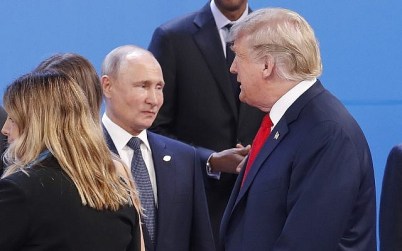
US President Donald Trump walks past Russia’s President Vladimir Putin, left, as they gather for the group photo at the start of the G20 summit in Buenos Aires, Argentina, November 30, 2018. (AP Photo/Pablo Martinez Monsivais)

Americans who disdain both Trump and Putin — and fret the relationship between Trump and Putin — might find it odd that Netanyahu would call the pair as character witnesses. But Netanyahu’s message was meant for an Israeli audience, not a global one. Here’s how David Halbfinger of The New York Times imagined the subtext of Netanyahu’s remarks: “The presidents of the United States and Russia are my friends, and no one running against me can say that. It’s taken me years to build those relationships. Don’t throw them away. I am keeping you safe.”

Likud billboard on the side of the busy Ayalon highway in Tel Aviv. The title reads “Netanyahu, in a different league.” (Courtesy)

Similarly, Trump has strong domestic interests in holding Netanyahu close (besides his own personal tendency to love anyone who loves him back). Peeling pro-Israel voters and donors away from the Democratic Party has become a loud and early theme of the run-up to the 2020 elections among Republicans. The party’s efforts range from parliamentary maneuvering to holding all Democrats responsible for the latest anti-Israel outrages from House backbenchers like Ilhan Omar and Rashida Tlaib.

Longtime Mideast hand Aaron David Miller put it this way in Politico: “Netanyahu — a charismatic native English speaker who is revered on the American right for his fervent opposition to Barack Obama and his nuclear deal with Iran — is all too willing to be a political asset for Trump. And making the Republican Party the champion of Israel, particularly given the divisions among the Democrats, is smart politics.”

Outside of pro-Israel politics and Jewish communal concerns, some saw a silver lining during a week in which the leaders of the United States and Israel were both alleged to have subverted the rule of law. While Sen. Elizabeth Warren (D-Mass.) was denouncing Netanyahu for delivering a “cut to the heart of a functioning democracy,” others noted that Cohen’s House testimony and Netanyahu’s pending indictment showed two healthy democracies exercising their abilities to check their executive branches.

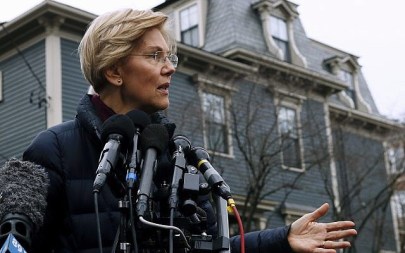
Sen. Elizabeth Warren, D-Mass., speaks outside her home, Monday, December 31, 2018, in Cambridge, Mass. Warren on Monday took the first major step toward launching a widely anticipated campaign for the presidency, hoping her reputation as a populist fighter can help her navigate a Democratic field that could include nearly two dozen candidates. (AP Photo/Bill Sikes)

“[T]he fact that both countries have major problems doesn’t mean they’re doomed,” Zack Beauchamp wrote in Vox. “The past week has shown that in both the United States and Israel, key parts of the democratic systems are functioning in exactly the way they’re supposed to — as antibodies targeting an anti-democratic infection. Whether this will be enough in the long run is still very much an open question.”

Netanyahu is due in Washington later this month to address the American Israel Public Affairs Committee. It’s a fraught time, and not just because of Netanyahu’s legal woes.

AIPAC implicitly denounced the deal Netanyahu made to pull an extremist right-wing party into his camp ahead of the April elections. He will no doubt meet with Trump while in Washington. AIPAC faithful are happy to celebrate a president and prime minister who can’t seem to get enough of each other. But most American Jews can’t abide Trump, and aren’t exactly on board with Netanyahu.

And just as the most fervently pro-Israel voter is worried about a Democratic drift away from Israel, even centrists worry about the future of US-Israel relations if support for Israel and support for Trump and his party are seen as synonymous.


Iranian official: Israel feels threatened as US defense strategy ‘stalls’

March 3, 2019

Source: Iranian official: Israel feels threatened as US defense strategy ‘stalls’ | The Times of Israel

National Security Council secretary Ali Shamkhani says Israel concerned by threats from without and within; adds that ‘humiliated citizens’ of US Mideast allies will rise up

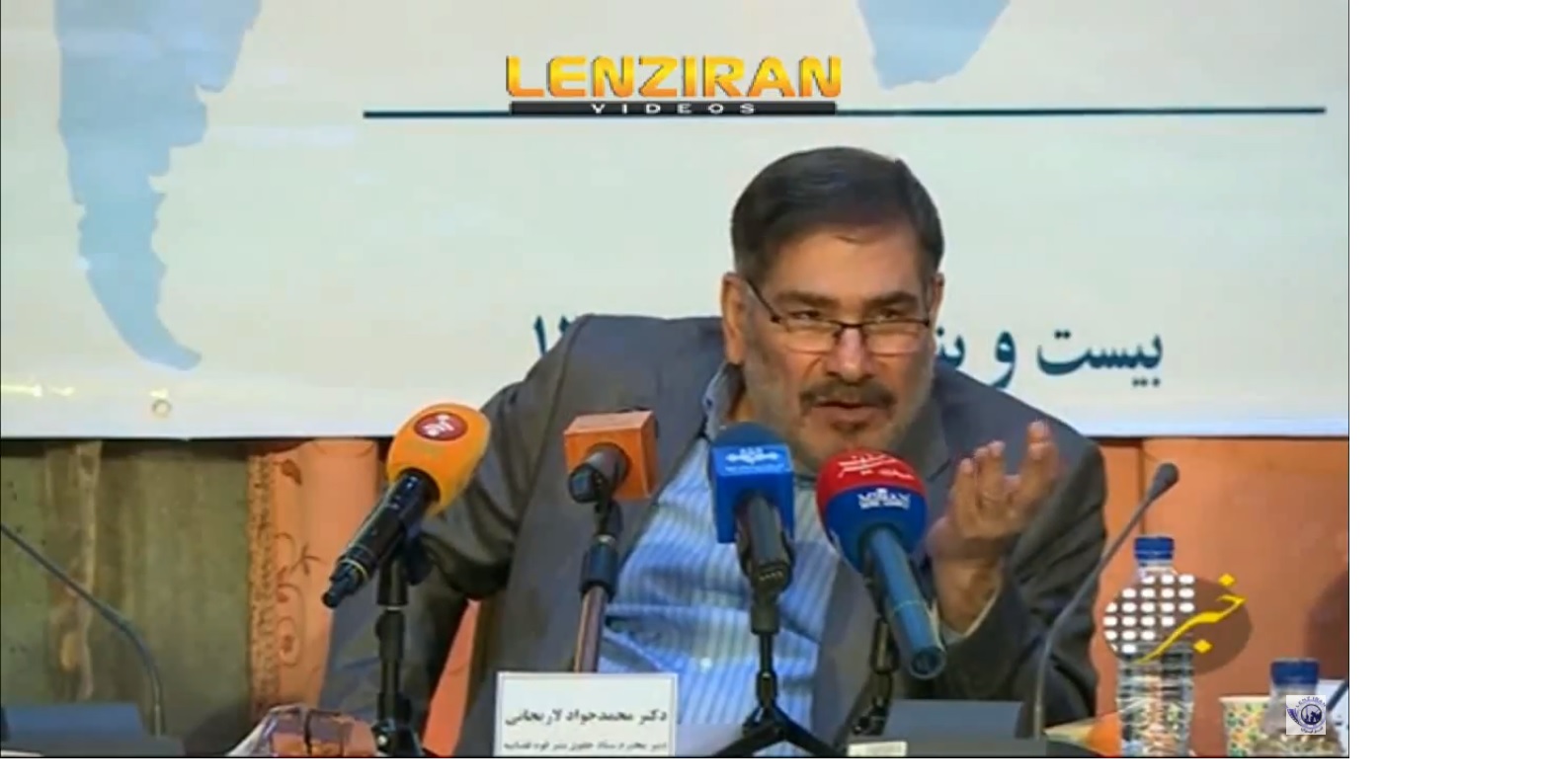
Screen capture from video of Ali Shamkhani, secretary of Iran’s Supreme National Security Council. (YouTube)

A senior Iranian official on Sunday declared that US efforts to secure Israel have stalled and that the Middle Eastern country feels increasingly threatened.

“Despite the great resources that the US has invested in Israel’s security, their strategies have come to a halt,” Secretary of Iran’s Supreme National Security Council Ali Shamkhani said, according to a report from the ISNA news agency.

Shakmani told reporters on the sidelines of a conference in Tehran that Israel “feels more threatened on its borders and even within them.”

Shamkhani also said US allies in the Middle East risk an uprising by their “humiliated citizens” if they continue to rely on Washington.

“Trump and even his underlings ridicule and humiliate Saudi Arabia and the [United Arab] Emirates day and night, saying that you’re nothing without us and cannot last a day without America’s support,” he said.

In October, Trump said that Saudi Arabia’s 83-year-old King Salman “might not be there for two weeks” without US military support. The comments were mostly shrugged off by Riyadh.

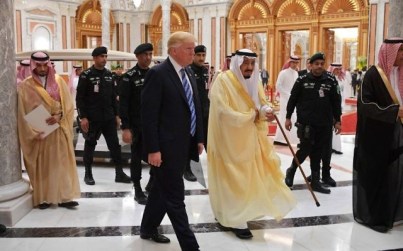
US President Donald Trump (C-L) and Saudi Arabia’s King Salman bin Abdulaziz al-Saud (C-R) arrive for the Arabic Islamic American Summit at the King Abdulaziz Conference Center in Riyadh on May 21, 2017 (AFP PHOTO / MANDEL NGAN)

“Our prediction about America’s allies in the region is that if they continue the policy of relying on Islam’s enemies, they will face the uprising of their humiliated citizens,” said Shamkhani.

Iran’s relations with its Gulf neighbors have soured in recent years and tensions escalated last month when the Islamic Republic accused Riyadh and Abu Dhabi of being complicit in a suicide bombing that killed 27 Iranian troops.

The Islamic Republic’s Revolutionary Guards blasted the “traitorous governments of Saudi Arabia and [the] Emirates” and said Iran will no longer tolerate their “hidden support for anti-Islam thugs and Takfiri [Sunni extremist] groups.”

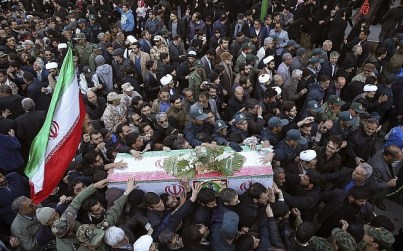
Mourners a carry flag-draped casket during a mass funeral for those killed in a suicide car bombing that targeted members of Iran’s Revolutionary Guard in Isfahan, killing at least 27 people. (AP Photo/Ebrahim Noroozi)

The February 13 bombing targeted a busload of Guards in the volatile southeastern province of Sistan-Baluchistan and was claimed by Jaish al-Adl, a Pakistan-based extremist group blacklisted by Iran as terrorists.

Last month the deputy commander of Iran’s Islamic Revolutionary Guard Corps said Tehran has plans “to break America, Israel, and their partners and allies” in worldwide attacks.

In a speech aired February 19 on Iran’s IRINN TV, Brig. Gen. Hossein Salami said Iran was preparing to “fight them on the global level, not just in one spot. Our war is not a local war. We have plans to defeat the world powers,” according to a translation published by the Washington-based MEMRI watchdog.

Tehran is also a major supporter of Lebanon’s Hezbollah and its “resistance” against the Islamic Republic’s arch-foe, Israel.