Archive for March 2019

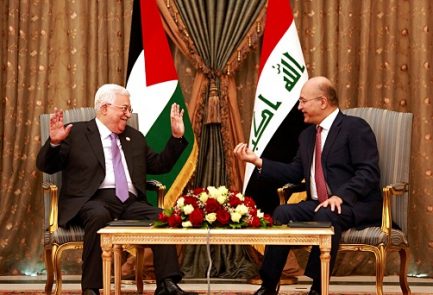
Abbas slams US administration during visit to Baghdad 

March 5, 2019

Source: Abbas slams US administration during visit to Baghdad – Israel Hayom

After meeting with Iraqi PM Adel Abdul-Mahdi, PA President Mahmoud Abbas says Trump administration is “encouraging Israel to be a state above the law” • Abdul-Mahdi and Iraqi President Barham Saleh stress Jerusalem’s importance to the Palestinian people.

Associated Press and Israel Hayom Staff // published on 05/03/2019
   
Palestinian Authority President Mahmoud Abbas meets with Iraqi President Barham Saleh at Salam Palace in Baghdad, Monday 


Top Iraqi officials have expressed support for Palestinian Authority President Mahmoud Abbas, who blasted the Trump administration during a visit to Baghdad.

On Monday, Abbas held talks with Iraqi President Barham Saleh a day after he met with Prime Minister Adel Abdul-Mahdi. Both leaders expressed the importance of Jerusalem to the Palestinian people.

Abbas said after meeting with Abdul-Mahdi that “the current American administration is encouraging Israel to be a state above the law.”

Abbas added that the Trump administration “is biased and not suitable to be a sponsor of peace talks.”

The Trump administration has cited the reluctance of Palestinian leaders to enter peace negotiations with Israel, as well as the PA’s ongoing support for terrorism, as reasons for its decision to slash hundreds of millions of dollars in aid to the Palestinians.


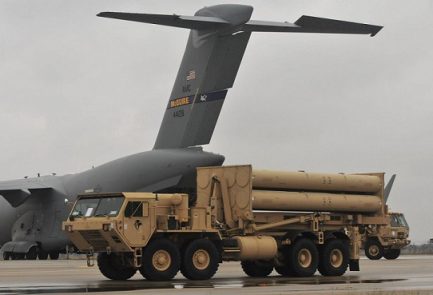
US deploys THAAD missile defense system to Israel 

March 5, 2019

Source: US deploys THAAD missile defense system to Israel – Israel Hayom

Prime Minister Netanyahu hails Terminal High Altitude Area Defense as a sign of U.S. commitment to Israeli security • “Together with our defense systems, we are stronger is dealing with threats emanating from all areas of the Middle East,” he says.

Reuters and Israel Hayom Staff // published on 05/03/2019
   
The THAAD missile defense system is unloaded in Israel 


The U.S. military has deployed its most advanced air and missile defense system to Israel for the first time, U.S. and Israeli officials said on Monday.

The deployment, which began in March, was intended to test the U.S. military’s ability to rapidly deploy such weapons around the world, said a spokeswoman for U.S. European Command.

Prime Minister Benjamin Netanyahu welcomed the arrival of the Terminal High Altitude Area Defense system as a sign of the U.S. commitment to Israeli security.

“The American THAAD system is considered among the most advanced systems in the world, and together with our defense systems, we are stronger in dealing with threats, close or distant, emanating from all areas of the Middle East,” he said.

The move comes amid increased tensions between Israel and Iran over Israel’s bombing campaign in Syria and comments in which Iran’s foreign minister said he could not rule out the possibility of military conflict between the two countries.

The U.S. military said the decision to rapidly move the THAAD system to Israel was intended “as a demonstration of the United States’ continued commitment to Israel’s regional security.”

“THAAD is the most advanced integrated air and missile defense system in the world, and this deployment readiness exercise demonstrates that U.S. forces are agile and can respond quickly and unpredictably to any threat, anywhere, at any time,” U.S. European Command said in a statement.

Lockheed Martin, the biggest U.S. arms maker, builds and integrates the THAAD system, which is designed to shoot down short-, medium- and intermediate-range ballistic missiles. Raytheon, another U.S. firm, builds its advanced radar.

As part of the deployment, U.S. forces will work at various locations in Europe, the United States and in Israel to operate the system in close cooperation with the Israel Defense Forces, it said. U.S. officials declined to say how quickly the system was moved to Israel from its home base at Fort Bliss, Texas.

IDF spokesman Lt. Col. Jonathan Conricus said the deployment differed from previous simulated U.S.-Israel joint military exercises and involved tactical coordination on the ground.

He said all of the components of the THAAD system were at an air force base in the Negev desert, in southern Israel, and would soon be moved to an undisclosed site in southern Israel.

“The advantage from the Israeli point of view is that we have an opportunity to integrate it into our systems and simulate different scenarios,” he said.

The IDF said the deployment was defensive in nature and not related to any specific current event.

Saudi Arabia agreed in November to buy 44 THAAD launchers, missiles and related equipment from the United States in a separate deal valued at $15 billion.


Holland recalls envoy from Iran in escalating murder plot row

March 5, 2019

Source: Holland recalls envoy from Iran in escalating murder plot row | The Times of Israel

Move comes after Tehran expels Dutch diplomats in response to accusation that regime was involved in killing of two dissidents in the Netherlands in 2015 and 2017

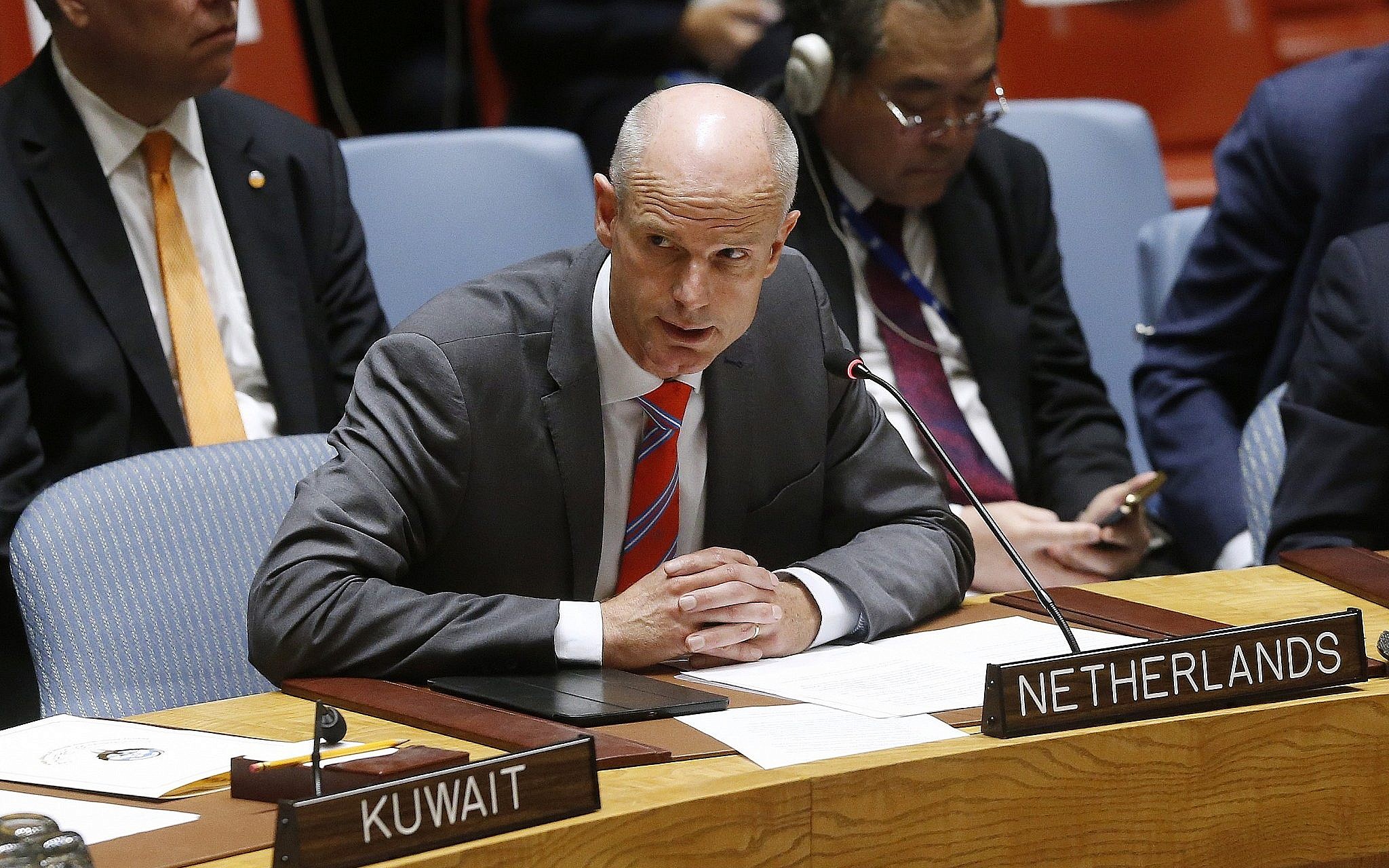
Dutch Foreign Minister Stef Blok addresses a meeting of the United Nations Security Council during the 73rd session of the UN General Assembly, at UN headquarters, on September 27, 2018. (AP Photo/Jason DeCrow)

Dutch Foreign Minister Stef Blok addresses a meeting of the United Nations Security Council during the 73rd session of the UN General Assembly, at UN headquarters, on September 27, 2018. (AP Photo/Jason DeCrow)

THE HAGUE, Netherlands — The Netherlands said Monday it had recalled its ambassador from Tehran after Iran expelled two Dutch diplomats in an escalating dispute over an alleged plot to assassinate regime opponents.

Dutch authorities accused Iran in January of involvement in the murder of two dissidents on Dutch soil in 2015 and 2017, and the European Union slapped sanctions on Tehran over the killings.

Foreign Minister Stef Blok said in a letter to the Dutch parliament that the government “has decided to recall the Netherlands’ ambassador to Tehran for consultations” over the row.

Iran’s decision to expel the Dutch officials — which was not previously announced in public — was “not acceptable and is negative for the development of the bilateral relationship,” Blok said.

He said Iran’s move was itself a tit-for-tat response to the Netherlands’ expulsion of two Iranian embassy workers in June 2018 “due to strong indications from (Dutch intelligence) that Iran has been involved in the liquidations on Dutch territory of two Dutch people of Iranian origin.”

Tehran had informed Dutch authorities of the decision to expel the two diplomats on February 20 and they were deported back to the Netherlands on Sunday, Blok said.

Iranian foreign ministry spokesman Bahram Qassemi confirmed the expulsion of the two Dutch diplomats in what he called a “retaliatory” move.

“Two of the diplomats of the Netherlands embassy in Tehran were considered undesirable elements in the framework of a retaliatory measure and were asked to leave the country” on March 3 and 4, he said on the ministry’s Telegram channel.

The Dutch had also summoned the Iranian ambassador over the issue, Blok said.

Dutch police have previously named the two murder victims as Ali Motamed, 56, who was killed in the central city of Almere in 2015, and Ahmad Molla Nissi, 52, murdered in The Hague in 2017.


Trump: Ilhan Omar comments are a ‘dark day for Israel’

March 5, 2019

Source: Trump: Ilhan Omar comments are a ‘dark day for Israel’ | The Times of Israel

Jewish groups petition to have Muslim American Democrat removed from Foreign Relations Committee over remarks about those with ‘allegiance to a foreign country’

Rep. Ilhan Omar, a Minnesota Democrat, arrives for US President Donald Trump's State of the Union address to a joint session of Congress on Capitol Hill in Washington, February 5, 2019 (AP Photo/Carolyn Kaster)

Rep. Ilhan Omar, a Minnesota Democrat, arrives for US President Donald Trump’s State of the Union address to a joint session of Congress on Capitol Hill in Washington, February 5, 2019 (AP Photo/Carolyn Kaster)

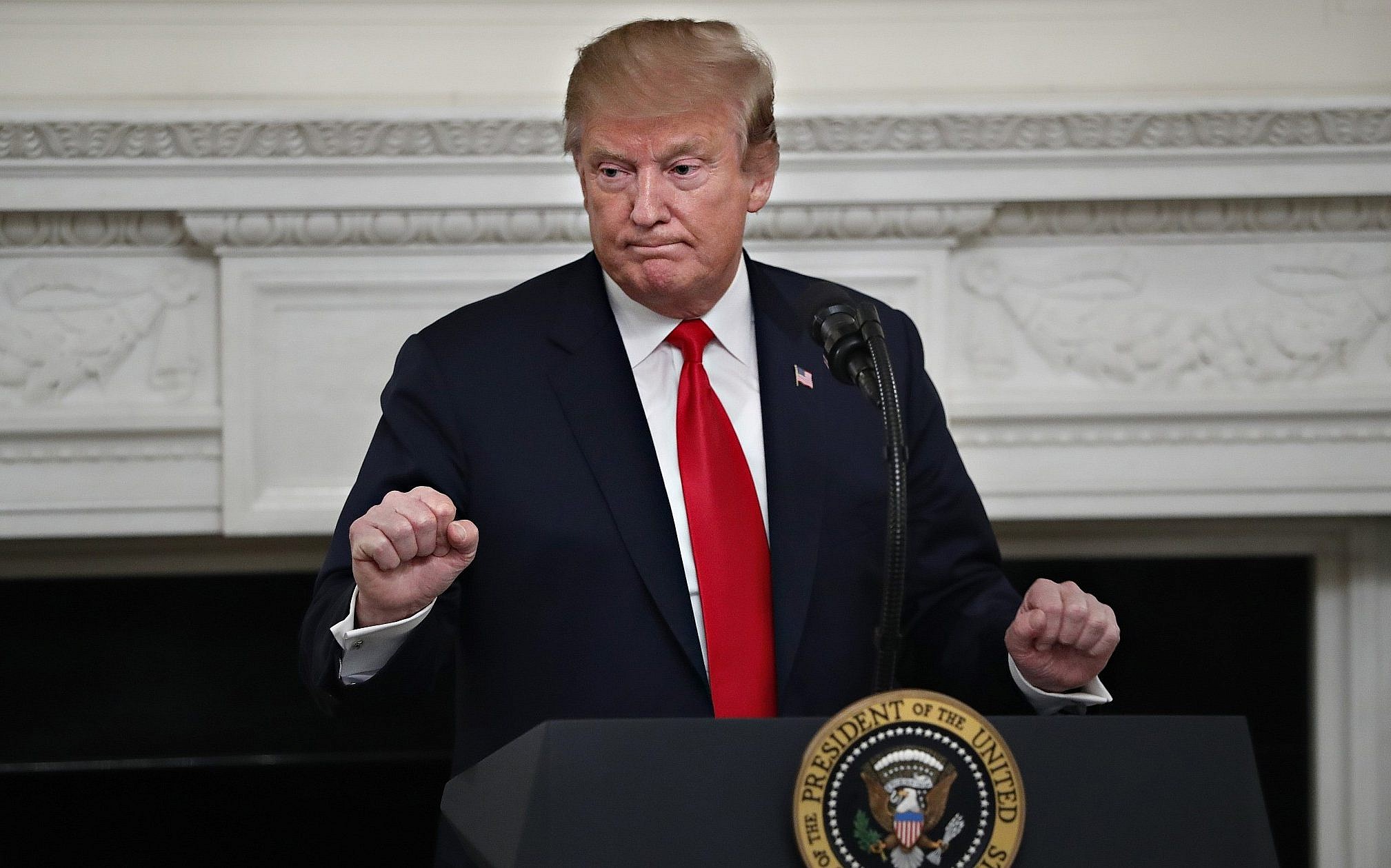
US President Donald Trump on Monday described recent remarks by Democratic Representative Ilhan Omar — which have been blasted as anti-Semitic and prompted Jewish groups to demand that she be removed from a powerful Senate committee — as “a dark day for Israel.”

Last week Omar, of Minnesota, accused pro-Israel activists and lawmakers of “allegiance to a foreign country.” Dual loyalties is a common anti-Semitic trope.

“Representative Ilhan Omar is again under fire for her terrible comments concerning Israel,” Trump tweeted. “Jewish groups have just sent a petition to Speaker Pelosi asking her to remove Omar from Foreign Relations Committee. A dark day for Israel!”

Eleven Jewish groups, among them the National Council for Young Israel and the Endowment for Middle East Truth, sent a petition Monday to Speaker Nancy Pelosi, the senior House Democrat, asking that she “immediately remove” Omar from the committee.

US President Donald Trump gestures as he speaks to the National Association of Attorneys General, in the State Dining Room of the White House in Washington, March 4, 2019. (Jacquelyn Martin/AP)

A copy of the petition, which was also sent to Democrat Rep. Eliot Engel, who chairs the committee, was published by the Washington Free Beacon.

“In light of Rep. Ilhan Omar’s recent anti-Semitic tweets, statements…we, the undersigned organizations, request that you immediately remove her as a member of the House Foreign Affairs Committee,” the petition said.

“We hope you will continue to demonstrate your commitment to the high moral standards of your office by removing Rep. Omar, a woman who has repeatedly exhibited strong biases against the State of Israel and the Jewish people, from this critically important and sensitive committee.”

Omar said last Wednesday during a town hall in Washington that “I want to talk about the political influence in this country that says it is okay for people to push for allegiance to a foreign country.”

She later defended her remarks when criticized by top Jewish Democrats in the House, tweeting Monday, “I am told everyday that I am anti-American if I am not pro-Israel. I find that to be problematic and I am not alone. I just happen to be willing to speak up on it and open myself to attacks.”

Ilhan Omar

@IlhanMN

I have not mischaracterized our relationship with Israel, I have questioned it and that has been clear from my end.

Ilhan Omar

@IlhanMN

I am told everyday that I am anti-American if I am not pro-Israel. I find that to be problematic and I am not alone. I just happen to be willing to speak up on it and open myself to attacks.

In reaction to Omar’s statements, Democrats in the US House of Representatives will put forward a resolution Wednesday condemning anti-Semitism.

Democrats over the weekend drafted a resolution with that message, according to a Democratic aide who spoke on condition of anonymity because the document had not been released. Its text was not final as of Monday afternoon.

Responding Friday to her comments, Engel called on Omar to apologize for her “vile anti-Semitic slur.”

Omar, a Minnesota Democrat, has been accused of employing anti-Semitic tropes since taking office over her criticism of Israel and the role of the Jewish state’s backers in Washington. Last month, she apologized after facing widespread bipartisan condemnation for a tweet suggesting Jewish money was behind congressional support for Israel.


Hamas secretly co-opted to Egyptian-Israel war on ISIS in Sinai finds pretext for extorting cash – DEBKAfile

March 5, 2019

Source: Hamas secretly co-opted to Egyptian-Israel war on ISIS in Sinai finds pretext for extorting cash – DEBKAfile

Unbeknownst to Israel, Cairo enlisted Hamas to the IDF-assisted Egyptian war on ISIS in Sinai, then turned Hamas’ demand for more cash to Jerusalem.

Hamas has switched on its latest upsurge of terror from the Gaza Strip for extortion. The Palestinian terrorists discovered last year that, by turning up the heat, Israel’s Prime Minister (and defense minister) and former Chief of Staff, Lt. Gen. Gady Eisenkot would pay up, rather than embark on a major military offensive, especially when those payments were disbursed by Qatar. This discovery led ultimately in March 2019 to a new wave of attacks from the Gaza Strip on Israeli civilian locations, with balloon clusters flown over the border by primitive gliders and armed with explosives linked to timers.
In between these two events, DEBKA file’s military sources report, Cairo caught Israel unawares. Egypt’s General Intelligence service chief Gen. Abbas Kamel last month secretly negotiated a deal for Hamas to make its intelligence agencies and military wing Ezz-e-din al-Qassam available for fighting the Islamic State in Sinai alongside the Egyptian army in areas adjoining the Gaza Strip.

This was not the first time that a government and army had enlisted one terrorist organization to fight another – there were many precedents in the Syrian war – but never before has a Palestinian organization of Hamas’ ilk been used to fight the Islamic State.

In its quiet exchanges with US, Israeli and Saudi officials, Cairo presents the deal with Hamas as a worthwhile political process for “laundering” the Palestinian terrorists and making them kosher for heading an independent Palestinian state in the Gaza Strip.
But by acting without Israel’s consent, Egypt has turned the IDF into an unwilling partner in an unholy triad of forces fighting ISIS in northern Sinai, consisting of Egypt, Hamas and Israel. Israel was not consulted on this “pact.”

Our military and counter-terrorism sources stress that, however carefully Egypt may try to compartmentalize the intelligence received from the IDF on the situation in northern Sinai, some is bound to leak to its new partner, Israel’s enemy, Hamas.

The Egyptian “pact” came to light when Hamas lodged fresh complaints with Cairo about Israel’s alleged violations of the “truce” deal Egypt negotiated between them last year. Unaware of Cairo’s new setup with Hamas, Israel replied that there were no grounds for its complaint. After all, Israel had made good on its promise to triple electrical power to Gaza, from 3-4 hours a day to twelve; and 11,000 trucks laden with Israeli supplies for the population crossed into the territory each month – at the rate of 366 a day. Furthermore, $15m of Qatari funds were delivered monthly on time.

The answer coming back from Cairo was that Hamas wanted Israel to lay out more cash as compensation for the cutbacks ordered by Palestinian Authority Chairman Mahmoud Abbas (who has incidentally gone to Baghdad) in the funds due to the Gaza Strip!
To back its demand, Hamas turned to its usual leverage: terrorism. By night, Palestinian mobs pelt Israeli troops along the Gaza border with dozens of explosive devices and hand grenades, and by day, balloons explode over Israeli locales.

Hamas leaders are exploiting Israel’s election campaign to raise the ante. They assume that since Defense Minister Binyamin Netanyahu is bent on winning another term as prime minister, he will pay up to keep them quiet.


Iran’s top leader warns against trusting Europe on nuclear deal 

March 4, 2019

Source: Iran’s top leader warns against trusting Europe on nuclear deal | The Times of Israel

As world powers face US pressure to pull out of pact, Khameini says the 2015 agreement cannot fix country’s economic problems

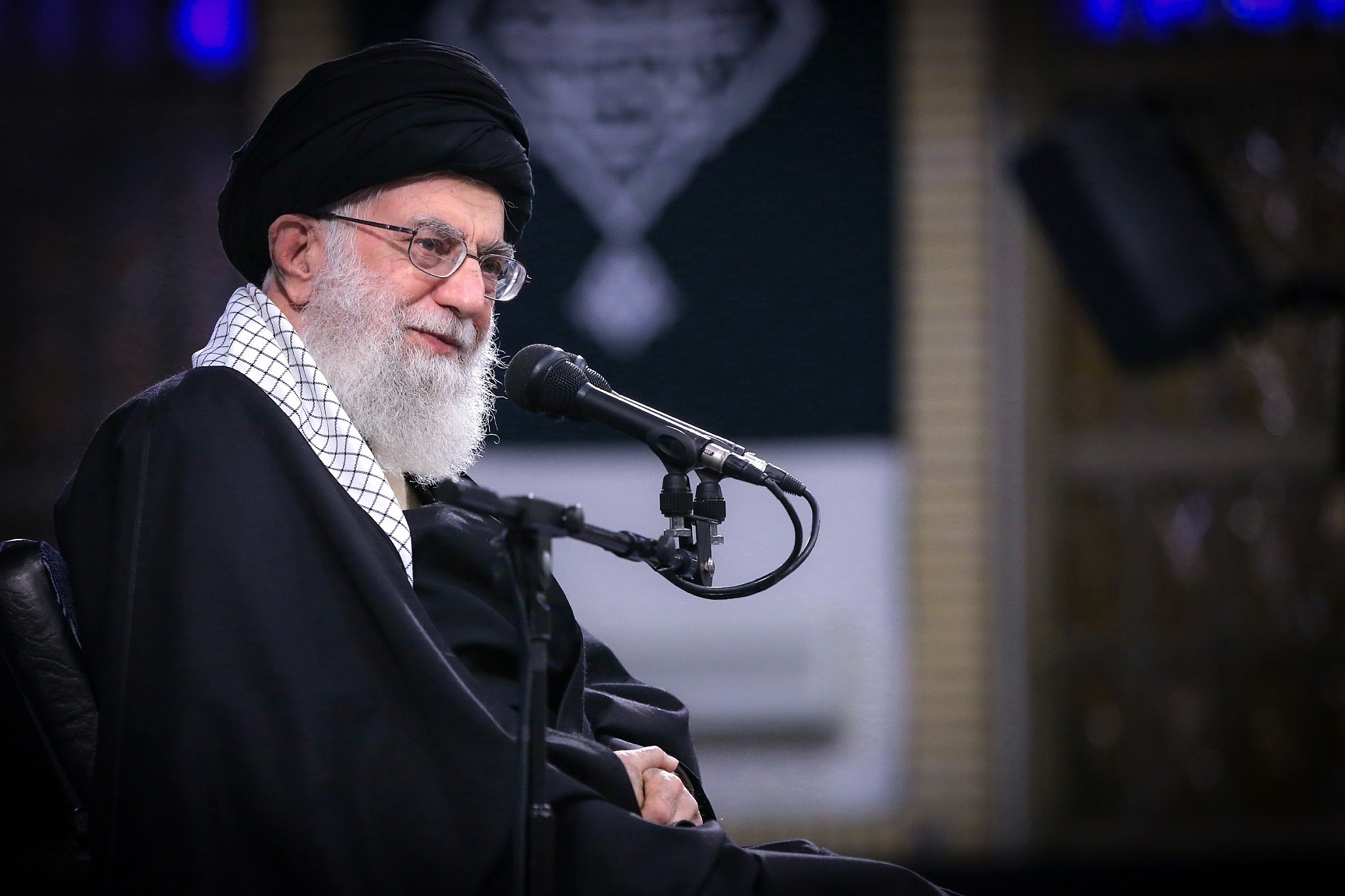
Iranian Supreme Leader Ayatollah Ali Khamenei attends a meeting with a group of the air force staff in Tehran, Iran, February 8, 2019. (Office of the Iranian Supreme Leader via AP)

Iran’s supreme leader cautioned the country’s government on Monday not to pin its hopes on Europe as Tehran’s nuclear deal with world powers founders under US pressure.

Ayatollah Ali Khamenei’s website quoted him as saying the landmark 2015 nuclear deal “could not fix our economic problems.”

Khamenei’s comments came as the United Nations’ nuclear watchdog said Iran is complying with the deal. Yukiya Amano made his assessment in a regular update to the International Atomic Energy Agency’s board of governors, confirming a confidential report distributed to member states last month.

He said that “Iran is implementing its nuclear-related commitments under the Joint Comprehensive Plan of Action,” referencing the official name of the deal. Amano added that “it is essential that Iran continues to fully implement those commitments.”

The US and the European Union disagree over several issues, including Iran.

The nuclear deal was aimed at preventing Tehran from building atomic weapons. The US pulled out of the agreement in May 2018 and has been urging the remaining signatories — the UK, France, Germany, Russia, and China — to abandon it as well. Washington also reimposed severe economic sanctions and is demanding the deal be renegotiated to put stricter limits on Iran’s nuclear program and its missile research.

Iran’s economy has suffered with inflation climbing and the local rial currency plunging in the wake of the US pullout.

The remaining signatories to the Iran deal, along with the European Union, have so far shown no inclination to abandon it, and instead have tried to provide Iran with enough economic incentives to keep it alive.

Last month, Britain, France and Germany established a barter-type system known as INSTEX that is designed to allow their businesses to skirt direct financial transactions with Iran and thereby evade possible US sanctions. Plans call for the payment system to be run from Germany as a financial institution.

The plan has angered Washington, despite reassurances from the Europeans that their initiative would concentrate on products not currently subject to US sanctions, such as medicine, medical supplies, and agricultural goods, rather than on broader trade.

In an interview published last month with the Swiss newspaper Basler Zeitung, Iranian Foreign Minister Javad Zarif said that should other countries bow to US pressure and refuse to buy Iranian oil, Tehran has “other options” at its disposal.

Iranian officials have intimated that should the deal fall apart, it will resume its enrichment activities at a higher pace than before the agreement.


IDF helicopters pound Hamas positions in response to explosive balloon 

March 4, 2019

Source: IDF helicopters pound Hamas positions in response to explosive balloon | The Times of Israel

Army says two posts hit after incendiary lands in southern community; no injuries or damage reported from device, which lands between two buildings

A balloon carrying a suspected explosive device from the Gaza Strip touches down in southern Israel on February 20, 2019. (Eshkol Security)

A balloon carrying a suspected explosive device from the Gaza Strip touches down in southern Israel on February 20, 2019. (Eshkol Security)

IDF attack helicopters hit two positions of the Hamas terror group in the southern Gaza Strip on Monday in response to an explosive device that was carried into Israel by balloons launched from the Palestinian enclave, the army said.

It was Israel’s fourth retaliatory airstrike against the terror group in the past three days.

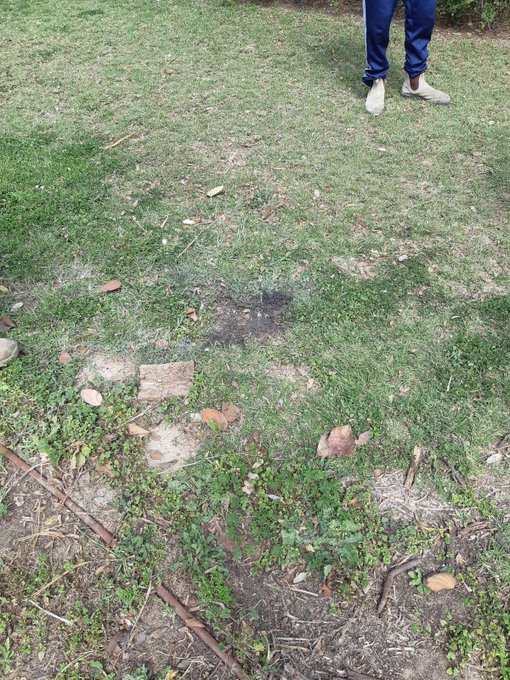
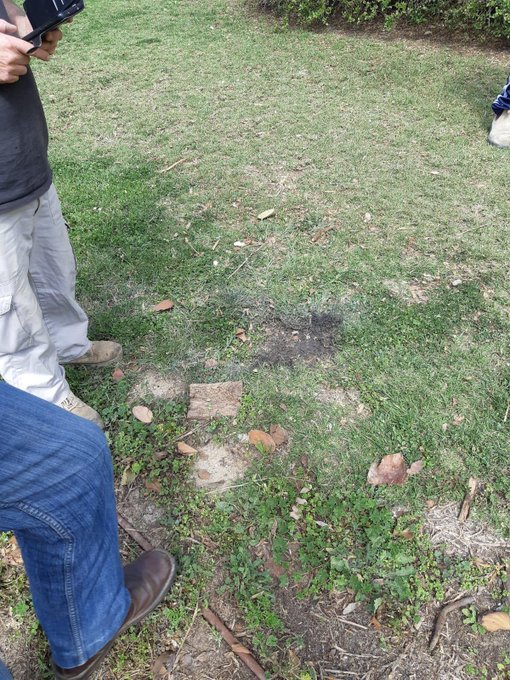
It came after a bunch of balloons carrying explosives came down between two buildings in the Eshkol Regional Council, the council said in a statement. The bomb exploded but caused neither injuries nor damage.

On Sunday night an Israeli military drone bombed a Hamas position in the northern Gaza Strip in response to a violent riot along the border nearby, according to Palestinian media.

View image on TwitterView image on TwitterView image on Twitter
Members of a so-called “confusion unit” held a violent demonstration along the security fence in the northern Gaza Strip, east of Beit Hanoun, burning tires and setting off many explosive devices near the border.

“An Israel Defense Forces aircraft attacked a Hamas post in response to the throwing of explosive devices across the security fence in the northern Gaza Strip,” the army said at the time.

It appeared to be the military’s first time conducting such an attack in response to riots along the security fence itself, rather than to cross-border violence directed toward Israeli civilian communities.

After halting their activities for several months, the Palestinian “confusion units” recently returned to the Gaza border, holding riots at various locations along the security fence each night in an effort to maintain pressure on Israel by tormenting civilians living nearby and troops serving on the border.

On Saturday evening, the Israeli army said its aircraft fired at targets in the southern Gaza Strip in response to a cluster of balloons attached to an incendiary device that was launched from the Strip toward Israel.

The explosive balloons did not cause any injuries or damage.

The border riots are part of the March of Return protests, which have taken place weekly along the border since last March and have periodically escalated into major flare-ups between the Israeli military and Gaza-based terror groups.

Israel has accused Hamas, the terror organization that rules the Strip, of orchestrating the clashes and using them as cover to breach the border fence and carry out attacks.

Recent weeks have seen a dramatic increase in the level of violence along the Gaza border, with near nightly riots and a return of airborne arson attacks, which had waned in light of a de facto ceasefire agreement between Israel and Hamas at the end of last year.

The latest riots came after the release last week of a report commissioned by the UN Human Rights Council on Israel’s handling of the clashes that alleged there is evidence Israeli soldiers committed crimes again humanity.

The inquiry investigated possible violations from the start of the protests on March 30, 2018, through December 31.

Israeli leaders angrily rejected the findings of the UN probe, calling it “hostile, deceitful and biased.”


IDF helicopters pound Hamas positions in response to explosive balloon

March 4, 2019

Source: IDF helicopters pound Hamas positions in response to explosive balloon | The Times of Israel

Army says two posts hit after incendiary lands in southern community; no injuries or damage reported from device, which lands between two buildings

A balloon carrying a suspected explosive device from the Gaza Strip touches down in southern Israel on February 20, 2019. (Eshkol Security)

A balloon carrying a suspected explosive device from the Gaza Strip touches down in southern Israel on February 20, 2019. (Eshkol Security)

IDF attack helicopters hit two positions of the Hamas terror group in the southern Gaza Strip on Monday in response to an explosive device that was carried into Israel by balloons launched from the Palestinian enclave, the army said.

It was Israel’s fourth retaliatory airstrike against the terror group in the past three days.

It came after a bunch of balloons carrying explosives came down between two buildings in the Eshkol Regional Council, the council said in a statement. The bomb exploded but caused neither injuries nor damage.

On Sunday night an Israeli military drone bombed a Hamas position in the northern Gaza Strip in response to a violent riot along the border nearby, according to Palestinian media.

View image on TwitterView image on TwitterView image on Twitter
Members of a so-called “confusion unit” held a violent demonstration along the security fence in the northern Gaza Strip, east of Beit Hanoun, burning tires and setting off many explosive devices near the border.

“An Israel Defense Forces aircraft attacked a Hamas post in response to the throwing of explosive devices across the security fence in the northern Gaza Strip,” the army said at the time.

It appeared to be the military’s first time conducting such an attack in response to riots along the security fence itself, rather than to cross-border violence directed toward Israeli civilian communities.

After halting their activities for several months, the Palestinian “confusion units” recently returned to the Gaza border, holding riots at various locations along the security fence each night in an effort to maintain pressure on Israel by tormenting civilians living nearby and troops serving on the border.

On Saturday evening, the Israeli army said its aircraft fired at targets in the southern Gaza Strip in response to a cluster of balloons attached to an incendiary device that was launched from the Strip toward Israel.

The explosive balloons did not cause any injuries or damage.

The border riots are part of the March of Return protests, which have taken place weekly along the border since last March and have periodically escalated into major flare-ups between the Israeli military and Gaza-based terror groups.

Israel has accused Hamas, the terror organization that rules the Strip, of orchestrating the clashes and using them as cover to breach the border fence and carry out attacks.

Recent weeks have seen a dramatic increase in the level of violence along the Gaza border, with near nightly riots and a return of airborne arson attacks, which had waned in light of a de facto ceasefire agreement between Israel and Hamas at the end of last year.

The latest riots came after the release last week of a report commissioned by the UN Human Rights Council on Israel’s handling of the clashes that alleged there is evidence Israeli soldiers committed crimes again humanity.

The inquiry investigated possible violations from the start of the protests on March 30, 2018, through December 31.

Israeli leaders angrily rejected the findings of the UN probe, calling it “hostile, deceitful and biased.”


PM: Israel, Russia to cooperate on foreign troop exit from Syria 

March 4, 2019

Source: PM: Israel, Russia to cooperate on foreign troop exit from Syria – Israel Hayom

“President Putin and I agreed on a shared goal – the removal from Syria of the foreign forces that came in after the civil war erupted,” Netanyahu tells cabinet • “We agreed to set up a joint task force which… will work to advance towards this goal.”

Reuters and Israel Hayom Staff // published on 04/03/2019
   
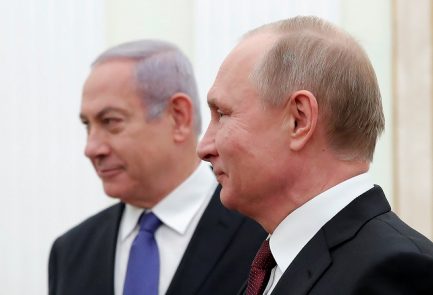
PM Netanyahu with Russian President Vladimir Putin at the Kremlin in Moscow, February 27 


Israel and Russia will work together on securing an exit of foreign forces from Syria, Prime Minister Benjamin Netanyahu said on Sunday after visiting Moscow to advocate against the Iranian presence in the country.

As Syrian President Bashar Assad beats back an eight-year-old insurgency, Israel worries that his reinforcements from Iran and the Tehran-backed Lebanese Hezbollah terrorist organization will stay on to form a new front against it.

Israel has carried out hundreds of strikes against suspected Iranian and Hezbollah targets in Syria. These operations have been largely ignored by Russia, which intervened militarily on Assad’s behalf in 2015, turning the tide of the war.

Netanyahu said he had made it “unequivocally clear” to Russian President Vladimir Putin last week that such strikes would continue, with an Israeli-Russian military hotline continuing to prevent accidental clashes between the countries.

“President Putin and I also agreed on a shared goal – the removal from Syria of the foreign forces that came in after the civil war erupted,” Netanyahu told his cabinet. “We agreed to set up a joint task force which, together with others, will work to advance towards this goal.”

He did not elaborate. Moscow had no immediate comment. In the past, Russia has spoken in favor of other forces leaving Syria, though it plans to keep a long-term garrison there.

Russian Foreign Minister Sergei Lavrov, in an interview with Kuwait News Agency published on Sunday, said the situation in Syria had visibly stabilized after operations by Syrian government forces with Russian aerial support.

But Lavrov said it was too early to declare the “terrorist threat” in Syria – a reference to Islamist-led rebels – eliminated. The United States has been drawing down its own forces in Syria as Islamic State insurgents appear to be near defeat.


Envoy slams PA after mouthpiece uses slurs against administration 

March 4, 2019

Source: Envoy slams PA after mouthpiece uses slurs against administration – Israel Hayom

President Trump’s peace envoy lashes out on twitter at PA daily after official newspaper runs column comparing him to mongoloid • “The comments are disgusting and demonstrate a complete disregard for the dignity of every human life,” Greenblatt says.

Israel Hayom Staff // published on 04/03/2019
   
U.S. Special Representative for International Negotiations Jason D. Greenblatt

U.S. Special Representative for International Negotiations Jason Greenblatt lambasted the Palestinian Authority on Sunday after an opinion piece in its official outlet, the daily Al-Hayat al-Jadida, compared  him to a mongoloid.

The opinion piece was written by Omar Hilmi Al-Ghoul, who used to be an adviser to former PA Prime Minister Salam Fayyad. The piece was laden with derogatory descriptions of Greenblatt and other senior officials in the White House who are part of its Mideast peace team.

“The comments of Omar Hilmi Al-Ghoul are disgusting & demonstrate a complete disregard for the dignity of every human life,” Greenblatt attacked on twitter shortly after the piece was published. “Terms like mongoloid & retarded, have no place in a civilized world.  Persons with Down syndrome deserve our utmost respect & love. Shame on you Omar!”

According to a translation on the site Palestinian Media Watch, al-Ghoul wrote: “Anyone who follows the prattle of Jason Greenblatt, President Trump’s envoy in the matter of the deal of the century, sees that his condition is very similar to Down Syndrome… Anyone who looks at the American envoy [Greenblatt] discovers that he has external and inner characteristics similar to those suffering from Down Syndrome: He is short, his eyes are similar to mongoloid eyes, he prattles unrestrainedly, and is politically retarded.”

Al-Ghoul also attacked White House Senior Adviser Jared Kushner and US Ambassador to Israel David Friedman, who are both, along with Greenblatt, part of the team working on the U.S. peace plan, set to be unveiled after the April 9 election in Israel.