Archive for March 2019

It’s all about appearances in Iranian president’s Iraq visit 

March 12, 2019

Source: It’s all about appearances in Iranian president’s Iraq visit – Middle East – Jerusalem Post

From Iran’s point of view, nothing could be going better in this visit.

BY SETH J. FRANTZMAN
 MARCH 12, 2019 13:42
Iraq's Prime Minister Adel Abdul Mahdi meets Iranian President Hassan Rouhani in Baghdad, Iraq

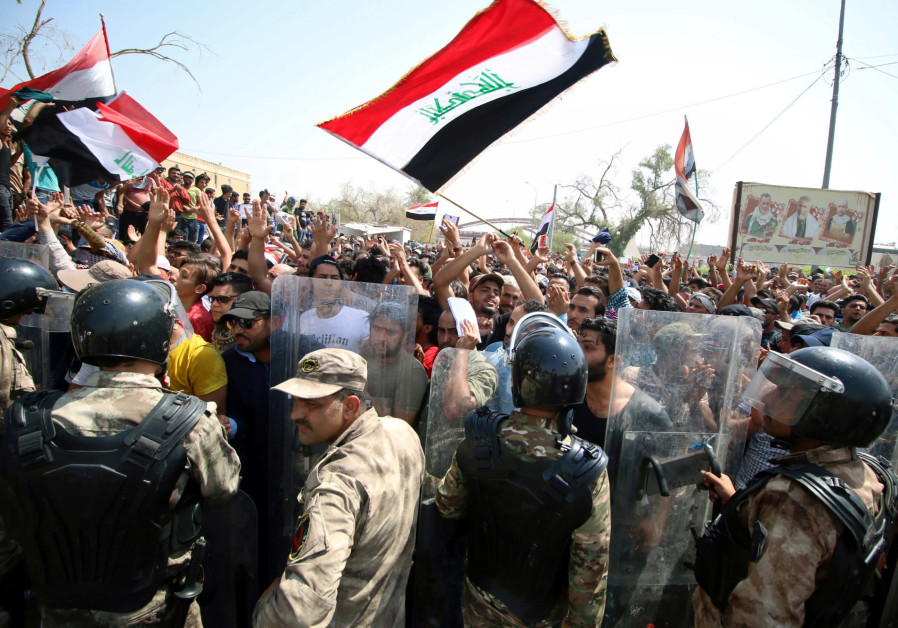
Iranian President Hassan Rouhani took a massive delegation with him to Baghdad on Monday. He showed them off at a long table in meetings with Iraqi officials; at least 16 men were present on each side. Together they are signing a variety of agreements that aim to cement the Iranian alliance with Iraq.

It’s all about appearances in this visit. Iran wants to show its power in Iraq and illustrate that it is the country’s strongest partner. Javad Zarif, the foreign minister of Iran, said that on the first day of the Iran-Iraq summit, business leaders and officials had agreed on new visa arrangements, a new railway and joint industrial zones that aimed to increase trade to $20 billion. “Two more days, two more cities” he tweeted.

Haydar al-Khoei, an Iraq-based analyst, illustrated the symbolism in this visit by juxtaposing it with US President Donald Trump’s visit in December last year. Rouhani welcomed him with an actual red carpet. Trump spoke to US troops and left. Baxtiyar Goran, a journalist and commentator from the Kurdistan region of Iran, said the contrast is that the “US doesn’t recognize Iraq’s sovereignty: Iran controls Iraq’s sovereignty.”

This represents the debate taking place in Iraq today. After the defeat of ISIS, the question is not only who will control Iraq but also whether Baghdad can retake its sovereignty and act independently after years of war and instability. Some Iraqi lawmakers, especially those linked to Shi’ite political parties, are trying to get the US to leave Iraq. At a Parliamentary Defense and Security Committee meeting, according to Iraq watcher David M. Witty, a statement noted that “Iraq will not become a milk cow for the US. We will not comply with US demands that we pay for US presence in Iraq. We will vote on a law soon requiring the end of foreign forces in Iraq.”

From Iran’s point of view, nothing could be going better in this visit. Tehran will showcase its alliance and meet with sectors of society, including Grand Ayatollah Ali Sistani, the leading Shi’ite cleric who helped raise the militias that fought ISIS. Zarif says that the US cannot stop Iran’s increasing relations with Iraq. But he seeks to downplay the view that Iran is too heavy-handed there. “We are not here to take action against any country or interfere in any country,” he said.


US officials reportedly in Mideast peace talks with Jordan’s king 

March 12, 2019

Source: US officials reportedly in Mideast peace talks with Jordan’s king – Israel Hayom

U.S. secretary of state and White House senior advisers Kushner, Greenblatt discuss Middle East peace with King Abdullah in Washington, American source says • Abdullah also meets with U.S. vice president to discuss Islamic State, U.S. presence in Syria.  

Reuters and Israel Hayom Staff // published on 12/03/2019
   
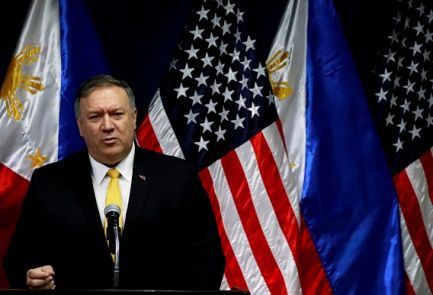
U.S. Secretary of State Mike Pompeo 


U.S. Secretary of State Mike Pompeo and White House senior advisers Jared Kushner and Jason Greenblatt discussed Middle East peace prospects with Jordan’s King Abdullah on Monday in Washington, an American source familiar with the meeting said.

The 45-minute meeting took place at the Jordanian ambassador’s residence in Washington, the source said.

Kushner and Greenblatt returned recently from a tour of Persian Gulf states during which they sought support from Arab leaders on the economic portion of a Middle East peace proposal that U.S. President Donald Trump is expected to unveil in coming months.

That trip, however, did not include a stop in Jordan.

The release of the Trump peace plan has been delayed repeatedly. White House officials have said they plan to unveil the so-called “deal of the century” sometime after April 9, when Israel is set to hold elections that will decide the fate of Prime Minister Benjamin Netanyahu.

Abdullah also met Vice President Mike Pence on Monday.

Pence’s office said he and the king discussed the fight against the Islamic State group and Trump’s decision to maintain a residual U.S. presence in Syria.

Abdullah was set to meet lawmakers, including members of the Senate Foreign Relations Committee, on Capitol Hill on Tuesday.

The king also met on Monday with U.S. acting Defense Secretary Patrick Shanahan to discuss military and defense cooperation between Jordan and the U.S.

“The meeting covered the latest developments in the Middle East, efforts to reach political solutions to regional crises, and efforts to fight terrorism within a holistic approach and Jordanian-US cooperation in this regard,” the Jordanian Embassy said in a statement.


Al-Qaida commander warns Arab states over ties with Israel 

March 12, 2019

Source: Al-Qaida commander warns Arab states over ties with Israel – Israel Hayom

Senior commander of al-Qaida in the Arabian Peninsula accuses Arab, Persian Gulf states of trying to please Jews and Christians in support of U.S. peace deal he says will finalize “sale of Palestine to the Jews,” displace Muslims to Sinai Peninsula.

JNS and Israel Hayom Staff // published on 12/03/2019
   
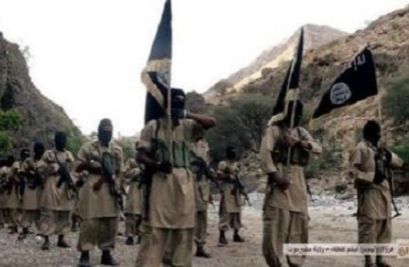
Al-Qaida in the Arabian Peninsula in Yemen in 2014 


Al-Qaida in the Arabian Peninsula senior commander Khaled Batarfi has accused Arab states of rushing to normalize relations with Israel, according to a report by the Middle East Media Research Institute.

In a video published on the Telegram channel of the terrorist group’s media arm, Monday, Batarfi called on Muslims to confront their governments militarily and intellectually.

Batarfi accused the governments of Arab and Persian Gulf state government of acting to please Jews and Christians, saying they have “diligently tried to promote the so-called ‘deal of the century.'”

He said Egypt’s transfer of Tiran and Sanafir Islands to Saudi Arabia and the kingdom’s multibillion-dollar Neom City project had been planned “to boost the deal and finalize the sale of Palestine to the Jews and the displacement of the Muslims to the Sinai [Peninsula].”

Batarfi condemned Prime Minister Benjamin Netanyahu’s visit to Oman and U.S. President Donald Trump’s praise of Saudi Arabia in the wake of the murder of Washington Post columnist Jamal Khashoggi, as well as Trump’s acknowledgment of the important role Ryadh plays in the region.

Batarfi asserted that the leaders of the Christians of the Jews “have become lawyers defending Al-Saud” because they are the ones who benefit the most from the Saudi royal family.

He accused Saudi Crown Prince Mohammed bin Salman of “secularizing” Saudi Arabia and promoting “debauchery” by creating the General Entertainment Authority. He condemned the imprisonment of religious clerics and reformers, as well as the hosting of Western priests and rabbis.

Addressing Muslims, Batarfi accused the Saudi crown prince and Abu Dhabi Crown Prince Mohammed bin Zayed of secularizing their societies in order to “facilitate the normalization, promote co-existence with the West and Israel … and to please their Crusader master Trump to keep them in their thrones.”

He cited Saudi Arabia and the United Arab Emirate’s position against political Islamist groups and their support of regimes and groups that oppose the Arab Spring as proof that Riyadh and Abu Dhabi intend to “thwart all the attempts at Islam-inspired projects.”

He then condemned the UAE and Bahrain’s reopening of their embassies in Syria, as well as Sudanese President Omar al-Bashir’s visit to Damascus, saying that these actions prove that Arab governments are not concerned about those the Syrian regime killed and that all they care about is “pleasing the Jews and the Christians to secure their thrones.”

Batarfi urged Muslims not to remain silent on “this major crime” and to prepare to act to remove these governments from power.

“Remember,” he said, “We have scholars, men and women languishing in the prisons of those tyrants, whose crimes were refusing to remain silent against the falsehood of these rulers, and they are awaiting our support for them, and we will be asked if we have let them down.”


Rouhani is in Baghdad to harness Iraq’s banks for beating US anti-Iran oil sanctions – DEBKAfile

March 12, 2019

Source: Rouhani is in Baghdad to harness Iraq’s banks for beating US anti-Iran oil sanctions – DEBKAfile

Iran’s president Hassan Rouhani started a visit to Baghdad on Monday, March 11, for the main purpose of harnessing Iraq’s banks as Tehran’s main mechanism for beating the US sanction on its oil sales.

This is revealed exclusively by DEBKAfile. Rouhani will formalize the deal, which has been in discussion for more than a month between Tehran and Iraqi prime minister Adel Abdel Mahdi. They agreed in principle to set up a mechanism for enabling Iran’s foreign clients to purchase oil and gas, in defiance of President Donald Trump’s sanctions, by registering the transactions as purchases of Iraqi oil. Payment is to be deposited in Iraqi banks in Baghdad and Basra, then quietly transferred in euros to banks in Tehran.

Prime Minister Mahdi does not expect the Trump administration to make trouble over this subterfuge. He is under enormous pressure from Iran and the Iraqi Shiite militias under the thumb of Al Qods chief Gen. Qassem Soleimani to order US forces to withdraw from Iraq. He therefore believes he holds over Washington’s head a threat to give into Iran’s pressure and order the 5,200 American troops to pack up and leave their bases, should the US take action against the Iraqi banks which collude in busting US sanctions.

This order would undermine the Trump administration’s strategy in the Middle East and the Gulf. The US grants substantial financial and military support to Baghdad to secure a linchpin for this strategy against Tehran’s grab for dominant influence in the Iraqi capital.

However, the deal is in the bag. On Feb. 6, the governor of the Iraqi central bank Abdolnasser Hemmat and his Iranian counterpart Ali Mohsen Ismail al-Alaq reached an agreement in principle. Rouhani, who is accompanied on his three-day visit to Baghdad by foreign minister Mohammed Javad Zarif and oil minister Bijan Zangeneh, is to add the government’s seal to the transaction.

Meanwhile, Washington warned the Mahdi government against conniving with Tehran to beat America’s anti-Iran sanctions. On Friday, March 8, Secretary of State Mike Pompeo phoned the Iraqi prime minister with a caution. If Iraqi banks go through with the sanctions-busting deal with Tehran, the US will block their access to the international financial markets ruled by the US dollar.

Washington and Baghdad are on the brink of a showdown. It is marked by the impending activation of Iraqi banks for breaking the US embargo on Iranian oil sales, plus Baghdad’s threat to demand the removal of US forces. This impasse is the reason why the US has in recent days sent additional forces to fortify its bases in Iraq, as DEBKAfile’s military sources first reported on March 9. The extra units have been drawn from US bases in Israel and Jordan.


Iranian president in Baghdad for his own ‘deal of the century’ 

March 11, 2019

Source: Iranian president in Baghdad for his own ‘deal of the century’ – Middle East – Jerusalem Post

Iran argues that visit is a ‘blow to Trump’ as it seeks to cement Iran-Iraq alliance.

BY SETH J. FRANTZMAN

  MARCH 11, 2019 18:03
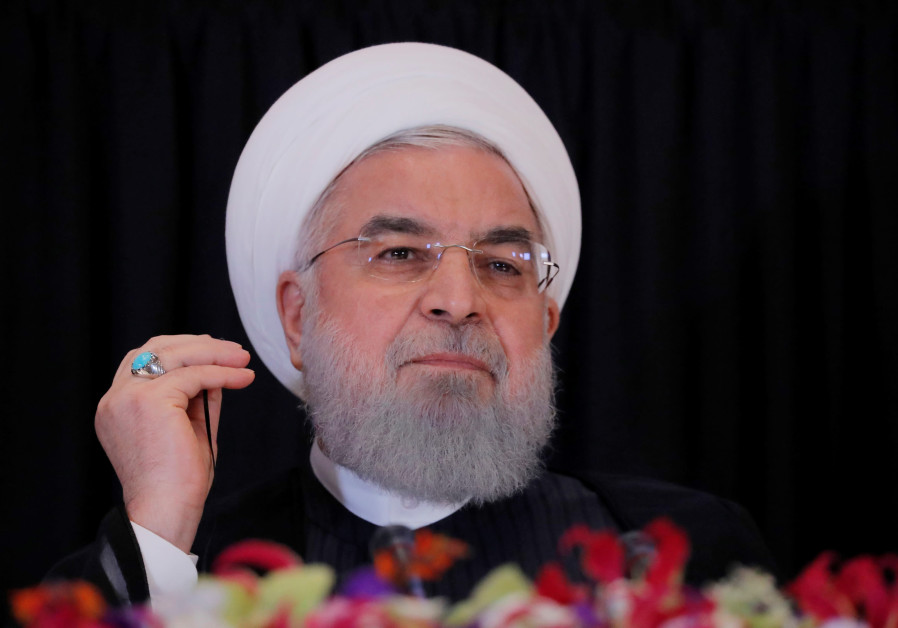
Iran's President Hassan Rouhani listens during a news conference on the sidelines of the 73rd sessio

Iranian President Hassan Rouhani arrived in Baghdad on Monday morning. He stressed the close alliance between Iran and Iraq during comments at Tehran’s Mehrabad Airport. Iraqi President Barham Salih also said that Iraq was working to make sure that US sanctions on Iran, that might potentially reduce Iran-Iraq trade, would not damage Iran. The visit underscores the pressure Washington faces in its Iraq policy and the challenges to US President Donald Trump’s attempt to isolate Iran.

The visit to Iraq comes as the US-led Coalition is trying to defeat ISIS in its last stronghold in Syria. In addition, ISIS has been carrying out hit-and-run attacks across Iraq in the last year, and there are concerns that a new insurgency could develop in the next year. Tens of thousands of ISIS members escaped Baghuz or surrendered and may pose a danger. Iran has emphasized that it was one of Iraq’s main backers against ISIS and that Tehran wants to enter a new stage in Tehran-Baghdad relations.

A key part of those relations are the Popular Mobilization Units (PMU), a group of mostly Shi’ite militias that became government paramilitaries in 2016. These units play a key role in security in Iraq, but also stoke sectarian tensions in Sunni areas. They also cause controversy in Shi’ite areas where there are concerns that they absorb government budgets that are siphoned off from infrastructure in places like Basra.

The PMU groups are closely linked to Iran, and the US Treasury Department recently designated one of them – Harakat Hezbollah al-Nujabaa – on a sanctioned terrorist list. This has increased tensions between the designated group and US forces. In fact, Iraq’s Fatah Alliance, the second largest party in parliament, now wants to push for US troops to leave. Trump had said that the US might use Iraq to “watch” Iran, but now the US finds itself on the back foot in Iraq as Iran makes this high profile visit. Iraq’s President has stressed that the country must not be an area of tension for Washington and Tehran.

US allies in Iraq, particularly among the Kurdish Regional Government in the north, now wonder about the US commitment. It is unclear how the US envisions its long-term goals in Iraq. However, Iran is clearer. It wants to increase trade to $13 billion a year and it wants to sign other agreements. Islamic Revolutionary Guard Corps leader Qasem Soleimani, the leader of the Quds Force that played a key role in Iran extending its influence in Iraq and Syria, received the Order of Zulfaqar from Iran’s Ayatollah Khamanei over the weekend. This is Iran’s highest military order and a symbol of Soleimani’s power.

At the same time, Iranian Foreign Minister Mohammad Javad Zarif – who had carried out a kind of prima donna threat to resign last month – was in Iraq to pave the way for Rouhani’s visit. Clearly, Zarif is now back in the picture and he is trying to burnish his image by showing off the Iran-Iraq alliance. Washington is quiet in the face of Rouhani’s visit, knowing that Iranian media will use this to show off what Press TV calls a “blow to Trump.” Iran’s main goal is to showcase its power and influence in the region and stake a claim to another part of the chessboard of the Middle East. With the defeat of ISIS, one more piece has been removed from the board, and Iran wants to fill that vacuum.


Nasrallah: Israel, US waging economic war on Hezbollah 

March 10, 2019

Source: Nasrallah: Israel, US waging economic war on Hezbollah – Israel Hayom

{ Damn right…! – JW )

“This economic war that Hezbollah is fighting is not aimed solely against us, but [also] against Iran and Syria. What America and Israel and their allies didn’t achieve in battle, they are trying to achieve through economic war,” Hezbollah leader says.

Daniel Siryoti, News Agencies and Israel Hayom Staff // published on 10/03/2019
   

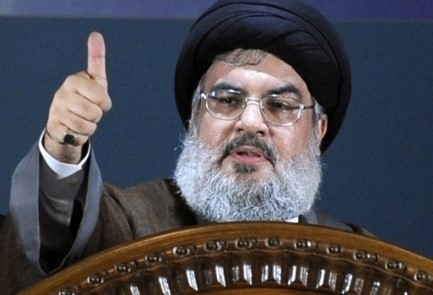
Hezbollah chief Hassan Nasrallah 


Hezbollah leader Sheikh Hassan Nasrallah on Friday accused Israel and the United states of waging economic war against the terrorist organization, and called on its supporters to donate money as the organization comes under increasing Western sanctions intended to isolate it financially.

The United States deems all parts of Hezbollah a terrorist organization and has been steadily increasing financial sanctions against the Iranian proxy.

“I announce today that the resistance is in need of its [popular base],” Nasrallah said, adding that donations were needed to support the group’s activities.

“This economic war that Hezbollah is fighting is not aimed solely against us, but [also] against Iran and Syria. What America and Israel and their allies didn’t achieve in battle, they are trying to achieve through economic war,” Nasrallah said in a televised speech.

Hezbollah was founded in 1982 by Iran’s Revolutionary Guards. Its influence has expanded at home in Lebanon and in the region. It is represented in the Lebanese government and controls three out of 30 government ministries in the government of Prime Minister Saad Hariri.

The group is also heavily armed and has sent militants to fight in neighboring Syria and beyond.

Last month, Britain said it was joining the U.S. in listing all branches of Hezbollah as terrorist organizations, due to the role Hezbollah plays in destabilizing the Middle East. The move broke ranks with the rest of the European Union, which proscribes only Hezbollah’s military wing as a terrorist entity.

Hezbollah itself does not acknowledge having separate political and military wings.

Nasrallah added that other nations could follow Britain’s example.

“The sanctions and the terror lists are a form of war … we should deal with them as if they are a war,” he said.

Nasrallah called on Hezbollah supporters to remain steadfast in the face of these pressures and said the group’s enemies would be “disappointed.”

“Their actions will not be able to make us poor, hungry or isolated. Those that support us will continue in their support – be they countries, people or our people and the people of resistance in Lebanon,” Nasrallah said.

Meanwhile, German Minister of State Niels Annen said on Friday that his country would not follow Britain’s lead, a decision that might fuel tensions with Saudi Arabia and the United States.

Annen, speaking to weekly news magazine Der Spiegel after a visit to Lebanon, said Hezbollah remained a relevant factor in Lebanese society.

Britain’s decision would have no direct impact on the position of Germany or the European Union, Annen said.

Annen rejected U.S. criticism his nation was doing too little to combat Iran’s influence in the region and said Berlin’s foreign policy remained focused on finding political solutions, even in tough situations.

Germany’s refusal to ban Hezbollah as a whole could add to tensions with Riyadh over Saudi Arabia’s leadership of a coalition fighting the Iran-backed Houthis in Yemen, and because of the killing of Saudi journalist Jamal Khashoggi.

France, Britain and European arms makers are pressing Germany to end a unilateral freeze in arms shipments to Saudi Arabia imposed by Berlin after Khashoggi’s death that is holding up billions of euros of weapons deliveries.

Hezbollah was founded in 1982 by Iran’s Revolutionary Guards. Its influence has expanded at home in Lebanon and in the region.

The group controls three of 30 ministries in the Lebanese government led by Western-backed Prime Minister Saad Hariri, the largest number ever.


‘Many in UN oppose Israel cutting terror salaries from PA taxes’ 

March 10, 2019

Source: ‘Many in UN oppose Israel cutting terror salaries from PA taxes’ – Israel Hayom

U.S. Mideast envoy Jason Greenblatt tells U.N. Security Council PA’s decision to reject latest tax transfer only hurting Palestinians • Kuwait’s U.N. envoy Mansour Al-Otaibi: Palestinians “have the right … to do whatever they want with their money.”

Associated Press and Israel Hayom Staff // published on 10/03/2019
   
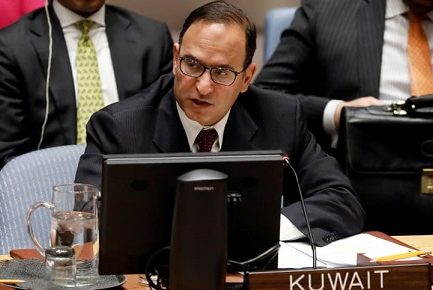
Kuwait’s Ambassador to the U.N. Mansour Al-Otaibi 


An “overwhelming” number of U.N. Security Council members oppose Israel’s decision to deduct money that Palestinians transfer to the families of terrorists who carried out attacks on Israel from their monthly tax revenue, Kuwait’s U.N. ambassador said Friday.

Mansour Al-Otaibi told reporters after a closed-door council meeting that Israel’s action was “in violation of existing bilateral agreements.”

U.S. Special Representative for International Negotiations Jason Greenblatt came to New York from Washington to defend close ally Israel.

He told the council that the Palestinian Authority’s decision to reject the latest tax transfer was only hurting the Palestinian people because they were rejecting the 95% of the tax revenue that Israel is not withholding, according to a diplomat at the meeting.

Greenblatt said it was “inappropriate” to focus on Israel, which was withholding 5-7% of the monthly tax revenue because of Ramallah’s “abhorrent practice” of paying that money “to terrorists and their families,” the diplomat said.

Kuwait’s Mansour, who called for the Security Council consultations along with Indonesia’s U.N. Ambassador Dian Djani, said the Palestinians “have the right … to do whatever they want with their money.”

He said U.N. Middle East envoy Nikolay Mladenov, who briefed the council by video, said “there is a need for mediation on this to solve it.”

Mansour said an “overwhelming” number of members of the 15-nation Security Council “think that this is a unilateral decision, it’s not acceptable, it’s a violation of the Oslo agreement and Paris protocol, and this is Palestinian money.”

Indonesia’s Djani said Israel’s suspension of international observers in Hebron coupled with the withholding of tax revenue were making things “more and more difficult once again for the Palestinian people, so that’s why we are raising this issue, because we don’t want to continue to escalate an issue.”

Djani said Greenblatt told the council that members who disagreed with Israel’s decision to withhold the customs revenues were free to discuss it with the Israeli government.

But in the meantime, the diplomat said, Greenblatt asked the Security Council to send a united message to the PA to stop “its irresponsible decision to reject the transfer of the remaining funds.”


Off Topic:  U.S. said to pass Saudi Arabia in oil exports in 2019

March 10, 2019

Source: U.S. said to pass Saudi Arabia in oil exports in 2019 – International news – Jerusalem Post

The United States exports three million barrels of crude oil and five million barrels of natural gas and petroleum daily.

BY JERUSALEM POST STAFF
 MARCH 10, 2019 11:48
Pump jacks operate in front of a drilling rig in an oil field in Midland, Texas U.S. August 22, 2018

The United States will export more oil, natural gas and petroleum, a research firm found over the weekend.

The energy research firm Rystad Energy published the findings, carried by CNN, which revealed the Middle Eastern kingdom exports nearly seven million barrels of crude oil daily and two million barrels of natural gas and petroleum. The United States exports three million barrels of crude oil and five million barrels of natural gas and petroleum daily.

The research firm, however, said the Saudis would maintain their perch atop the rankings of the world’s top exporter of crude oil.

The change, should it come to pass, would be the first time the US has topped the Saudis since the latter began selling oil to overseas customers, the report said.

US-Saudi relations were strained in October after Saudi journalist Jamal Khashoggi was murdered in the Saudi consulate in Istanbul.


Shi’ite militia leader in Iraq threatens US, slams ‘Zionist regime’ 

March 10, 2019

Source: Shi’ite militia leader in Iraq threatens US, slams ‘Zionist regime’ – Middle East – Jerusalem Post

Powerful Iraqi party leader Hadi al-Amiri embraces visit by Iranian president, opposes US bases in Iraq

BY SETH J. FRANTZMAN
 MARCH 10, 2019 10:32
Shi’ite militia leader in Iraq threatens US, slams ‘Zionist regime’

Two Shi’ite militia leaders spoke out over the weekend, with one threatening the US, and the other demanding American troops leave Iraq.

Harakat Hezbollah al-Nujaba spokesman Hashim al-Mousawi slammed the US and Israel after the US last week designated the group as a terrorist threat.

Iraqi Transportation Minister Hadi al-Amiri said he was looking forward to a visit by Iranian President Hassan Rouhani, and that he opposes the continued US presence in Iraq.

On March 5, the US Treasury Department’s Office of Foreign Assets Control placed Harakat Hezbollah al-Nujaba on its Specially Designated Nationals and Blocked Persons List, under what the office calls its Counter Terrorism Designation.

The US pointed to the organization itself and its leader as a threat, saying it has “committed, or poses a significant risk of committing acts of terrorism.”

The group, which is closely linked to Iran, in 2017 said US troops were a legitimate target. In February 2018, the group vowed to support Hezbollah in Lebanon in a war against Israel.

Last year, Iraqi MP Karim Alawi said the US was spying on Shi’ite militias in Iraq. Iran’s PressTV sought to argue that the move was dangerous and that Harakat Hezbollah had played a key role in the war on ISIS.

Mousawi told Fars News that the region faces a variety of US-driven plots, including a push for normalization with the “Zionist regime” and economic pressure on Iran. He argued that the Iranian backed “axis of resistance,” of which Harakat Hezbollah is a part, has defeated these plots, including attempts by the US to loot Syrian resources.

“Hezbollah [in Lebanon] today represents a large part of the Lebanese people and an integral part of Lebanon,” he boasted. He said the commanders of Harakat Hezbollah were prepared for a confrontation with the US. “We will not retreat in the face of any country that violates Iraqi sovereignty.”

Mousawi also said the group would use parliamentary means first, but that it viewed the conflict as a regional struggle. He made a point of condemning the US role in the Gulf and said the group had its own “Golan unit” to fight against Israel.

The presence of Shi’ite militias in Iraq, some of which fought the US after the 2003 toppling of Saddam Hussein, and most of which are closely linked to Iran, raises questions about the continued presence of US troops in Iraq. US forces returned to Iraq to help fight ISIS in 2014.

Initially that footprint was small, but it had grown with the war on ISIS, and to provide logistic support for US forces in Syria. When US President Donald Trump in December 2017 said the US would withdraw from Syria, he also told US forces at Al Asad Air Base in Iraq that the US would pull troops back to Iraq and “watch” Iran. This comes in the context of a US push against Iran’s role in the region and new sanctions rolled out last year.

Iraqi officials have rejected the US using Iraq to “watch” Iran. Iraqi President Barham Salih has said at least three times in the last two months that Iraq must not become a center of the Iran-US power struggle.

He and other Iraqi officials reiterated this statement at the Sulaimani Forum last week. Iraqi officials have said it is up to parliament to decide if US forces will stay. Hadi al-Amiri, the head of the Fatah Alliance, the second largest party in parliament, has indicated that he opposes the US presence in Iraq. Amiri, a former fighter alongside the Iranian Revolutionary Guard Corps in the 1980s during the Iran-Iraq war, is head of the Badr Organization, one of the largest of the Shi’ite militias which became part of the Popular Mobilization Units (PMU) in 2014.

The PMU helped defeat ISIS and became an official Iraq paramilitary group in 2016. In 2017, then-US secretary of state Rex Tillerson caused controversy in Iraq when he said the Shi’ite-dominated PMU should “go home” now that the war on ISIS was over.

Haider al-Abadi, then prime minister of Iraq, told Tillerson that the PMU were the hope for the future of Iraq and the region. Their regional role has been on display as many of these Shi’ite units are not only closely allied to Iran, but also to Hezbollah. Qais Khazali, of the Asaib Ahl al-Haq, visited the Lebanese border near Israel, and indicated he would support Hezbollah in a war with Israel. This is part of Iran’s plan to create a “road to the sea,” or a network of allied groups in Iraq, Syria and Lebanon that are either part of the state, or work as a parallel states supporting Iran and local armed groups.

The US sees this as a threat but doesn’t know how to confront it. US officials, such as National Security Adviser John Bolton, have called for the US to stay in Syria to counterbalance these Iranian-allied groups. Secretary of State Mike Pompeo will travel to Lebanon this month, according to reports. This will raise tensions with Hezbollah.

The issue of US bases in Iraq is also coming to a head this year. Amiri was quoted in Tasnim News over the weekend as saying he disagreed with any US presence. He also said he welcomed the visit of Iran’s president to Iraq.

The overall picture in Iraq is one in which the US faces an uphill struggle to maintain its presence as ISIS is defeated. The pro-Iranian parties sense that they are in control. Although the Kurdistan autonomous region has tended to support the US staying in Iraq to help fight ISIS remnants, the tensions with pro-Iranian Shi’ite parties and armed groups is growing.

Some Shi’ite militias have attempted to interrupt US patrols in Anbar Province and Mosul in recent months. US Inspector-General reports at the Defense Department also frequently mention these pro-Iranian groups as a threat in Iraq. That the leaders of the groups say they will use parliament for now to oppose the US presence means they seek a political solution at the moment, and are wary of an armed confrontation.


Syria vows to attack Israel unless it withdraws from the Golan Heights

March 9, 2019

Source: Syria vows to attack Israel unless it withdraws from the Golan Heights – Arab-Israeli Conflict – Jerusalem Post

The Syrian warning was given to the head of the United Nations Truce Supervision Organization (UNTSO) General Kristin Lund.

BY HAGAY HACOHEN
 MARCH 8, 2019 22:48
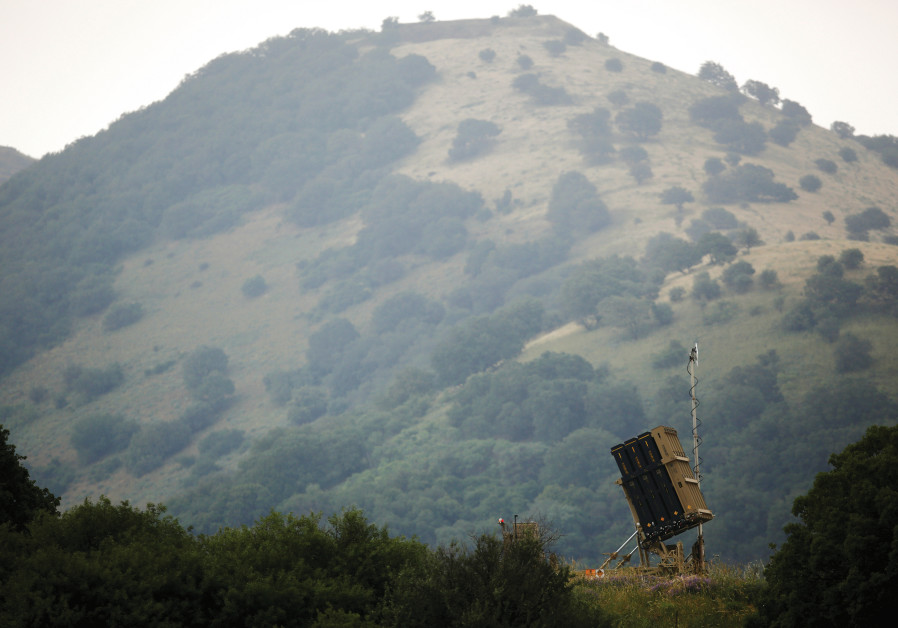
AN IRON DOME antimissile system is installed near the Israeli side of the border with Syria in the G

Syria vowed to attack Israel unless it withdraws from the Golan Heights, World Israel News reported on Thursday.

Syrian Deputy Foreign Minister Faisal Mekdad submitted an official warning to the head of the United Nations Truce Supervision Organization (UNTSO) Kristin Lund, in what seemed to be an attempt to prevent official US recognition of Israeli sovereignty in the Golan.

Blue and White party politicians Gabi Ashkenazi, Yair Lapid, Benny Gantz and Moshe Ya’alon visited the Golan Heights on Monday and vowed never to give it up.
“We will increase the numbers of residents in the Golan, sending a resounding message to all – we will never relinquish the Golan Heights,” Gantz said.
“We will enlist the support of the US and the international community to promote Israel’s interests on our northern border,” he added.
“We have a historical right to it and it is a strategic asset,” Lapid said, adding that “we will never give up the Golan Heights. It is ours and it will stay ours.”