Archive for March 2019

US aims to cut Iran oil exports by 20% starting in May 

March 14, 2019

Source: US aims to cut Iran oil exports by 20% starting in May – Israel Hayom


Netanyahu: Turkey’s Erdoğan a dictator who commits genocide 

March 14, 2019

Source: Netanyahu: Turkey’s Erdoğan a dictator who commits genocide – Israel Hayom

After Turkish President Recep Tayyip Erdoğan calls Prime Minister Benjamin Netanyahu a “thief,” Netanyahu says Erdoğan “sends tens of thousands of political opponents to prison, commits genocide against the Kurds, and occupies Northern Cyprus.”

Ariel Kahana, Associated Press and Israel Hayom Staff // published on 14/03/2019
   
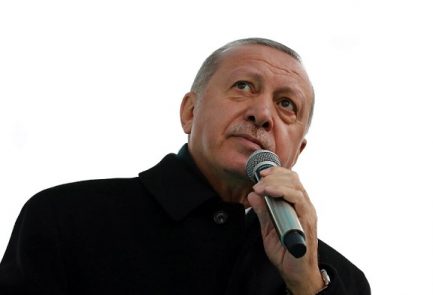
Turkish President Recep Tayyip Erdoğan addresses the supporters of his ruling Justice and Development Party during a rally in Ankara, Wednesday 


The latest quarrel between the leaders of Turkey and Israel continued for a second day Wednesday as Turkish President Recep Tayyip Erdoğan labeled Prime Minister Benjamin Netanyahu a “thief” and a “tyrant.”

Speaking at an election campaign rally, Erdoğan called Netanyahu “the thief who heads Israel” in a reference to corruption allegations against the long-seated prime minister.

Erdoğan also criticized Israel’s closure of a Jerusalem holy site Tuesday after Palestinian suspects hurled a firebomb at a police station.

“You are a tyrant,” Erdoğan said, addressing Netanyahu at the rally. “You are a tyrant who slaughters 7-year-old Palestinian kids.”

Netanyahu fired back on Twitter, describing the Turkish president as a “dictator who sends tens of thousands of political opponents to prison, commits genocide against the Kurds, and occupies Northern Cyprus.”

Erdoğan, Netanyahu said, was preaching to him, “to Israel, and to the Israel Defense Forces about democracy and the ethics of war. A joke.”

“It’s best that he doesn’t get involved with Jerusalem, our capital for 3,000 years,” Netanyahu quipped. “Erdoğan can only learn from us how to respect every religion and protect human rights.”

Netanyahu’s son, Yair, also waded into the fray, tweeting: “I would also remind him [Erdoğan] of the genocides Turkey committed against the Greeks, the Assyrians, and the Armenians. They carried out ethnic cleansing against all the Christians in Asia Minor.”


U.S. report does not refer to Golan, West Bank, Gaza as occupied territories 

March 14, 2019

Source: U.S. report does not refer to Golan, West Bank, Gaza as occupied territories – Israel News – Jerusalem Post

The US State Department changed its usual description of the Golan Heights from “Israeli-occupied” to “Israeli-controlled” in an annual global human rights report released on Wednesday.

BY TOVAH LAZAROFF
 MARCH 14, 2019 00:00
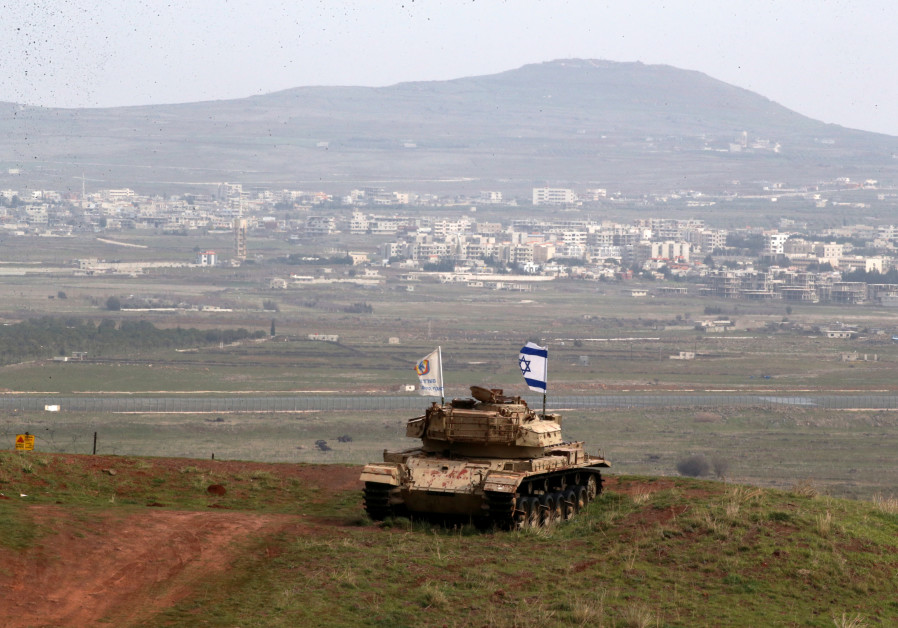
An old military vehicle can be seen positioned on the Israeli side of the border with Syria, near th

The US State Department has erased the word “occupation” from its description of the Golan Heights and the Palestinian territories in its annual Country Reports on Human Rights Practices, which it published on Wednesday.

Last year, it referred to the areas as “occupied” by Israel; now, it speaks of them as under Israeli “control.”

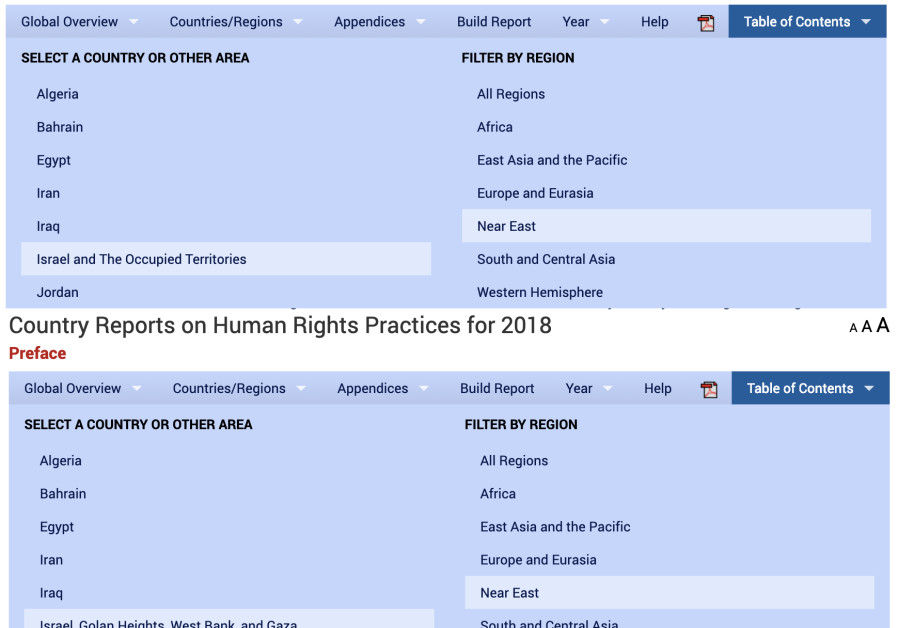
The change began gradually two years ago, when the State Department replaced the country designation of “Israel and the occupied territories” with “Israel, Golan Heights, West Bank and Gaza.”

Within the 2017 report itself, however, the State Department last year still used the word “occupation” but much more sparingly. In 2016, the report referred to the occupied territories, and in 2017 it spoke of the Palestinian territories.

This year, the 2018 Country Reports on Human Rights Practices made no mention of the word “occupation” at all.

Israel captured the Golan Heights from Syria during the Six-Day War and annexed it in 1981. The United States and the international community have never recognized that act. Since the Six-Day War, Israel has never annexed the West Bank, and it withdrew from Gaza in 2005.

Right-wing politicians have pressured Prime Minister Benjamin Netanyahu to apply Israeli sovereignty to the West Bank, which they refer to as Judea and Samaria.

The shift on the Golan comes as US Republican Senator Lindsey Graham promised Netanyahu that he would work to sway the Trump administration to recognize Israeli sovereignty on the Golan Heights.

U.S. State Department Country Reports on Human Rights Practices for 2016 and 2018 (Credit: screenshot)

At a Wednesday State Department press conference in Washington about the report, Michael Kozak from the Bureau of Democracy, Human Rights and Labor downplayed the move.

“My understanding is that there is no change in our outlook or our policy vis-à-vis the territories and the need for a negotiated settlement there,” Kozak said.

A reporter pressed him on the point: “You no longer consider the West Bank to be occupied?”

“No. I said that our policy on the status has not changed. That is my understanding. We decided not to use the term in the reports because it is not a human rights term and it was distracting,” Kozak said.

The linguistic change was made by the regional bureau of the Office of the Legal Adviser, Kozak said.

“What we’re trying to do is report on the human rights situation in those territories…. You’re just trying to find a way of describing the place that you are reporting on. ‘Occupied territory’ has a legal meaning to it. What they tried to do was shift more to just a geographic description. So we said Israel, Golan, West Bank, Gaza and Jerusalem.”

“It’s a complicated report because there are sometimes multiple authorities who have authority over people in particular parts of that territory. So it’s a very complicated one to write,” Kozak said.

ISRAELI POLITICIANS took the linguistic shift as an affirmative nod from the Trump administration on the acceptance of the Golan as part of sovereign Israel and support for the annexation of the West Bank.

Knesset Speaker Yuli Edelstein said, “The nation has long been with the Golan, now [US President Donald] Trump is also. Thank you, President Trump, for another important step on the path of truth and justice – for the Golan Heights and for Judea and Samaria. The next step: the application of sovereignty [in Judea and Samaria]!” Edelstein said.

MK Bezalel Smotrich (Bayit Yehudi) called on Netanyahu to take action, explaining that the State Department shift in language provided a “window of opportunity” for such a step.

Deputy Foreign Minister Tzipi Hotovely (Likud) thanked Israel’s “great friend” the United States, which “continues to stand for historical truth.

“The fact that the term ‘occupied territory’ is absent from an official [US] State Department document is an important step for Israel’s foreign relations and the future of the [West Bank] settlements,” Hotovely said.

She credited both Netanyahu and the Foreign Ministry for the State Department’s linguistic shift.

“I welcome the move. I’m confident that in the future, other countries will also stand by Israel,” Hotovely said.

Yesha Council foreign envoy and Efrat Council head Oded Revivi said it was a “welcome and courageous act by the US administration that has consistently resisted the standard international consensus when it diverged with reality, just like the US government’s recognition of Jerusalem as the capital of Israel.”

Prof. Eugene Kontorovich, director of international law at the Jerusalem-based Kohelet Policy Forum said, “This is a massive change in how America relates to the conflict. It is coming to understand that while Israel and the Palestinians have a dispute, international law does not provide the answers to that dispute. The report, also for the first time, expresses skepticism at the claims and submissions of anti-Israel groups, whose poorly documented allegations have previously been accepted as gospel.”

Reuters contributed to this report.


Intel firm: Satellite images back report of new Iranian missile plant in Syria

March 14, 2019

Source: Intel firm: Satellite images back report of new Iranian missile plant in Syria | The Times of Israel

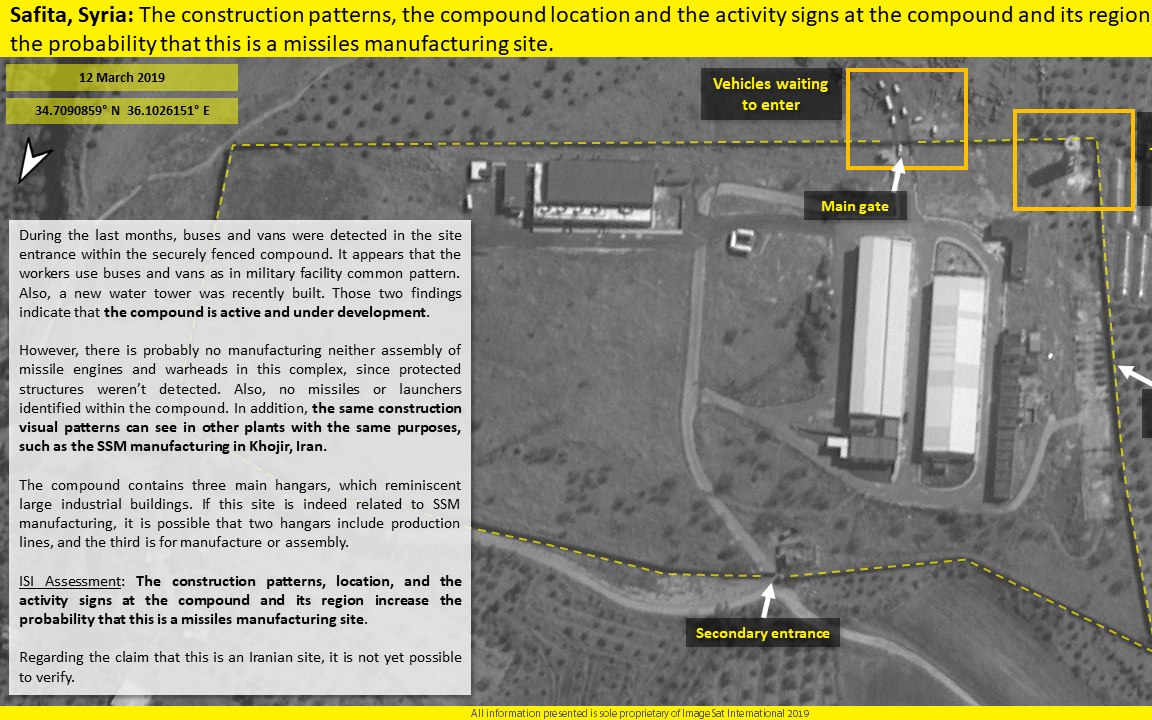
Compound’s location, construction patterns and observed activity are compatible with a missile manufacturing site, ImageSat International says

A satellite photo provided by ImageSat international (ISI) shows a suspected Syrian missile production facility (Courtesy ISI)

A satellite photo provided byImageSat international (ISI) shows a suspected Syrian missile production facility (Courtesy ISI)

New satellite images give credence to reports that a new factory in Syria’s northwest is a facility for the production of surface-to-surface (SSM) missiles, an Israeli intelligence-gathering firm said Wednesday.

The plant near the city of Safita was first reported upon last month by Channel 12 news, which said Israeli officials believe it is a precision missile factory being constructed by Iran in cooperation with the Syrian government and Lebanese terror group Hezbollah.

ImageSat International (ISI) on Wednesday said satellite photos of the compound supported the report.

“The construction patterns, the compound’s location and the signs of activity at the compound and its [surrounding area] increase the probability that this is a missiles manufacturing site,” said the company, which interprets visual intelligence.

It noted that “The compound contains three main hangars which are reminiscent of large industrial buildings. If this site is indeed related to SSM manufacturing, it is possible that two hangars include production lines, and the third is for manufacture or assembly.”

It also said that vehicle activity at the site, particularly the use of buses and vans by workers, followed the pattern of operations at military facilities.

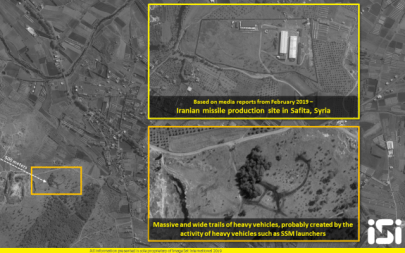
And tracks seen in a nearby area were compatible with those made by SSM launcher vehicles, ISI said.

A satellite photo provided by ImageSat international (ISI) shows a suspected Syrian missile production facility (Courtesy ISI)

However, the company noted that “there is probably no manufacturing [or] assembly of missile engines and warheads in this complex, since protected
structures weren’t detected. Also, no missiles or launchers were identified within the compound.”

The Channel 12 report said the factory was intended to focus on producing precision missiles, dramatically upgrading the threat to Israel from the vast arsenal of rockets and missiles deployed against it in southern Lebanon by Iran’s proxy, Hezbollah.

To build it, Channel 12 reported, Iran had to bypass international sanctions on its missile program via a series of straw companies established by Syria’s Scientific Studies and Research Center (SSRC), a government agency that manufactures weaponry and whose facilities have repeatedly been targeted by Israel in the past.

Those companies — established specifically for that purpose — ordered missile parts from Italy, China and other countries in eastern Asia, the report said. The companies are named the Organization of Technological Industries (OTI) and ANAS Group, according to the report.

Israel has nevertheless discovered, tracked and uncovered the facility, the network said, as part of its effort to thwart Iran’s military entrenchment in Syria.

Israel says it has carried out hundreds of airstrikes on Iranian-linked targets as part of a campaign to prevent Tehran from establishing a military presence in Syria.


IDF exposes covert Hezbollah activities along Israel-Syria border – TV7 Israel News 13.03.19 

March 14, 2019


PM Netanyahu on the exposure of the Hezbollah Golan terror network 

March 13, 2019


Off Topic:  Norway AG: F*cking Jews is legitimate criticism of Israel

March 13, 2019

Source: Norway AG: F*cking Jews is legitimate criticism of Israel

Tor Aksel Busch says that while 2018 comment by Muslim rapper ‘seems to be targeting Jews, it can however also be said to express dissatisfaction with the policies of the State of Israel’

Norway’s attorney general ruled Tuesday that a Norwegian Muslim rapper who said “f*cking Jews” during a concert was not engaging in anti-Semitic hate speech, but rather legitimate criticism of Israel.

The initial incident took place in June 2018, when rapper Kaveh Kholardi, who is of Iranian origin, was performing on stage at a municipal festival in Oslo. He asked the audience if there were any Muslims in the crowd. When some people responded, Kaveh wished them a happy Eid. He went on to ask if there were any Jews, and when no one reacted, he said “Fucking Jews.”  He then said, “Just joking.”

Kaveh Kholardi

Kaveh Kholardi

According to the Jewish Telegraphic Agency, the organizers of the family-friendly event, which was supposed to celebrate diversity, complained to the rapper. Kholardi had five days before the incident written on Twitter that “f*cking Jews are so corrupt.”

Kholardi later claimed that the comment at the concert had been taken out of context and was a joke. He was, the rapper wrote on Facebook, “neither a racist nor anti-Semite.”

Local Jewish leader Ervin Kohn complained about the comment to police, calling it hate speech and incitement, but was told that it “falls within the freedom of speech of performance artists to make provocative and satirical statements.”

This finding was supported by State Prosecutor Trude Antonsen, who found that while derogatory and offensive, the remark did not constitute a criminal act.

Kohn then appealed to Attorney General Tor Aksel Busch, who on Tuesday dismissed his appeal on the grounds that the “f*cking Jews” remark “seems to be targeting Jews, it can however also be said to express dissatisfaction with the policies of the State of Israel.”

Norwegian pro-Israel group MIFF called Busch’s decision “alarming” because he “finds ambiguity where there is none,” JTA reported.

Israel’s deputy ambassador to Norway, Dan Poraz, called the ruling “bizarre.”

“The attorney general rejected an appeal against his decision to close the case against the Norwegian rapper who yelled ‘F*cking Jews’ on the grounds that it could be interpreted as criticism of Israel,” he said. “I have lived in Norwary for the last four years and have no doubt that most Norwegians were disgusted by this anti-Semitic comment.”

U.S.-backed Syria forces say IS suicide bombers thwarted in last-stand 

March 13, 2019

Source: U.S.-backed Syria forces say IS suicide bombers thwarted in last-stand – Middle East – Jerusalem Post

The enclave is the last shred of populated territory held by the jihadists who have been driven from roughly a third of both Iraq and Syria over the past four years.

BY REUTERS
 MARCH 13, 2019 15:00
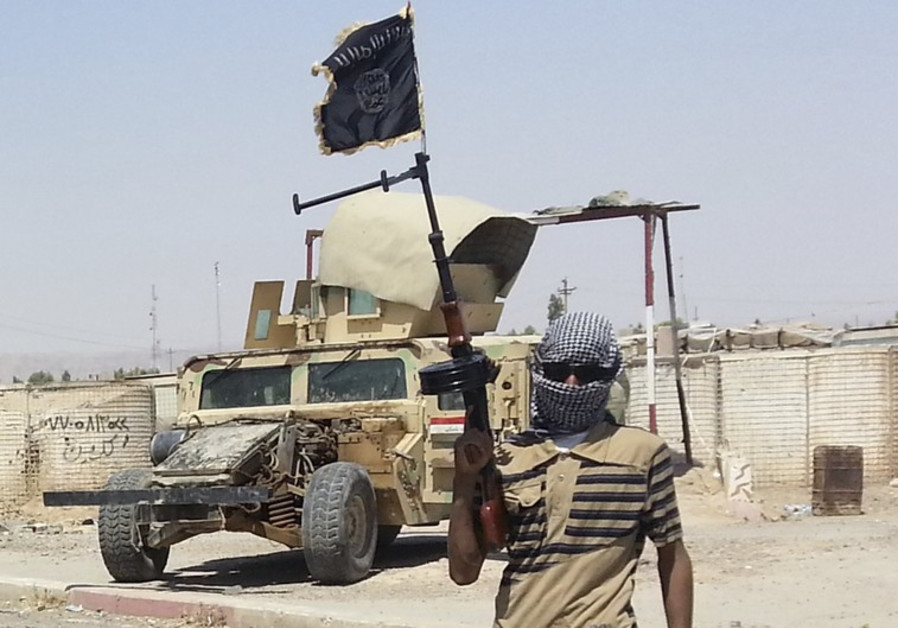
ISIS fighter

BAGHOUZ, Syria March 13 – The U.S.-backed Syrian Democratic Forces militia said it thwarted an attempted Islamic State group suicide bomb attack early on Wednesday during a last-stand battle for the jihadist group’s final enclave.

The SDF has said the battle for Baghouz, a collection of hamlets and farmland near the Iraqi border, is as good as over. Thick clouds of black smoke could be seen rising over the enclave on Wednesday afternoon. The sounds of gunfire, explosions and planes cold be heard.

The enclave is the last shred of populated territory held by the jihadists who have been driven from roughly a third of both Iraq and Syria over the past four years.

Mustafa Bali, a spokesman for the SDF media office, said its forces had been bombarding Baghouz heavily overnight before engaging in direct clashes with Islamic State fighters in the pre-dawn hours.

Live footage broadcast by the Kurdish Ronahi TV overnight showed a series of large explosions lighting up the night sky over Baghouz.

“There were suicide vest attacks by a group of bombers who tried to blow themselves up amidst our forces. Our forces targeted and killed them before they reached our positions,” Bali said.

The SDF has laid siege to Baghouz for weeks but had repeatedly postponed its final assault to allow thousands of civilians, many of them wives and children of Islamic State fighters, to leave. It resumed the attack on Sunday.

Around 3,000 fighters and their families surrendered to SDF forces in 24 hours, Bali said overnight. Three women and four children belonging to the Yazidi sect, a minority group who were kidnapped and enslaved by Islamic State in 2014, were also freed, he said.

While Baghouz is the last populated territory of what was once the group’s self-proclaimed “caliphate,” fighters still operate in remote areas elsewhere.

The group put out a new propaganda video overnight Monday filmed in recent weeks inside Baghouz, maintaining its claim to leadership of all Muslims and calling on its supporters to keep the faith.

“Tomorrow, God willing, we will be in paradise and they will be burning in hell,” one of the men interviewed in the video said.

The collapse of Islamic State’s territorial rule comes at a pivotal point in the wider eight year multi-sided Syrian civil war, with President Bashar al-Assad’s government having also recaptured most territory from rebels that tried to topple him.Government forces rained incendiary bombs overnight on Idlib in the northwest, the last major area held by anti-Assad rebels, where fighting has escalated in recent weeks despite a September de-escalation agreement.


IDF: Hezbollah head of Golan operations murdered U.S. troops in Iraq 

March 13, 2019

Source: IDF: Hezbollah head of Golan operations murdered U.S. troops in Iraq – Arab-Israeli Conflict – Jerusalem Post

The Hezbollah terrorist organization has begun an attempt to establish and entrench a covert force in the Syrian Golan Heights.

BY ANNA AHRONHEIM
 MARCH 13, 2019 12:02

The Lebanese Shi’ite terror group Hezbollah is building a new and dangerous terror network in Syria’s Golan Heights without the knowledge of Syrian President Bashar Assad, the IDF has revealed.

“The Hezbollah terrorist organization has begun an attempt to establish and entrench a covert force in the Syrian Golan Heights that is designed to act against Israel when given the order,” the IDF said on Tuesday.

According to the IDF, the network – called “The Golan Project” – is currently in its initial stages of establishment and recruitment and is not yet operational.

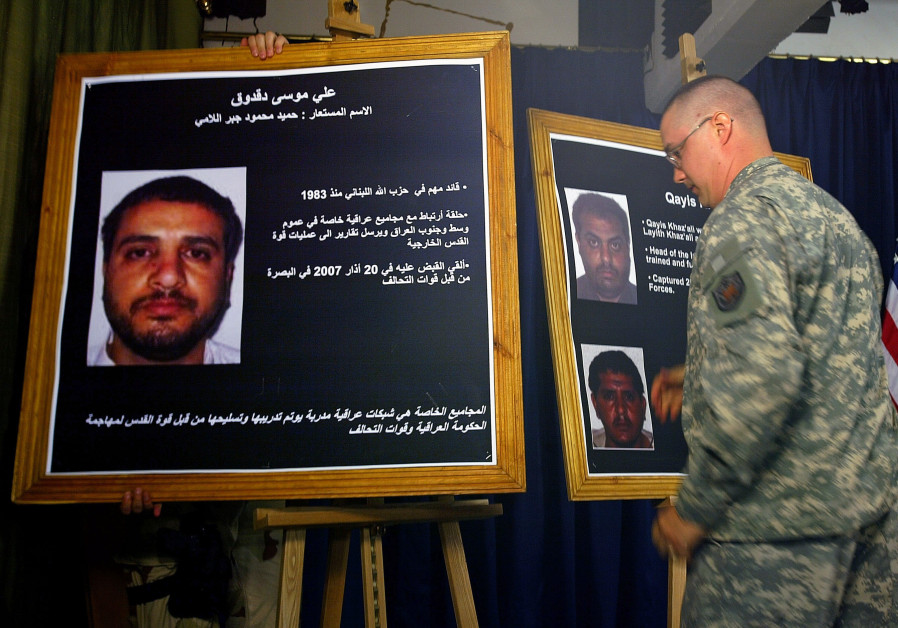
It is led by senior Hezbollah commander Ali Mussa Daqduq, who spent five years in an Iraqi prison for a 2007 attack that killed five American soldiers in the Karbala Governorate. He was released in 2012, went back to Lebanon and was sent to Syria this past summer to establish the Golan terror network.
A U.S. solider shows a picture of Ali Mussa Daqduq during a news conference. (Reuters)A U.S. solider shows a picture of Ali Mussa Daqduq during a news conference. (Reuters)

Other senior Hezbollah operatives involved in the clandestine project have been identified by the IDF as Bashar and Ismail Mustafa, Talal Hassoun and Fahim Abu Qais.

According to senior intelligence officers in the IDF’s Northern Command, Hezbollah’s Golan Project began in the summer following the reconquering of the Syrian Golan by regime troops.
All actions of operatives are compartmentalized and kept secret from each other and the local population to advance their project without the regime knowing.
“Hezbollah is taking advantage of the fact that Assad is busy in the north of the country and that villagers in the Syrian Golan need the money,” the senior officers said, stressing that “if Assad is serious then he has to have full control and know what is happening in his territory.”
The Hezbollah militants are currently focusing on familiarizing themselves with the Syrian Golan Heights and on gathering intelligence on Israel and the border area. They are also working to establish intelligence gathering capabilities against Israel, operating from civilian observation posts and regime military positions near the border.
The Golan Project has its headquarters in Damascus and the Lebanese capital of Beirut, and there are tens of operatives operating in the Syrian towns of Hader, Quneitra and Erneh who collect intelligence on Israel and military movement on the Israeli Golan Heights.
“The proximity of these communities to Israel is what allows the operatives to conduct observations continuously and without revealing their true goal – to convey information about the regular activities of our forces to Hezbollah and the leaders of the network,” the military said.
According to the senior officers, the operatives have weaponry available from the civil war and if needed, will receive additional weaponry from Lebanon or existing arsenals kept by Hezbollah and Iran in Syria.
While some of the operatives have taken part in attacks against Israel in the past, other local Syrian villagers joined for financial reasons. A portion of the operatives have undergone training by Hezbollah in sabotage, sharpshooting and firing Grad rockets.
“The Northern Command and the 210th Division have identified the enemy’s movements and are acting to strengthen the security response at the border by strengthening intelligence gathering capabilities, fire capabilities and are defending the sector with increased forces,” said Brig.-Gen. Amit Fisher, Commander of the 210th Division.
According to Fisher, IDF troops “are operating overtly and covertly to locate the enemy, force them away from the border and ensure security near the border.”
Last week, Syrian media reported that the IDF shelled Hader, and a similar incident occurred on February 11 with local Syrian media reporting that the IDF shelled a position in the city of Quneitra.
Prime Minister and Defense Minister Benjamin Netanyahu later admitted that the IDF had struck positions in Syria’s Quneitra district in February, stating that Israel is “operating every day, including yesterday, against Iran and its attempts to establish its presence in the area.”
Senior officials later admitted that the shelling targeted Iranian-backed Shi’ite militiamen who were trying to set up a base of operations near the Israeli Golan Heights.
Israel captured the Golan Heights, some 1,200 square kilometers, from Syria during the Six Day War in 1967 and unilaterally annexed it in 1981. The 1974 ceasefire accord signed following the Yom Kippur War the previous year established a buffer zone between the two enemy countries. It was patrolled by UN troops until peacekeepers were abducted by Syrian rebels 2014.
Syrian troops recaptured southern Syria seven years after losing the area to rebel groups and returned to its positions along with Hezbollah operatives. Both UN peacekeepers and Russian military police have been deployed along the Golan Heights border.
“We hold the Syrian Regime as the sovereign its territory and expect it to honor the terms of the 1974 Separation of Forces Agreement,” the military said on Tuesday, adding that “we expect it to prevent any hostile elements, including Hezbollah, from operating out of its territory. The IDF will not allow any attempt by Hezbollah to entrench itself near the border and we will act with all our might to force this terrorist organization out of the Golan Heights and ensure the stability of the region.”


Iran’s ‘Road to the Sea’ exposed on Golan- analysis 

March 13, 2019

Source: Iran’s ‘Road to the Sea’ exposed on Golan- analysis – Middle East – Jerusalem Post

Hezbollah’s role in Syria is part of larger network of Iranian-backed groups seeking to threaten Israel and to create a corridor of Iranian influence across Iraq and Syria.

BY SETH J. FRANTZMAN
 MARCH 13, 2019 15:12

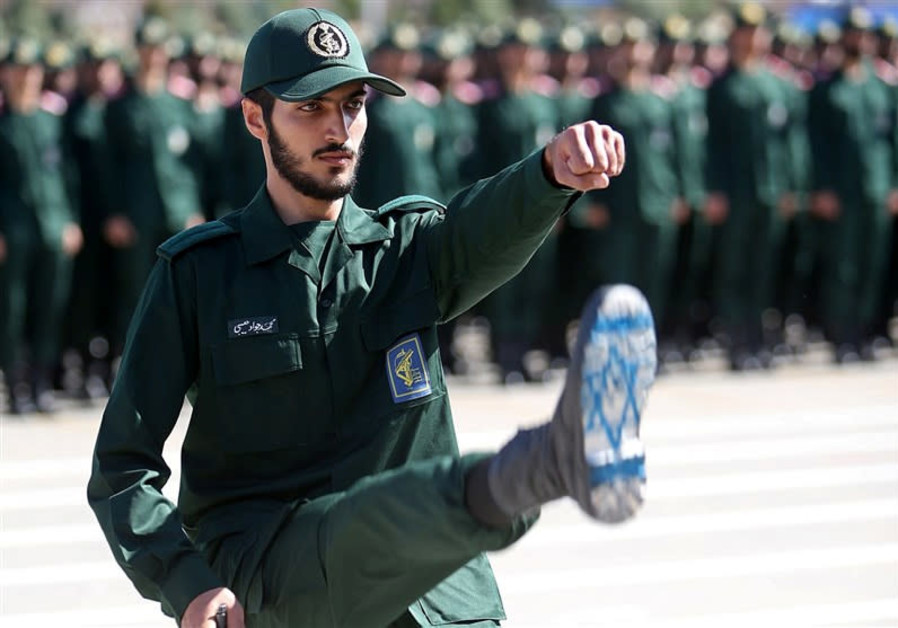
An Iranian Officer of Revolutionary Guards with Israel flag drawn on his boots

The threat posed by Hezbollah and Ali Musa Daqduq, a senior operative in Hezbollah, was unmasked by Israel on Wednesday. Daqduq was responsible for the “abduction and execution of five American servicemen in Iraq in 2007,” the IDF said. The role of Hezbollah members in neighboring states is an illustration of how groups allied with Iran are continuing to build a web linking Tehran to Beirut via a “road to the sea” that transits Iraq and Syria.

According to the IDF the role of Daqduq includes establishing terror cells in Iraq to fight the US in 2006, stints training in Lebanon in 2013-2018 and now putting down roots in Syria. “He then came back to Lebanon and to Syria this time with a new mission, now what we have today is an infrastructure masterminded by Hezbollah on Syrian soil using the local civilian infrastructure,” said Jonathan Conricus of the IDF Spokesperson’s Unit. Israel says it won’t allow Hezbollah to establish terror infrastructure on the border and that it holds the Syrian regime responsible. This is related to regional stability, the IDF says.

The larger strategic threat is Iran’s corridor to the sea, which has been exposed by writer such as Martin Chulov of The Guardian since 2016. The concept is that Iran wants to use its influence over Shi’ite militias in Iraq, Hezbollah in Lebanon and paramilitaries in Syria to create a seamless network of allies based along a corridor of power that will stretch very close to Israel. Iran is not shy about boasting of its victory in recent years in the region. It openly talks about the role of the Islamic Revolutionary Guard Corps and Quds Force commander Qasem Soleimani, who recently won a new award from Ayatollah Khamanei. In Iraq the Iranian president Hassan Rouhani met with Grand Ayatollah Ali Sistani on Wednesday, cementing the close relations that Iran and Iraq have. These relations now knit together the Iranian and Iraqi economies, as well as fraternal religious relations. On flags of various Shi’ite paramilitary groups the images of Iranian and Iraqi clerics can be seen alongside images of what they call martyrs from the war on ISIS.

The symbolism is clear. It’s not like there are other Iraqi paramilitary groups putting up posts with images of Donald Trump or Vladimir Putin. There is one political force whose images appear most frequently in Iraq, and that is Iran. The same is true of Iran’s influence now in Syria and Lebanon. Some of this could be discounted as merely a natural alliance of like-minded groups. But the threat to Israel and to other countries in the region is that Iran sees itself as leading the “resistance” against Israel. This is used as an excuse to extend bases and infrastructure in Iraq, Lebanon and Syria.

The role of Iran in supporting groups like Hezbollah is not new. This goes back to the 1980s after the Islamic Revolution in Tehran. It was then that some Iraqi Shi’ites also came to Iran and joined groups associated with the IRGC. Those men, like Hadi al-Amiri, went on to form the Badr Organization, which includes a paramilitary group and political section by the same name. It is a key part of the Fatah Alliance which came in second in the Iraqi elections in 2018. Similarly in Lebanon Hezbollah has a model of maintaining an armed force while also being in politics. It recently appointed Lebanon’s new health minister under a deal in January.

For Syria this presents challenges. Syria is recovering from years of civil war. To fight the war it was assisted by Iran and Hezbollah and Shi’ite militias from Iraq. This helped blend the network of Iraqi fighters with Hezbollah. These Iraqi militia leaders have become more outspoken now about fighting Israel, claiming that in any upcoming conflict with Israel they will aid Hezbollah. Asaib Ahl Al-Haq’s Qais Khazali even came to Lebanon to view Israel an area near Metulla in December 2017. Harakat Hezbollah al-Nujaba, recently sanctioned by the US, also has expressed support for conflict with Israel. Regional Arab media also accused Israel of striking the Iraqi militia Kata’ib Hezbollah in June 2018.

Today the situation is rapidly changing as the war on ISIS ends and Iran can begin to concentrate its efforts against Israel. Iran is hailing a “turning point” in ties with Iraq. But Syria may not want to be fully used as part of Iran’s plans. It is trying to reconstruct parts of the country after the war. It also has tensions in Idlib where Turkish-backed Syrian rebels still operate. Syria is trying to cement its sovereignty in the south near the Golan, and it must balance complex relations with its Russian ally and Hezbollah. Syrian media was mum on Wednesday regarding Israel’s accusations. Iranian media sought to critique the visit by US Senator Lindsey Graham to the Golan this week in which the Senator intimated the US may seek to recognize the area as part of Israel.

If Iran thinks that its road to the sea will not face some obstacles, the message is that those like Daqduq are being watched.