Archive for March 2019

Nine rockets fired at Israeli towns on Gaza border, Iron Dome intercepts six

March 15, 2019

Source: Nine rockets fired at Israeli towns on Gaza border, Iron Dome intercepts six | The Times of Israel

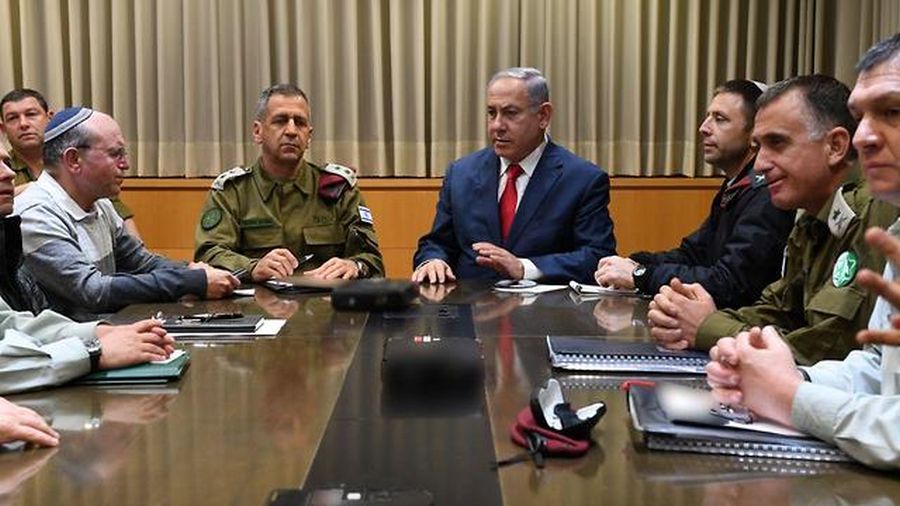
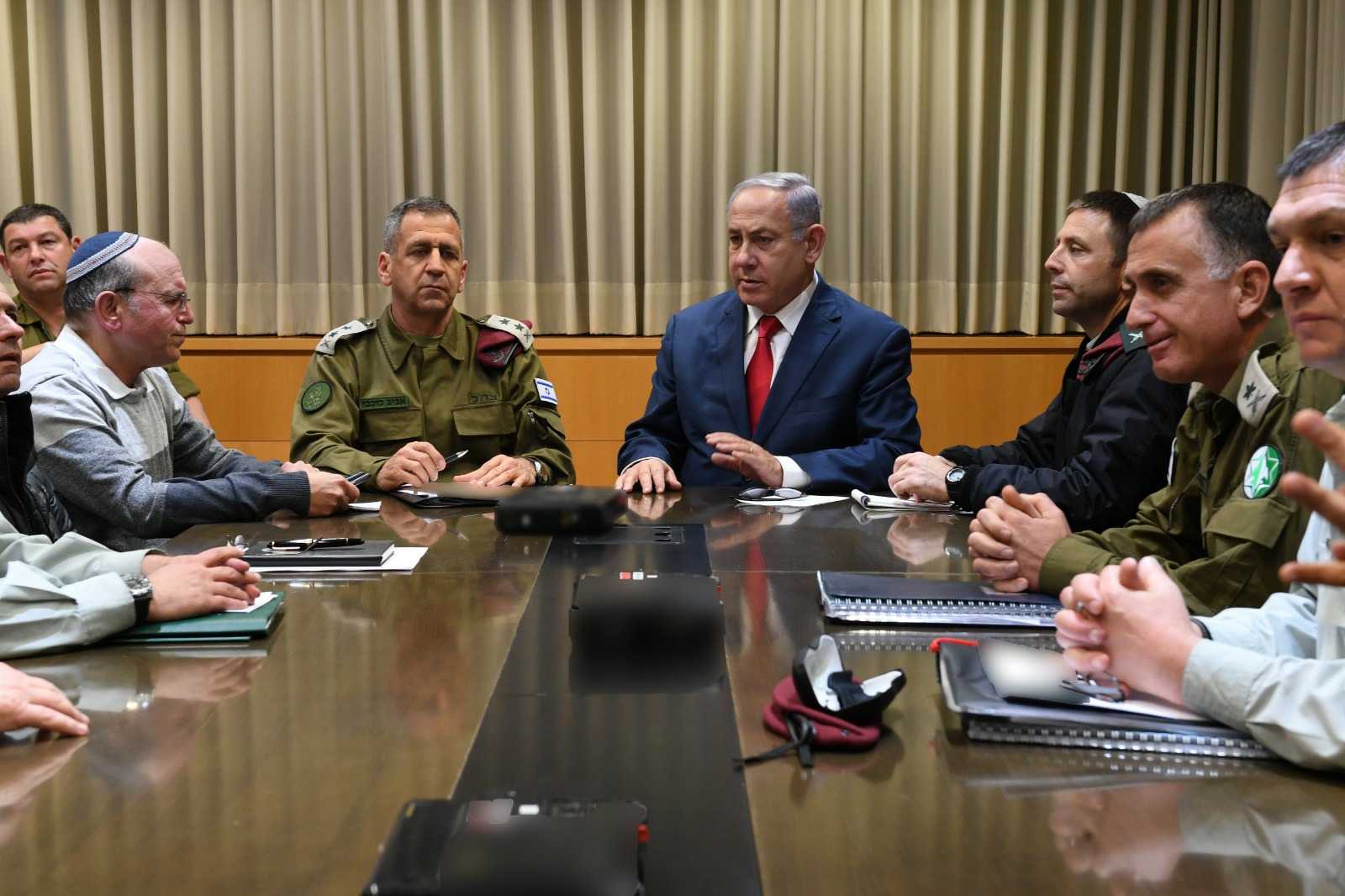
Prime Minister Benjamin Netanyahu (top right) meets with security brass at the IDF's Kirya military headquarters in Tel Aviv on March 14, 2019. (Ariel Hermoni/Defense Ministry)

Prime Minister Benjamin Netanyahu (top right) meets with security brass at the IDF’s Kirya military headquarters in Tel Aviv on March 14, 2019. (Ariel Hermoni/Defense Ministry)

The Times of Israel is liveblogging Thursday and Friday’s events as they unfold.

Rocket fragments land in Sderot school

The Sderot municipality says rocket fragments were found in a school in the town after four rockets were fired into Israel from Gaza and three were intercepted.

No injuries are reported.

Four rockets fired into Israel, three intercepted by Iron Dome

The IDF says four rockets were fired into Israel on Friday morning and three were intercepted by Iron Dome.

Overnight, four additional rockets were fired into Israel and three of those were intercepted by Iron Dome. A further launch failed to clear the border.

The rockets came as the IDF carried out strikes on Gaza targets throughout the night in response to the two rockets fired at Tel Aviv yesterday.

Warning sirens sound in southern Israel

Warning sirens are wailing in Israeli communities near the Gaza border.

The sirens sounded in the Sderot and Sha’ar Hanegev regions. The IDF says it is investigating.

The IDF says two rockets were fired into Israel after dawn Friday and both were intercepted by Iron Dome.

Earlier, two other rockets were fired into Israel and one was intercepted. A fifth launch failed to clear the border.

The rockets came as the IDF carried out strikes on Gaza targets throughout the night in response to the two rockets fired at Tel Aviv yesterday.


Israel and Iran stress military resolve amid exchange of threats – TV7 Israel News 14.03.19 

March 15, 2019


a

Rockets Fired at Tel Aviv from Gaza For First Time in 5 Years 

March 15, 2019


Secret Mossad files show underground Iran nuke facility older than admitted 

March 15, 2019

Source: Secret Mossad files show underground Iran nuke facility older than admitted – Arab-Israeli Conflict – Jerusalem Post

This discovery could be significant because it shows that Iran is still lying to the international community about a nuclear facility that has no reasonable use other than military.

BY YONAH JEREMY BOB
 MARCH 14, 2019 21:02
A SATELLITE view of the Fordow nuclear plant

New evidence disclosed in Iran’s secret nuclear files taken by the Mossad show that its underground Fordow nuclear facility is older than it has admitted, according to a think-tank report.

This discovery could be significant, says the Institute for Science and International Security, because it shows that Iran is still lying to the international community about a nuclear facility that has no reasonable use other than military.

The report says that photographs and documents it reviewed from the materials taken from Iran in January 2018 by the Mossad date the facility to as much as five years earlier than the Islamic Republic has led the world to believe.

Inst for Science@TheGoodISIS

Iran’s nuclear archive shows construction started on Fordow, aka Al Ghadir, as early as 2002, contradicting claims it started in 2007.

Al Ghadir was being built to produce weapon-grade uranium as part of Iran’s nuclear weapons program, codenamed Amad Superorganizational Plan.

Inst for Science@TheGoodISIS

New Nuclear Archive Release: The Fordow Enrichment Plant, aka Al Ghadir:

Iran’s Nuclear Archive Reveals Site Originally Purposed to Produce Weapon-Grade Uranium for 1-2 Nuclear Weapons per Year

By Albright, Pabian, & @StrickerNonpro

Read here: http://isis-online.org/isis-reports/detail/the-fordow-enrichment-plant-aka-al-ghadir 

In 2009, the international community confronted Tehran with the fact that it had uncovered Fordow, which Iran had worked hard to conceal.

The catching of Iran red-handed building a secret underground nuclear facility at the time was the beginning of what rallied Russia, China and the UN Security Council to pressure the Islamic Republic with sanctions.

Those sanctions eventually led Tehran to sign the 2015 nuclear deal.

As part of the deal, Iran was obligated to disclose all facets of its nuclear program that it had not previously disclosed or regarding which it had provided false information.

Iran indicated that the facility dated back to 2007.

However, its secret nuclear files reviewed by the think-tank show that it may date back to as early as 2002, with extremely strong evidence that it dated back to at least 2004.

The report said that, “Iran’s determination to keep open this deeply buried enrichment site extended into the negotiations over the JCPOA [nuclear deal] and even today, despite the plant having no credible civilian nuclear justification.”

It continued saying, “The Nuclear Archive raises again the deception of Iran about its past nuclear weapons activities and raises profound questions about the true purpose of this facility” in the present and when the deal’s nuclear restrictions expire in the future.

The think-tank slammed the international community for permitting Iran to continue to operate Fordow, saying that “speaks volumes of its failure to first determine and then ensure that Iran’s nuclear program is truly peaceful.”

In an interview with The Jerusalem Post in January, the think-tank’s director, David Albright, said that there were 3,000 IR-1 centrifuges for enriching uranium at Fordow which could potentially be used to produce one to two nuclear bombs per year.

Like many issues with Iran, it is these ambiguities which also leave open questions about whether the Islamic Republic could develop more nuclear weapons than expected and at a faster speed.


Politicians warn terror organizations after rockets fired at Tel Aviv

March 15, 2019

Source: Politicians warn terror organizations after rockets fired at Tel Aviv – Arab-Israeli Conflict – Jerusalem Post

Tel Aviv Mayor Ron Huldai said in a statement he would open the city’s bomb shelters.

BY JERUSALEM POST STAFF
 MARCH 15, 2019 00:02
Women walk in Tel Aviv after sirens were sounded in the city, March 14th, 2019

Politicians from Israel and abroad warned Gaza’s terrorist organizations after two rockets were fired Thursday night at Tel Aviv.

Jason D. Greenblatt

@jdgreenblatt45

Naftali Bennett, co-chairman of the New Right Party, told Channel 12 that the time has come to “deal with” the terror organizations, but distanced himself from talks about Qatari-funds transfers to the coastal enclave. He said classes would continue as regularly scheduled on Friday.

Benny Gantz, chairman of the Blue and White Party and ex-IDF chief, said the rockets require a “serious” response.

In a statement, he said the “time has come to deal with Hamas and eliminate its head,” calling on Prime Minister Benjamin Netanyahu to authorize the IDF to begin a program to “cut off Hamas.”

“The rocket fired tonight is a severe event,”  Blue and White politician Moshe Ya’alon said on Thursday night, “and it joins a routine of terrorism which is unacceptable and directed mainly to Gaza border communities.”

He further said he trusts the IDF and those who lead it they’ll know how to react and “collect a price for any sort of breach of sovereignty.”

Cities across central Israel told residents they were in constant communication with security forces, including Ramat Gan, Bnei Brak, Givatayim, Petach Tikva and others.

Finance Minister Moshe Kahlon, a member of the security cabinet, said in a statement that the “serious” incident will result in an “appropriate response.”

Tel Aviv Mayor Ron Huldai said in a statement that he would open the city’s bomb shelters.

Haim Jelin, former head of the Eshkol Regional Council and currently a member of Yesh Atid, invited his “friends from Gush Dan” to his bomb shelter near the Gaza border.
Eli Yishai, chairman of the Yachad Party, said in a statement that Netanyahu and the security cabinet must “wake up” to the danger at hand.

Avigdor Liberman, chairman of the Yisrael Beytenu Party, called on Israel to “return to the policy of punishing those responsible.”

Oren Hazan, ex-Likud member and chairman of the Tzomet Party, said in a statement that “it should not be that Israel” capitulates to “terror organizations,” while the Union of Right Wing Parties (URP) called on Israel to back up what is says about terror organizations with “actions” and “return security to the State of Israel.”


Two rockets fired at Tel Aviv from Gaza

March 15, 2019

Source: Two rockets fired at Tel Aviv from Gaza – Israel News – Jerusalem Post

It was the first time sirens were activated in Tel Aviv since the last war with Gaza in 2014.

BY ANNA AHRONHEIM
 MARCH 14, 2019 23:45

The Israeli military confirmed that two rockets were fired towards central Israel on Thursday evening, with at least two loud explosions heard in the Gush Dan region.

According to the IDF, although the Iron Dome missile defense system was activated, there were no interceptions as both rockets fell in open territory.

It was the first time sirens were activated in Tel Aviv since the last war with Gaza in 2014 and several Israelis were treated for shock.

Anna Ahronheim

@AAhronheim

Unconfirmed image of the Fajr which fell in the central city of Ramat Gan, just outside

View image on Twitter

As a result of the rockets, Israeli Prime Minister and Defense Minister Benjamin Netanyahu will be holding security consultations at the Kirya IDF Military Headquarters in Tel Aviv to discuss an Israeli response.

Local reports in Gaza said that Hamas had begun evacuating military posts in anticipation of retaliatory strikes by Israel.

While there were no special instructions given by the Home Front Command to residents of central Israel, the municipality of Tel Aviv has opened bomb shelters across the city.

According to initial reports, the two Fajr rockets were fired by Palestinian Islamic Jihad (PIJ) in Gaza, the second strongest group in the coastal enclave after Hamas.

IDF Spokesman Brig.-Gen. Ronen Manelis said that the military still does not know who fired the rockets and both PIJ and Hamas later denied reports that it was responsible, saying that it did not play a role in the launching of the rockets.

According to a report in Haaretz, an Egyptian security delegation which had been in Gaza negotiating a ceasefire between Hamas and Israel left the Strip at Israel’s request following the rocket fire.

The United Nations and the Egyptians are working from outside of Gaza to try and restore calm to the situation.

PIJ has been assessed by IDF military intelligence as a factor increasing the risk of an escalation, since it is not under the direct control of Hamas and acts independently for its own interests.

The group first fired an Iranian-made missile at Tel Aviv during Operation Pillar of Defense in 2012 from the blockaded coastal enclave.

US Special Envoy to the Middle East Jason Greenblatt took to Twitter blaming Hamas for the rocket fire, tweeting: “Hamas violently suppresses its own people demonstrating against Hamas’ rule & failures today and NOW fires rockets at cities in Israel.  OUTRAGEOUS! This is what prevents the world from helping the people of Gaza! We strongly support Israel in defense of its citizens. Always!”

The IDF has warned that both Hamas and PIJ have restored their military capabilities to their pre-2014 strength, and expect that in the next war the southern communities bordering the Strip would be incessantly pounded with rockets and mortar attacks.

In late February, PIJ released a video claiming that it had developed a new missile with the help of Iran, capable of striking cities beyond Netanya. During a violent escalation between Israel and terror groups in the Strip in November, the group launched a new rocket that hit an apartment complex in the southern city of Ashkelon, killing one Palestinian man and injuring several others.

The IDF military intelligence assessment for 2019 has warned  that Israel is facing a high risk of military escalation in the Gaza Strip. Based on the assessment, IDF Chief of Staff Lt.-Gen. Aviv Kochavi has prioritized the southern front as one which could explode into war at any moment.

In one of his first visits as chief of staff, Kochavi went to the Southern Command, met with senior officers and approved operational plans for war, including setting up a centralized administrative unit to prepare a list of potential targets in Gaza in case a war should break out.


IDF accusing Hamas of rocket attack on Tel Aviv region, pounds its bases – DEBKAfile

March 15, 2019

Source: IDF accusing Hamas of rocket attack on Tel Aviv region, pounds its bases – DEBKAfile

The Palestinian Hamas, Islamic Jihad and Popular Resistance Committees issued a formal statement disowning the rocket attack on the Tel Aviv area on Thursday night, March 14. However, it was obvious that only two organizations possess missiles with the range for reaching the Tel Aviv region from the Gaza Strip, Hamas and Islamic Jihad. There was therefore no point in pushing the blame onto “rogue elements.”

Palestinian sources reported Israeli aircraft overnight Thursday pounded six Gaza targets – all belonging to Hamas – after determining the identity of the terrorist group which launched two rockets against central Israel a few hours earlier. Six locations were hit, according to Palestinian sources, including Hamas’ naval installations near Khan Younes in the south, another position southwest of Gaza City, and bases in the north, from which the rockets were aimed at central Israel. Red alerts in locations adjacent to the Gaza Strip then signaled five new rocket launches.

The high-level emergency security meeting that came later decided that Israel would pull its punches for now. An unnamed official said only: “Decisions were taken” without elaborating.

The most conspicuous element of Israel’s reprisal was that it targeted Hamas alone and ignored the Islamic Jihad, the Palestinian organization closest to Iran and Hizballah. This looked to DEBKAfile’s sources like an attempt to limit the boundaries of the clash to the Gaza Strip alone, rather than letting it ignite other fronts. By Friday morning, both sides appeared to be testing the ground to discover the opposition’s intentions and control the situation before it spins out of control.

Therefore, it seems unlikely that the IDF will at this time go for a large-scale ground operation against Palestinian terrorists in the Gaza Strip. Action will be left for now to the air force and possibly the navy. To launch a major ground offensive, the IDF would need at least two-to-three days to call up reserves, transfer troops and get them organized for going in. This may start happening on Friday.


IDF hits more than 100 Hamas targets in Gaza after rockets fired at Tel Aviv

March 15, 2019

Source: IDF hits more than 100 Hamas targets in Gaza after rockets fired at Tel Aviv | The Times of Israel

Palestinians fire 5 rockets at Israeli communities along Gaza border, Iron Dome intercepts 3; Israeli strikes come after 2 rockets fired at Tel Aviv for first time since 2014 war

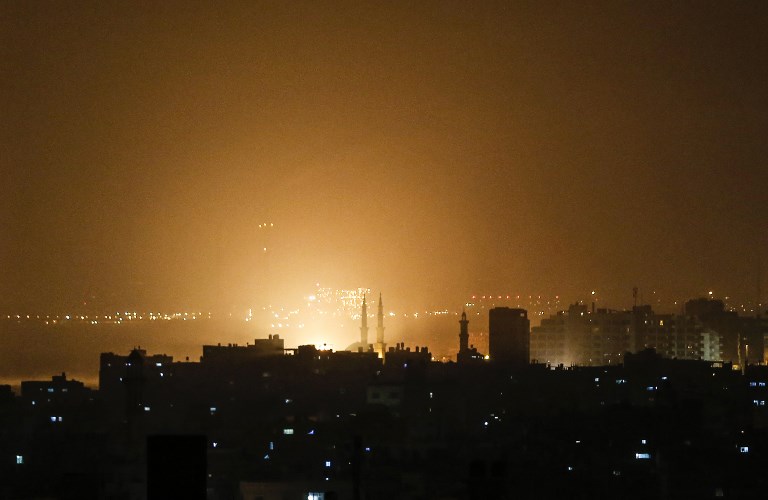
The sky above buildings on the Gaza Strip glows orange during an Israeli air strike in Gaza City early on March 15, 2019 after 2 missiles were fired at Tel Aviv ( MAHMUD HAMS / AFP)

The sky above buildings on the Gaza Strip glows orange during an Israeli air strike in Gaza City early on March 15, 2019 after 2 missiles were fired at Tel Aviv ( MAHMUD HAMS / AFP)

Israeli war planes hit over 100 Hamas targets in the Gaza Strip in a night of strikes  after two rockets were fired at Tel Aviv for the first time since the 2014 war, the IDF said.

The strikes came after an urgent late night consultation between Prime Minister Benjamin Netanyahu and his defense chiefs in Tel Aviv.  “Decisions were taken,” an Israeli official said without elaborating.

Shortly after the strikes began the IDF issued a statement saying the “Hamas terror group carried out the rocket fire.” Hamas has denied it was behind the move.

On Friday morning, IDF spokesperson Ronen Manelis said that over 100 Hamas targets were hit in response to the fire on Tel Aviv. Air strikes went on through out the night.

Israel Defense Forces

@IDF

Embedded video

Israel Defense Forces

@IDF

We can confirm that the rockets fired from at earlier tonight were launched by the Hamas terrorist organization. Hamas-linked Al-Aqsa TV reported that Israeli aircraft fired two missiles at a target in the new port west of Khan Younis. It said that the aircraft then returned and attacked the same site 4 more times.

Israel Radio said the site was a base belonging to Hamas naval commandos.

Palestinian media also reported multiple strikes on Gaza City and at a target in Beit Lahiya in northern Gaza.

The Hamas-run health ministry said there were no immediate reports of casualties.

Warning sirens went off three times during the night in Israeli communities near Gaza with Palestinians firing five projectiles at Israel.

The army said three were intercepted by the Iron Dome System and one failed to clear the border. The fifth apparently fell in an open field. There were no reports of injuries or damage.

An explosion caused by Israeli airstrikes is seen on Gaza City, early Friday, March 15, 2019. Israeli warplanes attacked targets in the southern Gaza Strip early Friday in response to a rare rocket attack on the Israeli city of Tel Aviv (AP Photo/Adel Hana)

The Israeli strikes on the Hamas-run Strip came after rocket fire from Gaza at Tel Aviv. Sirens were triggered Thursday evening in central Israel, as two rockets from Gaza were fired at the heart of the country for the first time since a major conflict in 2014, signaling a possible dramatic escalation of violence by terror groups in the Strip just weeks before the Knesset elections.

Residents of Israel’s second-largest city and the surrounding metropolis of Gush Dan rushed to bomb shelters and reported hearing explosions. The rockets both hit open areas, and did not cause casualties. Five people were treated for shock by paramedics.

Screen capture from video showing the Tel Aviv skyline on March 14 as rocket warning sirens blare after the launch of two rockets from the Gaza Strip (IDF)

Initial reports indicated that the Iron Dome missile defense system was launched to intercept one of the incoming rockets. However, the Israel Defense Force later said no interception had taken place, and it was not clear whether an interceptor had been launched.

“Two rockets were launched from the Gaza Strip towards Israeli territory. The alert and warning systems operated as required,” the army said. “No interceptions were made by aerial defense systems. No damage or injuries were reported. There are no special instructions for the civilian home front.”

A video purportedly showing an Iron Dome launch which made the roundson social media may have been an old clip from 2014.

People standing outside a bomb shelter after it was opened by the Tel Aviv municipality on March 14, 2019, after earlier two rockets from the Gaza Strip were fired toward central Israel. (Adam Shuldman/Flash90)

It wasn’t immediately clear which group in Gaza was responsible for the surprise rocket fire, which occurred on the eve of weekly Hamas-spurred Friday mass rallies and riots along the Strip’s border.

A Hamas official told the The Times of Israel that the terror group “has no interest in an escalation” with Israel. The official said he had “no idea” who fired rockets toward Tel Aviv.

The Hamas-run Interior Ministry called the rocket fire “outside the national consensus” and said it would exact measures against those behind it.

A senior Israeli official told Channel 13 news that Israel indeed did not believe Hamas was behind the attack, but rather another “organization attempting to sabotage efforts to achieve calm in recent days.”

Initial reports had indicated that the Palestinian Islamic Jihad (PIJ) terror group was responsible for the rocket fire. Hebrew-language media reported that Fajr missiles were launched, which PIJ has in its arsenal.

However, that terror group also denied that it was behind the fire. PIJ spokesman Daoud Shehab called the reports “baseless lies and claims.”

Hamas and PIJ told Egyptian security officials who were in the Strip to discuss a long-term truce that they were not responsible for the rockets, Al-Jazeera reported.

The Home Front Command did not give any special instructions to Israelis and said they could continue to carry on as normal. Tel Aviv Mayor Ron Huldai urged the public to remain calm, but added that public bomb shelters would be opened shortly.

All emergency response organizations in the Tel Aviv area increased their alertness following the incident.

Palestinian media reported that Hamas was evacuating military posts in Gaza in preparation for the Israeli response to the rockets. It also reported that the Egyptian delegation had left Gaza quickly after being instructed to evacuate by the IDF. There was no confirmation of the unsourced reports.
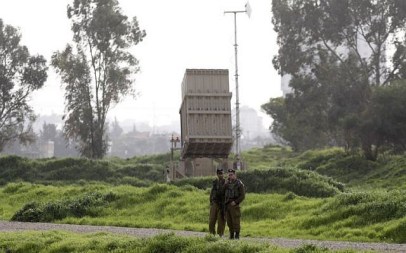
Israeli soldiers stand near a battery of the Iron Dome missile defense system deployed in Tel Aviv on January 24, 2019. (Menahem Kahana/AFP)

The missile launches come less than a month before the April 9 Knesset elections, and two months before Tel Aviv is due to host the Eurovision Song Contest, a major international event that is expected to draw many thousands of tourists from all over Europe.

It was the first time rockets were fired at Tel Aviv since Operation Protective Edge in the summer of 2014, though launches directed at residents of Israeli communities near Gaza have remain relatively frequent. A rocket fired from Gaza last October fell out at sea across from the greater Tel Aviv area.

Michael Bachner, Judah Ari Gross and agencies contributed to this report.
 

50 Iranian drones conduct massive ‘way to Jerusalem’ exercise – report

March 14, 2019

Source: 50 Iranian drones conduct massive ‘way to Jerusalem’ exercise – report – Middle East – Jerusalem Post

The point of the drill is to showcase Iran’s military prowess. It comes in the wake of a large naval drill in February and frequent new tests of ballistic missiles.

BY SETH J. FRANTZMAN
 MARCH 14, 2019 12:29
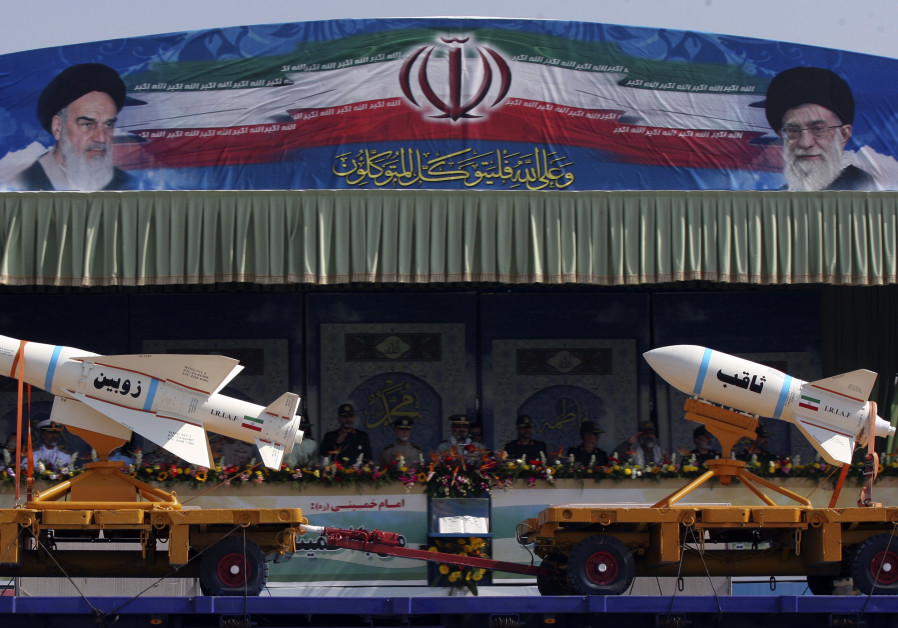
A military vehicle carrying Iranian Zoobin smart bomb (L) and Sagheb missile under pictures of Iran'

Named “Beit al-Maqdis,” a reference to Jerusalem, the operation was attended by the commander of the IRGC, Hossein Salami, and IRGC Aerospace Force commander Amir Ali Hajizadeh. Fars News and Tasnim News both reported details of the operation, noting that, “for the first time, 50 Iranian drones on the RQ-170 [US Sentinel] model operated with a number of assault and combat drones.”

It was the first time, Iran says, that so many drones operated simultaneously in an “offensive operation” at distances of more than 1,000 km away from each other. They trained to strike predetermined targets with “high precision.” IRGC Ground Force commander Maj.-Gen. Golam Ali Rashid boasted that while the US has said Iran is failing 40 years after the Islamic Revolution, in fact “today we are witnessing the strongest maneuvers of the IRGC’s Aerospace Forces.” Enemies would be “humiliated and feel shame,” according to the statement.

Salami said he appreciated the power of the IRGC’s air arm and that it shows that despite US sanctions, Iran is achieving success. Tehran says that it has created an indigenous and advanced copy of the Sentinel. Iran has showcased two versions of these copies since 2016, but video from the “Jerusalem” operation on Thursday showed them being lashed to trucks for the exercise. It wasn’t clear why a drone needs to be launched from a pick-up truck, if it is an “advanced” drone. Claiming that the IRGC is at the forefront of modern UAVs seemed to be in contrast to the photos from the operation, photos that the IRGC itself had released. However, Hajizadeh also pointed to drones that look like the US Predator MQ-1 as evidence that Iran has achieved results. The Shahed 129, first flown in 2012, is Iran’s copy of the Predator.

The point of the drill is to showcase Iran’s military prowess. It comes in the wake of a large naval drill in February and frequent new tests of ballistic missiles. Last year, Iran fired ballistic missiles at Kurdish opposition groups in Iraq and also at ISIS in Syria. It is flexing its muscles in the Persian Gulf and has allegedly supplied Houthi rebels in Yemen with advanced missile and drone technology.

Hajizadeh said that: “One of the features of this exercise is the power to design and plan co-flying UAVs in a very small geographic area that has brought about the rise of a new air power in Islamic Iran.” According to the reports, the drones operated in several provinces in Iran.


Defying Trump, Senate votes to end US support for Saudi-led Yemen war 

March 14, 2019

Source: Defying Trump, Senate votes to end US support for Saudi-led Yemen war | The Times of Israel

Republican-controlled chamber approves historic curtailment of presidential war powers, ahead of House vote; White House threatens a veto

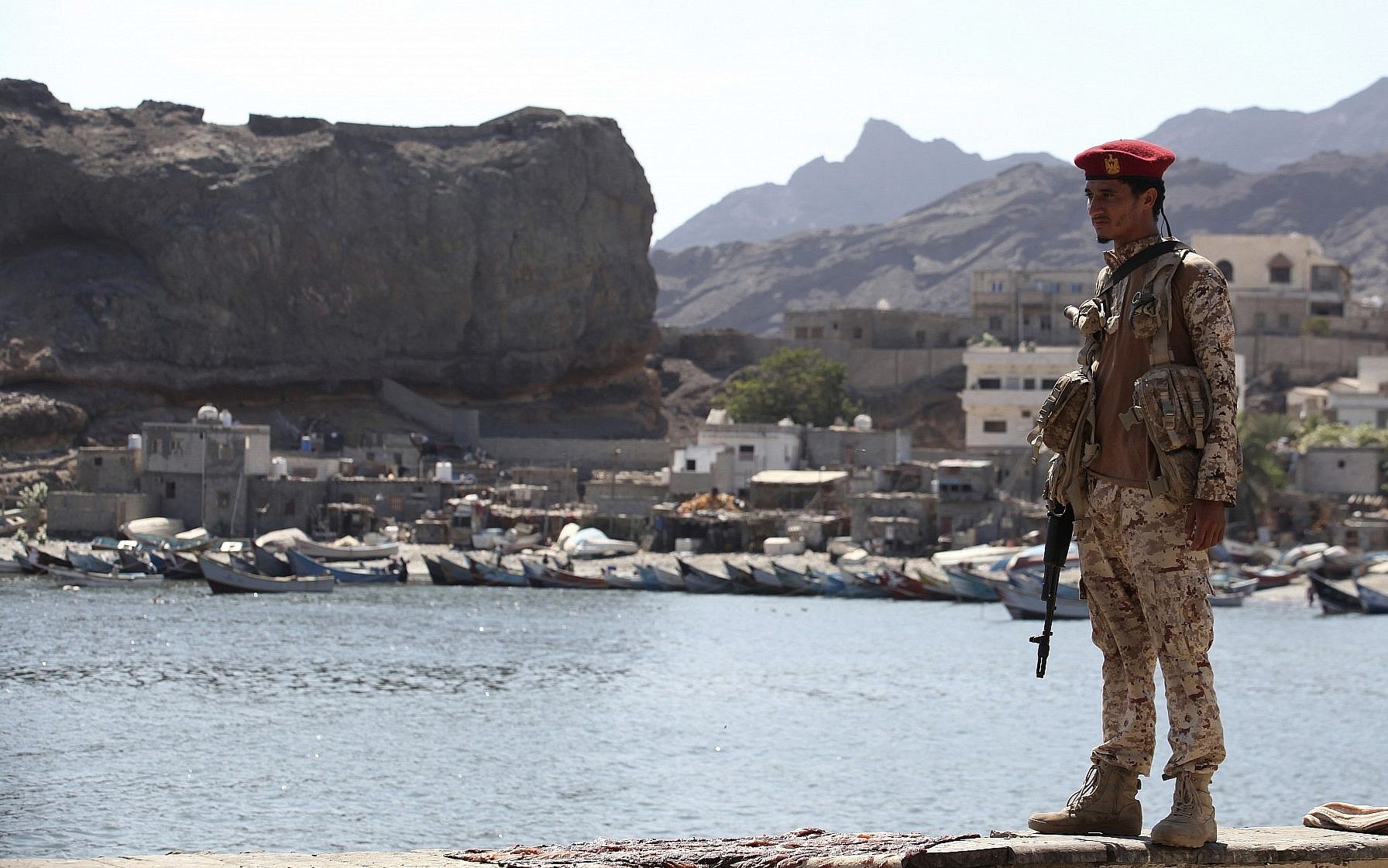
A soldier allied to Yemen's internationally recognized government stands guard at the fish market in Aden, Yemen, Thursday, Dec. 13, 2018 (AP Photo/Jon Gambrell)

A soldier allied to Yemen’s internationally recognized government stands guard at the fish market in Aden, Yemen, Thursday, Dec. 13, 2018 (AP Photo/Jon Gambrell)

WASHINGTON (AFP) — The US Senate on Wednesday dealt a stinging bipartisan rebuke to Donald Trump’s foreign policy and his alliance with Riyadh, voting to end support for the bloody Saudi-led war effort in Yemen.

Lawmakers in the Republican-controlled chamber approved a historic curtailment of presidential war powers that directs Trump “to remove United States Armed Forces from hostilities in or affecting the Republic of Yemen” within 30 days.

The Senate vote was 54 to 46, with seven Republicans defying the president and aligning with Democrats.

The text now heads to the Democrat-led House of Representatives, which approved a similar measure that stalled earlier this year, and which is likely to pass the latest effort.

Armored vehicles of the Yemeni pro-government forces are seen driving past destruction in an industrial district in the eastern outskirts of the port city of Hodeida on November 18, 2018. (STRINGER/AFP)

The White House has threatened a veto, calling the measure “flawed” and saying it would harm bilateral relationships in the region and hurt Washington’s ability to fight extremism.

But its full passage would set a historic marker. It would be the first measure passed by Congress to invoke the 1973 War Powers Resolution to directly curtail a president’s use of military powers.

“Today, we begin the process of reclaiming our constitutional power by ending US involvement in a war that has not been authorized by Congress and is clearly unconstitutional,” Senator Bernie Sanders, who is running for president in 2020 and is a sponsor of the measure, said on the Senate floor.

Republican Senator Mike Lee concurred, saying Saudi Arabia “is not an ally that deserves our support or our military intervention.”

US President Donald Trump speaks to the press before boarding Marine One at the White House on March 8, 2019, in Washington. (Mandel Ngan/AFP)

The Saudis, he said, “are likely using our own weapons… to commit these atrocities of war. That’s not OK.”

The war in Yemen is the world’s worst humanitarian crisis, with an estimated 14 million people at risk of famine.

The World Health Organization says about 10,000 people have been killed in the war between forces loyal to the Yemeni government, backed by the Saudi-led coalition, and the Iran-aligned Huthi rebels. Rights groups say the death toll is far higher.

The United States provides weapons and refueling to the Saudi coalition.

The resolution is a reminder that Congress has the legal ability to compel the removal of US military forces, absent a formal declaration of war.

Soldiers allied to Yemen’s internationally recognized government stand guard at the port of Aden in Aden, Yemen, Wednesday, Dec. 12, 2018 (AP Photo/Jon Gambrell)

Should it pass Congress, it could force Trump to issue the first veto of his tenure.

The vote may well be the first of two congressional rebukes of Trump in as many days.

On Thursday, the Senate is expected to vote on a resolution — already passed by the House — to reverse Trump’s emergency declaration on border security, after the president went around Congress in a bid to secure more funding for his wall between the United States and Mexico.

In that case too, he has promised to use his veto.

Saudi Arabian journalist Jamal Khashoggi at the World Economic Forum in Davos, Switzerland, January 29, 2011. (AP Photo/Virginia Mayo, File)

Wednesday’s Yemen vote, and the rare bipartisanship at the heart of it, came as US lawmakers have escalated their opposition to Saudi Arabia after the October murder of Saudi journalist Jamal Khashoggi at the kingdom’s consulate in Istanbul.

Republicans and Democrats alike have bristled over the White House’s apparent embrace of the kingdom and its leadership.

Some members of Congress have publicly stated that they suspect that powerful Crown Prince Mohammed bin Salman was directly responsible for the killing, based on the CIA’s conclusions.

Sanders, using unusually blunt language about an American ally, said the United States should not “simply follow the despotic lead of a government in Saudi Arabia.”

“We will determine our military and foreign pol and not be led around by a murderous regime,” he said.