Archive for March 2019

On the Golan, Iran talks, Israel walks 

March 17, 2019

Source: On the Golan, Iran talks, Israel walks – Israel Hayom

Prof. Eyal Zisser

Last week, the Israeli public received a reminder about the danger lying in wait in the north, amid reports of Hezbollah’s ongoing efforts to establish a presence along the border on the Golan Heights.

Over the weekend the country’s focus was on the missile attack from Gaza on central Israel, which reminded us all – even if, according to IDF sources, the missile were launched as a result of “human error” – about the ticking time bomb on our southern border.

The voices belong to Hezbollah leader Hassan Nasrallah, or in Gaza, Palestinian Islamic Jihad and Hamas – but in both cases, the deeds are that of Iran. The Islamic republic wants to tighten the noose around Israel with rockets and terror on all fronts. This, as it pursues the ultimate goal laid out two decades ago by none other than Yasser Arafat in his infamous Johannesburg speech, when he said that the Palestinians’ strategic objective was to make life so hellish for Israelis that they would want to leave their country.

In the time that has passed, Israel has gained the upper hand in this conflict. Tehran has been forced to withdraw its forces from southern Syria and is struggling to realize its aspiration of building an active anti-Israel front on Syrian soil – including air and naval bases and mainly advanced missiles – with which to menace, deter and exhaust Israel.

Hezbollah’s efforts to establish a foothold on the Golan have also been fruitless. Ever since it intervened in the Syrian civil war in the spring of 2013, the terrorist organization has tried establishing terrorist cells along the border with the help of local Syrians, and its operatives patrol the border frontier as a matter of routine. Hezbollah’s aim is to form an active front against Israel, stretching, as declared by Nasrallah, from Rosh Hanikra on the Mediterranean Sea to Hamat Gader in the Jordan Valley.

Thus far, however, Israel has been able to thwart these efforts. Enlisted local operatives have been eliminated. Samir Kuntar – the child murderer who joined Hezbollah after his release from Israeli prison – and Jihad Mughniyeh, the son of the organization’s former military commander, were also assassinated after being tasked with spearheading these efforts.

Hezbollah has not given up, apparently, and recently formed a clandestine unit to gather intelligence on Israeli forces along the border to prepare the groundwork for future terrorist attacks. It has done this without the knowledge of its host, Syrian President Bashar Assad, who isn’t heeded in Tehran or in Beirut, due to his weakness and utter dependence on Iranian military support.

Exposing this unit was meant to deter Hezbollah and let it know it is “exposed and vulnerable” to Israeli intelligence. It is also a message to Assad, who emerged victorious from his country’s civil war, thanks to Russia and Iran, that Tehran and Hezbollah are looking to appropriate his triumph.

The Assad regime’s lack of international legitimacy, due to his atrocities and particularly his weakness and willingness to bow to Iran and Hezbollah, have led the American administration to change its policies pertaining to Israel’s status on the Golan. Nikki Haley, the former U.S. ambassador to the United Nations, was the first to vote against a resolution condemning Israel’s presence on the Golan Heights. “The destruction Assad is leaving in his wake proves he isn’t capable of ruling over anything,” she said at the time. Other senior American officials, such as Sen. Lindsey Graham, who visited the territory last week, followed in her footsteps. Others in the international community will follow in the wake created by the Trump administration – similar to the American president’s recognition of Jerusalem as Israel’s capital.

Israel must be uncompromising as it continues countering Iran and Hezbollah’s presence in Syria, whether through diplomatic means or warning shots fired via the media. First and foremost, however, it must strike the head of the snake every time it rears its head. Thanks to Assad, the Golan Heights will remain safely in Israel’s hands.

Eyal Zisser is a lecturer in the Middle East History Department at Tel Aviv University.

One Israeli killed, two injured in West Bank terror attack near Ariel 

March 17, 2019

Source: One Israeli killed, two injured in West Bank terror attack near Ariel – Arab-Israeli Conflict – Jerusalem Post

Magen David Adom said they were treating a critically-injured person at the Ariel Junction

BY ANNA AHRONHEIM
 MARCH 17, 2019 10:44
Ariel Junction after a reported terror attack, March 17th, 2019

One Israeli was killed and two others injured in a double attack outside the West Bank settlement of Ariel, rescue services reported.

According to initial reports a man in his 20s was seriously injured at the Gitai Avishar Junction after being stabbed by a Palestinian assailant who stole a weapon and then a car before fleeing the scene.

Another shooting incident took place moments later at the Ariel junction in the area where ZAKA rescue services reported there was one fatality and one person seriously injured.

The injured were evacuated to Beilinson Hospital for medical treatment.

The Gitai Avishar Junction on Highway 5 is a central intersection of the highway which links Ariel to central Israel, with hundreds of Palestinian workers traveling through it daily.


The IDF has set up checkpoints and has begun checking vehicles in the area and a large number of troops are also on their way to the scene to take part in the search for the attacker.

“There was a report of a shooting at the Ariel junction in the area of ​​the Ephraim Regional Brigade. The details are under examination,” the IDF Spokesperson’s Unit said in a statement, later adding that following the initial investigations that two separate attacks had taken place.

“The pursuit of the terrorists is ongoing.”

Yossi Dagan, the head of the Samaria Regional Council said following the attack that the residents are relying on the IDF to find the attackers and kill them.

“We are strengthening the heroes of the IDF and relying on the defense establishment and the IDF to reach these despicable terrorists and kill them. We will never break and we will never retreat. Settlement in Samaria is part of the people of Israel and part of the State of Israel. All the residents of Shomron, together with all the citizens of the State of Israel, support the IDF and reinforce our heroic soldiers.”

-Tovah Lazaroff contributed to this report.


Calm restored after Israel-Hamas flareup 

March 17, 2019

Source: Calm restored after Israel-Hamas flareup – Arab-Israeli Conflict – Jerusalem Post

The IDF on Friday morning declared that the rockets fired from Gaza at Tel Aviv had been fired by mistake.

BY KHALED ABU TOAMEH, ANNA AHRONHEIM, MAAYAN JAFFE-HOFFMAN, TOVAH LAZAROFF
 MARCH 17, 2019 02:09
A member of kibbutz plays with his dogs in a field near the border between Israel and Gaza, outside

Egypt and the UN over the weekend restored calm between Hamas and Israel, after 12 hours of Gaza violence late Thursday night and early Friday morning threatened to spiral out of control.

On Thursday night, Palestinians in Gaza fired two missiles at the Tel Aviv area and an additional nine rockets at southern Israel. The IDF hit 100 Hamas targets in retaliation. At 8 a.m. the violence came to a halt, after the United Nations and Egypt worked behind the scenes to restore calm.

The IDF on Friday morning declared that the rockets fired from Gaza at Tel Aviv had been fired by mistake.

In a step that helped ensure that calm was maintained, Palestinians canceled Friday’s weekly Gaza border protest, known as the “March of Return.”

The National Committee for the March of Return, a group consisting of several Gaza-based Palestinian factions, said it canceled the event out of “concern for our people” and in preparation for the mass protests planned for March 30 to mark Land Day. The day is planned to be marked by holding a general strike in the West Bank, Gaza Strip and east Jerusalem, and stepping up the demonstrations along the Gaza-Israel border.

The cancellation is the first since the protests began on March 30, 2018, and include violent clashes between Palestinians and IDF soldiers.

In spite of the sudden calm, the IDF deployed Iron Dome batteries across central Israel. Thursday night’s attack, which did not lead to any casualties, marked the first time since the 2014 Gaza war that rockets had been launched at central Israel.

A Saudi-owned news website claimed on Saturday that Shin Bet (Israel Security Agency) head Nadav Argaman met secretly in Cairo last week with Hamas leaders.

According to the London-based website, Independent Arabia, the purported meeting was held under the sponsorship of Gen. Abbas Kamel, head of Egypt’s General Intelligence Service.

The report said that the top Egyptian security official proposed to Argaman that he listen directly to Hamas’s conditions for achieving a long-term truce with Israel. The Egyptian official also suggested that the Shin Bet head directly present the Israeli position to the Hamas leaders.

The report claimed that Argaman received a “green light” from Prime Minister Benjamin Netanyahu to meet with the Hamas officials.

At the meeting, the Shin Bet head raised the issue of the Israelis held by Hamas in the Gaza Strip, including the bodies of two missing IDF soldiers, according to the Saudi report. Argaman, it added, also affirmed the need for an “absolute truce” that would include an end to the weekly protests along the Gaza-Israel border.

The report claimed that Argaman promised that Israel was prepared to ease the blockade on the Gaza Strip and work directly with Hamas at the border crossings with Israel. He also promised that Israel would work toward reopening the Kerem Shalom border crossing, the Karni industrial zone and the Rafah terminal between the Gaza Strip and Egypt, the report added.

The meeting was held in a positive atmosphere and some of the Hamas officials were speaking in Hebrew – a language they learned during their incarceration in Israeli prisons, the report said. It named Hamas leader Musa Abu Marzouk as one of the officials who attended the purported meeting. Abu Marzouk, according to the report, was accompanied by two unnamed Hamas commanders.

THE IDF said on Friday that there was “a growing assumption that the Hamas rocket fire toward the Gush Dan region was by mistake,” adding that the IDF sees the group as responsible for everything happening in the coastal enclave.

It wasn’t immediately clear which group in Gaza was responsible for the rocket fire, with Hamas, Palestinian Islamic Jihad and other groups all denying involvement. Hamas said it was attempting to prevent any further escalation and promised to take action against the perpetrators as the rocket fire “went against the national consensus.”

According to a report by Channel 13 News, low-level Hamas terrorists had “messed with” a rocket launcher that had been prepared to fire on Tel Aviv in a future military confrontation with Israel.

The rockets apparently were fired when Hamas leaders, including Yahya Sinwar, were meeting with an Egyptian delegation who were in the Gaza Strip, who angrily asked Sinwar: “You’re meeting with us at the same time as you’re firing on Tel Aviv?”

The Egyptians then called the IDF and explained that the M-75 rockets had been mistakenly launched and that the group was “embarrassed” by the event. The Israelis then told the Egyptians to leave Gaza through the Erez Crossing.

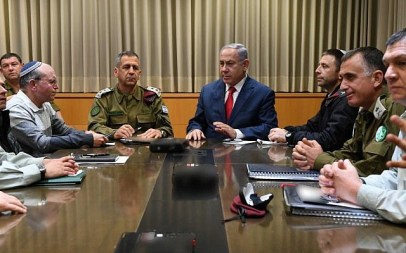
Following the rockets, Netanyahu – who is also the defense minister – held security consultations at the Kirya military headquarters in Tel Aviv with IDF Chief of Staff Lt.-Gen. Aviv Kochavi, National Security Council head Meir Ben-Shabbat, Argaman and other senior defense officials.

Israel then began its strikes on Gaza, with Kochavi personally choosing the targets, the Channel 13 report said. The military struck 100 targets in the Hamas-run strip throughout the night on Friday, including the headquarters responsible for the planning and execution of terror attacks in the West Bank, an underground complex that served as Hamas’s main rocket-manufacturing site, and a military training site that also functioned as the group’s drone program.

The report added that had the rocket fire been deliberate there would have been 500 strikes instead of 100.

Several underground infrastructures and military compounds were also struck, including naval sites belonging to the group. Local Palestinian media in Gaza said that Israeli naval vessels also took part in the strikes off the coast of Rafah.

The Hamas-run Gaza Health Ministry said there were no immediate reports of casualties, but there were several injuries, including a woman who had to have her hand amputated.

During the airstrikes, three red alert incoming rocket sirens were activated in Israeli communities bordering the southern Gaza Strip. According to the military, nine projectiles were launched from the Gaza Strip, with six being intercepted by the Iron Dome missile defense system, while another fell inside Gaza.

On Friday, the Israel Police announced that they had located the remains of one rocket which, according to reports, had fallen in an open area in the city of Holon outside of Tel Aviv. The second rocket is believed to have landed in the sea. Shrapnel was discovered outside a school in the city of Sderot, but there were no reports of injuries or damage.

“Two rockets were launched from the Gaza Strip towards Israeli territory. The alert and warning systems operated as required,” the army said. “No interceptions were made by aerial defense systems. No damage or injuries were reported. There are no special instructions for the civilian home front.”
Five people were treated for shock.

Earlier in the week, the IDF inaugurated a new targeting center, which will serve as a focal point in the acquisition of emergency and routine targets in the military. According to the IDF, the center has been operating for a month and has been prioritizing the southern front, as part of an effort to improve readiness for fighting in the Gaza Strip as order by Kochavi.

ISRAEL CALLED on the United Nations Security Council to designate Hamas as a terrorist group and asked it to condemn the latest rocket attack.

“The terrorists that fired these rockets into Israel’s most populated civilian area did so while hiding behind Palestinians civilians in Gaza and exploiting them as human shields,” Ambassador to the United Nations Danny Danon said on Friday.

“Such an act constitutes a double war crime,” he explained. “Israel will take any and all necessary actions to protect itself and its citizens from the unrelenting Palestinian terrorism we face. A terrorist organization that tries to harm Israel will encounter a relentless and uncompromising force.”

“Any other nation facing this daily onslaught of terror attacks would not hesitate to act on behalf of the safety and security of its people,” Danon added.
“Israel must not be held to a different standard.”

The United States last year attempted and failed to pass a resolution at the UN General Assembly that condemned Hamas. On Monday, the UN Human Rights Council is set to condemn Israeli military activity in Gaza and Israeli restrictions of the movement of goods and people into the Gaza Strip.

US Secretary of State Mike Pompeo told Fox and Friends on Friday that Israel had a right to defend itself against Hamas attacks from Gaza.

“I regret that the folks in the Gaza Strip… fired these rockets and put Israelis at risk,” Pompeo said. “This only presents an increased risk of escalation, something that we hope doesn’t happen, but you should know we will support the Israelis’ right to defend themselves.”


Iranians arrested in Buenos Aires with poorly forged Israeli passports 

March 17, 2019

Source: Iranians arrested in Buenos Aires with poorly forged Israeli passports | The Times of Israel

Authorities in Argentina said to raise alert level after catching pair traveling on documents riddled with Hebrew mistakes, note proximity to embassy bombing anniversary

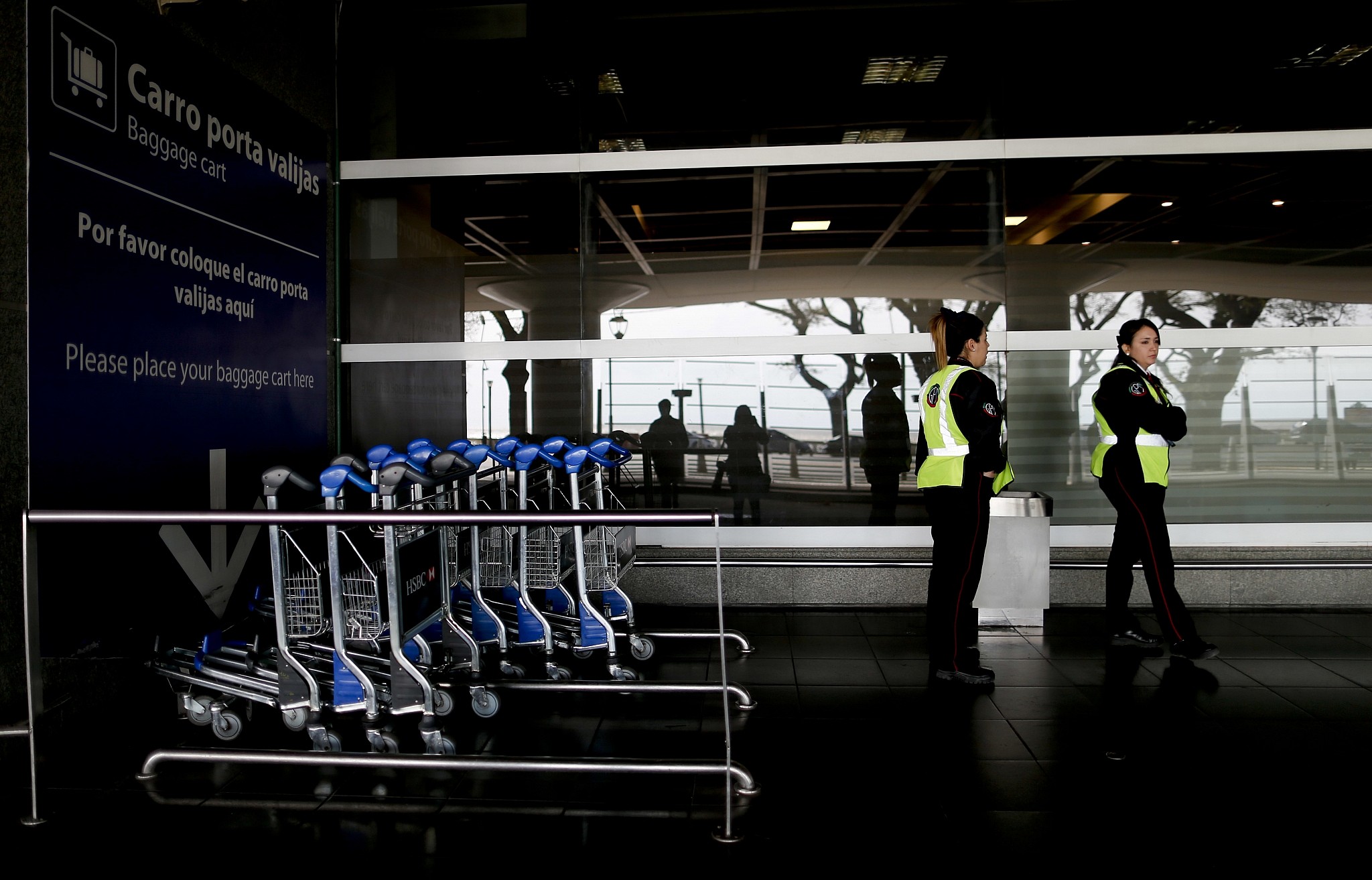
Police stand outside the airport in Buenos Aires, Argentina, Tuesday, Sept. 25, 2018. (AP/Natacha Pisarenko)

Authorities in Buenos Aires have arrested two Iranians suspected of traveling on fake Israeli passports, according to local Argentinean media.

Police are treating the two, a man and woman, as possible terror suspects, and have raised the alertness level, daily Clarin reported.

The couple, named as Sajjad Naserani, 27, and Mahsoreh Sabzali, 30, were arrested last week after they entered Argentina on the apparently fake passports.

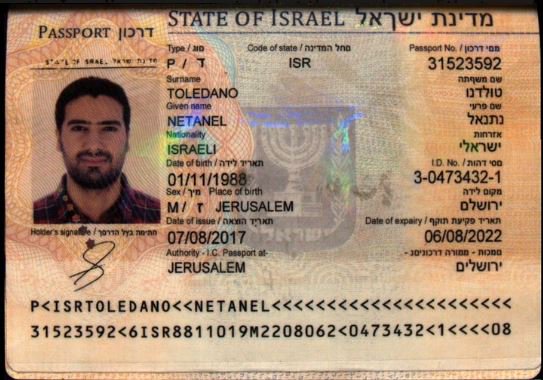
The passports listed their names as Netanel and Rivka Toledano. The passport ID numbers actually belonged to a French-Israeli couple named as David and Brigitte Assouline, according to Argentinean media.

Authorities initially suspected the passports had been stolen and doctored, but later concluded they were fake after finding several spelling mistakes in Hebrew. One picture of the passports carried in Argentinian media shows the word “Israel” misspelled, among many other flubs.

Joshua Davidovich@Josh_Davidovich

One of the fake Israeli passports used by an Iranian to get into Argentina. See if you can spot all the Hebrew spelling mistakes.

The couple had flown from Spain to Buenos Aires last week and were allowed into the country before being arrested at a hotel days later. The investigation involved branches of Interpol in Argentina, Spain and Israel, according to Clarin.

Naserani, who claimed to be a photographer, was arrested with a camera. The two said that they had made their way to Spain via Turkey and Greece, La Nacion reported.

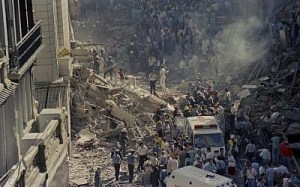
Firemen and rescue workers walk through the debris of Israel’s Embassy after a terrorist attack in Buenos Aires, Argentina, March 17, 1992. (AP Photo/Don Rypka)

Officials said they had raised the alert level because of the proximity to the anniversary of the March 17, 1992 bombing of the Israeli embassy in Buenos Aires, Clarin reported.

“This of course raises the level of alertness, and so I understand it is essential to maximize all security and prevention measures,” prosecuting judge Luis Rodriguez said, according to the news site.

Iran and its Hezbollah proxy have been widely blamed for both the embassy bombing, which killed 29 people, and an attack on the AMIA Jewish center two years later that left 85 dead.

There was no immediate comment from Iranian officials.


Shin Bet Head discusses ceasefire with Hamas in Cairo – report

March 16, 2019

Source: Shin Bet Head discusses ceasefire with Hamas in Cairo – report – Breaking News – Jerusalem Post

The Israeli military confirmed that two rockets were fired towards central Israel on Thursday evening.

BY JERUSALEM POST STAFF
 MARCH 16, 2019 19:57
Hamas members

The meeting took place in order to discuss a possible ceasefire with Hamas. According to the report, Argaman promised that Israel would ease the blockade on the Gaza Strip and that Hamas and Israel would staff the border crossings in Kerem Shalom and Erez and reopen the Karni industrial zone. In addition to there would be an Egyptian agreement to open the Rafah crossing on a permanent basis.Prime Minister’s Office denied that it knew about the meeting.

The Israeli military confirmed that two rockets were fired towards central Israel on Thursday evening, with at least two loud explosions heard in the Gush Dan region. There were no interceptions as both rockets fell in open territory

According to initial reports, the two Fajr rockets were fired by Palestinian Islamic Jihad (PIJ) in Gaza, the second strongest group in the coastal enclave after Hamas.

Anna Ahronheim contributed to the report. 


Hamas second mistaken rocket fire from Gaza

March 16, 2019

Source: Hamas second mistaken rocket fire from Gaza

ANALYSIS: Gaza’ rulers are facing a twofold problem – protests within the territory under its control, and a lack of progress in talks with Israel; so one may be forgiven for viewing their claim of an accidental launch with some skepticism
After Thursday night’s lack of clarity in the wake over the origins of the two rockets fired from Gaza at the Tel Aviv area, the IDF on Friday morning stated that the Hamas terror organization was behind the attack. One of the rockets landed in an unpopulated area and the second apparently disintegrated in midair.The IDF also assessed that the rockets were fired by mistake. But given that this is not the first time that this has happened, we can allow ourselves to be a little skeptical.

Drivers in Tel Aviv's Ayalon highway run for cover during the sirens Thursday night (Photo: Ran Boker)

Drivers in Tel Aviv’s Ayalon highway run for cover during the sirens Thursday night(Photo: Ran Boker)

The skepticism stems from the fact that in October of last year – when rockets were fired from Gaza at Be’er Sheva (hitting a family home) and the central region (falling into the sea) – Hamas fired at Israeli population centers and then denied all responsibility.In October, Israel accepted Hamas’ curious claim that the rockets had been discharged accidentally because of the poor weather. This time, the IDF has accepted that this was an accident, due to the reliability of its sources.

Hamas denied firing the rockets, and on Thursday even released the unusual statement that it would punish those responsible. The claim is that the people who fired the rockets did so without permission from the leadership of Hamas, which rules the Gaza Strip.

It seems that Hamas wants the best of both worlds – enjoying the impact of rocket fire on Israel, without taking responsibility for it.

Trouble in Gaza

So why did Hamas fire the rockets (if it were deliberate)? For two major reasons.

Firstly, because of the serious and exceptional riots that took place Thursday in Gaza with the rallying cry of “let us live,” in which the Hamas police force used considerable violence against Gaza residents. The organization’s leadership felt threatened as it has not felt since it seized power in the Gaza Strip in 2007.

Damages in the Gaza Strip, following the IAF strikes (Photo: Reuters)

Damages in the Gaza Strip, following the IAF strikes (Photo: Reuters)

Secondly, because of the talks with the Egyptians over a lull in the tensions along the Israel-Gaza border, which have been going on for some time. Hamas has a long list of demands, including $30 million a month (the payments from Qatar are supposed to end in April, and it is unclear whether they will continue), funding for UN-sponsored jobs, an increased electricity supply and an increased range for fishing.

Israel says that this is indeed possible, if Hamas puts an end to the “marches of return” along the security fence, the launching of the aerial incendiary and explosive devices that have become increasingly dangerous, and definitely the firing of rockets. The wheat in the south of Israel is about to ripen, and if the fields are burned, the damage will be considerable. Hamas is saying no, the marches will continue and we will keep them in check (although they were canceled for Friday, as apparently Hamas realized that a red line had been crossed).

So with talks apparently at a dead end, and in the face of a mass protest within Gaza over living conditions, Hamas realized it had to urgently channel the anger and frustration of the people under its rule at Israel.

A restrained message

The IDF’s overnight response to the rocket fire included an exceptionally severe attack on the infrastructure and facilities belonging to the Hamas military wing (nor did Islamic Jihad emerge unscathed from the airstrikes).

But given that Israel has no desire to see an escalation that would require a ground invasion of Gaza during an election campaign, and so that residents of the south would not claim that only attacks on Tel Aviv elicit a harsh response, the reaction was overall relatively restrained.

Furthermore, Hamas ensured that its facilities were evacuated before the Israeli strikes began, and the IDF had no real possibility of harming senior officials, even if there had been any real desire to do so.

Both the Hamas rocket fire and the Israeli response fell within the same scale of proportionality, in which a major campaign was avoided as both sides sought to limit the incident to a short flare-up.

Even so, there are two things that could jeopardize the efforts for calm: the “marches of return” may have been canceled for Friday, but there could still be riots as Gazans mark the first anniversary of these protests at the end of the month. The second risk is of a random incident, such as a severe outcome during rocket fire at Israel or in one of the IDF attacks in Gaza. Either way, the Israeli army is ready for an escalation.


Like Monty Python: TV details how Hamas ‘accidentally’ fired rockets at Tel Aviv 

March 16, 2019

Source: Like Monty Python: TV details how Hamas ‘accidentally’ fired rockets at Tel Aviv | The Times of Israel

Low-level member touched rockets, setting them off by mistake, Israeli report says; fire came as Hamas chiefs were meeting with incredulous Egyptian mediators

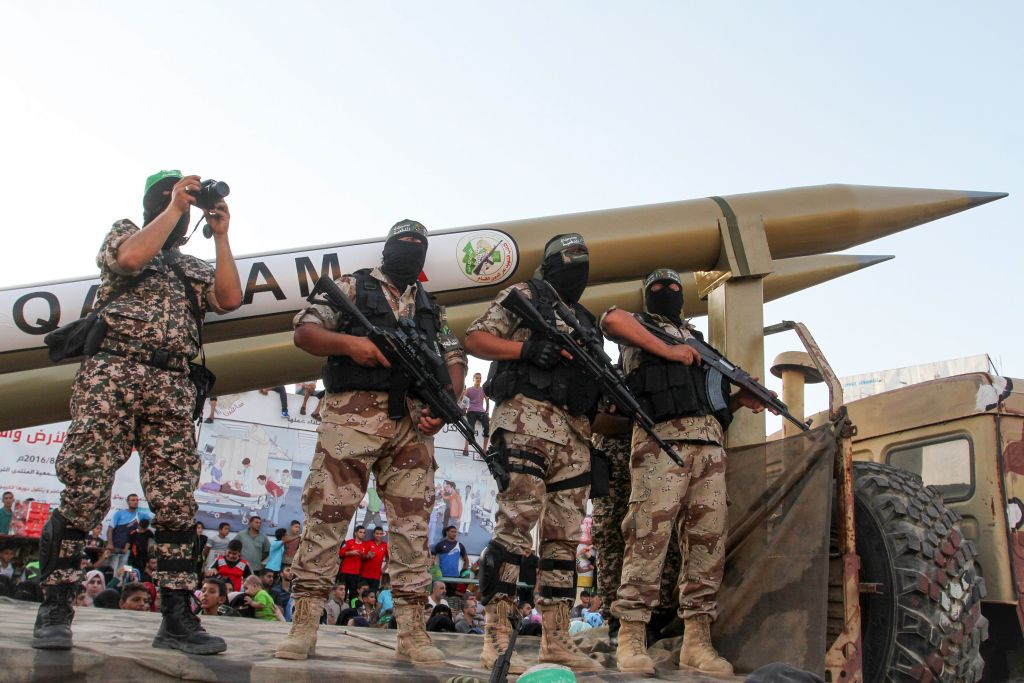
Palestinian members of the al-Qassam Brigades, the armed wing of the Hamas terror movement, display Qassam home-made rockets during an anti-Israel military parade on August 21, 2016 in Rafah in the southern Gaza Strip. (Abed Rahim Khatib/Flash90)

Palestinian members of the al-Qassam Brigades, the armed wing of the Hamas terror movement, display Qassam home-made rockets during an anti-Israel military parade on August 21, 2016 in Rafah in the southern Gaza Strip. (Abed Rahim Khatib/Flash90)

The two Gaza rockets that almost brought Israel and Hamas to war late Thursday were fired by accident, Israel’s Channel 13 news reported Friday, when low-level Hamas operatives “messed with” a Gaza beach rocket launcher that was set up to fire toward Tel Aviv in the event of future conflict.

The report said the farcical chain of events that almost led to war was “like something out of Monty Python,” referring to the legendary British comedy group.

The report said news of rocket sirens blaring in Tel Aviv broke as Yihya Sinwar and other Hamas leaders were meeting with an Egyptian delegation trying to mediate eased Israeli economic restrictions on Gaza.

“You’re meeting with us at the same time as you’re firing on Tel Aviv?” the Egyptians reportedly asked Sinwar in fury.

He told them he knew nothing about the matter, went to check, and established what had happened, the report said.

The Egyptians then called Israeli defense chiefs and relayed what they had been told. Israel told the Egyptian delegation to leave Gaza — the delegates crossed into Israel at the Erez crossing — and then began its retaliatory strikes on Hamas targets.

Prime Minister Benjamin Netanyahu (top right) meets with security brass at the IDF’s Kirya military headquarters in Tel Aviv on March 14, 2019. (Ariel Hermoni/Defense Ministry)

Had the rocket fire been deliberate, the Israeli response would have been five times heavier, the TV report said. The rocket fire was the first at Tel Aviv since 2014.

The Egyptians reportedly told Hamas that if it responded heavily to the Israeli strikes, there would be a major escalation of conflict. Hamas did fire several more rockets across the border early Friday.

The TV report said Hamas has arrested one or more operatives over the “accidental” fire.

It also said that Hamas had proved that it fully controls the weekly Gaza border protests by acting to cancel Friday’s gatherings to ensure relative calm prevailed.

The report noted that Palestinian Authority sources in Ramallah doubt the Hamas account of accidental fire. Israeli army sources, however, have indicated they also consider the rocket launches to have been accidental.

In response to the two rockets fired at Tel Aviv, which did not hit residential areas and caused no direct injury, Israeli war planes hit over 100 Hamas targets in the Gaza Strip overnight Thursday-Friday. Israel holds Hamas, the Islamist terror group that rules the Strip, responsible for any attacks emanating from the coastal enclave.

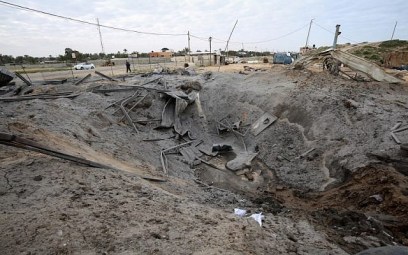
A Palestinian man walks past a crater on the ground following an Israeli air strike targeting a site belonging to Gaza’s terror group Hamas, in Khan Yunis in the southern Gaza Strip, March 15, 2019. Israel struck Gaza terror targets after 2 rockets were fired at Tel Aviv from Gaza. (Said Khatib/AFP)

The growing assumption among Israeli army officials is that Thursday’s rockets were fired from Gaza toward Tel Aviv by mistake, a defense official had said earlier Friday.

A Hamas official on Thursday told the The Times of Israel that the terror group “has no interest in an escalation” with Israel. The official said he had “no idea” who fired rockets toward Tel Aviv.

The Hamas-run interior ministry called the rocket fire “outside the national consensus” and said it would exact measures against those behind it.

Initial reports had indicated that the Palestinian Islamic Jihad (PIJ) terror group was responsible for the rocket fire. Hebrew-language media reported that Fajr missiles were launched, which PIJ has in its arsenal.

However, that terror group also denied that it was behind the fire. PIJ spokesman Daoud Shehab called the reports “baseless lies and claims.”


Latest developments on Iran sanctions – Jerusalem Studio 405 

March 16, 2019


Hamas fires rockets at Tel Aviv – YouTube

March 15, 2019

Egypt’s Brokered Ceasefire and the Tel Aviv Rockets – YouTube

March 15, 2019