Archive for March 2019

Iran denies joint raid with Turkey against Kurdish rebels

March 19, 2019

Source: Iran denies joint raid with Turkey against Kurdish rebels | The Times of Israel

Military operation aimed at PKK bases near border shared by Turkey, Iraq and Iran

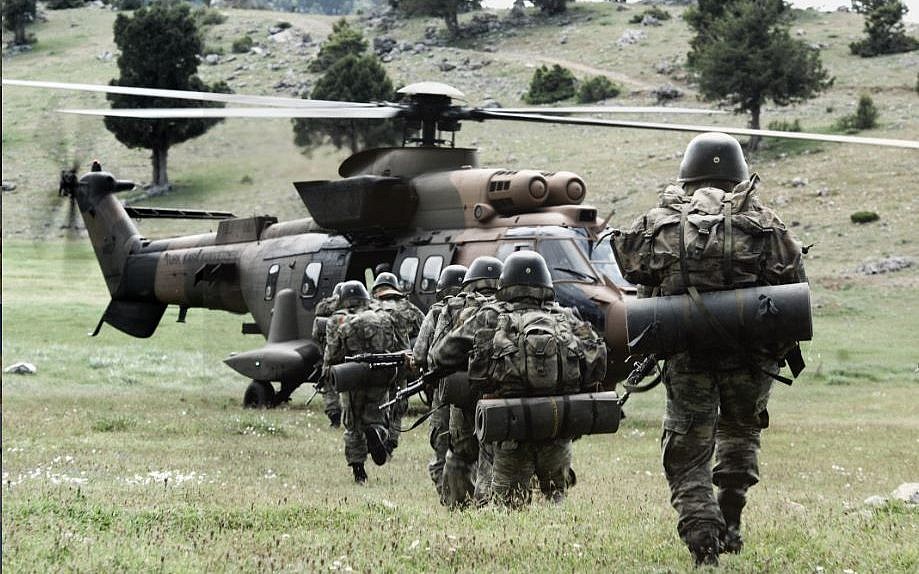
Illustrative – Turkish soldiers on a training exercise. (Turkish Land Forces Command)

TEHRAN, Iran – Iran has denied a claim by the Turkish interior minister that it took part in a joint operation on Monday targeting Kurdish rebels in the border area.

In recent weeks, Ankara has talked up the prospects of joint military action with Tehran against the Kurdistan Workers’ Party (PKK) and its allies but Monday marked the first time it had spoken of a joint operation being carried out.

“Iran’s armed forces have no role in this operation,” the official IRNA news agency quoted an “informed source” in the general staff as saying on Monday evening.

However Iran “will forcefully confront any group that seeks to create unrest on our country’s soil,” the source added.

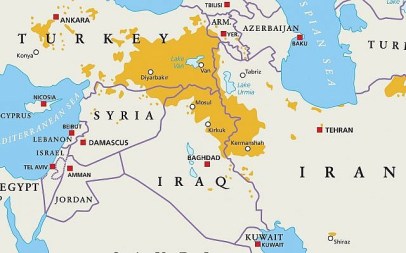
Map of Kurdish population areas and border shared by Iran, Turkey and Iraq. (Getty Images)

Earlier on Monday, Turkish Interior Minister Suleyman Soylu said: “We started staging a joint operation with Iran against the PKK on our eastern border as of 8 am (0500 GMT).”

Soylu did not specify where the joint operation was taking place, but President Recep Tayyip Erdogan has said previously that joint military action would focus on PKK rear bases in Iraq near where the three countries’ borders meet.

The Turkish military has carried out repeated bombing campaigns against PKK targets in Iraq’s northern mountains during its more than three-decade campaign to crush the rebels’ campaign for Kurdish self-rule in southeastern Turkey.

In recent years, Tehran too has carried out operations in northern Iraq against suspected rear bases of the PKK’s Iran-focused ally, the Party of Free Life of Kurdistan (PJAK).

PJAK is one of a number of Kurdish rebel groups that have fought the Iranian security forces in ethnic Kurdish districts along the border.

Another PKK ally, the People’s Protection Units (YPG), is the main Kurdish armed group in Syria where, to the fury of Ankara, it has been a key ally in the US-led campaign against the jihadists of the Islamic State group which is now drawing to a close.


Dore Gold Calls for Equal Rights for Israel at the United Nations

March 19, 2019

Source: Dore Gold Calls for Equal Rights for Israel at the United Nations

Filed under: IsraelThe Middle East

What is happening here at https://youtu.be/lEsHlwdy-Fwthe UN Human Rights Council is not new. In fact, there has been a deep and persistent problem with UN bodies from New York to Geneva when they address accusations that Israel is violating the basic norms of international law. Having served as Israel’s ambassador to the United Nations in 1997, I witnessed this from the first day I walked into that blue-green building on First Avenue.

I was confronted with an effort to convene what are called the High Contracting Parties of the Fourth Geneva Convention – that is its signatories – to take measures against Israel for alleged violations of the Convention, which had been adopted after World War II, in order to protect civilians in times of war. Israel was a signatory.

The first question I felt that I needed to ask was, when had the signatories been convened previously?

Were they convened when the Soviet Union invaded Afghanistan?

No.

What about when Iraq went into Iran?

No.

Turkey into Cyprus? No again.

Maybe Libya into Chad?

No way.

In fact, in repeated cases of outright aggression, this body of the High Contracting Parties had never been brought together before. But now the UN General Assembly was considering to convene the High Contracting Parties in the sole case of Israel, because of the territories it had captured thirty years earlier in the 1967 Six Day War.

Moreover, the UN’s focus on the singular case of Israel stood out. Back in 1967, both the Security Council and the General Assembly had rejected Soviet efforts to brand Israel as the aggressor in the Six Day War. It was clear as day at the time that Israel captured the West Bank and Gaza Strip in a war of self-defense, after neighboring countries from Egypt to Iraq massed their armies along its borders. But that fundamental fact did not deter the UN in 1997 from treating Israel like it was the worst international criminal.

This biased treatment of Israel continued in subsequent years. After Israel implemented the Oslo Accords with the Palestine Liberation Organization during the 1990’s, and withdrew its military government from the West Bank and Gaza Strip, it faced a wave of escalating terror attacks that emanated from the very cities from which it had pulled out. These terror attacks specifically aimed at innocent civilians, and not military targets. City buses began exploding in the heart of Tel Aviv, Jerusalem, and in other population centers.

In March 2002, a suicide bomber detonated himself at a Passover Seder in Netanya. Israel finally had to act to bring the bombings decisively to a halt even if that meant going back into those West Bank cities that had become springboards for these attacks.

Western militaries had well-developed doctrines for putting down this kind of urban warfare. Their military manuals spoke about utilizing air power, artillery, and even flame throwers to flush out urban guerrillas. There were states that used carpet bombing to blanket whole areas. The Russians used such tactics in Chechnya. And we saw them again in Syria.

But Israel refused to employ what may have been commonly used by others. In the West Bank town of Jenin, known by the Palestinians themselves as the “capital of the suicide bombers,” Israel decided to send in its ground forces in house-to-house combat. A fierce battle ensued. Saeb Erekat, the Palestinian spokesman, peddled the false claim that Israeli forces in Jenin had engaged in a “massacre.”

Israel had sent in reserve units, so that many of the soldiers killed on the Israeli side in Jenin were fathers and husbands.

And how did the UN reply? The spokesmen of UN specialized agencies asserted in the international media that “Israel had lost all moral ground in this conflict” – a conclusion adopted by the late UN Secretary-General Kofi Annan, which he subsequently was forced to retract. The UN ultimately admitted that the number of fatalities was far smaller than it originally claimed. But a pattern of unsubstantiated accusations followed by belated retractions had been set. What did the UN have to say to the widows and orphans of the soldiers who died in Jenin? You know what, it was the UN that lost the moral high ground in Jenin.

This brings us to the UN Human Rights Council in 2009, which has a long history of anti-Israel bias. This was demonstrated yet again after Israel unilaterally withdrew from the Gaza Strip in 2006. It was hoped at that time that an Israeli withdrawal from contested territory would reduce the hostile intent of the Palestinian terror organizations, like Hamas and Islamic Jihad, which had been firing rockets into Israeli towns in recent years. But the exact opposite occurred. The number of rockets fired into Israeli towns shot up from 179 to 946 – a 500 percent increase  in the year that Israel pulled out. Again Israel was forced to act in its own self-defense, as it moved into Gaza.

Here in Geneva, the Human Rights Council established a Fact-Finding Mission headed by Justice Richard Goldstone of South Africa to investigate Israeli military operations in the Gaza Strip. The result was a report, about 500 pages in length, which was the most vicious indictment of the State of Israel bearing the seal of the UN since the “Zionism is Racism” resolution of 1975. The most outrageous charge it made was that Israel deliberately – let me repeat that, deliberately – killed civilians in Gaza. I was no longer in government, but when I was invited by an American university to debate Goldstone, the highest levels of the Israel Defense Forces provided me with all the material I needed to show how the core conclusions in the famous Goldstone report were baseless.

How could Israel have a policy of deliberately killing civilians when it implemented the exact opposite policy of protecting them, by issuing repeated warnings in Arabic to civilians that Israel was about to take imminent action?

Besides leaflets, an Arabic speaking IDF unit telephoned the homes where it was known that Hamas rockets had been stored; Israeli drones monitored if the target had been evacuated. If not, a special non-lethal munition was dropped called a “knock on the roof,” to convince those inside that this was serious – and only then was the target destroyed.

Who else does this? Name another UN member. The Human Rights Council should be ashamed of itself for accusing Israel. The report never really addressed this.

Goldstone subsequently retracted his most damming accusation in an opinion piece in the Washington Post. But the damage had been done. The UN Human Rights Council already voted to endorse the conclusions of the Goldstone Report, although in typical UN fashion, its resolution only condemned Israel and did not even mention Hamas. Musa Abu Marzuq, the Hamas leader, quipped that Hamas had been acquitted by the UN. For the terror organization, the UN had given them a green light to continue their rocket attacks on Israel. There is a straight line from UN actions back then and last week’s launch by Hamas of an Iranian Fajr missile toward Tel Aviv.

Ultimately, however, Israel’s position was vindicated, not by the UN, but by the US through the Chairman of the Joint Chiefs of Staff, General Martin Dempsey who in 2014 countered the impression the UN had given, by saying: ”I actually do think that Israel went to extraordinary lengths to limit collateral damage and civilian casualties.”

Back in 2006, the older UN Human Rights Commission had been replaced with the UN Human Rights Council, partly because the commission had such a notorious record on Israel. But right from its birth the Human Rights Council was shown to be a defective UN organ. Towards the end of the year, the former secretary-general of the UN, the late Kofi Annan, could already conclude: “Since the beginning of their work, they have focused almost entirely on Israel, and there are other crisis situations, like Sudan, where they have not been able to say a word.”

Now the UN wants to look at the Palestinian protests along the Gaza Fence. How can anybody take the UN seriously when it has shown that when it comes to Israel its reports have been highly politicized and seriously flawed? Is anyone protecting the human rights of Israeli farmers whose fields are regularly set ablaze by Hamas incendiary weapons?

To our north, as we speak, Hizbullah has militarized 200 Shiite villages in Southern Lebanon and made them into a network for human shields in order to protect their Iranian-supplied missiles. And when Hizbullah constructs attack tunnels into Israeli territory, where is UNIFIL? Let me make clear that it is demonstrated time and again that only Israel will defend itself by itself.

Israel does not seek international forces to protect it. But it does expect one thing from the international community: the truth.

That is today what Israel asks for. But when it comes to the UN, the truth has been extremely difficult to obtain.
 

Off Topic:  Roger Waters urges artists to boycott Eurovision in Israel

March 19, 2019

Source: Roger Waters urges artists to boycott Eurovision in Israel

( This evil man is the most prominent celebrity enemy of the Jewish people.  May his name be blotted out from the history of men. – JW )

Former Pink Floyd frontman, who frequently asks artists to boycott the Jewish State on behalf of the BDS movement, pens open letter to the 41 finalists of 2019 Song Contest set to be held in Tel Aviv in May
Roger Waters, a former Pink Floyd frontman and one of the most vocal advocates for cultural boycott of Israel, has called on the artists participating in 2019 Eurovision in Tel Aviv to boycott the event over Israel’s treatment of Palestinians.

Israel won the right to host the event after Netta Barzilai’s song “Toy” emerged victorious during last year’s competition. The final of the competition will be held on May 18 at Expo Tel Aviv.

In an open letter—addressed to the 41 finalists of the prestigious song competition—published Monday on Water’s Instagram account, the 75 year-old wrote that Israel is an Apartheid regime, responsible for ethnic cleansing of Palestinian communities.

Waters is a longtime critic of the Jewish state, and as an active Boycott, Divestment and Sanctions activist he has frequently asked performers to refrain from coming to the Holy Land.

Last September, the former Pink Floyd singer was one of more than 100 artists from around the world calling for a boycott of the Eurovision in Israel.

Netta holding the Eurovision trophy after her 2018 win (Photo: AP)

Netta holding the Eurovision trophy after her 2018 win (Photo: AP)

In a letter published by British newspaper the Guardian, dozens of musicians, actors, filmmakers and directors said they supported Palestinian artists’ boycott of the contest since Israel “violates Palestinian human rights.”

“Until Palestinians can enjoy freedom, justice and equal rights, there should be no business-as-usual with the state that is denying them their basic rights,” the letter read.

“Eurovision 2019 should be boycotted if it is hosted by Israel while it continues its grave, decades-old violations of Palestinian human rights,” the letter continued.

Israel will turn a blind eye to rocket mishaps if it signals Hamas distress

March 19, 2019

Source: Israel will turn a blind eye to rocket mishaps if it signals Hamas distress

The protest is driven, for the first time, by an ordered leadership composed of journalists, academics and online media stars.

Gazans protest the cost of living under Hamas

Gazans protest the cost of living under Hamas

The fear ceiling has been smashed. Despite the violent response by the Hamas security forces, the demonstrators took to the streets in Jabalya, Shati, Khan Yunis, Dir al-Balah and Moasi for four days. And there were thousands of protesters.

Gazans are also appearing openly on Palestinian Authority television and social networks to strongly criticize Hamas leaders Yahya Sinwar and Ismail Haniyeh, Hamas’ new taxes and the cost of living.

On Friday night, Hamas arrested 150 of the leaders of the uprising, but the demonstrations continued Saturday and Sunday. Journalists like Mustafa Ayyash and Osama Kahalut, two of the leaders of the uprising, were arrested and severely beaten. Their hands were broken, but they were released and their fight goes on.

In such a situation, it is no wonder that Israel was willing to accept Hamas’ claim that a “mishap” led to the firing of two Fajr missiles at Tel Aviv on Thursday. Israel is ready to absorb many more “mishaps” of this kind as long as the popular uprising against the Hamas regime continues and even gains momentum.

Hamas members quelling street protests in Gaza

Hamas members quelling street protests in Gaza

Anyone who tells savvy Gaza sources that the rocket fire was down to a “mishap” will be met with laughter. As far as they are concerned, it was no such thing. Everything is directed by Hamas to create a distraction from the internal protests in the Strip.

The goal was to divert attention to the confrontation with Israel. It is likely therefore, that there will be more and more such “mishaps” as the protests gather steam. The rocket fire on Thursday is evocative of a previous “mishap” last October, when two rockets were fired at Be’er Sheva, hitting a family home.

Prime Minister Netanyahu wisely decided to accept the version of events presented to him by the Egyptians and his intelligence agencies, of a “mishap” that surprised even the Hamas leadership. This is primarily because the IDF prefers to wait for the summer to destroy Hamas’ military force, for in the winter it is more difficult to conduct military operations within a densely populated civilian area.
The IAF strikes Gaza after rocket fire on Tel Aviv

The IAF strikes Gaza after rocket fire on Tel Aviv

Therefore, Israel will swallow any story or excuse to delay a confrontation with Hamas until a time when the weather conditions are more suitable, the Knesset elections have come and gone and the army has completed its preparations for such an operation.

Moreover, Israel has no interest in interfering with welcome internal opposition to the Hamas rule that is brewing in the Gaza Strip. The chances of this opposition being able to topple Hamas are low, but in the meantime, its strength is eroding. And that’s not something to be sniffed at.

What are the chances that the shooting at the Dan region was indeed a mistake? If we do take the claim at face value, the most likely cause is human error. Hamas members are supposed to check the soundness of the missile systems every few months, so why would they do it now, at precisely nine o’clock at night, in the pouring rain?

Palestinians inspect the damage from an IAF airstrike in Gaza (Photo: AP)

Palestinians inspect the damage from an IAF airstrike in Gaza (Photo: AP)

Could Hamas operatives have gone to test the long-range launchers? It is highly unlikely. There is also the possibility that the rockets were triggered by an external source, such as a lightning strike or an opponent of Hamas. But again, this is highly unlikely.

The only sensible option remaining is to accept that Hamas regularly trains long-range rockets at targets in Israel. These are Iranian-made Fajr-5 rockets, which arrived in the Gaza Strip about 10 years ago and are ready for immediate launch. There is also a locally produced version called the M-75, and firing them in pairs makes it harder for Israel’s Iron Dome missile defense system to intercept.

But the Gaza rockets are inaccurate. Their engines burn for less than five seconds, so side winds like the ones over the Gaza region on Thursday night could push them off target y several kilometers.

The first rocket landed in an unpopulated area in Holon. The second exploded in midair, a familiar and frequent malfunction for these rockets. Either the engine exploded or the detonation mechanism was triggered prematurely.

Israelis take cover in a stairwell as air raid sirens sound in the Tel Aviv area (Photo: Eliasaf Dauel)

Israelis take cover in a stairwell as air raid sirens sound in the Tel Aviv area (Photo: Eliasaf Dauel)

Either way, Hamas intended to drag Israel into some kind of response that would distract domestic public opinion from the internal battles breaking out on the streets of Gaza. Netanyahu was right to choose a measured response and not rushing to convene his security cabinet, thus avoiding any political pressure to deliver a severe blow to Hamas’ military wing.

Hamas’ main lifeline is economic aid built into an Egyptian plan for calm, with the participation of Israel and the United Nations. Meanwhile, the Palestinian factions – Fatah, Islamic Jihad and the Popular Front for the Liberation of Palestine – have recently issued a joint statement calling on Hamas to ease living conditions for the Gazan people.

On Sunday night they issued another announcement, calling on Hamas to withdraw its forces from the streets. The Gaza street is speaking in the language of a budding revolution. And Israel – quite rightly – is letting these internal events to develop. Wiping out Hamas can always come later.


Off Topic:  Scientists reveal Beresheet spacecraft lunar landing site

March 19, 2019

Source: Scientists reveal Beresheet spacecraft lunar landing site – Hi tech news – Jerusalem Post

The Beresheet spacecraft is currently orbiting Earth and performing maneuvers in preparation for lunar orbit insertion in early April, followed by the planned landing at the chosen site.

BY JERUSALEM POST STAFF
 MARCH 19, 2019 11:06
Scientists reveal Beresheet spacecraft lunar landing site

A team of scientists from the Weizmann Institute of Science and SpaceIL engineers have identified the site for Israel’s Beresheet spacecraft’s lunar landing.

According to a release disseminated by the Weizmann Institute, the chosen site was selected by Prof. Oded Aharonson of the Weizmann Institute and Prof. Jim Head of Brown University. It is located in the northeastern part of Mare Serenitatis, a few hundreds of miles east of the Apollo 15 landing site and a similar distance northwest from the Apollo 17 site.

Three optional landing sites were identified, too.
The terrain in these locations are composed of material characteristic of ancient mare surfaces – large, dark basalt plains resulting from long-ago volcanic eruptions – on which successful landings have been made, explained Weizmann in the release.
The selection criteria for the site focused on ensuring a safe landing, searching for sites with relatively few craters, exposed rocks or steep slopes within the landing area – factors that could jeopardize the touchdown. In addition, the scientists searched for a  location on the Moon where the crust is magnetic, so as to allow the magnetometer – the main scientific instrument on board the Israeli Beresheet spacecraft – to carry out its investigations.
The Beresheet spacecraft is currently orbiting Earth and performing maneuvers in preparation for lunar orbit insertion in early April, followed by the planned landing at the chosen site.


U.S.-backed SDF capture 157 Islamic State militants 

March 19, 2019

Source: U.S.-backed SDF capture 157 Islamic State militants – Middle East – Jerusalem Post

“Our units monitored a group of terrorists, trailed them and captured 157 fully militarily equipped terrorists,” a statement by the Syrian Democratic Forces (SDF) militia said.

BY REUTERS
 MARCH 19, 2019 11:03
An F/A-18 fighter jet takes off from the USS Harry S. Truman aircraft carrier in the eastern Mediter

DEIR AL-ZOR – US-backed fighters besieging the last shred of Islamic State territory in eastern Syria said on Tuesday they had captured 157 mostly foreign fighters as they tracked efforts by jihadists to escape the enclave.

“Our units monitored a group of terrorists, trailed them and captured 157 fully militarily equipped terrorists,” a statement by the Syrian Democratic Forces (SDF) militia said.

Islamic State’s Baghouz pocket is tiny, wedged between the Euphrates river and a row of hills at the Iraqi border. It is crammed with vehicles and makeshift shelters and pummeled at night by artillery and air strikes.

It is the last populated area remaining to Islamic State from the third of Syria and Iraq it suddenly seized in 2014 before its cruelties and attacks brought together local and foreign countries to push it back.

The captured jihadists were “mostly foreign nationals” said Mustafa Bali, head of the SDF’s media office, on Twitter. Neither he nor the SDF statement said when the capture took place.

Both the SDF and the US-led coalition that backs it have said the remaining Islamic State militants inside the Baghouz pocket are among its most hardened foreign operatives.

Over the past two months, more than 60,000 people have poured out of the group’s dwindling enclave, nearly half of whom were surrendering supporters of Islamic State, including some 5,000 fighters.

However, while the capture of Baghouz will mark a milestone in the battle against Islamic State, regional and Western officials say the group will remain a threat.

Some of its fighters hold out in the central Syrian desert and others have gone underground in Iraq to stage a series of shootings and kidnappings.

Nobody knows how many remain inside the last scrap of ground. Reuters footage of the encampment on Monday showed large explosions there and smoke billowing overhead with the sound of gunshots.

On Monday night Islamic State released an audio recording of its spokesman, Abi al-Hassan al-Muhajer, saying the group would stay strong.

“Do you think the displacement of the weak and poor out of Baghouz will weaken the Islamic State? No,” he said.


U.S.-backed force in Syria claims to hold positions in former-ISIS camp

March 19, 2019

Source: U.S.-backed force in Syria claims to hold positions in former-ISIS camp – Middle East – Jerusalem Post

Smoke rose over the tiny enclave as warplanes and artillery bombarded it. Another witness said the jihadists had earlier mounted a counter attack.

BY REUTERS
 MARCH 19, 2019 01:15
U.S.-backed force in Syria claims to hold positions in former-ISIS camp

BAGHOUZ, Syria, March 18 – U.S.-backed fighters said they had taken positions in Islamic State’s last enclave in eastern Syria and air strikes pounded the tiny patch of land beside the Euphrates River early on Monday, a Reuters journalist said.

Smoke rose over the tiny enclave as warplanes and artillery bombarded it. Another witness said the jihadists had earlier mounted a counter attack.

The Syrian Democratic Forces (SDF) militia said in an update on Monday that tens of militants had been killed during what it called fierce clashes, and one SDF fighter had been injured. It said Islamic State had sent four suicide bombers to points close to SDF fighters.

Late on Sunday, an SDF spokesman, Mustafa Bali, said on Twitter that several enemy positions had been captured and an ammunition storage area had been blown up.

The enclave resembles an encampment, filled with stationary vehicles and rough shelters with blankets or tarpaulins that could be seen flapping in the wind during a lull in fighting as people walked among them.

An Islamic State spokesman said on Monday the displacement of “the weak and poor” from Syria’s Baghouz would not weaken the group.

“Do you think the displacement of the weak and poor out of Baghouz will weaken the Islamic State? No,” Abi al-Hassan al-Muhajer said in a recording distributed by Al Furqan, a media organization linked to Islamic State.

He added “the Islamic State will return, God willing, to the regions it left whether it takes a long or a short time.”

In the recording al-Muhajer also said Islamic State leader Abu Bakr al-Baghdadi urged the group to avoid using telecommunications devices as they had brought harm, and to take caution.

Backed by air power and special forces from a U.S.-led coalition, the SDF has pushed Islamic State from almost the entire northeastern corner of Syria, defeating it in Raqqa in 2017 and driving it to its last enclave at Baghouz last year.

Late on Sunday, the Kurdish Ronahi TV station aired footage showing a renewed assault on the enclave, with fires seen to be raging inside and tracer fire and rockets zooming into the tiny area.

The SDF has waged a staggered assault on the enclave, pausing for long periods over recent weeks to allow mostly women and children who are families of suspected fighters to pour out.

Women and children leaving have spoken of harsh conditions inside, under coalition bombardment and with food supplies so scarce some resorted to eating grass.

Former residents also say hundreds of civilians have been killed in months of heavy aerial bombing by the coalition that have razed many of the hamlets in the area along the Iraqi border.

The coalition says it take great care to avoid killing civilians and investigates reports that it has done so.

Last month, the SDF said it had found a mass grave in an area it captured. Former residents say those buried were victims of coalition air strikes.

The SDF and the coalition say the Islamic State fighters inside Baghouz are among the group’s most hardened foreign fighters, although Western countries believe its leader, Abu Bakr al-Baghdadi, has left the area. The group issued a propaganda film from inside the enclave last week calling on its supporters to keep faith.

While Islamic State’s defeat at Baghouz will end its control of inhabited land in the third of Syria and Iraq that it captured in 2014, the group will remain a threat, regional and Western officials say.


Israel was a ‘hair’s breadth’ from war with Hezbollah, ex-IDF chief says 

March 19, 2019

Source: Israel was a ‘hair’s breadth’ from war with Hezbollah, ex-IDF chief says | The Times of Israel

Gadi Eisenkot warns Lebanese terror group remains a serious threat, Iran still wants nuclear weapons

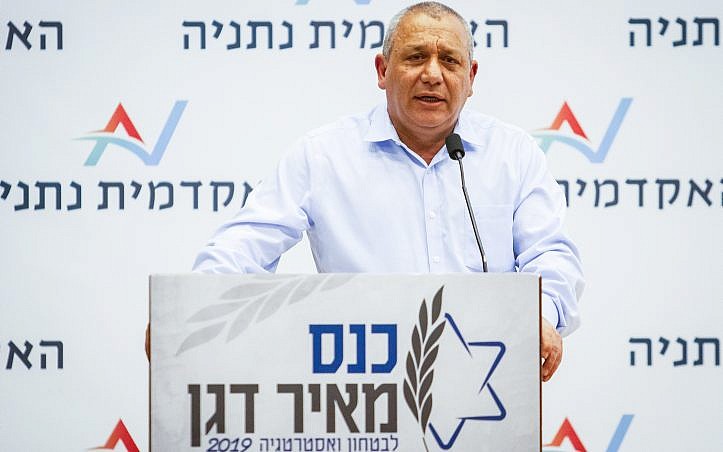
Former IDF chief of staff Gadi Eisenkot speaks during a conference in Netanya on March 18, 2019. (Flash90)

Recently retired IDF chief of staff Gadi Eisenkot said Monday that Israel came close to all-out conflict with Hezbollah during his tenure.

Speaking at a security conference in Netanya, Eisenkot said tensions with the Iran-backed terror group that controls much of Lebanon almost erupted into a hot war on more than one occasion.

“There were not a few instances and days where the distance between those events and escalation to the point of war or battle was a hair’s breadth,” Eisenkot was quoted saying by Hebrew-language media.

Israel last fought a war with Hezbollah in 2006, but tensions along the northern border have remained high. Israel has for years carried out airstrikes in Syria to prevent weapons transfers to the Iran-backed terror group. The end of Eisenkot’s four-year tenure was marked by an Israeli operation to destroy a network of tunnels under the Lebanese border Israel says were dug by Hezbollah for a future attack. There were several occasions in which Israeli soldiers worked mere meters from Hezbollah operatives across the border.

“The Hezbollah threat is a serious threat,” Eisenkot told the conference. “It is a strong organization that has gained experience in running large operations and wants to prepare an attack plan to conquer the Galilee and bring 5,000 fighters underground” into Israel.

The threat of war with Hezbollah had increased during the last three years, he said.

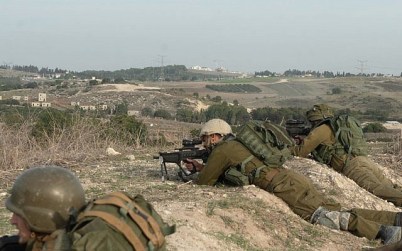
Israeli troops in newly created Gates of Fire Battalion simulate war with Hezbollah terrorist group in northern Israel in December 2018. (Israel Defense Forces)

The retired general said the Hezbollah tunnel threat was identified years ago and acted on last December, when Israel launched Operation Northern Shield to find and destroy Hezbollah cross-border attack tunnels.

Hezbollah has denied that the tunnels were part of a new attack plan, or that Israel’s destruction of them was a major blow to the group’s operations.

“The uncovering of the tunnels does not affect by 10 percent our plans to take over the Galilee. If we decide to do it — even if they’ve destroyed the tunnels — can’t we rebuild them,”  Hezbollah leader Hassan Nasrallah claimed in January.

He also suggested there may be attack tunnels on the Israeli-Lebanese border that Israel has not yet discovered.

During his term as army chief, which began in February 2015, Eisenkot said, “the crowning glory of security activity was the thwarting of the Iranian nuclear program.” He did not elaborate. The deal between Iran and world powers to curb Tehran’s nuclear ambitions was signed half a year into his stint as chief of staff.

However, he warned, there was no disputing the Iranian desire to achieve nuclear capability in the future.

Eisenkot also warned that conventional warfare remains a threat to Israel and despite their disintegration during the civil war, the Syrian armed forces were expected to recover.

“There is no doubt that within three to five years we will see an improvement in the Syrian army, which has already begun a rehabilitation process and which is a threat that will continue to occupy the IDF,” Eisenkot said.

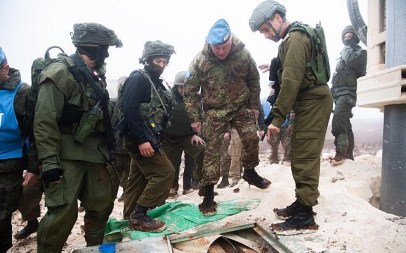
Israeli soldiers show UNIFIL commander Maj. Gen. Stefano Del Col a Hezbollah tunnel that penetrated Israeli territory from southern Lebanon, on December 6, 2018. (Israel Defense Forces)

Eisenkot asked to shorten his year-long end-of-service paid leave and end it this month, raising speculation he seeks to make himself eligible to run for political office sooner than expected.

The former top soldier left active service as chief of staff on January 15 and was to begin a year of paid leave until January 2020, but instead will be free of the army by April.

Senior military officials are required to wait a three-year cooling-off period before they are allowed to run for office.

Eizenkot has denied political ambitions and said the reason for the move was to make it easier for him to the join the US-based Washington Institute for Near East Policy as a fellow later this year.


Suspected gunman in deadly Dutch tram shooting is arrested

March 19, 2019

Source: Suspected gunman in deadly Dutch tram shooting is arrested | The Times of Israel

‘We assume a terror motive,’ says Utrecht’s mayor as 37-year-old Turkish-born Gokmen Tanis suspected of killing three and wounding five

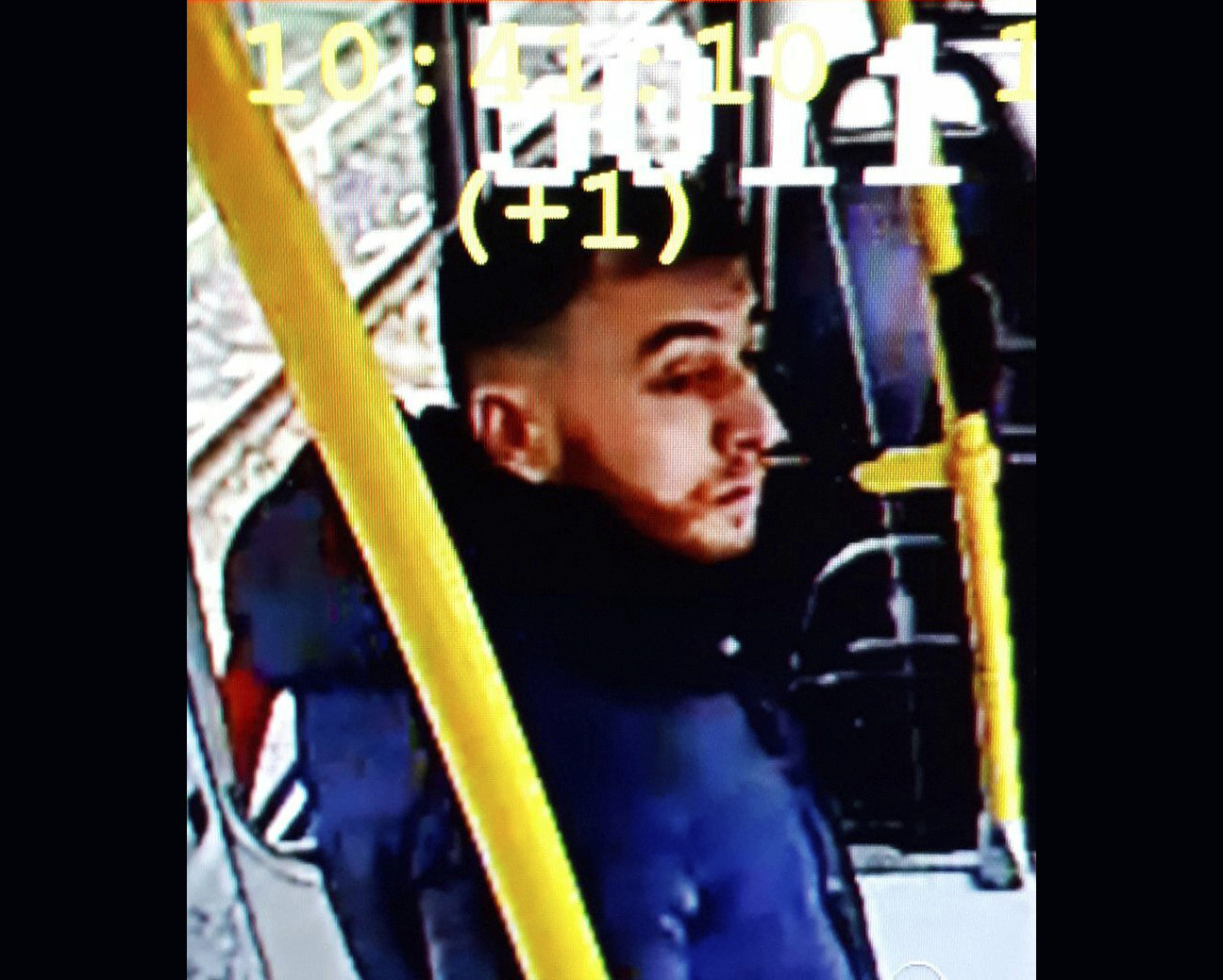
Suspected gunman Gokmen Tanis, 37, on March 18, 2019. Police believe he carried out a deadly shooting on a city tram that day. (Police Utrecht on Twitter, via AP)

Suspected gunman Gokmen Tanis, 37, on March 18, 2019. Police believe he carried out a deadly shooting on a city tram that day. (Police Utrecht on Twitter, via AP)

THE HAGUE, Netherlands — The police chief of the Dutch city of Utrecht said Monday evening that the suspect in a deadly tram shooting earlier in the day has been detained following a manhunt.

At the end of a news conference, Utrecht police chief Rob van Bree told reporters: “I just heard that the suspect we were hunting has been arrested.”

Further details were not immediately available.

The gunman, identified as 37-year-old Turkish-born Gokmen Tanis, killed three people and wounded five on an Utrecht tram on Monday morning, in what the city’s mayor said appeared to be a terror attack, touching off a manhunt that saw heavily armed officers with dogs zero in on an apartment building nearby.

Authorities immediately raised the terror alert for the area to the highest level, and Dutch military police tightened security at airports and key buildings in the country.

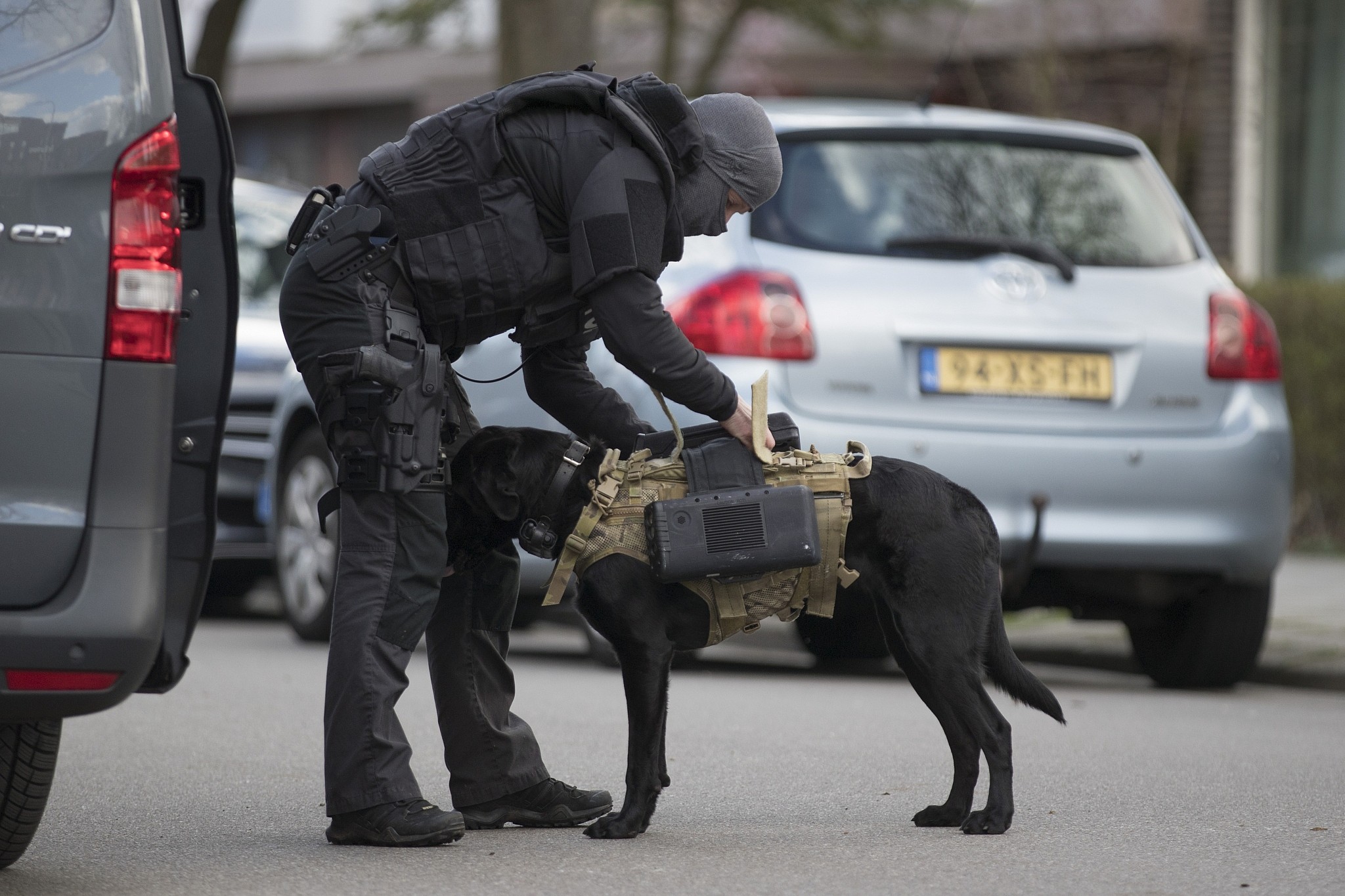
Dutch counter-terrorism police install a camera on a sniffer dog as they prepare to enter a house after a shooting incident in Utrecht, Netherlands, on March 18, 2019. (AP Photo/Peter Dejong)

A few hours after the shooting, Utrecht police released a photo of Tanis and said he was “associated with the incident.” The photo showed a bearded man aboard a tram in a blue hooded top.

Mehmet Tanis, the suspect’s father who lives in Turkey’s central Kayseri province, told the private Demiroren news agency that he had not spoken to his son in 11 years. “If he did it, he should pay the penalty,” the father was quoted as saying.

Separately, Turkey’s official Anadolu news agency said the suspect’s relatives believed he had shot at someone close to the family due to “family issues.”

The attack came three days after 50 people were killed when an immigrant-hating white supremacist opened fire at two mosques in Christchurch, New Zealand, during Friday prayers. There was no immediate indication of any link between the two events.

Utrecht Mayor Jan van Zanen said three people were killed, and police initially put the number of wounded at five.

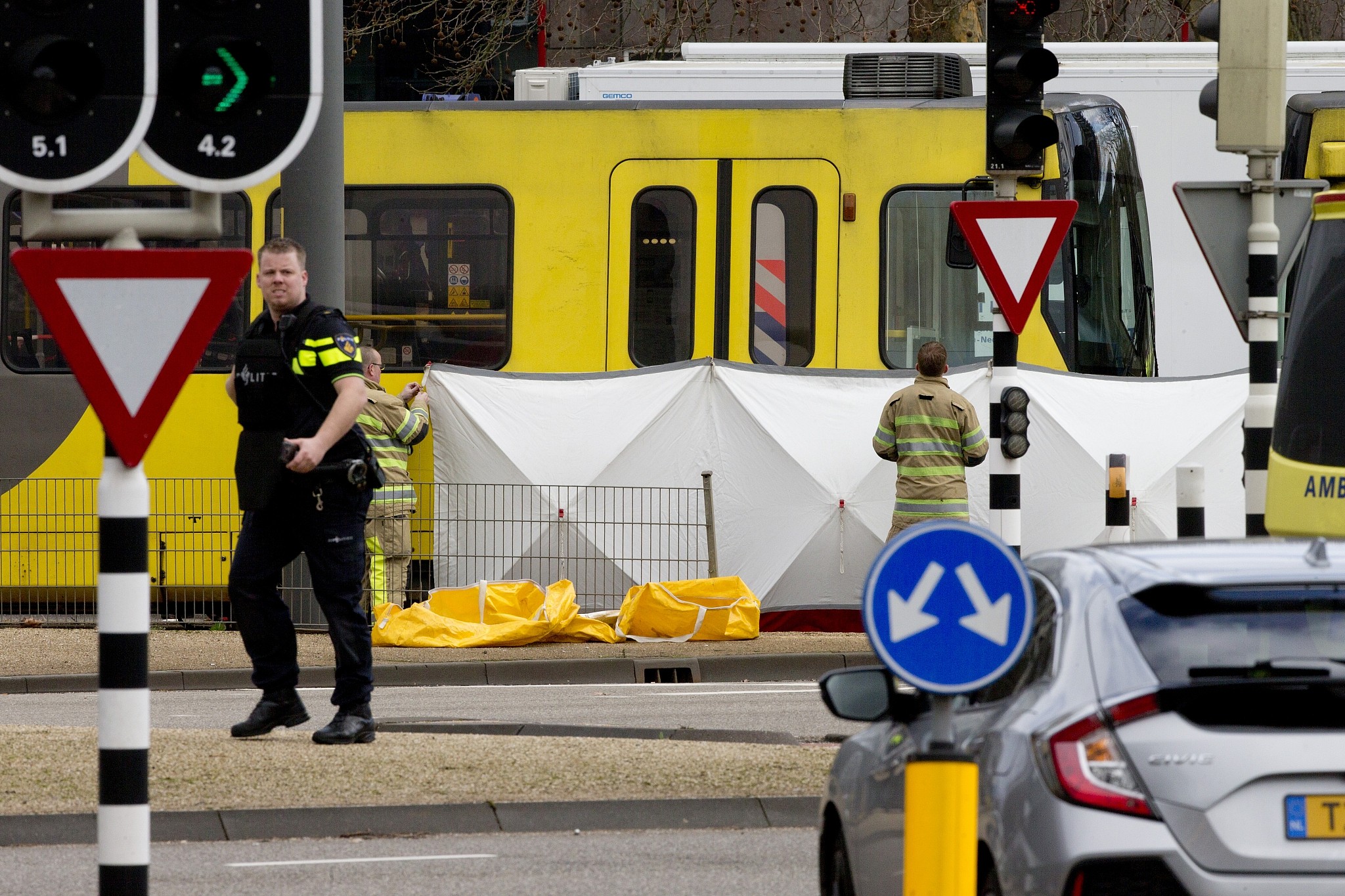
Rescue workers install a screen on the spot where a body was covered with a white blanket following a deadly shooting in Utrecht, Netherlands, on March 18, 2019. (AP Photo/Peter Dejong)

“We cannot exclude, even stronger, we assume a terror motive. Likely there is one attacker, but there could be more,” van Zanen said.

Dutch Prime Minister Mark Rutte said that “a terror motive is not excluded” and that the attack was met throughout the country with “a mix of disbelief and disgust.”

“If it is a terror attack, then we have only one answer: our nation, democracy, must be stronger than fanaticism and violence,” he added.

The shooting took place at a busy intersection in a residential neighborhood. Police erected a white tent over an area where a body appeared to be lying next to the tram.

Anti-terror officers gathered in front of an apartment building close to the scene. A dog wearing a vest with a camera mounted on it was also seen outside the building. It is not immediately clear on Monday evening if the arrest took place at the building initially targeted by police.

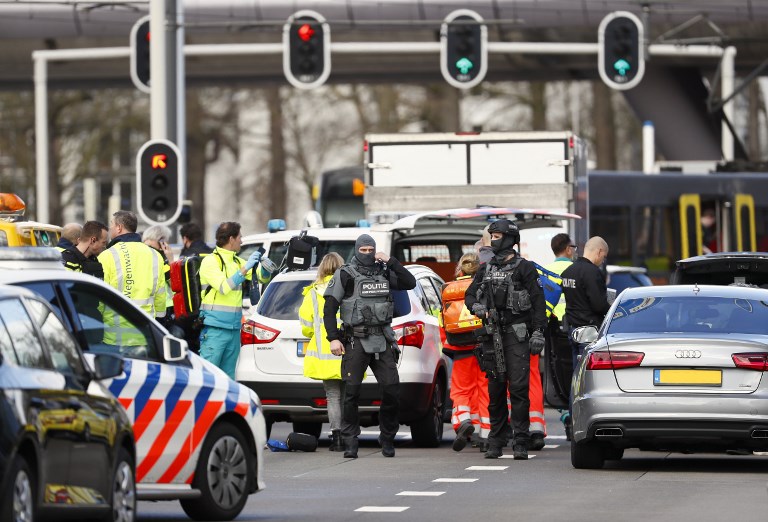
Police forces at 24 Oktoberplace in Utrecht, on March 18, 2019, after a deadly shooting at the site. (Robin van Lonkhuijsen/ANP/AFP)

The Netherlands’ anti-terror coordinator, Pieter-Jaap Aalbersberg, raised the threat alert to its highest level, 5, around Utrecht, a city of nearly 350,000.

Political parties halted campaigning ahead of provincial elections scheduled for Wednesday that will also determine the makeup of Parliament’s upper house.

In neighboring Germany, police said they stepped up surveillance of the Dutch border, watching not only major highways but also minor crossings and train routes.

German authorities said they were initially told to look out for a red Renault Clio compact car, but were later informed it had been found abandoned in Utrecht.


Soldier wounded in attack improves, as manhunt for terrorist continues 

March 19, 2019

Source: Soldier wounded in attack improves, as manhunt for terrorist continues | The Times of Israel

Search for Palestinian suspected who killed two shifting focus to intelligence gathering to find hiding place

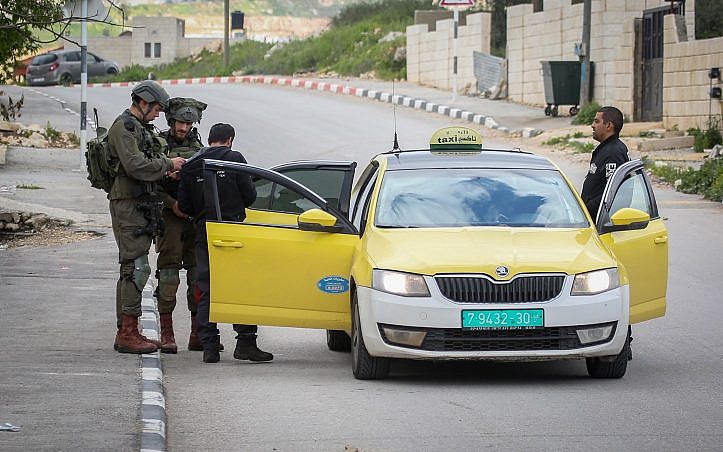
Israeli soldiers seen during a raid in the village of Bruqin near the West Bank town of Salfit on March 17, 2019, during searches for a Palestinian terrorist who shot and killed two near Ariel. (Flash90)

Israeli soldiers seen during a raid in the village of Bruqin near the West Bank town of Salfit on March 17, 2019, during searches for a Palestinian terrorist who shot and killed two near Ariel. (Flash90)

Doctors reported a marked improvement Tuesday morning in the medical condition of an IDF soldier wounded in a West Bank terror attack earlier in the week.

Alexander Dvorsky, who was shot on Sunday, was fully conscious, breathing on his own and able to talk with medical staff at Beilinson Hospital in Petah Tkiva, the hospital said.

Meanwhile, Israeli security forces continued their hunt for the suspected terrorist, identified as Omar Abu Laila, 18.

Overnight, forces combed the suspect’s home village of Zawiya near the West Bank city of Ariel, where the attack took place.

Israeli Prime Minister Benjamin Netanyahu on March 18, 2019 visits the site the day after a deadly terror attack near Ariel, in the West Bank. (Marc Israel Sellem/POOL/FLASH90)

Searches continued in surrounding villages, but efforts were shifting to intelligence gathering, with security forces working on the theory that Abu Laila has reached a secure hideout, Israel Radio reported.

Despite suspected of having been shot during the incident, Abu Laila is considered armed and dangerous and in possession of a stolen IDF assault rifle.

According to Israeli authorities, after fatally stabbing Sgt. Gal Keidan at the Ariel junction, Abu Laila grabbed the soldier’s gun and opened fire at passing vehicles, hitting Rabbi Achiad Ettinger, before stealing a vehicle and fleeing the scene. The terrorist then drove to the nearby Gitai junction, where he opened fire again, wounding Dvorsky.

Ettinger succumbed to his injuries Monday morning.

It is still unknown if the terrorist acted alone before and during the attack. Because he appeared to know what he was doing with the weapon, he might have had military training, defense officials said.

Palestinian supporters of Hamas pass out sweets in the Gaza Strip town of Rafah on March 17, 2019, following the terrorist attack where a Palestinian killed at least two people near Ariel, in the West Bank. (Abed Rahim Khatib/Flash90)

The Shin Bet security service is interrogating Abu Laila’s family and other suspects, and officials estimated that he is receiving assistance and hiding out in one of the villages in the area.

Prime Minister Benjamin Netanyahu on Monday toured the scene of the attack and said that “the murderers will not uproot us from here.”

“The IDF, Shin Bet and the security forces are in close pursuit of him, we know where he lives and we have located his family, I gave instructions to start demolishing his house and the preparations have already begun,” he said.

Also on Monday, over 1,000 Israelis gathered in the central West Bank settlement of Eli for Ettinger’s funeral, hours after he succumbed to the wounds he sustained in the attack.

Relatives told reporters Sunday that Ettinger had turned his car around after being shot and managed to fire four bullets in the direction of the Palestinian terrorist, causing him to flee the scene rather than target others. The IDF has been unable to corroborate the account of the incident, which was not picked up by security cameras.

Staff Sgt. Kaidan, 19, of Beersheba, who was also killed in the attack, was buried Monday in the military cemetery in the city. He was a third son of parents who immigrated to Israel from the Soviet Union in the 1970s. Seven family members said that he was “a gifted student and musician and a great loss to family and friends.” He left behind two brothers and two parents.