Archive for March 22, 2019

Thanks to Trump, diplomatic taboo around Western Wall comes tumbling down

March 22, 2019

Source: Thanks to Trump, diplomatic taboo around Western Wall comes tumbling down | The Times of Israel

Foreign VIPs used to insist no Israeli officials escort them to site, lest they be seen as tacitly recognizing Israeli sovereignty there. Now, the US is not alone in flouting rule
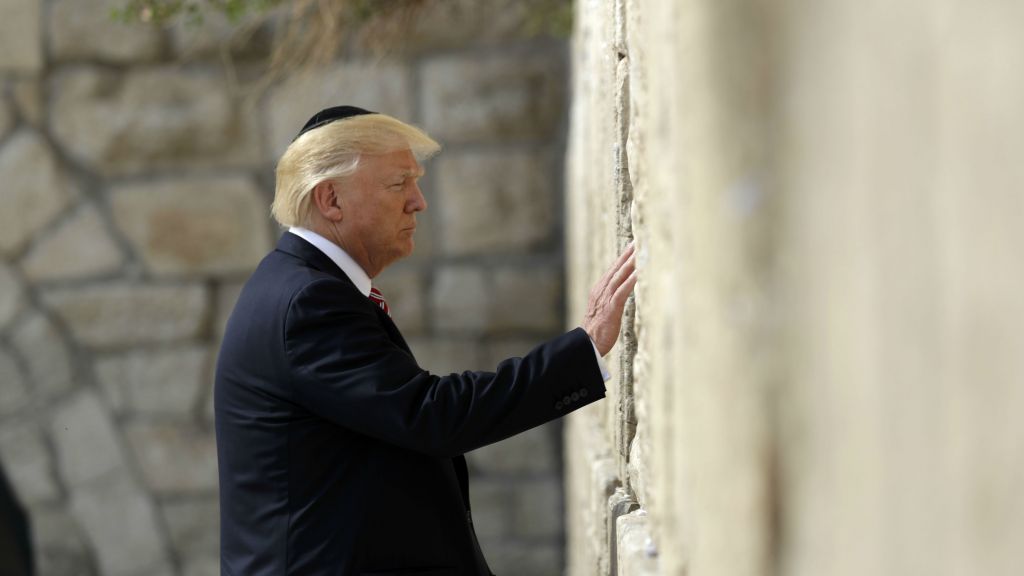
US President Donald Trump visits the Western Wall, May 22, 2017, in Jerusalem. (AP Photo/Evan Vucci)

US President Donald Trump visits the Western Wall, May 22, 2017, in Jerusalem. (AP Photo/Evan Vucci)

On May 22, 2017, Donald Trump became the first sitting US president to visit the Western Wall. “Words fail to capture the experience,” he said a few hours later. “It will leave an impression on me forever.”

The historic visit took place several months before Trump formally recognized Jerusalem as Israel’s capital, and, following what was standard diplomatic protocol at the time — and, to some degree, still is — the stopover at the Wall was billed as “private.”

Like all foreign leaders who went to the site before him, Trump was unaccompanied by high-ranking Israeli officials, lest anyone misinterpret their presence as a tacit recognition of Israeli sovereignty over the city’s disputed eastern section.

According to a well-placed source, American officials were worried that Prime Minister Benjamin Netanyahu, who had escorted Trump on every previous stop of his Israel trip, would unexpectedly appear at the Western Wall as well.

Netanyahu didn’t do so, however, respecting the time-honored diplomatic tradition under which foreign dignitaries who visit Jerusalem’s Old City do so in an entirely private capacity, with no Israeli diplomats by their side.

But since Trump’s visit to the Wall, his December 6, 2017, recognition of Jerusalem as Israel’s capital, and the May 14, 2018, move of the US embassy there, this hitherto ironclad rule has slowly but surely crumbled.

In recent months, more foreign dignitaries than ever before have visited the Jewish holy site, and many of them no longer mind being chaperoned there by Israeli diplomats.

“A lot of the inhibitions that might have existed in the past have been dropped. It’s pretty clear to many in the international community that the area of the Wall, if not the whole city, will remain in Israel’s hands in any future peace arrangement,” said Dore Gold, a former Foreign Ministry director-general.
Dore Gold in 2017 (Perry Bindelglass)

While some Western diplomats have tried to resurrect the century-old idea of Jerusalem as corpus separatum — wanting to internationalize the city — many others understand that it is completely unrealistic, according to Gold, who heads the Jerusalem Center for Public Affairs, a right-leaning think tank.

To be sure, many Western European diplomats still insist on the “antiquated formulae” on Jerusalem, he acknowledged. “But from private conversations you get the impression that there is a growing understanding that Jerusalem is not going to be divided.”

According to standard diplomatic protocol, foreign dignitaries who choose to visit the Western Wall privately are welcomed there by Rabbi Shmuel Rabinovitch but are not joined by high-ranking diplomats. Rabinovitch is an employee of the Western Wall Heritage Foundation, a governmental agency founded in 1988 by the Religious Affairs Ministry.

Of course, foreign VIPs are surrounded by Israeli security personnel — who in 1996 acted so rudely that French president Jacques Chirac threatened to abort his Israel visit and fly back to Paris — and by lower-ranking diplomats in charge of protocol.

According to Foreign Ministry spokesperson Emmanuel Nahshon, this is still the standard procedure. “There is no change in policy,” he told The Times of Israel, adding that “adjustments” are made either based on a country’s policy changes or the visitor’s scheduling needs.

Britain’s Prince William (C-L) walks alongside Western Wall chief Rabbi Shmuel Rabinovitch (R) during a visit to the Western Wall, in Jerusalem’s Old City, June 28, 2018 (AFP photo / Menahem Kahana)

But about a dozen officials and analysts interviewed for this article said they observed in recent months that more and more visiting officeholders tour the Wall together with the Israeli envoys to their respective countries.

Unsurprisingly, the American administration has taken the lead in advancing this trend.

On December 6, 2018 — the one-year anniversary of Trump’s Jerusalem declaration — US Ambassador David Friedman held a Hanukkah candle-lighting ceremony at the holy site, that was attended by Prime Minister Benjamin Netanyahu.
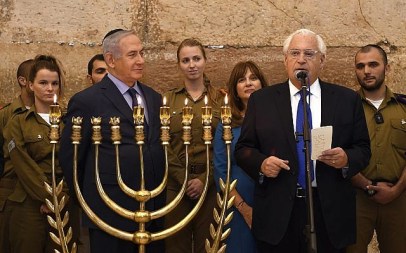
US Ambassador to Israel David Friedman, second right, and his wife Tammy, third right, join Prime Minister Benjamin Netanyahu, front left, at Jerusalem’s Western Wall for a candle-lighting ceremony marking the fifth night of Hanukkah and one year since US President Donald Trump’s December 6, 2017, declaration on moving the US Embassy to Jerusalem. (Matty Stern/US Embassy Jerusalem)

The significance of the moment was not lost on Friedman. In his speech, he noted that this may even be the first time an Israeli prime minister has visited the religious site with a senior US official.

“I hope it’s the first of many more such occasions,” he said.

Exactly one month later, Friedman took visiting US National Security Advisor John Bolton to the Wall and on a tour of the tunnels and the visitor’s center near the holy site. During the entire stay, they were joined by Bolton’s Israeli counterpart, Meir Ben-Shabbat; Netanyahu’s chief foreign policy adviser Reuven Azar; and Israel’s Ambassador to Washington Ron Dermer.

“This behavior will not change the fact that East Jerusalem is occupied territory and the capital of the state of Palestine,” Saeb Erekat, the secretary-general of the Palestine Liberation Organization, fumed at the time, arguing that such visits undermine international law and “lead to lawlessness.”

On Thursday afternoon, US Secretary of State Mike Pompeo became the highest-ranking official to tour the site with Israel’s prime minister.
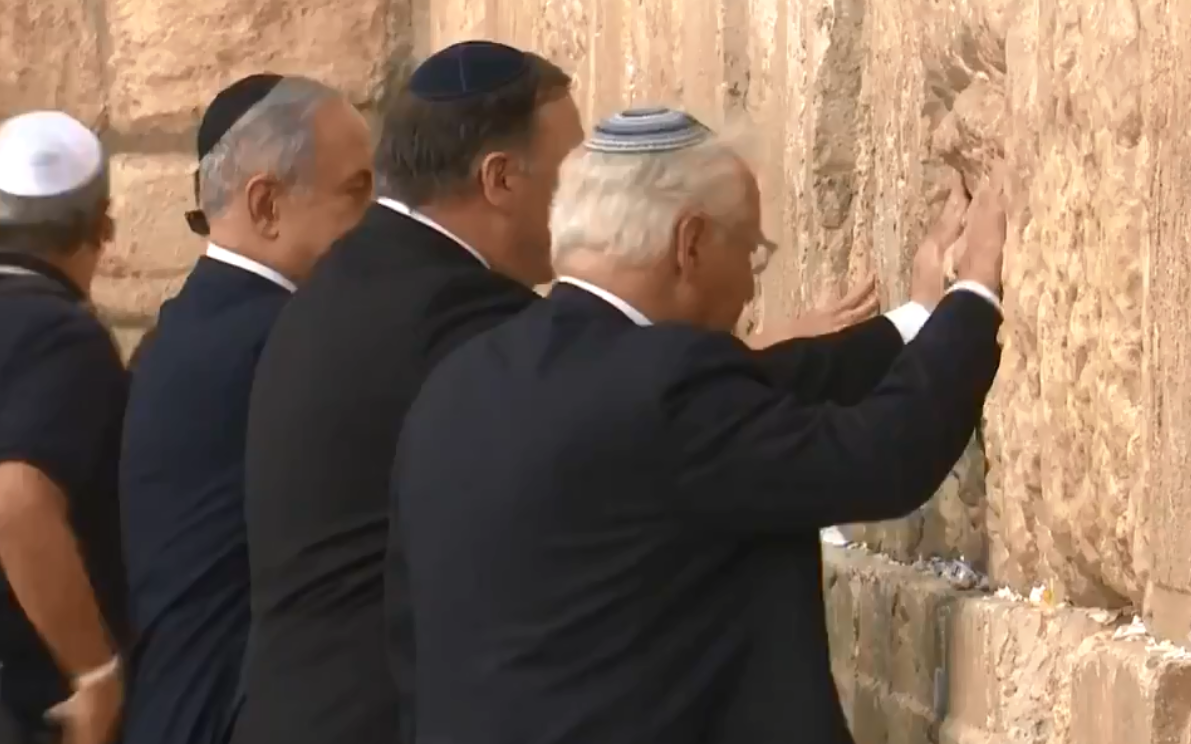
(L-R) Prime Minister Benjamin Netanyahu, US Secretary of State Mike Pompeo and US Ambassador to Israel David Friedman visit the Western Wall in Jerusalem’s Old City on March 21, 2019. (Screenshot: Twitter)

Pompeo and Netanyahu visited the Wall itself, and then toured the surrounding tunnels, which are located underneath the Old City’s Muslim Quarter. At a visitors center, the two men viewed a virtual reality recreation of the Jewish temple that once stood on the Temple Mount.

It’s also the Czech, the Ukrainians, the Liberians…

But it’s not only the Americans. Czech Foreign Minister Tomáš Petříček last November went to the Western Wall together with Israel’s ambassador in Prague, Daniel Meron. The significance of his unprecedented step was played up by the Israelis and condemned by Palestinian officials.

“The Czech Foreign Minister made history as he became the first European minister to come to the Wall accompanied by an Israeli ambassador,” Deputy Foreign Minister Tzipi Hotovely cheered at the time.

Erekat, on the other hand, bitterly noted that Petříček had violated the principle of “non-recognition of unlawful situations, including Israel’s illegal annexation of Jerusalem.”

Since then, the presidents of Ukraine and Liberia were also joined at the Wall by the Israeli envoys to their respective countries. Other foreign dignitaries have followed suit.

Ukrainian President Petro Poroshenko, second from left, visits the Western Wall in Jerusalem’s Old City, accompanied by Israel’s Ambassador in Kiev Joel Lion, second from right, December 21, 2019 (courtesy Edmon)

The Palestinians aren’t the only ones displeased with this trend. “We are quite aware of this, and yes, we are concerned about it,” a diplomat from a Western European country told The Times of Israel, speaking on condition of anonymity.

The European Union unequivocally rejects Israel’s claim to East Jerusalem, and therefore representatives from member states are urged to refrain from being seen there with high-ranking Israeli officials, the diplomat explained.

How widespread this phenomenon has become remains unclear, as no one is keeping track of how many foreign dignitaries visit the site and how many are escorted by Israeli officials.
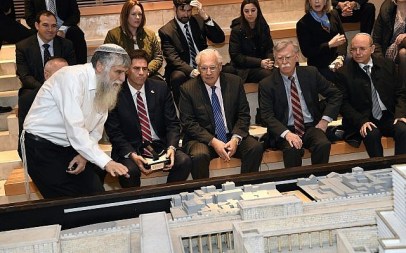
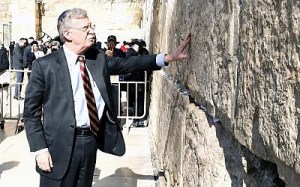
US National Security Adviser John Bolton visits the Western Wall tunnels in the Old City of Jerusalem, January 6, 2019. Bolton was accompanied by US Ambassador to Israel David M. Friedman and Rabbi Mordechai Soli Eliav, chairman of the Western Wall Heritage Foundation. Ziv Sokolov/US Embassy Jerusalem

“Dignitaries from all over the world have always come to the Western Wall, we host dozens of visits every years… We can say that it increases from year to year,” said Yohanna Bisraor, a spokesperson for the Western Wall Heritage Foundation. But she declined to comment on the trend of foreign officials being accompanied by Israeli diplomats. “We at the kotel are prepared to welcome every visit,” she said, using the Hebrew term for the holy site.

What is behind this new trend?

According to Hotovely, Israel’s hawkish deputy foreign minister, the shift has a lot to do with her instructions to the ministry’s visitors department.

“When I came to the ministry, the situation was very problematic. Many delegations wanted only private tours in the Old City and did not agree to be accompanied by our diplomats. But we insisted, and after some time we saw a certain degree of success,” she told The Times of Israel.

Since Israel considers itself the sovereign in Jerusalem’s Old City, every visitor needs an official escort, she added. “And there is more readiness for this today. We almost never see that people refuse.”

A European diplomat, however, told The Times of Israel that his embassy has never been pressured to agree to have visiting dignitaries be chaperoned by Israeli officials.

Most experts interviewed for this article pointed at the change in US policy. Other states may not have agreed with Trump’s decision to recognize Jerusalem as Israel’s capital. But once the world’s only superpower was no longer afraid to be seen at the Western Wall with Israeli officials, they didn’t feel the need to worry about it, either.

Daniel Seidemann, a longtime analyst of the politics of Jerusalem, whose expertise on the matter is frequently sought by foreign embassies, offered two additional explanations for the trend.

For one, some governments dislike the various UNESCO resolutions that deny Israel’s claims to the Holy City, and a good way to show recognition of the deep Jewish connection to Jerusalem is by visiting the Western Wall, he posited.
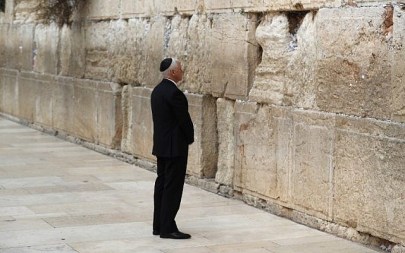
US Vice President Mike Pence visits Jerusalem’s Western Wall on January 23, 2018. (AFP photo/Thomas Coex)

Doing so with an Israeli escort is “sort of moving the embassy-‘lite,’” Seidemann said. “There are open and hidden pressures for other countries to move their embassies. They’re not doing it. I tend to think that certain countries in the EU would do it, were they not mercilessly pressured into holding ranks on this issues… They’re finding alternatives, like opening a cultural center or a trade office,” he said.

Going to the Wall with official accompaniment is another “non-controversial response” to Israel’s pressure on recognizing Jerusalem as its capital, he said.

Trump’s unprecedented visit to the Wall — George H.W. Bush, Bill Clinton, George W. Bush and Barack Obama went to the site, too, but either before or after their tenures as president — started a process that peaked with the opening of the embassy but continues to have an afterlife.

So far, only one other country — Guatemala — has followed the American administration’s lead and moved its embassy to Jerusalem.

But Trump’s actions have uprooted a lot of deeply entrenched policies, according to Gold, the former Israeli top diplomat.

“The whole question of Jerusalem in the international community is very much in flux,” he said, “whereas previously it seemed to be locked in.”


 

Pompeo warns US could curb security ties with Israel over China relations

March 22, 2019

Source: Pompeo warns US could curb security ties with Israel over China relations | The Times of Israel

Secretary’s statements come as Israel steps up trade and business ties with Beijing, which has made key investments in Israeli economy, including strategic Haifa port

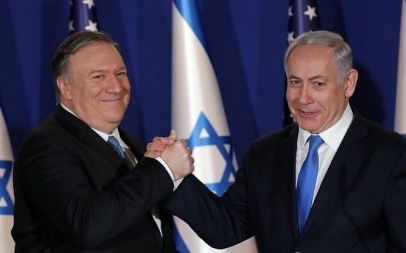
US Secretary of State Mike Pompeo speaks during a joint press conference with Israeli Prime Minister at his residence in Jerusalem on March 21, 2019.  (Photo by AMIR COHEN / AFP)

US Secretary of State Mike Pompeo speaks during a joint press conference with Israeli Prime Minister at his residence in Jerusalem on March 21, 2019. (Photo by AMIR COHEN / AFP)

US Secretary of State Mike Pompeo issued a stark warning to Israel on Thursday that the close security ties between the two nations could be reduced over Israel’s growing cooperation with China.

Pompeo’s warnings came on the same day that the US made an unprecedented show of support for Israel, effectively recognizing its hold on the Golan Heights and having the top US diplomat make a symbolic visit to the Western Wall accompanied by Prime Minister Benjamin Netanyahu.

Nevertheless, Pompeo cautioned that unless Israel re-evaluates its cooperation with China, it could see the US reduce “intelligence sharing and co-location of security facilities.”

Speaking to Israel’s Channel 13, Pompeo highlighted the risks posed by China.

“China broadly presents a real opportunity, they are an economic powerhouse and there are lots of opportunities for countries to do business with China. When China behaves transparently, when China is engaged in real economic transactions, we are untroubled,” Pompeo said.

However, he warned that China also posed risks, using “debt as a trap” and  “engages in spying through its commercial state-owned enterprises and presents risk through its technology systems, companies like Huawei,” Pompeo said, adding that these “present real risks to the people of Israel.

“We want to make sure every country is wide-eyed and awake with regard to the policy threats posed by China,” he said. “America will have to make decisions too. If certain systems go in certain places then America’s efforts to work alongside you will be more difficult, and in some places we wont be able to do so.

“Intelligence sharing might have to be reduced, co-location of security facilities might have to be reduced, we want to make sure countries understand this and know the risks,” he said.

It’s not the first time the US has warned Israel over its ties with China.

A soldier walks on the deck of the US aircraft carrier USS George H. W. Bush, as it docks outside Haifa port, on July 3, 2017. (AFP Photo/AFP Photo and Pool/Ronen Zvulun)

In January, a senior US energy official warned that unless Israel implements stringent screening procedures for Chinese investments, intelligence sharing between the two allies could be threatened.

US Deputy Secretary of Energy Dan Brouillette spoke while visiting Israel for meetings that included talks with Energy Minister Yuval Steinitz and the head of Israel’s cyber directorate.

China and Israel have stepped up trade and business ties in recent in years and launched free trade talks.

In January, the head of Israel’s Shin Bet security agency was said to raise similar concerns over China’s involvement in the country’s national infrastructure.

Channel 10 (now merged into Channel 13) reported then that Shin Bet chief Nadav Argaman warned massive Chinese investment in Israel could pose a danger to national security.

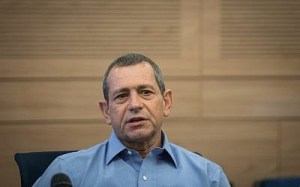
Shin Bet head Nadav Argaman attends a Knesset Defense and Foreign Affairs Committee meeting on November 6, 2018. (Hadas Parush/Flash90)

“Chinese influence in Israel is particularly dangerous in terms of strategic infrastructure and investments in larger companies,” Argaman said at a closed-door speech at Tel Aviv University.

Argaman noted that Chinese companies would be taking over operating part of the Haifa port and constructing the Tel Aviv light rail system, and were actively seeking to acquire other major Israeli firms.

Argaman advised the Knesset to pass legislation to monitor foreign investment in Israel.

In October Netanyahu and China’s Vice President Wang Qishan co-hosted a high-profile trade and innovation conference in Jerusalem. Netanyahu announced at the time that the two countries would complete a free trade agreement in 2019, and that China plans to invest heavily in Israeli infrastructure, including new ports and a light rail.

Chinese firms have made major inroads in Israel, including the takeover of local food giant Tnuva in 2014 and deals to manage the key Haifa and Ashdod ports.

During his visit to Israel earlier this year, US National Security Adviser John Bolton encouraged Israeli officials to take a tougher stance against Chinese electronics manufacturers ZTE and Huawei.

“We are all concerned about theft of intellectual property and Chinese telecoms companies that are being used by China for intelligence-gathering purposes,” said a senior administration official who was briefed on the talks, according to Reuters.

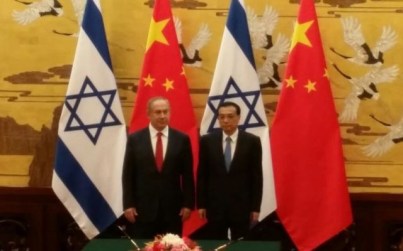
China’s Premier Li Keqiang and Prime Minister Benjamin Netanyahu attend a signing ceremony at the Great Hall of the People in Beijing on March 20, 2017 (Raphael Ahren / Times of Israel)

According to the report, the administration does not want there to be any obstacles to block the sharing of sensitive information with the Israelis. The senior official singled out concerns about Chinese technology and investment at the port of Haifa.

“We specifically put it on the agenda,” the official said.

Several analysts and officials have expressed great concern over the deal that would put the Shanghai International Port Group in charge of Haifa port’s container terminal starting in 2021.

Allowing Beijing a foothold in so strategically important a location, close to an Israeli naval base, they fear, could compromise Israeli intelligence assets and even lead US military vessels to avoid docking at Haifa altogether.


Pompeo’s Middle East Visit and the Golan Heights 

March 22, 2019

For the first time, the US State Department on Wednesday referred to the disputed Golan Heights as ‘Israeli controlled’ instead of Israel ‘occupied’ after last year’s report already manifested a marked change by dropping the phrases ‘occupied territories’ and ‘under occupation’ from the sections of its annual global human rights report dealing with the Golan Heights, the West Bank and the Gaza Strip. In the case of the Golan Heights, captured by Israel in the 1967 war, the report classifies the mountainous region on the border between Israel and Syria as ‘Israeli-controlled’ instead of ‘Israeli-occupied,’ as it has read in past years. In a separate section on Gaza and the West Bank – areas that also came under Israeli control in 1967 – the report also does not characterize these territories as under ‘occupation’ or ‘occupied.’ Last year’s report kept one mention of the ‘1967 occupation’ in the West Bank and Gaza section, though the term ‘occupied territories’ was also expunged from the report, in a dramatic shift from previous years. Shortly after the release of the report a spokesperson for the US embassy in Jerusalem told The Times of Israel that ‘our policy on Golan has not changed.’ For seven consecutive years, the report’s section on Israel was titled ‘Israel and the Occupied Territories’ which included a section on Israel (including what it called the Israeli-occupied Golan Heights) and a section on the ‘occupied territories’: the West Bank, Gaza and East Jerusalem. Last year’s report title, however was changed to ‘Israel, Golan Heights, West Bank and Gaza’, which included a section on Israel and the Golan Heights and a second on the West Bank and Gaza.

Golan: Yom Kippur, 1973 – IDF Tanks defeat Syrian force 7 times its size – YouTube

March 22, 2019

From “Greatest tank battles” TV show. In 1973, Syria launches a surprise attack against Israel in the Golan Heights.This is a story of survival, where a few out-numbered tankers manage to hold off an enemy of overwhelming size in one of the greatest tank battles ever waged. Excellent CGI re-creation plus interviews with former combatants,


Israeli leaders gush over Trump’s Golan recognition, ‘a Purim miracle’ 

March 22, 2019

Source: Israeli leaders gush over Trump’s Golan recognition, ‘a Purim miracle’ | The Times of Israel

Syria silent as US president says time to ‘fully recognize Israel’s sovereignty’ over plateau; Lapid claims some credit; Bennett fears new demands; Palestinians warn of ‘bloodshed’

Photo taken on October 18, 2017 shows an Israeli flag fluttering above the wreckage of an Israeli tank sitting on a hill in the Golan Heights and overlooking the border with Syria. (Photo by JALAA MAREY / AFP)

Photo taken on October 18, 2017 shows an Israeli flag fluttering above the wreckage of an Israeli tank sitting on a hill in the Golan Heights and overlooking the border with Syria. (Photo by JALAA MAREY / AFP)

Israel’s leaders on Thursday welcomed US President Donald Trump’s announcement that the time had come for the United States to “fully recognize” Israeli sovereignty over the Golan Heights, while the Palestinians warned the move would further destabilize the region and lead to bloodshed.

“After 52 years it is time for the United States to fully recognize Israel’s Sovereignty over the Golan Heights, which is of critical strategic and security importance to the State of Israel and Regional Stability!” Trump tweeted.

There was no immediate reaction from Syria, which has long vowed to recover every inch of the Golan from Israel.

In Israel the move won widespread praise, but coming just weeks before Israel’s elections, much of the reaction was framed by the campaign.

Prime Minister Benjamin Netanyahu led the praise of Trump, calling the move a “new Purim miracle.”

Speaking at a press conference with US Secretary of State Mike Pompeo, Netanyahu said Trump had “made history.”

“I called him. I thanked him on behalf of the people of Israel. He did it again. First, he recognized Jerusalem as Israel’s capital and moved the US embassy here. Then, he pulled out of the disastrous Iran treaty and re-imposed sanctions.

“But now he did something of equal historic importance — he recognized Israel’s sovereignty over the Golan Heights, and he did so at a time when Iran is trying to use Syria as a platform to attack and destroy Israel. And the message that President Trump has given the world is that America stands by Israel.”

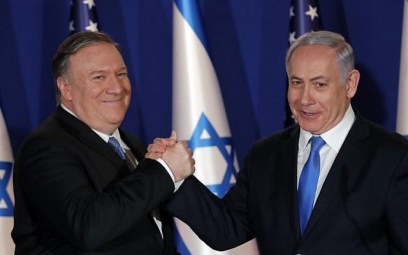
Israeli Prime Minister Benjamin Netanyahu (R) welcomes US Secretary of State Mike Pompeo to his residence in Jerusalem on March 21, 2019. (Photo by JIM YOUNG / POOL / AFP)

“We’re celebrating Purim, when 2,500 years ago, other Persians, led by Haman, tried to destroy the Jewish people. They failed then; and today, 2,500 years later, again Persians led by Khamenei, are trying to destroy the Jewish people and the Jewish state. They’re going to fail again,” Netanyahu said.

Pompeo praised Trump as well, and added: “The people of Israel should know that the battles they fought and the lives they lost on that very ground [the Golan] were important and worthy.” Israel captured the Heights from Syria in the 1967 war.

Foreign Minister Israel Katz said the move would strengthen Israel’s security.

“This is the right response to Iran’s aggression from Syria and a clear message to Assad. Trump’s statement does historical justice almost 40 years after the decision of Menachem Begin on Israel’s sovereignty over the Golan. Thank you, Mr. President,” he said.

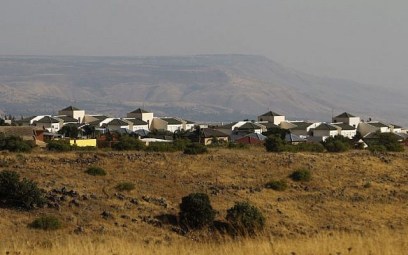
The Jewish community of Qatzrin in the Golan Heights, on June 28, 2017. (Photo by JALAA MAREY / AFP)

Members of Netanyahu’s ruling Likud party were quick to praise the prime minister for the shift in US policy.

“President’s Trump’s recognition of Israeli sovereignty on the Golan is another achievement for Netanyahu’s foreign policy,” said Deputy Foreign Minister Tzipi Hotovely. “This term will be remembered in history as one where Netanyahu changed the rules of the game and brought about maximum Israeli gains with zero concessions.”

Yair Lapid, a leader of the Blue and White party that is seen as a main challenger to Netanyahu in the upcoming elections, praised Trump, but also tried to claim credit for the initiative.

“Thank you @POTUS for your intention to recognize our sovereignty over the Golan,” he tweeted. “We started this campaign a year ago and the leadership of @BlueWhite2019 stood on the Golan Heights and called for recognition. President Trump has shown again that he’s a true friend of Israel.”

יאיר לפיד Yair Lapid

@yairlapid

Thank you @POTUS for your intention to recognize our sovereignty over the Golan. We started this campaign a year ago and the leadership of @BlueWhite2019 stood on the Golan Heights and called for recognition. President Trump has shown again that he’s a true friend of Israel.

Meanwhile, Education Minister Naftali Bennett of the New Right party warned that Israel may be expected to make concessions with the Palestinians in exchange for the move.

“With all the joy of American recognition of the Golan Heights, it is essential to say: The ‘Golan in exchange for Hamastan’ deal is a danger to Jewish settlements and to Israel.

“We call upon Prime Minister Netanyahu to announce as early as this evening that his agreement to the establishment of Palestine in the Bar-Ilan speech is null and void,” Bennet said referring to a 2009 speech where Netanyahu laid out his acceptance of the two-state solution.

This was echoed by the far-right Union of Right-Wing Parties, which thanked Trump, but warned the Israeli public not to let the move blind them to the dangers of Trump’s expected peace plan.

Details of the plan have not yet been released, but URWP, a union of the Jewish Home, National Union and extremist Otzma Yehudit (Jewish Power), warned that it would demand Israeli concessions in the West Bank.

“Only a government with the Union of Right-Wing Parties will stand firm,” it said.

Head of the Golan Heights Regional Council Haim Rokah said it was “about time” and called on Israel to increase funding and investment for the region “and double the population.”

However, lawmakers from the mostly Arab Hadash party accused Trump of timing the announcement to try and influence the election and get Netanyahu re-elected — an assertion Pompeo denied.

“Trump is trying to save Netanyahu from his desperate situation and return him to power,” said MK Aida Touma-Sliman.

Touma-Sliman called the recognition part of “the entrenchment of Israeli and American control over the Middle East and a targeted assassination of the … opposition in the Golan by thousands of Syrian citizens, who are standing firm against all attempts at Israelization and normalization” — a reference to the Golan’s Druze population.

Hadash leader Ayman Odeh called the move a “cheap and cynical provocation.”

“Decisions on the Middle East should not be unilateral, and certainly not announced over Twitter,” he said, warning that it would further destabilize the region.

Israel captured the Golan Heights from Syria in the 1967 Six Day War and extended Israeli law to the territory in 1981, a step tantamount to annexation. But the United States and the international community have long considered it Syrian territory under Israeli occupation. The plateau lies along a strategic area on the border between Israel and Syria.

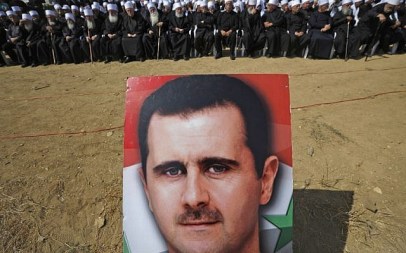
Syrian President Bashar Assad as members of the Druze community attend a rally in the Druze village of Majdal Shams in the Golan Heights commemorating the 45th anniversary of the 1973 Arab-Israeli war, on October 6, 2018. (Photo by JALAA MAREY / AFP)

A top Palestinian official warned that this was yet another move by the Trump administration to adopt Israel’s positions and warned it would lead to further instability in the region.

“Yesterday president Trump recognized Jerusalem as Israel’s capital. Today for regional stability he wants to make sure that the occupied Syrian Golan Hieghts (sic) be under Israel’s sovereignty,” tweeted Saeb Erekat, the secretary-general of the Palestine Liberation Organization’s Executive Committee.

“What shall tomorrow bring ? Certain destabilisation and bloodshed in our region,” he said.

Dr. Saeb Erakat الدكتور صائب عريقات@ErakatSaeb

Yesterday president Trump recognized Jerusalem as Israel’s http://capital.Today  for regional stability he wants to make sure that the occupied Syrian Golan Hieghts be under Israel’s sovereignty. What shall tomorrow bring ? Certain destabilisation and bloodshed in our region.


Syria condemns US recognition of Israeli sovereignty over Golan

March 22, 2019

Source: Syria condemns US recognition of Israeli sovereignty over Golan | The Times of Israel

‘The Syrian people remain committed to the liberation of the Golan Heights by all means at its disposal,’ official Syrian news agency quotes official saying

Young members of the Druze community wave Syrian flags during a rally in the Druze village of Majdal Shams in the Golan Heights on October 6, 2018, commemorating the 45th anniversary of the 1973 Arab-Israeli war (AFP Photo/Jalaa Marey)

Young members of the Druze community wave Syrian flags during a rally in the Druze village of Majdal Shams in the Golan Heights on October 6, 2018, commemorating the 45th anniversary of the 1973 Arab-Israeli war (AFP Photo/Jalaa Marey)

Syria on Friday condemned US President Donald Trump’s recognition of Israeli sovereignty over the Golan Heights, which the Jewish state captured from its northern neighbor in the 1967 Six Day War.

Quoting an unnamed foreign ministry official, Syria’s official SANA news agency slammed the decision as “irresponsible” and a violation of United Nations resolutions concerning the territory’s status.

“Syria strongly condemns the irresponsible declaration of the American president, which again proves the US’s blind tendency in favor of the Zionist entity and its unreserved support for its aggression,” the official said. “The Syrian people remain committed to the liberation of the Golan Heights by all means at its disposal.”

The comments were Syria’s first reaction to Trump’s surprise Thursday announcement, which has been met with largely muted responses by the international community.

A mock road sign for Damascus, the capital of Syria, and a cutout of a soldier, are displayed at an old outpost in the Golan Heights near the border with Syria, May 10, 2018. (AP Photo/Ariel Schalit)

In signature fashion, Trump made the announcement on Twitter, reversing over 50 years of US policy since Israel’s capture of the strategic plateau from Syria.

Trump’s recognition caught officials in Israel and the United States off-guard, according to the McClatchy news agency.

“We all found out by tweet,” an Israeli official was quoted as saying. “We’ve been lobbying for this for a long time, but it was not the product of one phone call. There were hints, but we weren’t given advance notice.”

Another Israeli source told the news agency that Israeli leaders were informed of the decision shortly beforehand, as with Trump’s abrupt announcement in December that he would pull all US forces out of Syria.

According to the report, Trump’s Middle East peace negotiators and the State Department were also surprised by the move, with US officials having expected an announcement when Trump hosts Prime Minister Benjamin Netanyahu at the White House next week.

Netanyahu appeared overjoyed while praising the decision in a press conference in Jerusalem Thursday alongside US Secretary of State Mike Pompeo, who the New York Times noted “looked caught off-guard.”

Israeli Prime Minister Benjamin Netanyahu (R) welcomes US Secretary of State Mike Pompeo to his residence in Jerusalem on March 21, 2019. (Jim Young/Pool/AFP)

While the timing of Trump’s decision was unexpected, there were a number of hints at a coming US policy shift, including the State Department’s defining of the Golan Heights as “Israeli-controlled” instead of “Israeli-occupied” for the first time, in a human rights report released last week.

Trump’s tweet was not preceded by a policy review, according to McClatchy, and it was not clear if the US president would follow up the announcement with a more official recognition such as an executive order.

It was also unclear if Israel would respond with a move of its own, as it never formally annexed the Golan Heights despite having extended Israeli law to the territory in 1981, in a move never recognized internationally.

US National Security Adviser John Bolton visits the Western Wall in the Old City of Jerusalem, January 6, 2019. (Ziv Sokolov/US Embassy Jerusalem)

Quoting unnamed White House officials, the news agency said Trump’s National Security Adviser John Bolton was a key force behind the move following his visit to Israel in January, seeing it as a signal the US remained committed to Israel in the wake of Trump’s announcement of the US troop pullout.

US Ambassador David Friedman also reportedly pushed for the recognition on the same grounds.

Israel in recent years has warned that its arch-enemy Iran is trying to establish a military presence in Syria that could threaten the Jewish state, and has carried out hundreds of strikes on targets there linked to Iran.

“It was an ask,” an Israeli official told McClatchy. “Because of the timing — it suddenly became a relevant issue about Iran.”


US Recognizes Israeli Soverenty over the Golan Heights – YouTube

March 22, 2019

Prime Minister Benjamin Netanyahu & Secretary of State Mike Pompeo give remarks prior to their dinner this evening. Netanyahu thanked President Trump for his statement that it’s time to recognize Israel’s sovereignty over the Golan Heights.

Trump recognizes Golan to counter Iran’s first steps for annexing Lebanon to Syria – DEBKAfile

March 22, 2019

Source: Trump recognizes Golan to counter Iran’s first steps for annexing Lebanon to Syria – DEBKAfile

US President Donald Trump’s declared recognition of Israeli sovereignty over the Golan on Thursday, March 21, had a time-sensitive object, unconnected to the Israeli election or Binyamin Netanyahu’s run for reelection, as his rivals contended.

DEBKAfile’s military and intelligence sources reveal that it was an arrow aimed by the US president at Iran, Syria, Iraq and Hizballah, and the machinations plotted at Syrian President Bashar Assad’s meeting with Iran’s supreme leader ayatollah Ali Khameini on Feb. 25. Present at their meeting, our sources reveal, were two figures, Al Qods chief Qasem Soleimani, supreme commander of Iran’s Mid East fronts, and, for the first time, a high-ranking Hizballah military official, who is a senior strategic adviser to Hassan Nasrallah.

In answer to a question put to him in an Israel TV interview on Thursday, visiting Secretary of State Mike Pompeo pointed out that Qassem Soleimani doesn’t’ consider elections in Israel when he acts day by day against the US and Israel. Pompeo was referring that that groundbreaking conversation in Khamenei’s office on Feb. 25. The presence of a highly representative Hizballah official at that meeting, alongside Assad and Soleimani, signified Tehran’s decision to treat Syria and Lebanon as a single political and military entity.

Iran in fact is taking the first steps towards Syria’s annexation of Lebanon.

Neither Washington nor Moscow are ready to countenance this step. It is therefore possible that President Vladimir Putin may agree to overtly join or quietly support US and Israel counter-action.

He already sent Defense Minister Gen. Sergei Shoigu to Damascus on Tuesday, March 19, the day after the Iranian, Syrian and Iraqi chiefs of staffs sat down to prepare joint operations in line with their new orders. Shoigu warned Assad against going through with the plan to join Iran, Iraq and Hizballah in a new axis non-aligned with any world powers. Shoigu told him that Russia was ready to put a stop to it taking off.

The Trump administration is setting two steps in train:

  1. It was announced that the time had come for the US recognize the Golan as sovereign Israeli territory.
  2. Pompeo arrives on Friday, March 22, for a two-day visit with a warning to deliver to Lebanese President Michel Aoun: If his government joins the Iranian-Syrian-Iraqi-Hizballah axis, the US will hit hard against it, including the imposition of sanctions against Lebanon’s banking system.

US recognition of Israeli sovereignty in the Golan, though important, does not mark the end of the struggle for this strategic plateau; just the beginning.


Trump Declares It Is Time to Recognize Israel’s Sovereignty over the Golan Heights

March 22, 2019

Trump Declares It Is Time to Recognize Israel’s Sovereignty over the Golan Heights

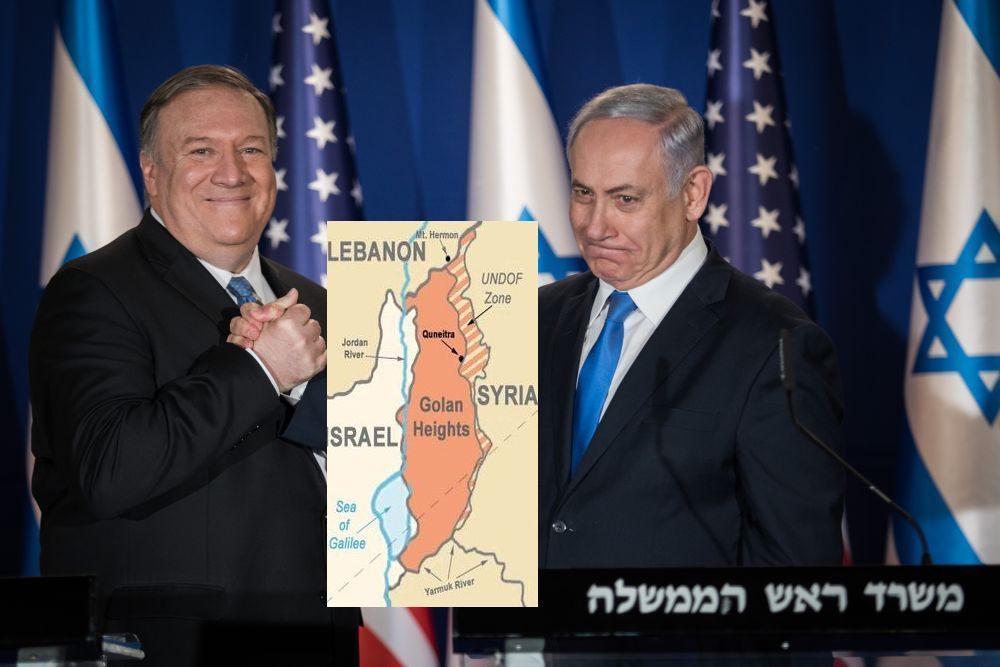
PM Netanyahu & US Secy. of State Pompeo. March 21, 2019, Photo Credit: : Kobi Gideon

US President Donald Trump announced on Thursday, via his Twitter account: “After 52 years it is time for the United States to fully recognize Israel’s Sovereignty over the Golan Heights, which is of critical strategic and security importance to the State of Israel and Regional Stability!”

Prime Minister Netanyahu phoned President Trump to thank him, also telling him, “You made history.”

Speaking with US Secretary of State Mike Pompeo, who is currently visiting in Israel, and following Us President Donald Trump’s declaration, Netanyahu said:

“Secretary Pompeo, Mike, Susan, Ambassador David Friedman, I’m so excited. We’re so excited, Sara and I, to have you here, but especially on this evening. This is the eve of Purim, and we have a miracle of Purim; we call it Nes Purim.

President Trump has just made history. I called him. I thanked him on behalf of the people of Israel.

He did it again.

First, he recognized Jerusalem as Israel’s capital and moved the US embassy here. Then, he pulled out of the disastrous Iran treaty and re-imposed sanctions. But now he did something of equal historic importance – he recognized Israel’s sovereignty over the Golan Heights, and he did so at a time when Iran is trying to use Syria as a platform to attack and destroy Israel. And the message that President Trump has given the world is that America stands by Israel.

We’re celebrating Purim, when 2,500 years ago, other Persians, led by Haman, tried to destroy the Jewish people. They failed then; and today, 2,500 years later, again Persians led by Khamenei, are trying to destroy the Jewish people and the Jewish state. They’re going to fail again.

We are deeply grateful for the US support. We’re deeply grateful for the unbelievable and unmatchable support for our security and our right to defend ourselves, and everything that you do on behalf of Israel and for the State of Israel in so many forms. So, it is a distinct pleasure to welcome you and Susan to our home at any time, but especially today.

Now, let me add another word about that. We had a moving visit today to the Wall. I can’t resist repeating this, but I’m going to. I said to the Secretary that the last time a Pompeo visited Jerusalem, it didn’t end that well. But this is a different time. Roman Jerusalem clashed over values, with a great tragedy for the Jewish people. But the new Rome, the United States, views itself as a new Jerusalem. We visited the original City on the Hill. We visited the hill.

There is no greater friendship than the one between Israel and the United States, and no one represents it better than Secretary of State Mike Pompeo. You and Ambassador Friedman and your delegation are exceptional champions of our alliance. I’ve called you so many times, on so many things that this evening I just want to say one word—two actually: thank you. Thank you, Mike Pompeo. Thank you, President Trump. And thank you, America.

To the people of Israel, I say:

[Translated from Hebrew]

“We have a Purim miracle here. President Trump has made history. He recognized Israeli sovereignty over the Golan Heights, at a time when Iran is trying to use the Golan Heights as a platform to destroy Israel.

We are marking the miracle of Purim – 2,500 years ago the Jewish people defeated those who tried to destroy it, other Persians, and today just as they failed then, they will fail this time as well thanks, inter alia, to the strong support of the US and its President. We have had no greater friend in our history.”

Prime Minister Benjamin Netanyahu and his wife Sara are now hosting US Secy. of State Pompeo and his wife Susan, together with US Ambassador to Israel David Friedman, for dinner at the Prime Minister’s Residence in Jerusalem.

Bracing for Gaza’s ‘million man march’

March 22, 2019
Analysis: The West Bank is at a boiling point, the Palestinian economy is weak and the motivation for terror attacks high, and now Hamas is planning its biggest demonstration ever to mark the anniversary of the ‘March of Return’; Israel fears events may spin out of control with dozens of casualties and a possible military confrontation
https://www.ynetnews.com/articles/0,7340,L-5482413,00.html

The Israel Defense Forces is preparing for tens of thousands of Palestinians to gather along the Israel-Gaza border next weekend, as they join a Hamas “million man march” to mark the one year anniversary of the “March of Return” protests held regularly at the frontier.


The IDF will deploy hundreds of snipers along the Gaza border in anticipation of the march, set to take place on March 29.

According to IDF assessments, Hamas will not only try to re-enact the earlier Friday marches attended by thousands of Gazans, but will in fact seek to surpass them by transporting more than 50,000 people to the main protest points along the border fence.

Troops on Gaza border (Photo: Yoav Zitun)

Troops on Gaza border (Photo: Yoav Zitun)

The IDF is preparing for the disturbances by doubling the amount of troops that will be deployed along the Gaza border in order to thwart any infiltration attempts by hostile Palestinians into Israel and prevent attacks at the border town communities.

The army believes that Hamas will make an effort to channel the frustrations of the Gaza population — which has been protesting the harsh economic reality under Hamas rule— away from themselves and toward Israel, near the fence. Therefore, Israel is anticipating an unusual amount of violence and for events to spiral out of control.

Economic Protests in Gaza

Economic Protests in Gaza

So far, Hamas has managed to forcibly suppress the street protests against it, including assaulting journalists, human rights activists and the local Fatah leader in the Strip (a rival faction). The protests were organized by minor Palestinian parties in Gaza, mainly from the left, against Hamas and to a certain extent Islamic Jihad. Alongside the violence, some 600 people were arrested by Hamas authorities.

Those same organizations that protested Hamas — the Democratic Front for the Liberation of Palestine (DFLP), the Popular Front (PFLP), the Communist Party, the Palestinian Democratic Union (FIDA), Fatah and the Arab Liberation Front — are also helping to organize the weekly protests along the border.

Israeli officials estimate that these organizations will stand alongside Hamas, just like on every Friday for the last year (except last week), for the planned “million man march.” However, the Hamas leadership is aware that although the Gaza street protests under the banner of “Let Us Live” may have been suppressed, the criticism against Hamas, both from the street and from the Palestinian Authority in the West Bank, will continue. Until a solution is found that will improve the economic situation, the Gaza street could well rise up again.

IDF pounds Gaza targets


IDF pounds Gaza targets


There are signs that this Friday’s protest, at which 10,000 protesters are expected, is a dress rehearsal for the big event next week. On the day after the “million man march,” Israeli Arabs will mark Land Day, a day expressing solidarity with the Palestinians in the territories.

In the meantime, there has been a return of the nightly harassment units, Gazans dispatched to make the lives of Israelis living on the other side of the border miserable. These units resumed their activities this week with loud noise and smoke, after a 10-day pause due to Egyptian-brokered negotiations, and the rate of these activities is increasing.

Israel is preparing for a worst case scenario, in which the protests get out of hand and there are dozens of casualties, as happened last May. Such a circumstance may set off another round of military conflict, which Israel has been trying to avoid.

Near Rafah

Near Rafah


Furthermore, Land Day kicks off a two-month period consisting of several of noteworthy days, each of which may be used by Hamas as a focal point for violence. Following Land Day on March 30 is the Day of the Palestinian Prisoner on April 17; in May there is Nakba Day (commemorating the effects of Israeli independence on the Palestinians) and in June, Naksa Day (when the Palestinians mark the Arab defeat in the 1967 Six-Day War). In between is the Muslim holy fast month Ramadan and the agitation it can entail.

The only way to stave off this frightening scenario is to implement the partial understandings reached between Egypt, Israel and Hamas. Most of the subject matter was found to be acceptable by both sides. Israel agreed to allow Hamas to expand the Gaza fishing zone to 12 nautical miles from the Gaza coast and allow the UN to fund the employment of some 90,000 Gazans currently without work. Israel also agreed to provide Gaza with additional electricity capacity.

IDF troops on the Gaza border (Photo: Reuters) (Reuters)

IDF troops on the Gaza border (Photo: Reuters)


Egypt proposed establishing two “purple zones,” at the Erez Crossing for example, where Israeli and Palestinian businessmen can meet and do business, and Israel expressed willingness to increase the number of permits given to Gaza businessmen allowed to enter these zones. Israel might also open the Karni Crossing and in the long term, establish industrial zones at these crossings.

Hamas for its part is being asked to reinstate the 300-meter security zone adjacent to the border, to guarantee that the protests keep their distance from Israeli territory.

In Israel, officials expect that if the sides manage to reach an agreement and the Qatari funds continue to flow at a rate of $30 million a month, Hamas will make an effort to prevent a deterioration since its financial situation is very dire. In the last fiscal year, the Hamas government has only managed to raise 30% of its annual budgetary needs.

Iran has also drastically cut its aid to Hamas, which has been forced to raise taxes on residents and businesses in Gaza. Cigarette prices jumped by 200% and pita bread by 40%. Such harsh economic realities brought Gazans out into the streets to protest. Therefore, it is crucial for Hamas to reach an agreement; at least until the summer, as Israel is asking.

IDF pounds Gaza targets

Egypt proposed establishing two “purple zones,” at the Erez Crossing for example, where Israeli and Palestinian businessmen can meet and do business, and Israel expressed willingness to increase the number of permits given to Gaza businessmen allowed to enter these zones. Israel might also open the Karni Crossing and in the long term, establish industrial zones at these crossings.

Hamas for its part is being asked to reinstate the 300-meter security zone adjacent to the border, to guarantee that the protests keep their distance from Israeli territory.

In Israel, officials expect that if the sides manage to reach an agreement and the Qatari funds continue to flow at a rate of $30 million a month, Hamas will make an effort to prevent a deterioration since its financial situation is very dire. In the last fiscal year, the Hamas government has only managed to raise 30% of its annual budgetary needs.

Iran has also drastically cut its aid to Hamas, which has been forced to raise taxes on residents and businesses in Gaza. Cigarette prices jumped by 200% and pita bread by 40%. Such harsh economic realities brought Gazans out into the streets to protest. Therefore, it is crucial for Hamas to reach an agreement; at least until the summer, as Israel is asking.