Archive for March 19, 2019

U.S.-backed force in Syria claims to hold positions in former-ISIS camp

March 19, 2019

Source: U.S.-backed force in Syria claims to hold positions in former-ISIS camp – Middle East – Jerusalem Post

Smoke rose over the tiny enclave as warplanes and artillery bombarded it. Another witness said the jihadists had earlier mounted a counter attack.

BY REUTERS
 MARCH 19, 2019 01:15
U.S.-backed force in Syria claims to hold positions in former-ISIS camp

BAGHOUZ, Syria, March 18 – U.S.-backed fighters said they had taken positions in Islamic State’s last enclave in eastern Syria and air strikes pounded the tiny patch of land beside the Euphrates River early on Monday, a Reuters journalist said.

Smoke rose over the tiny enclave as warplanes and artillery bombarded it. Another witness said the jihadists had earlier mounted a counter attack.

The Syrian Democratic Forces (SDF) militia said in an update on Monday that tens of militants had been killed during what it called fierce clashes, and one SDF fighter had been injured. It said Islamic State had sent four suicide bombers to points close to SDF fighters.

Late on Sunday, an SDF spokesman, Mustafa Bali, said on Twitter that several enemy positions had been captured and an ammunition storage area had been blown up.

The enclave resembles an encampment, filled with stationary vehicles and rough shelters with blankets or tarpaulins that could be seen flapping in the wind during a lull in fighting as people walked among them.

An Islamic State spokesman said on Monday the displacement of “the weak and poor” from Syria’s Baghouz would not weaken the group.

“Do you think the displacement of the weak and poor out of Baghouz will weaken the Islamic State? No,” Abi al-Hassan al-Muhajer said in a recording distributed by Al Furqan, a media organization linked to Islamic State.

He added “the Islamic State will return, God willing, to the regions it left whether it takes a long or a short time.”

In the recording al-Muhajer also said Islamic State leader Abu Bakr al-Baghdadi urged the group to avoid using telecommunications devices as they had brought harm, and to take caution.

Backed by air power and special forces from a U.S.-led coalition, the SDF has pushed Islamic State from almost the entire northeastern corner of Syria, defeating it in Raqqa in 2017 and driving it to its last enclave at Baghouz last year.

Late on Sunday, the Kurdish Ronahi TV station aired footage showing a renewed assault on the enclave, with fires seen to be raging inside and tracer fire and rockets zooming into the tiny area.

The SDF has waged a staggered assault on the enclave, pausing for long periods over recent weeks to allow mostly women and children who are families of suspected fighters to pour out.

Women and children leaving have spoken of harsh conditions inside, under coalition bombardment and with food supplies so scarce some resorted to eating grass.

Former residents also say hundreds of civilians have been killed in months of heavy aerial bombing by the coalition that have razed many of the hamlets in the area along the Iraqi border.

The coalition says it take great care to avoid killing civilians and investigates reports that it has done so.

Last month, the SDF said it had found a mass grave in an area it captured. Former residents say those buried were victims of coalition air strikes.

The SDF and the coalition say the Islamic State fighters inside Baghouz are among the group’s most hardened foreign fighters, although Western countries believe its leader, Abu Bakr al-Baghdadi, has left the area. The group issued a propaganda film from inside the enclave last week calling on its supporters to keep faith.

While Islamic State’s defeat at Baghouz will end its control of inhabited land in the third of Syria and Iraq that it captured in 2014, the group will remain a threat, regional and Western officials say.
 

Israel was a ‘hair’s breadth’ from war with Hezbollah, ex-IDF chief says 

March 19, 2019

Source: Israel was a ‘hair’s breadth’ from war with Hezbollah, ex-IDF chief says | The Times of Israel

Gadi Eisenkot warns Lebanese terror group remains a serious threat, Iran still wants nuclear weapons

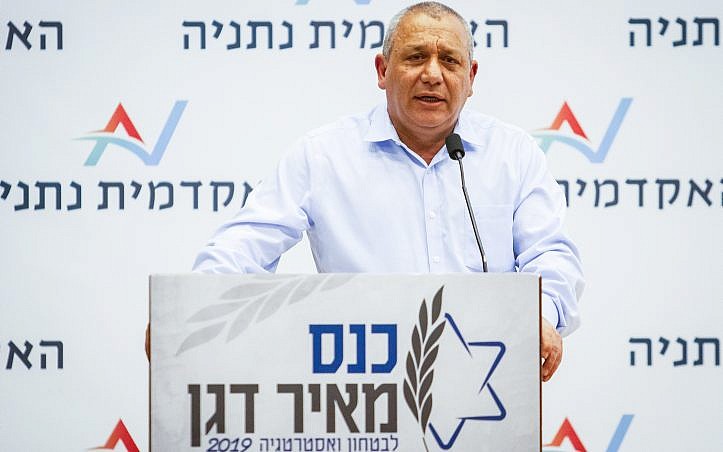
Former IDF chief of staff Gadi Eisenkot speaks during a conference in Netanya on March 18, 2019. (Flash90)

Recently retired IDF chief of staff Gadi Eisenkot said Monday that Israel came close to all-out conflict with Hezbollah during his tenure.

Speaking at a security conference in Netanya, Eisenkot said tensions with the Iran-backed terror group that controls much of Lebanon almost erupted into a hot war on more than one occasion.

“There were not a few instances and days where the distance between those events and escalation to the point of war or battle was a hair’s breadth,” Eisenkot was quoted saying by Hebrew-language media.

Israel last fought a war with Hezbollah in 2006, but tensions along the northern border have remained high. Israel has for years carried out airstrikes in Syria to prevent weapons transfers to the Iran-backed terror group. The end of Eisenkot’s four-year tenure was marked by an Israeli operation to destroy a network of tunnels under the Lebanese border Israel says were dug by Hezbollah for a future attack. There were several occasions in which Israeli soldiers worked mere meters from Hezbollah operatives across the border.

“The Hezbollah threat is a serious threat,” Eisenkot told the conference. “It is a strong organization that has gained experience in running large operations and wants to prepare an attack plan to conquer the Galilee and bring 5,000 fighters underground” into Israel.

The threat of war with Hezbollah had increased during the last three years, he said.

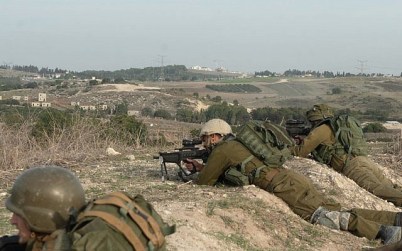
Israeli troops in newly created Gates of Fire Battalion simulate war with Hezbollah terrorist group in northern Israel in December 2018. (Israel Defense Forces)

The retired general said the Hezbollah tunnel threat was identified years ago and acted on last December, when Israel launched Operation Northern Shield to find and destroy Hezbollah cross-border attack tunnels.

Hezbollah has denied that the tunnels were part of a new attack plan, or that Israel’s destruction of them was a major blow to the group’s operations.

“The uncovering of the tunnels does not affect by 10 percent our plans to take over the Galilee. If we decide to do it — even if they’ve destroyed the tunnels — can’t we rebuild them,”  Hezbollah leader Hassan Nasrallah claimed in January.

He also suggested there may be attack tunnels on the Israeli-Lebanese border that Israel has not yet discovered.

During his term as army chief, which began in February 2015, Eisenkot said, “the crowning glory of security activity was the thwarting of the Iranian nuclear program.” He did not elaborate. The deal between Iran and world powers to curb Tehran’s nuclear ambitions was signed half a year into his stint as chief of staff.

However, he warned, there was no disputing the Iranian desire to achieve nuclear capability in the future.

Eisenkot also warned that conventional warfare remains a threat to Israel and despite their disintegration during the civil war, the Syrian armed forces were expected to recover.

“There is no doubt that within three to five years we will see an improvement in the Syrian army, which has already begun a rehabilitation process and which is a threat that will continue to occupy the IDF,” Eisenkot said.

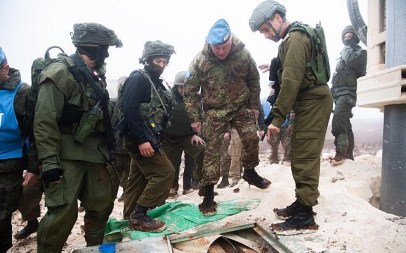
Israeli soldiers show UNIFIL commander Maj. Gen. Stefano Del Col a Hezbollah tunnel that penetrated Israeli territory from southern Lebanon, on December 6, 2018. (Israel Defense Forces)

Eisenkot asked to shorten his year-long end-of-service paid leave and end it this month, raising speculation he seeks to make himself eligible to run for political office sooner than expected.

The former top soldier left active service as chief of staff on January 15 and was to begin a year of paid leave until January 2020, but instead will be free of the army by April.

Senior military officials are required to wait a three-year cooling-off period before they are allowed to run for office.

Eizenkot has denied political ambitions and said the reason for the move was to make it easier for him to the join the US-based Washington Institute for Near East Policy as a fellow later this year.


Suspected gunman in deadly Dutch tram shooting is arrested

March 19, 2019

Source: Suspected gunman in deadly Dutch tram shooting is arrested | The Times of Israel

‘We assume a terror motive,’ says Utrecht’s mayor as 37-year-old Turkish-born Gokmen Tanis suspected of killing three and wounding five

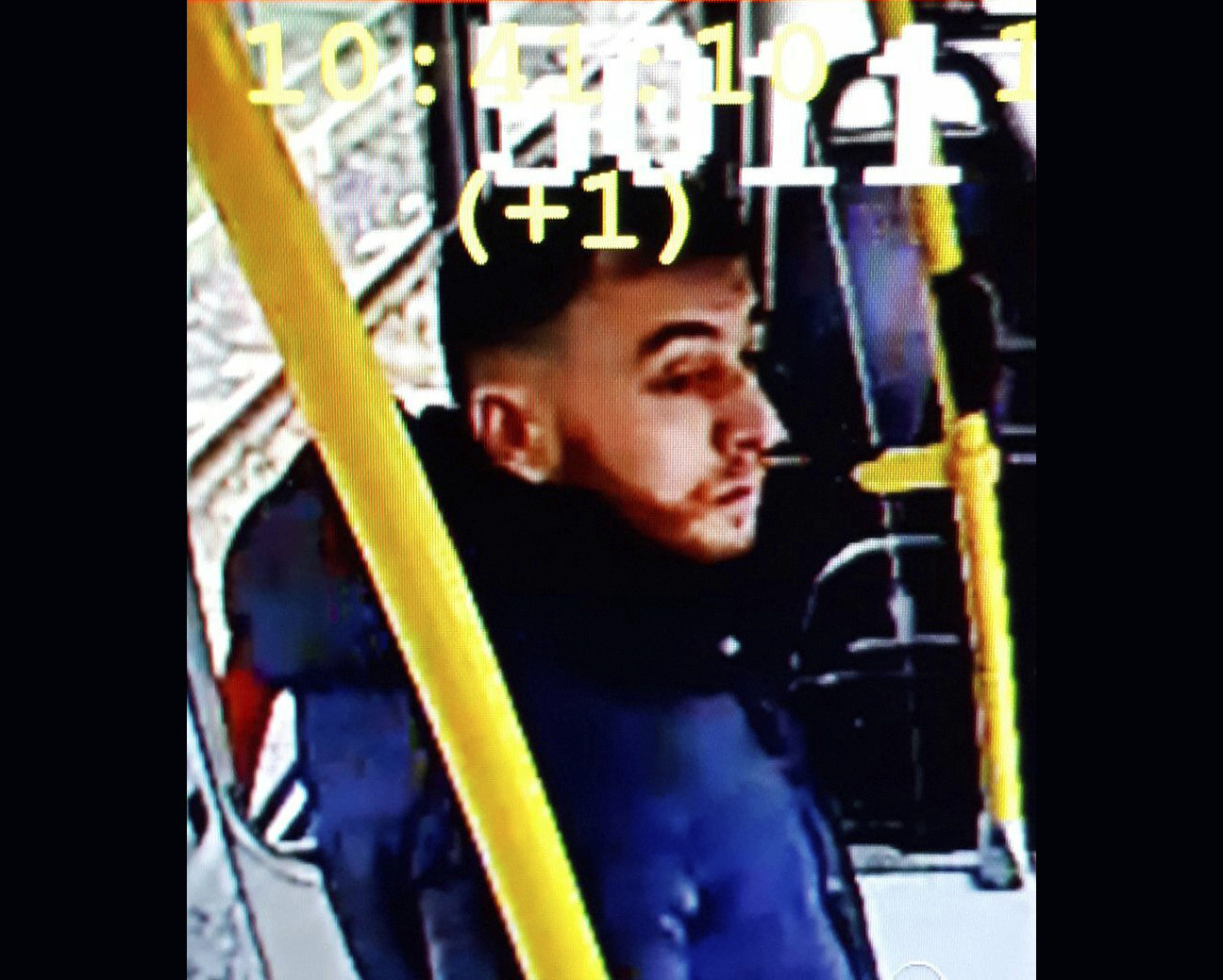
Suspected gunman Gokmen Tanis, 37, on March 18, 2019. Police believe he carried out a deadly shooting on a city tram that day. (Police Utrecht on Twitter, via AP)

Suspected gunman Gokmen Tanis, 37, on March 18, 2019. Police believe he carried out a deadly shooting on a city tram that day. (Police Utrecht on Twitter, via AP)

THE HAGUE, Netherlands — The police chief of the Dutch city of Utrecht said Monday evening that the suspect in a deadly tram shooting earlier in the day has been detained following a manhunt.

At the end of a news conference, Utrecht police chief Rob van Bree told reporters: “I just heard that the suspect we were hunting has been arrested.”

Further details were not immediately available.

The gunman, identified as 37-year-old Turkish-born Gokmen Tanis, killed three people and wounded five on an Utrecht tram on Monday morning, in what the city’s mayor said appeared to be a terror attack, touching off a manhunt that saw heavily armed officers with dogs zero in on an apartment building nearby.

Authorities immediately raised the terror alert for the area to the highest level, and Dutch military police tightened security at airports and key buildings in the country.

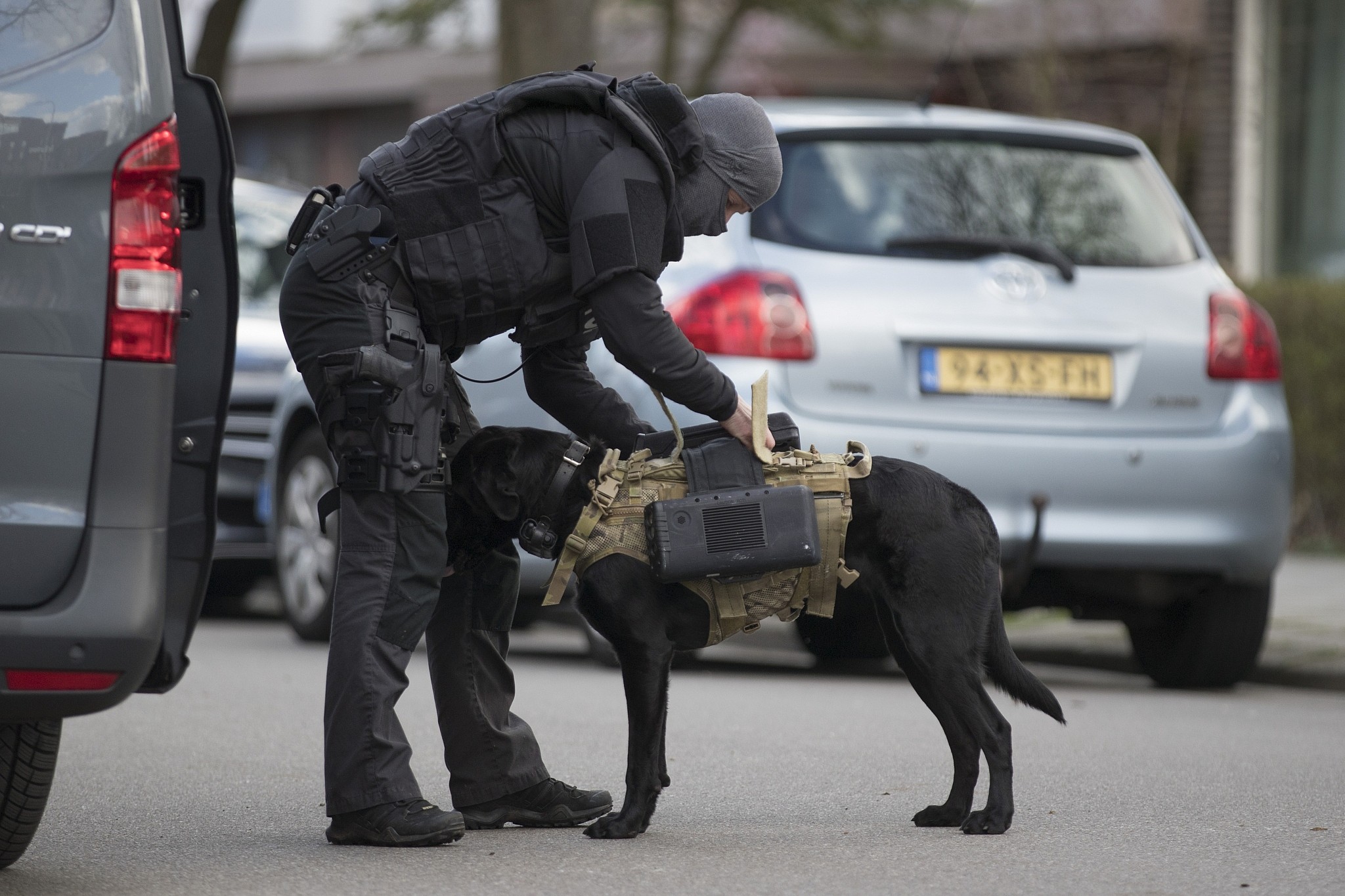
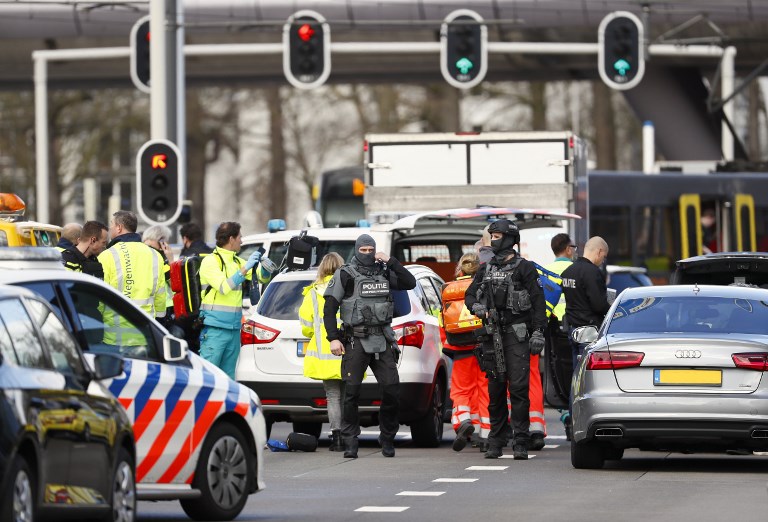
Dutch counter-terrorism police install a camera on a sniffer dog as they prepare to enter a house after a shooting incident in Utrecht, Netherlands, on March 18, 2019. (AP Photo/Peter Dejong)

A few hours after the shooting, Utrecht police released a photo of Tanis and said he was “associated with the incident.” The photo showed a bearded man aboard a tram in a blue hooded top.

Mehmet Tanis, the suspect’s father who lives in Turkey’s central Kayseri province, told the private Demiroren news agency that he had not spoken to his son in 11 years. “If he did it, he should pay the penalty,” the father was quoted as saying.

Separately, Turkey’s official Anadolu news agency said the suspect’s relatives believed he had shot at someone close to the family due to “family issues.”

The attack came three days after 50 people were killed when an immigrant-hating white supremacist opened fire at two mosques in Christchurch, New Zealand, during Friday prayers. There was no immediate indication of any link between the two events.

Utrecht Mayor Jan van Zanen said three people were killed, and police initially put the number of wounded at five.

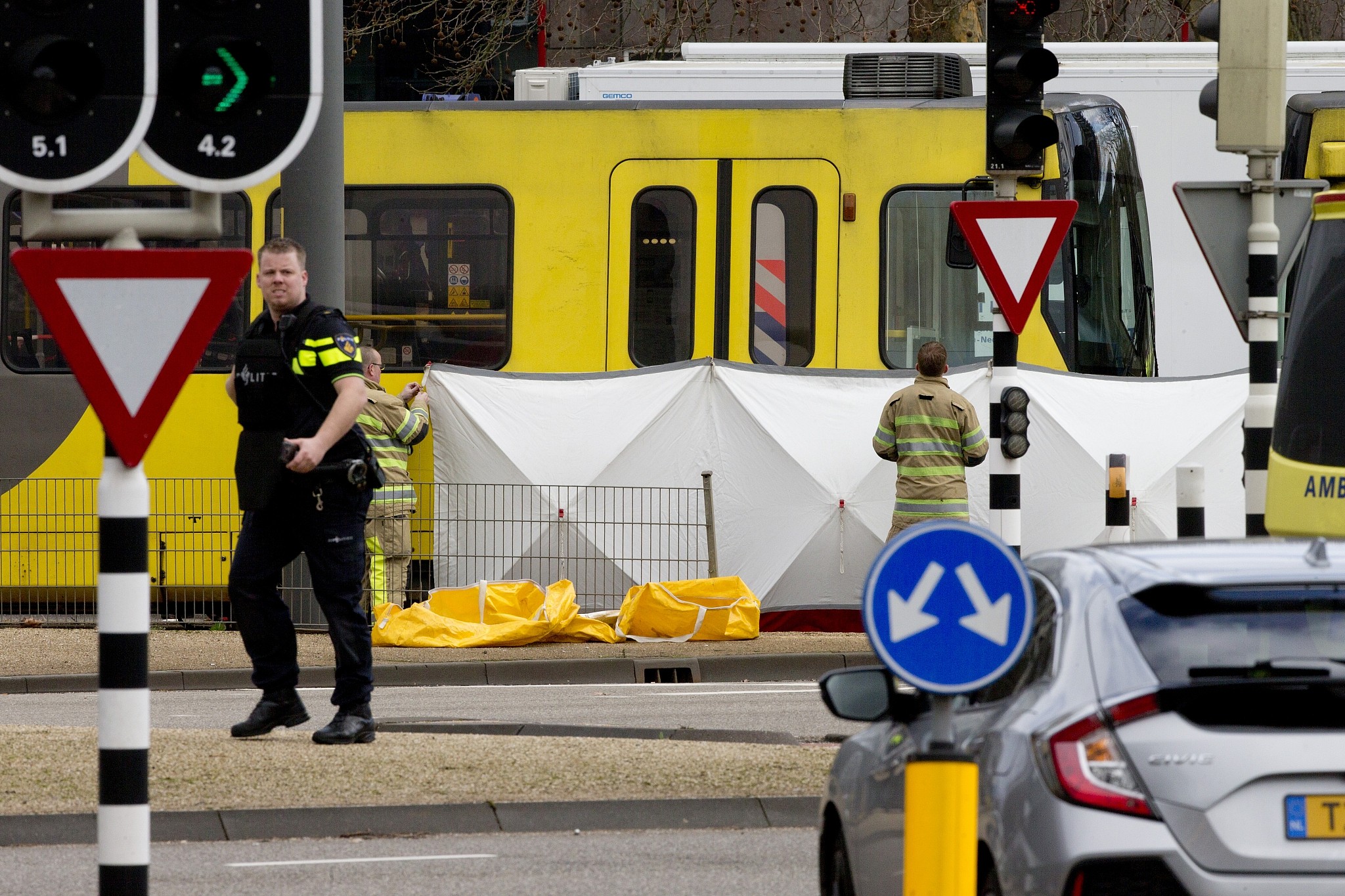
Rescue workers install a screen on the spot where a body was covered with a white blanket following a deadly shooting in Utrecht, Netherlands, on March 18, 2019. (AP Photo/Peter Dejong)

“We cannot exclude, even stronger, we assume a terror motive. Likely there is one attacker, but there could be more,” van Zanen said.

Dutch Prime Minister Mark Rutte said that “a terror motive is not excluded” and that the attack was met throughout the country with “a mix of disbelief and disgust.”

“If it is a terror attack, then we have only one answer: our nation, democracy, must be stronger than fanaticism and violence,” he added.

The shooting took place at a busy intersection in a residential neighborhood. Police erected a white tent over an area where a body appeared to be lying next to the tram.

Anti-terror officers gathered in front of an apartment building close to the scene. A dog wearing a vest with a camera mounted on it was also seen outside the building. It is not immediately clear on Monday evening if the arrest took place at the building initially targeted by police.

Police forces at 24 Oktoberplace in Utrecht, on March 18, 2019, after a deadly shooting at the site. (Robin van Lonkhuijsen/ANP/AFP)

The Netherlands’ anti-terror coordinator, Pieter-Jaap Aalbersberg, raised the threat alert to its highest level, 5, around Utrecht, a city of nearly 350,000.

Political parties halted campaigning ahead of provincial elections scheduled for Wednesday that will also determine the makeup of Parliament’s upper house.

In neighboring Germany, police said they stepped up surveillance of the Dutch border, watching not only major highways but also minor crossings and train routes.

German authorities said they were initially told to look out for a red Renault Clio compact car, but were later informed it had been found abandoned in Utrecht.


Soldier wounded in attack improves, as manhunt for terrorist continues 

March 19, 2019

Source: Soldier wounded in attack improves, as manhunt for terrorist continues | The Times of Israel

Search for Palestinian suspected who killed two shifting focus to intelligence gathering to find hiding place

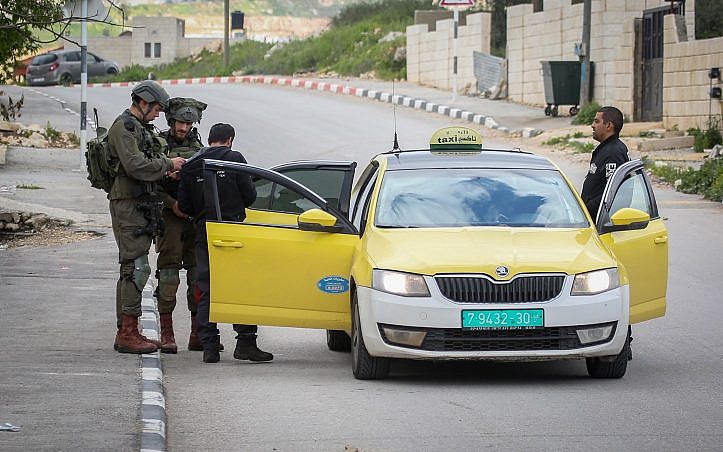
Israeli soldiers seen during a raid in the village of Bruqin near the West Bank town of Salfit on March 17, 2019, during searches for a Palestinian terrorist who shot and killed two near Ariel. (Flash90)

Israeli soldiers seen during a raid in the village of Bruqin near the West Bank town of Salfit on March 17, 2019, during searches for a Palestinian terrorist who shot and killed two near Ariel. (Flash90)

Doctors reported a marked improvement Tuesday morning in the medical condition of an IDF soldier wounded in a West Bank terror attack earlier in the week.

Alexander Dvorsky, who was shot on Sunday, was fully conscious, breathing on his own and able to talk with medical staff at Beilinson Hospital in Petah Tkiva, the hospital said.

Meanwhile, Israeli security forces continued their hunt for the suspected terrorist, identified as Omar Abu Laila, 18.

Overnight, forces combed the suspect’s home village of Zawiya near the West Bank city of Ariel, where the attack took place.

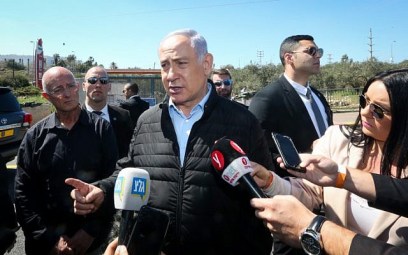
Israeli Prime Minister Benjamin Netanyahu on March 18, 2019 visits the site the day after a deadly terror attack near Ariel, in the West Bank. (Marc Israel Sellem/POOL/FLASH90)

Searches continued in surrounding villages, but efforts were shifting to intelligence gathering, with security forces working on the theory that Abu Laila has reached a secure hideout, Israel Radio reported.

Despite suspected of having been shot during the incident, Abu Laila is considered armed and dangerous and in possession of a stolen IDF assault rifle.

According to Israeli authorities, after fatally stabbing Sgt. Gal Keidan at the Ariel junction, Abu Laila grabbed the soldier’s gun and opened fire at passing vehicles, hitting Rabbi Achiad Ettinger, before stealing a vehicle and fleeing the scene. The terrorist then drove to the nearby Gitai junction, where he opened fire again, wounding Dvorsky.

Ettinger succumbed to his injuries Monday morning.

It is still unknown if the terrorist acted alone before and during the attack. Because he appeared to know what he was doing with the weapon, he might have had military training, defense officials said.

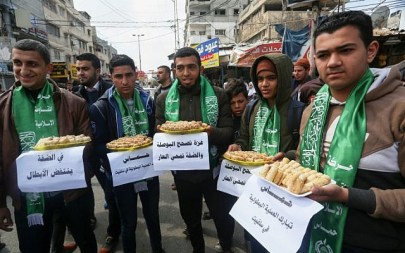
Palestinian supporters of Hamas pass out sweets in the Gaza Strip town of Rafah on March 17, 2019, following the terrorist attack where a Palestinian killed at least two people near Ariel, in the West Bank. (Abed Rahim Khatib/Flash90)

The Shin Bet security service is interrogating Abu Laila’s family and other suspects, and officials estimated that he is receiving assistance and hiding out in one of the villages in the area.

Prime Minister Benjamin Netanyahu on Monday toured the scene of the attack and said that “the murderers will not uproot us from here.”

“The IDF, Shin Bet and the security forces are in close pursuit of him, we know where he lives and we have located his family, I gave instructions to start demolishing his house and the preparations have already begun,” he said.

Also on Monday, over 1,000 Israelis gathered in the central West Bank settlement of Eli for Ettinger’s funeral, hours after he succumbed to the wounds he sustained in the attack.

Relatives told reporters Sunday that Ettinger had turned his car around after being shot and managed to fire four bullets in the direction of the Palestinian terrorist, causing him to flee the scene rather than target others. The IDF has been unable to corroborate the account of the incident, which was not picked up by security cameras.

Staff Sgt. Kaidan, 19, of Beersheba, who was also killed in the attack, was buried Monday in the military cemetery in the city. He was a third son of parents who immigrated to Israel from the Soviet Union in the 1970s. Seven family members said that he was “a gifted student and musician and a great loss to family and friends.” He left behind two brothers and two parents.


Iranian, Syrian, Iraqi army chiefs plot joint operation for opening Syrian-iraqi border – DEBKAfile

March 19, 2019

Source: Iranian, Syrian, Iraqi army chiefs plot joint operation for opening Syrian-iraqi border – DEBKAfile

In the first meeting ever of the Iranian, Syrian and Iraqi armed forces chiefs on Monday, March 18 in Damascus, it was decided to launch a joint operation for reopening the border between Syria and Iraq.

The meeting and its content are revealed exclusively here for the first time by DEBKAfile’s military and intelligence sources. Also determined was the volume of next year’s Iranian military and economic assistance to the Assad regime.

The trilateral military summit was arranged , during Bashar Assad’s surprise trip to Tehran on Feb. 25 at his audience with supreme leader Ayatollah Ali Khamenei. It was one item on a long list of decisions the two leaders reached on military, economic and strategic issues that will inevitably lead to Iran and Syria confronting the US and Israel in a clash of arms. The three army chiefs were entrusted with implementing those decisions. To this end, Iran’s Maj. Gen. Mohammad Hossein Bagheri, Syria’s Gen. Ali Abdullah Ayoub and Iraq’s Lt. Gen. Othman al-Ghanimi got together on Monday.

A short time earlier, the Assad regime issued a statement demanding that US forces remove themselves from Syria. This was meant to be the lead-in to the three generals’ main decision, which was to reopen the 615km long Syrian-Iraqi border to the free movement of goods and people for the first time after five years of closure. Each of the three armies was given a special role in the operation.

By this operation, Iran hopes, once the Russian and US presence is gone, to get started on building its much-coveted land corridor for linking the Persian Gulf to the Mediterranean via Iraq and Syria under Tehran’s control. The US and Israel have managed to frustrate this ambition in the last two or three years.