Archive for March 15, 2019
Hamas fires rockets at Tel Aviv – YouTube
March 15, 2019Israel, Hamas reportedly agree to ceasefire after rockets fired at Tel Aviv
March 15, 2019Source: Israel, Hamas reportedly agree to ceasefire after rockets fired at Tel Aviv | The Times of Israel
Egyptian mediators said to facilitate agreement, but no confirmation from Israel; 9 rockets fired at border communities; weekly border protest called off
Today, 1:35 pm 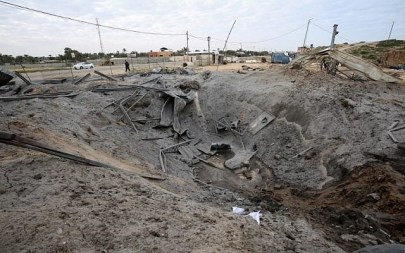
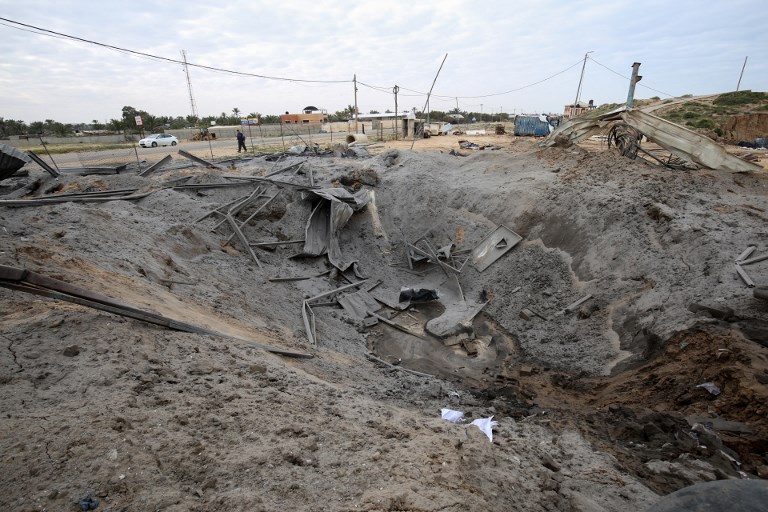
A Palestinian man walks past a crater on the ground following an Israeli air strike targeting a site belonging to Gaza’s terror group Hamas, in Khan Yunis in the southern Gaza Strip, March 15, 2019. Israel struck Gaza terror targets after 2 rockets were fired at Tel Aviv from Gaza. (Said Khatib/AFP)
Israel and Hamas have agreed to a ceasefire, the Kan public broadcaster and Palestinian media reported Friday. Israel has not confirmed the reports.
The reported de-escalation came after two rockets were fired from the Strip at Tel Aviv on Thursday and the IDF hit over 100 targets in the coastal enclave in response. Nine rockets were then fired from Gaza at border communities in Israel, six of which were intercepted.
Sources in Gaza told Kan the agreement was negotiated with the help of Egyptian mediators.
A spokesperson for the Palestinian Islamic Jihad terror group, Daoud Shehab, said his organization is “committed to the ceasefire understandings” as long as Israel “halts its aggression against the Palestinian people.”

Screen capture from video showing the Tel Aviv skyline on March 14 as rocket warning sirens blare after the launch of two rockets from the Gaza Strip (IDF)
The rockets fired toward Tel Aviv were the first such occurrence since a major conflict in 2014, and did not hit residential areas and caused no direct injury. An IDF assessment found that the rockets were possibly fired toward the coastal city by mistake, and that low-level Hamas forces were responsible for the launches.
It was not immediately clarified if the IDF believed it was a technical malfunction or human error.
In response to the projectiles, Israeli war planes hit over 100 Hamas targets in the Gaza Strip overnight Thursday-Friday. Israel holds Hamas, the Islamist terror group that rules the Strip, responsible for any attacks emanating from the coastal enclave.
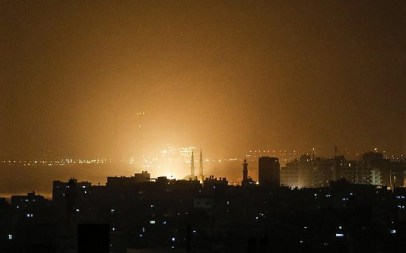
The sky above buildings on the Gaza Strip glows orange during an Israeli air strike in Gaza City early on March 15, 2019 after 2 missiles were fired at Tel Aviv (Mahmud Hams/AFP)
On Thursday, a Hamas official told the The Times of Israel that the terror group “has no interest in an escalation” with Israel. The official said he had “no idea” who fired rockets toward Tel Aviv.
The Hamas-run interior ministry called the rocket fire “outside the national consensus” and said it would exact measures against those behind it.
On Friday, the Palestinian committee that organizes weekly protests on the Gaza border announced it had decided “to postpone” Friday’s demonstrations “out of concern for our people and in preparation for” a much larger protest on March 30, the Hamas-affiliated Palestinian Information Center reported.
Since last March, the Gaza border has seen large-scale weekly clashes on Fridays, smaller protests along the northern Gaza border on Tuesdays, as well as periodic flareups between the Israeli military and Palestinian terror organizations. Protesters have been gathering along the frontier in often-violent protests calling for Palestinian refugees and their descendants to be allowed to return to former homes now inside Israel.
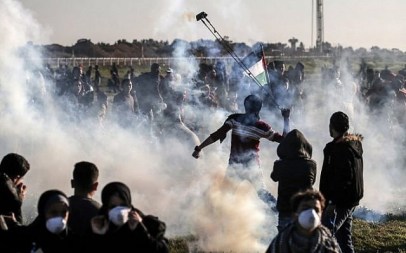
A Palestinian uses a slingshot to fling back a tear gas canister thrown by Israeli forces during clashes at the fence along the border with Israel, east of Gaza City, on March 8, 2019. (Mahmud Hams/AFP)
The organizers of the protest did not indicate whether the cancellation of Friday’s demonstration was connected to the rocket fire at Tel Aviv.
Israeli news site Ynet reported that among the targets hit by the IDF was the center Hamas’s unmanned aerial vehicle network in the southern Gaza Strip.
Following Thursday’s rocket launches at Tel Aviv, warning sirens went off three times during the night in Israeli border communities near Gaza and once more on Friday morning, with Palestinians firing nine rockets at Israel.
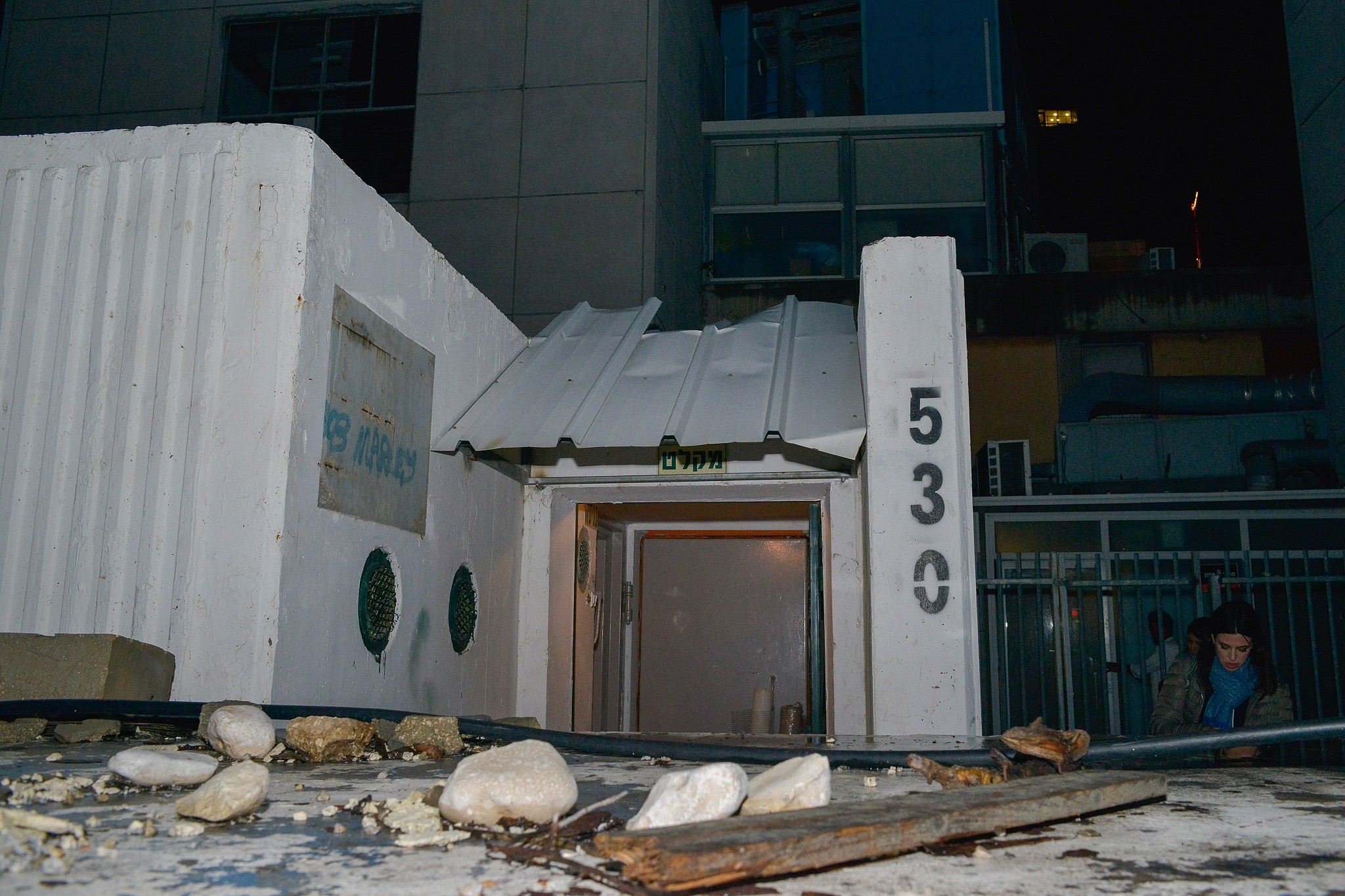
People standing outside a bomb shelter after it was opened by the Tel Aviv municipality on March 14, 2019, after earlier two rockets from the Gaza Strip were fired toward central Israel. (Adam Shuldman/Flash90)
The army said six were intercepted by Israel’s Iron Dome missile-defense system and one failed to clear the border. A further two rockets apparently fell in an open field. There were no reports of injuries or damage, although rocket fragments were discovered in a Sderot school.
The Israeli strikes on Gaza came after an urgent late-night consultation between Prime Minister Benjamin Netanyahu and his defense chiefs in Tel Aviv. “Decisions were taken,” an Israeli official said without elaborating.

A Hamas military site is seen empty after it was hit by Israeli airstrikes in Gaza City, early Friday, Friday, March 15, 2019. Israeli warplanes attacked terror targets in the southern Gaza Strip early Friday in response to a rocket attack on the Israeli city of Tel Aviv (AP Photo/Adel Hana)
Shortly after the strikes began, the Israel Defense Forces issued a statement saying the “Hamas terror group carried out the rocket fire.”
Hamas denied it was behind the move, but Hazem Qassim, a spokesman for the terror group, said that the people of Gaza would “continue its fight.”
“Despite the Israeli aggression on the steadfast Strip, our people will not back away from its struggle against the occupier and will continue its fight to break the unjust siege,” Qassim wrote on his Facebook page.
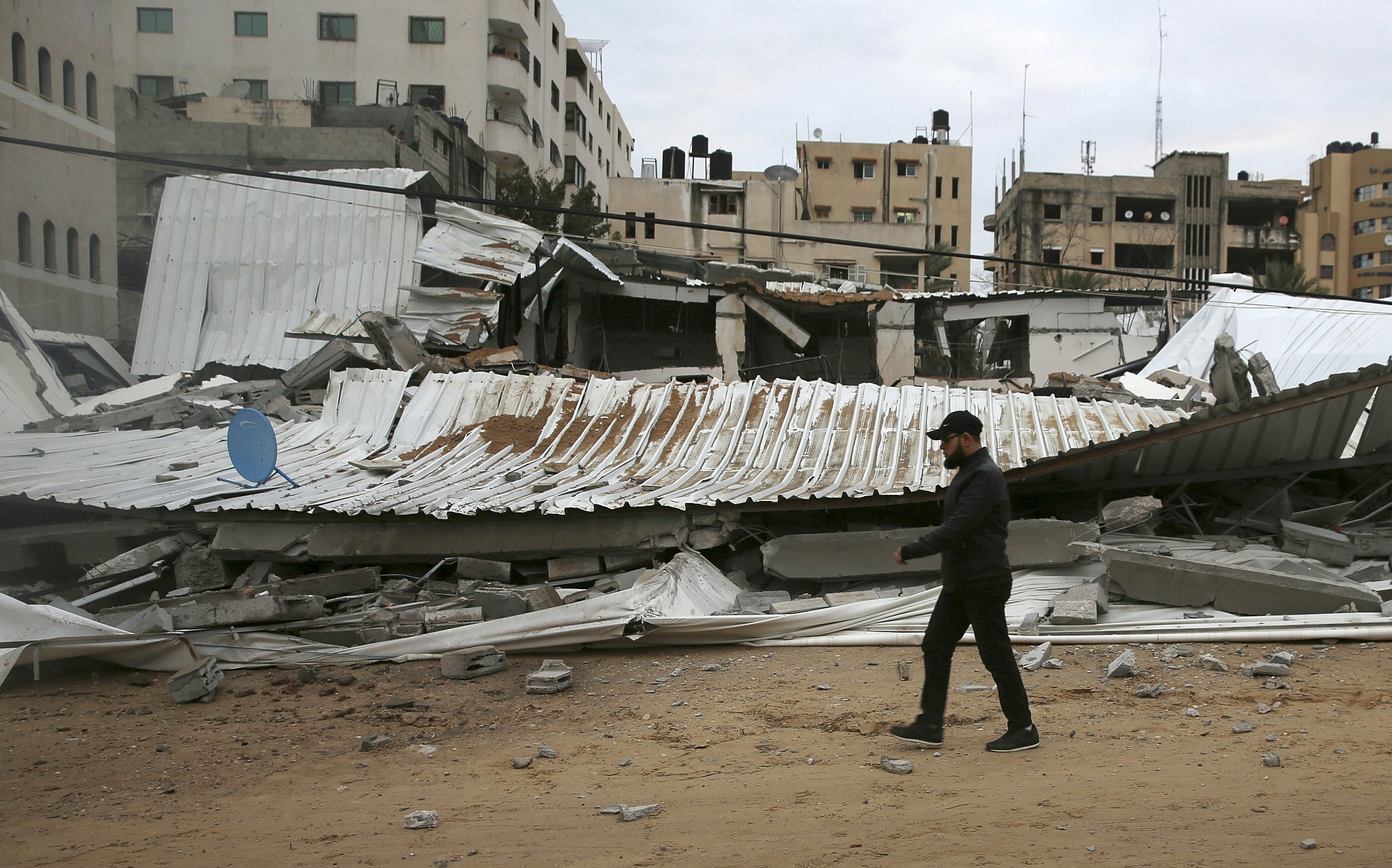
A Palestinian inspects the damage at the Hamas Prisoners Ministry after Israeli airstrike, Gaza City, March 15, 2019 (AP Photo/Adel Hana)
On Friday morning, IDF spokesman Ronen Manelis said that over 100 Hamas targets were hit in response to the fire on Tel Aviv.
The IDF said targets included the headquarters responsible for the planning and execution of attacks in the West Bank.
In addition, the army said an underground manufacturing site of standard-grade rockets in the Gaza Strip was hit, as well as a military training site that the IDF said served as Hamas’s drone center in the south of the enclave.
Hamas-linked Al-Aqsa TV reported that Israeli aircraft fired two missiles at a target in Khan Younis. It said that the aircraft then returned and attacked the same site four more times.
Israel Radio said the site was a base belonging to Hamas naval commandos.
Palestinian media also reported multiple strikes on Gaza City and at a target in Beit Lahiya in northern Gaza.
The Hamas-run Gaza health ministry said four people were injured.
Initial reports had indicated that the Palestinian Islamic Jihad (PIJ) terror group was responsible for the rocket fire. Hebrew-language media reported that Fajr missiles were launched, which PIJ has in its arsenal.
However, that terror group also denied that it was behind the fire. PIJ spokesman Daoud Shehab called the reports “baseless lies and claims.”
Hamas and PIJ told Egyptian security officials who were in the Strip to discuss a long-term truce that they were not responsible for the rockets, Al-Jazeera reported.
The Home Front Command did not give any special instructions to Israelis and said they could continue to carry on as normal. Tel Aviv Mayor Ron Huldai urged the public to remain calm, but added that public bomb shelters would be opened shortly.
All emergency response organizations in the Tel Aviv area increased their alertness following the incident.
Palestinian media reported that Hamas had evacuated military posts in Gaza in preparation for the Israeli response to the rockets. It also reported that the Egyptian delegation had left Gaza quickly after being instructed to evacuate by the IDF. There was no confirmation of the unsourced reports.
The missile launches came less than a month before the April 9 Knesset elections, and two months before Tel Aviv is due to host the Eurovision Song Contest, a major international event that is expected to draw many thousands of tourists from all over Europe.
Though it was the first time rockets were fired at Tel Aviv since Operation Protective Edge in the summer of 2014, launches directed at residents of Israeli communities near Gaza have remain relatively frequent. A rocket fired from Gaza last October fell out at sea across from the greater Tel Aviv area.
Agencies contributed to this report.
Not bowing or paying homage
March 15, 2019Source: Not bowing or paying homage – Israel Hayom
One way Jews deal with their tenuous existence in the world is to escape from their identity. But, from the ancient Persian Empire to modern-day Britain, even as they run far away, someone – a Mordechai or a Herzl – will arise to remind them who they are.
Dror Eydar // published on 15/03/2019


London
| Photo: Reuters

1
Now it came to pass in the thirtieth year, in the month Adar II, in the fifth day of the month, as I was among the Jews by the River Thames. Jews come to London and leave as the spirit takes them away. There aren’t only Jews here; there are a lot of minority communities from both the east and the west, but it appears as if the Jewish one is unique when it comes to its questions of identity. Some Israelis here, for example, wrestle with the issue of circumcision. A scared new mother seeking emotional support received this generous answer from some of her friends: “You don’t have to carry out that barbaric ritual.” There are not quite a lot of mixed marriages here. I was told that statistically speaking, there are more Jewish women here than Jewish men and especially when they stay single until later ages, many find non-Jewish partners. Some of them fight to preserve something of their Israeli identity and even a little Jewishness but how long is it possible to live like that? A generation, maybe two? Far back in their family tree, the mixed couple can discover rabbis and rabbinical scholars. Now identity is hanging in the balance and questions about the issue infuriate them. “Who do you think you are, butting into my private life?” and “Who are you to tell me I’m not Jewish enough?”
Just like it was back in the capital of the Persian Empire, 25 centuries ago: “Esther did not reveal her people or her lineage, because Mordechai had instructed her not to do so” (Esther 2:10). Why stir up latent anti-Semitism? We are used to reading the Book of Esther while half-smiling – the happy end is already known, the villain is beaten and the wretched are saved quickly. But the book covers up the terrible reality with which the Jewish people have dealt with since they were sent into exile: their lives dependent on the whims of rulers who when they wanted them around would defend them so they could use their abilities and enjoy their contribution to the economy, culture, politics and even defense and security, and when they no longer wanted them – when they could no longer protect them from the rage of the masses – are the first to abandon them to save their own skins.
2
Maybe that’s why we are commanded to get drunk on Purim, to cover up the naked truth. The rescue and comfort that came to the Jews of that generation because of Mordechai’s deception and the Jewish lobby in Ahasuerus’ palace, led by Queen Esther, lasted until the regime changed and the main actor disappeared from the political stage. A new Ahasuerus took the place of the old one and he didn’t know Joseph or Mordechai or even Esther. Quickly, a new Haman showed up, a close adviser who saw the Jews as a danger or a threat, or just a disease that needed to be burned out of the world.
After the declaration to kill all the Jews was signed, it was said, “And the king and Haman sat down to drink but the city of Shushan was in confusion” (Esther 3:15). Of course, such a devilish solution could be drowned only with a lot of alcohol and joking. Indeed, “In the large, empty rooms of the world, even your laughter will be frightened of itself,” the poet Nathan Alterman wrote, in a different context, about great loneliness, a moment after his main character was saved from an enormous storm. How do you comfort a people when this is their fate? Jewish humor is one good way to silence fear and so is the belief in the God of history that guides his people through the valley of the shadow of death, of other peoples and nations, destruction and redemption, on the way to renewing their days in their ancient land, like before. That would happen sometime, the Jews believed – one day, they would return home. If not today, then tomorrow, and if not tomorrow, then the day after or in another millennium.
3
But there are other ways to deal with the Jews’ tenuous existence in the world. One of them is to escape from their identity. We are talking about freedom of choice, so it is possible to choose not to be a certain nationality or religion, to be swallowed up in the silence of the nations of the world, to evade the endless questions about myself as part of a nation and focus on a normal existence and myself as an individual. Our children won’t ask these questions anymore and be saved. As there usually are with Jews, there are idealists here who tried to share their insights with their brethren. And they tried to compel anyone who wasn’t willing to drop their identity to do so – either by anti-Semitic whispers into the ears of the rulers, or through methods like boycotts and sanctions, or by temptations. To our disgrace, the biggest flagellators of Israel, some anti-Zionist and some even anti-Jewish, are former Israelis. Some of them started out here in London after the 1967 Six-Day War and from there spread anti-Israelism throughout the world.
The historic paradox is that Israel’s existence has helped anti-Semites disguise themselves. They could say that they weren’t against Jews or motivated by pure Judeophobia – they were only opposed to the State of Israel. And here, again, they can say that they aren’t opposed to the State of Israel existing, only to its policies, and so forth. They used “testimonies” from Israelis about the “brutality” and “immorality” of the Jewish state; about how its very existence is an obstacle to world peace. “Us? Anti-Semites? Our parents were Holocaust survivors,” they’ll say, but they’ll also announce from every platform – even ones whose organizers want to wipe us out – that “Israel commits genocide.”
A lot of the time, these idealists fled their Jewish identity in their private lives but that wasn’t enough for them. Israel reminded them from where they’d fled and its very existence became a thorn in their sides. In the place where they tried to flee from themselves, the country spoiled their party of forgetfulness. “All the royal servants at the King’s Gate bowed down and paid homage to Haman because the king had commanded this for him” (Esther 3:2) – every time, it’s a different king who commands them to bow down to Haman. Sometimes it’s a political ruler, sometimes it’s a famous intellectual and sometimes it’s a well-respected newspaper.
“But Mordechai would not bow down or pay homage.” Those annoying Jews, why do they keep raising their heads? Don’t stand in the main street when Haman is passing through and you won’t stand out. But Mordechai tried to stand directly in his path, so everyone could see him! He was an idealist too, reminding his people’s sons and daughters not to give in to false propaganda. So he looked for the right time and place to reveal his hidden identity, to not bow down to a lie. To be faithful to yourself, your people and your homeland, even if the prestigious salons treat you like a problem and a nuisance.
4
In the plaza of the National Gallery in London, I met a street artist who was neither Jewish nor Israeli. Very delicately, he explains how he has to deal with radical Islam, a growing presence in the English capital that also threatens the world order. It threatens the Jews of Britain, some of whom don’t feel at home anymore. They are aware of what is happening just on the other side of the Channel, to their brothers in France. While the Jews integrated into civil life, the new Muslims avoid integration and talk about a quiet conquest of Europe.
And now the wisdom of history returns and knocks on the doors of many Jews – even if you run far away, there will be someone who will remind you who you are. Sometimes it will be Mordechai who will awaken the Jewish point and sometimes it will be Theodor Herzl who will bestir the sleeping national consciousness. Our sages decreed a special reading for the Jews of Shushan the capital but attached it to the land of Israel (the three-day Purim celebrated in walled cities applies to cities that had walls when Joshua led the Jewish people into the land of Israel, not from the time of Mordechai and Esther) to remind us of our roots, where we came from and where we belong. But sometimes, when our self-evasion runs so deep, the latest Haman arrives and casts us out into ourselves, from whence, with a 2,000-year-old hope, we will return to the good land.
Iran and Hamas, here to stay
March 15, 2019Source: Iran and Hamas, here to stay – Israel Hayom
Neither Iranian forces to our north nor Hamas in the south will soon vanish. Israel is doing a good job of managing both threats. But given the sensitivity of the election period, can the government keep the situation on its borders from boiling over?
Yoav Limor // published on 15/03/2019


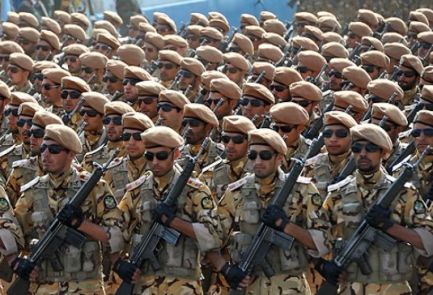
Soldiers with the Iranian Revolutionary Guard’s elite Quds Force marching in Tehran
| Screenshot: YouTube
It appears the celebration over the death of the Iranian presence in Syria was premature. Despite all the blows, strikes, and reports that it has suffered this past year, Iran is here to stay. Independent or working through its satellites, and despite the shaky economic situation and heated internal dispute at home, Tehran is not altering its course.
The exposure this week that Hezbollah was trying to establish a network on the Syrian Golan Heights was just the most recent example of Iran’s broad-based efforts. It was preceded by major transfers of weapons from Iran to Syria and constant attempts to build facilities and infrastructure that would support the activity of the Revolutionary Guards, which has a trifold purpose: to establish bases in Syria and Lebanon to open a corridor to the Mediterranean Sea; to expand the Revolutionary Guards’ influence; and to challenge Israel.
Even the most jaded would find it hard not to admire Israel’s military response to that challenge. The number of operations in the past two years has been unusually high, and only a few have been reported – the ones that ended with an explosion that couldn’t be hidden. Behind them lies widespread, varied activity by multiple organizations that has made Iran and its actions almost transparent for Israel. There is no other way to explain Israel’s ability to systematically attack weapons shipments shortly after they land in Syria or torpedo secret projects like Hezbollah’s cross-border tunnels, precision missile factories, and the last military infrastructure that remained on the Syrian Golan.
This week’s choice to launch an operation for public opinion (not for the first time – the precision missile factories that Hezbollah tried to establish in Lebanon were taken out the same way) was intended not only to avoid actions that could lead to escalation. Its main purpose was to send a message to everyone involved: Russia and the U.S., Syria and Hezbollah, and especially Iran: Israel tracks, and neutralizes. Sometimes with missiles, sometimes with words.
It’s doubtful this will deter the Iranians. It’s also doubtful whether it will change the tactics used by Hezbollah, which is looking for other fronts on which to fight its war against Israel. Syrian President Bashar Assad might not know anything about the infrastructure on the Syrian Golan that was being run under his nose, but he owes such a big debt to Iran and Hezbollah after they spent years sacrificing themselves for the sake of his continued rule, that he doesn’t have much choice. He will have to bite his tongue and ignore it.
But Israel does have choices. Alongside its very effective military action in Syria, it needs to expand its diplomatic influence over the northern arena. Russia is currently busy rearranging Syria for its own convenience. The U.S. is showing very little interest. Israel should do everything to get its foot in the door and exert influence. The Russian desire for the Israeli Air Force to dial down its activity, allowing Syria to get back on its feet, is a good starting point for negotiations. Ultimately, it would allow Israel to push Iran into a corner.
It’s not inconceivable for Israel to present its own plan that would try to rope in Washington, Europe, and the moderate Sunni states in the region – who are sworn enemies of Iran – to stand up to Russia. With the civil war in Syria winding down, Moscow wants payment in cash for backing Assad. There are enough carrots to be placed on the table for Iran and Hezbollah being moved away. Just like the strikes and the reports about their activity, a plan like this wouldn’t stop them entirely, but it would certainly make their lives more difficult.
Meanwhile, the Gaza Strip is burning, if on a low flame. Last week was marked by intensive attempts to reach some arrangement that would keep things in check, but the two sides have been keeping score for some time now – marking every bullet, every rocket, every bunch of explosives-laden balloons, every riot at the border fence during the nighttime marches, and every Friday protest. Nearly every incident has the potential to blow up.
Recently, things have gotten hotter because of two important upcoming dates: March 30 and April 9. The first, on which Palestinians mark Land Day, is volatile by its nature, and much more so this year because it will also mark the first anniversary of the violent border demonstrations. The second is the date of the Knesset election.
All intelligence experts in Israel hold the opinion that Hamas does not want a direct military conflict with Israel. Not because of any love lost, but because it fears what would follow. Hamas is afraid of losing power and mostly afraid to lose the people’s faith. It is worried that after another round of violence Gaza would emerge more badly beaten, poorer, more broken, and as the sovereign power there, it would be held responsible.
However, Hamas is in trouble. There is growing despair in Gaza. There’s no money or work. The residents are furious. The increased violence in the past few weeks – arson balloons, sporadic rocket fire – is a clear distress cry. Israel understands that and is looking for any solution that would prevent a war. Everyone – the Qataris, the Egyptians, the U.N. special envoy – is coming to Gaza to try and find a cocktail that will calm things down. The cash that was transferred this week, and a renewed attempt to make the aid money contingent upon job creation, are steps in the right direction, but Hamas wants more.
Hamas realizes that the time is ripe and Israel, whether it admits it or not, can be more easily pressured. There has already been a pre-election operation in Gaza (Cast Lead in 2008-2009), but Prime Minister Benjamin Netanyahu is careful when it comes to security and defense matters and experienced enough to know that the initial calls of support at the start of a war are usually replaced by harsh criticism when it’s over. In any case, Israel has no reason to rush into a war. Gaza-based terrorism is disturbing, absolutely, but not an existential threat. Lacking a complete solution for the Gaza problem, a war right now wouldn’t accomplish anything. The fact that an end to work on a barrier along the Gaza border is in sight keeps war cries from the Israeli side in check. Thus far, 30 kilometers (19 miles) of the 65-kilometer (40-mile) subterranean barrier have been completed, along with nearly 2 miles of above-ground border. The entire barrier, both the underground and above-ground sections, is slated to be finished by the end of 2019. Tactically, Israel should wait until the project is done. The barrier will definitely make things harder for Hamas in every aspect of its ground activity.
Nevertheless, reason may not prevail. Hamas is facing challenges at home. The border protests have produced a new sector in Gaza – young people who live from one protest to the next and go from an overnight provocation at the fence to daytime clashes there. They live their lives in Facebook groups and are cut off from the establishment. Hamas has no control over them and can’t stop them for fear of looking as if it is working against the interests of its own people.
The second challenge comes from the Islamic Jihad, which under the leadership of Damascus-based leader Ziad Nahala has become notably more extremist. Nahala, a native of Gaza, believes in jihad as a way of life. To a large extent, he is doing to Hamas what Hamas did to the Fatah movement at the start of the last decade. Zahala sees Hamas’ cautious policy as an opportunity to plant his flag. The sniper’s shot that hit an IDF company commander at the end of January – hours before a delegation of senior Islamic Jihad officials arrived in Cairo for talks – was a clear signal from the Islamic Jihad: We are here.
All these factors are forcing Hamas to make a decision. The balance sheet of this past year is giving the organization a complicated answer. On the plus side, it still enjoys broad support among the Gaza public, despite everything. It is managing to keep the protests at the border fence and has put the Gaza Strip back in the international Arab consciousness, thus bringing back Egypt as a mediator between it and Israel. On the negative side, it hasn’t done anything to abate the economic distress in Gaza or its own financial and military problems.
The next few weeks will be critical. Hamas will try to wrap things up before Land Day. If it can’t, it will unwillingly encourage extensive protests at the border. Once that happens, it’s a numbers game. The extent of casualties on the Palestinian side – or, heaven forbid, Israelis wounded by an arson balloon or rocket – would drag both sides into a place they have been trying to avoid for the past year.
The IDF is preparing for that scenario. New IDF Chief of Staff Lt. Gen. Aviv Kochavi’s first step was to step of preparedness to fight in Gaza. That is the aim of the entire army, from training to support systems (intelligence, logistics, technology.) At the same time, the military is busy trying to keep the population in Israeli communities near Gaza calm, knowing that civilian patience will play a major part in whether things quiet down or head toward war.
This week, Kochavi checked off the first major item since he took over as chief of staff. The conclusions he drew in the death of soldier Evyatar Yosefi during a navigation exercise at Nahal Hilazon, which included the dismissal of everyone in the battalion chain of command, were a clear statement.
There is no nice way of putting it: the commanders in Yosefi’s reconnaissance battalion were found to be unworthy. They might be great fighters and officers, but what arose in the investigation into the incident was shocking and embarrassing. There were over 30 basic problems in how the exercise was prepared and handled. One of the IDF conventions is that a commander must love his soldiers. The commanders who sat in their cars on a stormy night and refused to hear their soldiers’ distress as they warned about the imminent disaster mostly loved themselves.
The investigative committee, led by Col. Oren Simha, didn’t focus on the Nahal Hilazon incident alone. It took the opportunity to look into whether similar conduct existed in the other reconnaissance and combat battalions. The answer was negative. The chief of staff would do well if, in addition to devoting two days this month to safety in all units and improving the system of preparing training exercises, he dispatched officers to make sure the measures were being implemented in the field. Not only in training, but in every aspect of routine conduct and during operations.
Kochavi knows that what people expect of him is simple: to win. He and the generals in his staff discussed that in a workshop last week, which will be followed by at least two more meetings. There are a lot of questions, starting with what does victory mean; does victory look the same on every battlefield; and does victory justify the means and the price paid for it; not to mention what the IDF must do to achieve victory, both physically and mentally.
The IDF must not detach its aspiration to victory from recent incidents. No doubt, the paratroopers wanted to train excellent soldiers. But in doing so, despite everything good and their immense motivation, corners were cut and unreasonable risks were taken. The price for that is paid not only by the families whose children are killed or wounded but by the public as a whole. Incidents like these cause it to doubt the army and its commanders. Anyone who wants to win should start with that.
New developments in Iran’s ballistic missile program
March 15, 2019Source: New developments in Iran’s ballistic missile program – Israel Hayom
Proving Iran’s peaceful intentions is difficult because ballistic missiles can be used in both a defensive and an offensive capacity, not to mention that a cost-benefit analysis does not justify mounting conventional payloads on long-range missiles.
Dr. Farhad Rezaei // published on 15/03/2019


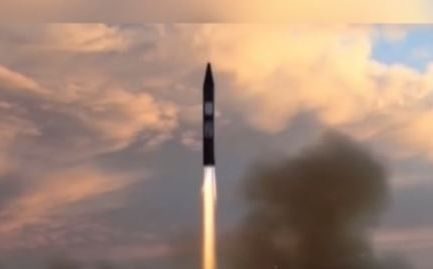
A test launch of the Khorramshahr missile in Iran
| Archives: Reuters
Iran’s rapid development of missile expertise has raised concerns in Washington and among its allies about Tehran’s intentions. Despite international censure, the Revolutionary Guards have been able to develop the largest and most diverse ballistic missile arsenal in the region. Tehran is determined to develop and acquire ever more advanced and accurate ballistic missiles but its efforts to achieve that goal are hampered by American and Israeli determination to subvert it.
A key component of Iran’s military doctrine is the development of an indigenous ballistic-missile program; along those lines, the country’s rapid development of missile expertise has raised concerns in the United States and among its allies.
Iran embarked on an indigenous ballistic-missile program in 1986 when the Revolutionary Guards created a “self-sufficiency unit” to develop military industries that would not require assistance from other countries. Headed by Gen. Hassan Tehrani-Moghaddam, the “founding father” of the Iranian missile program, the unit was essentially a research-and-development facility for missile technology.
By reverse-engineering Soviet-era Scud technology, Tehrani-Moghaddam enabled the Guards to develop the largest and most diverse ballistic missile arsenal in the region. It includes the Shahab-1 (based on the Scud-B), the Shahab-3 (based on original Scud-C technology), the Ghadr 110 and its variants, the Emad, the Shahab-4, the Shahab-5 (Kosar), the Shahab-6 (Toqyān), the Fajr-3, the Qiam, the Ashoura and the Sejjil. They are all capable of carrying nuclear warheads.
Tehrani-Moghaddam died in November 2011 in an explosion in his research office at the Alghadir missile base at Bid Ganeh, near Tehran, reportedly in an operation carried out by the Mossad. The Iranians continued advancing the missile program quietly and produced new types, including the Dezful, the Hoveizeh, and the nuclear-capable Zolfaghar and Khorramshahr.
Despite international concerns over Iran’s ballistic-missile program, the Obama administration decided to compromise with Tehran on that program in exchange for concessions on its nuclear program, which was a high priority strategic concern for his administration. In a further compromise, Washington softened the language of UNSC Resolution 1929 (2010), which stipulated that “Iran shall not undertake any activity related to ballistic missiles capable of delivering nuclear weapons.” Resolution 2231, which passed on July 20, 2015, and which endorsed the nuclear deal, used more permissive language: “Iran is called upon not to undertake any activity related to ballistic missiles designed to be capable of delivering nuclear weapons.”
With the nuclear agreement reached and the legal loophole created, the Iranians set about putting more effort into their ballistic-missile program. As a result, their missiles have become a target of renewed international attention, and consequently, the subject of numerous rounds of sanctions. The Trump administration decided to withdraw the United States from the nuclear agreement in part on the grounds that it does not address Iran’s ongoing ballistic-missile program.
Sanctions notwithstanding, Iran has not faltered in ramping up its ballistic-missile and space programs. According to Brig. Gen. Amir Ali Hajizadeh, commander of the Revolutionary Guards’ aerospace program, Iran conducted seven test flights in 2018, in addition to six Qiam missiles fired into an ISIS stronghold in Syria’s Deir ez-Zor province in January 2018. One Khorramshahr, two Shahab-3 variants, one Qiam and three Zolfaghar ballistic missiles were flight-tested between February and August 2018, which, according to the president of the U.N. Security Council, was “in violation of resolution 2231” because the missiles were all category I systems under the Missile Technology Control Regime and capable of carrying nuclear warheads.
In August 2018, Iran’s defense ministry unveiled two new missiles: the Fakour and the “Fateh Mobin” (Bright Conqueror), the latest addition to the Fateh-series of short-range tactical ballistic missiles with a range of about 1,300 kilometers (810 miles). On Dec. 1, 2018, the Revolutionary Guards tested the Khorramshahr medium-range ballistic missile at its facility near Shahrud in Iran’s northeast. On Feb. 2, 2019, Tehran announced the successful test of the Hoveizeh cruise missile with a range of more than 1,350 kilometers (838 miles) during celebrations marking the 40th anniversary of the 1979 Islamic Revolution. On Feb. 7, the Revolutionary Guards unveiled a new ballistic missile, the Dezful, which has a range of 1,000 kilometers (600 miles). Iran’s Press TV quoted Hajizadeh as saying the Revolutionary Guards will “continue missile tests … and plan to carry out more than 50 missile tests each year.”
Tehran says its ballistic missiles are for defensive purposes, but because ballistic missiles capable of carrying a nuclear warhead are an integral part of a nuclear arsenal, its efforts to develop such capabilities may reflect its desire to continue with its nuclear-weapons program. This is a reasonable suspicion in view of Tehran’s record of conducting covert nuclear activities at its nuclear sites, namely the Parchin and Kolahdouz military complexes. Proving Iran’s peaceful intentions is difficult because ballistic missiles can be used in both a defensive and an offensive capacity, not to mention that a cost-benefit analysis does not justify mounting conventional payloads on long-range missiles.
Despite warnings from the United States that the Iranians call “empty threats,” Tehran has continued R&D and is testing its capabilities in ballistic missiles. On the night of Jan. 14-15, 2019, a Simorgh (Phoenix) space launch vehicle lifted off from the Imam Khomeini Space Center in Semnan province. It carried the Payam (Message) Amirkabir satellite, which is described as carrying four cameras for scientific earth observation from low earth orbit. The experiment failed, however, and the satellite did not manage to enter orbit. According to Communications and Information Technology Minister Muhammad-Javad Azari Jahromi, the rocket carrying the satellite “failed to reach escape velocity in the third stage, though it succeeded in the first two stages of the launch.”
Only a few weeks after the Simorgh failure, on Feb. 5, the Guards launched a second satellite, the Doosti (Friendship), a remote-sensing satellite developed by engineers at Tehran’s Sharif University of Technology. Deputy Defense Minister Gen. Ghasem Taghizadeh announced the successful placement of the Doosti Satellite in earth’s orbit and confirmed that a new, advanced Iranian-made communications satellite, the Tolou (Dawn), will be launched in the next three to four months. However, satellite images released by DigitalGlobe and Planet – two companies that specialize in space imaging – suggest that Iran’s second attempt to launch a satellite into space has also failed.
Iran’s military and political officials attributed the two rocket failures to a secret Washington program to sabotage Iran’s missile and space programs. Hajizadeh accused U.S. and Israeli intelligence agencies of engaging in campaigns of “infiltration and sabotage” of Iran’s missile complex. Javad Zarif, Iran’s foreign minister, also said it was possible that the poor performance of the missiles was because of a sabotage campaign by the United States.
The New York Times, which interviewed unidentified U.S. officials, revealed that the Trump administration has accelerated a secret project to subvert Iran’s missile and space program – a plan described as “a far-reaching effort to slip faulty parts and materials into Iran’s aerospace supply chains.” Tehran insists that its satellite launches have no military value, but America and its allies believe that its space program is merely a cover for its efforts to develop a ballistic missile capable of carrying nuclear warheads.
The Iranians are determined to develop and acquire more advanced ballistic missiles in the future and will probably continue to transition from liquid to solid propelled systems, which are more sustainable. Tehran may also concentrate on improving the missiles’ accuracy, which is poor at present. But it’s not clear whether they will be able to achieve these goals given strong objections from the United States and Israel, and their efforts to subvert the programs.
This article was originally published by the Begin-Sadat Center for Strategic Studies and is reprinted with permission from JNS.org.
Iranian fingerprints in Gaza
March 15, 2019Source: Iranian fingerprints in Gaza – Israel Hayom
Prof. Eyal Zisser
Palestinian Islamic Jihad fired the missiles at central Israel from Gaza on Thursday night. But Iran, which controls the terrorist group and its leaders and which gives it money and provides it with the type of missiles used in Thursday’s attack, is directly responsible.
Iran doesn’t hide its desire to spark a conflagration in Gaza with the aim of sabotaging and even halting Israel’s efforts to dislodge the Islamic republic from Syria. The Iranians also want to embarrass Israel and harm it, by exploiting the fact that this is a sensitive period, ahead of the upcoming April 9 general election.
Hamas, however, is also responsible for the missile attack, because it hasn’t taken action against Islamic Jihad and other recalcitrant groups in Gaza, which continue targeting Israel. Hamas lends a hand to the escalation along the border as a matter of routine, hoping to improve its negotiating position with Israel and receive aid dollars from Qatar.
In this regard, the missile attack on Gush Dan indicates the collapse of this conception and essentially the illusion – created by Hamas and Israel alike – that it’s possible to control the flames Hamas is fanning along the Gaza border and prevent them from spreading. At the end of the day, those who shoot at Israeli communities near Gaza will also shoot at Tel Aviv.
It is also evident that Hamas isn’t omnipotent in Gaza. Just yesterday, even before the missile attack, demonstrations erupted in Gaza against the organization over the grim economic situation there. In light of these protests, Hamas has no interest in even trying to control the rioters on the border with Israel or restraining Islamic Jihad and other like-minded groups.
Although Sderot and Tel Aviv are theoretically the same, it’s clear that the missile attack on Gush Dan crosses a red line that Israel cannot abide. But even at this critical juncture, it’s important for Israel to avoid playing into the hands of the enemy, whether Islamic Jihad or Iran.
With that, however, the missile attack is a wakeup call for all of us that the reality of limited friction in Gaza, which is supposedly under control, cannot last for very long.
Eyal Zisser is a lecturer in the Middle East History Department at Tel Aviv University.
Iran tests armed drones and UAVs in unprecedented ‘Towards Jerusalem’ drill
March 15, 2019Source: Iran tests armed drones and UAVs in unprecedented ‘Towards Jerusalem’ drill | The Times of Israel
Exercise in Strait of Hormuz showcases dozens of drones, reportedly developed on basis of US Sentinel model captured eight years ago
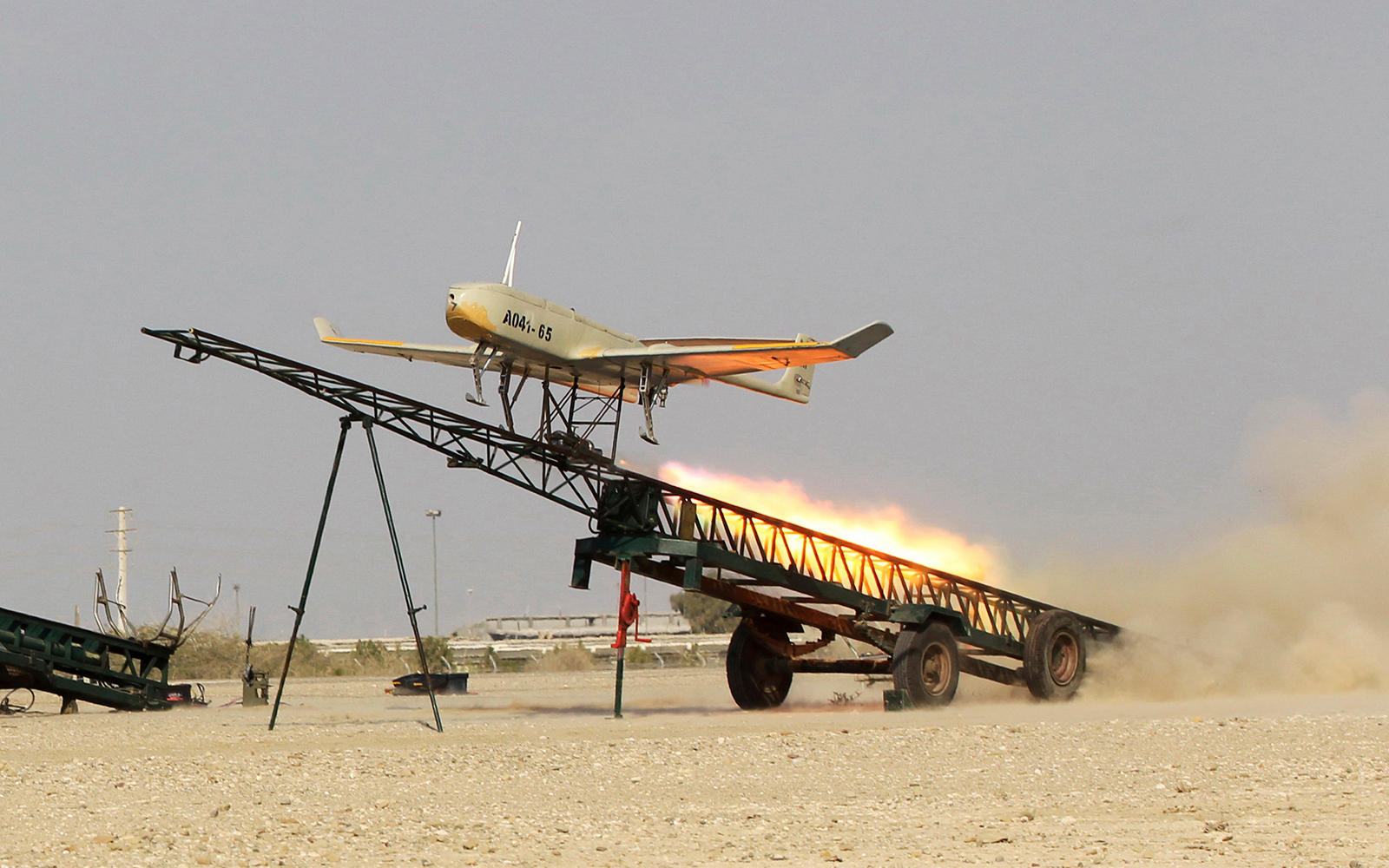
An Iran-made drone is launched during a military drill in Jask port, southern Iran, in this picture released by Jamejam Online December 25, 2014. (AP Photo/Jamejam Online, Chavosh Homavandi, File)
Iran’s Revolutionary Guards on Thursday launched a massive military exercise in the Strait of Hormuz aimed at testing and showcasing the capabilities of dozens of locally-made UAVs, including armed drones.
According to a report by the Iranian ISNA news agency, the exercise was the largest of it kind to ever take place in the country.
The drill was codenamed “Towards Jerusalem 1.”
During the drill, General Amir Ali Hajizadeh, commander of the Revolutionary Guards’ air force, claimed Iran had the largest armed UAV fleet in the region.
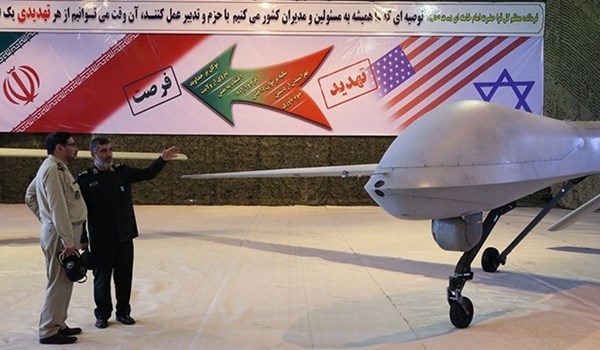
Iranian officials pictured with what Iran’s Fars website described as an MQ1 drone, March 14, 2019
The drill tested dozens of RQ-170 UAVs, which were reportedly developed by Iran on the basis of a US Sentinel drone captured eight years ago.
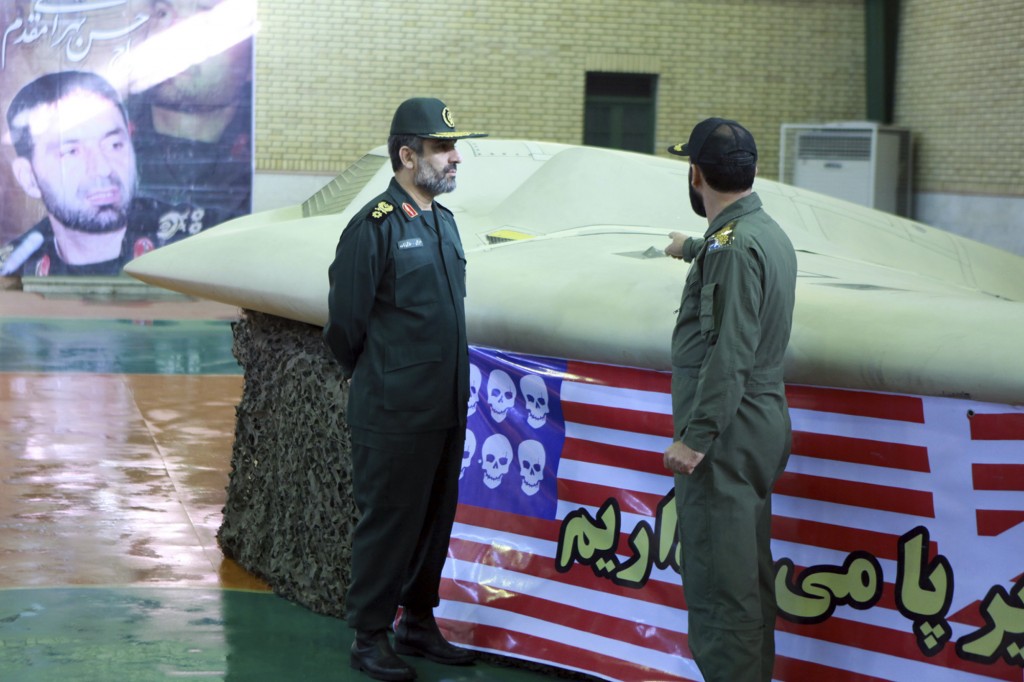
Chief of the aerospace division of Iran’s Revolutionary Guards Amir Ali Hajizadeh (left), near a captured US RQ-170 Sentinel drone in April 2012. (photo credit: AP/Sepahnews)
It marked the first such exercise testing large numbers of drones in simulated combat situation, ISNA said.
Iran has “the biggest collection of captured or downed American and Israeli drones, including the US MQ1, MQ9, Shadow, ScanEagle, and RQ-170 as well as the Israeli regime’s Hermes,” Iran’s Fars news reported.
Late last year, a report by the Arabic-language Al Jazeera news network said Iran’s military was increasingly turning to unmanned aerial drones to defend the country’s airspace and attack its enemies.
Its UAVs, Iranian officials told the network, can remain airborne for as long as 48 hours, be controlled remotely and strike targets as far as 1,000 kilometers from Iran’s borders.

Illustrative: The Iranian warship Alborz, foreground, prepares to leave Iran’s waters at the Strait of Hormuz, in this photo released by the semi-official Fars News Agency, April 7, 2015. (AP/Fars News Agency, Mahdi Marizad)
The report claimed Iran has already used drones to target Islamic State facilities in Syria and Kurdish forces in northern Iraq.
Iran’s various drone models, many still under development, include the Karrar, Mohajer, Fotros and Saegheh.
In January 2016, an Iranian drone flew over a US aircraft carrier in the Persian Gulf and also photographed a French naval vessel.
Aside from the aircraft carrier flyover, there have been several other incidents involving Iranian, Israeli, and US drones.
In February 2018, Israel shot down an Iranian drone which was launched from a Syrian airbase. Immediately after shooting down the Iranian drone on February 10, Israel carried out airstrikes against a number of Iranian targets in Syria, including on the T-4 base in central Syria where the Iranian operator of the drone was located.
During the aerial raids, an Israeli F-16 was downed by a Syrian anti-aircraft battery, crashing to earth in Israel, prompting further Israeli retaliatory raid against Syria’s anti-aircraft systems. Both the Israeli pilots ejected.
An April 2018 airstrike, allegedly by Israel, hit the T-4 base again and reportedly targeted Iran’s entire attack drone weapons system in the country — prompting soaring tensions between Israel and Iran.
Days later, the Israeli military revealed that the Iranian drone shot down two months earlier was carrying explosives. Its precise intended target in Israel was not known, military officials said at the time.
Following the February 2018 downing, aviation analysts said the Iranian drone appeared to be a stealth craft based on the US RQ-170 Sentinel UAV. Tehran captured a Sentinel in 2011 while it was in its airspace, apparently on a mission to spy on the country’s nuclear sites, media in the United States reported. Iran has since claimed it managed to reverse engineer the Sentinel.
In 2014, Iran claimed to have shot down an Israeli drone near a nuclear facility after it flew in from a northern country that was once part of the Soviet Union.
Iran has been known to exaggerate the capabilities of its air force, and in August last year was mocked by Israel for allegedly presenting a retooled obsolete aircraft as a new “indigenous” fighter jet.
Bombing 100 empty terror sites won’t deter Hamas from its next rocket assault on Tel Aviv – DEBKAfile
March 15, 2019
On Friday morning, March 15, the IDF spokesman reported the bombardment of 100 Hamas targets by IAF jets, helicopters and drones, in response to a twin rocket attack on the Tel Aviv region the night before. That sounded like a lot, but DEBKAfile’s military sources say it does not add up to very much. Since there were no Palestinian casualties, it means that none of Hamas terrorists responsible for the Tel Aviv rocket attack paid a price.
Their military compounds were evacuated in good time in expectation of the Israeli reprisal. Photos show lightly damaged buildings and deep craters from exploding IDF ordnance. The Palestinian terrorist group will therefore hardly be deterred from taking another crack at Israel’s heartland cities. Their leaders will even be encouraged to continue after getting away with it this time.
Nothing has therefore changed in the familiar, pointless tit-for-tat strategy employed by the predecessors of IDF Chief of staff Lt. Gen. Aviv Kochavi, and Defense Minister Binyamin Netanyahu, except for the fact that now, the IDF has for the first time named Hamas as responsible for the rocket attack on Tel Aviv.
On March 30, Hamas marks the first anniversary of its “March of Return” campaign which unleashed a year of unbridled cross-border violence from the Gaza Strip. For a whole year, the government and military were helpless to check the riots, bombing attacks on soldiers, incendiary balloons and other harassment. It is therefore not surprising to see Hamas and Islamic Jihad much strengthened and more brazen than ever before. Indeed, a free Palestinian election if held today in Judea and Samaria would be a cakewalk for Hamas.
The diplomatic path for solving the Gaza issue chosen by Prime Minister Binyamin Netanyahu is clearly still in force. Backed by US President Donald Trump, Netanyahu is working with Egyptian President Abdel-Fatteh El-Sisi and Qatar’s Emir Sheikh Tami al-Thani, towards the ultimate goal of establishing an independent Palestinian state in the Gaza Strip instead of Judea and Samaria.
So long as the Netanyahu government sticks to this course, the security situation in Gaza will go from bad to worse. The prime minister and his army chiefs appear to have decided that Israel must live with occasional Palestinian rocket fire on its cities.
And so, on Friday morning, the cover-up began: the IDF spokesman issued a statement which said the rockets against Tel Aviv were launched “by mistake.” This claim is as credible as the military spokesman’s attempt eight months ago to wave away two Grad missiles aimed at Beersheba, one of which flattened a house, by attributing the destruction to a “bolt of lightning.”
Pro-Hezbollah and Iran media celebrate rockets over Tel Aviv
March 15, 2019Iranian social sources point to Fajr-5 missile being fired at Tel Aviv, while Ayatollah Khamenei calls for mobilizing against US and ‘Zionists.’
MARCH 15, 2019 08:41
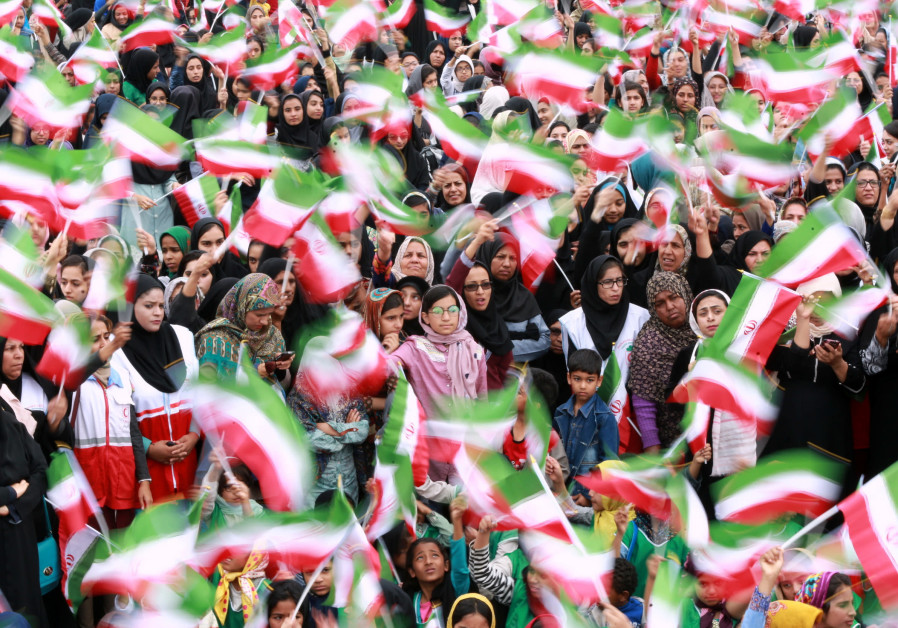
People attend a public speech of Iranian President Hassan Rouhani in the southern Hormozgan province, Iran, February 17, 2019. (photo credit: OFFICIAL KHAMENEI WEBSITE/HANDOUT VIA REUTERS)
Pro-Hezbollah and pro-Iran regime media and social media accounts lit up on Thursday night, after two rockets were fred at Tel Aviv from Gaza. It indicates the close attention paid to tensions in Israel between Israel and terrorist groups in Gaza.
Lebanon’s satellite TV station Al-Mayadeen, which is generally supportive of the Syrian regime and Hezbollah, wrote a story within minutes of the reports of Iron Dome being activated. “Occupation admits that Palestinians bomb ‘Tel Aviv,’” the headline read. Relying on Israel’s Channel 12, the article noted that booms were heard in central Israel and that bomb shelters might be opened.
Similarly, Tasnim News Agency in Iran wrote up the article noting that Iron Dome had intercepted the rockets. Shehab News, which is supportive of Hamas, posted video and news on the rocket fire. Hezbollah’s Al-Manar also reported the rocket fire. Hossein Dalirian, director of defense coverage for Tansim News, tweeted that two Fajr-5 rockets were fired at Tel Aviv. It wasn’t clear why he specified the Fajr-5, which was developed by Iran and supplied to Islamic Jihad in Gaza. This rocket was used in 2012 to strike at Tel Aviv and has a range of at least 75 km. Hamas also used them in 2012. Dalirian noted that this was the first time a rocket had been fired over Tel Aviv in five years.
Palestinian media, relying on Israeli reports, pointed to Islamic Jihad as a culprit. But Islamic Jihad itself was more circumspect after the firing. Social media sources supportive of Islamic Jihad claimed that it was mere rumors that pointed to them as the source of the rocket fire.
The rocket fire came amid inclement weather blanketing Israel and Gaza. Hamas had dispersed protesters earlier in the afternoon. The terrorist organization is preparing for the first anniversary of its “Great March of Return” and is under stress because of the economic deterioration in Gaza, relying on cash payments from Qatar for bare essentials. This means that it must concentrate anger at Israel and does not want internal protests.
With the Israeli elections approaching, there are also concerns about Iranian meddling. Islamic Jihad is close to Iran and fired rockets last year at Israel during tensions. At the time, Iran was accused of being behind the rocket fire.
Iranian Supreme Leader Ayatollah Khamenei said on Thursday that Iran must “mobilize all its resources” against external enemies: “the US and the Zionists.” His comments could be indicative of a message to threaten Israel. It comes as Iranian President Hassan Rouhani wraps up a major trip to Iraq and after Tehran carried out a major drone exercise this week.




 anneinpt
 artaxes
 danmillerinpanama
 davidking1530
 Peter Hofman
 Joseph Wouk
 Peter
Peter Louisiana Steve
 WarSclerotic
Recent Comments