Source: Trump is barreling toward war with Iran. Congress must act to stop him. – The Washington Post
( From “The Washington Post,” Enough said… – JW )

Tom Udall, a Democrat, represents New Mexico in the U.S. Senate. Richard J. Durbin, a Democrat, represents Illinois in the U.S. Senate.
Sixteen years after the U.S. invasion of Iraq, we are again barreling toward another unnecessary conflict in the Middle East based on faulty and misleading logic.
The Trump administration’s Iran policy, built on the ashes of the failed Iraq strategy, is pushing us to take military action aimed at regime change in Tehran. We must not repeat the mistakes of the past, and Congress must act urgently to ensure that.
Similar to the George W. Bush administration’s justification for the war in Iraq, the Trump administration has presented the false narratives that Iran is not meeting its obligations under the nuclear deal, and that it is somehow partially responsible for the rise of the Islamic State in Syria. It’s true that the leaders of Iran are deeply problematic. But if this were enough to justify war, other regimes in the region would also be in the United States’ crosshairs, instead of being recipients of U.S. military aid.
On the heels of the recent Middle East summit in Warsaw, Secretary of State Mike Pompeo and Israeli Prime Minister Benjamin Netanyahu made no effort to hide their intentions. “You can’t achieve stability in the Middle East without confronting Iran,” Pompeo said. “It’s just not possible.” Netanyahu remarked that the participating nations were “sitting down together with Israel in order to advance the common interest of war with Iran.”
The Trump administration has also been attempting to create a strong link between al-Qaeda and Iran — based on vague suggestions, but no hard evidence. There is speculation that administration officials are considering striking Iranian territory or its proxies, using the al-Qaeda narrative to claim legal authority for military action under the 2001 Authorization for Use of Military Force — the same authorization used to launch the Afghanistan war, now in its 18th year.
Before we embark on another irresponsible and costly war, we have the benefit of hindsight. We must heed the lessons of history, and Congress must exercise its constitutional authority to counter the president’s reckless march toward war with Iran. Congress alone has the authority to declare war — not the president. Congress must make clear to the president that the United States will not enter another conflict in the Middle East without its approval. It is up to Congress to end the growing threat of a national security calamity, return our country to diplomacy and rebuild international trust in U.S. foreign policy.
That’s a tall order. While Iran is no innocent actor, the Trump administration’s policies and pronouncements have only increased tensions in the region. Ever since President Trump churlishly withdrewfrom the Iran nuclear deal, the president has engaged in saber-rattling rhetoric meant to accelerate hostility. Today, the United States stands alone in breach of the agreement, bullying friends and foes alike with threats and sanctions. The lasting damage to our global standing has left us isolated with little opportunity to lead.
Nowhere was this new reality more evident than at the Warsaw summit. The gathering accomplished little of substance but did exposemounting frustrations among the international community with the Trump administration’s unilateral policymaking approach. In a sign of Trump’s waning influence abroad, key members of the Iran nuclear deal — including France, Germany, the European Union, Russia and China — sent junior diplomats or did not participate, despite the attendance of both Pompeo and Vice President Pence.
The administration’s foreign policy apparatus is steered by two committed advocates of virtually unchecked interventionism. First, there is Pompeo, whose belligerent speech after the U.S. withdrawal from the Iran deal was a thinly veiled attempt to set the stage for military action.
Second, there is national security adviser John Bolton, a far-right proponent of regime change who, for years, has been clamoring to go towar with Iran. Their machinations have empowered Trump’s most dangerous instincts even as he attempts to draw down U.S. forces from Afghanistan and Syria. In 2002, President George W. Bush got congressional approval for the Iraq War, but Trump and his cadre of hawkish advisers are now inching us closer to an illegal war without constitutional authority or backing from the U.N. Security Council.
That’s why we plan to soon reintroduce draft legislation by a bipartisan group of senators that would restrict any funds from being spent on an unconstitutional attack against Iran. Our Prevention of Unconstitutional War with Iran Act would rebuke Iran while affirming congressional war powers and preventing the president from dragging us into another needless conflict.
Unless we demand that Congress act immediately and decisively to block the president’s path to war, we will be doomed to repeat the mistakes of our past. Once again, we would all pay the price.
This column was produced in collaboration with The WorldPost, a publication of the Berggruen Institute.
Source: What is the THAAD missile defense system doing in Israel? – Israel News – Jerusalem Post
According to one expert, the deployment and its connected drill should not be looked at as one taking place due to regional events but as one which should have occurred years ago.

Mere hours after the Americans deployed the THAAD in Israel, the Pentagon announced a $1 billion payment from Saudi Arabia toward its acquisition, reflecting both countries’ concerns about Iran’s continued missile program.
The American Terminal High Altitude Area Defense (THAAD) system arrived in Israel on Tuesday along with some 200 troops from US European Command (EUCOM) for a month-long drill between the two allies.
Israel’s air defenses currently include the Iron Dome, designed to shoot down short-range rockets, the Arrow system, which intercepts ballistic missiles outside of the Earth’s atmosphere, and the David’s Sling missile defense system, designed to intercept tactical ballistic missiles, medium- to long-range rockets, as well as cruise missiles fired at ranges between 40 to 300 km.
Washington and Israel have signed an agreement which would see the US come to assist Israel with missile defense in times of war and, according Uzi Rubin, the former head of the Arrow anti-ballistic missile project, this drill should not be looked at as one taking place due to regional events but as one which should have occurred years ago.
The mobile AN/TPY-2 is a high-resolution X-band radar array which is designed to search, acquire, track, and differentiate inbound threats. It provides additional early warning against ballistic missile launches from close to 3,000 miles away.
“The question is why wasn’t it brought in before because the entire deployment of the Israeli systems is that all systems should be interoperable. This requirement was from the start, from the 1990s, that all Israeli systems would be designed to speak with American systems,” Rubin said.
A spokesperson for EUCOM told The Jerusalem Post that a “deployment of this nature requires significant planning time. However, the purpose of a rapid deployment is that the unit doesn’t know the order is coming and they must react quickly, usually in a matter of days.”
“‘Dynamic Force Employment’ makes our activities unpredictable to adversaries while maintaining strategic predictabilities to our allies and partners,” the spokesperson added.
The THAAD is designed to protect against hostile incoming threats such as tactical and theater ballistic missiles at ranges of 200 km. and altitudes of up to 150 km. intercepting exo-atmospheric and endo-atmospheric missiles.
The system can also provide the upper tier of a layered defensive shield alongside lower and medium-tier systems, such as the Patriot missile defense system, which in the hands of the Saudis has failed spectacularly against even modest threats.
Riyadh began talks to acquiring the THAAD under the administration of President Barack Obama in 2011 and the letter to formalize the procurement of 44 THAAD launchers, missiles and related equipment were signed in November, Reuters reported.
The THAAD is also being used in the UAE and Oman also announced its intention to purchase the system in 2013, though the final sale has not been concluded. The THAAD is also being used in South Korea, Japan and Taiwan to protect against the threat posed by North Korea.
Iran, which possesses over 1,000 short- and medium-range ballistic missiles, is suspected of continuing to smuggling weapons to countries and non-state actors such as Hezbollah, which is assessed to have an arsenal of between some 100,000 and 150,000 missiles on Israel’s northern border, and Hamas in the Gaza Strip.
The Houthis, which are armed by Iran, have also fired several ballistic missiles into Saudi Arabia, including one which targeted the Saudi capital Riyadh a day before US President Donald Trump visited the kingdom.
Relations between Iran and Saudi Arabia are at their worst in years with both accusing the other of subverting regional security. In comparison, while Israel has no official ties with Saudi Arabia, the relationship with the Sunni kingdom and other Gulf States has grown stronger in recent years, due in large part to the shared threat of Iran’s expansion across the region.
According to Rubin, the purchase of the THAAD system by the Saudis is in Israel’s best interest.
“It’s a good thing for the Saudis to have it,” he told the Post, stressing that “they have the right to defend themselves and it is not against Israeli interests that they defend themselves.”
Source: Omar the flashpoint as Democrats confront divide over Israel | The Times of Israel
( Dems “intersectionality” biting them in the ass. – JW )
Her tweets are slammed as anti-Semitic tropes, forcing Democrats to choose between desire to reprimand her and wanting to defend one of first Muslim women elected to the House

WASHINGTON (AP) — Back in January, the Democrats welcomed their brash young newcomers to Congress with smiles and hugs. That was before the new colleagues dragged the party’s simmering divisions over Israel out in the open.
Provocative comments from Rep. Ilhan Omar of Minnesota have thrust the Democrats into an uncomfortable debate over Israel policy a few weeks before a high-profile conference where senior Democrats typically make a show of support for the Jewish state. Increasingly, the rift appears as much generational as ideological, with newly elected Democrats showing less deference to the party line.
Omar became the flash point after she suggested last week that Israel’s supporters are pushing US lawmakers to take a pledge of “allegiance to a foreign country.” It’s at least the third time she has forced older, pro-Israel Democrats who run the House into awkward territory over US-Israeli policy.
Republicans have been happy to stoke the furor, with President Donald Trump calling Omar’s remarks “a dark day for Israel” and posting a photo of himself in Jerusalem. Inside the Democratic family, meanwhile, leaders are in a bind, torn between a need to admonish Omar for her comments and their desire to defend one of the first Muslim women elected to Congress.
This time Omar is not apologizing. And this time pro-Israel Democrats led by Speaker Nancy Pelosi are not just warning her about the dangers of anti-Jewish tropes. They’re expected to offer a resolution condemning anti-Semitism on the House floor.

“Accusations of dual loyalty generally have an insidious, bigoted history,” an early draft of the resolution reads in part. “The House of Representatives acknowledges the dangerous consequences of perpetuating anti-Semitic stereotypes and rejects anti-Semitism as hateful expressions of intolerance that are contradictory to the values that define the people of the United States.”
Pelosi and Majority Leader Steny Hoyer announced in a meeting of leading Democrats late Tuesday that the text will be updated to include anti-Muslim bias, according to a senior Democratic aide who spoke on condition of anonymity to discuss the private meeting. Other Democrats said an outpouring of support for Omar prompted leaders to consider broadening the measure to avoid dissension. Omar did not speak to reporters outside her office on Tuesday evening.
“There is a lot emotional disquiet about the situation, and it’s a good time to restate our values,” said Rep. Jamie Raskin of Maryland, who is Jewish and a member of leadership, as he exited a meeting in Pelosi’s office. “That’s what I hope our resolution can do.”
The text, which includes a history of bigotry against Muslims and blacks as well as Jews, sounds unobjectionable by itself. But the fact that senior Democrats felt obliged to put the House on-record on the topic points to a transformation in the country — mostly among Democrats — about supporting the Jewish state.
In a poll by the Pew Research Center in January of last year, 46 percent of Americans said they sympathized more with Israel and 16 percent with the Palestinians in their Middle East discord.
But Democrats are about evenly divided, with about a quarter sympathizing with each side and the rest saying they side with neither or don’t know — and in recent years they have become less likely to sympathize with Israel than they were in the past. Liberal Democrats were nearly twice as likely to say they sympathize more with the Palestinians (35 percent) than with Israel (19 percent). Older Americans were much more likely to say they sympathize with Israel than with the Palestinians, with more division among younger Americans.
Omar, a Somali-American, says that what she is questioning is the influence game in Washington and she worries that anything she says about Israel and its treatment of Palestinians will be construed as anti-Semitic.
“Being opposed to (Prime Minister Benjamin) Netanyahu and the occupation is not the same as being anti-Semitic,” she tweeted on Sunday. “I am grateful to the many Jewish allies who have spoken out and said the same.”
 Ilhan Omar
✔@IlhanMN
I am in the Horn of Africa this weekend, proud to see peace prosper here and to be part of the first American delegation to Eritrea
in decades is one I am grateful for. I fight peace and justice because only those who experience the pain of war, know the joy of peace.
Ilhan Omar✔@IlhanMN
Being opposed to Netanyahu and the occupation is not the same as being anti-Semitic. I am grateful to the many Jewish allies who have spoken out and said the same.
But Democrats in Congress remain largely supportive of Israel. Pelosi, for example, often attends the American Israel Public Affairs Committee conference in Washington, which is coming up later this month.
Omar on Tuesday got a boost from allies who point out that the congresswoman, too, has been the target of threats and bigotry.
Rep. Alexandria Ocasio-Cortez suggested in a tweet that her fellow freshman was being treated unfairly.

“No one seeks this level of reprimand when members make statements about Latinx + other communities,” the New York Democrat wrote.
Jewish groups generally said they support the resolution — but. …
“We are concerned that the timing of this resolution will be seen as singling out and focusing special condemnation on a Muslim woman of color as if her views and insensitive comments pose a greater threat than the torrent of hatred that the white nationalist right continues to level against Jews, Muslims, people of color and other vulnerable minority groups,” said J Street, a nonprofit that says it’s a home for “pro-Israel, pro-Peace Americans.” The Democrats’ strategy, the group added, “plays directly into the hands of the president and his allies, who act in bad faith to weaponize the debate for political gain.”
Back home in Minnesota, a collection of elected officials started a #StandWithIlhan hashtag with a statement that reads in part:
“We call on Democrats to stand with Ilhan against Republican efforts to pit Jews and Muslims against each other.”
But there also was talk of finding a candidate to challenge her in 2020.
“I firmly believe that her anti-Semitic expressions do not reflect the views of her district’s residents,” said state Sen. Ron Latz, who is Jewish, lives in her district and has been critical of Omar’s recent statements on Israel. “She is rapidly making herself a pariah in Congress, rather than an effective representative for her constituents,” he added — “exactly the kind of scenario that would open the door for a primary challenge.”
Senior Democrats were standing firmly against Omar’s comments, and not for the first time. Earlier this year, she apologized for a 2012 tweet in which she said Israel had “hypnotized” America. And last month, she apologized for suggesting that members of Congress support Israel because they are paid to do so.

That earned her stern rebukes from Pelosi and House Foreign Relations Committee Chairman Eliot Engel, among others. This time, Engel declared that Omar’s suggestion about divided loyalties was a “vile” stereotype that had no place on his committee. Republicans, meanwhile, demanded that Democrats throw Omar off Engel’s panel. There was no sign of that happening at midday Tuesday.
“I should not be expected to have allegiance/pledge support to a foreign country in order to serve my country in Congress or serve on committee,” Omar tweeted.
Michigan Rep. Debbie Dingell said Engel, while upset with Omar’s comments, “feels that she brings a different perspective to the committee” that keeps it strong.
“This is a very complicated issue,” Dingell said on Fox News Channel. “There is nothing complicated about being very clear that we must stand up against anti-Semitism.”
Her tweets are slammed as anti-Semitic tropes, forcing Democrats to choose between desire to reprimand her and wanting to defend one of first Muslim women elected to the House
WASHINGTON (AP) — Back in January, the Democrats welcomed their brash young newcomers to Congress with smiles and hugs. That was before the new colleagues dragged the party’s simmering divisions over Israel out in the open.
Provocative comments from Rep. Ilhan Omar of Minnesota have thrust the Democrats into an uncomfortable debate over Israel policy a few weeks before a high-profile conference where senior Democrats typically make a show of support for the Jewish state. Increasingly, the rift appears as much generational as ideological, with newly elected Democrats showing less deference to the party line.
Omar became the flash point after she suggested last week that Israel’s supporters are pushing US lawmakers to take a pledge of “allegiance to a foreign country.” It’s at least the third time she has forced older, pro-Israel Democrats who run the House into awkward territory over US-Israeli policy.
Republicans have been happy to stoke the furor, with President Donald Trump calling Omar’s remarks “a dark day for Israel” and posting a photo of himself in Jerusalem. Inside the Democratic family, meanwhile, leaders are in a bind, torn between a need to admonish Omar for her comments and their desire to defend one of the first Muslim women elected to Congress.
This time Omar is not apologizing. And this time pro-Israel Democrats led by Speaker Nancy Pelosi are not just warning her about the dangers of anti-Jewish tropes. They’re expected to offer a resolution condemning anti-Semitism on the House floor.

“Accusations of dual loyalty generally have an insidious, bigoted history,” an early draft of the resolution reads in part. “The House of Representatives acknowledges the dangerous consequences of perpetuating anti-Semitic stereotypes and rejects anti-Semitism as hateful expressions of intolerance that are contradictory to the values that define the people of the United States.”
Pelosi and Majority Leader Steny Hoyer announced in a meeting of leading Democrats late Tuesday that the text will be updated to include anti-Muslim bias, according to a senior Democratic aide who spoke on condition of anonymity to discuss the private meeting. Other Democrats said an outpouring of support for Omar prompted leaders to consider broadening the measure to avoid dissension. Omar did not speak to reporters outside her office on Tuesday evening.
“There is a lot emotional disquiet about the situation, and it’s a good time to restate our values,” said Rep. Jamie Raskin of Maryland, who is Jewish and a member of leadership, as he exited a meeting in Pelosi’s office. “That’s what I hope our resolution can do.”
The text, which includes a history of bigotry against Muslims and blacks as well as Jews, sounds unobjectionable by itself. But the fact that senior Democrats felt obliged to put the House on-record on the topic points to a transformation in the country — mostly among Democrats — about supporting the Jewish state.
In a poll by the Pew Research Center in January of last year, 46 percent of Americans said they sympathized more with Israel and 16 percent with the Palestinians in their Middle East discord.
But Democrats are about evenly divided, with about a quarter sympathizing with each side and the rest saying they side with neither or don’t know — and in recent years they have become less likely to sympathize with Israel than they were in the past. Liberal Democrats were nearly twice as likely to say they sympathize more with the Palestinians (35 percent) than with Israel (19 percent). Older Americans were much more likely to say they sympathize with Israel than with the Palestinians, with more division among younger Americans.
Omar, a Somali-American, says that what she is questioning is the influence game in Washington and she worries that anything she says about Israel and its treatment of Palestinians will be construed as anti-Semitic.
“Being opposed to (Prime Minister Benjamin) Netanyahu and the occupation is not the same as being anti-Semitic,” she tweeted on Sunday. “I am grateful to the many Jewish allies who have spoken out and said the same.”
Ilhan Omar
✔@IlhanMN
I am in the Horn of Africa this weekend, proud to see peace prosper here and to be part of the first American delegation to Eritrea
in decades is one I am grateful for. I fight peace and justice because only those who experience the pain of war, know the joy of peace.
Ilhan Omar
✔@IlhanMN
Being opposed to Netanyahu and the occupation is not the same as being anti-Semitic. I am grateful to the many Jewish allies who have spoken out and said the same.
But Democrats in Congress remain largely supportive of Israel. Pelosi, for example, often attends the American Israel Public Affairs Committee conference in Washington, which is coming up later this month.
Omar on Tuesday got a boost from allies who point out that the congresswoman, too, has been the target of threats and bigotry.
Rep. Alexandria Ocasio-Cortez suggested in a tweet that her fellow freshman was being treated unfairly.

“No one seeks this level of reprimand when members make statements about Latinx + other communities,” the New York Democrat wrote.
Jewish groups generally said they support the resolution — but. …
“We are concerned that the timing of this resolution will be seen as singling out and focusing special condemnation on a Muslim woman of color as if her views and insensitive comments pose a greater threat than the torrent of hatred that the white nationalist right continues to level against Jews, Muslims, people of color and other vulnerable minority groups,” said J Street, a nonprofit that says it’s a home for “pro-Israel, pro-Peace Americans.” The Democrats’ strategy, the group added, “plays directly into the hands of the president and his allies, who act in bad faith to weaponize the debate for political gain.”
Back home in Minnesota, a collection of elected officials started a #StandWithIlhan hashtag with a statement that reads in part:
“We call on Democrats to stand with Ilhan against Republican efforts to pit Jews and Muslims against each other.”
But there also was talk of finding a candidate to challenge her in 2020.
“I firmly believe that her anti-Semitic expressions do not reflect the views of her district’s residents,” said state Sen. Ron Latz, who is Jewish, lives in her district and has been critical of Omar’s recent statements on Israel. “She is rapidly making herself a pariah in Congress, rather than an effective representative for her constituents,” he added — “exactly the kind of scenario that would open the door for a primary challenge.”
Senior Democrats were standing firmly against Omar’s comments, and not for the first time. Earlier this year, she apologized for a 2012 tweet in which she said Israel had “hypnotized” America. And last month, she apologized for suggesting that members of Congress support Israel because they are paid to do so.
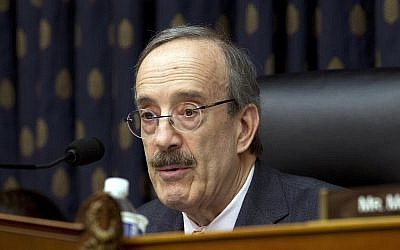
That earned her stern rebukes from Pelosi and House Foreign Relations Committee Chairman Eliot Engel, among others. This time, Engel declared that Omar’s suggestion about divided loyalties was a “vile” stereotype that had no place on his committee. Republicans, meanwhile, demanded that Democrats throw Omar off Engel’s panel. There was no sign of that happening at midday Tuesday.
“I should not be expected to have allegiance/pledge support to a foreign country in order to serve my country in Congress or serve on committee,” Omar tweeted.
Michigan Rep. Debbie Dingell said Engel, while upset with Omar’s comments, “feels that she brings a different perspective to the committee” that keeps it strong.
“This is a very complicated issue,” Dingell said on Fox News Channel. “There is nothing complicated about being very clear that we must stand up against anti-Semitism.”
Source: First international flights land at new airport in Eilat – Israel Hayom
Ryanair flight from Poznań, Poland touches down at new Ramon International Airport • Airport can handle 20 takeoffs and landings an hour and can accommodate Boeing 747s • To encourage use of new airport, airlines are exempt from landing fees.



Israeli aviation entered a new age on Monday when the first international commercial flight landed at the new Ilan and Asaf Ramon International Airport in Timna Valley, near Eilat.
Irish budget-friendly airliner Ryanair touched down at Ramon International Airport near Eilat at 5 p.m. from Poznań, Poland, and another plane arrived from Prague an hour later.
Ramon International Airport is named after the first Israeli astronaut Ilan Ramon, who perished in the Space Shuttle Columbia disaster in 2003, and his son Asaf Ramon, who died six years later when his F-16 fighter jet crashed in a training accident.
Ramon’s wife and Asaf’s mother, Rona Ramon, passed away on Dec. 17.
The airport, constructed at a cost of some $500 million, has an annual capacity of 2.5 million passengers, with room for expansion. It is able to handle 20 takeoffs and landings an hour and accommodate large aircraft, such as Boeing 747s.
Airlines that use Ramon airport will be exempt from having to pay landing fees, in an effort to encourage them to utilize the airport.
Source: Qassem Soleimani’s rising star highlights political crisis in Iran – Israel Hayom
The role of the Quds Force commander in Iranian foreign minister’s abrupt resignation, over Syrian President Assad’s surprise visit to Iran, illustrates his immense influence and emerging celebrity status at home after being largely invisible for years.


Archives: AP
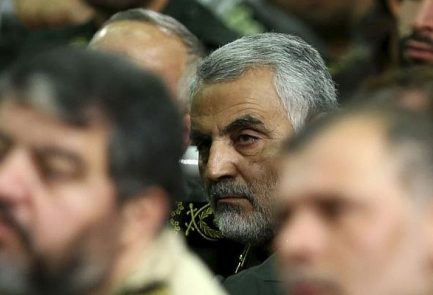
Qassem Soleimani’s role in a political crisis in Iran highlights the influence of the leader of the Revolutionary Guards’ Quds Force, who has acquired celebrity status at home after being largely invisible for years.
Foreign Minister Mohammad Javad Zarif’s resignation last week was quickly rejected by President Hassan Rouhani, but a week on, tension over Zarif’s absence from meetings with Syrian President Bashar Assad, which Soleimani attended, is still evident.
Soleimani’s Quds Force, tasked with carrying out operations beyond Iran’s borders, shored up support for Assad when he looked close to defeat in the civil war raging since 2011.
The success of the Quds Force in Syria has made Soleimani instrumental to the steady spreading of Iranian influence in the Middle East, which the United States and Tehran’s regional foes Saudi Arabia and Israel have sought to keep in check.
Iran’s Supreme Leader, Ayatollah Ali Khamenei, made Soleimani head of the Quds Force in 1998, a position in which he kept a low profile for years while strengthening Iran’s ties with Hezbollah in Lebanon, Assad’s regime, and Shiite militias in Iraq.
In recent years he has emerged as a more public persona, with fighters and commanders in Iraq and Syria posting images on social media of him on the battlefield, his beard and hair always impeccably trimmed.
“Soleimani is an operational leader. He’s not a man working in an office. He goes to the front to inspect the troops and see the fighting,” said a former Iraqi official who asked not to be identified discussing security issues.
An Iraqi militia released a music video in 2014 praising Soleimani’s efforts in fighting the Islamic State group in the country, and state media have run multiple accounts of his role in military victories.
“His chain of command is only the Supreme Leader. He needs money, gets money. Needs munitions, gets munitions. Needs materiel, gets materiel,” the Iraqi official said.
After Zarif tendered his resignation, Soleimani issued a rare statement. There had been a “bureaucratic” mistake rather than any intention to exclude Zarif, it said, describing the minister as the main person in charge of foreign policy and backed by Khamenei.
But on Tuesday, the Iranian Students’ News Agency reported that the foreign ministry had not been informed throughout Assad’s trip, citing ministry spokesman, Bahram Qassemi who said Zarif’s aim with his resignation was to restore Iran’s diplomatic system to its rightful place.
The row is an unusually public display of tension between the Islamic Revolutionary Guard Corps, which plays a key role in politics in Iran, and government officials who favor reconciliation with the West 40 years after Iran’s 1979 revolution ousted the U.S.-backed shah.
A regional official with knowledge of Iranian affairs said the foreign ministry and the Quds Force had conflicts of opinion over Syria. The release on Monday of a closed-door speech last year by Khamenei highlighted another ongoing split – over Iran’s agreement with world powers to curb its nuclear program in return for sanctions relief.
The speech voiced doubt about the government’s overtures to Europe to try to shore up the deal after U.S. President Donald Trump pulled out.
A major-general, Soleimani is also in charge of intelligence gathering and covert military operations carried out by the Quds Force and last summer he publicly challenged Trump.
“I’m telling you Mr. Trump the gambler, I’m telling you, know that we are close to you in that place you don’t think we are,” said Soleimani, wagging an admonishing finger.
“You will start the war but we will end it,” he said, with a checkered kaffiyeh draped across the shoulders of his olive uniform.
Softly-spoken, Soleimani came from humble beginnings, born into an agricultural family in the town of Rabor in southeast Iran on March 11, 1957.
At 13, he traveled to the town of Kerman and got a construction job to help his father pay back loans, according to a first-person account from Soleimani posted by Defa Press, a site focused on the history of Iran’s eight-year war with Iraq.
When the revolution to oust the shah began in 1978, Soleimani was working for the municipal water department in Kerman and organized demonstrations against the monarch.
He volunteered for the IRGC and, after war with Iraq broke out in 1980, quickly rose through the ranks and went on to battle drug smugglers on the border with Afghanistan.
“Soleimani is a great listener. He does not impose himself. But he always gets what he wants,” said another Iraqi official, adding that he can be intimidating.
At the height of the civil war between Sunni and Shiite militants in Iraq in 2007, the U.S. military accused the Quds Force of supplying improvised explosive devices to Shiite proxies which led to the death of many American soldiers.
Soleimani played such a pivotal role in Iraq’s security through various militia groups that General David Petraeus, the overall head of U.S. forces in Iraq, sent messages to him through Iraqi officials, according to diplomatic cables published by Wikileaks.
After a referendum on independence in the Kurdish north in 2017, Soleimani issued a warning to Kurdish leaders, which led to a withdrawal of fighters from contested areas and allowed the Tehran regime to reassert its control.
Soleimani was arguably even more influential in Syria. His visit to Moscow in the summer of 2015 was the first step in planning for a Russian military intervention that reshaped the Syrian war and forged a new Iranian-Russian alliance in support of Assad.
His activities have made him a repeated target of the U.S. Treasury. Soleimani has been sanctioned by the United States for the Quds Force’s support for Lebanon’s Hezbollah and other armed groups, for his role in Syria’s crackdown against protesters and his alleged involvement in a plot to assassinate the Saudi ambassador to the United States.
Soleimani’s success in advancing Iran’s agenda has also put him in the crosshairs of regional foes Saudi Arabia and Israel.
Top Saudi intelligence officials looked into the possibility of assassinating Soleimani in 2017, according to a report in The New York Times late last year.
Source: Israeli spacecraft snaps ultimate selfie on way to moon – Israel Hayom
Picture shows the spacecraft Beresheet, Hebrew for Genesis, orbiting some 23,400 miles (37,600 kilometers) away, with the entire Earth as the stunning Apollo-style backdrop • Spacecraft, launched last month, shooting for a moon landing April 11.



The Israeli spacecraft Beresheet has taken the ultimate selfie on its roundabout journey to the moon, some two weeks after blasting off from Earth.
Organizers for the privately funded mission released the photo Tuesday showing Beresheet, Hebrew for Genesis, orbiting some 23,400 miles (37,600 kilometers) away, with the entire Earth as the stunning Apollo-style backdrop. A plaque bearing the Israeli national flag reads, in English, “Small Country, Big Dreams,” and, in Hebrew, “Am Israel hai” (the people of Israel lives).
Australia easily stands out in the photo.
The spacecraft is shooting for a moon landing April 11. It rocketed from Cape Canaveral, Florida, on Feb. 21 and has been circling Earth in ever bigger loops.
Despite some early problems, Beresheet should be close enough to enter lunar orbit in early April. A touchdown would make Israel the fourth country to pull off a moon landing.
The Beresheet mission originally was part of the Google Lunar XPrize competition and even made the final cut before the contest ended last year without a winner.
The organizers decided to press ahead on their own, and the project was financed largely by Dr. Miriam and Sheldon Adelson together with SpaceIL president and billionaire high-tech developer Morris Kahn, as well as other donors from around the world.
The idea of having the phrase “the people of Israel lives” displayed by the spacecraft originated with Dr. Adelson, who wanted to ensure that the spacecraft would carry a symbolic message that represents modern-day Israel, Zionism and the history of the Jewish people.
The Adelson family owns the company that is the primary shareholder in Israel Hayom. Dr. Miriam Adelson is the publisher of Israel Hayom.
Source: Senior Republican senator: Rising anti-Israel attitudes ‘disturbing’ – Israel Hayom
The Minnesota freshman’s name doesn’t appear in the resolution, which could go to the House floor as soon as Thursday, but it denounces anti-Semitism by describing tropes similar to some of those she has invoked. Omar has apologized for some of her controversial remarks and defended others.
“I am told everyday that I am anti-American if I am not pro-Israel. I find that to be problematic and I am not alone,” she wrote in a March 3 tweet.
The fact that the resolution doesn’t specifically refer to Omar has done little to calm her supporters among progressives, including fellow freshman Alexandria Ocasio-Cortez of New York, who said there are far worse examples of offensive behavior and statements in Congress. In some cases Omar’s supporters defended her underlying point that historic ties between the U.S. and Israel should be reexamined.
Threat to Unity
The vote risks new tension between House Speaker Nancy Pelosi and high-profile freshmen who thus far have been supportive of her leadership strategy and agenda. Debate over the resolution has exposed a divide between older Democrats who sharply criticized Omar and some younger progressive freshmen in a historically diverse class of lawmakers. The differences challenge the unity Pelosi has cited as the party’s greatest asset in setting a bold agenda for their House majority.
A vote on the resolution was initially scheduled for Wednesday but was delayed as House leaders finalized the text. Asked Tuesday about the timing for the vote and the content of the measure, Pelosi said, “Congress is working its will.”
Pelosi said she had met personally with Omar regarding her comments.
Ocasio-Cortez, a 29-year-old with an outsized social media presence, called the resolution a “nuclear option” on Twitter and urged Democratic leaders to use this moment for a lesson in inclusion, rather than censure.
“I believe that Ilhan, in her statement a few weeks ago, has demonstrated a willingness to listen+work w/impacted communities,” Ocasio-Cortez said in a tweet. “If we called resolutions on sexist statements, a good chunk of Congress would be gone. To jump to the nuclear option every time leaves no room for corrective action.”
Ocasio-Cortez and Omar, together with Ayanna Pressley of Massachusetts and Rashida Tlaib of Michigan, have called themselves a “squad” in social media posts and have publicly come to each other’s defense. Tlaib, who was on stage with Omar at an event last week when she made the comment about “allegiance to a foreign country” that’s been criticized, later compared Omar to “civil rights icons before us who spoke out about oppressive policies.”
Omar’s comments questioning the political influence of Israel drew strongly worded statements from veteran Democrats and committee chairmen for echoing historic prejudice against Jews. Omar, 36, has defended her remarks as furthering a foreign policy debate and pledged to “combat hate of all kinds.”
The resolution would be the second anti-Semitism measure to pass under the Democratic majority, although the first one was presented by Republicans in a surprise procedural vote on a resolution regarding Yemen — the same week Omar tweeted rap lyrics to suggest pro-Israel politicians were motivated by money. Omar apologized for those tweets, but defended her original question about the influence of The American Israel Public Affairs Committee.
Republicans have also been accused of trafficking in anti-Semitic tropes. Jim Jordan of Ohio, the ranking Republican on the House Oversight Committee, on Sunday tweeted that the Democratic chairman of that committee, Jerrold Nadler, who is Jewish, was siding with billionaire and impeachment-advocate Tom Steyer, whose father is Jewish.
His spelling of “$teyer” was criticized for suggesting a connection between Jewish individuals and money. Nadler later tweeted that Jordan’s comment “counts as both inane AND anti-Semitic.”
Omar herself has been the target of prejudice and threats of violence. Last week, a display from West Virginia Republicans linked Omar, who is Muslim and wears a hijab, to the September 11 terror attacks. She has received death threats, and she says her experience coming to the United States from a refugee camp in Kenya has helped her understand persecution and weather her current controversy.
“I know what it feels to be someone who is of faith that is vilified,” Omar said in the same comments that inspired this resolution. “I know what it means to be someone whose ethnicity is vilified.”
To contact the reporter on this story: Anna Edgerton in Washington at aedgerton@bloomberg.net
To contact the editors responsible for this story: Kevin Whitelaw at kwhitelaw@bloomberg.net, Justin Blum, John Harney
For more articles like this, please visit us at bloomberg.com
©2019 Bloomberg L.P.
Source: Anti-Semitism Rebuke Threatens Rift Among House Democrats
The Minnesota freshman’s name doesn’t appear in the resolution, which could go to the House floor as soon as Thursday, but it denounces anti-Semitism by describing tropes similar to some of those she has invoked. Omar has apologized for some of her controversial remarks and defended others.
“I am told everyday that I am anti-American if I am not pro-Israel. I find that to be problematic and I am not alone,” she wrote in a March 3 tweet.
The fact that the resolution doesn’t specifically refer to Omar has done little to calm her supporters among progressives, including fellow freshman Alexandria Ocasio-Cortez of New York, who said there are far worse examples of offensive behavior and statements in Congress. In some cases Omar’s supporters defended her underlying point that historic ties between the U.S. and Israel should be reexamined.
Threat to Unity
The vote risks new tension between House Speaker Nancy Pelosi and high-profile freshmen who thus far have been supportive of her leadership strategy and agenda. Debate over the resolution has exposed a divide between older Democrats who sharply criticized Omar and some younger progressive freshmen in a historically diverse class of lawmakers. The differences challenge the unity Pelosi has cited as the party’s greatest asset in setting a bold agenda for their House majority.
A vote on the resolution was initially scheduled for Wednesday but was delayed as House leaders finalized the text. Asked Tuesday about the timing for the vote and the content of the measure, Pelosi said, “Congress is working its will.”
Pelosi said she had met personally with Omar regarding her comments.
Ocasio-Cortez, a 29-year-old with an outsized social media presence, called the resolution a “nuclear option” on Twitter and urged Democratic leaders to use this moment for a lesson in inclusion, rather than censure.
“I believe that Ilhan, in her statement a few weeks ago, has demonstrated a willingness to listen+work w/impacted communities,” Ocasio-Cortez said in a tweet. “If we called resolutions on sexist statements, a good chunk of Congress would be gone. To jump to the nuclear option every time leaves no room for corrective action.”
Ocasio-Cortez and Omar, together with Ayanna Pressley of Massachusetts and Rashida Tlaib of Michigan, have called themselves a “squad” in social media posts and have publicly come to each other’s defense. Tlaib, who was on stage with Omar at an event last week when she made the comment about “allegiance to a foreign country” that’s been criticized, later compared Omar to “civil rights icons before us who spoke out about oppressive policies.”
Omar’s comments questioning the political influence of Israel drew strongly worded statements from veteran Democrats and committee chairmen for echoing historic prejudice against Jews. Omar, 36, has defended her remarks as furthering a foreign policy debate and pledged to “combat hate of all kinds.”
The resolution would be the second anti-Semitism measure to pass under the Democratic majority, although the first one was presented by Republicans in a surprise procedural vote on a resolution regarding Yemen — the same week Omar tweeted rap lyrics to suggest pro-Israel politicians were motivated by money. Omar apologized for those tweets, but defended her original question about the influence of The American Israel Public Affairs Committee.
Republicans have also been accused of trafficking in anti-Semitic tropes. Jim Jordan of Ohio, the ranking Republican on the House Oversight Committee, on Sunday tweeted that the Democratic chairman of that committee, Jerrold Nadler, who is Jewish, was siding with billionaire and impeachment-advocate Tom Steyer, whose father is Jewish.
His spelling of “$teyer” was criticized for suggesting a connection between Jewish individuals and money. Nadler later tweeted that Jordan’s comment “counts as both inane AND anti-Semitic.”
Omar herself has been the target of prejudice and threats of violence. Last week, a display from West Virginia Republicans linked Omar, who is Muslim and wears a hijab, to the September 11 terror attacks. She has received death threats, and she says her experience coming to the United States from a refugee camp in Kenya has helped her understand persecution and weather her current controversy.
“I know what it feels to be someone who is of faith that is vilified,” Omar said in the same comments that inspired this resolution. “I know what it means to be someone whose ethnicity is vilified.”
To contact the reporter on this story: Anna Edgerton in Washington at aedgerton@bloomberg.net
To contact the editors responsible for this story: Kevin Whitelaw at kwhitelaw@bloomberg.net, Justin Blum, John Harney
For more articles like this, please visit us at bloomberg.com
©2019 Bloomberg L.P.




 anneinpt
 artaxes
 danmillerinpanama
 davidking1530
 Peter Hofman
 Joseph Wouk
 Peter
Peter Louisiana Steve


 WarSclerotic
Recent Comments