Archive for February 2019

Israeli, US troops wrap up annual joint missile defense war games

February 15, 2019

Source: Israeli, US troops wrap up annual joint missile defense war games | The Times of Israel

700 American and Israeli soldiers take part in week-long Juniper Falcon drill to prepare for deployment of US troops in Israel

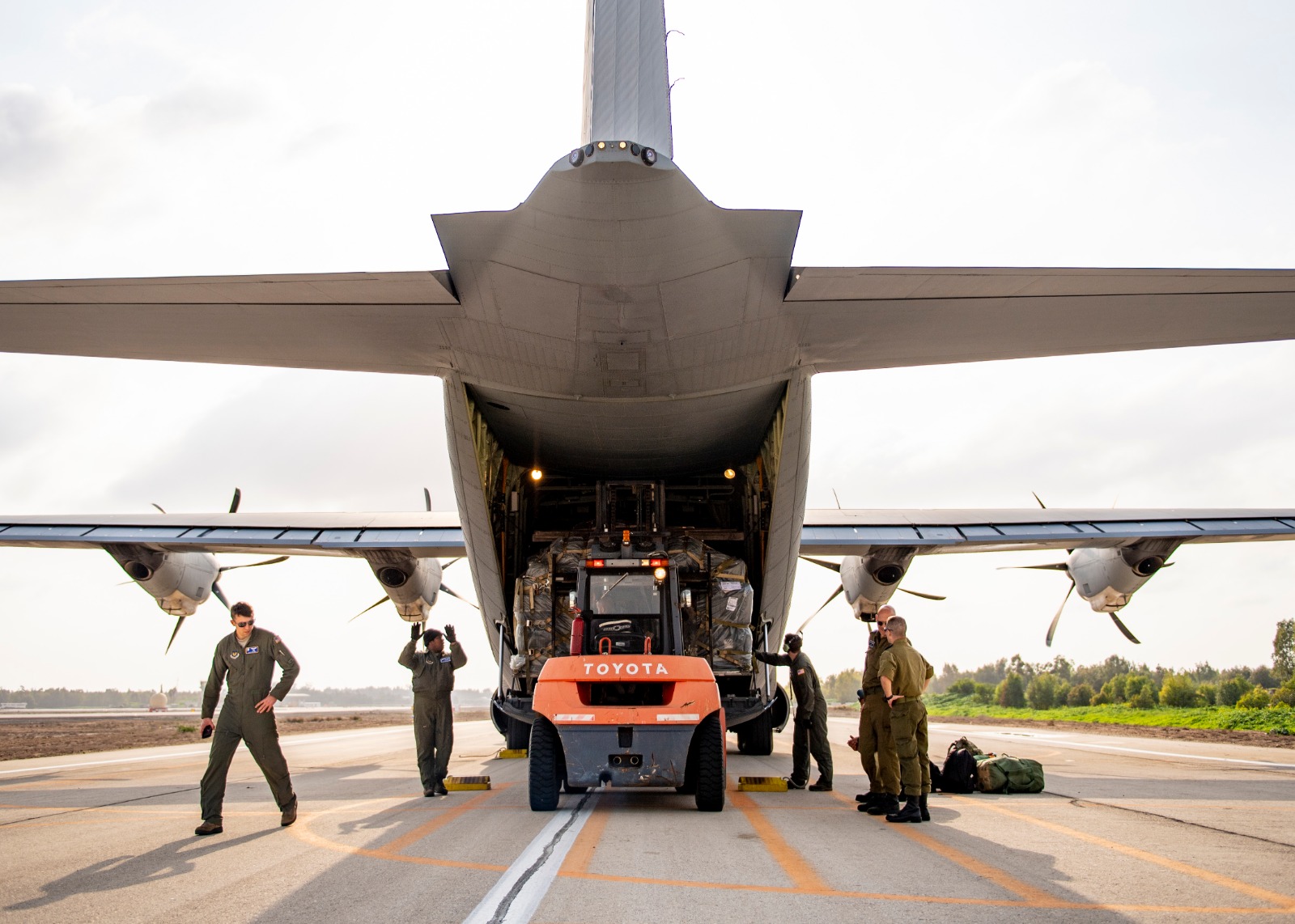
IDF and American troops unload a US Air Force cargo plane at an Israeli military base during the Juniper Falcon joint military exercise, February 2019. (US Army photo)

IDF and American troops unload a US Air Force cargo plane at an Israeli military base during the Juniper Falcon joint military exercise, February 2019. (US Army photo)

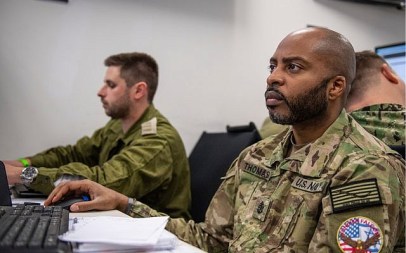
Three hundred American soldiers on Thursday wrapped up an week-long joint military exercise with the Israel Defense Forces.

The IDF said in a statement that US troops worked with 400 IDF soldiers as the armies rehearsed scenarios in which US troops were deployed to Israel to aid in missile defense operations, including against “high trajectory fire on the State of Israel.”

The military drill, dubbed Juniper Falcon, is part of the ongoing strategic cooperation between the IDF and the US Army. The IDF branches involved included the air force, logistics units and medical forces. It was last held in 2017.

“The objectives of the joint exercise were to increase the coordination between the armies, to practice orders and procedures in times of emergency and to deepen the familiarity between the forces,” said Brig. Gen. Ran Kochav, commander of the Israel Air Force’s Air Defense Division.

Israeli and American soldiers at the annual Juniper Falcon joint military exercise held in Israel. 300 American and 400 IDF troops participated. (US Army photo)

The American commander of the exercise, Lt. Gen. Jeffrey Harrigian of the the US Air Force, said it was a “great opportunity for US forces to work once again with our Israeli partners to improve our combined missile defense capability.”

“It has always been a challenging exercise, but the lessons learned will help the two armies continue to strengthen relations between us and our combined capabilities in ballistic missile defense,” said Harrigian.

Israel and the US also hold the five-day Juniper Cobra combined air force drill every two years. Last year’s drill simulated a massive ballistic missile attack and culminated with live-fire tests of two air defense systems over the skies of central Israel.


Netanyahu in Warsaw: For Arab leaders, Iran threat more urgent than Palestinians

February 15, 2019

Source: Netanyahu in Warsaw: For Arab leaders, Iran threat more urgent than Palestinians | The Times of Israel

At end of summit, PM says 4 Arab foreign ministers spoke out to back Israel’s right to defend itself against Iranian aggression; Arab states ‘half open’ to warmer ties with Israel

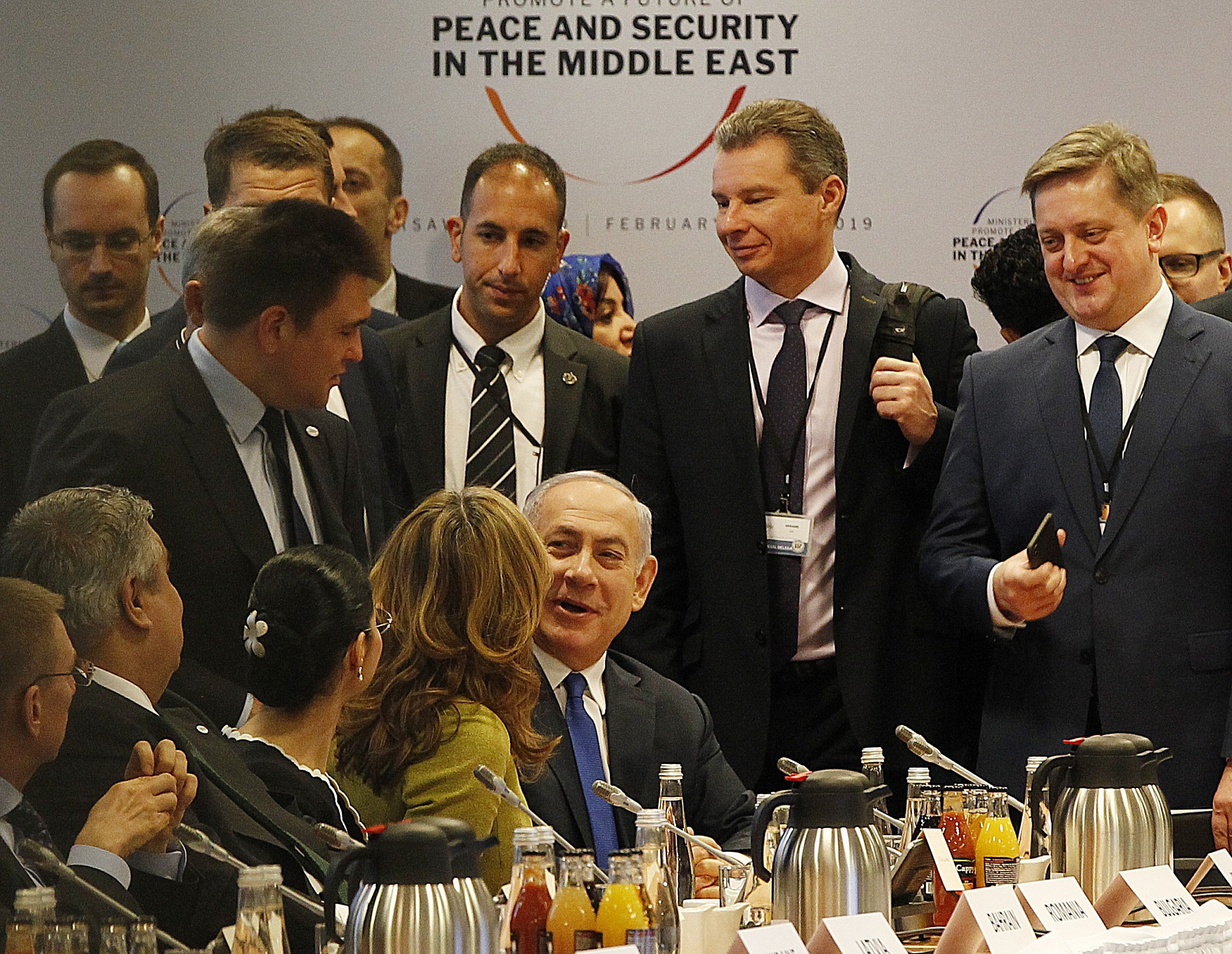
Israeli Prime Minister Benjamin Netanyahu, center, arrives for a session at the conference on Peace and Security in the Middle East in Warsaw, Poland, Thursday, Feb. 14, 2019. (AP Photo/Czarek Sokolowski)

WARSAW, Poland — Four Arab foreign ministers who spoke at the Warsaw Middle East summit affirmed Israel’s right to defend itself against Iranian aggression, Prime Minister Benjamin Netanyahu said Thursday.

Speaking to reporters shortly after he left the event, most of which was closed to the press, the prime minister hailed the very fact that 10 Arab foreign ministers agreed to share a conference stage with an Israeli leader as the “breaking of a taboo.”

“Four out of five Arab foreign ministers who addressed the conference [on Thursday] spoke strongly and clearly against Iran, saying exactly what I’ve been saying for years,” Netanyahu said. “They were as clear as possible about the issue, and Israel’s right to defend itself against Iranian aggression.”

Netanyahu did not specify which four Arab foreign ministers spoke out.

Asked when and how further Arab states would fully normalize relations with Israel, which has peace treaties only with Jordan and Egypt, Netanyahu replied that what happened in Warsaw over the last 24 hours shows that they are already “half-open.”

“Here you have Arab foreign ministers, who say that Israelis have the right to defense themselves, and don’t say it in secret but on a stage with 60 other countries present,” he said.

“It was a very important meeting and I don’t think we exaggerate its importance,” he added. “There is great importance in that they sit in one room, full of cameras” to discuss the Middle East, he said, noting that it was clear to the Arab representatives that, even though most of the conference proceedings were held behind closed doors, it would become public knowledge that they sat together with the Israeli prime minister.
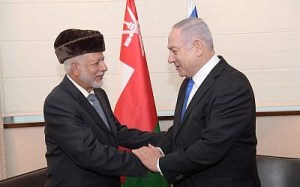
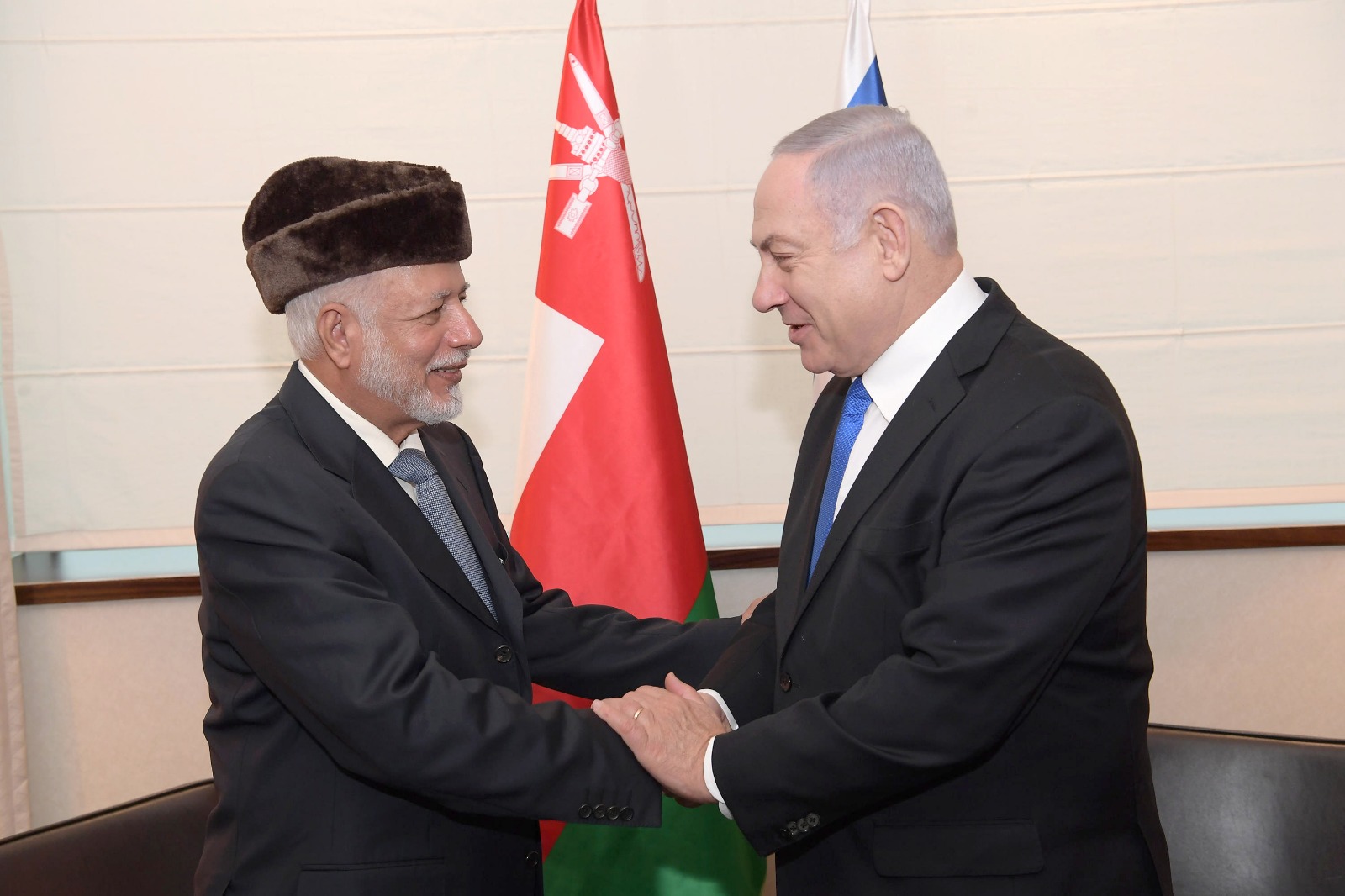
Prime Minister Benjamin Netanyahu (right) greets Omani Foreign Minister Yusuf bin Alawi bin Abdullah at the sidelines of a regional conference on the Middle East in Warsaw, February 13, 2018 (Amos Ben Gershom/GPO)

The Palestinian issue came up during the conference, Netanyahu said, but added that the Arab officials preferred to focus their remarks on Iran.

“Once the Palestinian issue took center stage. Now they say that first and foremost the Iranian issue needs to be dealt with,” Netanyahu said. In fact, the Arab officials who addressed the summit all agreed that an Israeli-Palestinian peace cannot be achieved as long as the Iranian problem is not addressed, he said.
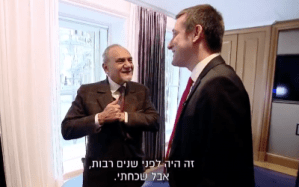
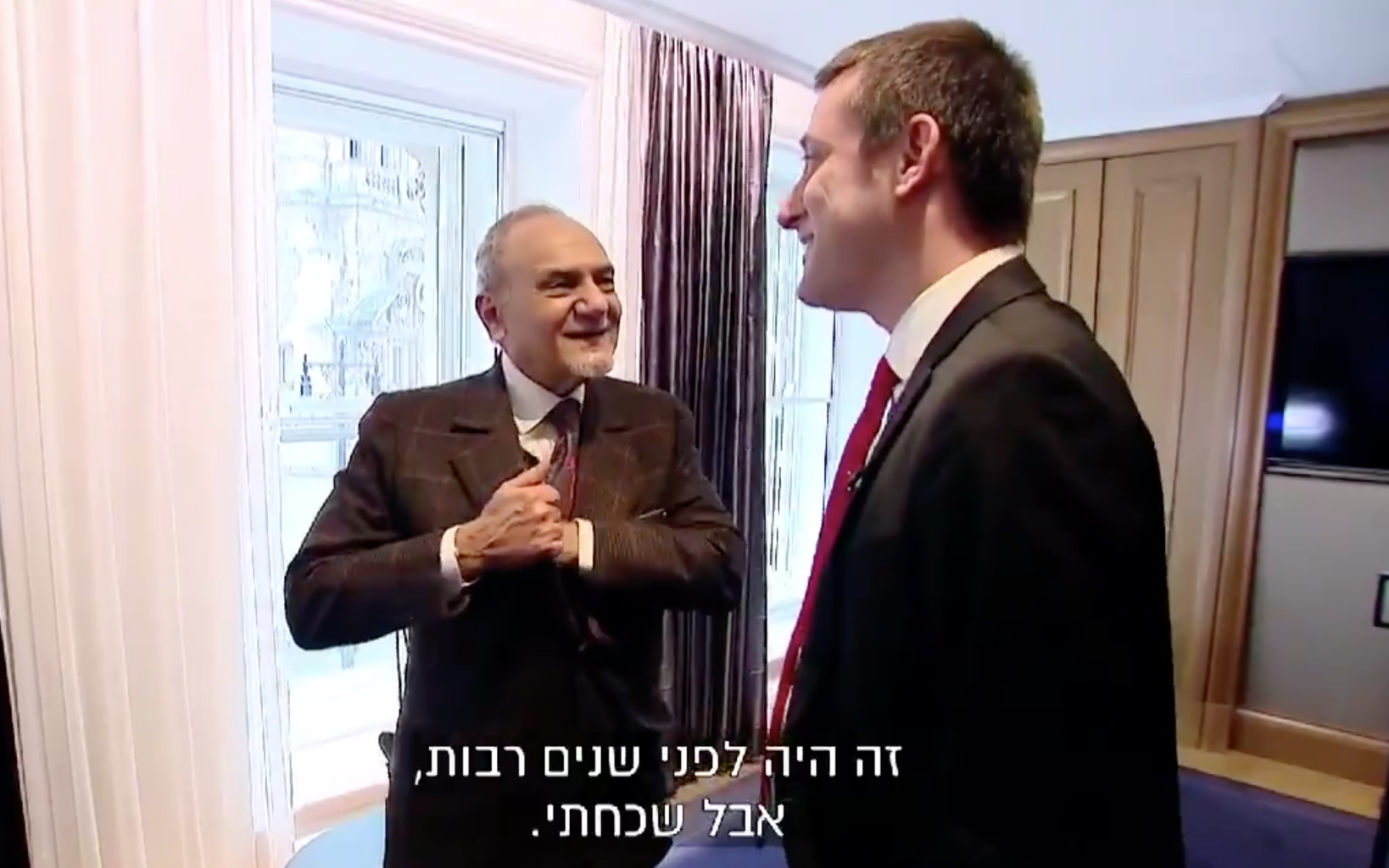
Saudi Prince Turki bin Faisal Al Saud with Channel 13’s Barak Ravid, February 2019 (Twitter screenshot)

In an unprecedented interview with Israeli television on Wednesday night, the former senior Saudi official, Prince Turki bin Faisal Al Saud, said Netanyahu was deceiving the Israeli public when claiming that Israeli ties with the wider Arab world can be warmed without the Palestinian issue being solved. On the sidelines of the conference on Thursday, meanwhile, Bahrain’s foreign minister told The Times of Israel that Israel-Bahrain relations would be established “eventually.”

On Wednesday here, Netanyahu met with Oman’s foreign minister. At the opening session of the conference on Thursday he was seated next to the foreign minister of Yemen, and interacted briefly with him.
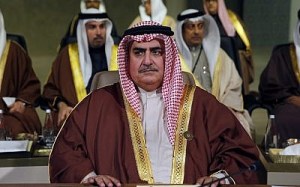
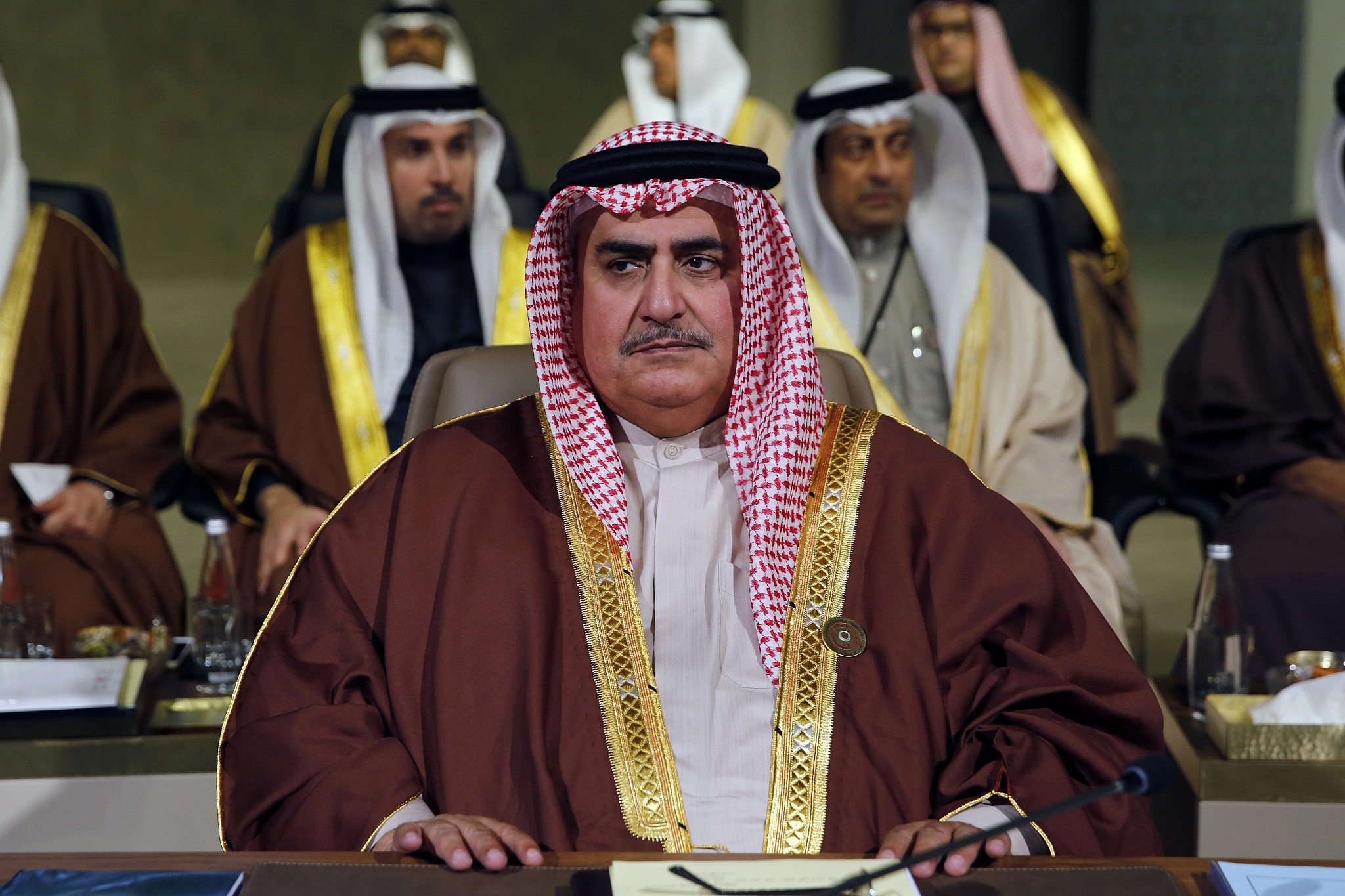
Bahraini Foreign Minister Khalid bin Ahmed al-Khalifa, attends the Arab Economic and Social Development Summit, in Beirut, Lebanon, Sunday, Jan. 20, 2019. (AP Photo/Bilal Hussein)

Netanyahu himself delivered remarks at the opening ceremony at Warsaw’s historic Royal Castle on Wednesday evening. The fact that the Arab delegates did not walk out symbolized “the breaking of a taboo,” the prime minister said.

Secret meetings between Israeli leaders and Arab have been going on for years, he told reporters in a briefing at the city’s new Jewish museum, where earlier in the day he laid a wreath at a monument honoring the victims of the 1943 Warsaw Ghetto uprising.
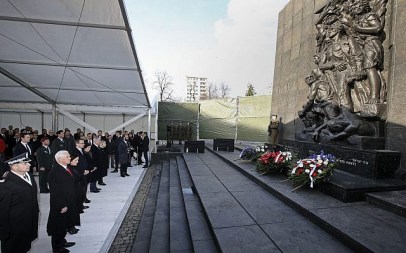
United States Vice President Mike Pence with his wife Karen, Prime Minister of Poland Mateusz Morawiecki with his wife Iwona and Israeli Prime Minister Benjamin Netanyahu with his wife Sara, from left, stand at the Monument to the Ghetto Heroes during a wreath laying ceremony in Warsaw, Poland, February 14, 2019. (Michael Sohn/AP)

“Today, 60 foreign minister were at the conference, and they all knew what this conference was about,” he said. “And this wasn’t a conference about decertification. There is a change here. It expressed itself in things that were said, and things that will be done. This is not happening by chance. Rather, it’s the result of a clear policy that I have been leading for years.”

Officials from 60 countries attended the so-called Ministerial to Promote a Future of Peace and Security in the Middle East, including foreign ministers and deputy foreign ministers from Oman, Morocco, Saudi Arabia, United Arab Emirates, Qatar, Bahrain, Egypt, Kuwait and Jordan.
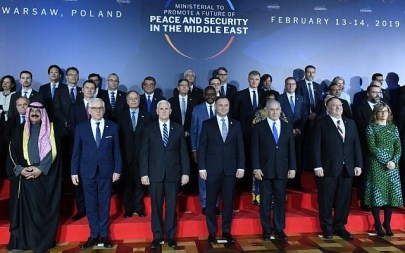
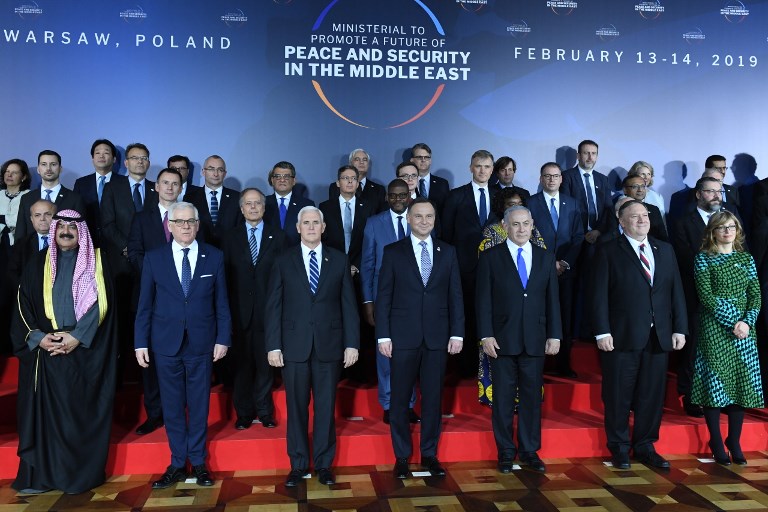
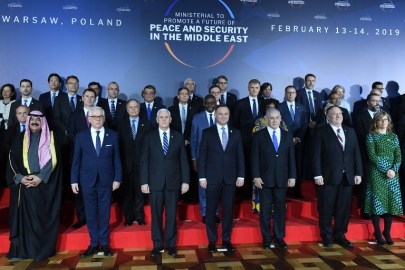
Polish Foreign Minister Jacek Czaputowicz, US Vice President Mike Pence, Poland’s President Andrzej Duda, Prime Minister Benjamin Netanyahu and US Secretary of State Mike Pompeo pose for a family photo at the conference on Peace and Security in the Middle east in Warsaw, on February 13, 2019. (Janek SKARZYNSKI/AFP)

“They all spoke about Iran. They mentioned the Palestinian issue, saying it needs to be solved, but also said that it won’t be solved as long as Iranian aggression continues,” Netanyahu said.

“I don’t want to call it the ‘New Middle East.’ But something amazing is happening here,” he said.

During the briefing, Netanyahu also addressed other topics, including the US administration’s much anticipated peace plan.

He said that senior adviser to US President Donald Trump, Jared Kushner, said that he would not reveal the plan before Israel’s April 9 elections, and that Kushner rejects the 2002 Arab Peace Initiative as a blueprint for an Israel-Palestinian peace accord.
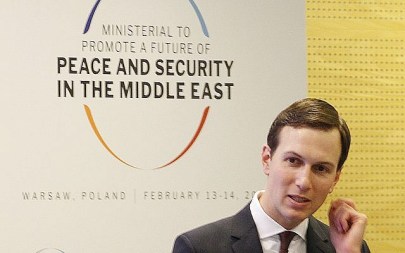
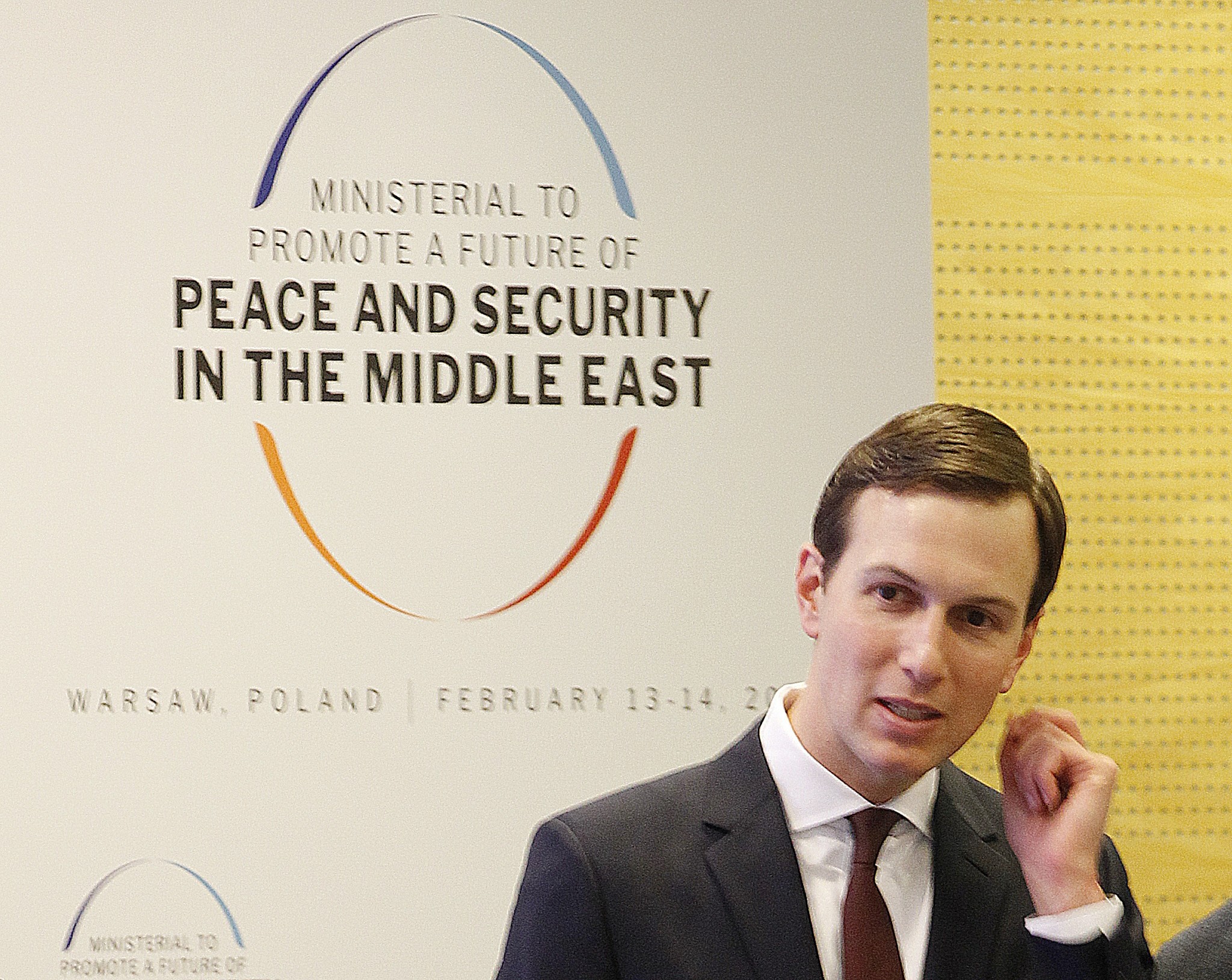
White House Senior Adviser Jared Kushner attends a conference on Peace and Security in the Middle East in Warsaw, Poland, Thursday, Feb. 14, 2019. (AP Photo/Czarek Sokolowski)

“He said the Arab Peace Initiative was important at the time, but is no longer appropriate for today [because] reality has changed,” Netanyahu said of Kushner’s response.

Regarding the April Knesset elections, Netanyahu reiterated that he considers Benny Gantz, his former army chief and currently his main political rival, to be a political leftist, despite the fact that Gantz’s Israel Resilience party ticket includes several known hawks, including two men (Zvi Hauser and Yoaz Hendel) who used to work for Netanyahu.

“The elections are far from being decided. There is close fight, it’s not a done deal,” Netanyahu said.

Netanyahu refused to provide a substantive answer to The Times of Israel’s questions about last year’s controversial joint Israeli-Polish declaration on Poland’s role in the Holocaust, merely saying that the issue came up during his meeting earlier on Thursday with Polish Prime Minister Mateusz Morawiecki.

Leading Israeli historians harshly criticized the joint statement, arguing it inaccurately adopts the Polish narrative of the Holocaust, overstating Polish efforts to rescue Jews and understating anti-Jewish atrocities committed by Poles.

Last July, Netanyahu said he had taken note of the criticism and would address it at a later time, but he has not done so.

“Since then I heard that some of the historians have changed their mind,” he said Thursday, refusing to elaborate.

Asked about the Polish law that prohibits accusing the Polish nation of complicity in Holocaust crimes, Netanyahu replied: “Poles cooperated with the Nazis and I don’t know one person who was sued for saying that.”

The law initially made it a criminal offense, punishable by prison, to accuse the Polish nation of Holocaust complicity. After the joint declaration, Poland amended the law, removing the criminal sanctions, though it is still illegal to make such claims.

Editor’s note: This piece has been updated to reflect Netanyahu’s comments on Poland and the Holocaust according to a recording of the briefing provided by the Prime Minister’s Office. 
 

In clip leaked by PMO, Arab ministers seen defending Israel, attacking Iran

February 15, 2019

Source: In clip leaked by PMO, Arab ministers seen defending Israel, attacking Iran | The Times of Israel

At Warsaw Mideast summit, Bahraini FM says confronting Tehran more urgent than solving Palestinian issue; UAE top diplomat says Israel has right to attack Iranian targets in Syria

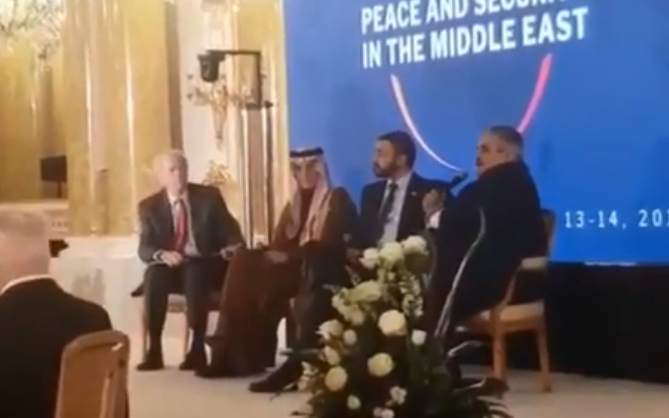
Former US Middle East peace negotiator Dennis Ross and Arab officials on stage during a panel at the Warsaw summit on February 14, 2019. (YouTube screenshot)

WARSAW, Poland — Prime Minister Benjamin Netanyahu’s office on Thursday leaked a video in which the foreign ministers of three Arab countries can be seen harshly attacking Iran and defending Israel, and in one case saying that confronting the Islamic Republic is more pressing than solving the Israeli-Palestinian conflict.

The 25-minute YouTube clip, a link that the PMO sent to several Israeli reporters, showed a segment from a panel discussion at the opening gala of the Warsaw Middle East conference, which was closed to the press.

The comments made by the foreign ministers widely confirmed what Netanyahu told Israeli reporters during a briefing earlier in the day, when he described at considerable length the Arab ministers’ positions.

Less than 30 minutes after reporters published the clip, the PMO removed the video from its YouTube channel.

In the clip, the foreign minister of the United Arab Emirates Sheikh Abdullah bin Zayed Al Nahyan indicated that Israel was justified in attacking Iranian targets in Syria.

“Every nation has the right to defend itself, when it’s challenged by another nation, yes,” he answered in response to a question by the panel’s moderator, former US Middle East peace negotiator Dennis Ross, about Israeli strikes intended to prevent Iran from entrenching itself militarily in Syria.

Bahraini Foreign Minister Khalid bin Ahmed Al Khalifa said that the peace process between Israelis and Palestinians would have been at a much better place if not for Iran’s malign behavior.

“We grew up talking about the Israel-Palestine issue as the most important issue” that has to be “solved, one way or another.” he said. “But then, at a later stage, we saw a bigger challenge, we saw a more toxic one — in fact the more toxic one in our history — that came from the Islamic Republic.”

If it wasn’t for Iran’s regional aggression, “we would have been much closer today in solving this issue with Israel,” Khalifa continued on, with Netanyahu, and other delegates from 60 countries looking on.

“But this is a serious challenge that is preventing us now from moving forward anywhere, be it Syria, be it Yemen, be it Iraq, be it anywhere,” the Bahraini foreign minister said.

“So this is the challenge we have to face in order to deal with other challenges,” he said, referring to Iran.

“When we come to Israel-Palestine, we had the Camp David agreement [between Israel and Egypt in 1978]. There was [the 1991] Madrid [Conference]. There were many other ways of solving it, and had we stayed on the same path, and if it wasn’t for the … guns and foot soldiers of the Islamic Republic, I think we would have been much closer today in solving this issue with Israel. But this is a serious challenge that is preventing us now from moving forward anywhere, be it Syria, be it Yemen, be it Iraq, be it anywhere,” he concluded.

Saudi Minister of State for Foreign Affairs Adel al-Jubeir, who served as the country’s foreign minister until December 2018, argued that Iran’s belligerent activities destabilize the region, thus making Israeli-Palestinian peace impossible to achieve.

“Look at the Palestinians: Who is supporting Hamas and Islamic Jihad, and undercutting the Palestinian Authority? Iran,” he said, going on to cite several conflicts in the wider Middle East where Iran plays a destabilizing role.

“We cannot stabilize the region without peace between Israelis and Palestinians [but] wherever we go we find Iran’s evil behavior,” he said.

He also had some harsh words for the Iran-backed Lebanese terrorist organization Hezbollah.

“One of the biggest jokes is when you say Hezbollah has a political wing and a military wing. There is no such thing,” he said.

But Jubeir reserved the lion’s share of his remarks for a fundamental criticism of the Iran nuclear deal, which he said will enable Iran to acquire nuclear weapons and terrorize its neighbors within a decade, due to its controversial sunset clauses.

“When the JCPOA was signed, everyone thought everything would be fine,” he said, referring to the 2015 nuclear pact by its technical name.

“Meanwhile, we in the region are in the brunt, for us 10 years is the blink of an eye,” he went on, “So, Iran ends up with a nuclear weapon — it is theoretically capable of doing one very quickly because no limits on enrichment — who is going to suffer? We are.”

“Iran gives ballistic missiles to the Houthis [in Yemen] and Hezbollah. Who’s going to suffer? We do, in the region. And so people have to be serious about how to deal with the problem of Iran.”

Jubeir said he wished for Iran to change and become a “normal country.”

“That would be the best for all of us,” he said. “But they’re not there yet. Any attempt to be nice to them, if anything, encourages them, rather than discourages them.”

Ambassador Dennis Ross, a veteran US official, later tweeted of the event: “Same room, same views of Iran’s aggressive, threatening posture in the Middle East, and unmistakable convergence of what should be done to counter it.”

Dennis Ross@AmbDennisRoss

Hatnua party leader Tzipi Livni, a former foreign minister, was critical of the PMO leaking the clip, saying Netanyahu was endangering relations with Arab states for political purposes.

“Relations between nations are based, among other things, on trust between leaders. The filming and leaking by [Netanyahu] of statements made in a closed room, for internal election politics, is unconscionable.

“For years I have had quiet contact with Arab leaders with whom we do not share diplomatic relations, and I never publicized anything from those meetings.”

She called for “external diplomacy, not internal politics.”


At Warsaw parley, Israel’s anti-Iran front is stretched to Yemen, Iraq – DEBKAfile

February 15, 2019

Source: At Warsaw parley, Israel’s anti-Iran front is stretched to Yemen, Iraq – DEBKAfile

Prime Minister Binyamin Netanyahu, while seated next to Yemen’s Foreign Minister Khaled al-Yamani on Feb. 14, hailed the Warsaw conference as “historic” – if only for the unprecedented seating arrangements.

The US, which co-hosted the Conference for Middle East Peace and Security as a major vehicle for the Trump administration’s campaign against Iran, most likely engineered those arrangements.  The event targeted the opponents of the anti-Iran campaign, at home and in Europe. It was also intended to boost Saudi Arabia, whose armed forces have been battling Iran-backed Yemeni Houthi insurgents for four years, and the United Arab Emirate, whose army is fighting alongside the Saudis in Yemen.

For Israel, the event served as a huge campaign boon for Prime Minister Netanyahu whose Likud is campaigning for re-election on April 9. He was shown easily hobnobbing with world leaders on an international stage, notably in amicable first-time encounters with Arab rulers. His seating alongside the Yemeni foreign minister flashed around the media, the day after he met with Omani Foreign Minister Yusuf bin Alawi bin Abdullah.

That juxtaposition also carries a price. Secretary of State Pompeo used it as a symbol of the US administration’s expectations of Israel for a larger military role alongside the US, Saudi Arabia and the UAE in the Yemeni war. The Houthi insurgents are supported not only by Iran but also by Hizballah, Israel’s arch-enemies. Until now Israeli assistance to the Yemeni government went through Saudi Arabia.

In his speech to the Warsaw gathering, Pompeo stressed that the Middle East would not achieve peace and stability without confronting Iran. “It’s just not possible,” he said. They are operating in Lebanon, Syria and Iraq; they support the Houthis in Yemen, as well as Hamas and Hizballah, all of whom pose real threats. The Iranians must be pushed out of those places,” said Pompeo. For the IDF and its intelligence army, the penny has dropped. Netanyahu returns from Warsaw with new Israeli war fronts outside its borders, following on his praise of Arab foreign ministers for speaking with “exceptional power, clarity and unity against the shared threat posed by the Iranian regime.”

In Washington, President Donald Trump faced a hostile front to the campaign he is leading internationally against Iran when the House Democratic majority passed a resolution on Thursday for ending US military support for the Saudi-led coalition fighting in Yemen. The measure passed 248 to 177, and was supported by 230 Democrats and 18 Republicans.


FULL: US Vice Pres. Mike Pence Remarks at Warsaw Summit 

February 14, 2019

( Amazing speech using Jerusalem as the example of how all the Middle East can achieve peace. JW )


Pompeo wants to confront Iran, but how?

February 14, 2019

Source: Pompeo wants to confront Iran, but how? – Middle East – Jerusalem Post

BY SETH J. FRANTZMAN
 FEBRUARY 14, 2019 10:59
Pompeo wants to confront Iran, but how?

In Warsaw, US Secretary of State Mike Pompeo said that peace and stability could not be achieved in the Middle East without confronting Iran.

The comments came during meetings at a US-backed conference in Warsaw designed to further Middle East security. Israel, the US and foreign ministers from up to 60 countries gathered in the Polish capital, but much of the focus has been on comments regarding Iran.

The meeting gathered together leading opponents of Iran’s role in the Middle East, including Israel, Arab countries and the US administration. Pompeo’s comments on February 14 underlined the Trump administration’s claims that it wants to confront Iran. He called Iran a malign influence in Lebanon, Yemen, Syria and Iraq, and said that Iran backs what he called the “three H’s:” the Houthis, Hamas and Hezbollah.

“These are real threats, you can’t get peace in the Middle East without pushing back against Iran,” he said.

However, the US administration has provided scant details on how it will confront Iran.

In August 2018, the State Department named Brian Hook as a special envoy to coordinate Iran policy. At the time, both National Security Advisor John Bolton and officials at the State Department and Pentagon had indicated the US would remain in eastern Syria. The administration said that Iran should leave Syria.

In November, the US said it would stay in Syria until Iranian “commanded forces” leave. However, US President Donald Trump reversed that policy in December 2018, deciding to withdraw from Syria. He indicated that the US would keep a close watch on Iran from Iraq.

Iraqi politicians have now objected to the US using Iraqi bases to confront or monitor Iran. This is because many parties in Iraq are either allied with Iran or closely connected to pro-Iran supporters. With Iraq and Syria seemingly out of the picture in terms of a policy of confronting Iran, the US is left with scant resources and places to push back against Iran. In Yemen, where a Saudi led alliance has been fighting Iranian-backed Houthi rebels, the US Congress is pushing back, pushing back against US backing for Saudi Arabia. The House of Representatives voted to end US military support for the Yemen war on Wednesday. At the same time Democrats in the Senate are trying to push through a similar stance.
With the Yemen war in red tape, the US still can support Israel against Hamas, but it’s unclear how the US will confront Hezbollah.

Hezbollah has representatives in Lebanon’s government and controls the powerful Health Ministry after a deal in late January. Hezbollah is at a peak of power in Lebanon. The US seeks to counter that by providing support for the Lebanese armed forces, including $16 million worth of precision rockets delivered this week. However, there is no evidence that the Lebanese army will ever confront Hezbollah, if anything it is a partner of Hezbollah. Lebanon didn’t even attend the Warsaw gathering and instead hosted Iran’s foreign minister Javad Zarif. Lebanon for all intents and purposes is in the Iranian camp, not the US camp.

The US policy to confront Iran therefore boils down to supporting Israel. Israel is more than capable of confronting Hamas, but Israel faces an uphill struggle in confronting Iranian support for Hezbollah and Iran’s role in Syria. Netanyahu said that Israel carried out a strike in Syria on Monday. Foreign reports said the strike targeted Iranian sites in southwestern Syria.
The Iranian entrenchment in Syria appears to be growing, instead of being reduced. This includes Iranian encroachment toward the Golan and Iran’s existing network of bases in Syria.

The US doesn’t seem to have any plan for confronting this challenge.

Reports indicate that the US might keep soldiers at a lonely desert base at Tanf in southern Syria near Jordan’s border. Some see that base as a way to interdict Iran’s “road to the sea,” a network of Iranian influence that stretches across Iraq into Syria and Lebanon. But it is not entirely clear that the Tanf base actually performs that function or that Iran cares about the presence of the base.

Similarly, the Arab states that ostensibly want to confront Iran don’t seem to have a plan in place for doing so.

Kuwait, Egypt, Bahrain, the UAE, Jordan and Saudi Arabia gathered at the Dead Sea in late January to talk regional security. Some of these countries are in Warsaw to discuss the same issues, but they don’t appear to be willing to formulate a plan for confronting Iran or working with Israel to do so.

That they share common interests with Israel regarding Iran’s threats is possible, but when it comes to confrontation and push back the US appears to lack substantive models and goals of how it envisions rolling back Iran in any of the countries Pompeo mentioned.


In Warsaw, Pence hails sight of Netanyahu ‘breaking bread’ with Arab leaders

February 14, 2019

Source: In Warsaw, Pence hails sight of Netanyahu ‘breaking bread’ with Arab leaders | The Times of Israel

US vice president says joint US-Polish hosted conference is a symbol of further cooperation and a brighter future for the troubled region

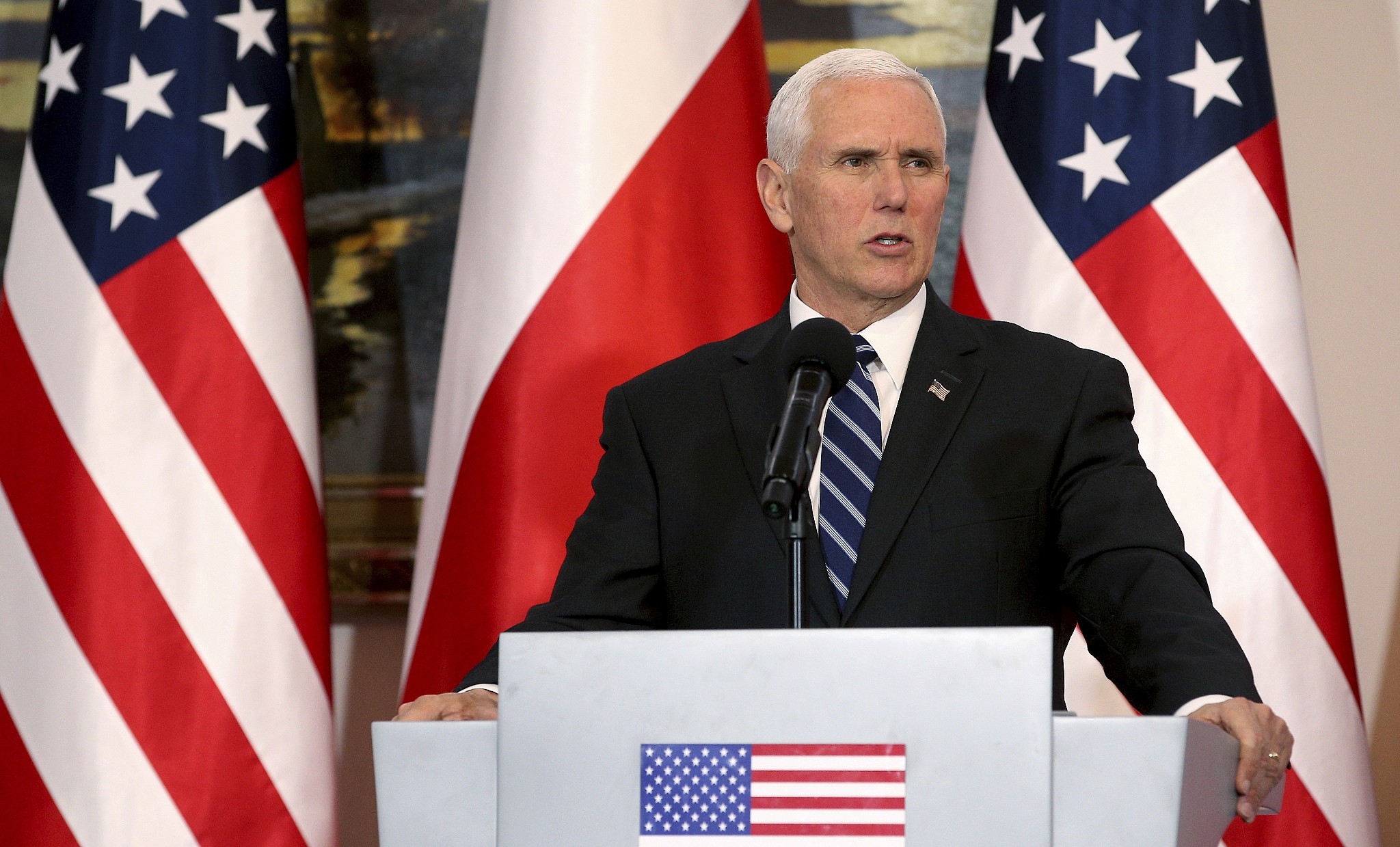
US Vice President Mike Pence speaks during a joint statement as part of a meeting with Poland's President Andrzej Duda at Belvedere palace in Warsaw, Poland, February 13, 2019.  (AP Photo/Michael Sohn)

US Vice President Mike Pence speaks during a joint statement as part of a meeting with Poland’s President Andrzej Duda at Belvedere palace in Warsaw, Poland, February 13, 2019. (AP Photo/Michael Sohn)

WARSAW, Poland — US Vice President Mike Pence on Wednesday hailed the symbolic importance of Prime Minister Benjamin Netanyahu “breaking bread” with Arab leaders at a Mideast conference in Warsaw, saying he hoped it heralded further cooperation to come.

The two-day conference, which was originally called with a focus on countering Iran but now carries the toned-down and vague goal of seeking stability in the Middle East, opened with a dinner at the Royal Castle in Warsaw’s old town.

“Tonight I believe we are beginning a new era, with Prime Minister Netanyahu from the State of Israel, with leaders from Bahrain, Saudi Arabia, and the UAE, all breaking bread together, and later in this conference sharing honest perspectives on the challenges facing the area,” Pence said, addressing the guests.

“Poland and the US welcome this outward symbol of this gathering, a symbol of cooperation and a hopeful sign of a brighter future that awaits nations across the Middle East,” Pence said.

“Let us recognize that we are stronger together than we would ever be apart,” he said.

The summit appears to be the first time an Israeli leader and senior Arab officials were attending an international conference centered on the Middle East since the Madrid peace conference in 1991, which set the stage for the landmark Oslo Accords between Israel and the Palestinians.

Netanyahu and the Arab officials also shared a stage during a group photo scheduled for meeting participants.

Palestinians have been heavily critical of the conference, with officials describing it as an effort by the US to advance anti-Palestinian positions.

Netanyahu expressed sentiments similar to Pence’s when he met earlier in the day with Omani Foreign Minister Yusuf bin Alawi bin Abdullah, telling him that the recent rapprochement between the two countries — including Netanyahu’s October 2018 visit to Muscat — was “changing the world.”

Polish Foreign Minister Jacek Czaputowicz, US Vice President Mike Pence, Poland’s President Andrzej Duda, Prime Minister Benjamin Netanyahu and US Secretary of State Mike Pompeo pose for a family photo at the conference on Peace and Security in the Middle east in Warsaw, on February 13, 2019. (Janek SKARZYNSKI/AFP)

“It’s paving the way for many others to do what you said — not to be stuck in the past but to seize the future,” he said.

Netanyahu said many Arab countries were following Oman’s lead in moving toward more open interaction with Israel, “including at this conference.”

“I want to thank you for this forward-looking, positive policy that can lead to peace and prosperity for all,” he said.

“Indeed, this is an an important, new vision for the future,” the Omani foreign minister responded in English. “People in the Middle East have suffered a lot, because they have [been stuck in] the past. This is a new era for the future, and for prosperity for all the nations.”

Wednesday’s meeting took place at the Warsaw Intercontinental hotel, where Netanyahu’s delegation is staying.

The prime minister’s surprising visit to Oman was the first time an Israeli leader publicly visited the Gulf state since 1996.

Prime Minister Benjamin Netanyahu (left) with Sultan Qaboos bin Said of Oman in the Gulf state on October 26, 2018 (Courtesy)

Since then, Omani leaders have continued to advocate for the Arab world to normalize its relations with Israel.

Two days after Netanyahu’s trip to Muscat, which was celebrated on the front pages of several Omani newspapers, bin Alawi suggested at a conference in Bahrain that the time had come for Israel to be treated like any other state in the region. Remarkably, his colleagues from Manama and Riyadh did not disagree, even expressing tacit support for Oman’s efforts to help advance the peace process.

However, in a damper on Netanyahu’s efforts, an Israeli TV station broadcast an unprecedented interview Wednesday with a senior Saudi prince who accused the prime minister of deceiving the Israeli public by claiming that Israeli ties with the wider Arab world could be warmed without the Palestinian issue being resolved.

“Israeli public opinion should not be deceived into believing that the Palestinian issue is a dead issue,” Prince Turki bin Faisal Al Saud told Channel 13 news in a lengthy interview in London.

“From the Israeli point of view, Mr. Netanyahu would like us to have a relationship, and then we can fix the Palestinian issue. From the Saudi point of view, it’s the other way around,” said the former Saudi intelligence chief and ex-ambassador to the US and UK.

Representatives of some 60 nations are set to attend the conference in Warsaw, including the foreign ministers of ten Arab countries.

Pompeo and Czaputowicz only mentioned Iran indirectly, carefully avoiding the impression that the summit’s focus is an effort to isolate the Islamic Republic.

Netanyahu, for his part, has said the conference will not focus on Israeli-Palestinian peace efforts, since Pompeo and Pence do not deal with the administration’s much-anticipated peace proposal. Rather, Netanyahu told reporters Tuesday evening, the conference would have a clear emphasis on efforts to thwart Iranian aggression.


Rouhani claims Israel, US behind deadly suicide bombing in Iran

February 14, 2019

Source: Rouhani claims Israel, US behind deadly suicide bombing in Iran | The Times of Israel

( Say what you will, mullah.  It’s your own people who have had enough of your theocratic dictatorship. – JW )

Supreme Leader Khamenei says perpetrators of Wednesday attack that killed 27 Revolutionary Guards have links to foreign spy agencies

Iranian President Hassan Rouhani speaks at a ceremony to mark the second anniversary of the death of former Iranian president Akbar Hashemi Rafsanjani, in Tehran, Iran, on January 10, 2019. (Iranian Presidency Office via AP)

Iranian President Hassan Rouhani speaks at a ceremony to mark the second anniversary of the death of former Iranian president Akbar Hashemi Rafsanjani, in Tehran, Iran, on January 10, 2019. (Iranian Presidency Office via AP)

Iranian President Hassan Rouhani on Thursday blamed a suicide bombingthat killed 27 people in southeastern Iran on Israel and the Untied States, vowing revenge against Jaish al-Adl, the “mercenary group” that committed it.

“The crime will remain as a ‘dirty stain’ in the black record of the main supporters of terrorism in the White House, Tel Aviv and their regional agents,” he said, according to the Reuters news agency.

“We will certainly make this mercenary group pay for the blood of our martyrs,” the official IRNA news agency quoted the Iranian president as saying in response to Wednesday’s attack.

“The main root of terrorism in the region is America and Zionists, and some oil-producing countries in the region also financially support the terrorists,” he added.

Rouhani was speaking at Tehran’s Mehrabad Airport before leaving for the Russian resort of Sochi for a summit with his Russian and Turkish counterparts, Vladimir Putin and Recep Tayyip Erdogan, on the future of war-battered Syria.

Meanwhile, Supreme Leader Ayatollah Ali Khamenei published a letter on his website, Khamenei.ir, claiming the perpetrators had links to spy organizations of countries in the region and beyond. The letter also sent condolences to the families of the victims.

Wednesday’s attack, which targeted a busload of Revolutionary Guards in the volatile southeastern province of Sistan-Baluchistan, was one of the deadliest on Iranian security forces in years.

The bomber struck as the troops were returning from a patrol mission on the border with Pakistan, where Baluchi separatist and jihadist groups have rear bases, the Guards said.

Sistan-Baluchistan is home to a large ethnic Baluchi community, who straddle the border and who, unlike most Iranians, who are Shiite Muslims, are mainly Sunni.

Warning to neighbors

Rouhani called on Iran’s neighbors to assume their “legal responsibilities” and not allow “terrorists” to use their soil to prepare attacks.

“If this continues and they cannot stop the terrorists, it is clear — based on international law — that we have certain rights and will act upon them in due time,” he said, without elaborating.

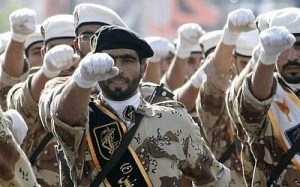
Illustrative photo of Iranian Revolutionary Guards (@MidEastNews_Eng via Twitter/File)

The attack came on the same day that the US gathered some 60 countries — including Israel — in Poland for a conference on the Middle East and Iran that they hoped would increase pressure on Tehran.

Iran quickly linked the attack to the Warsaw conference, where supporters of the formerly armed opposition People’s Mujahedeen plan a second day of protests on Thursday.

Dubbing the meeting the “WarsawCircus,” Foreign Minister Mohammad Javad Zarif said it was “no coincidence that Iran is hit by terror on the very day” that the talks began in the Polish capital.

“Especially when cohorts of same terrorists cheer it from Warsaw streets & support it with twitter bots? US seems to always make the same wrong choices, but expect different results,” Zarif wrote on Twitter.

Wednesday’s bombing was claimed by the jihadist Jaish al-Adl (Army of Justice), which is blacklisted as a terrorist group by Iran, the SITE Intelligence Group reported.

The group was formed in 2012 as a successor to Sunni extremist group Jundallah (Soldiers of God), which waged a deadly insurgency against Iranian targets over the previous decade.

Sistan-Baluchistan has been hit by previous deadly attacks in recent months.

On January 29, three members of an Iranian bomb squad sent to the scene of an explosion in provincial capital Zahedan were wounded when a second device blew up as they were trying to defuse it.

And in early December, two people were killed and around 40 wounded in an attack in the strategic port city of Chabahar, on the province’s Arabian Sea coast, which Zarif blamed on “foreign-backed terrorists.”

In October, Jaish al-Adl claimed responsibility for abducting 12 Iranian security personnel near the border, five of whom were later released and flown home after Pakistani intervention.

Zarif visited Islamabad twice in a month for briefings on the progress of the efforts to secure the captured unit’s release.


Netanyahu’s staff scrambles after he speaks of ‘war against Iran’ 

February 14, 2019

Source: Netanyahu’s staff scrambles after he speaks of ‘war against Iran’ | The Times of Israel

Tehran’s FM, major media outlets report on apparent belligerent statement posted to social media; officials then update translation to say PM merely seeks to ‘combat Iran’

WARSAW, Poland — Prime Minister Benjamin Netanyahu raised eyebrows on Wednesday when he spoke of a joint interest in “war” in the context of the struggle against Iran.

In a Hebrew-language video message recorded before he headed to the opening of a Middle East conference in Warsaw, the prime minister hailed the fact that an Israeli leader was about to sit down with senior officials from “leading Arab countries” in order to “advance the common interest of war against Iran.”

An official translation of the statement, provided by the Government Press Office, translated Hebrew phrase milhama b’Iran literally “war with Iran,” when it was not clear that Netanyahu had meant literal military action.

The prime minister’s social media accounts published the statement, leading numerous people, including Iranian Foreign Minister Javad Zarif, to point out its ostensible belligerency.

Javad Zarif

@JZarif

Numerous other users of social media, among them senior journalists, also wondered whether Netanyahu had just publicly called for open war with Iran.

The Associated Press

@AP

The Latest: Israel’s prime minister says he plans on working with Arab countries at a U.S.-backed Mideast conference in Warsaw to focus on the “common interest of war with Iran.” http://apne.ws/zRN0DUQ 

https://storage.googleapis.com/afs-prod/media/media:a2471c8c3bc740859ccfe7b0e96cc96c/400.jpeg

The Latest: Israeli leader hopes to rally Arabs against Iran

WARSAW, Poland (AP) — The Latest on the international conference on the Middle East (all times local): 7:30 p.m. Israel’s prime minister says he plans on working with Arab countries at a U.S.-backed…

apnews.com

View image on Twitter

About one hour after the post went live, as Netanyahu was already sitting at a reception at Warsaw’s historic Royal Castle, his staff deleted the first tweet and replaced it with a softened version, reading: “What is important about this meeting — and it is not in secret, because there are many of those — is that this is an open meeting with representatives of leading Arab countries, that are sitting down together with Israel in order to advance the common interest of combating Iran.”

PM of Israel

@IsraeliPM

From here I am going to a meeting with 60 foreign ministers and envoys of countries from around the world against Iran.

PM of Israel

@IsraeliPM

What is important about this meeting – and it is not in secret, because there are many of those – is that this is an open meeting with representatives of leading Arab countries, that are sitting down together with Israel in order to advance the common interest of combating Iran.

Minutes later the GPO also reissued its translation of the statement with the gentler wording.


‘Confronting Iran’ key to peace in Middle East, Pompeo tells Netanyahu

February 14, 2019

Source: ‘Confronting Iran’ key to peace in Middle East, Pompeo tells Netanyahu | The Times of Israel

Leaders meet at Warsaw conference, hailed by PM as a ‘historical turning point’ due to his participation alongside many senior Arab officials

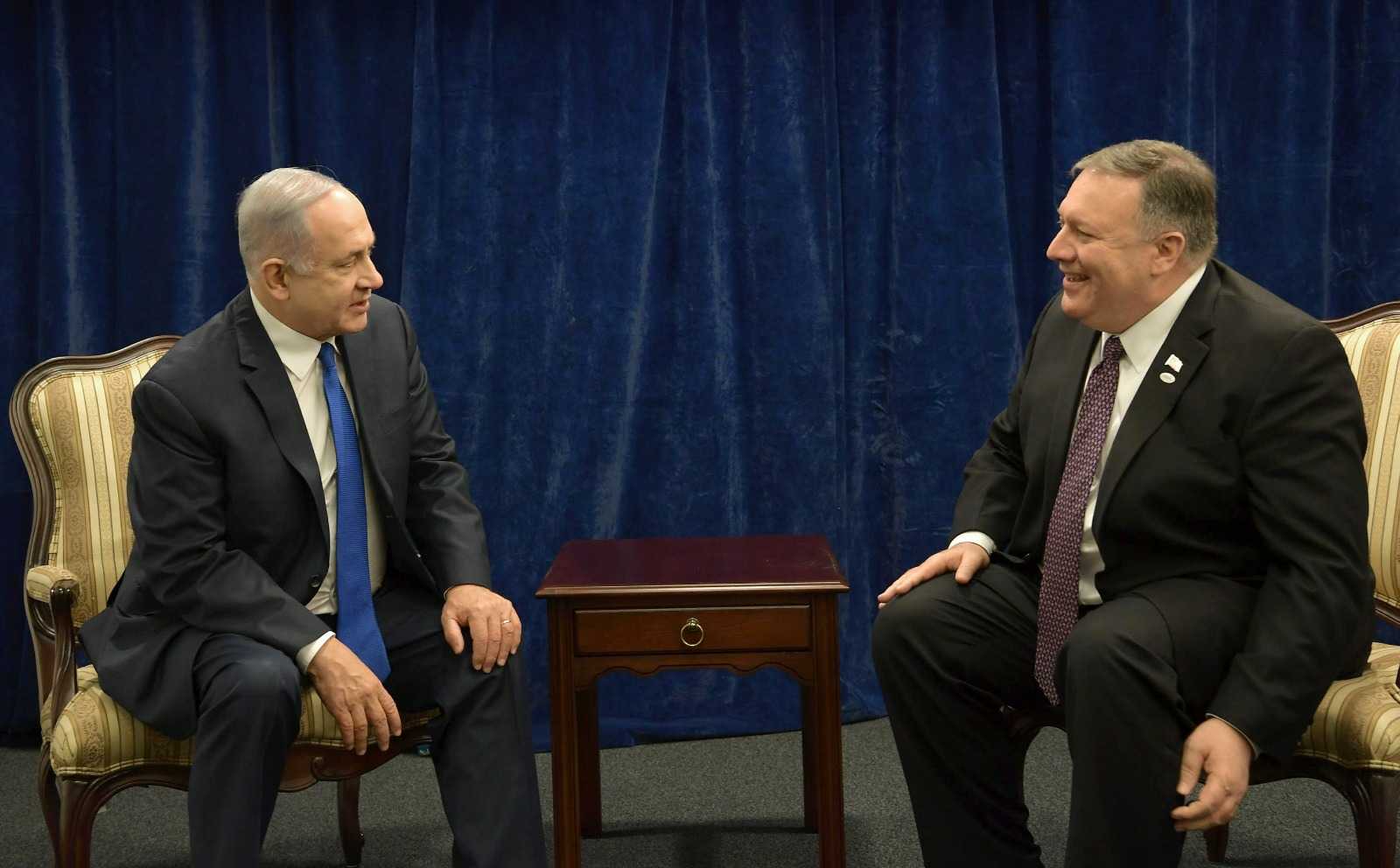
Prime Minister Benjamin Netanyahu (L) and US Secretary of State Mike Pompeo meet at the conference on Peace and Security in the Middle east in Warsaw, on February 14, 2019.  (Amos Ben Gershom/GPO)

Prime Minister Benjamin Netanyahu (L) and US Secretary of State Mike Pompeo meet at the conference on Peace and Security in the Middle east in Warsaw, on February 14, 2019. (Amos Ben Gershom/GPO)

WARSAW, Poland — “Confronting Iran” is an essential requirement for achieving peace in the Middle East, US Secretary of State Mike Pompeo said Thursday on the sidelines of an international conference dealing with the region.

“You can’t achieve peace and stability in the Middle East without confronting Iran, it’s just not possible,” he told reporters ahead of a meeting with Prime Minister Benjamin Netanyahu.

The Islamic Republic is a malign influence in Lebanon, in Yemen, in Syria and in Iraq, the US top diplomat went on.

“The three H’s — the Houthis, Hamas and Hezbollah — these are real threats, and there are others as well. But you can’t get peace in the Middle East without pushing back against Iran,” he said.

Pompeo ignored reporters’ questions about the administration’s planned release of a proposal for an Israeli-Palestinian peace deal.

Netanyahu used the photo op to call on Arab states to continue normalizing relations with Israel, hailing the opening event of the so-called “Ministerial to Promote a Future of Peace and Security in the Middle East” as a “historic turning point,” because he was in the same room as the foreign ministers of 10 Arab countries.

“Yesterday was a historic turning point. In a room of some 60 foreign ministers and representatives of dozen of governments, an Israeli prime minister and the foreign ministers of leading Arab countries stood together and spoke with unusual force, clarity and unity against the common threat of the Iranian regime,” Netanyahu said.

“I think this marks a change, an important understanding of what threatens our future, what we have to do to secure it, and the possibilities of cooperation that extend beyond security to every realm of life for the peoples of the Middle East.”

The summit appears to be the first time an Israeli leader and senior Arab officials attended an international gathering centered on the Middle East since the 1991 Madrid peace conference, which set the stage for the landmark Oslo Accords between Israel and the Palestinians.

After the foreign ministers of Saudi Arabia, Bahrain and the United Arab Emirates addressed the summit’s opening ceremony, held in Warsaw’s historic Royal Castle, Netanyahu spoke as well.

The speeches were not made available to the public.

US peace envoy Jason Greenblatt hailed the event, tweeting: “Clearly Iran’s aggression in the region has brought Israel & the Arab world closer together. We must continue this important conversation. Maybe next time Israel will be on the podium at the same time.”

At the opening session Thursday morning at Warsaw’s PGE Narodowy Stadium, Pompeo, too, noted the significance of the event the previous night.

“Arab and Israeli leaders were in the same region, sharing a meal” and discussing issues of common concern, he said.

The two-day conference, which was originally called with a focus on countering Iran but now carries the toned-down and vague goal of seeking stability in the Middle East, opened Wednesday with a dinner at the Royal Castle in Warsaw’s old town.

US Vice President Mike Pence addressed the guests: “Tonight I believe we are beginning a new era, with Prime Minister Netanyahu from the State of Israel, with leaders from Bahrain, Saudi Arabia, and the UAE, all breaking bread together, and later in this conference sharing honest perspectives on the challenges facing the area.”

Palestinians have been heavily critical of the conference, with officials describing it as an effort by the US to advance anti-Palestinian positions.

Netanyahu expressed sentiments similar to Pence’s when he met earlier in the day with Omani Foreign Minister Yusuf bin Alawi bin Abdullah, telling him that the recent rapprochement between the two countries — including his October 2018 visit to Muscat — was “changing the world.”

“It’s paving the way for many others to do what you said — not to be stuck in the past but to seize the future,” he said.

Netanyahu said many Arab countries were following Oman’s lead in moving toward more open interaction with Israel, “including at this conference.”

Polish Foreign Minister Jacek Czaputowicz, US Vice President Mike Pence, Poland’s President Andrzej Duda, Prime Minister Benjamin Netanyahu and US Secretary of State Mike Pompeo pose for a family photo at the conference on Peace and Security in the Middle east in Warsaw, on February 13, 2019. (Janek SKARZYNSKI/AFP)

However, in a damper on Netanyahu’s efforts, an Israeli TV station broadcast an unprecedented interview Wednesday with a senior Saudi prince who accused the prime of being deceitful in claiming that Israeli ties with the wider Arab world can be warmed without the Palestinian issue being solved.

“Israeli public opinion should not be deceived into believing that the Palestinian issue is a dead issue,” Prince Turki bin Faisal Al Saud told Channel 13 news in a lengthy interview in London.

“From the Israeli point of view, Mr. Netanyahu would like us to have a relationship, and then we can fix the Palestinian issue. From the Saudi point of view, it’s the other way around,” said the former Saudi intelligence chief and ex-ambassador to the US and UK.