Archive for February 2019

Iran’s Zarif says there is ‘great risk’ of war with Israel 

February 18, 2019

Source: Iran’s Zarif says there is ‘great risk’ of war with Israel | The Times of Israel

Iranian FM tells Munich Security Conference that Jerusalem is using bombing raids in Syria to instigate conflict, flouting international law along with US
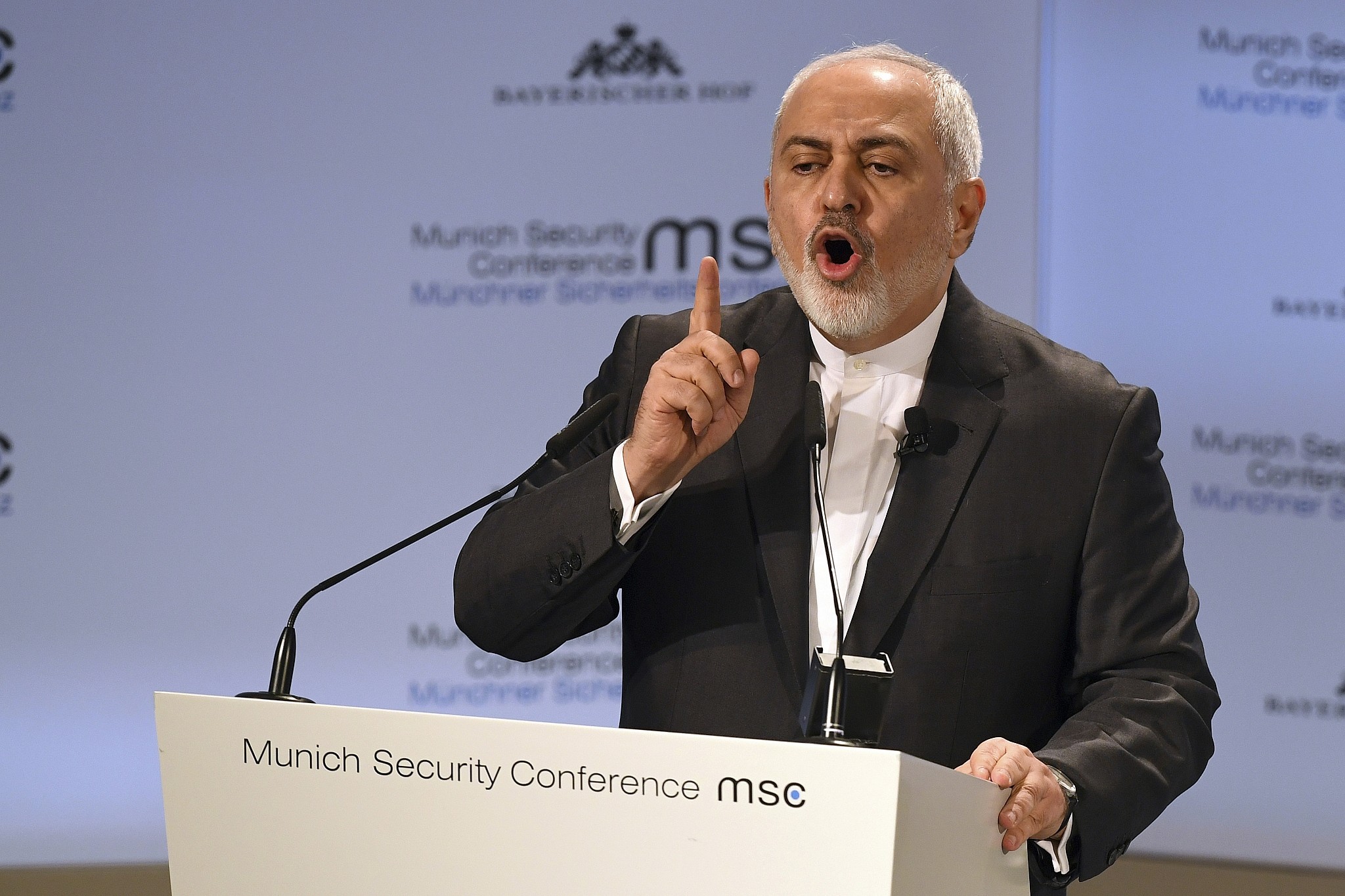
Iranian Foreign Minister Mohammad Javad Zarif speaks during the Munich Security Conference in Munich, Germany, Feb. 17, 2019. (AP Photo/Kerstin Joensson)

Iranian Foreign Minister Mohammad Javad Zarif speaks during the Munich Security Conference in Munich, Germany, Feb. 17, 2019. (AP Photo/Kerstin Joensson)

Iran’s foreign minister said Sunday that Jerusalem is “looking for war” and that the behavior of Israel and the United States was increasing the prospects of a conflict.

“Certainly, some people are looking for war… Israel,” Mohammad Javad Zarif told participants at the Munich Security Conference, according to the Reuters news agency.

Zarif said that Israel was violating international law by carrying out bombing raids in Syria, and called on European powers and the US to hold Israel to account for its actions.

“The risk [of war] is great. The risk will be even greater if you continue to turn a blind eye to severe violations of international law.

“Israeli behavior is putting international law on the shelf, US behavior is putting international law on the shelf,” he said.

The Iranian regime views Israel and the US as its political and spiritual arch-enemies, and its leaders regularly vow to destroy the Jewish state.

Israel in recent years has carried out hundreds of airstrikes in Syria against targets linked to Iran, which alongside its proxies and Russia is fighting on behalf of the regime of Syrian President Bashar Assad.

Until recently, Israel typically refrained from commenting on its military activities against Iran in Syria, neither confirming nor denying strikes.
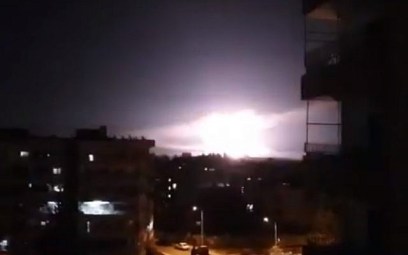
An explosion, reportedly during Israeli airstrikes near Damascus, Syria, on January 21, 2019. (screen capture: YouTube)

Over the past two months, however, that policy of ambiguity has been largely abandoned by Israeli military and political officials, who have begun more openly discussing the Israel Defense Forces’ operations in Syria.

Prime Minister Benjamin Netanyahu has come under fire for breaking Israel’s ambiguity policy regarding attacks in Syria, with critics accusing him of putting Israel’s security at risk to gain points among voters.

Zarif also said Iran remains committed to the 2015 nuclear agreement that the US unilaterally pulled out of last year, but accused Britain, France and Germany of not doing enough to ensure that Tehran sees economic benefits in sticking to the agreement.

Zarif slammed the US for its focus on Iran.

“We have long been the target of an unhealthy fixation, let’s say obsession” from the US, he said.

US Vice President Mike Pence, in a speech before the conference on Saturday, “arrogantly demanded that Europe must join the United States in undermining its own security and breaking its obligations,” Zarif charged.

The accord offers Iran sanctions relief for limiting its nuclear program, and the International Atomic Energy Agency has said that Tehran is sticking to the agreement.

But the US argues that the deal just postpones the time when Iran might be able to build a nuclear bomb. At the conference, Pence pushed for Europeans to end their involvement in the nuclear deal, calling Iran “the leading state sponsor of terrorism in the world.”
Prime Minister Benjamin Netanyahu speaking with reporters at Ben Gurion Airport before his departure to a conference in Poland, February 11, 2019. (Raphael Ahren/Times of Israel)

“The time has come for our European partners to stop undermining US sanctions against this murderous revolutionary regime,” Pence said in his speech. “The time has come for our European partners to stand with us and with the Iranian people, our allies and friends in the region. The time has come for our European partners to withdraw from the Iran nuclear deal.”

Zarif’s words regarding the increasing likelihood of all-out military conflict with Israel comes days after Netanyahu spoke of a joint interest in “war” in the context of the struggle against the Islamic Republic.

In a Hebrew-language video message recorded before he headed last Wednesday to the opening of a Middle East conference in Warsaw, the prime minister hailed the fact that an Israeli leader was about to sit down with senior officials from “leading Arab countries” in order to “advance the common interest of war against Iran.”

An official translation of the statement, provided by the Government Press Office, translated Hebrew phrase milhama b’Iran as “war with Iran,” when it was not clear that Netanyahu had meant literal military action.

The prime minister’s social media accounts published the statement, leading numerous people, including Zarif, to point out its ostensible belligerency.

On Saturday, Zarif rejected an accusation by Pence in his speech that Iran “openly advocates another Holocaust.”
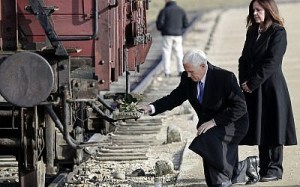
US Vice President Mike Pence kneels beside his wife Karen, right, at a freight car once used to transport Jews, during their visit to the former Nazi death camp Auschwitz-Birkenau in Oswiecim, Poland, Friday, February 15, 2019. (AP Photo/Michael Sohn)

The foreign minister told the German daily Der Spiegel that the accusation was “laughable,” according to a translation by Reuters.

“Iran has always supported the Jews. We are just against Zionists,” he insisted, adding, “The Holocaust was a disaster.”

In his speech Saturday, Pence noted that “Ayatollah Khamenei himself has said, ‘It is the mission of the Islamic Republic of Iran to erase Israel from the map.”

He said: “Yesterday, my wife Karen and I paid our solemn respects to the martyrs of the Holocaust in our very first visit to Auschwitz. One lesson of that dark chapter of human history is that when authoritarian regimes breathe out vile anti-Semitic hatreds and threats of violence, we must take them at their word. The Iranian regime openly advocates another Holocaust.”

Raphael Ahren and agencies contributed to this report.


Iran says it has launched ‘cruise missile capable’ submarine 

February 18, 2019

Source: Iran says it has launched ‘cruise missile capable’ submarine | The Times of Israel

Locally made Fateh-class submersible makes Tehran self-reliant on land, air and sea, Rouhani says at unveiling

Iranian President Hassan Rouhani, center with white turban, and other dignitaries attend the inauguration of the new Iranian made ‘Fateh’ submarine in Bandar Abbas on February 17, 2019. (Iranian Presidency Office via AP)

TEHRAN — Iran on Sunday launched a new, locally-built submarine capable of firing cruise missiles, state TV said, in the country’s latest show of military might at a time of heightened tensions with the US.

The launch ceremony, led by President Hassan Rouhani, took place in the southern port city of Bandar Abbas.

“Today, the Islamic Republic of Iran is fully self-reliant on land, air and sea,” Rouhani said. “Our defensive power is meant to defend our interests and we have never sought to attack any country.”

Named the Fateh (Farsi for “Conqueror”), the new submarine is Iran’s first in the semi-heavy category, the Fars news agency said, and it fills a gap between the light Ghadir class and the heavy, Russian-made Kilo class submarines that the country possesses.

Fars said the near 600-ton underwater vessel is equipped with torpedoes and naval mines, in addition to cruise missiles, and can operate more than 200 meters below sea level for up to 35 days.

The US withdrew from a 2015 multilateral nuclear deal with Iran in May 2018 and re-imposed biting unilateral sanctions later last year.

Ten days ago, Iran’s Revolutionary Guards unveiled a new ballistic missile with a range of 1,000 kilometers (620 miles), the elite unit’s official media agency Sepah News, said.

The surface-to-surface missile — called Dezful — is an upgrade on the older Zolfaghar model that had a range of 700 kilometers, aerospace commander Brigadier General Amirali Hajizadeh said.

Rouhani said at the launch that “pressure by enemies, the (Iran-Iraq) war and sanctions” were incentives for Tehran to be self-reliant in its defense industry.

“Maybe we would not have this motivation to industrialize our defense sector,” he said, if Iran could just buy the weaponry it needed.

Iran’s top military brass and cabinet ministers attended the ceremony.


Nasrallah: Warsaw meet unmasked Israel-Gulf ties, Arab leaders Israel’s ‘tools’

February 17, 2019

Source: Nasrallah: Warsaw meet unmasked Israel-Gulf ties, Arab leaders Israel’s ‘tools’ | The Times of Israel

Referencing dispute over IDF readiness for war, Hezbollah chief says Israelis ‘don’t trust’ army; ‘They know we can enter Galilee, they’re not sure they can enter our land’

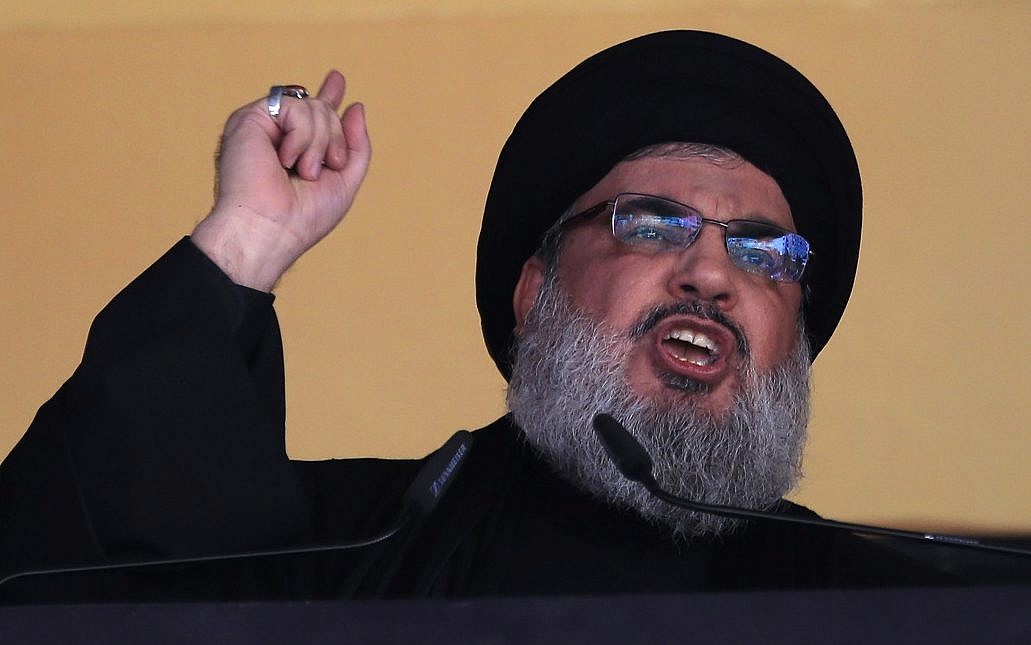
In this October 24, 2015 photo, Hezbollah leader Hassan Nasrallah addresses a crowd in a southern suburb of Beirut, Lebanon. (AP Photo/Hassan Ammar, File)

In this October 24, 2015 photo, Hezbollah leader Hassan Nasrallah addresses a crowd in a southern suburb of Beirut, Lebanon. (AP Photo/Hassan Ammar, File)

Hezbollah leader Hassan Nasrallah on Saturday dismissed last week’s Middle East conference in Warsaw as “weak and stale,” and warned that Arab leaders moving toward normalization with Israel were only “a tool” in Israel’s hands.

In a speech marking the terror group’s annual remembrance day for “martyrs,” Nasrallah said the summit in Poland, which focused strongly on Iran’s belligerence in the region, aimed to “rally against Iran and the resistance movements in the region… The enemies are trying to rally the world to conspire against the resistance after their wars failed to eradicate it.”

He said Israeli Prime Minister Benjamin Netanyahu was “speaking from the heart” when he talked at the conference of seeking “war with Iran,” a statement that has been characterized as a mistranslation of Netanyahu’s original Hebrew comments.

But Nasrallah asserted that “today Iran is a strong state and stronger than anyone who targets it with war.”

Nasrallah said the Warsaw summit had “brought out into the open Israel’s relations with the Gulf states.

“We knew about normalization between Israel and Oman and the United Arab Emirates, but at the summit we also clearly saw normalization with the Saudis,” he said.

The Hezbollah chief attacked Yemen’s foreign minister for sitting besideNetanyahu at the summit, saying it “revealed that… the Yemen war is an Israeli-American war carried out by Saudi Arabia and the UAE.”

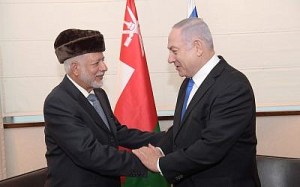
Prime Minister Benjamin Netanyahu greets Omani Foreign Minister Yusuf bin Alawi bin Abdullah at the sidelines of a regional conference on the Middle East in Warsaw, February 13, 2018. (Amos Ben Gershom/GPO)

Saudi Arabia has been leading the years-long fight against the Iran-backed rebels in Yemen. Many thousands of civilians are believed to have been killed in the war.

“Those who attack the people in Yemen, who control Bahrain that acts against Iran, who sit beside Israel at the Warsaw conference and normalize relations with Israel — they are all tools in the hands of this [Israeli and American] plan,” Nasrallah said.

He claimed the summit was also intended to “eliminate the Palestinian cause,” noting it “missed any reference to Palestine, even though Israel is the head of terror” in the region.

Nasrallah also referred to recent claims by some Israeli officials that the Israeli Ground Forces are not prepared for war with the terror group in the north, saying Israelis “don’t believe in their army.”

The issue of the Israel Defense Forces’ readiness for conflict has made headlines in recent months, particularly in light of the Defense Ministry ombudsman’s ongoing public clash with military leaders over his claims — refuted by both military and Knesset officials — that the army is woefully unprepared for war.

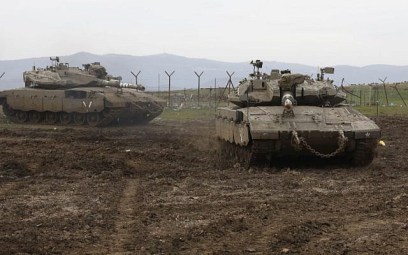
Israeli army Merkava tanks take positions on the Golan Heights, on January 20, 2019. (Jalaa Marey/AFP)

“They don’t believe in their army,” the Hezbollah chief said. “They know our fighters can enter the Galilee, but they’re not sure their Ground Forces can enter our land.”

Nasrallah recently boasted in another speech of his organization’s plans for invading northern Israel.

“Senior officials in the Israeli army say it is not ready, particularly the Ground Forces. The officers don’t believe in it, the soldiers don’t believe in it and neither does the government. These are not my words, but the words of by Israeli army leaders.”

He added: “It wasn’t like that in the past. Residents of southern Lebanon are not afraid, but residents of the Galilee are very fearful. That is what deterrence looks like. This is a new state of things.”

On Tuesday, a number of signs mocking the IDF were placed on the Lebanese border, apparently by Hezbollah. “If you don’t trust your Ground Forces, who were beaten in Lebanon, you need to send them to your search-and-rescue forces. You’ll need them,” the signs read, in stilted Hebrew. The signs also featured photographs of Israeli soldiers crying and a tank on fire.

Netanyahu said last month military forces were ready to deliver a “crushing attack” to the nation’s enemies.

Nasrallah also mocked Israeli leaders’ threats against his organization.

“Sometimes Israelis say in their speeches, ‘If Nasrallah knew how much we knew about him, he wouldn’t sleep at night.’ If your information is correct and you know everything about us, about all that we have, it only gives us more confidence, because or deterrence will become even stronger.”

He claimed that the organization now had 40 “hubs,” each of which had more power than Lebanon’s entire “resistance” had possessed in the year 2000.

On Friday the IDF said that over the past week troops conducted a massive drill to train for combat operations in topographical conditions similar to those in Lebanon.

The exercise was the largest one carried out by the 401st Brigade of the Armored Corps in recent years, according to Channel 12 news. The soldiers carried out drills in coordination with the Israeli Air Force, as well as the engineering and intelligence corps.

The brigade’s commander, Col. Dudu Sonago, said Hezbollah fighters have gained extensive experience and have developed more sophisticated battle techniques after fighting in neighboring Syria’s civil war, at the same time as deepening entrenchment above and below ground in Syria.

“They are no longer a guerrilla organization, but a real army,” he said.

Nasrallah also denied US assertions that it has cells in Venezuela. The Latin American nation has plunged deeper into political chaos following the US demand that President Nicolas Maduro steps down a month into his second term.

US Secretary of State Mike Pompeo said last week that “Hezbollah has active cells” in Venezuela and “Iranians are impacting the people of Venezuela and throughout South America.”

But Nasrallah said Venezuela “does not need” Hezbollah, though his group was in “solidarity with the political leadership and state of Venezuela against the American aggression.”

AP contributed to this report.


Trump demands Europe put IS fighters on trial

February 17, 2019

Source: Trump demands Europe put IS fighters on trial | The Times of Israel

Despite warnings to the contrary from his generals, US president insists, ‘We are pulling back after 100% Caliphate victory!’

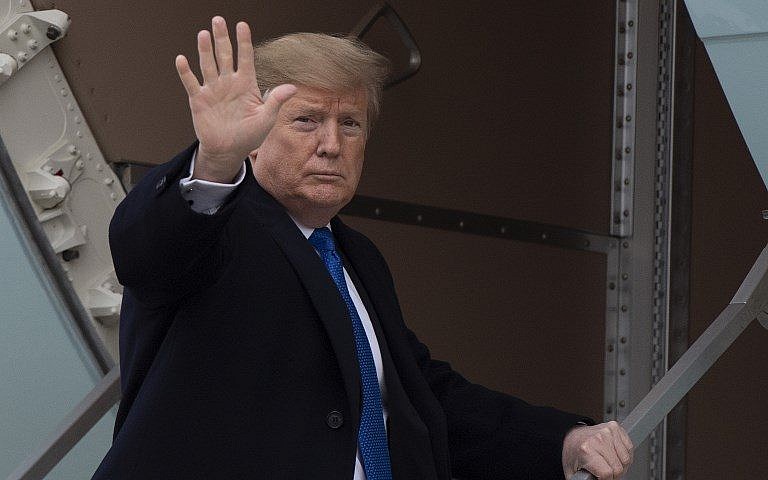
US President Donald Trump waves as he boards Air Force One at Andrews Air Force Base, MD, on February 15, 2019. (Jim Watson/AFP)

US President Donald Trump waves as he boards Air Force One at Andrews Air Force Base, MD, on February 15, 2019. (Jim Watson/AFP)

US President Donald Trump demanded Sunday that European countries “take back” their citizens who fought with the Islamic State in Iraq and Syria and put them on trial.

“The United States is asking Britain, France, Germany and other European allies to take back over 800 ISIS fighters that we captured in Syria and put them on trial,” Trump tweeted.

He then reiterated his claim that “The Caliphate is ready to fall.”

Trump warned that if EU countries did not repatriate the terrorists “we will be forced to release them.”

“The US does not want to watch as these ISIS fighters permeate Europe, which is where they are expected to go,” Trump said.

Donald J. Trump

@realDonaldTrump

The president then repeated his complaint that EU countries were not paying their fair share of defense costs and claimed again that IS had been defeated.

“We do so much, and spend so much – Time for others to step up and do the job that they are so capable of doing. We are pulling back after 100% Caliphate victory!” he said.

At its height, between 27,000 and 31,000 may have traveled to Syria and Iraq to join the Islamic State group, according to an analysis by the Soufan Group. Of those, about 6,000 were from Europe, with most from France, Germany and Britain.

Earlier this month, the top general overseeing US military actions in the Middle East, US Army General Joseph Votel, said that Trump did not consult him ahead of deciding to pull American troops from Syria and told senators that despite Trump’s claims, IS has not yet been defeated.

Trump is in an ongoing feud with the US intelligence community, which has warned that IS can quickly rebuild into a cohesive force in any vacuum left in the war-torn country.

Jihadist fighters defending the last dreg of the Islamic State group’s “caliphate” Saturday were holed up in half a square kilometer of a village in eastern Syria.

Trump had announced that the fall of the IS proto-state would be declared Saturday, but a Syrian commander said his US-backed forces slowed down their advance to protect civilians.

The jihadists declared a “caliphate” in large parts of Syria and neighboring Iraq in 2014, but have since lost all but a tiny patch of territory in eastern Syria near the Iraqi border.

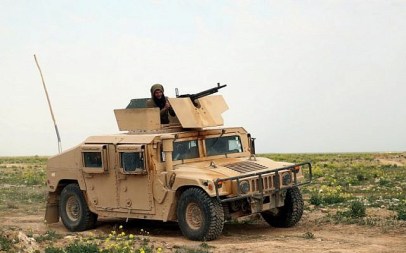
A fighter with the US-backed Syrian Democratic Forces sits atop a US-supplied military vehicle during an operation to expel Islamic State group (IS) jihadists from the Baghouz area in the eastern Syrian province of Deir Ezzor on February 14, 2019. (Delil Souleiman/AFP)

“IS is besieged in a neighborhood that is estimated to be 700 meters long and 700 meters wide,” said Syrian Democratic Forces (SDF) commander Jia Furat.

“Baghouz is within our firing range but we are moving cautiously considering there are civilians still trapped there as human shields,” said Furat, the overall commander for the operation.

“In a very short time, not longer than a few days, we will officially announce the end of IS’s existence,” he told reporters at a nearby SDF base.

American defense officials are increasingly fearful that the jihadists are simply biding their time until the Americans leave the battlefield as planned.

A Defense Department watchdog report released February 4 warned that if measures weren’t taken following a US troop pullout from Syria, “it is very likely that ISIS will have the opportunity to set conditions for future resurgence and territorial control.”

The US Army’s Central Command said that the Islamic State group is “regenerating key functions and capabilities more quickly in Iraq than in Syria,” but unless there is sustained counterterrorism pressure, IS militants “could likely resurge in Syria within six to twelve months and regain limited territory” in the Middle Euphrates River Valley.


Syrian regime linked to over 300 chemical attacks – report 

February 17, 2019

Source: Syrian regime linked to over 300 chemical attacks – report | The Times of Israel

Global Public Policy Institute calls on international community to target regime’s helicopter fleet to prevent delivery of chemical munitions

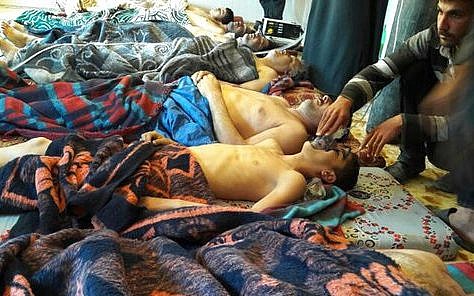
FILE - In this April 4, 2017 file photo, victims of a suspected chemical weapons attack lie on the ground, in Khan Sheikhoun, in the northern province of Idlib, Syria. (Alaa Alyousef via AP, File)

FILE – In this April 4, 2017 file photo, victims of a suspected chemical weapons attack lie on the ground, in Khan Sheikhoun, in the northern province of Idlib, Syria. (Alaa Alyousef via AP, File)

The Syrian regime and government-backed militias have carried out over 300 chemical attacks in the war-torn country, according to a report published Sunday.

The research, published by the Global Public Policy Institute, shows there were at least 336 chemical attacks over the course of the civil war in Syria, with 98 percent of them carried out by President Bashar Assad’s regime. The remaining 2% of attacks could be attributed to the Islamic State terrorist group.

At least 89% of the chemical attacks were carried out by the Syrian government using improvised chlorine munitions delivered by modified barrel or lob bombs.

According to the report, the regime has targeted civilian population areas with its chemical attacks, rather than the frontline military positions of the rebels. The study said that showed that the use of chemical weapons is part of a strategy of collective punishment for opposition-held areas and the fear of attack is a major contributing factor to the country’s displaced persons crisis.

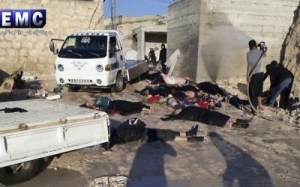
This photo provided Tuesday, April 4, 2017 by the Syrian anti-government activist group Edlib Media Center, shows victims of a suspected chemical attack, in the town of Khan Sheikhoun, northern Idlib province, Syria. (Edlib Media Center, via AP)

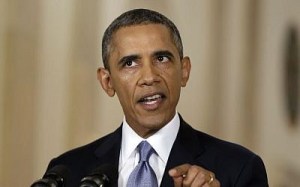
Approximately 90% of the confirmed attacks occurred after the August 2013 sarin attack on the rebel-held suburbs of Damascus the crossed what then-president Barack Obama had previously called a “red line,” saying it demanded a military response against Assad’s government.

Obama instead struck a deal in which Assad was supposed to destroy his stockpiles of chemicals; however, according to the GPPI report, many subsequent attacks utilized chlorine.

At the time of the reported destruction of the stockpiles, the Organization for the Prohibition of Chemical Weapons expressed concerns about omissions and discrepancies in Syria’s declaration.

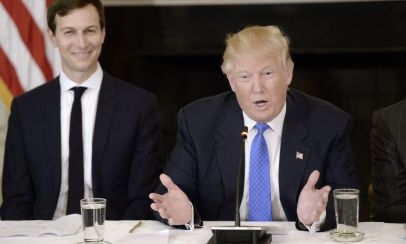
US President Donald Trump has blamed Syria’s instability on his predecessor refraining to attack Assad after he used chemical weapons on his own people.

Medical workers treating toddlers following an alleged poison gas attack in the opposition-held town of Douma, in Eastern Ghouta, near Damascus, Syria, April. 8, 2018 (Syrian Civil Defense White Helmets via AP)

“You can’t make a threat and then do nothing. So Syria was lost long ago,” Trump said in January when expanding on his decision to pull all American troops out of Syria. US soldiers had been leading the coalition against Islamic State, while also helping to thwart a permanent Iranian infrastructure in the war-torn country.

Last September, prior to the announcement of the troop drawdown, the US warned the Syrian regime that further use of chemical weapons against civilians will be met with “a much stronger response” from Washington, in the wake of a report Assad had authorized his forces to use chlorine gas in their assault on the last significant rebel stronghold in the country.

US President Barack Obama addresses the nation in a live televised speech from the East Room of the White House in Washington, Tuesday, September 10, 2013 (photo credit: AP/Evan Vucci, Pool)

Sunday’s GPPI report calls on the United States and international community to intervene by directly targeting any apparatus that would allow the use of chemical weapons, saying “the Syrian helicopter fleet, which has played a critical role in the delivery of conventional and chemical barrel bombs, should be a primary target.”

The Trump administration ordered a strike on a Syrian airbase in April 2017 in response to a deadly chemical weapons attack in Idlib that left at least 86 people dead, including 27 children, and which allegedly employed the nerve agent sarin.

Then in April 2018 the US, France and Britain launched a joint attack on Syrian facilities after a chemical strike on the city of Douman was reported to have killed at least 70 people. US officials said precision strikes hit a scientific research center near Damascus, a storage facility and command post also near the capital and a chemical weapons storage facility near Homs.

Agencies contributed to this report.
 

Exclusive: Trump Mid East peace plan’s release – not before second half of 2019 – DEBKAfile

February 17, 2019

Source: Exclusive: Trump Mid East peace plan’s release – not before second half of 2019 – DEBKAfile

Both President Donald Trump’s adviser Jared Kushner and Prime Minister Binyamin Netanyahu avoided a date when they said the US peace plan would be presented “after Israel’s election.”

They spoke in a closed meeting at last week’s Warsaw Peace and Security conference. Kushner presented some general outlines of the plan, saying that it would call for concessions from both sides. Netanyahu responded by saying: “We’ll wait and see what the final plan will look like. It will be presented after the Israeli elections – as you can imagine, that takes up a little bit of my time now. I don’t think that any of us should reject the plan and reject this initiative by the American administration before it’s even presented.”

The prime minister went on to say: “If we make progress and indeed a formal peace with the Palestinians, it would help us enormously in the Arab world and I would say with parts of the Muslim world, but I think it’s equally true that the normalization of relations with the Arab world also helps achieve peace with the Palestinians, and I’m happy to say that there’s progress on that.”

Netanyahu had a strong interest in these comments being released to the public on two grounds:

  1. Reporting on the lively campaign for the April 9 general election has accentuated “the right wing” proclivities of the prime minister and his Likud party. He feels that his efforts to attain a broader peace with the Arab world are neglected and wants to bring this issue back to center stage.
  2. Netanyahu also sought to pre-empt any attempt by his newest rival Benny Gantz’s Hosen L’Yisrael party from running off with the Israeli-Palestinian issue. He is making sure that he, and not Gantz, is Trump’s chosen partner for his “Deal of the Century.”

One commentator maintained on Sunday, Feb. 17, that the Likud leader aimed his arrows at Education Naftali Bennett and the New Right party, which he co-founded and which is campaigning on the premise that no other party is capable of blocking the Trump peace plan.

Amos Yadlin, head of the Israeli Strategic Institute think tank and former military intelligence chief, argued that by releasing the US peace plan after the election, Washington would avert the formation of a Likud-led government coalition with right-wing Bennett and lead Netanyahu to team up with Benny Gantz instead.

All this rhetoric is based on a misapprehension of the Trump administration’s intention.   DEBKAfile’s exclusive sources report that the White House does not intend its peace plan to see the light of day before the end of summer. By then, the next Israeli government should be in place and ready to deal with it. US officials calculate that the legal cases awaiting the prime minister could mire cabinet negotiations in interminable delays. The uncertain security situation also needs to be factored into to the White House’s timeline at a time that Israel’s southern and northern fronts, either or both, may be on the verge of outright hostilities.


Turkey, Russia, Iran increasingly challenge U.S.during Syria discussions

February 16, 2019

Source: Turkey, Russia, Iran increasingly challenge U.S.during Syria discussions – Middle East – Jerusalem Post

The official statement from Sochi included a 17-point statement that was released on Friday. The three powers discussed developments since their last meeting in Tehran on September 7.

BY SETH J. FRANTZMAN
 FEBRUARY 16, 2019 13:40
Turkey, Russia, Iran increasingly challenge U.S.during Syria discussions

The Presidents of Turkey, Iran and Russia gathered in Sochi at the end of last week to discuss the situation in Syria. It is the latest of several important and high profile gatherings of these countries to seek a way to end the Syrian conflict and also to increase their coordination on regional issues. This is a direct challenge to US power in the Middle East and was scheduled to coincide with the US-led meeting in Warsaw last week that included calls by Washington to challenge Iran.
The official statement from Sochi included a 17-point statement that was released on Friday. The three powers discussed developments since their last meeting in Tehran on September 7. They sought to “strengthen the trilateral coordination” in light of their agreements about Syria. Unsurprisingly they emphasized the importance of the “sovereignty” of Syria, and its “territorial integrity,” wording that has been meant to challenge the US role in eastern Syria.
The three countries “rejected all attempts to create new realities on the ground under the pretext of combating terrorism and expressed their determination to stand against separatist agendas aimed at undermining the sovereignty and territorial integrity of Syria.” This is interesting because Turkey launched a military operation into Afrin in Syria in January 2018 and has been working to back a group of Syrian rebels and opposition groups. However the statement seems to ignore Turkey’s role and is aimed at the Syrian Democratic Forces, the US-backed mostly Kurdish forces that have been fighting ISIS in eastern Syria. In December Turkey claimed that ISIS was defeated and appeared to assert that the US was in Syria only under a pretext of fighting ISIS but actually supporting a separatist Kurdish agenda. The US decided to withdraw from Syria in mid-December.
The three powers took into account the US withdrawal and claimed it would help “strengthen stability and security” in Syria. This is a jibe at Washington because the US has said it supports stabilization efforts in eastern Syria.
The statement also expressed concern with the “attempts of the terrorist organization Hayat Tahrir al-Sham to increase control over the area, and agreed to effectively counter these attempts.” This is a reference to the recent growth of HTS as it clashed with several groups in Idlib province in northwest Syria and drove those groups out of Idlib, cementing its control. Under a September agreement between Russia and Turkey, Turkey was supposed to rein in some of these groups along a buffer zone and force them to withdraw heavy weapons. It is not clear the degree to which Turkey has met these agreements with Russia, but Russia doesn’t want to antagonize Turkey and has remained silent on violations. Oddly, the statement mentioned the “Al-Nusra front” and “Al-Qaeda,” whereas many analysts say that HTS, Al-Qaeda and the Nusra front are the same group in Syria. By mentioning them all separately it gives Turkey and Russia more flexibility in interpreting the agreement to combat these “terrorist” groups one at a time.
The other parts of the statement claimed that the conflict could only be resolved through a UN-backed process, an argument that Americans have also made in asserting there is no military solution in Syria. The three powers seek to push forward a Constitutional Committee that has been formed in Geneva. The next meeting on Syria take place at Astana in April of this year and that a meeting of these three leaders will be held in Turkey at the invitation of Ankara.
The statements that came out of the Sochi meeting tend towards the Orwellian. Iran, for instance, accused the US of “backing the terrorists based in Iraq and Syria” and using them to support “illegal activities” in Syria. Iranian President Hassan Rouhani hinted that Tehran had “reports” that the US was supporting ISIS. Iran has long claimed that the US supports terrorism, while Washington accuses Iran of supporting terrorism and instability across the region. Iran seeks to pressure Iraq to force US forces to leave Iraq.
Similarly Turkey has accused the US of working with the Kurdistan Workers Party (PKK) in Syria and supporting terrorists. Russian media, such as Sputnik, has accused the US of aiding ISIS. All of this is designed to turn on its head the US campaign against ISIS and US claims that Washington is supporting stability in eastern Syria. Last year Russia accused the US of leaving Raqqa, a city liberated from ISIS in 2017, devastated and creating conditions that could give the rise to new terrorist infiltration.
Overall the meeting in Sochi shows the increasing bond between Turkey, Iran and Russia, each of which openly oppose US policy in the region and globally. For instance Turkey has been a backer of the Venezuela regime that the US has been seeking to pressure. Turkey is ostensibly a US and NATO ally, but its work with Russia and Iran tends to show that it wants a foot in both camps. The Syria issue has tended to unify these countries in the last year, rather than drive a wedge between them. Nevertheless there are major challenges ahead in Idlib and in eastern Syria. Turkey will be pressured to sort out the problems in Idlib if Russia continues to say that terrorists are present there. Similarly it may be difficult for Russia to manage the crises in eastern Syria if the US withdraws too quickly.


US ambassador slams German gov’t for celebrating Iran’s revolution

February 16, 2019

Source: US ambassador slams German gov’t for celebrating Iran’s revolution – International news – Jerusalem Post

“No one should confuse the desire to have dialogue with a celebration marking 40 years of brutality”- US Ambassador to Germany Richard Grenell.

BY BENJAMIN WEINTHAL
 FEBRUARY 16, 2019 00:14
Iran

The high-profile American Ambassador to Germany Richard Grenell hammered the German government on Thursday for celebrating the Iranian Islamic revolution in Berlin.

“No one should confuse the desire to have dialogue with a celebration marking 40 years of brutality. This sends a troubling mixed message,” Grenell told The Jerusalem Post.

In an eye-popping appearance at the Iranian embassy in Berlin this week, German diplomats honored the 40th anniversary of the 1979 Islamic Revolution that created a regime which seeks the destruction of the Jewish state and the US.
Niels Annen, minister of state in the foreign ministry, and an official from the Iran desk at the ministry attended the pro-mullah regime event, the mass circulation German daily Bild first reported on Tuesday. Annen is a member of the Social Democratic Party (SPD) that oversees the foreign affairs ministry.
Uwe Becker, the mayor and treasurer of Germany’s financial capital of Frankfurt, told the Post: “This is not just an unnecessary address of devotion to the Iranian leadership, but a slap in the face of all those Iranians who have suffered or fled under the mullah regime in the past 40 years. Even if one were to take the view that, despite Iran’s support for international terrorism, despite the threats to destroy Israel or despite the recent expansion of the Iranian missile program, it would be necessary to establish greater relations with Tehran, participation in the revolutionary jubilee is almost a self-denial of our own values while looking into the face of Iranian tyranny.”
Becker is a member of Chancellor Angela Merkel’s Christian Democratic Union party.
A spokeswoman for Germany’s foreign ministry justified Annen’s appearance at the celebration in statement to the Post, saying Germany seeks to keep “channels of dialogue” open.
Germany’s participation in the ceremony honoring Iran’s revolution comes as Tehran’s clerical regime announced it plans to expand its missile system and enhance its military power. The so-called moderate regime of Iranian president Hassan Rouhani has  engaged in massive human rights violations, according to critics. Iran’s regime publicly hanged a man in January based on its anti-gay law.
According to the Canadian human rights organization International Railroad for Queer Refugees, “Today is the 40th anniversary of Islamic Republic of Iran and every 43 hours [for 40 years] one gay or lesbian was killed in Iran.”

Nasrin Amirsedghi, a leading Iranian dissident and public intellectual in Germany, wrote the Post by email:
“The appeasement policy of the German government, in particular that of the SPD, has a very long tradition.Today, 40 years after the dehumanization of [the Iranian] people, daily executions (1.7 million prisoners since 1979, the politically persecuted, homosexuals, etc), the German government continues its appeasement policy, which would not fit in any moral closet.” She added “How can Germany believe in democracy and freedom and yet maintain trade relations with the mullahs and Israeli haters? Is that not pure cynicism?”
Amirsedghi, who has written about the Iraniain regime’s human rights violation, said she is appealing to German and EU politiicans to “stop trying to save the mullahs because as long as they are kept alive, Iran continues to be murdered.There is also the time after the mullahs and we Iranians will never forget that.”
Peter Kohanloo, the president of the U.S.-based Iranian American Majority organization, told the Post:“It’s embarrassing that the German government sent representatives to celebrate four decades of the Iranian mullahs’ tyrannical misrule. It also conveys the message that Berlin doesn’t take seriously the US-sponsored Warsaw Conference to confront Tehran nor particularly cares about the fundamental human rights of Iranians. The right policy for Berlin would be to act like an ally and support US efforts to impose stronger sanctions on the clerical regime.”
Alireza Nader, the CEO of New Iran, a research and advocacy organization based in Washington, D.C., told the Post that “Germany needs to reshape its policy on Iran to reflect reality. The Iranian people don’t want the Islamic Republic, yet Berlin has a close relationship with the regime while ignoring human rights and the regime’s support for terrorism. But worse than all it pretends that the regime can be reformed. Instead of sticking with the regime, Berlin should start a dialogue with the Iranian democratic opposition and make a complete change in its Iran policies.”


Hizballah’s missile precision crash project slowed. 250 upgraded out of 14,000 – DEBKAfile

February 16, 2019

Source: Hizballah’s missile precision crash project slowed. 250 upgraded out of 14,000 – DEBKAfile

The Iranian-Hizballah crash program for converting 14,000 medium-range Zelzal 2s into precision-guided missiles is struggling. But 250 are still a threat.

On Friday, Feb. 15, Hizballah’s Al Mayadin network released a clip out of the blue depicting a four-year old incident, in which its forces on Jan. 28, 2015 shot up an IDF mounted border patrol, killing two Israeli soldiers and injuring another seven. It came, DEBKAfile’s military sources note, just hours after the IDF’s 401st Armored Brigade completed an exercise with air force support that centered on repelling a Hizballah invasion and chasing the raiders across the order into Lebanon.

The Lebanese terrorist group found three chilling revelations in this drill and so drew on a past event for bravado. The Israeli exercise featured an elite armored unit; it used the IDF’s main battle tank, the Chariot Mark 4 (M4) Windbreaker, which has a strong missile-defense capability and is often rated as the best tank in the world; and, finally, the exercise concluded with the Israeli army pursuing the enemy across the border into Lebanon. Those features told Hizballah that the era of the former IDF chief of staff Gady Eisenkot was over and his successor Lt. Gen. Aviv Kochavi realistically contemplated sending an elite Israeli fighting unit into Lebanon and carrying the battle across the border in a future conflict.

The Israeli public knows very little about this back and forth. On Dec. 6, 2018, Binyamin Netanyahu, who doubles as prime minister and defense minister, said: “This terrorist organization had planned to be armed with thousands of [precision] rockets, but for the moment they only have a few score.” IDF Intelligence (AMAN) Maj. Gen. Tamir Hayman put it this way: “Hizballah does not have the industrial capacity for precision-guidance conversions.”

Neither answered the key questions: “Has Hizballah acquired precision-guided missiles or not? And if so, how many?

DEBKAfile offers some answers from its own and Western military and intelligence sources. Hizballah is estimated to have upgraded 90-250 medium-range missiles for high precision strikes. This is not enough for the full-scale missile war on Israel planned by Iran and Hizballah. On the assumption that Hizballah fails to launch 10 percent of this number (for other armies 4 percent is the norm), and the Israeli Air Force knocks out some of its mobile launch vehicles, “only” 50 of the estimated 250 would land within their radius and reach their targets. Even then, the fallout would be appalling, given Israel’s densely populated heartland.

Iran and Hizballah decided therefore to limit the upgrade program to the 14,000 Zelzal-2 medium range missiles contained in the Hizballah arsenal. But that too has run into major hindrances. They needed to build factories to perform the process of cutting a section out of the 16-meter long missile to make room for transplanting a GPS command and navigation gear and a control system, while also attaching small winglets to the body for changing direction after launch. This process transforms the Zelzal 2 into a virtual Fatteh110, which has a range of 300km.

These components are manufactured in factories in Iran under the supervision of the Imam Hussein University in Tehran. Every attempt is being made to smuggle them to Hizballah by air, sea or the trucks that move between Iran through Iraq and Syria to Lebanon. It is estimated that although Iran has produced 4,000 of these components, no more than 500-1,000 have got through to Hizballah’s warehouses in Lebanon; the rest destroyed by Israeli air and covert operations striking deep inside Syria and Lebanon.

Another difficulty facing the project has been the need for large halls to house the missiles and their re-assembly units.  However, as soon as some of these factories began work in Syria and Lebanon, they were razed by Israeli attacks. Others stand empty after the equipment and components are waylaid by Israel en route from Iran. That was what General Hayman was hinting at when he said Hizballah is short of the industrial capacity for converting its missiles into precision guided weapons.

Hizballah has turned to using small, scattered workshops for this process, at the expense of output and quality of the product. Cost estimates are also relevant. The conversion of a rocket is estimated to cost $10,00 apiece. The entire Zelzal upgrade project set by Hizballah would require a total of $140 million.


Juniper Falcon: Brothers in Arms 

February 15, 2019