Archive for February 2019

Iran vows ‘surprise’ to counter US sanctions amid reports of new nuke activity

February 23, 2019

Source: Iran vows ‘surprise’ to counter US sanctions amid reports of new nuke activity | The Times of Israel

FM Zarif says Tehran seeks to ‘entertain’ Trump as Washington reimposes ‘illegal’ punitive measures
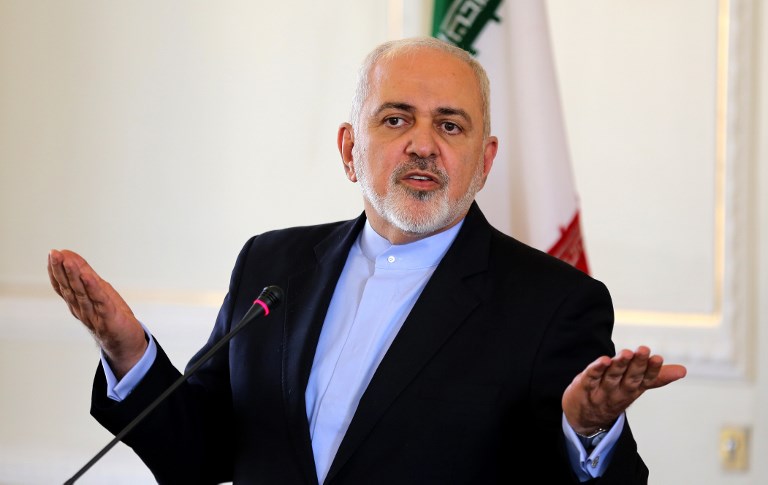
Iran’s Foreign Minister Mohammad Javad Zarif gestures during a press conference in Tehran on February 13, 2019 (Atta Kenare/AFP)

Iran has promised “surprise” measures to counter the reinstatement of US sanctions on its oil exports amid other options, months after US President Donald Trump pulled out of the 2015 Iranian nuclear deal negotiated by his predecessor Barack Obama and signed by five other world powers.

The deal was aimed at preventing Tehran from building atomic weapons in exchange for economic incentives, including the lifting of previously imposed, punishing sanctions. The US pulled out of the agreement in May 2018 and has been urging the remaining signatories — the UK, France, Germany, Russia, and China — to abandon it as well.

In an interview published on Friday with the Swiss newspaper Basler Zeitung, Iranian Foreign Minister Javad Zarif said that should other countries bow to US pressure and refuse to buy Iranian oil, Tehran has “other options” at its disposal.

When pressed on what Iran intends to do, Zarif replied: “Trump loves the element of surprise, so we’ll entertain him.”

Zarif said “the international community must decide whether it is in their interest to let the US go through its illegal diktats.”

“Europeans must ask themselves: if they allow this precedent, what will they do if the US demands an end to trade with China?” he added.

On Saturday, Iran’s Supreme National Security Council Ali Shamkhani told the Iranian news agency Tasnim that Tehran is weighing several options, among them disrupting oil shipments.

“Apart from closing [the] Strait of Hormuz, we have other options to stop oil flow if threatened… The US administration lacks ‘goodwill,’ no need to hold talks with America,” he said.

“Iran has plans in place that will neutralize the illegal US sanctions against Iran’s oil exports,” Shamkhani was quoted by Reuters as saying.

The remaining signatories to the Iran nuke deal, along with the European Union, have so far shown no inclination to abandon the agreement. They instead have tried to provide Iran with enough economic incentives to keep it alive.

Last month, Britain, France and Germany established a barter-type system known as INSTEX that is designed to allow their businesses to skirt direct financial transactions with Iran and thereby evade possible US sanctions. Plans call for the payment system to be run from Germany as a financial institution.

The plan has angered Washington, despite reassurances from the Europeans that their initiative would concentrate on products not currently subject to US sanctions, such as medicine, medical supplies, and agricultural goods, rather than on broader trade.

Israel’s Prime Minister Benjamin Netanyahu, meanwhile, warns constantly that Iran has never abandoned its ambition to achieve a nuclear weapons capability. Last year, the Mossad spirited a huge haul of documents from what it said was Iran’s nuclear weapons archive, which Netanyahu saidproved conclusively that Iran has lied to the world when claiming it has not been seeking to produce nuclear weapons.

On Friday, Israeli TV reported that Britain’s MI6 intelligence chief secretly visited Israel this past week for talks with his Israeli counterparts about concerns that Iran may be considering breaching the 2015 nuclear deal and attempting to break out to a nuclear weapons capability.

Channel 13 news said Friday that MI6 chief Alex Younger arrived in Israel on Monday and met with the head of Israel’s Mossad intelligence agency, Yossi Cohen, and other Israeli intelligence chiefs.

Israel’s assessment is that Iran is “making preparations” within the provisions of the 2015 deal, and “getting ready,” but has not yet made the political decision to break out to the bomb, the TV report said.

Citing Western intelligence sources, it said the issue was also discussed by participants at last week’s Munich international security conference.
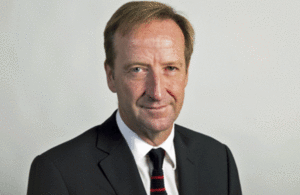
MI6 chief Alexander Younger (Courtesy: UK government)


Iran, the report noted, has recently renewed its production of centrifuges, “and is gearing up for the renewal of uranium enrichment” within the provisions of the deal.

The report described Iran’s current activity as “preparing the infrastructure… in an accelerated fashion” should the regime take the political decision to breach the accord.
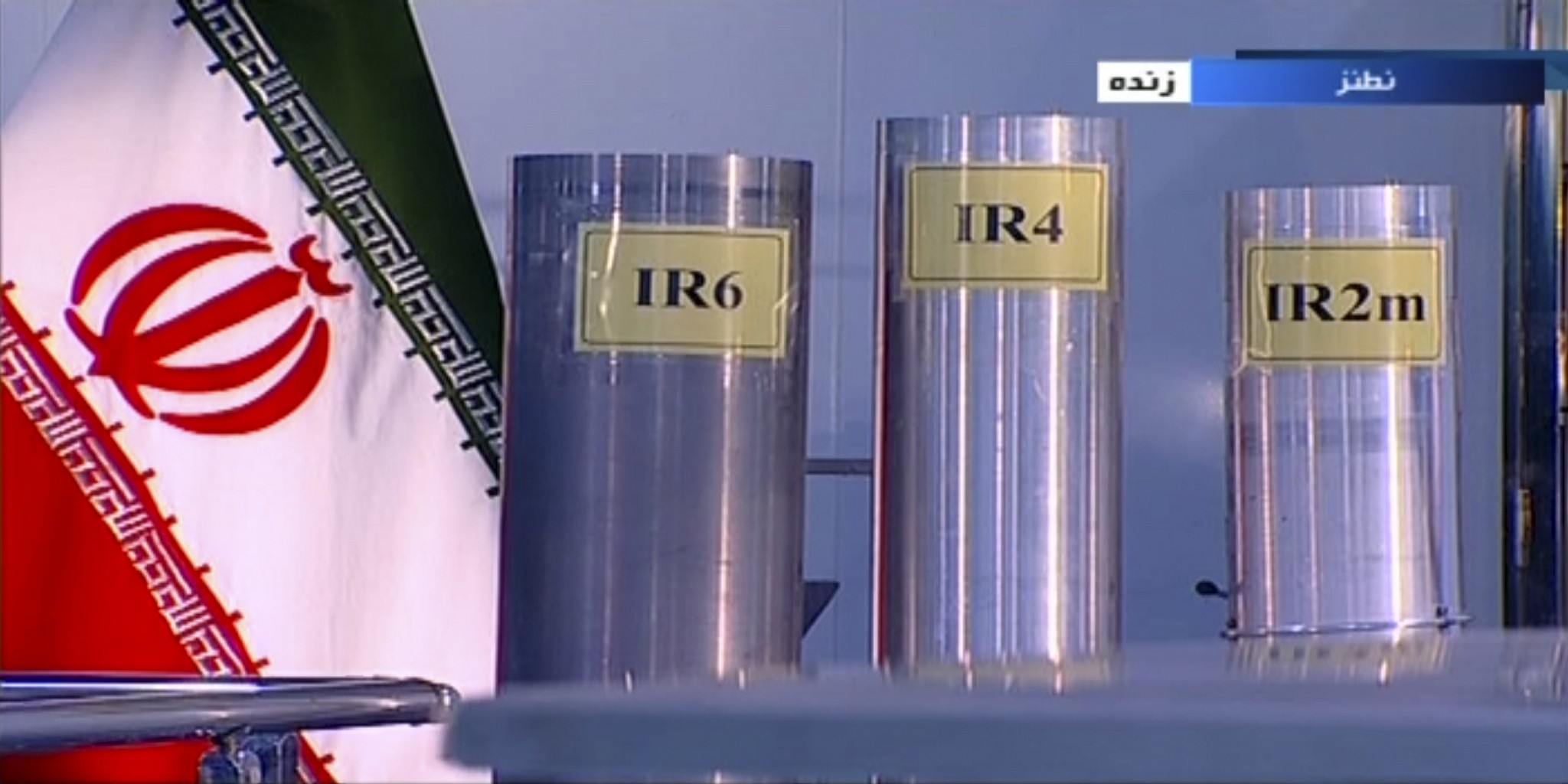
In this frame grab from Islamic Republic Iran Broadcasting, IRIB, state-run TV, three versions of domestically-built centrifuges are shown in a live TV program from Natanz, an Iranian uranium enrichment plant, in Iran, June 6, 2018. (IRIB via AP)

Hours before the TV report, the UN’s nuclear watchdog in Vienna said Iran was continuing to comply with the 2015 nuclear deal.

In a confidential quarterly report distributed to its member states, the International Atomic Energy Agency said Iran has been abiding with key limitations set in the so-called Joint Comprehensive Plan of Action, or JCPOA.

In its report, the Vienna-based agency said its inspectors still have access to all sites and locations in Iran they needed to visit.

“Timely and proactive cooperation by Iran in providing such access facilitates implementation of the Additional Protocol and enhances confidence,” the report stated, referring to the procedure detailing safeguards and tools for verification.

It noted that Iran’s stock of heavy water and low-enriched uranium continues to be under the limits set under the 2015 pact.

Last June, Iran’s nuclear chief inaugurated a new nuclear enrichment facility at Natanz, which Iran said was geared toward producing centrifuges to operate within the limits of the nuclear deal.
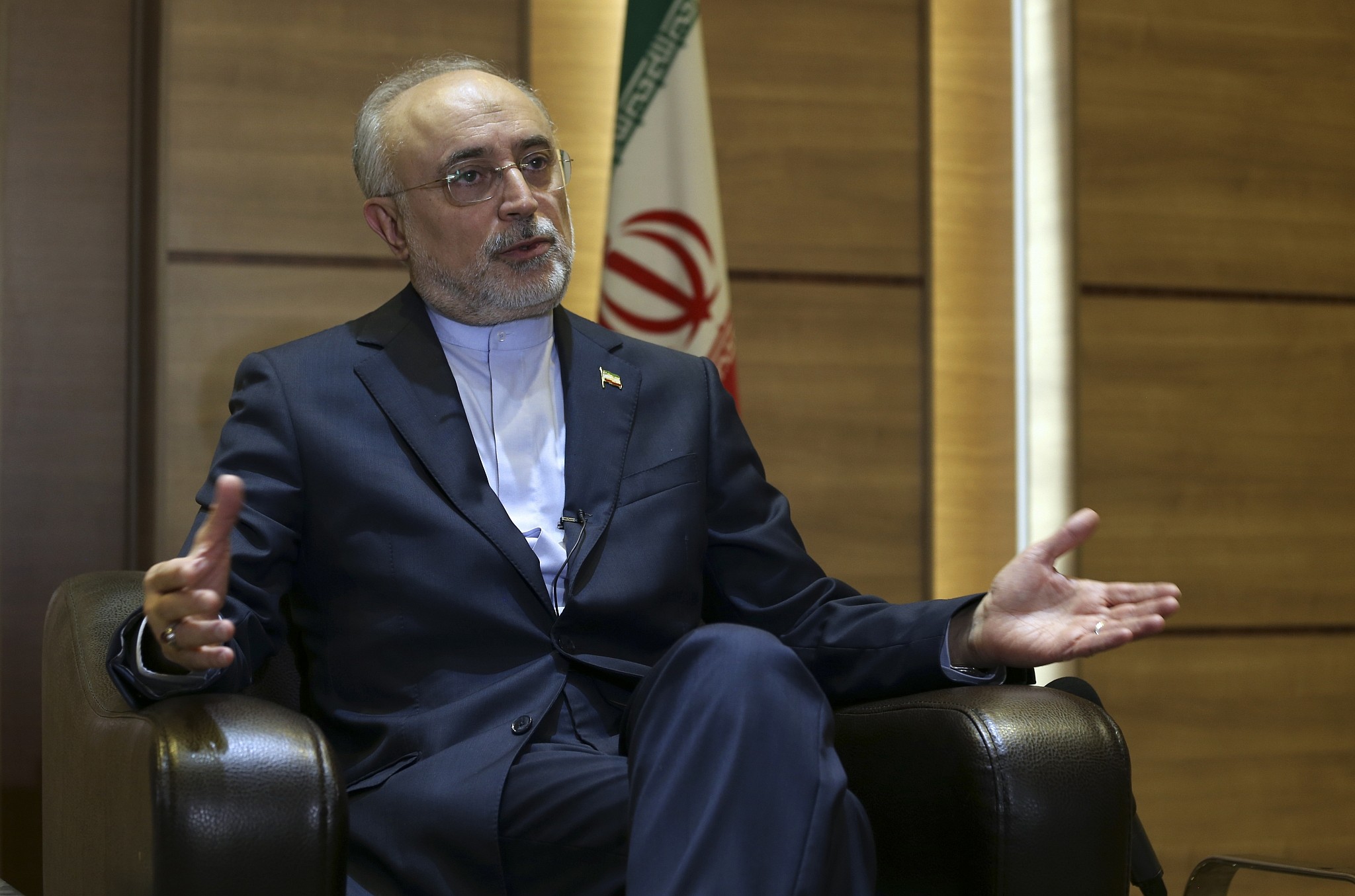
Iran’s nuclear chief Ali Akbar Salehi speaks in an interview with The Associated Press at the headquarters of Iran’s atomic energy agency, in Tehran, Iran, Tuesday, Sept. 11, 2018. (AP Photo/Vahid Salemi)

Last month, Salehi bragged in another interview that Iran quietly purchased replacement parts for its Arak nuclear reactor while it was conducting negotiations for the deal under which it knew it would be required to destroy the original components.


Global efforts to curb Iranian aggression – Jerusalem Studio 

February 23, 2019


Global efforts to curb Iranian aggression – Jerusalem Studio 

February 23, 2019


February 22, 2019

Published on Feb 21, 2019

A SpaceX Falcon 9 rocket launched the Nusantara Satu satellite, the Beresheet lunar spacecraft and Air Force Research Laboratory (AFRL) S5 spacecraft from Space Launch Complex 40 (SLC-40) at Cape Canaveral Air Force Station, Florida, on 22 February 2019, at 01:45 UTC (21 February, 20:45 EST). Following stage separation, Falcon 9’s first stage (Block 5 B1048) landed on the “Of Course I Still Love You” droneship, stationed in the Atlantic Ocean. Falcon 9’s first stage previously supported the Iridium-7 mission in July 2018 and the SAOCOM 1A mission in October 2018. Credit: SpaceX #Falcon9 #NusantaraSatu #Beresheet #Falcon9landing

Technical and Ideological Details on Israel’s Moon Mission 

February 22, 2019


Hezbollah hits back at US criticism of its role in Lebanon 

February 22, 2019

Source: Hezbollah hits back at US criticism of its role in Lebanon – Israel Hayom

U.S. stance “violates national sovereignty and ignores a legitimate right in international law … to self-defense and to resist every threat and aggression,” and was biased toward the “terrorist entity” Israel, Hezbollah lawmakers say.

// published on 22/02/2019
   
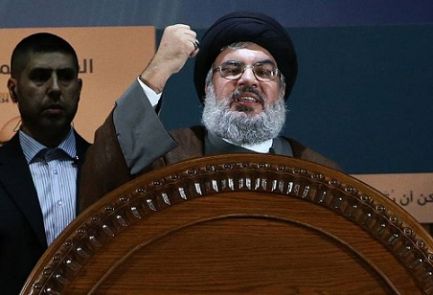
Hezbollah leader Hassan Nasrallah 


Hezbollah hit back against U.S. condemnation of its role in Lebanon on Thursday, calling it a “violation of sovereignty,” after the United States expressed concern over the organization’s expanding influence.

After meeting Lebanon’s prime minister on Tuesday, the U.S. ambassador said the United States was worried about Hezbollah’s “growing role” in the Lebanese cabinet. The Iran-backed Shiite group is listed as a terrorist organization by Washington.

“The negative American position on Hezbollah, and which American ambassadors are eager to repeat after meeting any official in Lebanon, is rejected and condemned,” Hezbollah’s lawmakers said in a statement.

They said the U.S. stance “violates national sovereignty and ignores a legitimate right in international law – the right to self-defense and to resist every threat and aggression,” and was biased toward “the terrorist entity” – a reference to Israel.

Hezbollah controls three of the 30 ministries in Prime Minister Saad Hariri’s new cabinet, the largest number it has ever held. They include the Health Ministry, which has the fourth-largest budget in the Lebanese government.


Iran’s Soleimani warns Saudis after deadly attack in southeast region 

February 22, 2019

Source: Iran’s Soleimani warns Saudis after deadly attack in southeast region – Israel Hayom

“Saudi Arabia is building its regional influence with money only. This is a false influence and a failure. … We will take revenge for our martyrs … [and] it might be anywhere around the world,” says Quds Force Commander Maj. Gen. Qassem Soleimani.

News Agencies and Israel Hayom Staff // published on 22/02/2019
   
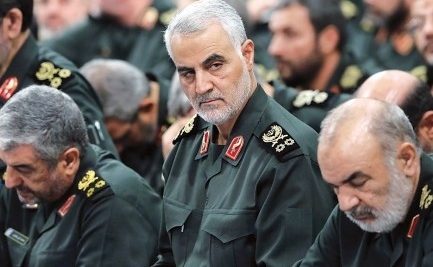
Quds Force Commander Maj. Gen. Qassem Soleimani 


The commander of the overseas arm of Iran’s Revolutionary Guards threatened Saudi Arabia with revenge over a suicide bomb attack in southeastern Iran on Feb. 13 that killed 27 Guards members, Iran’s semi-official Tasnim news agency reported on Thursday.

“Saudi Arabia is building its regional influence with money only. This is a false influence and a failure. … We will take revenge for our martyrs … [and] it might be anywhere around the world,” Quds Force Commander Maj. Gen. Qassem Soleimani said.

The Islamic republic has accused arch regional rivals Saudi Arabia and the United Arab Emirates of backing militants who carry out attacks on security forces in Iran. Saudi Arabia and the UAE have denied any connection with the attacks.

The Sunni Muslim militant group Jaish al-Adl (Army of Justice), which says it seeks greater rights and better living conditions for ethnic minority Baluchis in Iran, claimed responsibility for the attack near the border with Pakistan.

Iran’s Shiite Muslim authorities say militant groups operate from safe havens in Pakistan and have repeatedly called on the neighboring country to crack down on them.

“I am warning you: Don’t test Iran’s tolerance,” Soleimani said in the latest in a series of warnings issued by Iranian officials since the attack was carried out.

Iran’s navy, meanwhile, said on Thursday it will hold an annual drill in the strategic Strait of Hormuz as pressure mounts on the country months after the United States reimposed economic sanctions targeting its vital oil sector.

The strait is located at the mouth of the Persian Gulf and is crucial to global energy supplies, with about a third of all oil traded at sea passing through it.

Iranian Admiral Hossein Khanzadi told state TV that the three-day maneuvers will start on Friday and extend as far as the Sea of Oman and the fringes of the Indian Ocean.

He said submarines, warships, helicopters and surveillance planes will participate in the drill, dubbed “Velayat-97.” The exercise will include missile launches from the vessels.

Iran regularly holds maneuvers in the strait.


US to leave ‘peacekeeping group’ of 200 troops in Syria after withdrawal of Israel

February 22, 2019

Source: US to leave ‘peacekeeping group’ of 200 troops in Syria after withdrawal | The Times of Israel

White House says soldiers will remain ‘for a period of time,’ as Washington tries to convince European allies to maintain a military presence in war-torn country after pullout

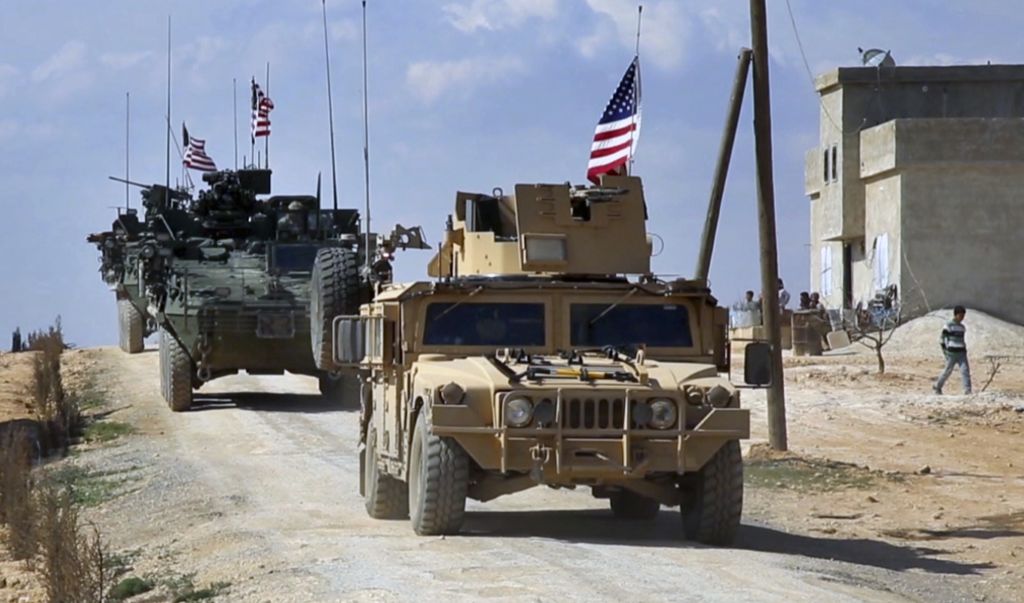
This Tuesday, March 7, 2017 frame grab from video shows US forces patrol on the outskirts of the Syrian town, Manbij, a flashpoint between Turkish troops and allied Syrian fighters and US-backed Kurdish fighters, in al-Asaliyah village, Aleppo province, Syria. (Arab 24 network, via AP, File)

This Tuesday, March 7, 2017 frame grab from video shows US forces patrol on the outskirts of the Syrian town, Manbij, a flashpoint between Turkish troops and allied Syrian fighters and US-backed Kurdish fighters, in al-Asaliyah village, Aleppo province, Syria. (Arab 24 network, via AP, File)

The US military will keep around 200 troops in Syria after US President Donald Trump’s pullout from the war-torn country, the White House said Thursday.

“A small peacekeeping group of about 200 will remain in Syria for a period of time,” White House spokesperson Sarah Sanders said.

The announcement comes amid fierce criticism of Trump’s decision to withdraw America’s 2,000 or so troops from Syria by April 30, with members of his own Republican Party blasting the move.

In December, Trump declared victory over the Islamic State group in Syria, even though thousands of jihadists remain and fighting continues around their last holdout.

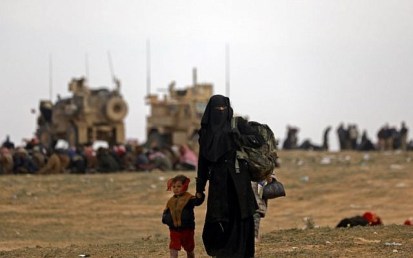
Civilians fleeing the Islamic State’s group embattled holdout of Baghouz walk in a field on February 13, 2019. (Delil Souleiman/AFP)

Critics have decried a number of possible outcomes from a precipitous withdrawal, including a Turkish attack on US-backed Kurdish forces and a resurgence of IS.

Israel has repeatedly warned in recent years that Iran is seeking to establish a military presence in Syria, where it is fighting alongside its Lebanese proxy Hezbollah and Russia to restore the regime of Syrian President Bashar Assad.

Israeli officials have also warned that America’s absence would open the door for Tehran to create a so-called “land bridge” from Iran, through Iraq and Syria, into Lebanon and to the Mediterranean Sea.

Over the last several years, Israel has carried out hundreds of airstrikes in Syria against targets linked to Iran.

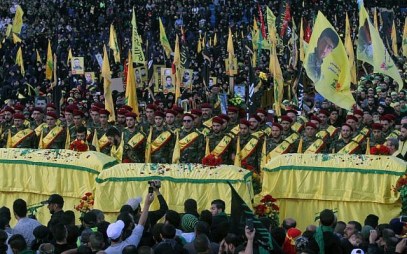
In this Tuesday, Oct. 27, 2015 file photo, relatives and comrades pray as they surround the Hezbollah flag-draped coffins of Shiite fighters who were killed in Syria, during a rally to mark the 13th day of the Shiite mourning period of Muharram, in Nabatiyeh, Lebanon. (AP Photo/Mohammed Zaatari, File)

Sanders did not provide additional details, but the troops’ “peacekeeping” designation could pave the way for European allies to commit forces for such a mission.

Acting Defense Secretary Patrick Shanahan visited Europe last week where he attempted to convince allies to maintain a troop presence in Syria after the US pulls out.

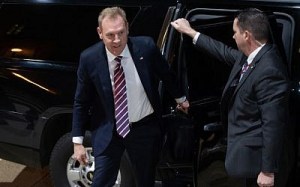
In this file photo taken on January 1, 2019 acting US Secretary of Defense Patrick Shanahan arrives for his first day in his new job at the Pentagon in Washington, DC. (Saul Loeb/AFP)

But he struggled to persuade other countries why they should risk their forces with America gone.

Trump earlier Thursday spoke with Turkish President Recep Erdogan, and the two men discussed Syria, according to a White House summary.

“The two presidents agreed to continue coordinating on the creation of a potential safe zone” in Syria, the readout said.

At the height of its rule, IS imposed its brutal ideology on a territory roughly the size of the United Kingdom, attracting thousands of supporters from abroad.

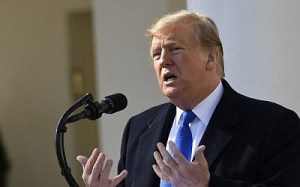
US President Donald Trump speaks during an event in the Rose Garden at the White House, February 15, 2019, in Washington. (AP Photo/Susan Walsh)

But the jihadists have since lost almost all their territory save for a tiny sliver of around half a square kilometer (a fifth of a square mile) in the eastern Syrian village of Baghouz.

The US-backed Syrian Democratic Forces (SDF) are working towards evacuating civilians remaining in the holdout, so they can polish off the dying IS “caliphate” whether through an assault or a surrender deal.

Syria’s Kurds have long demanded the repatriation of foreigners accused of belonging to IS in their custody, but their home countries have been reluctant.


Israel successfully launches its first Moonshot – DEBKAfile

February 22, 2019

Source: Israel successfully launches its first Moonshot – DEBKAfile

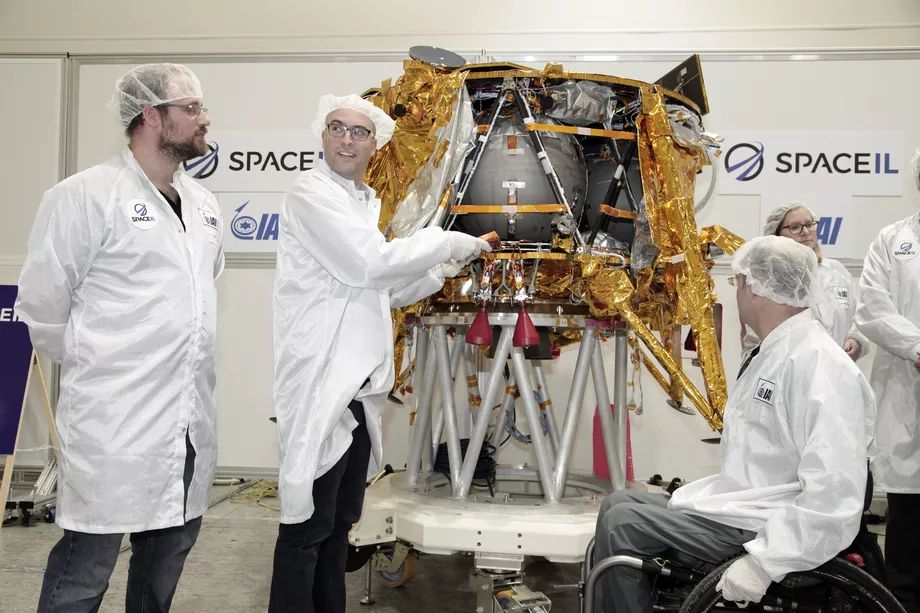
Israel’s Beresheet robot was launched by a Falcon 9 rocket from Florida early Friday, Feb. 22 at 3:45 local time. All the systems were working 40 minutes later and beaming signals to Israeli Aerospace headquarters.

The probe is due to land on the moon on April 11. Israel is the fourth nation to send an unmanned spacecraft to the moon, the first to launch a mostly privately-funded venture with around $100m raised by the Israeli nonprofit SpaceIL. After traveling for two months, the spacecraft is due to touch down on the moon and plant an Israeli flag. In addition to scientific instruments, the Genesis probe carries a copy of the Bible on a small metal disc.

Only US, Russian and Chinese government space agencies have previously managed soft touchdowns. If the 1.5m-high, 585kg Beresheet craft can get down safely, it will take photos to send back to Earth and conduct some magnetic investigations. The targeted landing site is in a northern-hemisphere lava plain called Mare Serenitatis, where magnetic anomalies are known to exist. Prof Oded Aharonson, of the Weizmann Institute, leads Beresheet’s science team.

The spacecraft will survive for only about two days before running out of power. However, a laser retroreflector, a mirroring device that requires no power and can be used for space-to-ground communications via NASA’s Deep Space Network (DSN). NASA contributed the device to this mission as part of an agreement with SpaceIL that would allow the startup company to utilize the DSN for its moon mission.

Space X Falcon 9 Rocket Launching SpaceIL Beresheet Moonlander And Two Satellites – YouTube

February 22, 2019