Archive for February 2019

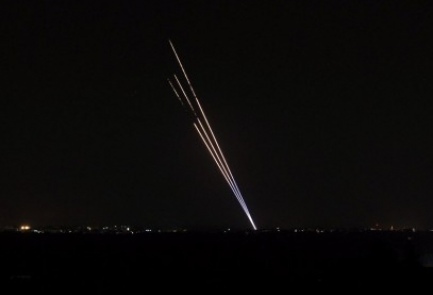
Rocket fired from Gaza, IDF shells Hamas position in response

February 7, 2019

Source: Rocket fired from Gaza, IDF shells Hamas position in response – Israel Hayom


IDF cyber chief: Iran tried to hack missile-alert system

February 7, 2019

Source: IDF cyber chief: Iran tried to hack missile-alert system – Israel Hayom


Iran threatens Israel with extreme consequences – TV7 Israel News 06.02.19 

February 7, 2019


Trump at State of Union: We wont ignore Iran threats of Jewish genocide

February 7, 2019

Source: Trump at State of Union: We wont ignore Iran threats of Jewish genocide

In 82-minute address to joint session of the US Congress, US president says world can ‘never ignore the vile poison of anti-Semitism, or those who spread its venomous creed.’
US President Donald Trump used his State of the Union speech Tuesday night to condemn Iran for its theats to wipe Israel off the map, and vowed to battle anti-Semitism in whatever form it took.

“We will not avert our eyes from a regime that chants ‘Death to America’ and threatens genocide against the Jewish people,” Trump said.

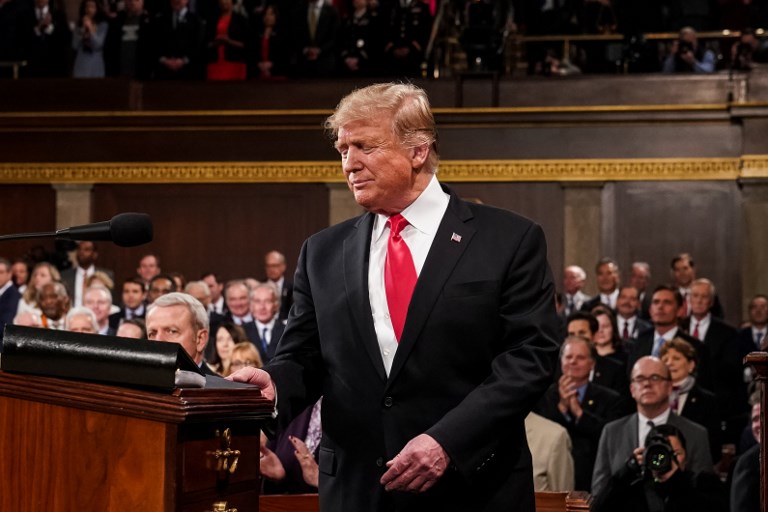
US President Donald Trump delivers the State of the Union address at the US Capitol in Washington, DC, on February 5, 2019.

US President Donald Trump delivers the State of the Union address at the US Capitol in Washington, DC, on February 5, 2019.
“We must never ignore the vile poison of anti-Semitism, or those who spread its venomous creed. With one voice, we must confront this hatred anywhere and everywhere it occurs,” he said in his highly anticipated 82-minute speech before a joint session of the US Congress, with his main Democratic adversary, new House of Representatives Speaker Nancy Pelosi, watching over his shoulder.In a joyful, bipartisan moment, lawmakers briefly interrupted the State of the Union to serenade Judah Samet, an 81-year-old Holocaust survivor who also survived October’s Pittsburgh synagogue shooting, with an impromptu version of “Happy Birthday.”

Trump also declared the Islamic State militant group all but defeated, in a departure from his earlier claim that the group had already been eradicated in Syria.

Judah Samet

Judah Samet

The president devoted a sizeable chunk of his speech to the contentious issue of immigration, and his deeply divisive plan to build a wall along the UIS-Mexico border.

Trump vowed to build the wall, which he insists is needed to stem illegal immigration and smuggled drugs, and said Democratic attempts at “ridiculous partisan investigations” could damage US prosperity.

He called illegal immigration “an urgent national crisis,” but stopped short of declaring a border emergency that would allow him to bypass Congress for wall funding. Instead, he urged Democrats and Republicans to find a compromise by a Feb. 15 deadline.

“In the past, most of the people in this room voted for a wall, but the proper wall never got built. I will get it built,” Trump said. Democrats call the wall a waste of money and ineffective.

At the same time, Trump warned that Democratic efforts to investigate his administration, along with the possibility of US involvement in wars abroad, would endanger the US economy.

“An economic miracle is taking place in the United States and the only thing that can stop it are foolish wars, politics, or ridiculous partisan investigations,” he said.

His remarks came as Democrats who now control the House planned a series of probes into the Trump administration and a special prosecutor investigates Russian meddling into the 2016 presidential election and possible collusion between the Trump campaign and Moscow. Russia denies meddling and Trump has said there was no collusion.

Apart from lauding economic accomplishments – unemployment near a five-decade low and manufacturing job growth among them – Trump’s speech was light on new initiatives to further stoke growth in an economy seen as losing momentum as it began 2019. A Reuters poll last month forecast economic growth would slow to 2.1 percent this year after likely averaging around 3 percent in 2018.

Pelosi, who wore white like many Democratic lawmakers to celebrate the 100th anniversary of American women gaining the right to vote, applauded half-heartedly at times and frequently sat stony-faced through Trump’s address.

She has shown no sign of budging from her opposition to Trump’s wall-funding demand. That has led Trump to contemplate declaring a national emergency, which he says would let him reallocate funding from elsewhere without congressional action.

Some of Trump’s fellow conservatives have urged him not to declare an emergency. Such a move would “upend” the balance of powers between the White House and Congress, Republican Senator Susan Collins told reporters on Tuesday.

Trump used part of his speech to offer a spirit of compromise, particularly in areas such as lowering the price of prescription drugs and funding a $1 trillion upgrade in US roads, bridges and other infrastructure.

US President Donald Trump delivers the State of the Union address, alongside Vice President Mike Pence and Speaker of the House Nancy Pelosi

US President Donald Trump delivers the State of the Union address, alongside Vice President Mike Pence and Speaker of the House Nancy Pelosi

But whether Trump and his opponents would follow through was far from clear, with both sides entrenched in long-held positions and girding for 2020 elections, reluctant to give the other side a political victory.

The Republican president appeared in the House chamber just weeks after his demand for $5.7 billion in funding for the US-Mexico border wall triggered a historic 35-day partial government shutdown that more than half of Americans blamed him for, according to Reuters/Ipsos polling.

The nationally televised address gave Trump his biggest opportunity to date to explain why he believes a barrier is needed on the US southern border with Mexico. The speech was delayed for a week because of the shutdown, which ended on Jan. 25.

“Simply put, walls work and walls save lives. So let’s work together, compromise, and reach a deal that will truly make America safe,” Trump said.

Trump also called attention to his efforts to rewrite trade deals with China and other nations to make the terms more favorable to the United States.

As his economic advisers work to complete a trade deal with China, Trump said any agreement “must include real, structural change to end unfair trade practices, reduce our chronic trade deficit, and protect American jobs.”


Report: Russia attacks targets held by Iranian militia in Syria – Breaking News 

February 7, 2019

Source: Report: Russia attacks targets held by Iranian militia in Syria – Breaking News – Jerusalem Post

BY JERUSALEM POST STAFF
 FEBRUARY 7, 2019 01:18
Breaking news

Russian forces blew up bridges on the Euphrates river held by Iranian militias several days ago, according to a report. This is the first time the Russians attacked Iranian targets in Syria.

The information came from a senior Syrian official who refused to be identified, and was reported in Bas News, a Kurdish news website.


Iran fails to launch second satellite – report 

February 7, 2019

Source: Iran fails to launch second satellite – report – Middle East – Jerusalem Post

Two separate but specialized space imaging companies, DigitalGlobe and Planet, released pictures showing scorch marks from a blast on an Iranian air base, consistent with a launch attempt.

BY ILANIT CHERNICK
Ahmadinejad gestures toward a model of Iran's new

Iran has failed its second attempt in recent weeks to launch a satellite into space, according to images released by two separate specialized spage imaging companies.

On Thursday morning, several images released to US media by DigitalGlobe and Planet, which showed blackened scorch marks consistent with a launch or failed launch of a craft, were seen on a launch pad at the Imam Khomeini Space Center in Iran’s Semnan province.

The pictures are said to have been taken by the specialized companies on Wednesday.

Iran said that it would launch its Doosti, or “Friendship,” satellite into space to mark the 40th Anniversary of the Iranian revolution, which took place in 1979.

View image on Twitter

Geoff Brumfiel

@gbrumfiel

Iranian state media and authorities have remained mum on the reports suggestng that the launch was indeed a failure.

In January, the Islamic Republic failed to put another satellite, Payam or “Message,” into orbit after it was unable to reach the required velocity. At the time,multiple leaders in Iran openly confirmed and discussed the attempted launch.

Iranian Communications Minister Mohammad-Javad Azari said the rocket carrying the satellite “failed to reach the required speed in the third stage, even though it succeeded in the first two stages of the launch.”

In the last few years Iran has sent several short-lived satellites into orbit and in 2013 launched a monkey into space.

Both Israel and the US have expressed their concerns about the attempted satellite launches, with US alleging that such actions defy a UN Security Council resolution calling on Iran to undertake no activity related to ballistic missiles capable of delivering nuclear weapons.

US Secretary of State Mike Pompeo recently advised Iran “to reconsider these provocative launches and cease all activities related to ballistic missiles in order to avoid deeper economic and diplomatic isolation.”

In January, the European Union froze the assets of an Iranian intelligence unit and two of its staff, as the Netherlands accused Iran of two killings on its soil in 2015 and 2017, and joined France and Denmark in alleging Tehran plotted other attacks in Europe.

Uri Bollag contributed to this report.


Iran fails to launch second satellite – report

February 7, 2019

Source: Iran fails to launch second satellite – report – Middle East – Jerusalem Post

Two separate but specialized space imaging companies, DigitalGlobe and Planet, released pictures showing scorch marks from a blast on an Iranian air base, consistent with a launch attempt.

BY ILANIT CHERNICK
 FEBRUARY 7, 2019 08:35
Ahmadinejad gestures toward a model of Iran's new

Iran has failed its second attempt in recent weeks to launch a satellite into space, according to images released by two separate specialized spage imaging companies.

On Thursday morning, several images released to US media by DigitalGlobe and Planet, which showed blackened scorch marks consistent with a launch or failed launch of a craft, were seen on a launch pad at the Imam Khomeini Space Center in Iran’s Semnan province.

The pictures are said to have been taken by the specialized companies on Wednesday.

Iran said that it would launch its Doosti, or “Friendship,” satellite into space to mark the 40th Anniversary of the Iranian revolution, which took place in 1979.

View image on Twitter

Geoff Brumfiel

@gbrumfiel

Iranian state media and authorities have remained mum on the reports suggestng that the launch was indeed a failure.

In January, the Islamic Republic failed to put another satellite, Payam or “Message,” into orbit after it was unable to reach the required velocity. At the time,multiple leaders in Iran openly confirmed and discussed the attempted launch.

Iranian Communications Minister Mohammad-Javad Azari said the rocket carrying the satellite “failed to reach the required speed in the third stage, even though it succeeded in the first two stages of the launch.”

In the last few years Iran has sent several short-lived satellites into orbit and in 2013 launched a monkey into space.

Both Israel and the US have expressed their concerns about the attempted satellite launches, with US alleging that such actions defy a UN Security Council resolution calling on Iran to undertake no activity related to ballistic missiles capable of delivering nuclear weapons.

US Secretary of State Mike Pompeo recently advised Iran “to reconsider these provocative launches and cease all activities related to ballistic missiles in order to avoid deeper economic and diplomatic isolation.”

In January, the European Union froze the assets of an Iranian intelligence unit and two of its staff, as the Netherlands accused Iran of two killings on its soil in 2015 and 2017, and joined France and Denmark in alleging Tehran plotted other attacks in Europe.

Uri Bollag contributed to this report.


Iran pushes back after Trump accuses it of anti-Semitism 

February 7, 2019

Source: Iran pushes back after Trump accuses it of anti-Semitism | The Times of Israel

Foreign Minister Zarif says Iranians, including the Jewish population, are celebrating decades of progress despite pressure from Washington

US President Donald Trump arrives to deliver the State of the Union address at the US Capitol in Washington, DC, on February 5, 2019. (Doug Mills/POOL/AFP)

US President Donald Trump arrives to deliver the State of the Union address at the US Capitol in Washington, DC, on February 5, 2019. (Doug Mills/POOL/AFP)

Iran’s foreign minister pushed back Wednesday after US President Donald Trump said his country does “bad, bad things” and appeared to link it to the deadly attack on a Pittsburgh synagogue last year by an American anti-Semite.

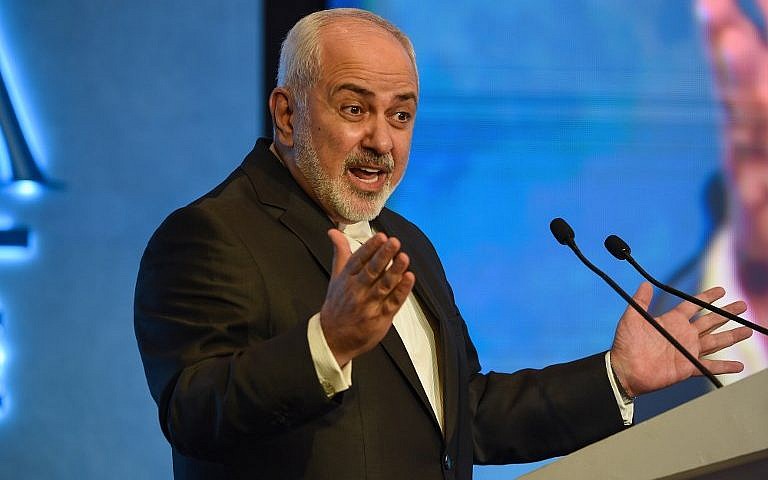
Foreign Minister Mohammad Javad Zarif tweeted that “Iranians — including our Jewish compatriots — are commemorating 40 yrs of progress despite US pressure, just as @realDonaldTrump again makes accusations against us.”

In his State of the Union address, Trump contextualized his Iran policy by castigating the regime for its anti-Semitism.

Iran, he said, “chants death to America and threatens genocide against the Jewish people. We must never ignore the vile poison of anti-Semitism or those who spread its venomous creed.”

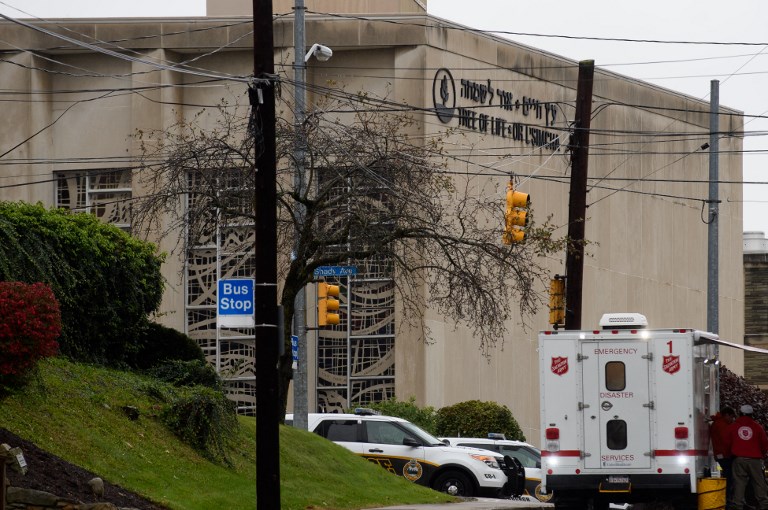
The scene of a mass hooting at the Tree of Life Synagogue in the Squirrel Hill neighborhood on October 27, 2018, in Pittsburgh, Pennsylvania. (Jeff Swensen/Getty Images/AFP)

The need to take a strong stance against Tehran, the president implied, was evident in the attack at Pittsburgh’s Tree of Life Synagogue, in which 11 were killed — believed to be deadliest act of anti-Semitic violence in American history.

“Just months ago, 11 Jewish Americans were viciously murdered in an anti-Semitic attack on the Tree of Life Synagogue in Pittsburgh,” Trump said, as he introduced SWAT officer Timothy Matson, who responded to the scene, and Judah Samet, a Holocaust survivor who also survived the attack.

Earlier this year, the president withdrew the United States from the Iran nuclear deal and renewed sanctions on the Islamic Republic, actions that he said in his speech were intended to “ensure this corrupt dictatorship never acquires nuclear weapons.”

Iran’s Foreign Minister Mohammad Javad Zarif speaks during the second day of the three-day Raisina Dialogue conference in New Delhi on January 9, 2019. (Money Sharma/AFP)

Trump made one mention of Israel in his speech, which lasted over an hour. During an extended segment on his Middle East policy, the president suggested he would diverge from the way previous White Houses had tried to resolve the Israeli-Palestinian conflict.

“Our approach is based on principled realism — not discredited theories that have failed for decades to yield progress,” he said. “For this reason, my administration recognized the true capital of Israel — and proudly opened the American embassy in Jerusalem.”


Trump predicts all IS territory will be cleared next week

February 7, 2019

Source: Trump predicts all IS territory will be cleared next week | The Times of Israel

Islamic State terrorists hold an area of fewer than 5 square kilometers in Syria, or less than 2 square miles, all that’s left of their once vast ‘caliphate’

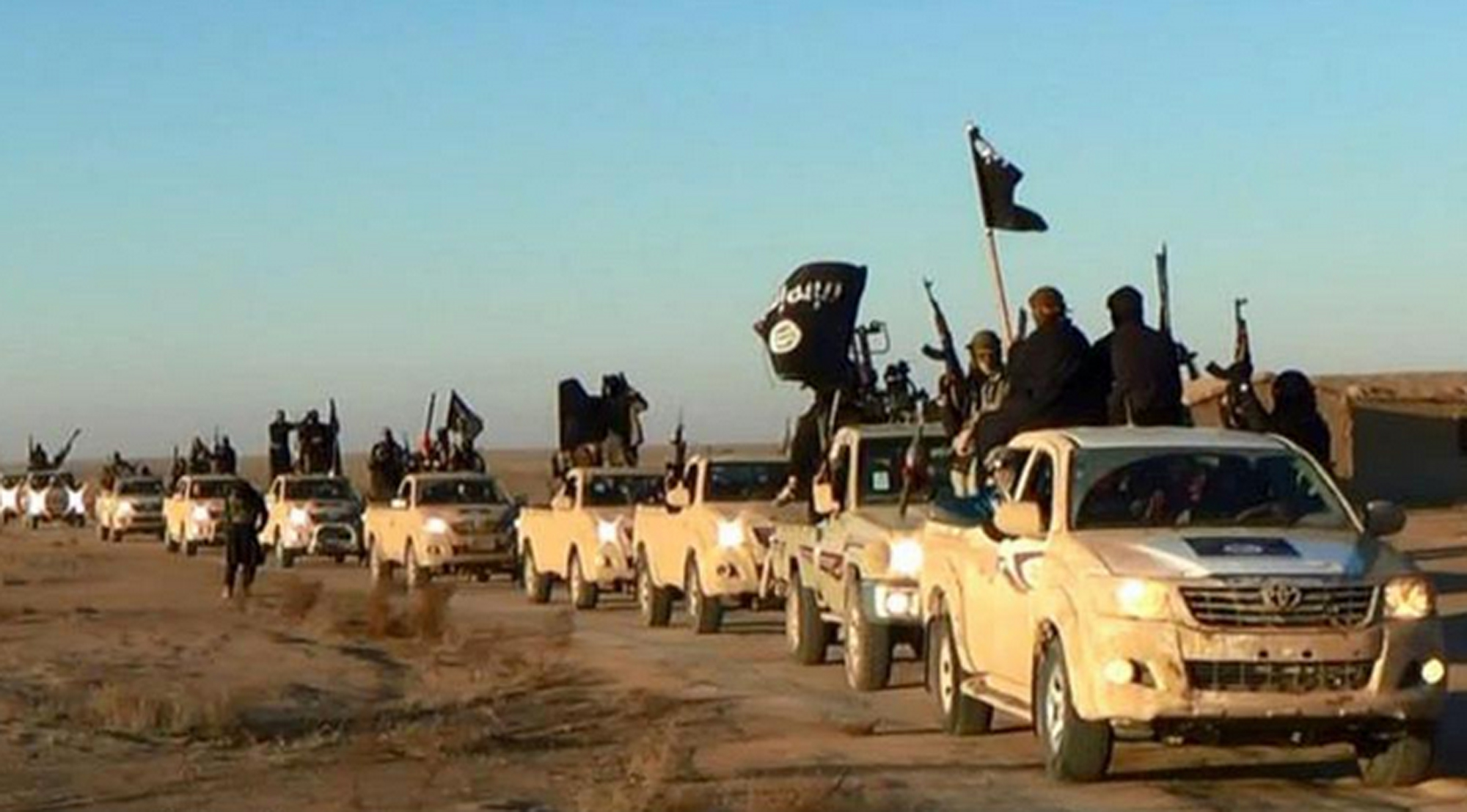
In this undated file photo released online in the summer of 2014 on a militant social media account, which has been verified and is consistent with other AP reporting, terrorists of the Islamic State group hold up their weapons and wave its flags on their vehicles in a convoy on a road leading to Iraq, in Raqqa, Syria. (Militant photo via AP, File)

In this undated file photo released online in the summer of 2014 on a militant social media account, which has been verified and is consistent with other AP reporting, terrorists of the Islamic State group hold up their weapons and wave its flags on their vehicles in a convoy on a road leading to Iraq, in Raqqa, Syria. (Militant photo via AP, File)

WASHINGTON (AP) — US President Donald Trump predicted Wednesday that the Islamic State group will have lost by next week all the territory it once controlled in Iraq and Syria.

He said the US will not relent in fighting remnants of the extremist organization despite his decision to withdraw US troops from Syria over the objections of some of his most senior national security advisers.

The president told representatives of a 79-member, US-led coalition fighting IS that the militants held a tiny percentage of the vast territory they claimed as their “caliphate.”

“It should be formally announced sometime, probably next week, that we will have 100 percent of the caliphate,” Trump said.

US officials have said in recent weeks that IS has lost 99.5 percent of its territory and is holding on to fewer than 5 square kilometers in Syria, or less than 2 square miles, in the villages of the Middle Euphrates River Valley, where the bulk of the fighters are concentrated.

But there are fears the impending US pullout will imperil those gains. Trump told coalition members meeting at the State Department that while “remnants” of the group were still dangerous, he was determined to bring US troops home. He called on coalition members to step up and do their “fair share” in the fight against terrorism.

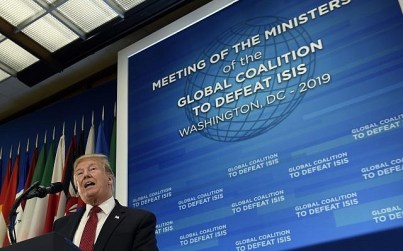
President Donald Trump speaks at the Global Coalition to Defeat ISIS meeting at the State Department in Washington, Wednesday, Feb. 6, 2019. (AP Photo/Susan Walsh)

Even as Trump and Secretary of State Mike Pompeo defended the withdrawal decision, which shocked US allies and led to the resignations of Defense Secretary Jim Mattis and the US envoy to the anti-IS coalition, Brett McGurk, some military leaders, renewed their concerns.

While the withdrawal would fulfill a Trump goal, top military officials have pushed back for months, arguing IS remains a threat and could regroup. US policy had been to keep troops in place until the extremists are completely eradicated. Fears that IS fighters are making a strategic maneuver to lay low ahead of the US pullout has fueled criticism that Trump telegraphed his military plans — the same thing he accused President Barack Obama of doing in Afghanistan.

Pompeo told the coalition that the planned withdrawal “is not a change in the mission” but a change in tactics against a group that should still be considered a menace.

“In this new era, local law enforcement and information sharing will be crucial, and our fight will not necessarily always be military-led,” he said. Trump’s announcement “is not the end of America’s fight. The fight is one that we will continue to wage alongside of you.”

He added: “America will continue to lead in giving those who would destroy us no quarter.”

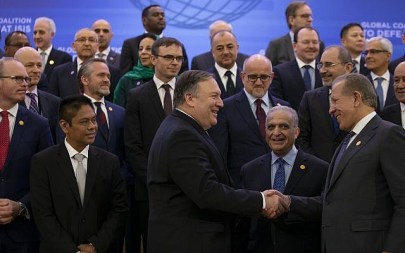
Secretary of State Mike Pompeo, center, shakes hands with Kosovo’s Foreign Minister Behgjet Pacolli, with Iraqi Foreign Minister Mohamed Alhakim, between them, after a family photo during the Global Coalition to Defeat ISIS meeting, at the State Department, Wednesday, Feb. 6, 2019, in Washington. (AP Photo/Alex Brandon)

Yet senior military officials acknowledged to Congress on Wednesday that the pullout would complicate their efforts.

Owen West, the assistant secretary of defense for special operations, told the House Armed Services Committee that he shared Mattis’ objections. West answered, “No, sir,” when asked by a lawmaker if he thought Mattis was wrong to disagree with the withdrawal.

At the same hearing, Maj. Gen. James Hecker, vice director of operations for the Joint Chiefs of Staff said the withdrawal means “it is going to be difficult to keep up the pressure” on IS. “There will be a decrease in the amount of pressure that we will be able to apply,” he said.

“The concern is if we move our forces out of Syria that that may take some pressure off of the ISIS forces in Syria,” Hecker said. “So our mission is to try to figure out how we can continue to keep the pressure on in Syria without any boots on the ground.”

Hecker said others would have to carry the burden once the U.S. left. He did not offer specifics.

Pompeo called on the coalition to increase intelligence-sharing, repatriate and prosecute captured foreign fighters and accelerate stabilization efforts so IS remnants cannot reconstitute in Iraq, Syria or elsewhere. He said the fight is entering a new stage where those allied against IS must confront a “decentralized jihad” with more than military force.

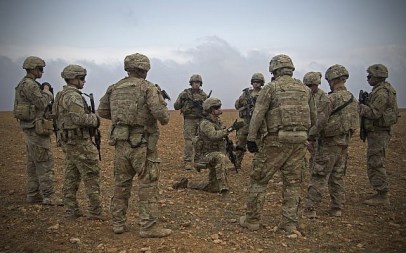
In this Nov. 7, 2018, photo released by the U.S. Army, U.S. soldiers gather for a brief during a combined joint patrol rehearsal in Manbij, Syria. (U.S. Army photo by Spc. Zoe Garbarino via AP)

Pompeo mentioned the suicide bombing claimed by IS that killed four Americans — two service members, a Pentagon civilian and a U.S. contractor — in the northern Syrian town of Manbij last month. Manbij was liberated from IS control in 2016.

The conference started hours after Trump, in his State of the Union address, lauded what he said was the near-complete victory over IS. He also reaffirmed his determination to pull out the roughly 2,000 U.S. troops from Syria. He had said in December that the pullout would proceed quickly.

In liberated areas across Syria and Iraq, IS sleeper cells are carrying out assassinations, setting up checkpoints and distributing fliers as they lay the groundwork for an insurgency that could gain strength as U.S. forces withdraw.

Activists who closely follow the conflict in Syria point to signs of a growing insurgency. Rami Abdurrahman, the head of the Britain-based Syrian Observatory for Human Rights, says IS still has 4,000 to 5,000 fighters, many likely hiding out in desert caves and mountains.

Defense officials believe many fighters have fled to ungoverned spaces and other pockets in the north and west.

A Defense Department watchdog report warned this week that even with the IS forces on the run, the group “is still able to coordinate offensives and counter-offensives, as well as operate as a decentralized insurgency.”


Cornered in Syria, Islamic State lays groundwork for a new insurgency 

February 7, 2019

Source: Cornered in Syria, Islamic State lays groundwork for a new insurgency | The Times of Israel

Despite territorial losses, sleeper cells are continuing to intimidate locals by carrying out assassinations, setting up flying checkpoints, and distributing threatening fliers

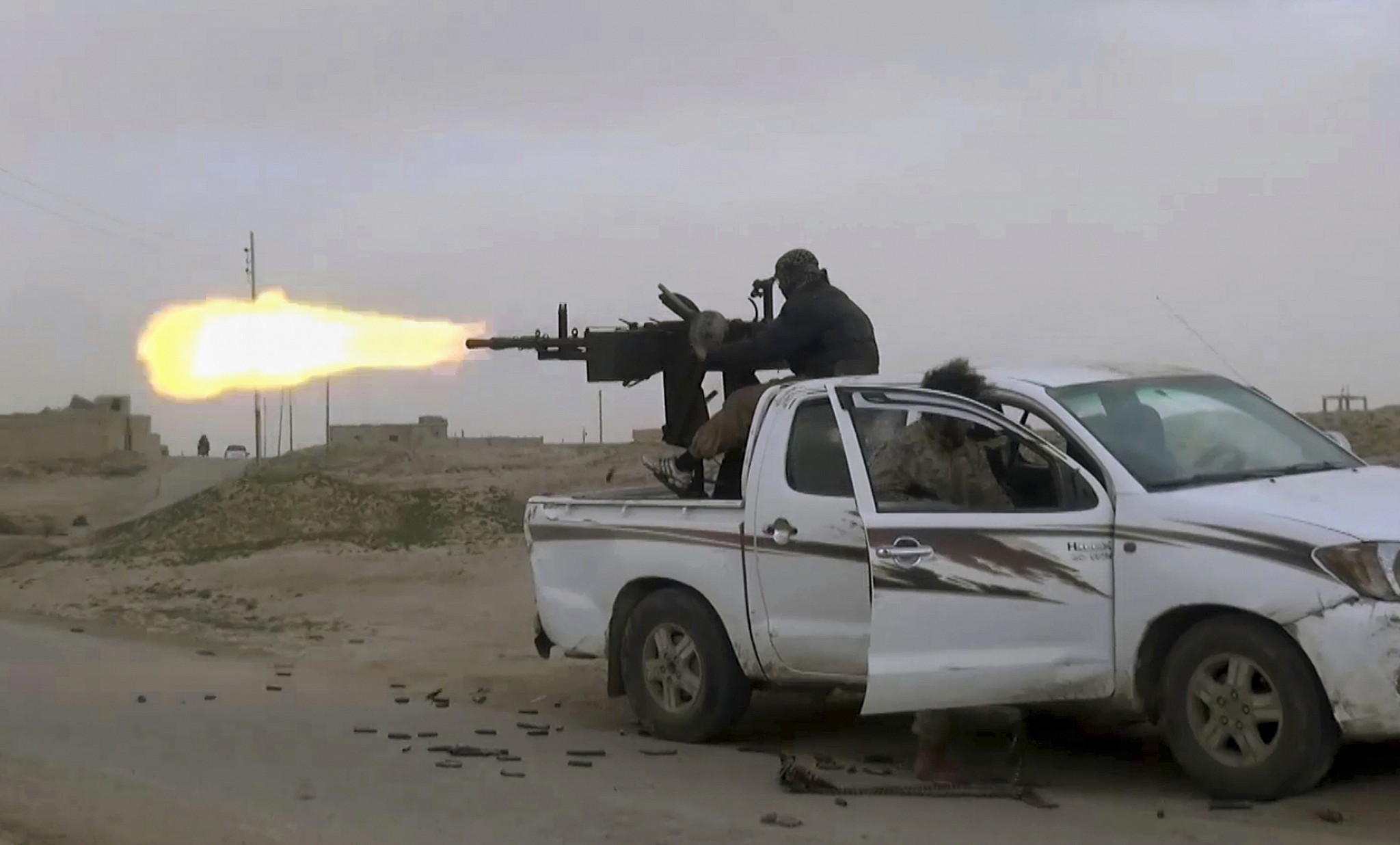
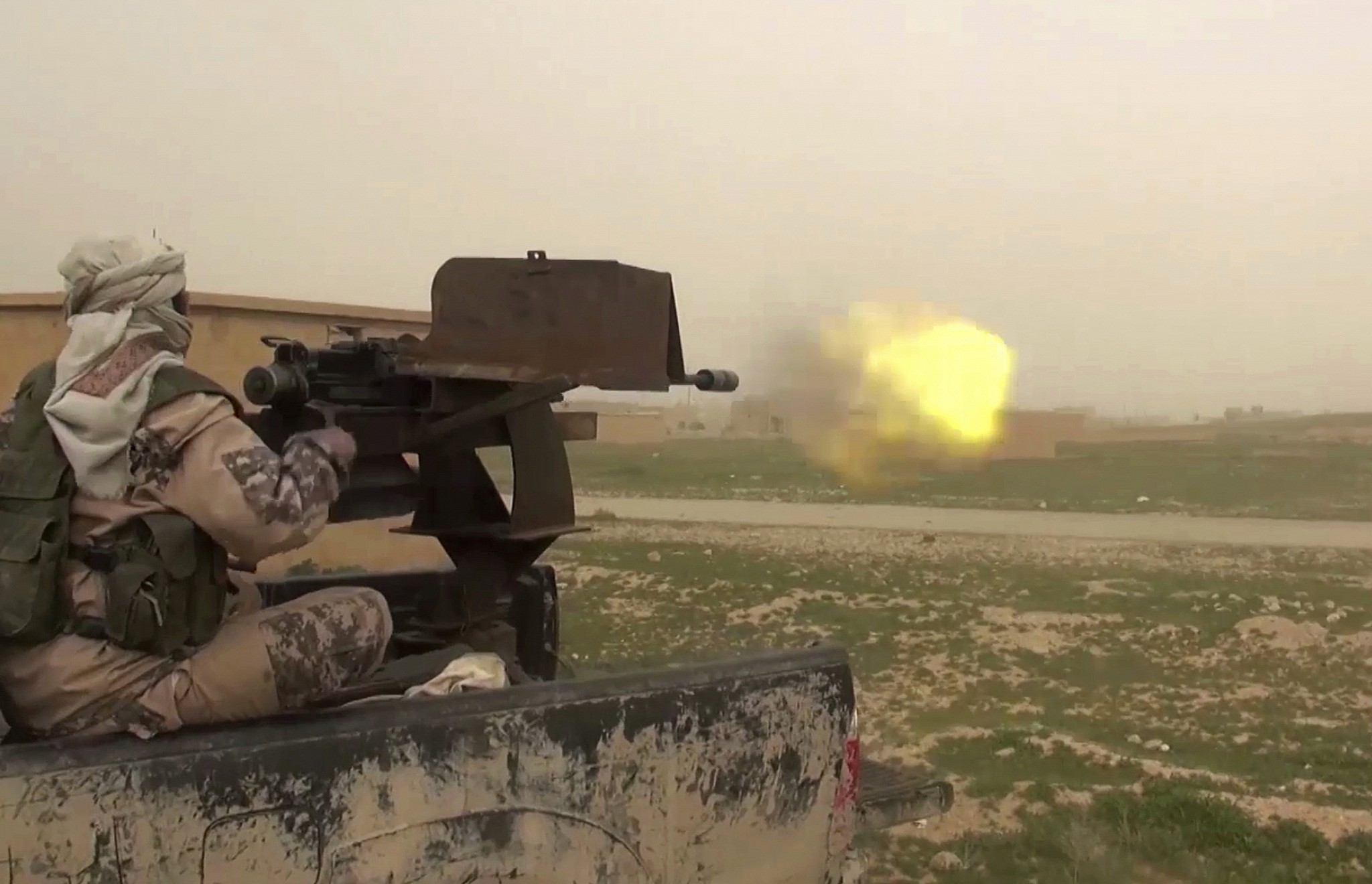
This frame grab from video posted online January 18, 2019, by supporters of the Islamic State group, purports to show a gun-mounted Islamic State group vehicle firing at members of the US-backed Syrian Democratic Forces, in the eastern Syrian province of Deir el-Zour, Syria. (Militant Photo via AP)

This frame grab from video posted online January 18, 2019, by supporters of the Islamic State group, purports to show a gun-mounted Islamic State group vehicle firing at members of the US-backed Syrian Democratic Forces, in the eastern Syrian province of Deir el-Zour, Syria. (Militant Photo via AP)

BEIRUT, Lebanon (AP) — The Islamic State gunmen came out of hiding in the middle of the night and set up a checkpoint on a rural road in eastern Syria. For several hours, they stopped those passing and searched through their mobile phones to check their allegiances, until they vanished again into the desert.

One young man, an education worker, got through the checkpoint safely. But when he got to his destination in the next village, the threat was waiting for him. An IS loyalist told him: Don’t remove pro-IS graffiti from school walls or you will pay the price.

The incident, one of many similar ones in past weeks, sent a bigger message — the Islamic State group may have lost almost all its territory, but it hasn’t left.

The group’s once-sprawling caliphate has been reduced to a remote scrap of land in Syria’s eastern desert, where a few hundred battle-hardened fighters are making a final stand against US-backed forces.

But in liberated areas across Syria and Iraq, sleeper cells are carrying out assassinations, setting up flying checkpoints and distributing fliers as they lay the groundwork for an insurgency that could gain strength as US forces withdraw.
US President Donald Trump arrives to deliver the State of the Union address at the US Capitol in Washington, DC, on February 5, 2019. (Doug Mills/POOL/AFP)

US President Donald Trump has vowed to withdraw American forces from Syria, saying the militants are all but defeated.

“As we work with our allies to destroy the remnants of ISIS, it is time to give our brave warriors in Syria a warm welcome home,” he said in his State of the Union address Tuesday, referring to the group by another acronym.

But his own Defense Department has warned that IS could stage a comeback in Syria within six months to a year if the military and counterterrorism pressure on it is eased. Gen. Joseph Votel, the commander of US forces in the Middle East, told a Senate committee Tuesday that battlefield gains can only be secured by “maintaining a vigilant offensive,” saying IS still has “leaders, fighters, facilitators, resources and the profane ideology that fuels their efforts.”

He estimated there are between 1,000 and 1,500 IS fighters in the small area they still control, but said others have “dispersed” and “gone to ground.”

Activists who closely follow the conflict in Syria already point to signs of a growing insurgency.

Rami Abdurrahman, the head of Britain-based Syrian Observatory for Human Rights, says IS still has 4,000 to 5,000 fighters, many likely hiding out in desert caves and mountains.

The Observatory said the militants have assassinated more than 180 people since August, including commanders in the Syrian Democratic Forces, a US-backed and Kurdish-led militia that drove the militants from much of northeastern Syria, and nearly 50 civilians working with them.
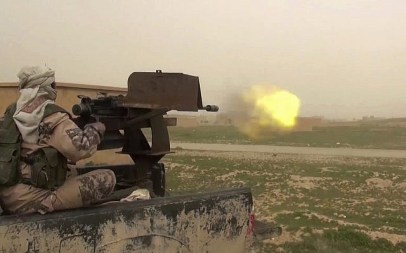
This frame grab from video posted online January 18, 2019, by supporters of the Islamic State group, purports to show a gun-mounted IS vehicle firing at members of the US-backed Syrian Democratic Forces, in the eastern Syrian province of Deir el-Zour, Syria. (Militant Photo via AP)

The campaign has unfolded across northern and eastern Syria, in areas where the militants were defeated months or even years ago. An IS bombing attack last month killed four US soldiers and contractors in Manbij — a town in northern Syria that was liberated in 2016.

In other areas, the group has adopted tactics that are less lethal but just as chilling.

Fliers appeared in a village in Syria’s oil-rich Deir el-Zour province last summer, warning residents that IS still controlled nearby oil fields and that “anyone found to steal from them… should only blame themselves.” Other fliers sparked a mass desertion by local volunteers for the SDF.

“It was unclear what would happen to (IS) in the future, but I think the US withdrawal in Syria increased the chances for an IS resurgence by manifold,” said Hassan Hassan, an expert on IS who is originally from eastern Syria and is now a senior fellow at the Washington-based Tahrir Institute for Middle East Policy.

IS could also stage a resurgence in neighboring Iraq, where the group originated and where it has operated in various forms going back to the 2003 US-led invasion. The Islamic State of Iraq, a precursor, had been largely dismantled and held no territory when President Barack Obama withdrew American forces in 2011. Three years later, IS seized vast swaths of northern and western Iraq in a matter of days.

Syria is less hospitable for IS. The group’s brutality and foreign roots alienated many Syrians, and it faces competition from other Sunni insurgent groups, like the al-Qaeda-linked Hayat Tahrir al-Sham. But unlike Iraq, Syria has large, ungoverned areas opened up by the civil war. “Syria will remain in part a place where (IS) could retreat and hide because there is still space in Syria,” Hassan said.

The extremists have a long history of exploiting security vacuums, and may find another one in the coming months as US troops leave Syria.
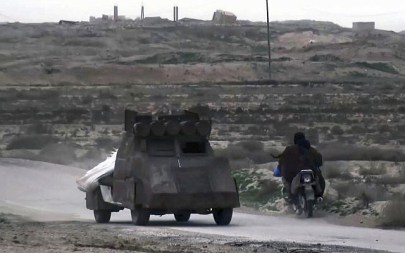
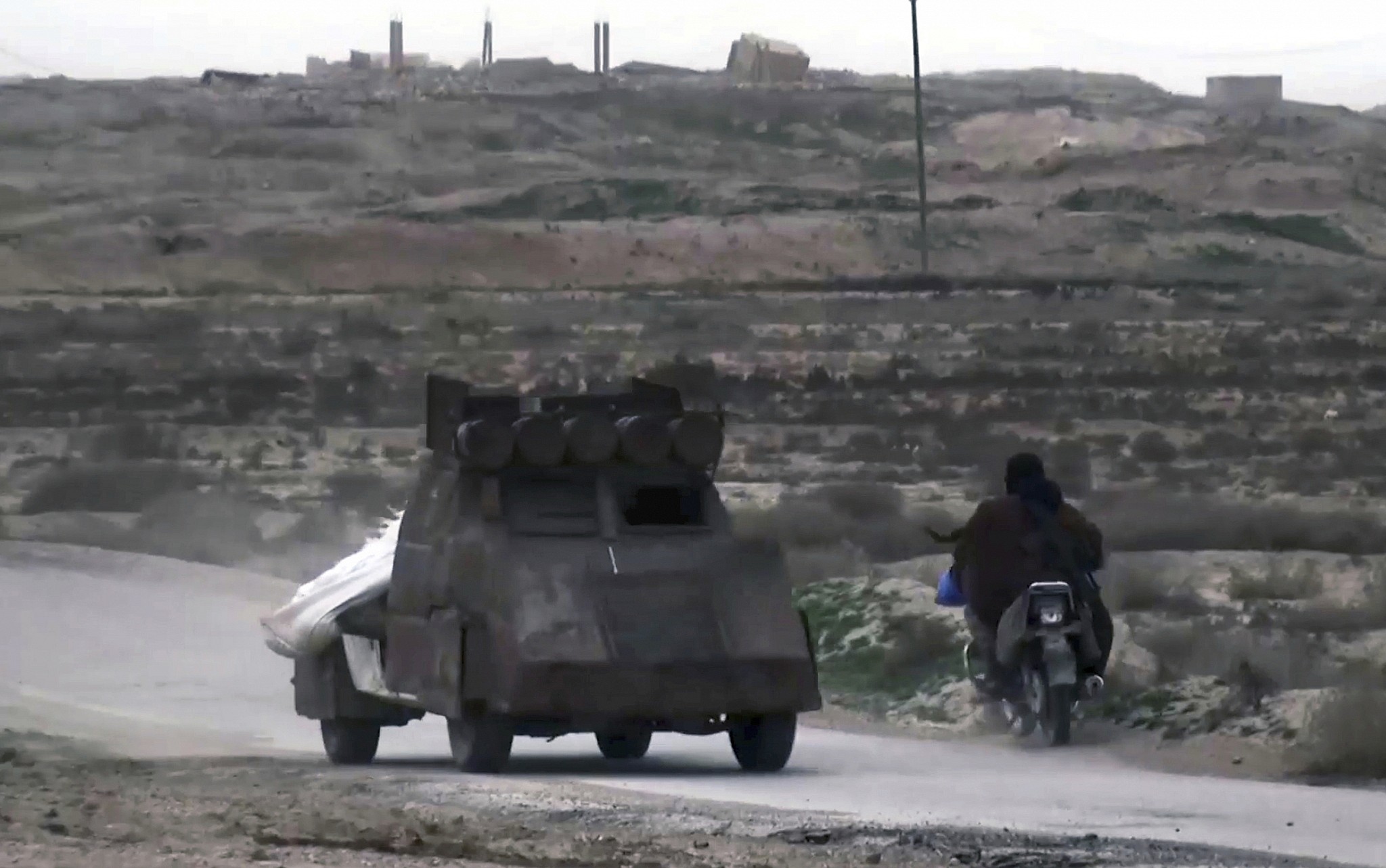
This frame grab from video posted online January 18, 2019, by supporters of the Islamic State group, purports to show an IS fighter driving a car bomb during clashes with members of the US-backed Syrian Democratic Forces, in the eastern Syrian province of Deir el-Zour, Syria. (Militant Photo via AP)

Turkey views the Kurdish forces in the SDF as an extension of the insurgency it is battling at home, and has vowed to launch a military offensive against them. President Bashar Assad, who also has forces in the area, has vowed to bring all of Syria’s territory back under state control. An outbreak of fighting would sap forces from the struggle against IS and generate the kind of chaos in which the group thrives.

“Imagine what (could) happen if one third of Syria changes hands from one security apparatus to another,” Hassan said.

The experience of the education worker who was warned not to remove graffiti was documented by Omar Abou Layla, a Europe-based activist who runs DeirEzzor24, a media collective that reports from eastern Syria.

He says IS loyalists have infiltrated the Kurdish-run administration, exploiting both local Arab resentment at Kurdish rule and the Kurds’ eagerness to recruit Arab allies. He says his group has documented nearly 20 cases in which former IS civil servants have returned to their jobs. It has also documented a number of recent assassinations by IS, including the killing of an Arab SDF commander and a man who works in money transfers.

“Daesh will be there even if they vanish physically,” he said, using the Arabic acronym for IS. “There are cells everywhere.”