Archive for February 2019

‘US deal will undermine Israeli-Palestinian reconciliation’

February 13, 2019

Source: ‘US deal will undermine Israeli-Palestinian reconciliation’ – Israel Hayom

Speaking at forum for Palestinian factions in Moscow, Russian Foreign Minister Sergey Lavrov says U.S. President Donald Trump’s “deal of the century” would “undo all the work” done thus far to broker a deal between Israel and the Palestinians.

Reuters and Israel Hayom Staff // published on 13/02/2019
   

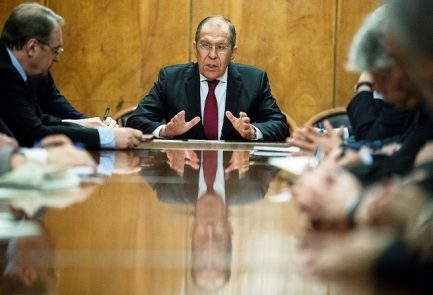
Russian Foreign Minister Sergey Lavrov talks during a meeting with representatives of Palestinian groups and movements as a part of an intra-Palestinian talks in Moscow, Tuesday 


Any U.S.-brokered “deal of the century” in the Israeli-Palestinian conflict would undo all the work that has been done up until now, Russian Foreign Minister Sergey Lavrov said at an Intra-Palestinian reconciliation forum in Moscow on Tuesday.

U.S. President Donald Trump has touted sweeping proposals to resolve the Israeli-Palestinian conflict. The economic plan is widely expected to include international funding proposals for the Gaza Strip.

Video: Reuters

Lavrov’s comments came ahead of a planned trip to at least at least five Arab countries in late February by White House senior adviser Jared Kushner to brief diplomats on the economic portion of a long-awaited U.S. peace proposal for the Middle East and seek their support.

The meeting, held in Moscow from Feb. 11-13, brings together representatives of opposing Palestinian factions Fatah and Hamas, as well as various other groups and movements.

Azzam al-Ahmad, a member of Fatah Central Committee and the Executive Committee of the Palestine Liberation Organization, thanked Russia on Monday for hosting the rare intra-Palestinian talks.


Hezbollah using WhatsApp to ‘bombard’ senior Israeli officials 

February 13, 2019

Source: Hezbollah using WhatsApp to ‘bombard’ senior Israeli officials – Israel Hayom

Lebanon-based terrorist organization launches a campaign using WhatsApp and Telegram messaging apps that targets senior Israeli politicians and other public figures with menacing messages • Campaign appears intended to coincide with Israeli election.

Ariel Kahana, News Agencies and Israel Hayom Staff // published on 13/02/2019
   
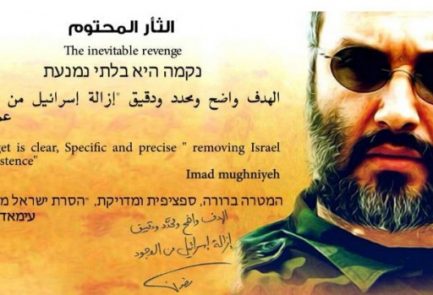
A message sent by Hezbollah, featuring its former military leader Imad Mughniyeh

Election propaganda? The Hezbollah terrorist organization launched a campaign via the WhatsApp and Telegram instant messaging applications on Tuesday that targeting senior Israeli politicians and other public figures.

Individuals who were added to the messaging groups reported that the groups had been organized by an unidentified phone number from Lebanon, which sent menacing messages on behalf of the terrorist organization. Among the people invited to the group were ministerial spokespeople, journalists and senior lawmakers.

One of the messages includes a photo of former Hezbollah military commander Imad Mughniyeh, who was assassinated in Damascus in 2008, with the caption: “Revenge is inevitable, and the goal is clear, specific and precise – removing Israel from existence.”

The messages were primarily Hezbollah propaganda, and the unusual initiative appears designed to coincide with Israeli election season. Defense officials in Israel have been notified of the Hezbollah campaign.

Also on Tuesday, Iranian Foreign Minister Mohammad Javad Zarif met in Beirut with Hezbollah leader Sheikh Hassan Nasrallah, who recently voiced his desire to arm the U.S.-backed Lebanese army with Iranian weapons.

Zarif reiterated his country’s readiness to offer Iranian military assistance to the Lebanese army to help counter “Israeli aggression,” adding that it is up to the Lebanese to choose what they want.

Some Lebanese politicians have expressed reservations over the offer from Iran, which is under U.S. sanctions. They fear Western nations may punish Lebanon if it accepts arms from Tehran.

Iran has also offered to help improve Lebanon’s crumbling power sector.

“I want to confirm again that the Islamic Republic of Iran is ready to cooperate with the Lebanese government and the Lebanese army in any field they see suitable,” Zarif said.

“We don’t want to embarrass anyone in Lebanon through the cooperation with the Islamic republic,” he said, adding that there is no international law that bans Iran from cooperating with any country.


El-Sissi is fighting terror – let him win 

February 13, 2019

Source: El-Sissi is fighting terror – let him win – Israel Hayom

Itzhak Levanon

In accordance with the Egyptian constitution, President Abdel-Fattah el-Sissi is supposed to conclude his presidency in 2022, after two four-year terms. There are now increasing rumors, however, together with parliamentary activity aimed at changing this limit and allowing el-Sissi to remain in office beyond the initial limit.

For this to happen, one-fifth of the Egyptian parliament, which includes 595 members, must ask for a constitutional amendment. For the amendment to pass, two-thirds of the parliament need to support it, and then a national referendum must be held.

At first glance, this seems like a long, convoluted process, the outcome of which would be entirely uncertain. But in Egypt, nothing is left to chance. If a decision is made to amend the constitution to allow el-Sissi to remain president, it will simply happen, as things have in the past. When former president Anwar Sadat wanted to build modern Egypt on legal and democratic foundations, he instituted constitutional limits to the presidency: two four-year terms. After the 1973 Yom Kippur War and the ensuing peace treaty with Israel, Sadat sought to amend the clause but was killed before he could do so.

In the wake of Sadat’s assassination, there was real concern the Muslim Brotherhood would take over the country. The Egyptian parliament decided, in a far-reaching move, to cancel the two-term limit, opening the door for Hosni Mubarak to rule the country for three decades. Were it not for the Arab Spring of 2011, Mubarak would still be with us, as president.

El-Sissi turned back the clock and capped the presidency at two terms – but the same thing that happened to his predecessors happened to him. He fell in love with power and now wants to extend his tenure beyond the stipulated deadline.

As president, he is both popular at home and embraced by world leaders abroad. He is fighting Islamic terror and the Egyptian economy is starting to turn around. He is viewed as an important leader in the Arab world. Why, then, change drivers mid-race?

Those who want to let el-Sissi extend his presidency are employing scare tactics, claiming that Islamists could seize control of the country. This claim is working well – el-Sissi himself is cultivating it, telling everyone around him that the fight against the Muslim Brotherhood is existential.

The options for a constitutional amendment are to cancel the term limitation outright and return to the Mubarak days of an unlimited time in office; keep the situation as is and face the Islamist threat; or add another four-year term, which violates the spirit of the 2011 revolution. But another option appears to be emerging, which answers the needs of the hour and has a chance of passing – for Egypt to keep the two-term limit but extend the length of each term to six years instead of four.

If el-Sissi maintains his current policies, which include cooperation with Israel, all-out war against Islamic terror and efforts to improve the daily lives of his people, an extension of his presidency should be encouraged.

Itzhak Levanon is the former Israeli ambassador to Egypt.

Guaidó adviser: Israel can help us remove Hezbollah, Iran

February 13, 2019

Source: Guaidó adviser: Israel can help us remove Hezbollah, Iran – Israel Hayom

Exclusive to Israel Hayom: Senior Venezuelan opposition member says presence of Iran, Hezbollah and other terrorist elements in the country “is very concerning. … Israel can help us establish the necessary apparatuses to contend with this problem.”

Eldad Beck, News Agencies and Israel Hayom Staff // published on 13/02/2019
   
Juan Guaidó gestures to supporters during a march against the Maduro regime, in Caracas, Tuesday 


A senior member of Venezuela’s opposition, which supports interim President Juan Guaidó, told Israel Hayom on Tuesday that the presence of Iran, Hezbollah and other Arab terrorist elements in the country “is very concerning” to the democratic opposition and will pose an “immense challenge” to the new government after the socialist regime of Nicolás Maduro is ousted.

“We are presently formulating policy pertaining to defending Venezuela’s internal security and are looking for help and advice,” the senior official said. “And Israel can help us establish the necessary apparatuses to contend with this problem when the political change in Venezuela realized.”

Venezuela’s socialist regime has close relations with Iran and has allowed Hezbollah to establish operational hubs in the country. Additionally, the Maduro regime maintains close ties with Hamas and the Palestinian Authority and sends them money – even as the people of Venezuela are themselves desperate for humanitarian aid due to an increasing scarcity of food and medicine.

Extremist elements in the Arab and Muslim worlds – Iran, the Palestinian Authority and Turkey – have declared their support for the tyrant Maduro in his current standoff with the popular uprising against his rule. Israel, meanwhile, is the only country outside of America to stand by Guaidó, whose exclusive interview with Israel Hayom on Tuesday reverberated across the globe.

In an effort to amplify economic pressure on the Maduro regime, the senior Venezuelan opposition figure called on the American administration to pressure U.S. allies in the Arab world to end their financial support for the regime and sever commercial ties with it.

The request comes amid reports that several Gulf states recently purchased large quantities of gold from the Maduro regime. In the meantime, Miguel Pizarro, Guaidó’s adviser on humanitarian affairs, confirmed in a conversation with Israel Hayom that the opposition is already in contact with Israel over humanitarian aid.

“We know that Israel is interested in contributing in this regard, along with other nations,” Pizarro said.

“We prepared a strategic plan for urgent aid to our neediest populations and we need a lot of medicine, hospital medical equipment and help treating people [suffering from] extreme malnutrition,” Pizarro told Israel Hayom. “We are establishing warehouses along the border to receive aid; we have already built a collection center in Columbia and we are preparing to open another center in Brazil and in other countries.”

Pizarro added: “We welcome all help we are given, as the Venezuelan population needs any help possible. The regime will have to allow this aid to enter [the country], because it’s a matter of [saving] people’s lives. We are applying all possible pressure to force the regime to allow this aid into the country.”

Air defenses on the border

Meanwhile, Maduro appears to be increasingly afraid of foreign military intervention and has deployed air defense systems at San Cristóbal – near the border with Columbia. The development follows his decision to refuse foreign humanitarian aid. Now, online video footage published by the opposition shows S-125 air defense batteries near the frontier.

The S-125, a particularly outdated Soviet-era system, was used by the Egyptian army during the War of Attrition against Israel (between 1967 and 1970) and the Yom Kippur War. The system would pose no problem for any advanced air force.

In an interview with the BBC on Tuesday, Maduro accused the Trump administration of “warmongering in order to take over Venezuela.

Maduro added his hope that “this extremist group in the White House is defeated by powerful worldwide public opinion.”

Speaking in the capital, Caracas, he told the BBC: “It’s a political war, of the United States empire, of the interests of the extreme right that today is governing, of the Ku Klux Klan, that rules the White House, to take over Venezuela.”

Also on Tuesday, Guaidó supporters returned to the streets nationwide to keep the heat on Maduro and demand that he allow humanitarian aid into the country.

Russian Foreign Minister Sergey Lavrov told U.S. Secretary of State Mike Pompeo in a telephone call on Tuesday evening that Washington should avoid any interference, including military, in Venezuela’s internal affairs.

Moscow has invested billions of dollars into Venezuela’s economy and oil production.


Tehran’s planned two-border offensive prompts Israeli attack on Al Qods & Hizballah at Quneitra – DEBKAfile

February 13, 2019

Source: Tehran’s planned two-border offensive prompts Israeli attack on Al Qods & Hizballah at Quneitra – DEBKAfile

Iranian Al Qods and intelligence personnel and their subsidiary Shiite militias, chiefly  Hizballah, are embedded in Syrian command posts opposite the Israel Golan.  They are disguised in Syrian uniforms.

An IDF artillery and drone assault was reported by Damascus on Feb. 11 as hitting a former hospital in Quneitra and two Syrian army camps at the nearby village of Jabata Al-Shaab. The notice omitted to mention that all three sites are occupied by Iranian, Shiite militias and Hizballah forces. They have been there for roughly eight months.

In July 2018, Prime Minister Binyamin Netanyahu and then Chief of Staff Lt. Gen. Gady Eisenkot reached an understanding with Moscow, with support from President Donald Trump, for the Russian army to undertake to keep Iranian and their proxy forces out of the Israeli border region after the Syrian army recovered Quneitra opposite the Israeli Golan and southern Syria. Moscow promised that eight posts manned by Russian military police would keep a 45km deep strip from the Golan off limits to those forces. That understanding never stood up. DEBKAfile reported on July 19 that the Syrian posts had been taken over by Iranian and Hizballah forces posing as Syrian troops. Three weeks ago, on Jan. 21, an Iranian Al Qods battery posted outside Damascus launched a Fatteh-110 missile towards Mt Hermon in reprisal for an Israeli cruise missile strike on Iranian facilities near Damascus.

DEBKAfile offers three explanations for Israel’s decision to go for the Iranians and their proxies now, after giving them eight months to settle in just a few kilometers from the Golan:

  1. Iran and Hizballah have decided to inflame Israel’s northern and Gaza borders in turn in the run-up to parliamentary election on April 9. As voting days approach, they will turn the heat up for conflagrations on both borders at once.
  2. Prime Minister Netanyahu and his Likud party can’t afford to let a security crisis veer out of control, especially when it is engineered by Tehran and Hizballah.
  3. The IDF’s new chief of staff, Lt. Gen. Aviv Kochavi is revealed as having taken issue with some of his predecessor’s principles and may be expected to be more pro-active.


Off Oopic:   Democrats vs the Jews | The Andrew Klavan Show 

February 12, 2019


Iran Threatens Tel Aviv; Netanyahu Warns Revolution Celebrations Could be Last

February 12, 2019

Source: Iran Threatens Tel Aviv; Netanyahu Warns Revolution Celebrations Could be Last

Do not say, “I will repay evil;” wait for the Lord, and he will deliver you. Proverbs 20:22 (The Israel Bible™)

As part of Iran’s celebrations commemorating the 40th anniversary of the Islamic Revolution, the Deputy head of the Islamic Revolutionary Guard Corps (IRGC) political bureau Yadollah Javani said the Jewish state would suffer if America struck Iran.

“The United States does not have the courage to shoot a single bullet at us despite all its defensive and military assets. But if they attack us, we will raze Tel Aviv and Haifa to the ground,” said Javani, according to state news agency IRNA, and reported by Reuters.

“Islamic Iran has reached a level… to protect its borders by effective military capabilities, and firmly punish any aggressor,” said Brigadier General Ramezan Sharif, spokesman for the IRGC.

In response to the threat, Israel’s Prime Minister Benjamin Netanyahu delivered a strong statement against Iranian aggression.

“I do not ignore the threats of the Iranian regime, but neither am I intimidated by them. If this regime makes the awful mistake of trying to destroy Tel Aviv and Haifa, it will not succeed. However, this would be the last anniversary of the revolution that they celebrate. They should take this into account.”

Iran’s leaders spoke at a rally marking the 40th anniversary of the overthrow of the Shah – Mohammad Reza Pahlavi – in 1979 and the imposition of an Islamic theocracy. The effects of the end of centuries of monarchic rule are still being felt in both Iran and the region.

The celebrations included several instance of muscle flexing, including the launch and test of new missiles, which would put Israel squarely within precise range of the Iranian armed forces.

Chants of “Death to America” and “Death to Israel” can often be heard at these kinds of rallies.

Despite the show of national solidarity, Iran faces acute economic distress, following U.S. President Donald Trump administration’s imposition of sanctions.


Syria: Two Iranian revolutionary guard members killed in Israeli attack

February 12, 2019

Source: Syria: Two Iranian revolutionary guard members killed in Israeli attack

By World Israel News staff

Media sources in Syria say that two members of Iran’s Revolutionary Guard Corps were killed and an unspecified number of others were hurt when “Israeli warplanes” launched missiles that targeted an Iranian military base in the Quneitra countryside, on the Syrian side of the Golan Heights.

Syrian regime state-agency SANA said that an “Israeli attack on Quneitra province” caused damage to a hospital when tanks opened fire, and that one of the observation posts in Jebata Al-Khashab, adjacent to the Israeli border, had also been targeted.

Israel has neither confirmed nor denied these reports.

On Monday, SANA reported that Israeli troops had fired several shells on various positions in Quneitra, including an observation post.

Last month, the Israeli military confirmed attacking Iranian military targets in Syria, hours after carrying out a rare daylight air raid near the Damascus International Airport.

Prime Minister Benjamin Netanyahu is scheduled to meet Russian President Vladimir Putin to discuss the volatile situation in Syria at a summit meeting next week.

The Israeli-Russian contacts are aimed at preventing military confrontations between the two countries. Israel is also hoping that Russia will help in efforts to prevent Iranian entrenchment in Syria, even as the U.S. works on pulling out of the war-torn country.


Rouhani: Iranian revolution ‘thriving’ amid U.S. failure in Middle East

February 12, 2019

Source: Rouhani: Iranian revolution ‘thriving’ amid U.S. failure in Middle East – Middle East – Jerusalem Post

Iran presents itself as a model of regional security in Turkey while Tehran’s foreign minister meets Hezbollah in Lebanon.

BY SETH J. FRANTZMAN
 FEBRUARY 12, 2019 07:32
Rouhani: Iranian revolution is 'thriving' amid U.S. failure in Middle East

Iran is thriving 40 years after the Islamic Revolution, Iranian President Hassan Rouhani said at events marking the anniversary at Azadi Square in Tehran. Foreign Minister Javad Zarif also boasted on Twitter that the US was facing “forty years of failure” and that US President Donald Trump should rethink US policy.

The statements form part of a narrative pushed by Tehran amid the anniversary celebrations as the regime seeks to shrug off problems at home and position itself as the main opponent of the US in the Middle East. With an obsessive focus on the US, both Rouhani, Zarif and others directed most of their comments at Washington. In some ways, the statements are a tradition that dates back to the revolution in 1979 and the hostage crisis that began in November of that year.

Zarif traveled to Beirut on Monday and met with Lebanese foreign minister Gebran Bassil. He said that, “all the forces entering Syria without the permission of the official leadership must exit.” The statements were made in a way that they were directed at the role of the United States in eastern Syria. The US has said that it will withdraw from Syria, but Tehran wants to illustrate the degree to which it has won in Syria by getting the US to withdraw while Iran remains in the country. As recently as last fall, the US was calling for Iran to leave Syria.

Islamic Revolutionary Guards Corps Commander General Hossein Salami said that “they [the US] want Iran to leave the region to clear the way for their dominance and allow them once again to control our borders.” Instead the US is pulling out its troops and the corps’ bases will flourish.

Iran thinks it is riding high. With Zarif in Lebanon and Rouhani speaking in Tehran, it feels that it now controls or influences a swath of the region from Tehran to Baghdad, Damascus and Beirut. Iran also thinks it has outplayed the US. In late January, Iranian Armed Forces Chiefs of Staff chairman General Mohammad Baqeri said that the US had squandered 7 trillion dollars in Iraq and Syria, achieving nothing, while “the Islamic Republic [of Iran] gained a lot despite its very low spending in those countries.”

Zarif was careful in Lebanon not to provoke any backlash by noting that his presence in the country was not directed at any other countries. He said this after meeting Hezbollah’s Hassan Nasrallah and speaking with Lebanese Parliament speaker Nabih Berri. This comment may have been to avoid provoking anger in Saudi Arabia, an ally of Lebanese Prime Minister Saad Hariri, or even to cool tensions with Israel. Zarif didn’t mention Israel specifically, but Nasrallah thanked Iran for its support for “Palestine and all resistance movements.”

The discussions arise as tensions rose along the Golan on Tuesday as Syrian state media reported that Israel shelled sites near Quneitra in the first such incident since Syrian forces returned to the Golan cease-fire line in the summer of 2018.

In Turkey, the new Iranian ambassador, Mohammad Farazmand, told reporters that Iran was now a “regional power and an independent country,” and that it had made great strides in the last forty years. He praised the role of Turkey and Russia in their efforts to solve the Syrian conflict and noted that the presidents of Turkey, Russia and Iran would meet in Sochi this week.

Iran is a model for “West-Asia” security, he said. “Turkey is Iran’s window opening to the West while Iran, for Turkey, is like a window opening to the East,” he added, indicating the growing partnership between Ankara and Tehran. In the last several years, Turkey and Iran have grown increasingly close and Turkey received exemptions from the US to trade with Iran despite Washington’s sanctions.

Overall, Iran’s 40th anniversary events for the revolution have sought to underpin its string of victories in the Middle East and present it as the leading country in the region. From Lebanon to Turkey, it asserted that its model has succeeded and that the US has failed in its agendas.

Israel strikes Quneitra, near Syrian border with Golan Heights

February 12, 2019

Source: Israel strikes Quneitra, near Syrian border with Golan Heights – SANA – Arab-Israeli Conflict – Jerusalem Post

The state-run outlet said the tank targeted a hospital and observation post “with a number of shells.”

BY JERUSALEM POST STAFF
 FEBRUARY 11, 2019 20:26
An old military vehicle on the Israeli side of the border with Syria, near Magdal Shams

An Israeli tank struck Syrian territory in Quneitra, near the Golan Heights border, Syrian state news agency SANA said on Monday, without providing further details.

The media outlet cited its own reporter, who said the strikes only caused “material damage.”

The state-run outlet said the tank targeted a hospital and observation post “with a number of shells.”

Quneitra was recaptured by Bashar Assad’s regime forces in July 2018, having been held by a rebel faction for the majority of the country’s seven-year-long civil war. The area sits some 500 feet from the 1974 internationally-mediated ceasefire line.

In late December, IDF forces fired at armed suspects approaching the Israeli border from Syria.

Israel routinely hits Iranian targets in Syria, with officials taking credit for strikes near Damascus in January. Prime Minister Benjamin Netanyahu has repeatedly said that Israel will not allow Iranian entrenchment in Syria.