Archive for February 20, 2019

Israel unveils Rafael’s new advanced bunker buster missile, ‘Rocks’

February 20, 2019

Source: Israel unveils Rafael’s new advanced bunker buster missile, ‘Rocks’ – Arab-Israeli Conflict – Jerusalem Post

The air-to-surface missile can be fired from a significant standoff range, reducing exposure of the aircraft.

BY ANNA AHRONHEIM
 FEBRUARY 20, 2019 14:14
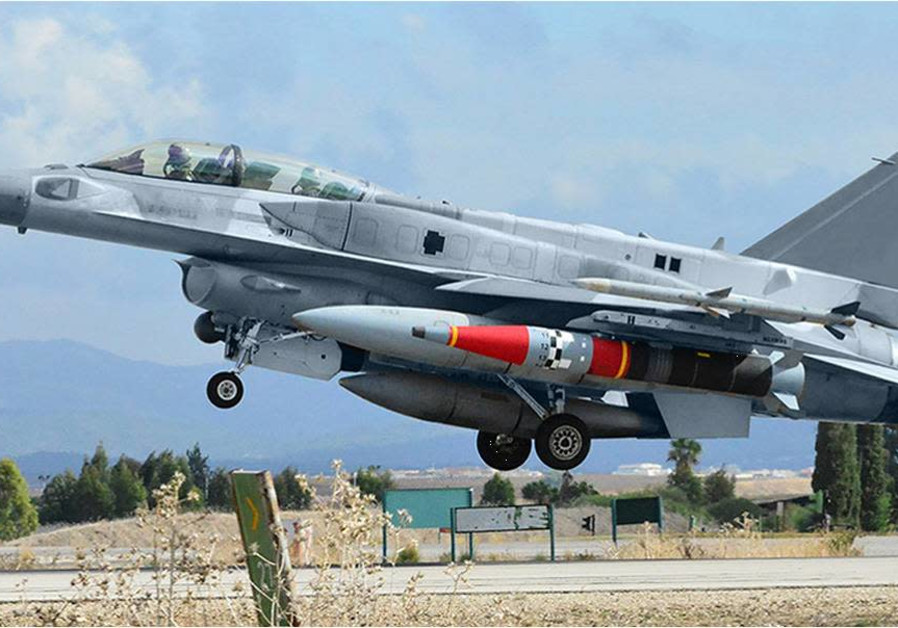
The "Rocks" system deployed on an F-16 fighter jet

With tensions still high between Israel and Iran a new air-to-surface long-range missile designed for to destroy targets deep underground in heavily defended areas has been developed by Israeli defense giant Rafael Advanced Defense Systems.

Dubbed “Rocks,” the innovative missile is being presented this week for the first time at the Aero India Air Show in Bangalore, India.

Earlier in February, a senior Iranian Revolutionary Guards commander threatened to “raze Tel Aviv and Hafia to the ground” if the United States attacked the Islamic Republic.
According to a statement released by Rafael, the new missile is equipped with a penetration or blast fragmentation warhead that is capable of destroying targets above the surface or deep underground in heavily surface-to-air defended areas.
It can be used against quality targets, whether stationary or mobile, and even in areas where the enemy uses countermeasures against GPS systems.
“‘Rocks’ uses its INS/GPS for mid-course navigation while homing on to the target is performed by using its EO seeker and advanced image processing algorithms, which ensures hitting targets with great precision, overcoming GPS jamming or denial,” read the statement.
“Rocks” will be launched from a significant standoff range, far beyond the usual coverage areas of enemy air defense systems. It performs a high velocity trajectory toward the target, reducing the exposure of the aircraft as well as improving the chances of successfully hitting targets.
“‘Rocks’ provides a cutting edge and cost-effective solution that combines several combat-proven technologies inherited from our latest generation SPICE system. “Rocks” effectively answers a growing demand for long range, GPS-independent Air-to-Ground precision strike capability,” said Yuval Miller, Executive Vice-President and General Manager of Rafael’s Air & C4ISR Systems Division.
“Aero India is an excellent opportunity to present this new system, and we can proudly say that today Rafael is well-situated in India with a broad industrial base, joint-ventures, indigenous companies and a substantial supply-chain,” Miller added.
Also on Wednesday, Rafael businessman Avihai Stolero announced that the company had finalized a merger agreement to acquire Yavne-based unmanned aerial systems (UAV) manufacturer, Aeronautics in a deal worth some NIS 850 million ($235m.).
Under the terms of the acquisition, the companies will seek to retain the employees of Aeronautics, who will receive a total of NIS 8.5 million ($2.35m.) as part of the deal.
Aeronautics will then become a full subsidiary of a new company jointly owned by Rafael and Stolero, and will be de-listed from the Tel Aviv Stock Exchange.

Eytan Halon contributed to this report.
 

Abbas rejects all tax revenues from Israel over terror payment deduction

February 20, 2019

Source: Abbas rejects all tax revenues from Israel over terror payment deduction | The Times of Israel

Dramatic move means PA is giving up $222 million every month, up to a third of its budget, putting it in danger of collapse

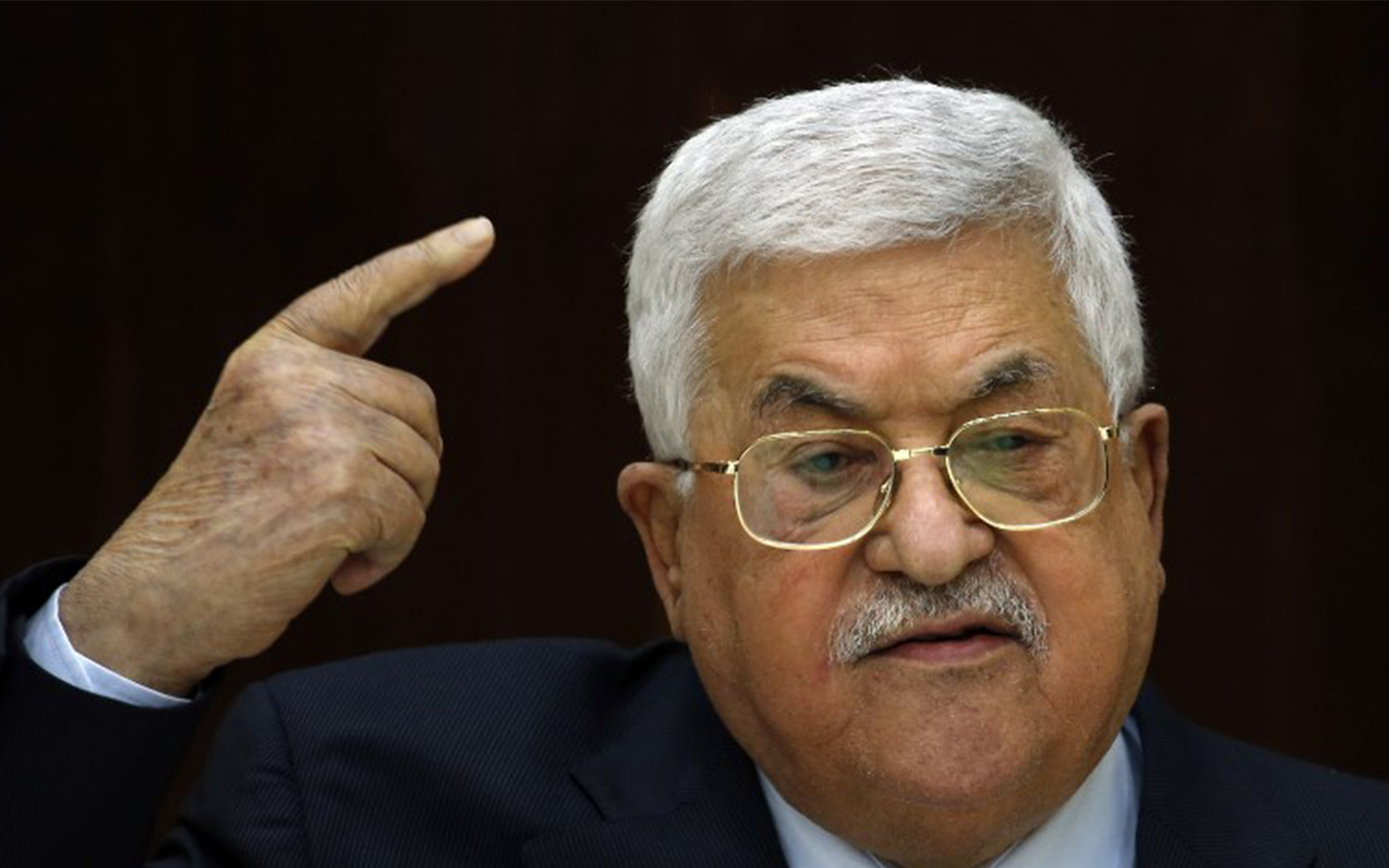
Palestinian Authority President Mahmoud Abbas speaks during a meeting with Palestinian leaders at the Muqata, the Palestinian Authority headquarters, in the West Bank city of Ramallah, on February 20, 2019 (ABBAS MOMANI/AFP)

Palestinian Authority President Mahmoud Abbas speaks during a meeting with Palestinian leaders at the Muqata, the Palestinian Authority headquarters, in the West Bank city of Ramallah, on February 20, 2019 (ABBAS MOMANI/AFP)

Palestinian Authority President Mahmoud Abbas has rejected all tax revenue payments transferred to the PA by Israel, in response to Jerusalem withholding over $138 million of the amount over Ramallah’s payouts to Palestinian attackers and their families.

The dramatic move means the PA is rejecting a large portion of its monthly income, which could lead to its financial collapse. Palestinian officials said Israel currently collects and transfers NIS 803,282,580 ($222 million) to the PA every month, Reuters reported.

Israel’s security cabinet on Sunday approved withholding NIS 502,697,000 ($138 million) from a year’s worth of taxes that Israel is slated to collect on the PA’s behalf.

The security cabinet’s decision was an effort to start implementing a new law that permits Israel to withhold tax money due Ramallah over payments it makes to security prisoners held by Israel and the families of slain attackers, including terrorists.

“We refuse to receive all of the tax funds. We don’t want them. Leave them over with them,” Abbas told a delegation of US Congress members and the dovish Jewish organization J Street at the PA presidential headquarters in Ramallah on Tuesday.

“I tell you honestly that if we only had 20 or 30 million shekels, which is what is paid [monthly] to families of martyrs, we will give them to the families of martyrs. I mean if the [Palestinian] Authority doesn’t have anything other than that [amount], I will pay it to the families of martyrs and prisoners and wounded persons. This needs to be understood,” he said, according to recordings of comments aired Wednesday on Voice of Palestine, the official PA radio station.

Palestinians hold portraits of relatives jailed in Israeli prisons as they protest to demand for their release during a demonstration to mark the Prisoners’ Day in the northern West Bank city of Nablus on April 17, 2018. (AFP PHOTO / JAAFAR ASHTIYEH)

“In addition, I will turn to all international institutions to complain. Perhaps the world will hear me,” Abbas added.

A high-ranking Palestinian official insisted on Tuesday that the Palestinians cannot stop its payments to security prisoners or the families of slain attackers, calling such a move “political suicide.”

“These payments are one of the most sensitive issues in Palestinian society,” the official, who spoke on condition of anonymity, told The Times of Israel. “If the PA were to get rid of them, it would be committing political suicide, especially considering the difficult political situation.”

Palestinian officials have condemned Israel for moving to withhold the half billion shekels, arguing it amounts to “piracy” of Palestinian funds.

Israeli officials have defended the security cabinet’s decision, arguing that the PA’s payments incentivize violence and terrorism.

Avi Dichter, the chair of the Knesset Defense Committee, has said Israel will spread out the withholding of the tax money over 12 months.

If Israel continues to collect a sum of taxes equivalent to that provided in the Reuters report, it will withhold approximately five percent of what it now transfers to the PA on a monthly basis.

Abbas’s rejection of all tax revenues could mean a PA forfeiture of hundreds of millions of shekels each month – several billion a year, and perhaps as much as a third of the PA’s total budget, as Times of Israel analyst Avi Issacharoff pointed out this week.

“It could mean, in other words, the de facto collapse of the PA,” he wrote. “When the PA threatened to do so in the past, Israel caved each time, fearing a spike in violence that could ensue after the PA’s disappearance. But Israel is now in the middle of an election, in which a right-wing incumbent government could find itself politically unable to appear to cave to the Palestinian threat.”

Polls have found that the overwhelming majority of Palestinians oppose the PA suspending its payments to security prisoners, including terrorists who have killed Israeli civilians.

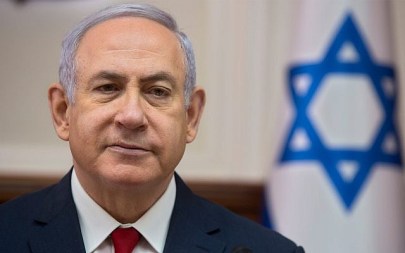
Prime Minister Benjamin Netanyahu chairs the weekly cabinet meeting at the Prime Minister’s office in Jerusalem, February 17, 2019. (AP Photo/Sebastian Scheiner, Pool)

A survey published in July 2017 by the Palestinian Center for Policy and Survey Research found that 91 percent of Palestinians were against halting the payments.

Israeli security officials have long supported strengthening the PA and have argued that initiatives to weaken it could destabilize the situation in the West Bank and hinder the ability of PA security forces to fight terrorism.

Adam Rasgon contributed to this report.

 

US voices unease over Hezbollah’s role in Lebanon cabinet

February 20, 2019

Source: US voices unease over Hezbollah’s role in Lebanon cabinet – Israel Hayom

Hezbollah continues to violate Lebanon’s policy of noninvolvement in regional conflicts by fighting in “at least three countries” and continues to make its own “national security decisions,” U.S. Ambassador Elizabeth Richard tells Lebanese Prime Minister Hariri.

Associated Press and Israel Hayom Staff // published on 20/02/2019
   
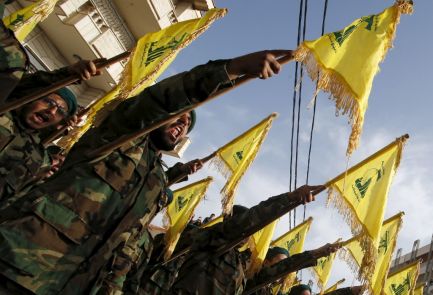
A Hezbollah march in Lebanon 


The U.S. ambassador to Lebanon expressed concerns Tuesday over Hezbollah’s growing role in the country’s new cabinet, saying it does not contribute to stability.

Iran-backed Hezbollah, which also takes part in elections, has named a health minister and two other posts in Lebanon’s cabinet. U.S. officials have called on Prime Minister Saad Hariri’s new government to ensure the terrorist group does not receive support from public resources.

At a meeting with Hariri on Tuesday, Ambassador Elizabeth Richard said Hezbollah continues to violate Lebanon’s policy of noninvolvement in regional conflicts by fighting in “at least three countries.” She was apparently referring to Syria, where the group fights alongside the Bashar Assad regime, Iraq and Yemen, where Iran supports local armed groups.

“I was also very frank with the prime minister about U.S. concern over the growing role in the cabinet of an organization that continues to maintain a militia that is not under the control of the government,” Richard told reporters after the meeting.

She added that Hezbollah continues to make its own “national security decisions” that “endanger the rest of the country.”

The U.S. views Hezbollah as a terrorist group, but is a strong supporter of Lebanon’s national army, supplying it with arms worth hundreds of millions of dollars in recent years. Last week, the American Embassy said the U.S. had delivered laser-guided rockets valued at more than $16 million to the Lebanese army.

Richard said last year alone, the United States provided more than $825 million in assistance, an increase from the year before. She said the U.S. has also supported education and development programs to help Lebanese communities “deal with the unprecedented demands placed on them when their Syrian neighbors fled.”

Lebanon is home to about a million Syrian refugees – a quarter of the tiny Mediterranean country’s population – putting pressure on its crumbling infrastructure.

Minister of State for Refugee Affairs Saleh Gharib briefed President Michel Aoun and Hariri on Tuesday about his visit to Syria the previous day, telling reporters that Syrian officials “were very positive and showed interest in facilitating” refugees’ return.


A window of opportunity in Egypt 

February 20, 2019

Source: A window of opportunity in Egypt – Israel Hayom

Itzhak Levanon

After eight years, the Foreign Ministry’s director general decided to keep Israeli embassy staff in Egypt over the weekend instead of returning them home. This was a welcome decision; the staff’s permanent presence in Cairo allows it to develop and maintain continuous diplomatic work, as expected of any embassy.

The attack on the embassy by an enraged mob in late 2011 and the staff’s consequent hasty withdrawal left Israel without a building for its embassy, with a very minimal team in place, and diplomats who return home to Israel every weekend. As a result, Israel’s diplomatic mission in Egypt has taken a hit. This unacceptable reality has persisted, as stated, for eight years. And although the Foreign Ministry’s decision is a step in the right direction, the embassy will still only function on a semi-normal basis.

Maj. Gen. (res.) Amos Gilad, an authority on Egyptian affairs, says it isn’t viable to lean the countries’ relations on one leg (security-intelligence); and that two legs are needed to ensure stability. The current Egyptian regime, headed by President Abdel-Fattah el-Sissi, doesn’t hide its good relations with Israel and is fostering a positive atmosphere. This provides a window of opportunity to implement full-fledged, proper diplomatic relations. The Egyptian parliament’s decision to extend el-Sissi’s term in office for many more years opens the window even further, allowing the country’s time to stabilize their relationship on more than just the one leg.

To restore diplomatic relations to pre-2011 normalcy, Israel must quickly find a new building for its embassy and staff, including a consular services department working to encourage mutual tourism and promote Israeli interests in Egypt – precisely as the Egyptian Embassy in Tel Aviv operates. The staff has to be the same size as before, to pursue and strengthen the countries’ diplomatic ties. In the stormy Middle East, close relations between Israel and Egypt are vitally important.

The Foreign Ministry, to be sure, always has to contend with complex challenges across the globe, but Israel’s relations with Egypt need to be prioritized. We must not miss this window of opportunity or squander the current regional climate to re-establish the Israeli presence in Cairo, as it was before 2011. The Israeli-Egypt peace accord includes agreement on fully operational embassies. With el-Sissi firmly in power for a long time to come, we must move forward with determination to bring this to fruition.

Itzhak Levanon is the former Israeli ambassador to Egypt.