Archive for February 14, 2019

Pompeo: peace in Middle East not possible without confronting Iran

February 14, 2019

Source: Pompeo: peace in Middle East not possible without confronting Iran – Israel Hayom

PM Benjamin Netanyahu meets with U.S. Secretary of State Mike Pompeo in Poland on second day of Warsaw conference on Iran • Netanyahu calls summit “historical turning point” • Pompeo urges participants to “push back” against all threats, including Iran.

Ariel Kahana, Reuters and Israel Hayom Staff // published on 14/02/2019
   
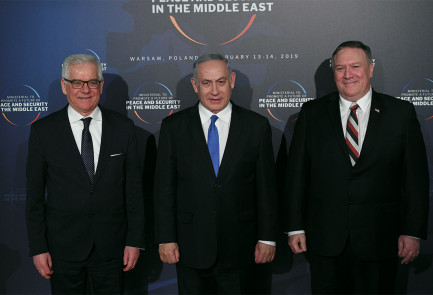
Polish Foreign Minister Jacek Czaputowicz, Israeli Prime Minister Benjamin Netanyahu and US Secretary of State Mike Pompeo 


The U.S.-sponsored Middle East conference aimed at building a coalition against the threat posed by Iran continued on Thursday as key participants took the stage.

Ahead of the plenary session on Thursday morning, Prime Minister Benjamin Netanyahu met with U.S. Secretary of State Mike Pompeo, thanking the U.S. for co-hosting the summit and rallying support to counter Iran.

“I want to thank Secretary of State Mike Pompeo and Vice President Mike Pence and the Trump administration for putting together an extraordinary conference,” Netanyahu said at the start of his meeting with Netanyahu.

“As you can see, this is a historical turning point; in a room of some 60 foreign ministers and representatives of dozens of governments, an Israeli prime minister and the foreign ministers of leading Arab countries stood together and spoke with unusual force, clarity and unity against the common threat of the Iranian regime,” Netanyahu continued.
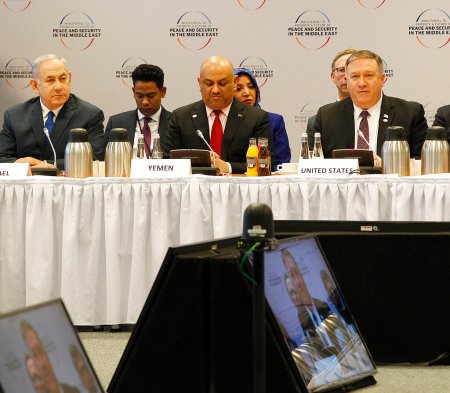
AP
PM Netanyahu, Yemen’s Foreign Minister Khalid al-Yamani and U.S. Secretary of State Mike Pompeo in Warsaw, Poland, Thursday

Netanyahu stressed that the conference underscores the “important understanding of what threatens our future and what we have to do to secure it, and the possibilities of cooperation that extend beyond security to every realm of life for the peoples of the Middle East.”

Pompeo thanked Netanyahu and said, “we appreciate you being here a great deal, it matters.”

Pompeo said he wanted conference participants to “continue to build here on what happened last night between all the parties who are deeply interested and committed to ensuring that we push back against all the threats, including Iran.”

The secretary of state stressed, “you can’t achieve peace and stability in the Middle East without confronting Iran, it’s just not possible.”

The conference, co-hosted by the U.S. and Poland, also produced signs of a warming of ties between Israel and some Arab countries on Wednesday.

Foreign ministers and other officials from more than 60 countries gathered for the conference in Warsaw, which started on Wednesday evening. The unofficial purpose of the conference is to coalesce a global coalition against Iran, although the issues of Yemen, Syria and the Israeli-Palestinian peace process were also discussed.

On the sidelines of the summit, Netanyahu met with Omani Foreign Minister Yousuf bin Alawi bin Abdullah on Thursday.

At the start of the meeting, Netanyahu recalled his visit to Oman in October, saying, “It’s a delight to see you again.”

Netanyahu said “the courageous decision of Sultan Qaboos to invite me to Oman is changing the world. It’s pointing the way for many others to do what you said, not to be stuck in the past, but to seize the future any are following this lead, and may I say, including in this conference. I thank you for this positive policy that can lead to peace and prosperity for all. I want to thank you on behalf of the people of Israel, and I allow myself to say on behalf of many people in the Middle East.”

Oman does not formally recognize Israel. Nor do Saudi Arabia or the United Arab Emirates, which also sent envoys to Warsaw and which share Israel’s concerns about Iran’s nuclear program and involvement in several regional flashpoints.

Speaking to Netanyahu, bin Alawi said: “People in the Middle East have suffered a lot because they have stuck to the past. Now we say, this is a new era, for the future.”

Netanyahu has frequently hinted at warmer ties with Gulf Arab states.

A photo-op with Netanyahu and senior figures from Arab countries in Warsaw would be a win for Washington as it seeks to ratchet up pressure against Tehran. The Iranians say it is U.S.-aligned forces in the region, and not they, who are belligerent.

Leading European countries Germany and France opted not to send their foreign ministers to the summit over concerns the meeting could highlight big-power tensions over Washington’s decision last year to withdraw from the 2015 Iran nuclear deal and reimpose sanctions against Tehran.

Vice President Mike Pence is leading the U.S. delegation, accompanied by Pompeo and White House Senior Adviser Jared Kushner.

Kushner, who is Trump’s son-in-law, was slated to brief delegates behind closed doors on Thursday on U.S. plans for peace between Palestinians and Israelis.

Palestinian officials, viewing the current U.S. administration as having a pro-Israel bias, declined to attend the conference.


PM Netanyahu Meets US Secretary of State Pompeo 

February 14, 2019


The Syrian wars: A new chapter opens in the Golan Heights 

February 14, 2019

Source: The Syrian wars: A new chapter opens in the Golan Heights – Opinion – Jerusalem Post

Today, there are more than 5.6 million Syrian refugees living outside the country, the vast majority of whom are Sunni.

BY NIR BOMS, STEPHANE COHEN
 FEBRUARY 13, 2019 22:51
The Syrian wars: A new chapter opens in the Golan Heights

The sounds of war have again echoed over the Golan Heights this past week. However, the drums of war have changed their course. Until last summer, we could clearly hear and witness the Syrian war with Syrian and Russian planes bombing rebel positions, occasionally “stray mortar” hitting the Israeli Golan.

However, this week those were Israeli tanks allegedly shooting to Quneitra, just across the Alpha Line and last month it was the roar of Iranian surface-to-surface missiles, flying above the heads of Israeli skiers who surprisingly saw the rendezvous of Israeli Iron dome interceptors.

The sounds of Israeli fighter jets – operating to dismantle Iranian positions, ammunition depots and shipments to Hezbollah have replaced the Syrian ones – have added additional drums of war to the northern horizons. The Syrian war episode may have entered its concluding chapter, but the Israeli-Iranian confrontation is opening a new one.

In the summer of 2018, the Assad regime reestablished its control over the Syrian side of the Golan Heights, restoring Syrian sovereignty and redeploying Syrian Army elements to their pre-war positions.

However, a deeper look at the developments across the Syrian-Israeli frontier reveals that the new reality is different from pre-civil war Syria. Today, Syrian military bases host a number of new actors, which include pro-Iranian militias, Russian military police, and reconfigured Syrian units. The local leadership and elements identified with the opposition – who informally governed these areas before the Assad regime reestablished control – have fled or been killed. In their place, stands a new security architecture that is based and supported, in part, by foreign actors.

Eight years of war have dramatically changed the face of the Syrian state. The Syria of the past no longer exists. Demographic and social changes have rearranged the country, which numbered 23 million people before the war.

Today, there are more than 5.6 million Syrian refugees living outside the country, the vast majority of whom are Sunni.

The numbers of those killed is reported to be at least 511,000. The Syrian army, which numbered some 200,000 soldiers before the war, quickly eroded and Assad remained in power, supported by mobilized militias that filled the ranks of his army.

At its peak, some 80,000 militias filled the Syrian military ranks. Iran played an important role by providing support, intelligence and training.

The regime’s victory – with Iran and Hezbollah’s support – has created several changes in southwest Syria. The Syrian military is no longer the sole authority on the ground. The Russian Military Police deployed on the Bravo Line aim to enforce a series of “reconciliations” to restore stability on the Golan by removing non-Syrian forces, as agreed upon in the Astana Process.

The Syrian Arab Army is no longer the same. In the south, the 61st Regional Brigade was completely wiped out. The 90th Regional Brigade returned, but has been reinforced with various militias, such as the NDF. The 112th brigade was deployed in the southern Golan Heights, ten kilometers from the Israeli border to fill the vacuum left by the destroyed 61st Brigade. It is probable that a local Hezbollah force may have been stationed under its auspices.

Mustafa Mughniyeh, the eldest son of Imad Mughniyeh reportedly attempted to revive an Iranian cell in the Druze village of Hader.

As outgoing chief of staff Lt.-Gen. Eisenkot detailed in an interview with The New York Times, Hezbollah developed a three-pronged strategy to confront Israel: building factories in Lebanon to manufacture precision-guided missiles, digging attack tunnels under the Israeli border, and setting up a second front from Syria on the Golan Heights. Furthermore, a Hezbollah intelligence position was recently struck by the IDF, less than two kilometers from Israel’s border.

Defying the understandings reached between Russia, Israel and Jordan, Iran continues to increase its presence in southern Syria.

Several opposition sources detailed the military activities of pro-Iranian militias on the ground, among others the Iraqi al-Imam al-Hussein, Abu al-Fadl al-Abbas Brigades, and Hezbollah’s elite “Radwan” unit. To conceal their activities, these militias use Syrian military bases, and some are embedded in regime forces, reportedly wearing Syrian army uniforms, and carrying Syrian IDs and flags.

Today, even those who are skeptical understand that Iran has reached beyond the Golan border. The missile fired into the Hermon by Iranian forces was launched from an area near Damascus that Israel was assured would not contain an Iranian presence.

Iran uses the promotion of Shi’ism as a tool to buy loyalty among Syrians from poor areas. These activities intensified in post-2011. Public expressions of Shi’ite practices, which were limited during the time of Assad, are now common, including in the Umayyad Mosque in Damascus.

THE ASSAD REGIME’S promises to restore pre-war stability seem to be a delusion. A weakened and exhausted population, a lack of leadership and basic services, and the loss of Israel’s rebel partners who had been working to stabilize the area over the past few years have resulted in a broken society.

IDF Operation Good Neighbor was shut down, leaving a significant vacuum of supplies and support in the southern Syria. There is still high tension between the opposition groups that reconciled with the regime and the Syrian Security Forces in Daraa and Quneitra. Assassinations and explosions are still common in the government-controlled areas. The lack or loss of stabilizing forces leave the stage open to new destabilizing forces such as Iran.

Demonstrations are still going on in southwest Syria. Frustrated at the regime and Russia for not observing the terms of the deal, protesters continue to gather at the Al-Omari Mosque, calling for the regime to uphold its commitments.

Furthermore, locals still protest the regime in Jasim, Da’el, al-Karak. Frustration over punishments in the area continues to grow: many have protested the forced military conscription and condemn the Syrian intel services raids of their homes. They call for the regime to abide by the terms of the reconciliation agreement signed last summer, in which opposition forces surrendered control of the area in return for the safety and security of the citizens who live there.

Following an intelligence operation, a new Iranian military position was uncovered in northern Israel recently, buried under piles of sand and debris. That is not a new cross-border Hezbollah tunnel or an Iranian intel position.

It is a 2500 years old outpost, established by the forces of Persian King Cambyses II at Tell Keisan, during his expedition to conquer the Levant, all the way to Ethiopia. The Ethiopian king understood the imperial and deceitful intentions and decided to reject the diplomatic overtures, and was prepared to defend his kingdom. Some 2500 years later, during increasing Iranian entrenchment in the Levant, Israel may be compelled to do the same.

Nir Boms is a Researcher at the Moshe Dayan Center (MDC) for Middle Eastern and African Studies.
Stéphane Cohen, is a former IDF Liaison Unit Commander to UN Forces in Syria and Lebanon. He is a member of the MDC’s Syria Forum.


Hezbollah has plans for Israel on the Golan

February 14, 2019

Source: Hezbollah has plans for Israel on the Golan

Analysis: Israel had better pay attention to the emerging reality on its Syria border in the Golan Heights, where the Lebanese terror group is attempting to get a foothold; the Iranian-backed organization is up to its neck in problems at home and finds the Syrian frontier to be a more comfortable location from which to take on the Jewish state.

While Hamas attempts to incrementally turn up the heat in the riots among Israel’s Gaza border, the “Palestinian night squads” have resumed their evening protests along the security fence, disrupting the Israel Defense Forces’ routine activity. But Israel had better pay attention to the emerging reality on its Syria border in the Golan Heights where Hezbollah has been attempting to tighten its grip exactly as it did four years ago.

According to Syrian reports, IDF tanks on Monday evening fired artillery rounds at “a demolished hospital” in Syria’s southern Quneitra province near the border with Israel, causing material damage. It was also reported that Israel hit a military observation post in the border village of Jabta Elhashab. Some reports say the post belonged to “local activists,” but it more likely belonged to Hezbollah, which is trying to regain its hold in the Syrian Golan Heights.

File photo: IDF strike near Damascus in January (Photo: EPA)

File photo: IDF strike near Damascus in January (Photo: EPA)

While the IDF maintained a policy of ambiguity over Monday’s strike, Prime Minister Benjamin Netanyahu did confirm that Israel had attacked Iranian targets in Syria, just he assumed responsibility for previous attacks over the few past weeks.

Hezbollah is trying to entrench itself in Syria, after Syrian President Bashar Assad has reclaimed the Syrian side of the Golan Heights, precisely as it did between 2014-2015. This was when one of the terror organization’s more prominent members, Jihad Mughniyeh, was appointed by Hezbollah and the Iranian Revolutionary Guards’ Quds Force to be in charge of the Golan Heights area and planning terror attacks against Israeli civilians.

But Jihad was killed in a 2015 airstrike attributed to Israel. His father, Hezbollah military and intelligence chief Imad Mughniyeh, was who also killed in an alleged Israeli operation in 2008.

In retribution for Jihad’s death, Hezbollah staged an ambush of an IDF convoy near the Har Dov area, in close proximity to the Lebanese border, firing Kornet anti-tank missiles at the passing troops. The strike was followed by mortar fire coming in from Lebanon onto Mount Hermon after the IDF responded to the attack. Giva’ati Company Commander Major Yohai Kalangel and Sergeant Dor Nini were killed and seven others were injured in the incident.

Hezbollah leader Hassan Nasrallah

Hezbollah leader Hassan Nasrallah

Hezbollah has recently announced it intends to release footage of that incident, which is considered the gravest since the 2006 Second Lebanon War.

The IDF has yet to comment on the terrorist group’s announcement, however, the army has confirmed Hezbollah’s attempts to base itself across Syrian villages over the past few months, operating against Israel in an area that is not bound by UN resolutions, unlike the Israel-Lebanon border.

In addition, an increase in the number of incidents along the Syrian border was noted over the past two months, with the Israeli strikes in Syria for which no one assumed responsibility meant to signal the enemy that it is best not cross any red lines. This is similar to the message Jerusalem conveyed to Iran when it attempted to entrench itself in Syria and was pushed out of there after a series of Israeli airstrikes.

Unlike the situation of four years ago, Iran has a rare presence along the Syrian border, while Hezbollah is working to resume its confrontations with Israel. But since the organization is up to its neck in domestic problems and cannot allow itself to face Israel on the Lebanese front, it finds Syria to be a more comfortable staging ground from which to take on the Jewish state.

Israel must therefore act with the same determination it demonstrated in 2015, which ultimately ruined Hezbollah’s plans.


Omani FM to Benjamin Netanyahu: There is a ‘new era’ in the Middle East 

February 14, 2019

Source: Omani FM to Benjamin Netanyahu: There is a ‘new era’ in the Middle East – Israel News – Jerusalem Post

“People in the Middle East have suffered a lot by sticking to the past. Now we are saying this is a new era for the future and for the prosperity of every nation,” said the Omani foreign minister.

BY TOVAH LAZAROFF, MICHAEL WILNER
 FEBRUARY 13, 2019 17:01
Prime Minister Benjamin Netanyahu (R) and Omani Foreign Minister

There is a new era in the Middle East, Omani Foreign Minister Yusuf bin Alawi bin Abdullah told Prime Minister Benjamin Netanyahu when the two met in Warsaw prior to the US-led ministerial meeting on Iran.

“This is an important and new vision for the future. People of the Middle East have suffered a lot because they are stuck to the past. This is a new era for the future and for prosperity for every nation,” the Omani foreign minister said during their meeting on Wednesday.

Netanyahu told Alawai that it was a delight to see him again.

“The courageous decision of Sultan Qaboos [bin Said] to invite me to Oman is changing the world,” Netanyahu said as he referenced his October visit to Muscat.

“It’s pointing the way for many others to do what you said, not to be stuck in the past, but to seize the future.

“Many are following this lead, and may I say, including in this conference. I thank you for this positive policy that can lead to peace and prosperity for all,” Netanyahu added. “I want to thank you on behalf of the people of Israel, and I allow myself to say on behalf of many people in the Middle East.”

The prime minister is in Warsaw to attend the Ministerial to Promote a Future of Peace and Security in the Middle East, which opens on Wednesday night and extends into Thursday.

“It is cold in Warsaw right now, but Israel’s foreign relations are warming up, warming up for the better,” Netanyahu said.

Netanyahu told Israeli reporters that he and the Omani foreign minister had spoken of steps the two countries, as well as others in the region, could take to advance mutual interests.

Representatives of Israel, Jordan, Saudi Arabia, the United Arab Emirates, Bahrain and Qatar, as well as the UK, South Korea, Brazil, Italy and Kenya, have chosen to attend, while several EU nations opted out due to concern over the conference’s focus on undermining the 2015 nuclear agreement with Iran to which they remain a party.

Top Trump administration officials arrived in Warsaw on Wednesday with talking points on Iran and harsh words for the Palestinians, teasing only “a discussion” on the Middle East peace process ahead of an expected peace push later this year.

Senior advisers to the president Jared Kushner and Jason Greenblatt planned a soft launch of their long-awaited peace plan at a meeting hosted by Norway’s foreign minister, Ine Marie Eriksen Søreide, where they will discuss economic components of their proposal, officials said. But while both men plan on taking questions from gathered ministers, the administration does not expect them to make significant news.

Greenblatt even downplayed the importance of the Israeli-Palestinian conflict on Twitter en route to the conference, mocking the notion that it is at the core of the region’s problems and characterizing the Palestinians as “isolated” from a growing Mideast alliance preoccupied by Iran.

“Iran is the primary threat to the future of regional peace and security,” wrote Greenblatt, increasingly vocal on Twitter in recent days. “That’s what Palestinians don’t grasp; as a consequence of being detached from new realities, we see Palestinians increasingly left behind [and] more isolated than ever. Very unfortunate for the Palestinians.”

Jason D. Greenblatt

@jdgreenblatt45

Palestinian Authority officials are boycotting the conference, still dismissive of the administration since its moves last year to recognize Jerusalem as Israel’s capital and move the US Embassy there.

While Kushner and Greenblatt will engage on the peace effort, Vice President Mike Pence and US Secretary of State Mike Pompeo will lead conversations on Iran, according to administration officials.

US Vice President Mike Pence who addressed the gathering said, “Tonight I believe we are beginning a new era with Prime Minister Netanyahu from the State of Israel, with leaders from Bahrain, Saudi Arabia, the UAE  all breaking bread together and later in this conference sharing honest perspectives on the challenge facing the region.”

“Poland and the US welcome this outward symbol of this gathering a symbol of cooperation and a hopeful sign of a brighter future that awaits nations across the Middle East,” Pence said.

He added, “We are stronger together than we could ever be apart.”


Netanyahu: Israel and Arab states advancing interest of combating Iran 

February 14, 2019

Source: Netanyahu: Israel and Arab states advancing interest of combating Iran – Israel News – Jerusalem Post

Israel is working to oust Iran from Syria, Netanyahu said, adding, “we are obligated to do this and we will do this.”

BY TOVAH LAZAROFF
 FEBRUARY 13, 2019 19:17
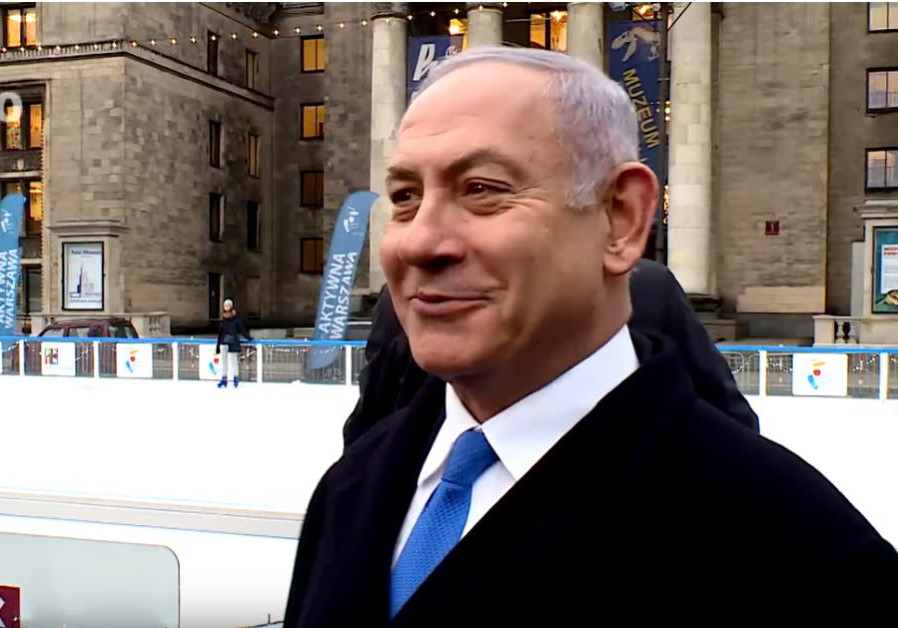
Netanyahu ice skate rink Warsaw - Feb. 13, 2019

“From here I am going to a meeting with 60 foreign ministers and envoys of countries from around the world against Iran,” Netanyahu said.

“What is important about this meeting – and this meeting is not in secret, because there are many of those – is that this is an open meeting with representatives of leading Arab countries, that are sitting down together with Israel in order to advance the common interest of combating Iran.” Netanyahu said.

On the northern front, Israel is working to oust Iran from Syria, Netanyahu said.

“What we are doing is pushing and driving Iran from Syria. We are committed to doing this,” he said. “It is cold in Warsaw right now but Israel’s foreign relations are warming up, warming up for the better.”

He spoke after his meeting with Omani Foreign Minister Yusuf bin Alawi bin Abdullah.

The Israeli Prime Minister is in Warsaw to attend the Ministerial to Promote a Future of Peace and Security in the Middle East, which opens on Wednesday night and extends into Thursday.

Both US Vice President Mike Pence and US Secretary of State Mike Pompeo, are expected to address the ministerial meeting that includes representatives from the Arab world and the 28 nations that make up the European Union.

US envoy Jason Greenblatt, who is in Warsaw tweeted in advance of the conference that, “Iran is the primary threat to the future of regional peace/security.

“Iran is the primary threat to the future of regional peace/security,” he wrote.

Iran’s Supreme Leader Ayatollah Ali Khamenei warned Europe to distance itself from the US.

“Today, the Iranian people see some European countries as cunning and untrustworthy along with the criminal America. The government of the Islamic Republic must carefully preserve its boundaries with them,” he wrote.

“Iran must not retreat a single step from national and revolutionary values.”

US President Donald Trump’s attorney and former mayor of New York, Rudy Giuliani, called for Iranian regime change on Wednesday ahead of a US-backed Middle East summit in Warsaw.

“Everyone knows that Iran is the number one sponsor of terrorism in the world. There isn’t a single government there that disagrees with that,” he said.

“The reality is, Iran should be isolated until Iran changes. If they can do what our government, American government, other governments, believe and make policy change within, I would be satisfied with that, although skeptical. If it results in regime change, I think that would be a cleaner solution,” Giuliani said.

He spoke ahead of a rally to show support for the Paris-based National Council of Resistance of Iran (NCRI), a bloc of opposition groups in exile that seeks to end Shi’ite Muslim clerical rule in Iran.

Protesters banged drums, chanted, waved flags and placards outside the summit venue at the National Stadium. They were protesting the current regime and its human rights’ violations.

An Iranian protester Mahmoud Masoudi of Germany said,”We are coming here to support Maryam Rajavi (head of National Council of Resistance of Iran (NCRI) as our leader and the only alternative to the dictatorship in Iran. This is the basic reason that all of us are here today. And we think it is the time to support NCRI, National Council of Resistance, which includes the most democratic groups in Iran against Khamenei regime, against dictatorship in Iran, the religious dictatorship.”

The NCRI members joined the 1979 Islamic revolution but later broke from the ruling clerics. Based in Iraq in the early 1980s, their fighters clashed with U.S. forces during the 2003 Iraq war, but have since renounced violence.

NCRI, also known by its Farsi name Mujahideen-e-Khalq, was once listed as a terrorist organization by the United States and the European Union but that is no longer the case.

Reuters contributed to this report.


Iran could get nuclear weapon within two years, intel assessments find 

February 14, 2019

Source: Iran could get nuclear weapon within two years, intel assessments find – Middle East – Jerusalem Post

Israeli intelligence assessment finds if Tehran leaves JCPOA it would have enough fissionable material within a year.

BY ANNA AHRONHEIM, TOVAH LAZAROFF

FEBRUARY 13, 2019 16:59

This handout photo provided by Iran's Revolutionary Guard Corps (IRGC) official website

This handout photo provided by Iran’s Revolutionary Guard Corps (IRGC) official website via SEPAH News on February 7, 2019 shows the new “Dezful” missile during its inauguration ceremony at an undisclosed location. (photo credit: SEPAH NEWS/IRAN’S REVOLUTIONARY GUARDS WEBSITE/AFP)

Iran is capable of producing a nuclear weapon within two years, if it steps up work on its nuclear program and violates the 2015 deal with the West, according to a recent Israeli intelligence assessment.

The assessment was released as the controversial US-led summit against Iran opened in Warsaw, where Israel is expected to pressure the European Union against trying to prop up the Joint Comprehensive Plan of Action following the American withdrawal last May.

In the Polish capital, Prime Minister Benjamin Netanyahu spoke openly about the possibility of war with Iran, and the possibility of a new alliance of Arab states with Israel, in the event of such hostilities.

“I am going to a meeting with 60 foreign ministers and envoys of countries from around the world against Iran,” Netanyahu said next to an outdoor skating rink in a short video clip his staff filmed for his Facebook page.

“What is important about this meeting – and this meeting is not in secret, because there are many of those – is that this is an open meeting with representatives of leading Arab countries, that are sitting down together with Israel in order to advance the common interest of war with Iran,” he said.

Israel has worked not just to block Iran’s accelerated nuclear activity, but has also attempted to stem its increased military activity along the North.

Before he boarded a plane to Warsaw Tuesday night, Netanyahu confirmed that Israel attacked Iranian targets in Syria on Monday. Prior to heading to the ministerial meeting, he said Israel is working to oust Iran from Syria.

“What we are doing is pushing and driving Iran from Syria. We are committed to doing this,” he said.

Israel considers Iran’s nuclear program as the nation’s No. 1 concern, and, according to the assessment, if the Islamic Republic does decide to renege on the agreement, it would take it one year to produce enough fissionable material to make a nuclear bomb and then another year to actually make the weapon device.

According to the assessment, Iran is contemplating how to deal with American sanctions in the hope that President Donald Trump will not be reelected in 2020 and a new and more pragmatic president would be elected, or to signal to the West that if the current status quo remains, it, too, will leave the agreement and return to enriching uranium.

Under the JCPOA, Tehran is prohibited from transferring any weapons to third countries, but Iran, which possesses more than 1,000 short- and medium-range ballistic missiles, is suspected of continuing to smuggle weapons to countries and non-state actors such as Lebanon’s Hezbollah and Hamas in the Gaza Strip.

Nevertheless, it is believed that Iran is continuing to develop the capabilities to produce a nuclear weapons arsenal as well as produce ballistic missiles capable of carrying nuclear warheads, despite new US sanctions placed on Iran meant to pressure Tehran over its military activity in the Middle East.

Iran has always denied seeking nuclear weapons, and agreed to curb its nuclear program in return for the lifting of sanctions as part of the JCPOA signed in 2015 between Iran and the US, Russia, China, the UK, France and Germany.

While US sanctions have largely succeeded in convincing Western businesses to cut ties with Iran, countries such as France, Germany and Britain have begun nondollar trade with Iran to avert US sanctions, to keep the deal with Iran alive.

Though Iran’s economy has improved since the signing of the deal, the average Iranian has not felt it, with high unemployment and growing inflation due to the sanctions, with a rise in the price of bananas over the past year by 165%, 50% in meat prices, 103% in tomato prices, and 15% for housing.

While the spark for the protests has been the economy, protesters have also taken to the street denouncing the Islamic Republic’s role in conflict zones such as Syria, Lebanon, Yemen and Gaza, burning pictures of the commander of the Islamic Revolutionary Guard Corps’ Quds Force, Maj.-Gen. Qassem Soleimani, who is in charge of Iran’s policy in those countries.

US envoy Jason Greenblatt, who is in Warsaw, tweeted in advance of the conference that “Iran is the primary threat to the future of regional peace/security.”

Netanyahu is also set to meet with US Vice President Mike Pence and US Secretary of State Mike Pompeo on the sidelines of the conference to discuss Iran.

Iranian Foreign Minister Mohammad Javad Zarif has dismissed the conference as a “desperate anti-Iran circus.”

Iran’s Supreme Leader Ayatollah Ali Khamenei warned Europe to distance itself from the US.

“Today, the Iranian people see some European countries as cunning and untrustworthy along with the criminal America. The government of the Islamic Republic must carefully preserve its boundaries with them,” he wrote. “Iran must not retreat a single step from national and revolutionary values.”

US President Donald Trump’s attorney and former mayor of New York, Rudy Giuliani, called for Iranian regime change on Wednesday ahead of a US-backed Middle East summit in Warsaw.

“Everyone knows that Iran is the No. 1 sponsor of terrorism in the world. There isn’t a single government there that disagrees with that,” he said.

“The reality is, Iran should be isolated until Iran changes. If they can do what our government, American government, other governments, believe and make policy change within, I would be satisfied with that, although skeptical. If it results in regime change, I think that would be a cleaner solution,” Giuliani said.

He spoke ahead of a rally to show support for the Paris-based National Council of Resistance of Iran (NCRI), a bloc of opposition groups in exile that seeks to end Shi’ite clerical rule in Iran.

Protesters banged drums, chanted and waved flags and placards outside the summit venue at the National Stadium. They were protesting the current regime and its human rights violations.

One Iranian protester, Mahmoud Masoudi of Germany, said they came to Warsaw to support NCRI head Maryam Rajavi.

She is “our leader and the only alternative to the dictatorship in Iran,” he said. “This is the basic reason that all of us are here today. And we think it is the time to support the NCRI… which includes the most democratic groups in Iran against the Khamenei regime, against dictatorship in Iran, the religious dictatorship.”

Reuters contributed to this report.


White House accelerates secret program to sabotage Iran missiles – report 

February 14, 2019

Source: White House accelerates secret program to sabotage Iran missiles – report – Middle East – Jerusalem Post

American military officials urged Congress to put more money into “left of launch” programs, meaning programs which rely on sabotaging launchers before they are fired.

BY TZVI JOFFRE
 FEBRUARY 13, 2019 21:23
Iran missile

The White House has pushed forward a secret program to sabotage Iranian missiles and rockets as part of a campaign to undercut Iran’s military, according to administration officials in a report by the New York Times.

No one can precisely measure the success of the program, which has never been publicly acknowledged, but the recent failure of Iran’s attempted satellite launches raised some suspicion.

The two failures are part of a pattern over the past 11 years. Sixty-seven percent of Iranian orbital launches have failed during this time, suspiciously high compared to the worldwide 5 percent failure rate for similar launches.
Iran insists that it will continue trying, with Iranian President Hassan Rouhani vowing to “continue our path and our military power.”
The Trump administration claims that Iran’s space program is a cover for its ballistic missile development program. Secretary of State Mike Pompeo claimed that Iran’s satellite launchers have technologies “virtually identical and interchangeable with those used in ballistic missiles.”
The Times found more than half-dozen current and former government officials who have worked on the American sabotage program over the past dozen years. They spoke on condition of anonymity since they’re not authorized to publicly discuss the secret program.
The officials said that the program was created under former president George W. Bush, which attempted to slip faulty parts and materials into Iran’s aerospace supply chains. The program continued early in the Obama administration, but eased by 2017 when Mr. Pompeo took over as the director of the CIA.
The head of Iran’s missile program, Brig. Gen. Amir Ali Hajizadeh, accused American and allied intelligence agencies of targeting Iran’s missile complex with campaigns of “infiltration and sabotage.”
“They want to repeat their nuclear sabotage in the missile area,” Hajizadeh told Iranian state television in 2016, promising that the program would never stop.
The CIA declined to comment on the sabotage program. Government officials requested that the New York Times withhold some of the details they had gathered, including the identities of specific suppliers to the Iranian program, since the sabotage program is ongoing.
Aerospace experts warned that Iran’s missile troubles could also just be the result of normal malfunctions. The recent rise in failures, though, suggests that the effort to sabotage Iran’s space launches and missile tests may have been intensified.
Last month, President Trump noted at the Pentagon that if the attempted space launch had succeeded, it would have given Tehran “critical information” it could use “to pursue intercontinental ballistic missile capability, and a capability, actually, of reaching the United States.”
Under President Bush, two covert programs against Iran were established: one focused on nuclear materials, the other on missiles.
The CIA and NSA searched for ways to subvert factories, supply chains, and launchers, according to the Times.
American military officials urged Congress to put more money into “left of launch” programs, meaning programs which rely on sabotaging launchers before they are fired.
With Iran that meant finding the network of supplies and subcontractors Iran uses, which became easier once United Nations sanctions forced Iran to rely on black markets and middlemen. The CIA found these relatively easy to penetrate, according to former officials who spoke to the Times.
Several participants said that the key insight was to sabotage test launches of new missiles, causing Iran to hesitate to embark on mass production.
Under the Obama administration, the program started targeting space launchers as well. Secretary of State Hillary Clinton believed that the development and testing of one class of launcher could advance the other.
Some rocket specialists claimed that the overlap between the two was insignificant. Iran claimed that the space launches had no military value.
When Mr. Pompeo arrived at the CIA, Iranian nuclear activity was no longer the focus. Iran had instead ramped up its missile and space program. Mr. Pompeo shifted focus to the supply chain for rockets and missiles, an area he knew well.
Seeding foreign aerospace programs with faulty parts and materials can take years, and it’s almost impossible to know if the faulty technology is ever installed in particular launchers.
There was one occasion when the USA had a chance to check their success, according to the Times. A short-range Iranian-made missile landed in Baghdad’s Green Zone, but failed to detonate. One of the American-sabotaged parts was found inside, according to a former senior official.
Iran’s size and isolation makes it difficult to monitor the success rate of the sabotage program, but the number of failures suggests that the program is effective.
According to the Times, Iran succeeded in putting a small satellite into orbit in 2009, 2011, 2012, and 2015. These were the only four clear successes out of a dozen attempts, according to Jonathan McDowell, a Harvard Astronomer who specializes in orbital monitoring.
On one occasion, an Iranian rocket exploded on the launchpad, leaving blast scars, burned wreckage, and a blackened rocket transporter which could be seen by satellites overhead. Iranian officials did not comment on the event.
Iran has so far failed to successfully test the newest generation of its satellite launcher, Phoenix, according to the Times. In the test launch on Jan. 15, Iranian officials claimed it suffered a third-stage failure.
Some experts attribute Iran’s poor performance to other factors, such as trade embargoes which block access to the best technology.
A similar sabotage program was directed at North Korea, which suffered through a series of missile failures in 2016.


At least 27 killed in suicide attack on Iran Revolutionary Guards’ bus

February 14, 2019

Source: At least 27 killed in suicide attack on Iran Revolutionary Guards’ bus | The Times of Israel

Vehicle filled with explosives said detonated next to bus; state media blames al-Qaeda-linked Sunni extremist group Jaish al-Adl for bombing

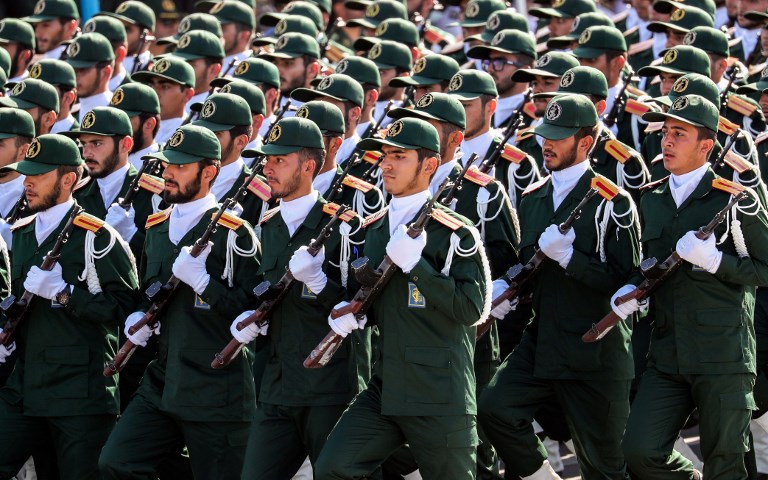
Members of Iran's Revolutionary Guard Corps (IRGC) march during the annual military parade marking the anniversary of the outbreak of the devastating 1980-1988 war with Saddam Hussein's Iraq, in the capital Tehran on September 22, 2018. (AFP/STR)

Members of Iran’s Revolutionary Guard Corps (IRGC) march during the annual military parade marking the anniversary of the outbreak of the devastating 1980-1988 war with Saddam Hussein’s Iraq, in the capital Tehran on September 22, 2018. (AFP/STR)

A suicide attack on Wednesday on a bus carrying members of the Revolutionary Guards in southeastern Iran killed at least 27 people.

“The suicide attack on an Islamic Revolutionary Guards Corps personnel bus happened on the Khash-Zahedan road,” IRNA said.

The road is located in the volatile southeastern province of Sistan-Baluchistan.

The Guards issued a statement confirming the attack. It said the troops were returning from the border.

“In this suicide attack a car filled with explosives blew up besides a bus carrying a unit of the Guards’ ground forces causing the martyrdom and wounding of a number of the protectors of our Islamic homeland’s border,” the statement read.

Iranian state media blamed the al-Qaeda-linked Sunni extremist group Jaish al-Adl for the bombing.

The semi-official Fars news agency reported 40 members of the IRGC were on board the bus at the time of the attack.

The attack took place in the volatile southeastern province of Sistan-Baluchistan which has a large, mainly Sunni Muslim ethnic Baluchi community that straddles the border with Pakistan.

On January 29 three members of an Iranian bomb squad sent to the scene of an explosion in Zahedan, the capital of Sistan-Baluchistan province, were wounded when a second device blew up as they were trying to defuse it, police said at the time.

And in early December last year two people were killed and around 40 others wounded in the port city of Chabahar, also in Sistan-Baluchistan, in an attack which Foreign Minister Mohammad Javad Zarif at the time blamed on “foreign-backed terrorists” — a reference to Sunni Muslim extremists.

Last September at least 29 people were killed and over 60 wounded in an attack on an IRGC parade in the southwestern city of Ahvaz. It was the deadliest such attack in Iran in nearly a decade.

Militants disguised as soldiers opened fire on the annual Iranian military parade in an attack claimed by the Islamic State terrorist group.

Iranian authorities blamed “jihadist separatists” for the assault claiming they were backed by Saudi Arabia, Israel and the United States.

The attack comes just days after Iran marked 40 years since the Islamic Revolution with numerous high-profile events.

Monday was the culmination of official celebrations called the “10 Day Dawn” that mark the period between February 1 and February 11, 1979, when Shiite cleric Khomeini returned from exile and ousted the shah’s last government.


IDF believes Iran pulling forces in Syria away from Israel border due to strikes

February 14, 2019

Source: IDF believes Iran pulling forces in Syria away from Israel border due to strikes | The Times of Israel

But Intel report says Tehran not giving up on plans to threaten Israel; army assesses Tehran abiding by 2015 nuclear deal, but could create atomic bomb within 2 years

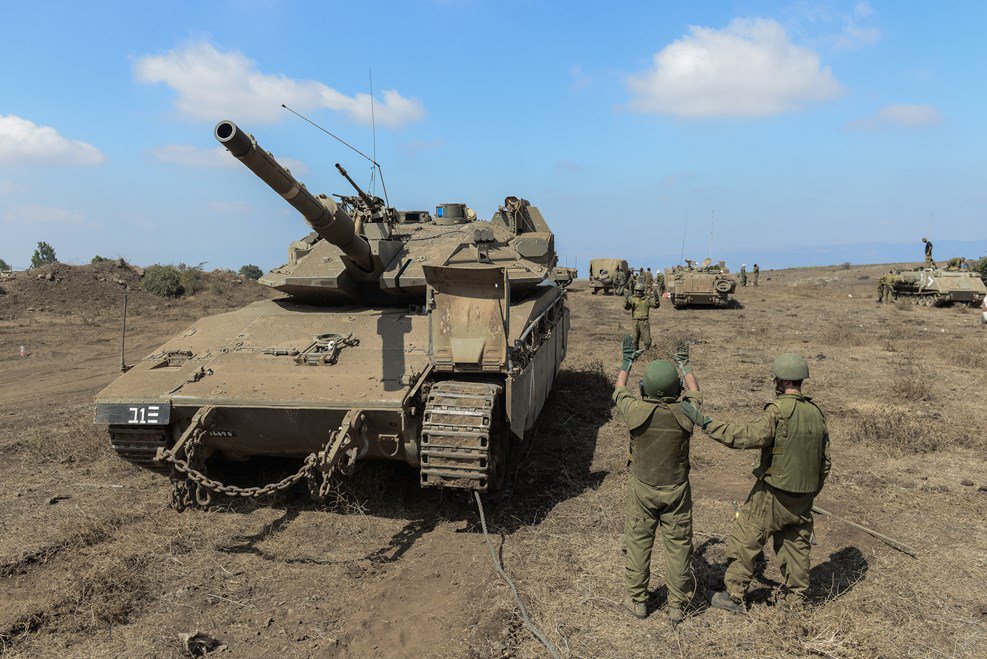
Israeli troops take part in an exercise on the Golan Heights in August 2018. (Israel Defense Forces)

Israel’s campaign of airstrikes in Syria has driven Iran to change tack in the country, moving the bulk of its troops and bases away from the Israeli border and toward what it sees as a safer location closer to Iraq, according to Military Intelligence assessments released Wednesday.

At the same time, the report said Iran appears to be adopting a more aggressive stance toward Israel, as evident by its launch of a missile into the northern Golan Heights last month, in response to a reported strike by the Israel Defense Forces. While most troops are being moved away, some pro-Iranian forces remain on the border with Israel and have established observation posts from which they can monitor Israeli military activities.

The intelligence report said Iran’s inclination to retaliate against Israeli airstrikes appears to be buoyed by the Syrian military’s recent acquisition of advanced Russian S-300 air defense batteries. The IDF does not believe Syrian troops have yet been fully trained to operate the powerful anti-aircraft system, but the military is prepared to destroy it the first time an S-300 battery fires at Israeli aircraft — despite the potential diplomatic blowback from Moscow, which gave Damascus the system.

In Gaza, the Israel Defense Forces believes the restive enclave may soon see another major conflict — the fourth in just over a decade — as its Hamas rulers may deliberately spark a destructive war as a way to gain both international sympathy and, afterwards, an influx of reconstruction funds to replenish its empty coffers.

The assessments were part of Military Intelligence’s forecast for 2019, portions of which were released to the media by the IDF on Wednesday.

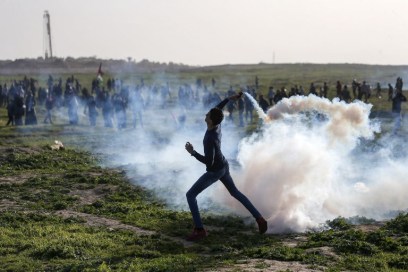
A Palestinian protester throws a tear gas canister towards Israeli forces during clashes following a demonstration along the border with Israel, east of Gaza City on January 25, 2019. (Mahmud Hams/AFP)

Military Intelligence also believes Iran is still adhering to the 2015 nuclear deal, under which Tehran agreed to limit its production of nuclear material and in exchange receive sanctions relief, despite the United States dropping out of the deal in 2017 — echoing similar findings released by American intelligence services earlier this month.

The military believes that were Iran to decide to break from the agreement, known formally as the Joint Comprehensive Plan of Action (JCPOA), it would take approximately one year for the country to produce fissile material and another year to turn that into a functioning bomb. No such decision has been made, though Israeli Military Intelligence believes Iranian officials are considering violating the nuclear deal by enriching uranium beyond the allowed limit — as a negotiation tactic.

Iran under pressure from sanctions

Israel sees a nuclear-armed Iran as an existential threat, and Israeli officials have vowed that the Jewish state would take all actions necessary to prevent such an occurrence.

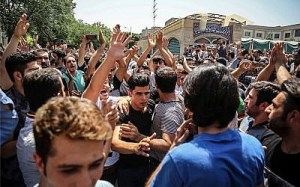
A group of protesters chant slogans at the main gate of old grand bazaar in Tehran, Iran, Monday, June 25, 2018. (Iranian Labor News Agency via AP)

The IDF believes the return of American sanctions against Iran are causing serious problems for the cash-strapped regime. As a result of the renewed sanctions, Tehran has scaled back its financial support for militias in Syria and Iraq, the Israeli military believes.

Domestically, the Iranian government is also facing significant criticism in light of the country’s deteriorating economy — the cost of food has more than doubled in some cases — casting a pall over the celebrations for the 40th anniversary of the 1979 revolution which brought the Islamic government to power.

However, a grassroots movement to overthrow the regime does not appear to be on the horizon, according to the IDF’s assessments.

Iran changing tactics in Syria

In addition to pulling its forces and weapons depots from areas close to Israel — including from the Damascus International Airport, which Israel has bombed on multiple occasions — Iran is also scaling back the number of troops in Syria, the Israel Defense Forces believes.

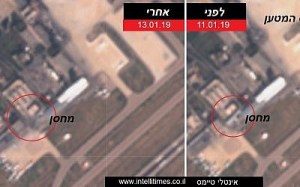
Satellite photos published on January 13, 2019 showing an alleged Iranian weapons depot at the Damascus International Airport in Syria (R) on January 11, and the same structure demolished on January 13 after an Israeli airstrike. (Intelli Times)

However, the Islamic Republic is not giving up on its plans to threaten and attack Israel, rather it is simply altering its methods to do so, the military believes.

This means moving its focus from the Golan and southern Syria and toward the Iraqi border. For instance, the weapons transports flown in to Damascus International Airport, which Israel has regularly targeted, would instead be sent to the T-4 air base near Palmyra.

Some parts of the Islamic Revolutionary Guard Corps’ expeditionary Quds Force and the Shiite militias it supports also appear to be moving out of Syria and into Iraq. From there they could still threaten Israel with powerful missiles and potentially return to Syria if war breaks out.

While Iran’s focus may be shifting away from southern Syria, it is not abandoning the territory entirely, and indeed its actions there will be more difficult for Israel to counter now that Syrian dictator Bashar Assad controls the area.

When the Syrian Golan was under the control of opposition forces, pro-regime and pro-Iranian forces were less able to operate there freely. Now that Assad is in control of the territory, Shiite militias and Iranian forces are more able to establish military posts along the border with northern Israel.

On Tuesday, Prime Minister Benjamin Netanyahu confirmed that the IDF had carried out a tank strike on an Iranian-affiliated position in the Quneitra region in the Syrian Golan.

According to Israeli and Syrian media reports, the shelling was aimed at observation posts that pro-Iranian militias had set up on the border in order to track Israeli military activities.