Source: Iran Threatens Tel Aviv; Netanyahu Warns Revolution Celebrations Could be Last
Do not say, “I will repay evil;” wait for the Lord, and he will deliver you. Proverbs 20:22 (The Israel Bible™)
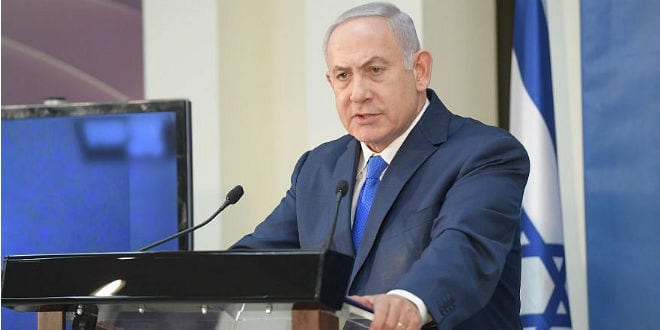
Israeli Prime Minister Benjamin Netanyahu at the Defense Ministry in Tel Aviv. (Credit: Amos Ben-Gershom/GPO)
As part of Iran’s celebrations commemorating the 40th anniversary of the Islamic Revolution, the Deputy head of the Islamic Revolutionary Guard Corps (IRGC) political bureau Yadollah Javani said the Jewish state would suffer if America struck Iran.
“The United States does not have the courage to shoot a single bullet at us despite all its defensive and military assets. But if they attack us, we will raze Tel Aviv and Haifa to the ground,” said Javani, according to state news agency IRNA, and reported by Reuters.
“Islamic Iran has reached a level… to protect its borders by effective military capabilities, and firmly punish any aggressor,” said Brigadier General Ramezan Sharif, spokesman for the IRGC.
In response to the threat, Israel’s Prime Minister Benjamin Netanyahu delivered a strong statement against Iranian aggression.
“I do not ignore the threats of the Iranian regime, but neither am I intimidated by them. If this regime makes the awful mistake of trying to destroy Tel Aviv and Haifa, it will not succeed. However, this would be the last anniversary of the revolution that they celebrate. They should take this into account.”
Iran’s leaders spoke at a rally marking the 40th anniversary of the overthrow of the Shah – Mohammad Reza Pahlavi – in 1979 and the imposition of an Islamic theocracy. The effects of the end of centuries of monarchic rule are still being felt in both Iran and the region.
The celebrations included several instance of muscle flexing, including the launch and test of new missiles, which would put Israel squarely within precise range of the Iranian armed forces.
Chants of “Death to America” and “Death to Israel” can often be heard at these kinds of rallies.
Despite the show of national solidarity, Iran faces acute economic distress, following U.S. President Donald Trump administration’s imposition of sanctions.
Source: Syria: Two Iranian revolutionary guard members killed in Israeli attack

By World Israel News staff
Media sources in Syria say that two members of Iran’s Revolutionary Guard Corps were killed and an unspecified number of others were hurt when “Israeli warplanes” launched missiles that targeted an Iranian military base in the Quneitra countryside, on the Syrian side of the Golan Heights.
Syrian regime state-agency SANA said that an “Israeli attack on Quneitra province” caused damage to a hospital when tanks opened fire, and that one of the observation posts in Jebata Al-Khashab, adjacent to the Israeli border, had also been targeted.
Israel has neither confirmed nor denied these reports.
On Monday, SANA reported that Israeli troops had fired several shells on various positions in Quneitra, including an observation post.
Last month, the Israeli military confirmed attacking Iranian military targets in Syria, hours after carrying out a rare daylight air raid near the Damascus International Airport.
Prime Minister Benjamin Netanyahu is scheduled to meet Russian President Vladimir Putin to discuss the volatile situation in Syria at a summit meeting next week.
The Israeli-Russian contacts are aimed at preventing military confrontations between the two countries. Israel is also hoping that Russia will help in efforts to prevent Iranian entrenchment in Syria, even as the U.S. works on pulling out of the war-torn country.
Iran presents itself as a model of regional security in Turkey while Tehran’s foreign minister meets Hezbollah in Lebanon.

Iran is thriving 40 years after the Islamic Revolution, Iranian President Hassan Rouhani said at events marking the anniversary at Azadi Square in Tehran. Foreign Minister Javad Zarif also boasted on Twitter that the US was facing “forty years of failure” and that US President Donald Trump should rethink US policy.
The statements form part of a narrative pushed by Tehran amid the anniversary celebrations as the regime seeks to shrug off problems at home and position itself as the main opponent of the US in the Middle East. With an obsessive focus on the US, both Rouhani, Zarif and others directed most of their comments at Washington. In some ways, the statements are a tradition that dates back to the revolution in 1979 and the hostage crisis that began in November of that year.
Islamic Revolutionary Guards Corps Commander General Hossein Salami said that “they [the US] want Iran to leave the region to clear the way for their dominance and allow them once again to control our borders.” Instead the US is pulling out its troops and the corps’ bases will flourish.
Iran thinks it is riding high. With Zarif in Lebanon and Rouhani speaking in Tehran, it feels that it now controls or influences a swath of the region from Tehran to Baghdad, Damascus and Beirut. Iran also thinks it has outplayed the US. In late January, Iranian Armed Forces Chiefs of Staff chairman General Mohammad Baqeri said that the US had squandered 7 trillion dollars in Iraq and Syria, achieving nothing, while “the Islamic Republic [of Iran] gained a lot despite its very low spending in those countries.”
Zarif was careful in Lebanon not to provoke any backlash by noting that his presence in the country was not directed at any other countries. He said this after meeting Hezbollah’s Hassan Nasrallah and speaking with Lebanese Parliament speaker Nabih Berri. This comment may have been to avoid provoking anger in Saudi Arabia, an ally of Lebanese Prime Minister Saad Hariri, or even to cool tensions with Israel. Zarif didn’t mention Israel specifically, but Nasrallah thanked Iran for its support for “Palestine and all resistance movements.”
The discussions arise as tensions rose along the Golan on Tuesday as Syrian state media reported that Israel shelled sites near Quneitra in the first such incident since Syrian forces returned to the Golan cease-fire line in the summer of 2018.
In Turkey, the new Iranian ambassador, Mohammad Farazmand, told reporters that Iran was now a “regional power and an independent country,” and that it had made great strides in the last forty years. He praised the role of Turkey and Russia in their efforts to solve the Syrian conflict and noted that the presidents of Turkey, Russia and Iran would meet in Sochi this week.
Iran is a model for “West-Asia” security, he said. “Turkey is Iran’s window opening to the West while Iran, for Turkey, is like a window opening to the East,” he added, indicating the growing partnership between Ankara and Tehran. In the last several years, Turkey and Iran have grown increasingly close and Turkey received exemptions from the US to trade with Iran despite Washington’s sanctions.
Overall, Iran’s 40th anniversary events for the revolution have sought to underpin its string of victories in the Middle East and present it as the leading country in the region. From Lebanon to Turkey, it asserted that its model has succeeded and that the US has failed in its agendas.
The state-run outlet said the tank targeted a hospital and observation post “with a number of shells.”

An Israeli tank struck Syrian territory in Quneitra, near the Golan Heights border, Syrian state news agency SANA said on Monday, without providing further details.
The media outlet cited its own reporter, who said the strikes only caused “material damage.”
Quneitra was recaptured by Bashar Assad’s regime forces in July 2018, having been held by a rebel faction for the majority of the country’s seven-year-long civil war. The area sits some 500 feet from the 1974 internationally-mediated ceasefire line.
In late December, IDF forces fired at armed suspects approaching the Israeli border from Syria.
Israel routinely hits Iranian targets in Syria, with officials taking credit for strikes near Damascus in January. Prime Minister Benjamin Netanyahu has repeatedly said that Israel will not allow Iranian entrenchment in Syria.
Source: Avigdor Liberman: Want Jewish children and grandchildren? Move to Israel – Diaspora – Jerusalem Post
A wave of antisemitism is sweeping the world and gaining momentum,” Liberman said.

Avigdor Liberman, chairman of the Yisrael Beytenu Party, said on Tuesday that Jews who “want their children and grandchildren to remain Jewish have only one choice – move to Israel as soon as possible.”
Liberman’s comments came Tuesday, almost 48 hours after Jewish and non-Jewish leaders across Israel and the US hastily responded to antisemitic comments by Democratic Rep. Ilhan Omar, who tweeted that she believes AIPAC is paying politicians to be pro-Israel.
Liberman noted that Omar’s tweets are not isolated but are part of a rising wave of antisemitic incidents around the world, as well as an increasing rate of assimilation.
“Neo-Nazi demonstrations with hundreds of participants take place in Budapest, Hungary, and the police don’t lift a finger,” he said. “Antisemitic slurs are hurled at Jews on the London Underground and on the Frankfurt express train in Germany. In the heart of Paris, yellow paint was sprayed on a Jewish-owned restaurant and the word ‘Jude’ was written all over it.”
Specifically, he cited a 16% increase in antisemitic incidents in Britain and a 74% increase in France.
“Jews throughout the world, and in Europe in particular, must draw conclusions from these antisemitic incidents,” Liberman said.
Source: Trump says Omar ‘should be ashamed of herself’ over AIPAC money tweets | The Times of Israel
US president, who has himself been accused in the past of using anti-Semitic tropes about Jews and money, says he doesn’t find Democrat lawmaker’s apology to be adequate
( Accused by whom? The same leftist liars who call hon a racist and a totalitarian. – JW )
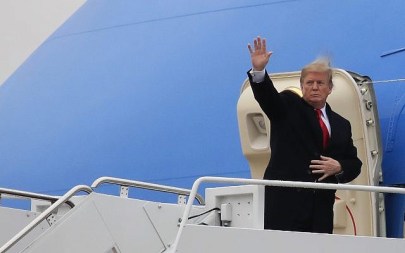
US President Donald Trump said Monday that freshman Democratic congresswoman Ilhan Omar “should be ashamed of herself” over tweets suggesting that a powerful pro-Israel interest group pays members of Congress to support Israel.
The Minnesota congresswoman “unequivocally” apologized earlier Monday after House Speaker Nancy Pelosi and other Democrats rebuked her. She said she had no intention of offending anyone and thanked her colleagues for educating her on anti-Semitic tropes.
On Air Force One flying to a campaign rally in El Paso, Texas, Trump said that Omar had made “a terrible statement” and that he didn’t find her apology to be adequate. Asked what she should have said, Trump replied, “She knows what to say.”
Omar issued the apology following a cascade of criticism from lawmakers and Jewish groups.
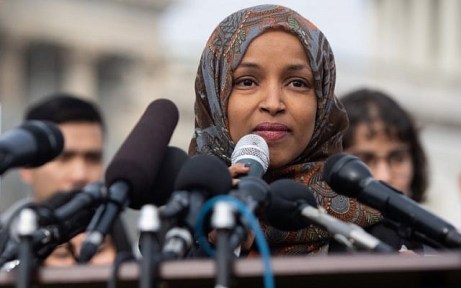
“Anti-Semitism is real and I am grateful for Jewish allies and colleagues who are educating me on the painful history of anti-Semitic tropes. My intention is never to offend my constituents or Jewish Americans as a whole,” Omar, a Minnesota Democrat, said in a statement.
“We have always to be willing to step back and think through criticism, just as I expect people to hear me when others attack me for my identity. This is why I unequivocally apologize,” she added.
Omar had faced growing accusations of anti-Semitism after writing Sunday on Twitter that House Minority Leader Kevin McCarthy’s call for her and Representative Rashida Tlaib (D-Michigan) to be admonished over their criticism of Israel was “all about the Benjamins baby,” a slang term for $100 bills.
Asked to clarify who she believed is paying politicians to support Israel, Omar named AIPAC, the pro-Israel lobby group.

Though an influential player on Capital Hill, AIPAC does not endorse candidates or contribute to their campaigns.
Omar on Monday stood by her criticism of the “problematic role of lobbyists in our politics,” lumping in AIPAC with the pro-gun National Rifle Association and oil companies.
“It’s gone on too long and we must be willing to address it,” she said.
The US president is himself no stranger to accusations of using anti-Semitic tropes about Jews and money.
In a 2015 speech in Washington to the Republican Jewish Coalition, Trump told the audience: “You’re not going to support me because I don’t want your money.”
He also said: “Is there anyone in this room who doesn’t negotiate deals? Probably more than any room I’ve ever spoken.”

Leveling corruption accusations against rival presidential candidate Hillary Clinton, Trump in 2016 tweeted, then swiftly deleted, an image depicting Democratic nominee Hillary Clinton next to a Star of David superimposed over piles of money.
A former employee wrote in a 1991 book that Trump once told him: “Black guys counting my money! I hate it. The only kind of people I want counting my money are short guys that wear yarmulkes every day,” The Guardian reported.
Last year Trump said he rejects white supremacism and anti-Semitism, but did not say how he would counter the phenomena and angrily rejected claims that his rhetoric spurs division.
Agencies contributed to this report.
Source: Anti-Semitic acts in France soared by 74% in 2018, interior minister says | The Times of Israel
Christophe Castaner decries ‘poison’ of hate amid jump from 311 anti-Jewish incidents in 2017 to 541 last year
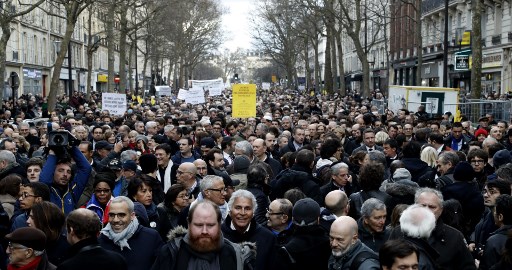
France said Monday night that the number of anti-Semitic acts in the country soared last year, and decried the “poison” of hate.
Interior Minister Christophe Castaner said that the total number of recorded anti-Semitic acts rose to 541 in 2018 from 311 in 2017.
He spoke in the Paris suburb of Sainte-Genevieve-du-Bois, where vandals chopped down trees planted in honor of a Jewish man tortured and killed in 2006.
The incident was the latest in a recent string of racist vandalism.
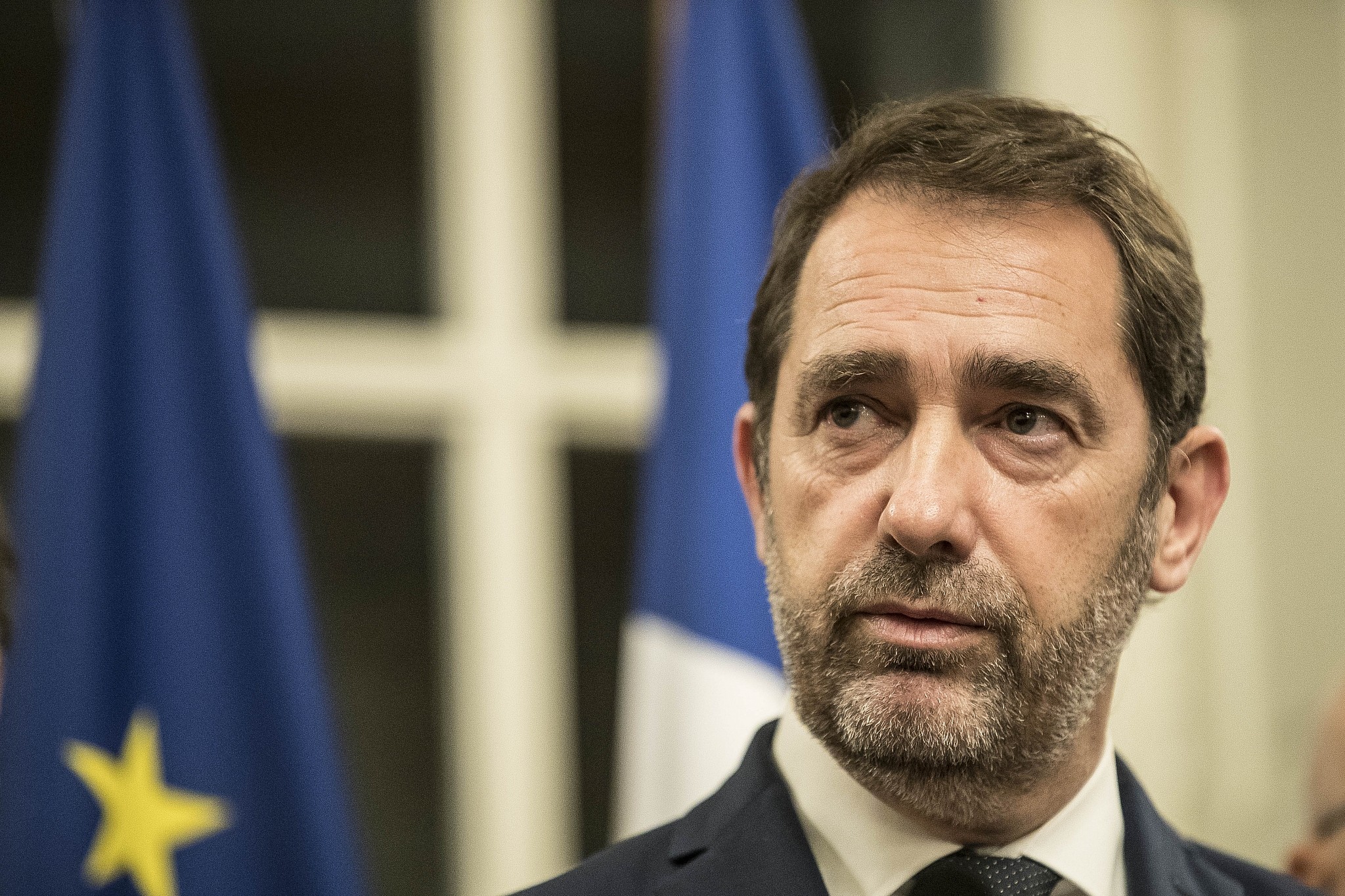
Castaner vowed that his government will fight anti-Semitism, calling it “an attack against hope.”
He did not link the rise to any specific groups.
A prominent French Jewish watchdog group said in December that widespread protests in the country over taxes were giving rise to anti-Semitic rhetoric.
The head of the National Bureau for Vigilance Against Antisemitism, or BNVCA, Sammy Ghozlan, said that “the ‘Yellow Vests’ movement has an anti-Semitic base that repeats conspiracy theories about Jews and power.”
Launched in November as a protest against a proposed rise in diesel and fuel taxes, the movement has expanded into an anti-government drive featuring violent riots that have shut down the French capital several times. Some protesters have been filmed carrying signs and chanting slogans describing French President Emmanuel Macron as a “whore of the Jews” and their “puppet.”

Such language “was present from the very beginning of the protests and persists,” Ghozlan said, although he added that it exists “on the margins” of the protests.
In the first 10 months of 2018, more than 2,300 French Jews reportedly made aliyah, or moved to Israel, while the number of those seeking information about aliyah from the foundation has reportedly increased.
Source: Israel and Iran both set to join Russia-led free trade zone | The Times of Israel
After two rounds of negotiations, Jerusalem close to agreement with Eurasian Economic Union; separately, Tehran also set to sign deal ‘in the near future’
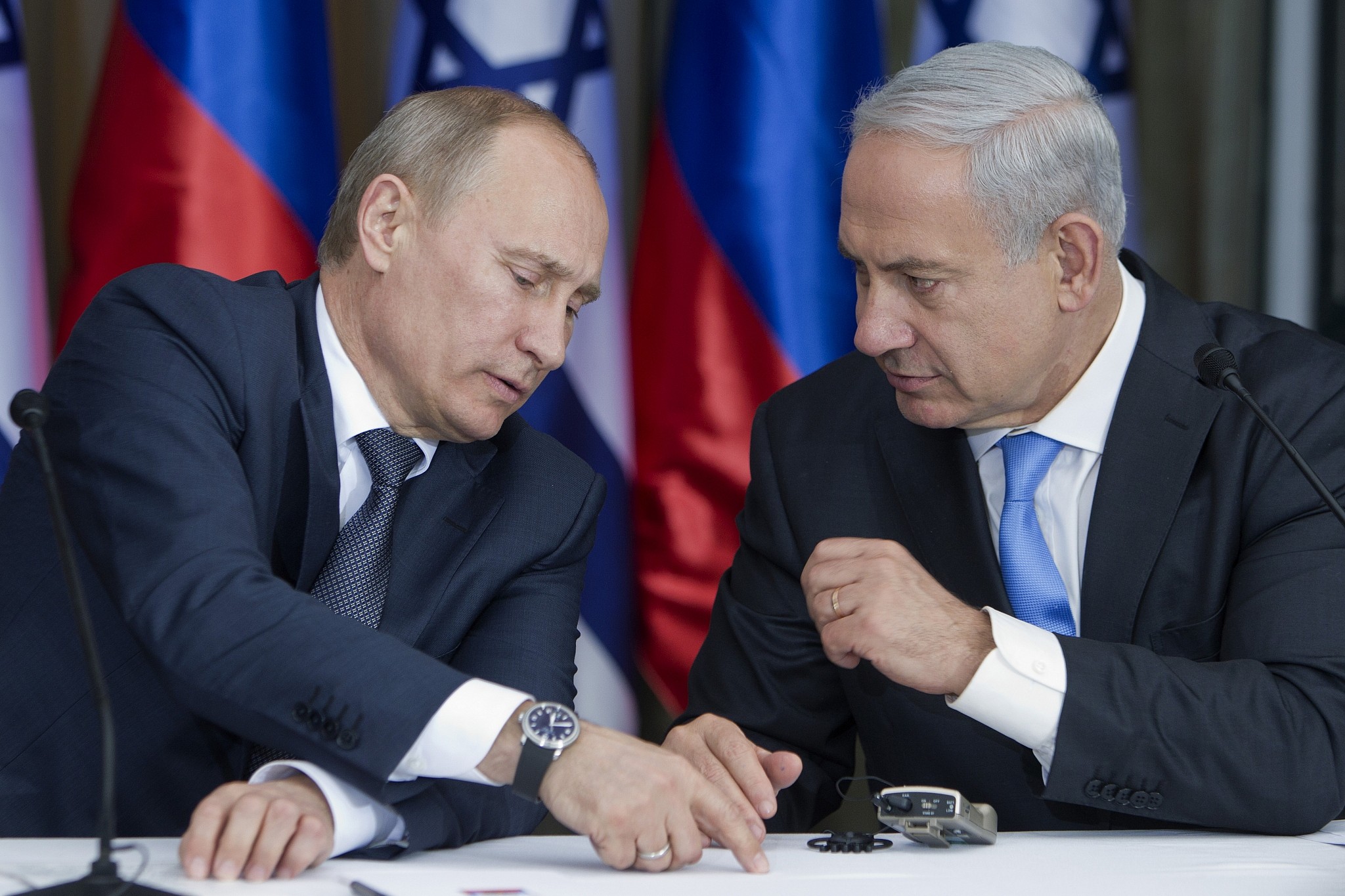
Israel is set to sign a free-trade agreement with the Russia-led Eurasian Economic Union in the near future, according to officials in Moscow and Jerusalem.
Incidentally, Iran is also in advanced talks about creating a free trade zone with the union, known as EAEU. However, each country would sign its own free-trade agreement (FTA) with the union, which would mean that Jerusalem would not be able to trade freely with Tehran, or other states signing similar agreements.
“The negotiations with the EAEU were launched in Moscow in April 2018, following positive results of a comprehensive Joint Feasibility Study conducted by the parties,” a spokesperson for the Economy Ministry told The Times of Israel on Monday.
“The agreement will cover various aspects of trade in goods, such as rules of origin, customs cooperation, technical barriers to trade, sanitary and phytosanitary measures, e-commerce, dispute settlement, and others.”
Tehran’s ambassador to Moscow Mehdi Sanaei said Friday that he expects the Iranian parliament to ratify the free-trade agreement with the EAEU “in the near future,” according to Iran’s Mehr news agency.
“The agreement is very important for Iran… because it opens the gates to a big market for our country, and also opens the Iranian market to Russia and northern countries,” he said.
Asked what significance, if any, Iran’s joining the EAEU free trade zone would have for Israel, the ministry spokesperson referred this reporter to the Prime Minister’s Office. The PMO did not respond to a query by the time of publication.
“The State of Israel supports increasing the economic pressure on Iran so that it will change its behavior,” a senior Israeli official told The Times of Israel, speaking on condition of anonymity and declining to elaborate.
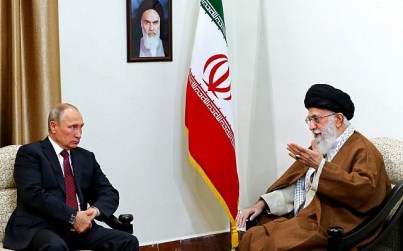
In addition to Israel and Iran, the EAEU is expected to sign FTAs “in the near future” with Singapore, India and Egypt, Russia’s First Deputy Minister of Industry Sergey Tsyb said, according to Russia Today.
Tsyp said World Trade Organization member states currently use over 7,500 non-tariff measures such as quotas, licenses, restrictions and embargoes, according to the Kremlin-funded outlet.
“Therefore, in our opinion, it would be very productive if we actively move towards the conclusion of agreements on the free-trade zone,” he said.
During the first round of negotiations between Jerusalem and the EAEU last year, the parties “agreed on the structure of the agreement, discussed proposals for mutual access to markets, trade facilitation, application of protective sanitary and phytosanitary measures, as well as technical regulation mechanisms,” Russian Ambassador to Israel Anatoly Viktorov said in an interview last week [Russian link].
In October, during a second round of negotiations held in Israel, the parties had “a substantive discussion of the main sections of the draft agreement,” the envoy went on, noting that the third round of talks are set to take place in late February or early March in one of the EAEU member states.
“It is premature to talk about how such a treaty can change the structure of the Russian-Israeli foreign trade turnover and how significant the changes will be, including because it is not yet clear when the document can be signed,” Viktorov said.
Israel is currently Russia’s 41st-biggest foreign trade partner, with annual trade consistently growing and currently at $2.5 billion.
“The promising areas of trade and economic cooperation include projects to create food clusters in Russia using Israeli technologies, as well as the transfer of industrial facilities and vehicles in Israel to gas-engine fuel using Russian technologies,” Viktorov said.
The ambassador also praised Israel for defying “strong external pressure” and refusing to join the US and other Western nations in imposing economic sanctions on Russia. “We hope that our Israeli partners will continue to adhere to this line,” he added.
Besides Russia, current EAEU members are Armenia, Belarus, Kazakhstan and Kyrgyzstan. Together, member states have 183 million inhabitants and cover an area of over 20 million square kilometers.
“The Union is being created to comprehensively upgrade, raise the competitiveness of and cooperation between the national economies, and to promote stable development in order to raise the living standards of the nations of the Member-State,” according to its website.
In existence since 2015, it guarantees the “free movement of goods, services, capital and labor, pursues coordinated, harmonized and single policy” in the areas determined by the founding treaty and international agreements.
FTAs aim to increase trade between countries by eliminating or reducing barriers to trade such as import duties.
“Israeli exporters currently benefit from preferential market access to 41 countries thanks to FTAs that were signed and entered into force over the past four decades,” the spokesperson for Israel’s Economy Ministry said.
Israel has FTAs with the US, Canada, Turkey, Mexico, Brazil, Argentina, Uruguay, Paraguay and others.
Several free trade agreements were recently signed but now await ratification before entering into force, for instance with Colombia and Panama.
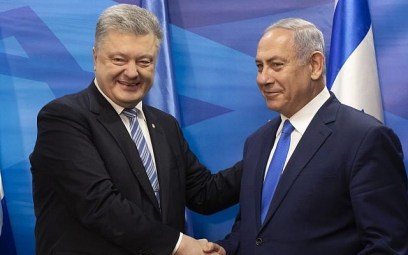
Last month, Israel signed another FTA with Ukraine, in the presence of the Eastern European country’s President Petro Poroshenko.
“We’ve worked on this for many years. The bureaucracies have had all the opportunities to prevent this from happening. We overcame it,” Prime Minister Benjamin Netanyahu said at the signing ceremony in Jerusalem, noting that the treaty was 1,500 pages long.
The Economy Ministry’s Foreign Trade Administration, in cooperation with officials from other ministries, is currently also negotiating new FTAs with China and Vietnam.
Source: Lebanon seeks guarantees from Syria to encourage refugees’ return – Israel Hayom
More than half of Syria’s prewar population of 22 million have been displaced • Lebanese FM Gebran Bassil cites “campaign of intimidation” to keep refugees from returning, wants Syria to guarantee property rights, exempt refugees from conscription.


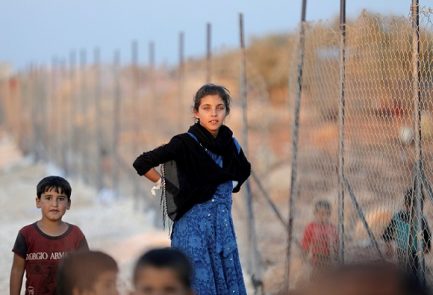
Lebanon’s foreign minister urged Syria on Monday to offer guarantees on property rights and military service to encourage Syrian refugees to return home.
Tiny Lebanon has been host to more than a million refugees from neighboring Syria since the war there began in 2011 though some have returned as fighting has eased in more and more areas of the country.
Video: Reuters
“In the process of encouraging returns, the Syrian government can make a big contribution, on top of the reconciliations that are already happening, by giving security guarantees,” Lebanese Foreign Minister Gebran Bassil told a news conference in Beirut.
More than half of Syria’s prewar 22 million population was displaced by the war, over 5 million of whom left the country as refugees, mostly to adjacent Lebanon, Turkey and Jordan.
Syrian President Bashar Assad government’s has recovered most of the country with the help of Russia and Iran, clawing back rebel enclaves in what Damascus calls reconciliation deals.
Bassil, speaking alongside visiting Iranian Foreign Minister Mohammad Javad Zarif, said he hoped the pace of returns would increase and that Damascus could help smooth this with guarantees on “individual property rights and military service.”
Aid agencies that work with refugees have cited concerns over the loss of property and conscription into the Syrian army as big reasons discouraging Syrians from returning, along with fear of reprisals.
Bassil also said guarantees from Damascus would help end what he called an “ongoing campaign of intimidation” to stop refugees from going home, without elaborating.




 anneinpt
 artaxes
 danmillerinpanama
 davidking1530
 Peter Hofman
 Joseph Wouk
 Peter
Peter Louisiana Steve
 WarSclerotic
Recent Comments