Archive for February 11, 2019

Bahrain said to have informed Israel two years ago it wanted to normalize ties

February 11, 2019

Source: Bahrain said to have informed Israel two years ago it wanted to normalize ties | The Times of Israel

Gulf Kingdom’s FM passed the message via former counterpart Tzipi Livni during a meeting in Germany, Channel 13 reports
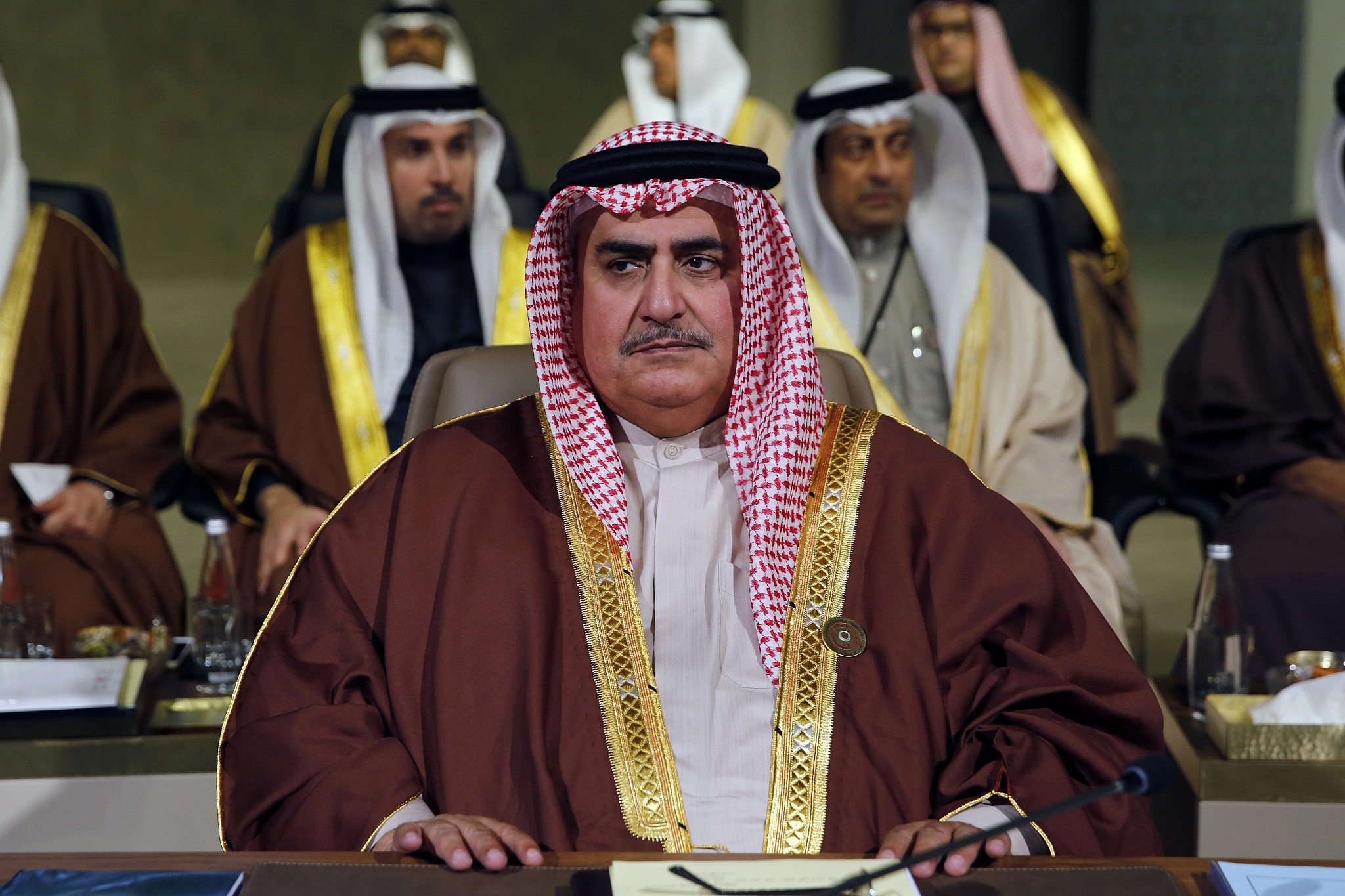
Bahraini Foreign Minister Khalid bin Ahmed al-Khalifa, attends the Arab Economic and Social Development Summit, in Beirut, Lebanon, Sunday, Jan. 20, 2019. (AP Photo/Bilal Hussein)

Bahrain informed Israel more than two years ago that it was interested in normalizing relations, an Israeli TV station claimed Sunday, amid persistent reports that Israel has been close to establishing ties with an Arab state.

According to a report on Israel’s Channel 13 news, Bahrain’s Foreign Minister Khalid bin Ahmed Al Khalifa held a clandestine meeting with former foreign minister Tzipi Livni on the sidelines of the 2017 Munich Security Conference.

During the meeting, Khalid reportedly told Livni that the king of Bahrain, Hamad bin Isa Al Khalifa, had decided to move toward normalized relations with Israel and asked her to convey the message to Prime Minister Benjamin Netanyahu, which she did.

The report quoted unnamed senior Israeli officials. Livni refused to comment, Channel 13 said. The report did not specify why the breakthrough had not occurred.
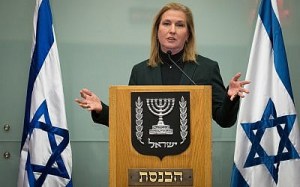
Opposition Leader Tzipi Livni gives a statement to the media in the Knesset in Jerusalem on January 1, 2019. (Yonatan Sindel/Flash90)

The report comes as Israel pushes to expand its ties with Arab and Muslim nations. Last month Netanyahu traveled to the Muslim African nation of Chad to announce the restoration of relations.

While there, Netanyahu said that the move had the support of several unnamed Arab nations.

“It’s a joint effort to break the wall of opposition in the Arab and Muslim world,” he said. “First you penetrate the Arab world, and that helps you to penetrate the Muslim countries. The big difference is that you have a clear process of normalization with the Arab world, though it is not complete and not formal, and with that you go to the [non-Arab] Muslim world.”

In November, Bahrain denied reports that Netanyahu was scheduled to visit the Gulf state.

“There is no plan for a visit of Israel’s prime minister,” Khalid told the London-based daily A-Sharq Al-Awsat. “There are no communications regarding [a visit]. The reality is nothing has happened.”

The Bahraini official’s comment came days after Hebrew-language news sites reported that Israel was working to normalize ties with Bahrain, citing an unnamed senior official.

At least one site also recently reported that officials in Jerusalem assessed that Bahrain would be the next Arab country without formal diplomatic ties with Israel to host Netanyahu.

In October, the prime minister made a surprise visit to Oman and met Omani leader Sultan Qaboos bin Said in Muscat.
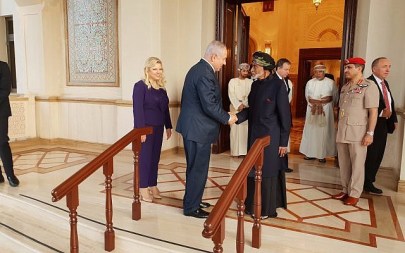
Prime Minister Benjamin Netanyahu (SL), accompanied by his wife Sara, is greeted by Sultan Qaboos bin Said in Oman on October 26, 2018 (Courtesy)

Despite his denial of an imminent breakthrough, the top Bahraini diplomat said that if a visit for Netanyahu were planned, the Gulf country would “not hesitate to announce it.”

Israel and Bahrain do not have diplomatic relations, but are said to have solid clandestine ties. Both countries see in Iran — Hezbollah’s key sponsor — a strategic threat.

In December, in a rare instance of public support for Israel, Khalid expressed support for Israel’s operation to expose and destroy Hezbollah’s cross-border tunnels.

“Is Terrorist Hezbollah’s digging of the tunnels under Lebanon’s border not a flagrant threat to Lebanon’s stability, which it shares responsibility for? Who bears responsibility when neighboring countries take upon themselves to eliminate the threat they face?” he wrote on his Twitter account, in Arabic.

In 2016, Bahrain and several other Gulf countries blacklisted Hezbollah as a terror group.
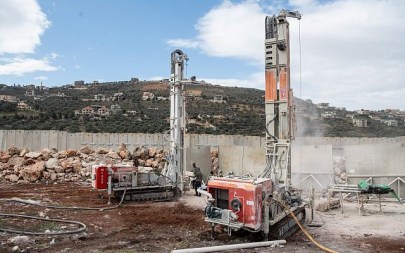
The Israeli military drills into the soil south of the Lebanese border in an effort to locate and destroy Hezbollah attack tunnels that it says entered Israeli territory, on December 5, 2018. (Israel Defense Forces)

Last May, the Bahraini foreign minister appeared to defend Israeli airstrikes on Iranian targets in Syria.

“As long as Iran continues the current status quo of its forces and rockets operating in the region, any country — including Israel — has the right to defend itself by eliminating the source of danger,” Khalid posted on his Twitter account at the time, hours after Israel hit Iranian assets in Syria.

Arab officials rarely offer a public defense of Israel.

Economy Minister Eli Cohen has said he had received an invitation to attend a technology-related conference in Bahrain later in the year.

More than two decades ago, then-environmental protection minister Yossi Sarid visited Bahrain, where he met Bahraini foreign minister Mohammed bin Mubarak al-Khalifa and participated in regional talks on environmental issues.

 

Russian official: Israeli airstrikes on Syria ‘unlawful,’ cannot be justified

February 11, 2019

Source: Russian official: Israeli airstrikes on Syria ‘unlawful,’ cannot be justified | The Times of Israel

Deputy foreign minister says Israel’s security is of ‘paramount importance,’ but that doesn’t make attacks legitimate

Russian Deputy Foreign Minister Sergei Ryabkov at the State Department in Washington, July 17, 2017 (AP Photo/Carolyn Kaster)

Russian Deputy Foreign Minister Sergei Ryabkov at the State Department in Washington, July 17, 2017 (AP Photo/Carolyn Kaster)

Russian Deputy Foreign Minister Sergei Ryabkov said Monday that Israeli airstrikes on Syria are unlawful and cannot be justified, while also stressing that Moscow was taking into consideration the defense needs of the Jewish state.

“For us, the security of Israel is of paramount importance,” Ryabkov told reporters, according to Russian media.

“Having said this, I don’t say that Israel’s unlawful attacks on targets in Syria, including targets that are in one way or another connected with Iran, that these attacks are legitimate and can be justified,” he said.

“No, we condemn them, they are illegitimate,” he added. “But this does not mean, again, that we should not care about the security of Israel.”

His remarks echoed comments he made during an interview with CNN at the end of January in which he said, “We in no way underestimate the importance of measures that would ensure very strong security of the State of Israel.”

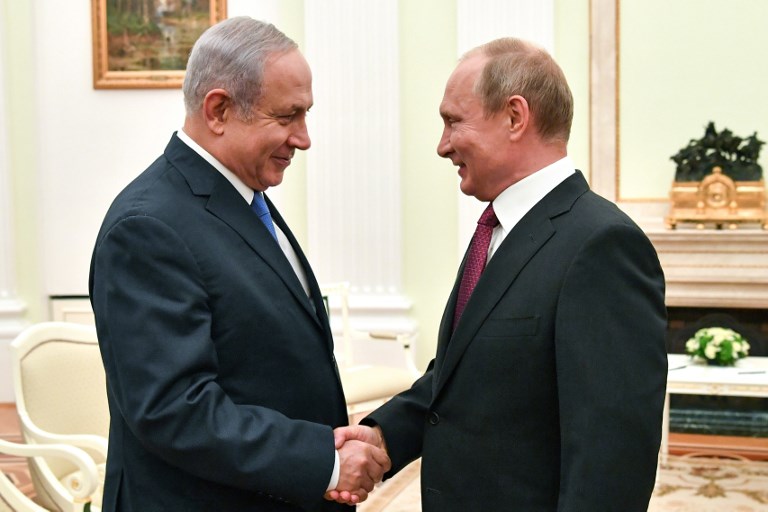
Last week Prime Minister Benjamin Netanyahu said he would fly to Russia on February 21 for talks with Russian President Vladimir Putin focused on Iranian efforts to establish a military presence in Syria.

Russian President Vladimir Putin (R) shakes hands with Israeli Prime Minister Benjamin Netanyahu during their meeting at the Kremlin in Moscow on July 11, 2018. (AFP/Pool/Yuri Kadobnov)

Israel’s relations with Russia have seen some tensions lately over Jerusalem’s ongoing campaign of airstrikes on Syria. In recent years, Israel has conducted hundreds of attacks in Syria against targets it says are linked to Iran, which, alongside its proxy military groups and Russia, is fighting on behalf of the regime of President Bashar Assad. Israel has said Tehran is seeking to establish a permanent presence along its northern border, an effort it vows to thwart.

Israel’s airstrikes have routinely been coordinated with Russia. However, the number of airstrikes in Syria attributed to Israel has dropped in recent months after a Russian military plane was downed by Syrian air defenses. That plane was hit during an Israeli attack on Latakia last September, killing all 15 servicemen aboard.

Russia blamed the Israeli military for that incident — a charge rejected by Jerusalem — and in response supplied Syria with the advanced S-300 air defense system. The systems were delivered to Syria late last year, but they are not yet believed to be in use, as the Syrian air defense teams still need to be trained to operate them.

Israel has repeatedly said it will not allow Iran, or its Shiite proxies, to establish a permanent presence in post-war Syria.

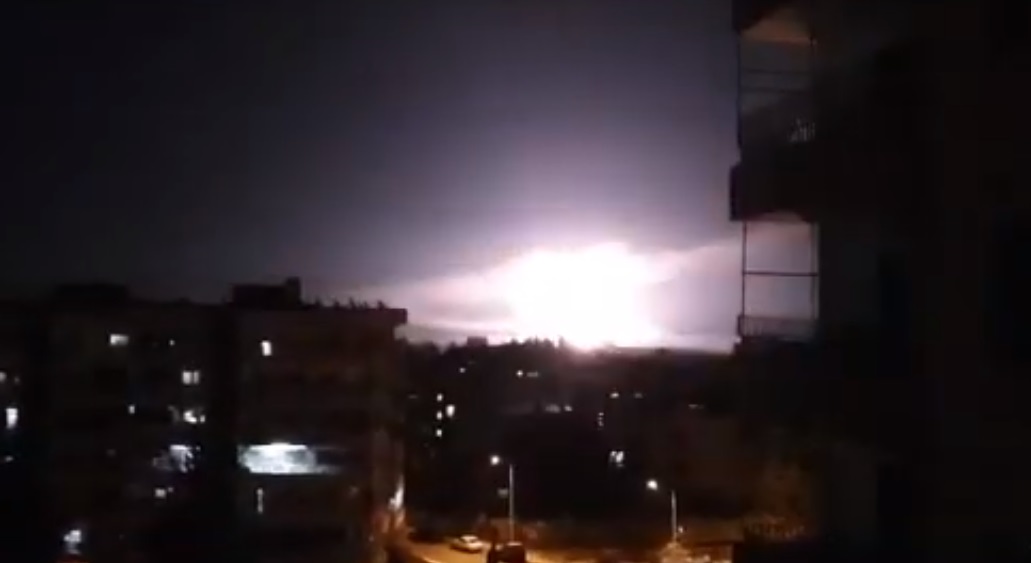
An explosion, reportedly during Israeli airstrikes near Damascus, Syria, on January 21, 2019. (screen capture: YouTube)

On January 27 Israel conducted a rare daylight missile attack on Iranian targets in Syria. In response, Iran fired a surface-to-surface missile at the northern Golan Heights, which was intercepted by the Iron Dome missile defense system over the Mount Hermon ski resort, according to the Israel Defense Forces. The IDF said that Iranian troops in Syria launched the missile at the Golan in a “premeditated” attack aimed at deterring Israel from conducting further airstrikes against Iranian military targets there.

Hours later, in the predawn hours of the following day, the Israeli Air Force launched major retaliatory strikes on Iranian targets near Damascus and on the Syrian air defense batteries that fired upon the attacking Israeli fighter jets, the army said.

Twenty-one people were killed in the Israeli raids in Syria, 12 of them Iranian fighters, a Britain-based Syrian war monitor said.

Moscow’s Foreign Ministry spokeswoman Maria Zakharova said at the time that Israel should stop its “arbitrary” strikes in Syrian territory, which she warned could “provoke a new round of chaos in the Middle East.”


Iran slams US as huge crowds mark 40 years since revolution 

February 11, 2019

Source: Iran slams US as huge crowds mark 40 years since revolution | The Times of Israel

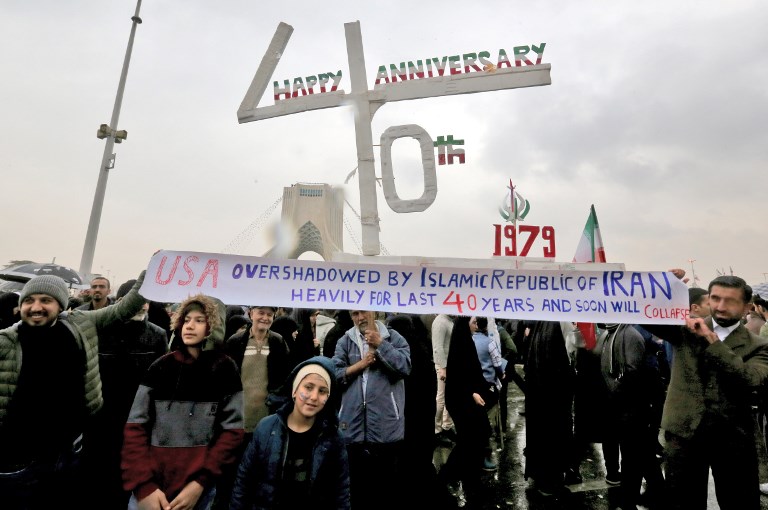
Iranians pose for a picture as they assemble with others during a ceremony celebrating the 40th anniversary of the Islamic Revolution held in the capital Tehran's Azadi (Freedom) square, February 11, 2019. (ATTA KENARE/AFP)

Iranians pose for a picture as they assemble with others during a ceremony celebrating the 40th anniversary of the Islamic Revolution held in the capital Tehran’s Azadi (Freedom) square, February 11, 2019. (ATTA KENARE/AFP)

TEHRAN, Iran (AFP) — Iran’s president on Monday blasted a US “conspiracy” against the country as vast crowds marked 40 years since the Islamic Revolution at a time of heightened tensions with Washington.

“The presence of people today on the streets all over Islamic Iran… means that the enemy will never reach its evil objectives,” President Hassan Rouhani told those thronging Tehran’s Azadi (Freedom) square.

Chador-clad women, militia members in camouflage fatigues and ordinary citizens marched through the capital in freezing rain to mark the day in February 1979 that Ayatollah Ruhollah Khomeini ended millennia of royal rule.

Life-size replicas of Iranian-made cruise and ballistic missiles lined the route in a statement of defiance after Washington last year reimposed sanctions after pulling out of a deal on Tehran’s nuclear program.

A prepared resolution was read out that proclaimed “unquestioning obedience to the supreme leader Ayatollah Ali Khamenei” and called US President Donald Trump an “idiot.”

The event Monday was the culmination of official celebrations called the “10 Day Dawn” that mark the period between February 1 and February 11, 1979, when Shiite cleric Khomeini returned from exile and ousted the shah’s last government.

The state has played up this year’s anniversary as 40 is symbolic of maturity in the Islamic tradition and the age at which Prophet Mohammed received revelations from God.

But despite the official festivities today’s Islamic Republic faces acute economic challenges as it struggles with a mix of domestic hardships and US sanctions.

‘Support the revolution’

State television offered blanket coverage of the commemorations, showing marchers in cities ranging from Abadan in southwestern Iran to Mashad in the northeast.

Banners held by marchers or hung along the streets bore slogans including “Death to America,” “Death to Israel,” “we will trample on America,” “forty years of challenge, forty years of US defeats.”

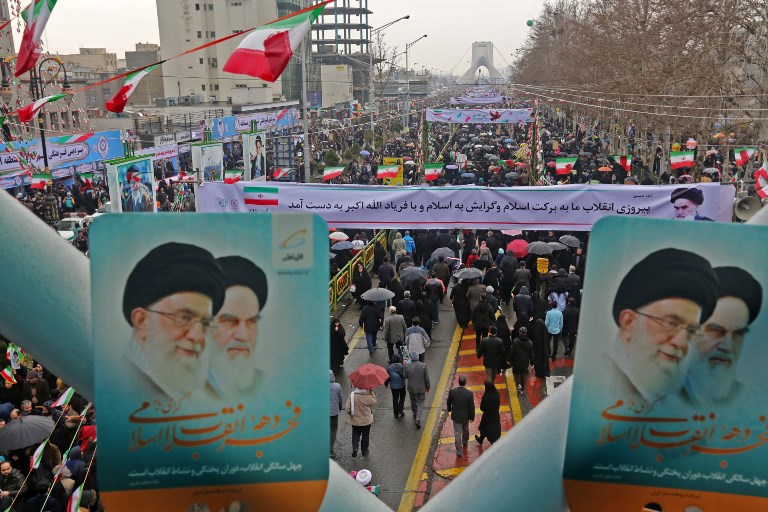
Iranians hold up signs showing portraits of the country’s Supreme Leader Ali Khamenei, left, and his predecessor and Islamic Revolution founder Ayatollah Ruhollah Khomeini as they assemble during a ceremony celebrating the 40th anniversary of Islamic Revolution in the capital Tehran, February 11, 2019. (ATTA KENARE/AFP)

An anchor on state television warned of hostile foreign media trying to downplay the participation of Iranians in the march but expressed confidence that “they would be confounded by the unprecedented level of attendance.”

Those who took to the streets were bullish despite the economic problems in the country, made worse by Washington’s punitive measures.

Former public servant Saaghi insisted that it remained paramount for Iranians to stick by the revolution.

“We are here to support the revolution,” the 57-year-old pensioner, who refused to give his first name, told AFP at the event in Tehran.

He compared the US sanctions and economic hardships to “riding a bicycle when someone puts a stick in the wheels” but pointed to advances in other fields as more than making up for them.

“At the revolution’s 40 anniversary we are on top of scientific achievements like nanotechnology or accurate missiles,” he said.

Extensive fireworks displays were held across Tehran on Sunday night.

Before the fireworks, supporters of the revolution shouted chants of “Allahu Akbar” (God is greatest) from rooftops, recalling the protests that swept Khomeini to power four decades earlier.

Current supreme leader Ayatollah Ali Khamenei is set to publish “a detailed statement explaining the ‘second step’ of the progress of the Islamic revolution,” his official website said.


Iran’s Rouhani vows to expand military, ballistic missile program

February 11, 2019

Source: Iran’s Rouhani vows to expand military, ballistic missile program | The Times of Israel

Crowds chant ‘Death to America’ as Tehran marks 40th anniversary of Islamic Revolution

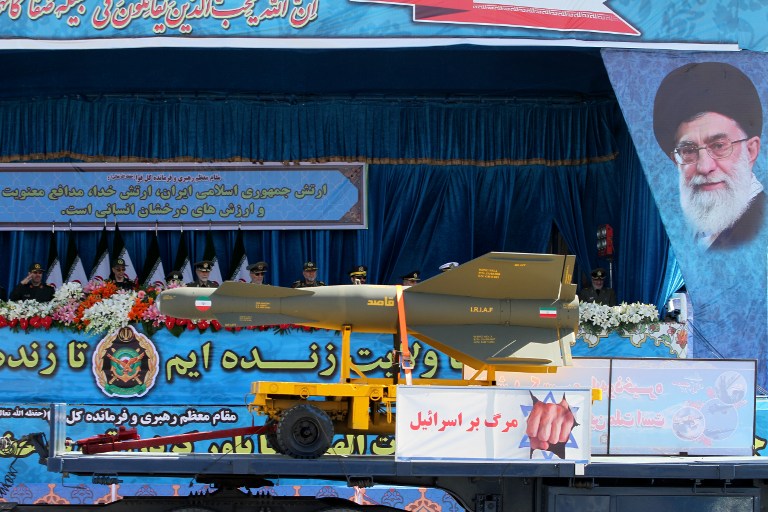
An Iranian military truck with a picture of President Hassan Rouhan carries a rocket and displays a banner reading "Death to Israel" during a parade marking the country's National Army Day, in Tehran, April 18, 2017. (AFP/Atta Kenare)

An Iranian military truck with a picture of President Hassan Rouhan carries a rocket and displays a banner reading “Death to Israel” during a parade marking the country’s National Army Day, in Tehran, April 18, 2017. (AFP/Atta Kenare)

Iranian President Hassan Rouhani said Monday that Iran would continue to build up its military and push ballistic missile development, despite mounting international pressure to restrain its military expansion.

“We have not asked and will not ask for permission to develop different types of … missiles and will continue our path and our military power,” Rouhani said in a speech at a rally marking the 40th anniversary of the Islamic revolution, Reuters reported.

Tens of thousands of Iranians gathered in the capital Tehran to mark the 1979 overthrown of the Iranian monarchy in a revolution that put Islamic fundamentalists in power.

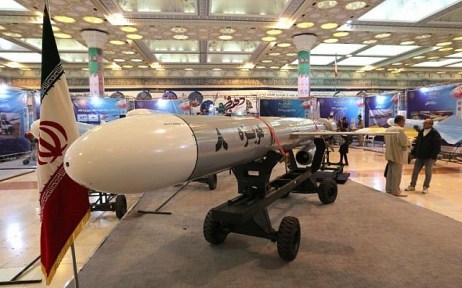
Life-size replicas of Iranian-made cruise and ballistic missiles lined the route in a statement of defiance at a time of heightened tensions with the United States.

Hoveizeh, Iran’s new cruise missile, is seen during an exhibition in the capital Tehran on February 2, 2019. Israel is well with the missile’s reported range of more than 1,350 kilometers (840 miles). (Atta Kenare/AFP)

Earlier this month the US vowed to pressure Iran to deter its missile program after the Islamic Republic unveiled a new ballistic missile with a range of 1,000 kilometers (620 miles) and tested a new cruise missile, both capable of reaching targets in Israel.

“The United States will continue to be relentless in building support around the world to confront the Iranian regime’s reckless ballistic missile activity,” State Department deputy spokesman Robert Palladino said ina  statement.

“Iran’s blatant disregard for international norms must be addressed,” he said.

On Monday, crowds streamed from a dozen of the capital’s far-flung neighborhoods to mass in central Tehran and Tehran Azadi, or Freedom Square, waving Iranian flags and chanting “Death to America” — a chant that has been standard fare at anti-US rallies across Iran.

This year’s anniversary comes as tensions are rising with the US and Iran is grappling with the aftermath of President Donald Trump’s pullout last May from the 2015 nuclear deal between Iran and world powers and tough US economic sanctions re-imposed in November on Tehran.

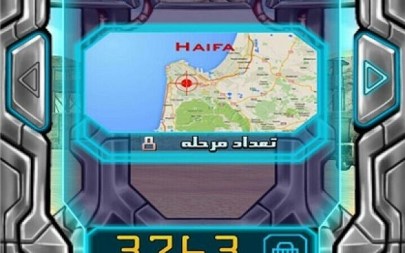
Israel’s port city of Haifa is a target in this Iranian game that simulates a missile attack on Israel.

Along with the chants “Death to America,” Monday’s marches were also a backdrop to the military’s display of Iranian-made missiles, which authorities showcase every year during the anniversary celebrations.

Last week, Supreme Leader Ayatollah Ali Khamenei defended the “Death to America” chants but said they are aimed at America’s leaders and not its people. It is the first time in 40 years of the same chants that an Iranian leader has bothered to make the distinction.

The Iranian people “will not stop saying ‘Death to America’ as long as the US acts malicious” toward Iran, Khamenei said, referring to Trump’s State of the Union address, in which the American president, among other things, said: “We will not avert our eyes from a regime that chants, ‘Death to America.’”


US has ordered banks not to send money to PA, official says

February 11, 2019

Source: US has ordered banks not to send money to PA, official says | The Times of Israel

( God bless President Trump and PM Netanyahu.  No more “free ride” for these terrorist dirtbags… – JW )

Fatah’s Hussein al-Sheikh says American financial pressure aims to bring Palestinians to their knees, force them to accept Trump peace plan

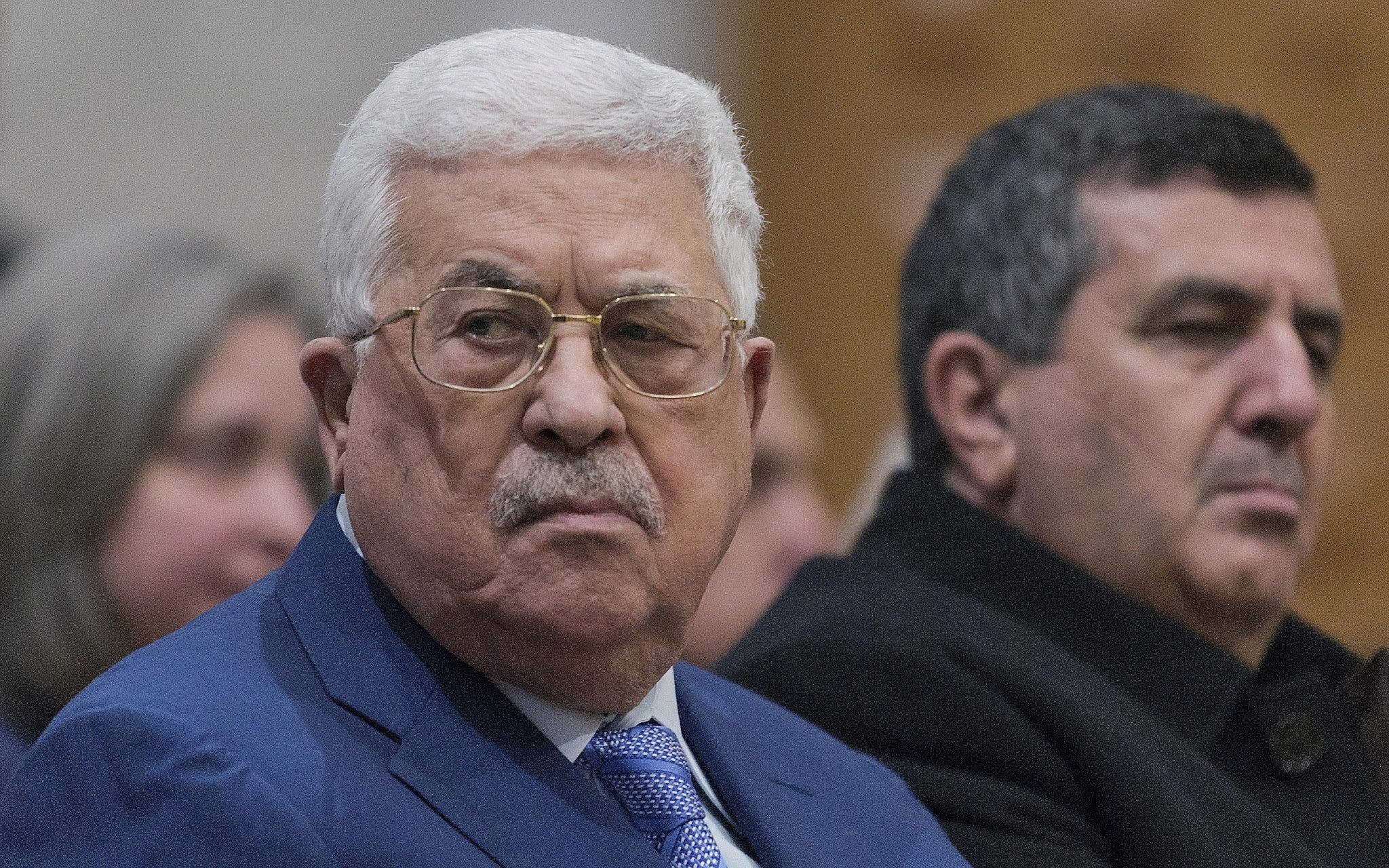
Palestinian Authority President Mahmoud Abbas, left, attends a Christmas midnight mass at Saint Catherine's Church in the Church of the Nativity, traditionally recognized by Christians to be the birthplace of Jesus, in the West Bank city of Bethlehem on December 25, 2018. (AP Photo/Nasser Nasser, Pool)

Palestinian Authority President Mahmoud Abbas, left, attends a Christmas midnight mass at Saint Catherine’s Church in the Church of the Nativity, traditionally recognized by Christians to be the birthplace of Jesus, in the West Bank city of Bethlehem on December 25, 2018. (AP Photo/Nasser Nasser, Pool)

A top Fatah official said in an Arabic-language interview published Sunday that the US has asked international banks to squeeze the Palestinian Authority financially in a bid to pressure the Palestinian leaders to accept the Trump administration’s peace plan.

“Major international financial institutions and parties have begun to accede to an American request to impose a tight financial siege on the Authority,” Hussein al-Sheikh told AFP.

“Washington has asked for financial aid given to the authority to be stopped, and it has also issued a circular to banks not to receive transfers for the authority’s accounts.”

The claim came on the same day that Prime Minister Benjamin Netanyahu vowed to begin deducting PA payments to convicted terrorists and their families from tax transfers Israel hands the PA each month, and after massive cuts in US aid to the Palestinian in recent months.

According to al-Sheikh, “the sanctions began with preventing the transfer of an Iraqi grant worth $10 million, which was handed over to the Arab League recently. The League has not been able to transfer it because all banks have refused to accept it for transfer to the Authority’s finance ministry or the national fund.”

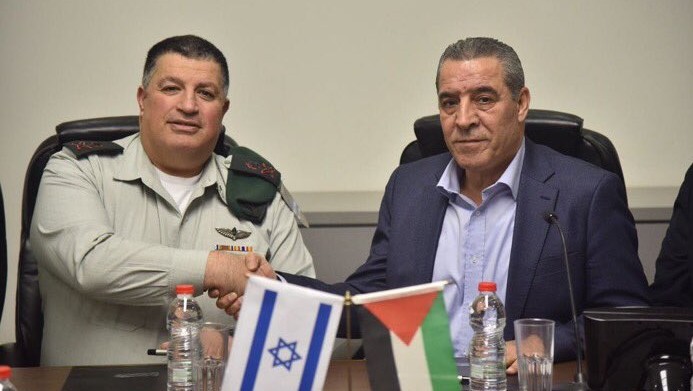
File: Then-coordinator of government activities in the territories (COGAT) Maj. Gen. Yoav Mordechai, left, and the Palestinian Authority’s Civil Affairs Minister Hussein al-Sheikh sign an agreement to revitalize the Israeli-Palestinian Joint Water Committee, January 15, 2017. (Courtesy COGAT)

Al-Sheikh added that “the American decision is in line with an Israeli decision” to cut the tax transfers, which represent more than 50 percent of the Palestinian treasury’s imports and constitute about 70% of the current expenses of the Authority and the salaries of its employees.

He added: “The American and Israeli decisions come as part of an attempt to bring the leadership to its knees and force it to accept [US President Donald Trump’s] ‘deal of the century,’ first by allowing for its announcement and second to pave the way to ‘Arabize’ it and begin the process of Arab normalization with Israel without [Israel giving] anything in return” to the Palestinians.

He accused the US and Israel of pushing PA President Mahmoud Abbas to what he described as “extreme decisions.”

Netanyahu told cabinet ministers on Sunday that he would, in a week’s time, begin cutting funds to the PA over its payments to terrorists and their families.

“By the end of the week, the staff work required for implementing the law on deducting terrorists’ salaries will be completed,” the prime minister said at the weekly cabinet meeting in Jerusalem, referring to a law that was passed by the Knesset in July and formally went into effect on January 1. It grants the government the power to withhold Palestinian tax funds from the PA equal to the amount spent by the PA in payments to incarcerated security prisoners and the families of terrorists killed while attacking Israelis.

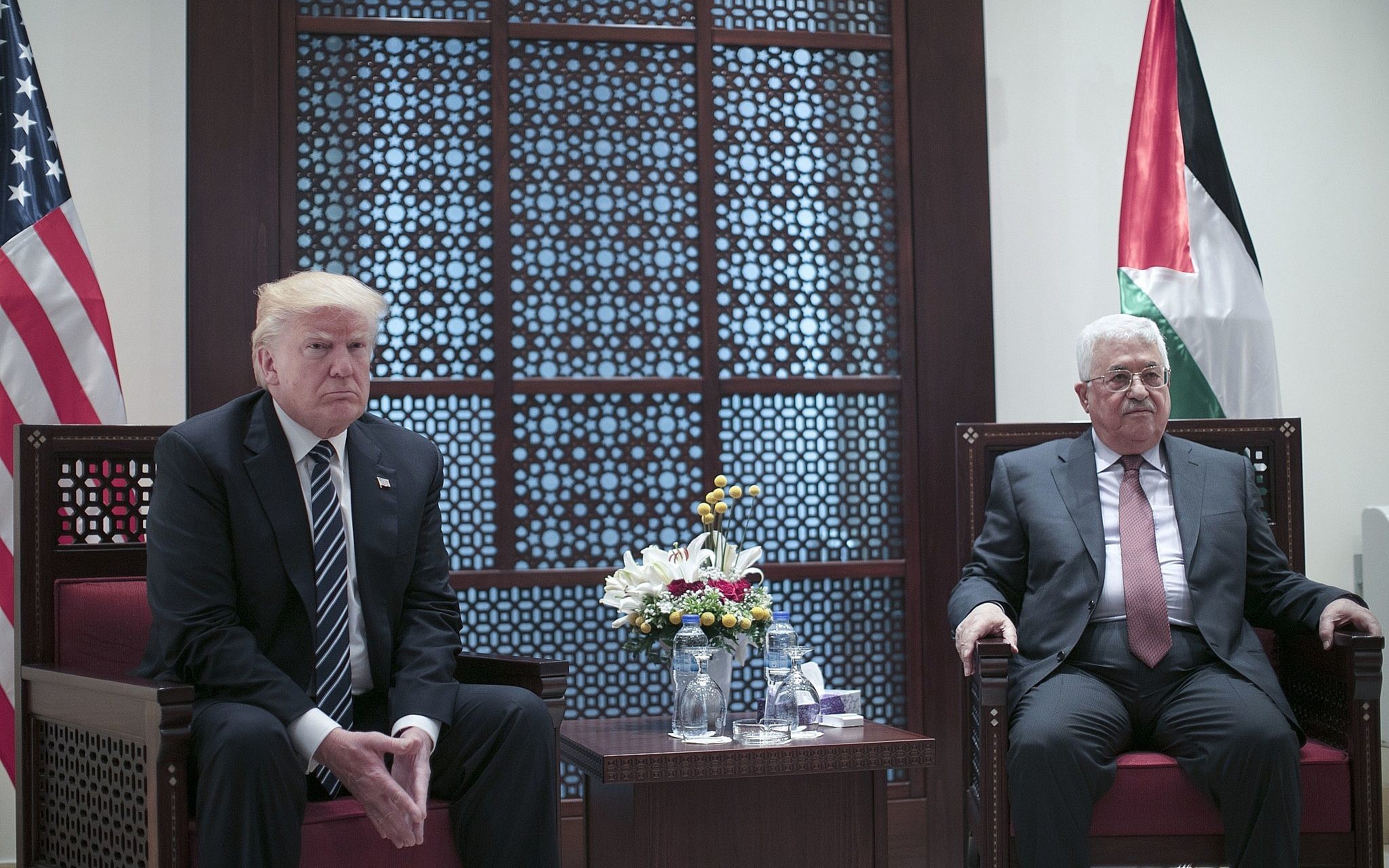
Palestinian Authority President Mahmoud Abbas, right, meets US President Donald Trump In the West Bank city of Bethlehem on May 23, 2017. (Fadi Arouri, Xinhua Pool via AP)

“Next Sunday I will convene the security cabinet and we will approve the decision needed to withhold the funds. The funds will be deducted. No one should doubt that. And next week,” he vowed.

The comments come amid pressure on Netanyahu to act after the arrest of a Palestinian man, Arafat Irfayia, 29, on Friday for the brutal murder of 19-year-old Ori Ansbacher in a southern Jerusalem wood a day earlier. The case has sparked outrage across the country, and the Shin Bet security service has indicated Irfayia had a nationalistic motive for the attack.

The government has refused to implement the power given to it by the law to freeze the fund transfers amid security officials’ fears it could destabilize the PA and lead to violence. But politicians have faced public pressure to crack down on the PA’s payments, which are viewed as incentivizing terror attacks.

A PA law legislated in 2004 says any Palestinian prisoner and his or her family are entitled to a variety of payments. The law defines a prisoner as “anyone who is sitting in the occupation’s prisons for participating in the struggle against the occupation” and calls such a person “part and parcel of the Palestinian Arab community’s fabric.”

Palestinian officials have argued payments to security prisoners seek to mitigate what they call an unfair Israeli military court system.

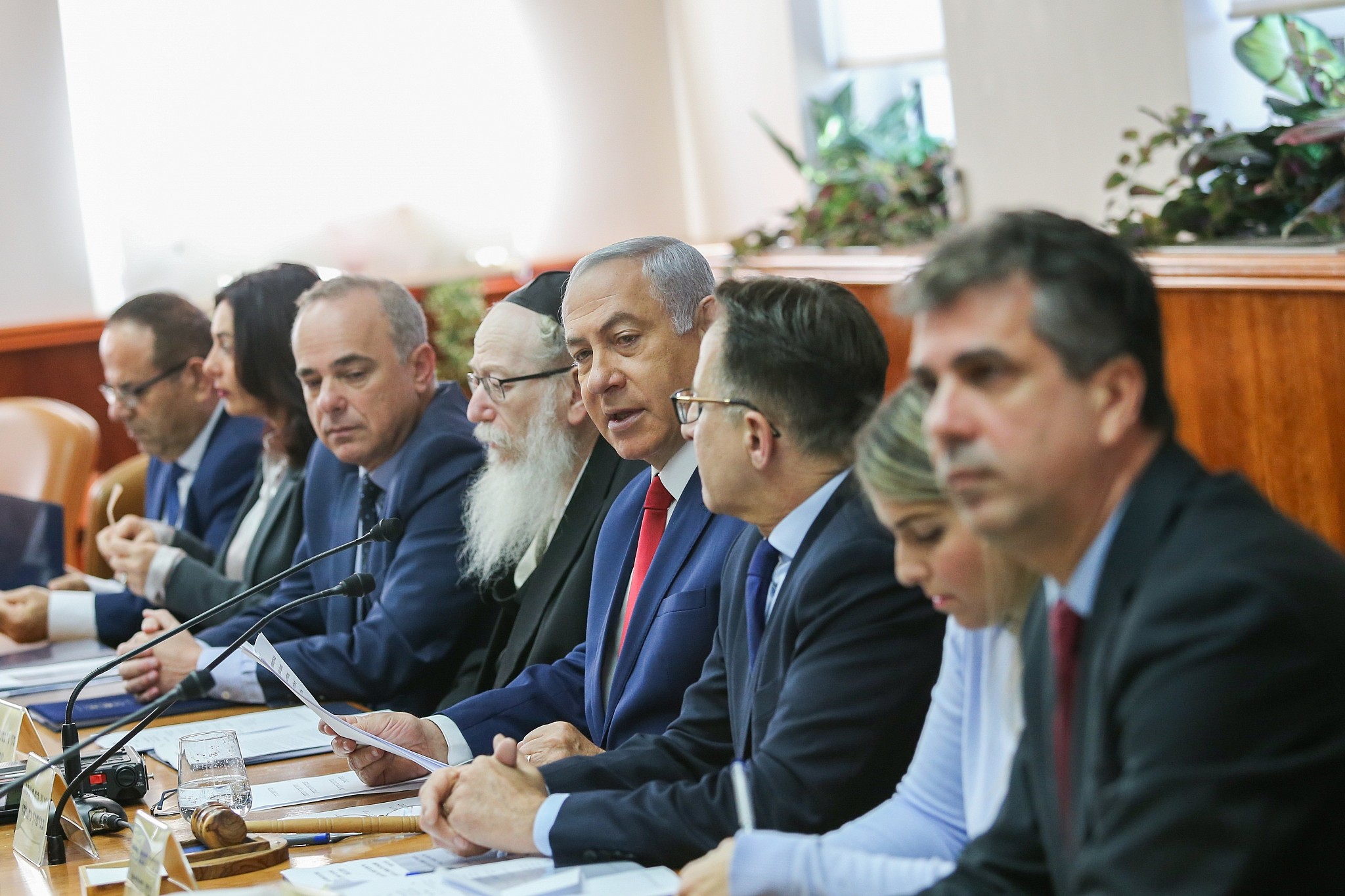
Prime Minister Benjamin Netanyahu leads the weekly cabinet meeting at the Prime Minister’s Office in Jerusalem on January 6, 2019. (Alex Kolomoisky/Yedioth Ahronoth/Pool)

Last March, Trump signed into law legislation that requires the American government to cut some aid to the Palestinians until they end payments to terrorists and slain attackers. Since Trump signed the legislation, his administration has cut hundreds of millions of dollars in aid to the Palestinians.

Abbas has said the PA will continue to pay stipends to the families of Palestinian security prisoners and “martyrs” even if it has to spend its last penny to do so.

“We will not accept a cut or cancellation of salaries to the families of martyrs and prisoners, as some are trying to bring about,” he told representatives of a Palestinian prisoners advocacy group in July. “Even if we have only a penny left, we will give it to the martyrs, the prisoners and their families.”

Since shortly after Trump recognized Jerusalem as Israel’s capital in December 2017 and initiated the relocation of the US embassy in the Jewish state to the city, Abbas has called for an international conference in order to establish a multilateral mechanism for the peace process.

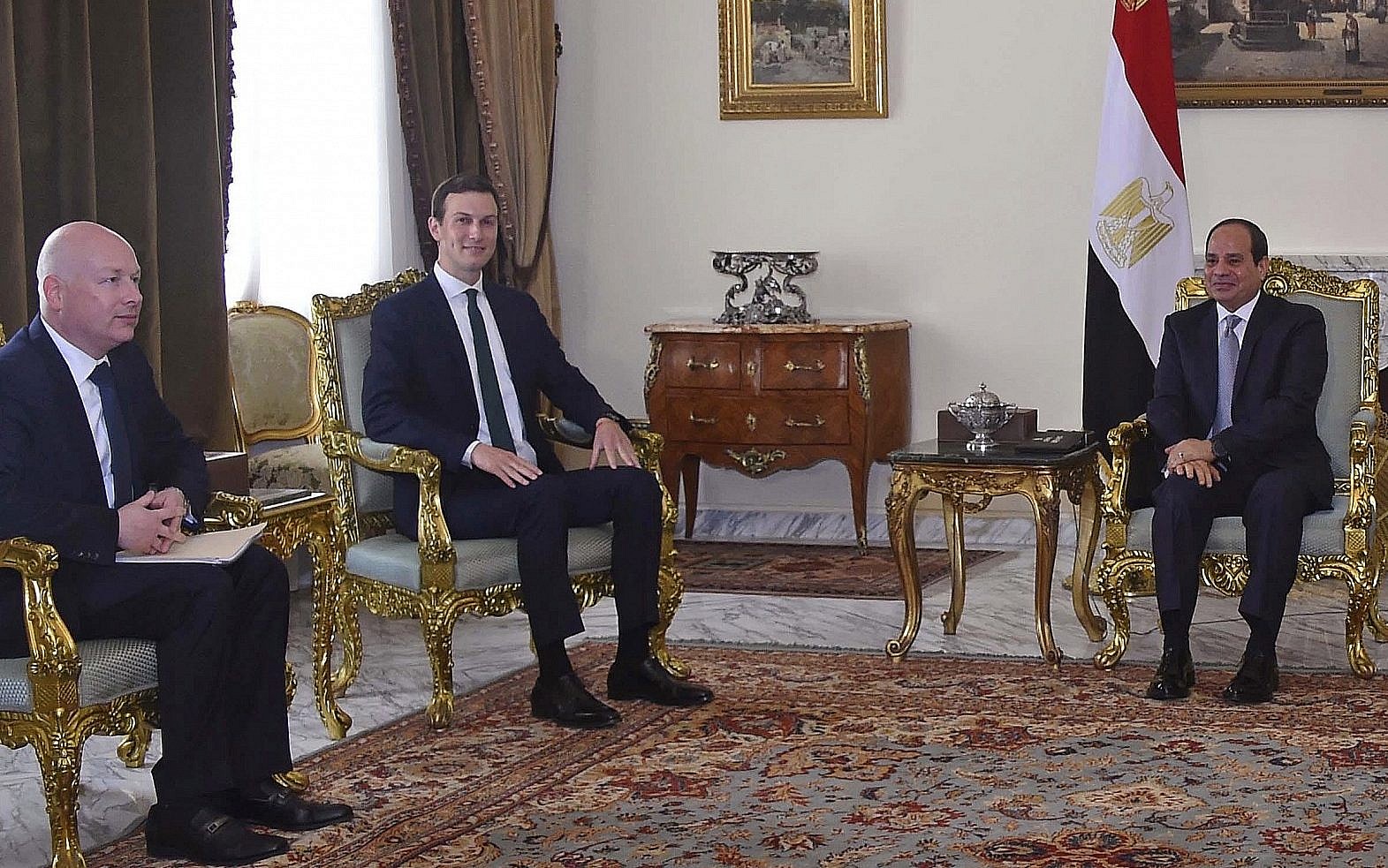
In this Thursday, June 21, 2018 photo, provided by Egypt’s state news agency, MENA, Egyptian President Abdel-Fattah el-Sissi, center, meets with President Donald Trump’s son-in-law and senior adviser Jared Kushner, second left, and Mideast envoy Jason Greenblatt on a regional tour to discuss a blueprint for an Israeli-Palestinian peace deal, in Cairo, Egypt. (MENA via AP)

He has also declared that the Palestinians would no longer work with an American-dominated peace process.

Meanwhile, White House senior adviser Jared Kushner and other administration officials are headed to the Middle East later this month to brief diplomats in at least five countries on the economic section of the expected US proposal for peace between Israelis and Palestinians.

Kushner, who is Trump’s son-in-law, will be joined by US Mideast envoy Jason Greenblatt, US envoy on Iran Brian Hook and other administration officials who have worked on the economic part of the plan.

Stops are confirmed in Oman, Bahrain, Saudi Arabia, United Arab Emirates and Qatar. Other stops could be added to the trip, according to a White House official.

The plan includes an economic development proposal for Palestinians that foresees major infrastructure and industrial work, particularly in Gaza. For the plan to succeed or even pass the starting gate, it will need at least initial buy-in from both Israel and the Palestinians as well as from the Gulf Arab states, which officials say will be asked to substantially bankroll the economic portion.

US officials have said the plan won’t be made public before Israel’s elections on April 9.

IRNA: Iran warns it would raze Tel Aviv to the ground if attacked by US

February 11, 2019

Source: IRNA: Iran warns it would raze Tel Aviv to the ground if attacked by US

“The United States does not have the courage to shoot a single bullet at us despite all its defensive and military assets. But if they attack us, we will raze Tel Aviv and Haifa to the ground,” Yadollah Javani, the Guards’ deputy head for political affairs was quoted as saying by state news agency IRNA.
He was speaking at a rally celebrating the 40th anniversary of the Islamic revolution. 


Iranian foreign minister extends support for new Lebanese government 

February 11, 2019

Source: Iranian foreign minister extends support for new Lebanese government – Israel Hayom

“We are always ready [to arm Lebanon] … but we are waiting for this desire to be there on the Lebanese side,” Mohammad Zarif says after Hezbollah leader urges Lebanese government to accept anti-aircraft weapons from Iran to confront Israeli warplanes.

Associated Press and Israel Hayom Staff // published on 11/02/2019
   
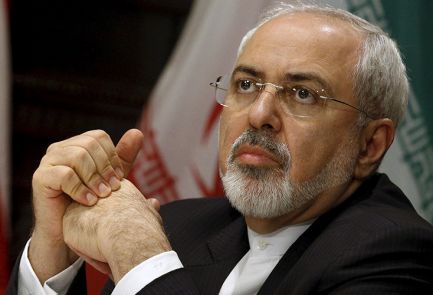
Iranian Foreign Minister Mohammad Javad Zarif 


Iran’s foreign minister extended an offer for Iranian military assistance to the U.S.-backed Lebanese army on Sunday, saying Iran is ready to assist in all sectors should the Lebanese government want it.

Mohammad Javad Zarif spoke to reporters Sunday at Beirut’s airport shortly after his arrival in the Lebanese capital for a two-day official visit.

“We are always ready [to support Lebanon militarily] and we have announced that on many occasions. This tendency does exist in Iran, but we are waiting for this desire to be there on the Lebanese side,” he said.

The comments came a few days after the leader of the Iran-backed Hezbollah terrorist group urged Lebanon’s government to accept anti-aircraft weapons from Iran to confront Israeli warplanes. He also said Iran was ready to provide Lebanon with electricity and medicine.

“Will the Lebanese government be brave enough to accept an Iranian offer? Why should Lebanon be afraid to cooperate with Iran?” Nasrallah asked during a speech marking the 40th anniversary of Iran’s Islamic Revolution this week.

The United States, which lists Hezbollah as a terrorist group, backs the Lebanese army through a program that aims to strengthen the military as the sole armed force defending the country.

Lebanon’s Western-backed Prime Minister Saad Hariri formed a government late last month, after a nine-month vacuum that exacerbated the country’s economic woes. Hezbollah has three ministers in the new cabinet, reflecting the gains made by the powerful group in parliamentary elections held in May last year. The terrorist group named the health minister, marking the first time it controls a ministry with a large budget.

Zarif is the first senior official from the region to visit Lebanon since the new government was formed. He was met at the airport by a minister from Hezbollah and other officials from the Shiite group.

In his comments, Zarif congratulated Lebanese politicians and said Iran is ready to support the government in any way possible.

Mahmoud Qomati, a Hezbollah member and state minister for parliamentary affairs, said later that his group appreciates there is international pressure on Lebanon but that shouldn’t stand in the way of accepting Iran’s offer to help the country’s struggling economy.

He urged the government to take a “brave” stand and accept the offer extended to it.

Zarif is scheduled to meet with the Lebanese president, prime minister and foreign minister on Monday.


Withdrawal of US forces in Syria likely to start in ‘weeks’ 

February 11, 2019

Source: Withdrawal of US forces in Syria likely to start in ‘weeks’ – Israel Hayom

Removal of U.S. forces “will all be driven by the situation on the ground,” says U.S. Army Gen. Joseph Votel, head of the U.S. Central Command • Votel says he does not believe the U.S. will broadly increase overall troop numbers in neighboring Iraq.

Reuters and Israel Hayom Staff // published on 11/02/2019
   
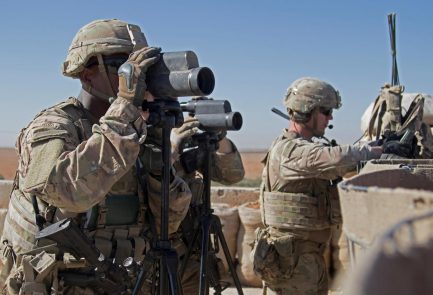
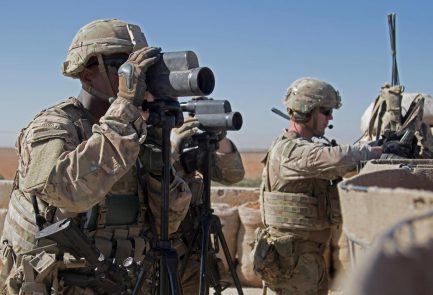
U.S. soldiers on patrol in Manbij, Syria, in November 1, 2018 


The United States is likely just weeks away from starting the withdrawal of ground troops from Syria ordered by President Donald Trump, the top U.S. commander overseeing American forces in the Middle East said on Sunday.

U.S. Army Gen. Joseph Votel, head of the U.S. Central Command, cautioned that the exact timing would depend on the situation in Syria, where U.S.-backed fighters have launched a final assault against Islamic State enclaves near the Iraqi border.

The U.S. military has already started withdrawing equipment from Syria. Asked whether the withdrawal of America’s more than 2,000 troops would begin in days or weeks, Votel said: “Probably weeks. But again, it will all be driven by the situation on the ground.”

“In terms of the withdrawal … I think we’re right on track with where we wanted to be,” Votel told reporters traveling with him during a trip to the Middle East.

“Moving people is easier than moving equipment and so what we’re trying to do right now is again [to] kind of clear out those materials, that equipment that we do not need.”

Trump’s surprise announcement in December that he was withdrawing American troops from Syria helped trigger the resignation of his defense secretary, Jim Mattis, and sent U.S. military officials scrambling to construct a withdrawal plan that preserves as many gains as possible.

Hundreds of additional troops have been sent to Syria to facilitate the withdrawal.

U.S. officials have long estimated that the Syria pullout could take until sometime in March or April to execute fully, but have been reluctant to set an exact timeline given hard-to-predict battlefield conditions.

Votel did not speculate about when the withdrawal would be completed.

One big question has been whether some U.S. forces in Syria might move to neighboring Iraq, where the United States has more than 5,000 troops helping Baghdad fight Islamic State and prevent the group’s resurgence.

Votel said he did not believe the United States would broadly increase overall troop numbers in Iraq. He did leave open the possibility of changing the composition of forces to help the United States keep pressure on the terrorist group.

Referring to future U.S. troop levels in Iraq, Votel said: “I think it’s going to remain more or less steady.”

“This isn’t just wholesale – ‘Everybody in Syria move over to Iraq.’ That doesn’t make sense,” Votel said.

Votel is one of many current and former U.S. officials who have warned of the risk of resurgence by Islamic State unless the United States and its allies can keep pressure on the group following the U.S. withdrawal. They say Islamic State still has enough leaders, fighters, facilitators and financial resources to fuel a menacing insurgency.

But a clear U.S. plan on how to keep up the pressure has yet to be articulated. It is also unclear whether the United States will be able to satisfy the security concerns in Syria of its NATO ally Turkey without sacrificing the interests of U.S.-backed Kurdish fighters there.

Washington views the Kurdish militia as loyal partners in the fight against Islamic State, whose help will likely continue to be needed to prevent the group’s resurgence.

The Pentagon’s own internal watchdog released a report last week warning about the risks still posed by Islamic State. It cautioned that, absent sustained pressure, the group would likely resurge in Syria within six to 12 months and retake some limited territory.

A U.N. report seen by Reuters last week estimated there are up to 18,000 Islamic State fighters in Iraq and Syria, including up to 3,000 foreign fighters. It warned the group was interested in attacking aviation and using chemical, biological, radiological and nuclear materials.


Withdrawal of US forces in Syria likely to start in ‘weeks’ 

February 11, 2019

Source: Withdrawal of US forces in Syria likely to start in ‘weeks’ – Israel Hayom

Removal of U.S. forces “will all be driven by the situation on the ground,” says U.S. Army Gen. Joseph Votel, head of the U.S. Central Command • Votel says he does not believe the U.S. will broadly increase overall troop numbers in neighboring Iraq.

Reuters and Israel Hayom Staff // published on 11/02/2019
   
U.S. soldiers on patrol in Manbij, Syria, in November 1, 2018 


The United States is likely just weeks away from starting the withdrawal of ground troops from Syria ordered by President Donald Trump, the top U.S. commander overseeing American forces in the Middle East said on Sunday.

U.S. Army Gen. Joseph Votel, head of the U.S. Central Command, cautioned that the exact timing would depend on the situation in Syria, where U.S.-backed fighters have launched a final assault against Islamic State enclaves near the Iraqi border.

The U.S. military has already started withdrawing equipment from Syria. Asked whether the withdrawal of America’s more than 2,000 troops would begin in days or weeks, Votel said: “Probably weeks. But again, it will all be driven by the situation on the ground.”

“In terms of the withdrawal … I think we’re right on track with where we wanted to be,” Votel told reporters traveling with him during a trip to the Middle East.

“Moving people is easier than moving equipment and so what we’re trying to do right now is again [to] kind of clear out those materials, that equipment that we do not need.”

Trump’s surprise announcement in December that he was withdrawing American troops from Syria helped trigger the resignation of his defense secretary, Jim Mattis, and sent U.S. military officials scrambling to construct a withdrawal plan that preserves as many gains as possible.

Hundreds of additional troops have been sent to Syria to facilitate the withdrawal.

U.S. officials have long estimated that the Syria pullout could take until sometime in March or April to execute fully, but have been reluctant to set an exact timeline given hard-to-predict battlefield conditions.

Votel did not speculate about when the withdrawal would be completed.

One big question has been whether some U.S. forces in Syria might move to neighboring Iraq, where the United States has more than 5,000 troops helping Baghdad fight Islamic State and prevent the group’s resurgence.

Votel said he did not believe the United States would broadly increase overall troop numbers in Iraq. He did leave open the possibility of changing the composition of forces to help the United States keep pressure on the terrorist group.

Referring to future U.S. troop levels in Iraq, Votel said: “I think it’s going to remain more or less steady.”

“This isn’t just wholesale – ‘Everybody in Syria move over to Iraq.’ That doesn’t make sense,” Votel said.

Votel is one of many current and former U.S. officials who have warned of the risk of resurgence by Islamic State unless the United States and its allies can keep pressure on the group following the U.S. withdrawal. They say Islamic State still has enough leaders, fighters, facilitators and financial resources to fuel a menacing insurgency.

But a clear U.S. plan on how to keep up the pressure has yet to be articulated. It is also unclear whether the United States will be able to satisfy the security concerns in Syria of its NATO ally Turkey without sacrificing the interests of U.S.-backed Kurdish fighters there.

Washington views the Kurdish militia as loyal partners in the fight against Islamic State, whose help will likely continue to be needed to prevent the group’s resurgence.

The Pentagon’s own internal watchdog released a report last week warning about the risks still posed by Islamic State. It cautioned that, absent sustained pressure, the group would likely resurge in Syria within six to 12 months and retake some limited territory.

A U.N. report seen by Reuters last week estimated there are up to 18,000 Islamic State fighters in Iraq and Syria, including up to 3,000 foreign fighters. It warned the group was interested in attacking aviation and using chemical, biological, radiological and nuclear materials.


Report: Mossad helped smuggle nuclear spy out of Iran 

February 11, 2019

Source: Report: Mossad helped smuggle nuclear spy out of Iran – Israel Hayom

The nuclear technician with information about the Islamic republic’s nuclear program and described as an “Israeli asset for years,” was smuggled into the U.K. last New Year’s Eve in a joint operation with MI6, the CIA and Mossad, Sunday Express reports.

Eli Leon and Israel Hayom Staff // published on 11/02/2019
   
A rubber dinghy used by Iranian migrants to cross the English Channel from France, December 31, 2018 


An Iranian nuclear technician with information about the Islamic republic’s nuclear program was smuggled into the United Kingdom on New Year’s Eve last year in a joint operation involving MI6, the CIA and Israeli Mossad, the Sunday Express newspaper reported on Sunday.

According to the report, the 47-year-old nuclear technician had been “an Israel asset for years” who also “helped plan” the assassination of Iranian nuclear scientist Mostafa Ahmadi Roshan in 2012. Roshan, a director at Iran’s Natanz uranium enrichment facility, was killed by a magnetic bomb attached to his car in Tehran. His driver also died. Iran accused the Mossad of carrying out the assassination.

The plan to smuggle the alleged Israeli nuclear spy out of Iran, meanwhile, reportedly involved a “3,000-mile dash across Europe” and a final 22-mile crossing of the English Channel in a dinghy, hidden among other illegal Iranian immigrants.

Initially, the alleged spy was reportedly smuggled out of his homeland and into neighboring Turkey by the Mossad.

Britain, the report said, tried to conceal its involvement in the operation because it opposed the U.S. withdrawal from the nuclear agreement with Iran and remained a party to it.

A British intelligence source told the Sunday Express: “[The nuclear technician’s] absence was noted quickly [by the Iranians] and we were informed that a special unit of the Islamic Revolutionary Guard Corps had been dispatched. Once in France, the question of how to get him into Britain remained. We couldn’t simply fly him in. Though unusual, it was determined infiltrating him into a group of fellow migrants preparing to cross the channel by boat offered one solution.”

The report also said that MI6 agents debriefed the nuclear technician on Iran’s nuclear plans before he was flown to the United States.