Source: Pompeo, Bolton, and Iran’s “Fake Opposition” – LobeLog
by Muhammad Sahimi
As Iranian people struggle for democracy and respect for human rights and the rule of law, as well as preserving the national security and territorial integrity of their country, two main groups have emerged among the opposition to Iran’s hardliners, both within Iran and in the diaspora.
One group, the true opposition that includes the reformists, religious-nationalists, secular leftists, various labor groups, human rights activists, and others, believes that it is up to the Iranian people living in Iran how to change the political system in their country. This group is opposed to foreign intervention, particularly by the United States and its allies, the illegal economic sanctions imposed by the United States on Iran, and the constant threats of military confrontation espoused by John Bolton, President Trump’s national security advisor, and other Iran hawks.
Many Iranians refer to the second group as the “fake” opposition. It consists mostly of the monarchists, some ethnic groups, and the Mojahedin-e Khalq (MEK), the exiled group that is universally despised in Iran and was on the State Department’s list of “Foreign Terrorist Organizations” from 1997 until 2011. It is called the “fake” opposition because it supports the economic sanctions and the threat of military attacks, and has completely aligned itself not only with the Trump administration, but also with Saudi Arabia, the United Arab Emirates (UAE), and Israel, and endorses their propaganda against Iran. This group, whose followers are based mostly in the diaspora, acts more like a lobby for convincing the Iranian people to support the Trump-Mohammed bin Salman(MbS)-Benjamin Netanyahu triangle in their confrontation with Iran, rather than as a group supporting the true opposition within Iran for lasting, irreversible, and positive changes in the political system.
The harsh economic sanctions imposed on the Iranian people have contributed significantly to the terrible state of Iran’s economy, increasing inflation and unemployment, making vital drugs and medications scarce, and hurting the middle class greatly. These groups’ support for the hostility of Saudi Arabia, Israel, and UAE toward Iran is particularly galling at a time when Saudi Arabia has threatened “to take the war to inside Iran,” Israel came close numerous times to attacking Iran from 2010-2011 and is still threatening it, and the UAE welcomed the terrorist attacks in Ahvaz in southern Iran last September.
The Secessionist Ethnic Groups
Although National Security Advisor John Bolton supports the MEK and has met with its leader repeatedly, Secretary of State Mike Pompeo and Brian Hook, the State Department’s Special Representative for Iran who directs the “Iran Action Group,” have met with some of the leaders of the “fake” opposition. Last June, Abdullah Mohtadi and Mustafa Hijri who lead, respectively, the Iranian Communist Kurdish group Komala and the Kurdistan Democratic Party of Iran (KDPI), traveled to Washington, with Mohtadi reportedly meeting with Pompeo and Hijri meeting with other the State Department officials. Komala’s office in Washington has registered with the Justice Department as a lobbying group intending to “establish solid and durable relations” with the Trump administration. Before he was appointed the president’s national security advisor, Bolton published a white paper that included a call for supporting “Kurdish national aspirations, including Kurds in Iran, Iraq and Syria,” and for providing “assistance to Balochis, Khuzestan Arabs, Kurds” and other ethnic minorities in Iran.
Both groups have carried out armed attacks on Iran’s military inside Iran, which amount to terrorism. Both have separatist tendencies, which they conceal under the guise of calling for a federal system that would partition the country into various regions based on ethnicity. The separatist nature of the KDPI became clear when, in 2012, Hijri asked the United States to declare Iran’s Kurdistan province a “no-fly zone” so that his forces could attack government forces freely and eventually secede from Iran. Hijri has also called for “regime change” in Iran, declared the Islamic Republic “a common enemy” of the Kurds and Israel, and asked the Jewish state for support.
Identifying Iranian Ahmed Chalabis
One goal of the meetings between Pompeo, Bolton, and the exiled “fake” opposition is to identify those Iranians who have the potential to act as the Iranian version of Ahmad Chalabi. This notorious Iraqi figure, whose Iraqi National Congress for years fabricated lies about Saddam Hussein’s non-existent weapons of mass destruction, worked closely with the neoconservatives in the run-up to the 2003 invasion. Another goal is to buttress the claim that the Iranian people support Trump’s policy vis-à-vis Iran.
One leading candidate is Reza Pahlavi, the son of Iran’s last king, Mohammad Reza Pahlavi whose regime was overthrown by the 1979 Revolution. In the 1980s, the CIA provided Reza Pahlavi with funding. He has also had a long-term relationship with Israel and the Israel lobby in the United States, including meeting with Sheldon Adelson, the casino magnate and billionaire Republican donor who once suggested that the United States attack Iran with nuclear bombs. Reza Pahlavi has also called on Israel to help the “cause of democracy” in Iran.
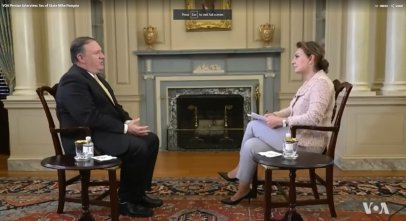
Efforts to prop up Reza Pahlavi began immediately after Donald Trump’s election in November 2016, even before he formally took office. Suddenly, the Farsi division of Voice of America (VOA), as well as Radio Farda, a U.S. funded radio program, began promoting Reza Pahlavi as the “leader” of the opposition. Setareh Derakhshesh, director of VOA’s Farsi programs, interviewed Pahlavi, and both VOA and Radio Farda began presenting a very “modern” and positive portrait of Pahlavi and his family, a depiction that has continued.
In addition, Derakhshesh also interviewed several Iran hawks, including Bolton. She also interviewed Elliot Abrams, who served in George W. Bush’s National Security Council and is an ardent opponent of the nuclear agreement with Iran (the Joint Comprehensive Plan of Action or JCPOA), and Michael Ledeen, a veteran anti-Iran neoconservative at the Foundation for Defense of Democracies (FDD), a leading anti-JCPOA group closely associated with Israel’s Likud Party. Both Abrams and Ledeen support Trump’s policy toward Iran. VOA also hired Masih Alinejad, a controversial reporter who has turned against the Reformists in Iran, to begin her own program on VOA, giving her large sums of money and promoting her heavily.
In addition, VOA’s programs stopped interviewing the Reformist figures in the Iranian diaspora or in Tehran. Several Iranian staff members who ran various VOA Farsi programs and were not comfortable with the sudden change of direction, either left VOAor moved to positions off camera.
The New Pro-War Group
Another “fake” opposition group that has emerged over the past several months and is closely linked with the Trump administration and the neocons is called Farashgard(“revival” in ancient Persian). Its leading member is Amir Etemadi who, together with Saeed Ghasseminejad, co-founded the so-called “Iranian Liberal Students Group” (ILSG), a small ultra-right group of student activists in Iran, most of whom moved to Canada and the United States and supported George W. Bush’s policy toward Iran. Ghasseminejad is now “senior adviser on Iran” at the FDD. In his Twitter account, Ghasseminejad refers to himself as a “classical liberal and non-partisan,” despite calling for the execution of the Islamic Republic’s leaders after regime change and working for the very partisan FDD.
Farashgard consists of 40 relatively young activists—most of whom are members of the ILSG—who have called for “regime change” in Iran, supported Trump’s “maximum pressure” campaign against their native land, and promoted Reza Pahlavi as the leader of the opposition. Before the group announced its existence in September 2018, many of its members had signed a letter in December 2016 in which they declared the Islamic Republic of Iran and the Islamic State (ISIS or IS) “two sides of the same coin”—never mind that Iran played a leading role in defeating IS in Iraq and Syria. The letter also urged then President-elect Trump to take on the Iran’s Islamic Revolutionary Guard Corps (IRGC) throughout the Middle East “by all available means” and help “the Iranian people to take back their country from the Islamic gang which has been in charge for the last four decades…” Echoing Bolton’s and Pompeo’s claim that Iran’s ballistic missile program is “a threat not only to the region but to the world,” they asked Trump to pressure Iran to stop its missile program, and impose tough economic sanctions that would hurt the Iranian people, not the regime
“New Iran” Foundation
A few months ago, a new Iran “think thank” popped up called New Iran (TNI), led by Alireza Nader, formerly of the Rand Corporation. TNI claims to be “a nonprofit and nonpartisan 501(c)3 organization dedicated to the objective research and analysis of Iran.” But Nader has recently been more involved in political development than analysis. In late December 2017 and early January 2018, when demonstrations against the terrible state of the economy broke out in several cities throughout Iran, Nader was highly active on Twitter, trying to encourage more demonstrations—see here, here, here, and here, for example—while working at Rand under a contract from the U.S. government.
Nader apparently left Rand a short time after those demonstrations, and suddenly TNI emerged with offices at a pricey Washington address and six permanent staff. The few analyses that TNI members, including Nader himself, have published—see here and here, for example—indicate that they support the Trump/Pompeo/Bolton approach to Iran. This is in fact Nader’s modus operandi. A review of his writings over the years shows that he generally changes positions as the U.S. administrations do and tries to align with whoever is in power.
In addition to supporting Trump’s Iran policy, Farashgard and TNI are also closely linked to the neoconservatives, the Israel lobby, and others. For example, a member of the board of directors of the TNI, Nader Uskowi, was a leftist student activist before the Iranian revolution and has worked at the Washington Institute for Near East Policy, an offshoot of the American Israeli Political Affairs Committee. Another member of TNI’s board is Thomas Parker who is also listed as a security expert on the website of the Washington Institute and has written for them in the past.
In a recent article, Uskowi seemingly praised Farashgard. In addition, Shay Khatiri, a researcher at TNI, is also a member of Farashgard, and in his Twitter account proudly describes himself as “the new Paul Wolfowitz,” the discredited neoconservative former deputy Pentagon chief under George W. Bush and one of the key architects of 2003 invasion of Iraq. A picture shows him shaking hands with the late Senator John McCain, an Iran hawk who sang infamously “bomb, bomb, bomb Iran.” His page on the TNI website claims that “he has researched Iranian politics, history, and public opinion at the Foundation for the Defense of Democracies and the American Enterprise Institute,” whose “scholars” have included Wolfowitz, Bolton, Ledeen, and other Iraq and Iran hawks. Another TNI adviser, Sharon Nazarian, is “senior vice president of international affairs” at the Anti-Defamation League, a civil-rights group that is strongly pro-Israel and that has also long supported a confrontational stance towards Iran.
According to documents filed online by the National Council of Resistance of Iran (NCRI), the political arm of the MEK, Uskowi has repeatedly met with NCRI’s Alireza Jafarzadeh. Iranians consider Jafarzadeh the “foreign minister” of the MEK leader, Maryam Rajavi.
Bolton and Trump’s personal attorney, Rudy Giuliani, have been long-time lobbyists for the MEK, receiving large fees for their lobby activities. Both Bolton and Giuliani have also called for “regime change” in Iran.
It’s not clear where TNI and other “fake” opposition groups receive their funding. The Gulf States, however, have made clear their their willingness to pay for anti-Iranian activities. Last November, The New York Times reported that, in March 2017, intelligence and military officials of Saudi Arabia discussed a $2 billion plan to destabilize Iran and assassinate its top officials, including Major General Qasem Soleimani, the commander of Iran’s Quds force.
No Significant Social Base of Support
One of the most important aspects of all such groups is that they have no significant social base of support within Iran. Even in the diaspora a large majority of Iranians, while opposing the clerics in Iran, reject economic sanctions, military threats, and these groups’ support for the anti-Iranian policy of the Trump-MbS-Netanyahu triangle. Within Iran, the hostility of the triangle has actually transformed the generally pro-West Iranians into strong opponents of the three countries, to the point of despising the three leaders and their governments.
Farhad Meysami, a medical doctor and human rights activist who has been imprisoned by the hardliners in Tehran and has even gone on hunger strike, criticized harshly the Trump administration in an open letter distributed widely on the Internet. He accused Trump, Bolton, and Pompeo of shedding “crocodile tears” for him and other jailed political and human rights activists, writing:
I was paging through a newspaper when I suddenly caught a glimpse of a story and got riveted to the spot. Apparently, [Donald] Trump’s State Department has called for the “freedom” of this humble civil activist. Actually, I prefer to serve my whole life in jail at the hands of a group of wrongdoing compatriot oppressors and spend it endeavoring to rectify their mistakes, rather than be subject to the stigma of “deal-breakers’ support” [a reference to the Trump administration leaving the JCPOA illegally].
Meysami ended his letter by saying, “I request the likes of Trump, Pompeo and Bolton to shed their crocodile tears for human rights elsewhere.”
After promoting Reza Pahlavi heavily, Farashgard called on the Iranian people to go on strike and demonstrate on the anniversary of last year’s scattered demonstrations, particularly on December 28 and January 7. No significant demonstration took place anywhere in Iran, hence demonstrating the absence of any social support within Iran for the monarchists, Reza Pahlavi, and their promotors. It also demonstrated these groups’ complete ignorance of Iran’s realities. The lack of support for the demonstrations was so embarrassing that it ignited a fierce internal debate among the monarchists about the wisdom of such calls.
All Iranians despise the MEK for collaborating with Saddam Hussein and Iraq during the war with Iran in the 1980s, for revealing information on Iran’s nuclear program and facilities, for working with Saudi Arabia, and for collaborating with Israel in the assassination of Iranian nuclear scientists.
The Poland Summit
In January, Secretary of State Mike Pompeo announced a summit in Poland on February 13-14 to build a global coalition against Iran. The idea, according to Pompeo, is to “focus on Middle East stability and peace and freedom and security here in this region, and that includes an important element of making sure that Iran is not a destabilizing influence.” Poland’s Foreign Minister Jacek Czaputowicz said in a statement that 70 countries, including all 28 members of the European Union, have been invited.
A well-placed Iranian activist told the author that, in the run-up to the summit in Poland, Pompeo has invited several figures from the Iranian “fake” opposition to Washington for “consultation.” The apparent purpose is either to select some of them to take to Poland to speak “on behalf of the Iranian people,” to prepare some sort of “manifesto” on what the Iranian people want, or both. In fact, on February 4, Pompeo met with the VOA’s Alinejadand “underscored the United States’ commitment to help amplify the voices of the Iranian people and to condemn the Iranian regime for its ongoing human rights abuses.” This is while the United States continues to support Saudi Arabia and Egypt, countries that are gross violators of the human rights of their own citizens.
After re-imposing harsh and illegal economic sanctions on Iran, threatening Iran repeatedly, and banning most Iranians from traveling to the United States, the Trump administration, in collaboration with the “fake” Iranian opposition, sheds crocodile tearsfor the Iranian people. In Iran, meanwhile, the people struggle daily on two fronts. They continue to survive the sanctions and threats, and the rampant corruption of the hardliners. And they continue to pressure these same hardliners to stop the repression, open up the political space, and allow for free and fair elections.
Muhammad Sahimi, a professor at the University of Southern California in Los Angeles, has been analyzing Iran’s political developments and its nuclear program for 25 years. From 2008-2012, he was the lead political columnist for the website PBS/Frontline/Tehran Bureau. In addition, his writings have been published by Huffington Post, National Interest, Antiwar, and other major websites, as well as by the Los Angeles Times and New York Times, among others.
Source: U.S. troops should withdraw from Syria – senior Iran official – Middle East – Jerusalem Post
“Whether they want to or not, the Americans must leave Syria,” Ali Akbar Velayati, a senior adviser to Iran’s Supreme Leader Ayatollah Ali Khamenei, was reported as saying.
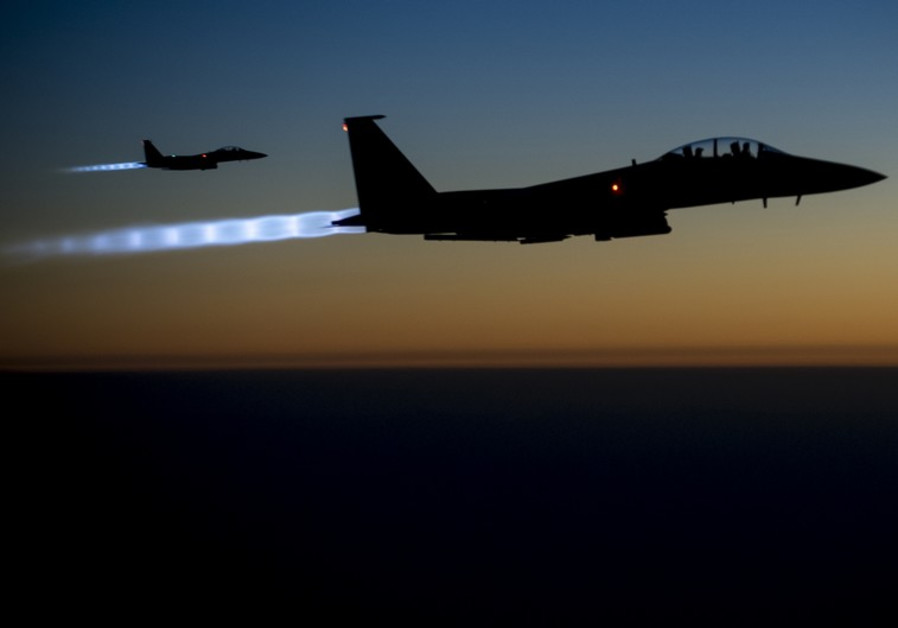
GENEVA – Senior Iranian figures said on Wednesday that Syria was a top foreign policy priority and American troops should withdraw, as planned by US President Donald Trump.
“Whether they want to or not, the Americans must leave Syria,” Ali Akbar Velayati, a senior adviser to Iran’s Supreme Leader Ayatollah Ali Khamenei, was reported as saying.
“Now 90 percent of Syrian soil is under the control of the government and the rest will soon be freed by the Syrian army,” Velayati added during a meeting with Syria’s Foreign Minister Walid al-Moualem in Tehran, according to the Tasnim news agency.
President Hassan Rouhani told Moualem that peace in Syria was a priority. “One of the important regional and foreign policy goals of the Islamic Republic is the stability and complete security of Syria,” Tasnim quoted him as saying.
“And establishing normal conditions in Syria and the return of the people of this country to their normal lives.”
Moualem was in Tehran for negotiations before the meeting of leaders of Russia, Turkey and Iran in the Russian Black Sea resort town Sochi on Feb. 14 over Syria.
Separately, Rear-Admiral Mahmoud Mousavi, a deputy commander of the regular armed forces, said on Wednesday that Iran plans to extend the range of its land-to-sea missiles beyond 300 kilometers (186 miles), according to the Fars news agency.
Iran has expanded its missile program, particularly its ballistic missiles, in defiance of opposition from the United States and expressions of concern by European countries.
Tehran says the program is purely defensive.
The European Union said on Monday it was gravely concerned by Iran’s ballistic missile launches and tests, and urged it to stop activity that deepens mistrust and destabilizes the region.
Source: Iran to increase range of land-to-sea missiles – Middle East – Jerusalem Post
Tehran has continued to work on their missile projects despite American sanctions.
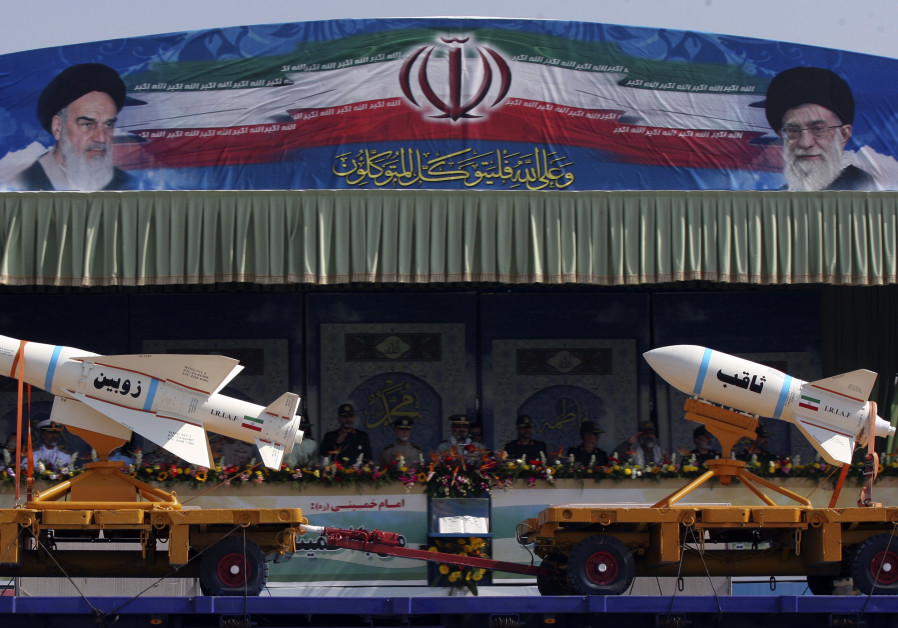
Tehran also unveiled its Hoveizeh cruise missile last week, which it claims has a range of 1,350 kilometers.
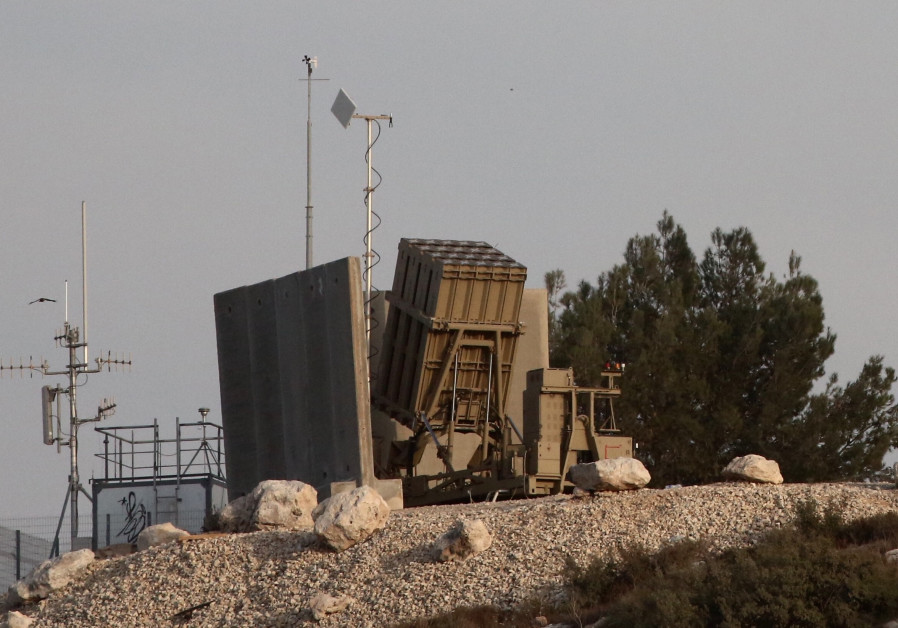
Source: United States purchases Israeli-made Iron Dome missile defense system – Israel News – Jerusalem Post
Source: ‘North Korea weapons programs intact, regime dispersing missiles’ – Israel Hayom
U.N. experts to Security Council: North Korea is defying economic sanctions through ship-to-ship transfers of petroleum, coal • Regime using civilian facilities to build missiles and spreading missiles out so they cannot be targeted in a single strike.
|
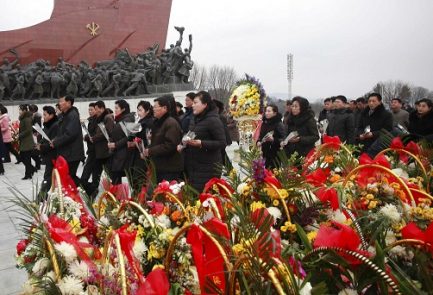
People visit statues of late North Korean leaders Kim Il Sung and his son Kim Jong Il, to lay bouquets of flowers in Pyongyang, Tuesday
| Photo: AP
|
North Korea’s nuclear and ballistic missile programs “remain intact” and its leaders are dispersing missile assembly and testing facilities to prevent “decapitation” strikes, U.N. experts said in a new report.
The experts’ report to the Security Council, seen Tuesday by The Associated Press, says the country continues to defy U.N. economic sanctions, including through “a massive increase in illegal ship-to-ship transfers of petroleum products and coal.”
The Democratic People’s Republic of Korea also continues to violate an arms embargo, a ban on luxury goods and financial sanctions, the experts said.
And the panel said it investigated “the DPRK’s sophisticated cyberattacks” against multiple countries “to evade financial sanctions.”
The report was sent to council members as U.S. President Donald Trump is preparing for a second summit with North Korean leader Kim Jong Un. At their June summit in Singapore, Trump promised “security guarantees” to Pyongyang and Kim recommitted to the “complete denuclearization of the Korean Peninsula.”
But there were no signs in the experts’ report that Kim has taken any steps toward eliminating his nuclear arsenal or intercontinental ballistic missiles, which he boasted could reach the U.S. mainland.
“The Democratic People’s Republic of Korea’s nuclear and ballistic missile programs remain intact,” the experts said.
“The panel found that the DPRK is using civilian facilities, including airports, for ballistic missile assembly and testing with the goal of effectively preventing ‘decapitation’ strikes,” the report said. It also “found evidence of a consistent trend on the part of the DPRK to disperse the assembly, storage and testing locations.”
The experts said they are continuing to investigate companies, entities and individuals in Asia that are on the U.N. sanctions blacklist and “clandestinely procured centrifuges for the DPRK’s nuclear program” – and that attempted to sell “a wide range of military equipment to armed groups and governments in the Middle East and Africa.”
The panel painted a picture of continuing wide-ranging efforts by North Korea to evade U.N. sanctions.
A huge increase in ship-to-ship transfers “render the latest United Nations sanctions ineffective by flouting the caps on the DPRK’s import of petroleum products and crude oil as well as the coal ban imposed in 2017 by the Security Council in response to the DPRK’s unprecedented nuclear and ballistic missile testing,” the experts said.
One unnamed country said North Korea obtained more than the cap of 500,000 barrels of refined petroleum products in 2018, but another unnamed country questioned the figure, the experts said.
They also said that “global banks and insurance companies continue to unwittingly facilitate payments and provide coverage for vessels involved in ever-larger, multimillion-dollar, illegal ship-to-ship transfers of petroleum products, as well as an increasing number of ship-to-ship coal transfers and attempted trans-shipments.”
The panel said ship-to-ship transfers involve “increasingly advanced evasion techniques.” These include ship identity theft,” false Automatic Identification System transmissions, physically disguised North Korea tankers, illegally changed vessel names, night transfers, and the use of additional vessels for trans-shipment of prohibited items, it said.
The panel said it inspected seized vessels engaged in prohibited coal trading and documented “ship identity-laundering.”
In addition, it said, “the world’s largest container shipping line continued to unwittingly transport prohibited items” seized by unnamed countries.
As for the arms embargo, the experts said North Korea attempted to supply small arms, light weapons and other military equipment via foreign intermediaries to Libya, Sudan and Houthi Shiite rebels in Yemen.
The experts said they also investigated North Korean involvement in gold mining in Congo, construction of a military camp in Sierra Leone, the sale of fishing rights in waters surrounding the country, and other activities around the world banned under U.N. sanctions.
“Financial sanctions remain some of the most poorly implemented and actively evaded measures of the sanctions regime,” the panel said.
Individuals acting on behalf of North Korean financial institutions are operating in at least five countries “with seeming impunity,” it said. The Reconnaissance General Bureau, the North Korean intelligence agency that conducts clandestine operations, continues to transfer funds from closed accounts in the European Union to those in Asian financial institutions, the panel said.
The experts said the global operations of the companies Glocom and MKP continued despite the panel’s past reporting on their illegal activities, “and show the ongoing use of overseas companies and individuals to obfuscate income-generating activities for the DPRK regime.”
They said that “DPRK diplomats continue to play a key role in financial sanctions evasion” along with representatives of companies and other entities on the sanctions blacklist, including by controlling accounts in multiple countries and using the names of family members and front companies.
“DPRK diplomats continue to travel under false accreditation in their passports,” the panel said, “and have also facilitated the country’s efforts to illegally export large quantities of coal through trans-shipment to disguise the origin.”
Source: ‘North Korea weapons programs intact, regime dispersing missiles’ – Israel Hayom
U.N. experts to Security Council: North Korea is defying economic sanctions through ship-to-ship transfers of petroleum, coal • Regime using civilian facilities to build missiles and spreading missiles out so they cannot be targeted in a single strike.
|
People visit statues of late North Korean leaders Kim Il Sung and his son Kim Jong Il, to lay bouquets of flowers in Pyongyang, Tuesday
| Photo: AP
|
North Korea’s nuclear and ballistic missile programs “remain intact” and its leaders are dispersing missile assembly and testing facilities to prevent “decapitation” strikes, U.N. experts said in a new report.
The experts’ report to the Security Council, seen Tuesday by The Associated Press, says the country continues to defy U.N. economic sanctions, including through “a massive increase in illegal ship-to-ship transfers of petroleum products and coal.”
The Democratic People’s Republic of Korea also continues to violate an arms embargo, a ban on luxury goods and financial sanctions, the experts said.
And the panel said it investigated “the DPRK’s sophisticated cyberattacks” against multiple countries “to evade financial sanctions.”
The report was sent to council members as U.S. President Donald Trump is preparing for a second summit with North Korean leader Kim Jong Un. At their June summit in Singapore, Trump promised “security guarantees” to Pyongyang and Kim recommitted to the “complete denuclearization of the Korean Peninsula.”
But there were no signs in the experts’ report that Kim has taken any steps toward eliminating his nuclear arsenal or intercontinental ballistic missiles, which he boasted could reach the U.S. mainland.
“The Democratic People’s Republic of Korea’s nuclear and ballistic missile programs remain intact,” the experts said.
“The panel found that the DPRK is using civilian facilities, including airports, for ballistic missile assembly and testing with the goal of effectively preventing ‘decapitation’ strikes,” the report said. It also “found evidence of a consistent trend on the part of the DPRK to disperse the assembly, storage and testing locations.”
The experts said they are continuing to investigate companies, entities and individuals in Asia that are on the U.N. sanctions blacklist and “clandestinely procured centrifuges for the DPRK’s nuclear program” – and that attempted to sell “a wide range of military equipment to armed groups and governments in the Middle East and Africa.”
The panel painted a picture of continuing wide-ranging efforts by North Korea to evade U.N. sanctions.
A huge increase in ship-to-ship transfers “render the latest United Nations sanctions ineffective by flouting the caps on the DPRK’s import of petroleum products and crude oil as well as the coal ban imposed in 2017 by the Security Council in response to the DPRK’s unprecedented nuclear and ballistic missile testing,” the experts said.
One unnamed country said North Korea obtained more than the cap of 500,000 barrels of refined petroleum products in 2018, but another unnamed country questioned the figure, the experts said.
They also said that “global banks and insurance companies continue to unwittingly facilitate payments and provide coverage for vessels involved in ever-larger, multimillion-dollar, illegal ship-to-ship transfers of petroleum products, as well as an increasing number of ship-to-ship coal transfers and attempted trans-shipments.”
The panel said ship-to-ship transfers involve “increasingly advanced evasion techniques.” These include ship identity theft,” false Automatic Identification System transmissions, physically disguised North Korea tankers, illegally changed vessel names, night transfers, and the use of additional vessels for trans-shipment of prohibited items, it said.
The panel said it inspected seized vessels engaged in prohibited coal trading and documented “ship identity-laundering.”
In addition, it said, “the world’s largest container shipping line continued to unwittingly transport prohibited items” seized by unnamed countries.
As for the arms embargo, the experts said North Korea attempted to supply small arms, light weapons and other military equipment via foreign intermediaries to Libya, Sudan and Houthi Shiite rebels in Yemen.
The experts said they also investigated North Korean involvement in gold mining in Congo, construction of a military camp in Sierra Leone, the sale of fishing rights in waters surrounding the country, and other activities around the world banned under U.N. sanctions.
“Financial sanctions remain some of the most poorly implemented and actively evaded measures of the sanctions regime,” the panel said.
Individuals acting on behalf of North Korean financial institutions are operating in at least five countries “with seeming impunity,” it said. The Reconnaissance General Bureau, the North Korean intelligence agency that conducts clandestine operations, continues to transfer funds from closed accounts in the European Union to those in Asian financial institutions, the panel said.
The experts said the global operations of the companies Glocom and MKP continued despite the panel’s past reporting on their illegal activities, “and show the ongoing use of overseas companies and individuals to obfuscate income-generating activities for the DPRK regime.”
They said that “DPRK diplomats continue to play a key role in financial sanctions evasion” along with representatives of companies and other entities on the sanctions blacklist, including by controlling accounts in multiple countries and using the names of family members and front companies.
“DPRK diplomats continue to travel under false accreditation in their passports,” the panel said, “and have also facilitated the country’s efforts to illegally export large quantities of coal through trans-shipment to disguise the origin.”
Source: US backs ‘dictators, butchers and extremists’ in Mideast, says Iran – Israel Hayom
After U.S. President Donald Trump says Iran “threatens genocide against the Jewish people” in his State of the Union speech, Iranian FM tweets: “Iranians, including our Jewish compatriots, are commemorating 40 years of progress despite U.S. pressure.”
|
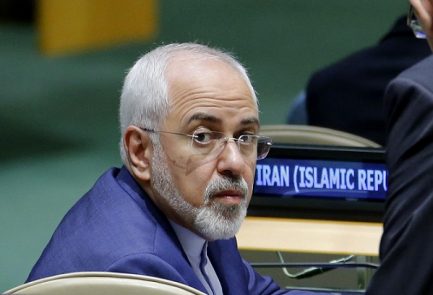
Iranian Foreign Minister Mohammad Javad Zarif at the U.N.
| Photo: Reuters
|
The United States supports “dictators, butchers and extremists” in the Middle East, Iranian Foreign Minister Mohammad Javad Zarif said in a Twitter post on Wednesday in a response to U.S. President Donald Trump’s State of the Union speech.
Tensions have ramped up between Iran and the United States since Trump pulled out of a multilateral nuclear deal last May and reimposed sanctions on the Islamic republic.
“U.S. hostility has led it to support dictators, butchers & extremists, who’ve only brought ruin to our region,” Zarif wrote in the Twitter post.
Trump called Iran “the world’s leading state sponsor of terror” during his speech and said his administration had acted decisively to confront it, according to a video of the speech posted on the official White House website.
“It is a radical regime. They do bad, bad things,” Trump said. “We will not avert our eyes from a regime that chants ‘Death to America’ and threatens genocide against the Jewish people.”
Zarif responded by saying that Iran, including its Jewish community, was commemorating progress as it prepares to celebrate the 40th anniversary of the Islamic revolution on Monday.
“Iranians – including our Jewish compatriots – are commemorating 40 [years] of progress despite U.S. pressure, just as @realDonaldTrump again makes accusations against us,” Zarif wrote on Twitter, referring to the State of the Union address.
Top Iranian officials, including President Hassan Rouhani, have said that the Islamic republic is facing its toughest economic situation in 40 years, at least partially due to the U.S. sanctions.
Source: US Mideast envoy accuses senior PA official of ‘spreading misinformation’ – Israel Hayom
Refuting claims by Saeb Erekat that the U.S. wants to sever West Bank from Gaza, Jason Greenblatt tweets: “Please have more respect for the Palestinians in both Gaza and the West Bank; they deserve it” • “Reality” is PA-Hamas hatred is to blame, he says.
|
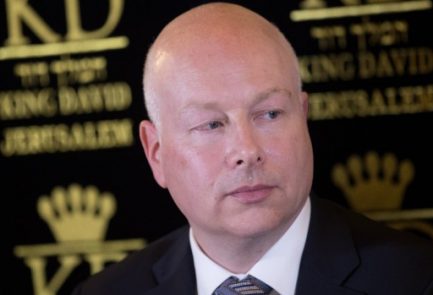
U.S. Special Envoy for Middle East Affairs Jason Greenblatt
|
U.S. Special Envoy to the Middle East Jason Greenblatt took to Twitter on Tuesday to attack senior Palestinian Authority official Saeb Erekat.
In a series of tweets, Greenblatt accused Erekat of “spreading misinformation” and refuted claims that the goal of American policy was to sever the West Bank and Gaza.
“Once again Saeb Erekat spreads misinformation, accusing me of trying to ‘separate Gaza from the West Bank.’ My reply: (1) Gaza & the West Bank have been separated for TEN years, physically & politically – between the PA & Hamas. Stop denying that reality.
“I’ve gone on record multiple times saying our peace plan hopes to bring them together, if possible. But we cannot pretend (nor should you) that the hatred between Hamas & Fatah doesn’t exist. We are in this to help all Palestinians, in both the West Bank and Gaza.
“Saeb, please have more respect for the Palestinians in both Gaza & the West Bank; they deserve it. Please stop misleading them with information you know is not true. #TimeToGetSerious.”
A week ago, Greenblatt condemned the PA’s public show of support for Venezuelan President Nicolás Maduro, whom the United States would like to see replaced by the country’s opposition leader, Juan Guaidó.
“The Palestinian leadership should be focused on providing a better future for Palestinians, but instead focuses on supporting the morally bankrupt Maduro who has stolen Venezuelans’ future and destroyed the Venezuelan economy,” Greenblatt tweeted.




 anneinpt
 artaxes
 danmillerinpanama
 davidking1530
 Peter Hofman
 Joseph Wouk
 Peter
Peter Louisiana Steve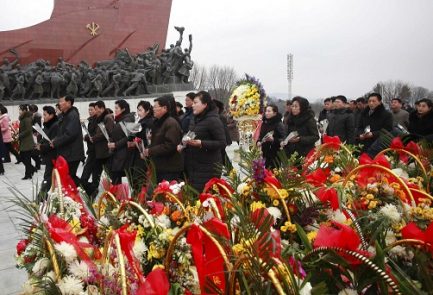
 WarSclerotic
Recent Comments