Women’s rights defenders in Iran will continue to fight despite “sinister crackdown” in 2018, activists vow • Last year has shown that the “people in Iran, especially women, are no longer afraid to go out and protest,” says Amnesty International official.
Reuters and Israel Hayom Staff
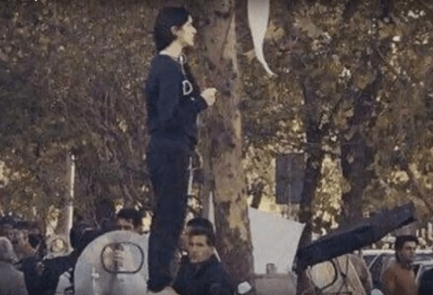
A woman in Tehran holds a headscarf on a stick to protest Iran’s mandatory hijab rules
|Screenshot: YouTube
Women’s rights defenders in Iran will continue their fight against the forced wearing of the hijab this year despite a “sinister crackdown” by authorities in 2018 in which dozens were arrested, activists said on Thursday.
Iranian women took to the streets holding their hijabs aloft in protests at the strict dress code that quickly spread on social media last year, leading to a “bitter backlash” by authorities, Amnesty International said in a statement.
“What the last year has shown is that people in Iran, especially women, are no longer afraid to go out and protest, whether in large numbers or through lone acts of protest,” said Mansoureh Mills, Amnesty International’s Iran researcher.
“As the authorities try to clamp down on these peaceful acts of resistance, we are likely to see more and more women and men being arrested, detained and prosecuted for demanding their rights,” Mills said.
Tara Sepehri Far, an Iran researcher at Human Rights Watch, said the crackdown was driven by women increasingly “pushing the limits.”
“Women who are choosing to protest are aware of the risks and are choosing to do so because they want to see a change. I don’t think there is any turning back on these women’s issues – it will only grow,” she told Reuters.
The remarks came in the same week two men were jailed for six years in Iran for supporting the campaign against the strict dress code, according to reports from two human rights groups.
One is married to prominent human rights lawyer Nasrin Sotoudeh, who was detained after representing some of the women protesters in court and faces multiple charges.
Her husband Reza Khandan, who had campaigned for his wife’s release, and Farhad Meysami, an activist, were sentenced to six years in prison according to the Center for Human Rights in Iran.
“Iran wants to silence these men by jailing them for standing by women who want the hijab to be a choice, not a requirement,” said Hadi Ghaemi, executive director of CHRI, in a statement.
Under Iran’s Islamic law, imposed after the 1979 revolution, women are obliged to cover their hair and wear long, loose-fitting clothes. Violators are publicly admonished, fined or arrested.
Amnesty said nearly 100 female women’s rights activists were arrested or remained in detention in Iran during 2018.
The military campaign Israel is waging in Syria escalated this week. The Russian response to recent events, a public demand that Israel cease its attacks in Syria, presents a watershed moment for Israel.
Right now, the Israeli leadership seems to think that this moment will pass and it can stick to its strategy. Prime Minister Benjamin Netanyahu has made a series of announcements that Israel, under his leadership, is indeed determined to keep fighting.
Israel has laid out three goals it wants to achieve in Syria: stopping the development of the terrorist front on the Golan Heights; preventing Iranian military entrenchment in Syria; and preventing Hezbollah and Iranian forces from arming themselves with long-range weapons. Nevertheless, concern about Israeli actions causing things to spiral out of control and doubt about Israel’s ability to achieve its goals in Syria are leading to calls to re-evaluate the Syrian campaign.
Brig. Gen. (res.) Itay Baron, a former head of research in the IDF’s Military Intelligence Directorate, recently wrote an article in which he calls to reexamine Israel’s strategy in Syria. Baron points out that changing circumstances are leading to “an overload of risks.” From an operational point of view, the Russian air defense systems in Syria pose a challenge to Israeli tactical superiority.
The strategy in Syria should first be evaluated in the context of an interwar campaign. A strategy document published by former IDF Chief of Staff Lt. Gen. Gadi Eizenkot defined the purpose of such a campaign: “To weaken negative entities, to secure deterrence, to put off the next war. [People] rightfully ask if continuing the campaign in its current format will delay a war, or cause it to break out by sparking unchecked escalation.”
Israel’s actions in Syria in the three years leading up to the 1967 Six-Day War is a historical example that can shed light on the dilemma. Starting in 1964, the IDF waged an interwar campaign that attempted to achieve three things: to thwart a plan to divert the water sources of the Jordan River; establish sovereignty in scattered areas along the Syrian border; and fight the terrorism that was on the rise as Fatah established its refugee camps in Syria. The General Staff, under the leadership of then-IDF Chief Yitzhak Rabin, expected to utilize the escalation of border clashes to spark a full-scale military conflict with Syria, even a war. Rabin believed that beating Syria in a war would also solve the problem of Fatah terrorism.
On April 7, 1967, farm work in the area east of the Sea of Galilee turned into a military incident. As both sides shot at each other, mortars fell on homes in Kibbutz Tel Katzir. Then-Prime Minister and Defense Minister Levi Eshkol gave a green light to send up fighter jets to take out the source of the shooting. In one day, the IAF flew 171 attack and patrol sorties and shot down six Syrian MiG jets.
That incident was undoubtedly a turning point in the regional deterioration that the Soviet Union and Egypt were spurring on prior to the Six-Day War. If the purpose of an interwar campaign is to avoid the danger of a war, then the battle on April 7, 1967, was a failure, despite its tactical achievements. But strategically, an interwar campaign can also have a different aim – such as making conditions right for a war when one eventually breaks out.
That reasoning can be applied to the campaign Israel is currently waging in Syria. We must focus on defining its purpose. Publicly, Israel is right to pursue its three stated goals. In secret, it is necessary to understand that even if continued Israeli actions in Syria could lead to war, we must prepare for war as a way out of the impasse in the north.
Maj. Gen. (res.) Gershon Hacohen is a senior research fellow at the Begin-Sadat Center for Strategic Studies.
Cairo officials: Hamas must decide whether group “takes its orders from Tehran or continues to implement understandings for calm” on Israel-Gaza border • Hamas must contain IDF attacks on Gaza if it wants Qatari cash, Egyptian official tells Israel Hayom.
Daniel Siryoti
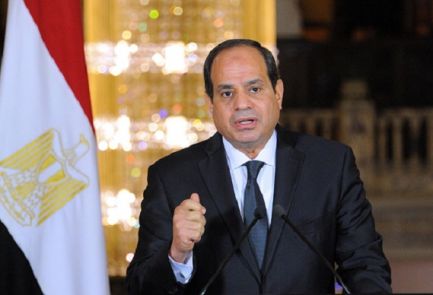
Egyptian President Abdel-Fattah el-Sissi
|Photo: Reuters
Israel Hayom has learned that alongside Jerusalem’s decision to postpone the transfer of Qatari funds to Hamas following the escalation on Israel’s border with the Gaza Strip, Egypt has issued the terrorist organization’s political bureau chief Ismail Haniyeh an ultimatum. Cairo has made it clear Haniyeh must decide whether “Hamas takes its orders from Tehran or continues to implement the understandings for calm” formulated by the head of Egyptian intelligence Abbas Kamel.
A senior Egyptian intelligence official told Israel Hayom that senior Hamas members, chief among them Haniyeh, had contacted Kamel with the request that Israel be sent the message that “Hamas was not involved in the grave events on the border.”
Hamas further asked the Egyptian intelligence chief to “prevent the postponement of the transfer of the money from Qatar.” Haniyeh clarified that “Hamas will not ignore the Islamic Jihad’s provocations, which were carried out at the direct order of Tehran.”
The source said that while “Hamas was furious that senior Islamic Jihad officials did everything they could to bring about an escalation in the security situation in Gaza that postponed the transfer of money from Qatar to the [Gaza] strip,” they did not expect the Egyptian ultimatum, which pushed them into a corner.
The Egyptian official’s remarks come as Egypt and other Sunni Muslim countries like Saudi Arabia and other Persian Gulf states are hoping to keep Iran from establishing itself militarily in Gaza as it has done in Yemen and Syria, at the same time as it eyes other Sunni Arab states.
Israel Hayom has further learned from the Egyptian official that Cairo made it clear to Haniyeh that “Egypt has no plans to take part in the indirect talks Qatari emissary [to Gaza] Mohammed al-Emadi is conducting on the issue of the postponed transfer of funds to Gaza.” This is due to the bitter rivalry between Qatar and Saudi Arabia, Egypt, Jordan and the UAE.
Reuters
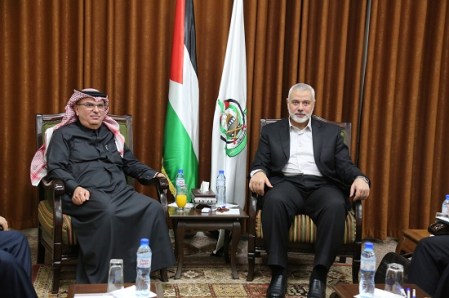
Qatari envoy Mohammed Al-Emadi meets with Hamas leader Ismail Haniyeh in Gaza City, Thursday
Qatar has been accused of providing support, funding and shelter to terrorist organizations and their operatives, including radical Sunni Islamic terrorist groups directed by Hamas’ umbrella movement movement, the Muslim Brotherhood, which was outlawed in Egypt and other Gulf states, as well as Shiite terrorist organizations like Hezbollah, which take their orders from Tehran.
The Egyptian official emphasized that “it was made clear to Haniyeh and the heads of Hamas that Cairo would not lay the groundwork for Qatar’s moves in Gaza, and Egypt has no intention of intervening in the event a military confrontation breaks out in Gaza because Hamas is looking the other way at the Palestinian Islamic Jihad’s provocations that come at the orders of Tehran.”
He said Cairo relayed to Hamas the message that it was to blame for the crisis “and that they will need to deal with it and contain the IDF’s attacks so that they can get the money from Qatar.”
At around 2:30 p.m. on Tuesday, Israelis enjoying the slopes of the Mount Hermon ski resort heard a loud bang and saw smoke trails in the skies above them. The Iron Dome missile defense system had intercepted a long-range missile fired by Iranian forces in Syria.
The missile was an Iranian-made surface-to-surface model with a range of some 200 km. with a payload of hundreds of kilograms of explosives that was fired from the outskirts of Damascus. The launch of this type of missile doesn’t happen at a moment’s notice. It took months of preparation and the approval of the highest officials in Tehran.
Israeli intelligence must have identified the chatter. They knew it was coming.
According to Syrian reports, an hour earlier Israeli jets carried out a rare daytime strike on Iranian targets in Syria. No special instructions had been given to the thousands of civilians enjoying the day and no warning siren was sounded.
However, the IDF was prepared, operating the recently upgraded Iron Dome to cover Mount Hermon.
While the primary targets of the Iron Dome system are short-range rockets and other artillery rounds that have been successfully intercepted, like the Iranian surface-to-surface missile on Sunday, the job should be done by the David Sling missile defense system.
This system became operational two years ago, and was first used last year against two SS-21 Tochka tactical ballistic missiles launched from Syria.
But, they missed their mark and David’s Sling has not been used since then.
Part of Israel’s multi-layered missile defense system umbrella, David’s Sling was designed to intercept tactical ballistic missiles and medium-to-long-range rockets, as well as cruise missiles fired at ranges between 40 to 300 km.
The Iranian missile would have made an ideal target to demonstrate to the Israeli public that the expensive defense system actually works.
Each interceptor launched by Israel’s David’s Sling system costs an estimated $1 million, but the army insists that the cost is not relevant when they are launched in order to defend the home front.
Israel’s air defenses also include the Iron Dome, which is designed to shoot down short-range rockets; and the Arrow system which intercepts ballistic missiles outside of the Earth’s atmosphere. Compared to the David’s Sling costly interceptor, each Iron Dome Tamir interceptor has a reported price of between $100,000 and $150,000.
But that shouldn’t be why we haven’t seen the use of David’s Sling since its failed interception.
Israel continuously improves the technology behind its anti-missile systems, with the Iron Dome upgraded with the Tamir interceptor that has a demonstrated capability against cruise missiles.
The Iron Dome undergoes upgrades “all the time” a spokesman for Rafael Advanced Systems told The Jerusalem Post, adding that the “system performed in accordance with its variety of capabilities.”
It was a good opportunity to give the new system a chance to fire while showing off its new capabilities to the US, as well as to the Iranians who want to deter Israel from launching further attacks against their interests in Syria.
But the question keeps popping up: Where is the David’s Sling?
Are there problems with the joint Israeli-US project that the public doesn’t know about?
Notwithstanding the continuous story of Israeli airstrikes on Iranian-affiliated targets across Syria, another interesting claim emerged in Iraqi media last week.
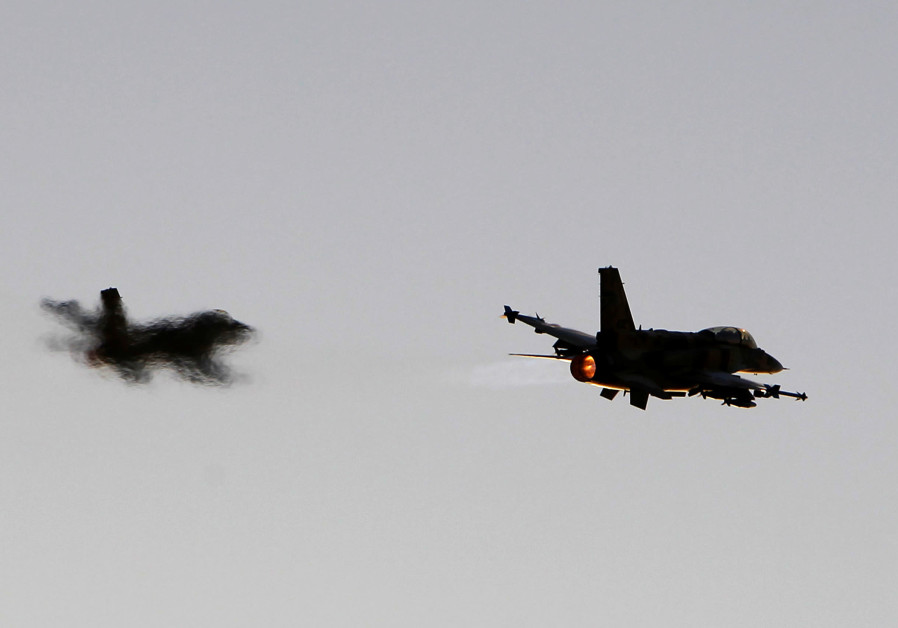
Israeli Air Force F-16 fighter jets take part in a ceremony for newly graduated air force pilots at Hatzerim Air Base, June 28, 2010.. (photo credit: REUTERS/BAZ RATNER)
Iraq emerges as a potential target for Israel as it steps up efforts to eliminate the Iranian land bridge to the Levant.
Recent Israeli airstrikes prove that air defense systems supplied to Syria by Russia are not enough to repulse Israeli aggression against Iranian targets in this country, but this may not be the end of the story. Israel may soon change the course of action to strike Iranian targets beyond Syria’s borders and launch aerial campaigns in Iraq where the airspace is defenseless and the political vacuum is too deep for the government to claim territorial sovereignty.
Russian S-300 air defense systems are waiting to be tested in the ongoing Syrian-Israeli conflict, and according to recent news, the Syrian Arab Army (SAA) did not employ these systems to repel Sunday’s large-scale air raid by Israel on various Syrian and Iranian positions in southern Syria. SAA had used S-200 missiles to mistakenly target a Russian jet in September 2018, and Russia announced the subsequent delivery of the more advanced S-300 missile launchers along with new radar systems to Syria. Although the Syrian government and Russia claim that Syrian air defense systems have successfully concluded the mission by intercepting the majority of Israeli missiles said to be fired from the Lebanese airspace, it remains obscure whether the famous S-300 systems are capable of defending Syria against an advanced and technological nation like Israel.
Notwithstanding the continuous story of Israeli airstrikes on Iranian-affiliated targets across Syria, another interesting claim emerged in Iraqi media last week that US Secretary of State Mike Pompeo warned the central Iraqi government of potential Israeli airstrikes against Shi’ite militia groups in that country. Iraqi news outlets alleged that Pompeo made it clear to Iraqi Prime Minister Adel Abdul Mahdi that the US government would refrain from taking action should Israeli missiles start raining on Iranian targets inside Iraq.
Iraq’s test with Iranian-vetted militia groups that have gained access to the Iraqi parliament as the second largest bloc in the final elections of May 2018 has been a rather challenging one for the world and the central Iraqi government alike. Former prime minister Haider al-Abadi’s last policy attempt was designed to bring the militia groups closer to the government as he sought to sack the national security adviser responsible for militias, Falih al-Fayyadh, and replace him in this position by himself. Fayyadh, who does not see any necessity to hide his connections to Iran, regained this position under Mahdi, and was even nominated to become the interior minister. The dispute over Fayyadh created a political deadlock as Iraq is still waiting for someone to become its interior minister to deal with the world’s most fragile security situation.
Reports that the US was concerned about a possible Israeli aerial campaign against Shi’ite militias in Iraq emerged as the debate on the government’s control over militias continue. The only known fact within the dramatically complicated political stalemate of Iraq is the notion that the Iraqi government has given up the race to control the militias, and the current picture is about not losing the government to Iranian militias entirely.
Iran’s land bridge to the Levant continues to function without any disturbances, and it is likely to be more functional in the near future as US troops are preparing to withdraw from Syria. The only force that has created obstacles for the Mullah regime’s grand strategic goal of connecting Beirut to Tehran through secure land routes has so far been Israel. The Trump administration’s overestimated confidence in renewed sanctions to curb Iran’s regional capabilities signal that the Jewish state will stay alone longer in being the sole preventative military force against Iran on this matter.
Hence, the Iranian land bridge is not only about the transferring of military equipment to the Levant, but a more sophisticated project that entails the creation, sponsorship and commanding of proxy forces en route. Iraq enters the picture not only for its geostrategic location adjacent to both Syria and Iraq, but also due to its Iran-friendly Shi’ite population and the willingness of large militia groups to continue the fight under the Iranian banner. In this regard, Iraq is safer for Iran than Syria where the majority of the local population is hostile Sunni Arabs governed by a rather weaker Iranian client that is no way a substitute for dedicated Iranian proxies within and in the periphery of the Iraqi government and military apparatuses.
Assuming that Syria will eventually complete the installation of S-300 missiles and master the use of complicated Russian-made radar systems to hunt Israeli fighter jets violating its airspace to strike Iranian targets, Iraq’s airspace will continue to remain defenseless against Israel. Although the calculation that Russian air defense technologies can save Syria may point to a devastating mistake for Syrians and Iranians alike, the Iranian land bridge to the Levant makes Israel extremely vulnerable also in Iraq.
Russia has no intention to meddle with Iraq’s political and security crises in order to safeguard Iranian-backed militias, and the US signals messages of inaction in the event of Israeli aerial operations if they target militia groups. If Israel decides to strike Iranian proxies in Iraq, not only will its fighter jets not meet any capable resistance but there will be many local factions willing to share intelligence on whereabouts of Iranian clients in the country as well.
The writer is the coordinator of Kurdish Studies Program at the Moshe Dayan Center for Middle Eastern and African Studies in Tel Aviv
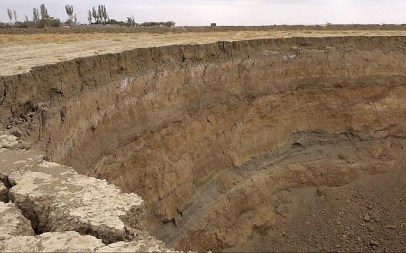
This frame grab from an August 8, 2018, video provided by Iranian Students’ News Agency, ISNA, shows an aerial view of a massive hole caused by drought and excessive water pumping in Kabudarahang, in Hamadan province, in western Iran. (ISNA via AP)
TEHRAN, Iran (AP) — Fissures appear along roads while massive holes open up in the countryside, their gaping maws a visible sign from the air of something Iranian authorities now openly acknowledge: the area around Tehran is literally sinking.
Stressed by a 30-year drought and hollowed by excessive water pumping, the parched landscape around Iran’s capital has begun to sink dramatically. Seen by satellite and on foot around the city, officials warn that what they call land subsidence poses a grave danger to a country where protests over water scarcity already have seen violence.
“Land subsidence is a destructive phenomenon,” said Siavash Arabi, a measurement expert at Iran’s cartography department. “Its impact may not be immediately felt like an earthquake, but as you can see, it can gradually cause destructive changes over time.”
He said he can identify “destruction of farmland, the cracks of the earth’s surface, damage to civilian areas in cities, wastewater lines, cracks in roads and damages to water and natural gas pipes.”
This frame grab from video taken on Aug. 8, 2018, provided by Iranian Students’ News Agency, ISNA, shows the edge of a massive hole caused by drought and excessive water pumping in Kabudarahang, in Hamadan province, western Iran. Some sinkholes in western Iran are as deep as 60 meters (196 feet). (ISNA via AP)
Tehran, which sits 1,200 meters (3,900 feet) above sea level against the Alborz Mountains on a plateau, has rapidly grown over the last 100 years to a sprawling city of 13 million people in its metropolitan area.
All those people have put incredible pressure on water resources on a semi-arid plateau in a country that saw only 171 millimeters (6.7 inches) of rain last year. Over-reliance on ground aquifers has seen increasingly salty water pumped from below ground.
“Surface soil contains water and air. When you pump water from under the ground surface, you cause some empty space to be formed in the soil,” Arabi told The Associated Press. “Gradually, the pressure from above causes the soil particles to stick together and this leads to sinking of the ground and formation of cracks.”
Rain and snow to recharge the underground aquifers have been in short supply. Over the past decade, Iran has seen the most prolonged and severe drought in more than 30 years, according to the United Nations’ Food and Agriculture Organization. An estimated 97 percent of the country has faced some level of drought, Iran’s Meteorological Organization says.
That has caused the sinkholes and fissures now seen around Tehran.
Iranian authorities say they have measured up to 22 centimeters (8.6 inches) of annual subsidence near the capital, while the normal range would be only as high as 3 centimeters (1.1 inches) per year.
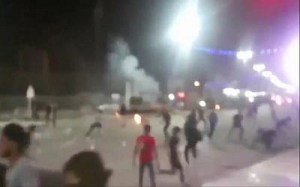
Screen capture from video of protests about the water situation in Iran, June 30, 2018. (Twitter)
Even higher numbers have been measured in other parts of the country. Some sinkholes formed in western Iran are as deep as 60 meters (196 feet).
Those figures are close to those found in a study by scientists at the GFZ German Research Centre for Geosciences in Potsdam previously discussed by the journal Nature and accepted by the journal Remote Sensing of Environment. Using satellite images between 2003 and 2017, the scientists estimate the western Tehran plain is sinking by 25 centimeters (9.8 inches) a year.
Either way, the numbers are alarming to experts.
“In European countries, even 4 millimeters (0.15 inches) of yearly subsidence is considered a crisis,” Iranian environmental activist Mohammad Darvish said.
The sinking can be seen in Tehran’s southern Yaftabad neighborhood, which sits close to farmland and water wells on the edge of the city. Cracks run down walls and below windows, and waterpipes have ruptured. Residents fear poorly built buildings may collapse.
The sinking also threatens vital infrastructure, like Tehran’s Imam Khomeini International Airport. German scientists estimate that land under the airport is sinking by 5 centimeters (1.9 inches) a year.
Tehran’s oil refinery, a key highway, automobile manufacturing plants and railroads also all sit on sinking ground, said Ali Beitollahi, a Ministry of Roads and Transportation official. Some 2 million people live in the area, he said.
Masoud Shafiee, head of Iran’s cartography department, also acknowledged the danger.
“Rates (for subsidence) are very high and in many instances it’s happening in densely populated areas,” Shafiee told the AP. “It’s happening near sensitive infrastructures like airports, which we consider a top priority.”
Geopolitics play a role in Iran’s water crisis. Since the country’s 1979 Islamic Revolution, Iran has sought to become self-sufficient across industries to thwart international sanctions. That has included agriculture and food production.
The problem, however, comes in inefficient water use on farms, which represents over 90 percent of the country’s water usage, experts say.
Already, the drought and water crisis has fed into the sporadic unrest Iran has faced over the last year. In July, protests around Khorramshahr, some 650 kilometers (400 miles) southwest of Tehran, saw violence as residents of the predominantly Arab city near the border with Iraq complained of salty, muddy water coming out of their taps amid the yearslong drought.
The unrest there only compounds the wider unease felt across Iran as it faces an economic crisis sparked by US President Donald Trump’s decision to withdraw America from Tehran’s nuclear deal with world powers.
Prime Minister Benjamin Netanyahu, who long has opposed Iran’s theocratic government, even released an online video in June offering his country’s water technology in a jab at Iran’s leaders.
“The Iranian regime shouts: ‘Death to Israel,’” Netanyahu said. “In response, Israel shouts: ‘Life to the Iranian people.’”
Iranian officials shrugged off the offer. But solutions to the water crisis will be difficult to find.
The crisis “stems from decades of sanctions and compounding political mismanagement that is likely to make it very difficult to alleviate the emerging crisis before it wreaks lasting damage upon the country,” wrote Gabriel Collins, a fellow at Rice University’s Baker Institute.
Iranian authorities have begun to crack down on illegal water wells. They also are exploring using desalinization plants along the Persian Gulf as well, though they require tremendous energy. Farming practices also need to change as well, experts say.
“We need to shift our development model so that it relies less on water and soil,” Darvish, the activist, said. “If we don’t act quickly to stop the subsidence, it can spread to other areas.”
Rights group says Tehran arrested 7,000 people last year in ‘shameless campaign of repression’; 26 protesters were killed; 9 people died in custody in suspicious circumstances
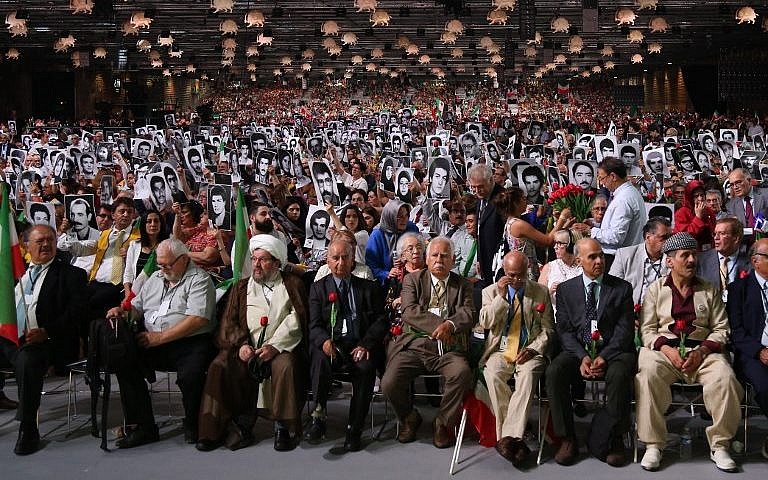
People hold pictures of relatives killed by the Iranian regime during the ‘Free Iran 2018 – the Alternative’ event on June 30, 2018, in Villepinte, north of Paris. Six people were arrested in Belgium, Germany and France for an alleged plot to attack the rally, including an Iranian diplomat and his wife. (AFP Photo/Zakaria Abdelkafi)
DUBAI, United Arab Emirates (AP) — Amnesty International has accused Iran of arresting more than 7,000 people last year, including journalists, lawyers, minority rights activists and women, in a “shameless campaign of repression.”
The new report published on Thursday came as the US released an American-born anchorwoman for Iranian state television after she was detained on a material witness warrant in Washington. Iranian officials and state media have widely condemned the arrest of Marzieh Hashemi.
Amnesty and the Committee to Protect Journalists noted Iran’s widespread arrest and harassment of journalists.
Amnesty said Iran arrested at least 50 media workers in 2018. It said at least 20 “were sentenced to harsh prison or flogging sentences after unfair trials.”
Overall, hundreds of dissidents were jailed or flogged, Amnesty said, at least 26 protesters against the regime were killed, and nine people died in custody in suspicious circumstances.
“Iranian authorities beat unarmed protesters and used live ammunition, teargas and water cannon throughout the year – particularly in January, July and August – with thousands arbitrarily arrested and detained,” according to a Guardian report on the Amnesty allegations.
“2018 will go down in history as a year of shame for Iran,” Philip Luther, Amnesty International’s Middle East research and advocacy director, was quoted saying. “The staggering scale of arrests, imprisonments and flogging sentences reveal the extreme lengths the authorities have gone to in order to suppress peaceful dissent.
“From underpaid teachers to factory workers struggling to feed their families, those who have dared to demand their rights in Iran today have paid a heavy price,” he noted. “Throughout 2018, the Iranian authorities waged a particularly sinister crackdown against women’s rights defenders. Governments which are engaged in dialogue with Iran must not stay silent while the net of repression rapidly widens.”
Hashemi, meanwhile, sent a message to supporters on Thursday.
Marzieh Hashemi (Hossein Hashemi via AP)
She said in Farsi: “I have a lot of things to say about what I have suffered.”
Hashemi, 59, who works for the Press TV network’s English-language service, was detained by federal agents January 13 in St. Louis, Missouri, where she had filmed a Black Lives Matter documentary after visiting relatives in the New Orleans area, her son said. She was then transported to Washington and had remained behind bars until Thursday.
Hashemi appeared at least twice before a US District judge in Washington, and court papers said she would be released immediately after her testimony before a grand jury. Court documents did not include details on the criminal case in which she was named a witness.
US federal law allows judges to order witnesses to be detained if the government can prove that their testimony has extraordinary value for a criminal case and that they would be a flight risk and unlikely to respond to a subpoena. The statute generally requires those witnesses to be promptly released once they are deposed.
Hashemi is a US citizen and was born Melanie Franklin. She lives in Tehran and comes back to the United States about once a year to see her family, usually scheduling documentary work in the US, her son said.
Press TV issued a statement Wednesday, saying, “Marzieh Hashemi and her family will not allow this to be swept under the carpet. They still have serious grievances and want answers as to how this was allowed to happen. They want assurances that this won’t happen to any Muslim — or any other person — ever again.”
The network said Hashemi would remain in Washington for a protest Friday.
Hashemi’s detention comes amid heightened tensions between Iran and the US after President Donald Trump withdrew the United States from the 2015 nuclear deal. Iran also faces increasing criticism of its own arrests of dual citizens and other people with Western ties.
Head of Iran’s Atomic Energy Organisation Ali Akbar Salehi adjusts his earphones during a news conference at the European Commission headquarters in Brussels, November 26, 2018. (Francisco Seco/AP)
Ali Akbar Salehi, the head of the Atomic Energy Organization of Iran, has detailed how Iran quietly purchased replacement parts for its Arak nuclear reactor while it was conducting negotiations for an international agreement under which it knew it would be required to destroy the original components.
In an interview broadcast on Iran’s Channel 4 TV on January 22, Salehi recalled that during talks for the so-called Joint Comprehensive Plan of Action, the 2015 deal that lifted sanctions on Iran in return for it dismantling the weapons-capable parts of its nuclear program, Iranian Supreme Leader Ali Khamenei warned his country’s negotiators that he expected Western parties to renege on the agreement.
An English translation of some parts of the interview were provided Thursday by the Washington-based non-profit Middle East Media Research Institute.
“When our team was in the midst of the negotiations, we knew that [the Westerners] would ultimately renege on their promises,” Salehi said. “The leader [Khamenei] warned us that they were violators of agreements. We had to act wisely. Not only did we avoid destroying the bridges that we had built, but we also built new bridges that would enable us to go back faster if needed.”
The industrial complex at Arak in central-west Iran was a key topic in negotiations due to its nuclear reactor and heavy-water production facility. Western powers initially demanded that the core reactor mechanism — know as a calandria — be removed and that the pit in which it sits be filled with cement. While Iran agreed to remove — but not dismantle — the calandria, it also negotiated that only the pipes and openings leading to the pit be filled with cement, which was eventually done.
However, Salehi detailed in Tuesday’s interview, Iran’s nuclear team as a precaution purchased replacement parts for some of the piping used in the reactor which it had promised to fill with cement. They kept that fact hidden during the JCPOA negotiations, he made clear, and also hid it from other Iranian officials.
Illustrative: Iran’s heavy water nuclear facilities near the central city of Arak. (CC-BY-SA 3.0/Wikimedia/Nanking2012)
Inside the reactor core, said Salehi, “there are tubes where the fuel goes. We had bought similar tubes, but I could not declare this at the time. Only one person in Iran knew this. We told no one but the top man of the regime [Khamenei].”
“We had bought the same quantity of similar tubes,” he explained. “When they told us to pour cement into the tubes… we said: ‘Fine. We will pour.’ But we did not tell them that we had other tubes. Otherwise, they would have told us to pour cement into those tubes as well. Now we have the same tubes.”
However, Salehi insisted that such subterfuge did not indicate that Iran was or is seeking nuclear weapons, as the Trump Administration and Israel insist. Iran’s plan was to modernize the Arak reactor, which was based on an old Russian design, and use the new facility to produce reduced quantities of plutonium that would be used for nuclear fuel, but not weapons, he said.
“First, we do not intend to build a nuclear weapon,” he said and noted the refurbishment was agreed on during the nuclear talks. “Second, this [reactor’s] plutonium is not suitable for nuclear weapons.”
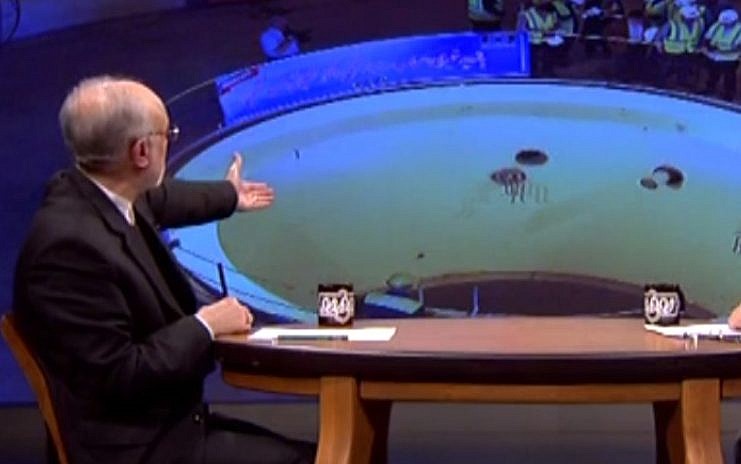
Screen capture from video showing the head of Iran’s Atomic Energy Organization Ali Akbar Salehi pointing to the empty reactor pit inside the Arak nuclear facility in Iran, January 22, 2019. (Memri)
Salehi also clarified that a photo apparently showing the Arak reactor pit filled with cement was fake, a photoshopped image produced by Iranian hardliners who opposed the nuclear deal and wanted to assert that Iran had been humiliated by the West into destroying its own plants.
US President Donald Trump pulled out of the nuclear deal in May last year but the other signatories, Britain, France, Germany, Russia, China and Iran have all agreed to try to keep the pact alive on their own. Trump insists the original agreement did not go far enough in curbing Iran’s nuclear weapons ambitions and wants to renegotiate the JCPOA with stricter terms. In the meantime Washington has imposed heavy sanctions on Iran that could weaken the ability of the remaining parties to maintain the deal.
Last week Salehi said Iran has begun “preliminary activities for designing” a modern process for 20-percent uranium enrichment. Restarting enrichment at that level would mean Iran had withdrawn from the 2015 nuclear deal.
Tehran has in the past warned that if the remaining parties are not able to keep up the trade and financial benefits the deal provided, it will also pull out and restart controversial parts of its nuclear program.
Extra troops sent to border area, Iron Dome batteries deployed with Friday protests expected to intensify amid anger over brief Israeli freeze on Gulf cash
A protester draped in the Palestinian flag gestures at Israeli forces across the border fence, during clashes following a demonstration along the border with Israel east of Gaza City on January 18, 2019. (Said KHATIB / AFP)
The Israeli military was gearing up Friday for renewed violence on the Gaza border, a day after Hamas rejected millions in Qatari aid money, ratcheting up tensions on the volatile frontier.
Officials from the Hamas terror group made the surprise announcement that they would be rejecting $15 million in aid money from Qatar Thursday, days after Israel temporarily froze the transfer — part of a tacit ceasefire deal — as a punitive measure following a series of shooting incidents along the border.
The move stoked fears in Israel that Hamas, which is the de facto ruler in the Gaza Strip, could allow weekly protests along the border to become more violent after several weeks of relative calm, and could also renew rocket fire on Israeli towns.
“If no agreement is reached, the chances for violence along the border tomorrow afternoon are high,” a Gazan source told the Ynet news site.
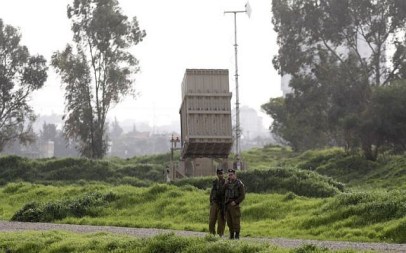
The Israel Defense Forces on Thursday began beefing up troop presence in areas near the Gaza border. It also ]deployed Iron Dome missile defense batteries in the Tel Aviv metropolitan area and in the south as a precautionary measure against potential attack from either the Gaza Strip or from the north, where the security situation has also been increasingly precarious.
Israeli soldiers stand near a battery of the Iron Dome defence system, designed to intercept and destroy incoming short-range rockets and artillery shells, deployed in Tel Aviv on January 24, 2019. (Menahem KAHANA / AFP)
Defense officials reportedly fear that the Iran-backed Islamic Jihad terror group could fire a longer-range missile from Gaza into Israel’s densely populated heartland.
Israeli officials are also worried that fighters in the Strip could carry out cross-border shooting attacks, either with light arms or anti-tank missiles, the Ynet news website reported. Some roads near the Gaza fence are expected to be closed off Friday.
The money transfer, originally slated for Wednesday, had been frozen Tuesday night by Prime Minister Benjamin Netanyahu after two incidents in which Israeli soldiers were shot at along the border, including one in which a soldier was hit in the helmet and lightly injured. Israel also responded by shelling observation posts and carrying out airstrikes, killing one Hamas fighter.
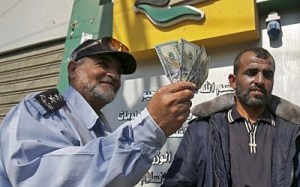
A Palestinian man shows his money after receiving his salary in Rafah in the southern Gaza Strip November 9, 2018. (Said Khatib/ AFP)
Under the unofficial ceasefire arrangement between Israel and Hamas, Doha has agreed to transfer a total of $90 million to Gaza in monthly installments of $15 million. The group received the funds, in $100 bills, in November and December.
The money, $10 million of which goes to Hamas civil servants and the rest to needy residents in the Strip, was seen by defense analysts as key to calming tensions between Israel and the Palestinian enclave, which has seen regular violence along the border over the past 10 months.
Israel approved the transfer on Thursday, but moments later Hamas announced it would reject the money, accusing Israel of violating the ceasefire agreement brokered by the Egyptian military, UN envoy Nickolay Mladenov and Qatar by delaying the transfer of the money.
“We say our people and Gaza will not be part of the blackmail and the internal Zionist elections,” senior Hamas official Khalil al-Hayya said.
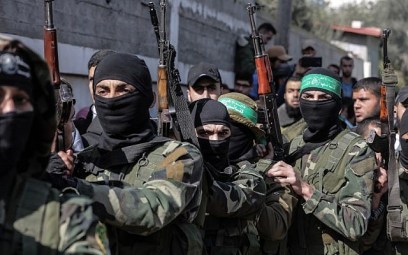
Masked Hamas gunmen attend the funeral of Mahmoud al-Nabaheen, 24, in the Bureij refugee camp, in the central Gaza Strip, on January 23, 2019. (MAHMUD HAMS / AFP)
According to reports, Hamas had been trying to calm the situation after the Tuesday flareup to allow the money through, but the use of the cash as a carrot had increased pressure on the group to reject it and take a harder line toward Israel.
Israel’s entire security establishment had been in favor of moving forward with the transfer, including the Israel Defense Forces, the Mossad intelligence service, the Shin Bet security service, and the National Security Council.
During a security cabinet meeting on Wednesday, defense officials said that it was the Islamic Jihad terror group, not Hamas, that had been behind the attacks on Israeli troops on the Gaza border the day before, and that while Israel’s shelling in response had killed a Hamas fighter, the terror group that rules Gaza has refrained from responding.
The transfer of the funds to Hamas, which calls for the destruction of the Jewish state, is unpopular in Israel, esecially among right wing voters who will be going to the polls on April 9. Hamas had initially seen the freeze as little more than campaign posturing from Netanyahu.
Since March, Palestinians have been holding regular protests on the border. Israel has accused Gaza’s Hamas rulers of using the demonstrations as a cover for attacks on troops and attempts to breach the security fence.
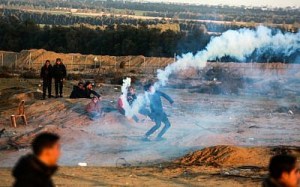
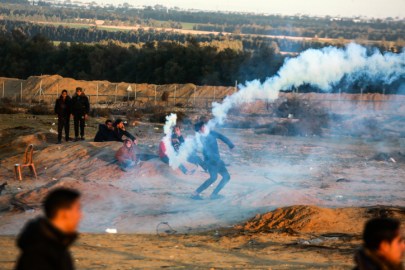
Palestinian protesters during clashes with Israeli forces following a demonstration along the border with Israel, east of Rafah in the southern Gaza Strip, on January 18, 2019. (Abed Rahim Khatib/ Flash90)
Last week some 10,000 Palestinians participated in riots along the border on Friday afternoon, throwing rocks, fire bombs and hand grenades at Israeli troops, and burning tires. Israeli soldiers reportedly responded with tear gas and, in some cases, live fire.
Over 200 Palestinians have been killed and thousands more injured along the Gaza border by Israeli troops since March, according to statistics from the United Nations and the Strip’s Hamas-run health ministry. Hamas has claimed many of the dead as its members.
An IDF soldier was shot dead by a Palestinian sniper in July during a riot along the security fence. A Palestinian man living in Israel was also killed by a rocket attack from the Gaza Strip in November.
Adam Rasgon and Judah Ari Gross contributed to this report.
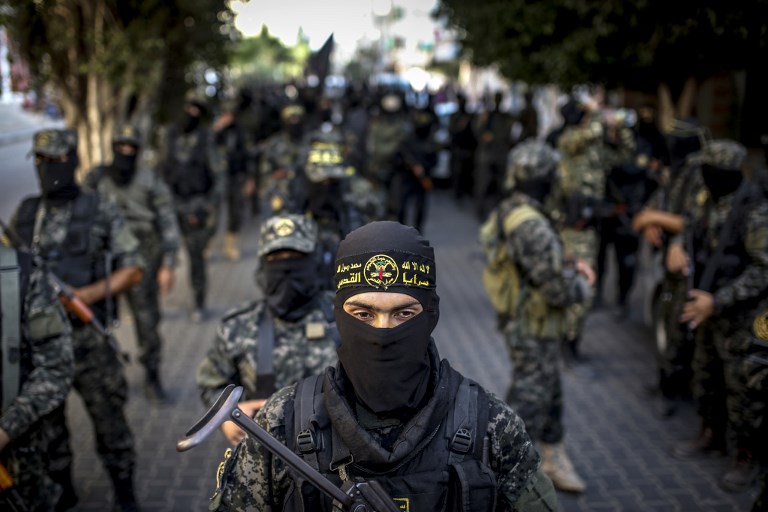
Members of the Iran-backed Palestinian Islamic Jihad terror group march during a military parade in Gaza City on October 4, 2018. (Anas Baba/AFP Photo)
The Israeli military on Thursday accused the Iran-backed Palestinian Islamic Jihad terror group of efforts to “destabilize” the situation in the Gaza Strip, as an unofficial ceasefire agreement between Israel and Hamas appeared to be in peril of collapsing.
“In recent weeks, we have monitored increasing attempts by the Islamic Jihad movement to destabilize the security situation in the Gaza Strip,” the Israel Defense Forces’ Arabic-language spokesperson tweeted.
“The activities of the radical Islamic Jihad movement risk… the attempts to improve the civilian reality in the Gaza Strip,” Lt. Col. Avichay Adraee added.
The accusations by the army spokesman came shortly after the Hamas terror group announced it would not be accepting millions of dollars in funding from the Qatari government, a key aspect of the unofficial ceasefire arrangement with Israel.
Hamas government employees wait to receive 60 percent of their long-overdue salaries, at the main Gaza Post Office, in Gaza City, November 9, 2018. (AP Photo/Adel Hana)
The $15 million tranche — out of a total of $60 million still to be paid to Hamas in four monthly installments — had originally been scheduled for transfer last week, but was blocked by the Israeli security cabinet over violence along the border. The funds were then due to be transferred on Wednesday, but were delayed then, too, after Israeli soldiers came under fire along the Gaza border on Tuesday.
The Israeli military believes the shooting attacks on its troops — including sniper fire at an Israeli commander, who was hit in the helmet by a bullet — were directed by the Palestinian Islamic Jihad, the second largest terror group in the Gaza Strip, which receives much of its funding from Israel’s nemesis, Iran.
“Residents of Gaza, through its activities, Islamic Jihad is putting your safety and security at risk,” Adraee wrote.
IDF Spokesman in Arabic, Avichay Adraee at the Ministry of Foreign Affairs in Jerusalem on September 6, 2017. (Yonatan Sindel/Flash90)
“There is no question about the loyalty of this organization. The only issue is whether it will succeed in its plans to drag you all toward an escalation,” he added.
Following further cabinet discussions and in light of the recommendations of the heads of all of Israel’s security services, the government on Thursday said that it had approved the transfer of the funds to cash-strapped Hamas, which rules the Gaza Strip.
However, moments after the Israeli announcement, senior Hamas leader Khalil al-Hayya said his group was not accepting the Qatari money, accusing Israel of violating the ceasefire agreement brokered by the Egyptian military, UN envoy Nickolay Mladenov and Qatar by withholding the money in response to border violence.
The helmet of an IDF officer that was hit by a sniper bullet during a riot along the Gaza border on January 22, 2019. (Courtesy)
“We told the brother and ambassador [Qatari envoy Mohammed al-Emadi] that we reject the third Qatari grant in response to the occupation’s behavior and its attempts to disengage from the understandings that Egypt, the United Nations and Qatar mediated,” Hayya told reporters in a Gaza press conference.
“We say our people and Gaza will not be part of the blackmail and the internal Zionist elections,” he said.
Senior Hamas official Khalil al-Hayya making a statement to the press on January 24, 2019. (Screenshot: Al-Aqsa TV)
It was not immediately clear how Hamas’ refusal to accept the remaining money would affect the unofficial ceasefire.
Prior to Hamas’ announcement, the Israel Defense Forces deployed Iron Dome missile defense batteries in the Tel Aviv metropolitan area and in the south as a precautionary measure against potential attack from either the Gaza Strip or from the north, where the security situation has also been increasingly precarious.
Under the unofficial ceasefire arrangement between Israel and Hamas, Doha agreed to transfer a total of $90 million to Gaza in monthly installments of $15 million. The group received the funds, in $100 bills, in November and December.
The money, $10 million of which goes to Hamas civil servants and the rest to needy residents in the Strip, was seen by defense analysts as key to calming tensions between Israel and the Palestinian enclave, which has seen regular violence along the border over the past 10 months.
“With our many active forces and factions, we are leading our efforts in the direction of obtaining our rights, which have been taken from us, on the path to liberation and return,” Hayya said.
Palestinian protesters during clashes with Israeli forces following a demonstration along the border with Israel, east of Rafah in the southern Gaza Strip, on January 18, 2019. (Abed Rahim Khatib/ Flash90)
The Hamas official said al-Emadi “understood” the terror group’s decision not to accept the funds.
“In the name of the Palestinian people, I offer our gratitude to Qatar — its emir, its people and its institutions. We tell them that Qatar’s efforts are appreciated,” the Hamas official said.
Al-Emadi arrived in the Gaza Strip late Wednesday evening via the Erez crossing, the Hamas-linked Al-Quds TV reported.
A diplomatic source told The Times of Israel that al-Emadi was still in his office in Gaza as of Thursday evening, noting that it was unclear when he would depart Gaza — a possible sign that negotiations with Hamas were ongoing.
The transfer of the funds to Hamas, which calls for the destruction of the Jewish state, is widely unpopular in Israel.
Since March, Palestinians have been holding regular protests on the border. Israel has accused Gaza’s Hamas rulers of using the demonstrations as a cover for attacks on troops and attempts to breach the security fence.
Over 200 Palestinians have been killed and thousands more injured along the Gaza border by Israeli troops during this time, according to statistics from the United Nations and the Strip’s Hamas-run health ministry. Hamas has claimed many of the dead as its members.
An IDF soldier was shot dead by a Palestinian sniper in July during a riot along the security fence. A Palestinian man living in Israel was also killed by a rocket attack from the Gaza Strip in November.










 WarSclerotic
Recent Comments