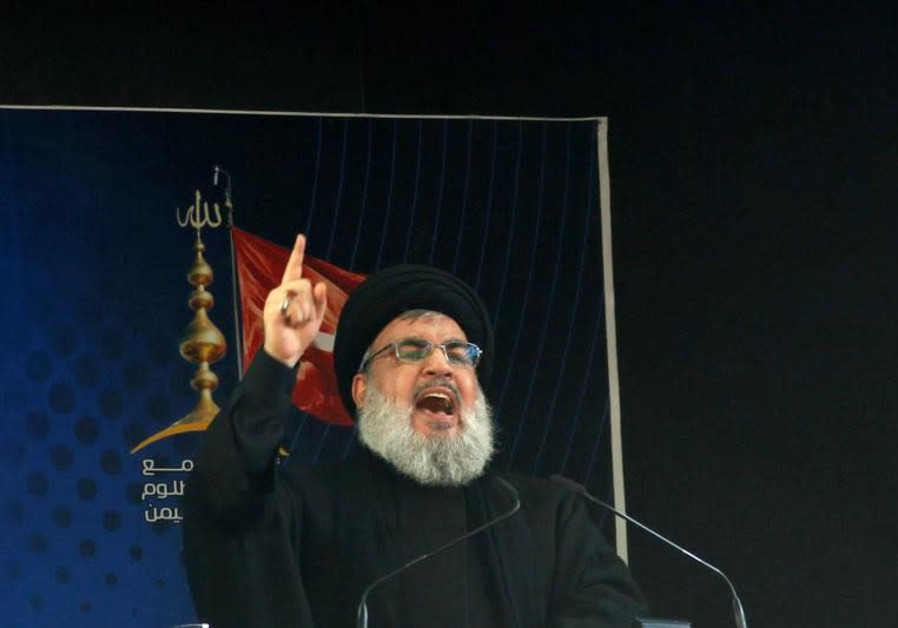
The secretary general of Hezbollah spoke Saturday night for the first time since November.
Source: Iran to France: ‘We will reconsider our relations with Europe’ – Middle East – Jerusalem Post
“Our military capabilities are part of legitimate defense powers of the state, and guarantee the national security of the Islamic Republic, which is based on deterrence.”
Iranian Foreign Ministry spokesman Bahram Qassemi responded Saturday to France’s threat to sanction the Islamic Republic over its ballistic missile program, saying that Iran may have to “reconsider” its ties with Europe.
“If further sanctions are imposed on Iran,” Qassemi said, “we will reconsider our relations with Europe and continue to advance our defense capabilities.”
“The Islamic Republic of Iran has always sought peace and stability in the region and believes that the massive sales of sophisticated and aggressive weapons by the United States and several European countries, including France, have undermined the peace and quiet in the region,” Qassemi added.
In addition, Qassemi said that Iran had planned its defense capabilities on the basis of a realistic assessment of existing threats, and would strengthen them as needed.
On Friday, the French foreign ministry announced their intention to impose significant sanctions on Iran if there is no progress in talks on the country’s ballistic missile program.
Relations between the two countries have become strained in recent months, after France accused Iran of having ordered a massive terrorist attack, never carried out, in Paris. France claimed that the orchestrator of the attack, which was foiled in June this year, was the Iranian intelligence minister himself, Saeid Hashemi Moghadam.
“Behind this conclusion was a long, meticulous and detailed investigation that allowed us to reach an unequivocal conclusion that the responsibility of the attack lies within the Iranian intelligence ministry,” French officials said at the time.
“We want the French authorities to be realistic about the Islamic Republic of Iran, and we warn against the evil forces that are trying to destroy the long-standing relations between Iran and France and the rest of Europe,” a spokesman for the Iranian Foreign Ministry said in response to Qassemi’s statement.
Source: Experts, images suggest a Saudi ballistic missile program | The Times of Israel
Researcher says missiles could act as a ‘reasonable hedge’ in case Saudi Arabia doesn’t receive US support in attack on Iranian targets
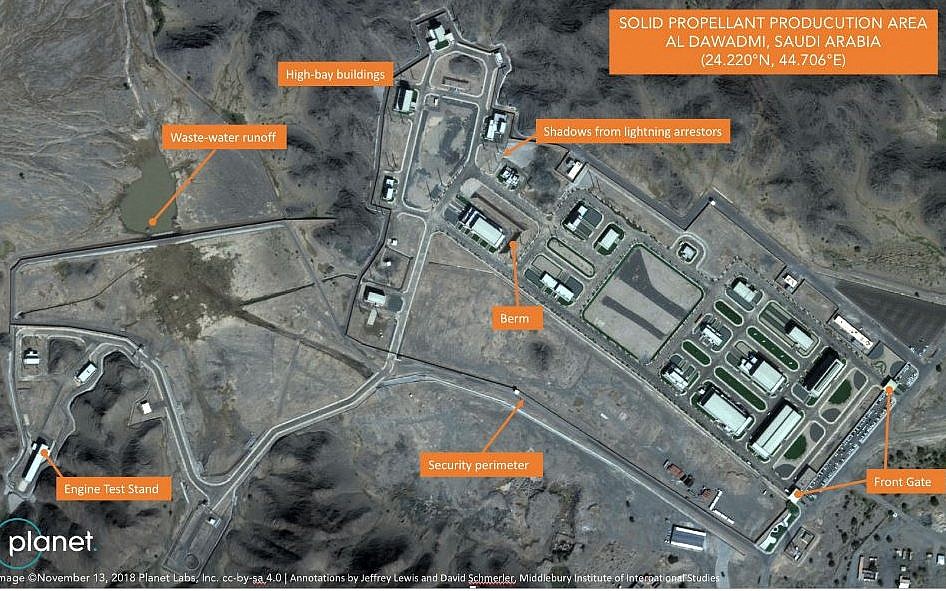
DUBAI, United Arab Emirates (AP) — A military base deep inside Saudi Arabia appears to be testing and possibly manufacturing ballistic missiles, experts and satellite images suggest, evidence of the type of weapons program it has long criticized its arch-rival Iran for possessing.
Further raising the stakes for any such program are comments by Saudi Arabia’s powerful Crown Prince Mohammed bin Salman, who said last year the kingdom wouldn’t hesitate to develop nuclear weapons if Iran does. Ballistic missiles can carry nuclear warheads to targets thousands of kilometers (miles) away.
Officials in Riyadh and the Saudi Embassy in Washington did not respond to requests for comment.
Having such a program could further strain relations with the US, the kingdom’s longtime security partner, at a time when ties already are being tested by the killing of Washington Post columnist Jamal Khashoggi and the Saudi-led war in Yemen.
Jeffrey Lewis, a missile expert at the Middlebury Institute of International Studies in Monterey, California, said heavy investment in missiles often correlates with an interest in nuclear weapons. “I would be a little worried that we’re underestimating the Saudis’ ambitions here,” said Lewis, who has studied the satellite images.
The images, first reported by The Washington Post, focus on a military base near the town of al-Dawadmi, some 230 kilometers (145 miles) west of Riyadh, the Saudi capital. Jane’s Defence Weekly first identified the base in 2013, suggesting its two launch pads appear oriented to target Israel and Iran with ballistic missiles the kingdom previously bought from China.
The November satellite images show what appear to be structures big enough to build and fuel ballistic missiles. An apparent rocket-engine test stand can be seen in a corner of the base — the type on which a rocket is positioned on its side and test-fired in place. Such testing is key for countries attempting to manufacture working missiles, experts say.
Michael Elleman, the senior fellow for missile defense at the International Institute for Strategic Studies in Washington, also reviewed the satellite photos and said they appear to show a ballistic missile program.
The question remains where Saudi Arabia gained the technical know-how to build such a facility. Lewis said the Saudi stand closely resembles a design used by China, though it is smaller.
Chinese military support to the kingdom would not come as a surprise. The Chinese have increasingly sold armed drones to Saudi Arabia and other Mideast nations, even as the US blocks sales of its own to allies over proliferation concerns. Beijing also sold Riyadh variants of its Dongfeng ballistic missiles, the only ones the kingdom was previously believed to have in its arsenal.
Asked by The Associated Press on Friday about the base, China’s Defense Ministry declined immediately to comment.
“I have never heard of such a thing as China helping Saudi Arabia to build a missile base,” Chinese Foreign Ministry spokeswoman Hua Chunying said.
Neither Saudi Arabia nor China are members of the Missile Technology Control Regime, a 30-year-old agreement aimed at limiting the proliferation of rockets capable of carrying weapons of mass destruction, such as nuclear bombs.
Saudi Arabia, along with Israel and the United States, has long criticized Iran’s ballistic missile program, viewing it as a regional threat.
Iran, whose nuclear program for now remains limited by its 2015 deal with world powers, insists its atomic program is peaceful. But Western powers have long feared it was pursuing nuclear weapons in the guise of a civilian program, allegations denied by Tehran.
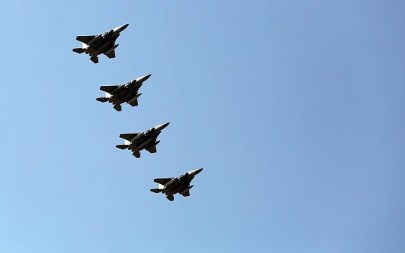
Iran has relied on its ballistic missiles as its own air force is largely made up of pre-1979 fighter jets. Saudi Arabia, on the other hand, has a fleet of modern F-15s, Typhoons and Tornadoes — which raises the question of why the Saudis would choose to develop the missiles.
Elleman, the defense expert, said that while Saudi pilots are skilled, the kingdom still needs American help with logistics.
“Today, they rely heavily on direct American support. There is no absolute guarantee that US forces and supporting functions will aid a Saudi attack on Iranian targets,” Elleman told the AP. “Ballistic missiles are a reasonable hedge against those concerns.”
Saudi Arabia, meanwhile, has been targeted by ballistic missiles fired from neighboring Yemen by the Houthi rebels, some of which have reached Riyadh. Researchers, Western nations and UN experts say Iran supplied those missiles to the rebels, something Tehran and the rebels deny.
Saudi Arabia is pursuing its own nuclear program, and Prince Mohammed, the 33-year-old son of King Salman who is next in line for the throne, said it would race for an atomic weapon if Iran were to develop one.
“Saudi Arabia does not want to acquire any nuclear bomb, but without a doubt if Iran developed a nuclear bomb, we will follow suit as soon as possible,” Prince Mohammed told CBS’ “60 Minutes” in an interview aired last March.
A Saudi program would only complicate efforts by the US and its Western allies to limit Iran’s ballistic missile program, said STRATFOR, the Austin, Texas-based private intelligence firm.
STRATFOR said that “should Saudi Arabia move into a test-launch phase, the United States will be pressured to take action with sanctions,” as it has done with Iran.
Congress has grown increasingly critical of Saudi Arabia since the October 2 assassination of Khashoggi at the Saudi Consulate in Istanbul, allegedly carried out by members of Prince Mohammed’s entourage. The kingdom’s yearslong war in Yemen also has angered lawmakers.
If the Saudis produce “medium-range systems inherently capable of carrying nuclear weapons, the response will be much more robust, though likely out of public view,” Elleman said. “Congress, on the other hand, may lash out, as this will be seen as another affront to the US and regional stability.”
Source: Likud minister Gallant: Israel has plan to boot Iran from Syria | The Times of Israel
Meanwhile, Netanyahu reportedly urges US to keep troops at a base in southern Syria seen as key to countering Iranian forces
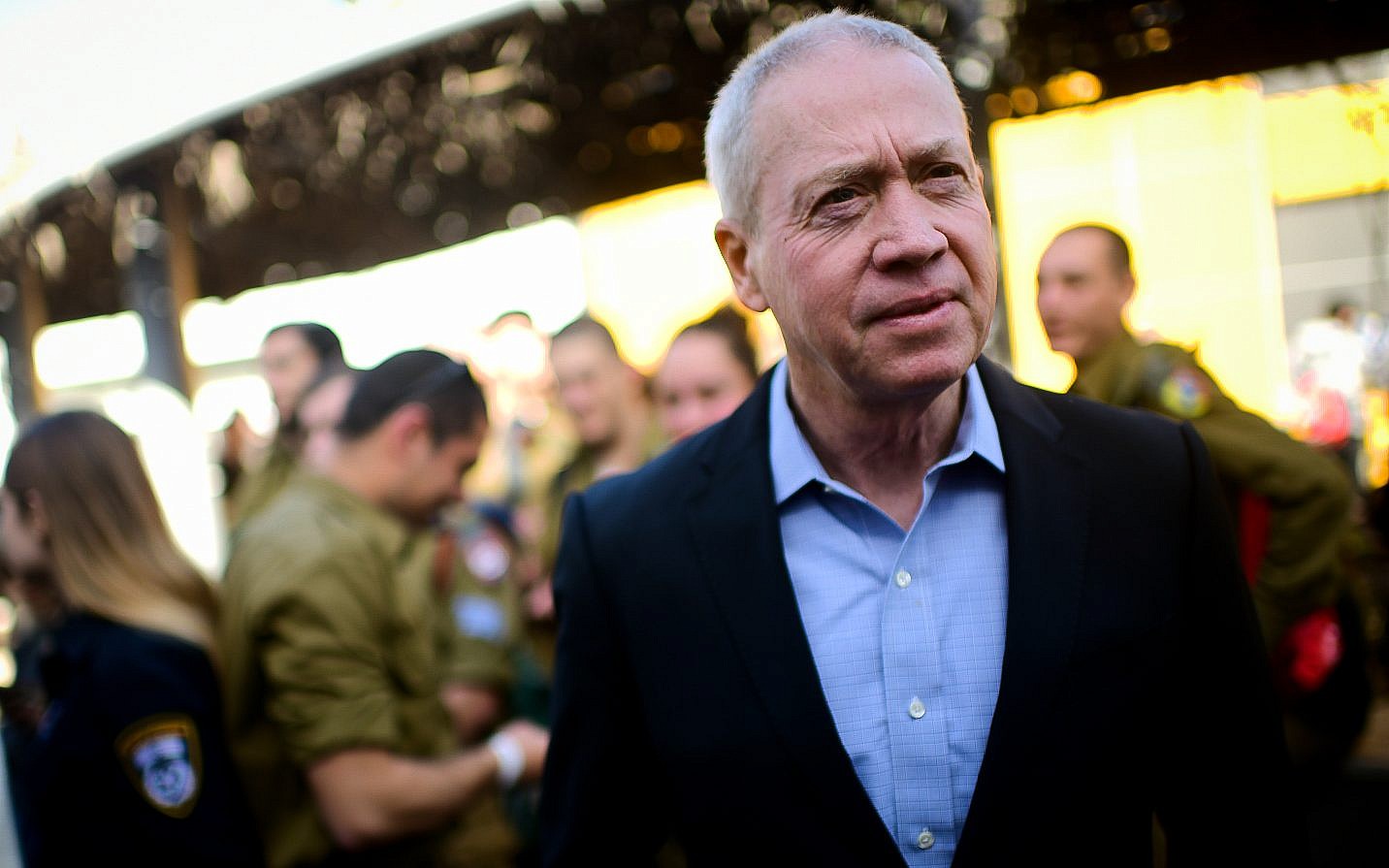
Immigration Minister Yoav Gallant on Saturday said Israel has a plan in place to expel Iranian forces from Syria, as Bloomberg reported Prime Minister Benjamin Netanyahu is urging the United States to keep American troops at a base seen as essential to countering Iran.
Gallant, a fresh addition to the ruling Likud party, did not provide further details but credited Israeli actions with preventing the emergence of an Iranian military presence in the Golan Heights.
He also said Israel and Russia were on the same page regarding Iran’s efforts in Syria.
“Israel and Russia have a shared interest to expel the Iranians from Syria,” said Gallant, who was speaking at an event in the Jerusalem suburb of Mevaseret Zion.
Since intervening in Syria in 2015, Russia has been fighting alongside Iran and Iranian-backed proxies on behalf of Syrian President Bashar Assad.
Gallant, a former top general, said as Syria and its allies have expanded the areas under regime control and inflicted defeats on rebel groups, Russia is no longer reliant on Iran and the two countries are at odds over “who will rebuild Syria.”
His comments mirrored those made Friday by the Russian deputy foreign minister, who denied Russia is allied with Iran and touted his country’s commitment to Israel’s security.
Gallant’s remarks also come as Israel has gone increasingly public regarding its military actions in Syria, where it says arch-foe Iran is working to establish a new front that could threaten the Jewish state.
Earlier this week, the Israeli Air Force launched a series of strikes on Iranian targets in Syria, after Iran fired a surface-to-surface missile at the Golan Heights in response to a rare daylight attack attributed to Israel.
The growing acknowledgement by Israeli leaders of military actions against Iran has come on the heels of US President Donald Trump’s decision to withdraw troops from Syria, sparking concerns in Israel of a resurgent Iranian presence there.
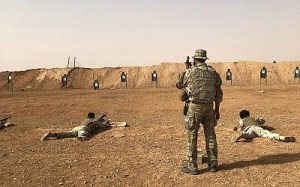
According to a Bloomberg report, Netanyahu has urged Trump to keep a contingent of American soldiers at the Al-Tanf base in southern Syria.
The location of Al-Tanf is seen as essential to Iranian efforts to establish a so-called land corridor stretching from Iran through Iraq and Syria to Lebanon, where the Hezbollah terror group is based.
Source: Russia denies allying with Iran, says Israel’s security a ‘top priority’ | The Times of Israel
Deputy FM tells CNN that efforts to distance Iranian forces in Syria from the Israeli border were undercut by reimposition of US sanctions
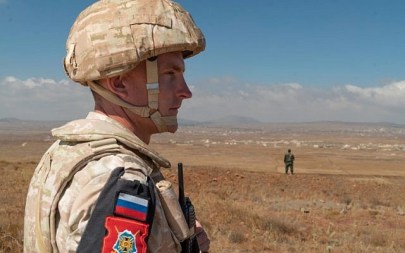
Russian Deputy Foreign Minister Sergei Ryabkov on Friday denied that Moscow was allied with Iran while in Syria, and said Israel’s security was one of his government’s “top priorities.”
“We in no way underestimate the importance of measures that would ensure very strong security of the State of Israel,” Ryabkov told CNN in an interview. “The Israelis know this, the US knows this, everyone else, including the Iranians, the Turks, the government in Damascus. This is one of the top priorities of Russia.”
Ryabkov said it was inaccurate to categorize Russia and Iran as allies, as the two countries only “worked together” in Syria.
“[The Iranians] were very helpful when we convened the National Congress of the people of Syria in Sochi, but we do not see at any given moment completely eye-to-eye on what happens,” he said.
Ryabkov noted that Russia last year managed to convince Iran to withdraw its forces some 85 kilometers (53 miles) from Israel’s northern border. He said that Moscow was “prepared to go even further” at the time, but negotiations with Iran fell apart over the re-imposition of US sanctions.
Ryabkov’s comments came days after a flare-up between Israel and Iran on the Syrian frontier.
On Sunday, Israel conducted a rare daylight missile attack on Iranian targets in Syria. In response, Iran fired a surface-to-surface missile at the northern Golan Heights, which was intercepted by the Iron Dome missile defense system over the Mount Hermon ski resort, according to the Israel Defense Forces.
Hours later, in the predawn hours of Monday morning, the Israel Air Force launched retaliatory strikes on Iranian targets near Damascus and on the Syrian air defense batteries that fired upon the attacking Israeli fighter jets, the army said.
Twenty-one people were killed in the Israeli raids in Syria early Monday, 12 of them Iranian fighters, a Britain-based Syrian war monitor said on Tuesday.
The IDF released video footage of its airstrikes on Syrian air defenses, including on social media. Photographs published by ImageSat Tuesday indicated storehouses and radar systems at Damascus International Airport were destroyed in the strikes.
In recent years, Israel has carried out hundreds of airstrikes in Syria against targets linked to Iran, which alongside its proxies and Russia, are fighting on behalf of the regime of Syrian President Bashar Assad. A number of the strikes have targeted the Damascus airport in a bid to halt weapons transfers from Iran to its militias in Syria and Lebanon. The strikes are coordinated with Russia.
However, the number of airstrikes in Syria attributed to Israel has dropped in recent months, after a Russian military plane was downed by Syrian air defenses during an Israeli attack on Latakia last September, killing all 15 servicemen aboard.
Russia blamed the Israeli military for that incident — a charge rejected by Jerusalem — and has supplied Syria with the advanced S-300 air defense system. The systems were delivered to Syria late last year, but they are not yet believed to be in use, as the Syrian air defense teams still need to be trained to operate them.
Military officials in Moscow and Jerusalem have been engaged in talks to restore trust over the incident.
On Wednesday, Foreign Ministry spokeswoman Maria Zakharova said Israel should stop its “arbitrary” strikes in Syrian territory, which she warned could “provoke a new round of chaos in the Middle East.”
Israel has repeatedly said it will not allow Iran, or its Shiite proxies, to establish a permanent presence in post-war Syria. The IDF said this week that Iranian troops in Syria launched the missile at the Golan in a “premeditated” attack aimed at deterring Israel from conducting further airstrikes against their military targets.
Source: Hamas threatens massive and immediate response to any attack on Gaza — report | The Times of Israel
Lebanese daily says Qatari envoy to Strip warned terror group IDF is on standby in case of border flareup; source says Hamas rejected Qatar’s cash due to Israel’s preconditions
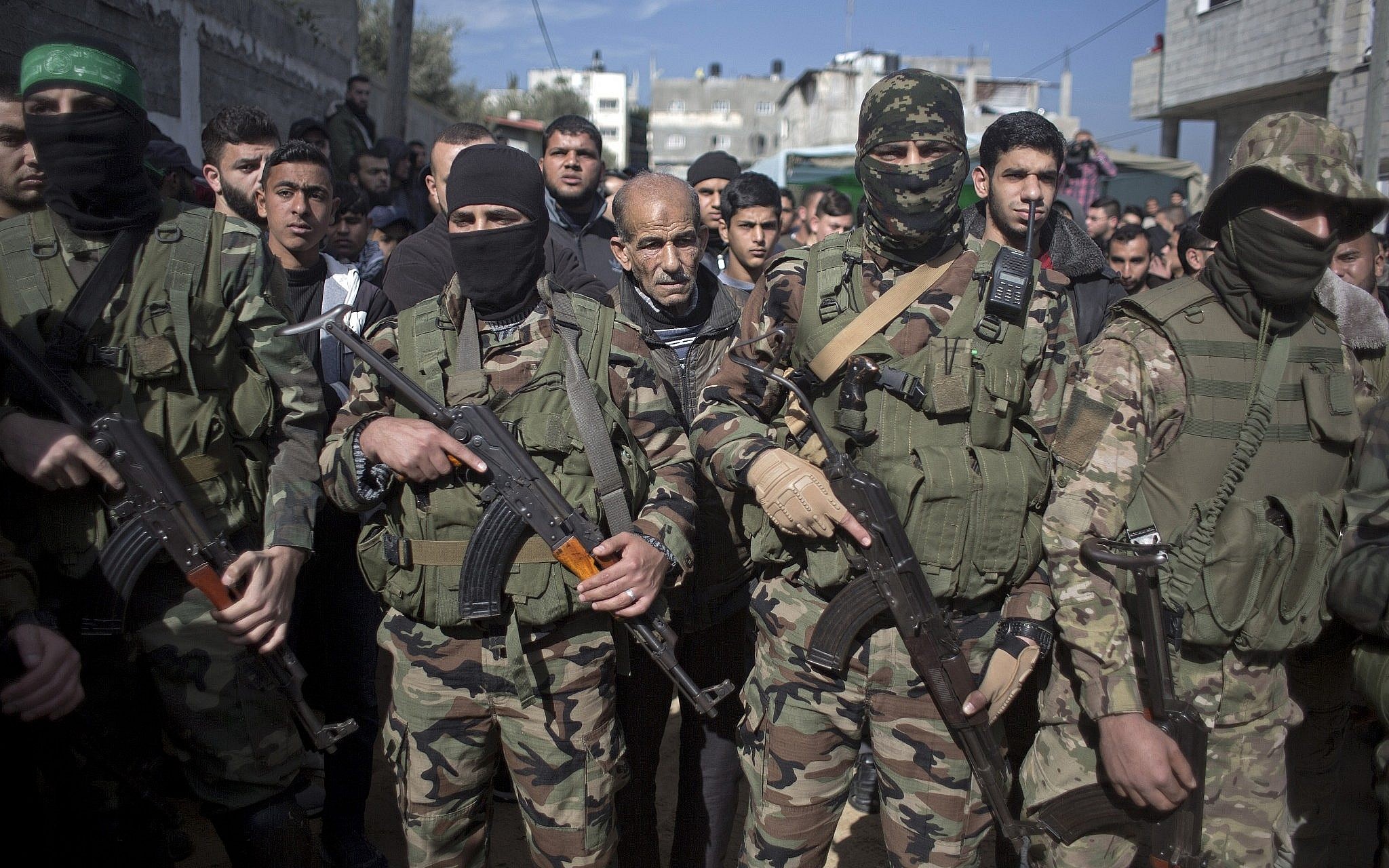
Hamas has sent a warning to Israel that it will respond forcefully and immediately to any attack on the Gaza Strip, a Lebanese newspaper reported Friday.
Quoting an unnamed source in the Gaza-ruling terror group, the Al-Akhbar daily also said Hamas refused to accept aid money from Qatar as Israel put new conditions on its transfer, according to Hebrew media reports.
The source said these conditions included Israel’s objection to using the $15 million in Qatari funds to pay the salaries of a number of top Hamas members. Daily Edition by email and never miss our top storiesFREE SIGN UP
Hamas’s rejection of the money from Qatar has stoked fears in Israel of renewed violence on the Gaza border, which has seen large-scale weekly clashes since last year and periodic flareups between the Israeli military and Palestinian terror organizations.
Israel had temporarily held up the transfer of the Qatari aid following a pair of shooting attacks on the border Tuesday but on Thursday gave its approval. Hamas announced shortly after it would not take the funds, accusing Israel of violating a ceasefire agreement.
According to Al-Akhbar, Qatar’s envoy to Gaza Mohammed Al-Emadi told Hamas that Israel was on standby in case of a military conflict with armed groups in Gaza. The daily said Hamas, for its part, warned its response would be larger than a massive exchange of fire between the sides in November that saw the largest number of rockets shot toward Israel since the 2014 Gaza war.
That round of violence came after a botched special forces operation in the Strip which saw an Israeli commando and at least seven Hamas fighters die in the ensuing firefights.
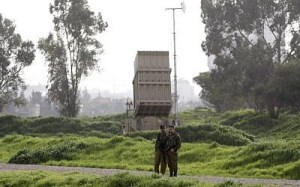
In light of the renewed tensions on the border, the Israeli military on Thursday began beefing up its troop presence near Gaza. It also deployed Iron Dome missile defense batteries in the Tel Aviv metropolitan area and in the south as a precautionary measure against potential attack from either the Gaza Strip or from the north, where the security situation has also been increasingly precarious.
Defense officials reportedly fear that the Iran-backed Islamic Jihad terror group could fire a longer-range missile from Gaza into Israel’s densely populated heartland.
Israeli officials are also worried that fighters in the Strip could carry out cross-border shooting attacks, either with light arms or anti-tank missiles, the Ynet news website reported. Some roads near the Gaza fence are expected to be closed off Friday.
“If no agreement is reached, the chances for violence along the border tomorrow afternoon are high,” a Gazan source told Ynet.
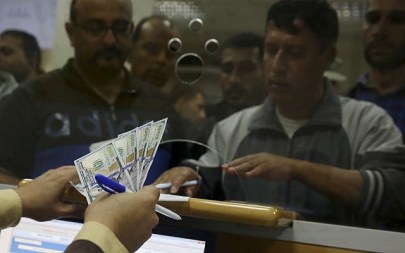
Under the unofficial ceasefire arrangement between Israel and Hamas, Doha has agreed to transfer a total of $90 million to Gaza in monthly installments of $15 million. The group received the funds, in $100 bills, in November and December.
The money, $10 million of which goes to Hamas civil servants and the rest to needy residents in the Strip, was seen by defense analysts as key to calming tensions between Israel and the Palestinian enclave, which has seen regular violence along the border over the past 10 months.
According to reports, Hamas had been trying to calm the situation after the Tuesday flareup to allow the money through, but the use of the cash as a carrot had increased pressure on the group to reject it and take a harder line toward Israel.
Since March, Palestinians have been holding regular protests on the border. Israel has accused Gaza’s Hamas rulers of using the demonstrations as a cover for attacks on troops and attempts to breach the security fence.
Over 200 Palestinians have been killed and thousands more injured along the Gaza border by Israeli troops since March, according to statistics from the United Nations and the Strip’s Hamas-run health ministry. Hamas has claimed many of the dead as its members.
An IDF soldier was shot dead by a Palestinian sniper in July during a riot along the security fence. A Palestinian man living in Israel was also killed by a rocket attack from the Gaza Strip in November.
Source: US-backed Syrian fighters sustain heavy casualties in clash with ISIS – Israel Hayom
Watchdog group reports 16 members of Syrian Democratic Forces killed as Islamic State insurgents fail to break siege on the last area in Syria they control • 34 ISIS members reported dead • More than 20,000 have fled area since SDF offensive began.
|
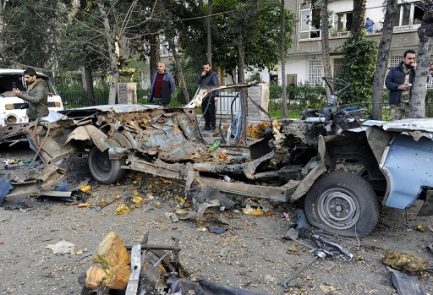
In this photo released by the Syrian official news agency SANA, people gather at the site of an explosion in the Adawi neighborhood of Damascus, Thursday
| Photo: SANA via AP
|
Members of the Islamic State group failed Thursday to break a siege imposed by U.S.-backed fighters in the last area they control in Syria, leading to fierce fighting that inflicted casualties on both sides, Syrian opposition activists said.
The Britain-based Syrian Observatory for Human Rights and the DeirEzzor 24, an activist collective, said the fighting concentrated west of the eastern village of Baghouz near the Iraqi border that the extremists lost earlier this week.
U.S.-backed Kurdish-led fighters of the Syrian Democratic Forces have captured most of the area that was once controlled by ISIS on the east banks of the Euphrates River and the extremists now only control two villages. More than 20,000 civilians have fled the ISIS-held area and hundreds of militants surrendered since SDF began its offensive on Sept. 10.
The extremists are likely to lose the areas they control in Deir ez-Zor in the coming few weeks as SDF fighters press their offensive under the cover of airstrikes by the U.S.-led coalition.
Rami Abdurrahman, the Observatory’s chief, said Thursday’s fighting left 34 insurgents and 16 SDF fighters dead. He added that 21 Islamic State gunmen were taken prisoner.
DeirEzzor 24 confirmed fighters from both sides were killed without giving a number.
Earlier on Thursday, a bomb exploded in the capital Damascus causing property damage but no casualties, Syrian state media reported.
Syrian TV said the explosive was placed inside a car in the Adawi neighborhood. The Russian Embassy is located several hundred yards away.
There was no immediate claim of responsibility.
The bombing came two days after an explosion at a busy intersection in the coastal city of Latakia that killed a civilian and wounded 14 others.
Last week, a bomb also exploded in Damascus without inflicting casualties.
The Syrian capital has been relatively safe since government forces captured last year all rebel-held neighborhoods and suburbs of Damascus.
Also on Thursday, in the northern town of Al-Bab, which is controlled by Turkey-backed opposition fighters, a motorcycle rigged with explosives blew up in the town’s center. At least one person was killed and 11 wounded, according to the Observatory.
The opposition’s Syrian Civil Defense, also known as White Helmets, said the blast killed three and wounded 12.
Source: US-backed Syrian fighters sustain heavy casualties in clash with ISIS – Israel Hayom
Watchdog group reports 16 members of Syrian Democratic Forces killed as Islamic State insurgents fail to break siege on the last area in Syria they control • 34 ISIS members reported dead • More than 20,000 have fled area since SDF offensive began.
|
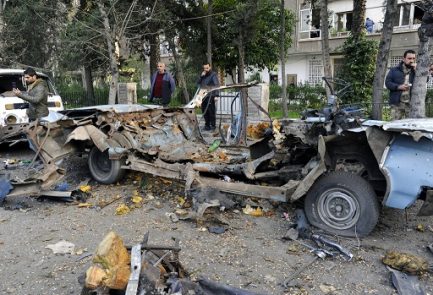
In this photo released by the Syrian official news agency SANA, people gather at the site of an explosion in the Adawi neighborhood of Damascus, Thursday
| Photo: SANA via AP
|
Members of the Islamic State group failed Thursday to break a siege imposed by U.S.-backed fighters in the last area they control in Syria, leading to fierce fighting that inflicted casualties on both sides, Syrian opposition activists said.
The Britain-based Syrian Observatory for Human Rights and the DeirEzzor 24, an activist collective, said the fighting concentrated west of the eastern village of Baghouz near the Iraqi border that the extremists lost earlier this week.
U.S.-backed Kurdish-led fighters of the Syrian Democratic Forces have captured most of the area that was once controlled by ISIS on the east banks of the Euphrates River and the extremists now only control two villages. More than 20,000 civilians have fled the ISIS-held area and hundreds of militants surrendered since SDF began its offensive on Sept. 10.
The extremists are likely to lose the areas they control in Deir ez-Zor in the coming few weeks as SDF fighters press their offensive under the cover of airstrikes by the U.S.-led coalition.
Rami Abdurrahman, the Observatory’s chief, said Thursday’s fighting left 34 insurgents and 16 SDF fighters dead. He added that 21 Islamic State gunmen were taken prisoner.
DeirEzzor 24 confirmed fighters from both sides were killed without giving a number.
Earlier on Thursday, a bomb exploded in the capital Damascus causing property damage but no casualties, Syrian state media reported.
Syrian TV said the explosive was placed inside a car in the Adawi neighborhood. The Russian Embassy is located several hundred yards away.
There was no immediate claim of responsibility.
The bombing came two days after an explosion at a busy intersection in the coastal city of Latakia that killed a civilian and wounded 14 others.
Last week, a bomb also exploded in Damascus without inflicting casualties.
The Syrian capital has been relatively safe since government forces captured last year all rebel-held neighborhoods and suburbs of Damascus.
Also on Thursday, in the northern town of Al-Bab, which is controlled by Turkey-backed opposition fighters, a motorcycle rigged with explosives blew up in the town’s center. At least one person was killed and 11 wounded, according to the Observatory.
The opposition’s Syrian Civil Defense, also known as White Helmets, said the blast killed three and wounded 12.
Recent Comments