Archive for January 2019

Israel’s security ‘top priority,’ Russian Foreign Ministry says

January 27, 2019

Source: Israel’s security ‘top priority,’ Russian Foreign Ministry says – Israel Hayom


Top Democrats voice support for Israeli sovereignty on Golan

January 27, 2019

Source: Top Democrats voice support for Israeli sovereignty on Golan – Israel Hayom


Let’s stop playing pretend 

January 27, 2019

Source: Let’s stop playing pretend – Israel Hayom

Prof. Eyal Zisser

The first time Israel carried out an attack on Syrian soil was in late January 2013, when it targeted an Iranian weapons shipment earmarked for Hezbollah. A few days later, then-Defense Minister Ehud Barak said of the attack: “We gave warnings and ultimately did something about it.” In other words, Israel was behind the attack.

With this direct and clear assumption of responsibility, Barak effectively lifted the thin veil of ambiguity intended to provide cover for Israel’s actions in Syria. Perhaps he wanted to send the Iranians and Syrians a strong message, but it’s also possible he wanted to lay the foundations for his legacy as defense minister – similar to recently retired IDF Chief of Staff Gadi Eizenkot, who upon ending his tenure revealed that the IDF attacked thousands of targets in Syria under his command.

Since that admission, Israel has attacked hundreds more targets in Syria, most, if not all, of them weapons shipments from Tehran to Beirut. A few weapons warehouses and factories were also hit, some of them belonging to the Syrian army, which had housed and even manufactured sophisticated weaponry for Hezbollah.

Although Israel didn’t claim responsibility the vast majority of the time, maintaining ambiguity was mostly a game of “pretend.” The Syrians almost always reported an attack had occurred – even if belatedly while often omitting the true nature of the targets. Sometimes the Russians and even the Americans would beat them to the punch. The latter – not wanting any part of the Syrian war – wanted to nip in the bud any potential blame for these attacks and therefore rushed to drop the responsibility at Israel’s doorstep.

More than anything, a policy of silence helps keep the enemy in the dark about how exposed and vulnerable it is to Israeli operational and intelligence-gathering capabilities. Silence is also necessary because it allows Syrian dictator Bashar Assad and Iranian Quds Force leader Qassem Soleimani to save face – as any direct Israeli claims of responsibility would force them into a corner and compel them to retaliate. Either way, in actuality, there was never much ambiguity in the true sense of the word.

Ambiguity means the other side isn’t sure whether Israel was behind an action or attack against it on its soil. For example, the assassinations of Imad Mugniyeh and Mahmoud al-Mabhouh were attributed to Israel. Hezbollah and Hamas believed Israel was behind the killings, but without undeniable proof, they couldn’t accuse it and retaliate.

As far as Syria is concerned, perhaps this ambiguity is of some benefit to the Israeli public, but the people on the other side of the border certainly have no doubts about what is going on. Even without official claims of responsibility, our neighbors never thought these attacks were the work of anyone else. A long line of defense ministers and generals have a history of intimating – and sometimes stating outright – that Israel is responsible.

It is ridiculous, ergo, to argue that the recent claims of responsibility in Israel specifically prodded the Iranians to escalate their response against Israel. After all, in Tehran and Damascus alike, policy isn’t determined by headlines in Israel. The Iranians don’t care about Israeli public opinion or the “boastings” of its leaders; they are only focused on the reality on the ground.

And on the ground, Israel has indeed managed to delay and even block Tehran’s efforts to establish a military foothold in Syria. As this is a paramount Iranian strategic interest, Tehran is determined to change the rules of the game, especially now that the war in Syria is almost over and Israeli-Russian relations aren’t as warm as they used to be.

The time has come to dispense with ambiguity, which never really existed in the first place, and replace it with clear declarations that highlight Israel’s red lines vis-à-vis Tehran.

Eyal Zisser is a lecturer in the Middle East History Department at Tel Aviv University.

Nasrallah would prefer to stay quiet 

January 27, 2019

Source: Nasrallah would prefer to stay quiet – Israel Hayom

Oded Granot

After a notable absence that lasted for more than two months, and crazy rumors that he was stricken with cancer and might already have passed away, Hezbollah leader Sheikh Hassan Nasrallah made an appearance Saturday night on Lebanon’s Al Mayadeen television, looking very much like himself.

Truthfully, it must be said that the leader’s public appearance, his tone, and familiar body language did not seem to support the conclusion to which one Saudi media pundit jumped somewhat hastily – that it was a double. That seemed to be more a Saudi wish than sober observation.

On the other hand, there is no doubt that the interview itself, like the hysterical promotional campaign for the speech that ran on Al Mayadeen, whose owner is a close friend of Nasrallah’s, had one goal: to prove that Nasrallah is alive, kicking, and in control. Someone up top in Hezbollah realized that silence of more than two months by someone who had gotten his supporters accustomed to frequent speeches could be doing some damage. Even if he isn’t in the best of health, it would be better for him to speak. There are plenty of reasons to assume that if that consideration hadn’t been factored in, Nasrallah would have preferred to keep quiet for as long as possible. Developments in the region and in his own circle in the past few months are inconvenient for him, and it is hard for even a skilled speaker such as he is to explain away what is inconvenient.

First, Israel exposed his tunnels. This was nothing less than a public humiliation for the strategy of the organization, which had hoped the project would stay off anyone’s radar. How does it explain the fact that its operatives – who under U.N. Resolution 1701 are not supposed to be in South Lebanon – are digging attack tunnels under the border into Israeli territory, when any scenario of war between the two countries would see Lebanon razed to the ground? “Nasrallah is dragging all of Lebanon into a dark tunnel,” his critics said.

On Saturday, the Hezbollah leader made a valiant effort to minimize the tunnels issue, calling it “a matter that was blown out of proportion” and “only a minor element that would help Hezbollah in its overall plan to conquer the Galilee.” He mocked the IDF, which “took so long to expose the tunnels.” Not a word about the intelligence that allowed Israel to reveal the secret.

These are difficult days for Nasrallah. Iran, Hezbollah’s sponsor, is becoming increasingly isolated in the world. The U.S. sanctions and the economic crisis in Iran have already hurt the financial assistance Tehran provides to Nasrallah, and it also seems that Iranian military aid to Hezbollah will keep running up against Israel’s determination to thwart it at any price.

During his protracted silence, Nasrallah was betting that his fortunes would improve. U.S. President Donald Trump announced that U.S. forces would be leaving Syria, and apparently by accident added that Iran would now be able to do whatever it wanted in Syria. The Russians expressed open dissatisfaction with Israel’s ongoing strikes on Iranian and Hezbollah targets in Syria, and a spokeswoman for the Russian Foreign Ministry called them an attack on the sovereignty of a foreign nation.

But in the meantime, there has been an upheaval. Trump is seriously considering leaving the important American base in place in al-Tanf, where the Iraqi, Syrian, and Jordanian borders meet. This means the ground corridor Iran used to supply weapons to Hezbollah via Syria and southern Lebanon will remain blocked.

And Russia’s deputy foreign minister, in stark contrast to what the ministry’s spokeswoman said, told CNN that Russia’s ties with Iran could not be considered an “alliance,” and moreover, that Russia is not dismissing the importance of Israel’s security.

Nasrallah might have preferred to keep quiet, but circumstances dictated otherwise. It won’t be long before he goes back to his same old threats. Hezbollah, he says, has no interest in launching a war, but will respond without proportion if Israel attacks targets in Lebanon. He is also saying something new: that Hezbollah will respond if Israel attacks Hezbollah targets in Syria; that Hezbollah has precision missiles ready for the next conflict; he is warning Prime Minister Benjamin Netanyahu against making the mistake of a military gambit to “promote himself in the election campaign”; and he is threatening that in the next war, “all Palestine will be under threat.” For that, he didn’t need to break his silence.

Hezbollah leader warns Israel over attacks in Syria

January 27, 2019

Source: Hezbollah leader warns Israel over attacks in Syria – Israel Hayom


Nasrallah: Israeli tunnel op hasn’t curbed ’10 percent’ of Galilee invasion plan

January 27, 2019

Source: Nasrallah: Israeli tunnel op hasn’t curbed ’10 percent’ of Galilee invasion plan | The Times of Israel

In first comments since IDF began destroying attack tunnels, Hezbollah leader says he’s ‘surprised’ Israel took so long to find them, derides operation as intel ‘failure’

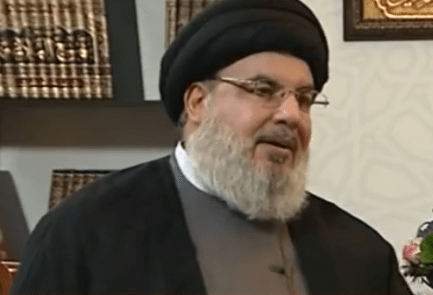
Hezbollah leader Hassan Nasrallah during an interview with al-Mayadeen, January 26, 2019 (screen capture)

Hezbollah leader Hassan Nasrallah during an interview with al-Mayadeen, January 26, 2019 (screen capture)

Hassan Nasrallah, leader of the Hezbollah terror group, on Saturday dismissed Israel’s operation to uncover and destroy cross-border attack tunnels as indicative of an intelligence failure, and said the group’s plans for an invasion of the Galilee remained intact.

Breaking months of silence, and speaking for the first time since Israel launched Operation Northern Shield in early December to uncover and destroy the tunnels dug under its border, Nasrallah claimed during an interview with the pro-Hezbollah al-Mayadeen TV that “some of the tunnels are from before Resolution 1701 and the Second Lebanon War.”

UN Resolution 1701 ended the 2006 conflict and called for all armed groups in Lebanon besides the country’s military to remain north of the Litani River. Israel has for years claimed that Hezbollah has been violating the resolution by conducting military activities along the border.

“The Israelis discovered a number of tunnels after many years, and it’s not a surprise. The surprise is that these tunnels, they took some time to find,” Nasrallah said on the al-Mayadeen channel.

“One of the tunnels discovered in recent weeks is 13 or 14 years old,” said a smiling Nasrallah. The Israeli operation brought to light the “failure” of the country’s intelligence services, he added.
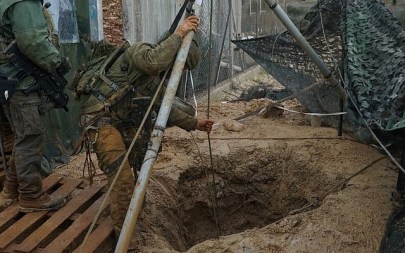
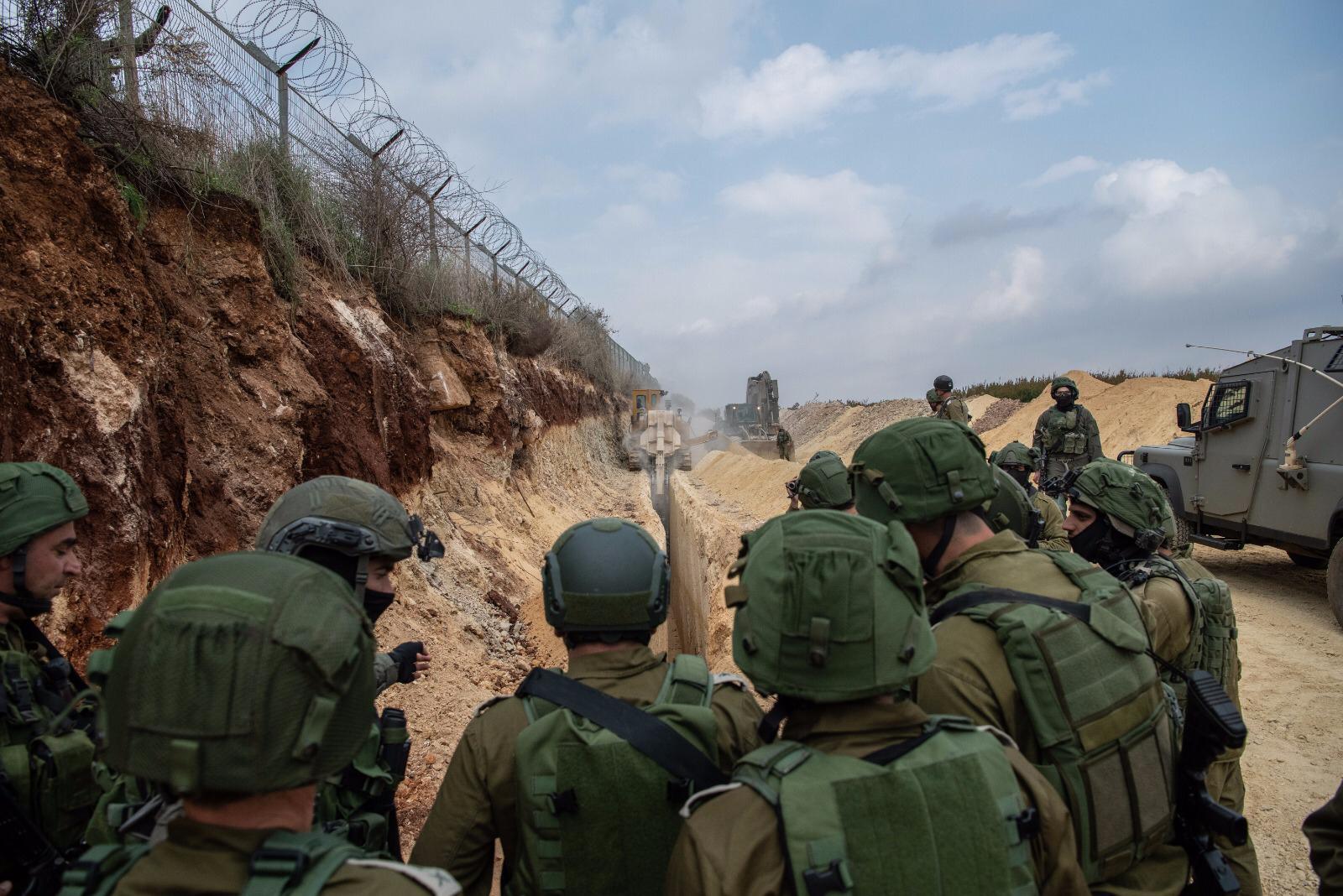
Israeli troops prepare to destroy attack tunnels dug into Israel from southern Lebanon by the Hezbollah terror group on December 20, 2018. (Israel Defense Forces)

Nasrallah’s claim on when work began on some of the tunnels appeared to line up with a Channel 13 report earlier this month. Israel has said it was aware of Hezbollah’s tunnel operations for several years.

He went on to claim that the tunnels were hardly central to Hezbollah’s attack plan in a future war, and that Israeli leaders had inflated their importance “to leave the [army] with a significant achievement” to boast of.

He confirmed Israeli leaders’ accusations that “Part of our plan for the next war is to enter the Galilee, a part of our plan we are capable of, God willing. The important thing is that we have this capability and we have had it for years.”

But, he claimed, “The uncovering of the tunnels does not affect by 10 percent our plans to take over the Galilee. If we decide to do it — even if they’ve destroyed the tunnels — can’t we rebuild them?” He also suggested there may be attack tunnels on the Israeli-Lebanese border which Israel has not yet discovered.

“To enter the Galilee, you do not need tunnels,” he said. “Yes, tunnels can be a helping factor in entering the Galilee, in a limited and partial manner. But an operation of that degree, if it were decided for it to happen one day, would require all of the borders, valleys, hills.”

He added that “In any war that happens, all of occupied Palestine will be a war and battlefield.”

Nasrallah claimed that Hezbollah, which initiated the 2006 war with a border attack, would only enact such a plan in response to an Israeli attack and would not initiate it of its own accord.

“If the Israeli enemy bombarded targets in the Lebanese lands, undertook a security operation in Lebanese land, carried out an assassination in Lebanese land… [or] killed anyone from Hezbollah in Syria…, we consider that an assault and we will respond.” he said.

“We have the ability and the plans despite all the obstacles Israel tries to create,” he asserted. He further claimed that his organization possesses “enough missiles to achieve our goals in any future war.”
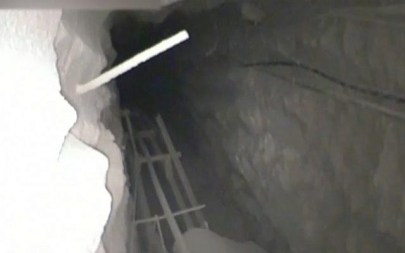
Attack tunnel dug into Israel from southern Lebanon that the Israeli military believes Hezbollah planned to use in future wars, which was discovered in January 2019. (Israel Defense Forces)

Israel has said Hezbollah possesses a small number of precision-guided missiles, and is seeking thousands for use in a future war, a threat the Jewish state is determined to prevent.

Nasrallah claimed it was in the Israeli people’s interest to “tell [Prime Minister] Netanyahu to let Hezbollah have precision missiles. It’s better because if the day comes that we want to respond to Tel Aviv, if I have a precision missile, I will hit a military site. But if I don’t have precision missile, I will want to hit a military site, but I will be off by 500 or 1000 meters. Where will it land? On people… The people’s interest is that we have precision missiles.”

Asked if this comment was a joke or a threat, he responded that “it is whatever you want it to be.”

Reacting to the interview, the Arabic spokesman for Israel’s military wrote on Twitter that Nasrallah is “isolated on all sides.”

“Lebanese citizens know you aren’t defending Lebanon, but destroying Lebanon,” Avichay Adraee tweeted.
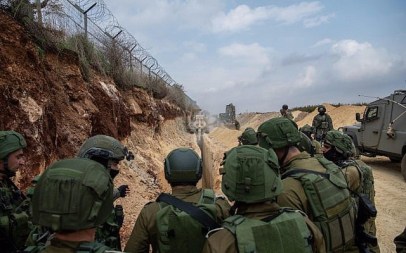
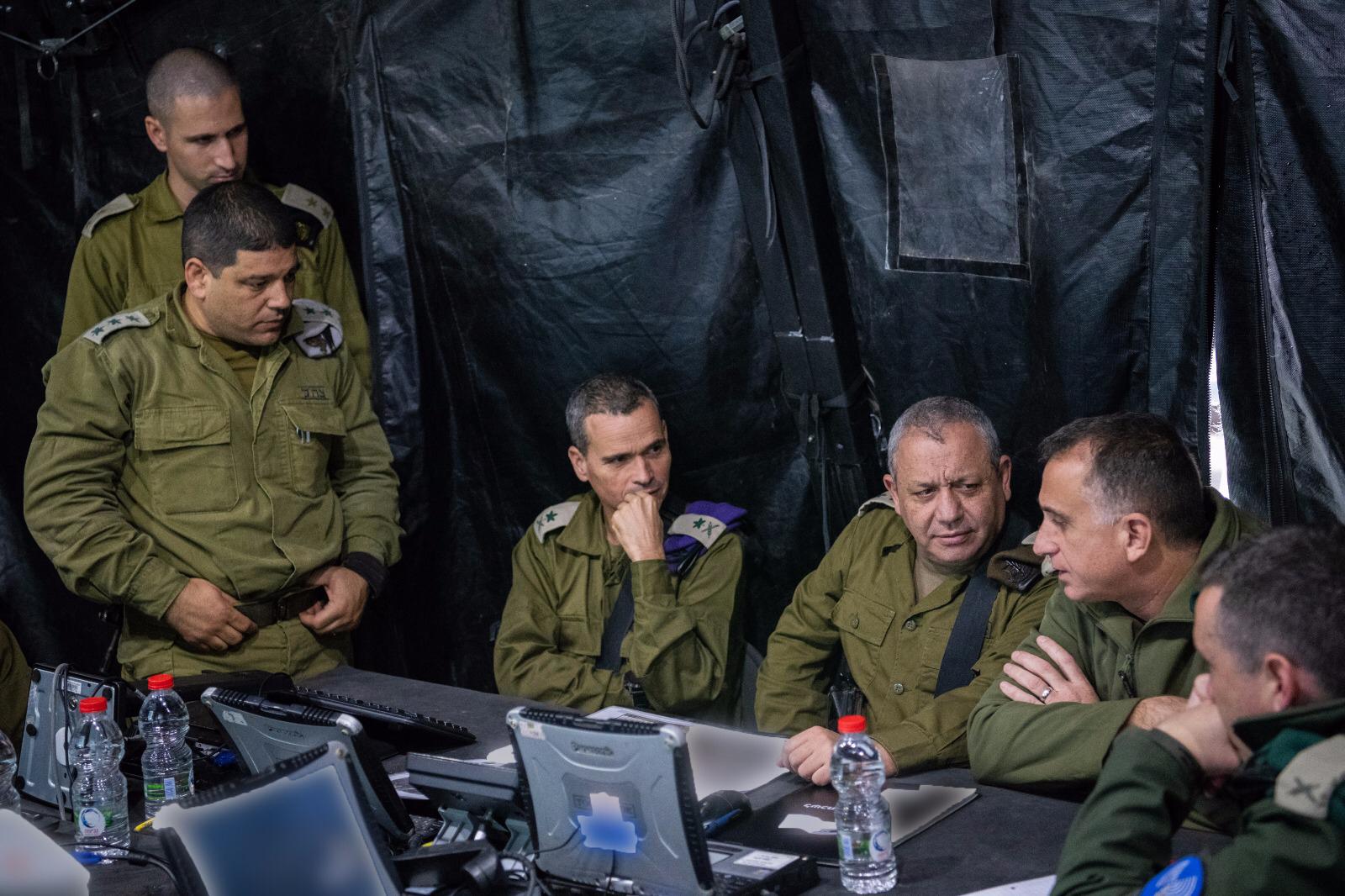
IDF Chief of Staff Gadi Eisenkot, center, visits soldiers searching for Hezbollah attack tunnels on Israeli-Lebanese border on December 4, 2018. (Israel Defense Forces)

In farewell interviews earlier this month, Israel’s outgoing chief of staff Gadi Eisenkot said Hezbollah had planned to use its array of underground attack tunnels to carry out a surprise invasion of Israel that would “throw Israel off balance and cause an earthquake in Israeli society.” He told Hadashot TV news that Hezbollah “had grandiose notions. They were looking many years ahead, to a war or wide escalation, where they [believed they] would have a surprise, an ace in their deck.”
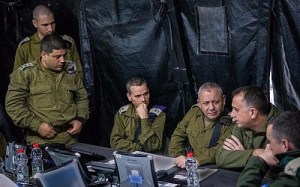
From right, head of Military Intelligence Tamir Hyman, right, IDF Chief of Staff Gadi Eisenkot, head of IDF Northern Command Yoel Strick visit soldiers searching for Hezbollah attack tunnels on Israeli-Lebanese border on December 4, 2018. (Israel Defense Forces)

Hezbollah, the outgoing army chief said, “had built what they thought was a fantastic plan, with several tunnels [entering Israel under the border] from the Metulla area to the sea, and their intention was to launch an attack that would begin with a surprise attack from underground — sending 1,000 to 1,500 fighters into our side.” To cover the invasion, “they planned a massive artillery bombardment of IDF bases. [They aimed to] gain control of a piece of Israeli territory and hold it for weeks,” he said.

Now, said Eisenkot, the Hezbollah tunnel “project is over… but not their goal to capture parts of the Galilee.”

Saturday’s interview with Nasrallah was an extraordinarily long one, lasting over three hours.

Despite his bluster, the terror leader would not officially confirm that the cross border tunnels had actually been dug by Hezbollah.

“Israel is claiming that Hezbollah dug them. I don’t have to say that I or Hezbollah dug the tunnels, because we always prefer to keep ambiguity on defense. We have no reason to work for free for Israel,” he said. He added: “I won’t confirm or deny if all of the tunnels have been uncovered.”

Nasrallah said he had refrained up to this point from commenting on the IDF’s operation because he “did not wish to assist Netanyahu and [former IDF chief of staff Gadi] Eisenkot in their media campaign.”

He also insisted that Operation Northern Shield “has not ended, despite the Israelis having announced its completion. Digging is still going on.”

The IDF announced the end of Operation Northern Shield last week.

Nasrallah also suggested that Israeli citizens should question the information they were being given on the tunnels, on the basis that northern residents’ concerns about the presence of attack tunnels had been dismissed for years.

“Moshe Ya’alon confirmed during Operation Northern Shield that there were tunnels,” he said, presumably referring to the former defense minister’s admission that officials had lied about the existence of the tunnels. “My question to the settlers in the north: Do you think Netanyahu, Eisenkot, and the new chief of staff are lying to you now or telling the truth?”
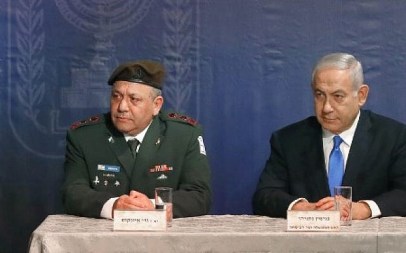
Outgoing IDF Chief of Staff Gadi Eisenkot (L) and Prime Minister Benjamin Netanyahu attend a handover ceremony at the Defense Ministry for new Chief of Staff Aviv Kochavi on January 15, 2019. (Jack Guez/AFP)

Nasrallah had not made a public appearance in months, leading to unconfirmed reports he was in critical condition following a heart attack brought on by cancer. He dismissed those rumors.

“It’s amusing to hear reports of my death. I’m not obligated to [say] anything when there are no special incidents,” he stated.

“I have recently been asked a lot about my health. I affirm everything that has been said is a lie that has no basis in the truth. My brain, heart, body, and before all else my soul and mind, are well. I am not suffering any health issue.”

An official from Iran, Hezbollah’s main backer, previously dismissed the rumors as a “Zionist lie.”

Nasrallah, 58, took over the Iran-backed Hezbollah group after its previous leader was killed in a 1992 targeted assassination by Israeli helicopters on his convoy.

As a precaution against a repeat of the incident, Nasrallah’s movements are shrouded in mystery with few public appearances. He instead prefers videos or live television broadcasts.

Hezbollah is designated a terror organization, either entirely or partly, by Israel, the United States, the European Union and other countries.

AFP contributed to this report.

 

While Israel and Iran were fighting

January 27, 2019

Source: While Israel and Iran were fighting

Opinion: Syrian president has refrained from interfering in the battles between the Jewish state and its archenemy on his territory, since he has much to gain from a conflict that bolsters the stability of his rule in the war-battered country.
Only Syrian President Bashar Assad remains silent in the midst of the drama that followed this week’s skirmish between the Israel Defense Forces and the Iranian Revolutionary Guard’s elite Quds Force.

Israel launched a massive attack on Iranian targets in Syria in the early hours of Monday, the day after Iranian fighters fired a surface-to-surface rocket at the northern Golan Heights. The Israeli bombardment, which targeted an airport in Damascus, killed 12 pro-regime fighters, said the Syrian Observatory for Human Rights, a UK-based monitoring organization.

Syrian President Bashar Assad (Photo: Reuters)

Syrian President Bashar Assad (Photo: Reuters)

This war is being waged on his soil, but without him. Assad has failed to issue official statements and refrains from interfering in the rounds of fighting between Israel and its archenemy Iran in his territory. It seems he has decided to let the big players make their moves, while he stands by and uses his time to deal with domestic issues.

Truth be told, the Syrian president is rather busy with restoring and expanding his rule in Syria. He is on the verge of claiming victory over his enemies, he managed to fend off Turkey’s intent to launch an offensive to break Kurdish control over the Syria-Turkey border, and he is working to restore his sovereignty over northern Syria.

And so, all at once, those who called to remove the embattled president from power have fallen silent. Iran is giving him full freedom of action, Russia’s Putin is considered his strongest ally, and even Israel has long since dropped the idea of taking him down since he has no replacement in sight.

It appears Jerusalem is comfortable with Assad being around. Had it not been for the Iranian presence in Syria, Assad would never have dared to come out against the Jewish state.IAF attack overnight Monday near Damascus (Photo: EPA)

IAF attack overnight Monday near Damascus (Photo: EPA)

Nevertheless, the Syrian army hosting Iranian “consultants” is a big problem for Israel. The Quds Force, which is in charge of the Iranian Revolutionary Guards’ overseas operations, is dragging the Syrian troops into its ongoing battle against Israel, and Assad is giving Tehran an almost carte blanche in Syrian bases, putting arms depots at its disposal and allowing Iranian aircraft to freely enter Syrian skies.

Two months ago, Assad was embroiled in a crisis that threatened to tear Syria apart. And look at him now—the Arab world is courting him, and Egypt is quietly working to reinstate Syria into the Arab League, with the Persian Gulf states tending to back this move.

Syria’s main problem remains Saudi Arabia. The Riyadh royals have yet to make a definite decision on whether to welcome Syria back into the bosom of the divided Arab world and reopen the Arab embassies in Damascus, or to continue arming those opposing the Syrian regime in order to hurt Iran.

It has been three weeks since Assad made a public appearance in Damascus, or had a “surprise” meeting with Syrian civilians in locations that underwent a thorough security inspection. Assad prefers to stay in his palace with his sick wife Asma and his children, until the fighting between Israel and Iran settles down.

Asma, Bashar Assad

Asma, Bashar Assad

Once the fighting is over, then it is safe to assume that Assad will reappear to flash his people the victory sign, proving to the world he believes in his own triumph as Syria’s ruler.

In the meantime, the president is holding meetings at his palace with senior military officials and public figures known for their policy of “sitting quietly.”

In fact, just three days ago, it was reported that several Syrian intellectuals had been invited to meet with the great leader who seems to have a lot of time on his hands.

In between meetings, Assad reportedly received calls from Iranian officials and representatives of the Russian army updating him on what is happening on the frontier with Israel.

It was said that during one of this call, Assad was informed about Syrian accomplices helping the “enemy,” and in response send his special forces to deal with those accomplices.

Nevertheless, the war in Syria has changed over the past two years. The Syrian army and the Iranian troops in the war-battered country have become more united.

The decision whether to bolster this unity is not Assad’s to make. As far as Assad is concerned, he has most to gain from this war. The stability of his rule is no longer in danger, at least for now.


Iran wants Russian air defense shield extended to Lebanon to cover Hizballah’s precise missiles 

January 27, 2019

Source: Iran wants Russian air defense shield extended to Lebanon to cover Hizballah’s precise missiles – DEBKAfile

“There is serious criticism of Russia for deactivating its S-300 air defense missiles when the ‘Zionist enemy’ strikes from Lebanon,” said a senior Iranian lawmaker on Thursday, Jan. 24.

Hashmatollah Falahatpisheh, Chairman of the Iranian Parliament’s National Security and Foreign Policy Commission, went on to say: “If the Russian air defense worked properly, Israel would not be able to easily launch strikes over Syria.” He added accusingly, “There seems to be some form of coordination between the Zionist regime’s strikes and Russia’s air defense system in Syria.”

Last week, Moscow announced that the training for Syrian crews who will be operating the advanced S-300 air defense missiles would be finished towards March and during that month, the batteries would become operational. The Russian instructors is therefore taking five months to train the Syrians in the use of the S-300s delivered by Moscow last October. Moscow is also taking time to connect the Syrian-based batteries to the Russian command at the Khmeimim air base near Latakia and, even more importantly, to the Russian National Air Defense Command in Moscow.

This information was conveyed by an officer of the Russian air defense command to reporters in Moscow on Jan. 21, in the course of a wide-ranging Israeli air and cruise missile assault on Iranian sites in and south of Damascus.

Moscow on no account wants Russian air defense officers involved in any S-300 strikes on Israeli warplanes and therefore made sure that the Syrian crews were properly trained before letting them take charge of the advanced air defense batteries. Even then, they need to remain under competent Russian military command and control in Syria and Moscow. This dependence is also expected to serve as a deterrent for the Israeli Air Force against destroying them, which would not be good for the Russian air and arms industries’ export business.

DEBKAfile’s military sources report that, once in Syrian hands for use against Israeli air strikes, the S-300s will also bring within range IDF flights over Lebanon, the Golan and Galilee. This will provide Hizballah with the protection of a Russian-supplied air shield and present Israel with a quandary: Should the IDF destroy the S-300s at the risk of another row with Moscow? Or find ways to work around the batteries to continue its attacks on Iranian sites in Syria?

This question was aired during the talks President Reuven Rivlin and Israeli Air Force Chief Maj. Gen. Amikam Nurkin held this week with French President Emmanuel Macron at the Elysée Palace. They brought with them maps and photo images of Hizballah’s precision-guided missile sites in Lebanon. It is more than likely that the Israeli visitors relayed through Paris a final warning to the Lebanese government and Hizballah, with advice to dismantle those sites, else Israel would take action to smash them before the S-300 batteries deployed around Damascus became operational in March.


U.S. may stay at Syrian desert base near Jordan to counter Iran – report 

January 27, 2019

Source: U.S. may stay at Syrian desert base near Jordan to counter Iran – report – Middle East – Jerusalem Post

In mid-December US President Donald Trump announced that forces would be withdrawn from Syria.

BY SETH J. FRANTZMAN
 JANUARY 26, 2019 22:23
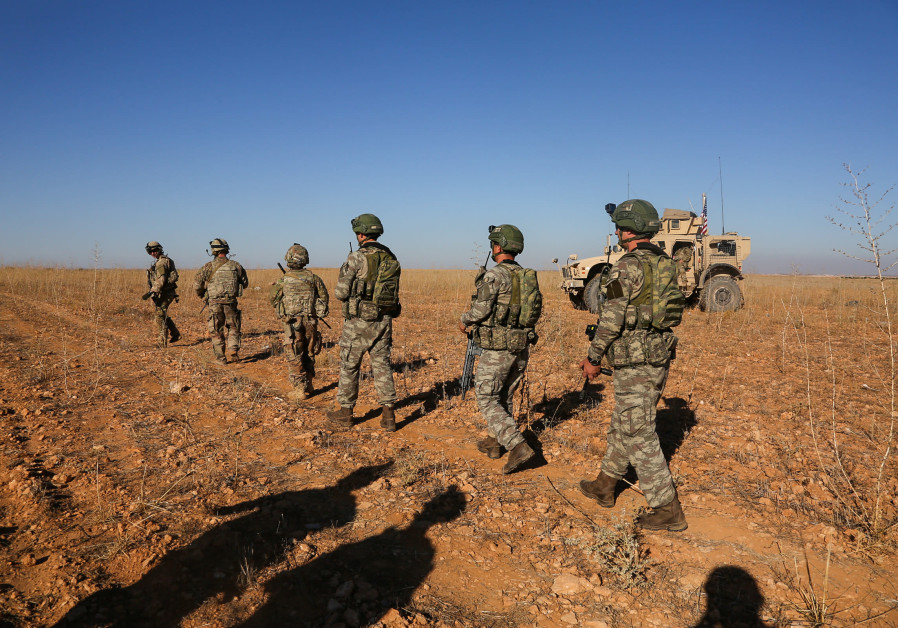
U.S. and Turkish soldiers conduct the first-ever combined joint patrol outside Manbij, Syria, Novemb

The US is leaving Syria, but maybe not all of Syria. Sources told Foreign Policy that the US was considering maintaining a presence at a forlorn desert garrison in Syria near the Jordanian border.

In mid-December US President Donald Trump announced that forces would be withdrawn from Syria. “But given the garrison’s strategic importance, sources said the US government is considering a plan to keep at least some forces there.” The base currently has a 55 kilometer “exclusion zone” around it that Iranian, pro-Syrian regime and Syrian armed forces are expected to keep away from. Over the years since 2016 when the base was established there have been attempts by pro-Syrian regime forces to probe the bases defenses.

The US initially established the base to train Syrian rebel fighters to fight ISIS. Hundreds of rebels were based there. However once ISIS. Was defeated in the vicinity and the Syrian regime retook areas around the base, it became unclear what the mission was in Tanf. In October last year US General Joseph Votel visited the base and appeared to showcase its importance. Meanwhile Pentagon inspector general reports indicated that Tanf was increasingly the site of tensions with the Syrian regime and Iran. US officials wondered if there was a legal mandate to keep forces in Syria to confront Iran, a strategy that had been spelled out by National Security Advisor John Bolton and hinted at by others. US officials said that the anti-ISIS mission in Syria, which had been most effective in eastern Syria, could expand to include staying in Syria until Iranian-commanded forces left.

This was part of US-Israel discussions about the US role in Syria. Reports indicated that Iran was carving out a corridor of influence via Iraq and Syria to Hezbollah in Lebanon. Israel said it had struck Iranian targets in Syria in 2018, eventually admitting to more than 1,000 airstrikes. But Trump’s withdrawal was met with skepticism. John Bolton travelled to Israel in January to reassure Jerusalem of US support regarding Iran’s threats in Syria. According to a Bloomberg report, Bolton indicated that there would be no “rush to remove troops from Al-Tanf.”

The lonely garrison at Tanf now may have a longer lease. Established to fight ISIS and train Syrian rebel fighters, it has now morphed into a new mission. However this raises questions about whether the assets in Tanf know that this is their mission and whether this open ended mission will be met with approval in Washington. It also raises questions about whether Tanf actually does interdict Iran’s “road to the sea” or whether it is primarily just a lonely desert base with an unclear role. It also raises questions about what will become of the tens of thousands of displaced Syrians at the Rukban camp near Tanf and Jordan’s role in maintaining a US supply line to Tanf.


Iran fumes as Germany bans Iranian airline for security reasons 

January 27, 2019

Source: Iran fumes as Germany bans Iranian airline for security reasons – International news – Jerusalem Post

According to the German foreign ministry, Mahan Air was involved in the transport of Iranian military equipment and personnel to Syria and other Middle East war zones.

BY JERUSALEM POST STAFF
 JANUARY 27, 2019 04:16
FILE PHOTO: An Airbus A340-300 of Iranian airline Mahan Air taxis at Duesseldorf airport, Germany.

Iran reacted angrily to Germany’s announcement last Monday (Jan. 21) that it would ban Iranian airline Mahan Air from German airports, according to a report in Iran’s semi-official Fars News Agency.

“This measure is a blatant violation of all international rules, including the Chicago Convention, and there is no doubt that it has been adopted under the US pressures,” said the head of the Iranian Civil Aviation Organization, Ali Abedzadeh, on Wednesday (Jan. 23).

The Chicago Convention led to the establishment of the International Civil Aviation Organization, a UN body whose purpose is to regulate air travel between different nations.
According to the German foreign ministry, Mahan Air was involved in the transport of Iranian military equipment and personnel to Syria and other Middle East war zones.
German government spokesman Steffen Seibert had denied that the decision was a result of US pressure. “The German decision is based on considerations of our security needs,” he said at a news conference.
The United States imposed sanctions on Mahan Air in 2011, saying it provided financial and other support to Iran’s Islamic Revolutionary Guards (IRGC), and has been pressing its European allies to follow suit. U.S. Treasury Secretary Steve Mnuchin said on Monday that the “U.S. Treasury appreciates the important decision by Germany to deny Mahan Air’s landing rights. Mahan routinely flies IRGC-QF and weapons to Syria, is subject to our terrorism secondary sanctions, and should be denied access around the world.”

Reuters contributed to this report.