Archive for January 2019

Rouhani meets Palestinian terror leader, says Israel trying to ‘dominate region’ 

January 2, 2019

Source: Rouhani meets Palestinian terror leader, says Israel trying to ‘dominate region’ | The Times of Israel

The jihad of the Palestinians must continue’ until Israel surrenders, Iranian president tells visiting leader of Palestinian Islamic Jihad
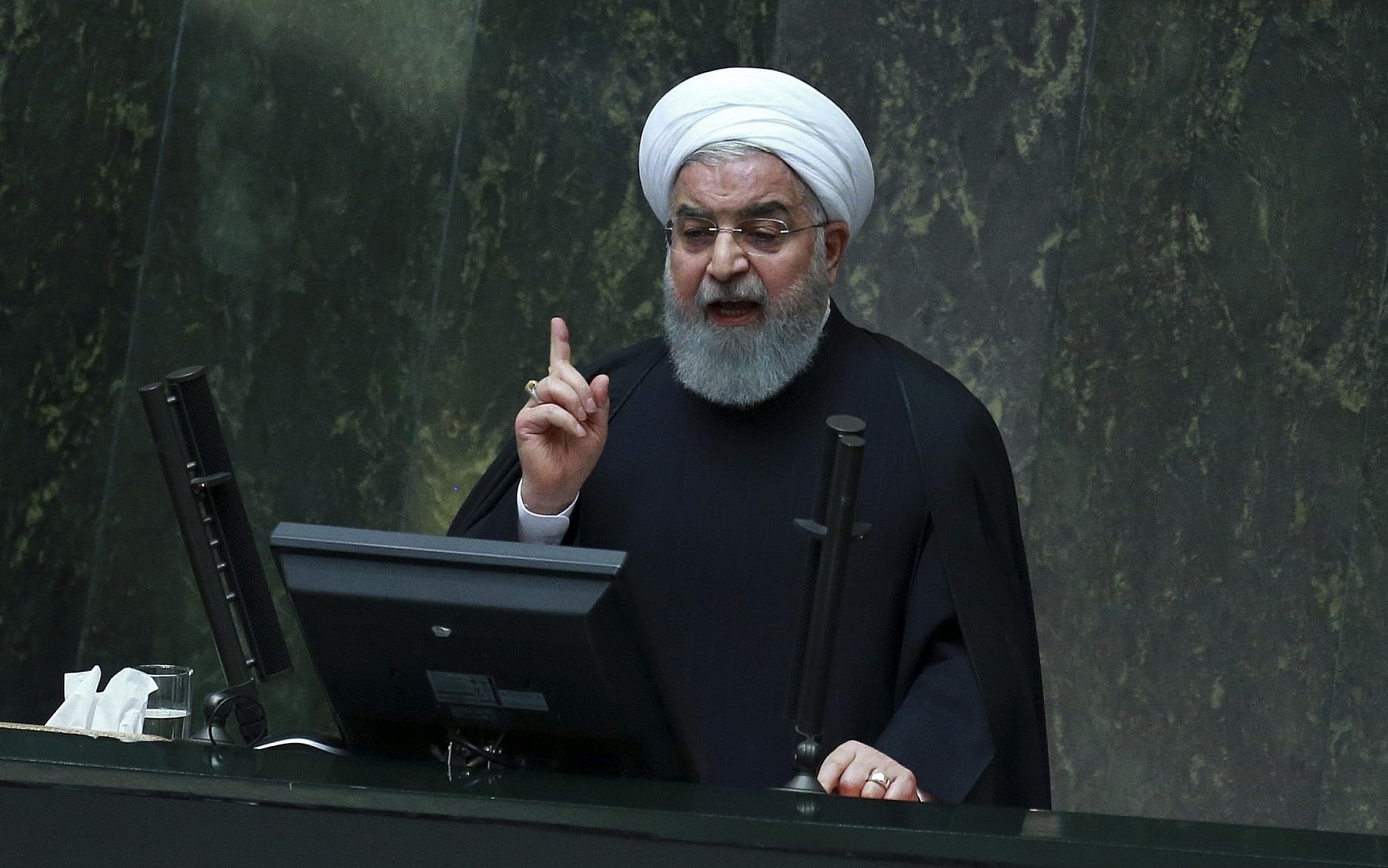
Iranian President Hassan Rouhani speaks as he submits next year's budget bill to parliament in Tehran, Iran, on December 25, 2018. (AP Photo/Vahid Salemi)

Iranian President Hassan Rouhani speaks as he submits next year’s budget bill to parliament in Tehran, Iran, on December 25, 2018. (AP Photo/Vahid Salemi)

Iranian President Hassan Rouhani met Tuesday with the leader of the Palestinian Islamic Jihad terror group and urged Palestinians to “fight and resist” Israel until it capitulates.

“The jihad of the Palestinians must continue until the Zionist enemy [surrenders] to the rights of the Palestinian nation,” Rouhani said, according to his office.

Rouhani made the remarks as he met with Ziad al-Nakhala, who has been holding meetings in Tehran with top Iranian leaders.

“Despite the Madrid and Oslo meetings and agreements, the Israelis have never accepted the rights of the Palestinians and therefore, the only way is to fight and resist,” Rouhani said, referring to a past peace conference and peace deals between Israel and the Palestinians, respectively.

“The entire peoples of the region must consider the Zionist Regime not just the enemy of the Palestinian nation, but also the enemy of the entire region,” he added.
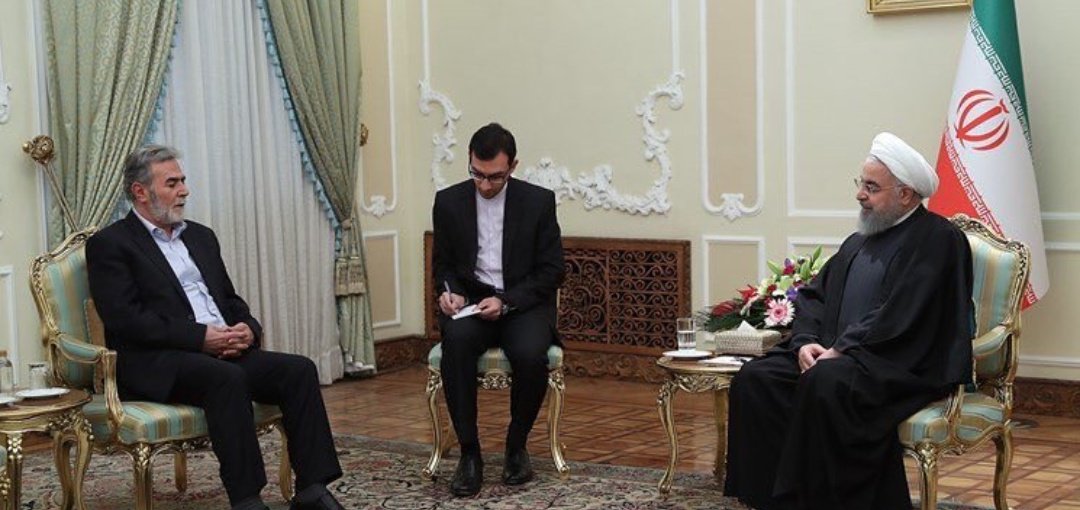
Rouhani also claimed the Trump administration is backing Israeli efforts to “dominate the entire region.”

“Despite all the efforts of the United States and the Zionist Regime, not only nations, but also governments have not surrendered to the greed of the enemies,” he said.

Thanking Rouhani for Iran’s support, Nakhala alleged US efforts to promote Israeli-Palestinian peace were aimed at denying Palestinian rights.

“Pressures and severe attacks of the United States and Israel against the Palestinians under the ‘Deal of the Century’ are aimed at closing the Palestinian case and we believe that US pressures on Iran is a part of this project,” he said, referring to US President Donald Trump’s peace plan.

The latest comments by Rouhani, who is considered a relative moderate in Iranian politics, come after he called Israel a “cancerous tumor” in November.

While Iran’s leaders frequently condemn Israel and predict its demise, Rouhani has largely refrained from employing such rhetoric in the past.

Rouhani’s comments on the need to “fight and resist” Israel echoed those made Monday by Iran’s Supreme Leader Ayatollah Ali Khamenei during a meeting with Nakhala.

“Palestine will strongly persist, and by the grace of God, the Palestinian nation’s ultimate victory will come true in the near future,” the ayatollah told Nakhala, who became PIJ’s leader in late September.

He predicted that the Palestinians would soon be able to “establish a government in Tel Aviv.”
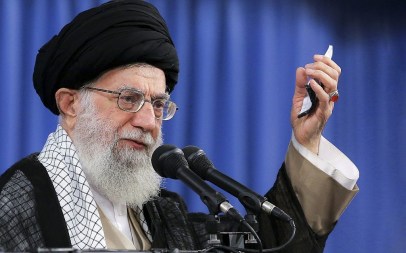
Supreme Leader Ayatollah Ali Khamenei speaks at a meeting in Tehran, Iran, August 13, 2018. (Office of the Iranian Supreme Leader via AP)

Nakhala, who is based in Syria and is said to be close to Iran and its Lebanese proxy Hezbollah, told Khameini that the “people of Gaza are standing up to the Zionist Regime and the so-called Deal of the Century plot,” according to a readout from Khamenei’s office.

“Today, the abilities and power of the Islamic resistance in Palestine is stronger than ever, hence if war breaks out, Tel Aviv and all other cities and settlements of the Zionist regime will be within the reach of thousands of missiles of the Resistance,” he threatened.
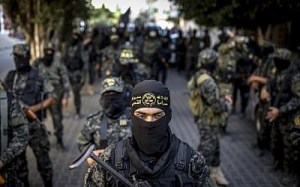
Members of the Iran-backed Palestinian Islamic Jihad terror group march during a military parade in Gaza City on October 4, 2018. (Anas Baba/AFP Photo)

Nakhala, who was born in Gaza in 1953, in September was named PIJ’s first new leader in 20 years.

The group is considered a terrorist organization by the United States and the European Union, and the US labeled Nakhala himself a “global terrorist” in 2014.

It opposes the peace agreements signed between Israel and the internationally recognized Palestinian leadership.

Agencies contributed to this report.
 

CEOs of companies active in Iran should not travel to U.S., expert says

January 1, 2019

Source: CEOs of companies active in Iran should not travel to U.S., expert says – International news – Jerusalem Post

“The business people are paralyzed” with Iran trade, legal consultant said.

BY BENJAMIN WEINTHAL
 JANUARY 1, 2019 04:58
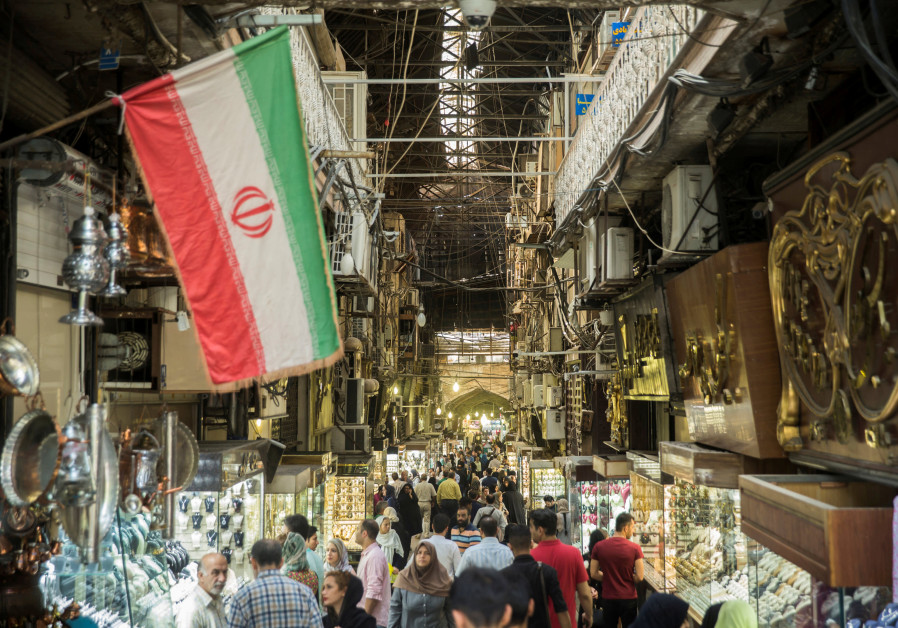
People shop at the Grand Bazaar in the center of Tehran, Iran, August 2, 2017

A leading legal management consultant said in December that CEOs of medium-sized businesses should not travel to the United States because they could face a fate similar to that of Meng Wanzhou, the CFO of the Chinese telecommunications giant Huawei, who was arrested in Canada for alleged violations of US sanctions against Iran.

José Campos Nave, a top executive with the management company Rödl & Partner, told the business publication WirtschaftsWoche, “At the moment, I would not advise a CEO of a company that has a lot to do with Iran, and that has a certain economic relevance, to travel to the United States.” Campos Nave made his comment in answer to a question about Wanzhou’s arrest, which sent shock waves through the global business community.

Rödl & Partner provides “attorneys, tax advisers, management and IT consultants and auditors,” according to the company, and is “presently with 111 of own offices in 51 countries. Worldwide, our clients trust our 4,700 colleagues.”

The US reimposed bank, airline and energy sanctions against Iran in November. The potent economic sanctions are designed to stop Tehran’s drive to develop a nuclear weapon, blunt its revolutionary Islamic terrorism, and halt Tehran’s expansionism in the Middle East.

Campos Nave told the business publication the sanctions are effective in the sense that they create “chaos” and “at this time there is no clear line between what is allowed and what is prohibited” regarding trade. “The business people are paralyzed,” he said, adding,“the trade volume with the US is 80 times bigger than that with Iran. No one wants to spoil US business, even if the industry may not be affected by the sanctions. That’s why almost everyone left Iran.”

The Jerusalem Post exclusively reported last week that the German company Krempel – which provided construction material to Tehran businessmen that was used in rockets produced by the Iranian regime to gas Syrians earlier this year – has stopped trade with the Islamic Republic of Iran.
The American government classifies the Iranian regime as the leading international state sponsor of terrorism.

Campos Nave said it is not possible to deliver products to Iran because payment methods have been blocked by the US. The management consultant, who has knowledge of German mid-size companies active in Iran, said, “As a company, you can deliver products to Iran that are not affected by the sanctions, but you will probably not receive any payment.”
Germany remains Iran’s largest European Union trade partner. In response to Post questions about German support for trade with Iran, and German Chancellor Angela Merkel’s efforts to bust US sanctions, Israel’s Ambassador to Germany Jeremy Issacharoff wrote on Twitter on Monday, “After four Netanyahu-Merkel meetings and phone calls this year, senior confidential dialogues in Berlin and numerous other exchanges/briefings, I feel certain that Berlin is fully aware of Israel’s stand on Iran.”

Issacharoff wrote in an earlier tweet: “Iranian regime’s highest level of fanaticism, hostility and aggressive intent toward Israel, Saudi Arabia and the United States (sic). Iran is a quintessential regional security threat by its own admission. Europe cannot and should not ignore this stark reality.”

When asked about the so-called Special Purpose Vehicle – an EU payment mechanism intended to evade US sanctions against Iran – Campos Nave told the WirtsschaftsWoche the EU is a “toothless tiger. There have already been several attempts by special purpose entities to maintain trade in exchange opportunities. That has not been successful so far.” He said he fears efforts to bypass US sanctions will not function.
In October, President Reuven Rivlin urged Merkel to join the US sanctions against Iran. Rivlin told Merkel, “The Iranian monster should be starved, not fed.”

Merkel ignored Israel’s request to sanction Tehran.


Mystery surrounds Trump’s new ‘slow withdrawal’ Syria policy

January 1, 2019

Source: Mystery surrounds Trump’s new ‘slow withdrawal’ Syria policy – Middle East – Jerusalem Post

There are new questions about the degree to which the withdrawal will be coordinated with Turkey.

BY SETH J. FRANTZMAN
 JANUARY 1, 2019 15:54
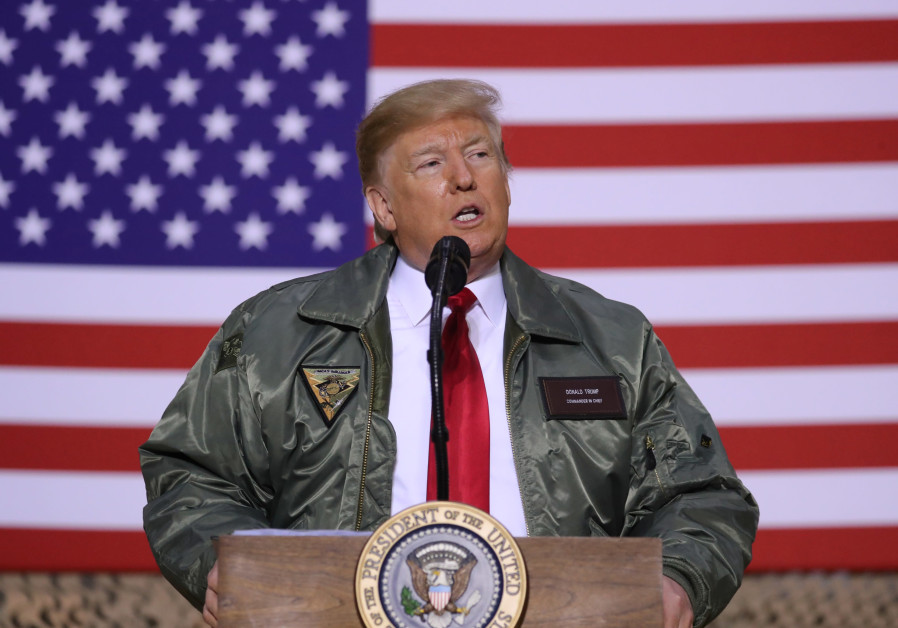
U.S. President Donald Trump delivers remarks to U.S. troops in an unannounced visit to Al Asad Air B

US Senator Lindsey Graham had been slamming US President Donald Trump’s Syria policy for more than a week when he finally met the president in the White House on Sunday. He was “reassured,” he said, that Trump would make sure that any withdrawal from Syria doesn’t result in Iran filling the void left by America, and that US Kurdish allies “are protected.”

Now, reports indicate that the US will allow “months” for the withdrawal, as opposed to a specific 30-100 day timeline. This is in contrast to Trump’s speech at Al-Asad airbase in Iraq on December 26, where he emphasized that he was bringing the troops home. Trump has been adamant on this since his December 19 decision to end US involvement in Syria.

The new timeline presented and reported in the US now appears to be within 120 days; Trump says that the US is “slowly” bringing the troops home.

There are also new questions about the degree to which the withdrawal will be coordinated with Turkey. Trump made his decision after a conversation with the Turkish president on December 14. Ankara had threatened a military operation in northern Syria against the Kurdish People’s Protection Units (YPG), which it accuses of being linked to the Kurdistan Workers Party (PKK). Trump claimed on December 23 that the US withdrawal would be “slow and highly coordinated” with Turkey.

But those plans appeared dashed on Friday when the Syrian regime announced that it would send forces to Manbij, a city where the US has forces and which is run by a local council affiliated with the Syrian Democratic Forces, the main US partners on the ground. The SDF and YPG were concerned that Turkey would launch an attack on Manbij, backed by Syrian opposition forces. Some of the Turkish-backed forces are extremists and locals fear them.

The Syrian regime seemed to be riding to the rescue, but it would be an embarrassment for the US to be seen as handing over parts of Syria to the regime which the US officially opposes. Damascus is also allied to Iran, so it would mean that the US was turning over these area to an Iranian ally, the opposite of the policy that Washington had been advancing throughout 2018.

Turkey, which Trump appeared to want to be in coordination with, sent a high level delegation to Moscow on Saturday, including the defense minister, foreign minister, presidential adviser and intelligence chief. Ankara was basically sending every key official it could to discuss with Russia – an ally of the Syrian regime – how to coordinate the US withdrawal. In short, Turkey and Russia were discussing the US withdrawal, not Turkey and the US. Not the coordination that Trump had promised.

John Bolton, the national security adviser, is now planning a trip to the region – along with chairman of the Joint Chiefs of Staff Joseph Dunford and Syria envoy James Jeffrey – to discuss the withdrawal in Turkey and Israel. According to CNN’s Kevin Liptak, only Bolton will travel to Israel, not the whole delegation. This comes on the heels of reports that Israel had sought to convince Trump to slow down the withdrawal.

US POLICY is still an opaque mystery. Neither the Pentagon nor the State Department appear to be closely coordinating with the White House on how to make the withdrawal a success – and not allow the kind of instability and question marks that appeared last week as the Syrian regime appeared poised to rush into Manbij.

It is also not clear how the US can coordinate with Turkey when it wants to launch an offensive against US partners on the ground. How does one coordinate with one ally who wants to attack another ally? The official US stance is that the SDF is not an “ally” but rather a “temporary, tactical and transactional” partner. But Graham, who has pressured the White House to change its moves, calls the SDF an ally.

Graham also said this week that the US was going to talk to Turkey about creating a “buffer zone” along the border so that Ankara’s security concerns regarding the YPG are met. How does the US intend to create a 400 km. buffer zone? The US has observation points along the border but it seems contradictory to try to withdraw 2,000 troops while adding layers of complexity to northern Syria with a “buffer zone.”

The area along the border is also a key agricultural area where much of the Kurdish population lives. It is precisely the area that Kurdish forces would not want to withdraw from, and the US has no clear plan to use alternative forces along the border. It is difficult enough for the US to patrol a few dozen kilometers in Manbij along the line of control between the SDF and Turkey with its Syrian rebels.

This has left observers mystified. Wladimir Van Wilgenburg, a journalist who has covered eastern Syria for several years, wrote that he wonders, “what this buffer zone plan means.” Author Gayle Tzemach Lemmon notes that what one sees firsthand in northeast Syria, “is how much fragile progress on the ground there truly is, and the spirit with which people, of all backgrounds, are pushing forward post-ISIS with their own lives for sake of their children.”

Bolton will have a difficult hurdle to get over in Turkey because the US does not seem to have a plan on the ground for what to do in eastern Syria. Deciding to withdraw suddenly cast its SDF partners into confusion – and they now know that the US will eventually leave. This came after almost a year where the US indicated it would stay for years in eastern Syria.

The SDF now wants other European countries to help guarantee the post-ISIS peace, or it will be forced to reach out to Russia, the Syrian regime or others. Iraq has also decided to increase its role of fighting ISIS in Syria, launching numerous airstrikes in the southern Euphrates Valley where the US and the SDF were battling ISIS. Sensing US withdrawal, many countries such as Russia, Iran and the Syrian government in Damascus will angle for what comes next, whether it is 100 days or 120 days.


Netanyahu says Arab countries see Israel as ‘ally’ against Iran

January 1, 2019

Source: Netanyahu says Arab countries see Israel as ‘ally’ against Iran | The Times of Israel

In interview with Brazilian TV, PM laments that ‘half’ of the Palestinians are ‘already under the gun of Iran and radical Islam’

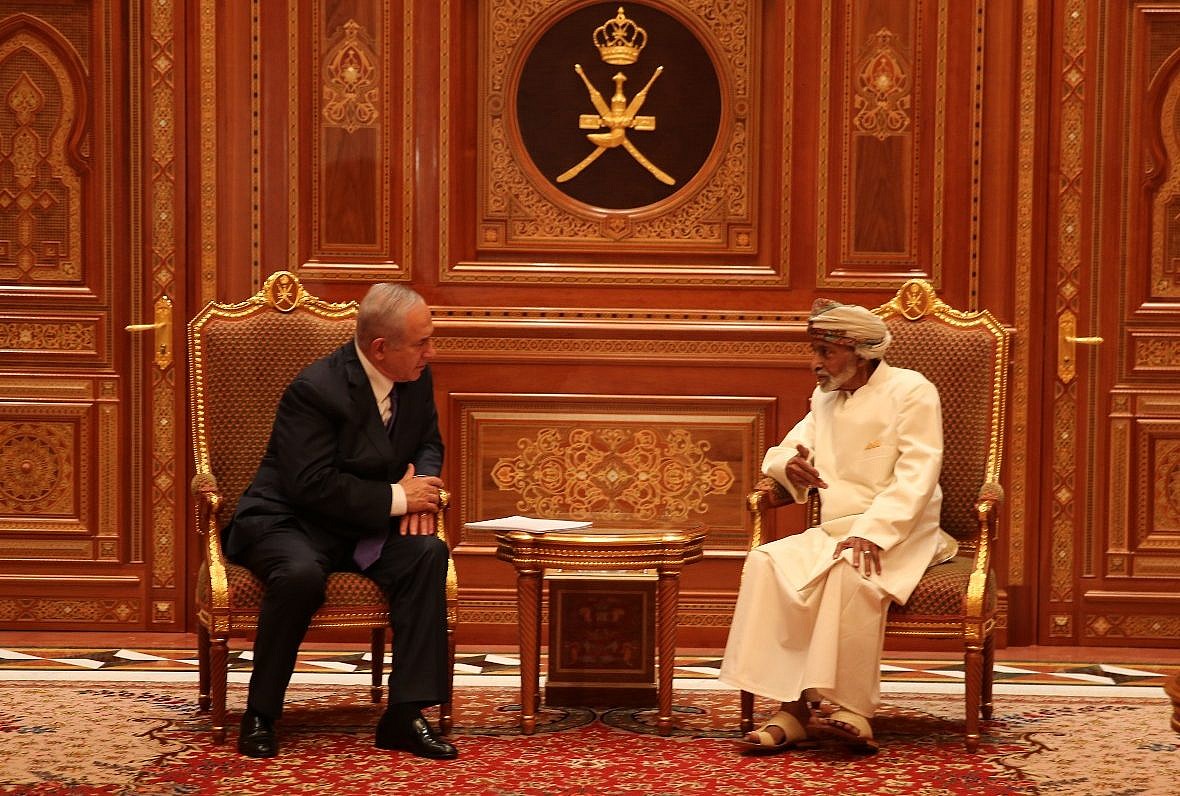
Prime Minister Benjamin Netanyahu (L) talks with Sultan Qaboos bin Said in Oman on October 26, 2018 (Courtesy)

Prime Minister Benjamin Netanyahu (L) talks with Sultan Qaboos bin Said in Oman on October 26, 2018 (Courtesy)

Prime Minister Benjamin Netanyahu said Monday that Arab countries view Israel as an “indispensable ally” fighting Iran and the Islamic State group.

That evaluation, he told Brazil’s Globo TV during a visit to Rio de Janeiro, has caused “a revolution in relations with the Arab world.”

The comments came as Israel has reportedly been stepping up airstrikes on Iranian positions in neighboring Syria, and digesting an abrupt decision by US President Donald Trump to withdraw US troops from Syria.

Netanyahu has repeatedly warned that Iran is trying to develop nuclear weapons to destroy his country.

Israel, he said, had shown itself to be active in battling “radical Islam, violent Islam — either the one led by radical Shiites led by Iran, or the one led by the radical Sunnis led by Daesh (Islamic State) and al-Qaeda.”

“Unfortunately we have not made any advance with the Palestinians. Half of them are already under the gun of Iran and of radical Islam,” Netanyahu added, referring to Hamas-controlled Gaza.

Asked if he could ever contemplate sitting down with an Iranian leader to talk peace, Netanyahu replied: “If Iran remains committed to our destruction the answer is no.”

The only way, he said, would be “if Iran undergoes a total transformation.”

Netanyahu was in Brazil to attend Tuesday’s inauguration of the Latin American country’s new pro-Israel president, Jair Bolsonaro.

On the sidelines of the ceremony, Netanyahu was to hold talks with US Secretary of State Mike Pompeo, who is also among the visiting dignitaries.

They were expected to discuss the US troop pullout from Syria and Iranian activities in the Middle East.


UK counterterrorism police investigate Manchester stabbings 

January 1, 2019

Source: UK counterterrorism police investigate Manchester stabbings – Israel Hayom


Iran says it plans to upgrade speedboats with stealth technology 

January 1, 2019

Source: Iran says it plans to upgrade speedboats with stealth technology – Israel Hayom


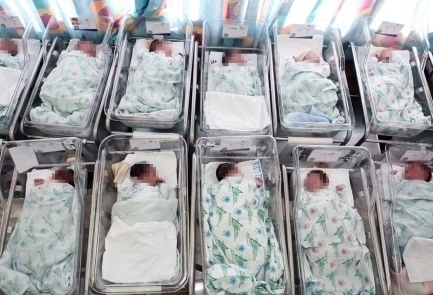
As 2019 begins, Israel’s population stands at 9 million 

January 1, 2019

Source: As 2019 begins, Israel’s population stands at 9 million – Israel Hayom


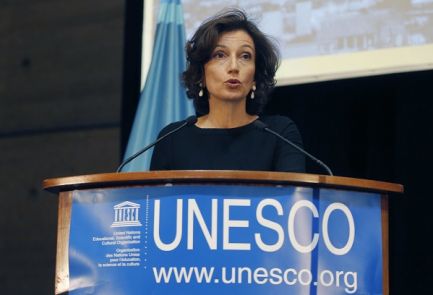
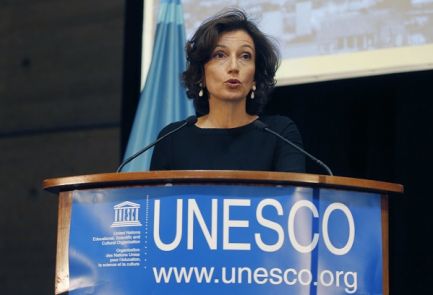
US, Israel exit UN cultural agency over its biased practices 

January 1, 2019

Source: US, Israel exit UN cultural agency over its biased practices – Israel Hayom


US, Israel exit UN cultural agency over its biased practices 

January 1, 2019

Source: US, Israel exit UN cultural agency over its biased practices – Israel Hayom


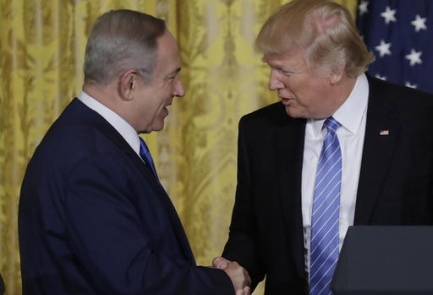
PM: Trump won’t roll out Mideast peace plan before ‎Israeli election 

January 1, 2019

Source: PM: Trump won’t roll out Mideast peace plan before ‎Israeli election – Israel Hayom