Archive for January 2019

Philippines, Saudis in talks to open Saudi airspace for flights to Israel 

January 2, 2019

Source: Philippines, Saudis in talks to open Saudi airspace for flights to Israel – Arab-Israeli Conflict – Jerusalem Post

“We’re pushing for the signing of the overfly agreement by this quarter, as Israel is a seasonal market.”

BY EYTAN HALON
 JANUARY 2, 2019 13:35
Philippines, Saudis in talks to open Saudi airspace for flights to Israel

The Philippine government is working with Saudi Arabia to enable flag carrier Philippine Airlines to fly through Saudi airspace en route to Israel, local media reported on Wednesday.

“We’re pushing for the signing of the overfly agreement by this quarter, as Israel is a seasonal market. Most passengers would like to travel there during the cold months,” Philippines Transportation Undersecretary Manuel Tamayo said.

While Israel and the Philippines signed an air services agreement in November 2013, enabling carriers to launch up to 21 weekly direct flights between the countries, no flights have yet been allocated.

“We have rights already as far as Israel is concerned. Hopefully, we should get to overfly Saudi Arabia to Israel,” he said.

Tamayo said that securing Saudi Arabia overfly permits would enable airlines to cut down travel time from Manila to Tel Aviv by at least one hour.

In March 2018, Air India become the first airline to receive permission to fly over Saudi Arabia to and from Israel, cutting down flying time on the Tel Aviv-New Delhi route from eight hours to approximately six and a half.

Saudi authorities have not granted similar overfly permits to Israeli national carrier El Al, which operates four weekly flights to Mumbai.

In 2017, more than 22,000 Filipinos made Israel their vacation destination, with many traveling via Hong Kong and Turkey. According to the Tourism Ministry, some 90% of tourists arriving from the Philippines between 2014 and 2017 were Christians.

In the other direction, approximately 17,500 Israelis traveled to the Philippines in 2017, according to the Philippines Department of Tourism.


Introducing Israel’s Deadly Dolphin-Class Submarine (Armed with Nuclear Weapons?)

January 2, 2019

Source: Introducing Israel’s Deadly Dolphin-Class Submarine (Armed with Nuclear Weapons?)

The National Interest

Kyle Mizokami

Security, Middle East

Should Iran be worried?

Introducing Israel’s Deadly Dolphin-Class Submarine (Armed with Nuclear Weapons?)

Here’s everything we know.

Israel’s submarine corps is a tiny force with a big open secret: in all likelihood, it is armed with nuclear weapons. The five Dolphin-class submarines represent an ace in the hole for Israel, the ultimate guarantor of the country’s security, ensuring that if attacked with nukes, the tiny nation can strike back in kind.

Israel’s first nuclear weapons were completed by the early 1970s, and deployed among both free-fall aircraft bombs and Jericho ballistic missiles. The 1991 Persian Gulf War, which saw Iraqi Scuds and Al Hussein ballistic missiles raining down on Israeli cities, led Tel Aviv to conclude that the country needed a true nuclear triad of air-, land- and sea-based nukes to give the country’s nuclear deterrent maximum flexibility—and survivability.

The most survivable arm of the nuclear triad is typically the sea-based one, consisting of nuclear-armed submarines. Submarines can disappear for weeks or even months, taking up a highly classified patrol route while waiting for orders to launch their missiles. This so-called “second-strike capability” is built on the principle of nuclear deterrence and ensures potential enemies will think twice before attacking, knowing Israel’s submarines will be available to carry out revenge attacks.

The first three submarines were authorized before the Gulf War, in 1988, though it is not clear they were built with nuclear weapons in mind. After years of delays construction began in Germany instead of the United States as originally planned, with German combat systems instead of American ones. Most importantly, the project went ahead with German financing; Berlin reportedly felt obliged to finance two of the submarines, and split the third as lax German nonproliferation enforcement had partly enabled Iraq’s nuclear and chemical weapons program.

The first three submarines, DolphinLeviathan and Tekuma, were laid down in the early 1990s, but only entered service between 1999 and 2000. The submarines are 187 feet long, displace 1,720 tons submerged and have an operating depth of 1,148 feet. Sensors include the STN Atlas Elektronik CSU-90-1 sonar suite with the DBSQS-21D active and AN 5039A1 passive sonar systems. The Dolphin class also has PRS-3-15 passive ranging sonar and FAS-3-1 passive flank arrays.

Each has ten torpedo tubes in the bow, six standard 533-millimeter standard diameter tubes and four larger 650-millimeter torpedoes. The larger torpedo tubes are more than two feet wide, and reportedly double as ingress/egress chambers for divers. Armament is a mixture of German, American and Israeli weapons, including Seahake heavyweight wire-guided torpedoes and Harpoon antiship missiles. The authoritative Combat Fleets of the World claims the Dolphin subs may have the Triton fiber-optic guided-weapon system. With a range of more than nine miles, Triton allows submarines the ability to attack helicopters, surface ships and coastal targets.

The four large torpedo tubes are the key to Israel’s sea-based deterrent, and without them it’s unlikely the country would have nukes on submarines. The large tubes are used not only for laying mines and sending and receiving divers, but also to launch nuclear cruise missiles. In 2000, the U.S. Navy observed a missile launch from off the coast of Sri Lanka that traveled an estimated 932 miles. Exactly what this missile was is a matter of speculation, but the leading candidate is some advanced form of the Popeye missile.

Popeye was originally an air-launched ground-attack missile. Developed in the late 1980s, Popeye originally used a television camera or infrared seeker to deliver a 750-pound warhead to ranges of up to forty-five miles. The United States Air Force bought 154 Popeye missiles to arm B-52 bombers for conventional attacks, renaming them the AGM-142 Raptor. Israel’s nuclear deterrent is thought to be based on cruise missile version of Popeye, Popeye Turbo, which has a turbofan engine for long-distance flight.

There is also the possibility the nuclear armament is based on the Gabriel antiship missile, and there are also reports that Harpoon missiles were modified to carry nuclear weapons. Nobody appears to know for sure what missile is operational, only that it was observed and that arming them with nuclear weapons is a logical conclusion. The yield of the nuclear warhead on these missiles is unknown, but estimates float around the two-hundred-kiloton mark, which would make them roughly fourteen times more powerful than the bomb dropped on Hiroshima.

Whatever the missile, a 932-mile range gives it the ability—just barely—to strike the Iranian capital of Tehran, as well as the holy city of Qom and the northern city of Tabriz, from a position off the coast of Syria. (Iran’s pursuit of nuclear arms is likely the main and enduring driver of Israel’s second strike capability.) That isn’t an ideal firing position, and it’s been seventeen years since the missile’s first flight, so it’s also reasonable to assume that the weapon’s range has been extended to the point where it can launch against Tehran and even more Iranian cities from a relatively safe location.

Having three submarines in operation generally means at least one is at sea at any particular time, a necessity for a sea-based nuclear deterrent. The Dolphin class reportedly carries up to sixteen torpedoes and missiles; if the submarines’ primary task is nuclear deterrence, half of its weapons space might be allocated for carrying nukes. The result is that at any given time Tehran is likely in the nuclear crosshairs of an Israeli submarine.

The second set of Dolphin submarines, Dolphin II, was ordered in the mid-2000s. These subs are virtually identical to the previous class except for the addition of a thirty-six-foot-long plug in the hull to accommodate an air independent propulsion (AIP) system, allowing the submarine to operate submerged for much longer periods than diesel electric subs without it. According to Der Spiegel, the Dolphin II subs can stay underwater for up to eighteen days. In addition to a stretch configuration and AIP, Dolphin IIs weigh approximately 20 percent more and have dedicated diver-lockout chambers.

The German government has just recently given the go-ahead for yet another set of three more Dolphins. These new submarines should be ready just as the three first-generation boats are aging out, ensuring that Israel has a fleet of six submarines available for the foreseeable future. Israel’s sea-based nuclear deterrent is here to stay.

Kyle Mizokami is a defense and national-security writer based in San Francisco who has appeared in the Diplomat, Foreign Policy, War is Boring and the Daily Beast. In 2009 he cofounded the defense and security blog Japan Security Watch. You can follow him on Twitter: @KyleMizokami.


Lebanese Voices Call for Hezbollah to Renounce Iranian Ties or Leave

January 2, 2019

Source: Lebanese Voices Call for Hezbollah to Renounce Iranian Ties or Leave – WatchJerusalem

As Iran garners more power in Lebanon, it is also becoming more accountable to the Lebanese.
Hezbollah supporters wave Palestinian and Hezbollah flags during a demonstration on December 16 in the southern Lebanese village of Meiss al-Jabal on the border with Israel.
MAHMOUD ZAYYAT/AFP/GETTY IMAGES
Jerusalem – November 22 should have been a day of celebration in Lebanon. That date marked the 75th anniversary of Lebanon’s independence from France. But no one was celebrating an independent and sovereign state.

This year, it is more apparent than ever that Lebanon is no longer independent. It is dependent on Iran.

Iran has achieved this control through funding and controlling Hezbollah, a Shiite group that dominates southern Lebanon.

While we in the West understand Hezbollah is a terrorist group, in Lebanon, Hezbollah is an official political party that won the most seats in the Lebanese Parliament in an election earlier this year.

Nevertheless, most Lebanese are furious about how Hezbollah serves the interests of Iran rather than the interests of Lebanon.

Lebanon is the most religiously diverse nation in the Middle East. Lebanese Shiites, whose main political representation is Hezbollah, account for only a quarter of the population. But not all of them support Hezbollah, politically or otherwise.

Most observers write off Lebanon as being nothing more than an Iranian vassal. But there are actually many indications that Lebanon is about ready to throw off Iran’s powerful hold.

Hezbollah Holding Lebanon for Ransom

Even though elections were held eight months ago, Lebanon is still without a functioning government. Ordinarily, this wouldn’t be a huge issue.

However, Lebanon is facing extreme financial pressure. According to Lebanon’s president, unemployment is just under 50 percent. Public debt sits at 150 percent of gross domestic product, making Lebanon one of the most indebted nations on Earth. Add to this the fact that one quarter of those living in Lebanon are actually refugees from Syria, and you have a desperate need for cash.

The formation of a government is critical in order for Lebanon to legislate financial reforms. And financial reforms are required by the International Monetary Fund before it will grant Lebanon any loans.

This past weekend, thousands took to the streets to protest the broken political system that offers no solutions.

And there is a growing understanding in Lebanon that the reason for the government gridlock is Hezbollah.

By virtue of its diverse ethnic makeup, the Lebanese Constitution calls for a division of seats and positions of power among the nation’s Sunnis, Shiites, Christians and Druze. This is largely what has given Hezbollah the ability to control the political process, even though it doesn’t hold a majority itself. The government is inherently fragmented; Hezbollah just has to make itself the largest fragment.

Hezbollah received around 70% of the Shiite voter’s support. This enabled it to negotiate a majority coalition with Christian and Sunni parties.

But eight months after the election, Lebanon still lacks a functioning government. Hezbollah is demanding that key government positions be granted to its preferred legislators. Others have resisted, so Hezbollah is refusing to allow the Sunni prime minister, Saad Hariri, to form a government.

As Caroline Glick pointed out this week, Hezbollah is trying to control the Health Ministry, including its $338 million budget. The group could then funnel this money toward free social programs, health care and other benefits as rewards to the families of Hezbollah fighters killed or wounded in Syria. This aid is essential for Hezbollah to maintain support among its base.

Hariri is endeavoring to deny Hezbollah the Health Ministry because of pressure from the United States. According to Glick, “Giving Hezbollah the Health Ministry, or any upgrade in its government portfolios, would cause a U.S. economic embargo and end U. S. support for the laf [Lebanese Armed Forces].”

Loss of U.S. aid to Lebanon would be disastrous not only for the Lebanese Armed Forces but also for the entire nation.

So the deadlock remains. And the Lebanese are becoming more bitter toward Hezbollah’s leadership.

Hezbollah Pushing Too Hard at Israel

In addition to the economic struggles caused by Hezbollah, the Lebanese are increasingly aware that Hezbollah’s Iranian-directed military endeavors are putting their whole country in the line of fire.

Hezbollah’s paramilitary is estimated at about 45,000 men, and it is loaded with a missile arsenal that rivals that of some European nations. The group has long justified the existence of its fighting force by claiming that it is needed to protect Lebanon from an Israeli attack in the south.

However, when Iran deployed Hezbollah to prop up the Assad regime in the Syrian civil war, the Lebanese people saw proof that Hezbollah did not exist solely to defend their southern border. They saw it for what it is—a proxy force whose loyalties lie with Iran rather than Lebanon.

Anger against Hezbollah has increased with this month’s revelation that it has created tunnels to be used in an offensive mission against Israel. While most Lebanese accept Hezbollah as a necessity to defend against Israeli attack, they do not accept Hezbollah’s provocation of Israel. If or when Hezbollah provokes Israel into a military response, the lives of many Lebanese would be threatened.

Earlier this week, the Middle East Media Research Institute translated and published a series of powerful comments made recently by Lebanese lawmakers and media personalities expressing outrage against Hezbollah. Most of these comments come from either Sunni or Christian leaders, which together represent 70 percent of the nation. Make sure you read through them, as they give an indication of the brooding disquiet felt by many Lebanese.

“Lebanon, which Hizbullah has hijacked by force of arms, is unable to escape the circle of danger. … The only solution is for Hezbollah to [either] return to the Lebanese fold or else leave Lebanon. … The world must have sympathy for Lebanon and realize it has been hijacked, and that great efforts must be made to free it from its captors.” —Mustafa ‘Aloush, a member of the Al-Mustaqbal Party’s political bureau

“Hezbollah wants to control what is still left of Lebanon’s decision-making, for Iran’s sake. … We say to Nasrallah for the thousandth time: We bow only to God and belong only to Lebanon. Do not delude yourself that by raising your voice you can intimidate the free people [of Lebanon]. Your weapons do not frighten us; we will oppose your plan as long as we live. Lebanon has been hijacked. It is imprisoned by Iran, and it is our responsibility to liberate it. We must oppose the Persian hegemony plan.” —Former minister Ashraf Rifi

“Just as the Kataeb overthrew the French patronage in 1943 and [later] the Palestinian and Syrian patronage, today they are staging a revolution against the existing situation and the endless postponing of the [task of] building the Lebanese state. … Our advice to Hezbollah is to stop [its attempts to] take over the country, because nobody can do that. Hezbollah may be able to overpower the politicians, but not the entire Lebanese people. … Hezbollah may be able to thwart [certain measures] for a while, but not indefinitely. We call on Hezbollah to take a courageous decision and reach out to all the Lebanese people in order to build a sovereign, free, independent and stable [Lebanese] state. [We call on it] to subject itself to the authority of the Constitution and laws. If Hezbollah continues to consider itself above the other Lebanese, permitted to do what others are not, it will eventually drive the public to launch an intifada against the existing situation.” —Sami al-Gemayel, chair of the Kataeb Party (the Phalange)

“If Hezbollah continues to consider itself above the other Lebanese, permitted to do what others are not, it will eventually drive the public to launch an intifada against the existing situation.”Those are extremely strong words.

The more power that Hezbollah garners in Lebanon, the more accountable it becomes for Lebanon’s difficulties.

The Lebanese are not dumb. They recognize that their nation has been hijacked by a despotic power in Iran that obviously cares less for the Lebanese than its own people—which is not much to speak of.

If history is our guide, when a nation-state is controlled by an irresponsive, unsympathetic power a thousand miles away, revolt is only a matter of time.

What’s more, Bible prophecy says Lebanon will eventually become free from Iranian domination at the hands of Hezbollah.

A yet-to-be fulfilled prophecy in Psalm 83 details an end-time alliance of nations that includes biblical Gebal, or Lebanon, and the “inhabitants of Tyre,” referring to southern Lebanon. Other nations in this alliance are Turkey, Syria, Jordan and Saudi Arabia.

Our sister publication, the Trumpet has written a Trend article on the subject. This alliance of moderate Middle Eastern nations are largely an anti-Iranian alliance, which is further indication that Lebanon will flip from a proxy of Iran to an adversary. This could not happen if Hezbollah maintains its power in Lebanon.

We understand how bold it is to claim that Lebanon will fall out of Iran’s grasp, even as we report often on how powerful Hezbollah is. Nevertheless, the Bible is clear about Lebanon’s future, and Iran will have no part in it. The internal struggles that Lebanon is facing right now show how close we are to this coming change.

It’s important to continue to watch Lebanon as calls for Hezbollah to quit its allegiance to Iran or leave the country grow louder. Given how critical Hezbollah has been for Iran’s plan to threaten Israel, it is only logical that Hezbollah will not retreat without being forced out.


The “Princes” of Iran Speak Out as Regime Fears Collapse

January 2, 2019

Source: The “Princes” of Iran Speak Out as Regime Fears Collapse

Hassan Khomeini, grandson of Ayatollah Ruhollah Khomeini, architect of the Islamic Revolution in Iran, who tends to avoid the supporters of the reformist camp in Iran, has warned that the political system used in Iran (“guardianship by the Islamic jurist,” known in Farsi as Vilayat e-Faqih) is about to collapse.

Khomeini’s words join other statements heard among the religious establishment, according to which there has been considerable erosion of the legitimacy of the Islamic regime as it approaches its fortieth year.
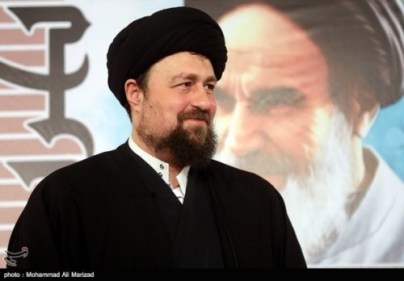
Hassan Khomeini

Ayatollah Ruhollah Khomeini’s grandson, Hassan

Hassan Khomeini, whose name is mentioned as a possible candidate to follow the Iranian Supreme Leader, stated that there is no guarantee that the Islamic regime will continue to exist if it does not take into account several basic problems that require urgent attention. Khomeini specifically pointed to the issues of tolerance, meritocracy, easing repression, and hypocrisy as matters that the regime must take care of and mend its ways before it is too late. These issues may indicate the collapse of society and the regime.

Khomeini said political leaders in Iran need to be concerned about the day when their political authority is lost and far-reaching changes erode their power and their role. “If you can’t maintain the laws, you will lose the public,” he said. In his words, the satisfaction of the citizens is the foundation upon which society is built, and “anyone who does not adhere to human rights has no guarantee that he can remain in government, and in the end he will lose the confidence of the people.”1

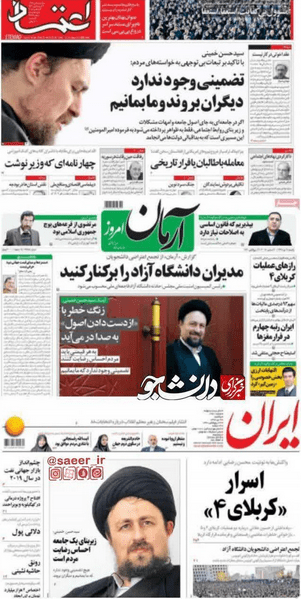
Some of Iran’s newspapers published Hassan Khomeini’s statements under prominent headlines under titles such as, “No Guarantee That We Will Remain.”
 

Faezeh Hashemi: The Regime Is Collapsing Ideologically, Leading to a Physical Collapse

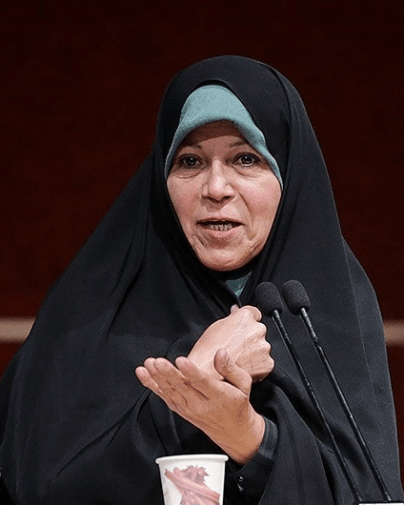
Khomeini’s grandson is not a lone voice in the desert. Several days before he spoke, Faezeh Hashemi, a former member of the Majlis (parliament) and a daughter of Ayatollah Akbar Hashemi Rafsanjani (former president of Iran, who played various key roles in the Islamic Revolution), asserted in an interview with the Mostaghel newspaper that the ideology of the Islamic Republic has totally collapsed. Even though the regime is still strong, she continued, the only reason why it remains in power is the lack of a suitable alternative that could gain the support of the nation.

“In my opinion,” Hashemi continued, “the principles have already collapsed. We are not yet talking about a physical collapse, but I see (physical collapse) as a definite possibility… It is not close, but the sound of expanding cracks can already be heard… Wherever we look, there is a definite lack of efficiency and a lack of leadership and logic. Everything is neglected, and no attempt has been made to find a solution to the problems. Worst of all – the situation is only getting worse and there is no sign of any improvement.”

“Intimidation” and “Harassment”
Faezeh Hashemi Rafsanjani (Wikipedia)

Faezeh Hashemi, who was incarcerated for six months after being accused of creating anti-regime propaganda, added that “intimidation” and “harassment” continued to be the source of the main power of the regime and enabled its survival. According to her, even though there are no open signs of repression, examples of them were seen in 2009 after the violent suppression of a protest against the reelection of Ahmadinejad, and many repressive acts are carried out behind the scenes. According to Hashemi, activists from every stratum of society are thrown into prison or sentenced to periods of incarceration. These include workers, teachers, truck drivers, women’s rights workers, environmental activists, students, and anyone else critical of economic policies, including regular citizens.

Hashemi has been targeted in the past for the sharpened arrows shot by senior officials of the conservative camp trying to vilify the actions of her father. They have even attacked her personally for her reformist positions and sharp criticism of the Islamic regime and its “deviation from the path.” Rafsanjani’s daughter has not only criticized the conservatives, but also the “moderate” president of Iran, Hassan Rouhani. “He says things as if he is not the president. He speaks as though he is a member of the opposition… I am aware that the government is not responsible for basic issues and there are significant obstacles. But there are problems that the government can solve (and it is not doing it).”2 Rouhani is a reformist who does not behave like a reformist, and he needs to be committed to reform.”3
Fatemeh Hashemi Rafsanjani (Wikipedia)

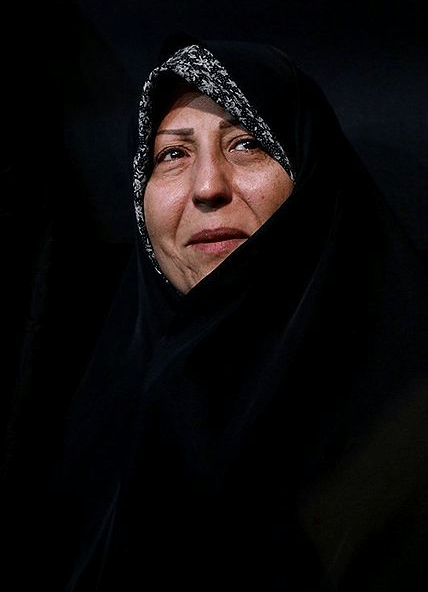
Not long after Faezeh Hashemi lashed out at the regime, former President Rafsajani’s eldest daughter Fatemeh Hashemi rekindled her doubts about the odd circumstances of their father’s death: “Based on pieces of evidence that I have managed to obtain, I am certain that my father’s death was not from natural causes.”  Fatemeh Hashemi reiterated that the regime was behind the murder of her father at the beginning of 2017. She stressed that senior regime officials are aware of the plot, and other commanders and officials were privy to the murder. Two of them even notified her two months before her father was killed and told her to inform him that he would be murdered.4 

In January 2018, Fatemeh Hashemi alleged that her father was wrapped in a “towel contaminated with radioactive substances” when he was taken to the hospital after suffering a heart attack, but in a more recent interview to the Jamaran website exactly a year later, she said, “it was only a decoy.”

After his death, Rafsanjani’s family has spoken on several occasions about the suspicious circumstances surrounding his demise. The Iranian regime insists that Rafsanjani died as a result of cardiac arrest.

In a similar vein, Mohammad Reza Tajik, a senior figure in the reformist camp, who headed the Center for Strategic Research during the presidency of reformist Mohammad Khatami, stated that the situation of the present regime could be compared to the last moments of The Titanic.

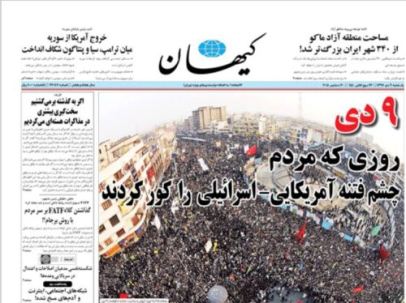
On December 30, 2018, there was a mass gathering sponsored by the regime, entitled the “The Epic of the 9th (of the month of) Dey,” marking the success of the government in suppressing mass riots in 2009 protesting the reelection of Mahmoud Ahmadinejad. These riots were instigated by the leaders of the reformist protest movement, Mehdi Karroubi and Mir Hossein Mousavi. The regime observes this date to demonstrate power and cohesion in the face of growing criticism both at home and abroad and to denounce opponents of the regime for trying to foment fitna (“civil strife” in Farsi). Opponents of the regime are portrayed as traitors and collaborators with the United States and Israel.
Kayhan fitna

Front page of the Kayhan newspaper, showing support for the regime “against American-Israeli fitna.”

“Death to the Dictatorship” in the Heart of Tehran

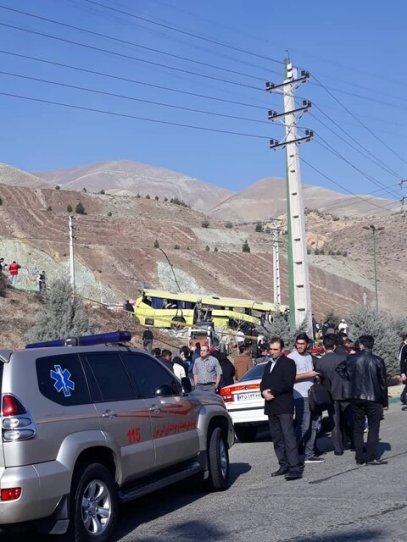
The day after the Iranian regime glorified itself for its victory nine years ago against the leaders of “the fitna” and the “Israeli and American conspiracy,” citizens and students went out into the streets to demonstrate against the regime, primarily against the backdrop of a bus crash at the Azad University. Reports of riots around the area of Tehran University, the site of student demonstrations in the past and which serves as a focal point for rioting, have flooded social media networks. These riots were a follow up of demonstrations and student protests at Azad University, which occurred when ten students were killed and 25 injured in a bus crash on campus as the result of failures in safety and the neglect of advanced, safe transportation projects.5
Azad bus crash

Iranian students’ bus accident and roll-over which killed 10 and injured 25. (Iranian press)

During the demonstrations, calls of condemnation against the regime were heard, and just as in earlier protests, security officers dressed in civilian clothing operated among the demonstrators in an attempt to disperse them and put a stop to their actions. In video clips that were circulated, calls were heard of “we aren’t afraid while we are together,” “leave them alone,” “death to the dictatorship,” and other anti-government slogans. Slogans in support of Reza Pahlavi, son of the late Shah, were also heard.

At the demonstrations, older women were also seen alongside the youth. The BBC’sFarsi language service, which has occasionally been accused by the Iranian regime of biased coverage and is usually very careful when reporting on demonstrations, began its news programs with coverage of the demonstrations.

The deputy governor of Tehran, Abdolazim Rezaie, defined the riots that broke out in the center of Tehran as “unlawful” and accused opportunists of being behind them and inflaming them. He explained that the situation was under control.

Criticism of the Islamic System Grows

According to the “princes” and senior government figures, the regime is facing a real challenge and the demonstrations that have reappeared in the center of Tehran were the result of growing pressure from the United States on Iran and the re-imposition of sanctions on the regime and its officials. This pressure is already showing its signs in the increased hardship of Iranian citizens who go out from time to time to demonstrate in various cities against corruption and the deteriorating economic situation.

During the riots, there were various slogans against the regime and calls to change it, but as Faezeh Hashemi asserted, no leader can be seen on the horizon who would be capable of uniting the Iranian people. Even the efforts of Prince Reza Pahlavi to present himself as a worthy leader have not yet come to fruition and it is not clear whether he can rally mass support for himself from among the Iranian people, some of whom have not yet forgotten the misdeeds of his father.

In any case, the severity of the criticism of the regime and the Islamic system of government is unusual, and it is increasing as the economic crisis in Iran deepens. The criticism from the “princes” – the grandson of Ayatollah Khomeini and the daughters of Rafsanjani – indicates that some of the impediments that existed in the past to anything related to criticism of the Islamic system of government have been removed, and the criticism is stronger and more resounding than ever. The question that remains open is what will be the catalyst that will topple the Iranian regime and if there will be a leader that can direct the change in government.6

Will the accident in which ten students at the Islamic Azad University were killed result in a chain reaction bringing the desired change?

* * *
Notes

1 https://tinyurl.com/ISNA3112

2 https://www.rferl.org/a/revolutionary-s-daughter-says-islamic-republic-weakened-could-collapse/29681911.html

3 https://www.kaleme.com/1397/10/06/klm-270189/

4 https://www.jamaran.ir/%D8%A8%D8%AE%D8%B4-%D8%B3%DB%8C%D8%A7%D8%B3%D8%AA-12/1080985-%D9%81%D8%A7%D8%B7%D9%85%D9%87-%D9%87%D8%A7%D8%B4%D9%85%DB%8C-%D8%B1%D9%81%D8%AA%D8%A7%D8%B1-%D9%BE%D8%AF%D8%B1%D9%85-%D8%AF%D8%B1-%D8%B3%D8%A7%D9%84-%D9%85%D8%A7%D9%86%D9%86%D8%AF-%DA%AF%D8%B0%D8%B4%D8%AA%D9%87-%D8%A8%D9%88%D8%AF

5 http://jcpa.org.il/article/%d7%96%d7%a2%d7%9d-%d7%91%d7%a7%d7%a8%d7%91-%d7%a1%d7%98%d7%95%d7%93%d7%a0%d7%98%d7%99%d7%9d-%d7%91%d7%90%d7%99%d7%a8%d7%90%d7%9f-%d7%91%d7%a2%d7%a7%d7%91%d7%95%d7%aa-%d7%aa%d7%90%d7%95%d7%a0%d7%aa/

6 http://jcpa.org.il/article/%d7%94%d7%90%d7%9d-%d7%94%d7%95%d7%9c%d7%9b%d7%aa-%d7%95%d7%a0%d7%95%d7%a6%d7%a8%d7%aa-%d7%94%d7%a1%d7%a2%d7%a8%d7%94-%d7%94%d7%9e%d7%95%d7%a9%d7%9c%d7%9e%d7%aa-%d7%9c%d7%94%d7%97%d7%9c%d7%a4%d7%aa/


Israel is influencing US policy on Syrian withdrawal, senior official says

January 2, 2019

Source: Israel is influencing US policy on Syrian withdrawal, senior official says | The Times of Israel

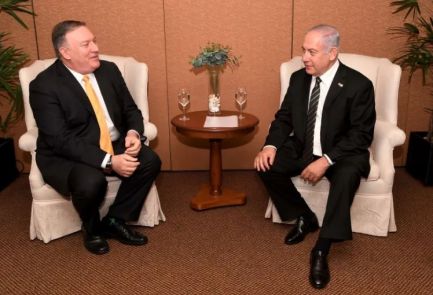
A senior Israeli official tells reporters that “Israel received almost everything it wanted” during Prime Minister Benjamin Netanyahu’s meeting yesterday in Brasilia with US Secretary of State Mike Pompeo.

“The prime minister left the meeting with a feeling that Israel has influence in certain areas (on US policy) and that Israel and the United States are working on various ideas regarding Syria that will help Israel,” the official says.

Netanyahu said ahead of the meeting that he had asked to Trump to carry out the US withdrawal from Syria gradually rather than all at once.

The official says that “Israel had 8 requests — 7 of where were answered” by Pompeo.

The lone issue still to be worked out between the parties is Israel’s sale of aging F-16 fighter jets to Croatia. The Trump administration is said to be angry that Israel added Israeli-made electronic systems to the F-16s as part of efforts to convince Croatia to buy the planes.

The US is said to believe Israel unfairly profited through its actions, as the F16s are American-made and were not supposed to be sold to a third party without its approval.


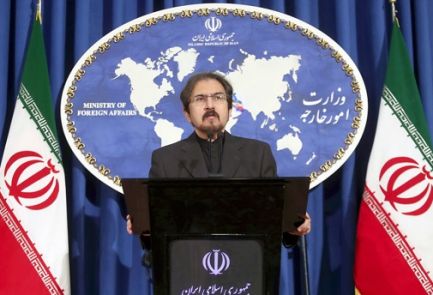
Iran denounces Brazil’s plan to move embassy to Jerusalem

January 2, 2019

Source: Iran denounces Brazil’s plan to move embassy to Jerusalem – Israel Hayom


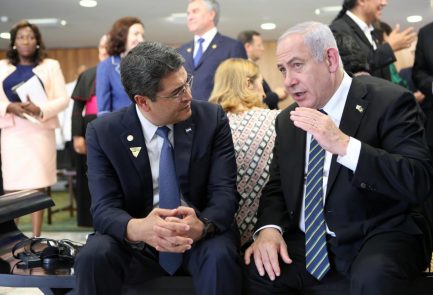
Honduras in talks with Israel, US on Jerusalem embassy move 

January 2, 2019

Source: Honduras in talks with Israel, US on Jerusalem embassy move – Israel Hayom


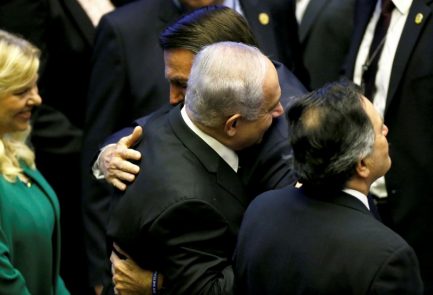
Netanyahu: There is great admiration for Israel in Brazil

January 2, 2019

Source: Netanyahu: There is great admiration for Israel in Brazil – Israel Hayom


Pompeo, Netanyahu vow to continue cooperation over Syria, Iran 

January 2, 2019

Source: Pompeo, Netanyahu vow to continue cooperation over Syria, Iran – Israel Hayom


IS still lethal in Syria despite Trump claim, say fighters on ground

January 2, 2019

Source: IS still lethal in Syria despite Trump claim, say fighters on ground

Islamic State has hundreds of battle-hardened men and supporters operating freely in Northern Syria, even with heavy the military losses the terror group sustained.

“ISIS has hundreds of fighters around Hajin and along the Euphrates… these are the most dedicated, the most experienced IS fighters in Syria. In local tribes and villages, IS also more active supporters as well,” said Havel Ronnie, a top commander in Deir-ez-Zor province in eastern Syria.

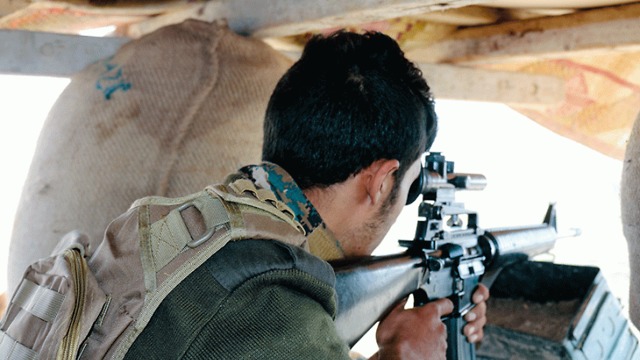
A Syrian Democratic Forces sniper (Photo: Courtesy)

A Syrian Democratic Forces sniper

Islamic State’s presence in Syria has been severely diminished since they were driven out of their de facto capital of Raqqa, in late 2017 by the SDF.Following this victory, the SDF launched the “al-Jazeera Storm” military campaign in mid-2018 against the terrorist group, which aimed at liberating Hajin, Susah, and other IS-controlled villages along the Euphrates in eastern Syria.


However, the battle here, in Deir-ez-Zor province, has been particularly difficult. “Those are the worst of the worst; they have survived Kobani, Raqqa and other battles. They’ve had five years to prepare so they’ve dug tunnels and planted many improvised explosive devices,” Ronnie said of IS.

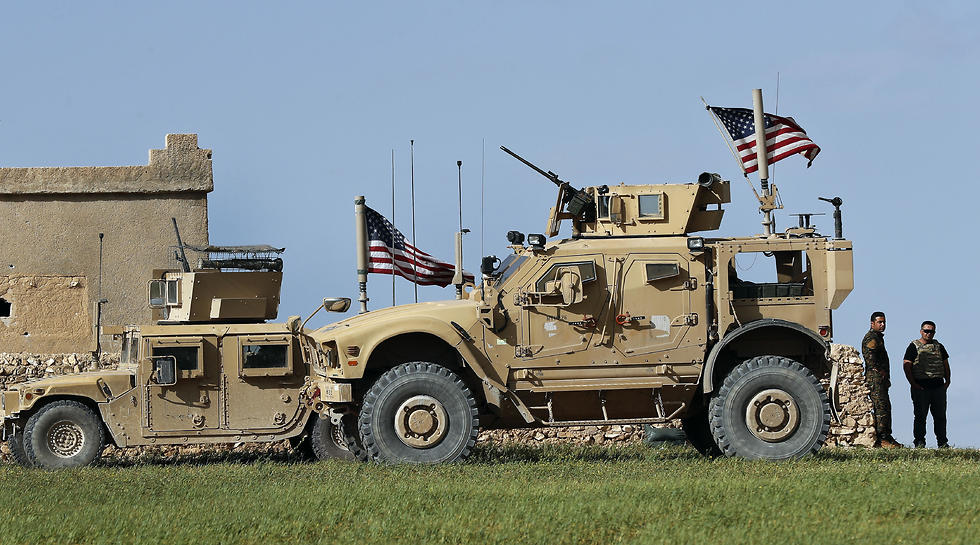
American troops in Syria (Photo: AP)

American troops in Syria (Photo: AP)
An amalgamation of Kurds and local anti-IS tribes backed by the Americans – the SDF has recently dealt a blow to the jihadists by capturing Hajin from ISIS.But according to Marwan Qamishli, the media spokesperson for the operation, this came at a heavy cost.

“We decided to attack Hajin directly,” Qamishli said. “The fighting was intense – like nothing before – we liberated the town, but there are still clashes going on nearby.”

This, according to the spokesman, is contrary to Trump’s claim that the US has defeated IS in Syria. “Trump says IS has been defeated, but that is not true,” Marwan said. “Around Hajin they still control a lot of territory… they are very active in Northern Syria and we are facing and fighting them every day.”

According to Ronnie, even if the terror group loses its territory along the Euphrates, it will still pose a threat. “Many of these (villagers) in Deir-ez-Zor lived under IS a long time and it is hard to know what is going on in their mind,” the commander states, adding, “you have to remember ISIS is not like other groups – it is an ideology – it is Islamic fascism – and that cannot be defeated on the battlefield alone.”

The president’s decision to withdrawal of all the U.S. troops in Syria was cited by his outgoing Defense Secretary, James Mattis, as a key reason for his resignationfrom the administration.

US President Trump and Jim Mattis  (Photo: Reuters)

US President Trump and Jim Mattis

As of now, though, the SDF hasn’t seen U.S. troops leaving the country, and Trump has reportedly decided to gradually withdraw over a period of months. “At the moment nothing has changed – we are still receiving support from the coalition – including American air strikes,” Qamishli said.

“However, Trump’s announcement has created a lot of confusion, not just with us, but also with other coalition members, as we are not sure yet when, how, or if, the Americans are going to leave,” he added.

If the American troops stationed in Syria do leave it would have serious implications on finding remaining IS fighters and their supporters inside of Syria.

According to Qamishli, “IS has not been defeated, and I think the Pentagon with all their military, air and intelligence resources know this. Even if ISIS loses its territory they still have sleeper cells that can attack…so vigilance is still needed.”

Indeed, the SDF believes that dealing with both IS fighters and their supporters is a generational battle.

“This battle will continue on for years if not decades. Even if IS is defeated, it’s not the end. ISIS can recruit more supporters,” Qamishli added.