Source: Pompeo repudiates Obama Mideast policy, takes aim at Iran | The Times of Israel
In Cairo, top US diplomat credits Trump with reversing ‘our willful blindness to danger of Iran,’ accuses ex-president of ‘looking the other way’ as Hezbollah stockpiled missiles
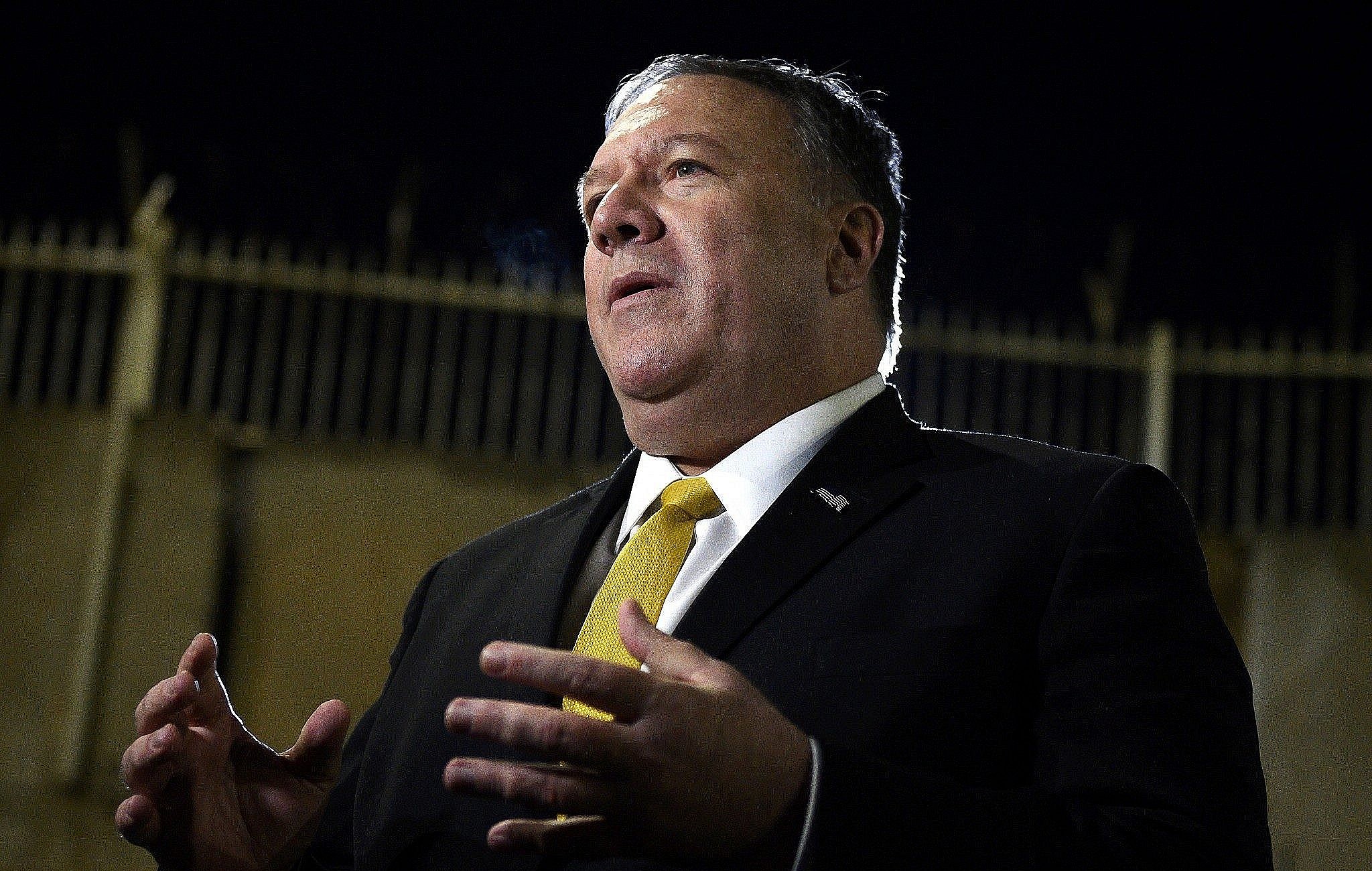
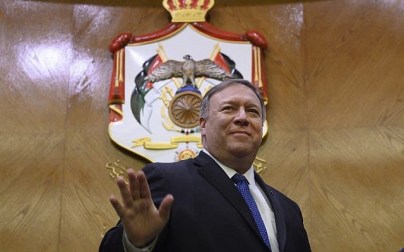
CAIRO — US Secretary of State Mike Pompeo delivered a scathing rebuke of the Obama administration’s Mideast policies on Thursday as he denounced the former president for “misguided” and “wishful” thinking that diminished America’s role in the region, harmed its longtime friends and emboldened its main foe: Iran.
In a speech to the American University in Cairo, Pompeo unloaded on US President Donald Trump’s predecessor for being naive and timid when confronted with challenges posed by the revolts that convulsed the Middle East, including Egypt, beginning in 2011. Pompeo laid the blame notably on a vision outlined by President Barack Obama in a speech he gave in Cairo in 2009 in which he spoke of “a new beginning” for US relations with countries in the Arab and Muslim world.
“Remember: It was here, here in this very city, another American stood before you,” Pompeo told an invited audience of Egyptian officials, foreign diplomats and students. “He told you that radical Islamist terrorism does not stem from ideology. He told you 9/11 led my country to abandon its ideals, particularly in the Middle East. He told you that the United States and the Muslim world needed ‘a new beginning.’ The results of these misjudgments have been dire.”
“In falsely seeing ourselves as a force for what ails the Middle East, we were timid about asserting ourselves when the times — and our partners — demanded it,” Pompeo said, without mentioning the former president by name.
Pompeo blamed the previous administration’s approach to the Mideast for the ills that consume it now, particularly the rise of the Islamic State group in Iraq and Syria and Iran’s increasing assertiveness, which he said was a direct result of sanctions relief, since rescinded by the Trump administration, granted to it under the 2015 nuclear deal.
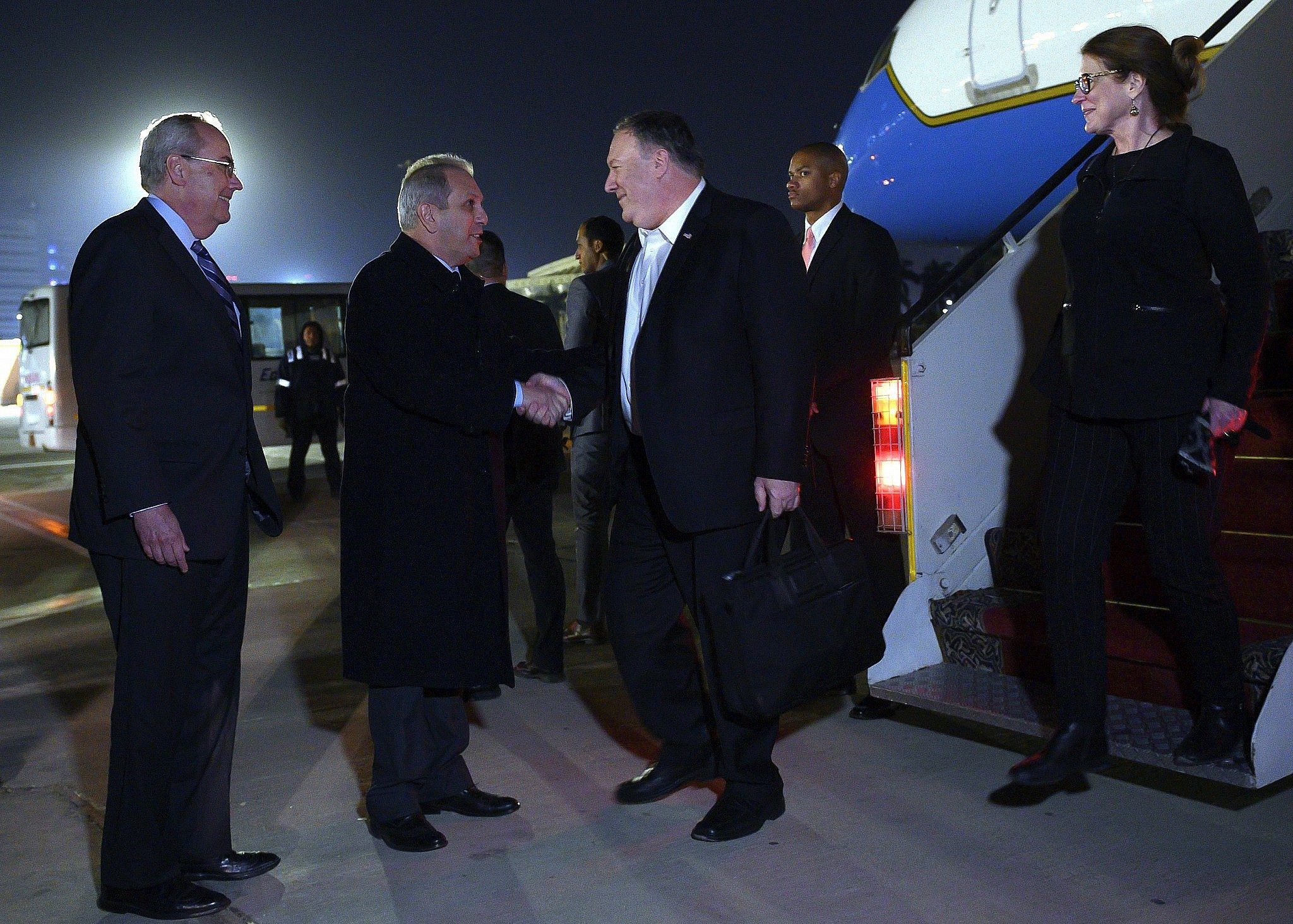
He criticized Obama for ignoring the growth of the Iranian-backed Hezbollah in Lebanon to the detriment of Israel’s security and not doing enough to push back on Iran-supported rebels in Yemen.
“America’s penchant for wishful thinking led us to look the other way as Hezbollah, a wholly owned subsidiary of the Iranian regime, accumulated a massive arsenal of approximately 130,000 rockets and missiles,” he says during a speech in Cairo.
“That arsenal is aimed squarely at our ally Israel.”
Since Trump’s election, however, Pompeo said this was all changing.
“The good news is this: The age of self-inflicted American shame is over, and so are the policies that produced so much needless suffering,” he said. “Now comes the real ‘new beginning.’ In just 24 months, actually less than two years, the United States under President Trump has reasserted its traditional role as a force for good in this region, because we’ve learned from our mistakes. We have rediscovered our voice. We have rebuilt our relationships. We have rejected false overtures from enemies.”
In the speech entitled “A Force for Good: America’s Reinvigorated Role in the Middle East,” Pompeo extolled the Trump administration’s actions across the region cementing ties with traditional, albeit authoritarian governments, taking on the Islamic State group in Iraq and Syria and imposing tough new sanctions on Iran.
“President Trump has reversed our willful blindness to the danger of the regime and withdrew from the failed nuclear deal, with its false promises,” Pompeo said. “Countries increasingly understand that we must confront the ayatollahs, not coddle them.”
Pompeo also welcomed Israel’s warming ties with Arab Gulf states as “old rivalries” are put aside to confront Tehran.
“New bonds are taking root that were unimaginable until very recently,” he said, pointing to Prime Minister Netanyahu’s trip last year to the sultanate of Oman, a country with which Israel has no formal ties.
Pompeo also noted a judo competition in Abu Dhabi where for the first time Israeli athletes were able to compete under the Israeli flag.
“It was also the first time an Israeli culture and sports minister attended a sports event in the Gulf. She said, and I quote: ‘It is a dream come true,’” he said, quoting Miri Regev’s reaction to the playing of the Israeli national anthem.
Since withdrawing from the nuclear deal with Iran last year, the US administration has steadily ratcheted up pressure on Tehran and routinely accuses the nation of being the most destabilizing influence in the region. It has vowed to increase the pressure until Iran halts what US officials describe as its “malign activities” throughout the Mideast and elsewhere, including support for rebels in Yemen, anti-Israel groups and Syrian President Bashar Assad.

“The nations of the Middle East will never enjoy security, achieve economic stability, or advance the dreams of its peoples if Iran’s revolutionary regime persists on its current course,” Pompeo said.
In a rebuttal to the speech, a group of mainly former Obama administration foreign policy officials rejected Pompeo’s assertions as petty and weak.
“That this administration feels the need, nearly a decade later, to take potshots at an effort to identify common ground between the Arab world and the West speaks not only to the Trump administration’s pettiness but also to its lack of a strategic vision for America’s role in the region and its abdication of America’s values,” the National Security Action group said in a statement.
Pompeo’s speech came on the third leg of a nine-nation Mideast tour aimed at reassuring America’s Arab partners that the Trump administration is not walking away from the region amid confusion and concern over plans to withdraw US forces from Syria.
Earlier in Cairo, he met with Egypt’s President Abdel-Fattah el-Sissi and Foreign Minister Sameh Shoukry to discuss security and economic cooperation.
Trump has boasted of his close relationship with Sissi, a former general who has been criticized for his human rights record and democratic shortcomings. The Trump administration has resumed weapons sales to Egypt that had been suspended over human rights concerns, including the jailing of several American citizens on what US officials say are false charges.
At a brief news conference with Shoukry, Pompeo said he raised human rights with both Sissi and Shoukry and reminded them that “open and honest public debates are a hallmark of a thriving society.” He said he discussed a “panoply” of rights concerns, including the detention of political prisoners but gave no specifics.
Shortly before Pompeo arrived, the State Department noted improvements in Egypt’s human rights record. It welcomed the recent acquittal of employees of American civil society groups who had been “wrongly convicted of improperly operating in Egypt” and said the US supports Sissi’s pledges “to amend Egyptian law to prevent future miscarriages of justice.” On Wednesday, however, an Egyptian court sentenced a leading activist behind the country’s 2011 uprising to 15 years in prison after convicting him of taking part in clashes between protesters and security forces later that year.
Source: Marco Rubio calls Rashida Tlaib’s jibe on anti-BDS bill ‘anti-Semitic’ | The Times of Israel
After Palestinian American lawmaker says promoters of legislation ‘forgot what country they represent,’ US senator says it’s a ‘typical anti-Semitic line’
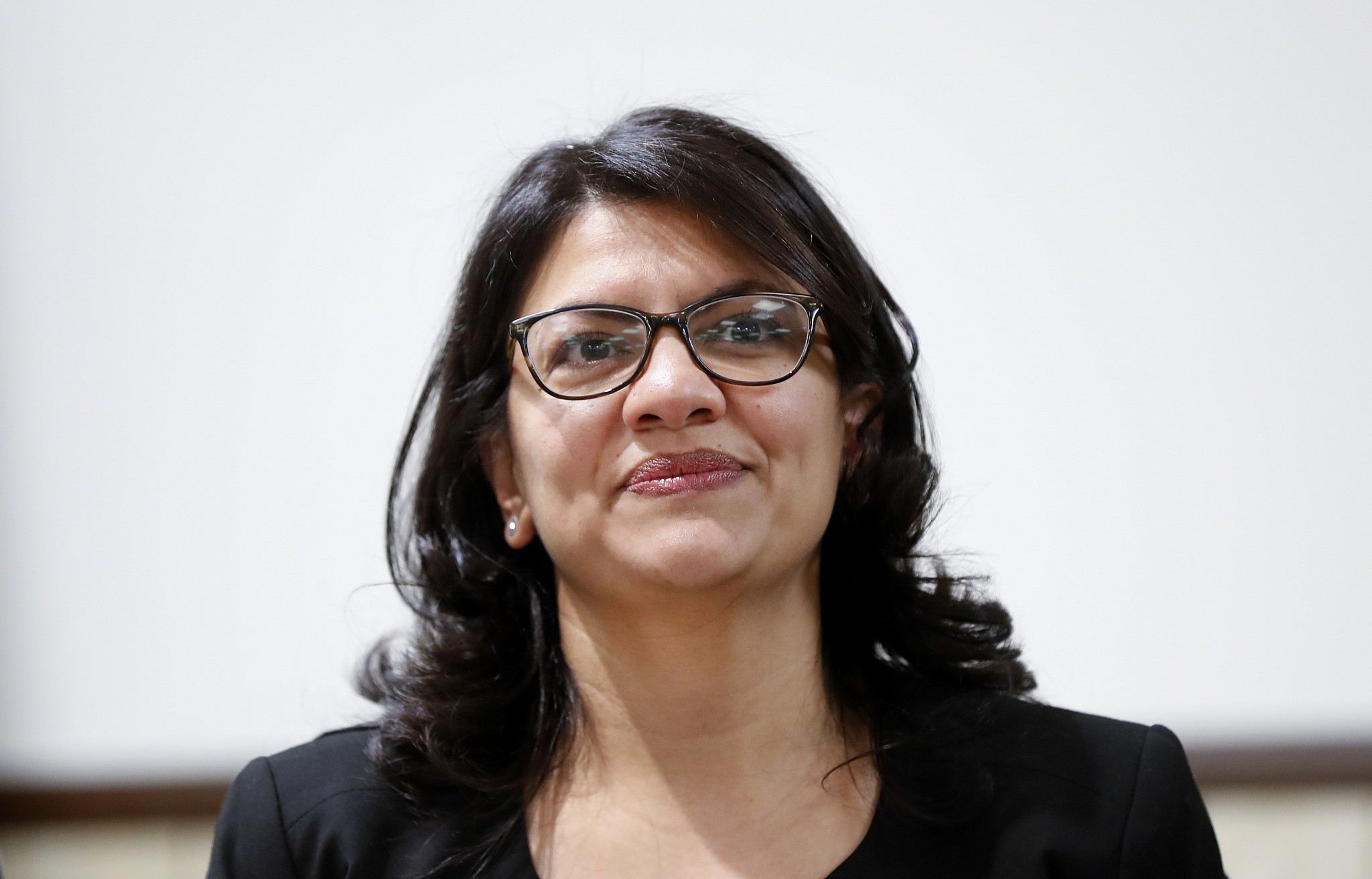
WASHINGTON, DC (JTA) — US Senator Marco Rubio has been pushing a bill that would protect states that penalize Israel boycotters, spurring a freshman congresswoman to question his loyalties.
On Monday, the Florida Republican decried the statement from Rep. Rashida Tlaib, a Democrat of Michigan, as anti-Semitic.
“This ‘dual loyalty’ canard is a typical anti-Semitic line,” Rubio said on Twitter, quoting a tweet from the previous day by Tlaib, a Palestinian American. “#BDS isn’t about freedom & equality, it’s about destroying #Israel.”
BDS stands for the Boycott, Divestment and Sanctions movement targeting Israel.
Tlaib in the earlier tweet had attacked a Senate bill initiated by Rubio and Senator James Risch, an Idaho Republican, that incorporates four Middle East-related bills that languished in the last Congress. One of the measures protects states that pass anti-BDS bills, including those that ban work with contractors who boycott Israel, from lawsuits. Civil libertarians have decried the state laws as impinging on speech freedoms.
“They forgot what country they represent,” Tlaib said in her tweet. “This is the U.S. where boycotting is a right & part of our historical fight for freedom & equality.”
 Marco Rubio
✔@marcorubio
And if boycotting #Israel is constitutionally protected, then boycotting companies that boycott #Israel is also constitutionally protected
Rashida Tlaib✔@RashidaTlaib
They forgot what country they represent. This is the U.S. where boycotting is a right & part of our historical fight for freedom & equality. Maybe a refresher on our U.S. Constitution is in order, then get back to opening up our government instead of taking our rights away. https://twitter.com/SenSanders/status/1082013021214597120 …
Also weighing in on Tlaib’s tweet was the American Jewish Committee.
“Tell us more about dual loyalty, @RashidaTlaib,” AJC said in a tweet attached to a photo of the newly elected congresswoman embracing someone draped in the Palestinian flag.
“It’s outrageous to imply dual loyalty because you disagree with a policy initiative,” AJC said in a followup tweet. “A new member of Congress has no place saying that four U.S. Senators don’t know which country they represent.”
Source: Iran’s supreme leader calls US officials ‘idiots,’ but hints sanctions hurting | The Times of Israel
Khamenei says Iran will withstand the pressure, slap US in the face again
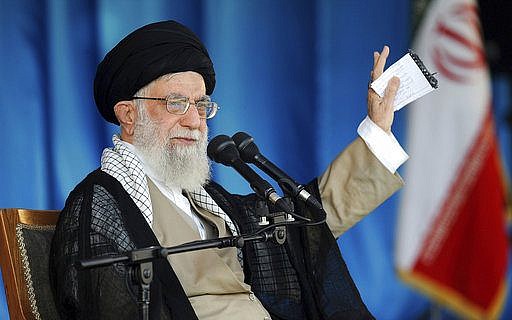
Iranian Supreme Leader Ayatollah Ali Khamenei said Wednesday that American sanctions are putting pressure on Iran and its people.
In an unusually forceful speech from the holy city of Qom, Khamenei also mocked American leaders, as top US diplomat Mike Pompeo made a tour of the region.
US President Donald Trump pulled out of an international agreement on Iran’s nuclear program in May and in November reimposed sanctions on Tehran.
“The sanctions do put pressure on the country and the people. The Americans happily say that these sanctions are unprecedented in history,” Khamenei said, according to a Reuters translation. “Yes, they’re unprecedented. And the defeat that the Americans will face will be unprecedented, God willing.”
Iran has ignored Western calls to curb its military development and has pushed ahead with repeated ballistic missile tests. The Iranian military recently announced its intention to deploy warships to the western Atlantic off the US coast as a counter to American military presence in international waters off Iran.
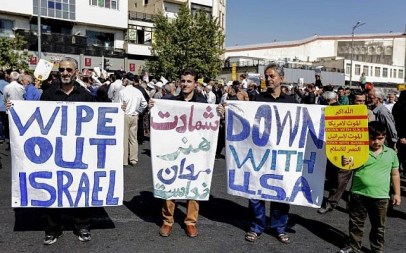
In an English translation of his remarks posted on his website, Khamenei said “Iran will overcome sanctions, slap US in face again.”
Khamenei also cited a story about a US official once predicting he’d celebrate Christmas in Iran to lash out at Americans.
“Some US officials pretend that they are mad,” Khamenei said. “Of course I don’t agree with that, but they are first-class idiots.”
The supreme leader did not name the official. However, US National Security Adviser John Bolton told a meeting of the Iranian exile group Mujahedeen-e-Khalq last March that “before 2019, we here … will celebrate in Iran.” Trump’s personal lawyer, former New York Mayor Rudy Giuliani, has made similar comments before the MEK over the years.
Iran’s supreme leader, viewed by Shiite hardliners as second only to God, typically doesn’t make such forceful remarks. However, Trump’s decision last year to withdraw from the nuclear deal has seen the 79-year-old cleric grow increasingly critical.
Punishing sanctions against Iran over its nuclear program had been curbed as part of a 2015 nuclear deal, but were largely re-imposed by the US last year, under Trump, who has taken a hard line toward Iran.
Trump has labeled the landmark agreement forged under his predecessor Obama as “defective” and unable to rein in Iranian behavior or halt the Islamic Republic’s quest to develop nuclear weapons.
In 2017, Khamenei dismissed remarks by Trump calling Iran a “terrorist” nation as “idiotic.” Last May, after Trump withdrew from the nuclear deal which saw Iran limit its uranium enrichment in exchange for the lifting of economic sanctions, Khamenei told Trump in a speech: “You cannot do a damn thing!”
Khamenei’s comments Wednesday came as Pompeo visited Iraq. On Tuesday, the US top diplomat threatened that America would double down on commercial and diplomatic efforts in the coming weeks to “put real pressure on Iran.”
Khamenei’s remarks to Qom residents were meant to mark the anniversary of religious riots in 1978 that challenged Shah Mohammad Reza Pahlavi. They would spiral into the nationwide demonstration that saw the shah leave Iran and give rise to the 1979 Islamic Revolution. Iranians will commemorate the revolution’s 40th anniversary in February.
Source: US buys more Israeli defense systems to protect tanks, APCs | The Times of Israel
Initial contract worth $80 million approved, with another $120 million pending, for Israel’s Trophy system
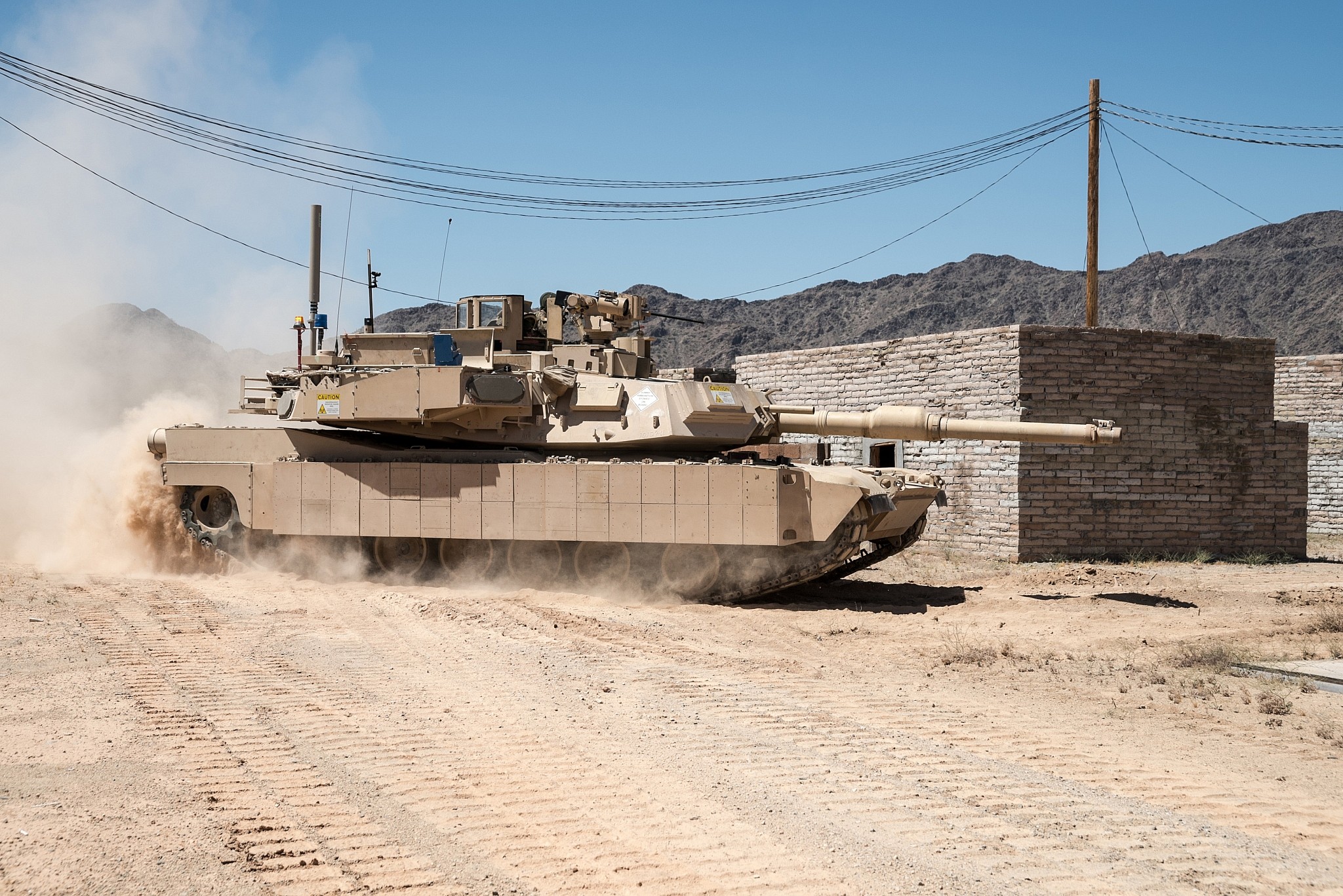
The US military awarded a nearly $80 million contract for the purchase of an Israeli-developed missile defense system to protect tanks and armored personnel carriers, after reaching a similar $200 million deal this past summer, the Rafael Advanced Defense Systems contractor announced Wednesday.
The United States is expected to pay another $120 million for more defense systems as part of the agreement, pending final approvals, bringing the total value of the two contracts to approximately $400 million, according to a spokesperson for the weapons manufacturer.
The systems, which block incoming anti-tank missiles and rockets, will be supplied to the US Army by the American defense contractor Leonardo DRS, Inc., which partnered with Rafael to manufacture them.
The Trophy, known in Hebrew as Me’il Ruah, or “Windbreaker,” is an active defense system manufactured by Rafael that is designed to protect tanks and other armored vehicles from missiles and rockets.
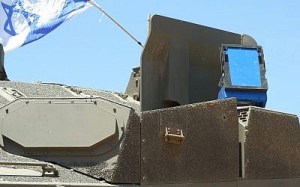
The system is made up of a radar detection system that spots incoming missiles and predicts their trajectories, and launchers that fire buckshot-like metal pellets, which cause the incoming missile or rocket to detonate away from the tank.
The system also pinpoints the source of the attack, allowing the soldiers inside the tank or APC to return fire more quickly.
The Trophy’s purchased as part of the agreement will be installed on the US military’s Bradley Fighting Vehicle.
The defense system was developed by Rafael and the Israel Aircraft Industries’ Elta Group and was declared operational in 2009.
In the initial stage of the contract, Leonardo DRS will provide the Trophy system to the US Army and Marine Corps in exchange for $79.6 million. The additional $120 million section of the approximately $200 million agreement requires additional approvals, a Rafael spokesperson said.
This is in addition to a deal made this past summer, under which Leonardo DRS agreed to supply the system and accompanying parts to the US Army for $193 million.
“Leonardo DRS is proud of the confidence shown by the Army in deciding to field Trophy to even more US combat brigades,” said Aaron Hankins, a vice president at the defense contractor.
The Trophy system has been in use in Israel’s Merkava-model tanks since at least 2011, and more recently in the military’s armored personnel carriers.
Rafael said it has supplied “some 1,000 systems to all major Israeli ground combat platforms.”
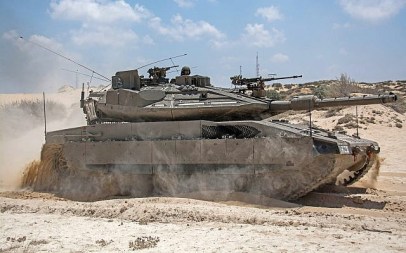
In 2016, the US military announced that it was planning to purchase the Trophy system to protect American tanks until the US defense contractor Raytheon could produce its own active defense system.
In 2017, the US Army said it would be fielding tanks with the Trophy system by 2020.
Parts of the Trophy will be made in the US and some in Israel, according to Rafael.
At a conference in 2017, representatives from the US military said they were impressed by the system’s capabilities from live-fire testing on an Abrams tank equipped with the Trophy.
“I tried to kill the Abrams tank 48 times and failed,” said US Army Col. Glenn Dean at a defense expo in 2017, according to the Military.com news site.
The system saw extensive real-world use in the 2014 Gaza war. Though many sustained damage, no tanks were destroyed in the fighting.
Source: Iran preparing satellite launches despite US warnings | The Times of Israel
Washington says space initiative defies UN resolution by advancing technology that could be used to develop long-range ballistic missiles
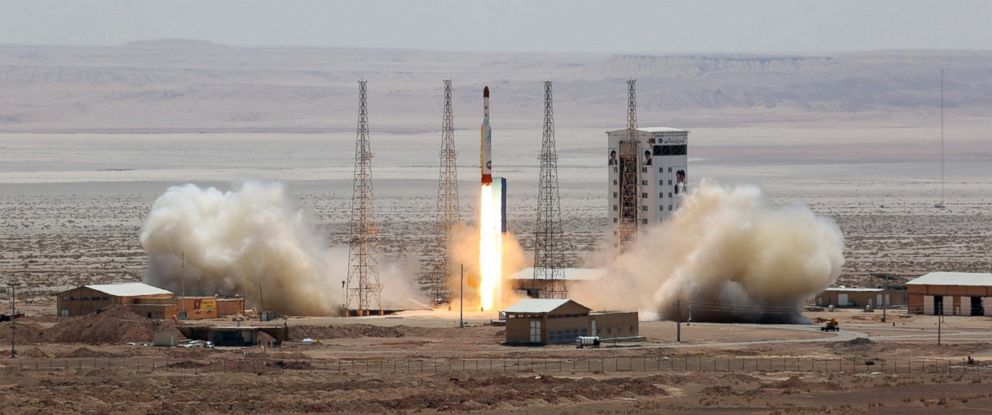
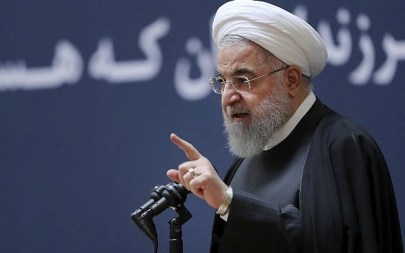
TEHRAN, Iran (AP) — Iran’s president said Thursday the Islamic Republic soon will send two new satellites into orbit using Iran-made rockets, despite US concern the launch could help further develop its ballistic missiles.
President Hassan Rouhani’s comments, during a commemoration for the late President Akbar Hashemi Rafsanjani, confirmed the rocket launches would take place.
Iran typically displays achievements in its space program in February, during the anniversary of the 1979 Islamic Revolution. This year will mark the 40th anniversary of the revolution, which saw the Persian monarchy of Shah Mohammad Reza Pahlavi replaced by the Islamic Republic overseen by a Shiite cleric.
“Soon, in the coming weeks, we will send two satellites into space using our domestically-made rockets,” Rouhani said, without elaborating.
Previously, Iran has sent several short-lived satellites into orbit over the past decade, and in 2013 launched a monkey into space. The US and its allies worry the same satellite-launching technology could be used to develop long-range missiles.
Last week Iran said country’s three new satellites have successfully passed pre-launch tests.
Earlier in January, US Secretary of State Mike Pompeo said Iran’s plans for sending satellites into orbit demonstrate the country’s defiance of a UN Security Council resolution that calls on Iran to undertake no activity related to ballistic missiles capable of delivering nuclear weapons.
Iran insists the launches do not violate the resolution.
Meanwhile Thursday, Iran began an annual air drill in central parts of the country.
The state-run IRNA news agency said dozens of fighter jets, bombers and transportation planes are taking part in the 2-day maneuver. It said beside US-made F-14, F-5 and F-4 fighter jets of the shah’s era, the Russian-made MiG-29 fighter jet as well as the Iranian-made Saegheh fighter will participate in the annual war game.
Drones, laser-guided rockets and heavy smart bombs also will be used, said Gen. Amir Angizeh, the maneuver’s spokesman.
Pompeo is currently touring the Mideast to promote the White House’s tough stance on Iran and to assure America’s Arab allies that the Trump administration is not walking away from the region.
On Wednesday, Iran’s supreme leader, Ayatollah Ali Khamenei, called Washington officials “first-class idiots” in unusually harsh remarks that reflect the broader tension between Iran and the US after President Donald Trump withdrew America from Tehran’s nuclear deal with world powers.
Source: Turkey’s Erdogan blasts John Bolton on bid to shield Syrian Kurds | TribLIVE
ISTANBUL — White House national security adviser John Bolton traveled to Turkey this week to talk with Turkish officials about working together on President Trump’s plan to quickly withdraw U.S. troops from Syria.
Instead, he got an earful.
Turkish President Recep Tayyip Erdogan, who declined to meet with Bolton, scolded him on live television Tuesday, describing as “a serious mistake” remarks Bolton made conditioning the American exit plan on protection of U.S.-allied Syrian Kurdish fighters. Turkey considers the Kurdish forces terrorists and has vowed to attack them in northeast Syria as soon as the Americans leave.
The furious response in Ankara was the latest setback for the White House’s troubled effort to extricate 2,000 American troops from Syria — a withdrawal that Trump announced suddenly last month without a detailed plan to implement it.
Bolton and Secretary of State Mike Pompeo are touring the Middle East, seeking to explain the policy and elicit support. But administration efforts at reassurance have instead raised doubts about the plan, laid bare internal disagreements and perplexed U.S. partners.
In Jerusalem on Monday, Bolton listed pre-withdrawal “objectives” — including the final defeat of the Islamic State and protection of Kurdish allies — that went well beyond Trump’s simple assertion that U.S. forces were heading home from Syria.
“The message that Bolton gave in Israel is unacceptable. It is not possible for us to swallow,” Erdogan said during a televised address to lawmakers in his political party. He suggested he also might ignore the Trump administration’s request to delay a Turkish military operation against the U.S.-allied Kurdish fighters. “Very soon, we will take action to neutralize terrorist organizations in Syria,” Erdogan said.
The administration encountered similar pushback elsewhere Tuesday, as U.S. allies pressed their own priorities.
In Jordan, Foreign Minister Ayman Safadi greeted Pompeo with kind words and a smile, but was unyielding in demands that the United States coordinate any troop withdrawal from Syria with regional allies. The minister also rejected Israel’s request that the United States recognize Israeli sovereignty over Syrian territory that Israel occupies in the Golan Heights.
Safadi also emphasized the position of Jordan and other U.S. allies in the Arab world that a pending American proposal for Israeli-Palestinian peace must recognize Palestinian statehood with East Jerusalem as the Palestinian capital.
Meanwhile, in Washington, the administration’s special envoy tasked with establishing a U.S. military alliance with countries in the Persian Gulf resigned his position on Tuesday. Anthony Zinni, who was named to the job last year, said no progress had been made in resolving a bitter dispute dividing gulf countries, which was undermining the prospects for the security pact.
A retired Marine Corps general and former head of U.S. Central Command, Zinni is the latest senior military veteran to leave the administration, following last month’s resignation of retired Marine general Jim Mattis as defense secretary and the departure of retired Army general John Kelly as White House chief of staff.
Most attention, however, was focused on Turkey and the increasingly muddled administration explanation of its intentions in Syria.
Aaron Stein, the Middle East director at the Foreign Policy Research Institute in Philadelphia, said the tensions over the administration’s Syria policy were largely the result of Trump’s staff ignoring “the intent of the president.”
“Whatever you think of Donald Trump, he has been very, very clear that he wants to withdraw from Syria. Instead of listening to that, what the national security bureaucracy is doing is putting together a plan that depends on a forever U.S. presence. Everyone is scrambling to reinterpret the president’s message.” As a result, the U.S. deliberations over Syria, which would normally occur behind closed doors, are “literally happening in front of the entire world,” Stein said.
Responding to media reports that Erdogan had snubbed Bolton by refusing to meet with him, National Security Council spokesman Garrett Marquis said that the U.S. Embassy in Ankara had requested an Erdogan meeting but that because of a “scheduling conflict,” it was “never confirmed.”
Marquis said that Bolton had held a “productive discussion” with Turkish presidential spokesman Ibrahim Kalin during a meeting that lasted more than two hours.
In the meeting, Bolton told Kalin that an op-ed written by Erdogan and published Monday night by the New York Times was inaccurate and offensive, according to a person briefed by a senior administration official who attended the session. Erdogan said in the op-ed that Trump had “made the right call” in announcing a withdrawal from Syria but was seeking to put unwise restrictions on Turkey’s agreement to take the United States’ place.
Bolton presented Kalin with a document restating Trump’s intention to withdraw U.S. forces but also insisting on protection for Kurdish fighters, said the person who had been briefed, speaking on the condition of anonymity about the private diplomatic session.
According to U.S. talking points, American troops and their allies in Syria would continue attacks against remaining Islamic State forces during an “orderly” U.S. departure period. Though orders have been given to the U.S. military to begin preparing for withdrawal, troops will carry out operations against the militant group as they leave. To prevent an Islamic State resurgence, the U.S. will retain unspecified capabilities on the ground for ongoing operations.
The withdrawal order does not involve an immediate departure from Syria of a separate U.S. garrison at Tanf in southeast Syria, near the junction of the borders of Syria, Jordan and Iraq. The administration has said the force of several hundred U.S. and coalition troops provides a buffer against any expansion by Iranian forces and their proxies, which have been aiding the government of Syrian President Bashar Assad.
Bolton’s delegation — which included Gen. Joseph Dunford Jr., chairman of the Joint Chiefs of Staff, and diplomat James Jeffrey, the administration’s special envoy for Syria and for the anti-Islamic State coalition — stressed that Washington was seeking a negotiated solution to Turkey’s concerns and would cooperate with Ankara on deconflicting airspace over northeast Syria.
During the discussions, Bolton stressed U.S. opposition to any Turkish mistreatment of the Syrian Democratic Forces, which have fought alongside the United States against the Islamic State. But Kalin did not budge from Turkey’s insistence that the bulk of those fighters, who are members of the Syrian Kurdish Peoples Protection Units, or YPG, are allied with Kurdish separatists in Turkey. He said that no offensive action would be taken in Syria while U.S. forces remained but that Turkey was fully within its rights to attack the Kurdish “terrorists.”
Bolton and Pompeo have both insisted on protection for all of the SDF, whose estimated 60,000 fighters include Syrian Arabs as well as Kurds. But this concern has not been made a formal condition of the pullout, according to one person familiar with the situation, who spoke on the condition of anonymity to comment on sensitive policymaking. This person said that “there will definitely be a fight” between Turkey and the Kurdish forces once the Americans leave Syria.
One possibility is that the Kurdish forces will fragment while resisting a Turkish onslaught. Another possibility is that the Kurds will transfer their loyalty to Assad and his Russian and Iranian backers.
In Amman on Tuesday, Pompeo said the departure of U.S. troops would not affect U.S. priorities in the region, particularly the goal of stopping Iranian expansion in Syria. Repeating remarks he has previously made in media interviews, Pompeo said that stepped-up, but unspecified, “diplomatic and commercial” pressure would achieve that aim. Before Trump’s withdrawal announcement, Pompeo and Bolton had said U.S. troops would remain indefinitely in Syria, until Iranian-commanded troops and their proxy militias were gone.
Pompeo said that the U.S.-led coalition in the region “is as effective today as it was yesterday, and I’m very hopeful it will continue to be effective and even more effective tomorrow. This is not just about a particular tactic… . The president’s decision to withdraw folks from Syria in no way impacts our capacity to deliver” on the continuing fight against Iran and the Islamic State, he said.
Trump has also said he wants countries in the region to make a bigger financial and military contribution toward promoting their shared aims, a subject that Pompeo plans to address during visits this week and next to Saudi Arabia, the United Arab Emirates, Bahrain, Kuwait, Qatar and Egypt.




 anneinpt
 artaxes
 danmillerinpanama
 davidking1530
 Peter Hofman
 Joseph Wouk
 Peter
Peter Louisiana Steve

 WarSclerotic
Recent Comments