Archive for January 2019

Why lift the fog off of IDF actions in Syria? 

January 14, 2019

Source: Why lift the fog off of IDF actions in Syria? – Middle East – Jerusalem Post

Prime Minister Benjamin Netanyahu took this break to a further level on Sunday, telling the cabinet that over the last 36 hours the IAF hit an Iranian arms warehouse at the Damascus International Airport.

BY HERB KEINON
 JANUARY 14, 2019 00:57
A war jet flies above Syria near the Israeli Syrian border as it is seen from the Golan Heights

Up until this weekend, the drill in Syria has been pretty predictable.

Explosions would be heard somewhere in Damascus, or in air bases or other locations throughout the country. The Syrian Observatory for Human Rights would report a missile strike or other explosion. Accusatory fingers would naturally be pointed at Israel, and Jerusalem would remain quiet, neither confirming, nor denying.

It was called the “policy of ambiguity,” and was meant to get a a job done, and a message across, without bragging about it, without taking credit and thereby forcing the other side – be it Syrian President Bashar Assad, Hezbollah or the Iranians – to save face and respond.

In this way, the IDF hit scores of targets since escalating its campaign in Syria in 2017, when the Iranians seriously stepped up their involvement in the country. Outgoing Chief-of-Staff Lt.-Gen. Gadi Eisenkot said as much in an interview with the New York Times over the weekend, saying “we struck thousands of targets without claiming responsibility or asking for credit.”

Eisenkot’s admission to thousands of attacks, and his saying that in 2018 alone Israel dropped 2,000 bombs in Syria, represented a break in this policy of ambiguity.

Prime Minister Benjamin Netanyahu took this break to a further level on Sunday, telling the cabinet that over the last 36 hours the IAF hit an Iranian arms warehouse at the Damascus International Airport.

If Eisenkot spoke in general terms — perhaps interested in some credit before leaving his position — Netanyahu suddenly brought it down to the specifics. And although this was not the first time Israel has taken responsibility – it did so in September when attacks near Damascus led to Syria’s downing of a Russian intelligence plane – this was decidedly not ambiguity.

Why? What is to be gained?

Before answering, it is important to take careful note of Netanyahu’s exact words at the cabinet meeting.

“Just in the last 36 hours the air force attacked Iranian warehouses with Iranian weapons at the international airport in Damascus. The accumulated number of recent attacks proves that we are determined more than ever to act against Iran in Syria,” he said.

He was very specific. Israel did not attack Syrian positions, but rather Iranian warehouses with Iranian weapons. This was a message to Russia, who has an interest in the survival of Assad, that its actions were not aimed at Assad or at weakening him – Israel was not looking to harm Russian interests – but rather at the Iranians, whom Jerusalem has made clear it would not allow to entrench itself militarily inside Syria.

Netanyahu’s comments were made at a cabinet meeting when the government took leave of Eisenkot. He stressed that he and Eisenkot worked against varied threats in order to reinforce the country’s security.

“We worked with impressive success to block Iran’s military entrenchment in Syria,” he said, stressing the “we.”

“We worked together against the manufacture of precision weapons in Lebanon. We worked to dismantle Hezbollah’s tunnels weapon in Lebanon, in Operation Northern Shield. We took action against Hamas tunnels on the Gaza border. We thwarted hundreds of terrorist attacks in Judea and Samaria and we carried out many many other actions, open and covert.”

If the inclination of the public, reading and listening to Eisenkot’s parting interviews, was perhaps to credit him for the IDF’s impressive achievements, Netanyahu came along at the cabinet meeting and underlined that it was not Eisenkot, it was a team – it was ”we.”

This plays well into the hand of those who believe that Netanyahu’s breaking the policy of ambiguity is tied to the April 9 elections. Labor MK Ayelet Nahmias-Verbin, a member of the Knesset Foreign Affairs and Defense Committee, championed this school of thought when she slammed Netanyahu for admitting Israel carried out the attacks Saturday, saying he is “harming the army’s maneuverability, preferring his own political interest over security interests.”

And Netanyahu’s political interest in taking responsibility for successful attacks is clear.

But not all agree with this interpretation.

Former Foreign Ministry director general Dore Gold said that there are always military operations around elections, “and now given the nature of the threat it is certainly reasonable that those military operations that have started already a couple of years ago will continue.”

He said that those attributing political considerations to Netanyahu going public now with the attacks would be on stronger ground “if these military operations just started now.” But, he said, “considering this is a continuation of past policy as articulated by the outgoing chief of staff, I think these arguments lose ground.”

Gold said that when Israel takes credit for an operation of this sort, “it becomes part of its deterrence posture – there is no longer a doubt, and it is now clear that Israel will do what is necessary to prevent the buildup of an Iranian military presence on Syrian soil.”

Taking responsibility, he said, “adds credibility to Israel’s statements about not allowing Iran to convert Syria into a satellite state.”

The timing, he said, is not connected to the elections, but rather to the US intention to remove its forces from Syria.

“I think the discussion of a US withdrawal has perhaps given the Iranians a sense that they now can just take over Syria.,” he said. Israel’s taking responsibility for attacks there sends them a clear message that they cannot. It also sends a message that even with the lingering tensions with Moscow over the spy plane incident, Jerusalem will not be deterred from taking action in Syria when it deems it necessary.

Jacob Nagel, who formerly served under Netanyahu as his national security advisor, also mentioned the withdrawal of the US troops as one of the reasons to take credit now.

He said that Israel has spelled out its red lines in Syria for a long time: that it will not allow a terrorist presence on the Golan border, that it will not allow the transfer of precision arms from Iran to Hezbollah, and that it will not allow an Iranian military buildup in the country.

Nagel said regarding the reason for taking responsibility for the attacks now: “Israel wants to make clear to everyone who will listen that we are determined, and will not allow our red lines be crossed.”
 

Turkey vows to continue fight Kurdish militia after Trump threat 

January 14, 2019

Source: Turkey vows to continue fight Kurdish militia after Trump threat | The Times of Israel

Spokesperson for Erdogan says US needs to honor its strategic partnership, can’t be allied with ‘terrorists’

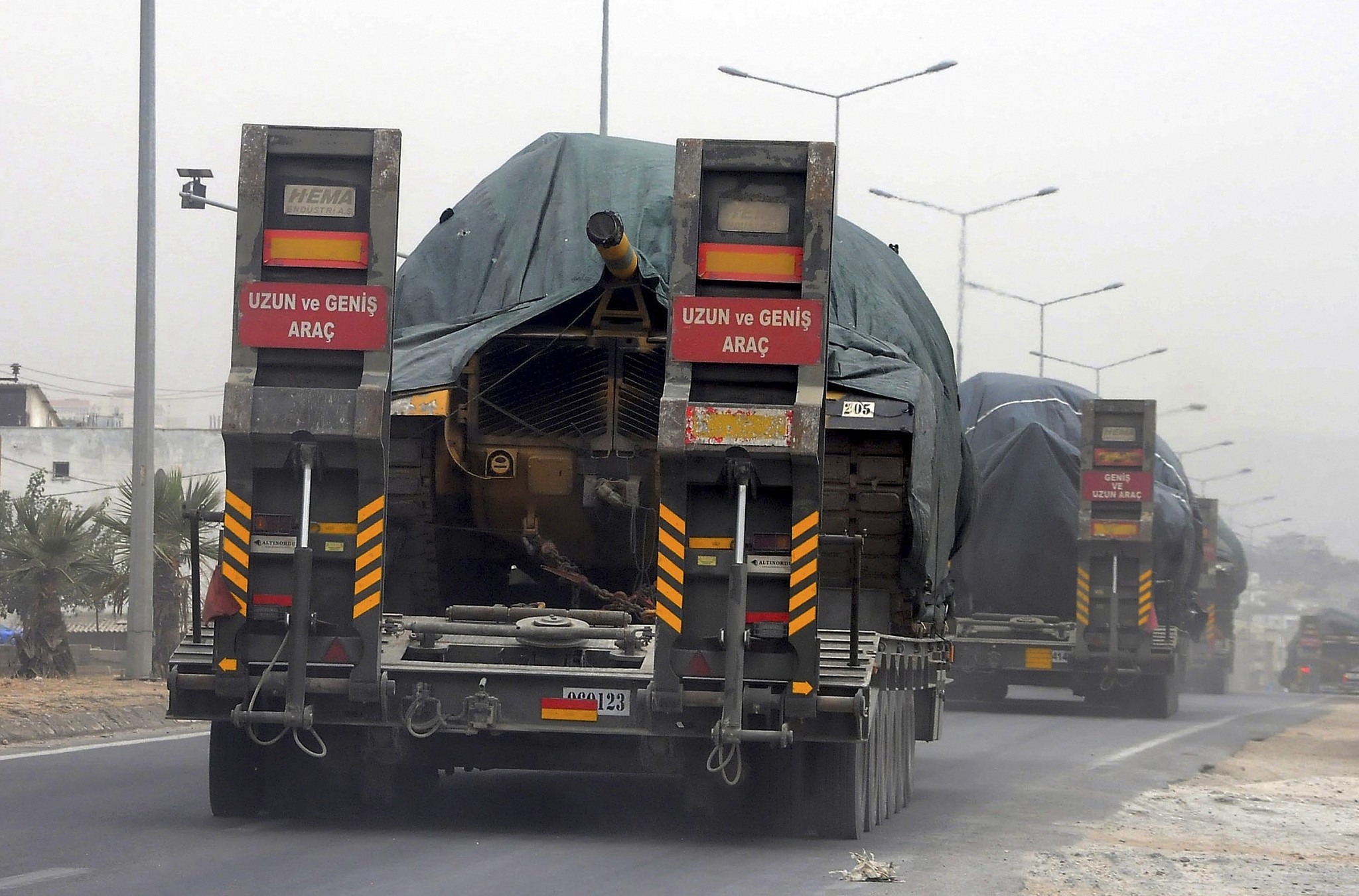
A Turkish convoy of trucks carrying tanks destined for Syria is pictured near the town of Reyhanli, Turkey, September 13, 2018. (Ersin Ercan/DHA via AP)

A Turkish convoy of trucks carrying tanks destined for Syria is pictured near the town of Reyhanli, Turkey, September 13, 2018. (Ersin Ercan/DHA via AP)

ANKARA, Turkey — Turkey on Monday vowed to continue fighting a US-backed Kurdish militia which it views as a terrorist group after US President Donald Trump warned of economic devastation if Ankara attacks Kurdish forces as American troops withdraw.

Turkish President Recep Tayyip Erdogan’s spokesman Ibrahim Kalin said on Twitter that there was “no difference” between the Islamic State extremist group and the Kurdish People’s Protection Units (YPG) militia.

“We will continue to fight against them all.”

Turkey’s response came after Trump on Sunday warned on Twitter: “Will devastate Turkey economically if they hit Kurds.”

“Mr @realDonaldTrump Terrorists can’t be your partners & allies. Turkey expects the US to honor our strategic partnership and doesn’t want it to be shadowed by terrorist propaganda,” Kalin said in a tweet to the US president.

Turkey views the YPG as a “terrorist offshoot” of the outlawed Kurdistan Workers’ Party (PKK), which has been waging an insurgency against the Turkish state since 1984.

The PKK is blacklisted as a terrorist organisation by Ankara, the United States and the European Union.

But Washington has been working closely in recent years with the YPG, providing military support and training, in the fight against IS in Syria.

Kalin said that it was “a fatal mistake to equate Syrian Kurds with the PKK,” saying that Turkey fought against terrorists not Syrian Kurds.

American support to the YPG has been one of the main sources of tension between Turkey and the US, but there appeared to be some improvement on the issue after Trump said last month 2,000 American troops would withdraw from Syria.

Ankara welcomed the pullout decision after Erdogan told Trump in a phone call last month that Turkey could finish off the last remnants of IS.

However, there has been growing friction between Turkey and the US over the fate of the YPG, especially after US Secretary of State Mike Pompeo previously said Washington would ensure Turkey would not “slaughter” Kurds.

And before a visit to Ankara last week, White House National Security adviser John Bolton said the US retreat was conditional on the safety of the Kurdish fighters, provoking angry retorts from Turkish officials.


Trump says US will hurt Turkey economically if it hits Kurds 

January 14, 2019

Source: Trump says US will hurt Turkey economically if it hits Kurds – Israel Hayom


Iran exploring new uranium enrichment, nuclear chief say 

January 14, 2019

Source: Iran exploring new uranium enrichment, nuclear chief say – Israel Hayom


‘Israeli strike in Syria targeted Hezbollah, Iranian commanders’ 

January 14, 2019

Source: ‘Israeli strike in Syria targeted Hezbollah, Iranian commanders’ – Israel Hayom


Iran: Nasrallah sick? ‘Biggest lie of the year’

January 13, 2019

Source: Iran: Nasrallah sick? ‘Biggest lie of the year’ – Israel National News

Adviser to Iranian parliament speaker blasts ‘Zionist claims’ that Hezbollah leader is suffering from health problems.

Tal Polon, 13/01/19 14:29
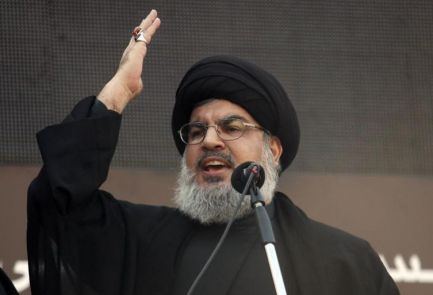
Hassan Nasrallah

Hassan Nasrallah

Reuters

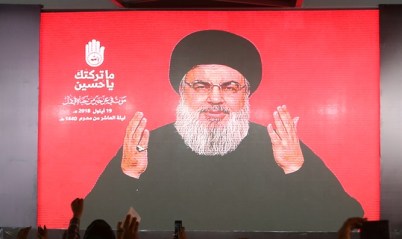
An adviser to the Iranian speaker of parliament rejected reports that Hassan Nasrallah, the leader of the Iranian-backed Lebanese terror group Hezbollah, was suffering from health problems.

Israeli media cited Lebanese reports over the weekend saying that Nasrallah was hospitalized in Beirut, having suffered a heart attack, while other reports added that he is also fighting cancer.

Nasrallah has not been seen in the media since November, and there has been speculation that his long public absence is tied to the IDF’s launch of “Operation Northern Shield” to neutralize Hezbollah terror tunnels infiltrating Israel. The reports on Nasrallah’s health would seem to provide another explanation for his absence.

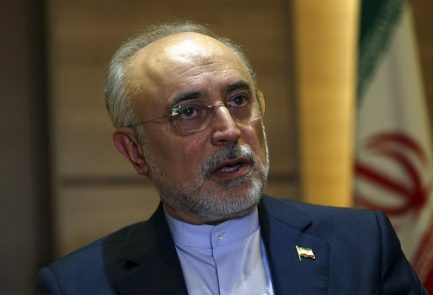
According to Kan, however, reports that Nasrallah is sick were soundly rejected by the Special Adviser to Iranian Parliament Speaker Ali Larijani, who called such an assertion “the biggest lie of the year.”

“The recent claims by the Zionists that Nasrallah is sick are the biggest lie of the year,” he wrote.


White House ordered plans prepared for Iran strike – report 

January 13, 2019

Source: White House ordered plans prepared for Iran strike – report | The Times of Israel

‘Shocked’ Pentagon acceded to request after Baghdad mortar attack in September that US blamed on Tehran-backed militias, Wall Street Journal says

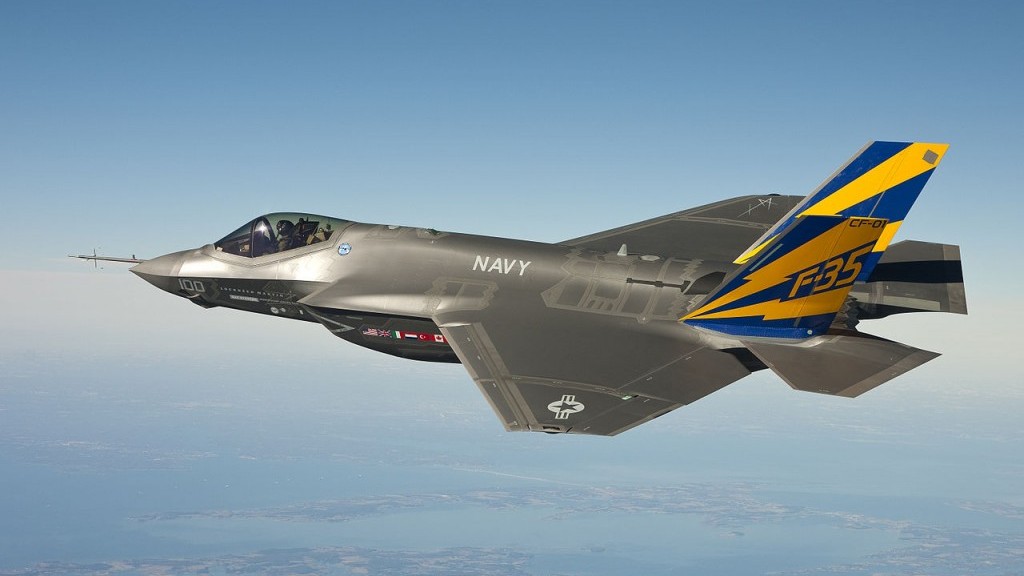
A US Navy F-35 fighter jet during a test flight. (US Navy/Wikimedia Commons)

A US Navy F-35 fighter jet during a test flight. (US Navy/Wikimedia Commons)

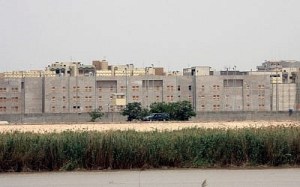
Following a September mortar attack near the US embassy in Baghdad that Washington blamed on Iran, US National Security Adviser John Bolton and the National Security Council he leads requested that the Pentagon provide options for striking Iran, the Wall Street Journal reported Sunday.

The Pentagon did so, though the report said it was not clear what became of those plans and how close such a potential strike actually was, or if US President Donald Trump was even aware of the exchange.

Still, officials in the Pentagon and State Department were said to have been shocked by the offhand nature of the request — to provide plans for military action against a major regional power in response to a minor attack that caused no casualties.

“It definitely rattled people,” a former senior official in the administration told the paper. “People were shocked. It was mind-boggling how cavalier they were about hitting Iran.”

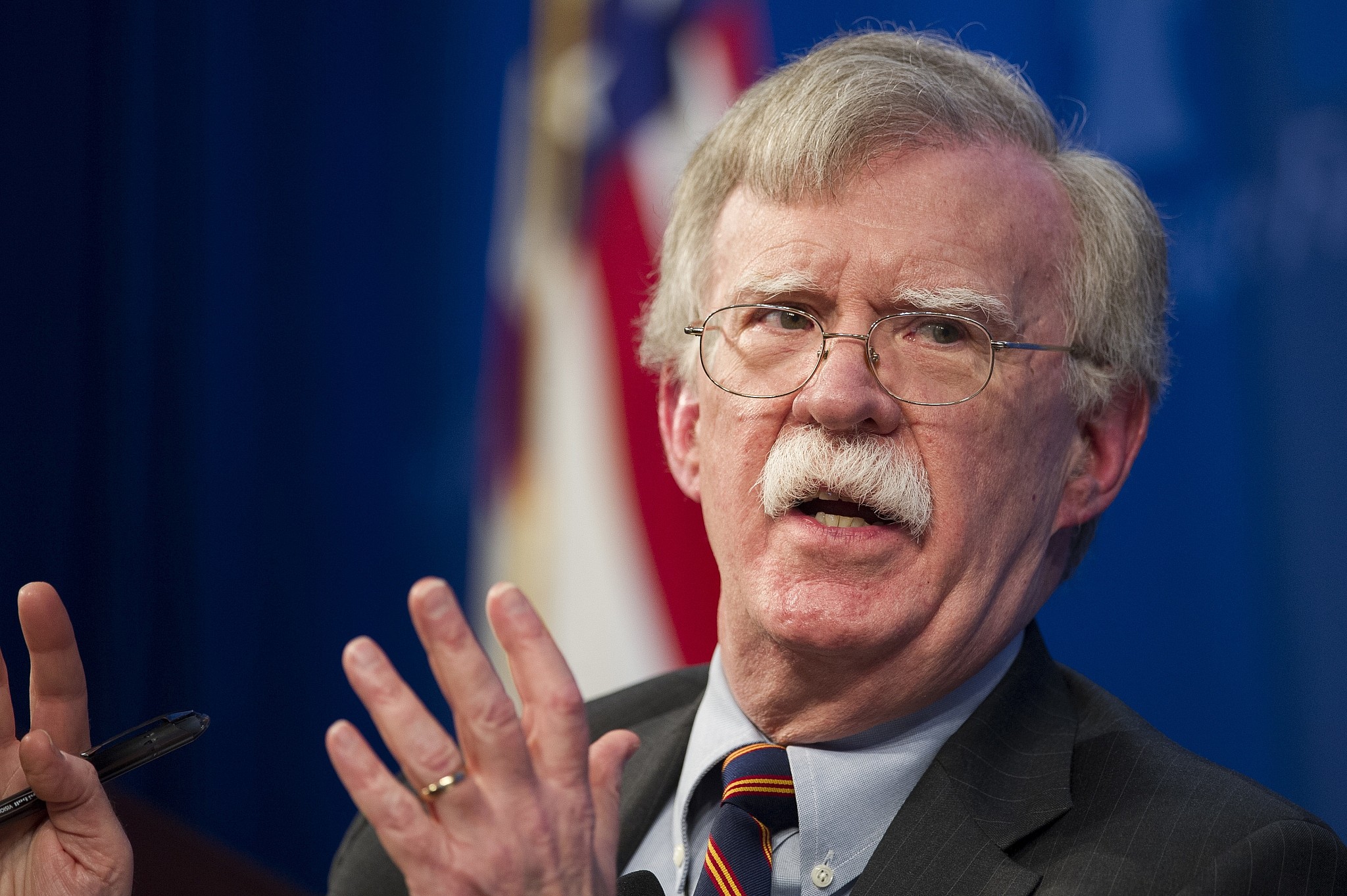
US National Security Advisor John Bolton unveils the Trump administration’s Africa Strategy at the Heritage Foundation in Washington, December 13, 2018. (Cliff Owen/AP)

A spokesman for the NSC told the paper that the council “coordinates policy and provides the president with options to anticipate and respond to a variety of threats.”

Bolton is known for his particularly hawkish stances, and prior to his appointment as national security adviser had advocated preemptive strikes against North Korea and war with Iran.

In September he warned Iran of “hell to pay” and “serious consequences” if it acts against the US, using some of the most aggressive language employed by administration officials in recent decades.

The US embassy in Baghdad, Iraq seen from across the Tigris river on May 19, 2007. (AP/File)

He was also a major voice inside the George W. Bush administration in favor of the 2003 Iraq invasion. In the past he has also advocated for Israel bombing Iran to curtail its nuclear ambitions.

His combative approach to global conflict was previously seen as somewhat mitigated by the moderating voice of James Mattis, but the US defense secretary’s resignation last month has opened the door to more hardline policies by the administration.

The mortar attack in Baghdad, on September 7, saw three shells hit the ultra-secure green zone, which houses Iraqi authorities and the US embassy.

Washington blamed militias supported by Iran, and said it would “respond swiftly and decisively in defense of American lives,” though no action by US forces since has been directly linked to that attack.

Agencies contributed to this report.


IDF ends northern tunnel operation, strikes Gaza tunnels. Hizballah, Hamas threats remain – DEBKAfile

January 13, 2019

Source: IDF ends northern tunnel operation, strikes Gaza tunnels. Hizballah, Hamas threats remain – DEBKAfile

The IDF marked the end of Operation Northern Shield on Sunday, Jan. 13 by finding a sixth Hizballah cross-border tunnel, two days before Lt. Gen. Gady Eisenkot hands over the of Chief of Staff’s baton to his successor, Lt. Gen. Aviv Kochavi. It was the second “terror tunnel” found running from the Lebanese town of Ramaya. It was not in operational condition.

The timing was fitting, Gen. Eisenkot has hailed this operation as the crowning achievement of his four-year team as the head of Israel’s Defense Forces – a high evaluation not shared by most of the IDF high command. In fact, it was no more than a stop-go effort with few results. Above all, the operation which was meant to support a major Israeli diplomatic effort to disrupt the commanding influence Hizballah wields over the Lebanese government and army, failed to drive a wedge between them.

Nonetheless, in his parting interviews, Eisenkot claimed that Hizballah had dug those underground structures for its plan to smuggle 1,000-1,500 special operations troops into Israel, capture an Israeli village and retain it under cover of artillery fire. That scenario is hardly credible for four reasons:

  1. Hizballah devised this plan more than 10 years ago and has since moved on.
  2. Operation Northern Shield did not uncover a working tunnel network, or even a single passage large enough to carry a large force.
  3. No more than 6 tunnels, which the IDF had known about for years, were finally located, although the original military communiques spoke of sixteen.
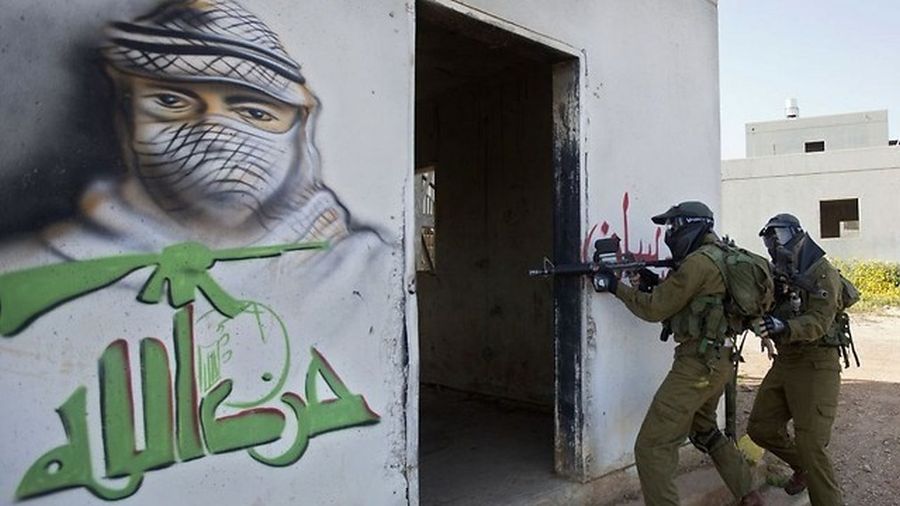
  4. The operation focused on mostly defunct tunnels, whereas the main threat which is very much alive was unaddressed. A year ago, Hizballah threw up  mockup  models of Israeli villages on the Lebanese-Syrian border to train its special Redwan forces for operations to storm overland across the border and seize IDF bases and civilian villages in Upper and Western Galilee. The IDF is therefore racing against time to build a strong wall along the Lebanese border, but has run into topographic impediments for the barrier to extend its full length. Operation Northern Shield was therefore of no relevance to the contemporary Hizballah threat.

In one interview, Eisenkot was asked about the destruction of the chain of observation and surveillance positions which Hizballah has deployed in Syria opposite the Israel Golan. He replied: “That line is no longer there.”  The difficulty with this reply is that not only Hizballah, but also members of the five militias Iran is establishing in Syria have begun taking up position opposite the Golan. DEBKAfile was the the first publication last year to uncover the ruse they employ of awarding these foreign pro-Iranian combatants Syrian army uniforms and IDs. They currently pose as members of the regular Syrian army stationed along the Israeli border. This subterfuge makes it almost impossible to differentiate between them.

In the Gaza Strip Saturday night, Israeli warplanes struck two Hamas “underground structures.” The IDF spokesman released this enigmatic statement without elaborating. Neither did he explain why, all of a sudden, after ten months in which Hamas had kept southern Israel under sporadic hails from Gaza of rockets, mortar shelling, incendiary balloons and ground assaults, the IDF command had decided to go for more telling targets than routine empty Hamas bases and lookout towers. This operation was accompanied by a caution to Hamas by an anonymous “senior official” that the monthly Qatari grant of $15m for January had not been cancelled, only frozen. In other words, the protection racket for buying Hamas’ non-escalation of violence against Israel goes on.


Pompeo: Good outcome possible for both Turks, Syrian Kurds 

January 13, 2019

Source: Pompeo: Good outcome possible for both Turks, Syrian Kurds – Israel Hayom


Nasrallah suffers heart attack, stroke, Lebanese media reports 

January 13, 2019

Source: Nasrallah suffers heart attack, stroke, Lebanese media reports – Israel Hayom