Archive for January 2019

Trump asked Mattis for plan to blow up Iranian ‘fast boats,’ report says

January 15, 2019

Source: Trump asked Mattis for plan to blow up Iranian ‘fast boats,’ report says – U.S. News – Haaretz.com

‘Why don’t we sink them?’ U.S. president told his national security team, sources tell Axios, in ‘disproportionate’ proposal they say could have quickly led to war
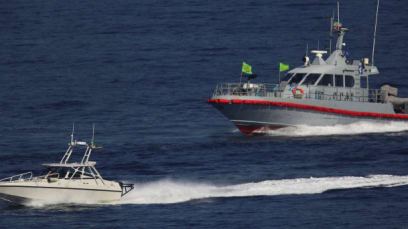
File photo: Iranian Revolutionary Guard patrol boats shadow the USS John C. Stennis aircraft carrier in the Persian Gulf, December 21, 2018.
Jon Gambrell/AP

U.S. President Donald Trump repeatedly asked his national security team during his first year in office to draw up a plan to blow up Iranian “fast boats,” Axios reported on Monday. Trump reportedly asked then Defense Secretary James Mattis, referring to Iranian boats in the Persian Gulf, “Why don’t we sink them?”

Axios quoted two sources who say they directly heard Trump‘s requests and three other former senior officials reportedly briefed on them. “So these boats, they get in, they come in really fast, they come in really close… and they might have explosives on them and we don’t even know,” Trump reportedly told staff. “Can you believe this? And we don’t do anything?”

However, the sources told Axios such “disproportionate” response at a time when Iranian vessels were harassing the U.S. Navy less than previous years could have quickly led to war. Mattis, who later resigned in protest of Trump’s Syria policy, reportedly never provided such a plan.

The report adds that when trump asked then National Security Adviser H.R. McMaster about it during a daily brief, the latter replied: “Mr. President, this has happened in the past, but DOD (Department of Defense) is telling us it hasn’t happened lately… so they’re not that concerned about it.”

Iran’s Revolutionary Guards said in early January they plan to upgrade their speed boats in the Gulf with radar-evading stealth technology and new missile launchers, as tensions rise between Tehran and Washington in the vital oil shipping route.

Ending a long absence of U.S. aircraft carriers in the region, the USS John C. Stennis entered the Gulf in late December, and was shadowed by the Revolutionary Guards’ speed boats.
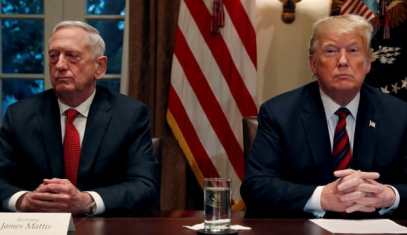
File photo: U.S. President Donald Trump with Defense Secretary James Mattis in the Cabinet Room at the White House in Washington, October 23, 2018.
Leah Millis/Reuters

There have been periodic confrontations between the Revolutionary Guards vessels and U.S. military in the Gulf, although the number of incidents has dropped in recent months.

The Revolutionary Guards launched in late December war games in the Gulf, where third of the world’s sea-borne oil passes through, and warned that its forces were ready to respond to any hostile U.S. action.

In an indirect threat to Saudi Arabia and other U.S. allies in the region, the head of the Iranian armed forces warned that any Iranian confrontation with U.S. forces might also target Gulf nations that he said had invited them into the region.

The Wall Street Journal reported on Sunday that National Security Adviser John Bolton requested the Pentagon to provide Washington with military options to strike Iran, after three mortars launched by Iran-affiliated militants fell near the U.S. Embassy in Baghdad.

The incident occurred in early September. No one was wounded, as the shells fell in an open lot, but the event apparently spurred Washington to discuss the possibility of a military response.

It is unclear whether President Trump knew of Bolton’s request or if concrete plans were drawn out for a strike, but according to the official, the Pentagon agreed to develop a set of options to attack Iran.

A U.S.-Iranian war of words has escalated since Trump took Washington out of a world powers’ nuclear deal with Iran in May, and reimposed sanctions on its banking and energy sectors.

Iran has warned that if it cannot sell its oil due to U.S. pressure, then no other regional country will be allowed to do so either, threatening to block the Strait of Hormuz in the Gulf.

The Guards’ naval arm lacks a strong conventional fleet. However, it has many speed boats and portable anti-ship missile launchers, and can lay mines.

 

Netanyahu says failed Iranian satellite launch an attempt to develop intercontinental missile

January 15, 2019

Source: Netanyahu says failed Iranian satellite launch an attempt to develop intercontinental missile – Iran – Haaretz.com

Iran claims rocket failed to reach ‘necessary speed’ in the third stage of launch ■ Israeli premier says Tehran is lying about nature of its tests

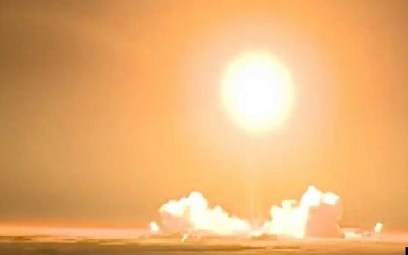
Iran's failed attempt to put a satellite into orbit, January 15, 2019.

Prime Minister Benjamin Netanyahu said on Tuesday that the Iranian satellite launch, which Tehran said has failed, was actually part of the country’s attempt to develop intercontinental ballistic missile.

Iran says it has conducted a satellite launch criticized by the U.S., but the satellite has failed to reach orbit.

State TV on Tuesday quoted the country’s minister of telecommunications as saying the country failed to put Payam satellite into the orbit.

Netanyahu blasted Iran for lying regarding its failed attempt, claiming in an address delivered on Tuesday morning that Tehran was not saying the truth and that the satellite launch was the first stage in its effort to launch an intercontinental ballistic missile.

Netanyahu said, “Iran is launching an innocent satellite, but is actually interested in reaching the first stage of an intercontinental ballistic missile, violating agreements.”

Netanyahu spoke at Israeli army headquarters in Tel Aviv in a ceremony welcoming the new Israel Defense Forces chief of staff, Maj. Gen. Aviv Kochavi.

Addressing the issue of Iran’s presence in Syria, Netanyahu also called on Tehran to withdraw forces from the war-torn country, warning Iran of Israeli actions against forces there. “I advise them to leave [Syria] quickly, because we will continue with our assertive policy, as promised, without fear and without a break.”

Earlier Tuesday, Mohammad Javad Azari Jahromi said the satellite carrier rocket failed to reach “necessary speed” in the third stage, though it could successfully pass the first and second stages of the launch.

Earlier in January, U.S. Secretary of State Mike Pompeo said Iran’s plans for sending satellites into orbit demonstrate the country’s defiance of a U.N. Security Council resolution that calls on Iran to undertake no activity related to ballistic missiles capable of delivering nuclear weapons.

On January 1, Iran said it plans to send Payam, a 200-pound (90-kilogram) non-military satellite into a 310-mile (500-kilometer) orbit using an Iranian Simorgh satellite-carrier rocket.

Iran insists the launches do not violate the resolution.

Pompeo said Iran has launched ballistic missiles numerous times since the UN resolution was adopted. He said it test-fired a medium-range ballistic missile capable of carrying multiple warheads on December 1, 2018.

“The United States has continuously cautioned that ballistic missile and SLV launches by the Iranian regime have a destabilizing effect on the region and beyond,” Pompeo said. “France, Germany, the United Kingdom, and many nations from around the world have also expressed deep concern.”

In July 2017, Iran launched a rocket it said could deliver a satellite into space, an act the U.S. State Department called provocative. Earlier that month, the United States slapped new economic sanctions on Iran over its ballistic missile program.

Iran says its space program is peaceful, but Western experts suspect it may be a cover for developing military missile technologies.


Off Topic:  Rashida Tlaib poses with Hezbollah-backing anti-Israel activist 

January 15, 2019

Source: Rashida Tlaib poses with Hezbollah-backing anti-Israel activist | The Times of Israel

Abbas Hamideh, who heads a Palestinian ‘right of return’ group, posts photo of the two after reception and private dinner; Tlaib’s office doesn’t respond to request for comment

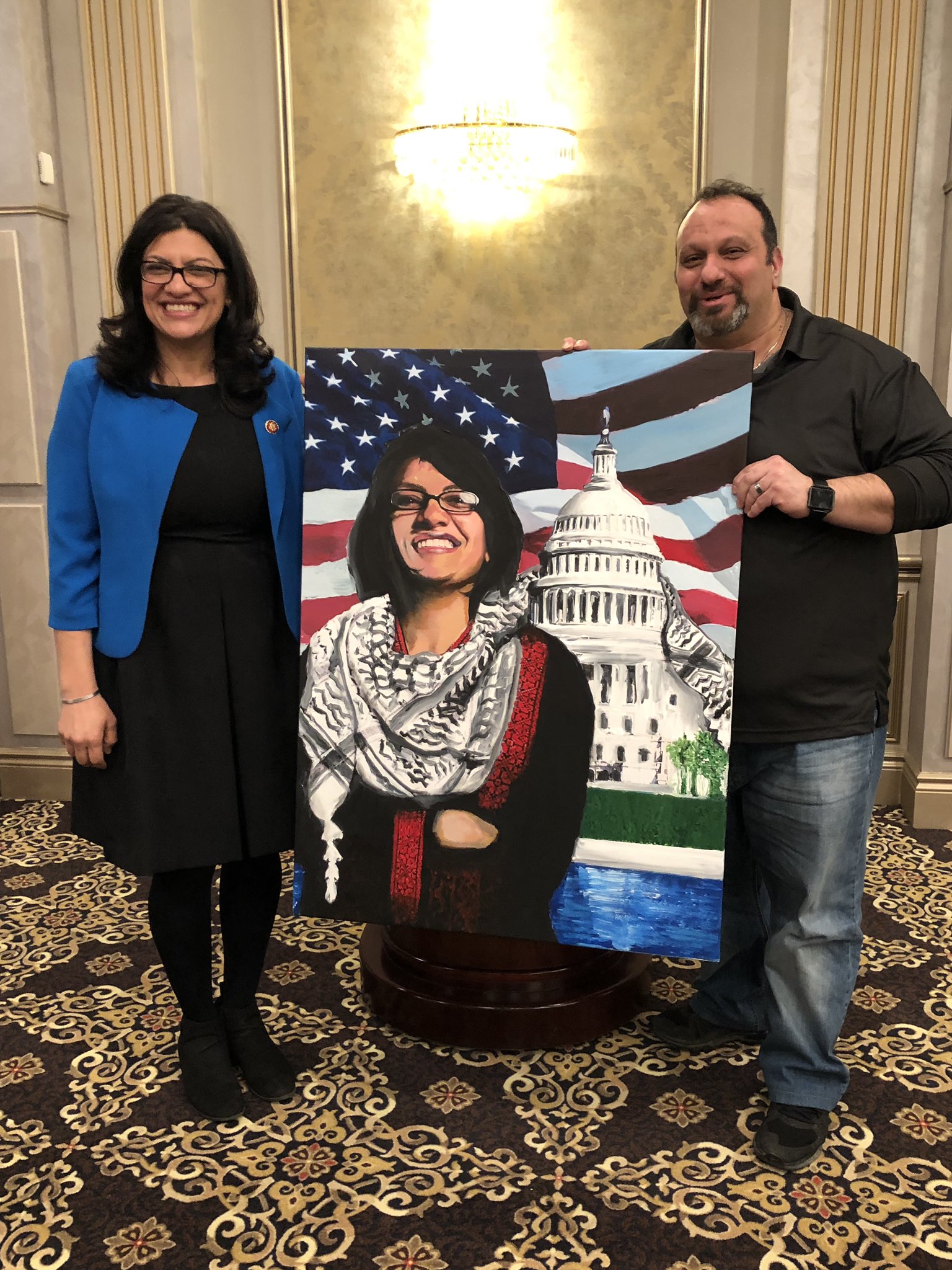
Michigan Democrat Rashida Tlaib poses with the pro-Hezbollah "right of return" activist Abbas Hamideh on Saturday, January 12, 2019. (Twitter)

Michigan Democrat Rashida Tlaib poses with the pro-Hezbollah “right of return” activist Abbas Hamideh on Saturday, January 12, 2019. (Twitter)

WASHINGTON — An anti-Israel extremist who heads a “right of return” advocacy group — and has equated Zionism to Nazism and called Israel a “terrorist entity” — attended a Detroit swearing-in reception and dinner party for freshman Rep. Rashida Tlaib, where he posed with her for a photograph that he tweeted on Saturday.

Tlaib, a Palestinian-American member of Congress, is a Democrat from Michigan. She was inducted into the House of Representatives two weeks ago but had a separate event for her constituents over the weekend.

“I was honored to be at Congresswoman @RashidaTlaib swearing in ceremony in Detroit and private dinner afterward with the entire family, friends and activists across the country, said Abbas Hamideh, the co-founder and executive director of Al Awda, which means “right of return.”

In the picture, Hamideh is holding a painting of Tlaib in front of the US Capitol while wearing a thobe, a traditional Palestinian gown that she wore during her swearing-in on Capitol Hill.

It’s not clear how Hamideh ended up at Tlaib’s reception, whether she invited him or whether she knew about his background. Tlaib’s office did respond to a request for comment.

Tlaib, for her part, is one of the first members of Congress to support the Boycott, Divestment and Sanctions (BDS) campaign against Israel. She has also backed a one-state solution to the Israeli-Palestinian conflict and has called for cutting US aid to the country.

Abbas Hamideh@Resistance48

The “right of return” is one of the core issues in the Israeli-Palestinian conflict. The Palestinians claim that five million people — tens of thousands of original refugees from what is today’s Israel, and their millions of descendants — have a “right of return.” Israel rejects the demand, saying that it represents a bid by the Palestinians to destroy Israel by weight of numbers. Israel’s population is almost nine million, some three-quarters of whom are Jewish. If millions of Palestinians were to return to Israel, it would no longer be a Jewish-majority state.

Hamideh’s social media presence is noteworthy for its virulent attacks on the Jewish state.

“Criminal Zionism will eventually die just like Nazism. No racist and supremacist political ideology should maintain itself,” he once tweeted. “Israel does not have a right to exist. The terrorist entity is illegal and has no basis to exist other than a delusional ISIS like ideology,” he wrote.

Moreover, he’s an ardent supporter of Hezbollah, the Iran-backed Lebanon-based terrorist organization bent on Israel’s destruction.

In August 2016, Hamideh tweeted: “Happy Birthday to the most honorable Arab-Muslim leader of our lifetime.” He was referring to Hezbollah leader Hassan Nasrallah.

Abbas Hamideh@Resistance48

According to his organization’s website, Hamideh’s family came from Deir Yassin. He was educated in the United States and graduated from the City University of New York.


Amid split over Kurds, Erdogan and Trump weigh Syria ‘security zone’ 

January 15, 2019

Source: Amid split over Kurds, Erdogan and Trump weigh Syria ‘security zone’ | The Times of Israel

US president had threatened he would ‘devastate Turkey economically’ if Turkey attacked Kurdish fighters after American troops withdraw

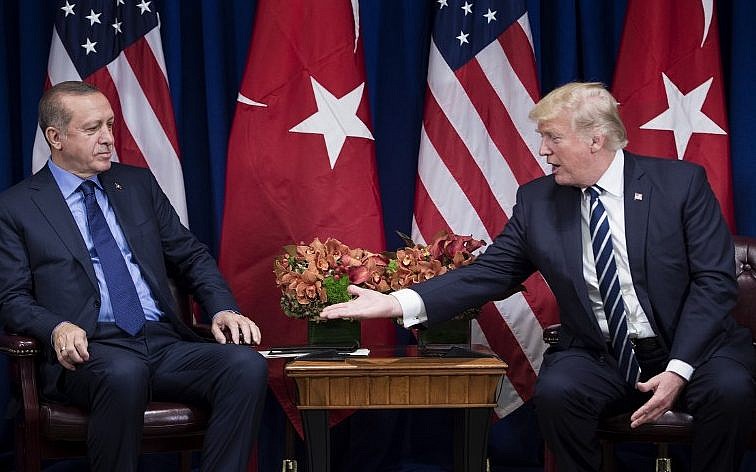
This file photo taken on September 21, 2017 shows US President Donald Trump reaching to shake Turkey’s President Recep Tayyip Erdogan’s hand before a meeting at the Palace Hotel during the 72nd United Nations General Assembly in New York City. (AFP PHOTO / Brendan Smialowski)

ANKARA, Turkey (AFP) — Turkey’s President Recep Tayyip Erdogan and US counterpart Donald Trump mooted Monday the creation of a “security zone” in northern Syria as tensions rose over the fate of Kurdish fighters in the war-torn country.

In a telephone conversation, the leaders “discussed the idea of creating a security zone cleared of terrorism in the north of the country,” the Turkish presidency said in a statement.

Trump confirmed this in a tweet later, but referred to the proposed area as a “safe zone.”

This came after Turkey vowed it “will not be intimidated” by Trump’s threats of economic devastation if Ankara attacked Kurdish forces as US troops withdraw from Syria.

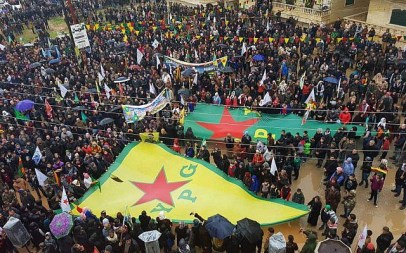
This photo released by the press office of the Kurdish militia, People’s Protection Units or YPG, shows protesters waving giant flags of the YPG and other parties and militias, during a demonstration against Turkish threats, in Afrin, Aleppo province, north Syria on Thursday, Jan 18, 2018. (YPG Press Office via AP)

Trump on Sunday warned the US would “devastate Turkey economically if they hit Kurds.”

Ankara has repeatedly threatened to carry out a cross-border operation against the Kurdish People’s Protection Units (YPG), which have been working closely with the United States in the war on Islamic State (IS) jihadists.

US support for the YPG has been a major source of friction between the NATO allies.

The White House said in a statement that Trump had warned Erdogan against harming Kurdish military units.

Donald J. Trump

@realDonaldTrump

“The president expressed the desire to work together to address Turkey’s security concerns in northeast Syria while stressing the importance to the United States that Turkey does not mistreat the Kurds and other Syrian democratic forces with whom we have fought to defeat ISIS,” White House spokeswoman Sarah Sanders said.

‘Security zone’

But in his subsequent tweet, Trump put a more positive spin, noting that he and Erdogan “also spoke about economic development between the U.S. & Turkey — great potential to substantially expand!”

The strained relationship between Ankara and Washington initially seemed to improve after Trump announced last month that 2,000 US troops would withdraw from Syria.

Ankara welcomed the decision and Erdogan told Trump that Turkey could finish off the last remnants of IS.

Trump has been pushing for the creation of a 30-kilometer (20-mile) “safe zone” in Syria.

US Secretary of State Mike Pompeo said Monday talks were under way on Washington’s proposal to establish the zone in flashpoint border areas of northeast Syria.

“We want to make sure that the folks who fought with us to down the (Islamic State group) have security… and also that terrorists acting out of Syria aren’t able to attack Turkey,” Pompeo said on a visit to Riyadh.

Turkish Foreign Minister Mevlut Cavusoglu said earlier that Turkey was “not against” a “security zone” in Syria.

And in their conversation Monday, Erdogan assured Trump that Turkey was ready to provide “any kind of support” to the United States in its withdrawal from Syria.

Turkey views the YPG as a “terrorist offshoot” of the outlawed Kurdistan Workers’ Party (PKK), which has been waging an insurgency against the Turkish state since 1984.

The PKK is blacklisted as a terrorist organization by Ankara, the United States, and the European Union.

‘Radical solution’

Erdogan’s spokesman Ibrahim Kalin said Ankara would “continue to fight against them all,” referring to IS and the YPG.

There has been growing tension between Turkey and the US over the fate of the YPG, especially after Pompeo this month said Washington would ensure Turkey does not “slaughter” Kurds.

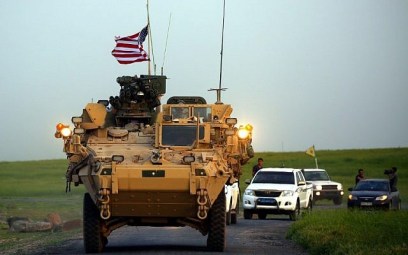
US forces, accompanied by Kurdish People’s Protection Units (YPG) fighters, drive their armored vehicles near the northern Syrian village of Darbasiyah, on the border with Turkey, April 28, 2017. (Delil Souleiman/AFP)

And before a visit to Ankara last week, White House National Security Adviser John Bolton said the US retreat was conditional on the safety of Kurdish fighters, provoking angry retorts from Turkish officials.

Turkey previously launched military offensives in northern Syria in 2016 and 2018 respectively against IS and the YPG. In early 2018, Syrian rebels backed by Turkish military forces captured the YPG’s northwestern enclave of Afrin.

Ankara, which supports Syrian opposition fighters, is also involved in the last rebel bastion of Idlib, where Turkey has agreed a buffer zone deal with Damascus ally Russia.

But the deal has not stopped an assault by jihadists in Syria.

Hayat Tahrir al-Sham (HTS), an alliance led by jihadists from Al-Qaeda’s former Syrian affiliate, last week extended its administrative control over the whole of the Idlib region.

Syria’s National Coalition, the leading opposition body, on Sunday called for a “radical solution” to put “an end to its (HTS) presence” in Idlib.

Cavusoglu however said the Idlib deal was being “successfully applied” and that statements that HTS took 50 percent of Idlib are “not true.”


Defying US, Iran launches satellite, but it fails to reach orbit

January 15, 2019

Source: Defying US, Iran launches satellite, but it fails to reach orbit | The Times of Israel

Iranian telecommunications minister admits third stage of rocket malfunctioned, preventing Payam spacecraft from achieving necessary speed; second planned launch unclear

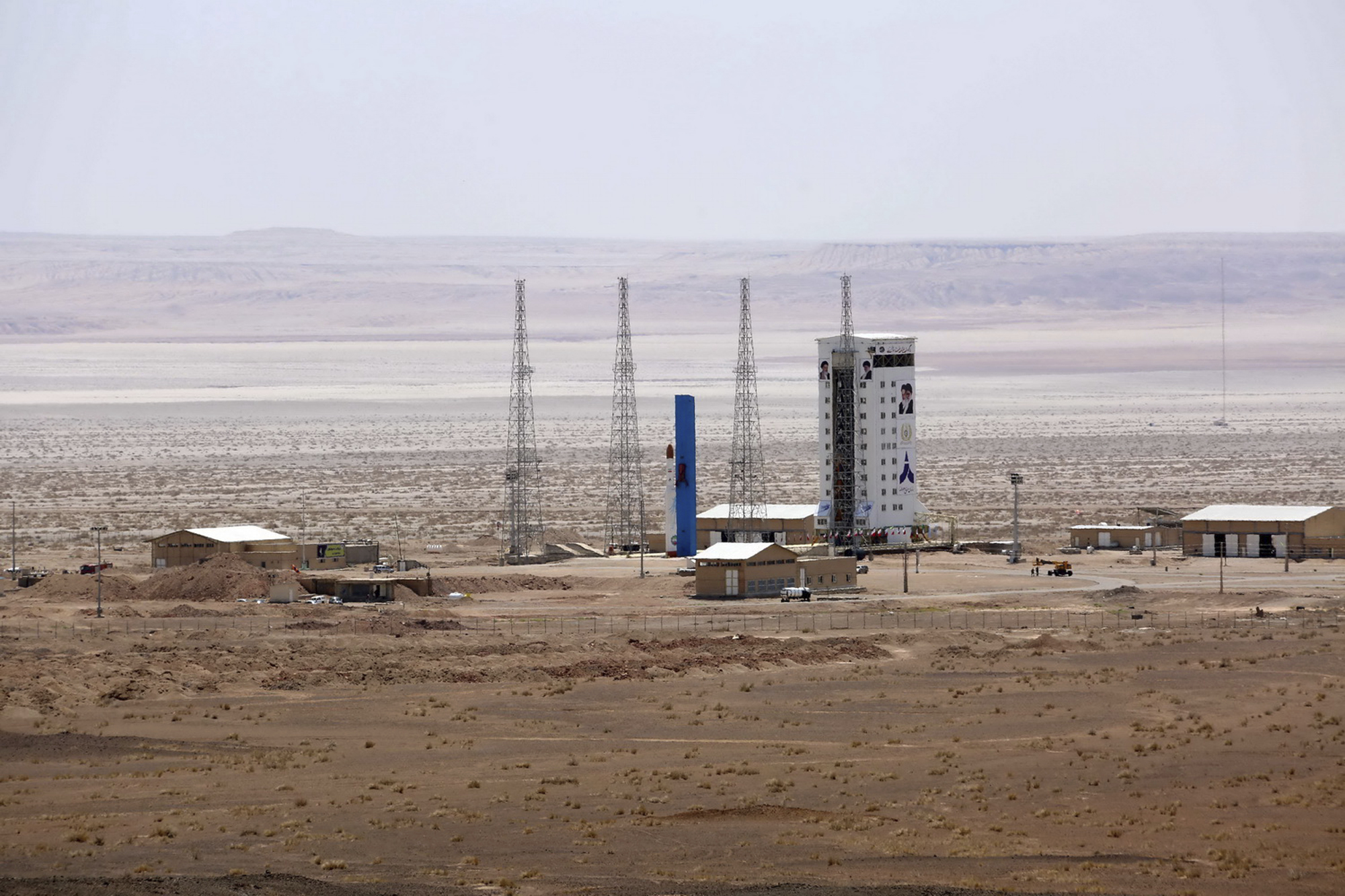
Illustrative: This picture released by the official website of the Iranian Defense Ministry on Thursday, July 27, 2017, claims to show the Simorgh satellite-carrying rocket, center, before being launched into space from Imam Khomeini National Space Center in an undisclosed location, Iran. (Iranian Defense Ministry via AP)

Illustrative: This picture released by the official website of the Iranian Defense Ministry on Thursday, July 27, 2017, claims to show the Simorgh satellite-carrying rocket, center, before being launched into space from Imam Khomeini National Space Center in an undisclosed location, Iran. (Iranian Defense Ministry via AP)

TEHRAN, Iran — Iran on Tuesday conducted one of at least two satellite launches it plans despite criticism from the United States, but the satellite failed to reach orbit, an official said.

The rocket carrying the Payam satellite failed to reach the “necessary speed” in the third stage of its launch, Telecommunications Minister Mohammad Javad Azari Jahromi told Iranian state television.

Jahromi said the rocket had successfully passed its first and second stages before developing problems in the third.

He did not elaborate on what caused the rocket failure, but promised that Iranian scientists would continue their work.

Embedded video

Iran has said it plans to send two satellites, Payam and Doosti, into the orbit. Payam means “message” in Persian, while Doosti means “friendship.”

It’s unclear how the failure of the Payam will affect the launch timing for the Doosti. Jahromi wrote on Twitter that “Doosti is waiting for orbit,” without elaborating.

Iran usually displays space achievements in February during the anniversary of its 1979 Islamic Revolution.

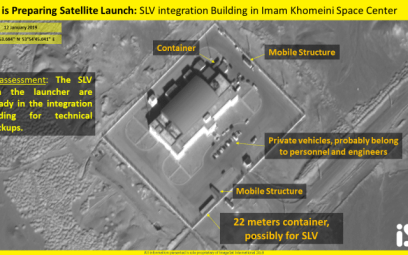
Satellite photos, released by Israeli firm ImageSat International on January 14, 2019, show apparent preparations by Iran to launch a satellite into space from its Imam Khomenei Spaceport in northern Iran. (ImageSat International)

This year will mark the 40th anniversary of the revolution amid Iran facing increasing pressure from the US under the administration of President Donald Trump.

US Secretary of State Mike Pompeo has said that Iran’s plans for sending satellites into orbit demonstrate the country’s defiance of a UN Security Council resolution that calls on Iran to undertake no activity related to ballistic missiles capable of delivering nuclear weapons.

Iranian scientists surround a monkey ahead of a space launch. Iran said it had successfully sent the monkey into space on Monday, Jan. 28, 2013, describing the launch as another step toward Tehran's goal of a manned space flight. (photo credit: AP/AP Video)

Iranian scientists surround a monkey before launching him into space, Jan. 28, 2013 (photo credit: AP Video)

Iran insists the launches do not violate the resolution.

Over the past decade, Iran has sent several short-lived satellites into orbit and in 2013 launched a monkey into space. The US and its allies worry the same satellite-launching technology could be used to develop long-range missiles capable that could carry nuclear weapons.

Iran denies wanting nuclear weapons. A 2015 nuclear deal it struck with world powers limited its enrichment of uranium in exchange for the lifting of economic sanctions.

However, Trump pulled America out of the deal in May. While United Nations inspectors say Iran has honored the deal up to this point, it has threatened to resume higher enrichment.


Threatening more attacks, Netanyahu tells Iran to ‘get out’ of Syria

January 15, 2019

Source: Threatening more attacks, Netanyahu tells Iran to ‘get out’ of Syria | The Times of Israel

Prime minister accuses Tehran of lying about advisers and lying about satellite launch, which he says is part of ICBM program

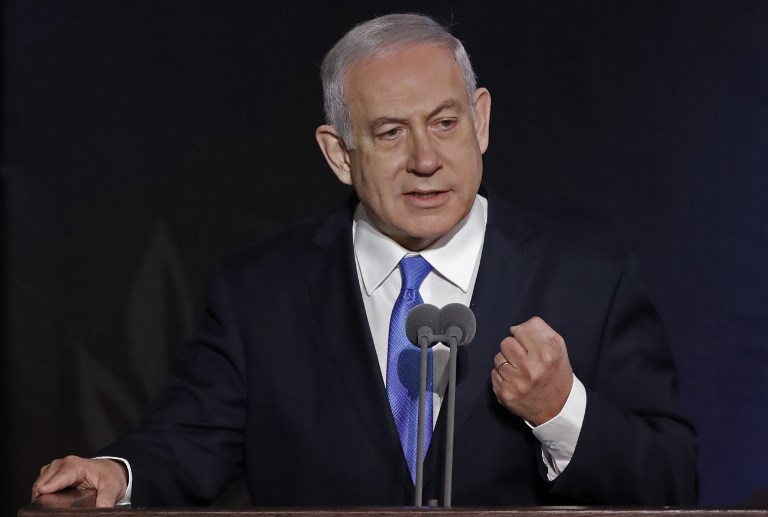
Prime Minister Benjamin Netanyahu speaks during a handover ceremony for the new IDF chief of staff on January 15, 2019 at the Defense Ministry headquarters in Tel Aviv. (JACK GUEZ / AFP)

Prime Minister Benjamin Netanyahu on Tuesday warned Israel would press ahead with its campaign against Iranian entrenchment in Syria, days after a rare acknowledgement of a bombing raid in Damascus.

Speaking at a ceremony at army headquarters in Tel Aviv to install new IDF chief of staff Lt. Gen. Aviv Kochavi, Netanyahu mocked claims from Tehran that it did not have a military presence in Syria but only advisers.

“So I advise them to get out of there quickly because we will continue our offensive policy as we promised and as we do without fear and without pause,” the premier said.

He added that the country was ready to fight and win a “multi-front war,” in apparent reference to concerns over twin tensions on the southern and northern borders.

Netanyahu also accused Iran of using its nascent space program as cover for ballistic missile development, as suspected by many in the West. Hours before Netanyahu’s remarks Iran said it had launched a satellite that had failed to reach orbit.

Screen capture from video of an Iranian satellite launch, January 15, 2019. (Twitter)

He alleged the “innocent satellite” was actually “the first stage of an intercontinental missile” Iran is developing in violation of international agreements.

On Sunday, Netanyahu openly admitted that Israel bombed Iranian targets in Damascus over the weekend. The strike destroyed a number of weapons caches in the Damascus airport, Netanyahu said.

Israel typically refrains from commenting on individual airstrikes in Syria, but does generally acknowledge that it carries out raids against Iranian- and Hezbollah-linked targets in the country.

Over the weekend, outgoing chief of staff Gadi Eisenkot said for the first time that Israel had dropped thousands of bombs on Iranian targets in Syria, breaking the silence on the breadth of the campaign.

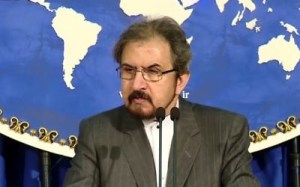
Iranian Foreign Ministry Spokesman Bahram Qasemi (YouTube screenshot)

Some analysts see the shift in policy as a sign of growing Israeli boldness, with Iran and Syria generally refraining from responding to the airstrikes. Israel is also concerned over perceptions that it may curb its campaign under pressure from Russia as the US pulls troops out of Syria.

Responding to Netanyahu’s statement on the Damascus airport bombing, Iranian Foreign Ministry spokesman Bahram Qasemi said Monday Iran did not have any military bases or military presence in Syria, and was only in the country “at the request of the Syrian government for advisory mission and fighting the terrorists,” according to a report by Iran’s official news agency, IRNA.

Israel has accused Iran of seeking to establish a military presence in Syria that could threaten Israeli security and attempting to transfer advanced weaponry to the Hezbollah terror group in Lebanon.


Pompeo cuts short Mid East tour. No headway in selling Trump’s post-Syria drive against Iran – DEBKAfile

January 15, 2019

Source: Pompeo cuts short Mid East tour. No headway in selling Trump’s post-Syria drive against Iran – DEBKAfile

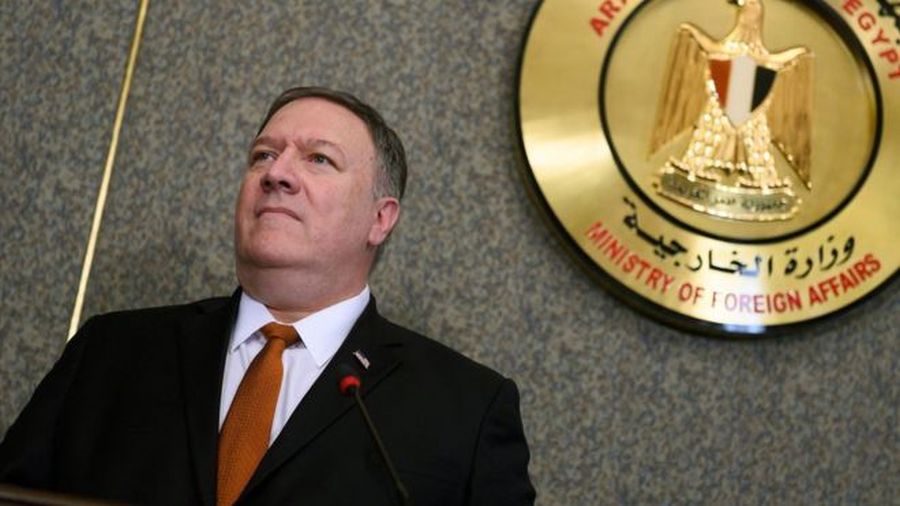
In the face of Arab rulers’ skepticism, US Secretary of State Mike Pompeo broke off his tour of region on Monday, Jan. 14. None of his hosts bought his assurance that the Trump campaign against Iran would persist with the same resolve after the US troop withdrawal from Syria.

The State Department explained his abrupt return to Washington by a family funeral that required his attendance. This was seen by official sources in Gulf capitals as a convenient diplomatic excuse for him to give up on a quest that was running out of steam as the US pullout from Syria began on Saturday. Pompeo’s pledge in Cairo “to expel every last Iranian boot from Syria,” was of no avail.

Neither did the Arab presidents and rulers he visited buy President Donald Trump Twitter of early Monday with the high points of his plans: “Starting the long overdue pullout from Syria while hitting the little remaining ISIS territorial caliphate hard, and from many directions. Will attack again from existing nearby base if it reforms. Will devastate Turkey economically if they hit Kurds. Create 20-mile safe zone.”

DEBKAfile’s military sources report that the “existing nearby base” was a reference to the K-1 Kaiwan Air Base which the Americans have begun building in the northern Iraqi oil town of Kirkuk. From there, air strikes can be mounted over the northern and central sections of the Iraqi-Syrian border. In addition, US National Security Adviser John Bolton, when he visited Israel earlier this month, mentioned two more US bases in Iraq from which, if called for, air strikes could be launched into Syria. They are the Tallil Air Base in the south near Nasiriya and the Ayn al-Asad airbase in the western province of Anbar.

Pompeo’s assurance that the three air bases supported the American undertaking to preserve a US air presence over Syrian skies did not convince the Arab rulers. They countered that, only two weeks ago, Baghdad won carte blanche from Syrian President Bashar Assad to send the Iraqi air force against ISIS targets in Syria without asking for permission. They noted that at any moment, Baghdad could decide to respect Syrian or Iranian demands to ban the use of American bases on its soil for hitting targets in Syria – or even demand their evacuation.

Their response was equally cool to the US Secretary’s proposal to call an international conference in Warsaw on Feb. 13-14 to discuss Middle East stability in the light of malign Iranian activity. Arab sources commented that the last thing needed for an effective challenge to Iran was another international conference. As one high-ranking source in Riyadh put it: “The time for talking is over; now we need action.”


Israel destroys Iranian weapons cache in Syria airport – TV7 Israel News 14.01.19 

January 15, 2019


Experts: Iran may skirt diplomatic, military efforts to prevent its nukes 

January 14, 2019

Source: Experts: Iran may skirt diplomatic, military efforts to prevent its nukes – Middle East – Jerusalem Post

Some say that a sufficient number of advanced centrifuges could drop Iran’s breakout time to a nuclear weapon from a year to a few months to even weeks.

BY YONAH JEREMY BOB
 JANUARY 13, 2019 20:01
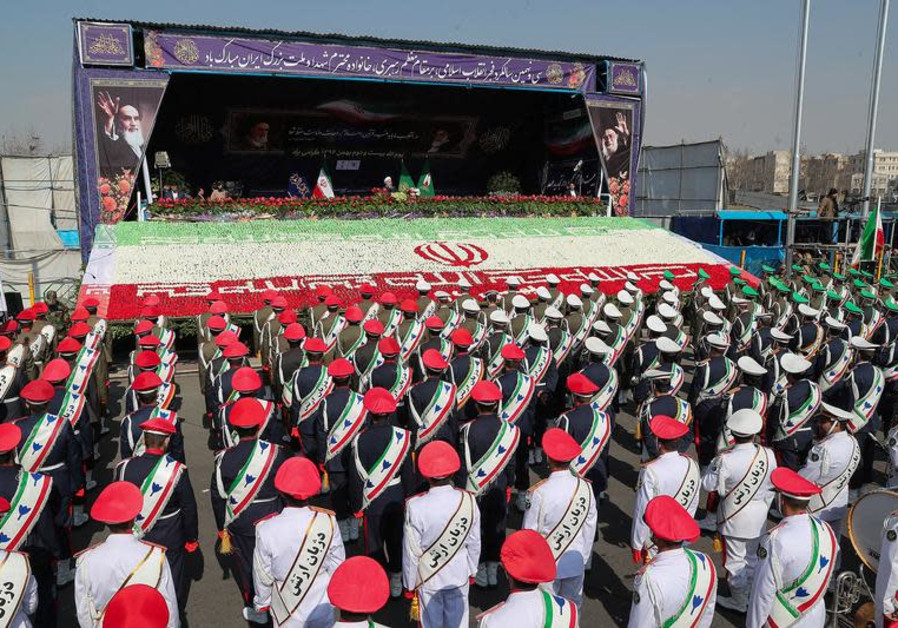
Iranian President Hassan Rouhani gestures as members of Iranian armed forces take part in a rally ma

Iran’s strategy may enable it to make an end-run around diplomatic and military actions which could stop it from developing nuclear weapons, two experts said on Sunday.

Three years after the Iran nuclear deal’s “Implementation Day,” former Israel Atomic Energy Official and current INSS expert as well as INSS Arms Control Director Emily Landau warned in a report that Tehran so far has been successful in sidestepping all attempts to fully halt its nuclear program.

While the two complimented the Trump administration for changing the tone on Iran and for the US pressure campaign, they expressed concern that the Islamic Republic still has the advantage.

“Empowered by ongoing efforts in the missile realm and diplomatic maneuvering to ensure that Trump is regarded as the outsider in his approach to Iran, Iran might yet prove successful in surviving the pressure campaign against it waged by the administration,” wrote the experts.

They said that, “If the present trends of ignoring Iran’s past activities in the nuclear realm persist, including the IAEA’s current unwillingness or inability to ascertain past and present nuclear activities, there will be severe repercussions.”

“At that point, it could be too late for any diplomatic or military actions to stop Iran from ultimately developing nuclear weapons and restoring a measure of stability to the Middle East,” they cautioned.

Questioned about why the window for a military strike could be thinner in the future then it is now, Landau told the Jerusalem Post that down-the-road, “breakout times for a weapon could really be shortened considerably.”

More specifically, she pointed out Iran’s continued experimentation with advanced centrifuges, which is even permitted under the deal.

She recalled that a substantial amount of time after the deal was already operating, it emerged that the International Atomic Energy Agency had made secret guarantees to the Islamic Republic that it could start significantly expanding its use of advanced centrifuges 11 years after the deal was inked.

Some say that a sufficient number of advanced centrifuges could drop Iran’s breakout time to a nuclear weapon from a year to a few months to even weeks.

Her biggest concern if Tehran’s time for developing a nuclear weapon got shortened would be that it could cross the nuclear finish line “clandestinely, especially if the world continues, other than the US administration with the overall sentiment of…this deal is working.”

“If that continues, it means that international actors are not working to stop this now, Iran could reach the stage where it could get there clandestinely because the world is not paying attention to what is going on,” she said.

She said that if Iran “already had nuclear weapons, then we don’t really have a military option. If the world was vigilant and everyone was watching Iran the way Israel is watching, there could be more room,” to catch any clandestine nuclear efforts by Tehran.

Exhibit A of the international community, the IAEA and arms control community’s lack of keeping guard on the issue is its giving Iran a pass on the nuclear archives that were removed by the Mossad from the heart of Tehran in January 2018.

The two experts listed off that Iran’s secret nuclear files mentioned “specific plans for developing five nuclear bombs…specific locations where Iran has been advancing its military nuclear program, and evidence that Iran lied to the IAEA.”

“Yet although it received this information, the IAEA has yet to inspect any of these facilities or confront Iran with the evidence of deceit,” wrote Asculai and Landau.

Landau also noted a report last week by the Institute for Science and International Security which said that, “according to senior Israeli officials interviewed in November 2018…Israel was unaware that” a site discovered in the secret files “was connected to the Amad [nuclear weapons] effort, until it saw these documents from the archive.”

The report said that “because this site was a production-scale facility, it reinforces the view that Iran is capable of building nuclear weapons more quickly than previously thought.”

They also leveled some criticism at the US saying that, “although it is the largest financial contributor to the IAEA…it has not as yet exerted its influence to bring about the necessary changes to IAEA activities and to improve its reporting culture since implementation of the JCPOA.”

Next, the report notes Iran’s recent test of a medium-range missile that can reach the entire Middle East and parts of Europe, and can carry a nuclear warhead.

The authors wrote that to avoid shaking the boat with Iran, the EU continues to “emphasize that Iran’s test is not a clear violation of UNSC resolution 2231, which only ‘calls upon’ Iran to cease such activities.

Many countries only started sounding the warning, she said, when Iran recently launched satellites, carrying out actions which could help it launch long-range missiles that could strike all of Europe and the US.


U.S.-backed Syrian force: Islamic State in its ‘final moments’

January 14, 2019

Source: U.S.-backed Syrian force: Islamic State in its ‘final moments’ – Middle East – Jerusalem Post

A defeat of the jihadists in the enclave would wipe out Islamic State’s territorial foothold on the eastern bank of the Euphrates River.

BY REUTERS
 JANUARY 14, 2019 02:12
An ISIS propaganda video shows a deadly ambush of US soldiers in Niger

Islamic State militants are “living their final moments” in the last enclave they hold near the Iraqi border, where US-backed Syrian Democratic Forces (SDF) are attacking them, an SDF official said on Sunday.

A defeat of the jihadists in the enclave would wipe out Islamic State’s territorial foothold on the eastern bank of the Euphrates River.

A spokesman for the US-led coalition said the SDF were making “great progress … but the fight continues”.

The SDF, a coalition of militias led by the Kurdish YPG, have driven Islamic State from a swathe of northern and eastern Syria with the help of the US-led coalition over the last four years.

Mustafa Bali, head of the SDF media office, said its fighters had stepped up attacks in the last two days and taken control of the area between the Islamic State enclave and the Iraqi border, cutting an escape route.

“They are living their final moments and realize that this battle is the battle to eliminate them,” he said.

US President Donald Trump last month announced he would withdraw US forces from Syria, declaring they had succeeded in their mission to defeat Islamic State and were no longer needed.

Since then, US officials have given mixed messages. On Friday, the US-led coalition said it had started the pullout, but officials later said it involved only equipment, not troops.

Colonel Sean Ryan, the coalition spokesman, said: “The SDF is making great progress and continues to liberate more territory once held by ISIS (Islamic State), but the fight continues.

“The lasting defeat of ISIS is still the mission and they still present a very real threat to the long-term stability in this region, so it is not over yet.”

The US decision has injected new uncertainty into the eight-year-old Syrian war and spurred a flurry of contacts over how the security vacuum will be filled in the swathe of northern and eastern Syria where the US forces are now stationed.

While Turkey aims to pursue the Kurdish forces allied with the United States, the Russia- and Iran-backed Syrian government sees a chance to recover extensive territory.

On Sunday, Trump said Turkey would suffer economically if it attacked the Kurds, but did not say how. He also said he did not want the Kurds to provoke Ankara.

“Starting the long overdue pullout from Syria while hitting the little remaining ISIS territorial caliphate hard, and from many directions. Will attack again from existing nearby base if it reforms,” Trump said on Twitter. “Will devastate Turkey economically if they hit Kurds. Create 20 mile safe zone … Likewise, do not want the Kurds to provoke Turkey.”

Russia, Iran and Syria had been the biggest beneficiaries of the long term US policy of destroying Islamic State in Syria, Trump said.

“We also benefit but it is now time to bring our troops back home. Stop the ENDLESS WARS!” he tweeted. It was not immediately clear what he meant by a 20-mile safe zone.

US national security adviser John Bolton suggested last week that protection for Washington’s Kurdish allies would be a precondition of the US withdrawal. Turkish President Tayyip Erdogan called those comments “a serious mistake”.

Islamic State still holds territory on the western bank of the Euphrates, between areas controlled by the Syrian government and its Russian and Iranian-backed allies.