Archive for January 2019

Jihadists in Mali kill 10 peacekeepers over Netanyahu visit to Chad 

January 21, 2019

Source: Jihadists in Mali kill 10 peacekeepers over Netanyahu visit to Chad | The Times of Israel

Al-Qaeda in the Islamic Maghreb claims responsibility for attack on UN camp hours after Israeli PM visits Africa to re-establish ties with N’Djamena

In this July 28, 2013 photo, United Nations peacekeepers stand guard at a polling station, during presidential elections in Kidal, Mali. (AP/Rebecca Blackwell)

In this July 28, 2013 photo, United Nations peacekeepers stand guard at a polling station, during presidential elections in Kidal, Mali. (AP/Rebecca Blackwell)

BAMAKO, Mali — Jihadist gunmen angered by Chad forging ties with Israel killed 10 Chadian peacekeepers and injured at least 25 others in an attack on a UN camp in northern Mali on Sunday, one of the deadliest strikes against the UN mission in the West African country.

Al-Qaeda in the Islamic Maghreb (AQIM) claimed responsibility for the attack, saying it was “in reaction” to the visit to Chad by Israeli Prime Minister Benjamin Netanyahu, according to the Mauritanian Al-Akhbar news agency, which regularly receives statements from this jihadist group.

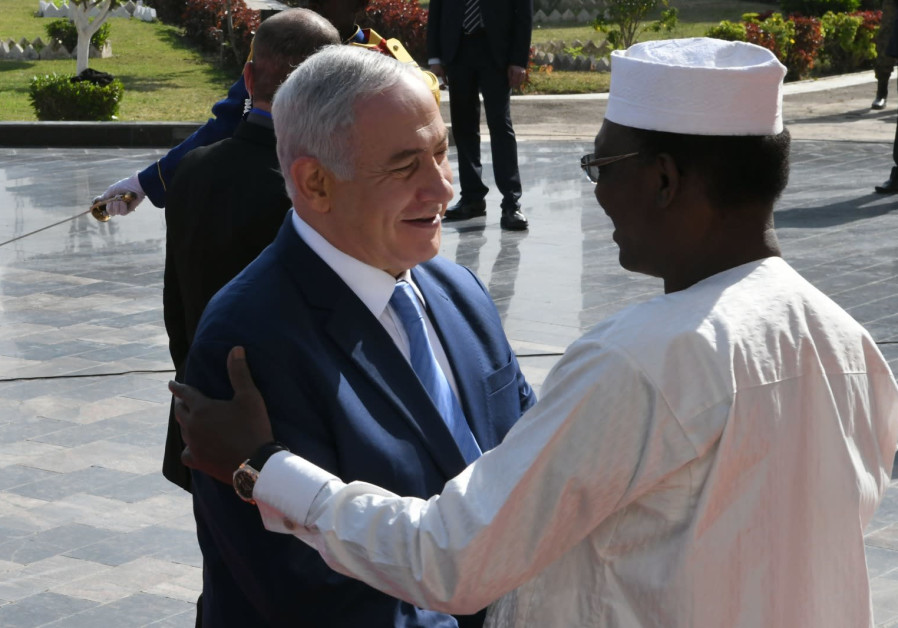
Netanyahu flew to Chad for a single-day visit Sunday, re-establishing ties with the Muslim-majority country after 47 years.

Netanyahu called the move ” a breakthrough into the heart of the Muslim world,” and lauded the fact that there was no opposition.
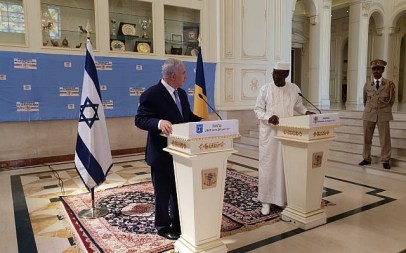
Prime Minister Benjamin Netanyahu, left, and Chad’s President Idriss Déby speak at a press conference at the presidential palace in N’Djamena, Chad on January 20, 2018. (Kobi Gideon/GPO)

Israel has in recent years established or upgraded ties with a number of African countries, including with Guinea, which neighbors Mali.

UN Secretary-General Antonio Guterres strongly condemned what he described as a “complex attack” on the peacekeepers camp in Aguelhok, in Kidal region and called for the perpetrators to be brought to justice.

“Ten peacekeepers from Chad were killed and at least 25 injured,” said a statement from UN spokesman Stephane Dujarric.

The gunmen struck early Sunday at the Aguelhok base 200 kilometers (125 miles) north of Kidal and towards the border with Algeria, according to a source close to the MINUSMA mission.

“MINUSMA forces responded robustly and a number of assailants were killed,” Dujarric said, without specifying the toll.

Mahamat Saleh Annadif, the UN envoy for Mali, condemned what he called a “vile and criminal” attack.

“Peacekeepers of the MINUSMA force at Aguelhok fought off a sophisticated attack by assailants who arrived on several armed vehicles,” he said in a statement.

The attack “illustrates the determination of the terrorists to sow chaos.

“It demands a robust, immediate and concerted response from all forces to destroy the peril of terrorism in the Sahel.”

Mali Islamist violence

On Sunday, France’s Defense Minister Florence Parly told French radio that the G5 Sahel anti-jihadist force in the region was resuming its operations.

They were suspended after an attack on their headquarters in mid-2018. The G5 force comprises contingents from Mali, Mauritania, Niger, Burkina Faso and Chad.

An attack at the same base last April killed two peacekeepers and left several others wounded.
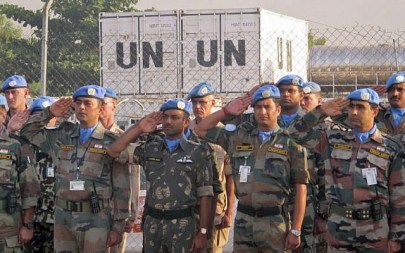
UN peacekeepers salute during a memorial service for two colleagues who were killed in an attack on the UN compound in Juba, South Sudan, Saturday, Dec. 21, 2013. (AP/United Nations Mission in South Sudan)

In October 2014, nine troops of a Nigerian contingent were killed in the northeast.

Some 13,000 peacekeepers are deployed in Mali as part of a UN mission.

It was established after Islamist militias seized the north of the country in 2012. They were pushed back by French troops in 2013.

A peace agreement signed in 2015 by the Bamako government and armed groups was aimed at restoring stability to Mali.

But the accord has failed to stop violence by Islamist militants, who have also staged attacks in neighboring Burkina Faso and Niger.

Earlier this month, both France and the United States criticized the authorities in Mali for their failure to stem the worsening violence.

On January 16, France threatened to push for more targeted sanctions to be imposed on Mali after hearing a UN official report on worsening violence in the West African country.

Washington renewed its warning that it would push for changes to the peacekeeping mission in Mali, possibly a major drawdown, if there was no progress.

In August, a panel of experts said in a report to the UN Security Council that inter-communal conflicts in the region were exacerbating existing tensions from clashes between jihadist groups and international and Malian forces.

Times of Israel staff contributed to this report.
 

Khartoum lets Netanyahu’s plane fly over South Sudan, in first for Israel

January 21, 2019

Source: Khartoum lets Netanyahu’s plane fly over South Sudan, in first for Israel | The Times of Israel

Flight back from Chad shortened by an hour as Sudan gives permission for PM’s jet to cross over airspace of southern neighbor, amid reports of diplomatic opening

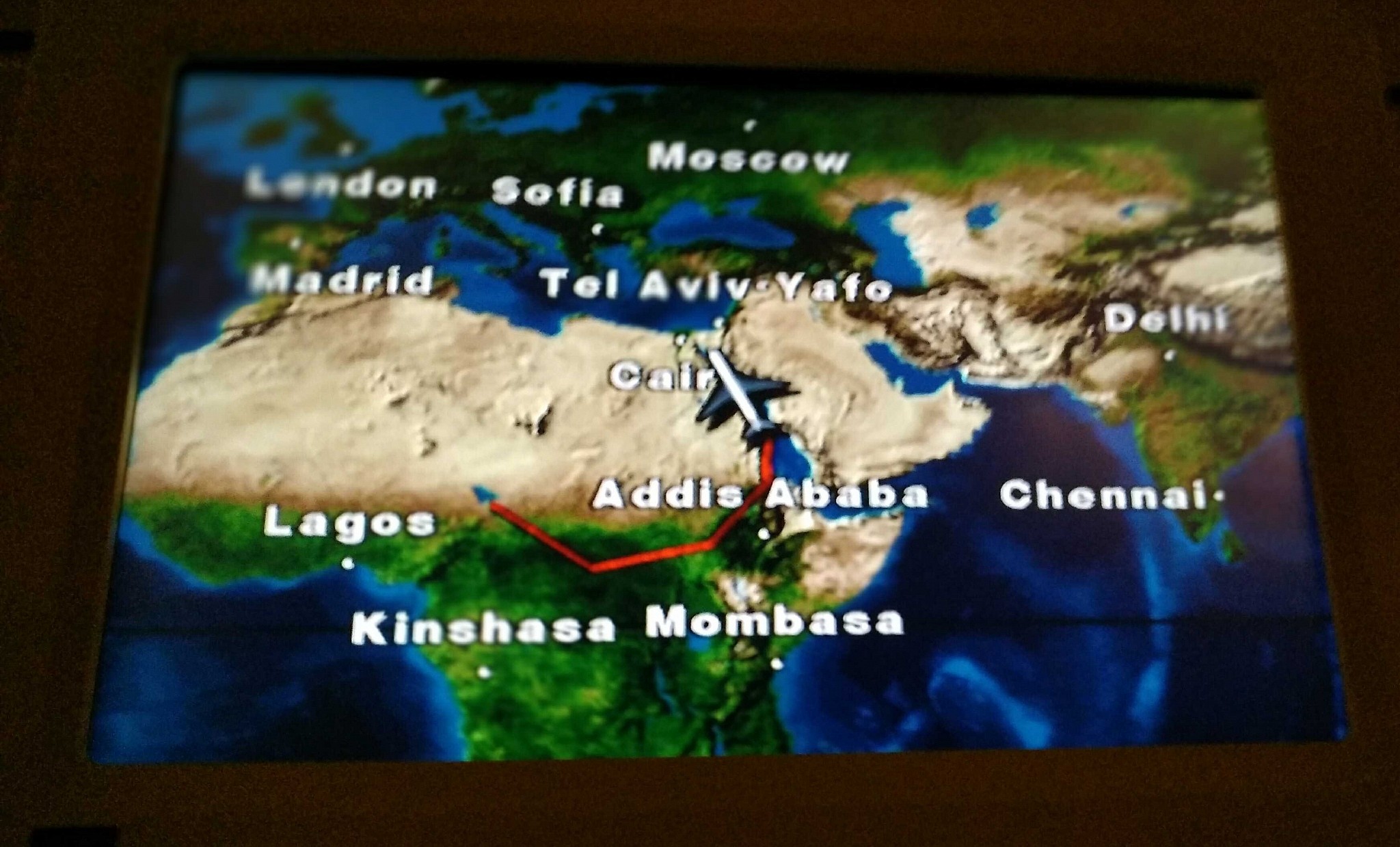
The flight path of Benjamin Netanyahu's plane over South Sudan, as seen on a screen inside Netanyahu's plane, January 20, 2019. (Rraphael Ahren)

The flight path of Benjamin Netanyahu’s plane over South Sudan, as seen on a screen inside Netanyahu’s plane, January 20, 2019. (Rraphael Ahren)

ABOVE SOUTH SUDAN — In an unprecedented move, Sudan on Sunday allowed an Israeli plane to cross over the air space it controls.

The flight, carrying Prime Minister Benjamin Netanyahu back to Israel from a lightning visit to Chad, jetted over South Sudan, whose skies are under the control of the civil aviation authorities in Khartoum.

The flight came hours after Netanyahu lauded Israeli “inroads” with the Islamic world as he and Chadian President Idriss Deby resumed ties, and amid a reported diplomatic push to reach an understanding with Khartoum to allow Israeli overflights above Sudan to shave hours off flights to western Africa and Latin America.

Israel has friendly relations with South Sudan, but the country’s airspace is controlled by its northern neighbor, which does not have diplomatic ties with the Jewish state.

Sunday’s flight was the first time an Israeli aircraft was allowed to fly over South Sudan, officials in the prime minister’s entourage said.

South Sudan, which is predominantly Christian, gained independence from Muslim Sudan several years ago, and the two countries are still hostile to each other. However, South Sudan’s civil aviation remains under Khartoum’s control.

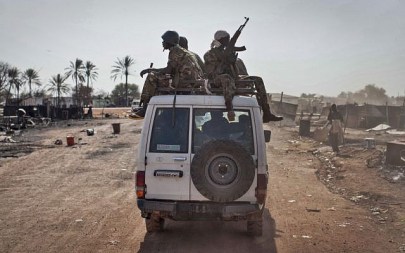
South Sudanese government forces ride on a vehicle, January 12, 2014. (AP/Mackenzie Knowles-Coursin, File)

The Prime Minister’s Office asked reporters who accompanied Netanyahu to Chad not to publish the flight over South Sudan before his plane landed at Tel Aviv’s Ben-Gurion Airport, presumably for security reasons and to prevent last-minute efforts to change the mind of the Sudanese authorities.

Shortly after takeoff, the captain announced that this was a “historic flight,” and that thanks to the shortcut the return flight would be about one hour shorter than the trip’s first leg.

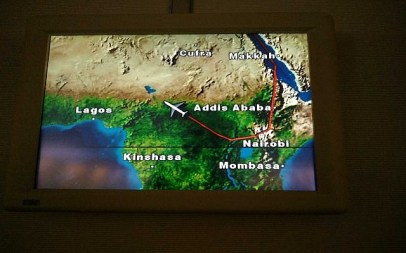
Earlier on Sunday, the prime minister’s plane took a long detour en route to Chad, flying south over the Red Sea and then across Eritrea, Ethiopia, Kenya, Uganda, the Democratic Republic of the Congo and the Central African Republic before entering Chadian airspace.

The flight path of Benjamin Netanyahu’s plane to Chad skirting Sudan, as seen on a screen inside Netanyahu’s plane, January 20, 2019. (Rraphael Ahren)

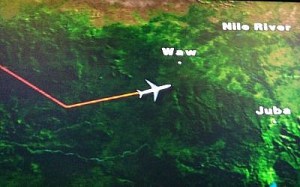
On the return flight, the El Al air craft flew from N’Djamena south to the Central African Republic but then turned eastward to cross over central South Sudan, from which it continued to Ethiopia and Eritrea to the Red Sea.

The flight path of Benjamin Netanyahu’s plane over South Sudan, as seen on a screen inside Netanyahu’s plane, January 20, 2019. (Rraphael Ahren)

Netanyahu had flown to Chad on Sunday to declare the resumption of diplomatic ties with the Muslim-majority country, together with Déby.

It was unclear whether Sudan’s decision to let Netanyahu’s jet fly over South Sudan was connected to Chad’s move Sunday. In November, Deby said during a visit to Israel in November that he would be willing to help Israel and Sudan negotiate forging ties.

Khartoum has said recently it was not changing its policy of forbidding Israeli planes from entering its airspace. Earlier this month, a Sudanese television station reported that Sudanese leader Omar al-Bashir had refused an request by a Kenyan airline to use its airspace for a flight to Tel Aviv.

However, Sunday’s unprecedented flight may indicate that Khartoum is willing to show flexibility regarding flyovers of third states under the control of civil aviation authority.

Netanyahu, who also serves as foreign minister, has in recent years pushed to open more flight paths to the Jewish state, including a direct route to India over Saudi Arabia and Oman.

Israeli and South American officials recently agreed to open a direct flight between Santiago and Israel, though the plane would still have to skirt Sudan, adding several hours to the time in the air.

Sudan has in recent years moved away from the geopolitical influence of Iran, which officials in the West have seen as an opportunity for a diplomatic breakthrough.

In the past, Sudan allegedly served as a way-station for the transfer of Iranian weapons to the Hamas terrorist group in Gaza. Israel has reportedly intercepted and destroyed transfers of weapons from Sudan bound for Gaza.

However, since it broke ties with Iran, Sudan is no longer perceived by Israel as a threat, but rather as a potential ally, amid a campaign by Netanyahu to forge open ties with more countries.

On Sunday, Israel added a record 160th country to the list of nations it has a relationship with, signing an agreement to resume bilateral ties with Chad.

Chad, a country of 15 million people, had severed ties in 1972 at the behest of Libyan dictator Muammar Gaddafi.

“We are making inroads into the Islamic world,” Netanyahu declared Sunday at N’Djamena’s presidential palace, minutes before he signed the formal document sealing the resumption of diplomatic relations.

Prime Minister Benjamin Netanyahu (R) and Chadian President Idriss Deby meet at the presidential palace in N’Djamena, Chad, on January 20, 2019. (Kobi Gideon/GPO)

“We are making history and we are turning Israel into a rising global power.”

A few moments later, at a briefing for the traveling press, Netanyahu said that Jerusalem’s increasingly robust ties with the Arab world helps Israel break the ice with Muslim-majority states in Africa that do not have formal diplomatic relations with Israel.

“This visit first and foremost teaches us about our standing in the Arab world,” Netanyahu said. “Not only that there wasn’t any opposition, but also, I say this unofficially, there was some support.”

He declined to say which countries expressed support for Chad’s decision to establish ties with Israel nearly 50 years after they were severed.


Israel bombs Iranian targets near Damascus as border tensions rocket

January 21, 2019

Source: Israel bombs Iranian targets near Damascus as border tensions rocket | The Times of Israel

IDF warns Syria not to intervene, hours after regime fires missile at Israel in apparent retaliation for daylight attack near capital; army shutters Mount Hermon ski resort

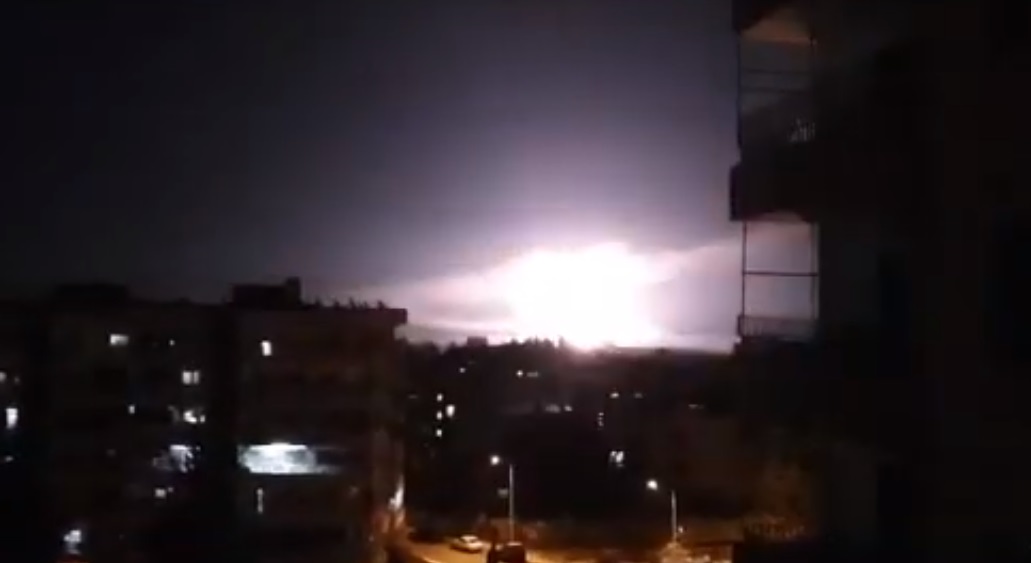
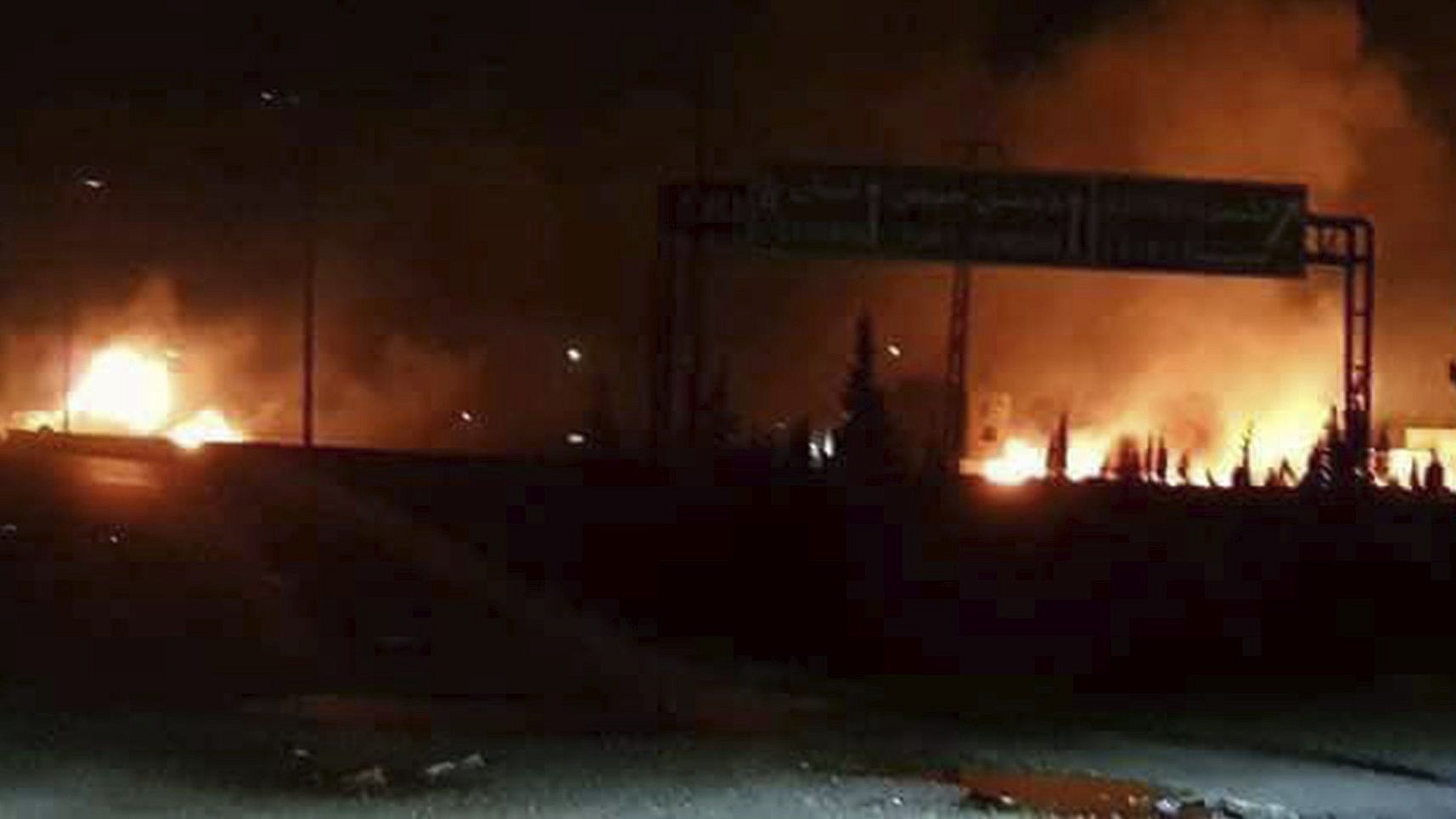
An explosion, reportedly  during Israeli airstrikes near Damascus, on January 21, 2019. (screen capture: YouTube)

An explosion, reportedly during Israeli airstrikes near Damascus, on January 21, 2019. (screen capture: YouTube)

Israeli forces bombed targets belonging to Iran inside Syria early Monday morning, the Israel Defense Forces said in a statement, as tensions on the northern border continued to skyrocket.

The IDF said at 1:30 a.m. it was “striking Iranian Quds targets in Syrian territory,” and warned Syrian forces not to intervene.

“The IDF warns the Syrian Armed Forces against attempting to harm Israeli territory or forces,” the army said in an exceedingly rare statement.

The attack came less than a day after Israel reportedly carried out a rare daylight strike on targets near Damascus, sparking Syria to fire a retaliatory missile at Israel, and ratcheting up concerns of a wider confrontation between Israel and Iran in Syria.

Syria’s state-run SANA news outlet claimed Monday morning that its air defenses had shot down a number of “hostile targets.”

Videos posted online appeared to show Syrian air defense missiles being launched.

SANA claimed the strikes had come from the direction of Lebanese airspace and said explosion were heard near Damascus.

According to the Britain-based Syrian Observatory for Human Rights war monitor, the airstrikes tageted Iranian and Hezbollah warehouses at Damascus airport and other locations in the south and west of the capital.

The Quds Force is Iran’s expeditionary unit inside the powerful Islamic Revolutionary Guards Corps, which Israel and others accuse of trying to gain a military foothold in Syria.

On Sunday, Syria shot a missile at Israeli territory, in apparent response to a rare daylight attack on targets in and around Damascus widely attributed to Israel.

Israel’s air defenses managed to down the surface to surface missile before it reached Israeli airspace over the Golan Heights, according to the military.

Signaling fears of a fresh attack on Israel, the army announced it would shutter the Mount Hermon ski resort on Monday. On Sunday, the popular site had remained open despite the missile attack nearby.

Embedded video

The cross-border fire comes less than a week after IDF Chief of Staff Aviv Kohavi took office.

The IDF announcement regarding the strike Monday morning attack was nearly unprecedented, after years of maintaining a policy of strategic ambiguity regarding its air campaign against Iran gaining a military foothold in Syria.

Israeli prime minister Benjamin Netanyahu and other officials have seemingly become more open about Israel’s military efforts in Syria, even as the installation of more advanced Russian air defense systems and tensions with Moscow have complicated the campaign.

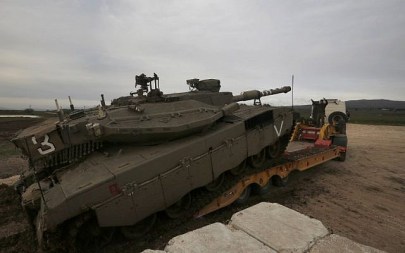
An Israeli army Merkava tank is loaded into a truck in the Golan Heights, on January 20, 2019. ( JALAA MAREY / AFP)

On Sunday Netanyahu appeared to confirm that Israel was behind the daylight strike while speaking to reporters in Chad.

“We have a permanent policy to hurt the Iranian entrenchment in Syria, and everyone who is trying to hurt us,” Netanyahu said. “This policy doesn’t change, whether I am in Israel or on a historic visit in Chad. It’s permanent.”

Local Syrian media said the targets of strike were in Damascus International Airport and in the town of al-Kiswah, south of the capital, both of which have been hit by Israeli attacks in the past. Last year, the Israeli military said bases near al-Kiswah were used by pro-Iranian militias. An Iranian weapons depot at the airport was targeted in an airstrike a week and a half ago, Israel said.

Israel typically refrains from commenting on individual airstrikes in Syria, but does generally acknowledge that it carries out raids against Iranian- and Hezbollah-linked targets in the country.

Israel in recent years has carried out hundreds of airstrikes in Syria against targets linked to Iran, which alongside its proxies and Russia is fighting on behalf of the regime of Syrian President Bashar Assad.

Israel has accused Iran of seeking to establish a military presence in Syria that could threaten Israeli security and attempting to transfer advanced weaponry to the Hezbollah terror group in Lebanon.


Israeli strikes said to destroy Iranian, Hezbollah sites near Damascus

January 21, 2019

Source: Israeli strikes said to destroy Iranian, Hezbollah sites near Damascus | The Times of Israel

Bombings inflict heavy damage on weapons warehouses and military positions near airport and other areas, with casualties reported; Syria calls attack ‘heavy’

Illustrative: Flames rising after an attack in an area known to have numerous Syrian army military bases, in Kisweh, south of Damascus, released by Syria's official news agency on May 9, 2018. (SANA, via AP)

Illustrative: Flames rising after an attack in an area known to have numerous Syrian army military bases, in Kisweh, south of Damascus, released by Syria’s official news agency on May 9, 2018. (SANA, via AP)

Massive Israeli airstrikes on Syria destroyed weapons stores and military positions belonging to Iran and the Lebanese Hezbollah terror group, a war monitor said Monday.

The Israeli military said early Monday it was carrying out strikes against Iran’s Qud’s Forces, in a rare statement on its military activities in Syria.

“The Israeli missiles managed to destroy weapons depots and military posts of the Iranians and the Lebanese Hezbollah in the vicinity of Damascus International Airport and the area of Al-Kiswah and Jamraya,” the Britain-based Observatory for Human Rights said.

The monitor said there had been casualties and extensive damage, without providing details. A news site in the southern Syrian city of Suweida reported that eight soldiers had been brought to a local hospital with injuries sustained during the Israeli strikes, including two who died.

There was no immediate confirmation of casualties from Damascus. Syria’s state-run media described the attack as “heavy” and said Israel had launched “consecutive waves of guided missiles.” However, it claimed the majority of the missiles were shot down.

“Our air defenses responded effectively to an Israeli air attack targeting the southern region and prevented it from achieving any of its objectives,”SANA quoted a military source saying.

The airstrike was the second attack on the airport and al-Kiswah in as many days, after a rare daytime attack attributed to Israel on Sunday morning. Both locations have been attacked by Israel in the past and are thought to house Iranian or Hezbollah assets.

“Warehouses containing weapons for Syrian regime ally Hezbollah and Iranian fighters are located in that area,” Rami Abdel Rahman, head of the Syrian Observatory for Human Rights war monitor, said Sunday.

Israel has accused Iran of seeking to establish a military presence in Syria that could threaten Israeli security and attempting to transfer advanced weaponry to the Hezbollah terror group in Lebanon.

Last year, the Israeli military said bases near al-Kiswah were used by pro-Iranian militias. An Iranian weapons depot at the airport was targeted in an airstrike a week and a half ago, Israel said.

Jamraya, which has also allegedly been attacked by Israel in the ast, is thought to house a military facility and scientific research center.

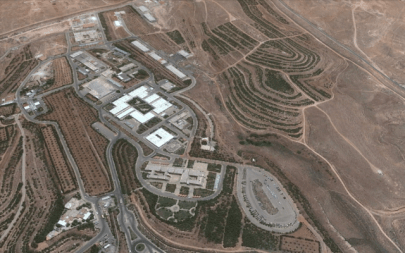
A Google Earth view of a Syrian scientific facility in Jamraya, near Damascus, before it was allegedly struck by Israeli warplanes in late January. (photo credit: image capture from Google Earth)

A Google Earth view of a Syrian scientific facility in Jamraya, near Damascus, before it was allegedly struck by Israeli warplanes in late January 2013. (photo credit: image capture from Google Earth)

The Israeli attack Monday morning was widely seen as a response to a surface to surface missile fired at Israel Sunday, apparently in retaliation for the earlier airstrikes.

Israel intercepted the missile near the Mount Hermon ski resort, but on Monday said it would shut the site, apparently signaling fears violence could continue to escalate.

For years, Israel has conducted airstrikes against Iranian and Hezbollah targets in Syria, which it considers threats to national security. However, those attacks typically take place under the cover of darkness.

The strike appeared to be the first major attacks carried out by the Israel Defense Forces since Aviv Kohavi took over as chief of staff last week.

The alleged strike Sunday came hours after a Syrian cargo plane touched down in the Damascus International Airport from Tehran, according to publicly available flight data. Israel and American defense officials have said these types of ostensibly civilian cargo planes are often used to transport advanced weaponry from Tehran to pro-Iranian militias, fighting in Syria, including the Hezbollah terror group.

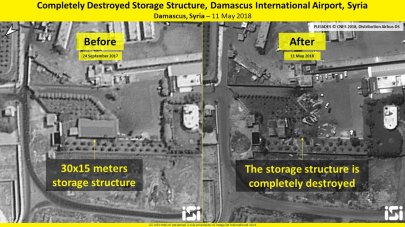
Satellite image allegedly showing damage to buildings at Damascus International Airport caused by a May 11 Israeli airstrike, released by ImageSat International, on May 13, 2018. (ImageSat International)

Another flight from Iran, flown by Tehran’s Mahan Air carrier, was en route to Syria on Sunday afternoon, but turned back following the reported Israeli strikes, according to flight data. Mahan Air has been identified by defense officials as one of the cargo carriers suspected of ferrying war materiel from Iran to Syria. As a result, it is subject to sanctions by the US Treasury Department.


Most extensive Israeli attack ever on Soleimani’s military resources in Syria – DEBKAfile

January 21, 2019

Source: Most extensive Israeli attack ever on Soleimani’s military resources in Syria – DEBKAfile

Early Monday, Jan 21, the IDF struck Iranian Al Qods forces, command centers and ammo dumps in Syria for 50 minutes in volleys of guided missiles from the air and the ground. Syrian and Russian sources reported that Syrian air defenses intercepted at least 29 Israeli missiles, coming from three directions – Lebanon and two northern Israeli regions of Galilee and the Kineret (Sea of Galilee).

The IDF called this its most extensive operation ever against Iranian Al Qods chief Qassem Soleimani’s forces in Syria and issued a statement warning the Syrian army not to retaliate against Israeli territory, citizens or military forces. The Mt Hermon area and ski sites were placed off-limits to civilians as of Monday. Before midnight, a series of explosions were heard across Damascus.

DEBKAfile’s military sources add: The earlier attack by four Israeli Air Force fighter jets on a target south of Damascus international airport during the day on Sunday was clearly the signal for a broader Israeli clash with Russia and Syria over the continued IDF offensive for evicting the Iranian military presence from Syria.
The Israeli military had five incentives to go forward:

  1. This first IAF air raid failed to connect to target.
  2. Syrian aid defense responses to the Israeli raid were closely synchronized with the Russian Khmeimim Airbase in Latakia and the Russian national air defense coordination center at Air Force HQ n Moscow.
  3. Israel’s Prime Minister and Defense Minister and newly-appointed IDF Chief of Staff were faced with a tough decision over whether to climb down on its campaign against Iran after being warned off by Russia against attacking Damascus or its airport.
  4. The IDF decided it could afford to let Lt. Gen. Aviv Kochavi’s first operation as IDF chief of staff be a flop.
  5. The Syrian ground missile fired into Israel and intercepted by its Iron Dome defense battery over northern Golan could not go unanswered, especially when it was not the first. A Syrian missile flew over central Israel on Dec. 26. The assumption at the time was that an Israeli posture of non-response would result in expanding Syrian ground missile volleys with Russian backing for every Israeli air strike over Syria.
    Therefore, Sunday night, Israel took up the challenge, threw the gauntlet down for Moscow, Tehran and Damascus, and turned its back on Moscow’s warning to stay out of Damascus’ skies. Urgent conferences are no doubt taking place in and between the three capitals on their next steps.


PM Netanyahu and Chad President Deby joint statements 

January 20, 2019


Report: Syrian air defense repels Israeli attack in south

January 20, 2019

Source: Report: Syrian air defense repels Israeli attack in south

Source tells state news agency: ‘Our air defence systems thwarted an Israeli air aggression and prevented it from achieving any of its goals’; meanwhile, Iron Dome intercepts a rocket fired at Golan Heights.
Syrian defense systems thwarted an Israeli air attack on Sunday in the south of the country, state media said, citing a military source. Short time later, a rocket fired at the northern Golan Heights had been intercepted by the Iron Dome aerial defense system over Syrian territory, said the IDF Spokesperson’s Unit.”Our air defense systems thwarted… an Israeli air aggression …and prevented it from achieving any of its goals,” the Syrian source told state news agency SANA. An Israeli military spokeswoman declined to comment.

Russia’s National Defense Control Centre said the attack was carried out by four Israeli jets and targeted an airport in southeastern Damascus, RIA news agency reported. There were no victims and the airport was undamaged in the attack, RIA cited the centre as saying.

The smoke trails of Iron Dome interceptor were clearly seen over the Mount Hermon ski resort that opened its doors to tourists earlier on Sunday. Although the site was not evacuated following the rocket attack, heavy military presence was reported in the area following the events. The new IDF Chief of Staff Aviv Kochavi was also making his way to the northern border immediately after the incident.

The Al Quds Al Arabi newspaper reported on Friday that Russia had conveyed to Israel its intent to renovate Damascus International Airport and warned the Israeli government against striking targets, believed to be Iranian arms depots, in the airport’s proximity. According to the report, the Israel Air Force attacks prevent various Russian airlines from resuming their operations in the region.

Prime Minister Benjamin Netanyahu confirmed last week in a rare admission that the Israel Air Force struck Iranian targets in Syria last weekend, following Syrian reports of successful interceptions over Damascus.

The prime minister said that “in the past 36 hours,” the IAF hit Iranian arms depots near Damascus airport. “The wave of recent attacks proves that we are determined more than ever to act against Iran in Syria,” he told the weekly cabinet meeting in Jerusalem.

Iron Dome intercepts rockets over Mount Hermon (Photo: Attila Somfalvi)

Iron Dome intercepts rockets over Mount Hermon (Photo: Attila Somfalvi)

Netanyahu also said that the IAF has hit “hundreds” of targets belonging to Iran and its proxy Hezbollah in Syria since the start of Israel’s campaign to thwart Iranian military entrenchment in the region.

The prime minister’s statement came after Syria’s state-run news agency SANA said the country’s air defenses intercepted missiles fired by Israeli fighter jets last Friday night. The attacks reportedly caused damage but no casualties. SANA reported that “over eight targets” exploded over the capital, adding that most of the Israeli missiles had been intercepted.

IAF strike in Syria

IAF strike in Syria

An ammunition warehouse at the Damascus airport was reportedly hit, but a Syrian Transport Ministry official said to SANA airport activity continues as normal.

“At 11:15 before midnight Israeli warplanes coming from Al-Jalil area launched many missiles towards Damascus area and our air defenses intercepted them and downed most of them,” a Syrian military source told SANA.

Syrian state media broadcast footage of what it said were the air defenses firing, with bright lights seen shooting across the night sky. Explosions were heard in one of the videos.


Report: Hamas threatens Gaza escalation as Qatari money transfer delayed 

January 20, 2019

Source: Report: Hamas threatens Gaza escalation as Qatari money transfer delayed – Breaking News – Jerusalem Post

The terrorist organization also demanded that the fishing area be expanded and to stop the blockade prohibiting goods into Gaza.

BY YVETTE J. DEANE
 JANUARY 20, 2019 07:53
Qatari Ambassador to Gaza Mohammed al-Emadileaves following a press conference in Gaza

Hamas threatened Israel through western and regional mediators on Sunday because of the delay of the Qatari money transfer, according to Hadashot News.

“If Israel does not transfer the Qatari money, Hamas will escalate the situation on the ground,” a report from Asharq Al-Awsat, an Arabic international newspaper located in London, quoted Hamas as saying. The terrorist organization also demanded that the fishing area be expanded and the blockade on prohibiting goods into Gaza be stopped.

After delaying the third installment of the $15 million, the payment was scheduled to be delivered to Hamas on Sunday or Monday.

Former defense minister and chairman of the Yisrael Beytenu party MK Avigdor Liberman bashed Prime Minister Benjamin Netanyahu for leaving to Chad as the Qatari money is scheduled to be transferred to Hamas.

“Prime Minister Benjamin Netanyahu went tonight for an important political visit to Chad. And who comes in his place? The Qatari envoy, who brings in an additional $15 million in cash earmarked for Hamas,” Liberman said. “This is the continuation of the process of surrendering to terrorists and Hamas, and no political visit to Africa can cover that up.

“The government of Israel must stop the transfer of Qatari money, fuel and any additional equipment to Gaza and make sure every concession to Gaza is only in return for the release of our soldiers and citizens who are held by Hamas!”


Netanyahu: Iran tried to stop my trip to Chad but failed

January 20, 2019

Source: Netanyahu: Iran tried to stop my trip to Chad but failed – Israel News – Jerusalem Post

Visit follows Déby’s surprise visit to Jerusalem two months ago, and the two leaders are expected to announce the establishment of formal diplomatic ties.

BY HERB KEINON
 JANUARY 20, 2019 04:40
Prime Minister Benjamin Netanyahu meets Chad's President Idriss Deby in N'djamena, Chad in January 2

N’DJAMENA – Iran and the Palestinian Authority tried to stop Prime Minister Benjamin Netanyahu’s trip to Chad but failed, the premier revealed ahead of landing in the the African country early Sunday morning, on a historic diplomatic visit aimed at renewing diplomatic ties between the countries.

Upon landing Sunday morning for the first ever visit by an Israeli prime minister to the Central African country, Netanyahu was met at the airport by Chad’s foreign minister, and huddled with him before going to the presidential palace for a meeting with President Idriss Deby.

The two leaders met privately for about an hour. Netanyahu is scheduled to return to Israel at about 3 in the afternoon, some 7 hours after landing.

“The Iranians and Palestinians were upset about the trip and tried to stop it but failed,” Netanyahu said, adding that there would be additional trips in the future to Muslim states.

This trip follows by just two months Déby’s surprise visit to Jerusalem, and the two leaders are expected to announce the establishment of formal diplomatic ties.
Forging stronger ties with Africa is one of Netanyahu’s central foreign policy aims, and this will be his fourth visit to the continent since July 2016, when he became the first sitting Israeli prime minister to go to Africa since Yitzhak Shamir did so 29 years earlier.
As he did on trips to Liberia in June 2017 and Kenya for the swearing in of President Uhuru Kenyatta in November of that year, Netanyahu is only scheduled to spend a number of hours on the ground, not staying overnight because of security concerns. Only in July 2016, when he spent five days visiting Uganda, Kenya, Rwanda and Ethiopia, did he stay overnight.
Chad broke off ties with Israel 46 years ago under pressure from the leader of its northern neighbor, Libyan dictator Muammar Gaddafi.
Upon his arrival in Jerusalem in November, Déby said his visit would enable the opening of a “new chapter” in ties between the two countries.
“Chad is a very important country in Africa, and a very important country for Israel,” Netanyahu said at the time. “I am happy we are resuming our friendship,” he added, saying that although diplomatic ties were cut off in 1972, cooperation – which he said would now be extended – always continued “under the radar.”
While Chad is an extremely poor, dictatorial, landlocked country that non-governmental organization Freedom House characterizes as the 18th-least free nation in the world, it does hold strategic significance for Israel since it is a Muslim-majority state that borders Libya and Sudan. Ties with this central African country could afford Israel the opportunity to monitor what is moving south out of Libya – a major breeding ground for terrorism that includes Islamic State, al-Qaeda and even Boko Haram.
And as far as Chad is concerned, Israel can help it face its cocktail of problems, from water scarcity to securing its borders and dealing with the threat of Islamic terrorism.
During his visit in November, Déby characterized terrorism as a “disease of humanity” that necessitates its defeat through cooperation by all countries.
Tellingly, just weeks after his visit in November, Chad broke a pattern of years of reflexively voting against Israel at the United Nations by not voting in the General Assembly on a US-sponsored resolution that condemned Hamas for the violence in Gaza.
Chad will be the second African Muslim state with which Israel has reestablished ties since Netanyahu’s visit to Africa in 2016. Just two weeks after that visit, Israel established ties with the West African state of Guinea.
This will leave seven other predominantly Muslim states in sub-Saharan Africa with whom Israel does not have ties: Mali, Niger, Sudan, Mauritania, Somalia, Djibouti and Comoros.
Israel had diplomatic relations with Mauritania from 1999 to 2009, and even had an embassy there, until Mauritania – a member of the Arab League – cut off ties following 2009’s Operation Cast Lead against Hamas.
Chad, a member of the 57-nation Organization of Islamic Cooperation, has a population of 16 million people, 52% of whom are Muslim, and another 44% who are Christian.


Iran says it has a new tank that equals the best in the world 

January 20, 2019

Source: Iran says it has a new tank that equals the best in the world – Middle East – Jerusalem Post

According to Iran’s Tasnim news agency a tank dubbed the Karrar (striker) that was initially announced in 2017 is based on models going back to the 1970s.

BY SETH J. FRANTZMAN
 JANUARY 20, 2019 16:42
Tank

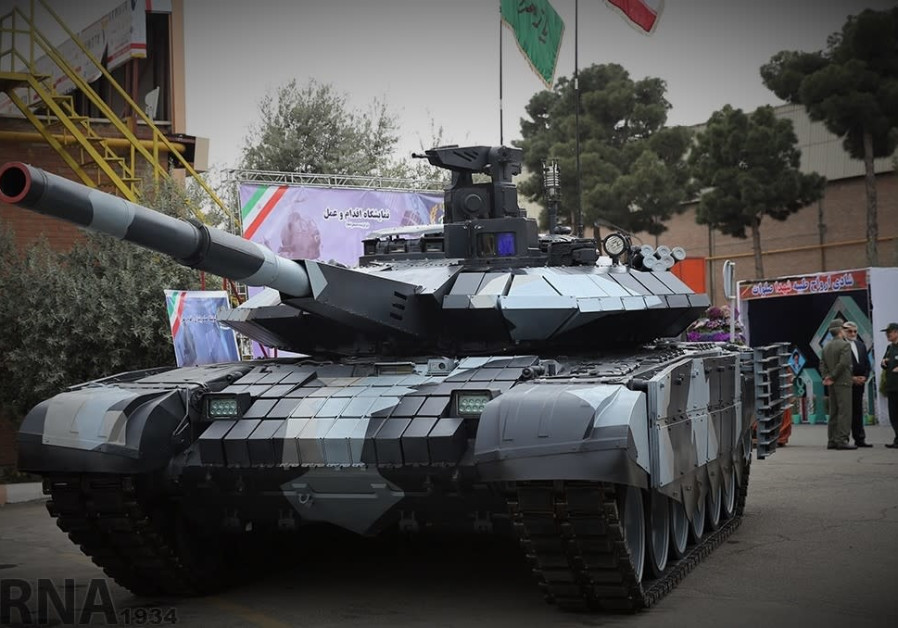
Iran’s latest model of its domestically built Karrar tank puts it at the level of other world powers, Iranian media said over the last week. In recent years Iran has built up an impressive list of new weapons systems, including ballistic missiles, and sought to improve its navy and air force.

According to Iran’s Tasnim news agency a tank dubbed the Karrar (striker) that was initially announced in 2017 is based on models going back to the 1970s. It was developed from the platform of a Russian T-72.

“Iranian military experts and technicians have in recent years made great headways in manufacturing a broad range of indigenous equipment, making the armed forces self-sufficient in the arms sphere,” the report says.

Iran’s deputy Defense Minister General Qassem Taqizadeh discussed the latest version of the tank alongside a new Soumar cruise missile on January 13. The Karrar was destined to be delivered both to the army and the Islamic Revolutionary Guard Corps (IRGC).

“The tank is at the level of the most. Advanced. Global tanks and can be compared to the Russian T-90 tank, even having superiority over it,” Former Defense Minister Hossean Dehqan was quoted in Shabestan news.

“It is a tank that, if we want to compare, is on the American Abrams scale.” The T-90 has been in service since the 1990s and the Abrams since the 1980s but both have received major upgrades since then.

Dehqan played a central role in developing the latest Karrar line of tanks. According to Press TV they are built in the city of Dorud in Lorestan province. IRGC commander Muhammed Pakpour told Shabestan news that the IRGC is excited about the tank if it ever makes its final debut. It is supposed to have an electro-optical fire control system, and the ability to fire at moving targets at night and in the day, as well as be able to shoot missiles with laser guidance. Like the T-90 its man gun is a 125mm cannon. The tank is supposed to have armor effective against RPG-7s and similar ordinance.

So far Iran hopes to build 800 of the tanks to bolster its armed forces, while at the same time Iran claims that its expanding arsenal of weapons does not make it a threat to its neighbors.

The tank, like Iran’s claims of having build a fighter jet and new ships, may end up being merely a bad copy of a foreign weapon system. Iran has shown in the past that while it has impressive achievements in ballistic missiles and missile technology, that larger weapons platforms built domestically face many hurdles. Iran also has been unable to test these systems against an opponent since it is unwilling to confront the US, it’s main enemy, on the field of battle, and its other enemies consist of terrorist groups such as ISIS.