
I was wondering this too when I saw that it was an Iron Dome that was used.
Hmm…
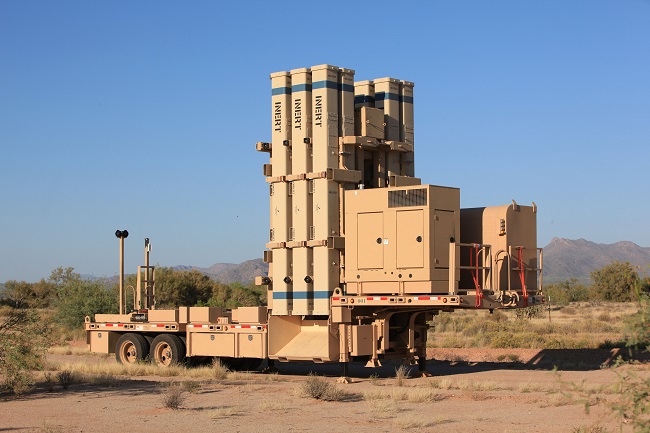
Missile defense system hasn’t been used since it failed to intercept Syrian missiles last year.
At around 2:30 p.m. on Tuesday, Israelis enjoying the slopes of the Mount Hermon ski resort heard a loud bang and saw smoke trails in the skies above them. The Iron Dome missile defense system had intercepted a long-range missile fired by Iranian forces in Syria.
The missile was an Iranian-made surface-to-surface model with a range of some 200 km. with a payload of hundreds of kilograms of explosives that was fired from the outskirts of Damascus. The launch of this type of missile doesn’t happen at a moment’s notice. It took months of preparation and the approval of the highest officials in Tehran.
Israeli intelligence must have identified the chatter. They knew it was coming.
According to Syrian reports, an hour earlier Israeli jets carried out a rare daytime strike on Iranian targets in Syria. No special instructions had been given to the thousands of civilians enjoying the day and no warning siren was sounded.
However, the IDF was prepared, operating the recently upgraded Iron Dome to cover Mount Hermon.
While the primary targets of the Iron Dome system are short-range rockets and other artillery rounds that have been successfully intercepted, like the Iranian surface-to-surface missile on Sunday, the job should be done by the David Sling missile defense system.
This system became operational two years ago, and was first used last year against two SS-21 Tochka tactical ballistic missiles launched from Syria.
But, they missed their mark and David’s Sling has not been used since then.
Part of Israel’s multi-layered missile defense system umbrella, David’s Sling was designed to intercept tactical ballistic missiles and medium-to-long-range rockets, as well as cruise missiles fired at ranges between 40 to 300 km.
The Iranian missile would have made an ideal target to demonstrate to the Israeli public that the expensive defense system actually works.
Each interceptor launched by Israel’s David’s Sling system costs an estimated $1 million, but the army insists that the cost is not relevant when they are launched in order to defend the home front.
Israel’s air defenses also include the Iron Dome, which is designed to shoot down short-range rockets; and the Arrow system which intercepts ballistic missiles outside of the Earth’s atmosphere. Compared to the David’s Sling costly interceptor, each Iron Dome Tamir interceptor has a reported price of between $100,000 and $150,000.
But that shouldn’t be why we haven’t seen the use of David’s Sling since its failed interception.
Israel continuously improves the technology behind its anti-missile systems, with the Iron Dome upgraded with the Tamir interceptor that has a demonstrated capability against cruise missiles.
A week before the system was used, it was reported by Inside Defense that the United States Army wanted to purchase two Iron Dome batteries from Israel.
The Iron Dome undergoes upgrades “all the time” a spokesman for Rafael Advanced Systems told The Jerusalem Post, adding that the “system performed in accordance with its variety of capabilities.”
It was a good opportunity to give the new system a chance to fire while showing off its new capabilities to the US, as well as to the Iranians who want to deter Israel from launching further attacks against their interests in Syria.
But the question keeps popping up: Where is the David’s Sling?
Are there problems with the joint Israeli-US project that the public doesn’t know about?
Source: Fearing for Jewish community, Israel silent on Venezuela unrest
Some 6,000 Jews still living in the Latin American country might find themselves in uncharted waters after President Maduro, accused of fostering anti-Semitism due to Iran ties, breaks off diplomatic relations with US.
Israeli officials have decided to keep mum on the unrest in Venezuela due to fears it might harm the Jewish community in the Latin American country after Venezuelan President Nicolas Maduro broke off diplomatic ties with the United States. Maduro’s government has been accused of fostering anti-Semitism and extreme anti-Israeli views due to Venezuela’s expanding relations with Iran.Maduro ordered American diplomats to leave the country within 72 hours, after Venezuelan opposition leader Juan Guaido declared himself interim president during a rally on Wednesday. Guaido’s call for elections in the country quickly won the backing of the Trump administration, and was later followed by similar statements from Canada and a slew of right-leaning Latin American governments, including Venezuela’s neighbors Brazil and Colombia.

Venezuela’s 20,000 Jewish population has dropped by more than 50 percent over the past decade—with most emigrating to the United States, Mexico or Israel—due to concerns over rising anti-Semitism as well as economic and political unrest in the oil-rich state.

Today, some 5,000-6,000 Jews still live in Venezuela, the majority of whom reside in the capital Caracas. The community preserves the traditional Jewish lifestyle, attending synagogues, Jewish schools and community centers.
The Jewish Agency and other Jewish organizations say they are ready to assist Venezuela’s Jews, while Jerusalem is monitoring developments in case the situation deteriorates.

At a rally in the east of Caracas that drew hundreds of thousands of Venezuelans, Guaido accused Maduro of usurping power. He promised to create a transitional government that would help the country escape its hyperinflationary economic collapse.
“I swear to assume all the powers of the presidency to secure an end to the usurpation,” 35-year-old Guaido told an exuberant crowd.

Guaido’s declaration takes Venezuela into uncharted territory, with the possibility of the opposition now running a parallel government recognized abroad as legitimate, but without control over state functions.
Reuters contributed to this report.
Source: Russias rebuke of Israels Syria strikes wasnt mere lip service
Analysis: By making itself the sole superpower in the region, Moscow must create balance that keeps everyone happy; but the Israelis, the Syrians and the Iranians are all griping and fighting to advance their own interests.
Following the kinetic military conflict in Syria on Sunday night between Israel, the Iranian Revolutionary Guards and the Assad regime, Wednesday saw the “soft” conflict between the sides on the public diplomatic arena. This is how struggles on the international arena are managed in the second decade of the current millennium: the fighting continues, but not with violence.
The Syrians started the soft war when they filed a complaint against Israel with the United Nations Security Council and demanded that Israel stop violating their sovereignty by attacking targets in their territory. Of course, Syria’s UN ambassador said not a single word about the Iranian military entrenchment in his country.On Sunday and Monday, the Russian military headquarters in Syria settled for laconic statements of facts, with no condemnation or demands of Israel, and this must have angered Damascus. Russia prefers not to anger Assad, as it doesn’t want him to withdraw his invitation to Moscow to keep air and naval bases along the eastern shore of the Mediterranean Sea, for the first time since the time of the czars.

Russia also wants to profit from the rehabilitation of Syria after the civil war, and it needs the goodwill of the regime in Damascus to reach a political agreement that would stabilize the situation in the country, following which the rehabilitation could begin in earnest.
For all of these reasons, the Russian Foreign Ministry released a statement through a lower rank, its spokesperson, in which it condemned Israeli operations and demanded that it ceases its attacks in Syria—just as the Assad regime demanded.
Except that the Russian Foreign Ministry’s statement included an interesting sentence, calling on all sides to stop waging geo-political struggles on Syrian territory. This sentence, it appears, was not just meant for Israeli ears but also, and perhaps mostly, for the ears of the ayatollahs regime in Iran.
Behind this implied message to Tehran is rather credible information published by the Kuwaiti newspaper Al Jarida. The paper’s reporter in Jerusalem has good sources, and the paper has had several decent scoops about the Iranian fight against Israel on Syrian soil. A story published on Wednesday morning, which was written by the paper’s correspondents in Jerusalem and Tehran, said that Qasem Soleimani, the commander of the Revolutionary Guards’ elite Quds Force, toured the Syrian Golan Heights about a week ago, some 45 kilometers from the Israeli border.

It’s safe to assume Al Jarida’s credible sources meant for this information to reach the Russians. Russian President Vladimir Putin did commit to Prime Minister Benjamin Netanyahu and to US President Donald Trump that he would keep the Iranians at least 80 kilometers away from the Syria-Israel border on the Golan Heights.
If Soleimani did visit that area on January 18, at such a close distance from the border with Israel, it would constitute a clear violation of the promises Moscow made to Jerusalem and Washington. It is quite possible that behind Al Jarida’s credible sources were powers who sought to make it clear to the Russians that the Iranians, their so-called allies, don’t care about the promises the Kremlin made. These sources wanted to show Moscow that Iran is provoking Israel, and therefore the Russians have no right to complain to the Jewish state about its attacks in Syria.
It’s also quite possible that Soleimani’s visit to the Golan was in order to prepare the missile his men fired at Israel earlier this week.
According to Al Jarida, Soleimani also met with the heads of the National Security Council in Tehran and told them Netanyahu is pushing for escalation on the Syrian front to get more votes in the upcoming Israeli elections. It’s unclear whether the information about Soleimani’s comments was accurate, but the very fact that he met with the heads of the Iranian National Security Council is interesting in and of itself.
It appears questions are being asked in Tehran about the entanglement in Syria, and this is a positive development from an Israeli standpoint. But more importantly, Israel is signaling to Moscow that it needs to keep its word, which was probably not very pleasant for the Russian Foreign Ministry to hear.

Israel should nevertheless take the Russian statement seriously. It’s not just lip service the Kremlin is paying to Damascus, which lost several anti-aircraft batteries in the latest round of fighting. It should be taken as serious statement of Russian intent to limit the IAF’s freedom of operations in Syria, which could limit the fight against Iranian entrenchment in the country. The situation at present is delicate, and Israel’s Security Cabinet will have to thoroughly discuss future moves.
Life’s not easy for the Russians. Everyone is constantly coming to them with complaints. The Syrians complain that Moscow isn’t defending them from Israel’s strikes; the Israelis complain that the Russians are not fulfilling their promise to curb the Iranians; and the Iranians claim the Russians don’t sufficiently value their contribution to preserving the Assad regime.
This is what it’s like now that the Russians have made themselves the dominant superpower in the Middle East, and particularly in the Syrian arena. The position of dominant superpower has its pluses, but also quite a few minuses.
Israel’s trade with Britain in was valued at more than £10 billion in 2018.

The United Kingdom agreed “in principle” to a post-Brexit free trade agreement with Israel at the World Economic Forum in Davos, Switzerland.
UK’s Secretary for International Trade Liam Fox announced the decision on Wednesday together with Israel’s Economy Minister, Eli Cohen.
 Dr Liam Fox MP
✔@LiamFox
BREAKING News from @Davos:and
have agreed in principle a UK-Israel agreement. Here is the video of Eli Cohen (Israel’s Minister of the Economy) and I making the announcement at @wef. @netanyahu #FreeTradeIsGREAT #FreeTrade #WEF2019 #wef #wef19
“I’m delighted that as Britain prepares to leave the European Union and to ensure continuity for our businesses in both directions, we’ve reached agreement in principle today with our colleagues in Israel,” Fox said.
“Israel has been one of the most cooperative and productive partners in this relationship where our trade is already strong and set to go further,” he added. “For us, the continuity as we leave the European Union will be a precursor to an even more ambitious agreement in the future.”
Cohen commented that Israel’s trade with Britain in was valued at more than £10 billion in 2018, and expressed his hopes that, “this free trade agreement will accelerate, increase and strengthen our economic relationship.”
Israel has been in talks with the UK for more than a year to ensure that there is continuity in trade between Israel and the UK once Brexit is enforced, according to Yariv Becher, the Economy and Industry Ministry’s commercial attaché in London.
Currently Israeli trade with the UK is governed by its free trade agreement with the EU but Britain is likely making a “no-deal” exit from the European Union.
Britain’s exit from the EU places the government under pressure to form its own trade agreements, but they cannot sign them until they officially leave the European Union.
Herb Keinon contributed to this report.
Source: Israel jumps to No. 5 on Bloomberg Innovation Index – Israel Hayom
Israel moves up five places on prestigious index thanks to patent activity • “The Middle Eastern country surpassed Singapore, Sweden and Japan in the process,” Bloomberg says • Economy minister touts Israeli startups at World Economic Forum.
|
Israel ranks 5th in the Bloomberg’s innovation index | Photo: Ami Shooman
|
Israel’s standing in this year’s Bloomberg Innovation Index drastically improved compared to 2018, with Israel moving up five spots to be ranked the world’s fifth-most innovative economy, the financial news network said this week.
South Korea continues to lead in innovation, followed by Germany and Finland. Switzerland ranks fourth.
According to Bloomberg, Israel made remarkable gains compared to 2018, as did China, and can be considered “the big winner.” Bloomberg said that Israel’s jump in the rankings is attributable to increased patent activity.
“The Middle Eastern country surpassed Singapore, Sweden and Japan in the process,” Bloomberg said. Sweden, which was second place in 2018, fell to seventh place. The United States is now back among the top 10 most innovative economies, ranked No. 8, a year after dropping to the 11th spot.
The index was released as global elites gather at the annual World Economic Forum in Switzerland this week.
Economy and Industry Minister Eli Cohen, who is attending the forum, touted Israeli innovation on Wednesday. He noted that the forum had included eight Israeli startups in its 2018 Technology Pioneers list.
“We will continue to incentivize trailblazing startups and entrepreneurs,” Cohen told Israel Hayom on Wednesday.
The 2018 Technology Pioneers list, which was announced in June, recognizes companies for bringing “cutting-edge insights and novel perspectives to world-critical discussions.”
The Israeli companies in the list are Vayyar, which develops 3D imaging sensors for medical use and water conservation; XM Cyber, which helps target cyber attacks; Innoviz Technologies, which provides remote sensing solutions for autonomous vehicles; three energy companies (Watergen, Raycatch, Utilis, and Aqua Security); and Precognize, a company that provides predictive maintenance software for the processing industry.
Source: Federal judge upholds Arkansas law against boycotting Israel – Israel Hayom
Judge dismisses lawsuit filed by the Arkansas Times challenging a 2017 law requiring state contractors to pledge not to boycott Israel • Arkansas AG welcomes ruling to uphold state law prohibiting discrimination against “an important American ally.
|
A BDS activist
| Archives: AFP
|
A federal judge on Wednesday let stand an Arkansas law requiring state contractors to pledge not to boycott Israel, ruling that such a boycott is not protected by the First Amendment.
U.S. District Judge Brian Miller dismissed the lawsuit the Arkansas Times had filed challenging the 2017 law. The newspaper had asked the judge to block the law, which requires contractors with the state to reduce their fees by 20% if they don’t sign the pledge.
The Times’ lawsuit said the University of Arkansas Pulaski Technical College had refused to contract for advertising with the newspaper unless the Arkansas Times signed the pledge. The paper is not engaged in a boycott against Israel.
Miller wrote that refusing to purchase items was not considered protected speech. He noted that the Times wouldn’t be barred from other protected forms of speech, including writing or picketing against Israel policies.
“It may even call upon others to boycott Israel, write in support of such boycotts, and engage in picketing and pamphleteering to that effect. This does not mean, however, that its decision to refuse to deal, or to refrain from purchasing certain goods, is protected by the First Amendment,” Miller wrote.
The Arkansas law is similar to restrictions enacted in other states that have been challenged. The measures are aimed at the boycott, divestment and sanctions movement against Israel. A federal judge in September blocked Arizona from enforcing a similar measure. A federal judge also blocked Kansas from enforcing its anti-boycott measure, but lawmakers rewrote the measure so that it no longer applied to individuals and nonprofits and only applied to state contracts worth $100,000 or more. Arkansas’ law applies to contracts worth $1,000 or more.
“We disagree with the district court’s decision, which contradicts two recent federal court decisions and which would radically limit the First Amendment right to boycott,” said Holly Dickson, legal director for the American Civil Liberties Union of Arkansas, which represented the Times.
Attorney General Leslie Rutledge’s office, which had defended the law, argued the pledge didn’t force the newspaper to take a political position.
“Attorney General Rutledge is pleased with Judge Miller’s ruling dismissing the Arkansas Times’ meritless lawsuit and upholding state law prohibiting discrimination against Israel, an important American ally,” Amanda Priest, a spokeswoman for Rutledge, said.
The sponsor of Arkansas’ law said hew was working on a proposal similar to Kansas’ revision that would raise the minimum amount for contracts where the pledge would be enforced.
“The reality is when we’re passing laws we want them to be fair and right and just and if we need to correct something to make it function and work better, that’s what we want to do,” Republican Sen. Bart Hester said.
Source: Israel adds another layer of defense – Israel Hayom
Dr, Gabi Avital
Back in the late 1960s, the common perception in the United States was that America could only be attacked from large distances, for example, the distance between Moscow and Washington.
The main concern at the time focused on inter-continental ballistic missiles armed with nuclear warheads. Americans prepared themselves accordingly, even going so far as to build atomic fallout shelters across the country. As a direct consequence of this defense doctrine, decision-makers weren’t given access to short-range missiles, whose only purpose, it was believed, was to counter charging enemy tanks.
Former President Ronald Reagan launched his Star Wars initiative to intercept Soviet ICBMs with laser beams and other means of “science fiction.”
Israel joined the initiative in 1985 to develop a surface-to-air missile system capable of intercepting ICBMs. The project was named “Arrow.”
From a budgetary perspective, most of the funding – around 80% – comes from the Americans. Still, Israel has invested heavily in the system, and argued the price was too steep. That debate essentially ended around two decades ago. The Arrow 2 missile paved the way to the Arrow 3, with the Arrow 4 already in advanced stages of development.
In the 1990s, one argument raised by detractors of the Arrow project was that it would trigger an arms race in the Middle East. This concern has indeed materialized, as evidenced by the massive missile arsenals in the hands of Iran, Syria, and terrorist groups such as Hezbollah and Hamas. Let’s put aside the chicken-or-the-egg question for a moment. From a practical standpoint, Israel developed its missile and rocket defense array methodically, and today it consists of several layers of defense.
Decision makers and defense experts have long argued over the meaning of the term “deterrence.” Is it best achieved through offensive or defensive measures? The answer often lies in the worldview of the beholder, but it also depends a lot on timing. Because if, for example, a successful Arrow 3 test occurs on the same exact day a surface-to-surface missile fired by Iranian forces in Syria is intercepted, a few birds have been killed with a single stone.
The heavy cost of developing such a system shouldn’t be downplayed. But when America’s political and military leadership is so fundamentally in step with Israeli defense policy, the joint effort is bound to bear fruit – not necessarily in terms of procurement costs, but in the profound understanding that Iran is the key to Middle East instability.
It is no catchphrase to say that Iran is a threat to world peace. With all due respect to the threat posed by North Korean dictator Kim Jong-Un, the Iranians have declared intentions of to instill Islamic hegemony in our region – and perhaps in other parts of the world. This ambition has motivated the current arms race, particularly efforts to acquire missiles capable of carrying nuclear payloads. Defense missiles are not a luxury; they are a necessary pillar of Israel’s national security. But they do not provide hermetic defense. The risk of even one Iranian missile slipping through the cracks requires additional offensive measures. The development of Iranian nuclear weapons must be prevented in any way possible, even by military force; and in conjunction with the friendly U.S. administration as far as possible.
All signs point to Israel’s missile defenses adding another significant layer: Arab countries’ rapprochement with Israel. Endless patience and painstaking work have gonie into these diplomatic inroads, and they should be enhanced along with our missiles.
Gabi Avital is an aeronautical and space engineering expert.
Source: Iron Dome batteries in Greater Tel Aviv and the South against possible hostilities – DEBKAfile

In the last few hours, statements from both Tehran and Damascus indicate that Iran has decided on a powerful response to the Israeli air and ground missile strikes on Monday, Jan. 21 against its facilities in and south of Damascus. Officials in Tehran are saying that the Fatteh-110 ground missile launched against the Israeli Hermon north of the Golan – and shot down – was an inadequate a response to those assaults and Israel deserved harsher punishment.
The Syria’s UN ambassador reflected this spirit on Wednesday, when he warned Israel that Ben Gurion international airport would be targeted for any further IDF strikes at Damascus airport. This was taken in Israel as a Syrian-Iranian threat to start aiming Iranian surface missiles against a strategic target. It is also estimated that Tehran is bent on ramping up war tensions additionally around the Gaza Strip in order to force the IDF to divide its efforts between two fronts.
Therefore, on Thursday, the IDF deployed Iron Dome anti-missile batteries in the Greater Tel Aviv area of central Israel and extra batteries north of the Gaza Strip at Ashdod. The IDF later announced the mobilization of reserves for operating the air defense system.





 WarSclerotic
Recent Comments