Source: Hizbullah’s Nasrallah Tries to Limit the Damage
On January 26, 2019, the leader of Hizbullah, Hassan Nasrallah, reappeared in the media after an absence of three months in an exclusive interview with his journalist-follower Ghassan bin Jiddo on the Al Mayadeen channel, which identifies with Hizbullah.
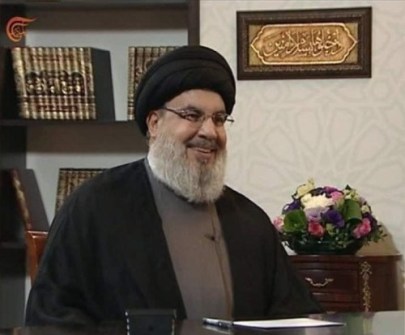
Hassan Nasrallah’s interview after months of silence (Arab press)
The Hizbullah leader’s media appearance was part of the organization’s psychological warfare in response to the huge defeat it sustained when the IDF discovered tunnels infiltrating into Israel during Operation Northern Shield at the end of 2018. Hizbullah’s standing was also hurt by rumors circulating in the Arab world that Nasrallah’s health condition is precarious.
During the long TV interview, Nasrallah sought to disprove the rumors about his poor health. He laughed, joked, and admitted that he lost weight, but his health situation is excellent, and all of the reports about his illness were false.
Operation Northern Shield and reports that Hassan Nasrallah was seriously ill pushed him into a corner, and he was compelled to make a public appearance and provide his supporters with explanations. He also used the broad public platform to transmit messages to Israel and the Arab world.
Nasrallah’s messages in his interview with the Al Mayadeen channel can be summarized as follows:
The Hizbullah leader was compelled to return to the media stage due to the vacuum that was created, as no other leader has appeared in his place, and due to important developments on Lebanon’s border with Israel.
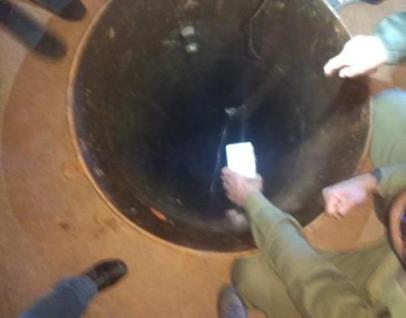
One of the Israeli-drilled holes that intersected the Hizbullah tunnel tens of meters below the surface.
The discovery of the tunnels infiltrating into Israel’s territory struck an operational and morale blow to Hizbullah. The tunnels were crucial to a surprise plan that Hizbullah had worked on for years before the IDF exposed it. In the interview, Nasrallah tries to minimize the importance of the discovery of the tunnels by the IDF and to convince his viewers that the plan to conquer the Galilee is still relevant, but it is clear that he has lost the important element of surprise.
Through the interview on the Al Mayadeen channel, the Hizbullah leader is attempting to “construct” a new policy of deterrence toward Israel. Reports on the interview with him appeared several days earlier in the media to create high viewer ratings and media support for his statements.
There were no surprises in Nasrallah’s interview about his state of health or the tunnels. His reactions were what had been expected on both fronts.
Nasrallah does not intend to escalate the security situation with Israel from inside Lebanese territory. He hinted that if Israel attacks his men inside Syrian territory, “Hizbullah will react in accordance with the circumstances.”
Apparently, Hizbullah is preparing a new front, which Iran intends to open against Israel from inside Syria, via the Golan Heights. This is where the danger of a conflict between Israel and Hizbullah lies. Israel does not intend to take any action against the organization inside Lebanon, but it will not sit quietly if Hizbullah dares to attack Israeli targets on the Golan Heights.
Source: Rouhani: Iran facing ‘greatest pressure,’ economic sanctions in 40 years | The Times of Israel
Iranian leader vows to ‘endure’ crisis blamed on US, says 2015 nuclear accord was ‘highest political pride in recent centuries’
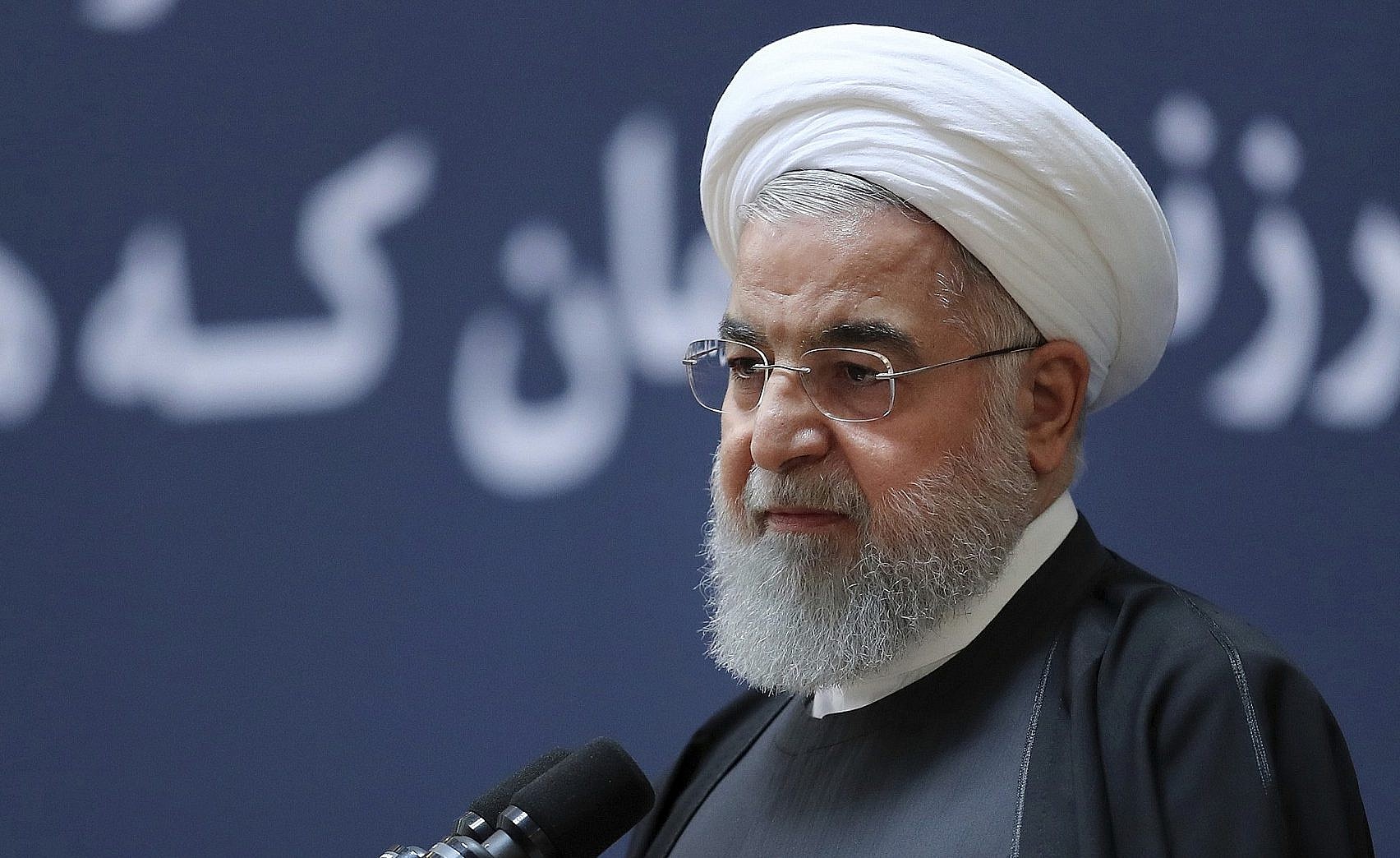
Iran currently is confronting “the greatest pressure and economic sanctions of the past 40 years,” the Islamic Republic’s President Hassan Rouhani said Wednesday, addressing crippling sanctions renewed by Washington last year.
In comments published on his official website, Rouhani stressed that “our problems are mainly due to pressure by the US and its followers, and the government and the Islamic system should not be blamed.”
He vowed that the nation would “endure” outside strong-arming efforts. “The US administration will definitely fail in its latest move against the Iranian nation,” he said. “Nobody can harm us as long as we follow the Supreme Leader.”
Rouhani spoke at a ceremony honoring the Islamic Republic’s first supreme leader, Ayatollah Ruhollah Khomeini, as the country prepares to mark 40 years since the February 1979 Islamic revolution.
In May of last year US President Donald Trump decided to abandon the 2015 nuclear deal and reimpose sanctions on Tehran. The move touched off a record drop in Iran’s currency, prompted an exodus of foreign firms, plunged the nation into a recession and renewed its economic isolation.
Trump called the accord “the worst deal ever” and said it had given the US nothing. The administration bashed the agreement for its sunset clauses that allow certain restrictions on Iran’s nuclear program to expire, its failure to prevent Iranian ballistic missile testing and its continued support of regional terror groups.
Rouhani on Wednesday said “Iran’s highest political pride in [recent] decades and centuries was Iran’s powerful talks with the six major powers, and the victories that were handed over to Iran in various areas in the talks. It will never be lost.”
He asserted that the international community was on Tehran’s side, saying “the entire world is condemning the US conspiracies against the Iranian nation and support Iran in this regard.”
The European Union has condemned Washington’s renewal of sanctions and is working on a legal entity through which businesses could trade with Iran and avoid US sanctions.
However, there have been some indications that European powers are also gravitating toward the US position. Iran’s recent work on launching satellites into space has faced criticism from the West as a possible effort to advance its missile program, since the rockets used in the two programs depend on very similar technology.
The EU has commended Iran for sticking to its commitments under the nuclear deal, but has growing concerns about Tehran’s ballistic missile program, as well as its human rights record, its interference in Middle East conflicts and recent attempted attacks against opposition groups in Europe.
Earlier this month French Foreign Minister Jean-Yves Le Drian said Paris was ready to impose new sanctions on Tehran if talks on its missile program and its regional influence fail to make progress.
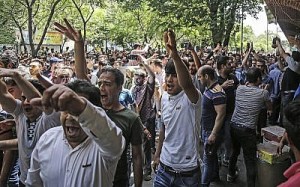
Iran’s economic crisis has led to sporadic protests against the government in the past year.
The protests have seen unusual scenes of demonstrators chanting against continued Iranian spending of billions of dollars on regional proxy wars and support for terrorist groups, which many say has meant less investment in the struggling economy at home.
In recent years, Iran has provided financial aid to Palestinian terror groups Hamas and Islamic Jihad, Lebanon’s Hezbollah, Yemen’s Houthi rebels, and Shiite militias in Iraq. Since the start of the Syrian civil war in 2011, Tehran has poured a reported $6 billion into propping up president Bashar Assad’s government.
Rouhani has blamed the spontaneous demonstrations on “foreign media propaganda,” and has accused the US of waging “an economic war” against Tehran.
Source: US Mideast envoy denounces Palestinian support for Venezuela’s Maduro – Israel Hayom
“Palestinian leadership should be focused on providing a better future for Palestinians, but instead focuses on supporting the morally bankrupt” Venezuelan president, Jason Greenblatt tweets • Hezbollah supports “swindler” Nicolás Maduro too, he says.
|
U.S. Special Representative for International Negotiations Jason D. Greenblatt
|
U.S. Special Envoy to the Middle East Jason Greenblatt on Tuesday condemned the Palestinian Authority’s public show of support for Venezuelan President Nicolás Maduro, whom the United States would like to see replaced by the country’s opposition leader, Juan Guaidó.
“The Palestinian leadership should be focused on providing a better future for Palestinians, but instead focuses on supporting the morally bankrupt Maduro who has stolen Venezuelans’ future and destroyed the Venezuelan economy,” Greenblatt said in a tweet.
Shortly after, Greenblatt tweeted again to note Hezbollah’s support for the Venezuelan strongman.
“Not so strange bedfellows: #[Hezbollah] publicly supports #Venezuela’s Maduro – a terrorist organization and a swindler who has harbored foreign terrorist groups and run Venezuela into the ground. Both are enemies of their people,” he wrote.
On Sunday, Israel joined countries in South America and Europe and recognized Guaidó as the country’s interim president.
Choosing his words carefully and refraining from specifically referring to Guaidó as the country’s new leader, Prime Minister Benjamin Netanyahu appeared in a video saying “Israel joins the United States, Canada, most of the countries of Latin America and countries in Europe in recognizing the new leadership in Venezuela.”
Maduro, who has also garnered support from Russia, has thus far refused calls from the international community to hold flash elections.
Source: Russian deputy FM reiterates commitment to Israel’s security – Israel Hayom
PM Netanyahu meets senior Russian delegation in Jerusalem to discuss situation in Syria and “strengthen the security coordination mechanism between the militaries” • Maj. Gen. (res.) Amos Yadlin: Entire task of removing Iran from Syria falls on Israel.
|
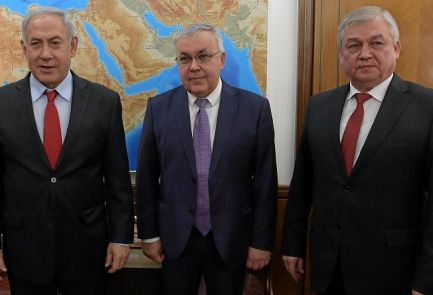
Netanyahu with Russia’s Deputy FM Sergey Vershinin and special envoy for Syria, Alexander Lavrentiev, in Jerusalem, Tuesday
| Photo: Amos Ben-Gershom/GPO
|
Although the Kremlin has contradicted itself about its relations with Iran, Prime Minister Benjamin Netanyahu met with a delegation of senior Russian officials in Jerusalem on Tuesday to discuss the situation in neighboring Syria.
The Prime Minister’s Office said he met with Russia’s special envoy for Syria, Alexander Lavrentiev, and Russian Deputy Foreign Minister Sergey Vershinin.
The talks focused on Iran, Syria and “strengthening the security coordination mechanism between the militaries” to prevent friction, the PMO said.
The Russian officials, the PMO statement added, “reiterated Russia’s commitment to Israel’s national security.”
Israeli officials believe that military pressure on Iran is starting to pay dividends and is deterring the regime in Tehran from expanding its foothold in Syria.
Maj. Gen. (res.) Amos Yadlin, executive director of Tel Aviv University’s Institute for National Security Studies, said on Tuesday that “neither the Russians nor the Americans will get the Iranians out of Syria – the entire task falls on Israel’s shoulders.”
Yadlin added: “Even as Israel pursues this avenue, the goal of removing every last Iranian from Syria isn’t prudent and involves risks, but it’s certainly correct to draw red lines and act in accordance with them. These red lines include the establishment of another Hezbollah on the Golan Heights, the scope and breadth of the Shiite militias [operating in Syria] and Iran’s precision missile program.
“There’s no doubt that the Iranians are far from realizing their intended plan – which not only hasn’t materialized but even the limited presence [in Syria] it has managed to establish is shrinking,” Yadlin said.
Israel has acknowledged carrying out hundreds of airstrikes in Syria, primarily targeting Iranian military targets and suspected shipments of Iranian arms to Hezbollah.
Source: The fight against Iran must not stop – Israel Hayom
Moshik Kovarsky
From the day Prime Minister Benjamin Netanyahu began his second term in office nearly a decade ago, the brunt of his strategic focus has been on Iran. Today we can tentatively say that even if this mission hasn’t been completed, it can be in the not-so-distant future if those tasked with carrying it out aren’t sidetracked.
Beyond the obvious danger posed by Iran – developing nuclear weapons and threatening to annihilate Israel – Netanyahu realized that even Israel’s tactical enemies, Hezbollah and Hamas, are driven, directed and strengthened by Iran.
In the mythological tale of Hydra, the multi-headed monster, Hercules understood that severing one head would only lead to others growing. So he seared the neck after chopping off each head, and thus fell the monster. Netanyahu also understands that undermining Iran, to the point of toppling its hostile regime, is the only way to truly defeat its local proxies.
Meanwhile, global and regional developments – such as the Arab spring, which weakened Israel’s traditional enemies, or the rise of U.S. President Donald Trump, who views world geopolitics through the same prism as Netanyahu – have given the prime minister opportunities his predecessors never had.
Nevertheless, a wise leader knows how to leverage opportunities and simultaneously avoid obstacles – of which there have been plenty. We only need to recall the eight difficult years of the Obama presidency; the electoral pressures on western European countries caused by waves of immigration; and the (temporary) rise to power of the Muslim Brotherhood in Egypt and the Islamists in Turkey.
Netanyahu was among the few who understood as early as a decade ago that the economic front was where Iran would meet its demise. He pushed for sanctions against the ayatollah regime, using both his rhetorical talents and Israel’s magnificent capabilities in the field of intelligence gathering. Exposing Iran’s nuclear archive was derided by the opposition at the time, but made it easier for Trump to withdraw from the suicidal 2015 nuclear deal with Iran and start the current snowball rolling. The airstrikes in Syria and Operation Northern Shield to eliminate Hezbollah’s cross-border tunnels are also tactical victories that serve the strategic purpose – to foment internal chaos within Iran’s military and political system.
At the same time, Netanyahu must face challenges posed by Israeli public opinion. Beyond the legal nuisances the oppositin pursues night and day, he has to contend with criticism from the Right about terror from the Gaza Strip or the evacuation of the Bedouin village of Khan al-Ahmar. We would all like to see an aggressive approach on these matters, as well, but Netanyahu has to bide his time before implementing any long-term solutions on these fronts. If any of these issues stymie the pace of Israeli rapprochement with the large Arab countries – which serves the strategic fight against Iran – then it’s best to postpone them. It stands to reason that when Israel and the Arab world become viable economic partners, their appetite for opposing such actions will be diminished. Moreover, the Palestinian Authority’s expected collapse once PA President Mahmoud Abbas exits the stage could also open the door to a variety of possibilities.
We will probably see a number of significant developments as spring draws near: the exacerbation of Iran’s economic woes; parliamentary elections in Europe will likely see right-wing, pro-Israeli and anti-Iranian parties gain power; Israel’s continued rapprochement with Arab and Muslim countries. Not to mention that enough time remains for the Trump administration to help complete the task. This is a critical juncture for Israel’s most important endeavor, and pursuing it without pause is vital.
Moshik Kovarsky is a high-tech entrepreneur and is active in the field of entrepreneurial education.
Source: Netanyahu holds talks with Russian officials on Syria ‘friction’ | The Times of Israel
Putin envoys in Jerusalem reiterate Moscow’s ‘commitment to the maintenance of Israel’s national security,’ Prime Minister’s Office says

Prime Minister Benjamin Netanyahu held talks Tuesday with Russian officials, seeking to avoid “friction” amid an Israeli campaign of air strikes aimed at keeping Iran from entrenching itself militarily in Syria.
Russian special envoy for Syrian affairs Alexander Lavrentiev and Deputy Foreign Minister Sergey Vershinin met Netanyahu and top Israeli defense officials at the his office in Jerusalem, the Prime Minister’s Office said.
“Among the issues discussed were Iran and the situation in Syria, and strengthening the security coordination mechanism between the militaries in order to prevent friction,” the PMO stated. “The Russian representatives reiterated Russia’s commitment to the maintenance of Israel’s national security.”
Netanyahu was joined by National Security Adviser Meir Ben-Shabbat and Maj.-Gen. Aharon Haliva who heads the IDF’s Operations Directorate.
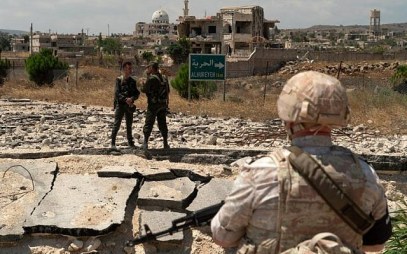
The two Russian officials arrived in Israel on Monday and first met with Foreign Ministry officials.
Israel has carried out hundreds of air strikes in Syria in the past few years against Iranian and Hezbollah targets, and the Jewish state and Russia have set up a “de-confliction” hotline aimed at avoiding accidental clashes.
That mechanism was stretched when a Russian military aircraft was mistakenly shot down by Syrian air defenses after an Israeli raid in September.
Fifteen Russian soldiers were killed and the Russian army accused Israeli pilots of using Moscow’s plane as cover to evade Syrian gunfire, which Israel denied.
As part of its response, Russia announced new security measures to protect its military in Syria, including supplying Syria with an S-300 air defense system and jamming the radars of nearby warplanes.
Netanyahu has told Russian President Putin that Israel is determined to prevent Iran from entrenching militarily in Syria, according to his office.
Both Russia and the Islamic republic, Israel’s arch-enemy, are allies of Syrian President Bashar Assad and have helped his forces inflict numerous defeats on rebels and jihadists.
A former head of the Israeli Air Force on Monday said that only Russia, and not Israeli military might, can fully remove Iran from Syria.
“There is no military action that is going to get Iran out of Syria. Only a diplomatic effort can get Iran out of Syria, and this diplomatic effort has just one address. It’s called Russia,” said Maj. Gen. (res.) Amir Eshel.
In report to Congress, US director of national intelligence warns Islamic Republic undeterred from establishing ‘network’ of Shiite militias in Syria
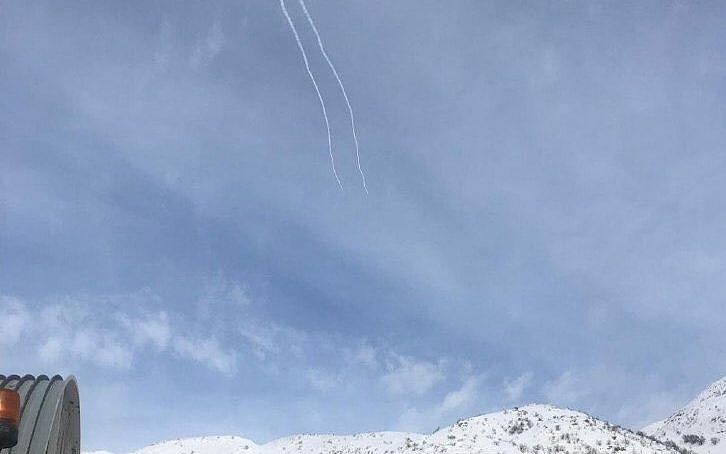
The top US intelligence official warned Tuesday that Iran was likely to attack Israel if the Jewish state continued to bomb the Islamic Republic’s military forces in Syria, despite Tehran not desiring a direct confrontation in the immediate future.
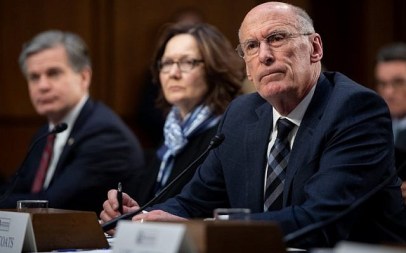
“We assess that Iran seeks to avoid a major armed conflict with Israel. However, Israeli strikes that result in Iranian casualties increase the likelihood of Iranian conventional retaliation against Israel,” Dan Coats, the director of national intelligence, told the US Senate Select Committee on Intelligence.
Coats was presenting the views of the US Intelligence Community — made up of 16 American intelligence services — to the congressional committee as part of the annual Worldwide Threat Assessment.
This analysis by US intelligence services echoed similar concerns voiced within Israel about the increasing likelihood of an Iranian response to the Israel Defense Forces’ regular strikes in Syria.
President Reuven Rivlin, speaking at a conference in Tel Aviv on Monday, also warned that Iran was likely to “intensify its responses” to Israeli strikes against its forces in Syria.
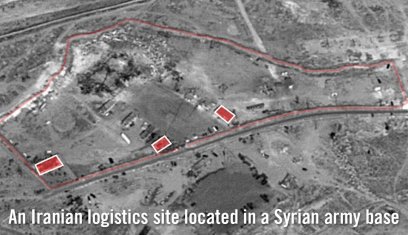
Israel has repeatedly warned that it will not tolerate Iran’s efforts to establish a permanent military presence in Syria, fearing it will serve as another front from which the Islamic Republic can threaten the Jewish state.
In order to prevent Iranian entrenchment in Syria, the IDF has conducted hundreds of strikes against Tehran’s forces in the country, Israeli officials have said.
According to the assessments of the US intelligence services, these air raids, however, have not deterred Iran.
“Iran continues to pursue permanent military bases and economic deals in Syria and probably wants to maintain a network of Shia foreign fighters there despite Israeli attacks on Iranian positions in Syria,” Coats said.
In general, the Israeli strikes have focused on destroying Iranian infrastructure in Syria — bases, vehicles and weapons — and not personnel, former IDF chief Gadi Eisenkot said in an interview shortly before the end of his tenure.
In the assessment, the US director of national intelligence said if Israeli strikes kill more Iranian troops — as reportedly occurred earlier this month — the Islamic Republic is more likely to retaliate forcefully.
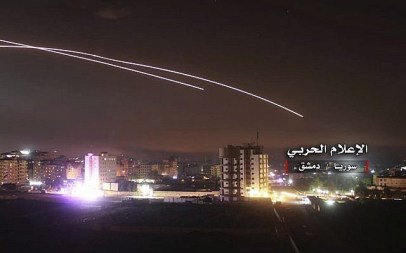
Coats cited as evidence the Iranian attack on the Golan Heights in May 2018, one month after a deadly Israeli strike on the T-4 air base in Syria, which the IDF maintained was being used by Iran, that killed at least seven Iranian soldiers.
In recent months, senior Israeli officials have begun claiming near victory over Iran in Syria, saying that the IDF raids have prevented Iran from establishing a 100,000-member fighting force that it had planned to form along Syria’s border with Israel.
The American assessment presented by Coats on Tuesday appeared to contradict this Israeli view, warning that Iran was not giving up its efforts to establish a permanent military presence in Syria.
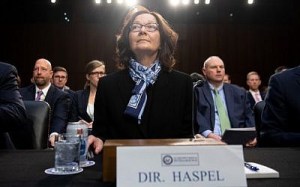
Also on Tuesday, CIA chief Gina Haspel told the Senate Intelligence Committee that Iran was still abiding by the terms of the 2015 nuclear deal despite the US pullout from the multinational agreement.
“At the moment technically they are in compliance” with the Joint Comprehensive Plan of Action (JCPOA), Haspel told the Senate Intelligence Committee.
“I think the most recent information is the Iranians are considering taking steps that would lessen their adherence to JCPOA as they seek to pressure the European to come through with the investment and trade benefits that Iran hoped to gain from the deal,” she said.
Israel and the US have been pushing Europe to impose new sanctions on the Islamic Republic and to strictly enforce the ones already in place on Iran for other non-nuclear nefarious activities.
But, as a number of European companies have pulled out under pressure from US sanctions, those countries have backed an EU effort to set up a special payment system in an attempt to continue trade and business ties with Iran.
AFP contributed to this report.




 anneinpt
 artaxes
 danmillerinpanama
 davidking1530
 Peter Hofman
 Joseph Wouk
 Peter
Peter Louisiana Steve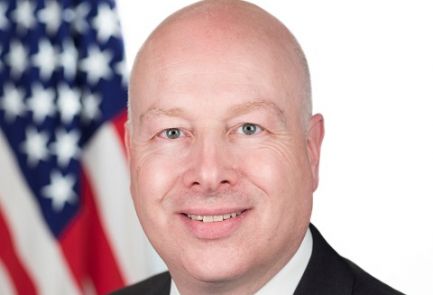
 WarSclerotic
Recent Comments