Archive for January 28, 2019

Three positive developments for Israel

January 28, 2019

Source: Three positive developments for Israel

Jerusalem can breathe a momentary sigh of relief as certain events in Syria and Gaza seem to be working in their favor; but they know better than to take such a situation for granted.
In the Middle East, everything can change from minute to minute, and that’s exactly what happened to Israel this week. It began with a violent escalation in the Syrian arena, continued with a violent escalation in the Gaza arena and tension in both arenas that lasted into Friday. But by Friday night things were taking a turn for the better. Three developments in the last few days – both on the Syrian and Gazan fronts – have significantly improved the security situation from an Israeli perspective.

The first improvement occurred on Friday, when Russian Deputy Foreign Minister Sergei Rybakov went on CNN and announced that Russia is not exactly an ally of the Iranians and that Israel’s security must also be taken into account. Such a statement by the Russian deputy foreign minister can be seen as a diplomatic turning point, in which Moscow corrects course after a stormy few months. For it was just on Tuesday that a spokeswoman for the Russian Foreign Ministry said that Israel’s “arbitrary” attacks on Syria should stop. Three days later, and the same Foreign Ministry in Moscow – albeit via a higher rank than the spokeswoman – is singing from a new hymn sheet.

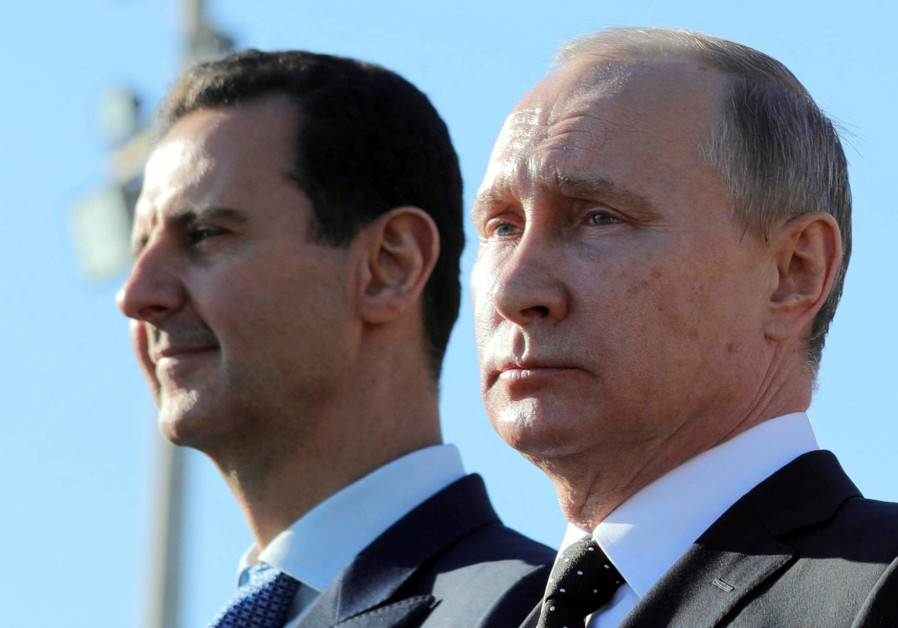
Vladimir Putin and Bashar Assad in Latakia, Syria (Photo: AP) (Photo: AP, Presidential TV)

Vladimir Putin and Bashar Assad in Latakia, Syria (Photo: AP)

This aboutface is down to the fact that — as curious as it sounds — Russia needs Israel more than it needs Iran. The Russians have recently come to the realization that Israel is willing to go to the wire to thwart Iranian consolidation in Syria, the plan to improve Hezbollah’s precision missiles in Lebanon, and the Iranian forces in Syria. The Israeli decision to end its veil of ambiguity over its Syria strikes definitely contributed to this realization.

The Russians have apparently come to the conclusion that the Iranians are dragging Israel into attacks in Syria, which could hamper Russia in fulfilling its strategic goal of stabilizing Bashar Assad’s regime and starting to rebuild the war-battered country. The Russians are supposed to benefit from both the economic and political rehabilitation of Syria not become embroiled in a war between Israel and Iran.

Poking the bear

What really matters is that the Iranians need Russians far more than the Russians need the Iranians, not just regarding the civil war in Syria, but also the new sanctions imposed by the United States when it abandoned the nuclear agreement. Russia is the only country that allows Iran to export oil through it, while the other countries are barely doing so once the US decided to stop the sanction exmeptions it gave to eight states that buy Iranian oil. Russia is the only one of the eight countries to announce that it will continue to buy oil from Iran, and even sell it on the world market.

Meanwhile the European countries, which initially demonstrated a desire to help export Iranian oil despite US sanctions, are now abandoning Tehran one by one. Moreover, France, Britain, Germany, and other EU members have told the Iranians that if they do not stop developing long-range ballistic missiles, they will impose their own sanctions. In other words, in a few weeks’ time Iran will be alone with the Russians, and its economy will largely depend on Russian goodwill.

Vladimir Putin and Iranian President Hassan Rouhani (Photo: MCT)

Vladimir Putin and Iranian President Hassan Rouhani (Photo: MCT)

The Kremlin apparently carried out a speedy situation assessment and decided on a change of course in the Mideast. While the Russian Foreign Ministry and the Russian military establishment do want to limit Israel’s freedom in the skies, the Kremlin thinks that the Iranians have behaved badly of late. What apparently pushed the Russians into shifting their stance were reports that Qassem Suleimani, commander of the Quds Force of the Iranian Revolutionary Guards, was spotted about 10 days ago on a tour in southern Syria, some 40 kilometers from the Israel-Syria border on the Golan Heights.

This was a blatant violation of Iran’s commitment to Russia, and Putin’s public declaration that the Iranians and their proxies would keep 80 kilometers from the Israeli border. Israel gave Russia public proof that the Iranians had broken their promise, which Putin apparently did not like that at all. He decided, therefore, against the advice of his military and diplomats, to let the Iranians know that they had to meet their commitments. Ultimately, he decided that Russia does not approve of the Iranian entrenchment in Syria.

The announcement that, “Iran is not an ally of Russia in Syria” is a rather blunt u-turn in the pro-Iranian policy that the Russians adopted since September 2018, when a Russian plane was shot down by Syrian anti-aircraft missile during an Israeli strike.

A base for success

Another positive development from Israel’s point of view, also in the northern arena, is the Foreign Policy report that the US has decided to leave a small force at the al-Tanf base on the Syrian-Iraqi border, close to the Jordan frontier.

This site is actually an airport and the base of operations for US and UK special and air forces. Its main importance is its proximity to the central road leading from Baghdad to Damascus and from there to Lebanon. It is one of the two main arteries through which the Iranians have attempted to open a land corridor from Tehran to the Damascus area via Iraq, and from Damascus on to Lebanon.

American troops in Syria (Photo: AP) (Photo: AP)

American troops in Syria (Photo: AP)

The presence of the Americans and the British at the al-Tanf base allows the Western Allies to control the traffic along the main road, and prevent the Iranians from using the road freely as part of their prospective land. US President Donald Trump’s decision to leave the al-Tanf base intact, with a small number of troops deployed there, means that the land corridor will still be blocked, which is certainly good news for Israel.

In the IDF, there was a real fear that the Americans would quit this base and the entire ground corridor would be open to the Revolutionary Guards to transfer people and weapons to Syria and Lebanon. It is reasonable to assume that Trump’s decision to leave the base active stems not only from pressure from Israel but Jordan and Saudi Arabia too.

Money talks

The third positive development for Israel is the agreement reached between Qatar and the United Nations with Hamas and the other Palestinian organizations for the transfer of Qatari money. Not only will money be transferred to Hamas, but most of the funding will be used by the UN to bankroll humanitarian projects throughout the Strip. The money means that Hamas can also bolster its own image and avoid any confrontation with other organizations in the Gaza Strip, while showing that it will not sell the resistance in exchange for its employees’ salaries

.Palestinians in Gaza queue for funds donated by Qatar

Palestinians in Gaza queue for funds donated by Qatar

Israel can also claim that it will not pay protection money to Hamas and buy quiet at the border fence with Qatari money. We still need to see how this whole mechanism will work, but it is clear that the United Nations is the conduit through which humanitarian assistance should be provided to the Gaza Strip.

Hamas may have proven that it is less corrupt than Mahmoud Abbas’ Fatah movement, but it does not know how to govern or manage the Gaza Strip. Fatah and the Palestinian Authority in the West Bank, on the other hand, have proven that they know how to govern and more or less manage civilian matters for the benefit of the population. It is difficult to say which is worse — a corrupt organization like Fatah but which has governance skills, or a less corrupt organization like Hamas, which has no ability to govern the Gaza Strip which it controls by force.

The only thing Hamas really knows how to do is take action against Israel, and it uses the citizens of the Gaza Strip for that purpose. It is fair to say, therefore, the transfer of funds with the help of the UN certainly benefits the security of Israel and the calm in the Gaza area.

Qatari envoy Mohammed al-Emadi in Gaza

Qatari envoy Mohammed al-Emadi in Gaza

One must remember, however, that just as the situation on the ground has shifted, it could all shift back again within the space of a day or even just a few hours.Israelis live in an unstable region where many actors, including superpowers both large and regional, are constantly working to promote their own interests. In such a situation, stability is a scarce resource in the Middle East. Just as Israel should never rest on its laurels when things go well, it must also never panic when things take a turn for the worse on security. Israelis may live in a rough neighborhood but their home is well-protected.

The Persian Gulf War’s Legacy for Israeli Strategy in Syria 

January 28, 2019

Source: The Persian Gulf War’s Legacy for Israeli Strategy in Syria » Mosaic

In addition to its military buildup in Syria, and its longstanding presence in Lebanon, Iran has begun sending medium-range missiles to its Shiite proxy militias in Iraq—which could be used to retaliate against future Israeli strikes on Iranian infrastructure in Syria. Alex Fishman explains the dilemma this move creates for the Jewish state:

[M]issile fire from Iraq would not give Israel just cause to attack Syria or Lebanon. [Yet a retaliatory] attack on Iraq requires coordination with the U.S., which has already informed Israel that any military action it takes in Iraq would endanger the lives of Americans protecting the Baghdad regime. It would also require coordination with neighboring countries such as Jordan and Saudi Arabia to allow the Israel Air Force warplanes to fly in their airspace. It’s obvious these countries will [be reluctant] to cooperate openly with Israel in attacking a neighboring Arab nation.

This threat reminds Fishman of Israel intelligence’s discovery in April 1990—before the Iraqi invasion of Kuwait—of Scud missiles positioned in the same part of Iraq. When, in January of the following year, Saddam Hussein began firing these at Israeli cities, the IDF considered responses ranging from attacks on Iraqi shipping to the intensive bombing of Baghdad, together with the insertion of ground troops. But a combination of operational uncertainty and U.S. pressure prevented Jerusalem from responding, leaving repercussions to this day:

In total, some 40 missiles were fired from Iraq, most of them at the [northern] Dan region. Israel didn’t respond, and it is paying the price in psychological deterrence to this very day. The enemy learned Israel’s Achilles’ heel. Even Hamas [now] dares to launch rockets at Tel Aviv, and still remains standing. The Gulf War created the “ethos of restraint,” which in the years that have passed has become a doctrine. . . .

Today, as [the new IDF chief-of-staff] Aviv Kochavi prepares the army for the post-civil-war era in Syria, he must take into account the fact that Israel will always be subject to political pressure from a power that would deny it freedom of action—whether it is the Americans in Iran or the Russians in Syria.


Iran says cannot confirm secret talks with France on Tehran’s missile work 

January 28, 2019

Source: Iran says cannot confirm secret talks with France on Tehran’s missile work – Middle East – Jerusalem Post

“There has been no talks, whether secret or not secret, about our missile program with France or any other country.”

BY REUTERS
 JANUARY 28, 2019 10:25
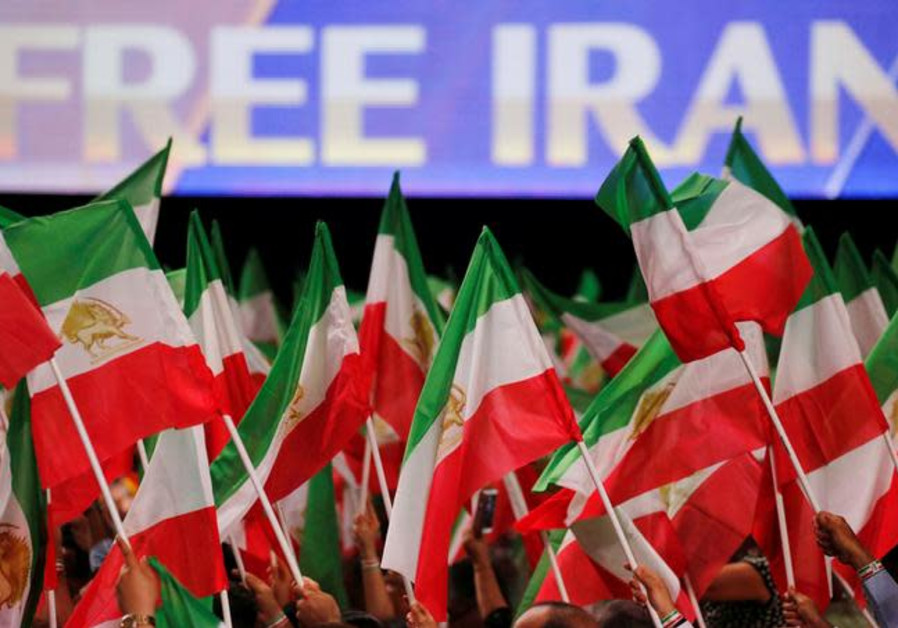
Supporters of Maryam Rajavi, president-elect of the National Council of Resistance of Iran (NCRI)

Iran said on Monday it was not holding talks with France over its ballistic missile development, after Paris said it was ready to impose more sanctions if European attempts to address the program in discussions with Tehran made no progress.

“There has been no talks, whether secret or not secret, about our missile program with France or any other country,” Iranian Foreign Ministry spokesman Bahram Qasemi told a weekly news conference, broadcast live on state TV.

French Foreign Minister Jean-Yves Le Drian said on Friday France was ready to impose further curbs if no progress was made in talks over the program, described by Tehran as purely defensive but seen in the West as a destabilizing factor in a volatile region.

“Our missile program is a defensive program that we only discuss it inside the country. I cannot confirm holding any secret talks with France over our missile program,” Qasemi said, when asked about Le Drian’s remarks.

“We talk about regional and political issues with France … but our missile capability is not negotiable … we have repeatedly said that during our political talks with France.”

A UN Security Council resolution, which enshrined Iran’s 2015 nuclear deal with major powers in 2015, “called upon” Tehran to refrain for up to eight years from work on ballistic missiles designed to deliver nuclear weapons.

Iran says its missile tests are not in violation of the resolution and denies its missiles are capable of carrying nuclear warheads.

US President Donald Trump exited the deal in May and reimposed sanctions on Iran that had been lifted under the pact in return for Tehran curbing its nuclear program.

As the Trump administration accused Iran last year of harboring nuclear ambitions and fomenting instability in the Middle East, the EU sought dialog with Tehran.

At meetings between European and Iranian diplomats last year, Britain, France, Germany and Italy, pressed for gestures on Iran’s role in Syria’s war and for help to end the conflict in Yemen.

But several bilateral talks on the ballistic missile program have yielded no results and France, Britain and Germany are now considering whether to push for sanctions and asset freezes and travel bans on Iran’s Revolutionary Guards and Iranians developing the Islamic Republic’s ballistic missile program, diplomats have told Reuters.

Trump said the deal, which Tehran and other signatories are trying to salvage it, was flawed as it did not address ballistic missiles or Iran’s support for armed proxies in Syria, Yemen, Lebanon and Iraq.

Off Topic:  Venezuela’s self-proclaimed interim president thanks Netanyahu for recognition 

January 28, 2019

Source: Venezuela’s self-proclaimed interim president thanks Netanyahu for recognition | The Times of Israel

Comparing his struggle to Auschwitz liberation, Juan Guaido expresses gratitude to PM for supporting him ‘just as our country is also fighting for its freedom’

Venezuela's National Assembly head Juan Guaido speaks to the crowd during a mass opposition rally against leader Nicolas Maduro in which he declared himself the country's 'acting president,' on the anniversary of a 1958 uprising that overthrew a military dictatorship, in Caracas on January 23, 2019. (Federico Parra/AFP)

Venezuela’s National Assembly head Juan Guaido speaks to the crowd during a mass opposition rally against leader Nicolas Maduro in which he declared himself the country’s ‘acting president,’ on the anniversary of a 1958 uprising that overthrew a military dictatorship, in Caracas on January 23, 2019. (Federico Parra/AFP)

Venezuelan opposition leader Juan Guaido thanked Prime Minister Benjamin Netanyahu late Sunday for recognizing his government earlier that day, while appearing to compare his political struggle with the end of the Holocaust.

“Seventy-four years ago, the Auschwitz concentration camp was liberated, and today, just as our country is also fighting for its freedom, we thank the Prime Minister of Israel Benjamin Netanyahu for the recognition and the support,” Guaido tweeted.

A few hours earlier, Netanyahu had issued a statement declaring Israel’s recognition as Guaido as interim president of the Latin American country.

“Israel joins the United States, Canada, most of the countries of Latin America and countries in Europe in recognizing the new leadership in Venezuela,” his statement read.

Sunday was International Holocaust Remembrance Day, which annually commemorates the liberation of Auschwitz on January 27, 1945, by Soviet troops.

Last week, the administration of US President Donald Trump reportedly asked Israel to publicly back Washington’s attempt to force the resignation of Venezuelan President Nicolas Maduro and throw support behind Guaido, who has declared himself interim president of the South American country.

Jerusalem was said to have been stalling on an announcement amid concerns the Maduro regime could respond with measures that could imperil members of the Venezuelan Jewish community.

Juan Guaidó

@jguaido

Israel en Español

@IsraelinSpanish

#Israel se une a EEUU, Canadá, la mayoría de los países de América Latina y países de Europa en reconocer el nuevo liderazgo en #Venezuela

Embedded video

Over the weekend, Israeli officials told Channel 13 news that State Department officials had made the request to diplomats at the embassy in Washington DC on Thursday, and that other US allies who have yet to declare their support for either side have also been asked to issue statements in support of Guaido.

Sunday’s announcement by Netanyahu earned immediate praise from US Ambassador to Israel David Friedman, who hailed the Jewish state for “standing with the people of Venezuela and the forces of freedom and democracy.”

Trump’s special envoy for international negotiations, Jason Greenblatt, applauded Jerusalem for its “courageous stand in solidarity with the Venezuelan people.”

Jason D. Greenblatt

@jdgreenblatt45

Benjamin Netanyahu

@netanyahu

Israel joins the United States, Canada, most of the countries of Latin America and countries in Europe in recognizing the new leadership in Venezuela.

While Venezuela once had one of the largest Jewish communities in the region, numbering some 25,000 in 1999, only about 6,000 Jews are believed to remain in the country, with many of the rest having fled to Israel, Canada, the US and elsewhere.

Maduro and his predecessor Hugo Chavez, who broke off ties with Israel in 2009, have both been strident critics of Israel, and some Jewish community leaders have expressed fears of the government stoking anti-Semitism.

The US has been pushing for the international community to back Maduro’s ouster.

Jewish kids outside a Caracas school in 2005 (Photo credit: Serge Attal/Flash90)

Jewish kids outside a Caracas school in 2005 (Photo credit: Serge Attal/Flash90)

At the United Nations on Saturday, US Secretary of State Mike Pompeo urged all nations to end Venezuela’s “nightmare” and support Guaido.

“Now is the time for every other national to pick a side,” Pompeo told the Security Council. “No more delays, no more games. Either you stand with the forces of freedom, or you’re in league with Maduro and his mayhem.”

France and Britain on Saturday joined Spain and Germany in turning up the pressure on Maduro, saying they would follow the US and others in recognizing Guaido unless Venezuela called new presidential elections within eight days.

On Thursday, high-ranking Palestine Liberation Organization official Ahmad Majdalani lashed out at the Trump administration for its support of Guaido, saying it was “an extension of the Trump administration’s policy of denying the will of peoples.”

In this Nov. 6, 2014 file photo, Palestinian students attend a welcome ceremony at the Simon Bolivar airport in Maiquetia, Venezuela. The Palestinian students were greeted like celebrities upon arrival in Caracas. President Nicolas Maduro played up their symbolic importance during an address broadcast across the country. (AP Photo/Ariana Cubillos, File)

The US said last week it would use the “full weight” of US economic and diplomatic power to push for the restoration of Venezuela’s democracy and backed Guaido when he declared himself interim president last Wednesday in a defiant speech before masses of anti-government demonstrators who took to the streets to demand Maduro’s resignation.

The council meeting came a day after Guaido vowed to remain on the streets until his country has a transitional government, while Maduro dug in and accused his opponents of orchestrating a coup.

“They can cut a flower, but they will never keep spring from coming,” Guaido told supporters Friday, alluding to a phrase from the Chilean poet Pablo Neruda.

In a press conferences, Guaido urged his followers to stage another mass protest next week, while Maduro pushed his call for dialogue.

Each man appeared ready to defend his claim to the presidency no matter the cost, with Guaido telling supporters that if he is arrested they should “stay the course” and peacefully protest.

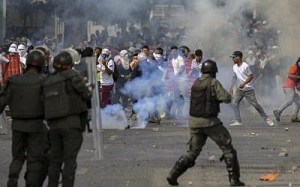
Opposition demonstrators clash with security forces during a protest against the government of President Nicolas Maduro on the anniversary of the 1958 uprising that overthrew the military dictatorship, in Caracas, Venezuela, on January 23, 2019. (Yuri Cortez/AFP)

But the standoff could set the scene for more violence and has plunged troubled Venezuela into a new chapter of political turmoil that rights groups say has already left more than two dozen dead as thousands take to the street demanding Maduro step down.

Guaido took a symbolic oath of office Wednesday proclaiming himself the nation’s constitutional leader on grounds that Maduro’s re-election last year was fraudulent — an allegation supported by the US, the European Union and many other nations.

Guaido’s move is the most direct challenge to Maduro’s rule despite years of protests at home and international efforts to isolate the regime amid a growing humanitarian crisis fueled by falling oil prices and government mismanagement.

AP contributed to this report.


Iran’s military chief warns his forces could shift to ‘offensive approach’ 

January 28, 2019

Source: Iran’s military chief warns his forces could shift to ‘offensive approach’ | The Times of Israel

Mohammad Bagheri indicates Tehran preparing to change up military tactics; ground forces’ commander says his troops ready for ‘forward-moving and offensive’ operations

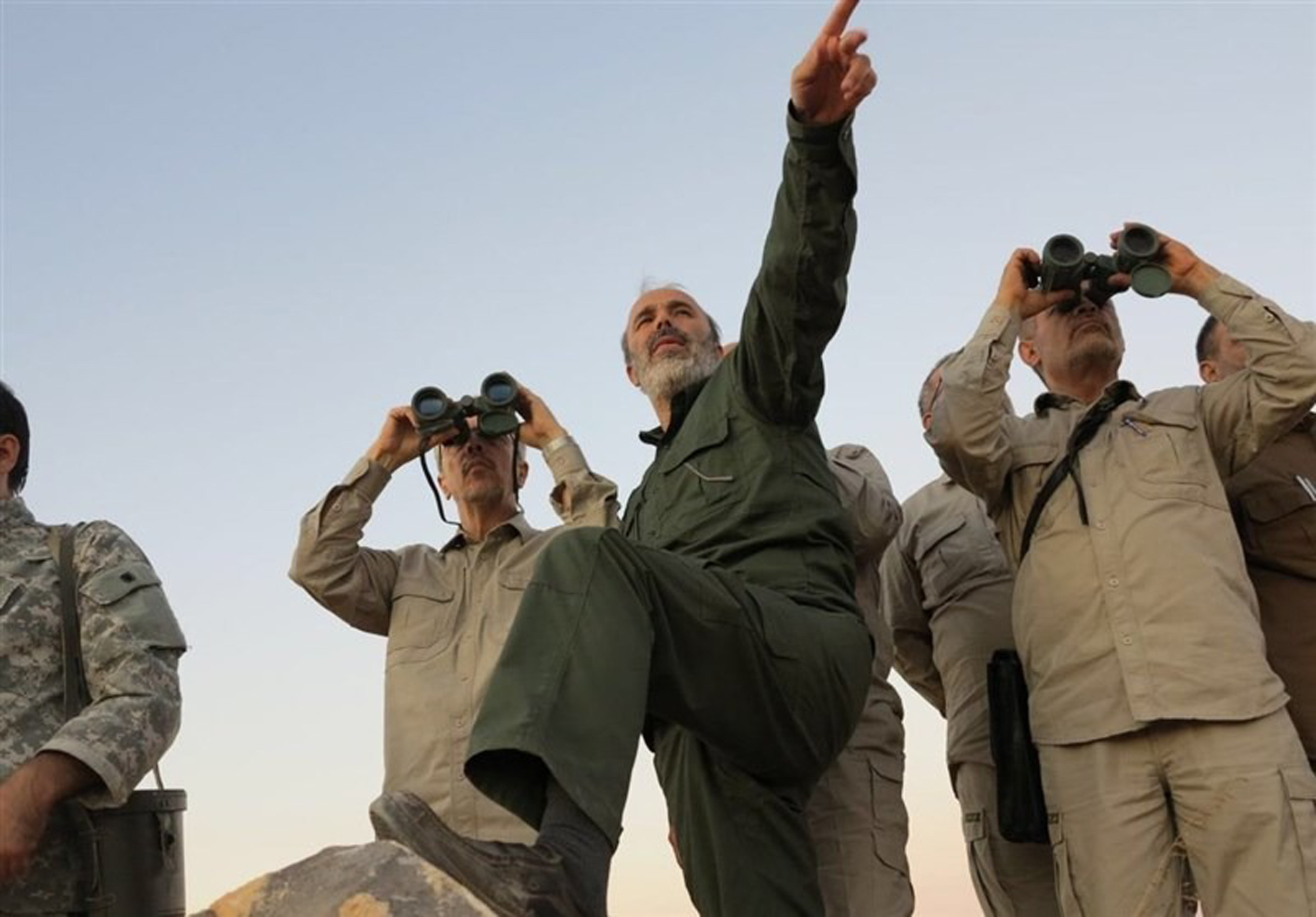
The government-controlled Syrian Central Military Media shows Iran's army chief of staff Maj. Gen. Mohammad Bagheri, left, looks into binoculars as he visits and other senior officers from the Iranian military on a front line in the northern province of Aleppo, Syria, October 20, 2017. (Syrian Central Military Media, via AP)

The government-controlled Syrian Central Military Media shows Iran’s army chief of staff Maj. Gen. Mohammad Bagheri, left, looks into binoculars as he visits and other senior officers from the Iranian military on a front line in the northern province of Aleppo, Syria, October 20, 2017. (Syrian Central Military Media, via AP)

Iran’s military chief of staff indicated on Sunday that Tehran was preparing to adopt offensive military tactics to protect its national interests.

“Among the country’s broad strategies, there is a defensive strategy. We defend the independence and territorial integrity and national interests of the country,” Gen. Mohammad Bagheri was quoted as saying by Press TV.

He said Iran did not intend to seize foreign territory, but “to protect our national achievements and interests, we may adopt an offensive approach.”

Separately on Sunday, the commander of the Iranian Army’s Ground Forces, Brig. Gen. Kiumars Heidari, said his troops had transformed into a “forward-moving and offensive” force.

“To protect Iran, the armed forces no longer need asymmetric approaches, and we are at a stage where we can defend our homeland… by using good offensive approaches,” he said, according to Press TV.

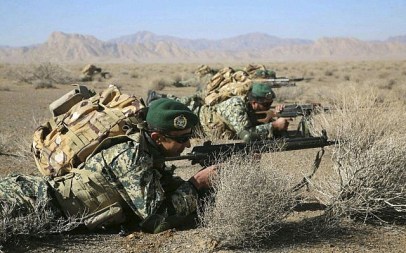
In this photo provided January 25, 2019, by the Iranian Army, soldiers take position in an infantry drill in the central Isfahan province, Iran. (Iranian Army via AP)

The announcements by top Iranian brass comes days after the Islamic Republic held its annual infantry drill, involving some 12,000 troops, fighter jets, armored vehicles and drones.

The exercise, which Iranian officials dubbed as “war games,” involved newly developed rapid redeployment units, and focused on combat against enemies and armed militants, Reuters reported on Thursday.

General Heidari told state TV last week the exercise exemplified Iran’s military capabilities, and demonstrated to its enemies that they would be dealt a “rapid and crushing blow” if they attacked the Islamic Republic, Reuters reported.

Iran regularly holds exercises to display its military preparedness and has vowed to respond strongly to any attack by Israel or the United States, both of which view it as a regional menace.

Israel sees Iranian entrenchment in Syria as a major threat and has carried out hundreds of airstrikes in Syria to thwart Tehran and Iranian proxy group Hezbollah.

Most airstrikes have passed with no retaliation. Last week, Iran fired a missile from Syria at Israel following a rare daytime strike near Damascus. It was intercepted by an Iron Dome air defense battery.

Jerusalem has recently begun to open up about the years-long campaign in Syria, a move some have said may push Iran, Hezbollah or Syria into responding.

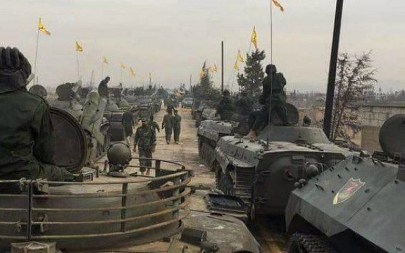
Hezbollah parading its military equipment in Qusayr, Syria, November 2016. (Twitter)

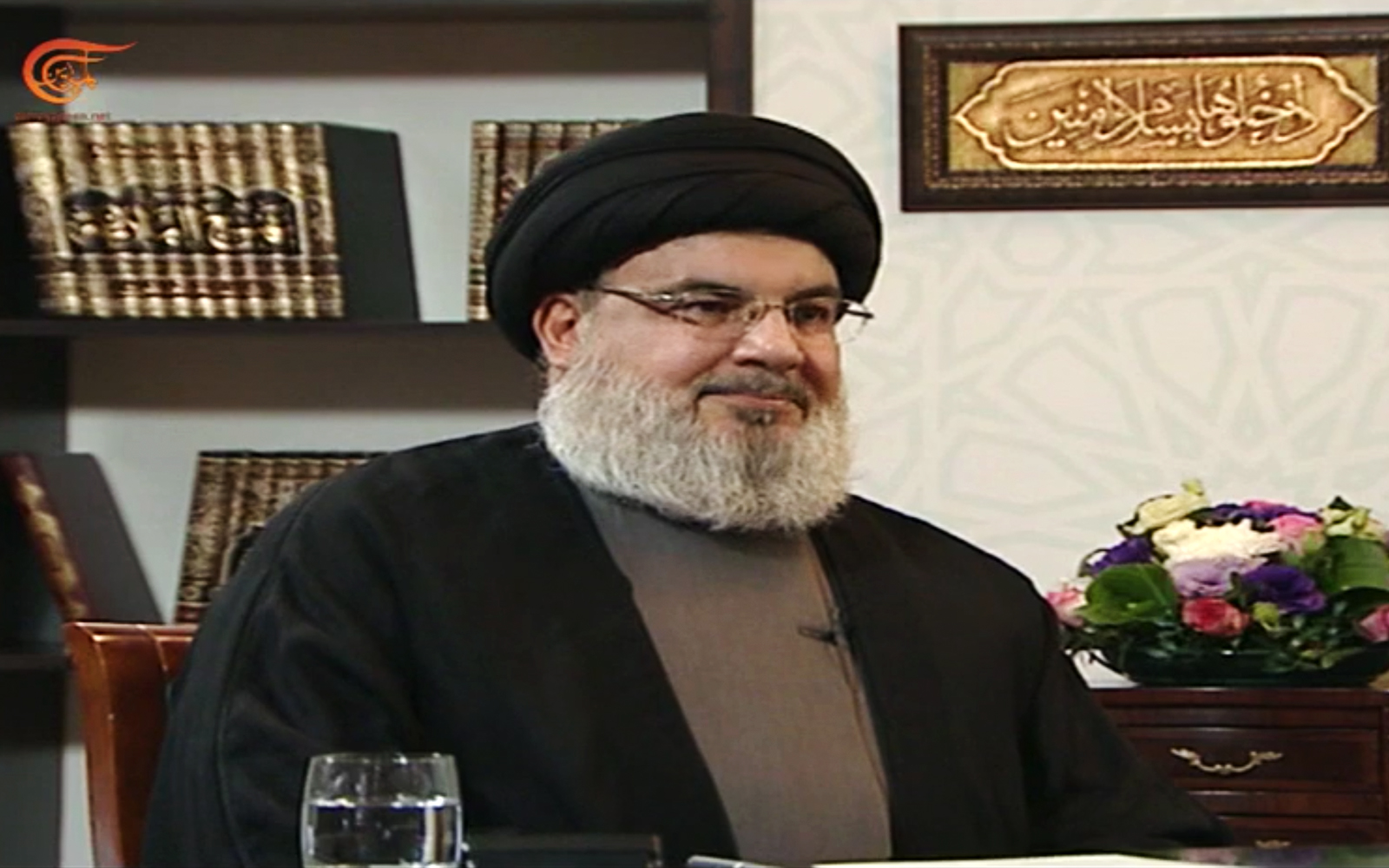
In an interview with Beirut based al-Mayadeen television on Saturday, Hezbollah chief Hassan Nasrallah warned Prime Minister Benjamin Netanyahu that Syria and Hezbollah could “at any moment” decide to “deal with … Israeli aggression.”

“Don’t make an error of judgement and don’t lead the region towards war or a major clash,” Nasrallah said, adding that Hezbollah possessed “high-precision missiles” capable of hitting anywhere in Israel.

On Sunday, Netanyahu hit back at Nasrallah’s remarks, warning the Hezbollah leader of the IDF’s “lethal” power.

Netanyahu said Nasrallah was “embarrassed” by Israel’s recent operation to destroy Hezbollah’s cross-border tunnels, and said the paramilitary group was struggling financially in the wake of sanctions imposed on its sponsor Iran.

“Believe me, Nasrallah has good reasons not to want to feel the might of our arm,” Netanyahu said at the start of the weekly cabinet meeting.

Israel has repeatedly warned that it will not allow Iranian or Hezbollah troops to maintain a permanent presence in postwar Syria.


Trump warns Europeans not to try to evade Iran sanctions

January 28, 2019

Source: Trump warns Europeans not to try to evade Iran sanctions | The Times of Israel

EU pushes forward with plan to set up alternative money channel with Tehran, hopes to announce launch ‘very soon’

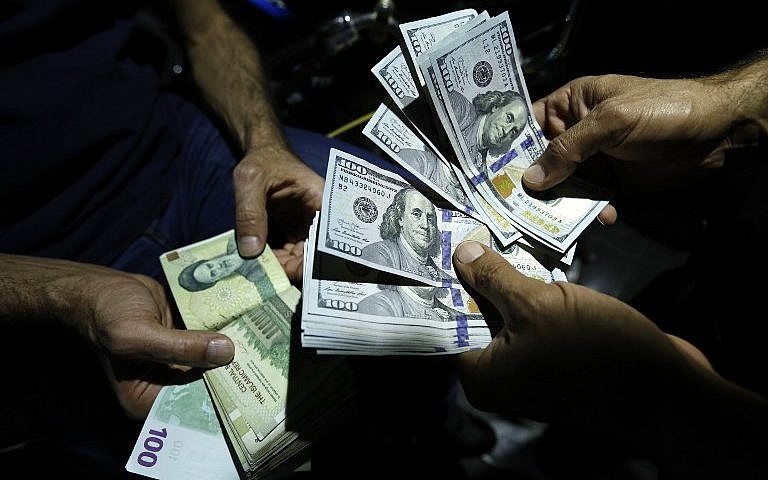
In this photo from August 8, 2018, a man exchanges Iranian Rials for US Dollars at an exchange shop in the Iranian capital Tehran. (AFP Photo/Atta Kenare)

In this photo from August 8, 2018, a man exchanges Iranian Rials for US Dollars at an exchange shop in the Iranian capital Tehran. (AFP Photo/Atta Kenare)

WASHINGTON — The Trump administration is closely eyeing efforts in Europe to set up an alternative money payment channel to ease doing business with Iran and avoid running afoul of sanctions the US has levied on the Islamic Republic.

The White House is putting the Europeans on notice, saying that if they try to do an end-run around US sanctions on Iran, they will be subject to stiff fines and penalties. Unfazed, the European Union is marching forward with the plan, which, if implemented, could further strain trans-Atlantic relations.

A spokeswoman for EU foreign policy chief Federica Mogherini said preparations for the alternative system were “at an advanced stage.”

“I hope that we can announce the launch very soon,” Maja Kocijancic told reporters late last week in Brussels.

Getting out ahead of a possible announcement, a senior administration official told The Associated Press on Friday that the US will fully enforce its sanctions and hold individuals and entities accountable for undermining them. The official spoke on condition of anonymity to discuss the issue.

“The choice is whether to do business with Iran or the United States,” Sen. Tom Cotton (Republican-Arkansas), told the AP. “I hope our European allies choose wisely.”

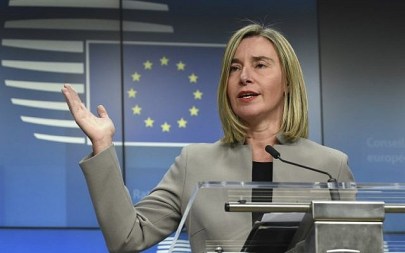
High Representative of the European Union for Foreign Affairs and Security  Policy Federica Mogherini gives a joint press conference during a Foreign Affairs Ministerial meeting at the EU headquarters in Brussels on January 21, 2019. (John THYS / AFP)

The US joined China, France, Germany, Russia and Britain in signing a pact with Iran in 2015 that offered to lift economic sanctions in exchange for Tehran’s pledge to rein in its nuclear weapons program.

US President Donald Trump called it a “horrible, one-sided deal.” He pulled out of the pact last year and restored punishing American sanctions on Iran. Tehran, which denies wanting nuclear weapons, continues to abide by the agreement, and the remaining five nations in the pact are trying to keep it intact.

Restoring the sanctions regime is part of the Trump administration’s “maximum pressure campaign” on the Iranians to force them to radically alter their policies on developing ballistic missiles, supporting regional terror groups and violating human rights.

The US has many concerns about the alternative payment system, according to an outside Trump administration adviser. The adviser spoke on condition of anonymity to discuss the key US worries.

Long-term, the US worries that the alternative money payment system could become successful enough to compete with the international bank transfer system known as SWIFT. The fear is that it could eventually supplant SWIFT as the leading global institution for financial institutions to send and receive information about banking transactions.

Secondly, the US is concerned that other countries might try to route transactions through the European system just to circumvent US sanctions, the adviser said. Thirdly, while the Europeans have signaled that the alternative money transfer system would be used only for humanitarian transactions, the US is suspicious that it could be used for non-humanitarian transactions to evade US sanctions, the adviser said.

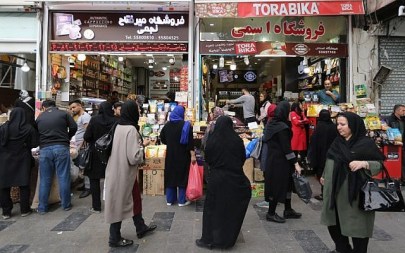
Iranians shop at the grand bazar in the capital Tehran on November 3, 2018. (ATTA KENARE / AFP)

“We should oppose efforts to create foreign financial channels that Iran could use to circumvent America’s maximum pressure campaign against it, especially when humanitarian exceptions are already in US sanctions laws,” Sen. Marco Rubio, (Republican-Florida) told the AP.

As the administration prepares for the potential fallout from the possible the European move, it is pressing ahead with its sanctions campaign against Iran and preparing to co-host with Poland next month a conference that will focus on combating Iranian threats.

On Thursday, Treasury imposed sanctions on two Iran-backed militias in Syria and on Qeshm Fars Air, an Iranian civilian airline it accuses of ferrying weapons and personnel to Syria to support President Bashar Assad’s government. The sanctions block any assets those targeted might have in US jurisdictions and bar Americans from doing business with them.

At the same time, the State Department told Congress earlier this month that it would waive some Iranian sanctions to allow US companies to sell spare parts to Iranian airlines, which need them to operate aging, American-built Boeing jets.

The waivers raised questions on Capitol Hill because some lawmakers are weighing legislation to specifically target Iran’s civilian aviation sector. And Iran hawks outside the administration have expressed concern too.

Sen. Marco Rubio (Republican- Florida), center, arrives for a news conference at the Capitol in Washington, March 7, 2018. (J. Scott Applewhite/AP)

Mark Dubowitz, the chief executive of the Foundation for the Defense of Democracies, said Iran’s aviation sector is being used by the Iranian Revolutionary Guard Corps, a branch of the Iranian military that has ties to terrorist networks, which Iran uses to expand its influence in the region and abroad.

“What effective controls does the administration have in place to ensure that the aircraft receiving these licensed services are not facilitating Iran’s support for these destructive activities?” he asked.


The ‘Russian bear’s’ juggling act in Syria 

January 28, 2019

Source: The ‘Russian bear’s’ juggling act in Syria – Middle East – Jerusalem Post

“The Russian estimate about Syria was wrong from the beginning but the military convinced Putin that it would be a very quick operation.” former Kremlin adviser Alexander Nekrassov said.

BY CHARLES BYBELEZER/THE MEDIA LINE
 JANUARY 28, 2019 00:57
The 'Russian bear's' juggling act in Syria

Russia stormed back into the Middle East in 2015 riding a proverbial high-horse to the rescue of Bashar al-Assad’s then-crumbling regime in Syria. More than three years later, Moscow’s predicament perhaps is better depicted by the circus-like image of a Russian Bear pedaling a tricycle while juggling the competing interests of countries whose apparent irreconcilability accounts for the absence of order now desperately being sought.

“The Russian estimate about Syria was wrong from the beginning but the military convinced [President Vladimir] Putin that it would be a very quick operation. This is a multi-sided conflict with complex and unpredictable developments and Moscow was bound to get bogged down,” former Kremlin adviser Alexander Nekrassov told The Media Line.

“The whole adventure was surprising given that Putin has a much bigger problem—ten times larger—in Ukraine. The Russian army should have learned from its wars in Afghanistan and Chechnya that the type of enemy it’s fighting in Syria cannot be totally defeated. Presently, there is no coherent plan other than to respond to incidents and try to save face despite the disastrous situation.”

The intricacy of Russia’s conundrum—that is, seemingly impossible balancing act—was evidenced last week by the intersection of events involving all major players in Syria. The cascade began Sunday when Iran’s Quds Force responded to a rare Israeli day-time strike in and around Damascus by firing a powerful missile towards the Mount Hermon ski resort. While intercepted by the Iron Dome defense system, the Israel Defense Forces, in turn, launched a significant cross-border operation, reportedly destroying more than three dozen targets and killing up to 12 Iranians in the process.

The altercation came against the backdrop of reports that Quds Force boss Qasem Soleimani earlier this month visited southern Syria and may have pre-planned the rocket attack. This raised the collective eyebrow of Israel’s political and defense establishments given that Russia previously vowed to bar Iranian soldiers and their Shiite underlings from operating within about 60 miles of the shared frontier.

Irrespective, a Russian foreign ministry spokeswoman immediately denounced the “practice of arbitrary strikes on the territory of a sovereign state…[which] should be ruled out.” Russia’s ambassador to Israel echoed the sentiment while suggesting that Jerusalem’s recent policy of claiming responsibility for attacks in Syria is politically-motivated and connected to the April 9 elections.

Then, in a total about-face, Russian Deputy Foreign Minister Sergei Ryabkov vehemently rejected even the implication that Moscow and Tehran are allies. In an interview with CNN, he also stressed that the Kremlin “in no way underestimate[s] the importance of measures [read air strikes] that would ensure [the] very strong security of the state of Israel,” adding that upholding this “top priority” is known not only to the Iranians but also to the United States, Turkey and the Syrian regime.

As this was unfolding, Putin hosted his Turkish counterpart, Recep Tayyip Erdogan, in Moscow amid threats by Ankara to annihilate Kurdish YPG units, the ground force most responsible for the demise of Islamic State. The Syrian Kurds—which Erdogan considers an extension of the banned PKK in next-door Iraq—are backed by Washington, Russia’s primary geopolitical foe, which further complicated matters for Moscow by walking back the declared prospect of a complete troop withdrawal from Syria.

Adding to the complexity is that Idlib Province—which Syrian-led forces last year aimed to reconquer until a supposed agreement transformed the region into a “de-escalation zone”—has almost entirely been overrun by the al-Qa’ida-linked Hayat Tahrir al-Sham, raising the specter of another major battle in a sensitive area straddling the Turkish border and Assad’s coastal Alawite stronghold. Finally, Russia’s nightmarish week ended with Hassan Nasrallah—chief of Iran’s Lebanon-based Hizbullah proxy—warning that his terror army, portions of which are stationed in Syria, is liable to begin responding militarily to Israeli air strikes.

Notwithstanding the quagmire, some observers still argue that Russia has not bitten off more than it can chew and that the relatively limited military resources invested in Syria have enabled the Kremlin to project a disproportionate amount of power globally.

“Russia’s goal to stabilize the Assad regime has been quite successful and it is now looking to expand the territory Damascus controls. Meanwhile, Moscow has secured access to a warm-water [military] port in the Mediterranean and created an air force base in the Latakia region,” Yaakov Lappin, a Middle East specialist at the Begin-Sadat Center for Strategic Studies, explained to The Media Line.

“Nevertheless, this was achieved by teaming up with the Iranian axis which is starting to create problems. Russia’s interests are starting to diverge from those of Tehran and there are public signs of this, including the statement by the deputy foreign minister about not being aligned with [the Islamic Republic]. Forcing Iran out of Syria is likely to be Russia’s most difficult challenge as [the mullahs] have no intention of leaving. This also means that the shadow war between Israel and Tehran will continue and might lead to serious consequences.”

Indeed, the combustible status quo that has persisted in Syria for some time can at any point unravel, with Russia primed to bear the brunt of the responsibility. Whatever the result Moscow is liable to learn the hard way what all relevant parties have long known: namely, that peace and quiet is a dynamic as foreign to this region as the Russian Bear was for the better part of four decades.


Ex-IDF chief dismisses Hezbollah claim of more cross-border attack tunnels 

January 28, 2019

Source: Ex-IDF chief dismisses Hezbollah claim of more cross-border attack tunnels | The Times of Israel

Gadi Eisenkot, in first remarks as a civilian, praises Israel’s achievements in fighting Iran and its proxies, defends decision not to attack in Gaza

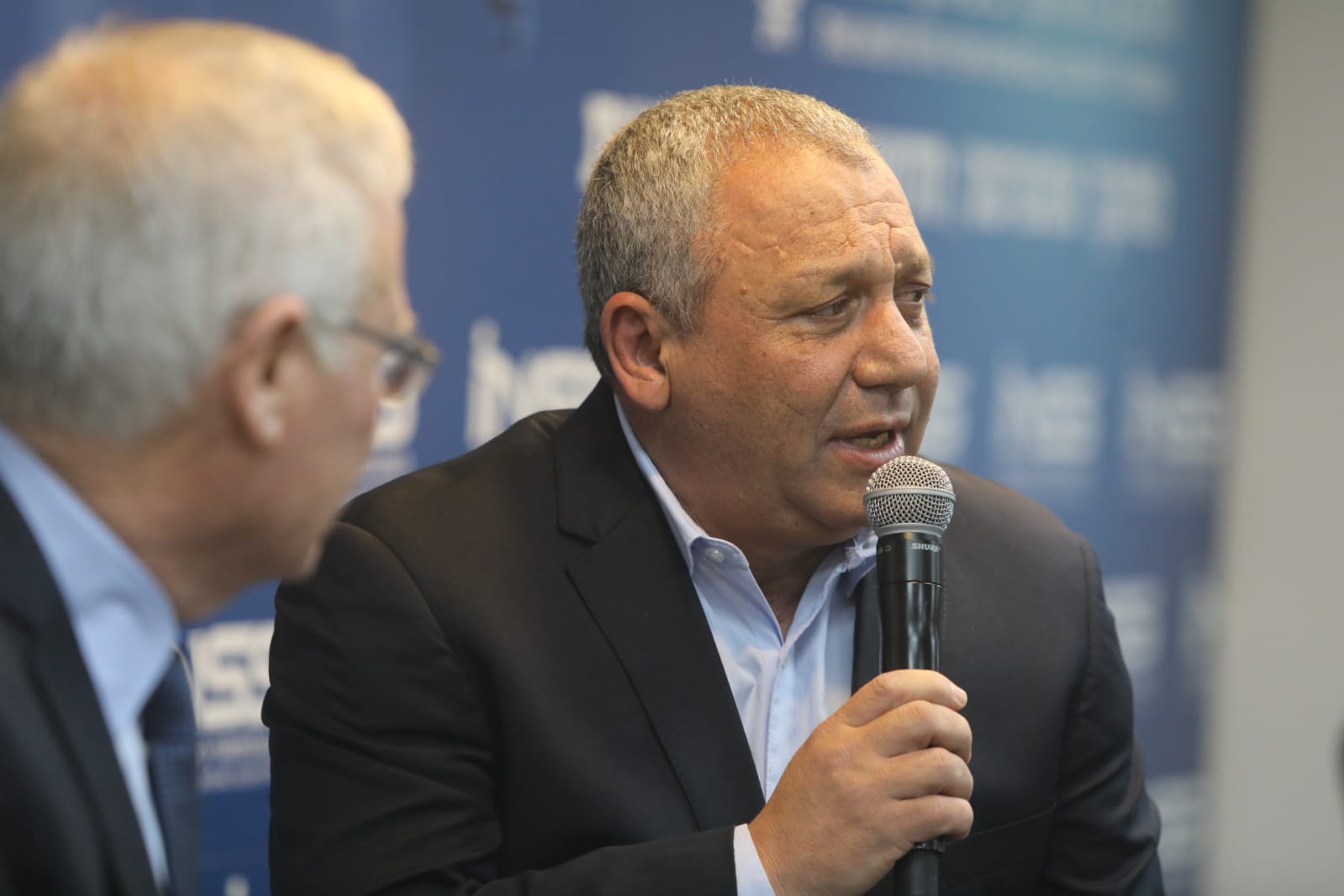
Former IDF chief of staff Gadi Eisenkot, right, is interviewed by Amos Yadlin at the Institute for National Security Studies annual conference in Tel Aviv on January 27, 2019. (INSS)

Former IDF chief Gadi Eisenkot flatly denied on Sunday a claim made by the head of Hezbollah, Hassan Nasrallah, about the existence of additional attack tunnels dug by the Lebanese terror group into northern Israel.

“[Nasrallah’s] claim that there are things we don’t know about is baseless,” Eisenkot said, referring to comments made by the terrorist leader during a three-hour-long interview with the pro-Hezbollah al-Mayadeen TV on Saturday.

On December 4, Israel launched Operation Northern Shield to find and destroy Hezbollah cross-border attack tunnels, and on January 13, the military announced it had found all of the passages and was working to demolish them.

Hezbollah terror group leader Hassan Nasrallah is interviewed on the al-Mayadeen Lebanese television channel, January 26, 2019 (Screen capture)

“We assessed that there was a [tunnel] project like this, and beginning in 2014 we had specific knowledge of the program. When we decided to act, we acted. And in six weeks we destroyed all the attack tunnels into northern Israel,” the former general said.

“We have clear knowledge that this project was foiled,” he said.

Nasrallah, in his interview, had claimed: “The uncovering of the tunnels does not affect by 10 percent our plans to take over the Galilee. If we decide to do it — even if they’ve destroyed the tunnels — can’t we rebuild them?” He also suggested there may be attack tunnels on the Israeli-Lebanese border which Israel has not yet discovered.

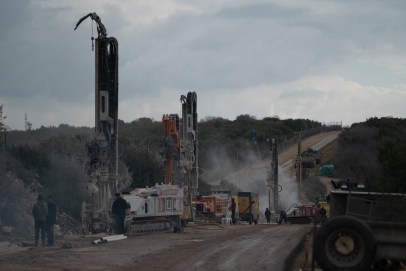
Israeli troops search for attack tunnels dug into Israel from southern Lebanon that the Israeli military believes Hezbollah planned to use in future wars, in January 2019. (Israel Defense Forces)

Eisenkot also confirmed a claim made by Nasrallah that some of the tunnels were over a decade old.

The former IDF chief, whose tenure ended earlier this month, was speaking at the opening event of a three-day annual conference organized by Tel Aviv’s Institute for National Security Studies, in his first public remarks since leaving the military on January 15.

Eisenkot lauded the IDF for countering Hezbollah’s and Iran’s efforts during his tenure, but said that his focus on the northern front left some Israelis feeling that the IDF was not taking as seriously the regular attacks by Hamas and other terror groups in the Gaza Strip and West Bank.

“I compare it to an iceberg,” the former army chief said.

Israeli civilians see the IDF’s operations in Gaza and the West Bank because they are closer to home and more visible, but they are unaware of the military’s efforts to fight Hezbollah, Iran and the Islamic State — the bulk of the army’s activities — because they happen far away and under the cover of secrecy, he said.

Illustrative: A masked Palestinian man launches a balloon loaded with flammable materials toward Israel from the southern Gaza town of Rafah on June 17, 2018. (AFP Photo/Said Khatib)

“But [the average Israeli citizen] judges based only on what they see, and what they see is the campaign in the south with the balloons,” the former army chief said, referring to regular airborne arson attacks from Gaza, which destroyed thousands of acres of Israeli farmland.

Eisenkot boasted that in addition to destroying Hezbollah’s attack tunnels, the IDF had thwarted the group’s plans to develop and manufacture precision-guided missiles.

He said that the military had also prevented Iran and the Lebanon-based Hezbollah from establishing a second front in Syria from which to fight against the Jewish state.

“This project was basically foiled,” he said.

According to Eisenkot, Iran’s Islamic Revolutionary Guard Corps and its expeditionary wing, the Quds Force, had “grandiose” plans to turn Syrian into an Iranian puppet state, but they were blocked by Israel.

Still, he walked back somewhat overly enthusiastic comments made by him and other senior Israeli officials about the military’s victory over Iran in Syria.

“The Iranian military presence still exists, but the gap between the goal that the Quds Force set in 2015-2016 and the reality that exists in the beginning of 2019 is significant,” he said.

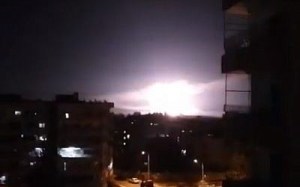
An explosion, reportedly during Israeli airstrikes near Damascus, Syria, on January 21, 2019. (screen capture: YouTube)

Israel has long accused Iran of seeking to establish a permanent military presence in Syria and vowed to prevent such a situation. To that end, the Israeli military has conducted hundreds of airstrikes in Syria against Iranian targets, including last week, after the IDF said Iran launched a medium-range surface-to-surface missile at the Golan Heights.

Eisenkot, who widely discussed Israel’s fight against Iran in media interviews in the final weeks of his tenure, maintained that the country still abides by a policy of “ambiguity,” under which it does not discuss the specifics of its activities in Syria.

The belief among many defense officials in Israel is that this policy gives the Jewish state’s enemies “deniability” and takes the pressure off them to retaliate, lest they lose face by being known publicly to have been attacked by the IDF.

“The ambiguity policy was correct and remains so,” Eisenkot said.

The former army chief credited some of the military’s achievements under his watch to regional developments that allowed the IDF to focus on Iran and cooperate with Sunni Muslim countries with which Israel does not have formal ties.

According to Eisenkot, one of the main threats that brought together the Muslim world was the one posed by the Islamic State, which diverted their attention from fighting Israel.

“This allowed us to divert significant funds and build an operating procedure that allowed us to fight on four fronts while allowing Israeli civilians to go about their lives,” the army chief said.

The retired lieutenant general defended his positions regarding the Gaza Strip, namely that Israel should not launch a full-scale campaign there despite regular attacks along the border and sporadic rocket fire.

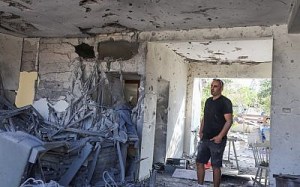
A man stands inside a house that was hit by a rocket fired from the Gaza Strip in the southern Israeli city of Ashkelon, on November 13, 2018 (Nati Shohat/Flash90)

Eisenkot specifically discussed his recommendation not to start a war in Gaza in November after some 500 rockets and mortar shells were launched at southern Israel by terror groups in the coastal enclave.

The attacks from Gaza — the largest ever in terms of the number of projectiles fired — came a day after an undercover Israeli military operation in the Strip was exposed. In the resulting firefight, an Israeli lieutenant colonel was killed, along with 16 Hamas members, according to the IDF.

That operation “was supposed to be a major contribution to our national security,” Eisenkot said. “The soldiers fought bravely and killed those that threatened them, and we succeeded in evacuating the troops.”

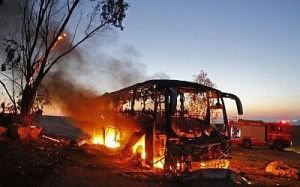
A bus set ablaze after it was hit by a rocket fired from the Gaza Strip, at the Israel-Gaza border near the kibbutz of Kfar Aza, on November 12, 2018. (Menahem KAHANA / AFP)

The day after the failed operation, an anti-tank guided missile was fired at a bus along the Gaza border that moments before had been full of soldiers. One servicemen still on the bus was seriously injured.

Throughout the course of the next two days, hundreds of rockets and mortar shells were fired at the south, killing a Palestinian man living in the city of Ashkelon and injuring several others, including some people seriously.

Yet the Israeli military response was restrained, focusing mainly on terrorist infrastructure rather than on terrorist fighters.

“The decision not to launch a campaign in response [to the rocket attacks] was the right thing to do in that context. The recommendation made by me and the defense establishment was accepted [by the security cabinet] unanimously,” Eisenkot said.


Syria air defenses target suspected drones over Russia base

January 28, 2019

Source: Syria air defenses target suspected drones over Russia base | The Times of Israel

State media provides no further details about alleged attack that comes amid rising violations of a cease-fire in Syria’s west negotiated by Turkey and Russia

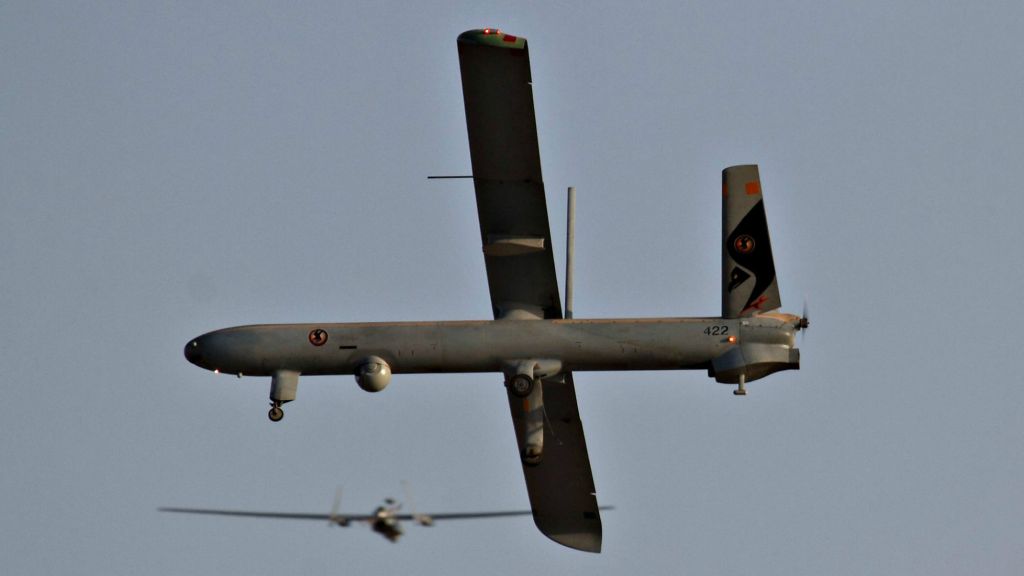
Illustrative. A UAV, June 2010. (Ofer Zidon/ Flash90)

Illustrative. A UAV, June 2010. (Ofer Zidon/ Flash90)

DAMASCUS, Syria — Syria state media said Sunday the country’s air defense systems intercepted and destroyed three “hostile” targets over a Russian air base in the country’s coastal region.

There were no more details about the suspected attack or who was behind it, but it comes amid rising violations of a cease-fire in Syria’s west negotiated by Turkey and Russia and in place since September.

On Sunday, Russia Presidential Press Secretary Dmitry Peskov said on state television that the agreement with Turkey is not fully implemented, leaving the situation there as a matter of concern “first of all, by the Syrian authorities and also Moscow.” He didn’t address the suspected drone attack.

The Britain-based monitoring group Syrian Observatory for Human Rights said explosions heard in the region were from air defense systems intercepting suspected attacking drones. The Observatory said such drones had previously targeted the Russian air base in Latakia province — the last such attack coming in November, despite the cease-fire deal.

The de-escalation deal in Idlib province averted a Syrian government offensive on the armed opposition enclave, which is also home to nearly 3 million people. The agreement created a security zone free of heavy weapons and monitored by Turkish troops to halt fighting.

But infighting between the armed groups in Idlib escalated into a major showdown. Earlier this month, members of the al-Qaeda-linked Hayat Tahrir al-Sham, Arabic for Levant Liberation Committee, took over control of Idlib and the surrounding countryside and forced rival Turkey-backed insurgents to accept an HTS-controlled administration.

Last week, Russia complained that the al-Qaeda-linked group’s hold increasingly threatened its air base and urged Turkey to do more to rein in the militants in the enclave.

The Syrian government has repeatedly threatened to launch an offensive to recapture Idlib province, while Turkey had complained that Damascus was trying to undermine the deal.


Off Topic:  Israeli rescue team arrives in Brazil as dam collapse toll hits 58 

January 28, 2019

Source: Israeli rescue team arrives in Brazil as dam collapse toll hits 58 | The Times of Israel

IDF sends search-and-rescue teams, divers and medical personnel to take part in search for the hundreds more still missing

Brazilian officials greet the head of an IDF search and rescue team that arrived in Brazil on Sunday January 27 (Screencapture/Globo TV)

Brazilian officials greet the head of an IDF search and rescue team that arrived in Brazil on Sunday January 27 (Screencapture/Globo TV)

An Israeli Defense Force search-and-rescue team landed in Brazil late Sunday evening where they will join forces with local rescue crews who are searching for hundreds of people missing in the wake of a catastrophic dam collapse.

The Civil Defense office in Minais Gerais state on Sunday raised the confirmed death toll to 58, with up to 300 people still missing following the avalanche of iron ore waste from a mine Friday.

The Israeli team of some 130 conscripted and reservist soldiers landed on a specially chartered El Al flight at  Belo Horizonte International Airport in South Western Brazil late Sunday.

The team was greeted on the runway by the governor of  Minas Gerais, Romeu Zema. The heads of the delegation immediately began talks with local officials in charge of the rescue to coordinate efforts, according to Brazil’s Globo TV.

An El Al airplane carrying 130 members of an IDF search and rescue team arrives in Belo Horizonte, Brazil on January 27, 2019 (Screencapture/ Globo TV)

The delegation is mostly made up of military search-and-rescue specialists and medical officers and also includes members of the Israeli Navy’s Yaltam scuba unit who were also brought in to assist in the efforts, as the military expected a significant amount of underwater missions in the flooded region.

They are expected to begin work already on Monday morning.

“Following a situational assessment and discussions with local officials, it emerged that search and rescue is the main need at the Brazilian disaster site,” the Israel Defense Forces said in a statement.

The army said the search-and-rescue teams would use radar, underwater sonar, cellular detection systems and drones to locate the missing people.

Embedded video

Israel Defense Forces

@IDF

The 14-hour flight to Brazil was made via a chartered El Al airplane, which took off from Ben Gurion International Airport on Sunday morning. Preparations for the trip began on Saturday, following a conversation between Prime Minister Benjamin Netanyahu and Brazilian President Jair Bolsonaro.

Ties between Israel and Brazil have warmed with the election of Bolsonaro, who said earlier this month that he will move his country’s embassy to Jerusalem. The Brazilian president’s confirmation of the move came after Netanyahu visited the South American country for Bolsonaro’s January 1 investiture.

Israel regularly offers aid and search and rescue help to countries both friendly and hostile, though this appeared to be the first-ever aid delegation to Brazil.

Brazilian rescue crews returned to mud-covered flats Sunday to resume the search  after the operation was suspended for several hours over fears that a second dam was at risk of breach.

Earlier Sunday, authorities stopped the search and evacuated several neighborhoods in the southeastern city of Brumadinho that were within range of the second B6 dam owned by the Brazilian mining company Vale. An estimated 24,000 people were told to get to higher ground, but by the afternoon civil engineers said the second dam was no longer at risk.

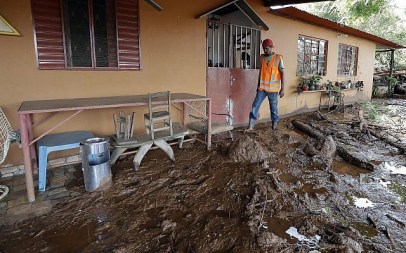
A volunteer walks next to a partially destroyed home, two days after a dam collapsed in Brumadinho, Brazil, Sunday, Jan. 27, 2019. (AP Photo/Andre Penner)

“Get out searching!” a woman yelled at firefighters near a refugee set up in the center of Brumadinho. “They could be out there in the bush.”

Areas of water-soaked mud appeared to be drying out, which could help firefighters get to areas previously unreachable.

Even before the brief suspension of rescue efforts, hope that loved ones had survived a tsunami of iron ore mine waste from Friday’s dam collapse was turning to anguish and anger over the increasing likelihood that many of the missing had died.

Zema, the governor said that by now most recovery efforts will entail pulling out bodies.

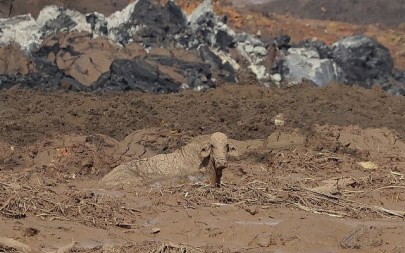
A cow sits stuck after a dam collapsed in Brumadinho, Brazil, Sunday, Jan. 27, 2019. Brazilian officials on Sunday suspended the search for potential survivors of a Jan. 25 dam collapse that has killed at least 40 people amid fears that another nearby dam owned by the same company was also at risk of breaching. (AP Photo/Andre Penner)

The flow of waste reached the nearby community of Vila Ferteco and an occupied Vale administrative office. It buried buildings to their rooftops and an extensive field of the mud cut off roads.

Some residents barely escaped with their lives.

“I saw all the mud coming down the hill, snapping the trees as it descended. It was a tremendous noise,” said a tearful Simone Pedrosa, from the neighborhood of Parque Cachoeira, 5 miles (8 kilometers) from where the dam collapsed.

Pedrosa, 45, and her parents dashed to their car and drove to the highest point in the neighborhood.

“If we had gone down the other direction, we would have died,” Pedrosa said.

“I cannot get that noise out of my head,” she said. “It’s a trauma … I’ll never forget.”

A helicopter takes of carrying a rescued body that was found in the mud, after a dam collapse near Brumadinho, Brazil, Saturday, Jan. 26, 2019. (AP Photo/Leo Correa)

In addition to the dead, 23 people were hospitalized, according to the Minas Gerais fire department. There had been some signs of hope earlier Saturday when authorities found 43 more people alive.

The rivers of mining waste also raised fears of widespread environmental contamination and degradation.

According to Vale’s website, the waste is composed mostly of sand and is non-toxic. However, a UN report found that the waste from a similar disaster in 2015 “contained high levels of toxic heavy metals.”